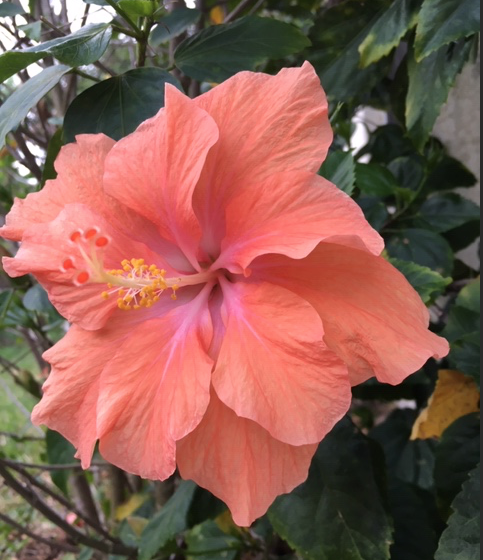
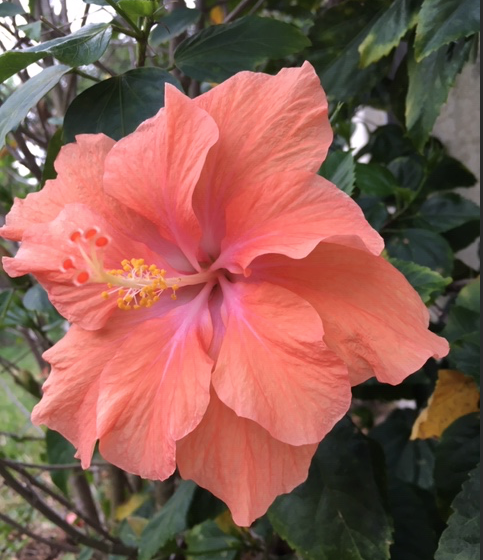
Two years ago I planted a little hibiscus plant out behind my house. It grew quickly and flowers all the time with double flowers. Double flowers means each bloom is more ruffled looking with layers of petals as opposed to flat, 5-petaled flowers.
Hibiscus grow very well here in Florida, and this past winter was quite mild without any overnight temperatures dropping below freezing. At least not where I live. I never had to cover any plants and everything looks great. The chances of having a freezing night now are slim, so it’s safe to cut back outdoor plants that need it.
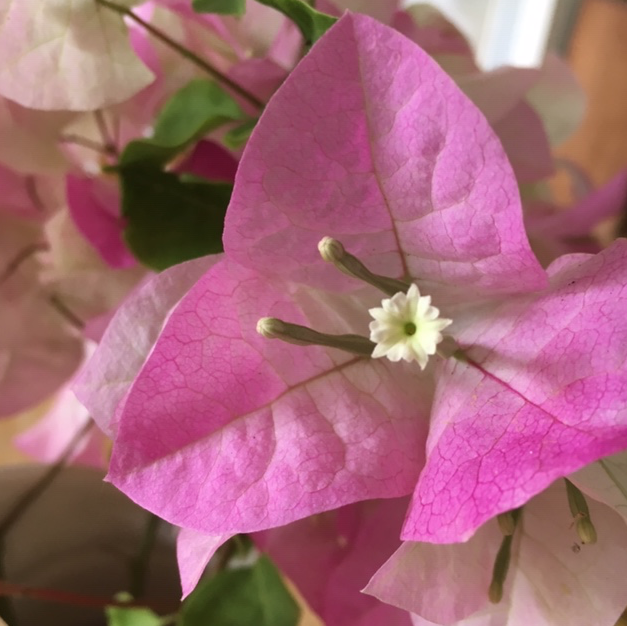
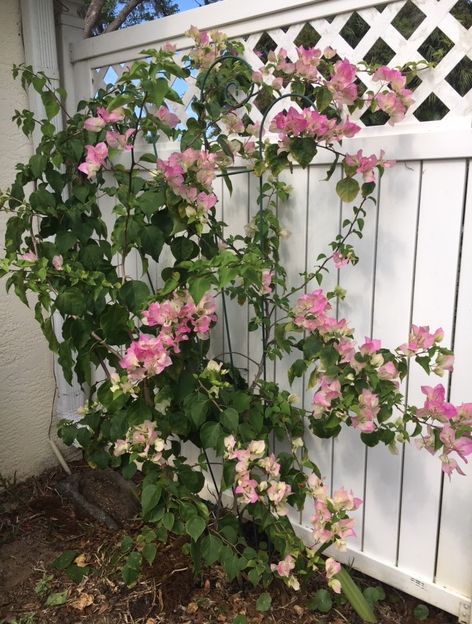
My bougainvillea is just a baby, but it is already reaching over the fence into the front yard. Last year this plant was nearly dead after the cold winter and I thought it was hopeless. Then little green sprouts began to appear at ground level and it continued to grow. You can see a picture of it on this blog post with photos I took last January. It looked dead. Not only did it survive, it went nuts this year!
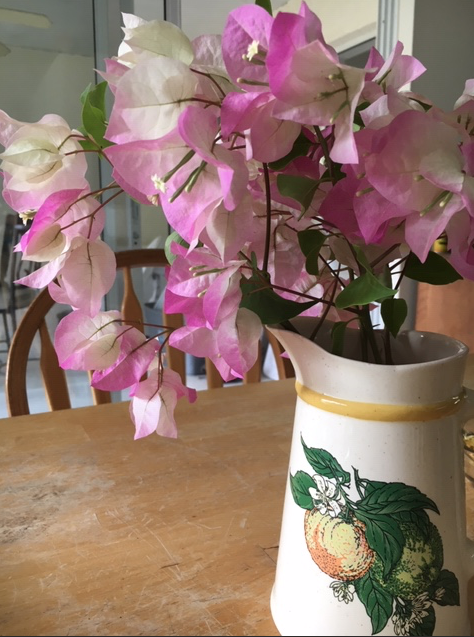
Some of the branches were growing awkwardly toward the house, so I trimmed them up and took the flowers inside. They did well in a vase of water until day three, when the flowers began to fall off and make a mess. Bougainvillea is not a long-term bouquet flower.
Cuttings last a couple days, but the stems can grow roots for beginning new plants!
This vining plant is gown in many yards around Florida. It can be huge and looks beautiful draped over a fence or along a wall. I love my light pink flowers, but the deep red is stunning and it comes in many other colors, like orange and yellow.
My bougainvillea is in a semi-shaded location, but they do like lots of sun and will have more flowers. They can be trimmed at any time and this is the first year mine has been so tall and had so many flowers so I’m not sure how long the flowers will last. They don’t need a lot of water either, which is nice. They won’t droop and wilt. But do be careful if the weather turns cold because they don’t like cold temperatures.
The University of Florida has a page all about Bougainvilleas. After reading the page I discovered that they are easy to propagate! I will definitely be trying that. I’ve had success with propagating crotons and cuttings from my rubber plant.
Our Warm Winter of 2019
A few nights this winter the temperatures dropped close to freezing and the only plants I covered outdoors were the crotons in the big pot out front. They were newly planted to replace the beautiful big croton that died in 2018 due to the cold.
This year was so mild, that everything is still big and green. I recently cut back my orange hibiscus which was nearly touching the roof of the house! When nothing freezes back, the plants have a head start in Spring.
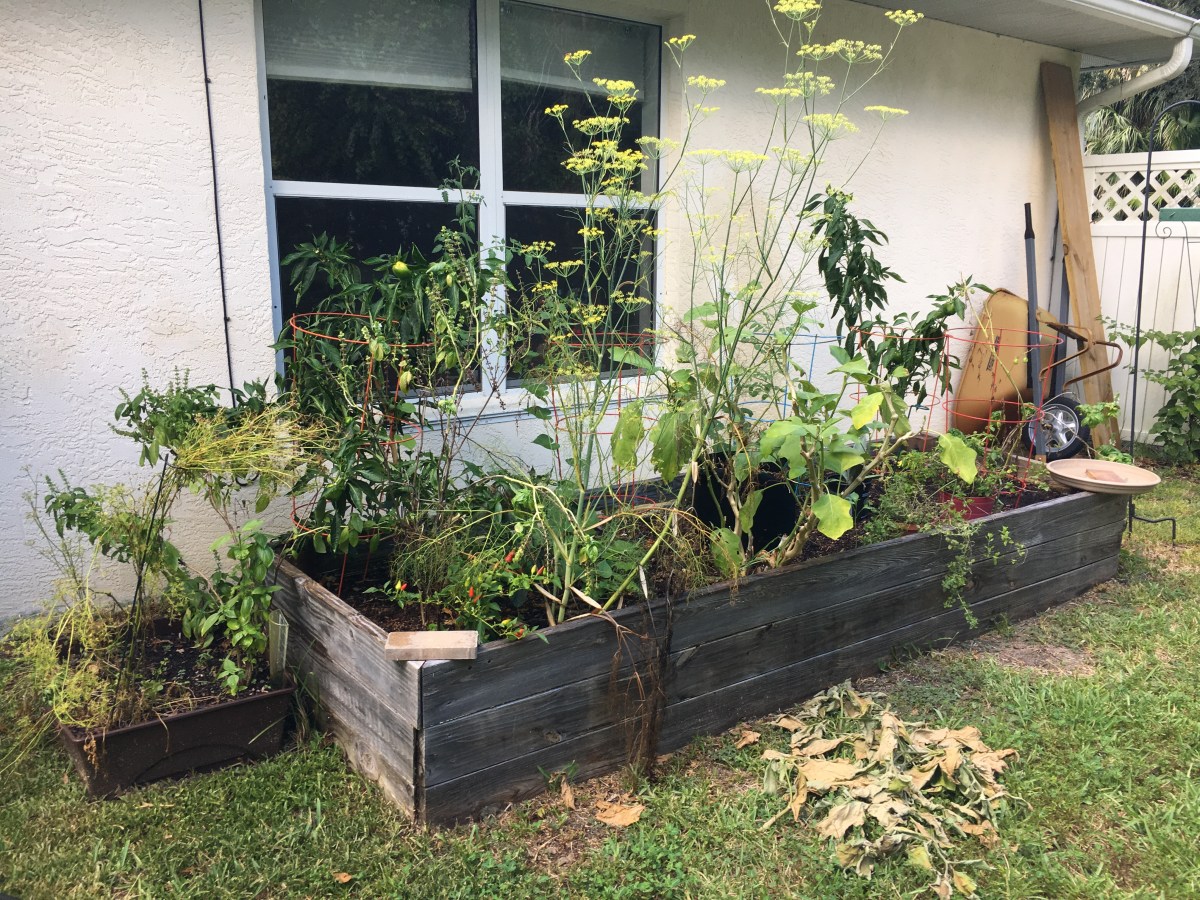
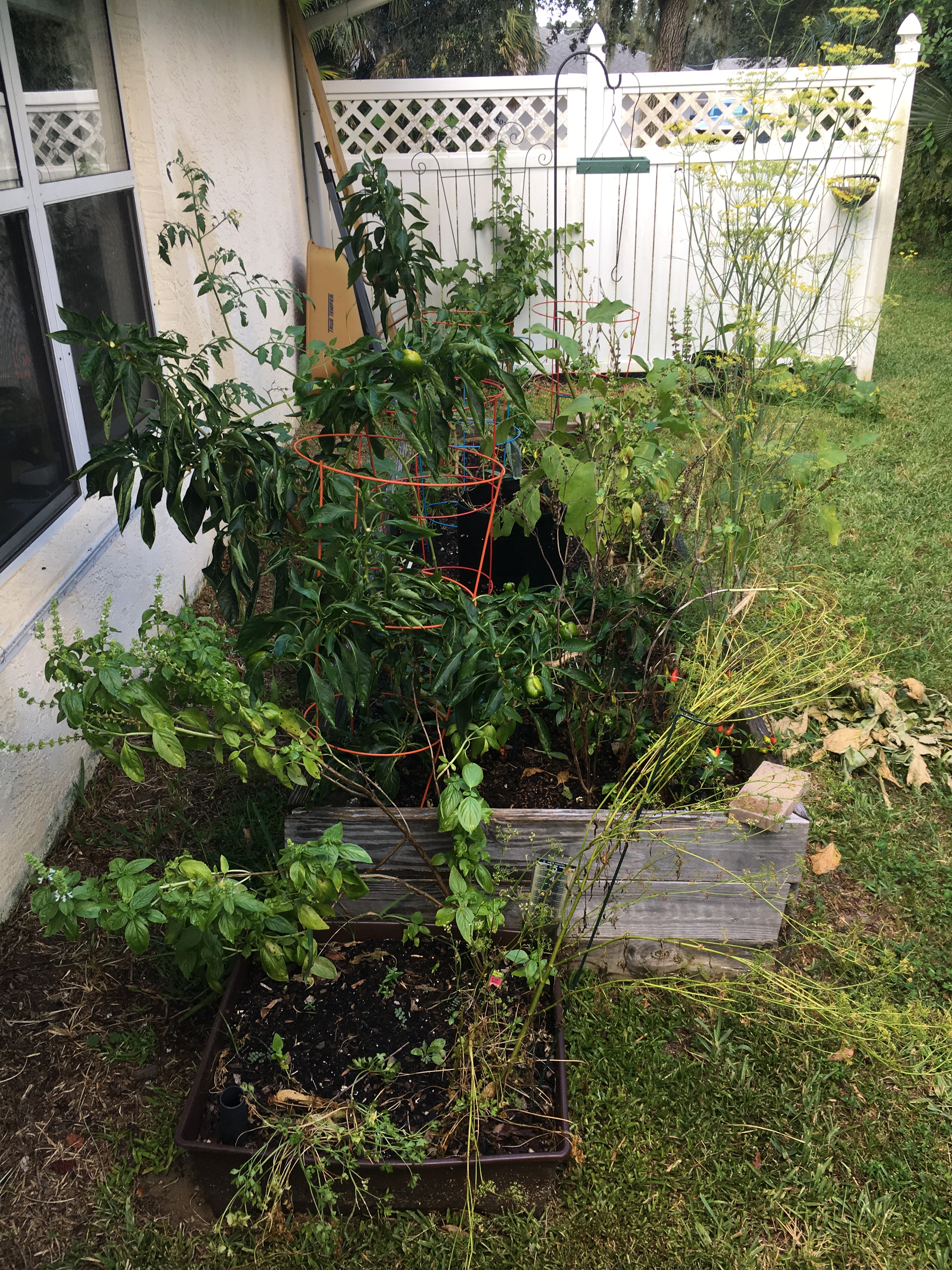
Here in Florida it does not feel like the end of summer transitioning into Fall. The September garden is overgrown and producing little. My garden looks like a mess. Temperatures are still in the 90’s and it’s too hot to stay outdoors for any length of time. I water the garden at least once a day, and usually twice, and it still wilts in the heat.
September Garden
I now have two new bell pepper plants growing from seeds. One is tall and has given me a few green peppers. The other is still tiny. You can see the big (old) pepper plant in the raised bed, front left area. The peppers are small and thin walled, but I use them in cooking.
I’ve cut back the eggplant once more and haven’t had an edible eggplant from it in a long time.
The tomatoes are long and gangly and will probably just die before they produce edible tomatoes. I may try to grow them again in early spring.
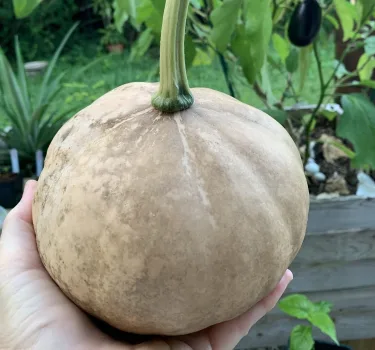
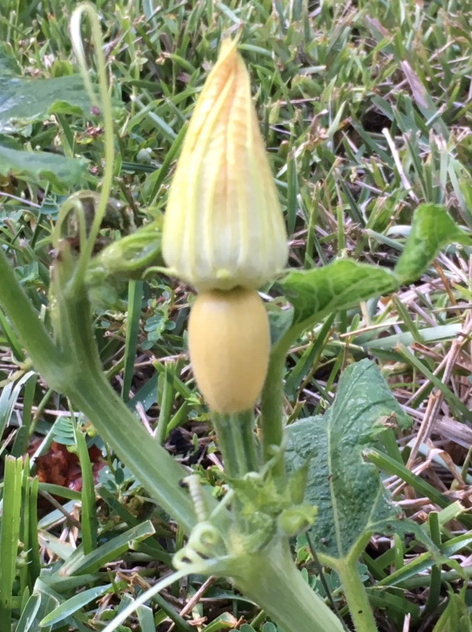
And I have a couple of squash plants – one has a tiny squash growing. I honestly can’t remember what type of squash it is. Either a winter / butternut or spaghetti squash. I threw seeds in the dirt to see what would happen. I can’t grow summer squash or zucchini for some reason. (This little squash rotted and fell off the vine.)
Little yellow squash, not sure what type
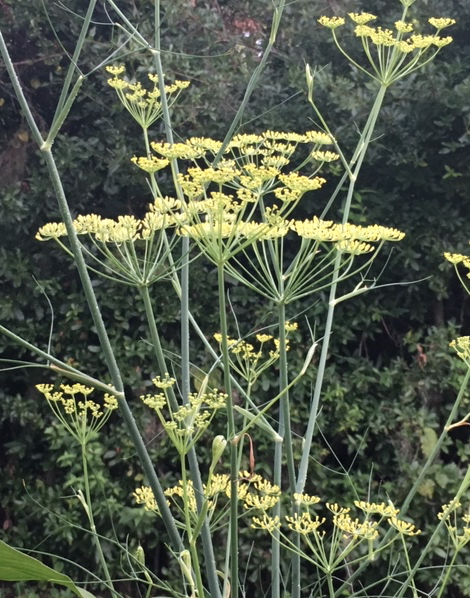
The most beautiful plant in my vegetable garden right now is the fennel. I had two plants and one died, but the other has grown tall stalks of pretty yellow flowers which bring bees every day. This is why I let my plants continue to grow even if they don’t produce. Their flowers bring bugs searching for nectar and birds hop through the garden in search of bugs for dinner. Eventually seeds will form.
Flowering fennel
I was inspired to draw the fennel with flowers and turn it into a custom card at my Zazzle store.
I’m not sure what will become of my vegetable garden. I’m considering giving up on growing my favorite vegetables. I seem to have more luck with herbs, so maybe I need a big herb garden. I love to pick fresh herbs from the yard.
The parsley that has been growing for over 2 years is finally dying. I let it go to seed and maybe it will produce new plants. I haven’t seen any parsley worms for a while.
My neighbors across the street told me they turned their vegetable garden into a citrus garden. They said that bugs ruined everything they tried to grow so they gave up. It seems that the smart thing to do is grow what works in this tropical climate.
My Little Citrus Trees
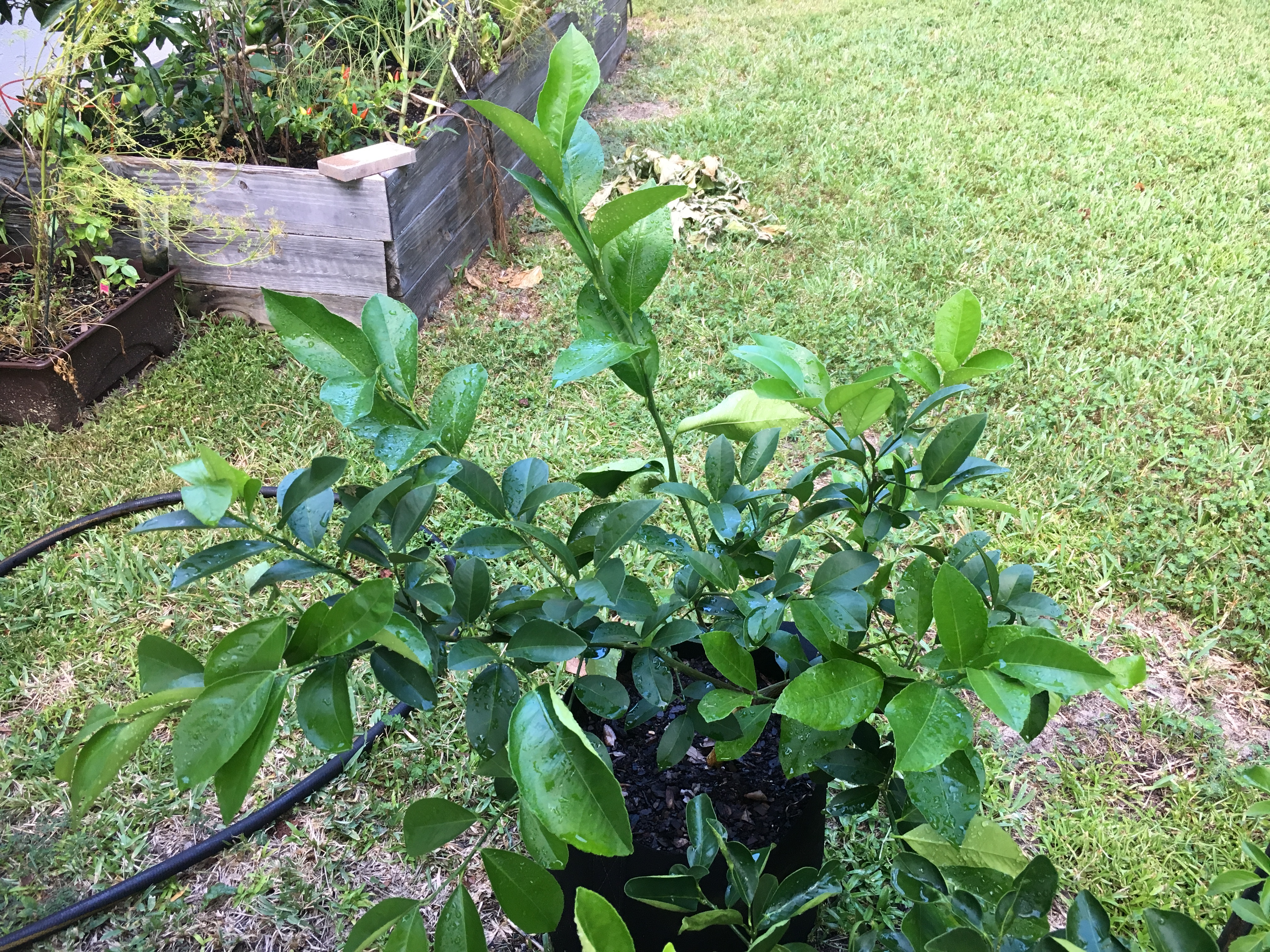
I am happy to see that my lemon tree is making a come back. Once it gave up trying to produce lemons, it could concentrate on new growth, and the greenery is beautiful. I have it planted in a fabric pot and it seems very happy.
The lemon tree is making a come back
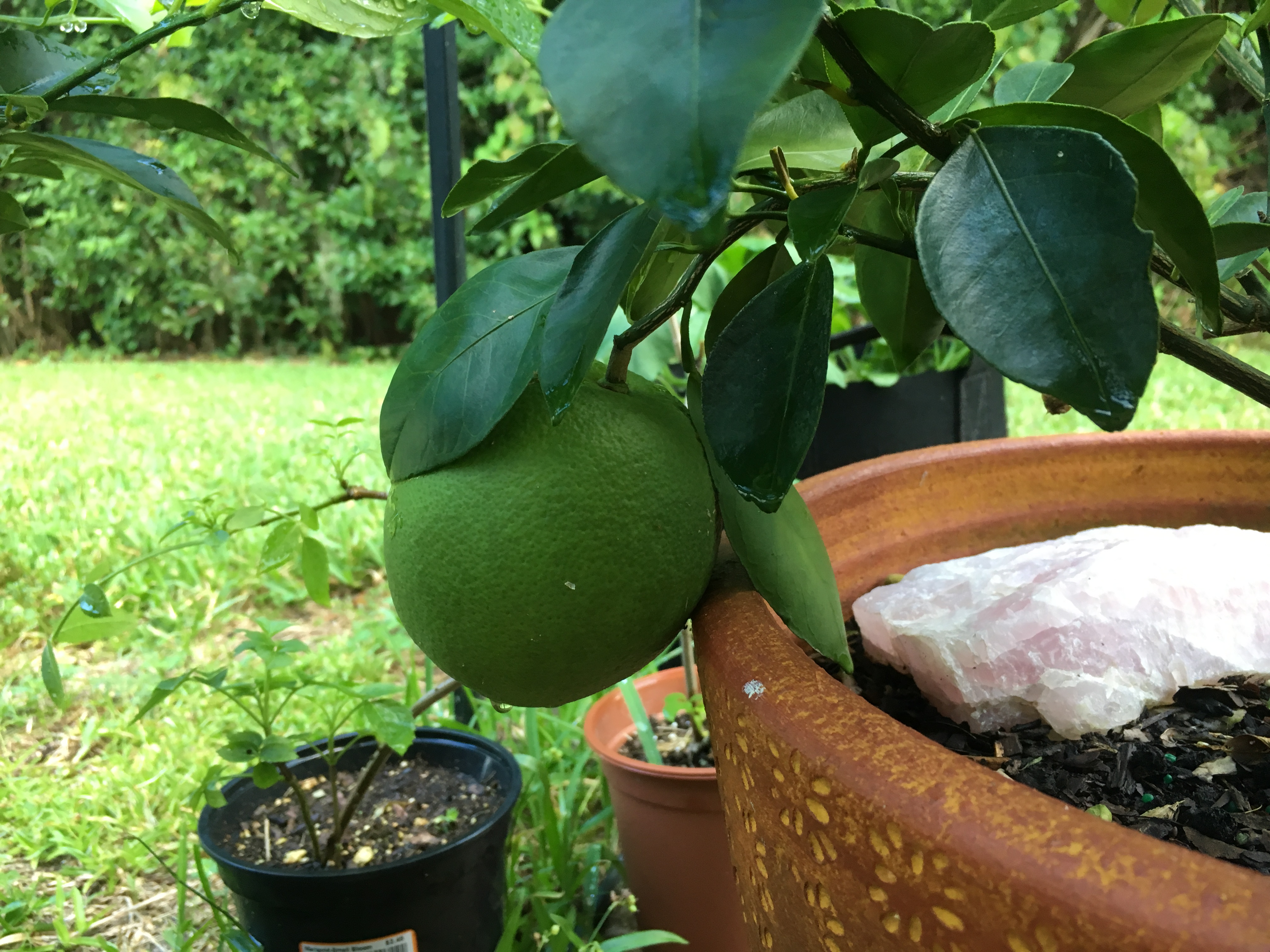
The new orange tree still has one orange growing. The tree is small, and I did have 2 oranges, but one fell off and was no good.
A single green orange on the little Valencia tree.
The Persian lime tree is full of limes, which I will be able to start using soon, but the tree and fruit don’t look as good as last year. I think it needs a bigger pot. With all the spikes on the stems, that will be a chore!
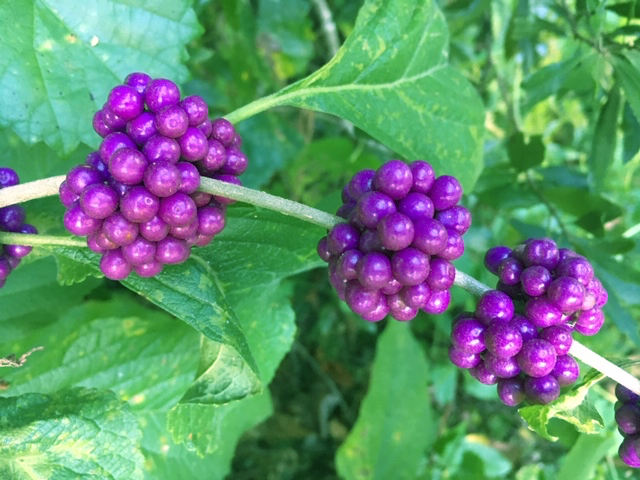
I’m all for learning something new each day, and today I learned that the clusters of purple berries on the stem in my backyard is part of the Beautyberry bush. This odd stem of berries in clumps caught my eye as I walked through my small backyard. I had to get photos, but the trouble I had was capturing the true purple color of these berries.
Beautyberry stem of purple berries
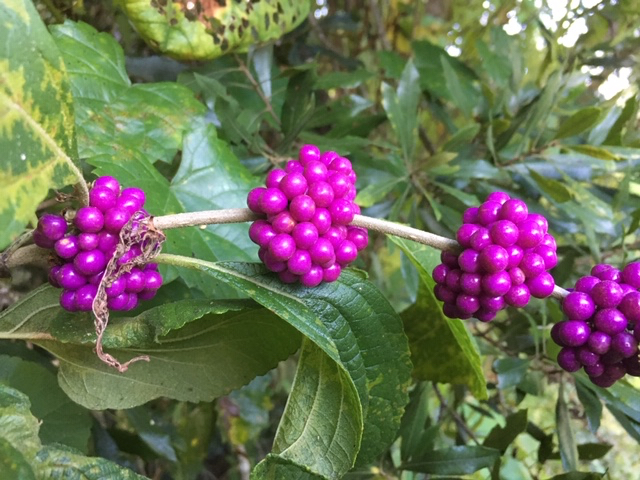
Using my iPhone, I took numerous photos of these striking purple clumps and none of the photos showed the actual dark purple color correctly. Below is the color my phone produced, but the other photos more closely match the actual darker purple. I had to replicate that in Pixelmator.
iPhone photo is brighter purple color than reality
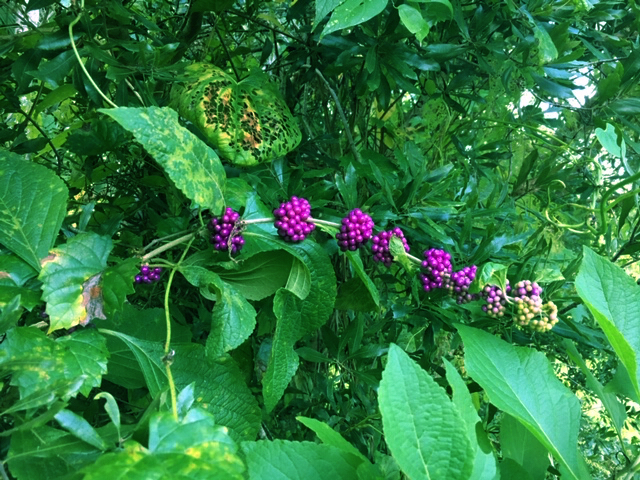
This stem is sticking out of my backyard hedge. The hedge is made up of a variety of plants which have grown very tall and create a border between the back of my house and the house next door. I did not plant the Beautyberry, but someone may have done so years ago. Or maybe it grew wild.
The Beautyberry is a southern bush with berry stems that show up in September. It’s berries feed birds and wildlife and the leaves and berries are good as mosquito repellent. Read more interesting info at the Garden.org site.
A striking stem of purple berries
I found some other interesting flora to photograph that same day. The Elephant Ear was blooming and the banana trees had sent off a new shoot which would grow a long stem of bananas. A dead tree is full of clusters of dark purple berries and I don’t know yet what those are. There is always something new to learn when I step outside.
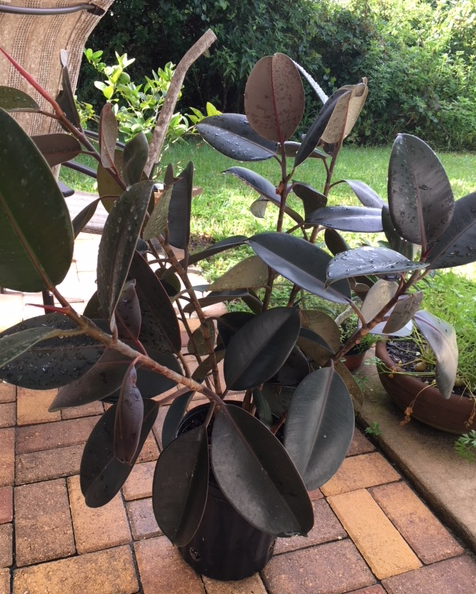
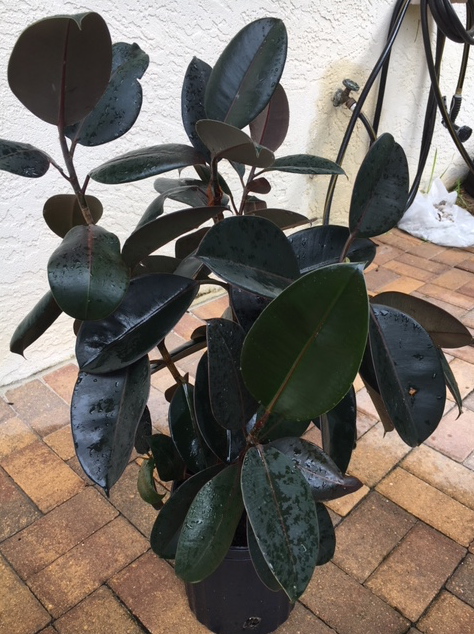
Rubber Trees are something you see a lot of here in Florida. They are tropical plants and don’t like the cold. They work well as house plants, but I’ve seen them growing outdoors here and can become quite large. They are susceptible to scorching sun which damages the leaves, and don’t like extreme cold.
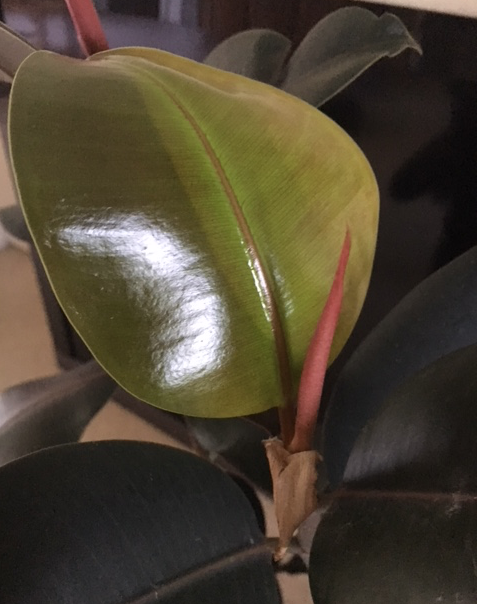
I love the uniqueness of this tree with it’s thick, rubbery leaves which are dark green to purple in color. A reddish spike appears when a new leaf grows. These plants are hardy, but keep them out of the hot sun or the leaves will burn.
To keep a nice shape, the rubber tree will need pruning. To give it a good “bath” I take it outside and spray dust off the leaves. I can also give the dirt lots of water and some fertilizer. It’s possible to do that year round here.
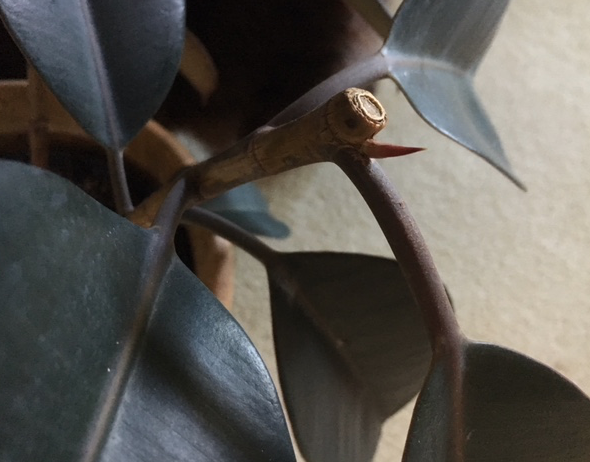
I noticed the plant had a lot of new growth making the stems quite long. I’ve never pruned a rubber plant, but decided to give it a try.
Rubber tree in need of pruning
I ended up cutting back two stems to even up the shape a bit. If possible, I try to root cuttings (propagate) I take of large plants like this. When I searched online for info I got the general “use rooting compound” advice. I’ve never had luck using rooting compound. So I decided to do it my way.
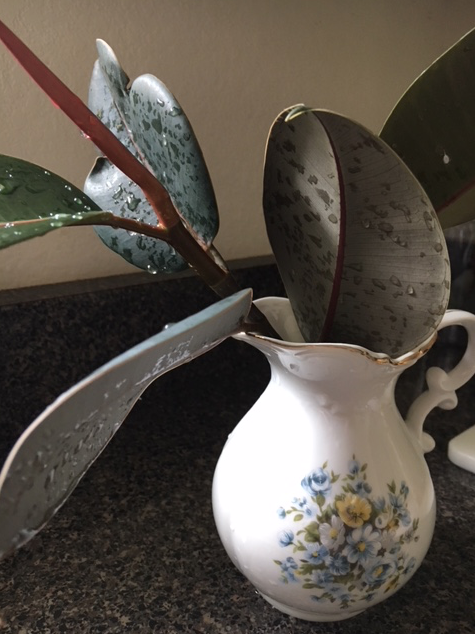
My favorite way to create new plants from cuttings is to simply put the cuttings in water and wait for roots to develop. The water must be changed often – I do it every day. I’ve had good luck propagating crotons this way, but it doesn’t work for every plant. I’ve never tried to root rubber plant cuttings, so this was an experiment.
The rubber plant has white sap in the stems which is sticky, which is similar to what you see in hydrangea stems. The hydrangea stems can close up due to this white sap and make the cuttings wilt. (Read more about cutting hydrangeas.)
I kept an eye on the rubber plant cuttings and saw no drooping or signs of distress in the vase.
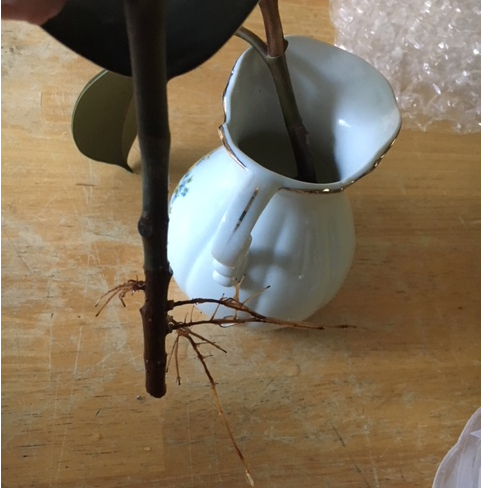
After a while – probably close to 2 weeks – I saw roots developing on one of the stems.
After a few weeks in water – roots!
I will be potting this soon. The other stem has not begun to send off roots, and I’m not sure it will. But I’ll wait a bit longer to see. (It never did and I gave up.)
The main plant is sending off little shoots near the site of the cutting. I only see one shoot, so whoever the cut is made is where the new growth will take place – at the next leaf on the stem. Keep that in mind when making the cut.
New growth from the stem that was cut.
A new leaf unfurls in a pretty green color. It will eventually turn dark like the older leaves. My next chore will be to re-pot into something bigger. First, I may take a few more cuttings to further shape the tree.
Pretty new leaf emerging.
If the plant is too large to take outside and wash, use a damp cloth and clean the leaves every now and then. Be sure to fertilize it occasionally as well. I like to use organic fish emulsion diluted in water.
Planting the Rooted Rubber Tree Cutting
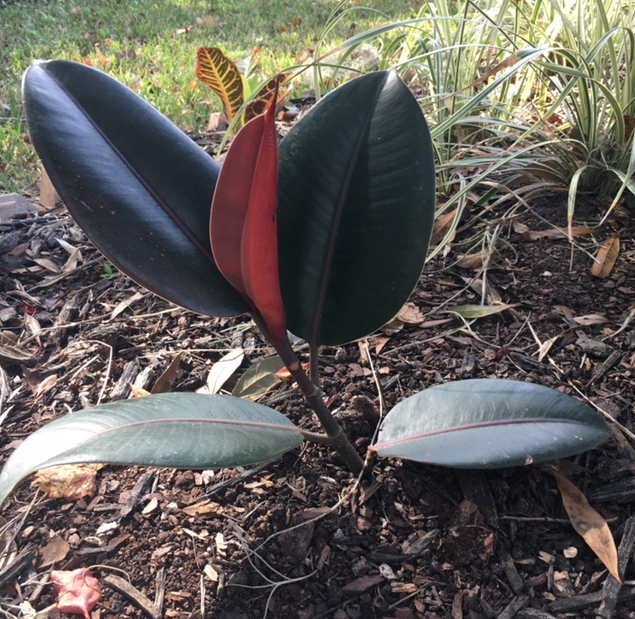
I planted the rooted cutting in my front yard under an Oak tree (see photo below). So far it is doing well without much attention from me.
Having plants beneath a tree help give it shade (obviously) but also keep it protected from wind and cold. Plants that grow near other plants can survive cold overnight temperatures better, and being in the shade means less watering.
When the temperature will be close to, or below, freezing I will cover this little plant with a towel overnight. It’s was 38 degrees the other night, and the rubber tree baby looks fine and I did not cover it.
For those who don’t know, when you cover plants over night be sure to remove the cover in the morning! Leaving them covered is not good.
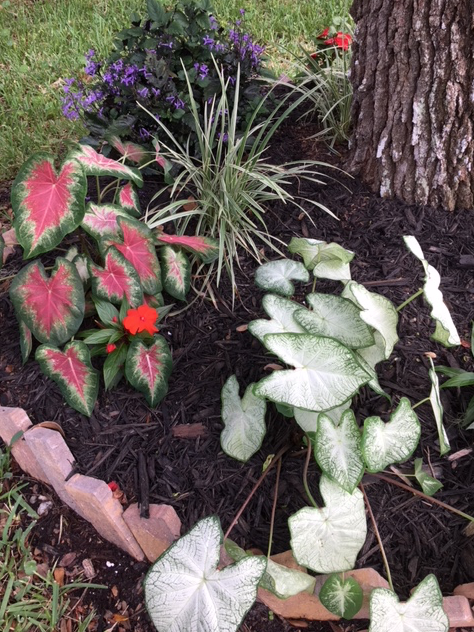
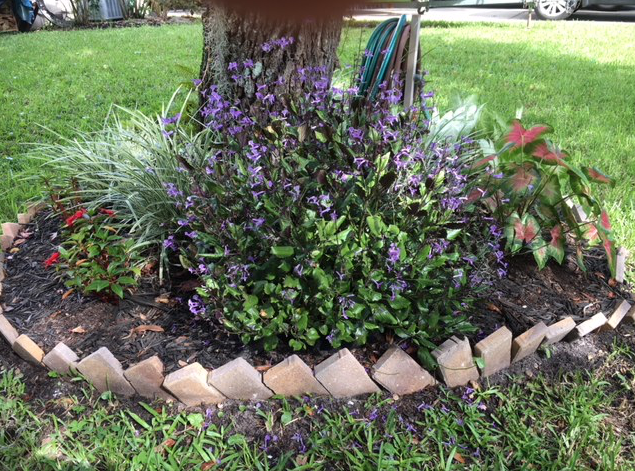
When I bought my house nearly 2 years ago, there was a little flower garden under the trees out front. I neglected it and it became overgrown very quickly. I’m not inclined to work outside in the heat, but the other day I decided a quick fix was in order. The garden is small, so the work would be minimal. We had brick pavers leftover from the building of the patio, so I used them to create a new border to hold the additional dirt needed.
I’m not yet very good with my Florida plant names, but the ones with the colorful, pointed leaves are Caladium. The link to Eden Brothers calls them “bulbs”. Mine came out of a pot so didn’t look like bulbs to me.
The white leaves are called “Florida Moonlight”. I don’t know the name of the pink-leafed one, but they add lots of interest in the yard. They love heat and humidity, which explains why they do so well here.
Flower garden under the trees
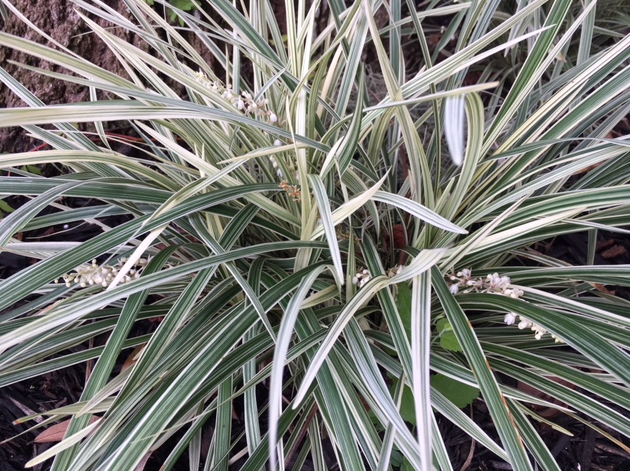
Also in the background around the tree are the thin leaves of the Variegated Flax Lily. I spent a lot of time removing lots of dead leaves from them. Even without attention they continued to grow, so I would say they are very hardy plants. Now that I have given them some attention, the lily is blooming. Each plant has tiny white flowers on stalks among the leaves.
Little stalks of white flowers on the Varigated Lily
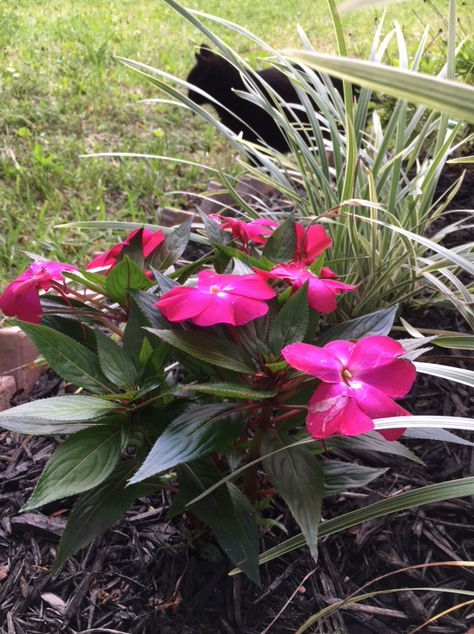
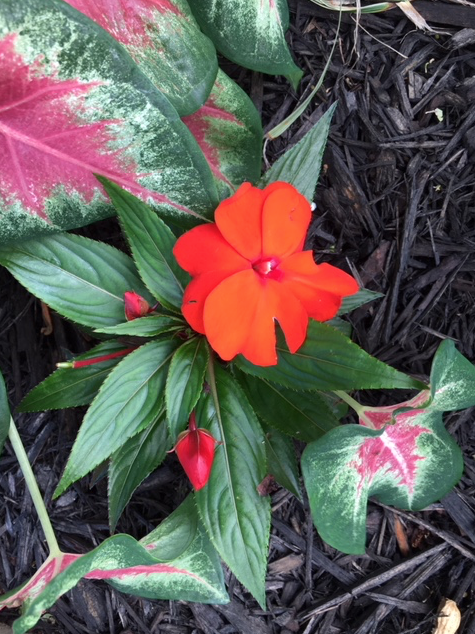
When I first moved in here I bought a bunch of New Guinea Impatiens and put them in the garden by the front door. The brightly colored flowers add continuous color to the landscape. It turned out those annuals lasted nearly a year. The very cold nights in January finally froze most of them. Because they did so well, I bought a few more to put under the tree.
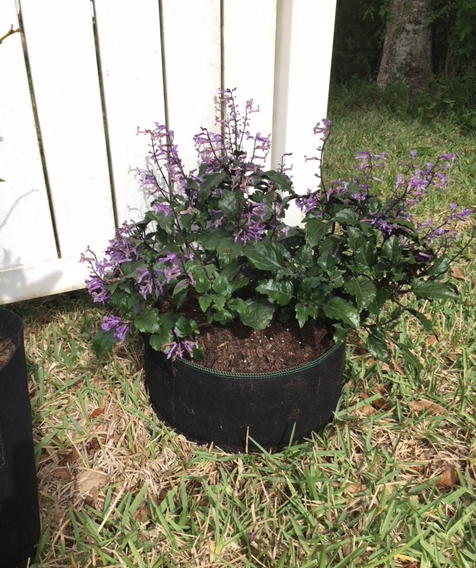
The purple flowering plant which is now under the tree is still in the short fabric pot. It is a Mona Lavender Plectranthus. I bought it because it was pretty, and I especially love the deep green of the leaves.
Now that I am researching this plant, I have discovered it needs some shade and is a perennial in warm climates. It seems that I have chosen a good spot for it to grow under the tree. I moved the fabric pot and did not dig up this plant. The potted Mona Lavender is now part of the shade garden and no one can tell it’s in a pot!
Plectranthus, Mona Lavender
Because planting around the base of a tree can be difficult because of roots, fabric gardening pots can be super helpful.
The purple flowering plant is in a fabric pot.
All my new plants were purchased at the Home Depot. I also bought more organic garden dirt, and added blood meal and black mulch.
In my part of central Florida, plants can be killed in winter. When freezing temperatures are coming overnight I will have to cover all these plants to keep them from dying.








 Hydrangeas Blue