Flowers Blooming in August in My New Hampshire Yard

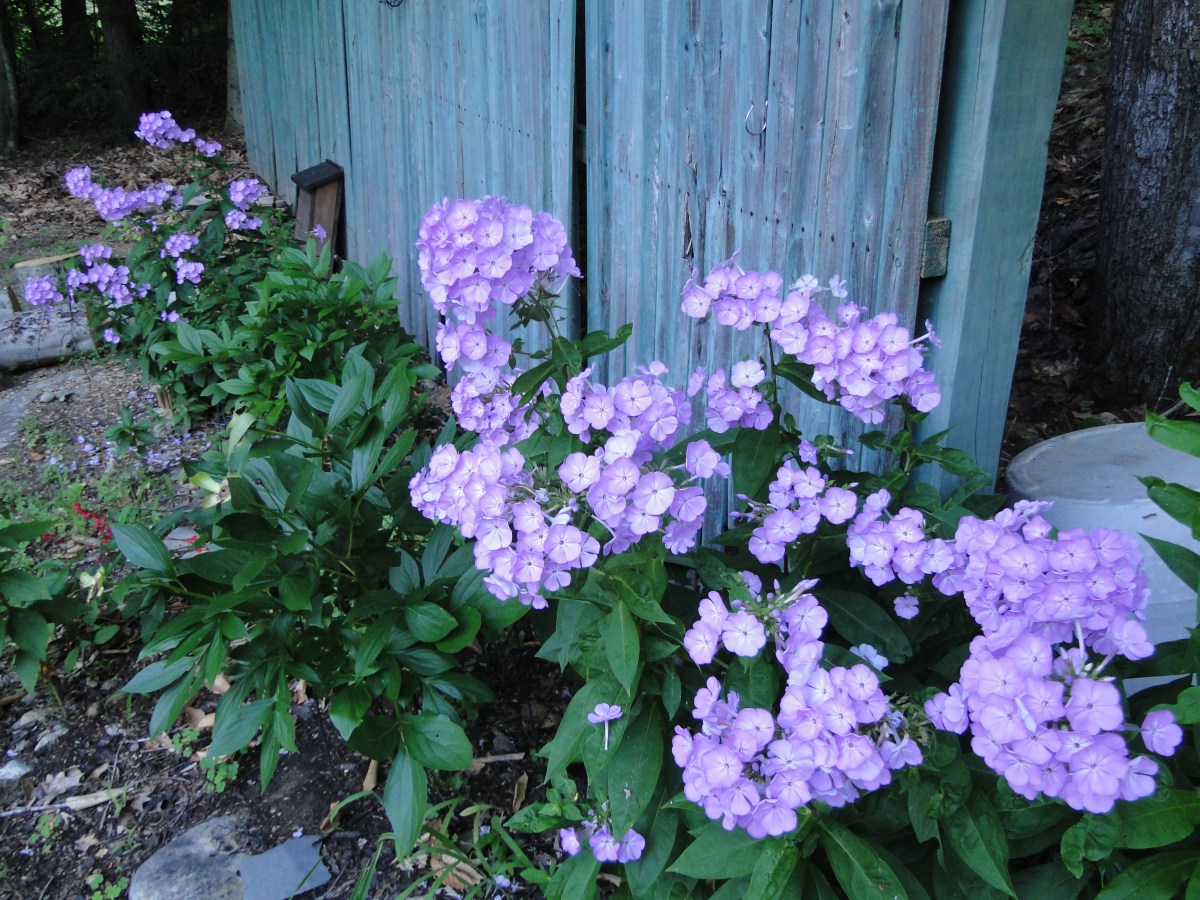
tall phlox in pink
Pink Phlox

As summer is winding down, I am taking stock of the flowers in my yard that are blooming in August.  In fall, here in New England the tall phlox are looking lovely.  In my yard, dark and light pink blossoms brighten the landscape. I also have creeping phlox which blooms in Spring.

As for perennials, the Hostas are also blooming, the few I have that are growing well.  Some of them died due to the cold winter.

Hydrangeas:  The Pinky Winky shrub is full of white flowers, which will be turning pink sometime in the future.  The white Blushing Bride in the backyard has three big, white blooms, with a small bud just beginning.  Out front, the blue Endless Summer has only two small flowers, and one little bud.  The blue flowers are fading to light purple.  Click the link above to see recent pictures of my hydrangea shrubs.

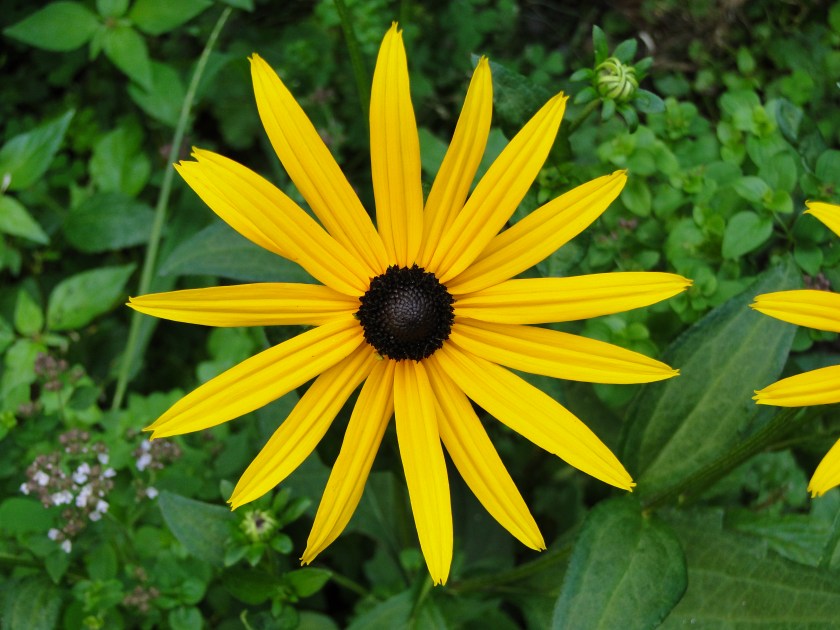
Black-Eyed Susans are blooming everywhere.  They seem to be the brightest yellow flowers in yards right now.  I have two small plants, which I tend to forget about until August.
black eyed susan flower
Black-eyed Susan

Day Lilies are also still flowering.  I have 8 or 10 plants with peach colored flowers along the front.  All those plants came from one, single pot of day lilies I bought three years ago.  I divided the stalks, planted them, and then divided them again.  Lilies should be divided every so often.  My yellow Stella d’oro lilies have gone by.

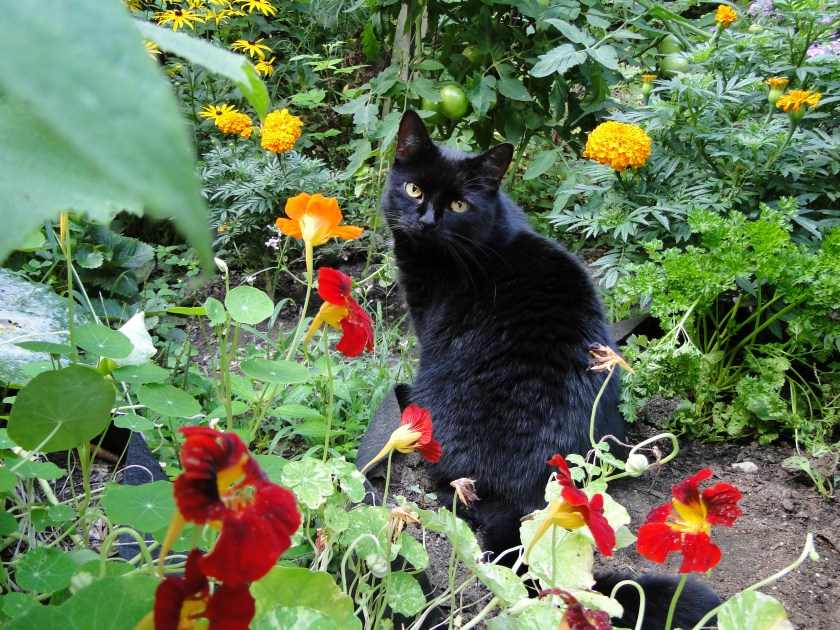
The annuals I plant each spring – Nasturtiums and Impatiens – are looking wonderful in August.  This year I planted the seeds from last year’s ‘Alaska’ nasturtium, and ended up with a beautiful and colorful border along the backyard.  All that color for free!  I love it.  Soon I’ll collect the seeds from these, and plant more next spring.
flowers of fall
Nasturtiums and Marigolds (and Skittle the Cat)

The marigolds are big and full, and still sending out new flowers.  Marigolds bloom more if they are dead-headed.

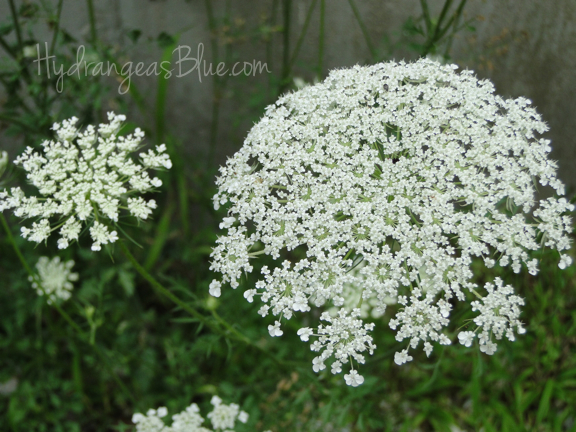
I have a volunteer Queen Annes Lace that is still blooming too.  I love these beautiful “weeds” with the big lacy flowers.  If they should happen to grow in your yard, I suggest you leave them alone and let them bloom where they grow.  Hopefully it will spread so I’ll have more of it next year.
Queen Annes Lace
Queen Annes Lace – A beautiful “weed”

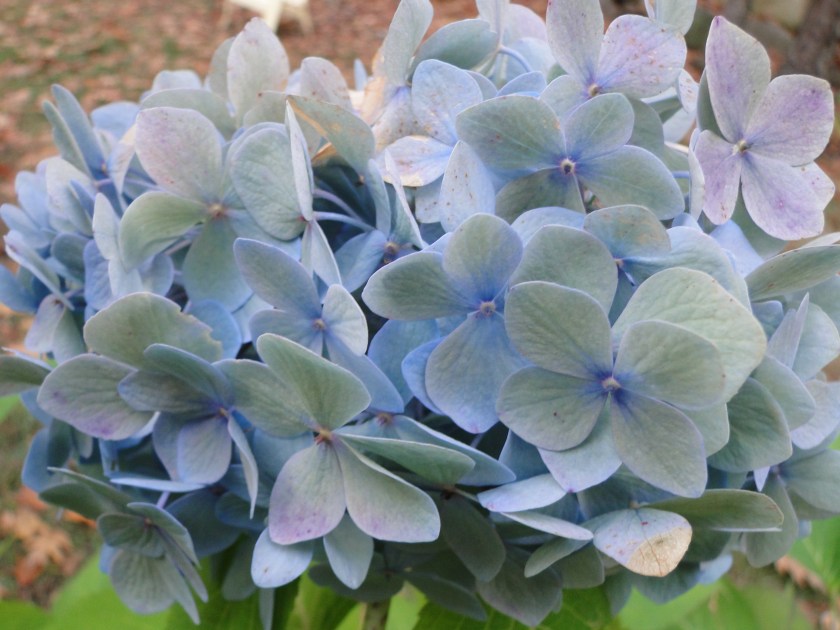
The blue hydrangeas are turning pretty colors as Fall approaches here in New Hampshire. The petals begin to take on a pink, purple, and sometimes green, tint. It’s always fun to see how the flowers will fade.
blue hydrangea in fall
Blue Hydrangea Changing Color in Fall

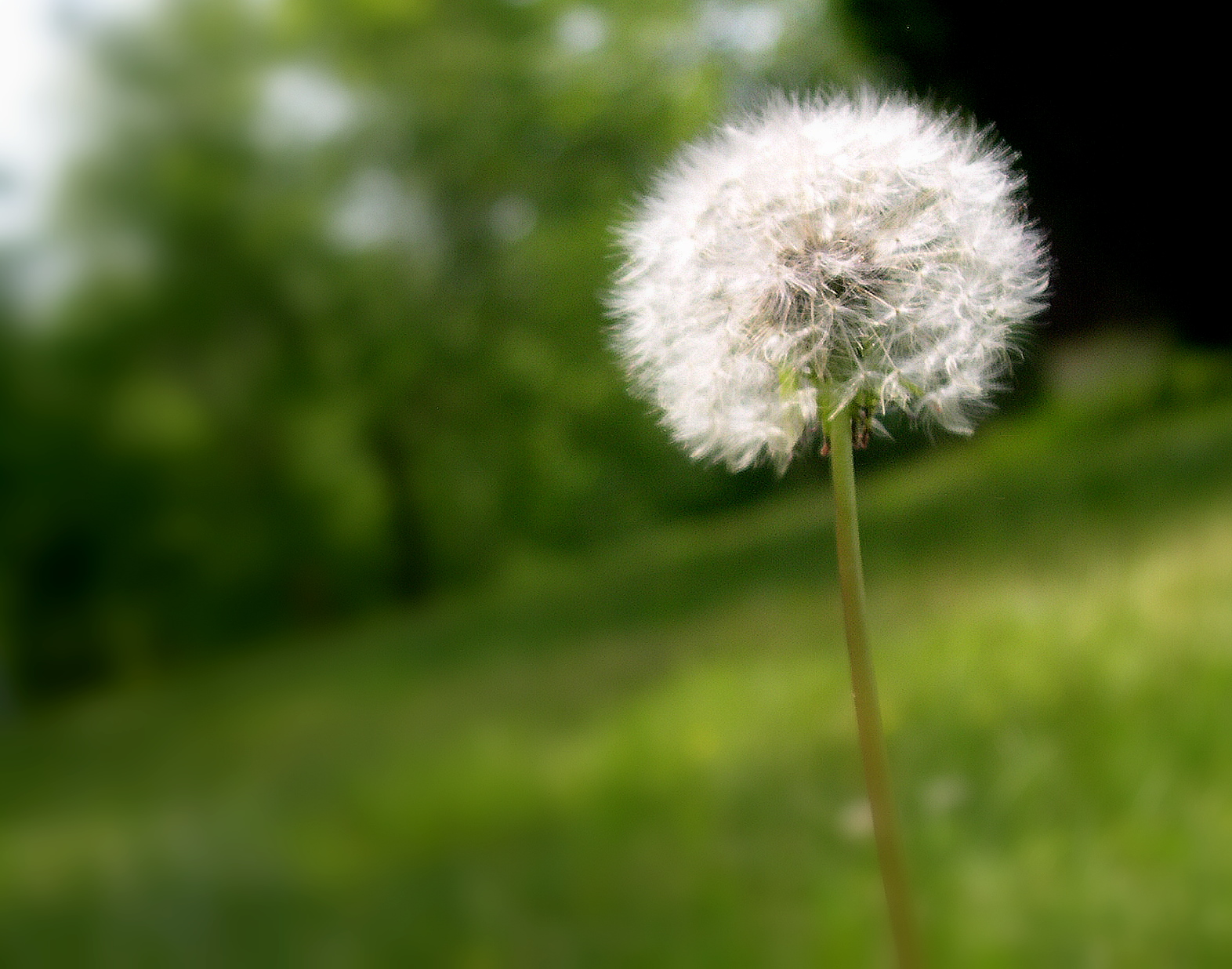
I Want Some Dandelions!

dandelion seed head

In my area of the country (New Hampshire) there are no signs of spring, let alone dandelions! It’s mid-March and the temps have barely been out of the 20’s lately. A lot of snow still covers the ground and it’s frozen solid. Only the little melted circle over the septic tank gives me a view of brown earth. It’s one reason this blog has been stagnant – nothing much happening here!

But lately I am thinking a lot about dandelions. They are something people mostly consider to be an annoyance. Those white heads explode in the wind and spread their dreaded seeds all over the place. Even though my lawn is quite hideous, I usually dig up the dandelions and add them to a compost pile (when they are yellow, not white).

When I was a kid my dad once offered my sister and I a penny or nickel (can’t remember- it was the 60’s) for each one we picked from the yard. We happily ran all over our huge yard gathering the yellow flowers so they wouldn’t turn white and reproduce. I guess that is one way to remove them, and keep kids busy at the same time.

I’ve changed my outlook toward this yellow flowering weed. Why? Because I have been drinking dandelion tea from the health food store, over the winter, and it’s good. So I wondered if I could possibly make it myself. After searching online for advice, it appears it’s easy to DIY.


Apparently tea can be made from the flower, leaves and roots of the plant. The tea bags I bought are made from the root, and that is the part I think I need most. It’s good for the kidneys and I have recently been diagnosed with kidney disease. So I am very interested.


It will be a few months before dandelions begin to grow in my yard, but I am getting ready to try out some new tea recipes. This year I can’t wait to see those yellow flowers in my yard.
Once I do some experimenting with this, I will post my results, either here or on a new blog (which I am presently considering). But first the snow has to go away! One thing at a time.

How To Propagate Hydrangeas

stem cutting
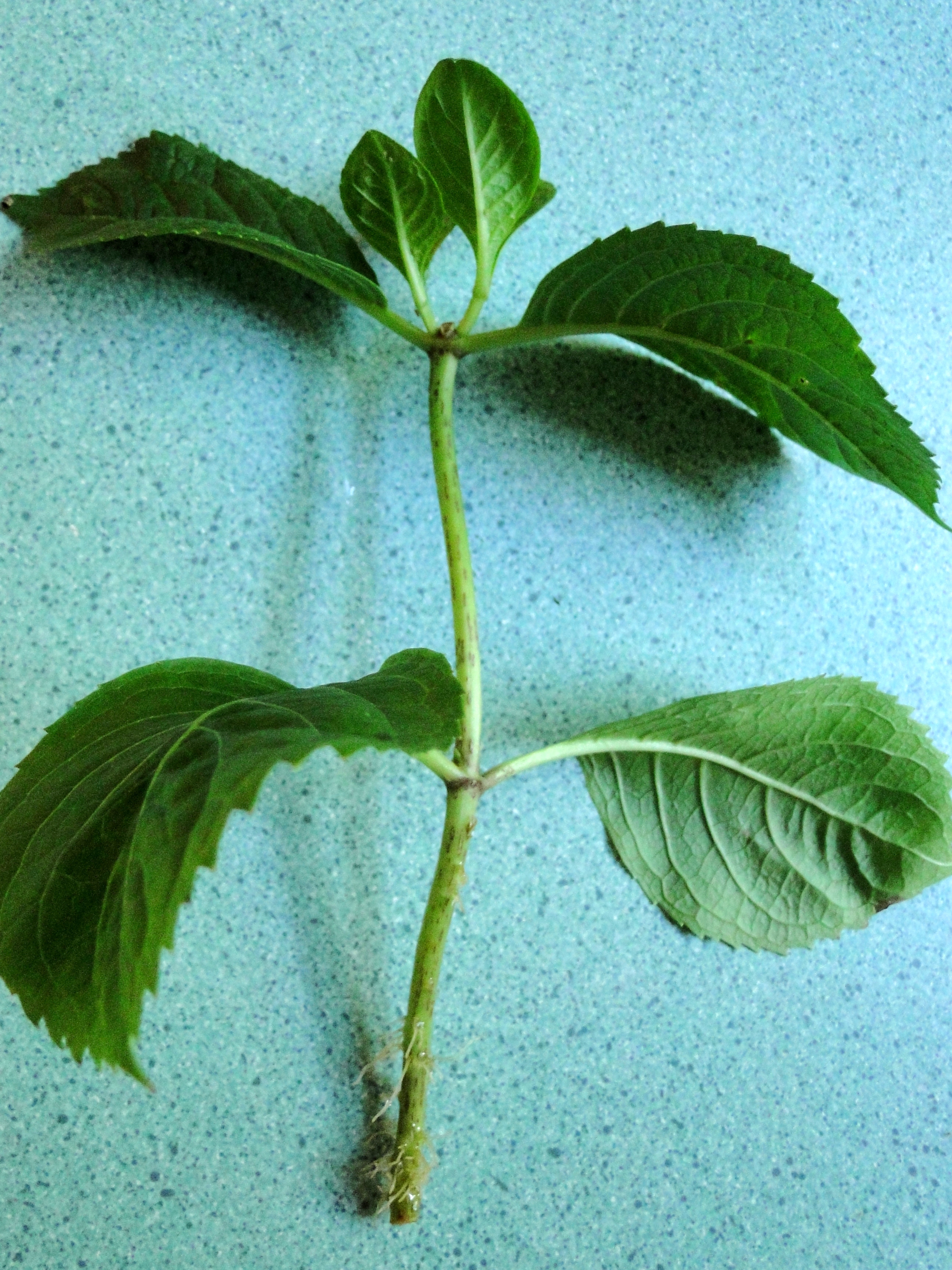
Hydrangea cutting with roots and new leaves.

Propagating means starting a new shrub from an existing one. There are a couple of ways you can do this with hydrangea plants.  Hydrangeas grow quite fast, and within a couple of years you will have a nice size addition to your landscape.

Taking stem cuttings, using new growth, sometimes works.  I have not used this method much yet, but while I was planting my new shrubs, a few of the stems broke so I stuck them into a vase of water to see what would happen.  After a few weeks, one of the cuttings has begun to sprout new little leaves and is growing roots – right in the water.  So I plan to get that into a pot and baby it along until Fall when I’ll add it to the yard. (Pictures to come!)

I’ve had success with root layering, and hydrangeas, with their low hanging branches, are perfect for doing this.  In fact if you check around the base of your plants that droop to the ground, you may find that a branch or two is already rooting itself into the soil.  The mophead variety tends to have the low to the ground stems.

I started a new plant by digging up the rooted stem and planting it in another area of the yard one Spring.  I was renting the house, so I don’t know how it’s doing today, but by the time I moved, a beautiful new hydrangea shrub was gracing the front yard at no cost to the homeowner.

Read how I did it, with pictures along the way, at my Wizzley page about Propagating Hydrangeas.

The Pinky Winky is Planted!

pinky winky shrub
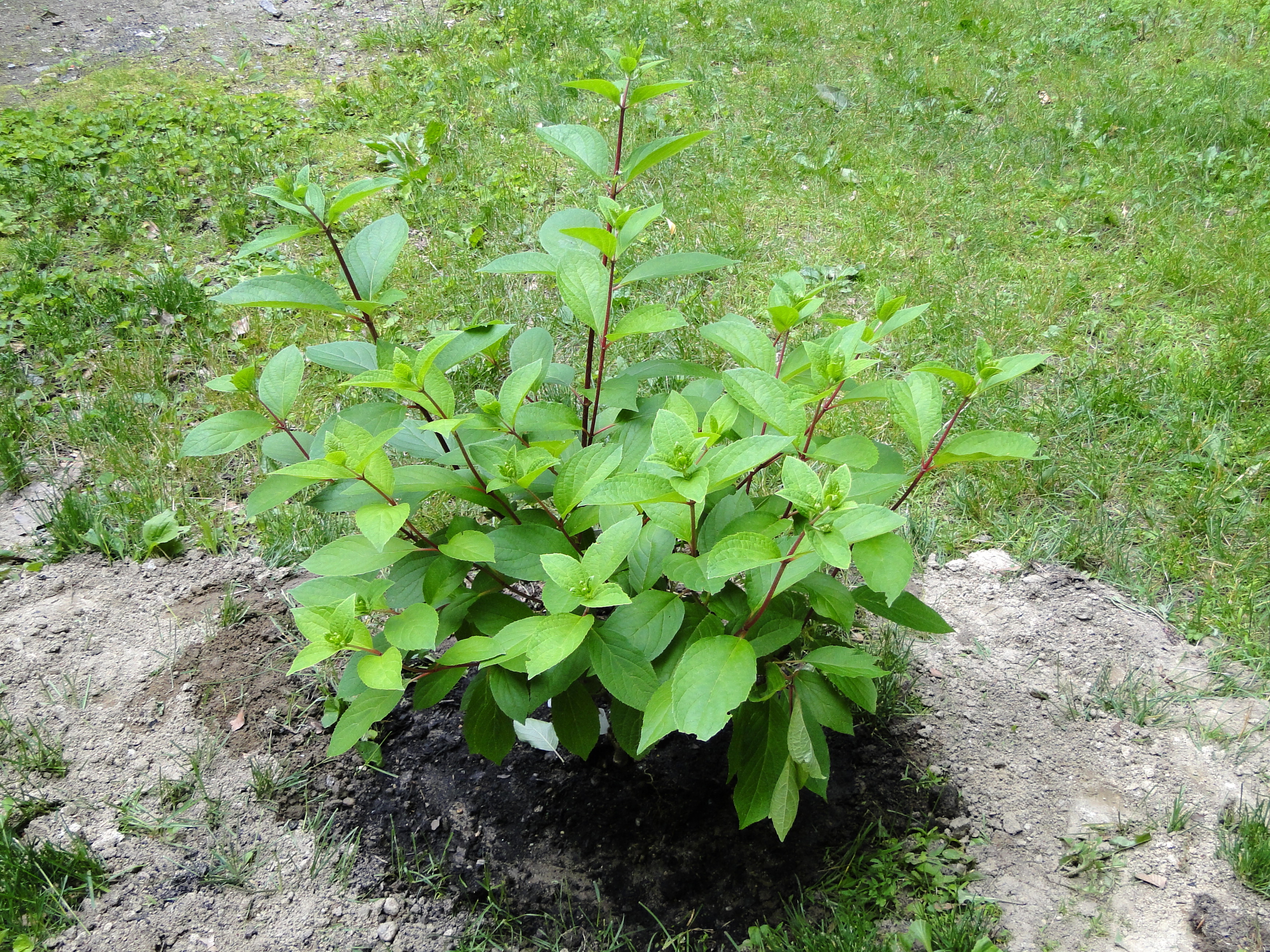
Finally – the Pinky Winky is in the ground!

Finally — I got my newly acquired Pinky Winky hydrangea shrub into the ground! The other four hydrangeas were planted a couple of weeks ago and then we had a week of rain. I couldn’t decide where to put the last one – the Pinky Winky – and then I decided it should go out front so it can be seen by passersby. So I began to dig near the edge of the house and I was stopped by a white pipe in the ground. It must be part of the septic system I suppose.

So I filled in the hole and had to find another spot. I decided on the area next to the garage. The Pinky Winky tag tells me that it will be quite large and eventually reach 8 to 10 feet wide and high. It also needs some sun. I also noticed that little buds are forming – which is exciting! I thought I might have to wait until next year to see some blooms, which will be pink and white and elongated.

All hydrangeas – the Limelight, Blushing Bride, Blue, and Pee Gee are doing well.

Make Your Home More Inviting by Adding Perennials

rhododendron red buds
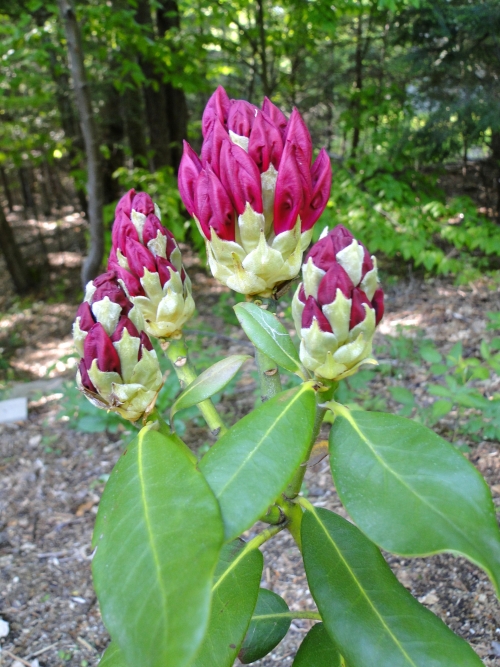
Red Budding Blooms on Rhododendron

Adding long lasting perennial shrubs to the yard is a great investment to your property. When I had my taxes done this year I was told to keep receipts of any improvements I made to the yard, including landscape plantings and other upgrades. Since I have a yard that needs a lot of help, I like the idea that I can claim at least some of my hard work on my taxes next year as a home improvement.

Have you ever looked at houses you pass while driving and thought how much the look could be improved by adding some nice looking perennials? I realize that not everyone is a gardener but it’s a shame people don’t care to make the outside of their house look lovely. It’s the first thing everyone sees and plantings make a home more inviting, in my opinion.  Hire someone to do it if you don’t want to.

Adding colorful perennials to the yard takes money and work, but the lasting appeal far outweighs the initial investment. Comparison shop for deals on your favorite flowering shrubs and buy something that needs little to no care once it’s planted (unless you like to fuss over roses!).

I love hydrangeas because they are fuss-free for the most part, but another plant to consider is the Rhododendron. The large version comes in a variety of flower colors and this red one (pictured) is my favorite. They like some shade, but this is a very hardy plant that will grow large. The smaller version, which looks more like an azalea to me, is also easy to grow and gets an abundance of flowers.  The only issue I’ve had with this one is that something ate the leaves – deer maybe?

Buying perennials in Fall will save you money, and over the winter they will have the chance to settle in and get ready to bloom in spring or summer the following year.   Adding just a few flowering perennials to the yard will make a big difference and will continue to enhance your landscape for years to come.

Tier Planting, Choosing the Tall Perennials

English: phlox
Image via Wikipedia - white Phlox

Planting against a fence, house, stone wall, around a post, or even a drop off, may require tier planting with larger perennials planted in the back and rows of shorter shrubs in front.  I’ve been thinking about this since I have many areas of my yard that will need sprucing up with colorful, flowering plants and greenery.

So what can we use for our back row, which will have to be filled with the tallest plants?  It’s a tricky question when beginning a garden because most plants will take a few years to reach the desired height.  My favorite choices for the back row of a tiered garden are tall phlox, coneflowers, lilies and monarda (bee balm).

Take into consideration the background – will they be planted against a white fence, or a wood one?  Choose colors accordingly as white phlox will stand out against a darker color, but may not show up well if the fence is white.

Also consider the amount of sun the garden will receive.  If it gets very little to none, choose other flowers that will bloom in the shade.

I want lots of color in my garden and I want it to attract wildlife such as hummingbirds and other birds that will eat the bugs.  Good red choices are Monarda and coneflowers.  Monarda will grow fast, and spread.  Coneflowers will take longer, but can also get quite tall and their seeds are loved by chickadees and gold finches in Fall.

Learn the colors of the different varieties and choose the ones you prefer and that will compliment your garden best.

English: A female ruby-throated hummingbird (A...
Image via Wikipedia - Hummingbird and Monarda