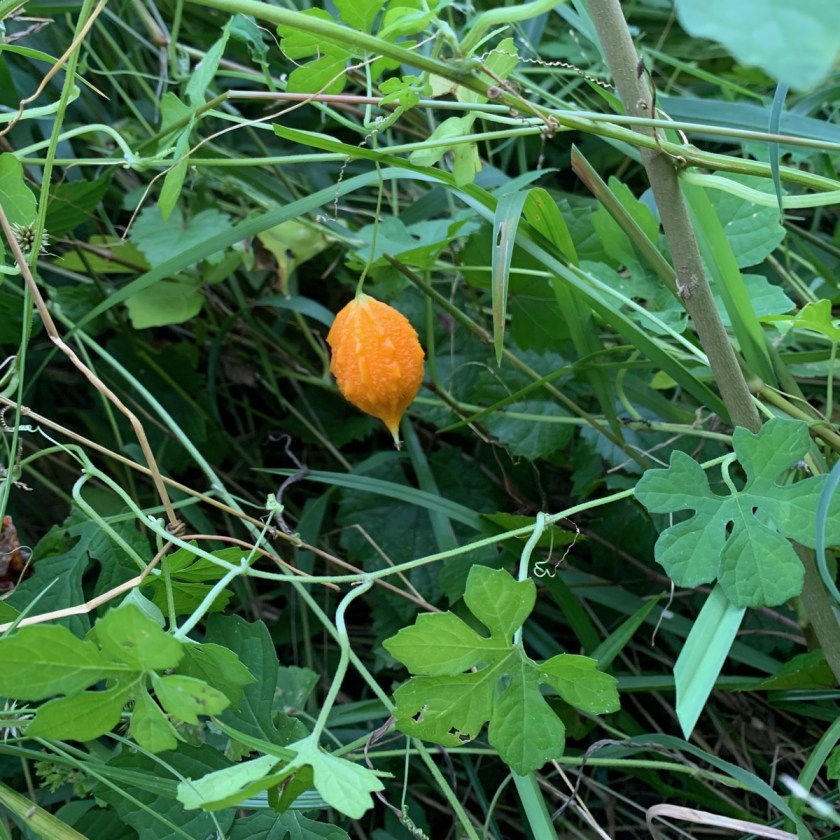
Found a new invasive plant called the Balsam pear.
Florida is full of invasive plant species and I’ve found yet another in my yard.
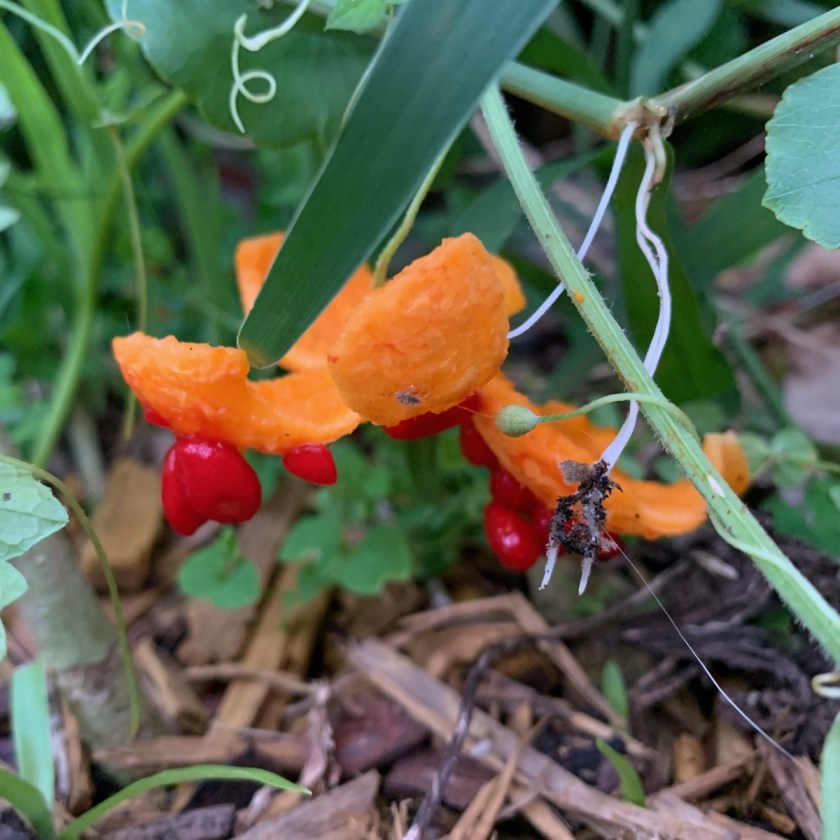
The green, leafy vine has tiny yellow flowers (which the bees love) and produces these globes that turn orange. After a couple of days the fruit opens and reveals big, red seeds.
Open to show red seeds
Balsam pear – invasive vine
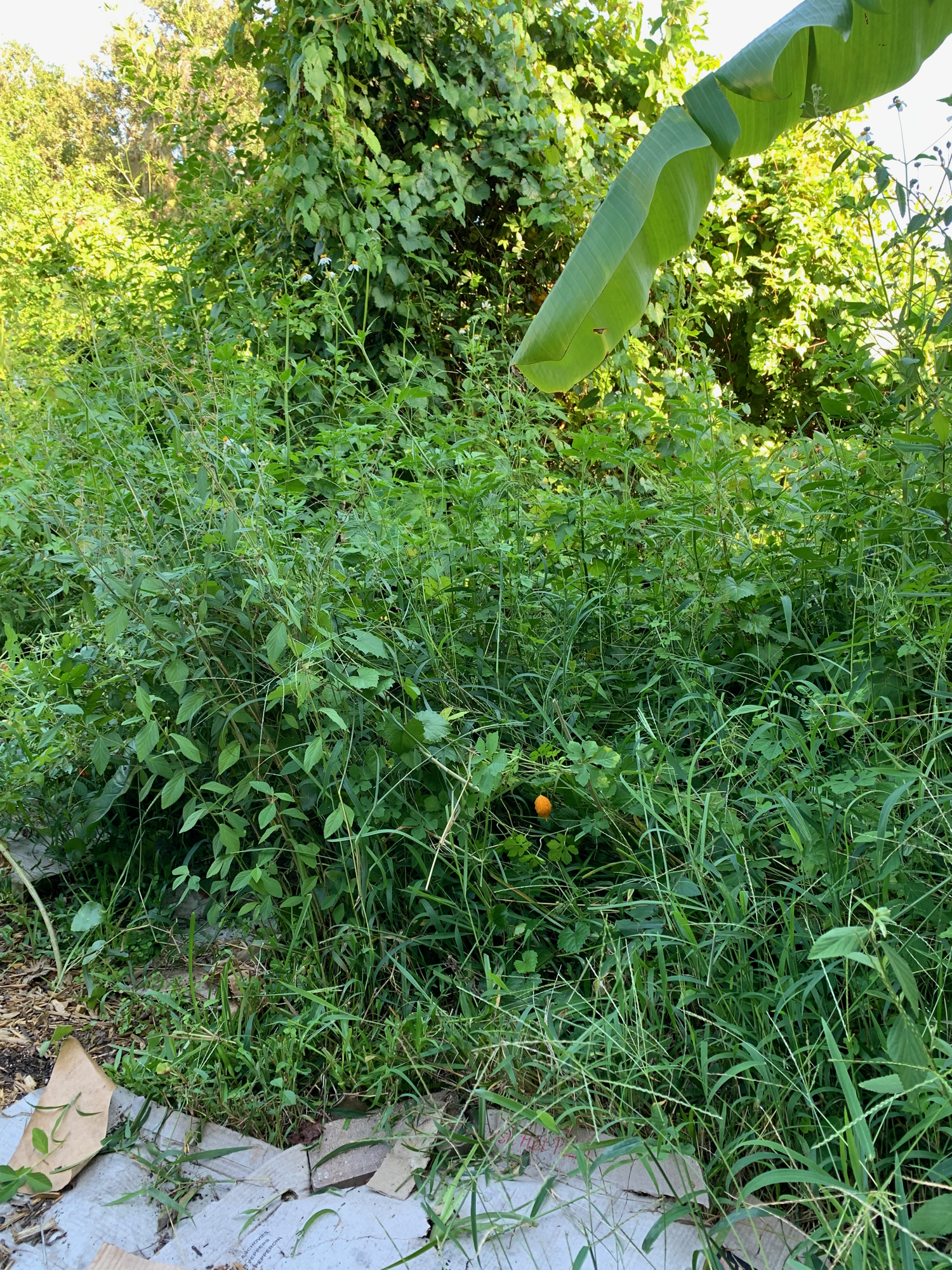
After a long, very hot summer, the vines, grasses and and plants in the vacant lot next door, have taken over. I bought a machete to cut the growth back some, but what we need is a good cold spell to kill everything back.
It is September now and still very hot. I don’t do much in the yard, but soon I will have loads to do and that includes ripping up the many vines.
Read more about the Balsam pear at the UF/IFAS site.
I’m not giving up. Growing milkweed here in Florida is not easy. Winter killed off a lot, so I am beginning again from seeds that were saved and also purchased.
Gardeners need to be ready to see all types of creatures. Here in Florida we have a lot of frogs, snakes, spiders and other things that can be a bit creepy, but necessary. Some of them are invasive species and don’t belong here at all.
Being a gardener means getting used to seeing all types of creatures in the garden. That is fine with me, but Florida tends to grow some big things. Spiders can be huge. Snakes can be poisonous. Frogs can be unwelcome when they are an invasive species.
Frogs
I know that frogs are necessary and very good at keeping the bug population low, but I get creeped out by frogs.
Unwrapping my cucumber plants one morning, this little frog was exposed. He was just sitting happily on a leaf. I hope he was eating the pickleworms. Is he a good frog? I don’t know.
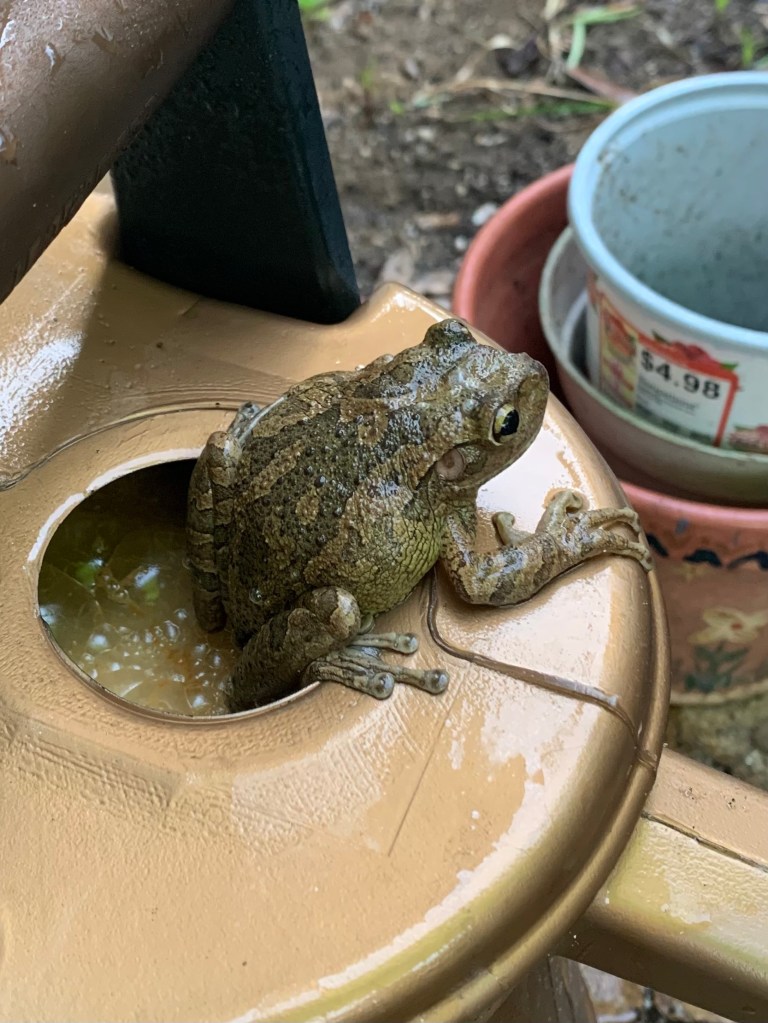
One morning I was fertilizing some of my garden plants. Using the watering can, I filled it with fish fertilizer and water – for the second time – and then, this huge frog popped up from inside! He’d been hiding inside the watering can and somehow lasted through the first watering.
Frogs can be native to the area and good for the environment, or they can be invasive species that disrupts things by killing off the good stuff. I really have a hard time identifying frogs, so I have no idea what types these are.
Bees in the Garden
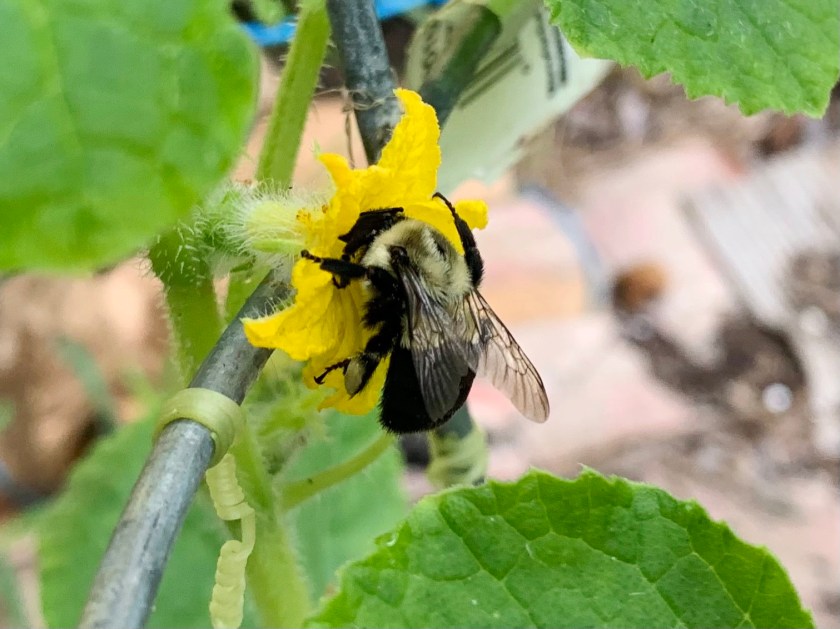
Each morning, shortly after I uncovered the cucumber plants, this bumblebee would show up and visit every flower. It was as if he was someplace close by just waiting for me to show up.
Sometimes little honey bees can be found resting inside the petals of my zinnias. The photo isn’t good, but there were about eight bees in this bright pink flower!
Bees inside the petals
Snakes
I am not afraid of snakes, in fact I like to see them in the yard. Long ago I learned how to identify the poisonous ones that live in Florida. We lived in a very wooded, rural place back then. We saw a lot of big snakes. Because I had kids that played outside, and if they were ever bitten, I wanted to know if they had been poisoned! Fortunately, that never happened.
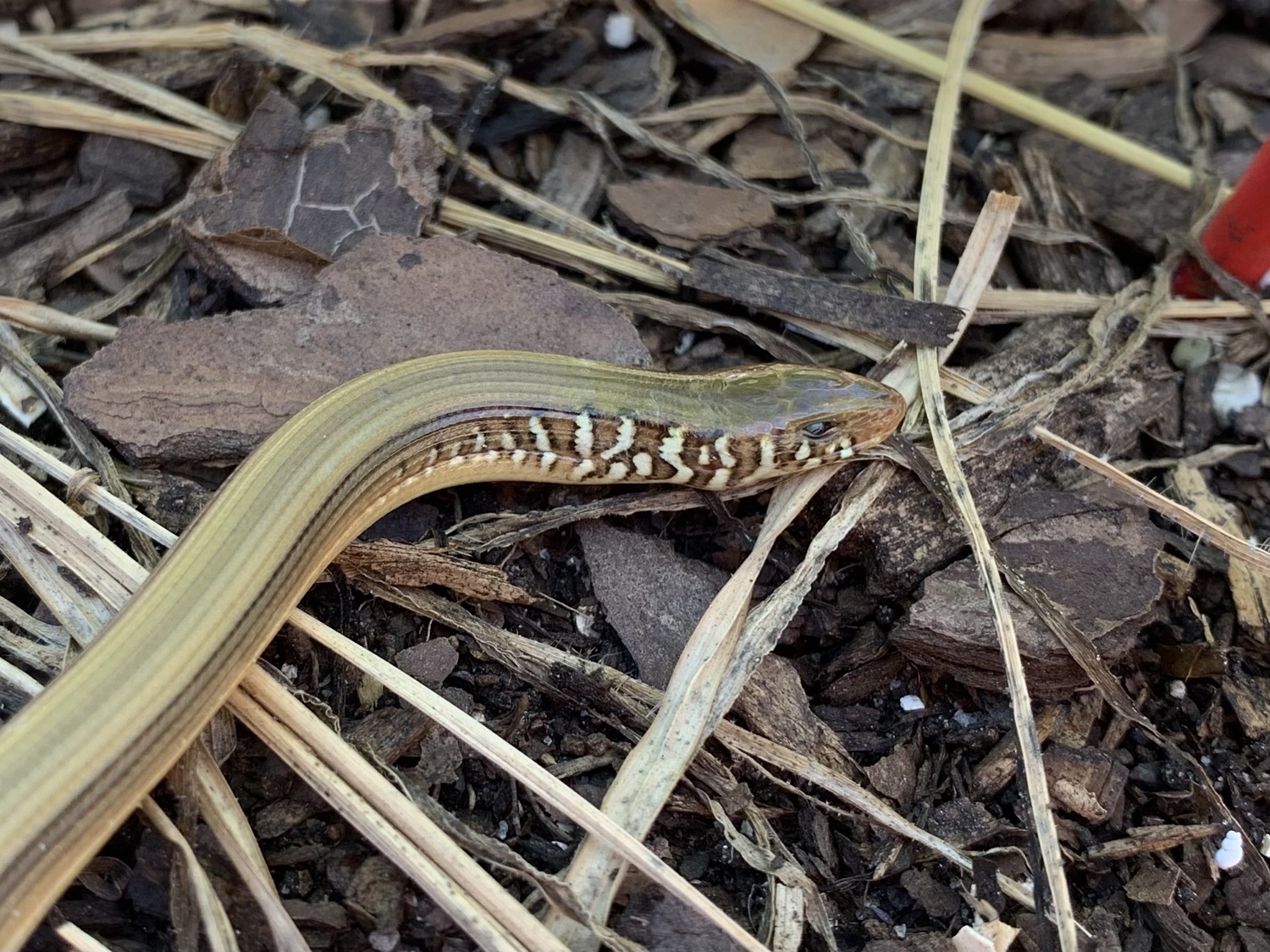
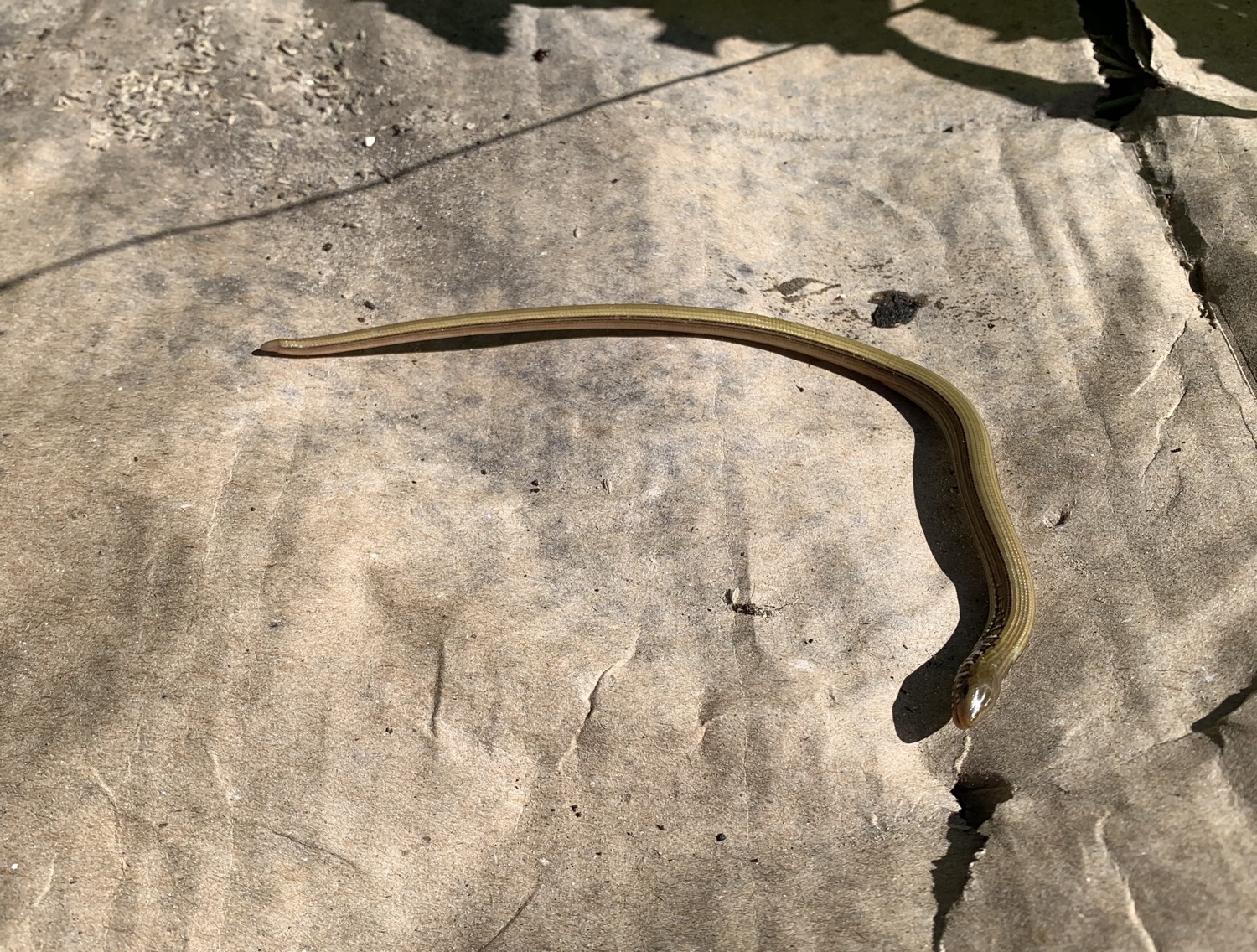
These days, because of all the habitat loss, I seldom see snakes. This little snake is dead. This is how I got the close up photo of its head. My cat found it on the cardboard in the yard, but I don’t know what killed it. It’s a juvenile of some kind and is not poisonous. The poisonous snakes of Florida have triangular heads, except for the Coral snake (red touch yellow kill a fellow), which this is not. My guess would be a juvenile Ribbon snake.
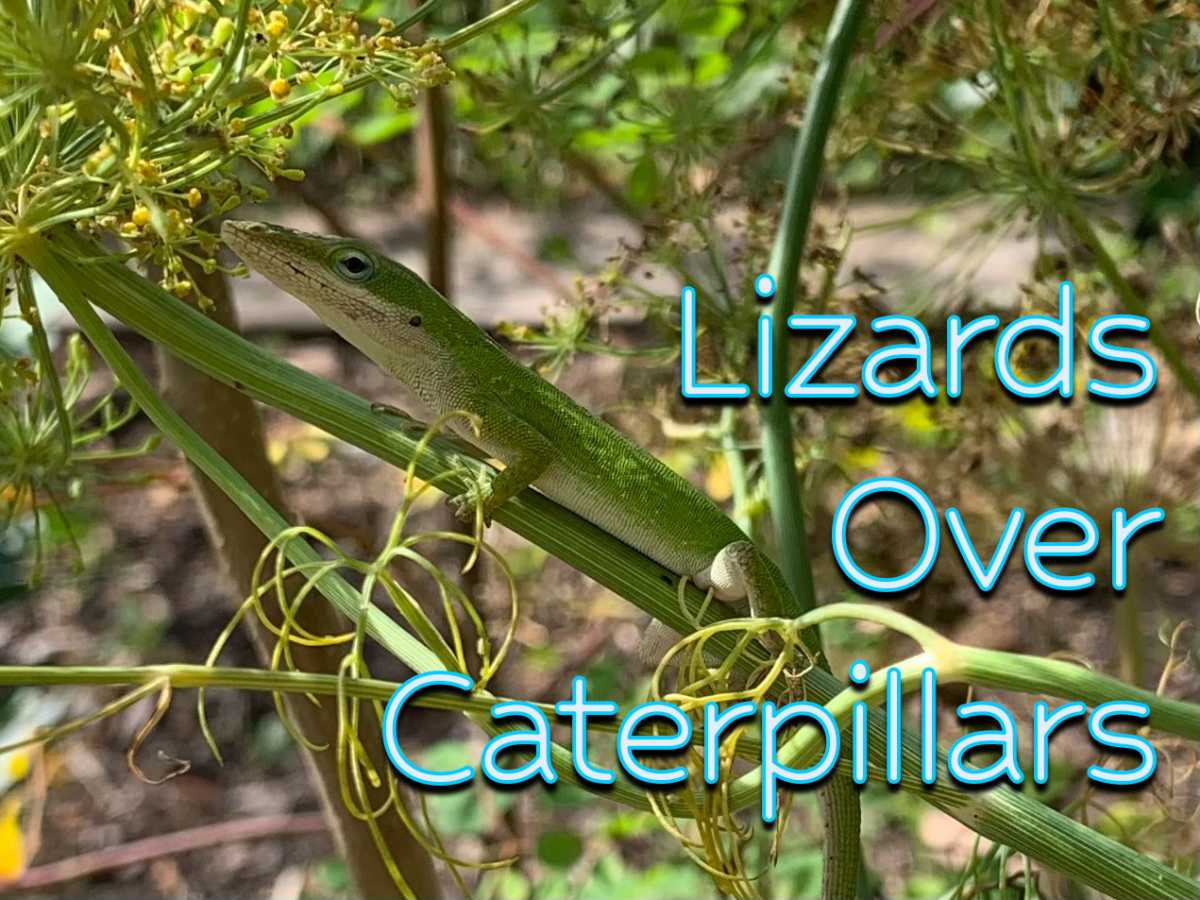
These are just some of the garden creatures that show up around my yard. Lady bugs are usually present on the Eggplant leaves, and I always love to see them. The lizards are also always around (some of those are also an invasive species), but they are all contributing to eating the bugs.
I can only hope that nature is still in sync around here and keeping everything in check as it should be.
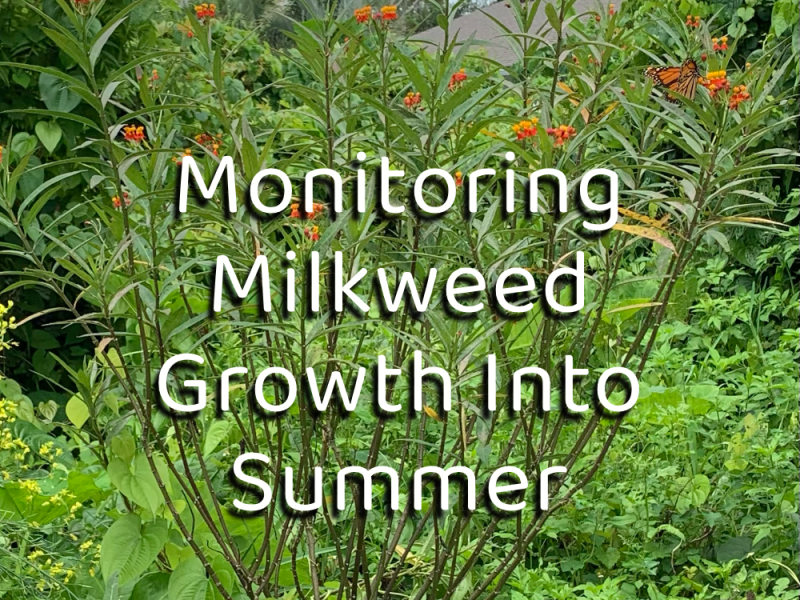
Year two and I’m still trying to fill my yard with native milkweed plants. After the freeze, my plant number has dwindled but seed pods are showing up, which will help.
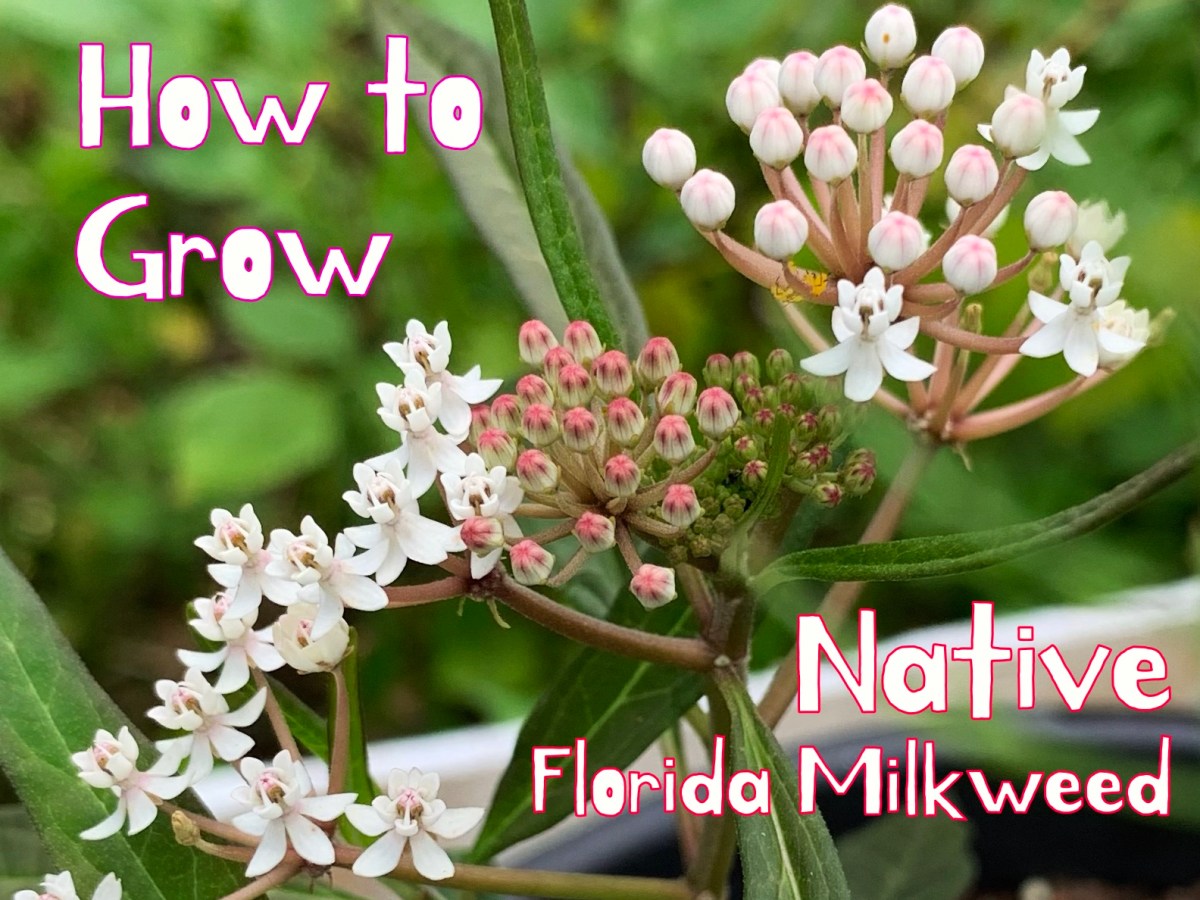
I’m still trying to fill my yard with native milkweed. After the cold spell over winter froze most things back, and killed many things, I have fewer milkweed plants. All the tropical milkweed is gone. Tropical milkweed is not native, and therefore not a great loss. Three of the four swamp milkweed seedlings I purchased…
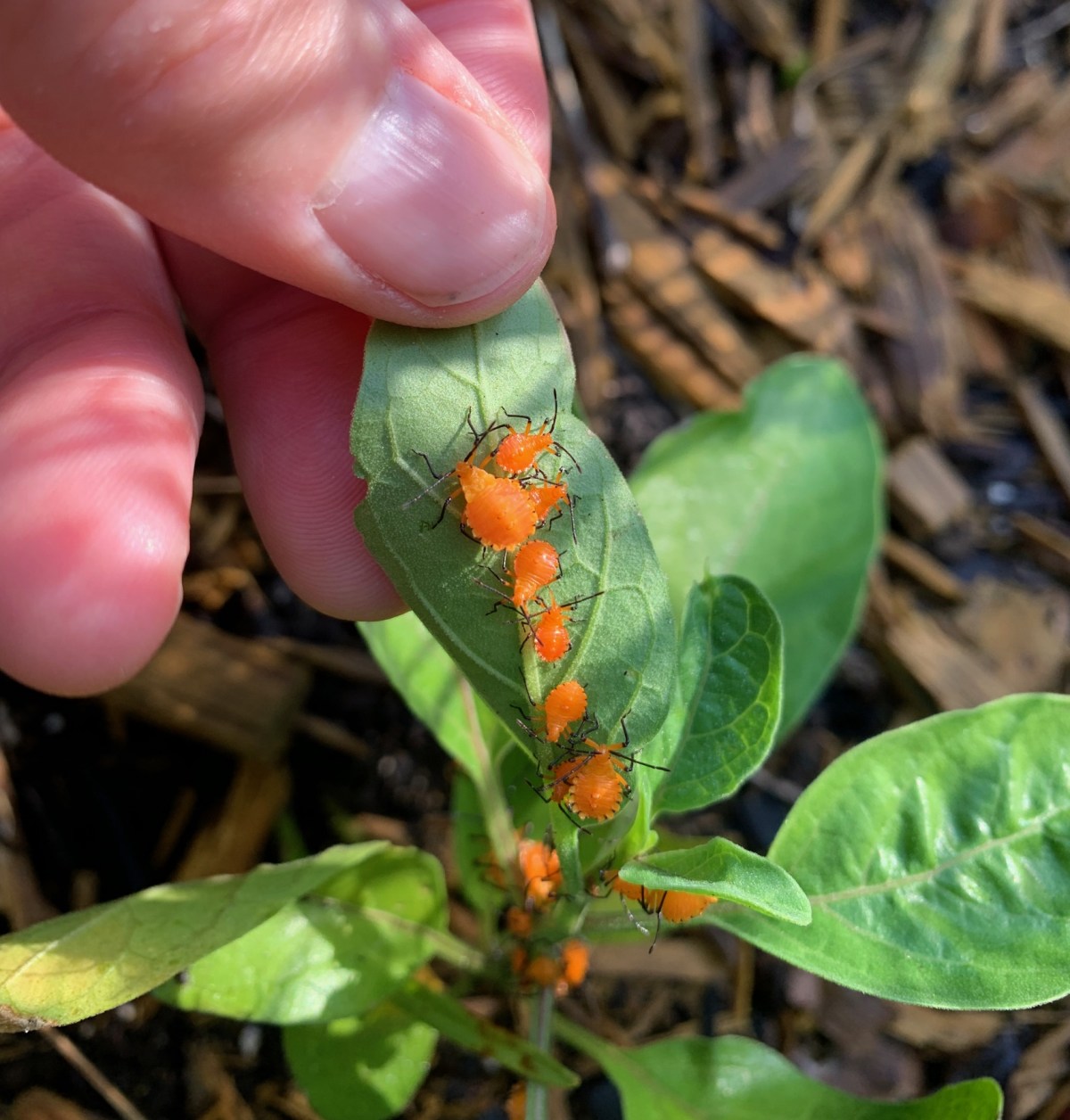
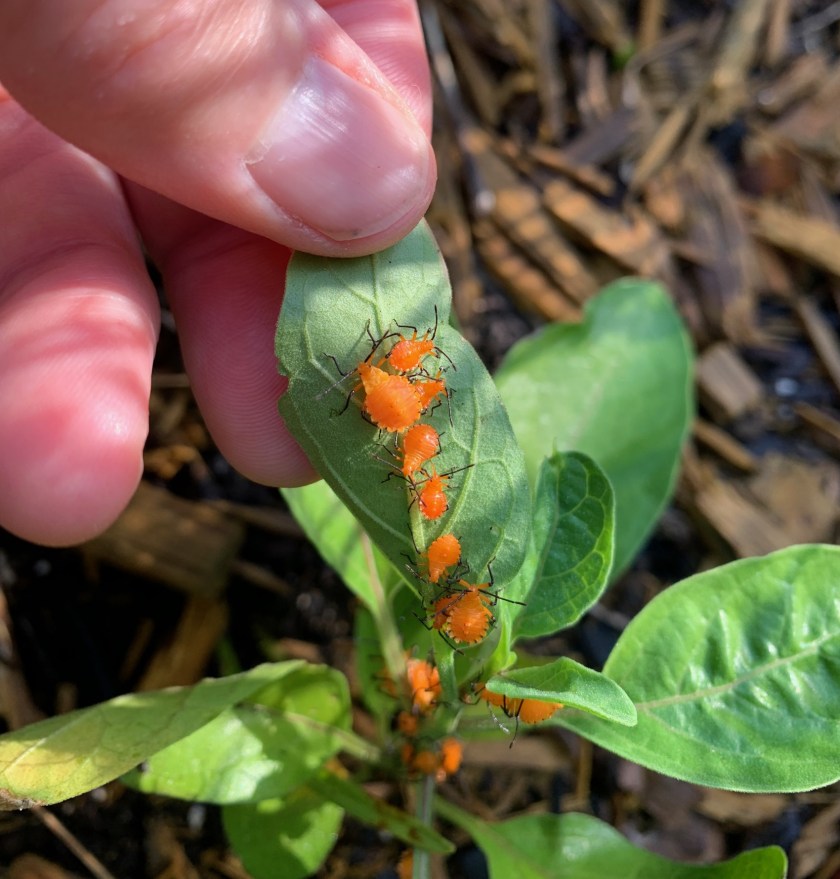
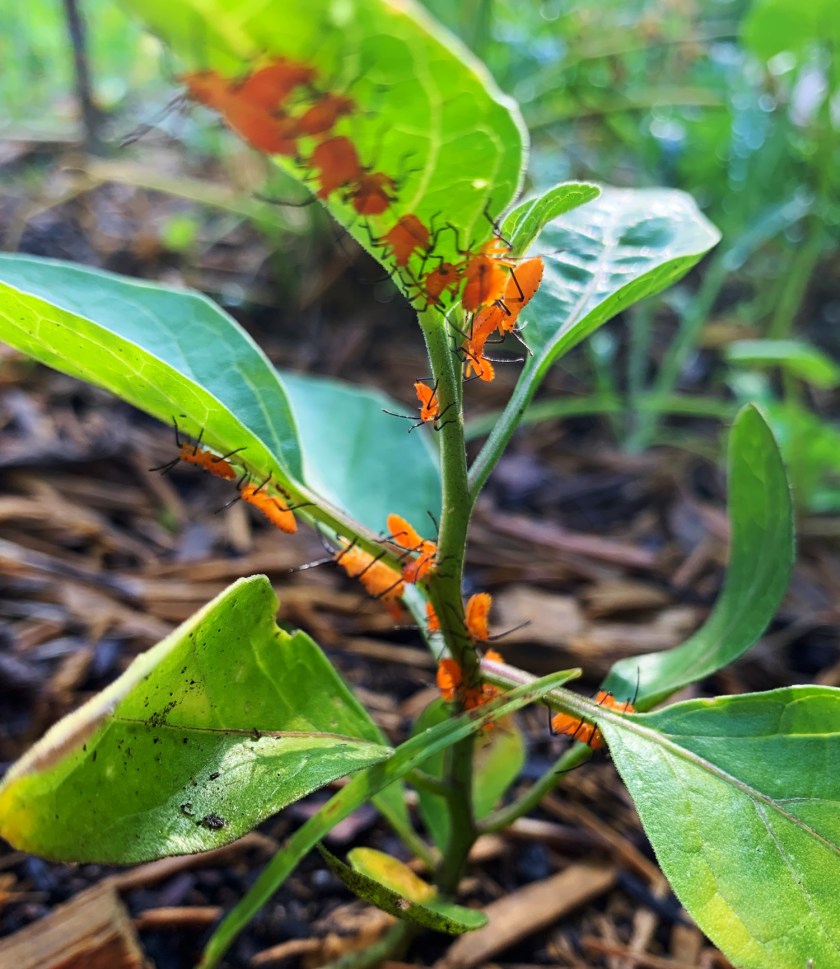
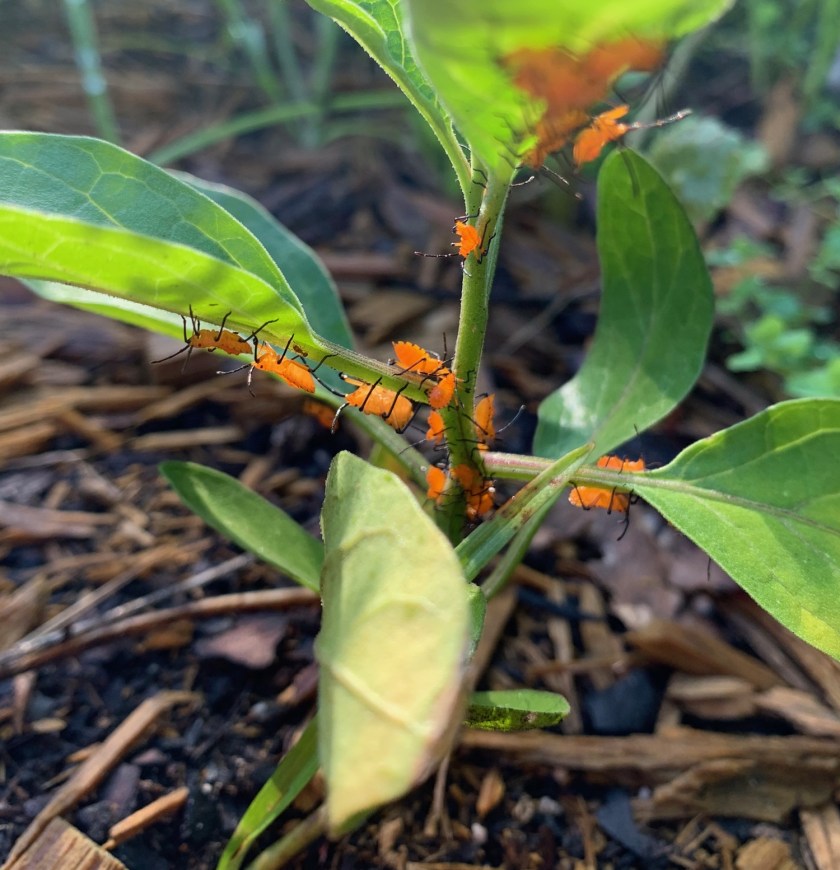
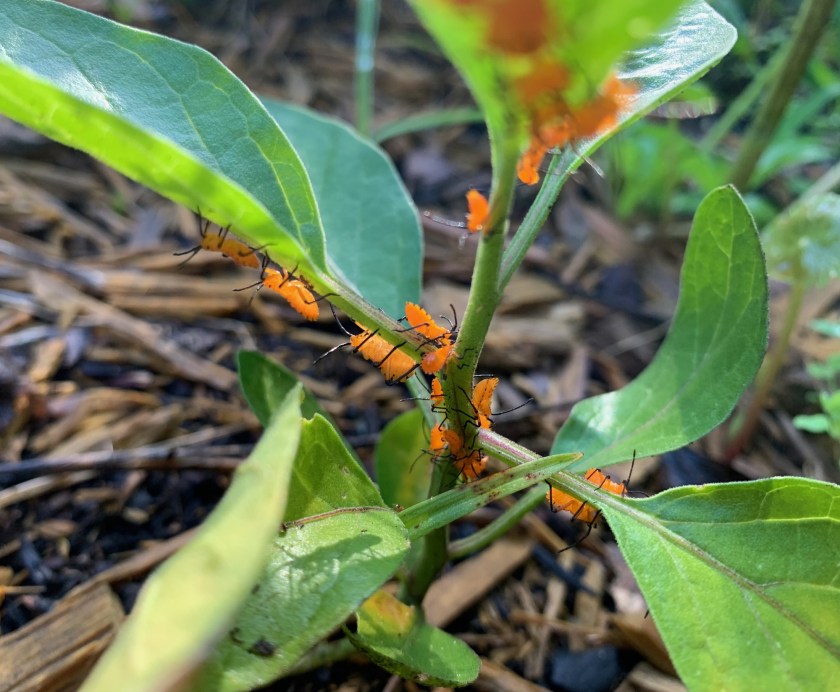
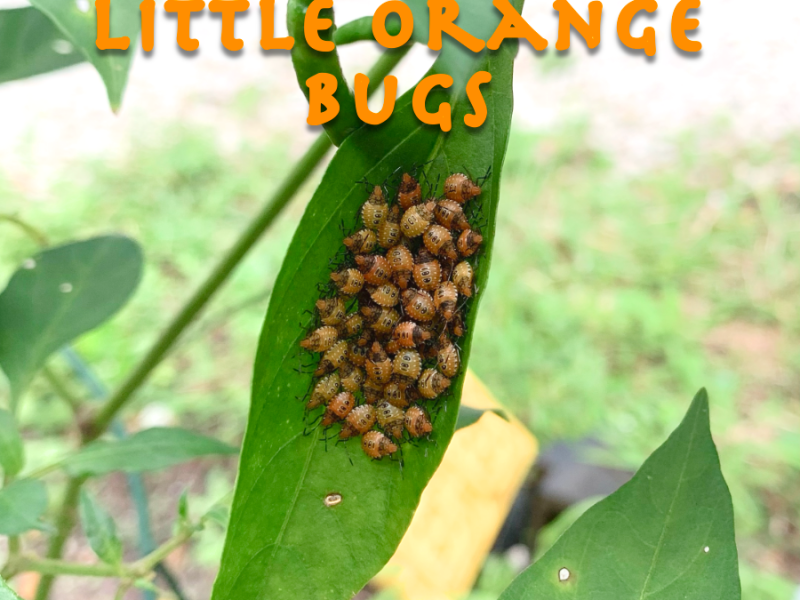
Trying to identify little orange bugs found in the garden all over the Groundcherry plants.
I don’t know what these little bugs are but they are all over the Walter’s Groundcherry plants. They are tiny and orange with black legs. I’m pretty sure they are not aphids. I’m thinking they are young / juvenile somethings.
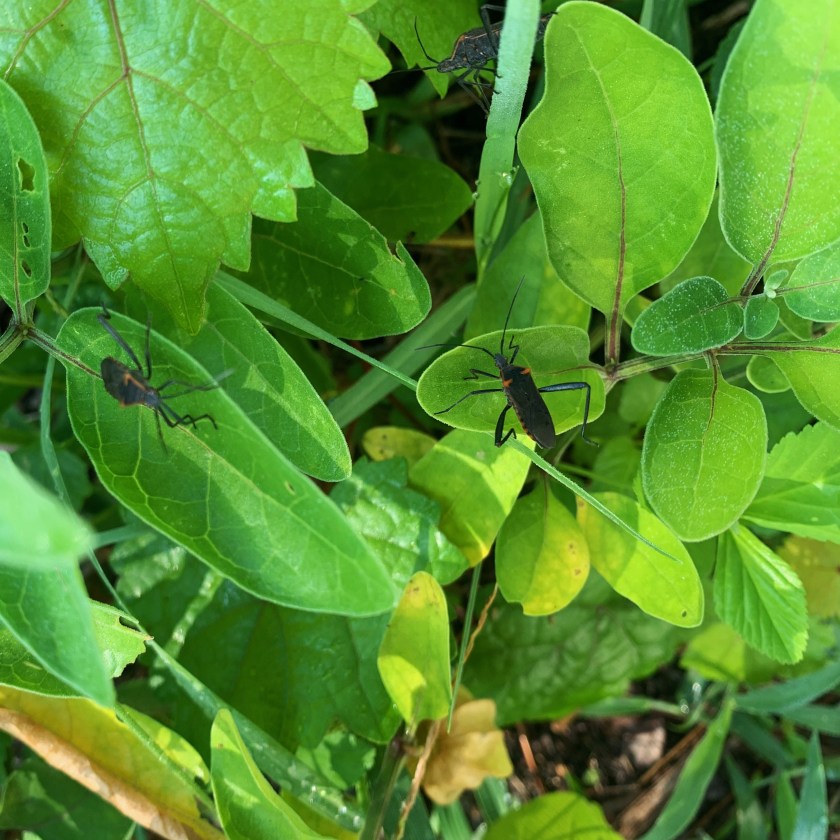
A while ago I found a couple of soldier beetles on these same ground-cherries. So are the orange beetles just young soldier beetles? I can’t find any pictures that look like the orange bugs.
How to save fresh garden basil, by freezing the leaves, to use later.
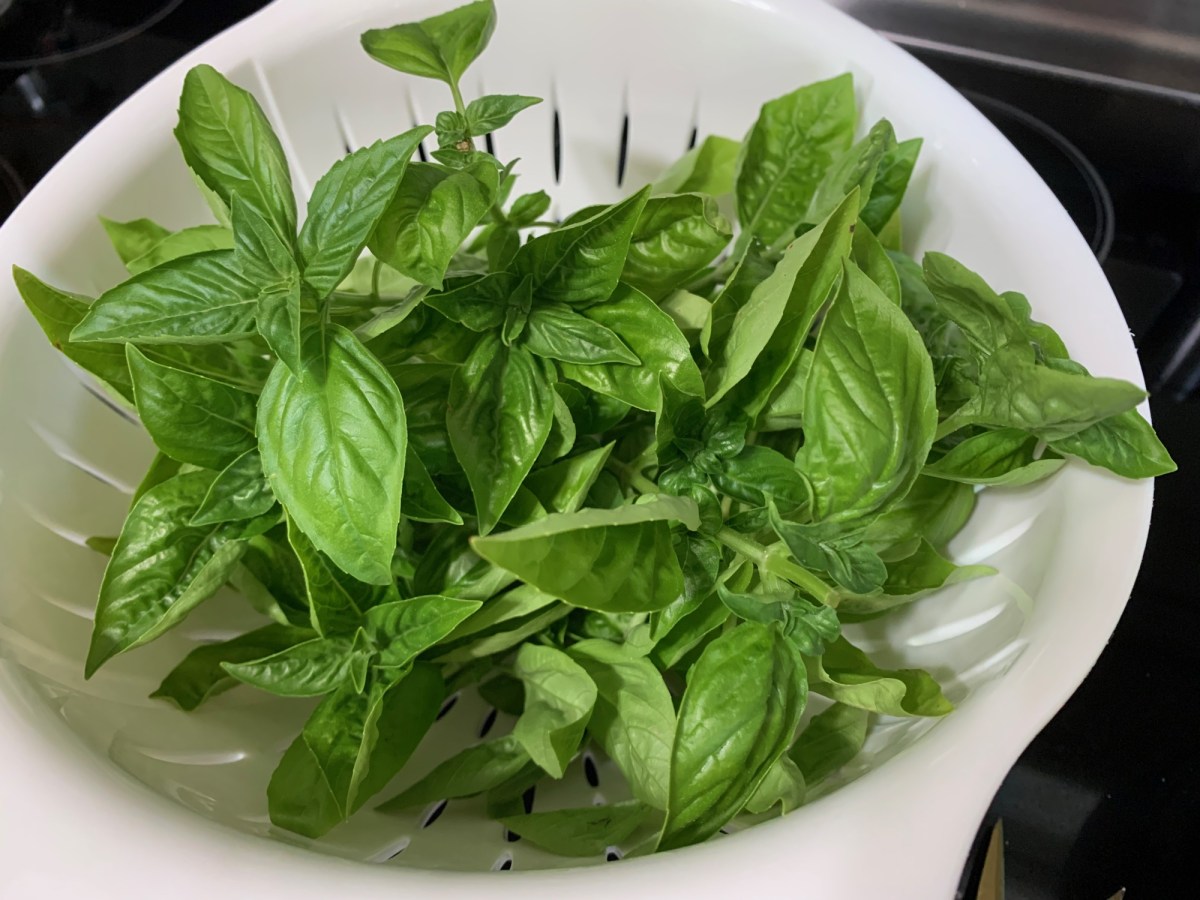
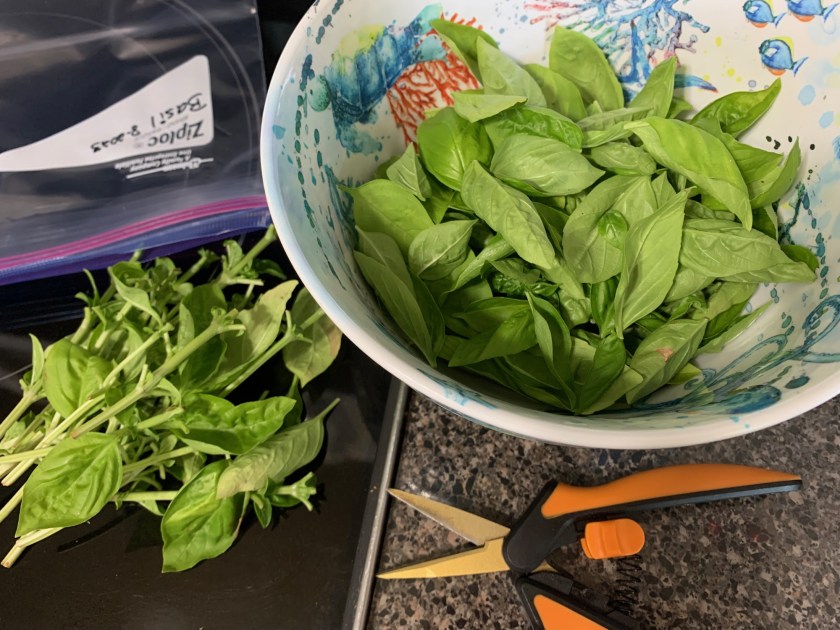
I should have picked my fresh basil for freezing a few weeks ago. It does not look as good now, but I found a great video (link below) about how to freeze fresh basil, so I went into the garden and picked some.
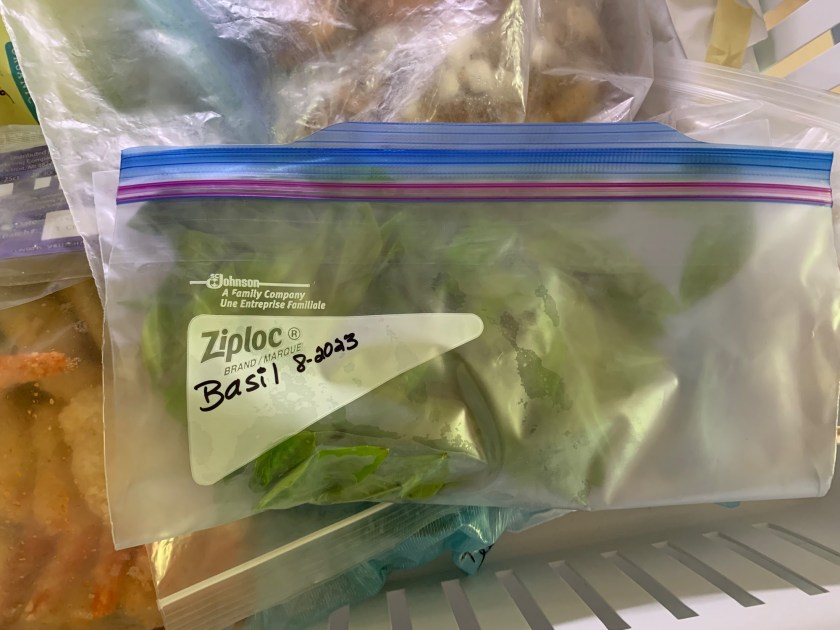
I didn’t have as much basil to freeze as the woman in the video, and I put it into a gallon size freezer bag, instead of quart. But, now I can add more to the bag as I pick it.
The leftover stems went into my compost bin.
I love to have frozen veggies to add to my beef and chicken broth when I make it.
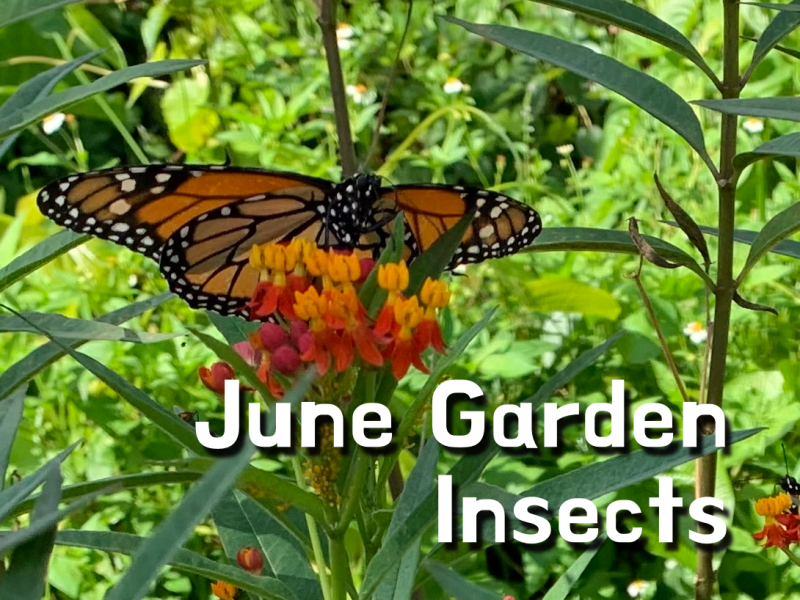
Mid-summer is the time for pesky pests to show up in the vegetable garden. It’s also the time to search for beneficial bugs that will hopefully take care of some of the problems.
In July I noticed that there were a lot more unwanted bugs on flowers and veggies in the garden.
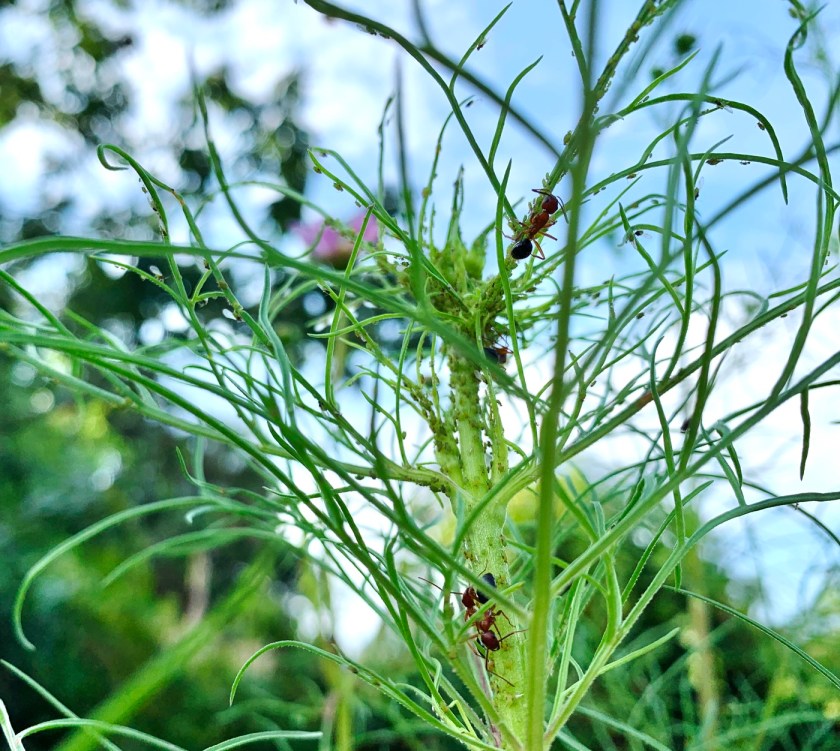
The seashell cosmos are full of aphids. I saw one ladybug on the cosmos, but she didn’t seem interested in removing the aphids. Or maybe there were just too many. Yup, ants and aphids actually help each other out… Read this article at Gardening Know How.
I have since sprayed water on the ants and most of the aphids to get them off these flowers. Some stems were cut back to remove the infestation.
Ants and aphids
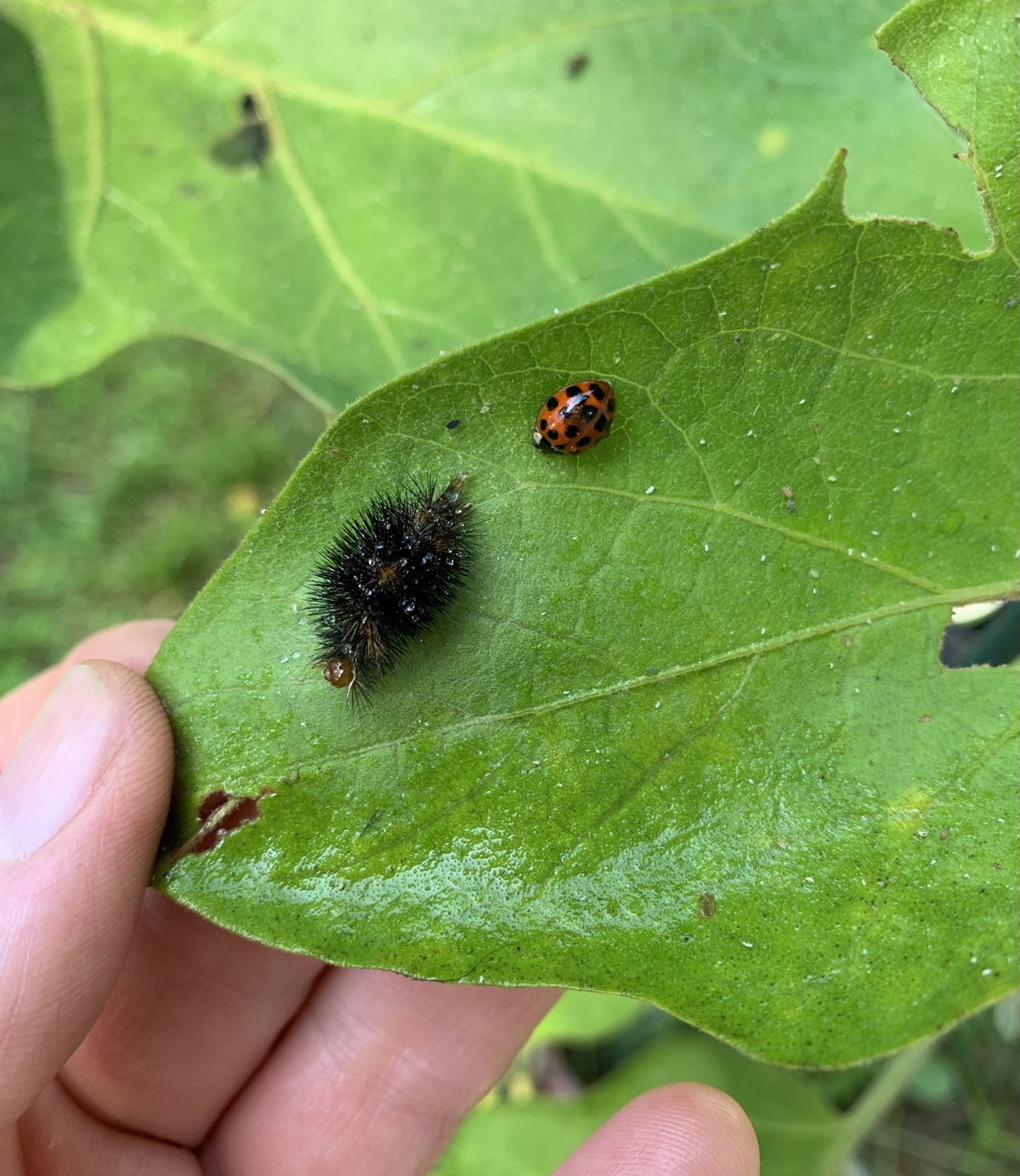
Cosmos and eggplant are covered in ants also. And a black, fuzzy caterpillar showed up to eat the eggplant leaves.
Giant Leopard moth caterpillar
The black caterpillar turns into the Giant Leopard moth, from what I’ve discovered. I had three of these caterpillars on my eggplants, but now they are all gone. I was really hoping to see them become moths.
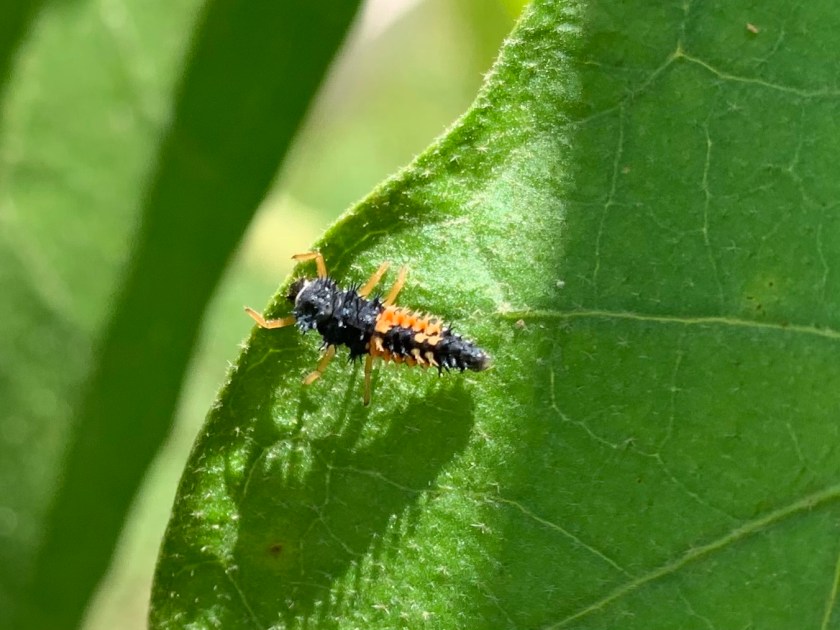
Along with weird and unwanted things, I was happy to find some ladybug larvae on one of my largest eggplant plants. Lizards were also crawling all over the place, so these may disappear. I hope not.
Ladybug larvae
Get Rid of Fire Ants Naturally, Will This Work?
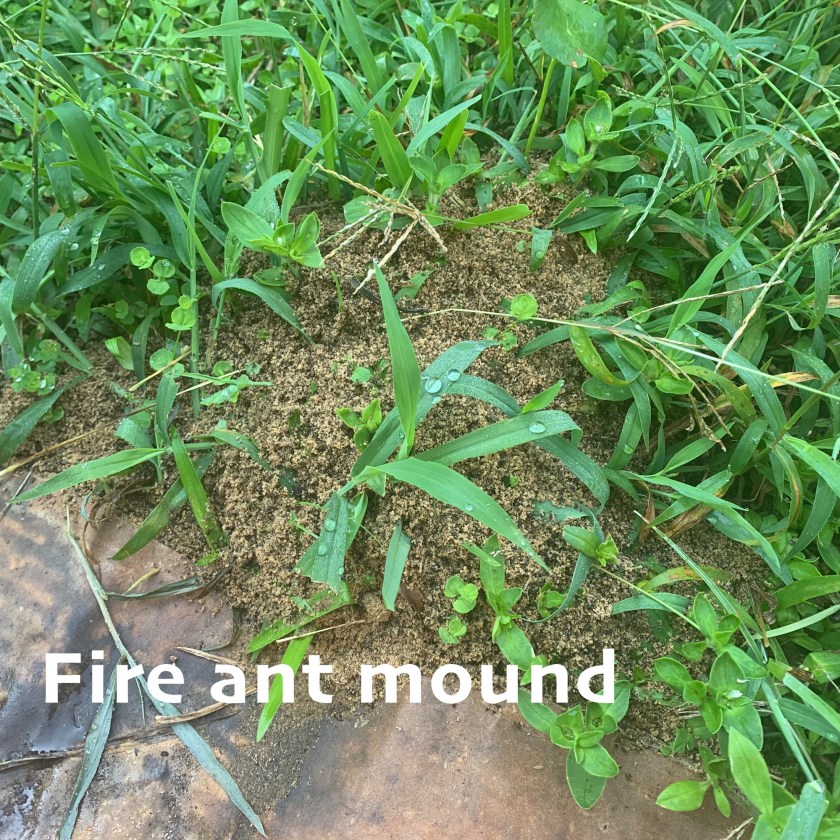
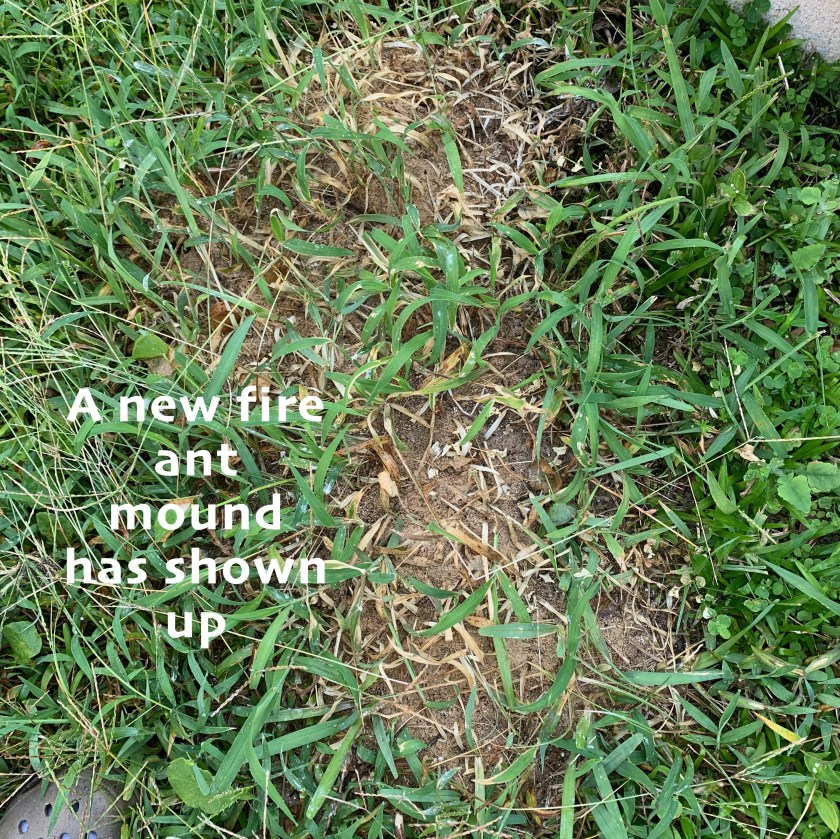
As for one of the worst Florida pests ever, the fire ant, I’ve been looking for a good way to rid the garden of them.
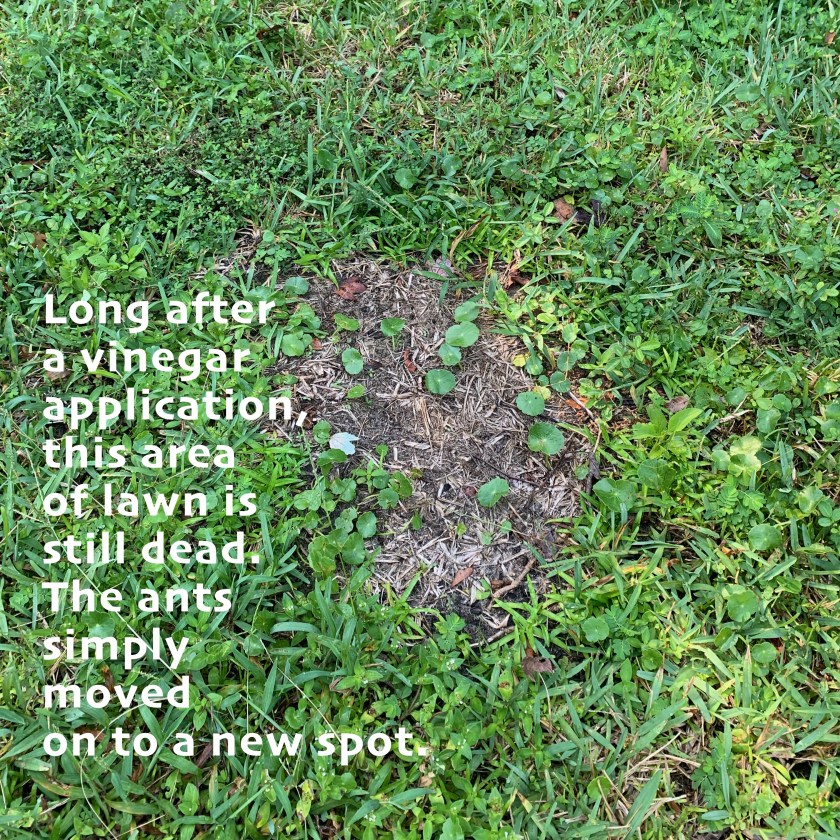
I’ve tried pouring vinegar on the mound. It kills all the grass, but the fire ants just move. I’ve sprinkled Diatomaceous Earth all over the hill, and it seems to do nothing. I was going to set Terro traps but I was afraid the raccoons would try to eat the stuff.
Now, I’ve come across a video by Elise Pickett from The Urban Harvest with advice on naturally killing fire ants. The mixture to try contains orange oil, dawn detergent and water. Watch the video here for more info.
I absolutely plan to try this as soon as the ingredients arrive.
Beetles and Worms
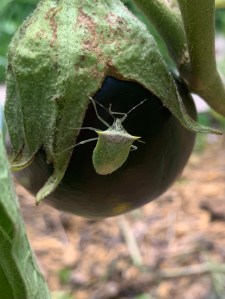
I don’t know what this little green beetle is, but he was happily crawling on the eggplant. Looks like a stink bug, except green. Maybe he is a juvenile.
These little black bugs were found on the Ground Cherry plants, which grow wild along the edge of the yard. Are they good bugs? They seemed harmless, and sure enough, they are soldier beetles which are BENEFICIAL and important for pollination.
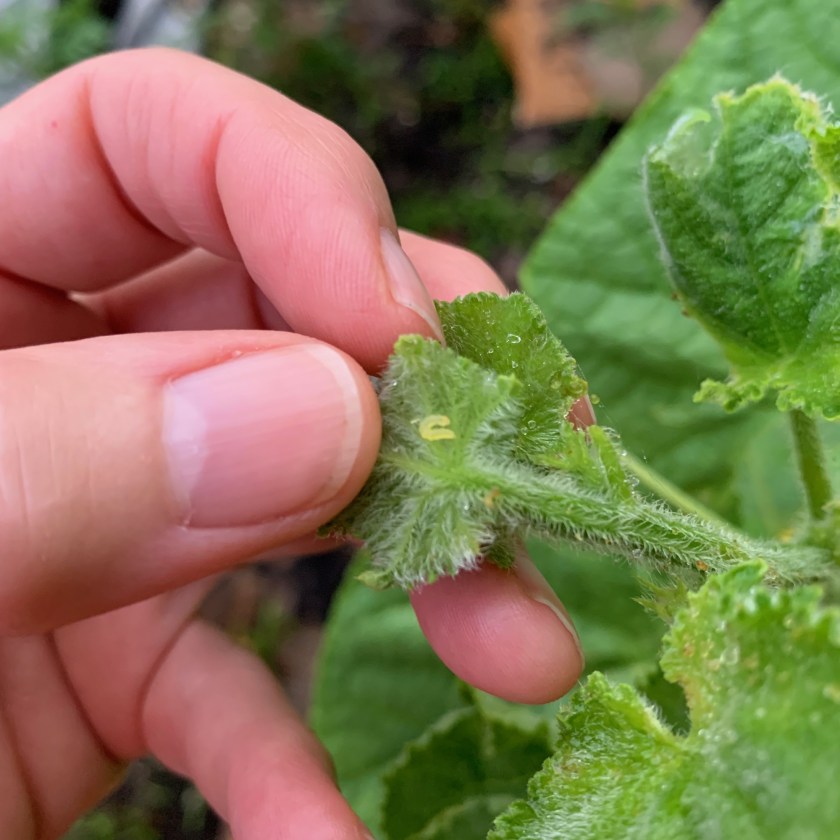
Each morning I am picking little green worms off the tops of my Suyo Long cucumber plants. Most likely the Pickleworm. I will continue to hand-pick the worms and hopefully rid the plants of them.
After reading this article by IFAS, it seems that the best practice for avoiding this worm problem is to plant cucumbers early in the season to beat the invasion. I will look into this further.
The Seminole pumpkin is perfect for us Florida gardeners as they are native. This is my first year growing them.
I had high hopes for growing the Seminole pumpkin. After all, it’s a Florida native. I had watched videos where people told of their bounty of pumpkins. The vines filled their yards and pumpkins were everywhere. For me, this was not the case.
My yard is small and the garden area is even smaller so I planted the seeds in one little section near the side of an empty, overgrown lot.
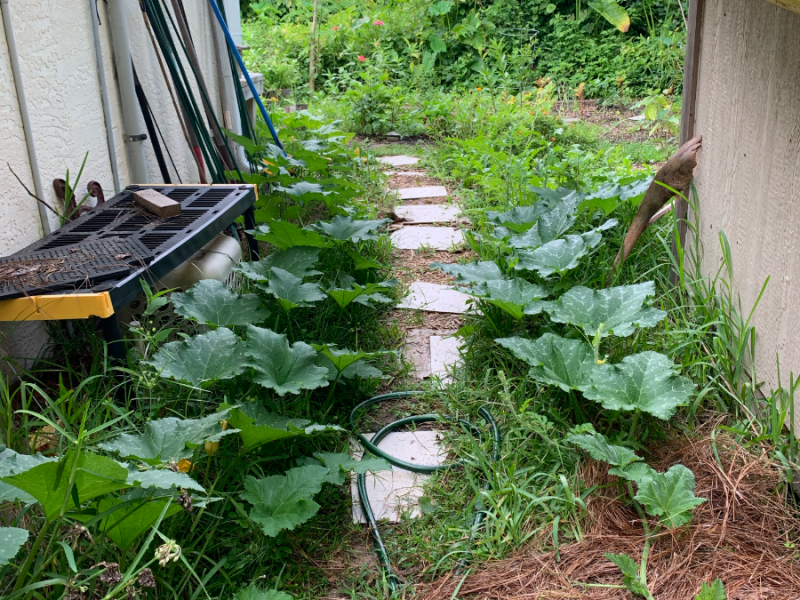
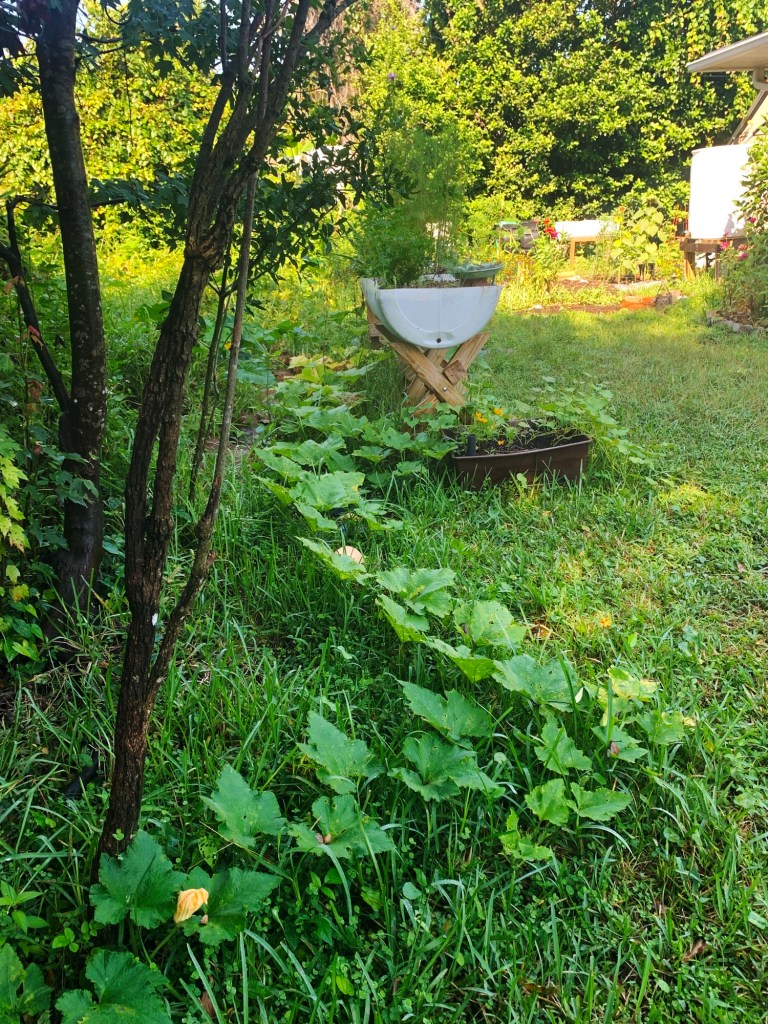
I had pumpkin vines trailing down the entire side of my yard, but only one pumpkin growing. Others began, but then dropped off the vine. It was disappointing. Maybe I planted too late in the season.
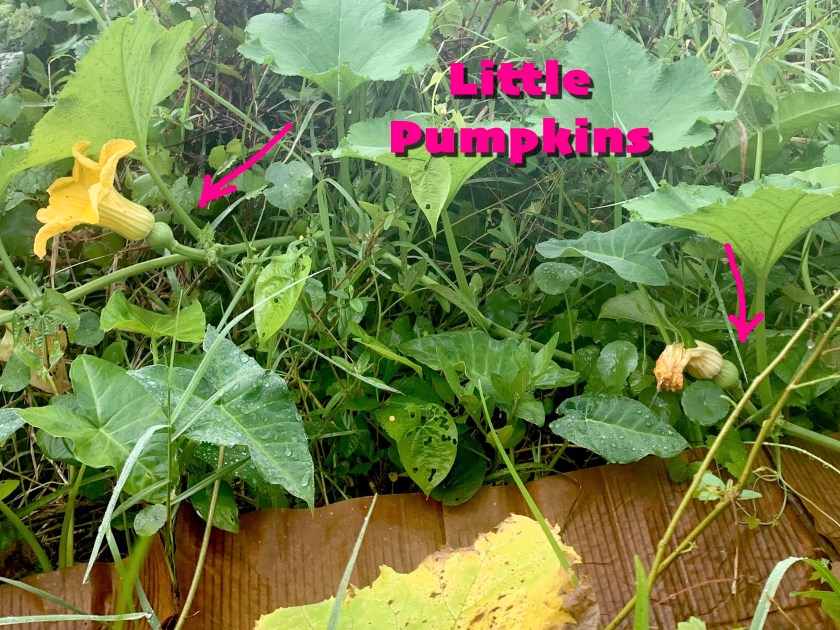
This new vine was headed off into the wilderness and it had two little pumpkins growing. Sadly, one of them did not make it. The other one is doing well.
New baby pumpkins
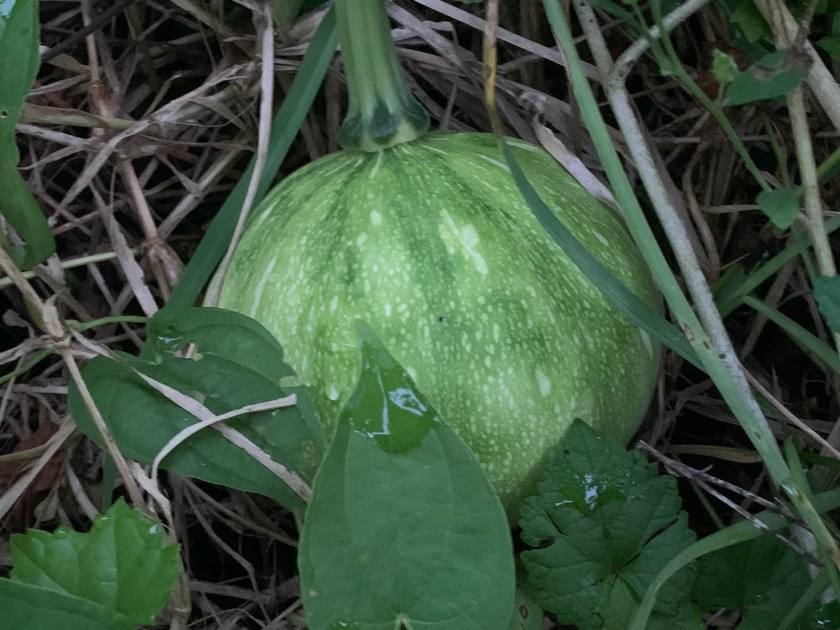
Of the two pumpkins shown above, only the one on the left continued to grow. So now I will have two pumpkins total by the end of summer.
New little Seminole pumpkin
Planting and Growing
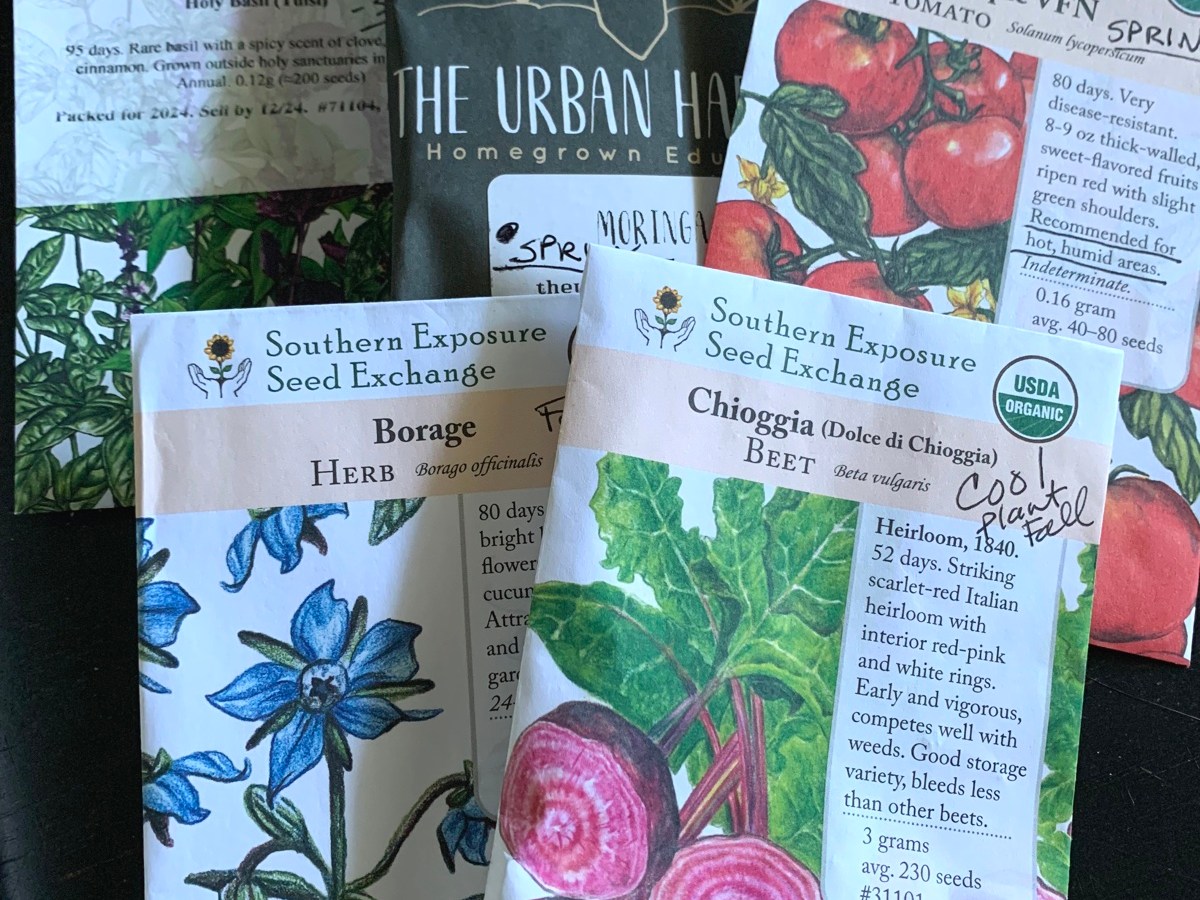
I planted my pumpkin seeds – purchased from The Urban Harvest – in pots, then transplanted two plants to the garden. I could have planted sooner, but my garden was not ready.
Later I transplanted Seminole pumpkin plants, started from seeds in pots, into the ground, and they did not grow well. So, next time I’ll put seeds directly into the ground.
From my limited experience I have noticed: All the leaves near the place the seeds came up have turned yellow and dropped off.
The vines are easy to direct. I have all my vines coming down the edge of the yard. The vines will root into the ground along the way!
Seminole Pumpkin on the vine
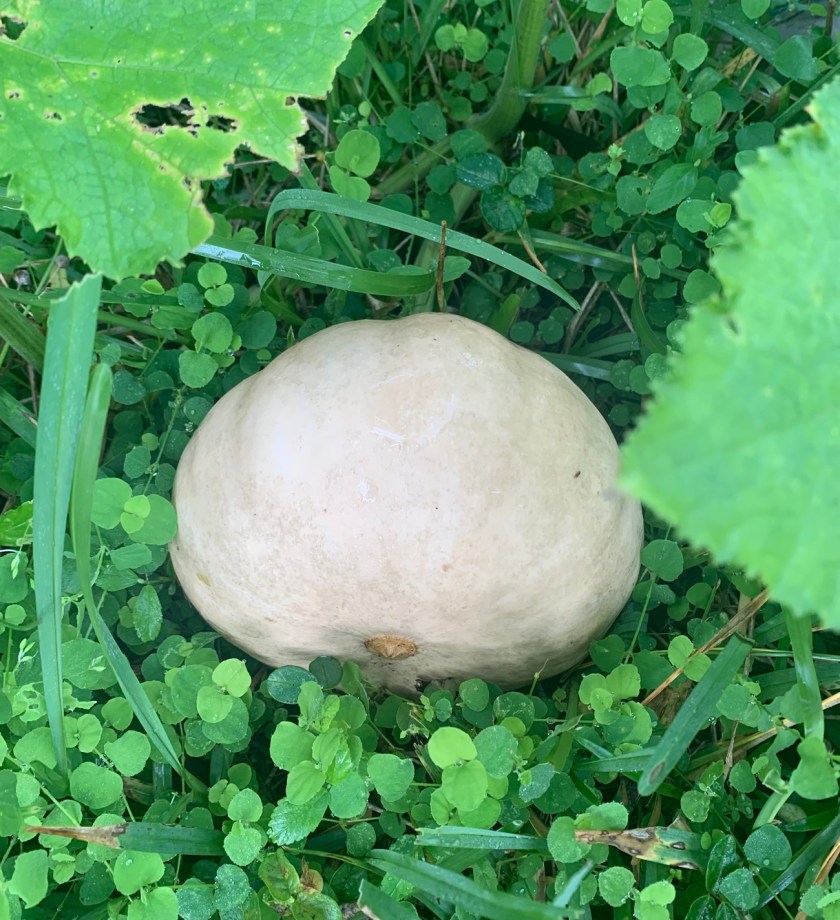
I’m watching this pumpkin grow and was wondering when I should cut it off the vine. Apparently the stem will turn brown and begin to die, then cut the pumpkin leaving a long stem (see more info in the link below). This type of pumpkin can be stored for months – even up to a year – if conditions are right.
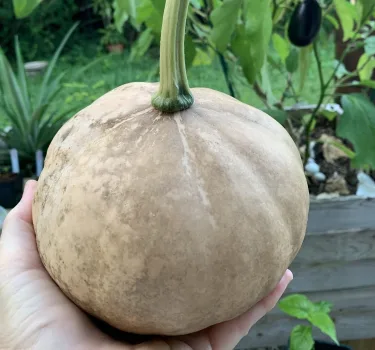
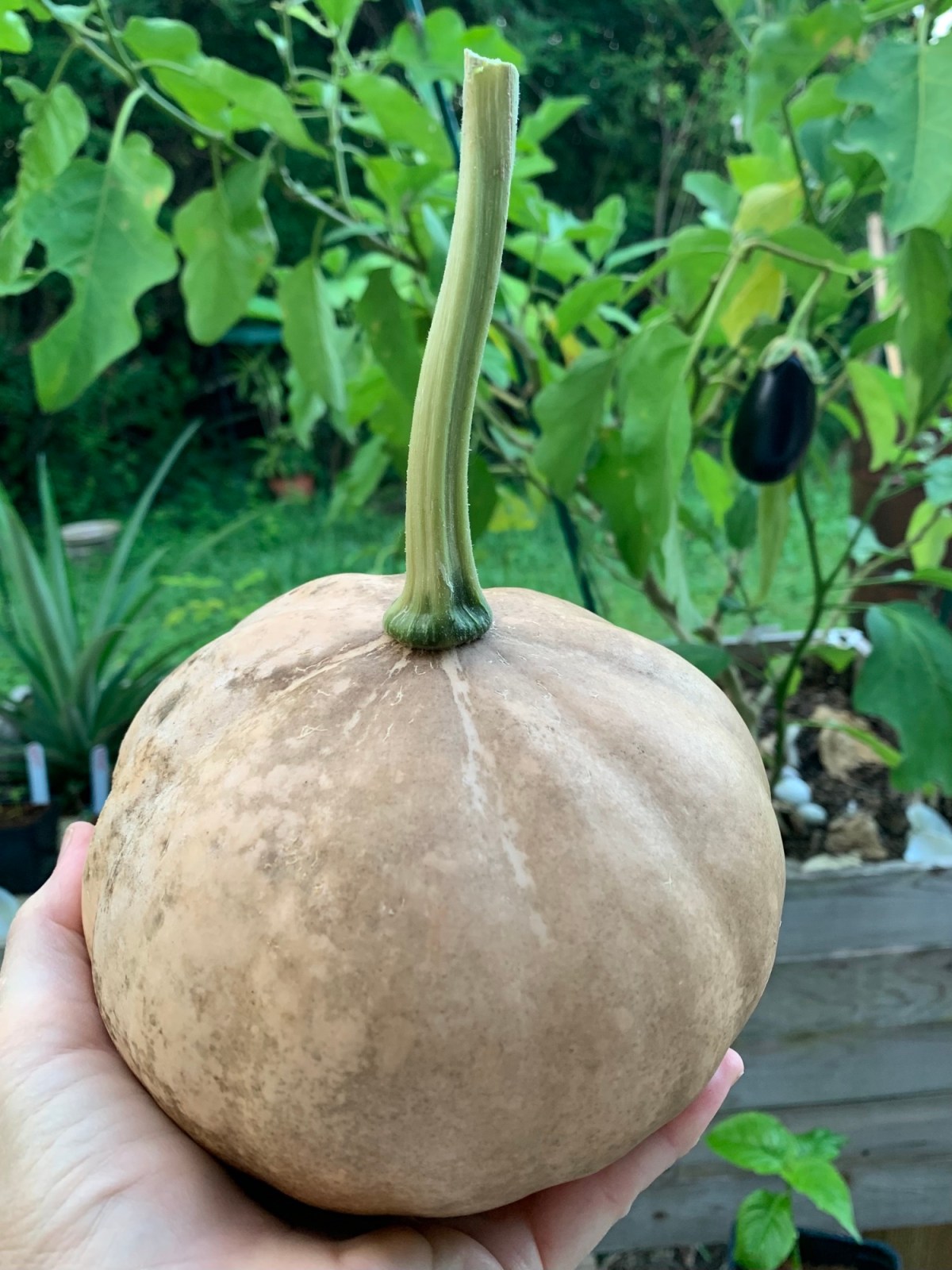
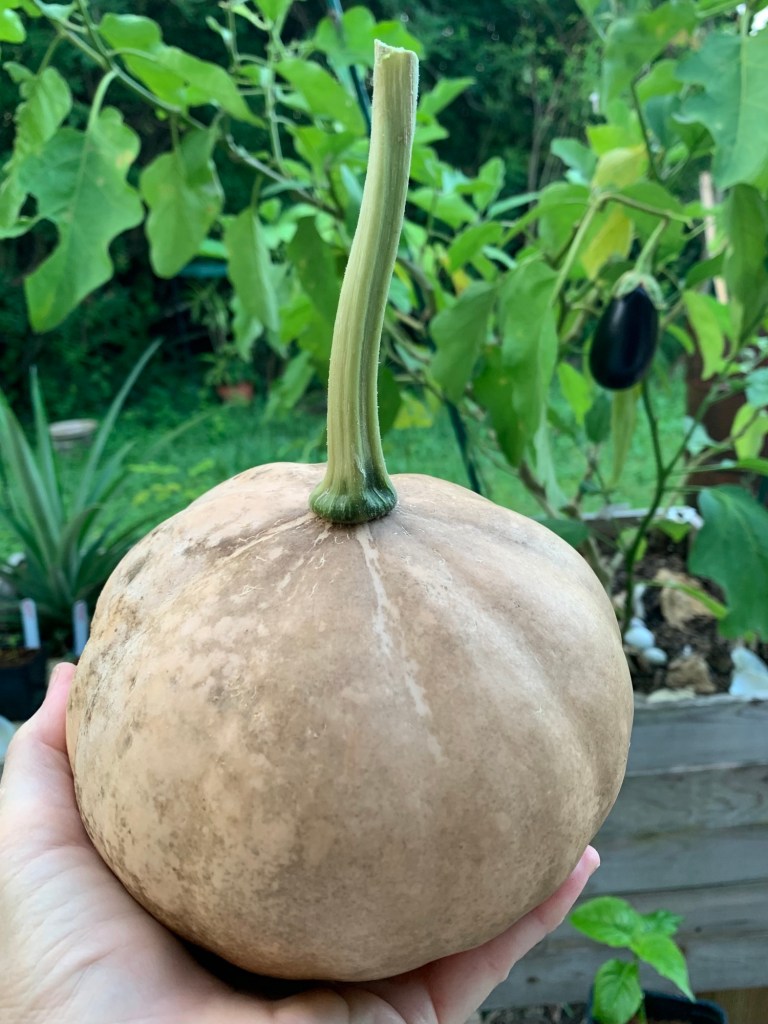
On August 25th I cut the pumpkin from the vine. It has been growing for months and I figured it must be ready. I left a nice long stem, as was suggested by someone doing a video.
Picked the pumpkin
I was hoping to have numerous pumpkins from these two plants, but it looks like I will have only two.
If you have a small yard, like I do, maybe consider planting near the edge of the property and direct the vines along the perimeter. I’ll definitely plant more Seminole Pumpkins in Spring.













 Hydrangeas Blue