Freezing Parsley For Winter Use

I grow parsley in my summer garden (New Hampshire) every year.  It’s a healthy herb that can be added to so many dishes.  It can be planted earlier than most crops, as it tolerates cold weather, and it will grow until it’s covered with snow.  I’ve had deer in my yard poking through an early snowfall just to pull up parsley to eat (my photo here).

Because it’s easy to grow, and the little plants take up very little garden space. IMO everyone should grow their own parsley!  My backyard garden is not large, but I always have around 6-12 parsley plants growing among my other vegetable plants.
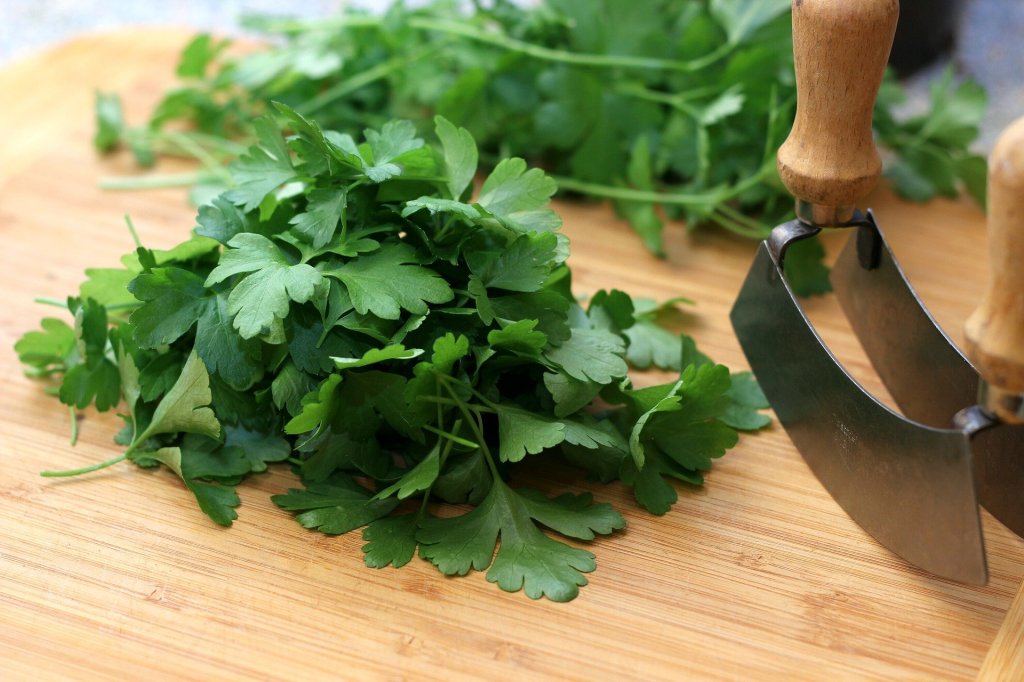
parsley fresh flat leaf
Pixabay image

Parsley is Healthy

Parsley is good for overall health and is especially good for the kidneys as it acts as a diuretic to flush waste out of the body.  That link will take you to a page I wrote about the general overall benefits of growing  and eating parsley.  I mention a few ways to preserve it as winter approaches, and I’ve tried a couple.

I briefly covered how to freeze parsley because I was not too familiar with doing it personally.  But last year I discovered how easy it was to not only preserve it by freezing, but how easy it was to use it later on.

This is how I freeze my fresh picked parsley.  Always pick parsley by the stem and use the largest outside stems first.  This will cause the plant to continue to send out new stems from the middle of the plant.  I pick just a few stems – 6 or 7- to preserve by the amount I plan to use each time.  I like to use a lot of parsley in my meals.

Preparing the Fresh Parsley

Wash the leaves by dunking them in a bowl of water.  Hold the stems and swish the leaves until all dirt and debris is removed.  Use a clean towel to remove most of the water.  I ‘slap’ the leaves on the towel a few times.  Put the parsley, still on the stems, into a jar or vase until the leaves dry completely.  That shouldn’t take long.

Once the parsley is dry, line a cutting board or the counter with saran wrap, or freezer wrap.  Pull off the leafy part of the plants and pile them up on the saran.  Gather all the leaves in a bunch and roll them up.  Just keep rolling and gathering the ones that escape, until you have a nice, fairly tight roll of greens.

Wrap the saran or freezer paper tightly around your roll, and add it to the freezer.  I wrap mine in saran, and then place all the little parsley rolls in one quart size freezer bag which I label with name and date.

This is the basis for freezing.  If you have a lot of parsley and want to freeze more together in a bigger roll, or want to freeze individual portions, that is up to you.  It can be unwrapped and sliced once frozen, so you don’t have to use the entire roll.

Drying Fresh Parsley to Preserve

I also dried a bunch of parsley last year using my dehydrator.  That was a much more time-consuming method, but it works as well.

Flowers Blooming in August in My New Hampshire Yard

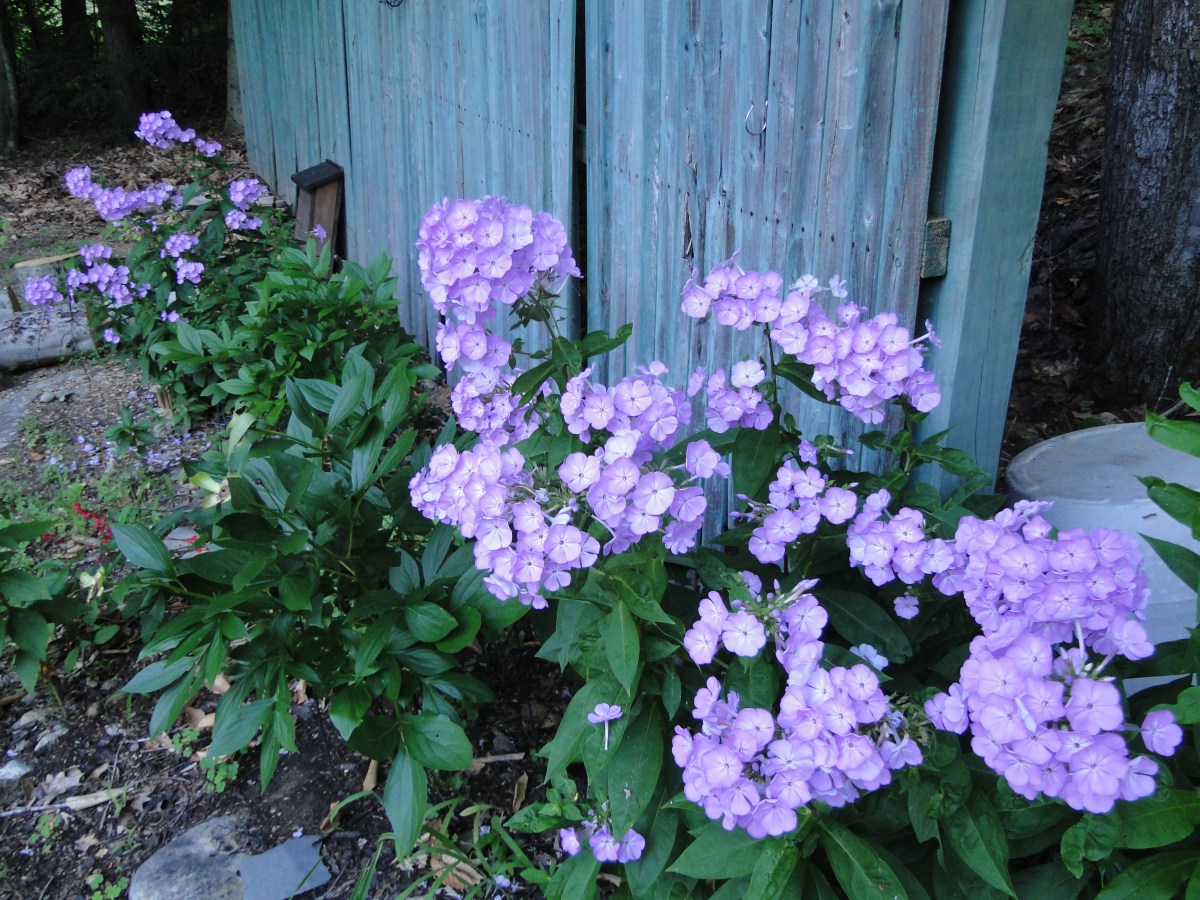
tall phlox in pink
Pink Phlox

As summer is winding down, I am taking stock of the flowers in my yard that are blooming in August.  In fall, here in New England the tall phlox are looking lovely.  In my yard, dark and light pink blossoms brighten the landscape. I also have creeping phlox which blooms in Spring.

As for perennials, the Hostas are also blooming, the few I have that are growing well.  Some of them died due to the cold winter.

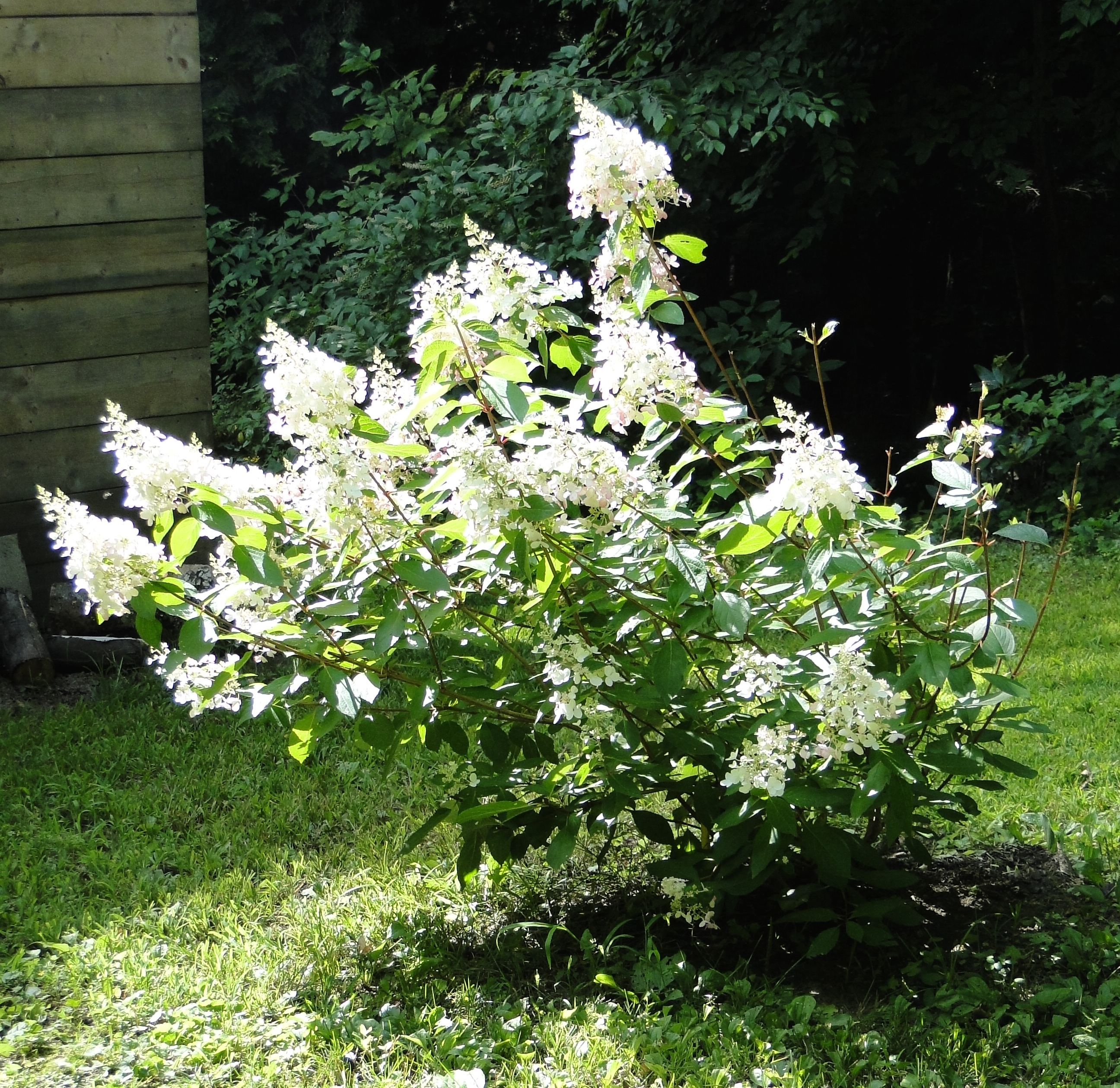
Hydrangeas:  The Pinky Winky shrub is full of white flowers, which will be turning pink sometime in the future.  The white Blushing Bride in the backyard has three big, white blooms, with a small bud just beginning.  Out front, the blue Endless Summer has only two small flowers, and one little bud.  The blue flowers are fading to light purple.  Click the link above to see recent pictures of my hydrangea shrubs.

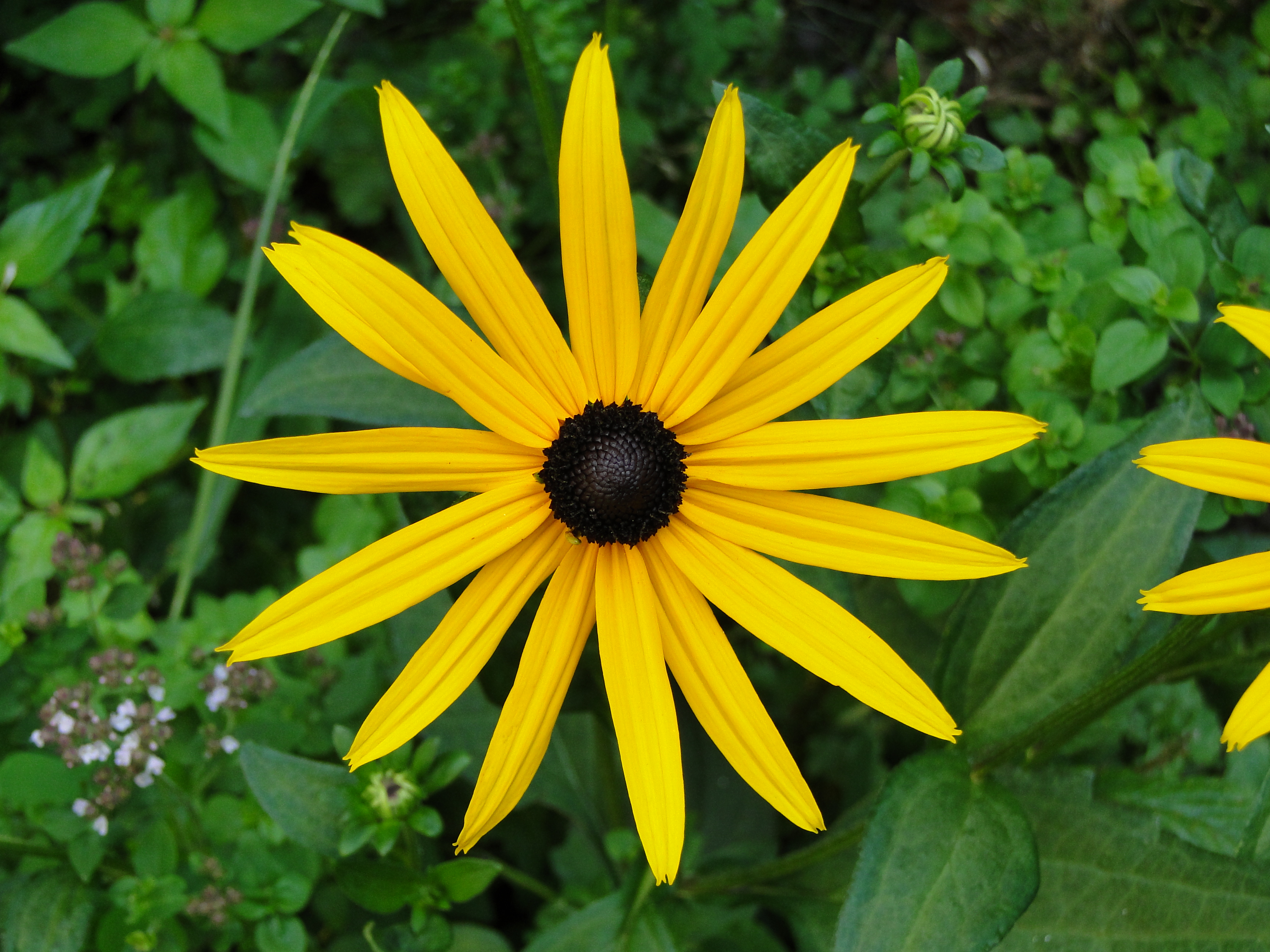
Black-Eyed Susans are blooming everywhere.  They seem to be the brightest yellow flowers in yards right now.  I have two small plants, which I tend to forget about until August.

black eyed susan flower
Black-eyed Susan

Day Lilies are also still flowering.  I have 8 or 10 plants with peach colored flowers along the front.  All those plants came from one, single pot of day lilies I bought three years ago.  I divided the stalks, planted them, and then divided them again.  Lilies should be divided every so often.  My yellow Stella d’oro lilies have gone by.

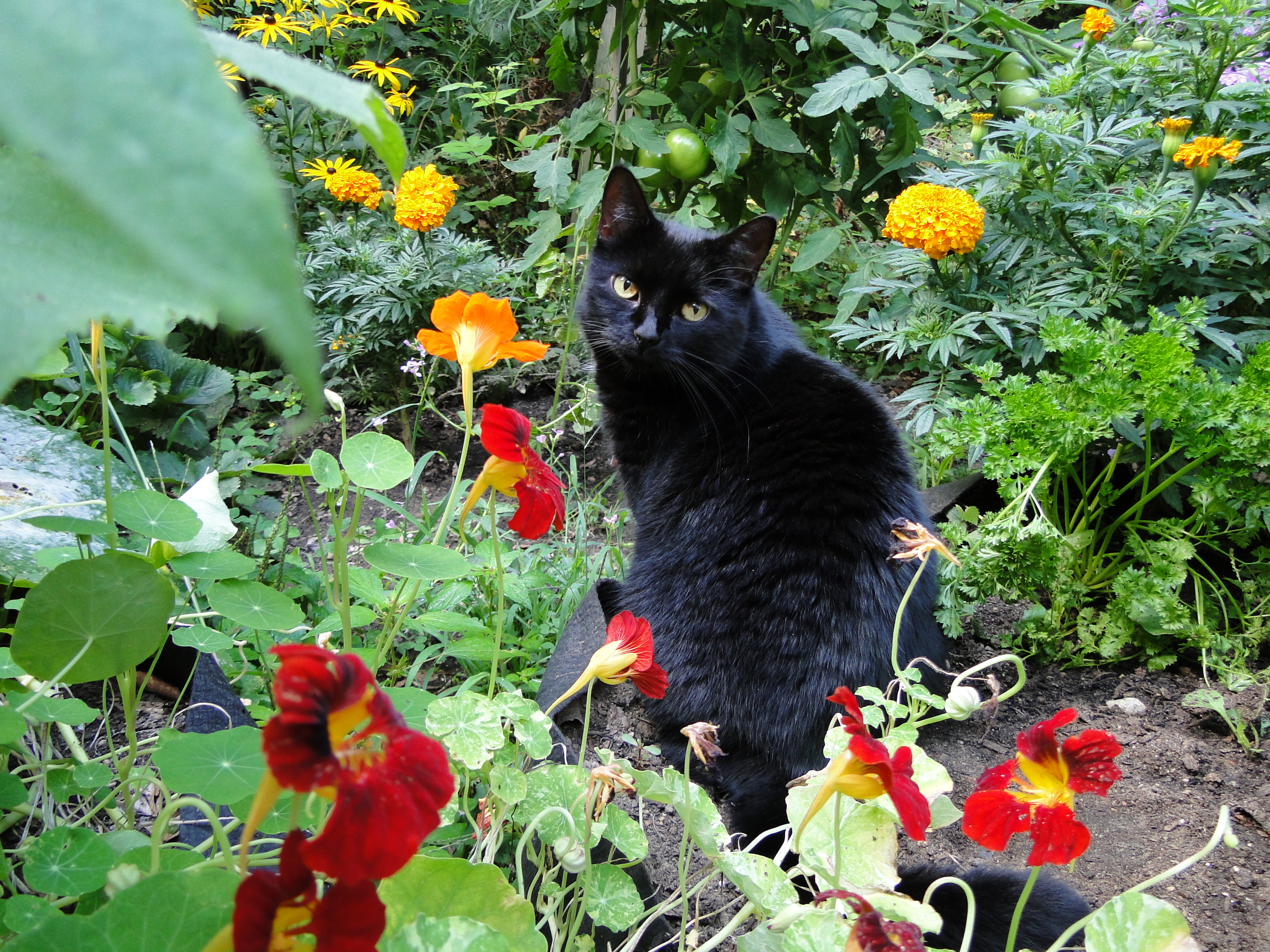
The annuals I plant each spring – Nasturtiums and Impatiens – are looking wonderful in August.  This year I planted the seeds from last year’s ‘Alaska’ nasturtium, and ended up with a beautiful and colorful border along the backyard.  All that color for free!  I love it.  Soon I’ll collect the seeds from these, and plant more next spring.

flowers of fall
Nasturtiums and Marigolds (and Skittle the Cat)

The marigolds are big and full, and still sending out new flowers.  Marigolds bloom more if they are dead-headed.

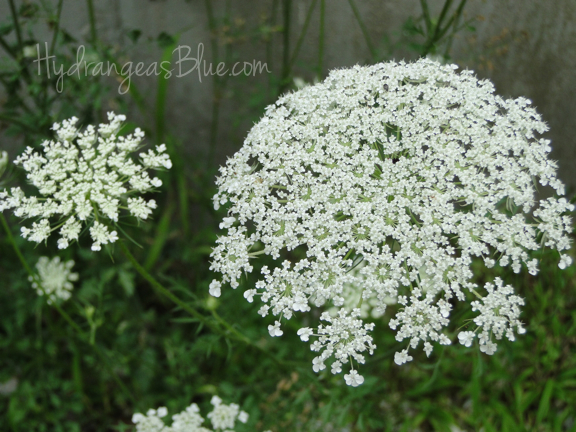
I have a volunteer Queen Annes Lace that is still blooming too.  I love these beautiful “weeds” with the big lacy flowers.  If they should happen to grow in your yard, I suggest you leave them alone and let them bloom where they grow.  Hopefully it will spread so I’ll have more of it next year.

Queen Annes Lace
Queen Annes Lace – A beautiful “weed”

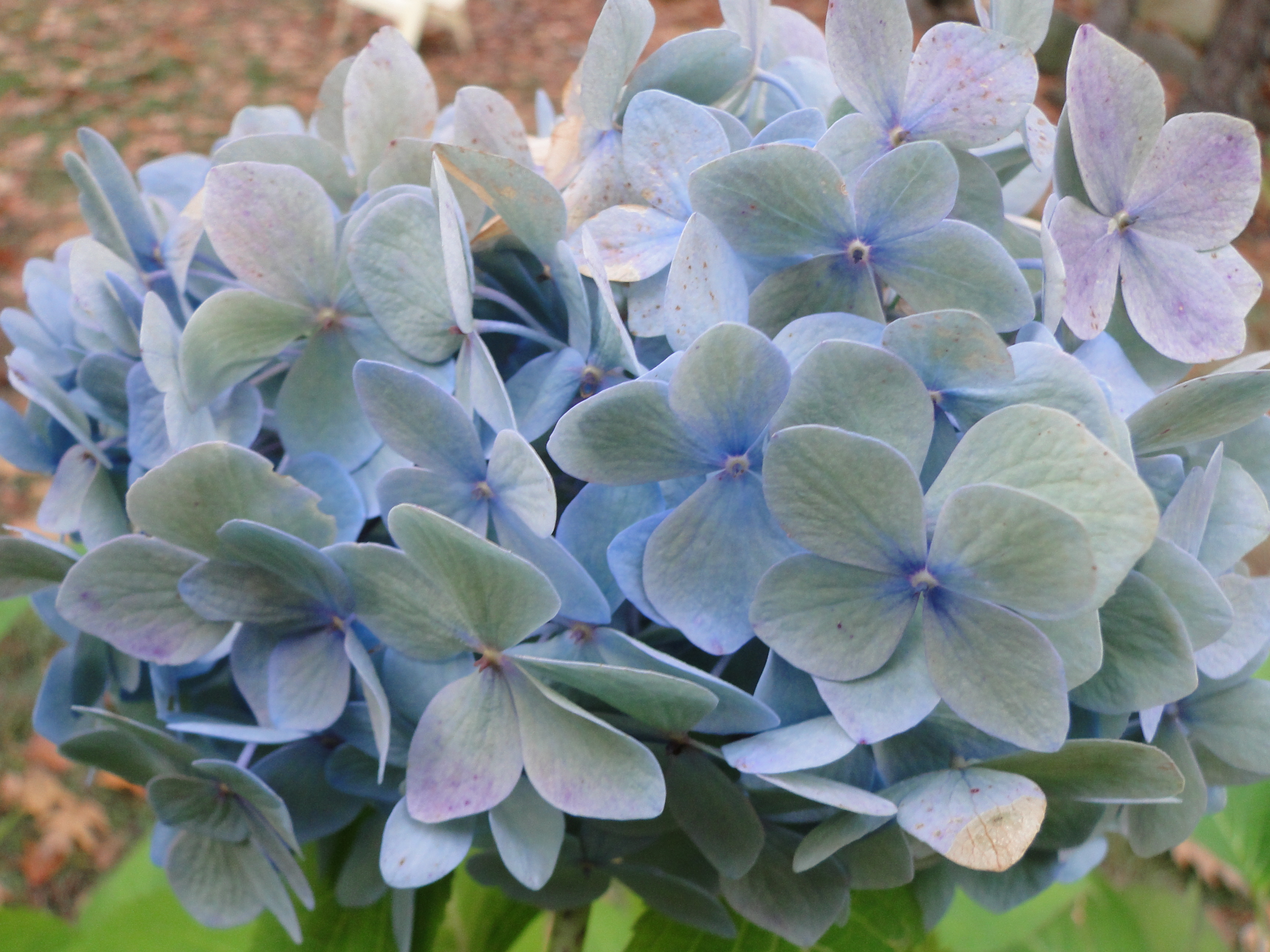
The blue hydrangeas are turning pretty colors as Fall approaches here in New Hampshire. The petals begin to take on a pink, purple, and sometimes green, tint. It’s always fun to see how the flowers will fade.

blue hydrangea in fall
Blue Hydrangea Changing Color in Fall

Pictures of My Hydrangea Plants 2015

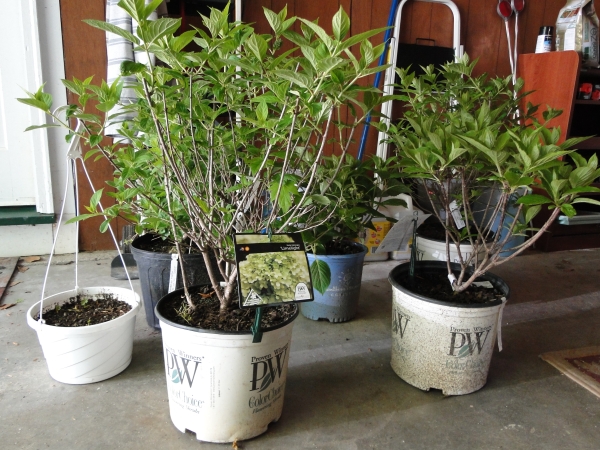
hydangeas in pots
Newly purchased hydrangeas in pots

In 2011 I bought a house and began to fill the yard with perennials.  I had a lot of cleaning up to do, as the gardens were pretty ugly – but not as ugly as the house!  In between fixing up the inside of my home, I spent time beautifying my new yard.

That first summer was spent clearing away old growth and garden edging, but in Spring 2012 I was ready to buy some perennials, and one of the first shrubs I wanted was the hydrangea.

It is now 2015, just three short years later, and I thought I’d share pictures of those plants, and their offspring (propagated plants). I also want to post an update to acknowledge my favorites, problems, etc. to share with readers.

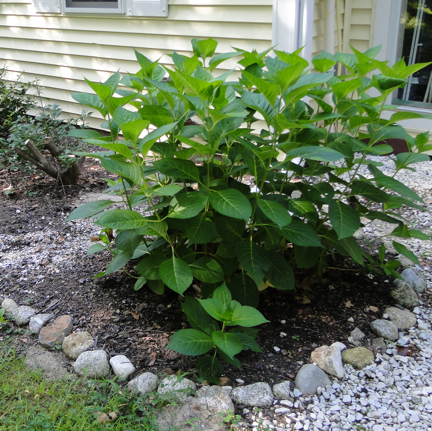
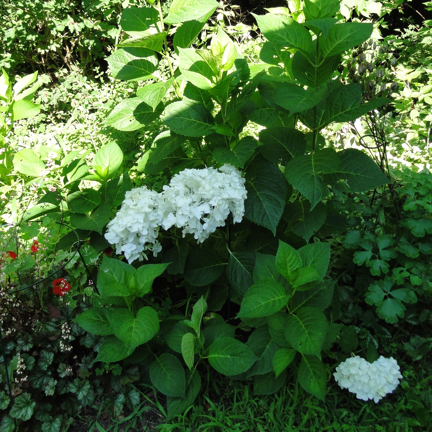
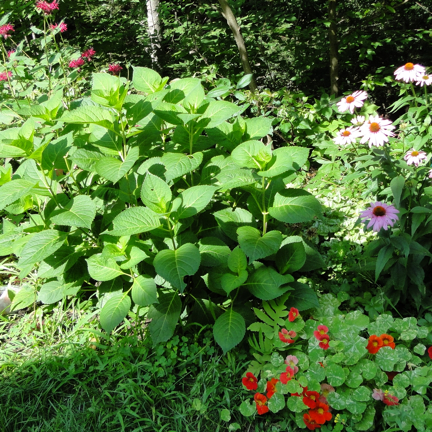
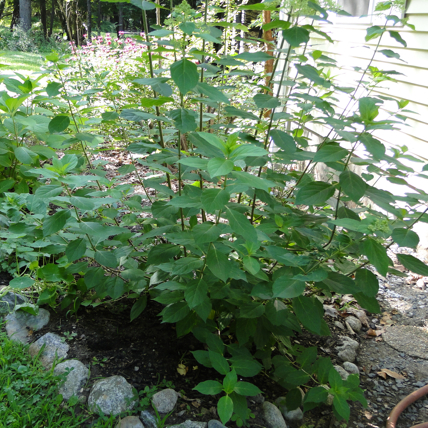
First, the Blushing Bride, hydrangea macrophylla. The pictures below were all taken in August, 2015. The first is the original shrub I bought from a local nursery. The next two are pictures of the two I propagated from the original. I planted them last year, and as you can see, they are almost as large as the original. In fact, one of the ‘babies’ is blooming, and the others are not.
These are beautiful shrubs, with large green leaves, and I highly recommend this perennial for the yard.

hydrangea perennial
Blushing Bride – original shrub

white flowering hydrangea
Blushing Bride propagated plant

hydrangea shrub
Blushing Bride baby #2 – no blooms this year

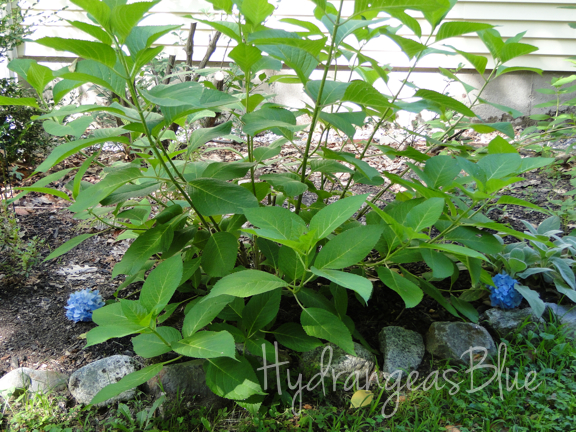
The blue-flowering hydrangea, ‘Endless Summer’ is pictured here. It’s not flowering much this year, but I blame the bad winter. There are two small flowers at the bottom. I think in time, as it ages, this will be a more beautiful shrub. I also cut down a larger bush that was preventing it from getting sun. That may help with blooms next year.

blue hydrangea shrub
Endless Summer

Please see my next post and read my review, with pictures, of two more hydrangeas, the paniculatas – the Pinky Winky and Limelight – which have elongated blooms.

Hydrangeas in My Yard: The Paniculatas

My last post was about the macrophylla varieties of hydrangeas growing in my yard. Those have big, rounded blooms and large leaves. This post contains pictures of my two types of paniculatas, which are hydrangeas with elongated type flowers.

In general I have found the paniculatas to be very easy to care for. They seldom droop in a drought, as the macrophyllas (Blushing Bride and Endless Summer) wilt quite easily in hot sun, and when they are dry.

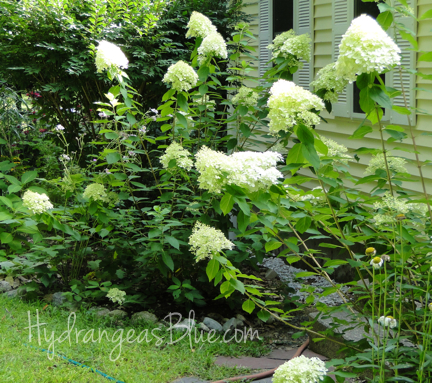
The first photo is of the Limelight hydrangea. It was taken in August 2015, and as you can see it is not flowering, but it does have buds. The second photo is from last year at approximately the same time.  As you can see, this year I will not get the blooms like last year.  Again, I blame this on our incredibly horrible winter.  The extreme cold and piles of snow have done a number on just about everything in my yard.   Some of my Hostas never grew back, and the perennials I thought had died, are still living, but they are way behind on growth, like the hydrangeas.

limelight hydrangea shrub
Limelight Hydrangea – Aug. 10th, 2015

flowering limelight hydrangea
Limelight Hydrangea – August 20th, 2014

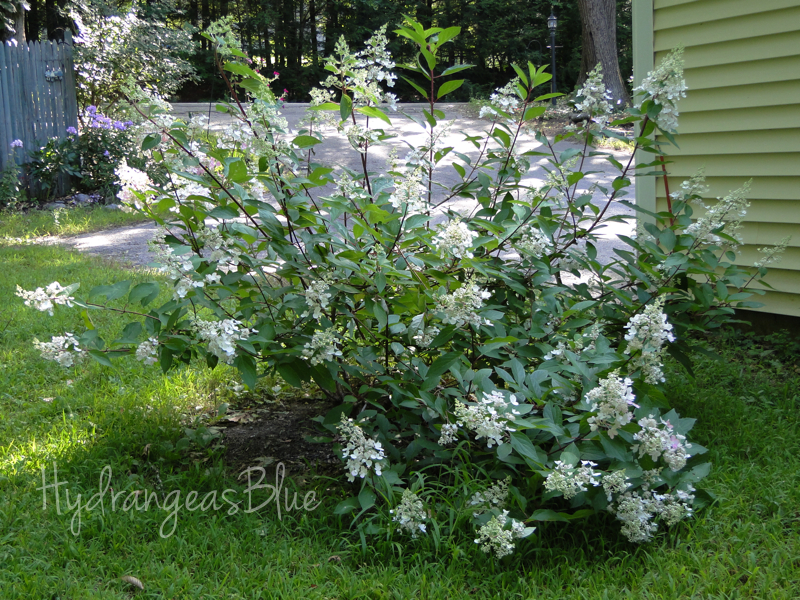
The last picture I have is of the Pinky Winky hydrangea. I have come to love this plant for it’s beautiful, long-lasting blooms. It is also a very easy plant to grow. Plant it and forget it.
pinky winky hydrangea
Unfortunately, I could have chosen a better spot for this one to grow. Without a lot of yard space, I thought it would have plenty of room to expand next to the garage. Then the snow came and my plow guy pushed loads of snow over the poor thing. It came back and grew fine.
This year I had to have a broken tree taken down, and as the tree-cutters brought the big beech down, the branches landed on my Pinky Winky. It was enough to break one of the main, low branches. I will have to cut it, as it’s split. I want to wait until the blooms go by.

Pinky Winky 8/20/14
One year ago – Pinky Winky, August 20th, 2014

The only problem I have with this one is that the deer eat it – see how lopsided it is in the photo above?  There is a big deer population around my house and they come up from the woods at the side of the house to check the yard for dinner.  After they munch on my rhododendron, they chew down the stalks of the hydrangea. It’s the only hydrangea they eat, and I think it’s placed just right (or wrong).
So between the broken branches and deer trimming, I may not get to see this perennial grow too large before I move, but it’s still beautiful.

This is the only hydrangea that doesn’t seem to have been bothered as much by the extremely cold winter.  I would love to have more Pinky Winky hydrangeas in my yard.

Best of Blogging, Be Yourself

squirrel
Photo credit: Oldiefan @ Pixabay

Since I do a lot of blogging, I thought I’d begin a series of posts about blogging.  If you look around the internet, you will find lots of bad blogs.  And of course there are many great blogs.  Those great blogs are fun to read because they are written by people who write about what interests them.  Being phony online doesn’t work for long.  Be yourself and share (with limits) information about your likes, travels, menu specialties, etc..  You’d be surprised how many people will be interested, even if your life seems mundane and ordinary to you.

Blogging can also be quite a learning experience.  Although I love gardening and sharing how my garden grows with readers, I am still learning as I go.  I recently began a blog about health and wellness related to kidney disease.  A few years ago I found out I had PKD and I want to share my journey as I attempt to get well.

You don’t need to be an experienced writer to start a blog.  I’ve learned a lot since I first began my Seashells by Millhill blog back in 2008.  The first posts I made were pretty horrendous, and I cringe when I re-read them.  Since then I’ve written at a couple of writing sites, Squidoo (now defunct) and Wizzley, where I learned to become a better writer.  I did a little stint with other bloggers on a shared blog site and wrote one day a week.  The bar was raised when I had to write alongside some very good writers.

Continue reading “Best of Blogging, Be Yourself”

Sparse Vegetable Garden This Year

zucchini in the garden
Growing Zucchini

It seems to be the consensus here in my part of New England, the gardens are not growing all that well.  Not that I know that many people, but almost everyone I do know has a small backyard, or patio garden.

Just last night, one of my neighbors walked by and we chatted for a few minutes.  I know she has beautiful raised garden beds behind her house, so I asked how the garden was growing.  She said it’s not producing well.

My sister grows all her vegetables on a big, sunny deck in front of her house.  It’s convenient to care for, as she works long hours each day.  But this year she doesn’t even have zucchini growing.  If we lived closer I would have some extra to give her.  My zucchini started off slowly, but now I’m picking one or two from the two plants I have.

The cucumber is really slow.  I’ve only had 2 cukes so far.  And the hot pepper plant is also not producing the many peppers I remember having last year.  The only thing that is doing better this year than last is my garlic.  Even the parsley, one of my favorite things, is not all that big. Continue reading “Sparse Vegetable Garden This Year”