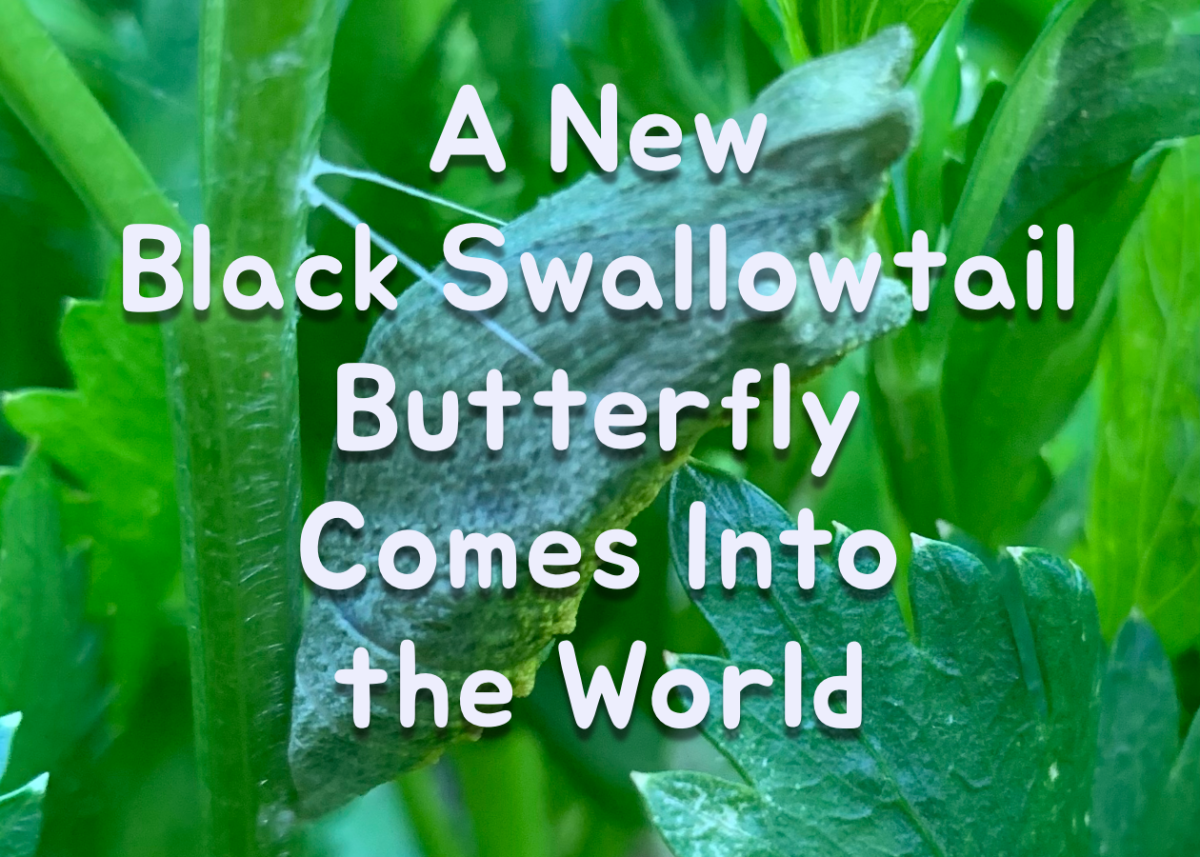
Good News From the Garden, A New Butterfly is In the World!

Finally, a caterpillar makes it into a chrysalis and then becomes a gorgeous Black Swallowtail butterfly.

Although I am not having much luck with caterpillars surviving in my yard (thanks to the numerous lizards), I do have one that made it. A new Black Swallowtail butterfly has survived to fly away! And he was sneaky about it.

My yard is not a friendly place for caterpillars, but it is for butterflies. All my Zinnias are much loved by lots of flying critters.

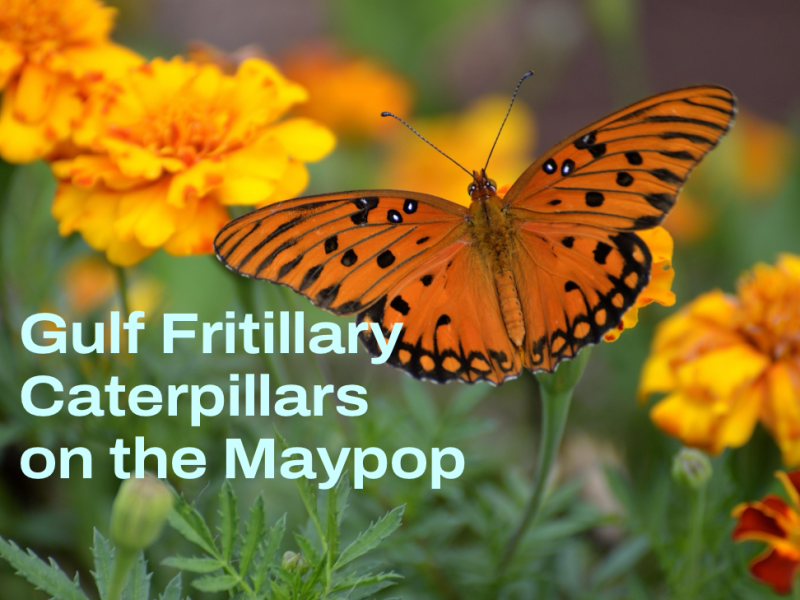
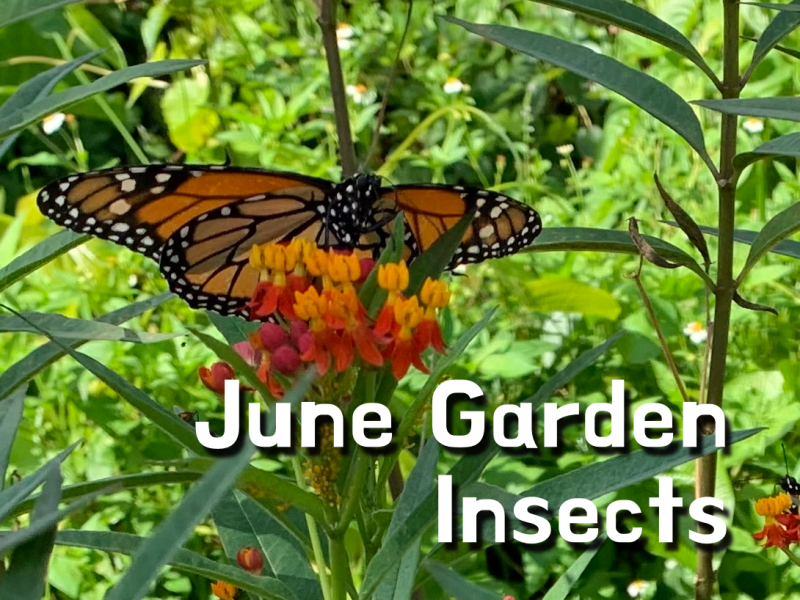
The Monarch butterfly is still flying around, and I’ve seen many Monarch caterpillars, but no new butterflies. Also, the Gulf Fritillary has put caterpillars onto my Passionflower vine.

Occasionally I would see the Black Swallowtail butterfly in the yard, but I have nothing growing for it, or so I thought.

The Black Swallowtail’s Favorite Plants

I know the Black Swallowtail will lay eggs on parsley, dill and fennel. Apparently also carrot and Queen Anne’s Lace (not in Florida). It’s not the season for carrots here. Only fennel will grow for me during summer. I have a few fennel plants in the front garden, but lizards eat every caterpillar that shows up. The dill has long been gone, and parsley is impossible to grow, even in winter. (For a list of host plants in Florida, see this page at askIFAS)

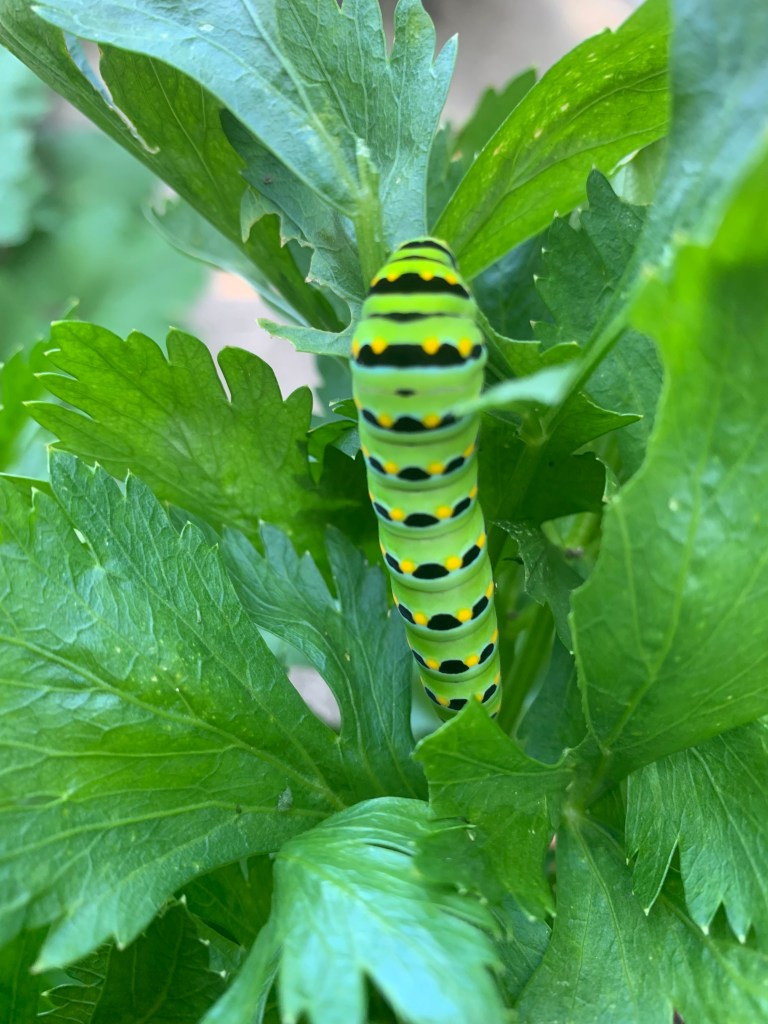
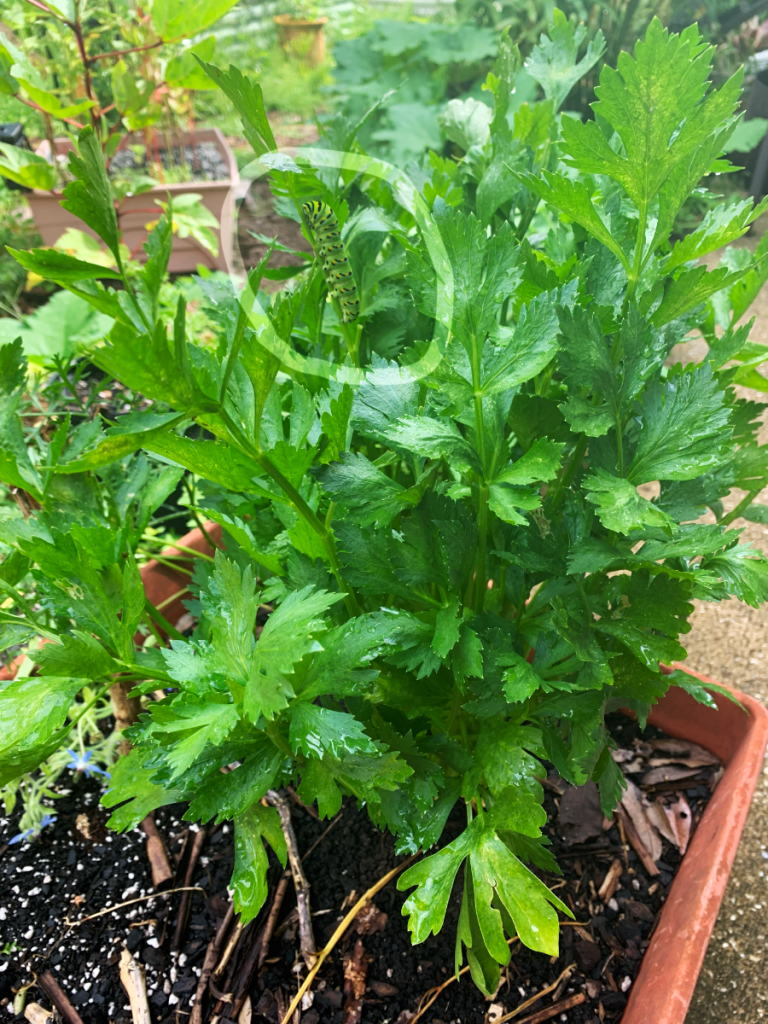
But I do have a big celery plant in one of my grow boxes. I started it from a store bought bunch of celery. This is where I found the Black Swallowtail caterpillar. What a surprise! He was already pretty big when I first saw him.
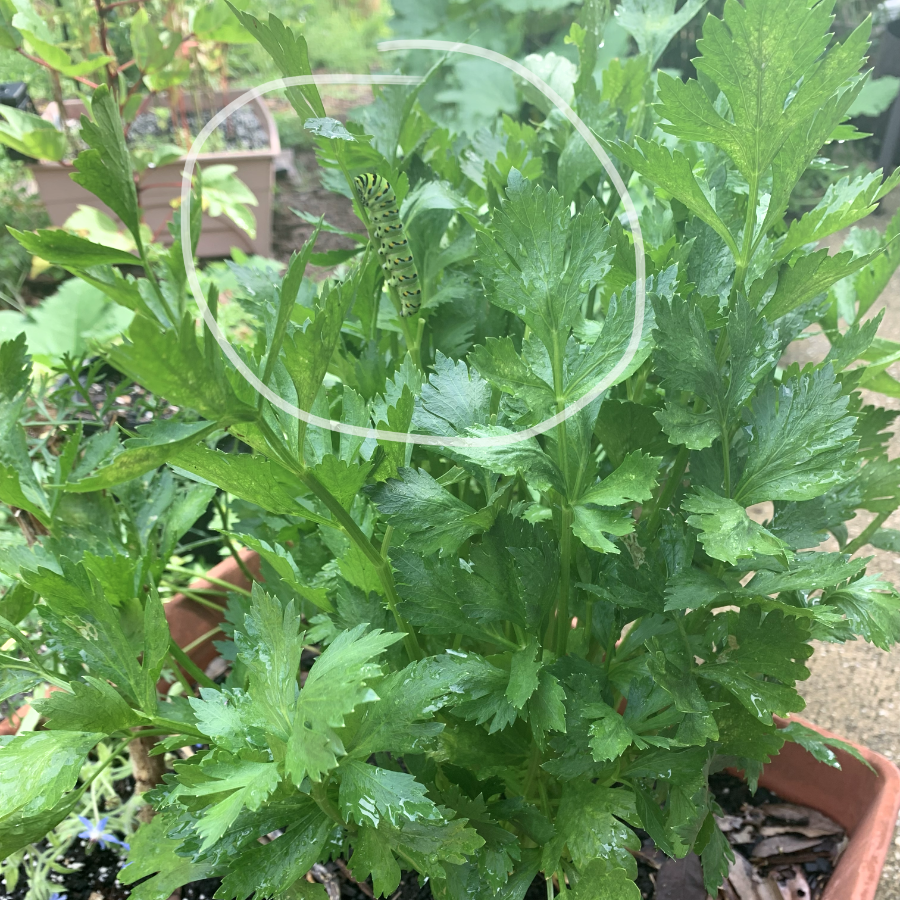
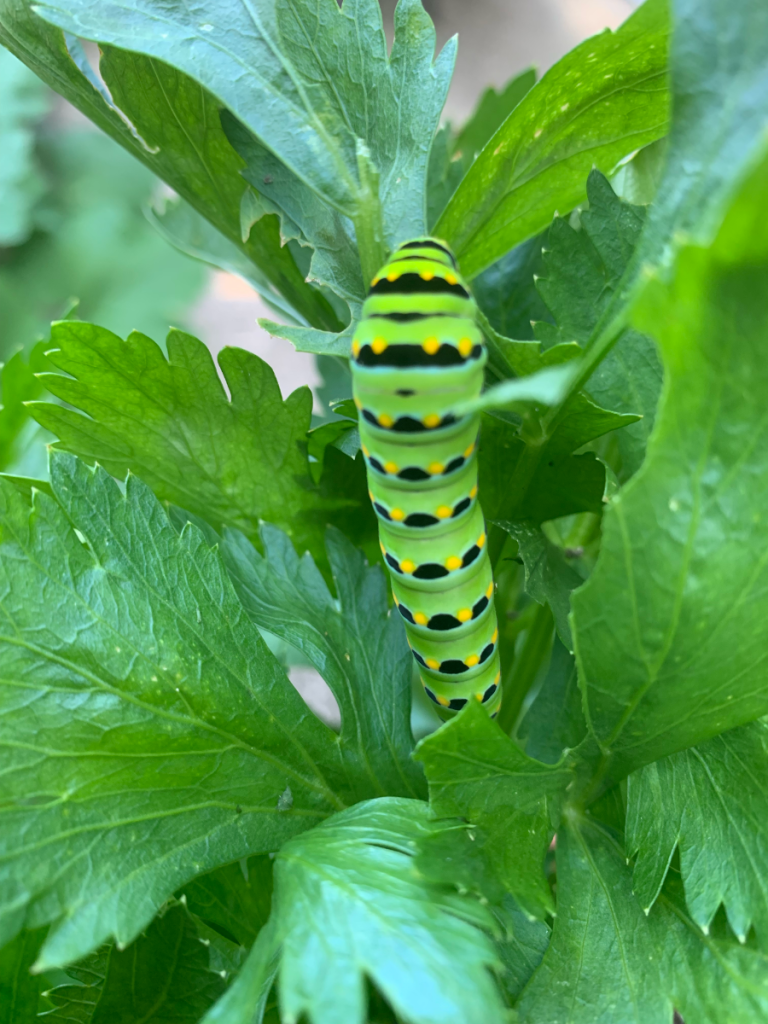
On July 21st I first saw the caterpillar. He was happily munching away down in the center of this bunch of celery.

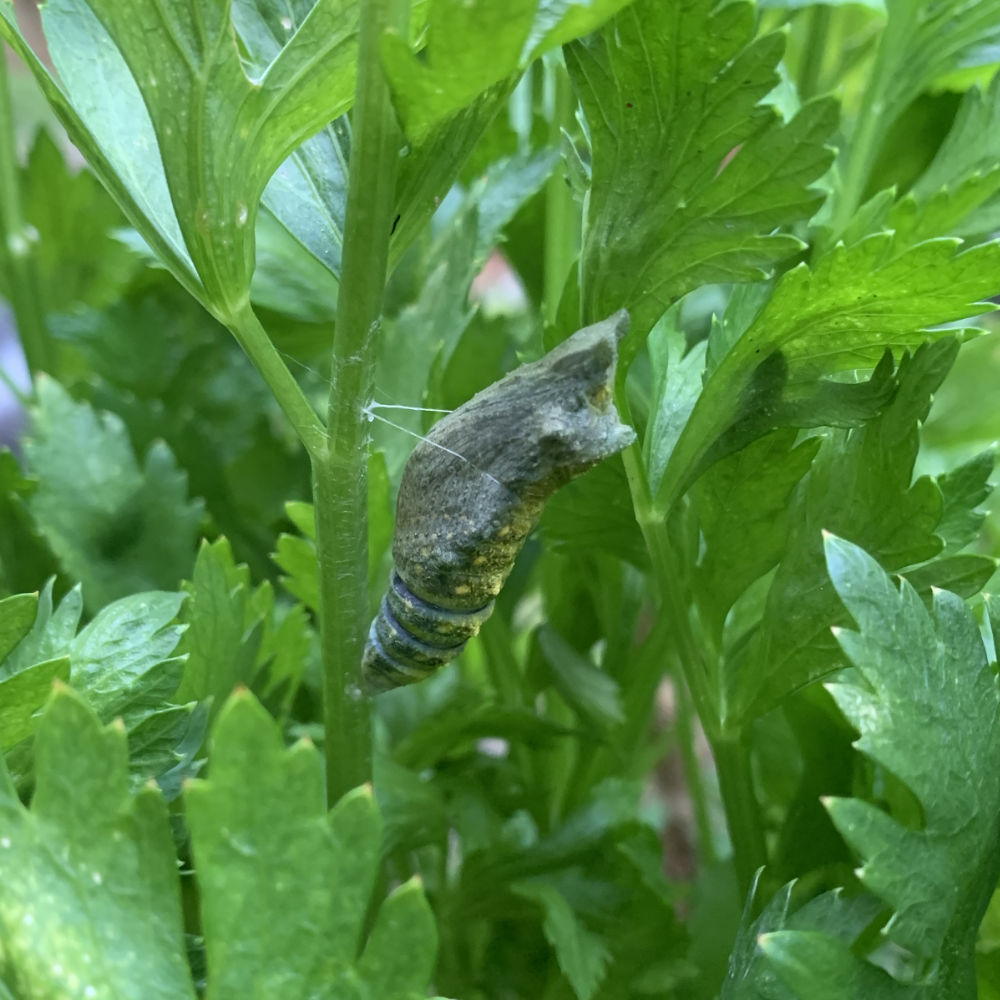
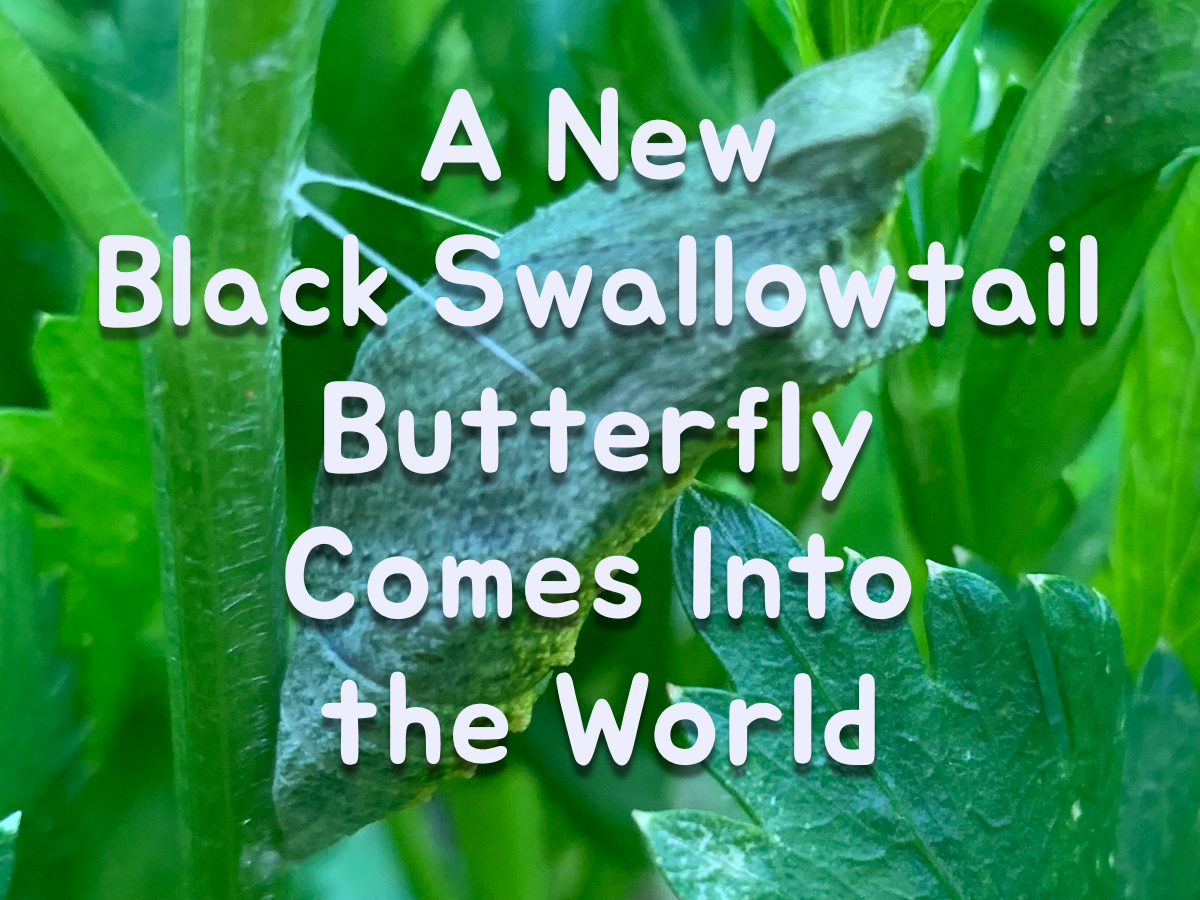
On the 23rd, I saw him curling up and attaching to one of the stalks. The next day, his chrysalis was made. Ten days later, he emerged into the world!
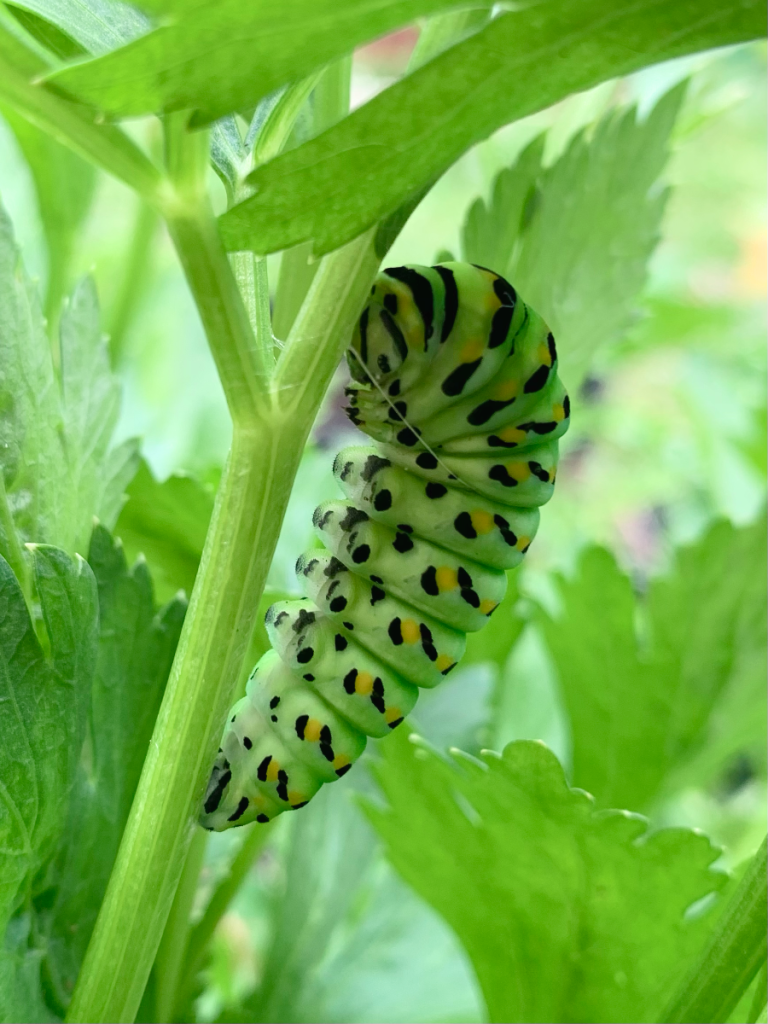
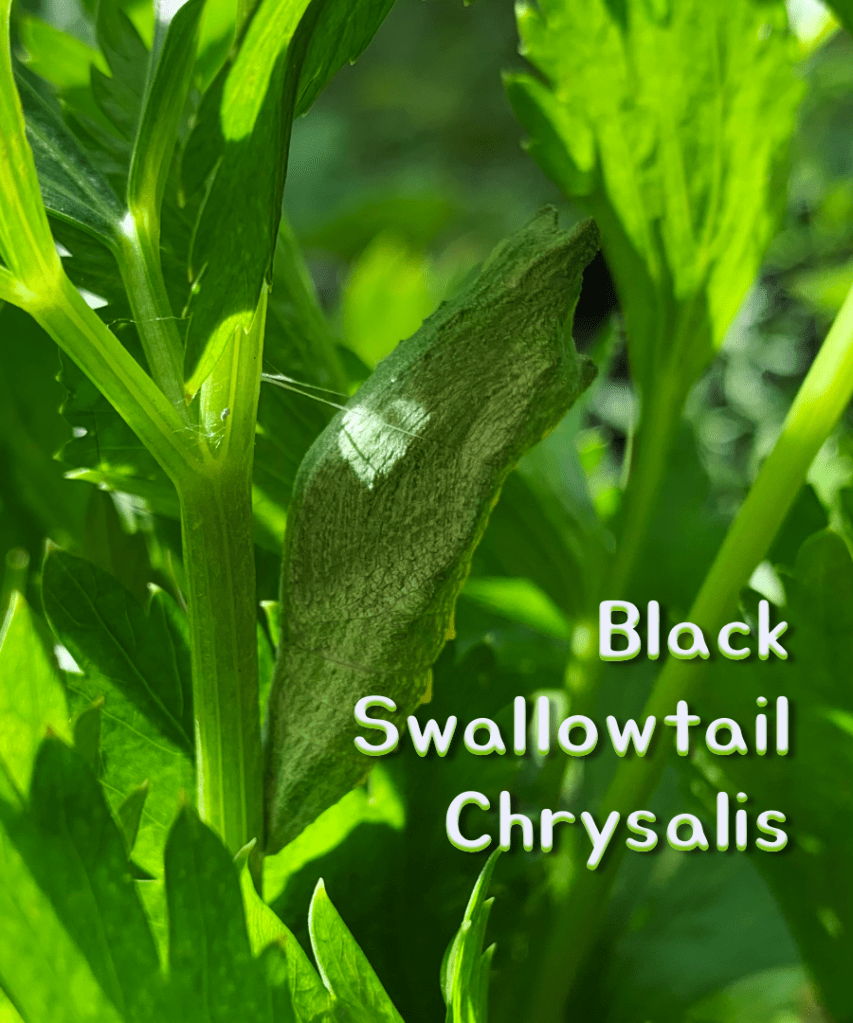
Caterpillar is done eating and in the position to pupate.
Cool huh?

Numbering the Days to Emergence

Back when I watched the chrysalis of the Monarch, it took many days before the butterfly emerged. I figured this one would take a while too, and it took 10 days before I saw the butterfly. On day nine, the chrysalis had darkened noticeably. I knew he / she was about to come into the world!

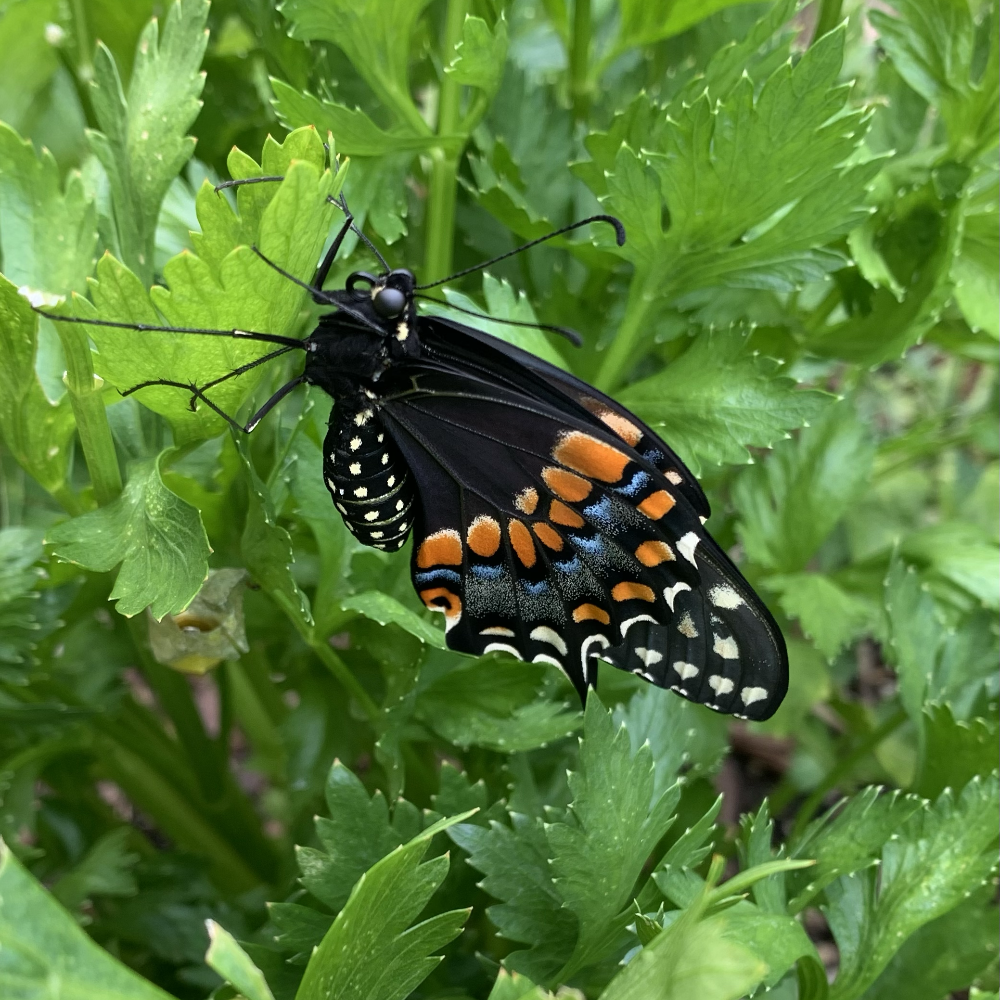
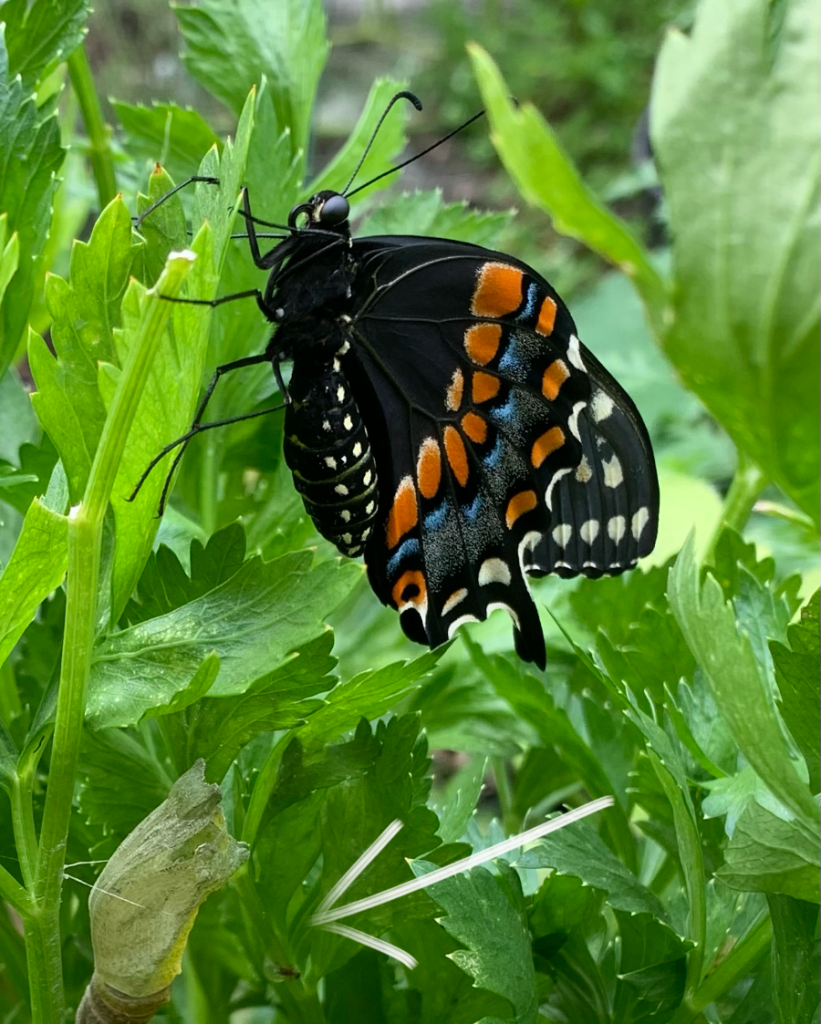
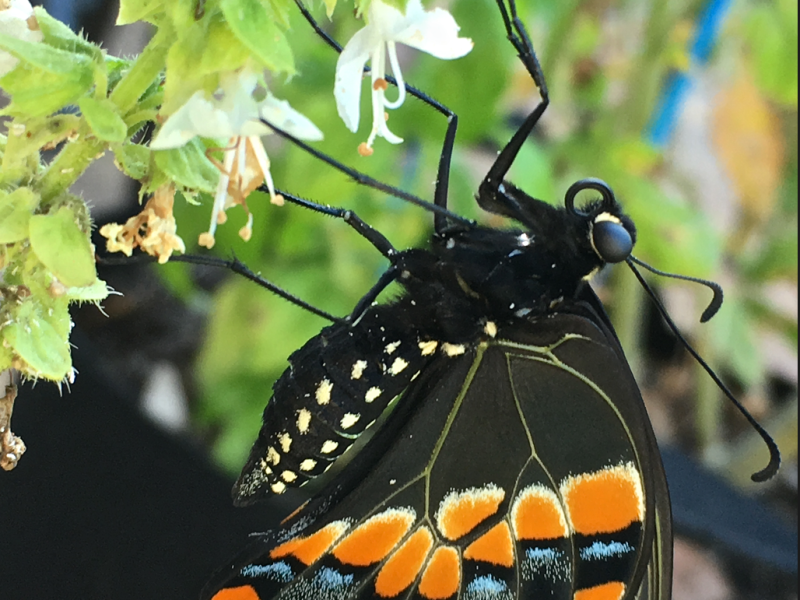
If the weather had been nice, I would have pulled up a chair and drank my coffee next to the celery plant that morning. But it’s way too hot for that. So, I did some inside stuff, and kept checking on it. Around 9:30am I went out and there he was! Sitting on a celery stalk in all his glory! Such a beauty.

I’m not sure if it is a male or female, maybe someone reading this will know. The colors were absolutely stunning!
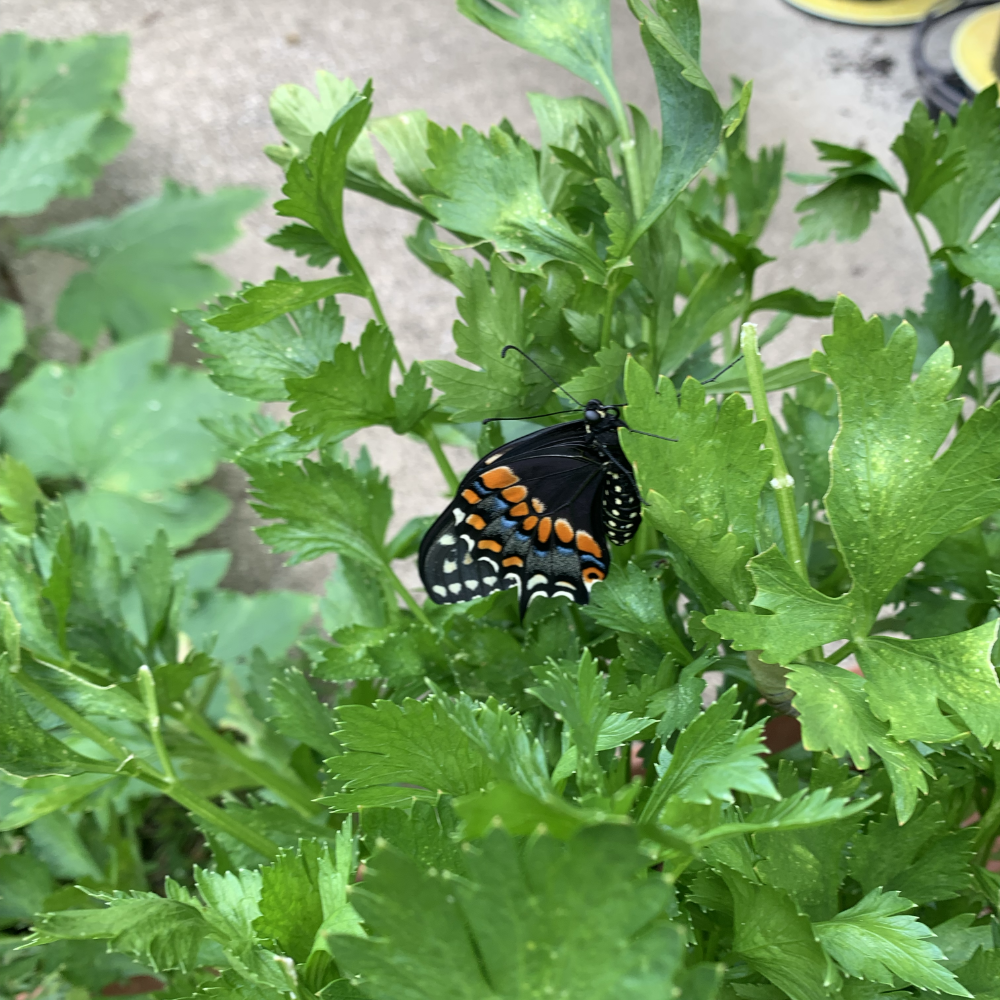
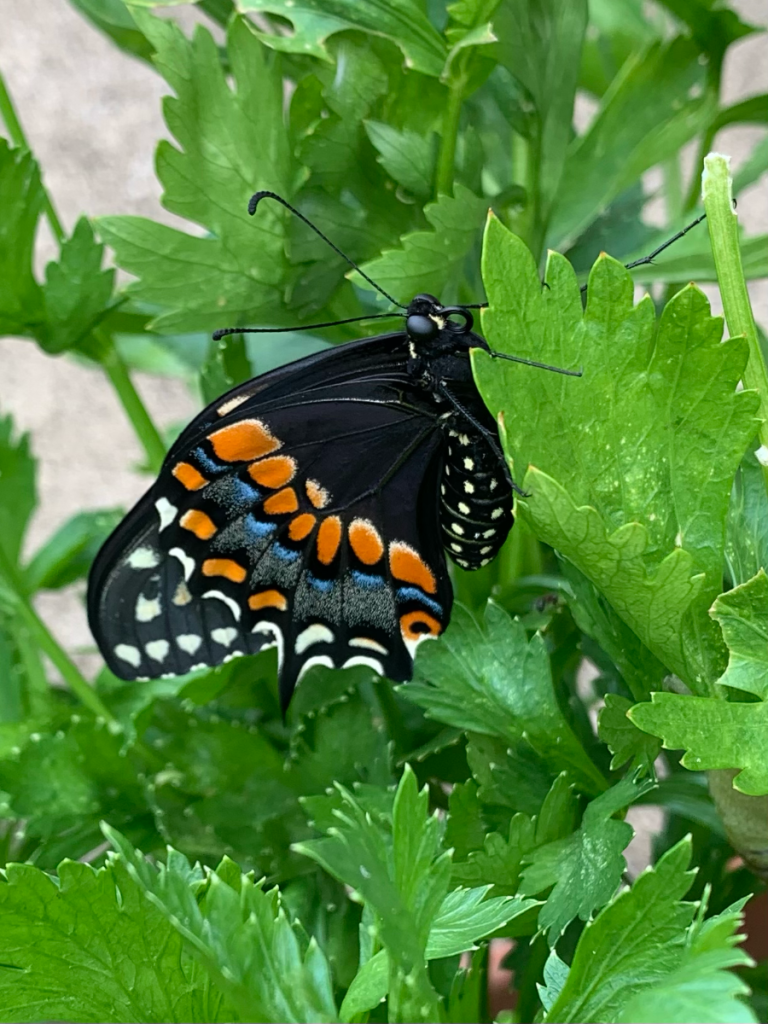
I thought he might hang around for a while after coming out. The Monarch butterfly had taken hours to fly away. But, I went on the porch to check on some plants and was only away for about 2 minutes. When I went back outside he was completely gone! I missed it!

I walked around the yard to see if he had landed someplace close by, but I never saw him anywhere.

A Black Swallowtail From the Top

Only the closed wings were available for me to view. I believe from the top this one would have looked something like the photo below, which is not my photo.

Find more good info about the Swallowtails at the University of Wisconsin site
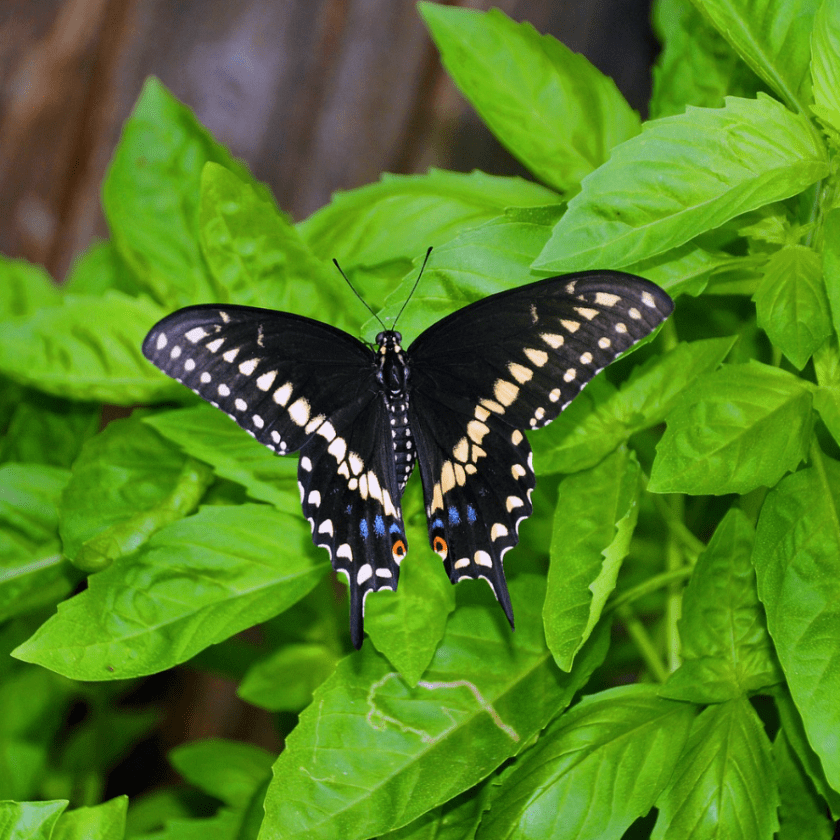
black swallowtail butterfly from the top
Photo courtesy of anselmo7511 at Pixabay.

Before this butterfly “hatched”, I had a black swallowtail laying eggs on the celery and a nearby carrot type plant. Those eggs seem to have disappeared. Or, maybe they are tiny caterpillars hiding down in the celery. I will continue to check.

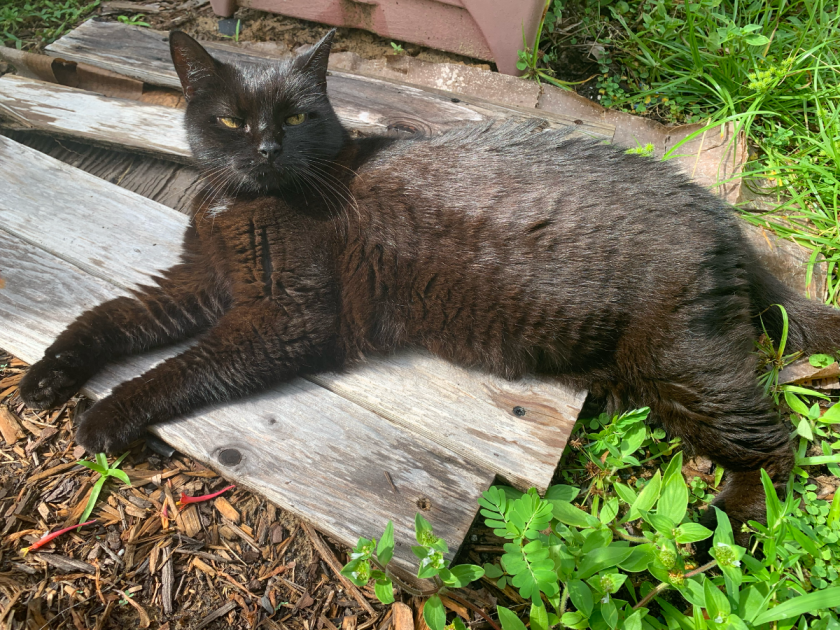
The fact that my cat Skittle mostly hangs around this area might be why the lizards let this guy get to this stage. Whatever the reason, it made me happy!

Are you following caterpillars and butterflies in your summer yard? I’d love to hear about it.

butterfly divider flowers

More garden happenings

Something went wrong. Please refresh the page and/or try again.

One Summer Morning

July is nearing an end and the garden is teeming with living things.

July is nearly over. Hard to believe, but I’m glad. It’s not a fun month here in Central Florida. Not that what’s coming is any better. The Hurricane months are the worst. Soon we’ll be watching those storms that build off the African coast and wonder where they will go.

But, that fun is for the future. Today I discovered a big Swallowtail caterpillar on my celery plant! Swallowtails need dill, fennel, parsley and apparently celery for their caterpillars. The dill was gone back in May, and I can’t seem to grow parsley – especially not in summer. I have some fennel out front, and checked for caterpillars, and found none. I didn’t realize my celery would attract swallowtails.

This big guy was just there! I had not seen him while he chewed and grew, down in the center of the stalks. All day I went outside to check on him. I’m certain he will disappear.

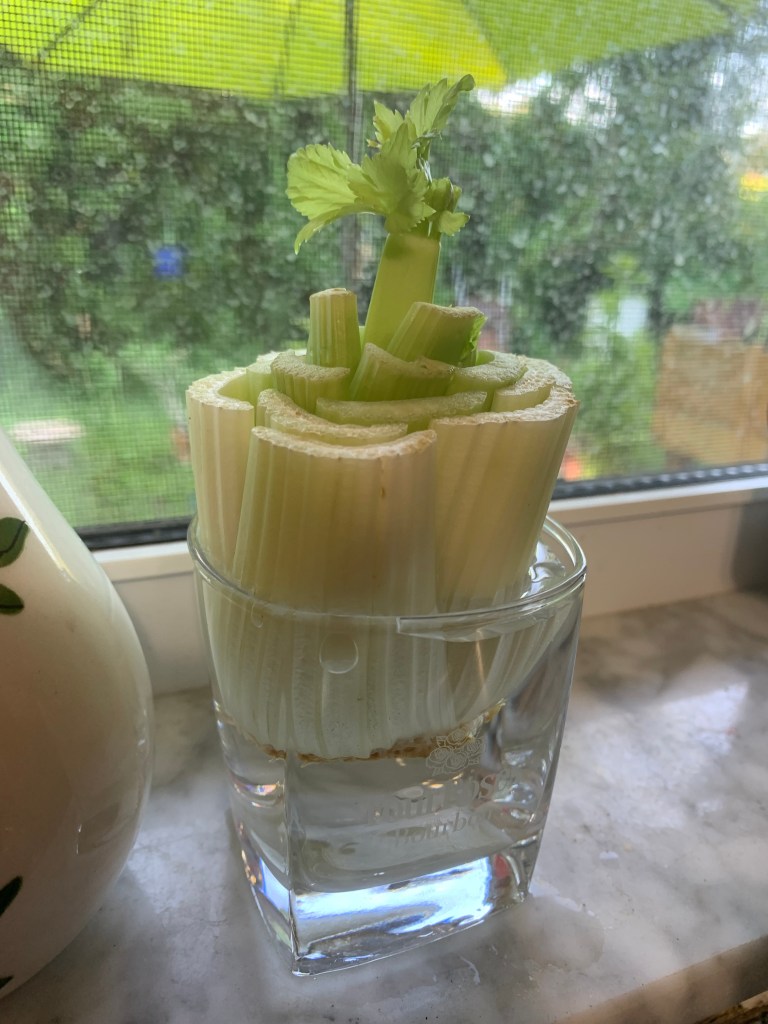
The celery grew from a stalk that came from the grocery store. Today, I am starting another celery plant in a glass on my windowsill. It is very easy to grow.

Watermelon

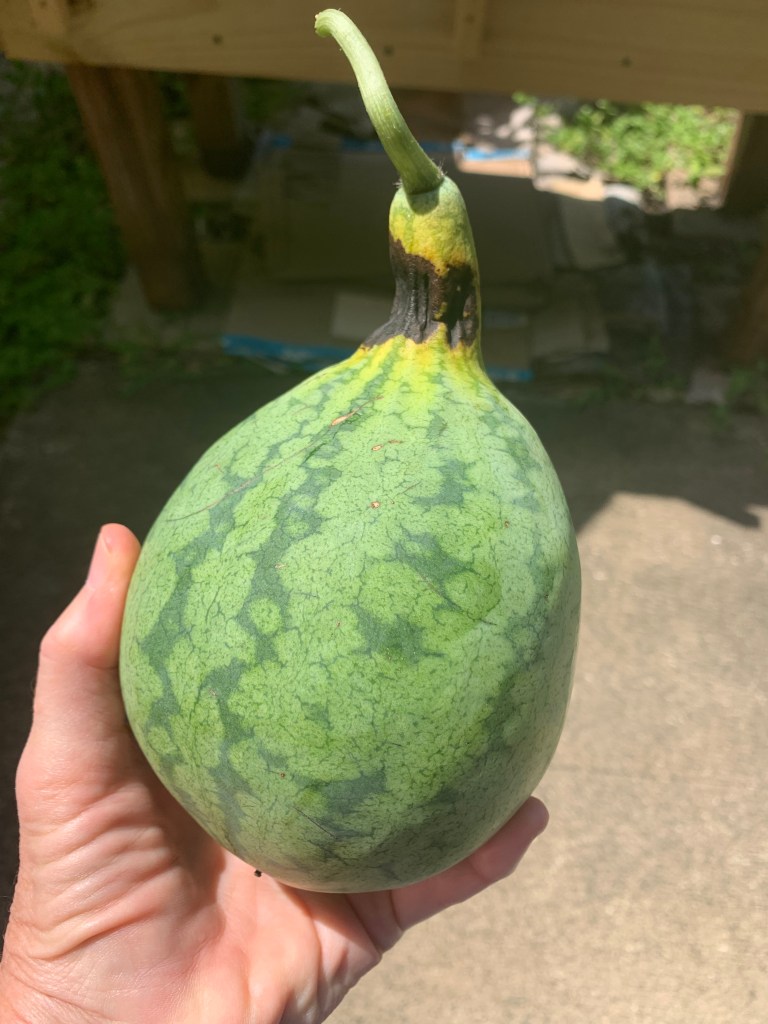
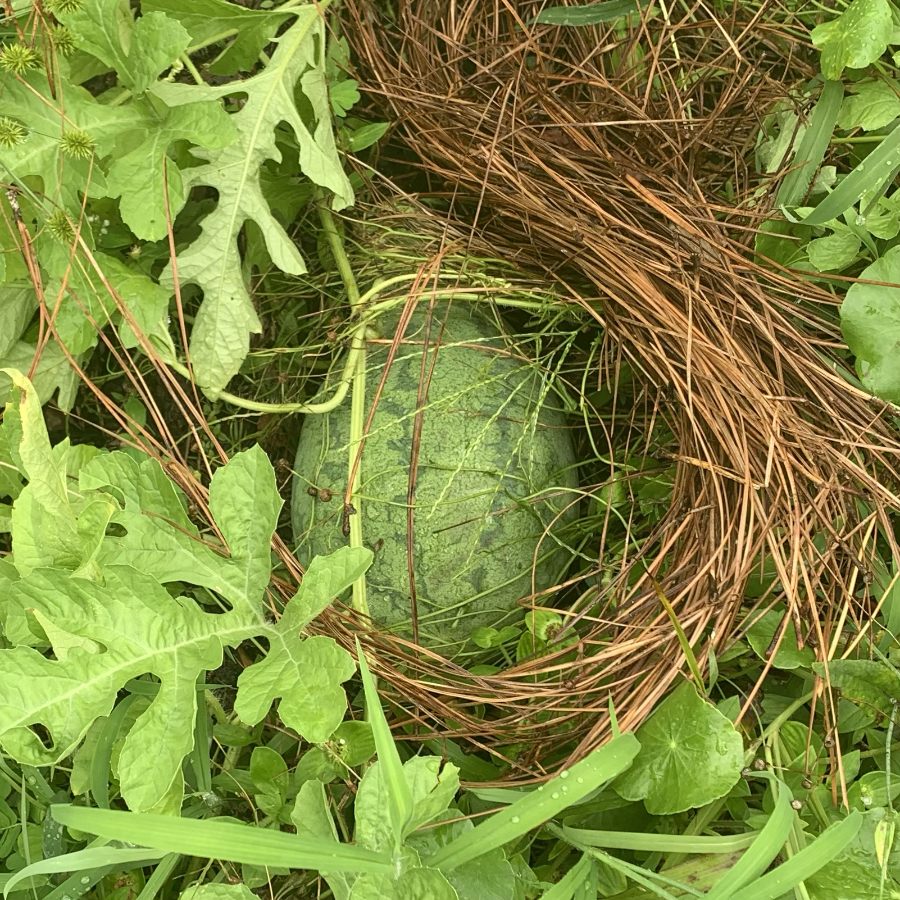
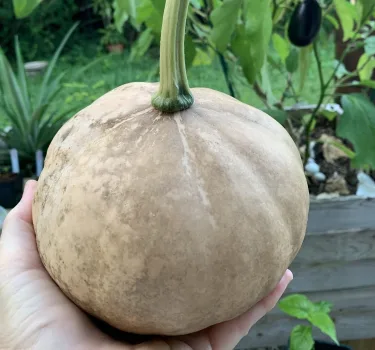
I had to pick my watermelon because the stem area was beginning to rot, for some reason. But, I also discovered watermelon #2 hidden under the vines. I covered it with pine needles to try to keep the raccoons away. I like to kid myself that I can outsmart them.

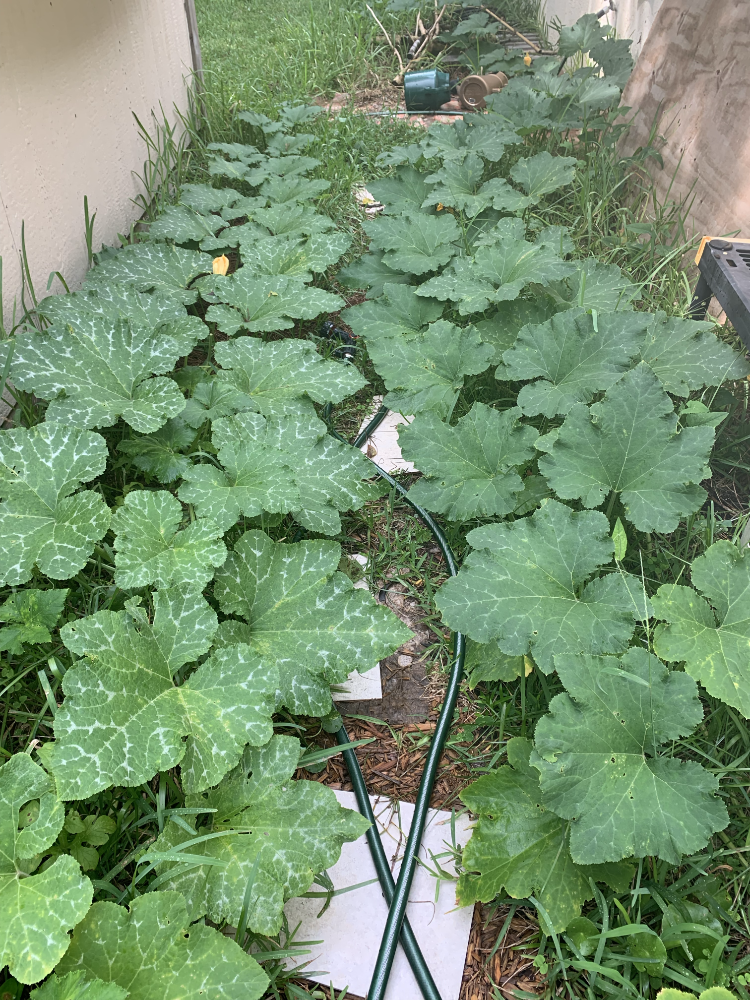
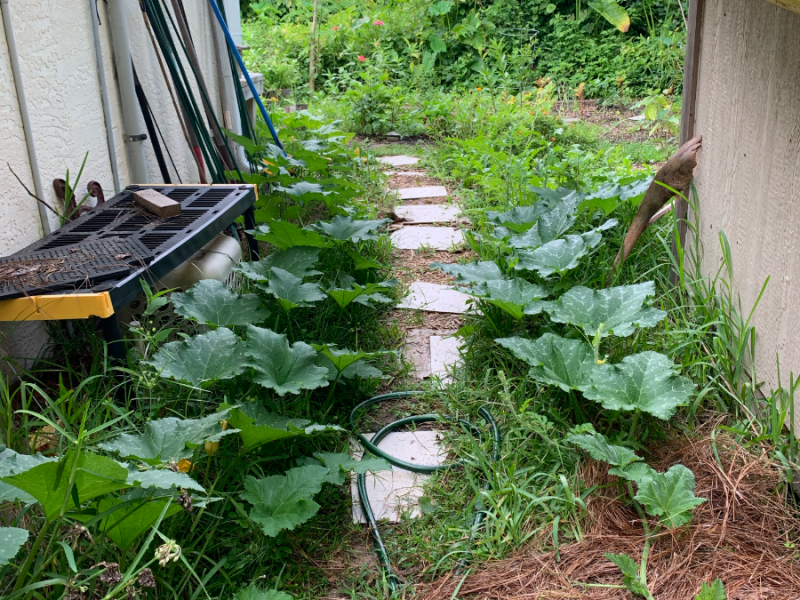
The pumpkin vines (first year) have nearly covered my walkway. I can’t easily move the hose so have to leave it in the middle.

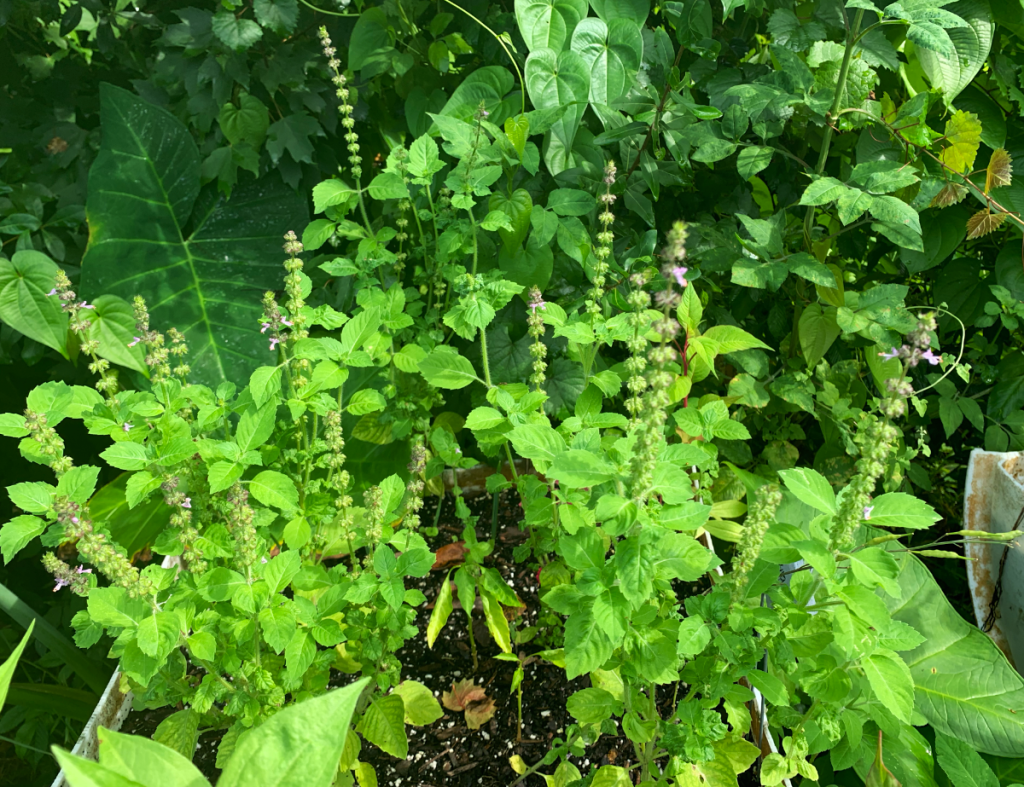
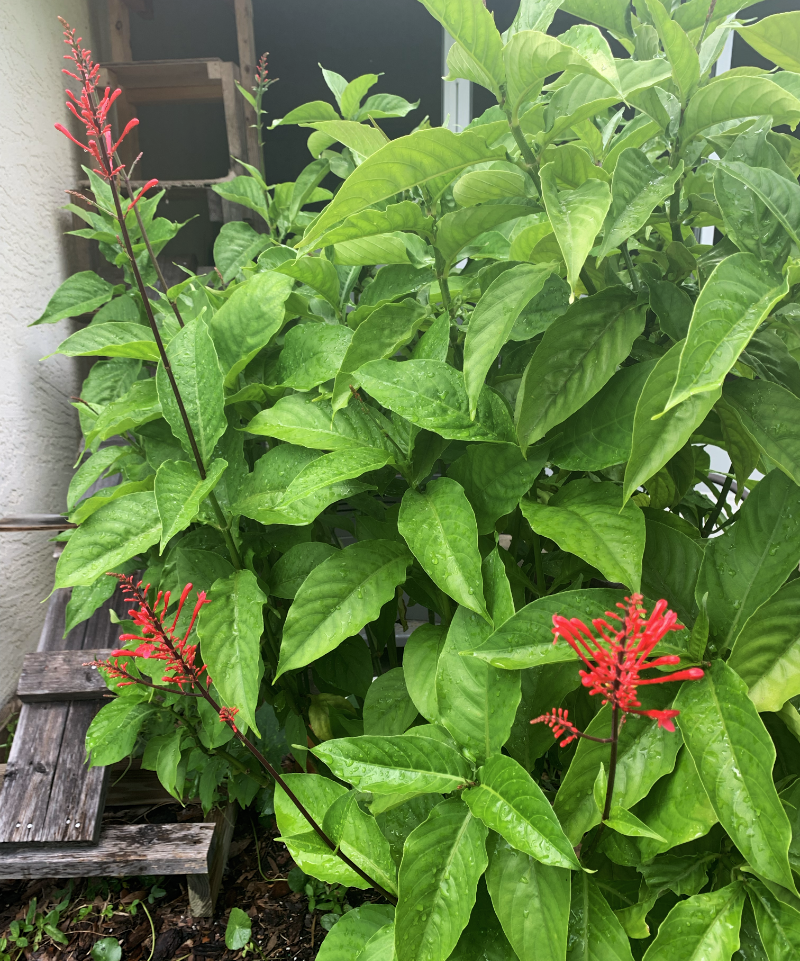
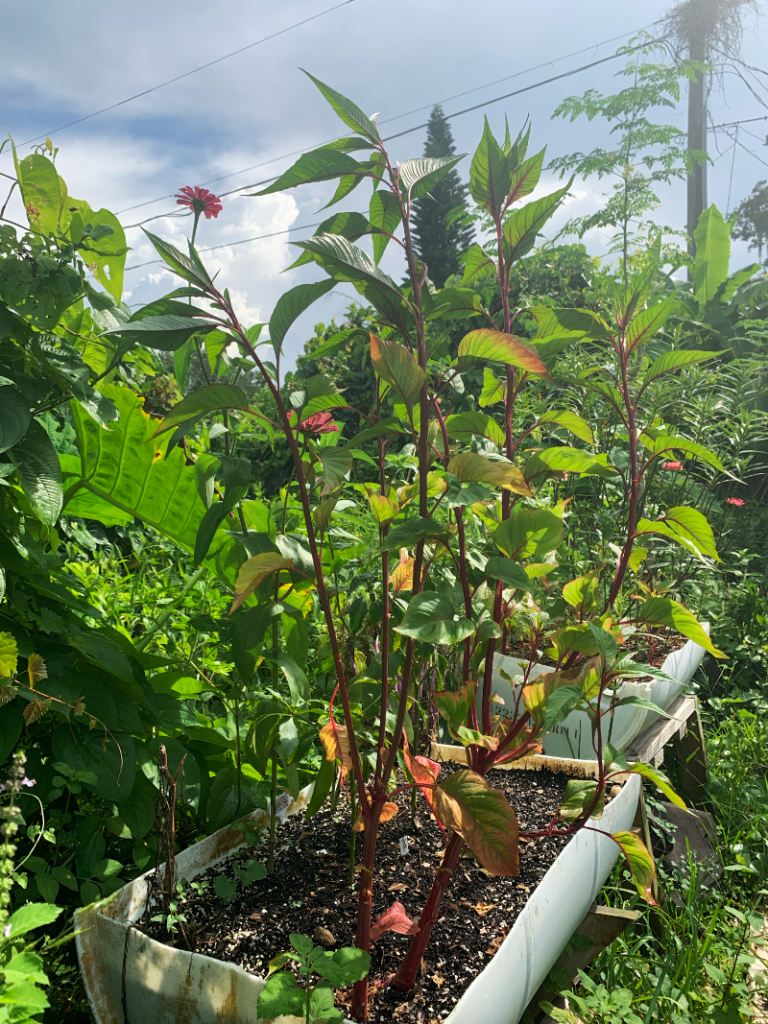
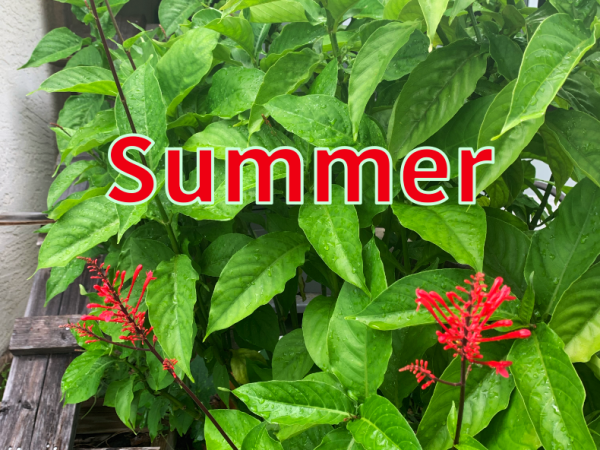
The Holy basil is growing and I’m using it regularly. Firespike flowers are coming out and that will keep the hummingbird happy. The celosia plants are getting tall and should be flowering soon.

Oh The Zinnias!

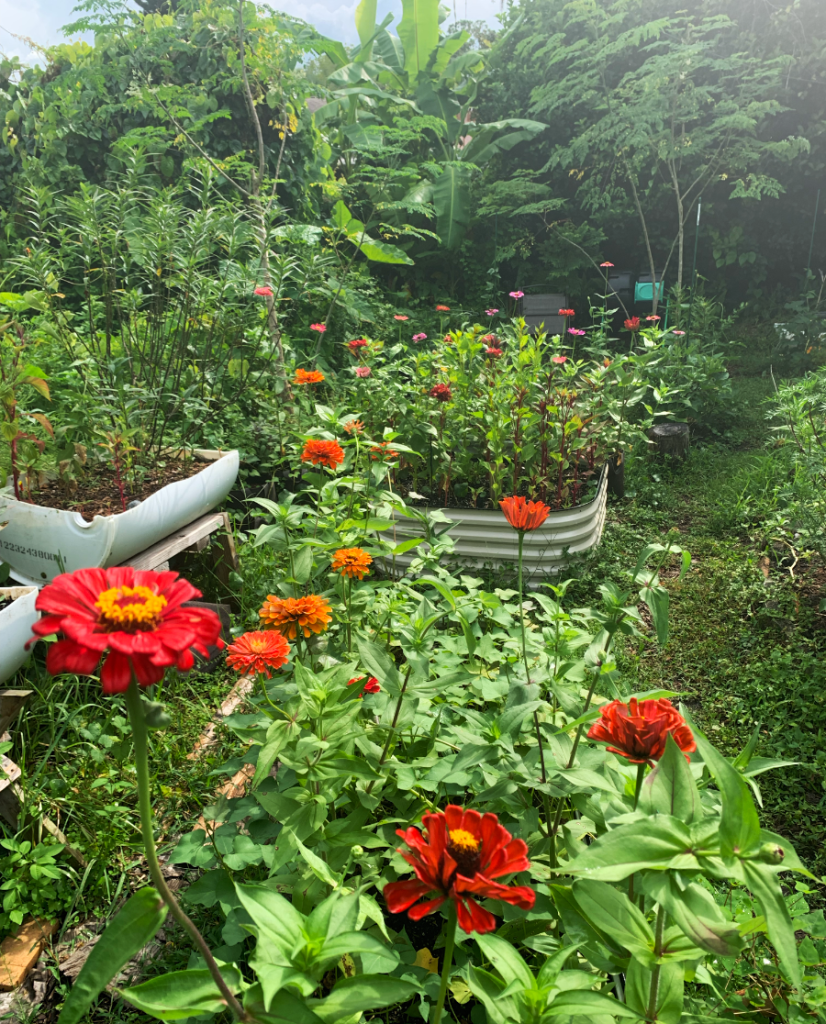
My garden is full of beautiful Zinnias. I look at each one when I inspect things. I can’t stop photographing them. I only began growing zinnias a couple of years ago, but they have become a favorite. I’ve decided to make dividers for this blog using all my zinnia photos.

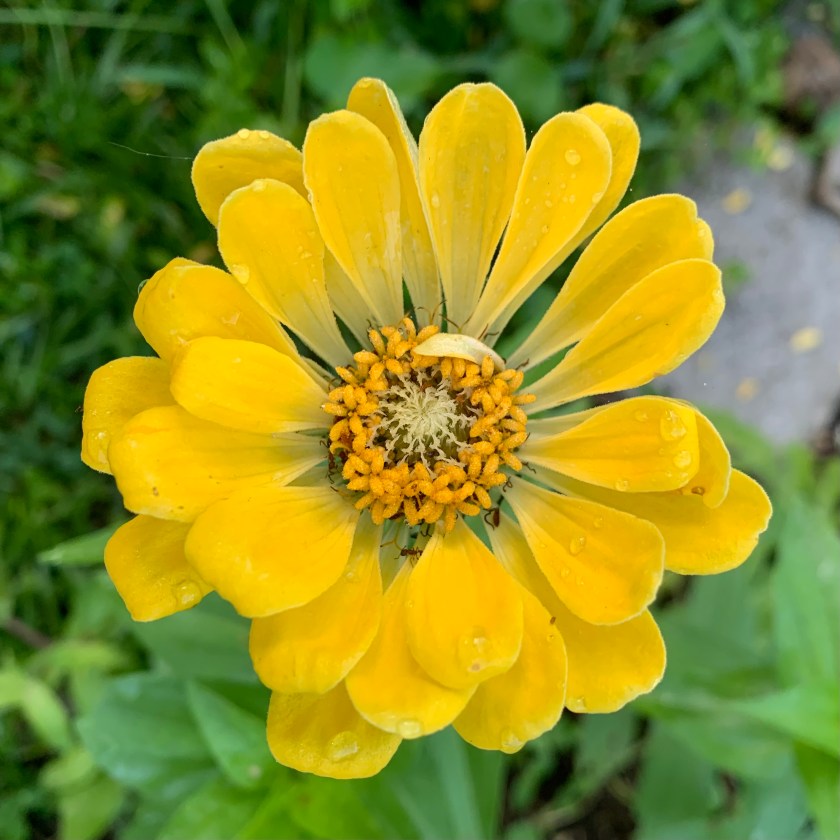
This year I have lots of reds, pinks, and gorgeous orange. I have only one yellow, so I’ll be sure to save it. Honestly, I am saving many Zinnia flower heads. Some have grown from saved seeds, but many I planted from newly purchased seeds.

yellow zinnia
Only one plant is yellow.

Skittle

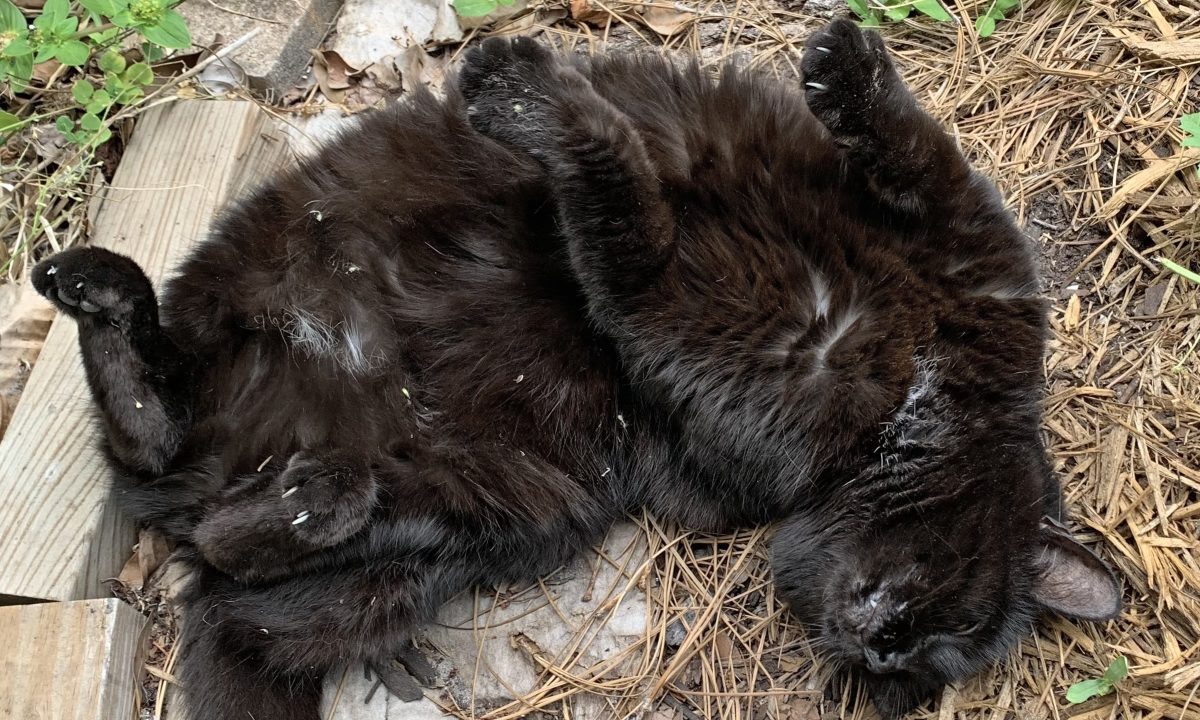
Skittle the cat has always been my shadow in the garden. She very much enjoys it when I inspect things. I can’t spend much time out there with her now because of the horrendous heat. She seems to love it. As long as she can find an uncomfortable looking place to sleep, she is happy.

Skittle

I’m mostly quite happy as I look through the garden. Occasionally I get depressed at the lack of food, but there is always the grocery store. Good thing.

The Monarch butterflies are still fluttering each day. They usually show up around 9:00am. They land on the zinnias frequently. Their tropical milkweed is not flowering now, but soon the swamp milkweed will be.

zinnias divider

Thank you for reading.

Something went wrong. Please refresh the page and/or try again.
Discovering a Monarch Chrysalis on Rosemary

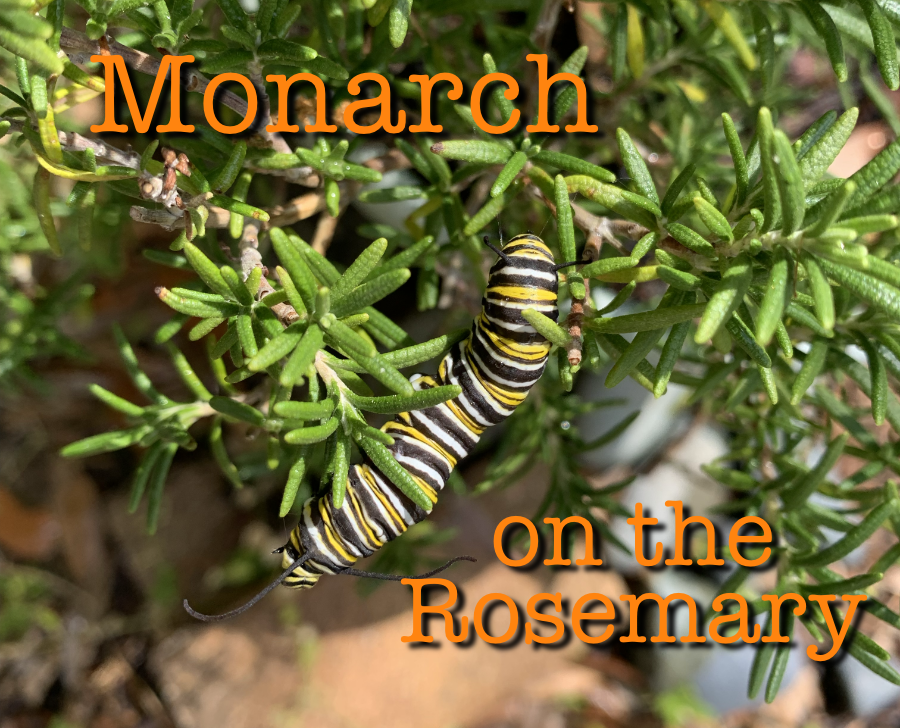
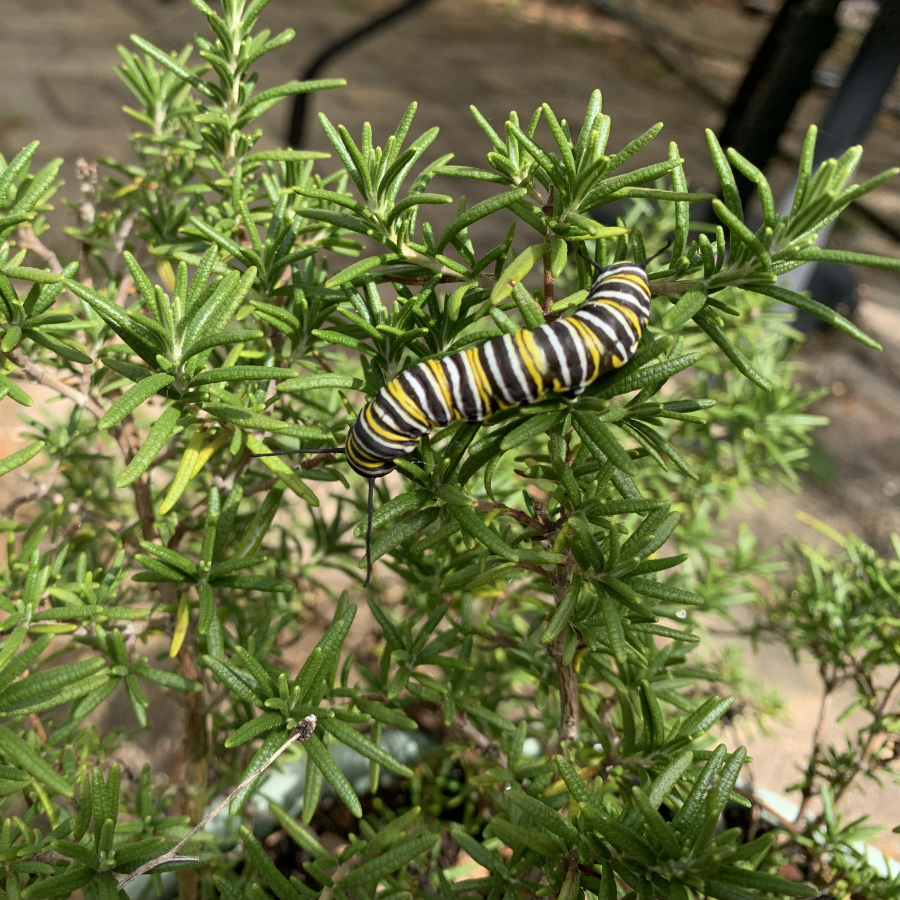
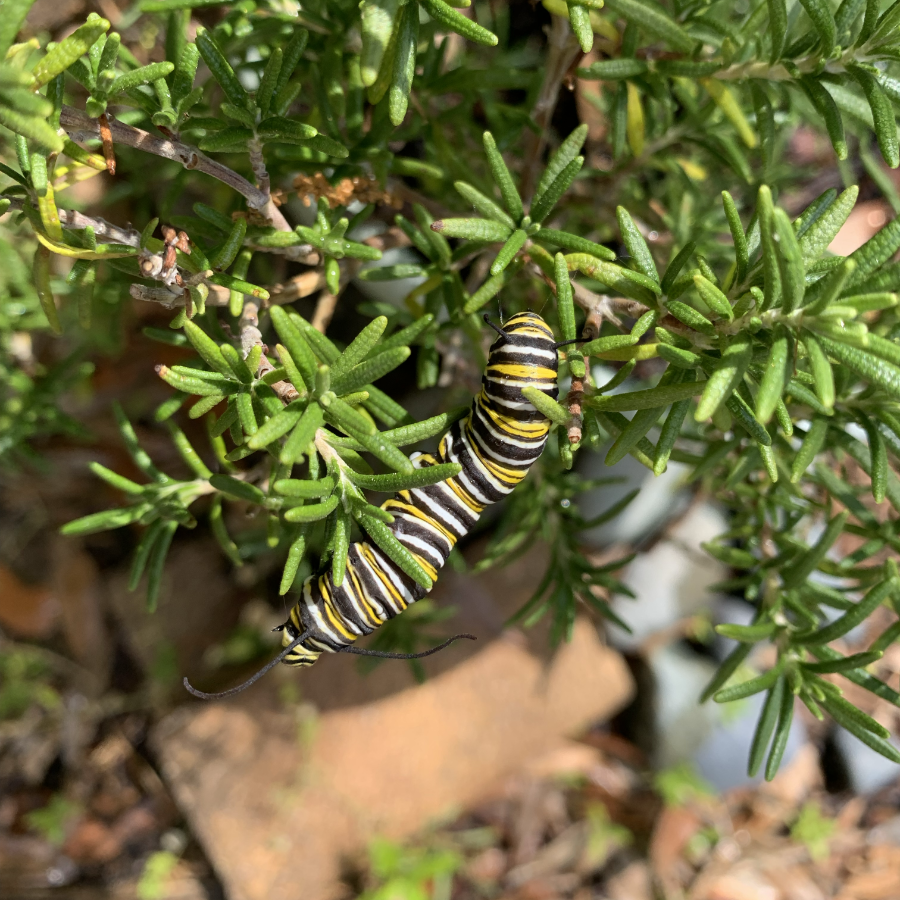
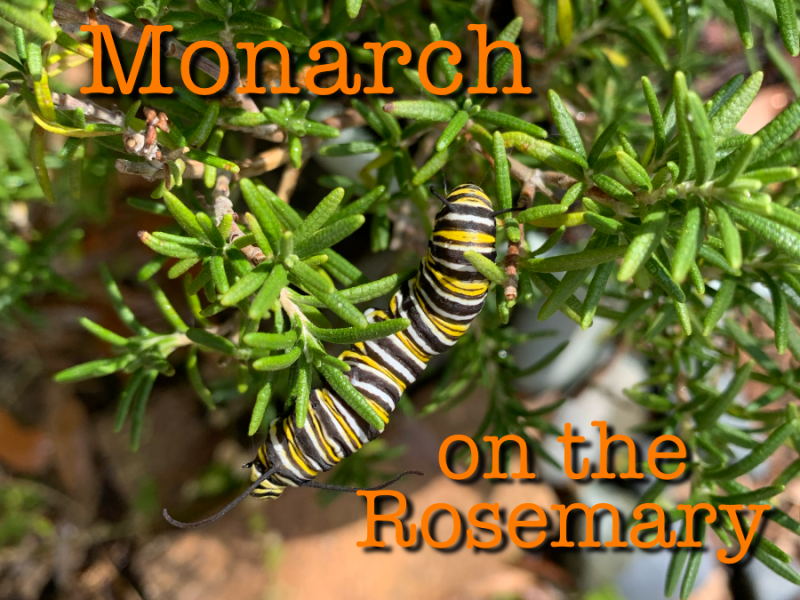
It is not usual to see a Monarch caterpillar on a Rosemary plant. Monarchs like Milkweed. But this one had a purpose, and had traveled quite a long way to be there.

I have one Rosemary plant in a pot on my back deck. On March 24th I noticed this caterpillar climbing all over it. I recognized it as a Monarch caterpillar and wondered what it was doing on the rosemary.

My first thought was, “You poor thing, you must be lost.” I know he needed milkweed to eat. But, I also know that some caterpillars crawl away from the host plant to create their pupa. I left him alone, and didn’t see him the next day. I figured the birds got him.

I worry about cardinals eating the caterpillars, but I guess birds don’t like the taste. I do see lots of caterpillars, and then they disappear. I always figure something ate them.

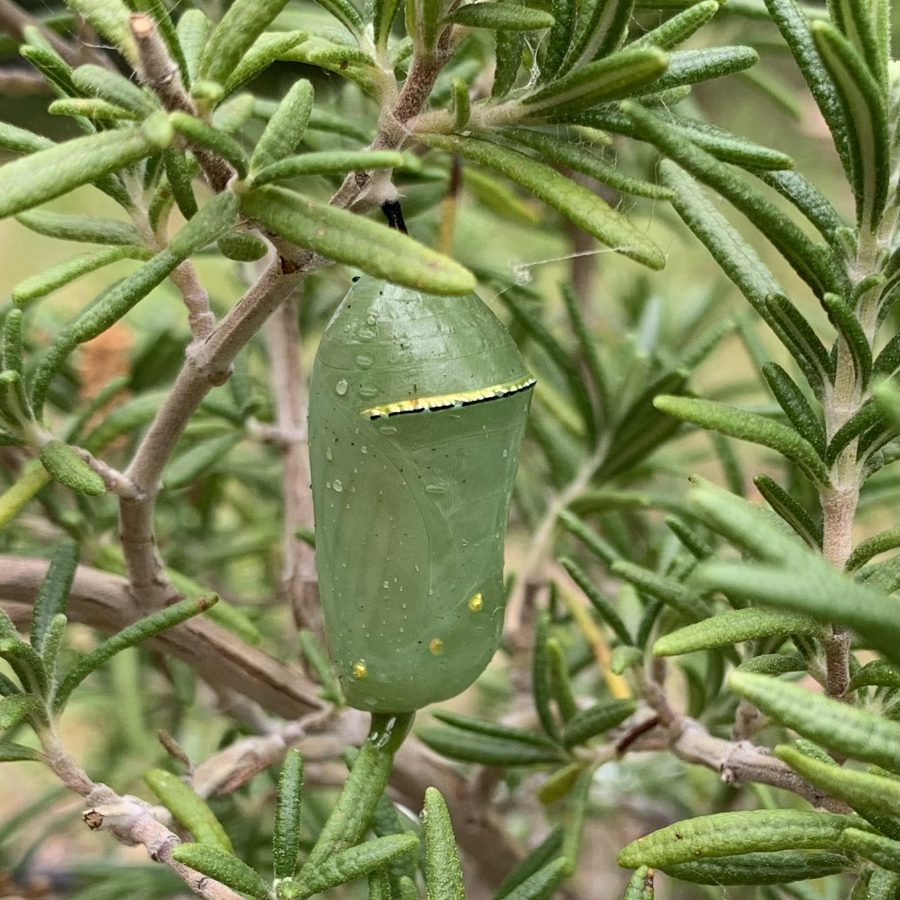
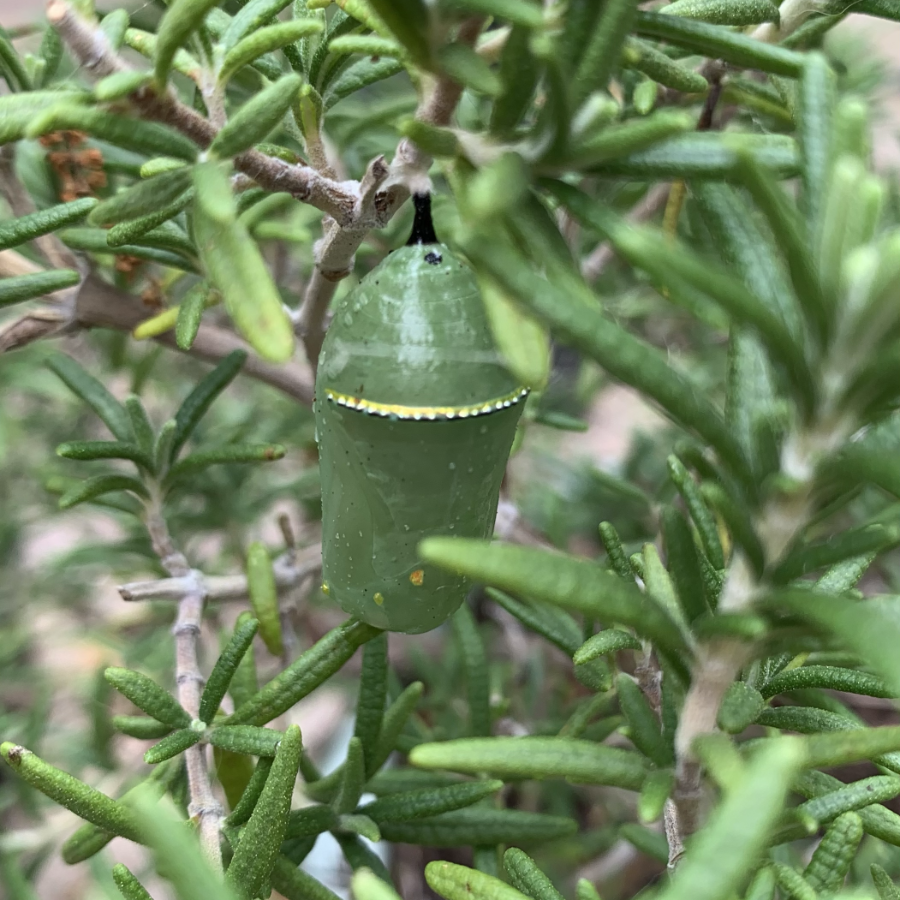
A day or two later I was at the Rosemary plant to cut a piece for my tea. And there it was. A beautiful green chrysalis! It had what looked like a gold band near the top and little gold specks. The caterpillar chose a spot down under a branch, which makes it difficult to see. The caterpillar had not disappeared. He, or she, had morphed and was no longer a caterpillar.

Although I do have some milkweed in my yard, it is pretty far away from the rosemary. It is a long way for a caterpillar to crawl!

I had to look this up. One notation mentioned they will crawl as far as 30 feet from the host milkweed! I don’t know how this little guy made it to the rosemary. My best guess is that it is 20 to 30 feet, from my milkweed.

The day after I found the chrysalis, we had a huge, windy rain storm. The wind blew hard, from all directions and I was a bit worried. The attachment was good and the chrysalis remained.

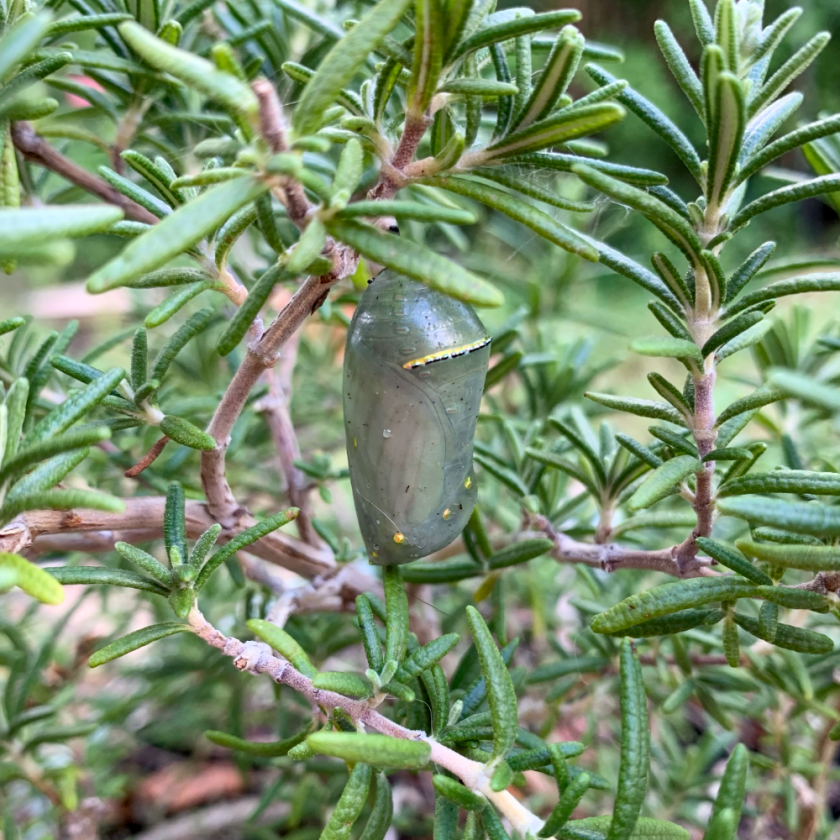
Today is April 5th and the chrysalis is darker in color (see photo below). I can see a wing inside! It has been 11 days since I saw the caterpillar. The Life Cycle, Monarch Joint Venture page says this stage can last 8-15 days.

I should expect to see a butterfly soon!

monarch chrysalis is getting darker
Can you see the wing?

Even if I miss the butterfly emerging, I’m happy to have had this chrysalis in my garden. I might get more rosemary and put it nearer the milkweed. The sturdy branches might be what drew him all this way. It makes me wonder if the caterpillar somehow knew the rosemary was here and purposefully headed to it.
I’ll be watching this one closely.

*Update – The next day…

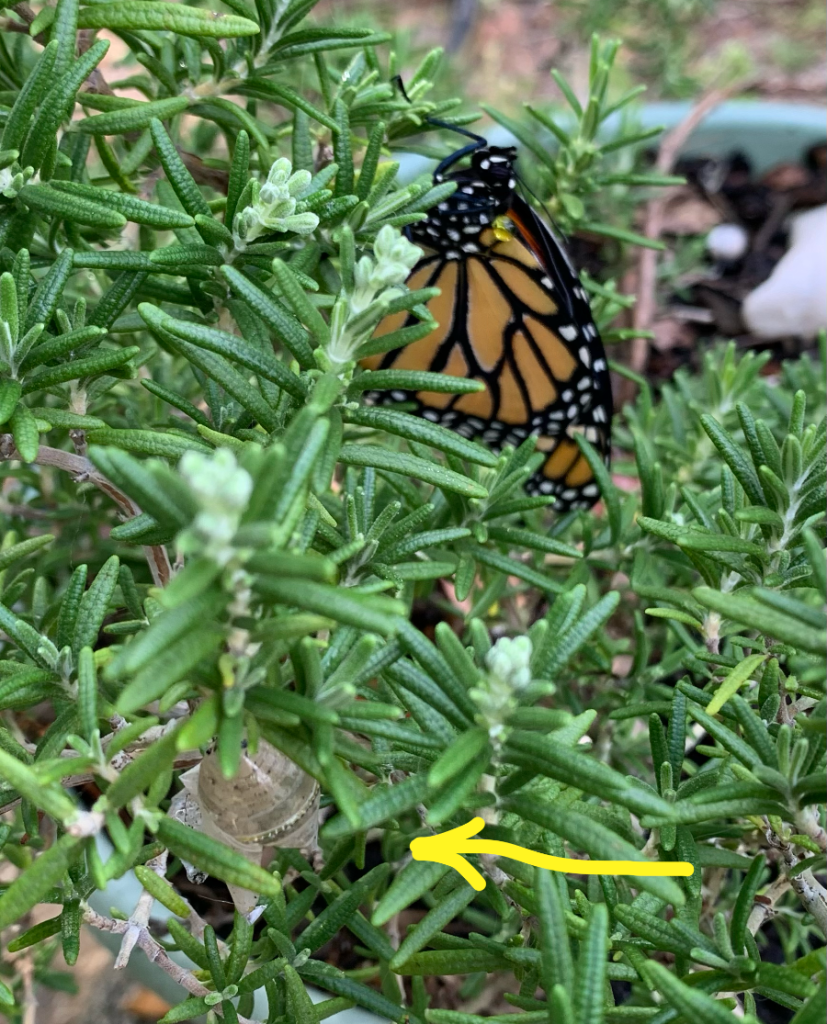
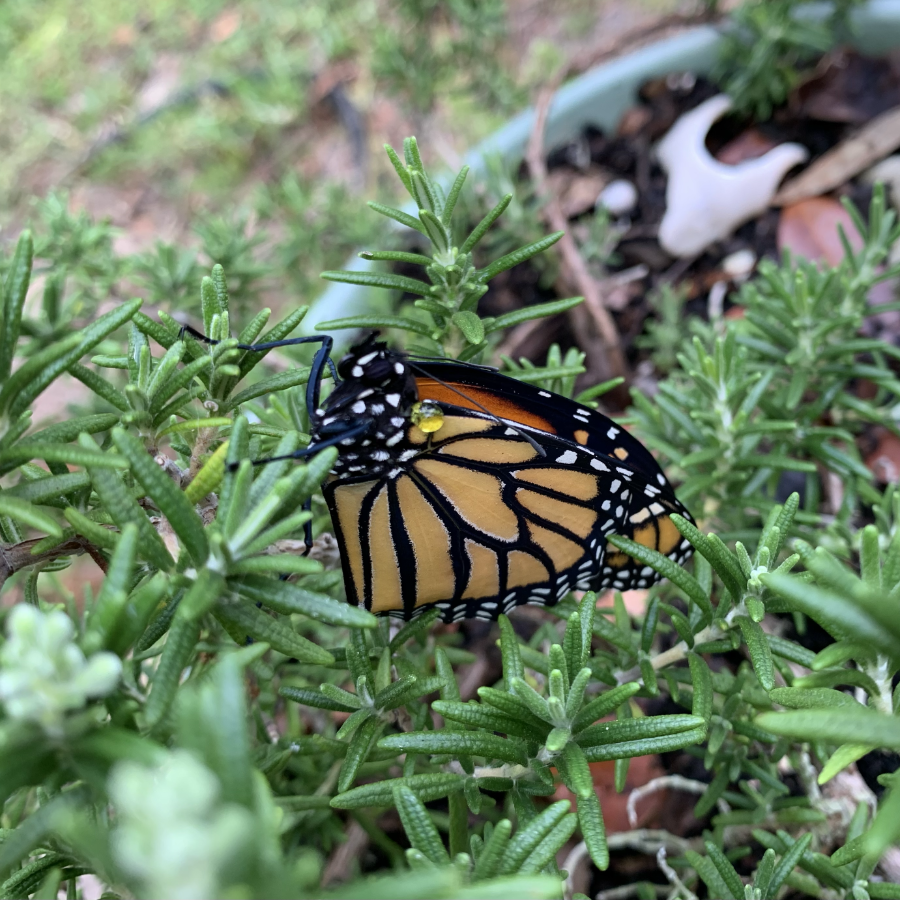
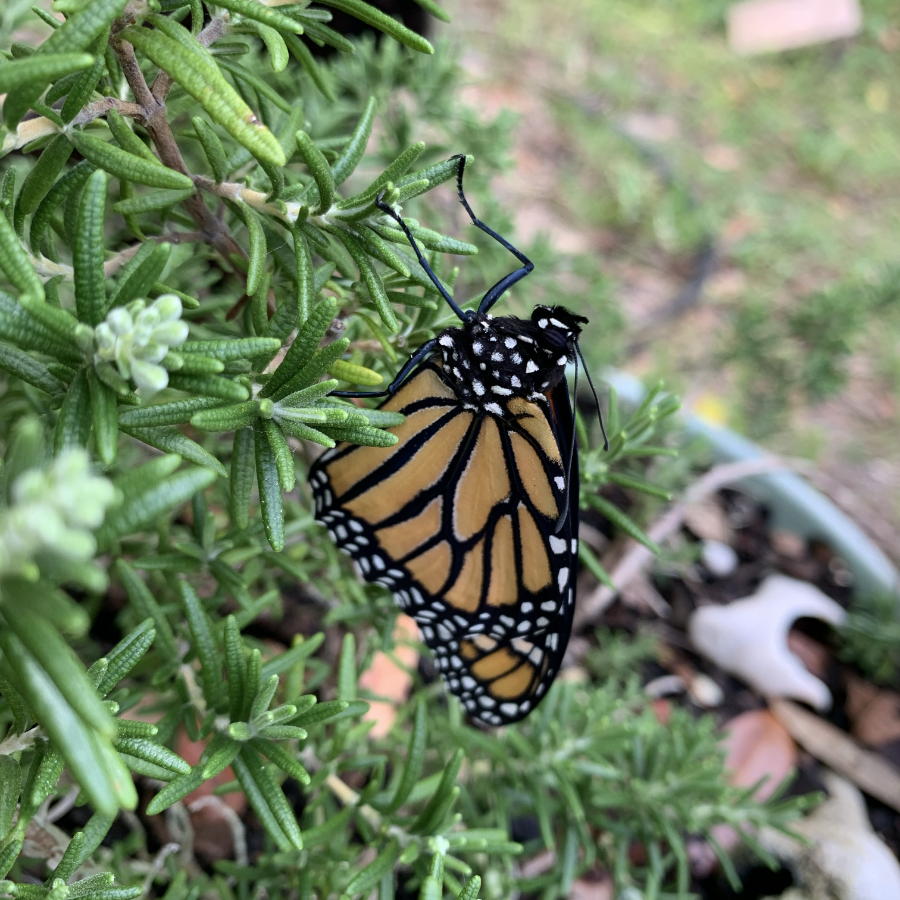
The chrysalis was very dark the next morning. I had some vegetable plant watering to do, but finally went to get my iPhone for a picture. I was too late! The butterfly was already out and on the Rosemary.

If you see a very dark colored chrysalis, sit and watch! It wasn’t long at all. I’m sorry I missed his emergence, but I got to see him before he flew away.

In fact he has been sitting on the plant for hours now.

Freshly hatched, Monarch butterfly near open chrysalis.
butterfly divider flowers

Mid-summer is The Time For Bug Pests

Mid-summer is the time for pesky pests to show up in the vegetable garden. It’s also the time to search for beneficial bugs that will hopefully take care of some of the problems.

In July I noticed that there were a lot more unwanted bugs on flowers and veggies in the garden.

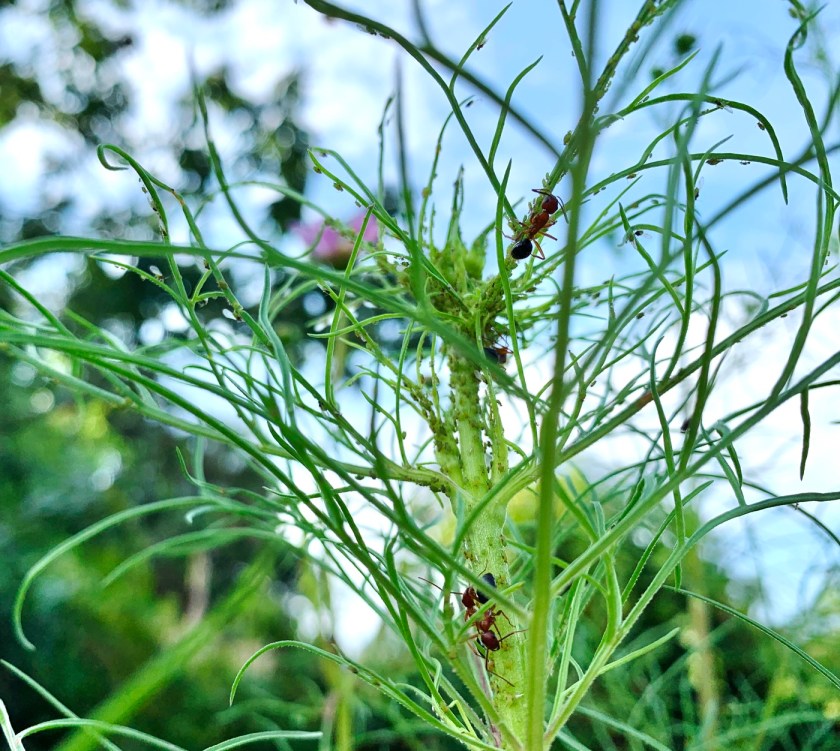
The seashell cosmos are full of aphids. I saw one ladybug on the cosmos, but she didn’t seem interested in removing the aphids. Or maybe there were just too many. Yup, ants and aphids actually help each other out… Read this article at Gardening Know How.

I have since sprayed water on the ants and most of the aphids to get them off these flowers. Some stems were cut back to remove the infestation.

Cosmos stems covered in aphids and ants.
Ants and aphids

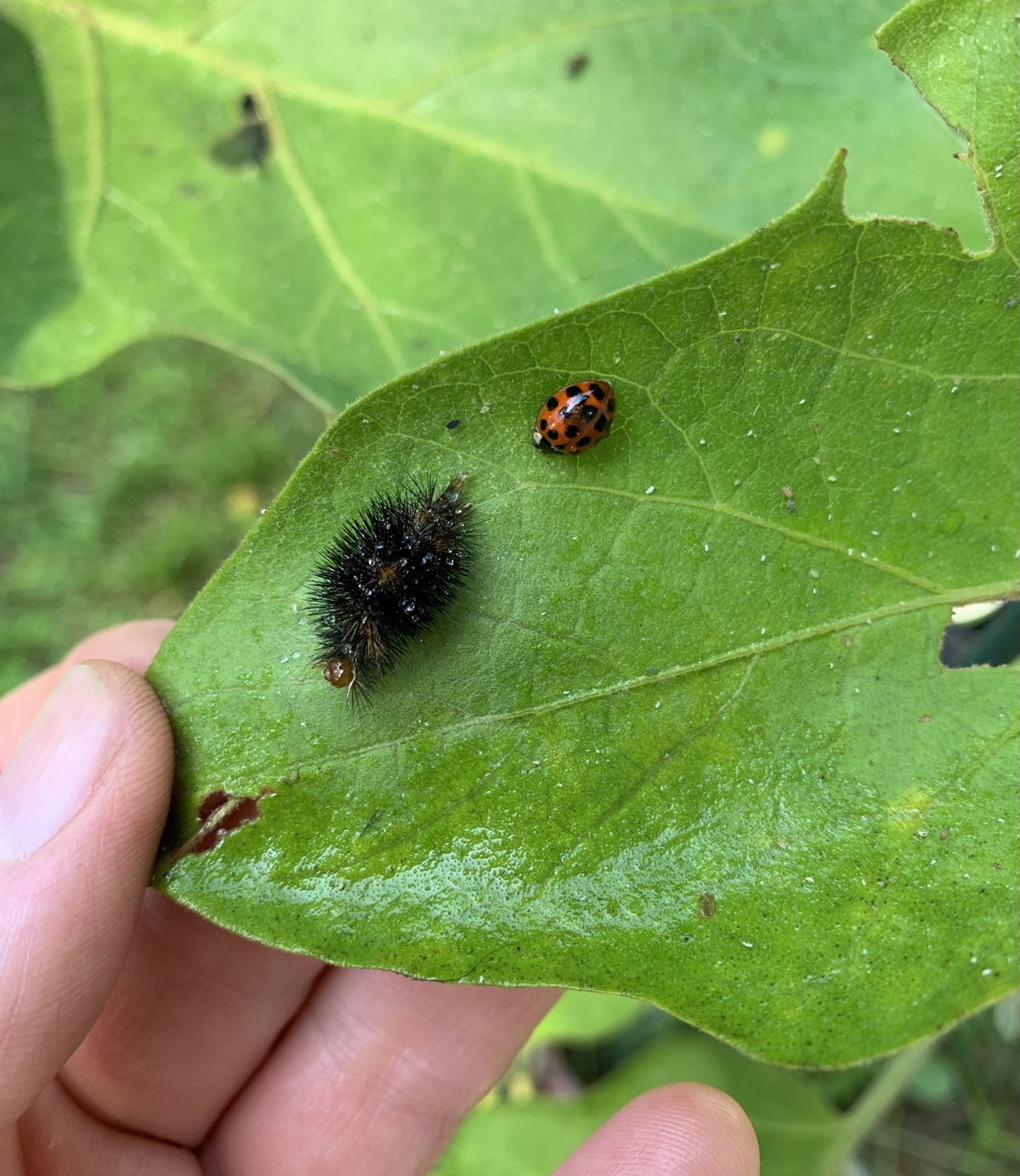
Cosmos and eggplant are covered in ants also. And a black, fuzzy caterpillar showed up to eat the eggplant leaves.

fuzzy black caterpillar
Giant Leopard moth caterpillar

The black caterpillar turns into the Giant Leopard moth, from what I’ve discovered. I had three of these caterpillars on my eggplants, but now they are all gone. I was really hoping to see them become moths.

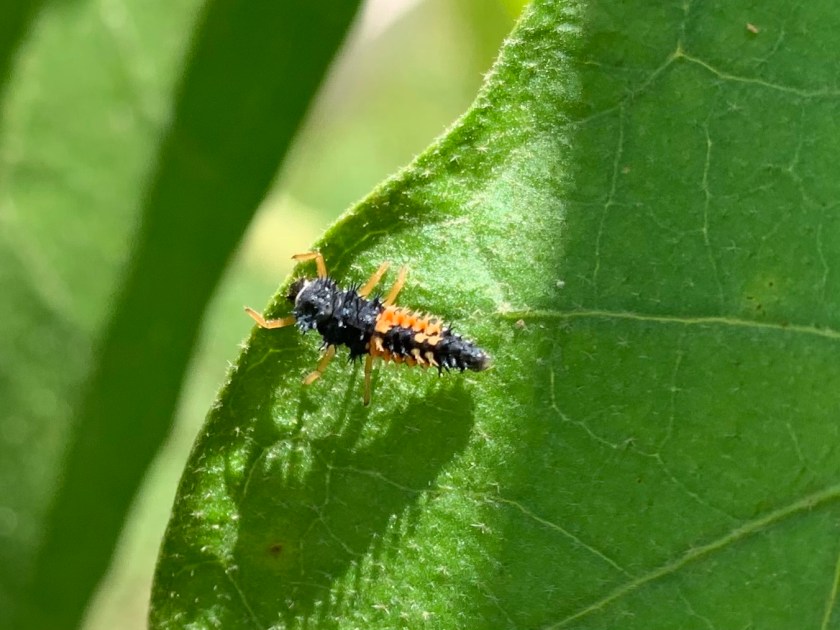
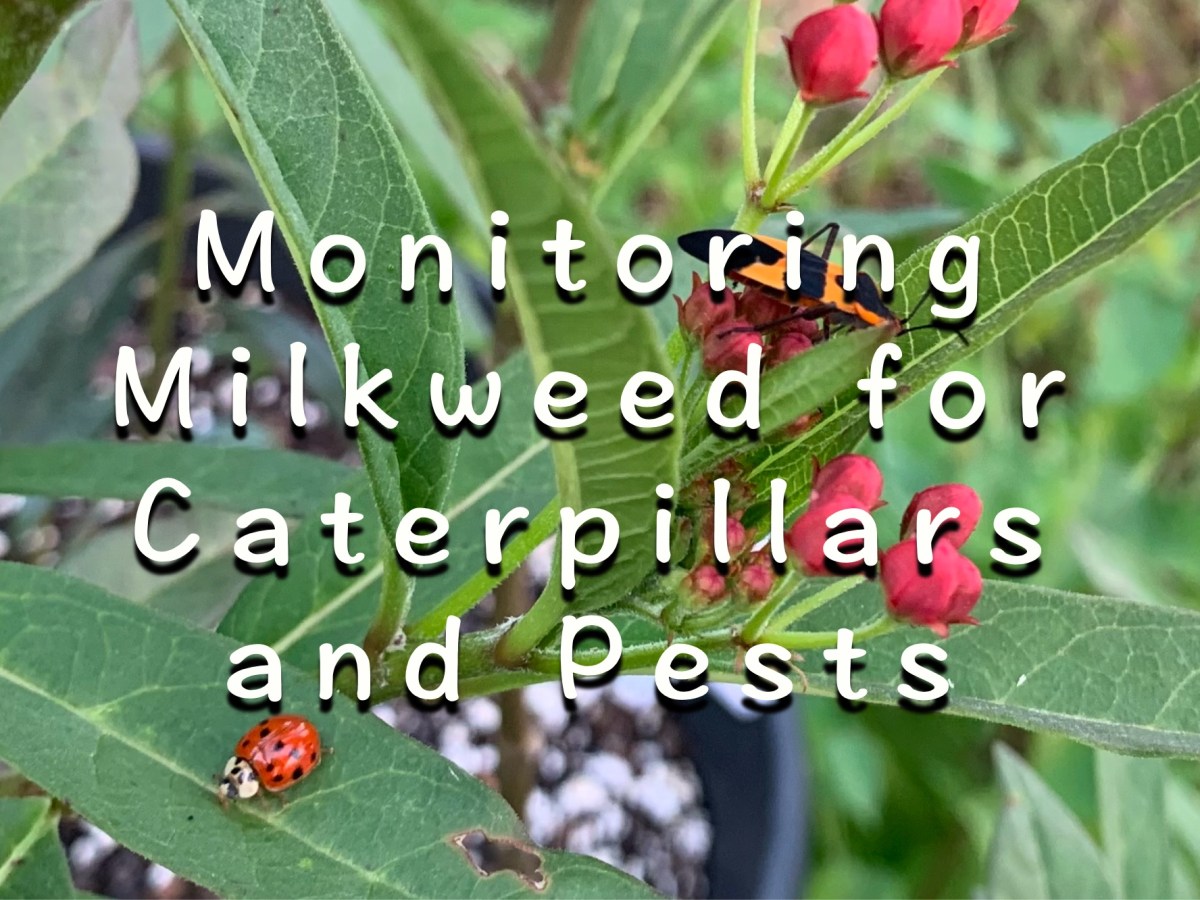
Along with weird and unwanted things, I was happy to find some ladybug larvae on one of my largest eggplant plants. Lizards were also crawling all over the place, so these may disappear. I hope not.

macro ladybug larvae
Ladybug larvae

Get Rid of Fire Ants Naturally, Will This Work?

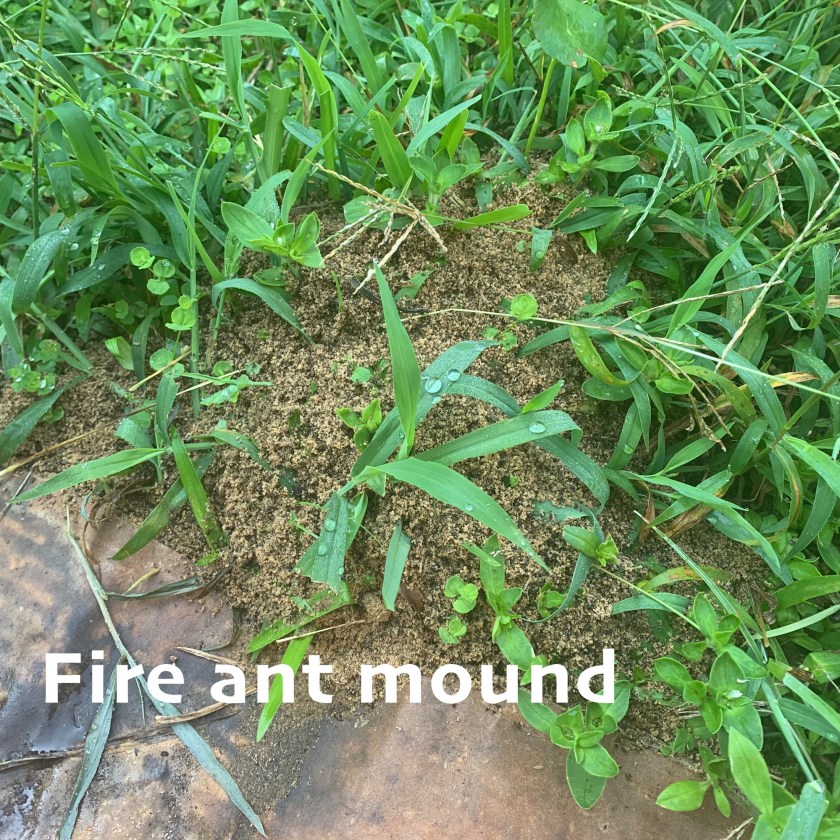
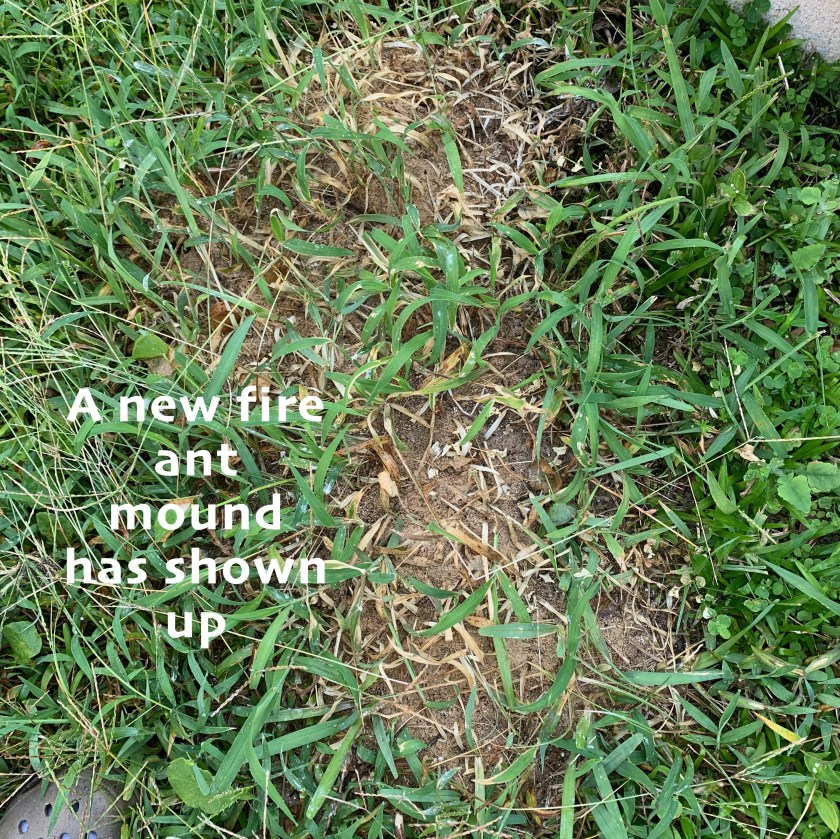
As for one of the worst Florida pests ever, the fire ant, I’ve been looking for a good way to rid the garden of them.

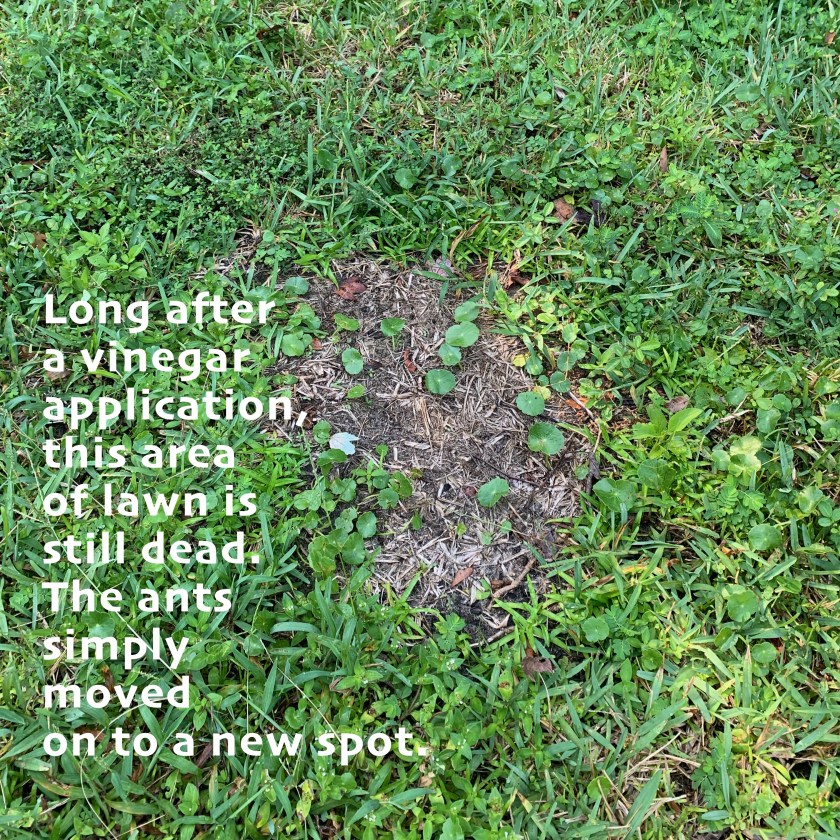
I’ve tried pouring vinegar on the mound. It kills all the grass, but the fire ants just move. I’ve sprinkled Diatomaceous Earth all over the hill, and it seems to do nothing. I was going to set Terro traps but I was afraid the raccoons would try to eat the stuff.

  • Natural fire ant control

Now, I’ve come across a video by Elise Pickett from The Urban Harvest with advice on naturally killing fire ants. The mixture to try contains orange oil, dawn detergent and water. Watch the video here for more info.

I absolutely plan to try this as soon as the ingredients arrive.


Beetles and Worms

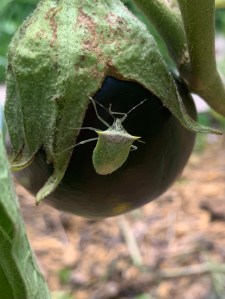
I don’t know what this little green beetle is, but he was happily crawling on the eggplant. Looks like a stink bug, except green. Maybe he is a juvenile.

green beetle on eggplant

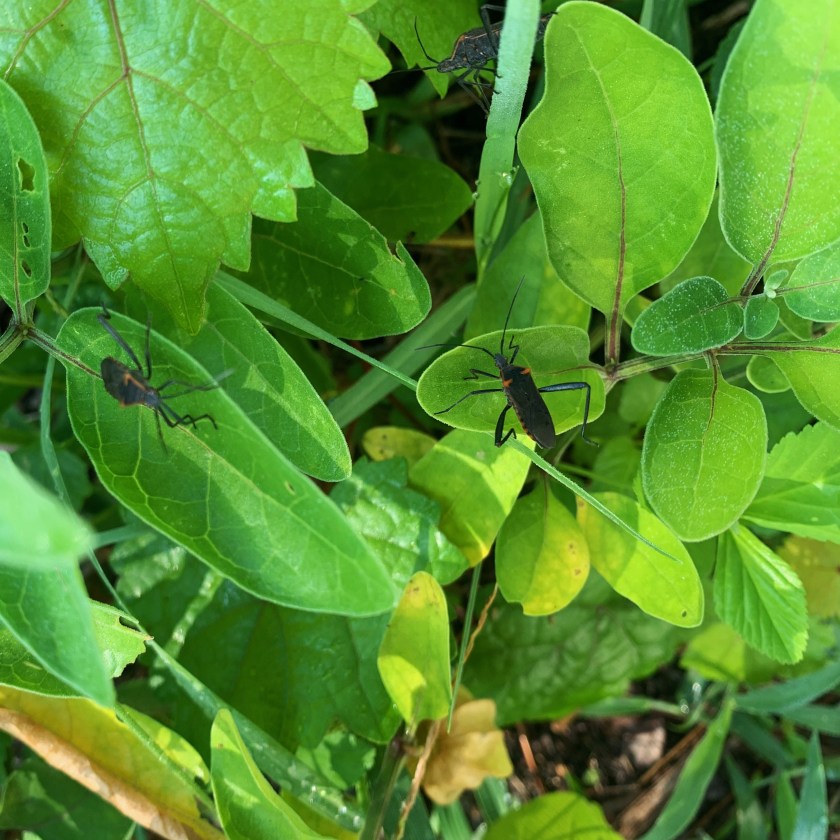
These little black bugs were found on the Ground Cherry plants, which grow wild along the edge of the yard. Are they good bugs? They seemed harmless, and sure enough, they are soldier beetles which are BENEFICIAL and important for pollination.

stinkbugs on ground cherry

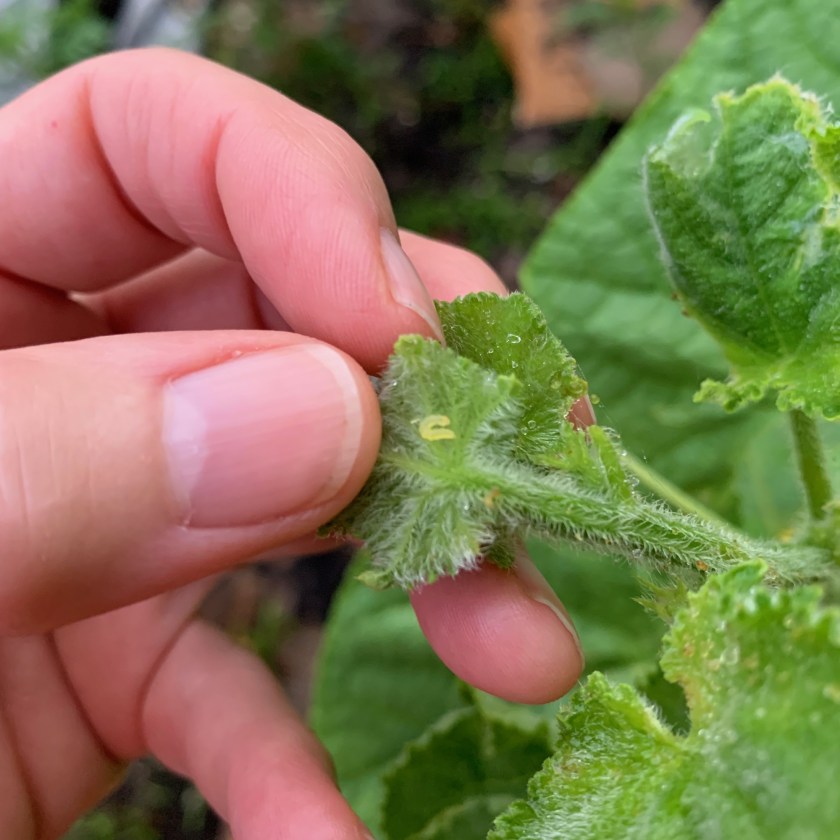
Each morning I am picking little green worms off the tops of my Suyo Long cucumber plants. Most likely the Pickleworm. I will continue to hand-pick the worms and hopefully rid the plants of them.

After reading this article by IFAS, it seems that the best practice for avoiding this worm problem is to plant cucumbers early in the season to beat the invasion. I will look into this further.

green worms on cucumber plant

More stories from the blog…

Fill the Yard With Milkweed – The Right Kind!

Be sure to select a native milkweed for the yard, or you could be harming the Monarchs instead of helping. Don’t take store and seller’s word for it – be informed.

When I wrote this blog post, over two years ago, I had read an article about Tropical milkweed being horribly bad for Monarchs. It seems that is not completely true. As I’ve continued to learn about growing milkweed, I think the Tropical variety can be used as a good stand in if native milkweed is not available. But it must be cared for correctly.

Back then: On a trip to the Farmer’s Market, we found some plants for the yard. I was happy to find this plant at the market. It cost me $15.00 but I was very excited to find such a wonderful, big plant to help the monarchs. What I didn’t realize is that it is NOT native. I bought Tropical Milkweed which is becoming a problem in the south.

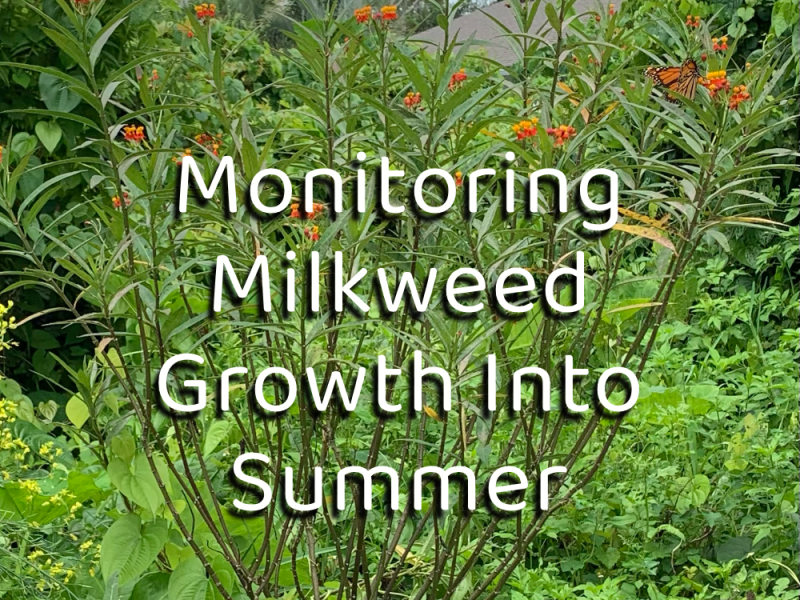
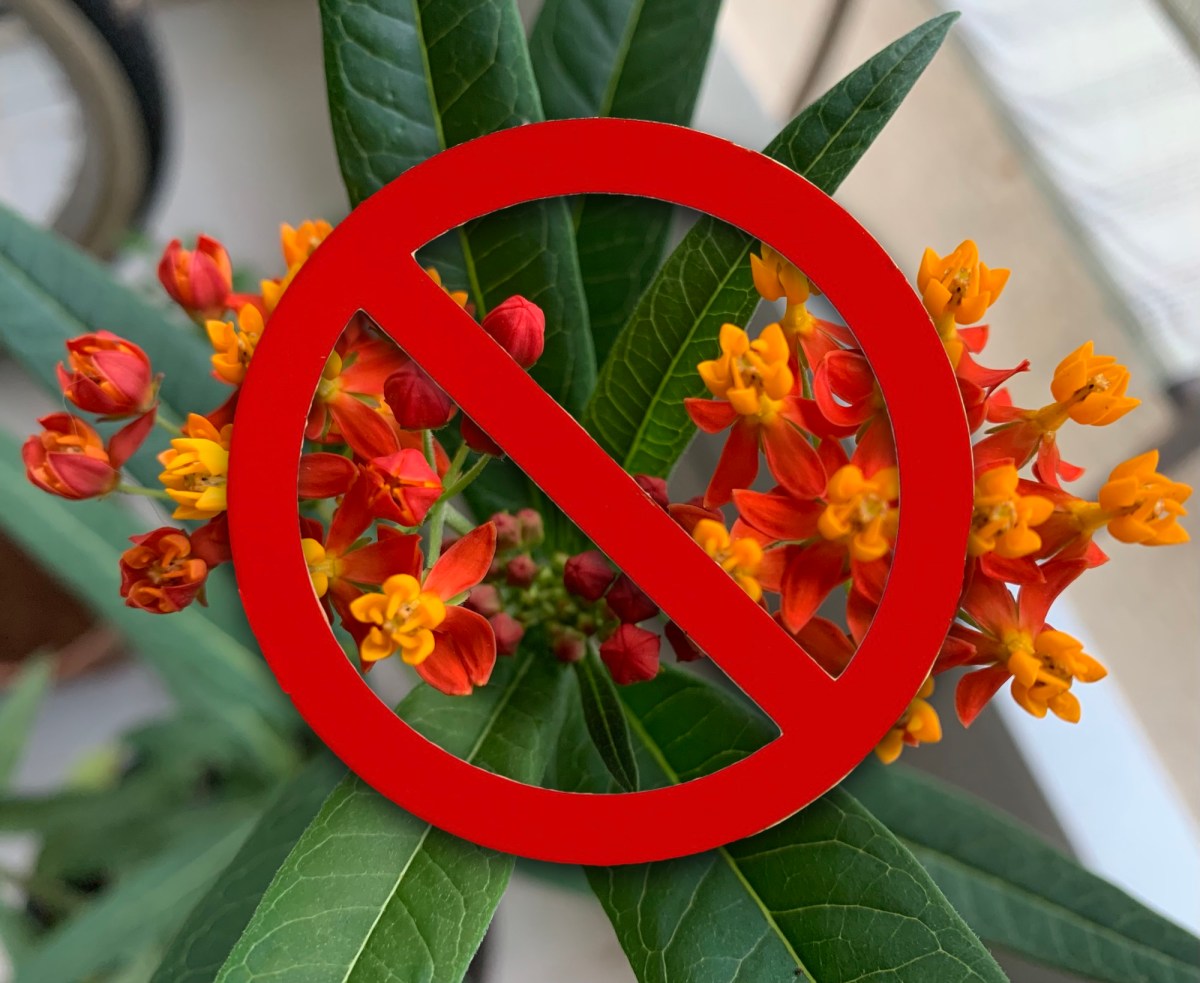
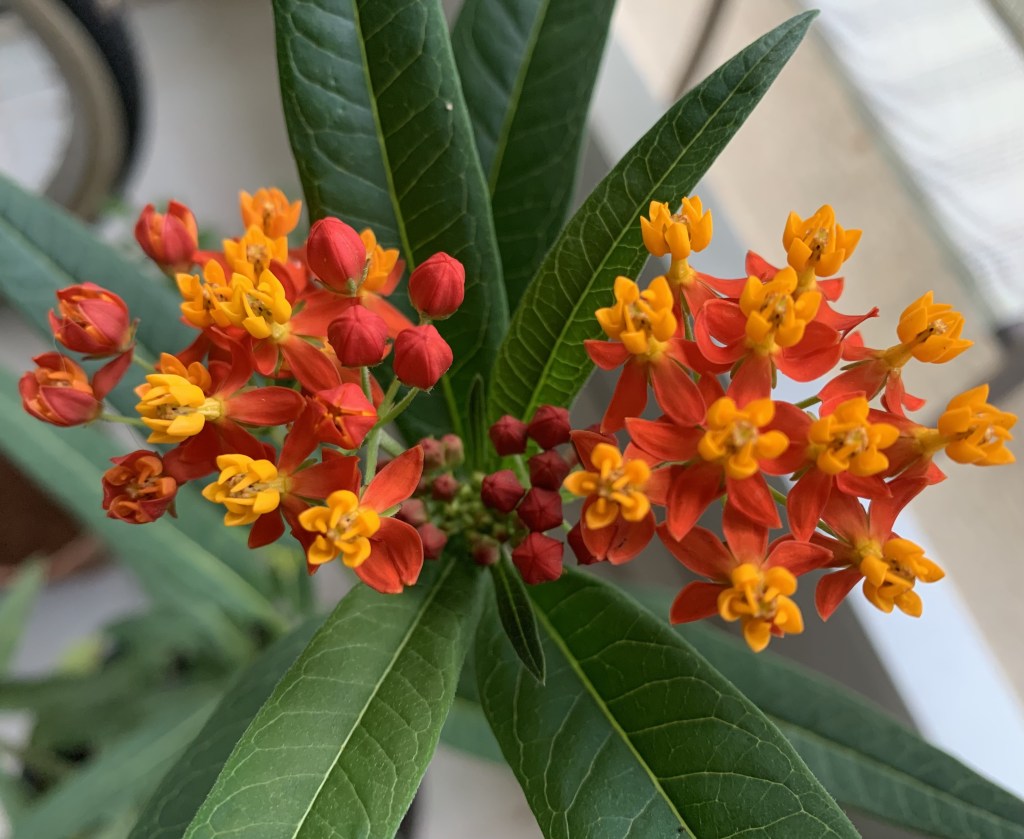
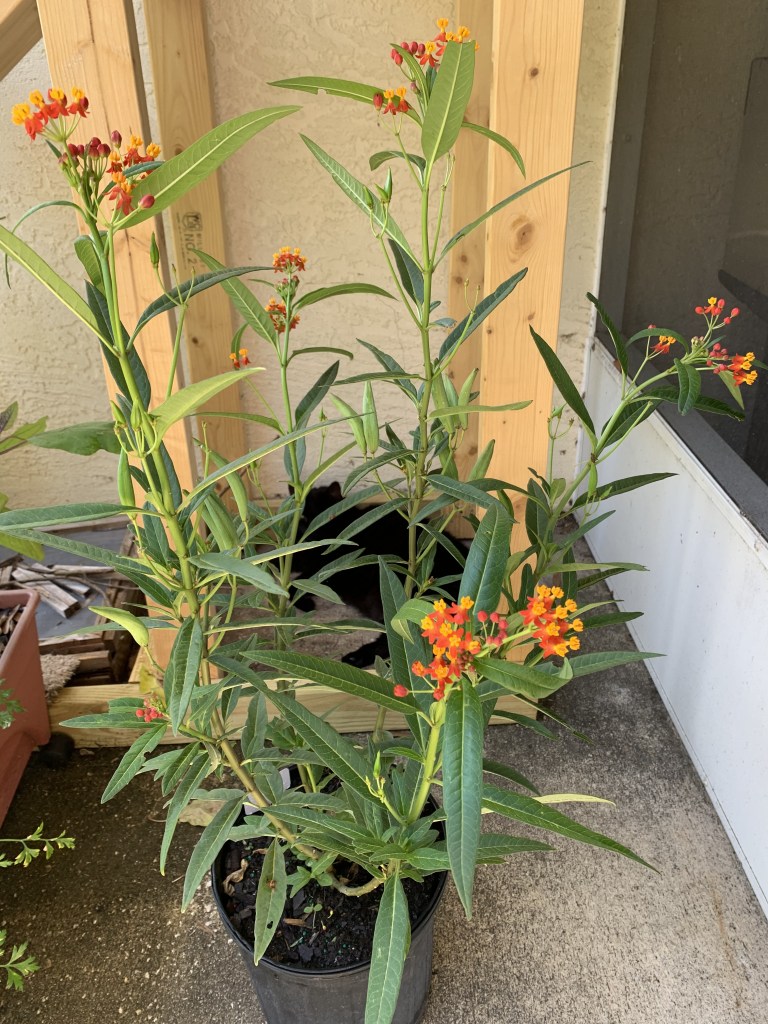
Two-colored flowers (red and orange/yellow) with pointed leaves – this is the non-native Tropical Milkweed. But, the only reason it seems to be a problem is that it does not die back in Fall / Winter.

Good Intentions

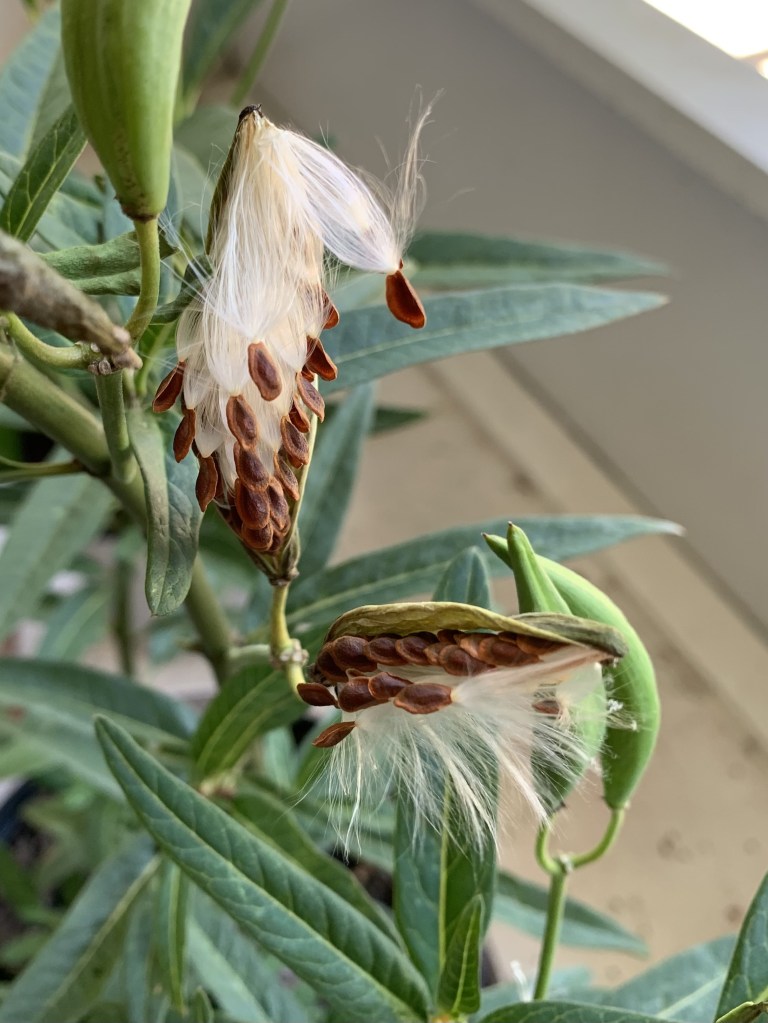
I want to fill my yard with food for the bees and butterflies (namely Monarchs)… BUT… this is not the right kind of milkweed for my area. When this milkweed plant began to drop its seeds, I looked for information about planting them. I’m so glad I searched for information. BUT, now there is more information.

I suggest removing the seed pods so the plant doesn’t spread into the wild where it can’t be cut back over winter.

This is when I realized that I have the wrong type of milkweed. Wrong meaning not native. It was time to learn more about milkweed.

Updated Info on Tropical Milkweed

Tropical Milkweed (Asclepias curassavica) is NOT a native Florida plant. It is native to Mexico. It’s always best to plant native. However, I have not easily been able to find nice, native milkweed plants at local nurseries and garden shops. Tropical milkweed is easy to grow, and it grows fast. No wonder plant sellers prefer this one.

If you have tropical milkweed, the most important thing is to cut it back by December. It won’t die back on its own in many locations. This keeps the Monarchs from migrating. If they stick around and continue to breed, the caterpillars can develop a lethal parasite (OE). Read the article about this at IFAS for more info.

I doubt that many sellers of the tropical milkweed even realize it is not native to Florida. And many probably don’t understand the need for cutting it down.

Non-native, flowers are bi-color red and yellow.

Tropical milkweed is not native to Florida and can cause problems for the Monarch butterflies.

When is it Okay to Plant Tropical Milkweed?

So what if you have this milkweed growing in your yard? After I removed my Tropical milkweed plants, two more plants grew – 2 years later. Right away I began to see caterpillars. I knew this was the wrong milkweed, but it was feeding those hungry caterpillars. So, is it better to help the Monarchs even if the milkweed is not native? I say yes.

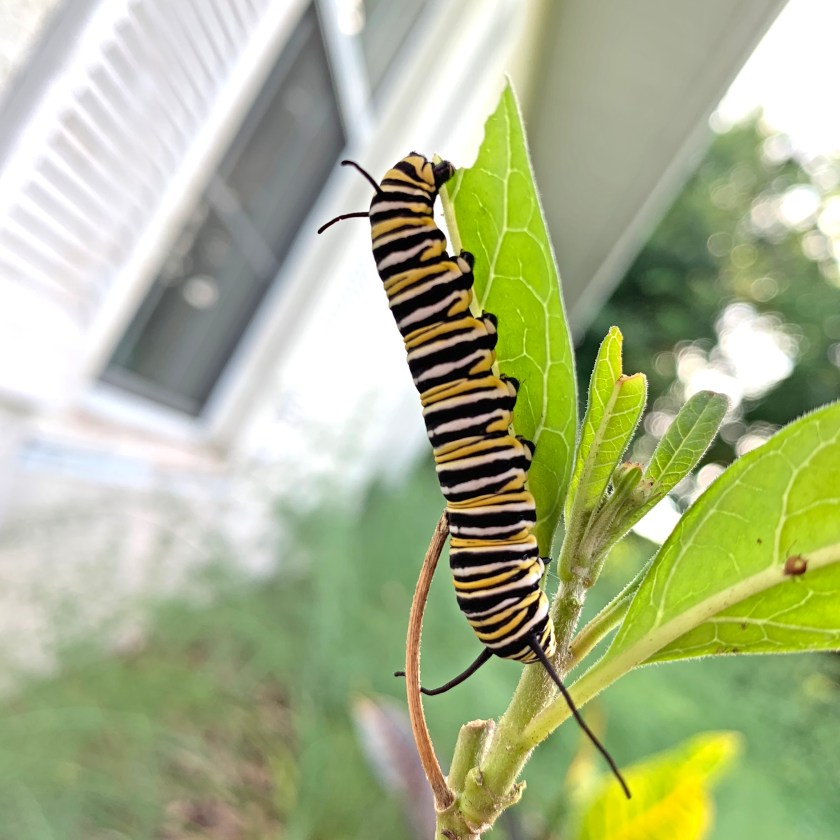
monarch caterpillar

I now believe that having some tropical variety can be good to supplement the native types. Native milkweed is hard to find to buy. Certain types need sun and lots of moisture (swamp variety). Others need sun and dry conditions (Sandhill). Milkweed is meant to grow in Florida’s diverse ecosystem, which is vanishing. It should not be grown in a yard that is sprayed with chemicals.

All these things make native milkweed hard to find. With roadsides mowed, and lawns taking the place of fields, butterflies are now endangered. If we can help by providing some plants – native or not – I say let’s do it.

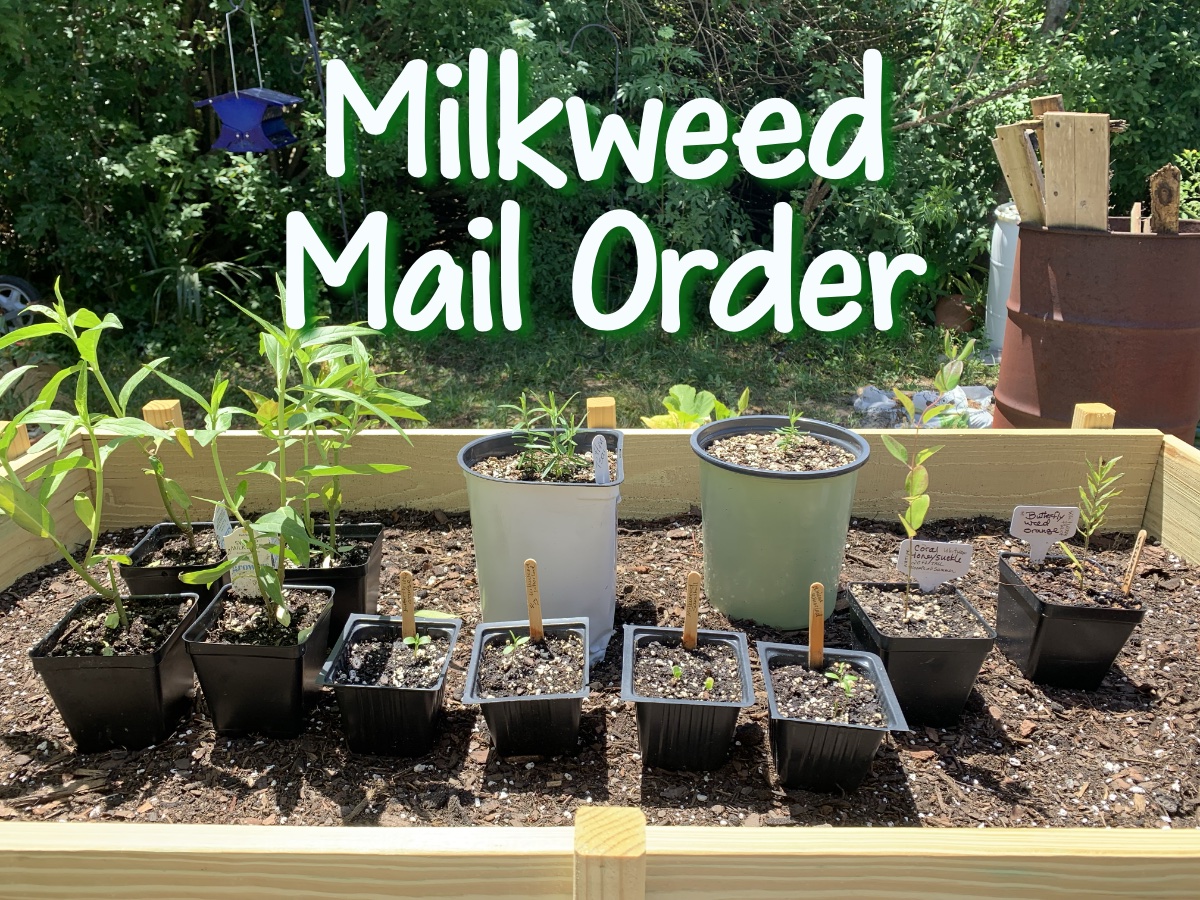
Right now I am trying to grow native milkweed for my yard. I have planted seeds, and purchased milkweed seedlings online. My goal is to have a variety, with many native plants (mainly) for the butterflies.

Florida Native Milkweed Links

  • Sandhill Milkweed – Big, dark leaves and pink flowers. Likes to grow in sand and doesn’t need lots of water.
  • Orange Butterfly weed – Not preferred by monarchs (so I’ve read) but great for butterflies and other insects.
  • Swamp Milkweed, white / pink – Moist, well-drained soil. Full sun to part shade.
  • Whorled Milkweed – blooms longer, into Fall, and can supplement if other native milkweed has died back.

Find Milkweed Seeds and Plants Online

You may find what you want, along with other Florida native plants, from this list of growers / nurseries on the Plant Real Florida site.

I have purchased seeds from Johnny Butterfly seed. They have sprouted at this stage, but are still tiny.

Keep reading the blog…

Cutworms in the Garden

Cutworms can quickly defoliate a plant and ruin garden crops. How do you know if it’s cutworms chewing on the leaves and stems?

How do you know if your garden problem is cutworms?

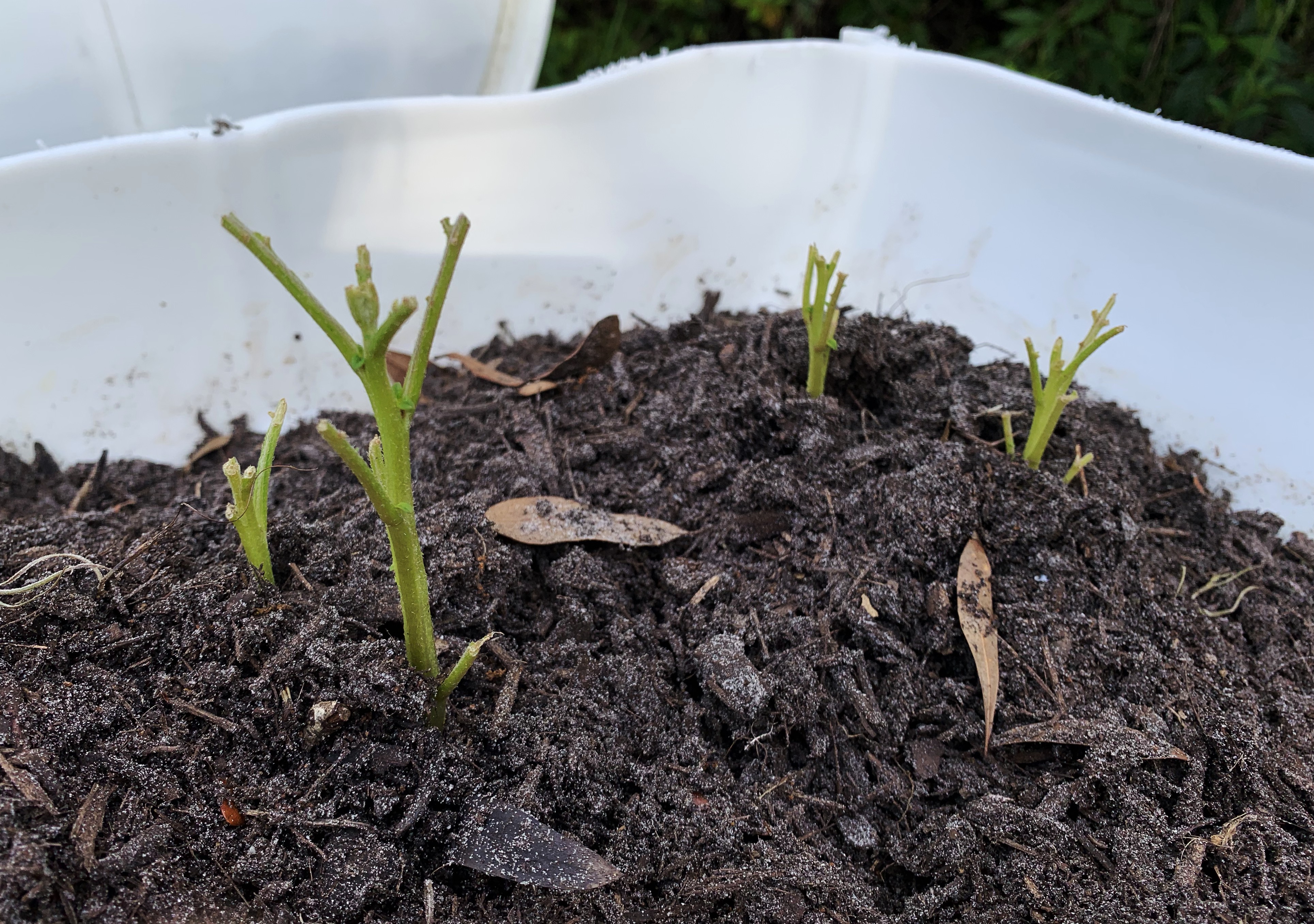
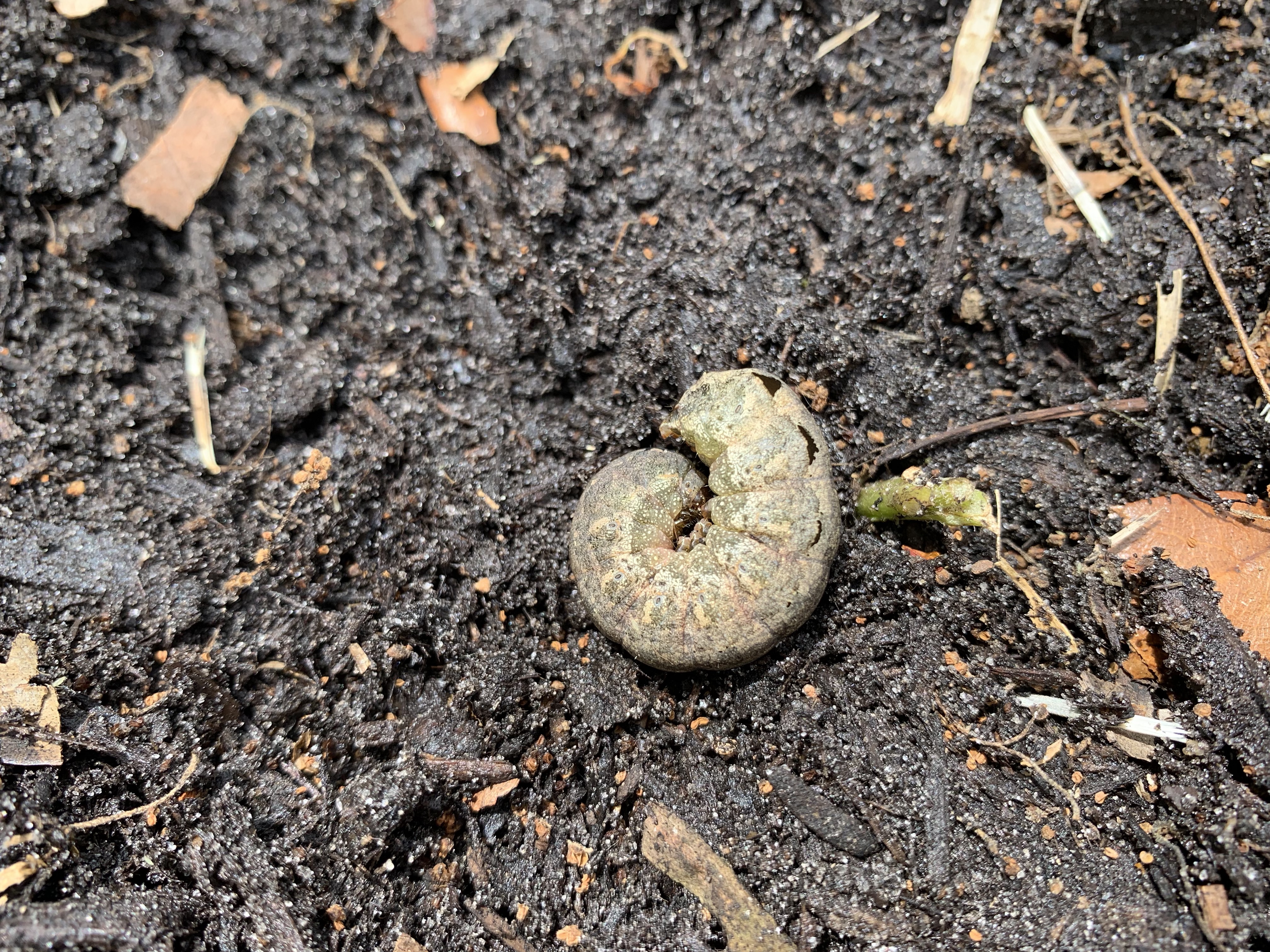
The short answer to that question is that whole stems will be cut off at the base. This is how the cutworm gets it’s name. The other part to that answer would be you won’t spot anything that could be doing the damage. It will seem to be a mystery.

Unlike many insects and worms that show up in a garden, the cutworm hides. When inspecting damaged leaves, you’ll likely see nothing. Cutworms sleep in the dirt during the day and feeds at night. Sneaky little buggers!

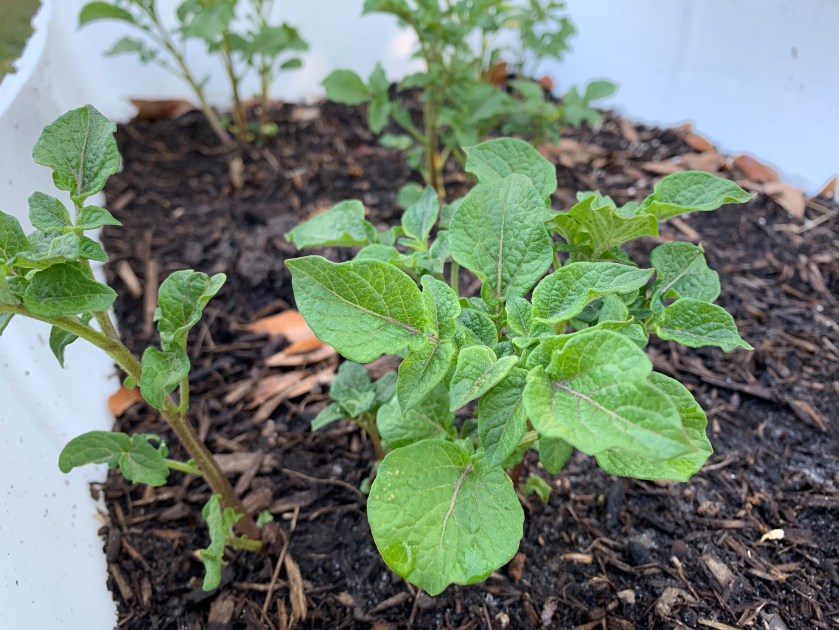
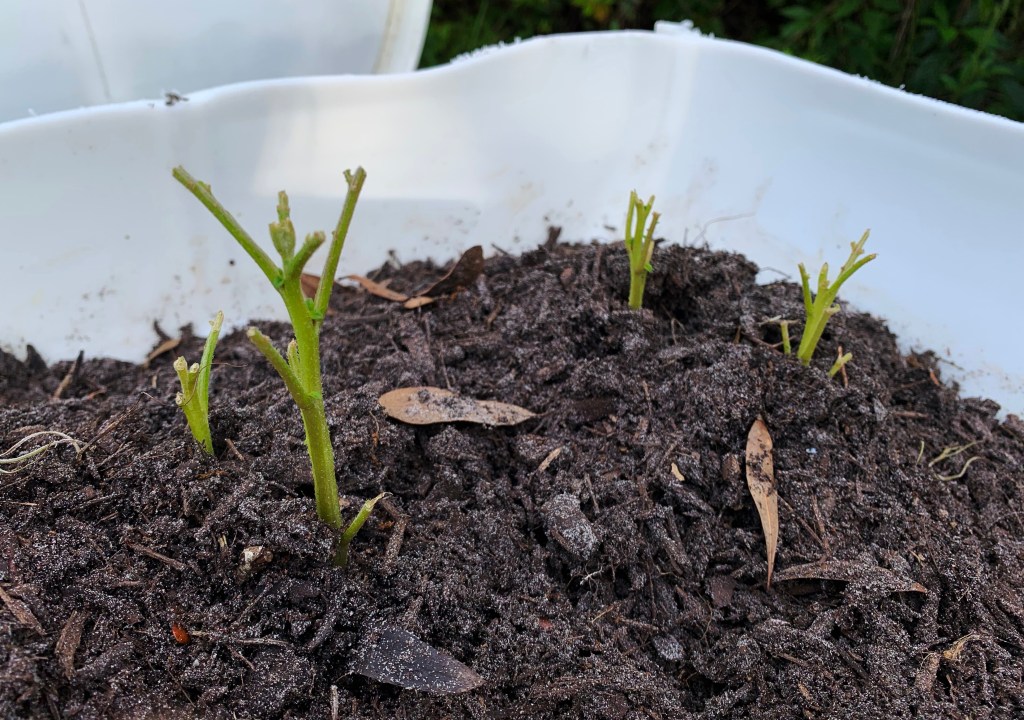
I noticed that something was eating my potato leaves. I was thinking “potato beetle” or slugs, and kept inspecting the plants and leaves closely. I saw nothing. Each day more leaves were eaten, and then the stalks began to fall – chewed off at the base. That clicked, because I know I’ve dealt with this before. Cutworms! Now, what is it they do? And how do I deal with them?

Organic Spray Did Not Help

I got my handy organic spray and sprayed the heck out of the plants. That didn’t seem to stop the problem one bit. I have two raised beds of potatoes and one was doing very poorly and then it began to show up in the other bed.

It was time for drastic measures. This meant researching online. Sure enough, it seemed the culprit was cutworms. I read that they overwinter in the soil and emerge in spring.

My Mistake

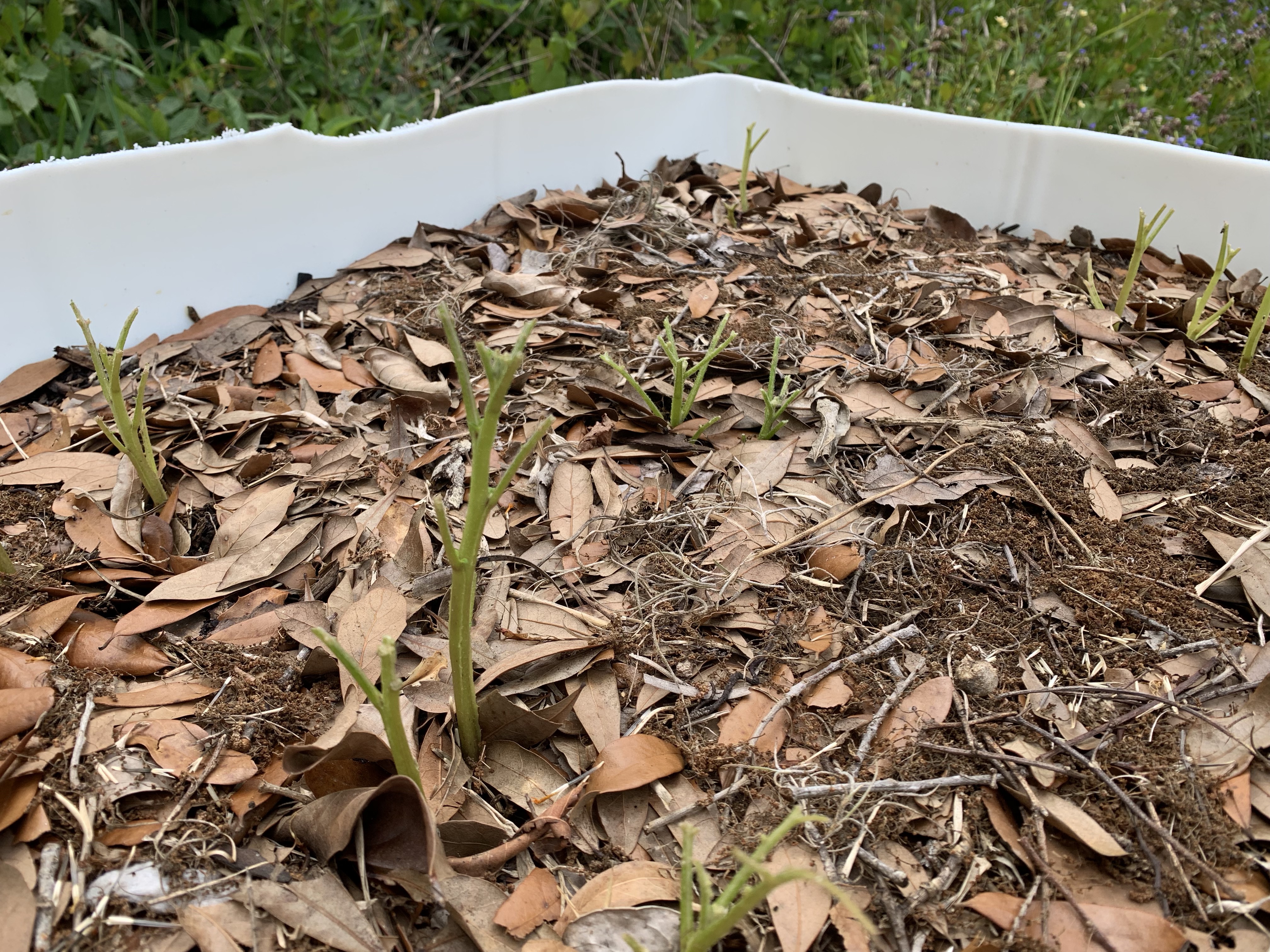
I believe I brought the cutworms into the raised beds when I added leaves from the yard as mulch. The potatoes were planted in dirt – new this year – from bags purchased at the local Home Depot, so I think the only way they could have been introduced was through the leaves and Spanish moss I added.

While researching the problem, I read that slugs will also eat potato leaves and mounding the soil around the plant will help. ( This page about slugs and potatoes is a good one for advice if you have that problem.)

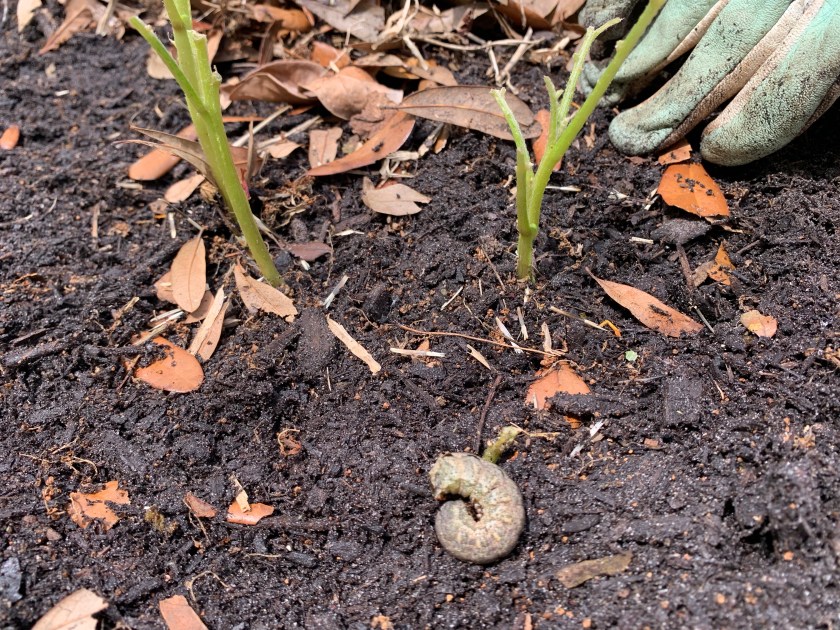
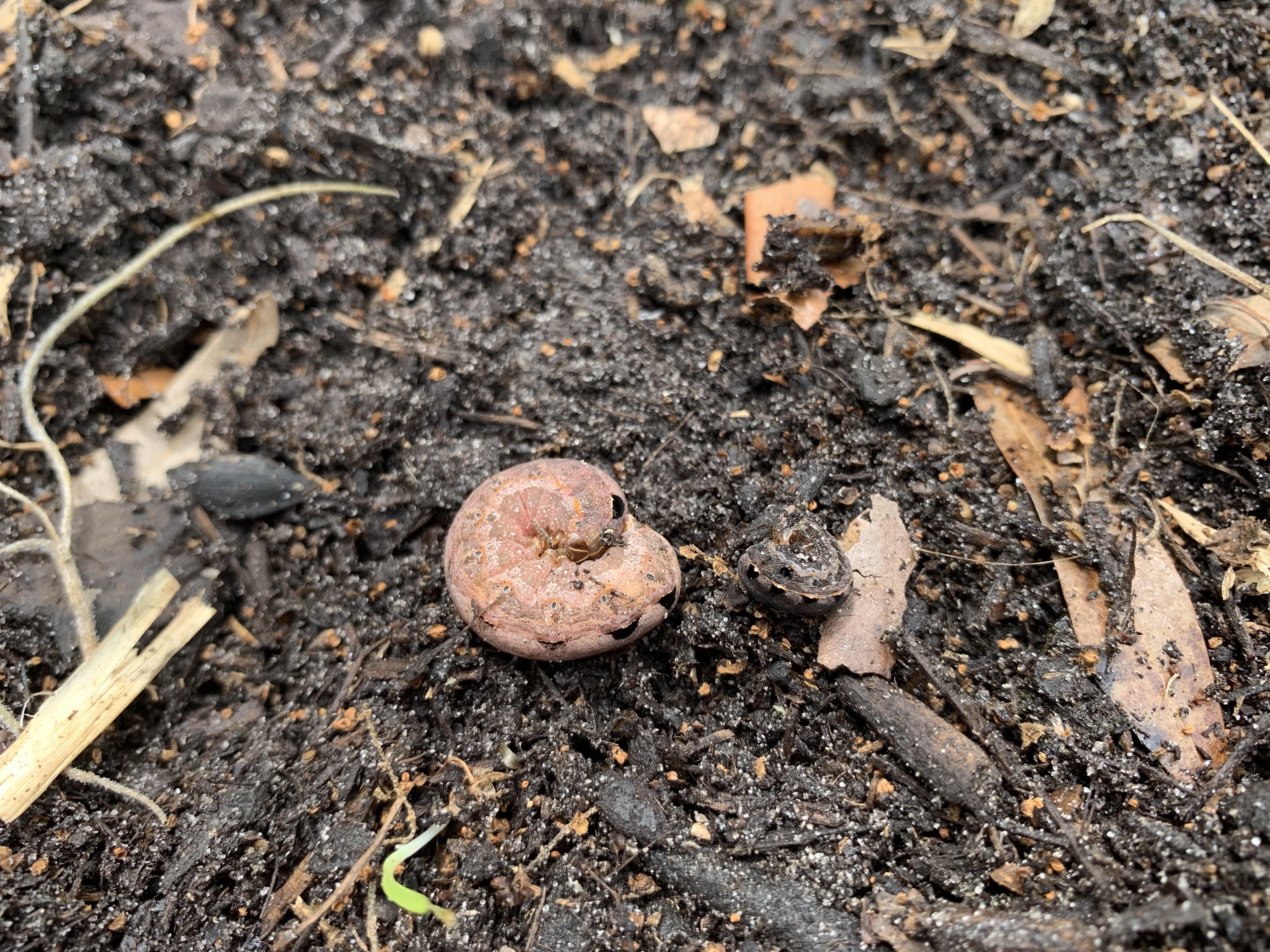
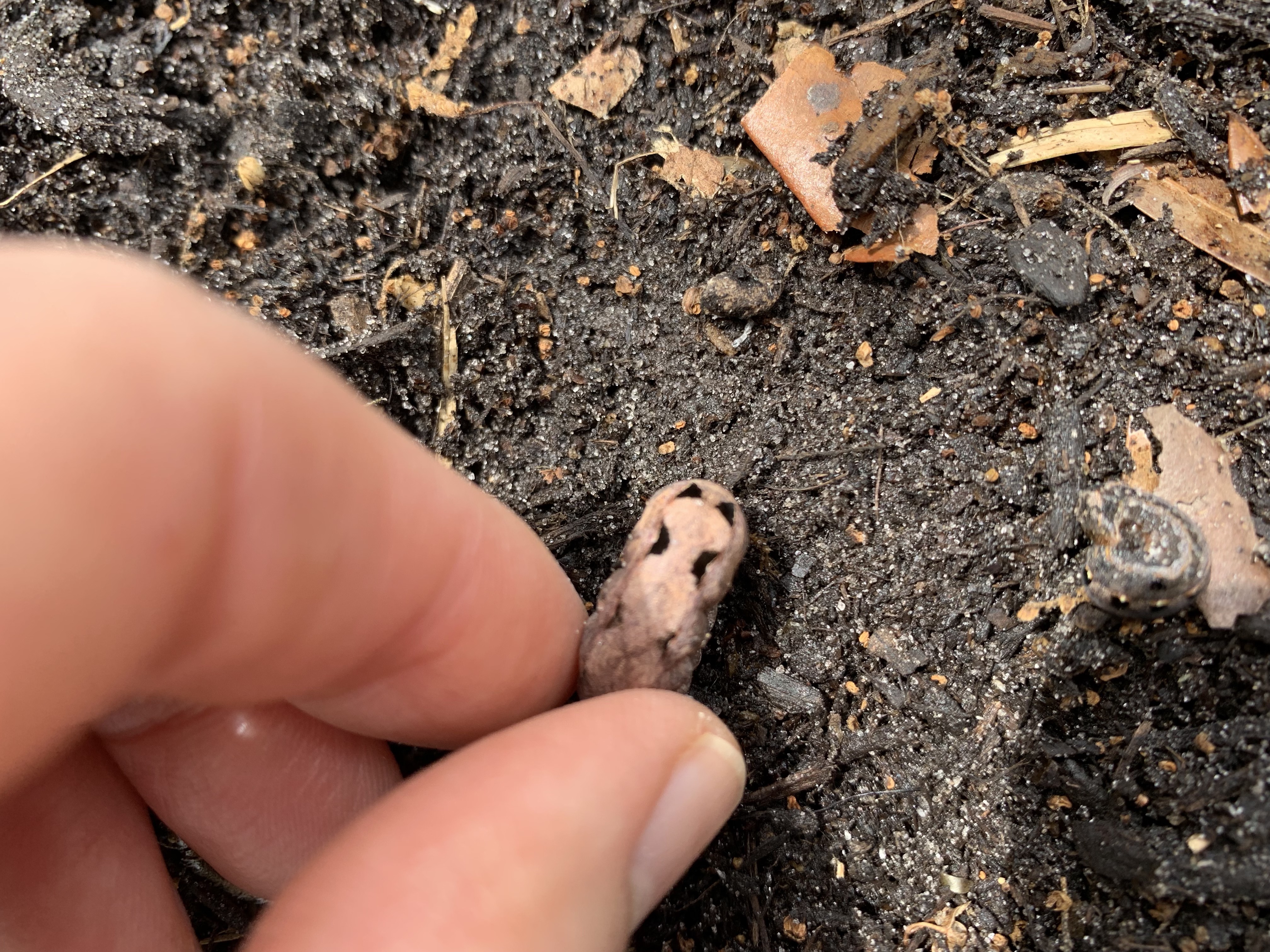
I began scraping away all the leaves I had on top of the gardens and throwing it in the woods. Then I began digging up hills to mound around each of the plants. And that is when I saw it – a big cutworm! Altogether I found about 6 worms, large and small. One was greenish, one was pink and the small ones were black.

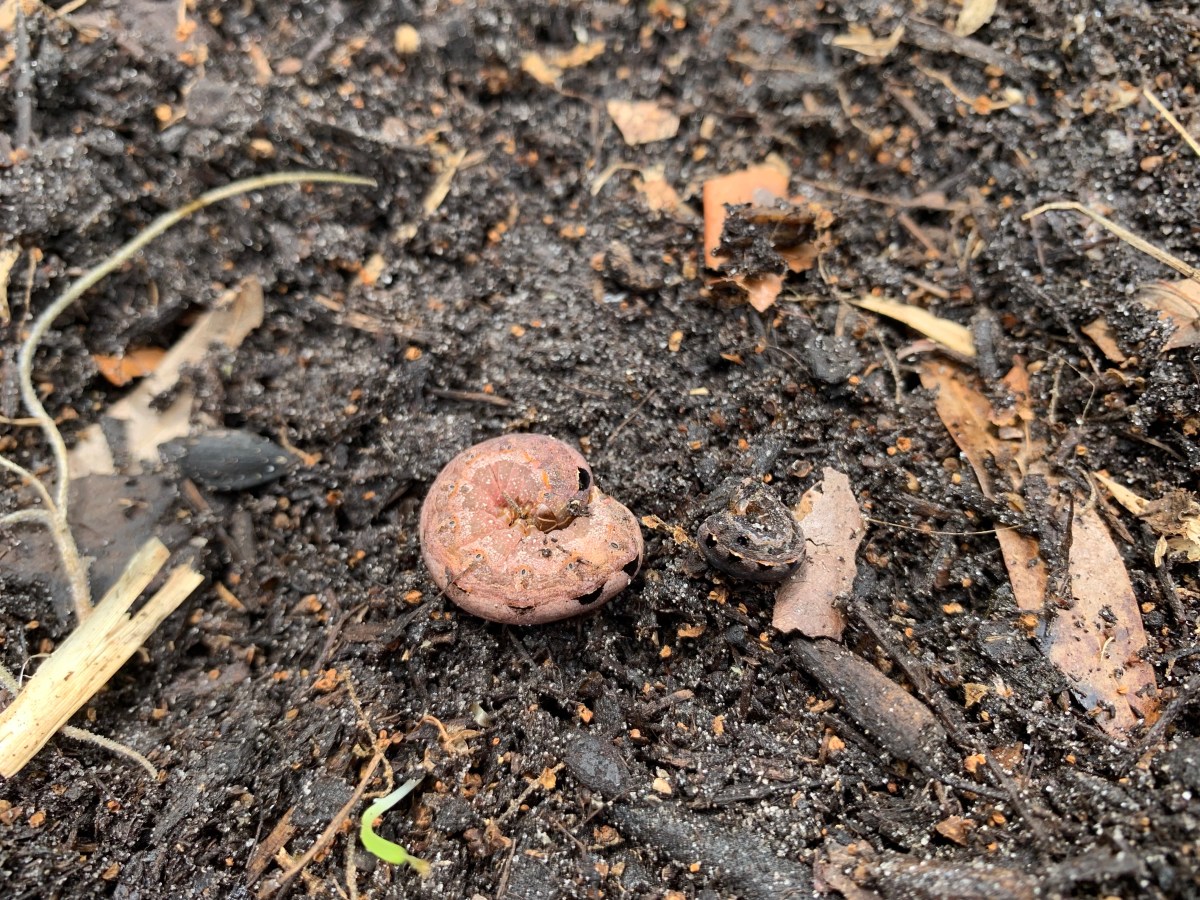
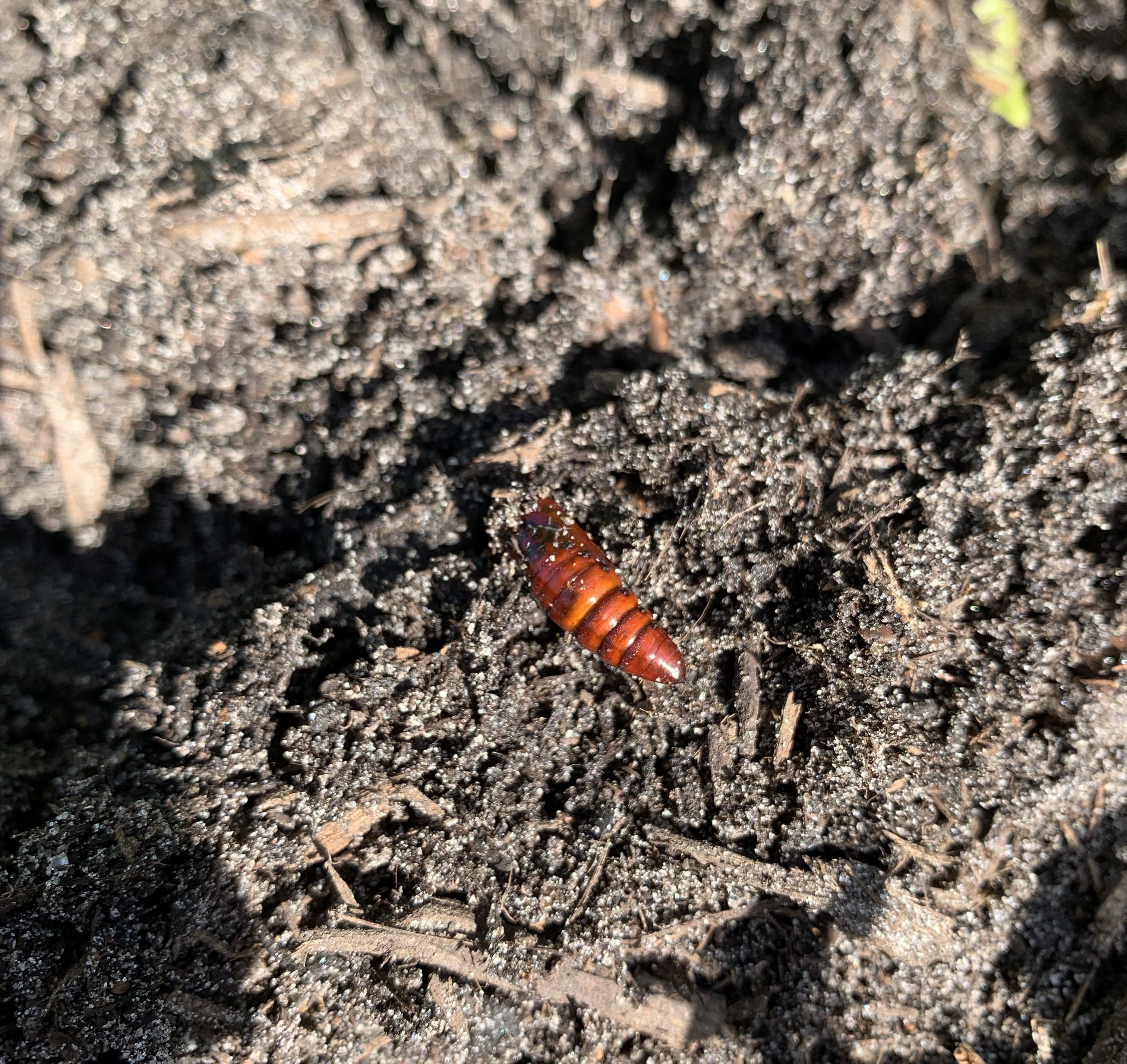
The pupae stage is when the worm / caterpillar has become a cocoon. The adult moth will emerge from this reddish orange shell to fly around and lay eggs that become more worms. But the worms are the worst in Spring – just in time for planting.

This hard orange-red thing in the dirt is cutworm pupa.
Cutworm pupa is reddish-orange

Getting Rid of Cutworms

My potato gardens are small. I have two raised beds with a total of 10 plants growing. I simply continued to dig around in the dirt searching for the worms.

Hand-picking

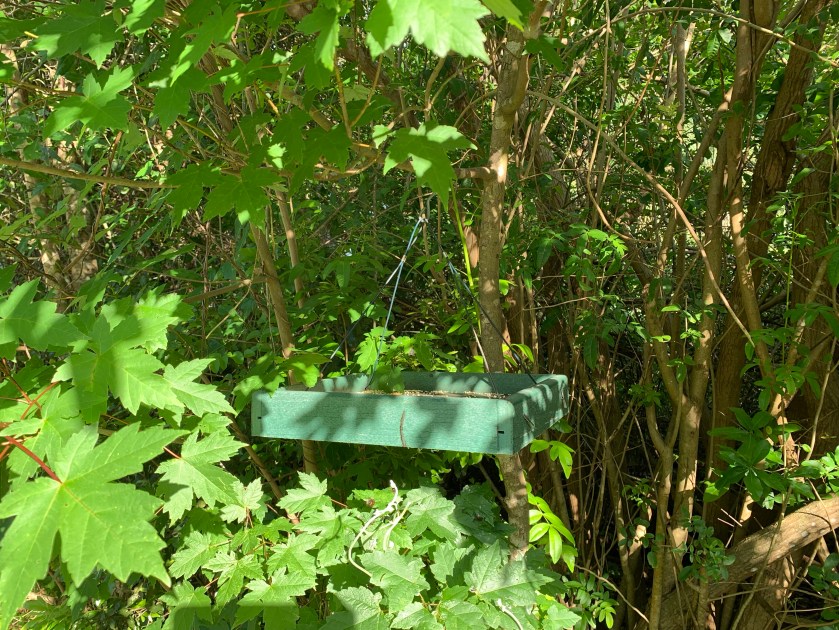
The cutworms I found were placed into my tray bird feeder and within a couple of minutes a cardinal was having the worms for a meal! This is a very simple way to get rid of the worms while helping out the birds. If you don’t have a tray feeder, just set them on a board or rock in the yard where birds visit. The birds come fast for the juicy meal.

I also went out at night to inspect the plants and found one more worm which I hand picked off. I continue to check for worms but haven’t found any more.

Eggshells and Coffee Grounds

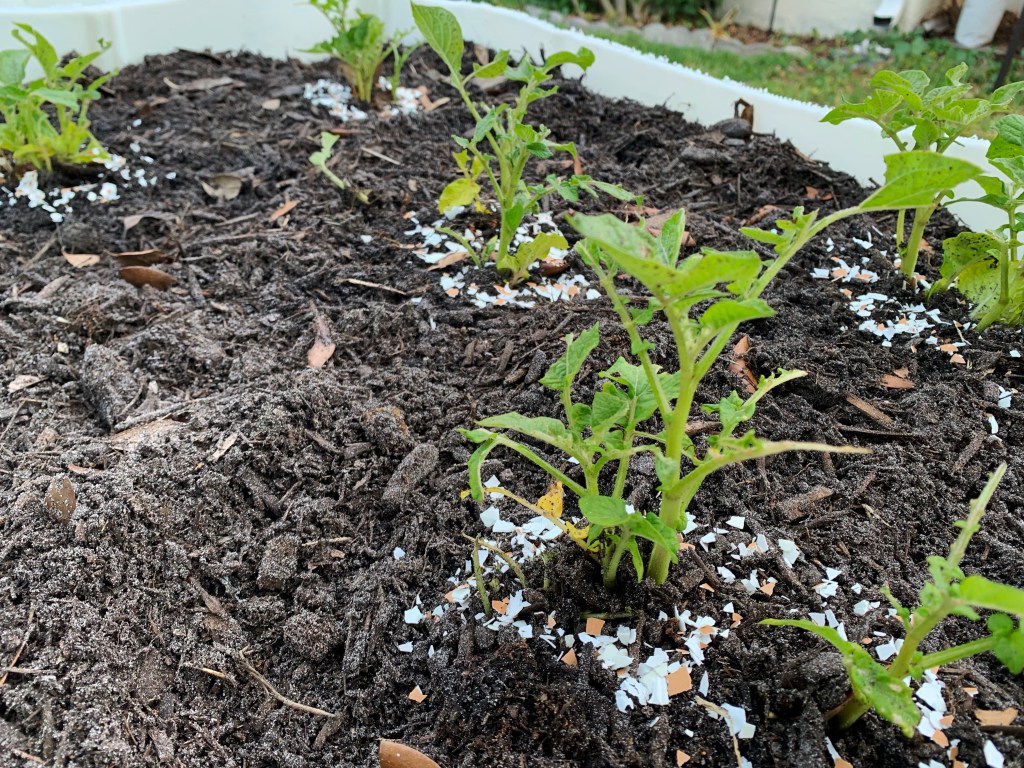
Lots of online sites have advice about getting rid of these destructive worms, but I like to do so as naturally as possible. I had a few eggshells leftover from my eggshell seed starters project, so I crunched them up and sprinkled them around the base of the remaining potato plants. The only problem with this is that the shells get moved around when watering.

Also, the worms do not like coffee grounds so you could do the same thing with leftover grounds.

Eggshells sprinkled around the base of potato plants

Make a Collar

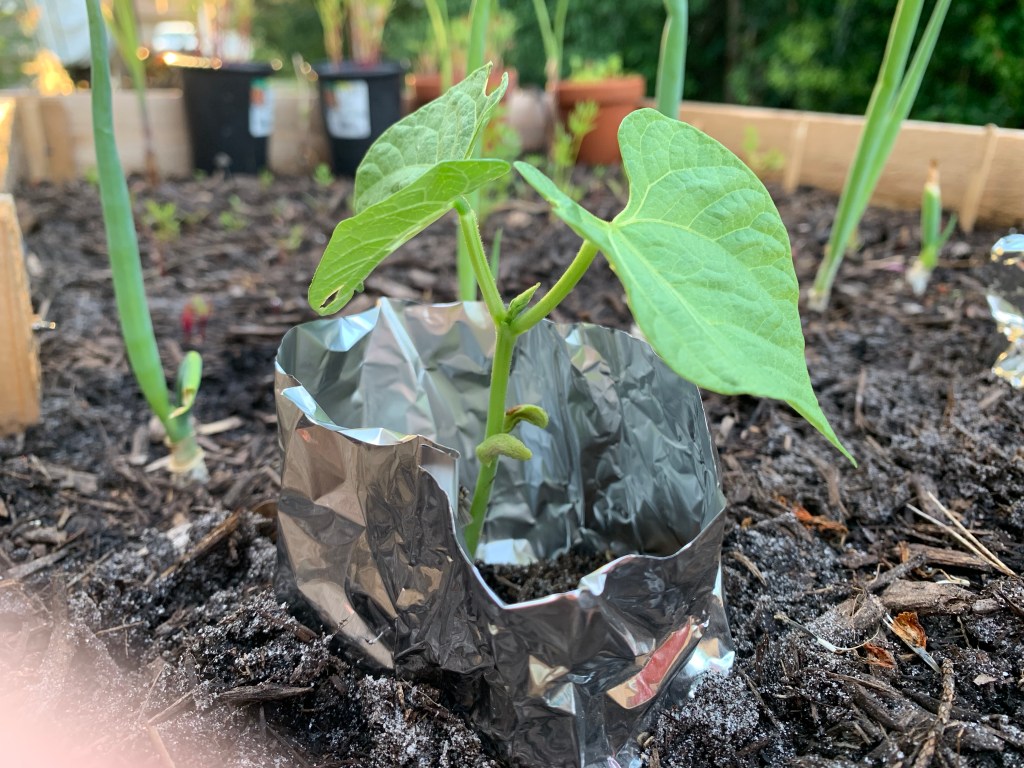
After checking on my potatoes, I came over to the other raised bed and one of the bean plants was totally chewed off! Just in case the cutworm was to blame, I made tin foil collars for the other plants. They have to be pushed down into the dirt and must surround the stalk.

This is best done when the plants are very young so the roots will not be disturbed. I used foil, but other things work. Think toilet paper and paper towel cardboard. Plastic cups, plastic bottles, and anything round and open will work.

Now my potato plants (in garden number 2) look like bare stalks. I’ll continue to check for worms and watch to see if the stalks come back.

Ways to Prevent Cutworm Problems

The worms emerge from eggs in Spring and they have been existing underground. Till the garden or dig down a few inches to search for the worms and remove them before planting. Take precautions by using the collars mentioned above – this is not that difficult to do if the garden is small.

Please visit this page at The Real Dirt Blog which is full of excellent information and advice about the cutworm.

How to know if you have cutworms in the garden, and what to do about them.

Read more here about cutworm stages: adult larvae and pupa drawings.