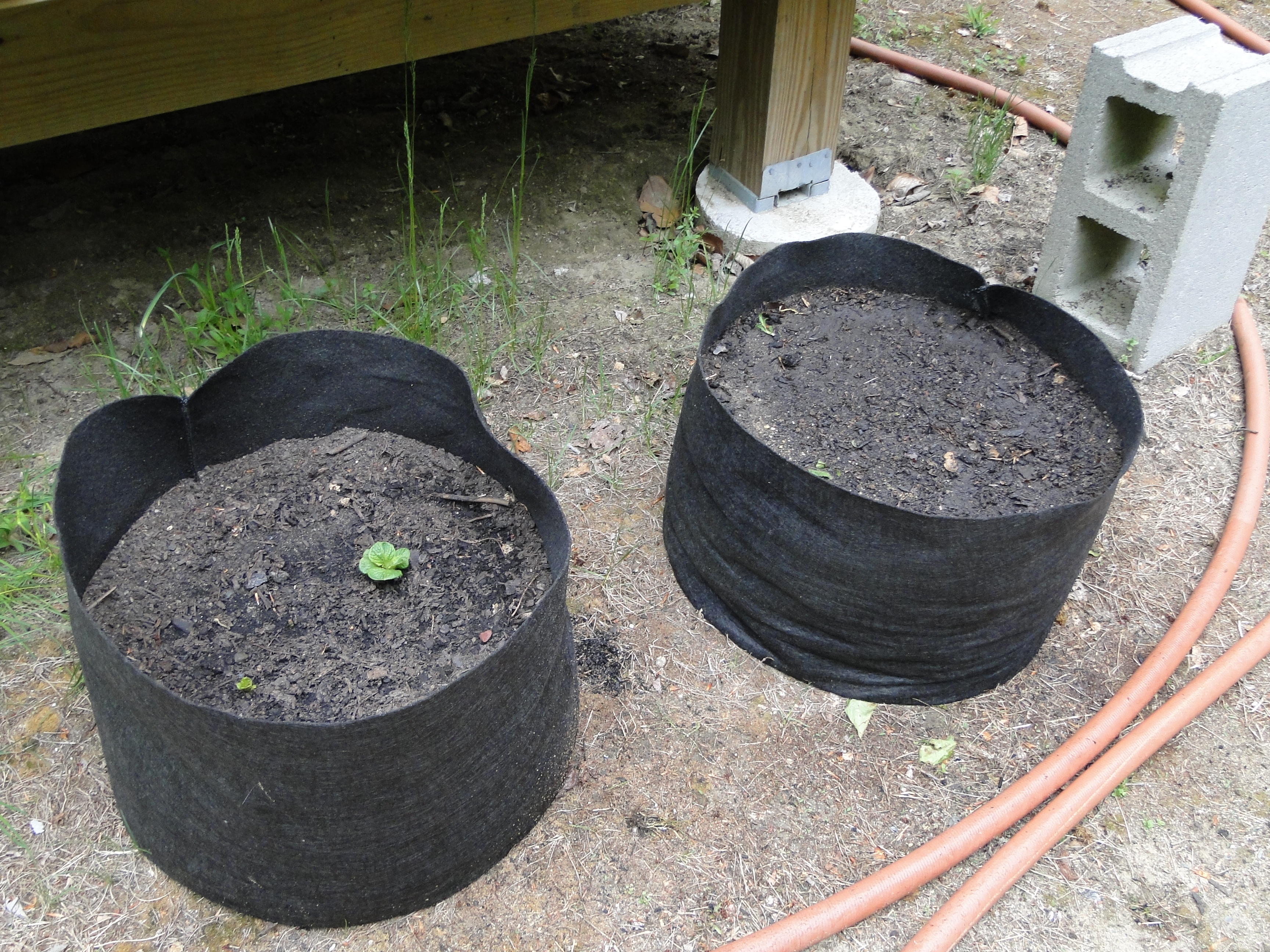
A First Attempt at Fabric Pot Gardening

fabric pots
Growing Potatoes in Fabric Pots

I first learned about fabric pot gardening while reading a Wizzley article written by someone who also loves growing things. On his page he suggests growing potatoes in a pot made of black fabric or burlap.

Instantly, I loved this idea!  I don’t have to dig up the ground and get it ready to plant – whoo hoo – I hate that part of gardening.  I ordered three yards of compost / loam mix to add to all my garden beds and just used some of it to fill my black fabric bags.  The one on the left in my picture has potatoes and you can see one sprout shooting up through the dirt.  Once the shoots grow to 6 or 8 inches I will add more dirt.

The other pot has carrot seeds.  I figure they might do well in a good bag of soil instead of in my yard.   It’s always a chore to get the garden areas ready for planting.  I started at this house with an overgrown backyard so my first year here was spent clearing out the weeds and blackberry bushes.  Last year I expanded the garden area and added good dirt.  This year I am adding more dirt, but it’s easier to add it to bags and the chance of weeds invading a bag is minimal.

My backyard is quite small and my garden holds vegetables as well as flowers I’ve planted and flowering weeds.  Flowers of all kinds are good for attracting beneficial bugs to the garden area.  I am currently growing cold weather things like peas, basil, and strawberries (from last year).  I will have to wait until the first of June to get the cukes, tomatoes, basil and zucchini into the ground.

This type of gardening is experimental, but I am hoping for good results.  I even bought a large, round fabric bag and will set that up as soon as I get more dirt.  I started my own zucchini plants (5 of them!) this year from seeds I saved last summer and I may have to put a couple into that new pot along with some of my tomato plants.

New Hydrangeas For The Yard

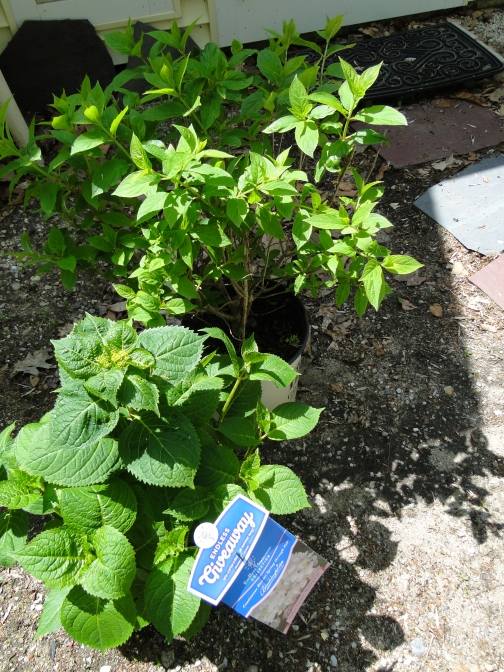
hydrangeas in pots
hydrangeas in pots

I am very excited to now have my own hydrangeas to plant and grow!  It is not only necessary for beautifying my dull and boring landscape, but I need to get photos of the flowers for my business.  I’ve had to work with older photos that were taken when I rented a house with hydrangeas in the yard, but now it will be so nice to walk outdoors and snap as many photos as I need.

One of the best features of hydrangeas is that the flowers last and last.  They also bloom profusely so older flowers and new buds can be on the bush for a long time.  If I can get them planted correctly and make them happy I should see some blue, white, pink and green flowers either later this year or next.

My Endless Summer plant looks like it may bloom this year and so does the white one (have to get the name), but the Limelight and Pinky Winky may not.  Although the Endless Summer tag shows a blue flower, I know that it may not bloom blue unless the soil is right for that.  This year I will wait and see what it does.

Elegant Hydrangea Wedding Invitations

Tier Planting, Choosing the Tall Perennials

English: phlox
Image via Wikipedia - white Phlox

Planting against a fence, house, stone wall, around a post, or even a drop off, may require tier planting with larger perennials planted in the back and rows of shorter shrubs in front.  I’ve been thinking about this since I have many areas of my yard that will need sprucing up with colorful, flowering plants and greenery.

So what can we use for our back row, which will have to be filled with the tallest plants?  It’s a tricky question when beginning a garden because most plants will take a few years to reach the desired height.  My favorite choices for the back row of a tiered garden are tall phlox, coneflowers, lilies and monarda (bee balm).

Take into consideration the background – will they be planted against a white fence, or a wood one?  Choose colors accordingly as white phlox will stand out against a darker color, but may not show up well if the fence is white.

Also consider the amount of sun the garden will receive.  If it gets very little to none, choose other flowers that will bloom in the shade.

I want lots of color in my garden and I want it to attract wildlife such as hummingbirds and other birds that will eat the bugs.  Good red choices are Monarda and coneflowers.  Monarda will grow fast, and spread.  Coneflowers will take longer, but can also get quite tall and their seeds are loved by chickadees and gold finches in Fall.

Learn the colors of the different varieties and choose the ones you prefer and that will compliment your garden best.

English: A female ruby-throated hummingbird (A...
Image via Wikipedia - Hummingbird and Monarda

A Yard Without Hydrangeas – The Horror!

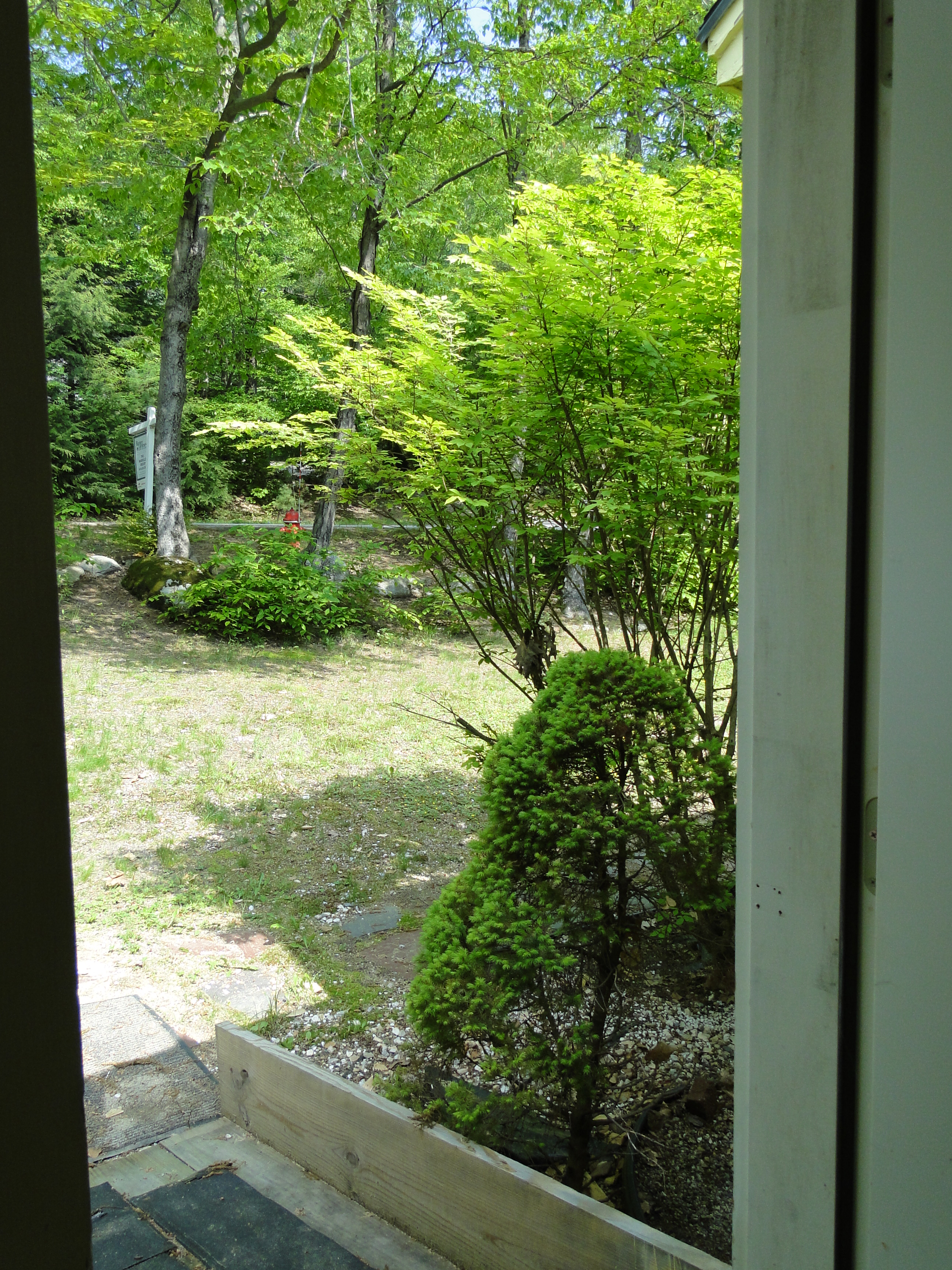
View out the door
Time to Make Some Changes in the Yard

Now that I have moved out of my rental, I live in a flowerless environment.   I have a yard without hydrangeas and in fact, there are no flowering plants.  The house I bought has been sitting empty for about a year and apparently the previous owners didn’t believe in growing flowering shrubs. Two huge tree looking bushes were blocking the front windows (until I trimmed them- quite a bit – you can see one of them in my photo) and the only other plants in the front are holly. Oh, I did find a small azalea amongst the weeds and dug it up and gave it a sunnier location. I imagine it will be light purple since most azaleas I see in the north seem to be. I’ll have to wait until next Spring to find out.

My landlady had talked about letting me dig up part of one of her hydrangeas, but I got too busy to even think about doing that, so I came to the new place empty-handed.  Now the search is on for blue hydrangeas of my own.  I am not searching too frantically, since the front yard still needs some work – maybe grading – so the planting might have to wait.  I’m also watching the sun to find the best locations for planting.

Also, I spent 5 hours in the yard on Saturday and have been in pain ever since.  I should know better.  This body is not used to yard work, so I will have to remember to pace myself and stop after an hour or two.  Also, I’m not as young as I’d like to be!  A nice reader suggested I do a soil test and that reminded me that we have a great resource here in New Hampshire at the UNH campus.  The UNH Cooperative Extension will test soil for you (if you live in the area).

As I find good places to buy hydrangeas (and other plants), I’ll be sure to share with you.