I’m still trying to fill my yard with native milkweed. After the cold spell over winter froze most things back, and killed many things, I have fewer milkweed plants.
All the tropical milkweed is gone. Tropical milkweed is not native, and therefore not a great loss. Three of the four swamp milkweed seedlings I purchased last year have died, but one is flourishing. This type of milkweed grows at a good pace and it is doing well.
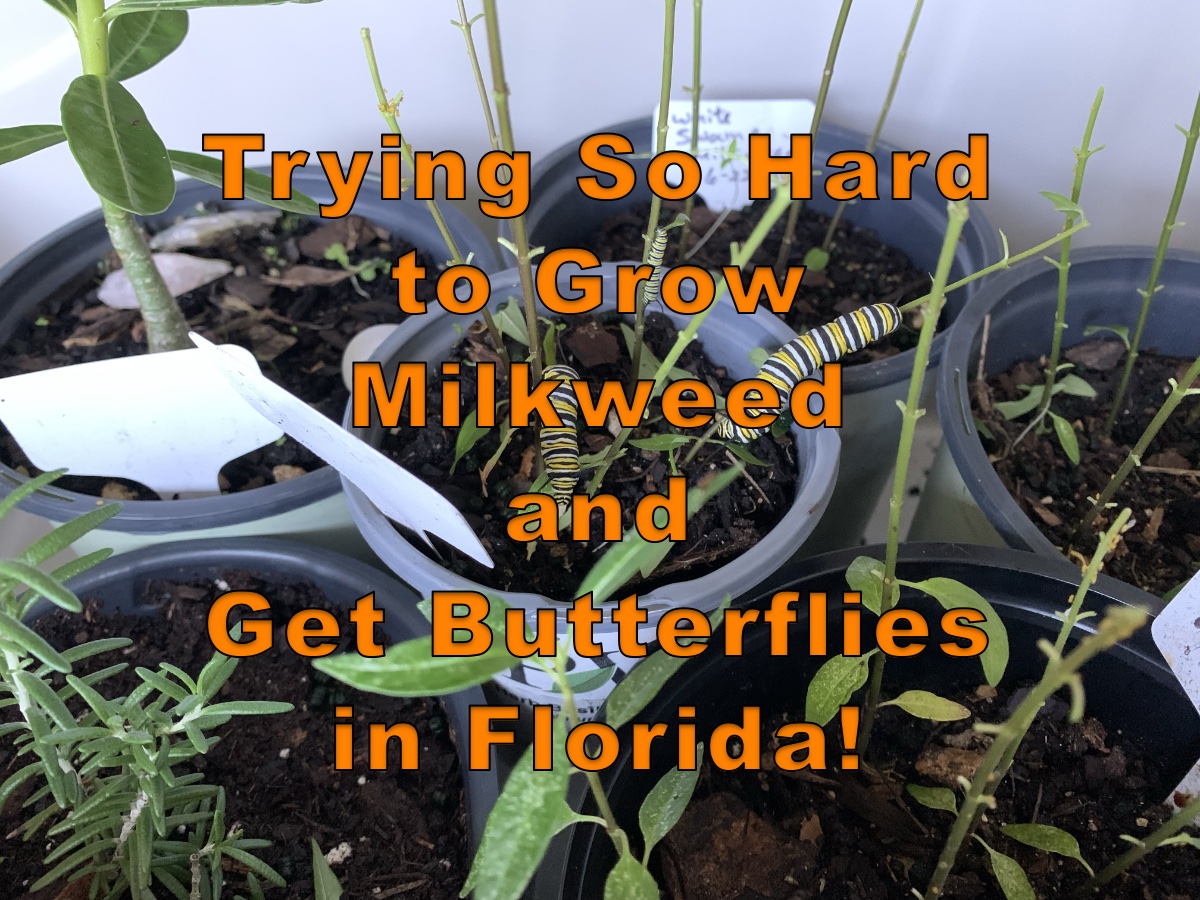
All other native milkweed plants are quite small, and they are growing slowly.
White Swamp Milkweed
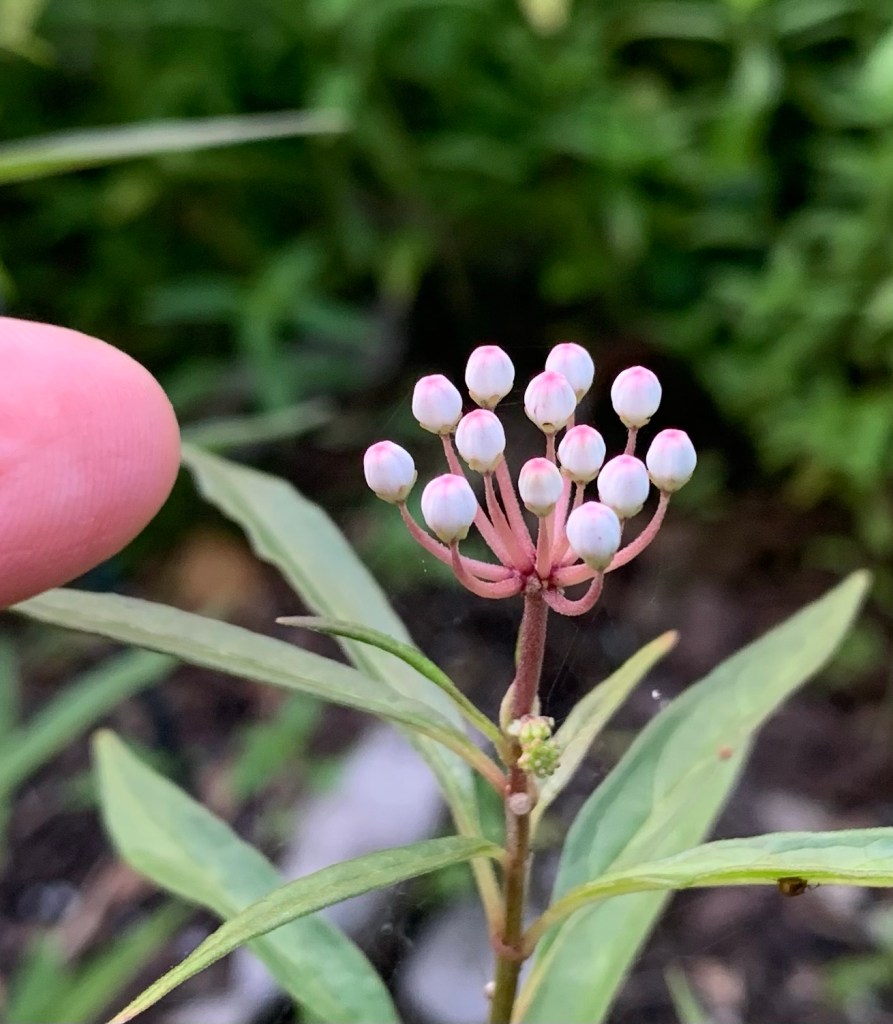
Below is another type of swamp milkweed. It has tiny white flowers with a bit of pink. I believe this is aquatic milkweed aka white swamp milkweed. It is a host for the Monarch, Queen, and Soldier butterflies. It is a shade loving plant and can deal with partial sun.
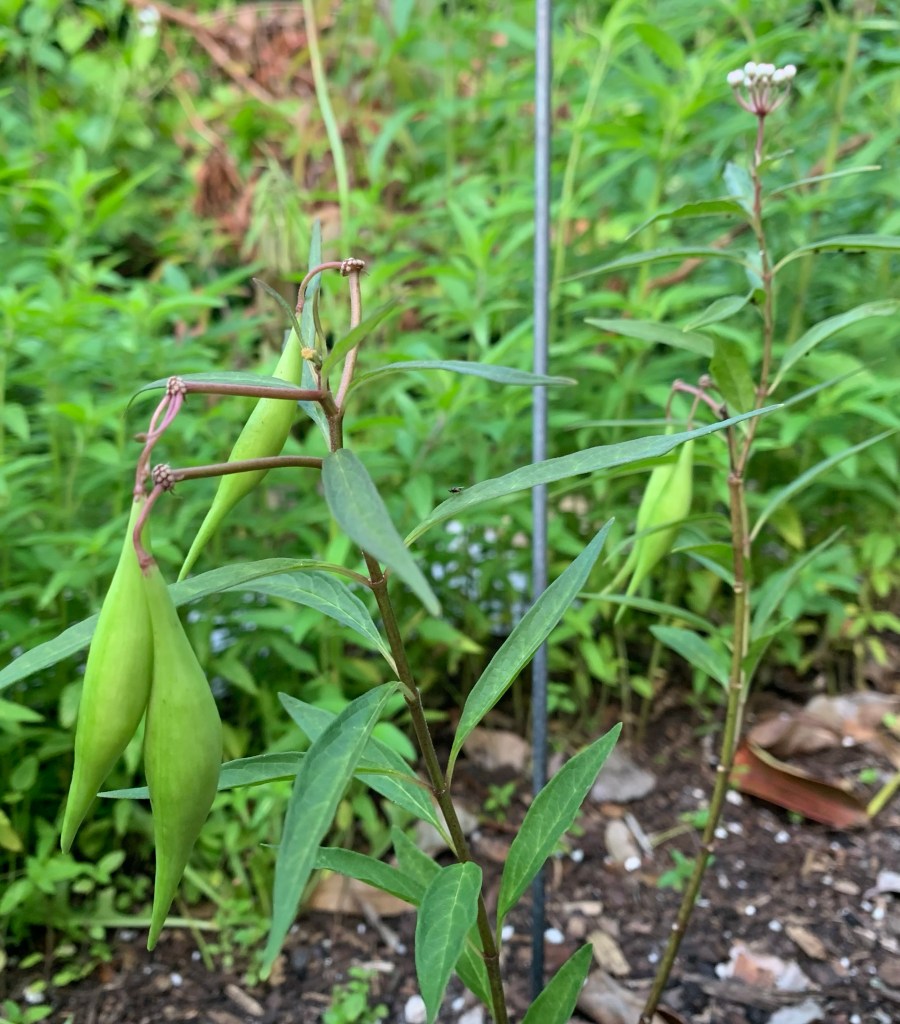
As of this writing, it is June, and this plant has five pods. When they open, I will collect some of the seeds and try to grow more plants.
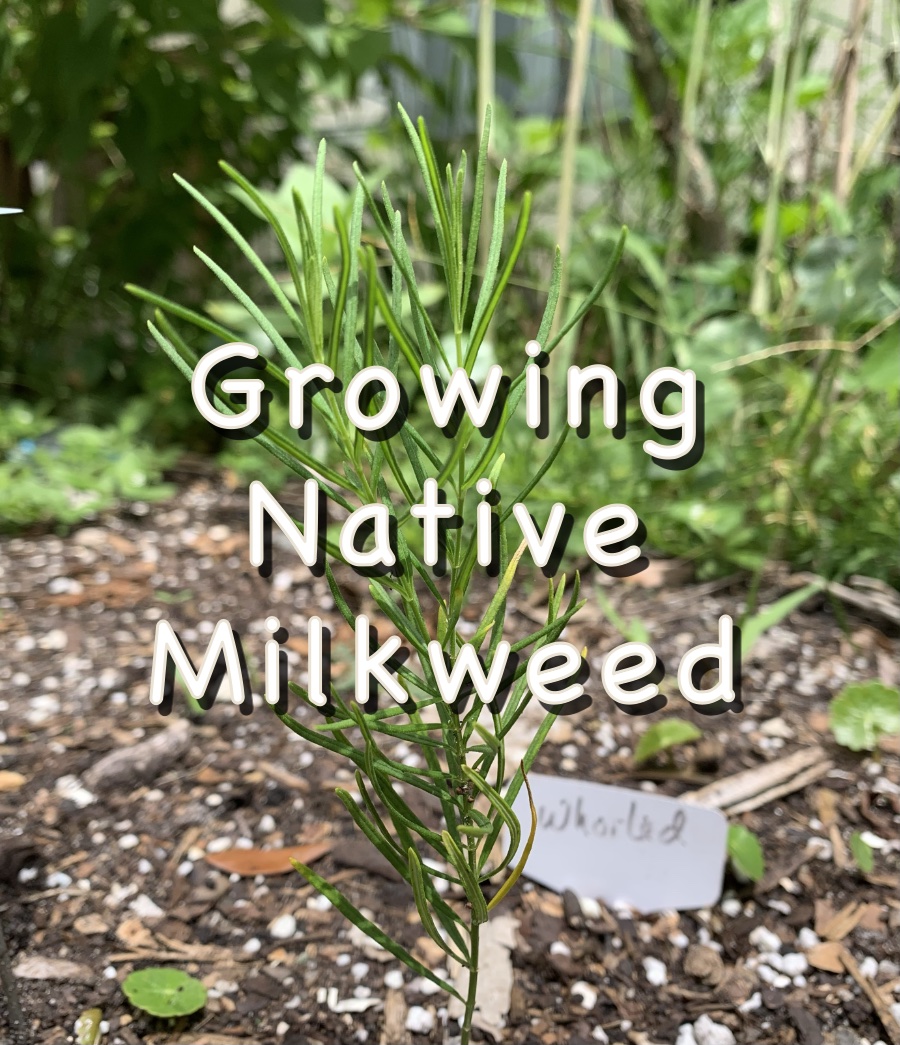
Whorled Milkweed
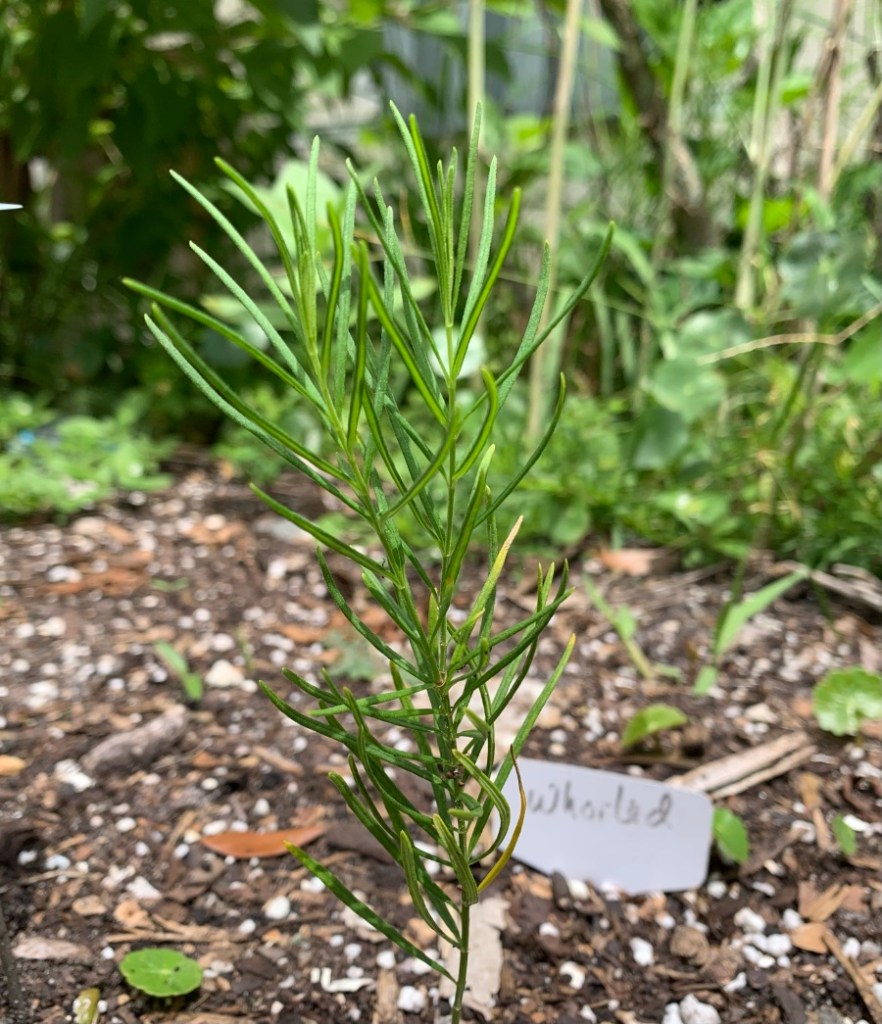
Whorled milkweed has very thin leaves that stick upward. I believe I only have one Whorled milkweed – see below.
Sandhill Milkweed
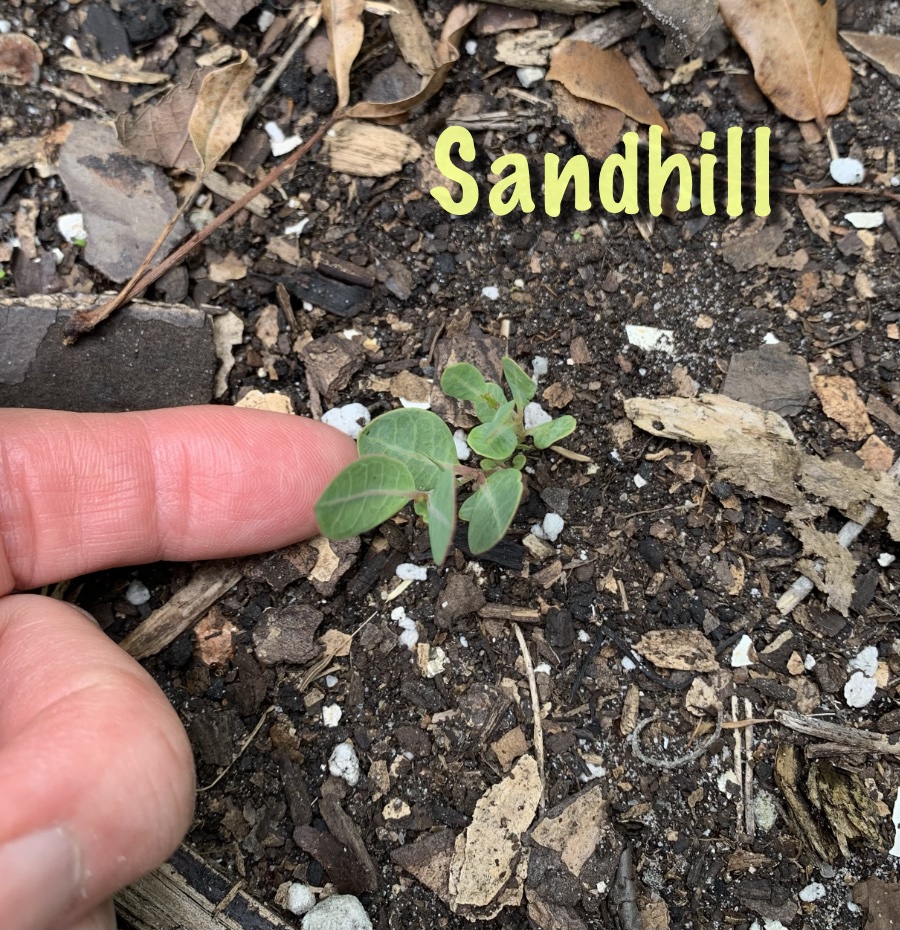
Sandhill milkweed looks different. The leaves are more rounded. If you ever see this type as a full grown plant, it is beautiful (View images at IFAS). Sadly, these days, in Florida you will most likely have to visit a nature preserve to find it.
You may wonder why I have such a strange variety of milkweed for my yard. Some of them need dry conditions and some need wet. Last year I ordered some seed varieties, planted them, and kept the ones that grew. All the milkweed in pots were kept indoors over the winter, so they did not freeze.
Unidentified Milkweed
I think these plants are also milkweed, but they don’t have identifying tags. I marked the ground with metal stakes and after the cold had passed, these plants began to grow.
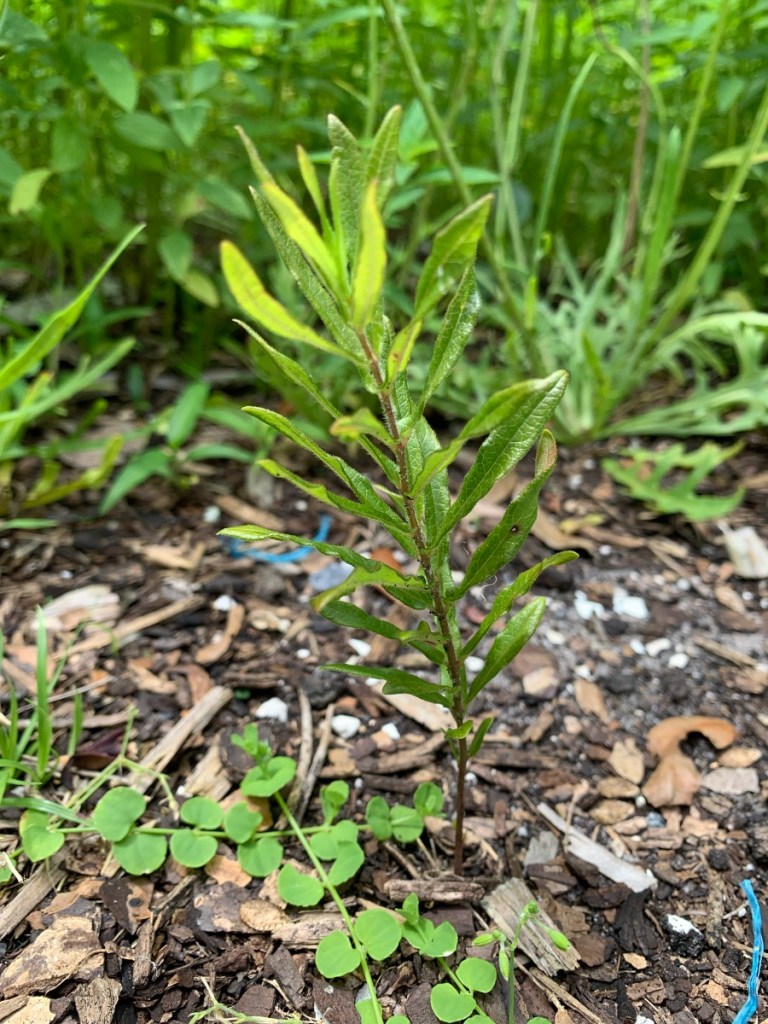
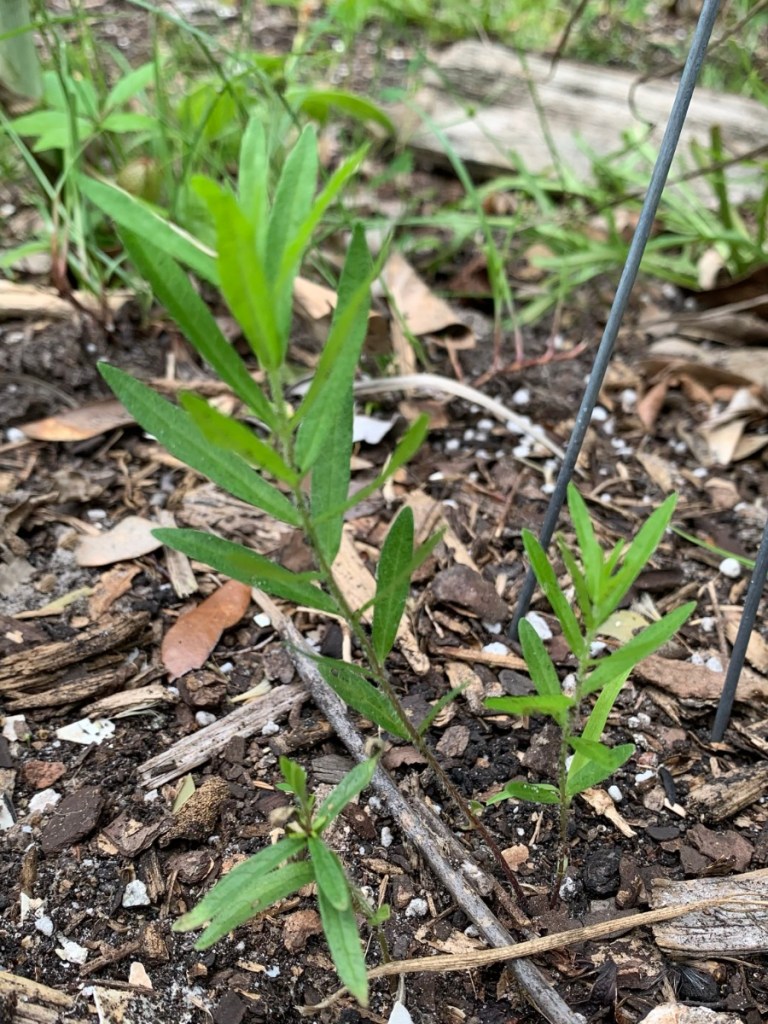
Once again I am reminded of how difficult it is to grow native milkweed. I plan to protect these babies as best I can. If I’m lucky, they will get larger and flower and then I may know which type they are.
I began my quest last year (2025) to fill my yard with milkweed. Thanks in a big part to the 2 days of freezing temperatures we had this year, I lost many plants which I think may have been okay otherwise. It makes me wonder how many milkweed plants, growing out in wilderness areas, also did not make it.