Good Morning, or Is It?

Garden troubles.

I am writing today to make you feel better. Yup, it’s a pretty depressing morning here, so I hope that will make you feel better about your bad start to the day. If you had a good start, yay for you. If you are having gardening troubles, you are not alone.

Here in the jungle, summer is the pits. It is too hot to be outside for long, and if I venture out, it’s either loaded with bug repellent, or covered in long sleeves and pants.

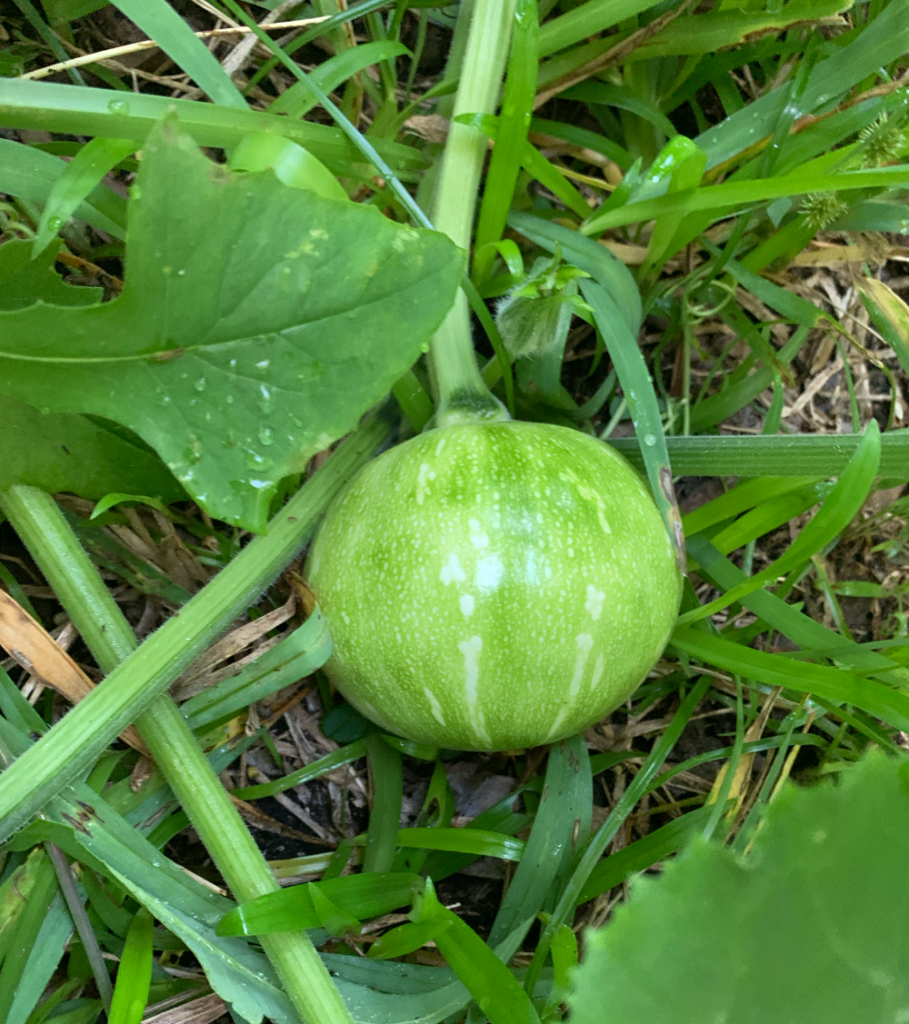
On top of that, there is very little in the way of food growing. All my Seminole pumpkins start to grow, then turn yellow and fall off the vine.

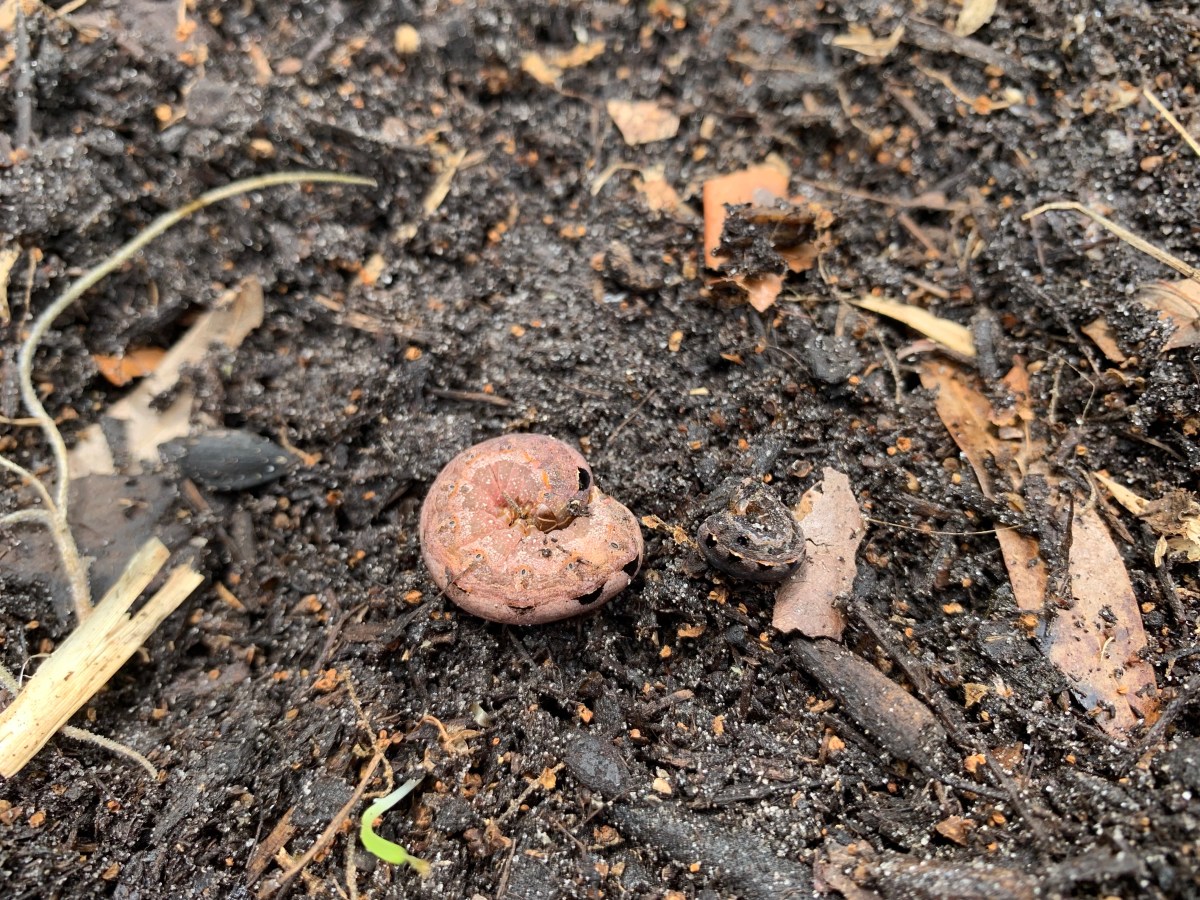
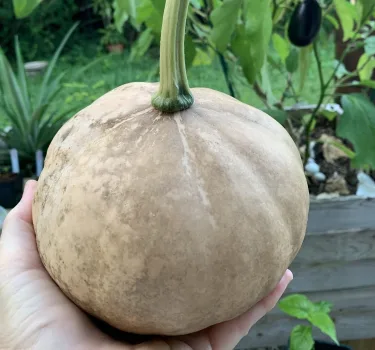
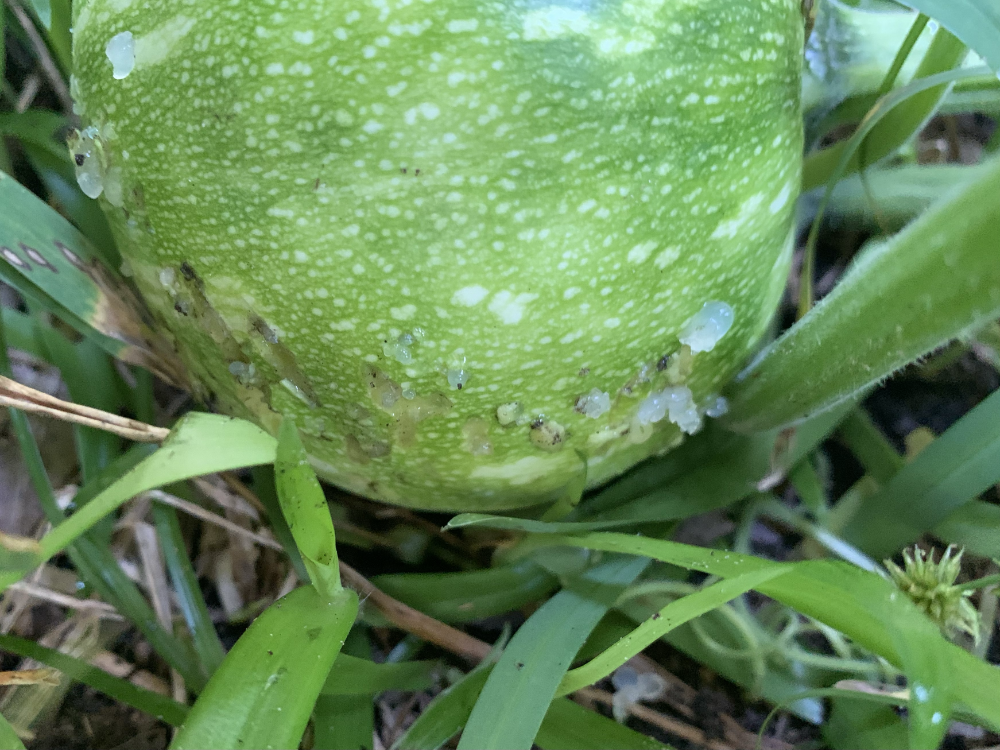
Finally, I have one that looks like it will continue to grow. And today I see that raccoons (my best guess) have scratched it all up!
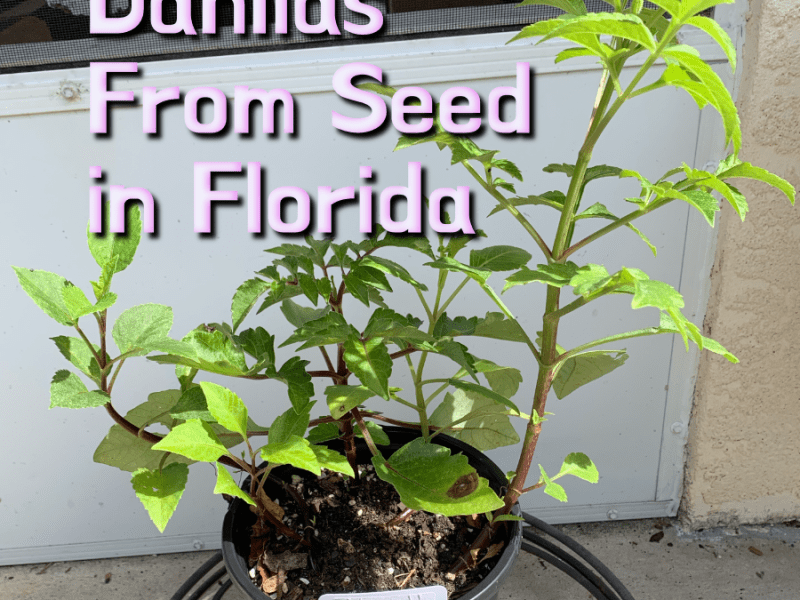
The Dahlia is wilting. We just had a little tropical system swirling over our area of the state and it dropped 4 inches of rain. We had minor flooding, which went away quickly. But maybe the dahlia did not like all that water. Maybe it doesn’t like July in Florida. I can’t blame it.
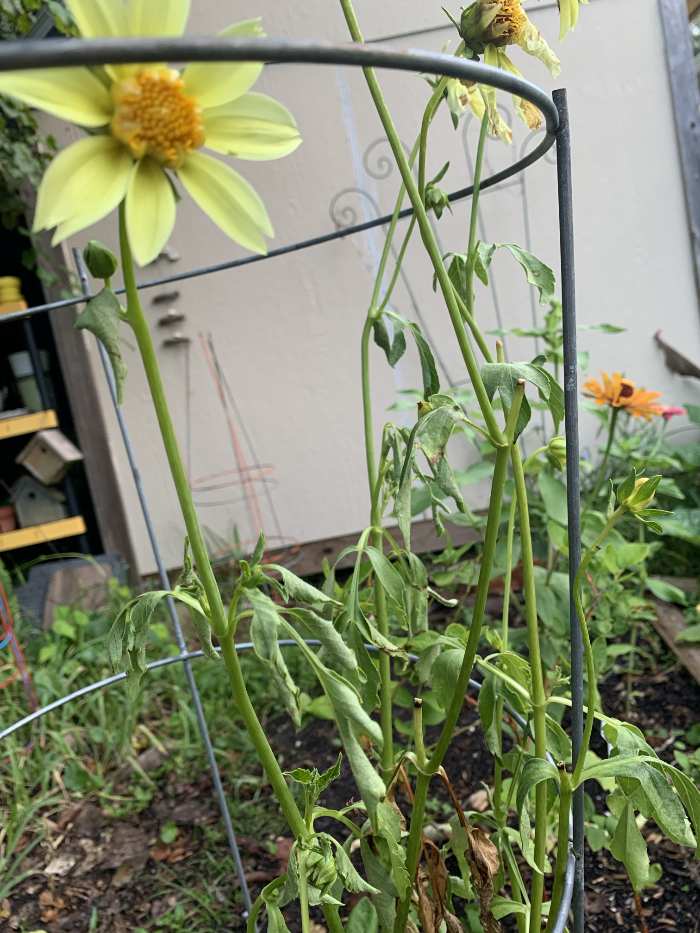
Dahlia wilting

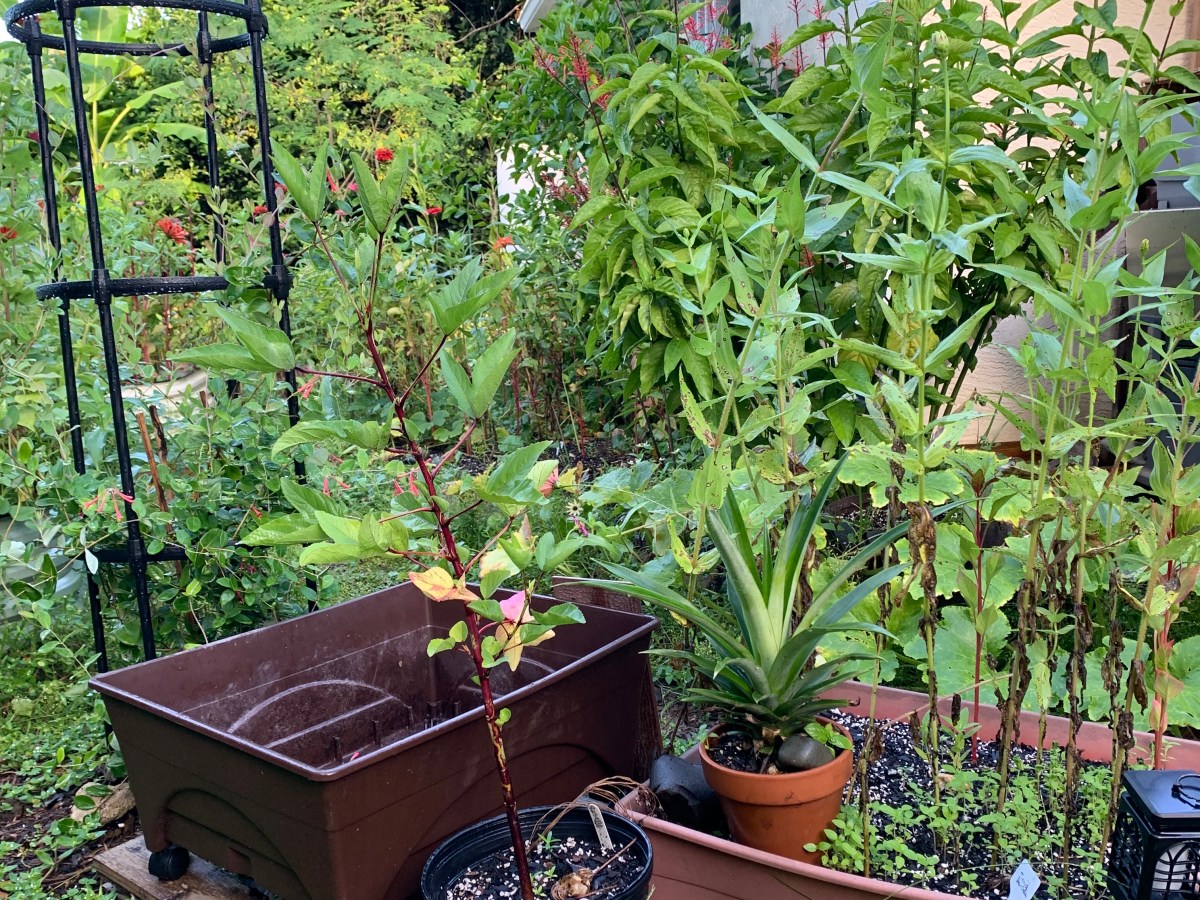
The weeds, or should I say, grass has gone nuts. This is all getting away from me because of all the vines that are sprawling all over the yard. The squash vine is done, and I should pull it up. But it’s too hot and buggy.

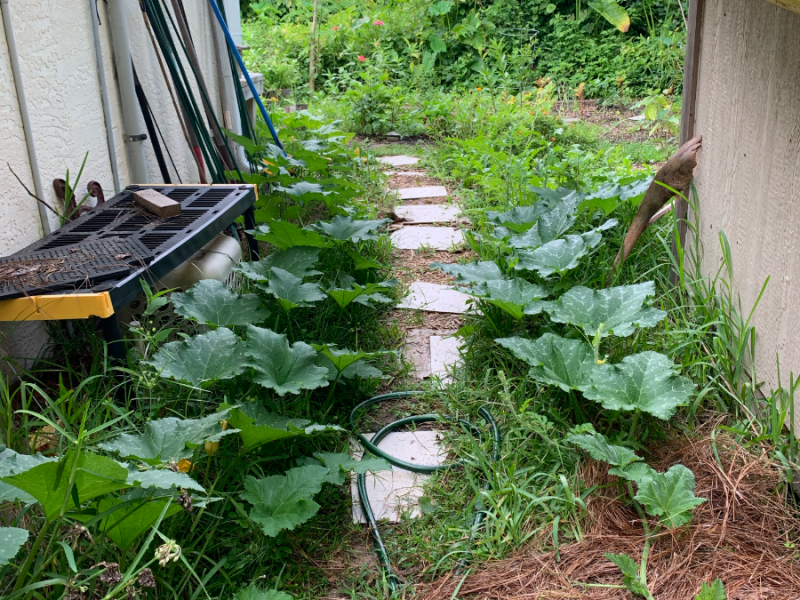
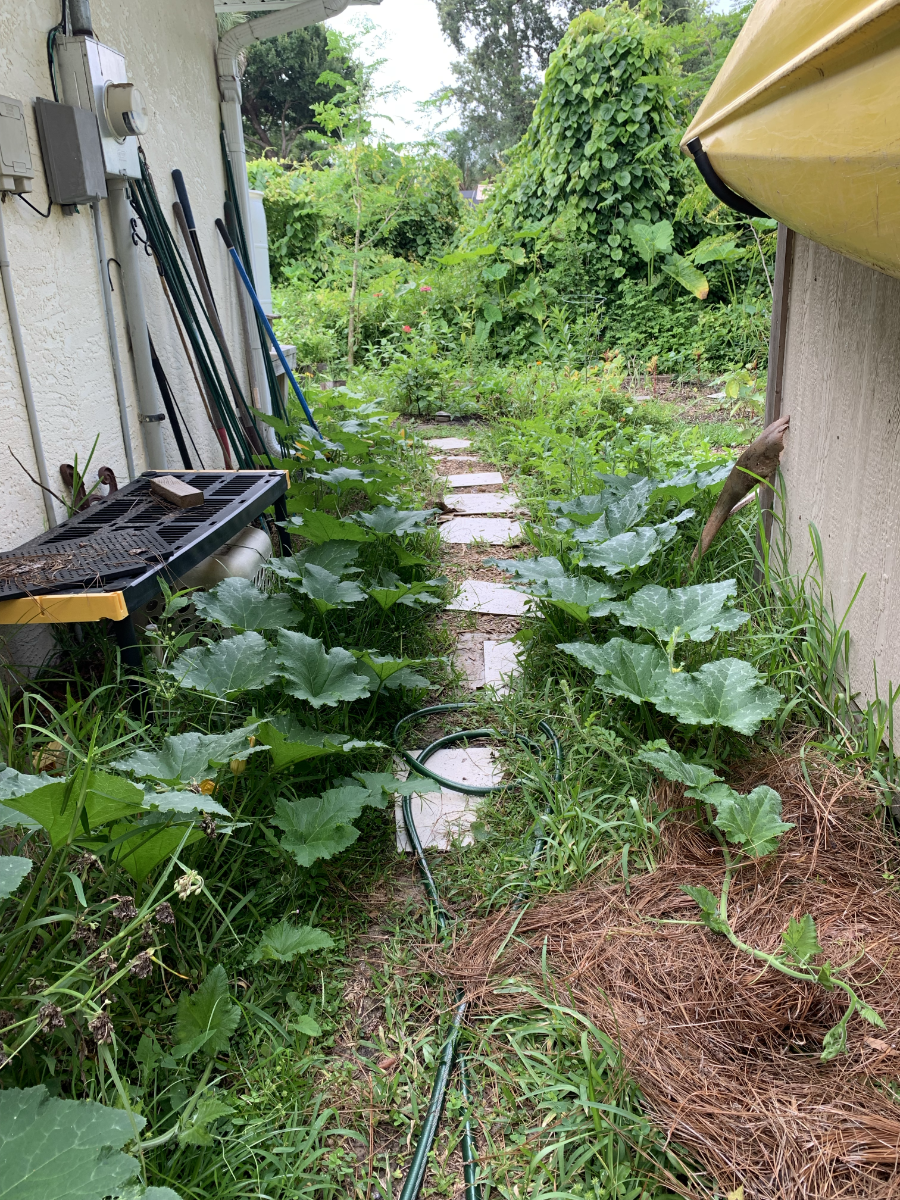
The watermelon vines have 1 watermelon. The pumpkin vines – well, I mentioned that above. Those vines have nearly made it from the back of the house to the front. They’ve dropped about 10 pumpkins at this point.
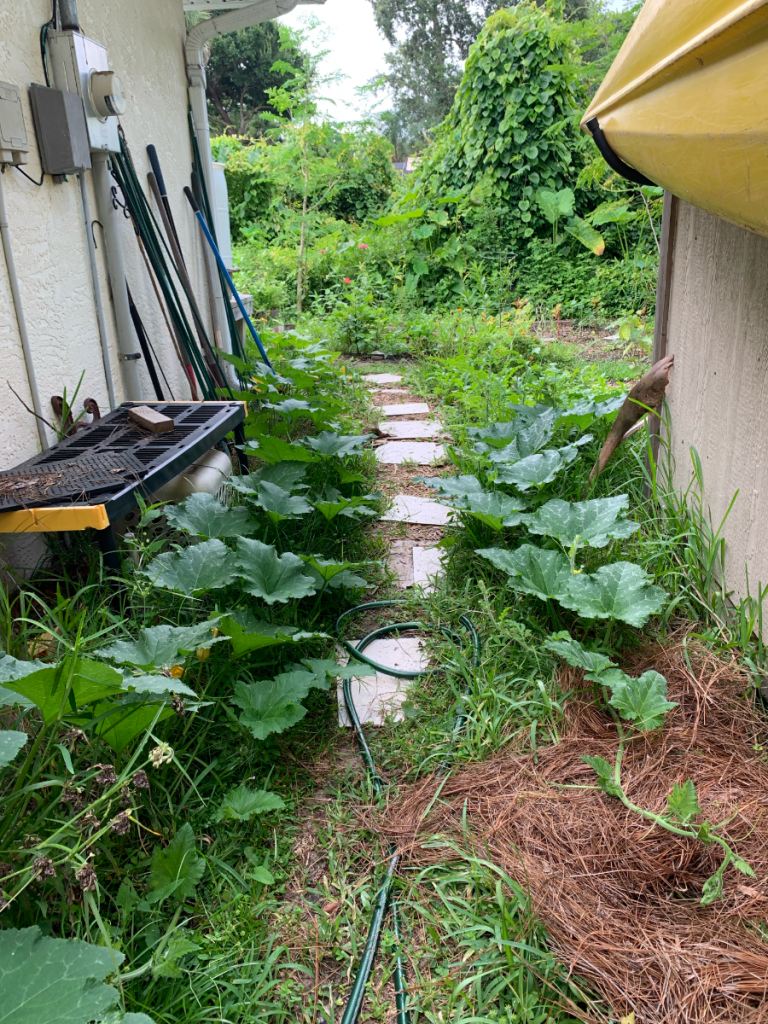
pumpkin vines along the pathway

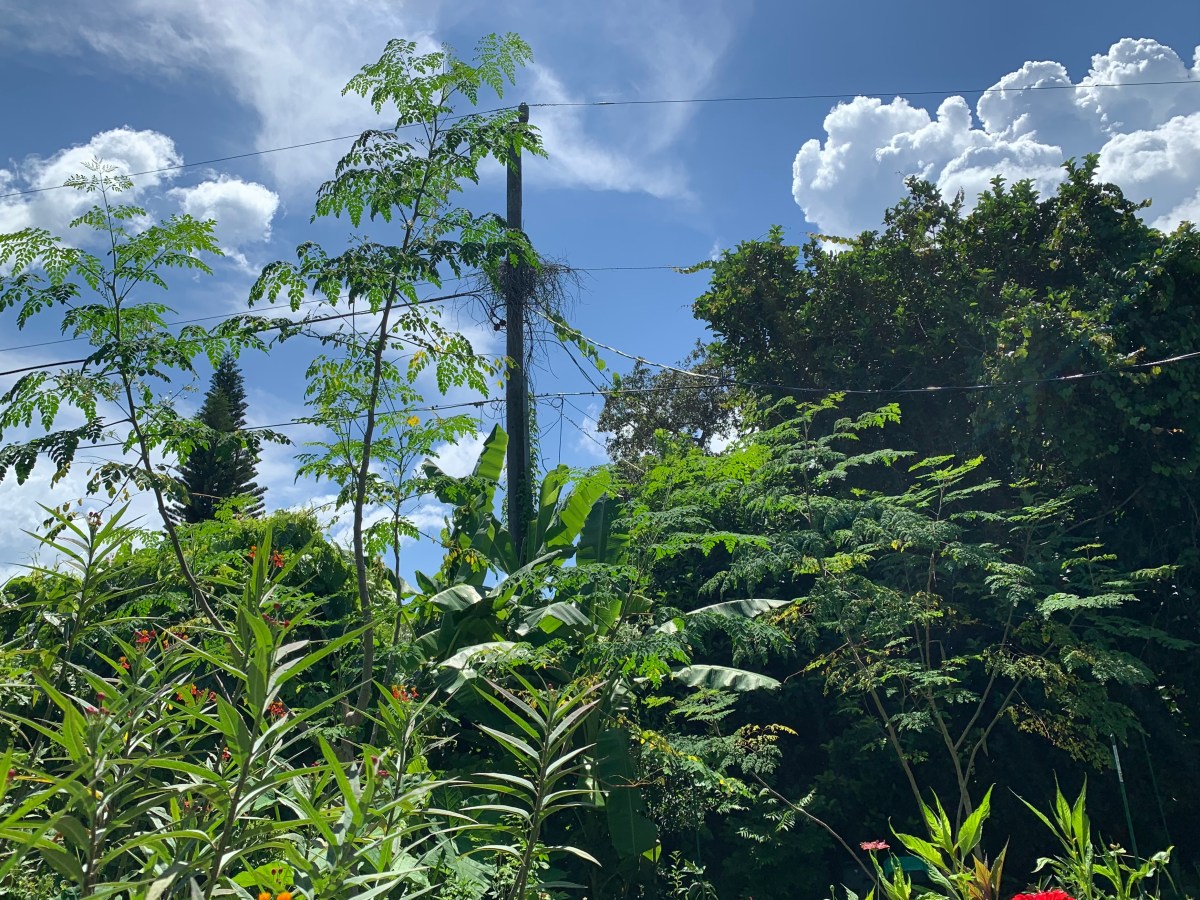
Speaking of vines. That mound in the distance in my photo above is an Elm tree next to a Beautyberry bush. Below is a photo of the two trees with most of the vines pulled off. I used to work at this, even though this is not part of my yard. I’d love to see both grow and do well. As you can see it’s a losing battle.

These are trying to grow under that mound of vines in the photo above.
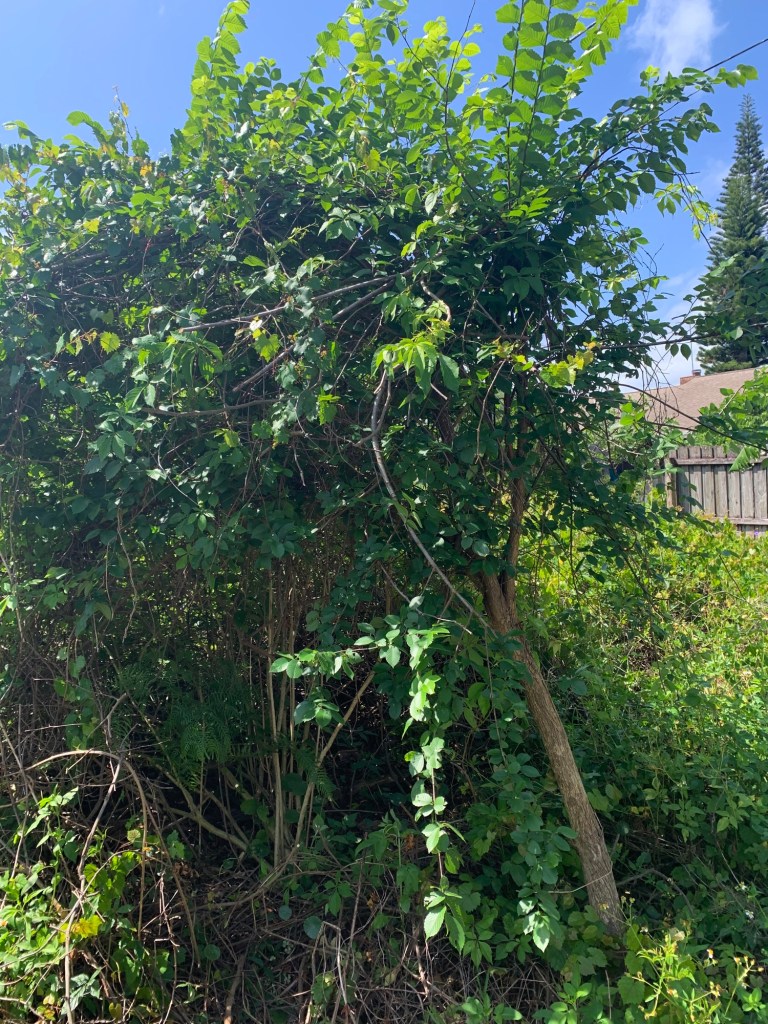
Vines covering tree

A banana pepper plant has died, and the other peppers don’t look so good. So it’s a depressing start to the day for me. I think I’ll stay inside.

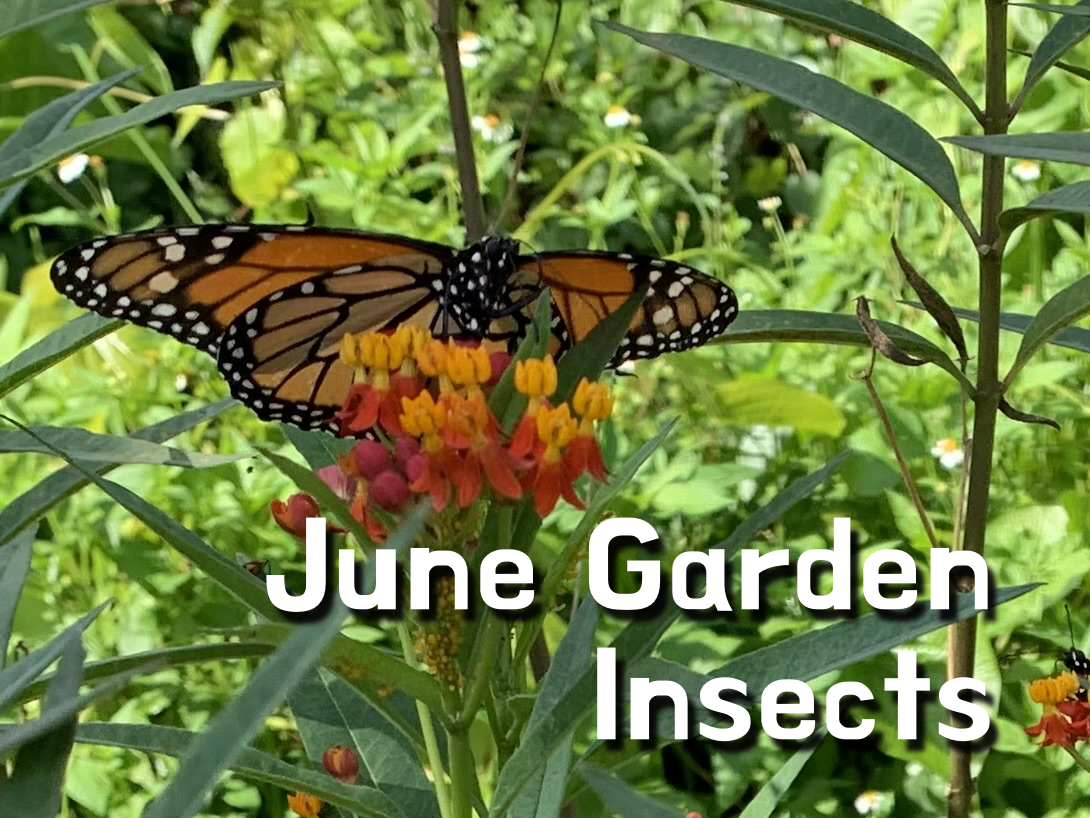
Fun Insect Happenings in the June Garden

Happy June, and here are some photos of the wonderful insects visiting my small Central Florida garden.

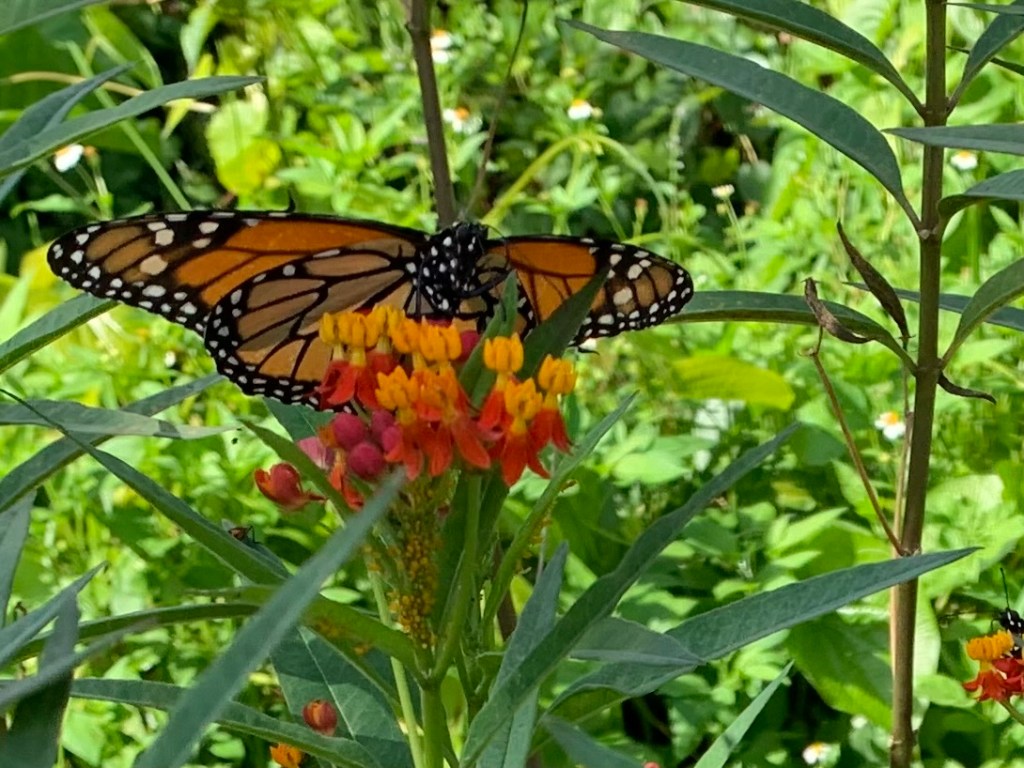
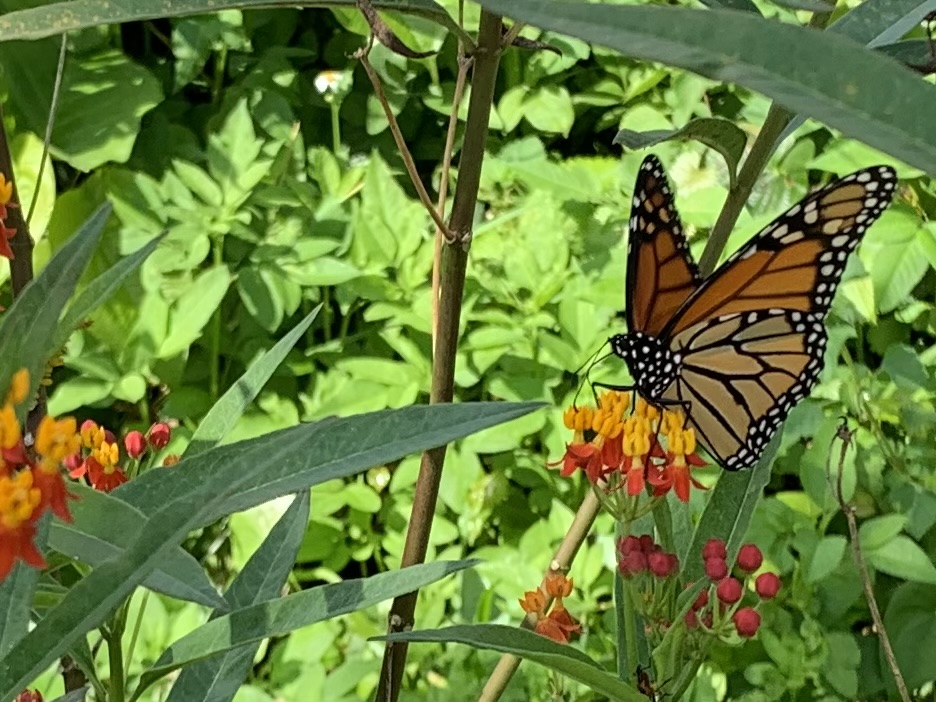
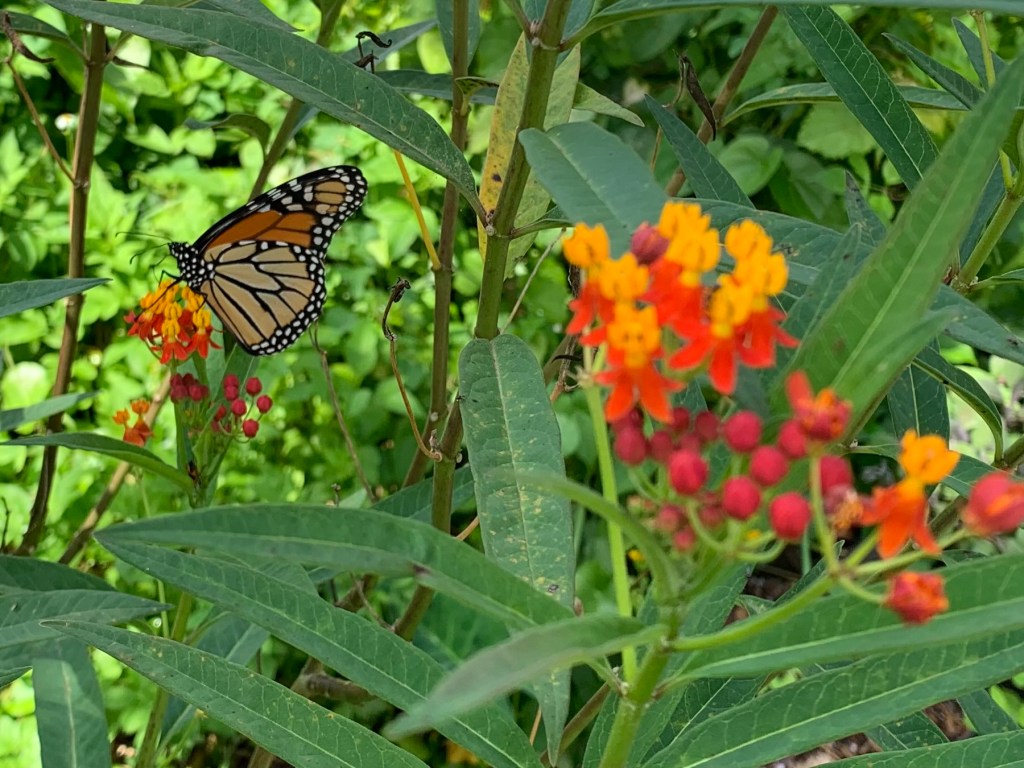
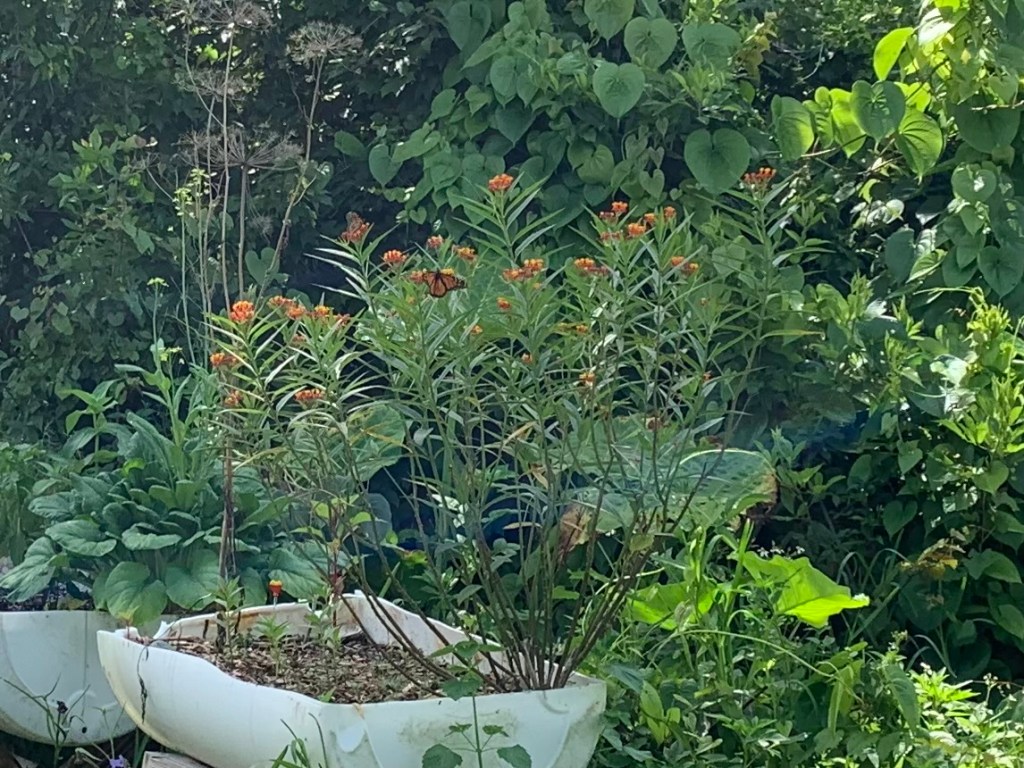
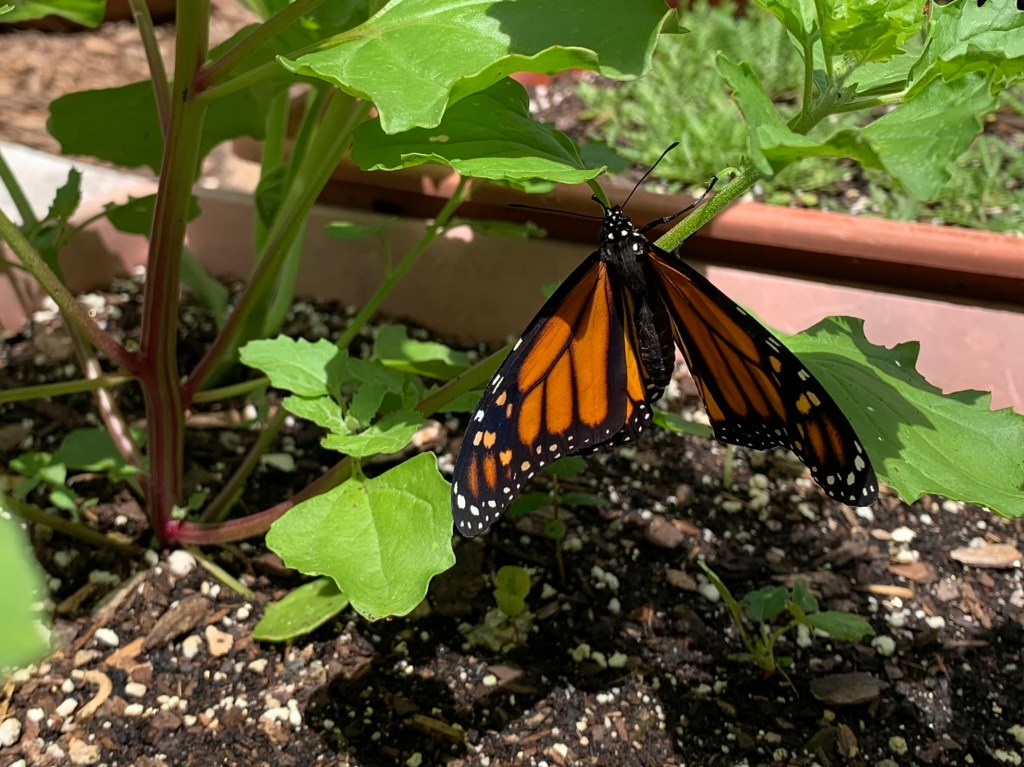
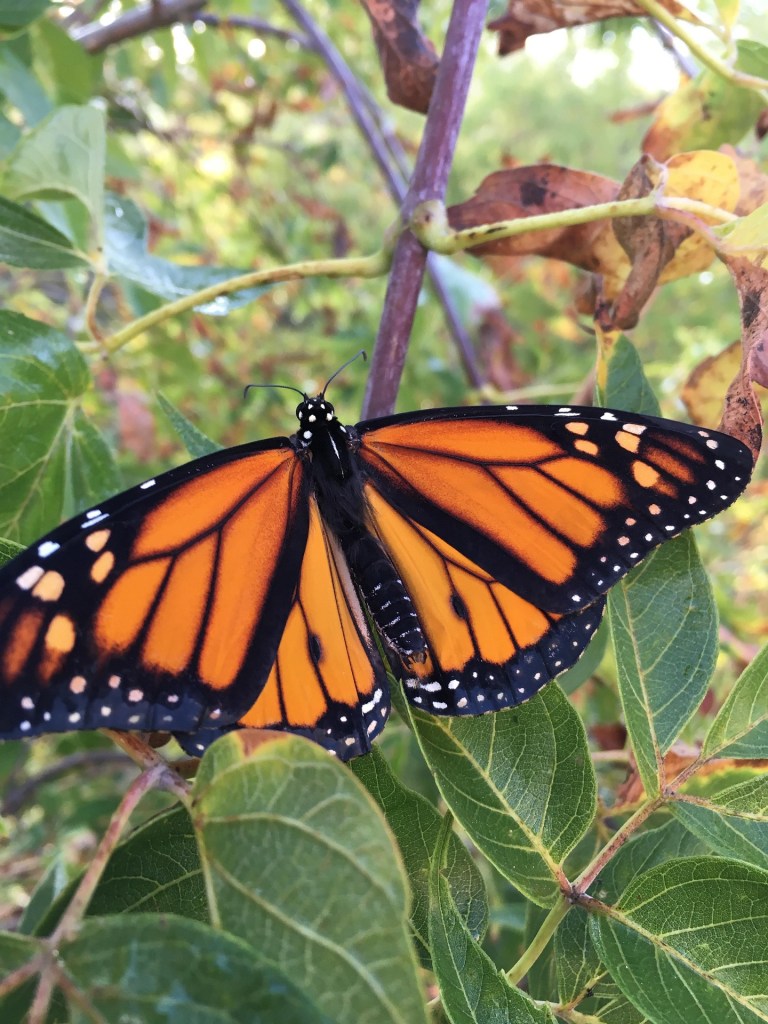
First I want to update readers on my Monarch butterflies. Yes, mine. I watched a couple of them hatch so I feel like their mom. I had three flying around the yard for quite a while, then one was found dead on the ground. After that I had two. After a while another showed up, and now there are four!

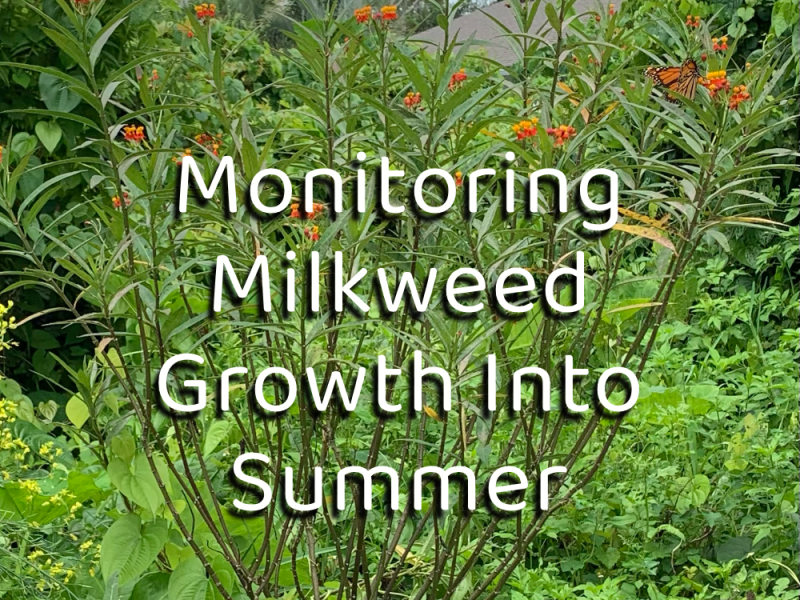
Each day, around 9AM they begin to fly. They circle the garden, fly over the lot next door, over the roof, and back. I think they’ve become used to seeing me, and fly right over my head. At least I like to think that. They are certainly enjoying the milkweed.

Monarchs

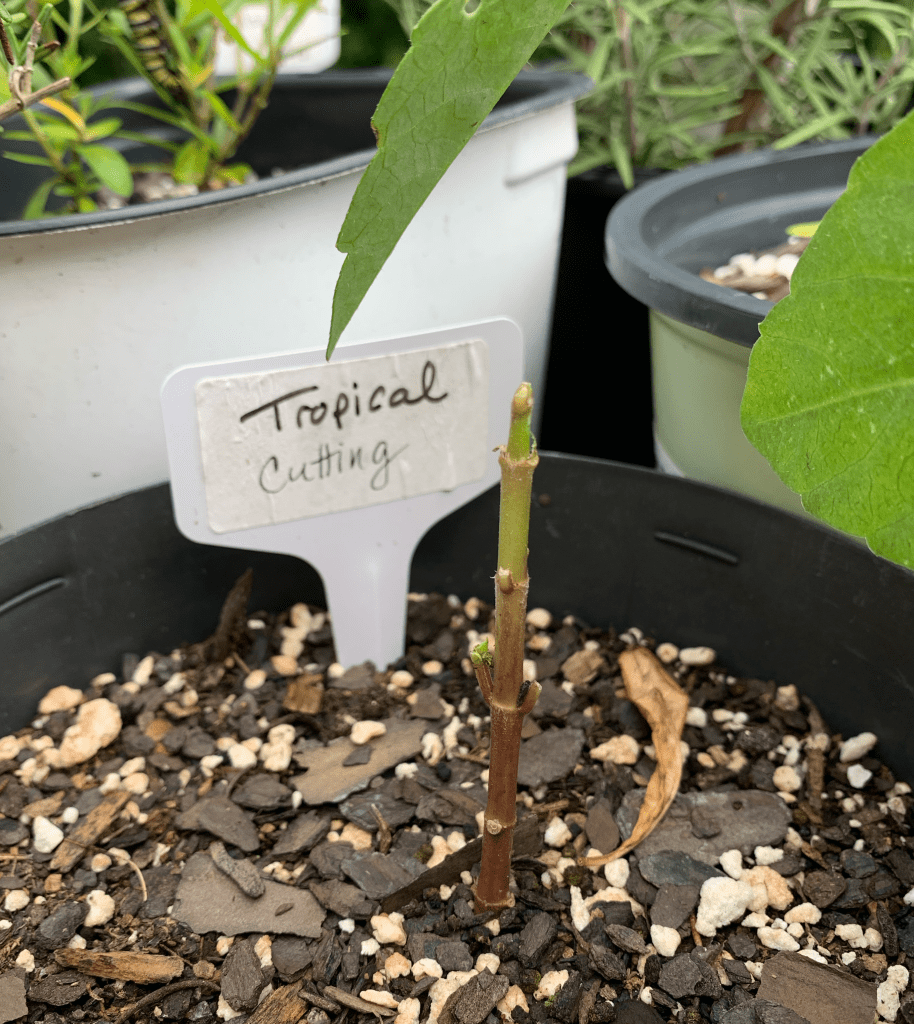
This morning I got a few photos of my monarchs on the tropical milkweed. This plant will not die back in fall, so I will need to cut it. For now, it’s one of the only flowering milkweeds in the yard. I need it for the butterflies because they love it.

Tropical milkweed is not a Florida native. Read more about it on this page. I have also been growing new milkweeds, that are all native to the state. My plan to fill the yard with good types of milkweed (for the Monarchs, who only lay eggs on milkweed) is coming to pass.

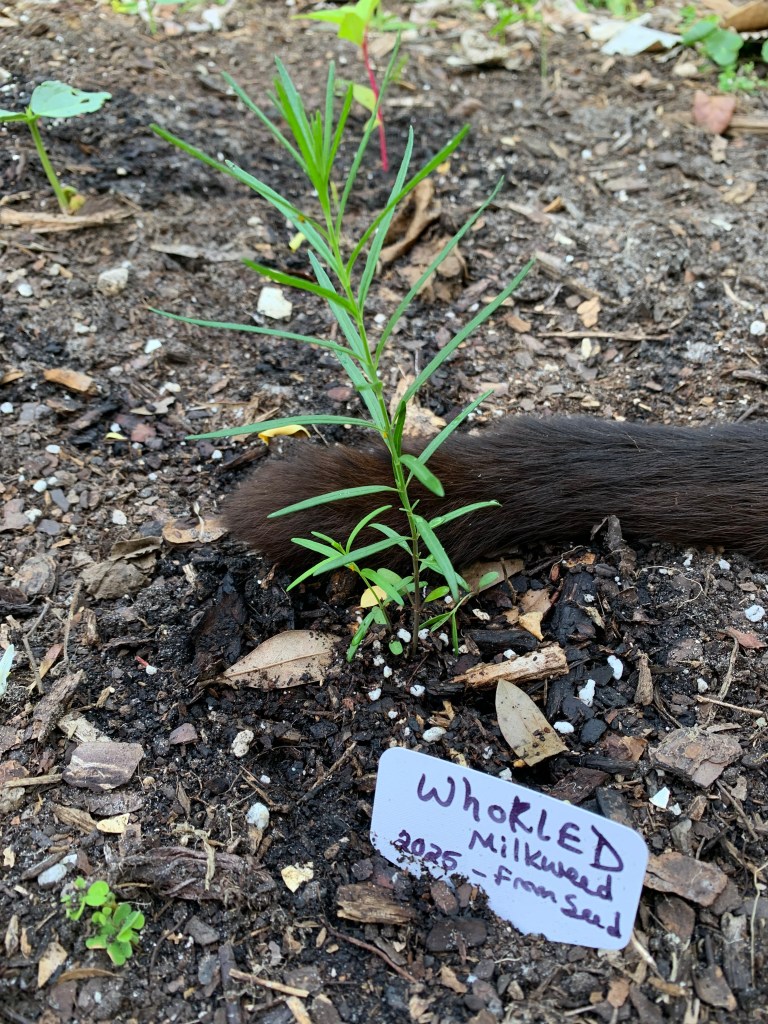
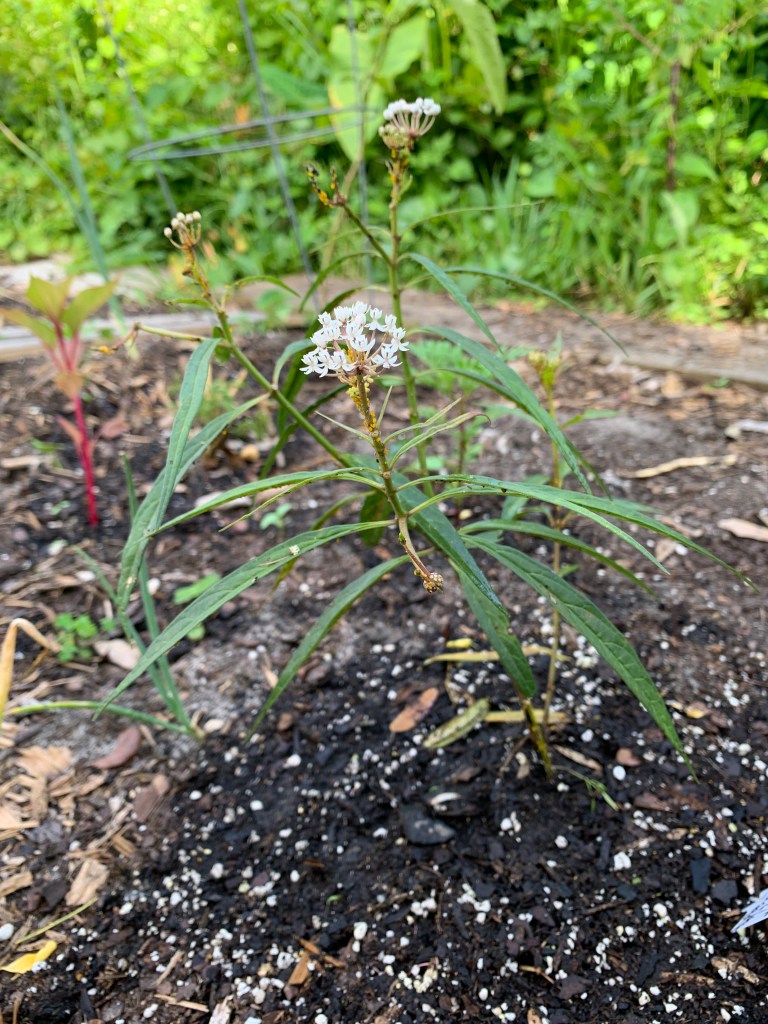
I’m slowly getting some of my milkweed seedlings into the ground. The rain has quit here, or goes around us, so I’m constantly watering once again. One of my Whorled milkweed seedings is in the ground along with the White swamp variety.

A Tiny Drawback

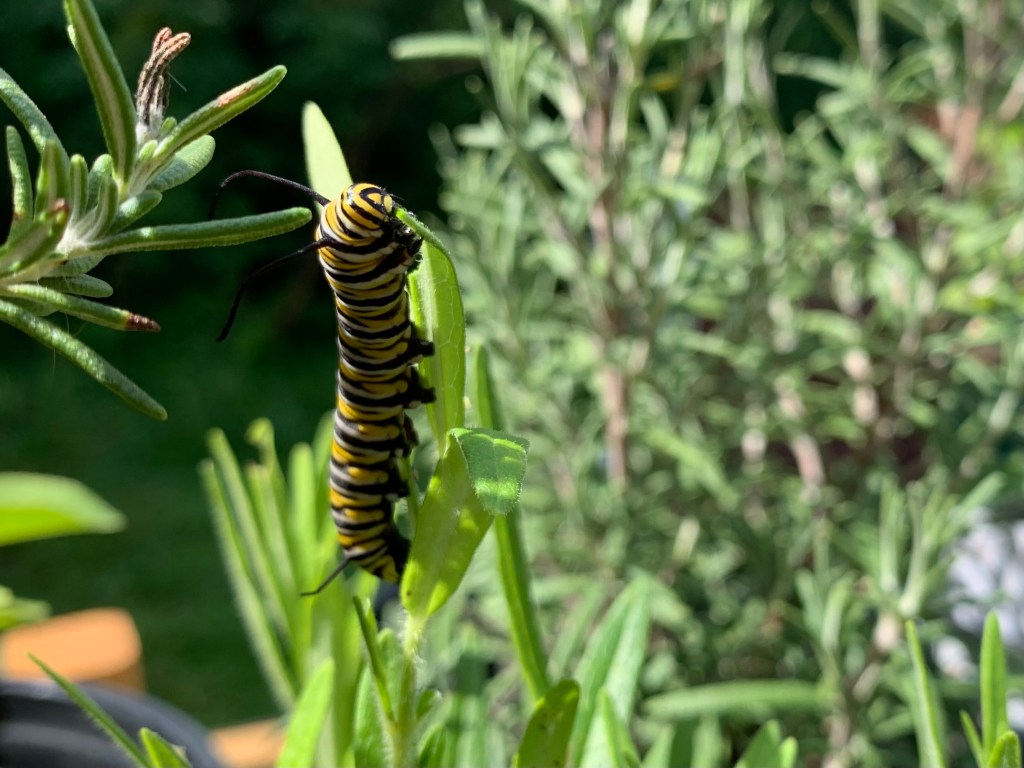
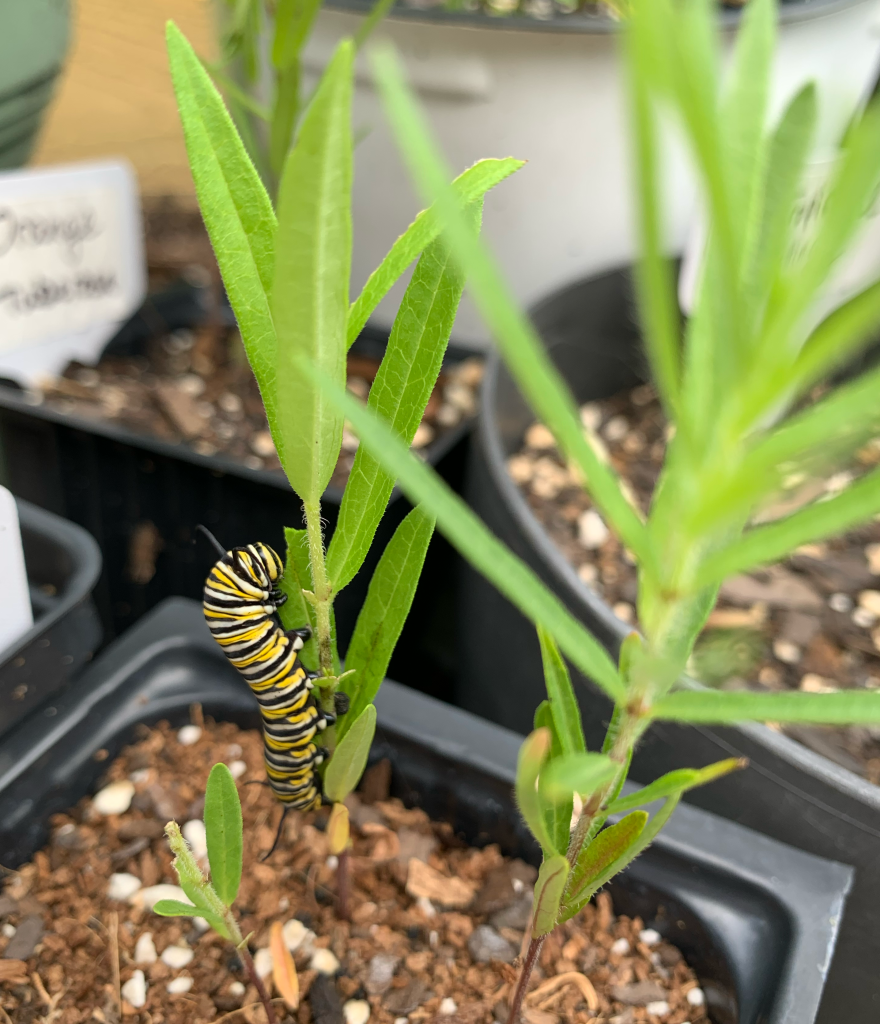
Caterpillars keep showing up on the smallest of milkweed plants. And they move from one to another. Maybe they like munching on those tender little leaves, but the plants are being destroyed! Of course, it’s why I’m growing them in the first place – to feed the Monarch caterpillars.

These caterpillars are sneaky. They show up out of nowhere and then they disappear. I found one on the side of a pot. Then, they come back from wherever and begin eating again.

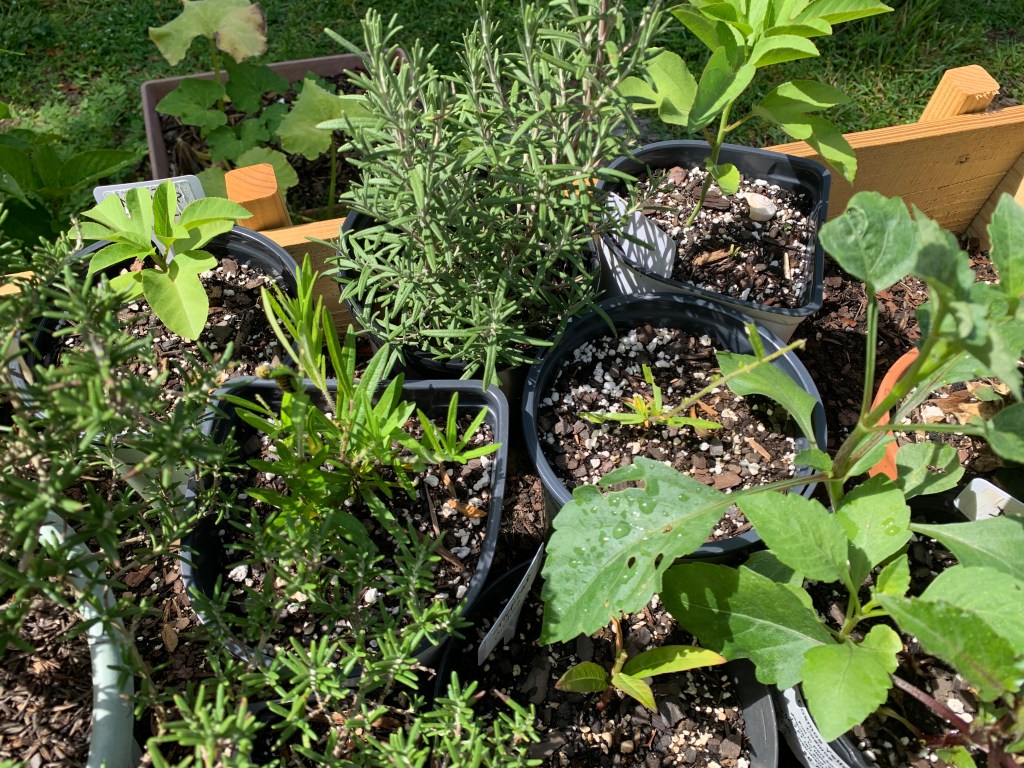
I have surrounded these little milkweed plants with rosemary, dahlias and other things to hopefully keep things from eating the caterpillars. Between the lizards, wasps and birds, most caterpillars don’t make it. They eat all the leaves off the plants and then become food for something. I guess that’s the way it goes. Everything has to eat.

Desert Rose Bee Diving

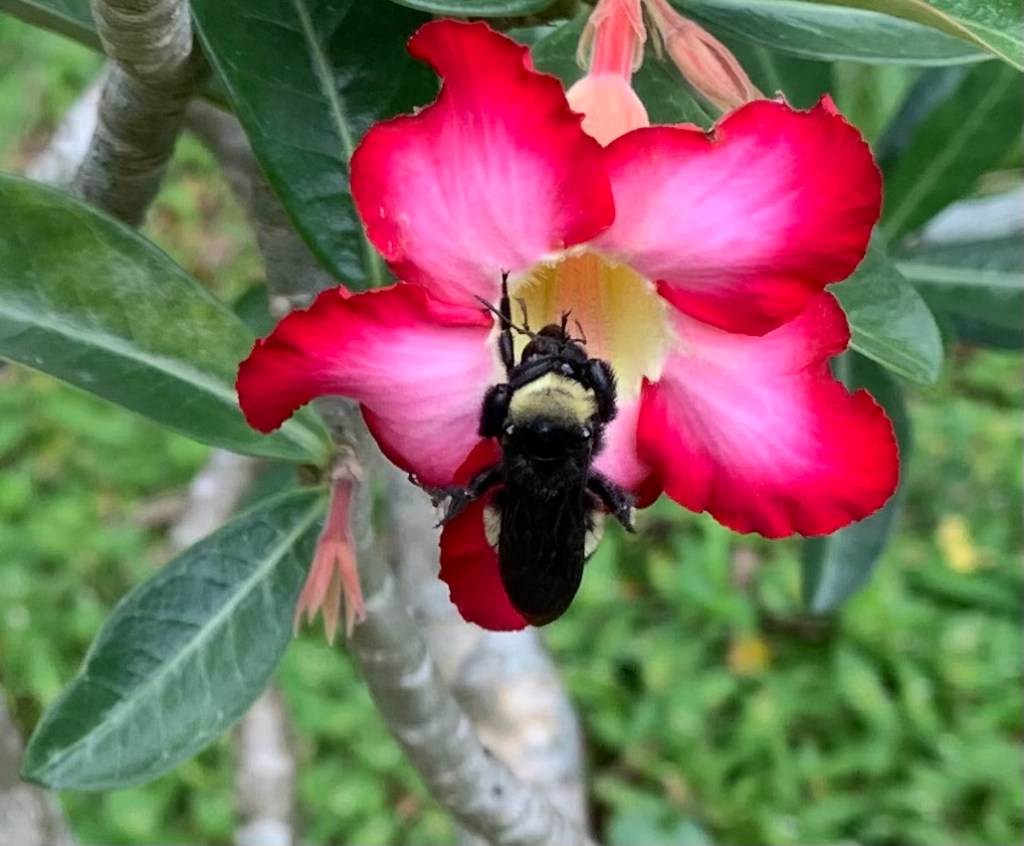
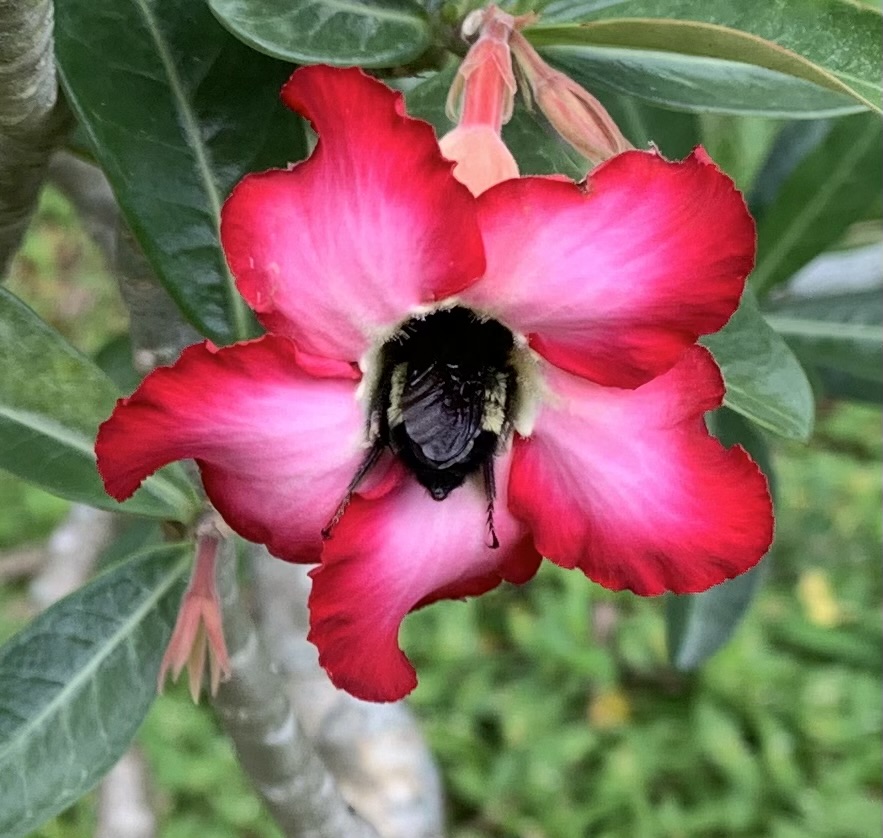
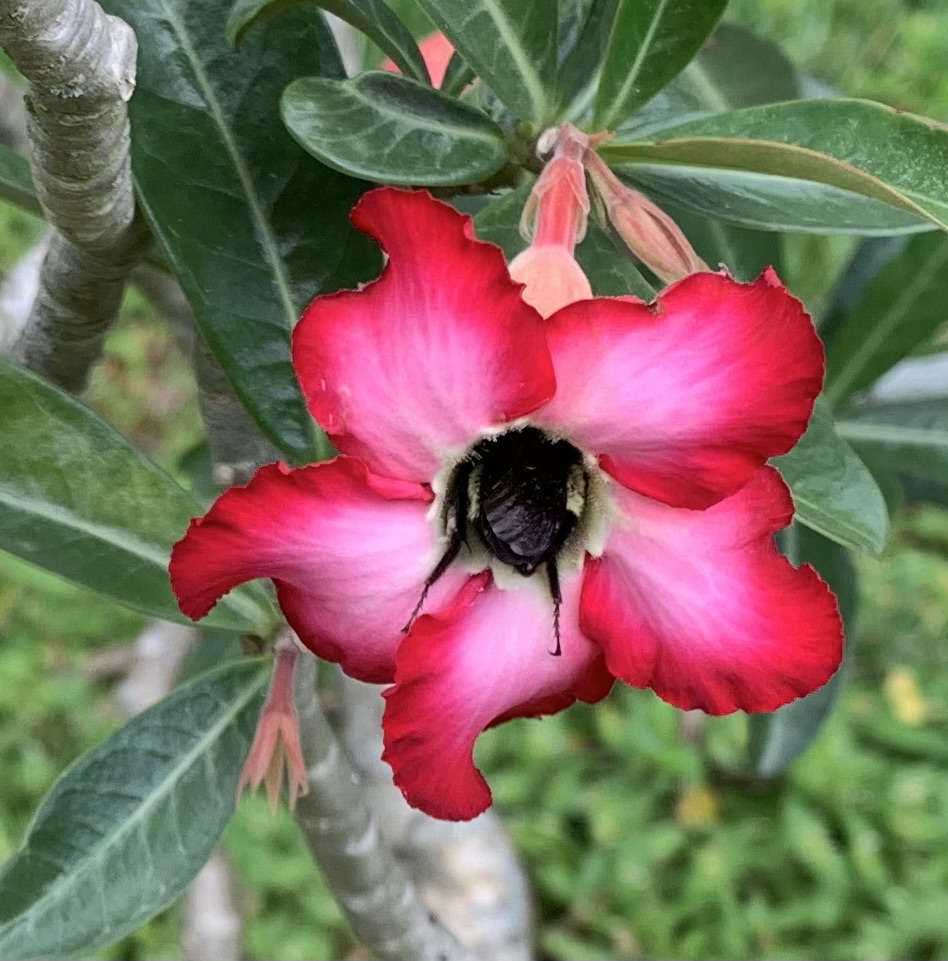
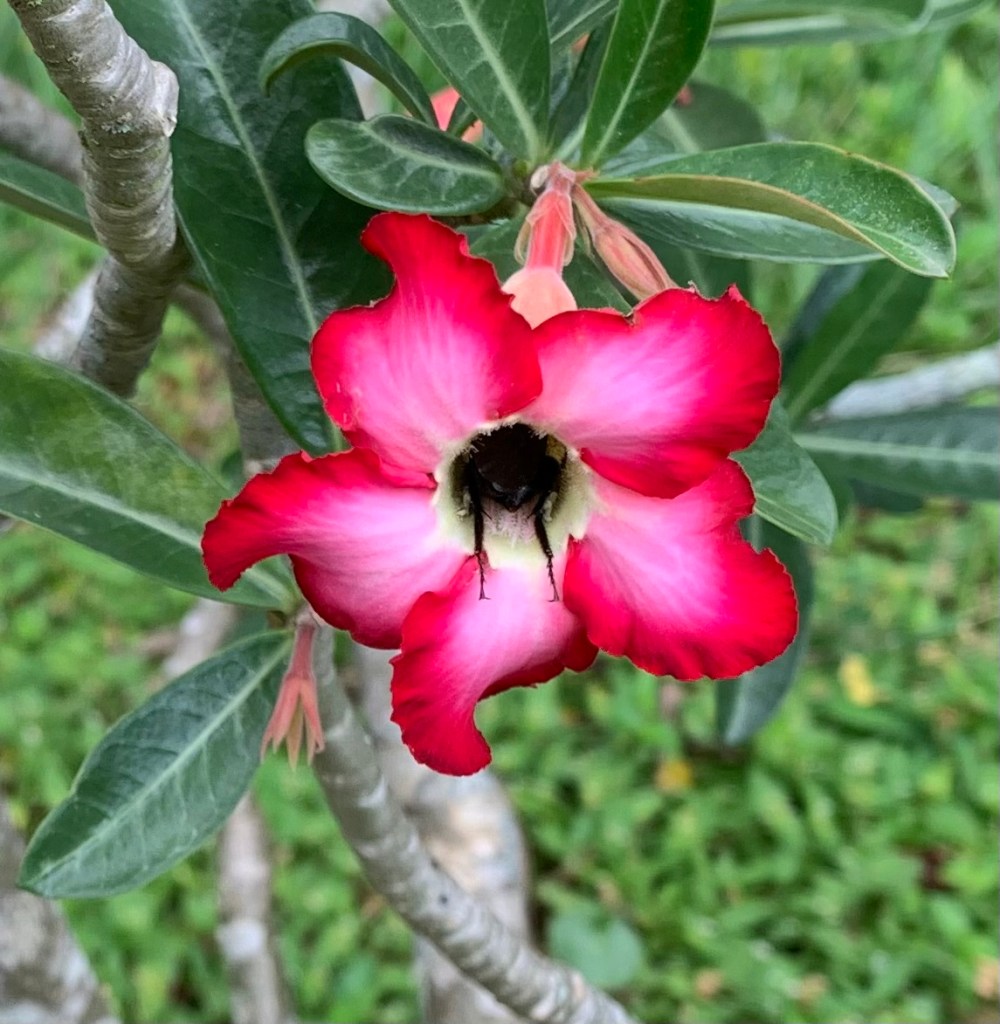
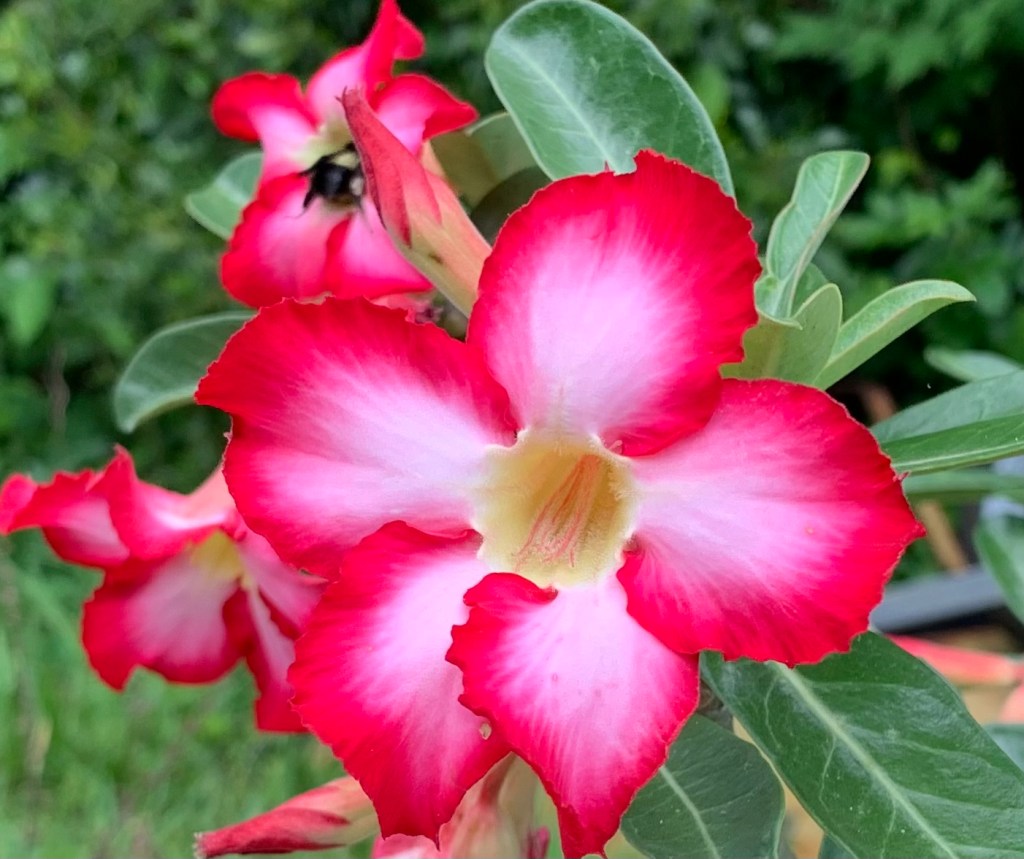
A beautiful bee showed up the other morning. I watched him crawl way down inside each trumpet-shaped, Desert Rose flower. I don’t think he missed a single bloom!

Although this plant has a “desert” name, it grows great here in Central Florida. I’ve had it in this pot for years. It requires very little maintenance and has the brightest pink flowers.

Giant Swallowtails

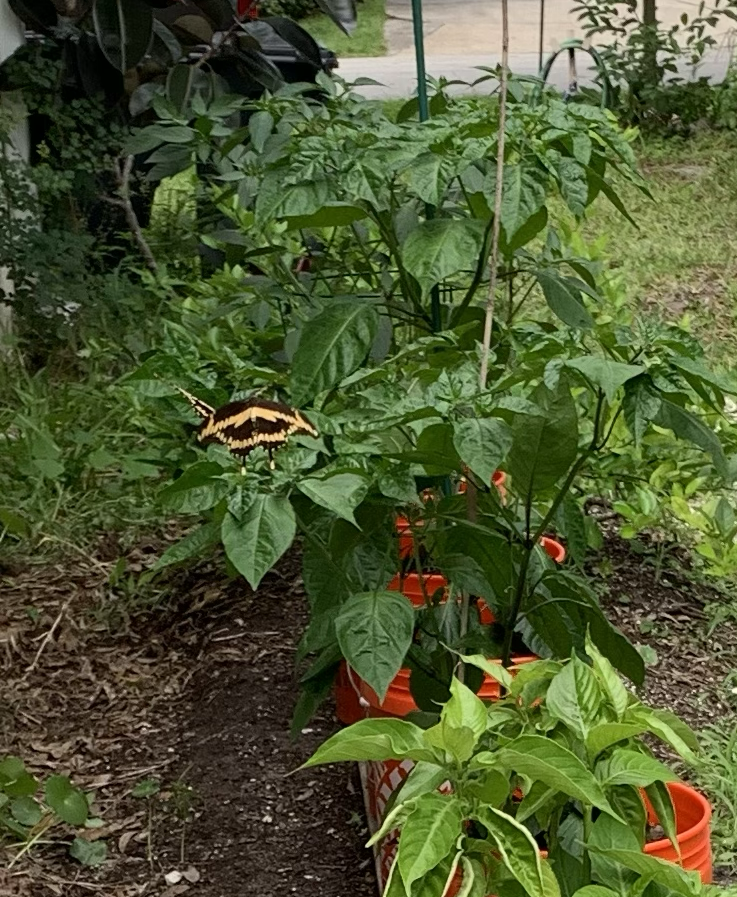
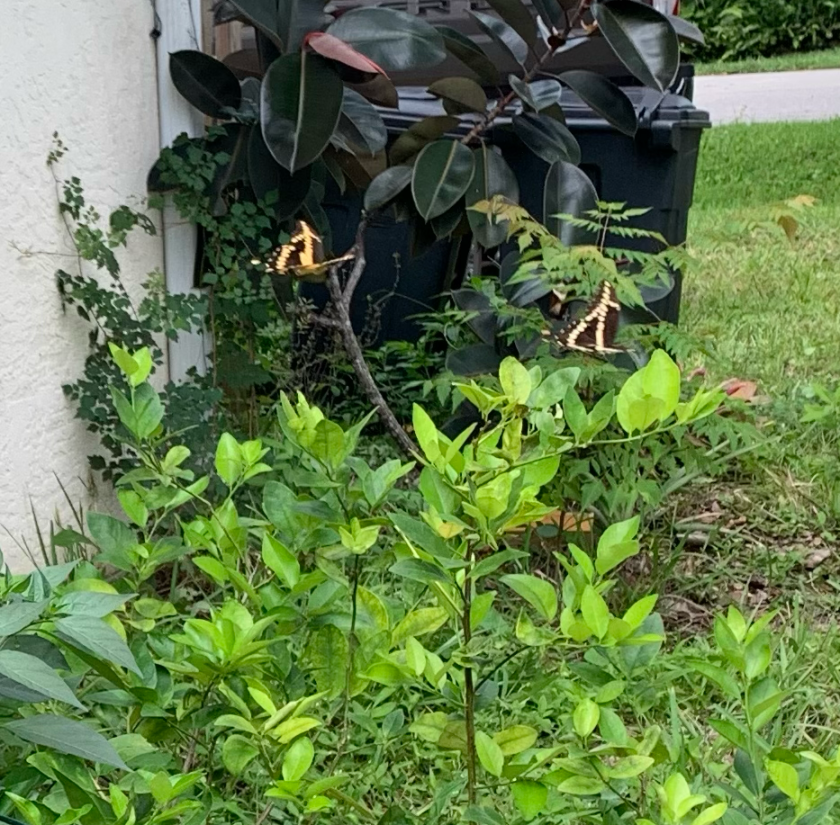
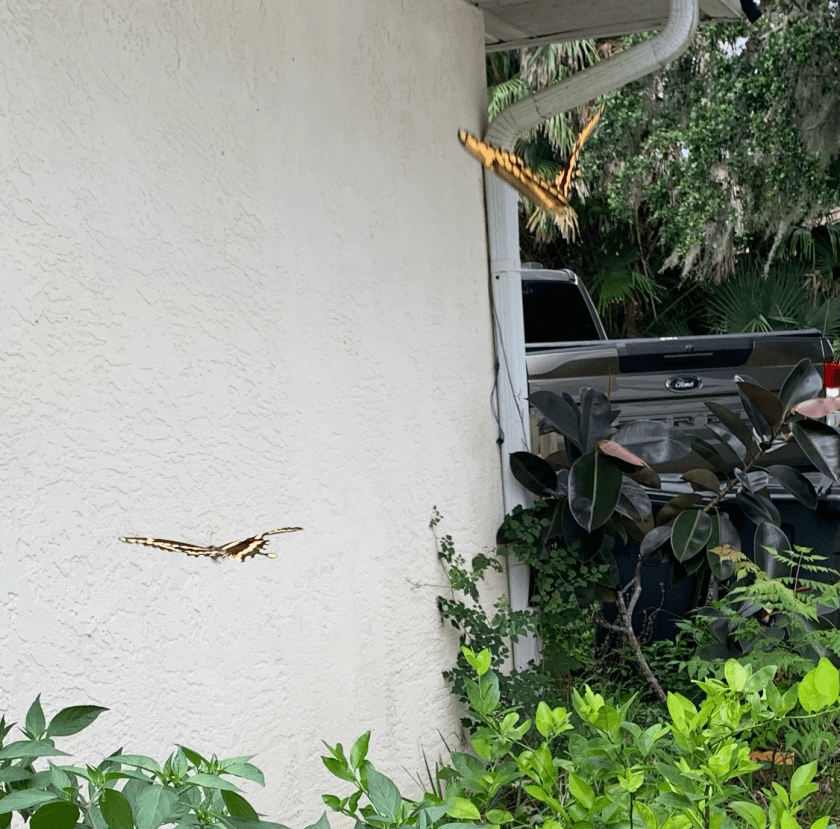
As I was writing this article, I happened to see two Eastern Giant Swallowtail butterflies outside my window! The photos are not good, but I am sharing them to prove they were here – haha. The two of them flew together around the orange tree and then off into the yard. I am not good when it comes to photographing moving targets, but wanted to share these photos anyway. To see this butterfly better view the Wikipedia page and iNaturalist.

That’s it for now. Soon, I’ll be sharing about my success at growing a spaghetti squash. It was so tasty! Also, the Seminole pumpkin vines are getting long, and I’ve found one little pumpkin beginning to grow. That is exciting!

bees

Something went wrong. Please refresh the page and/or try again.

Monarch Caterpillar With Strange Black Thing

I found a strange black thing next to one of the Monarch caterpillars. I need help identifying this.

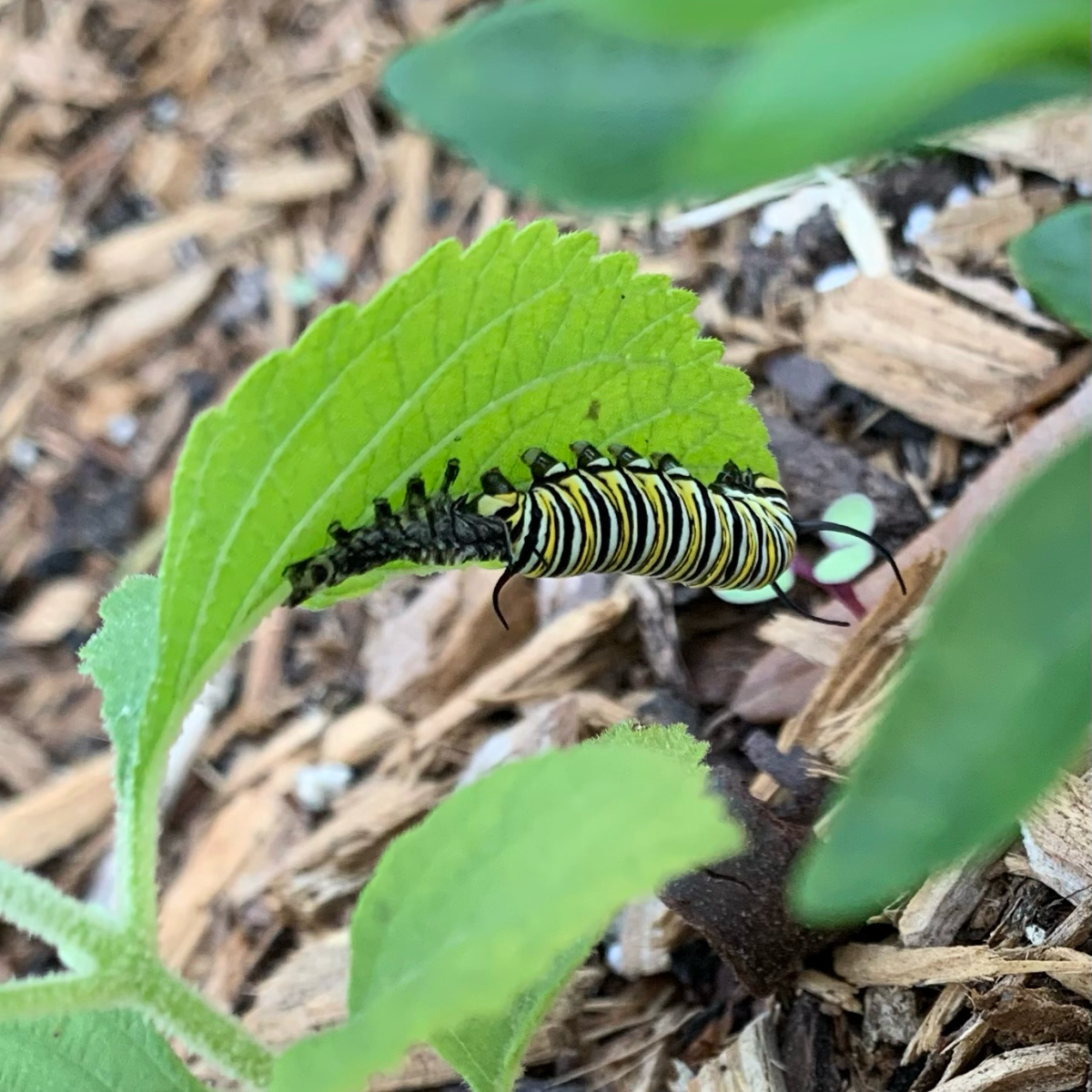
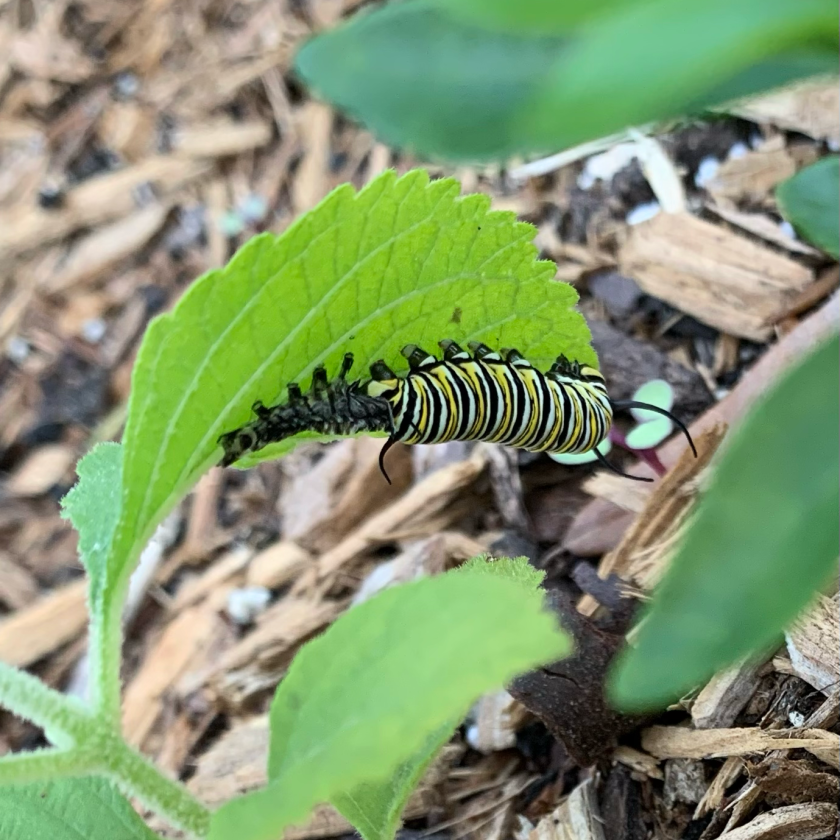
I don’t know how to describe this image. I found the Monarch caterpillar on the underside of a Beautyberry bush leaf. This little Beautyberry is a small plant that sprang up next to the milkweed.

As I was checking for caterpillars the other morning, I found this one with a strange black thing. It looks like a shell or skin and the caterpillar was crawling out of it! This caterpillar was fairly good size, and I’ve never seen anything like this on my milkweeds.

If you know what is going on here, I’d love to know. And thank you for your input!

So one of my faithful readers said to look into caterpillar molting. I found this page at Naturedigger where they explain. Monarch caterpillars shed their skin, and eat it, five times before they become a chrysalis. I’ve seen many Monarch caterpillars and have never seen them shed their exoskeletons!

Monarch caterpillar on leaf with black thing

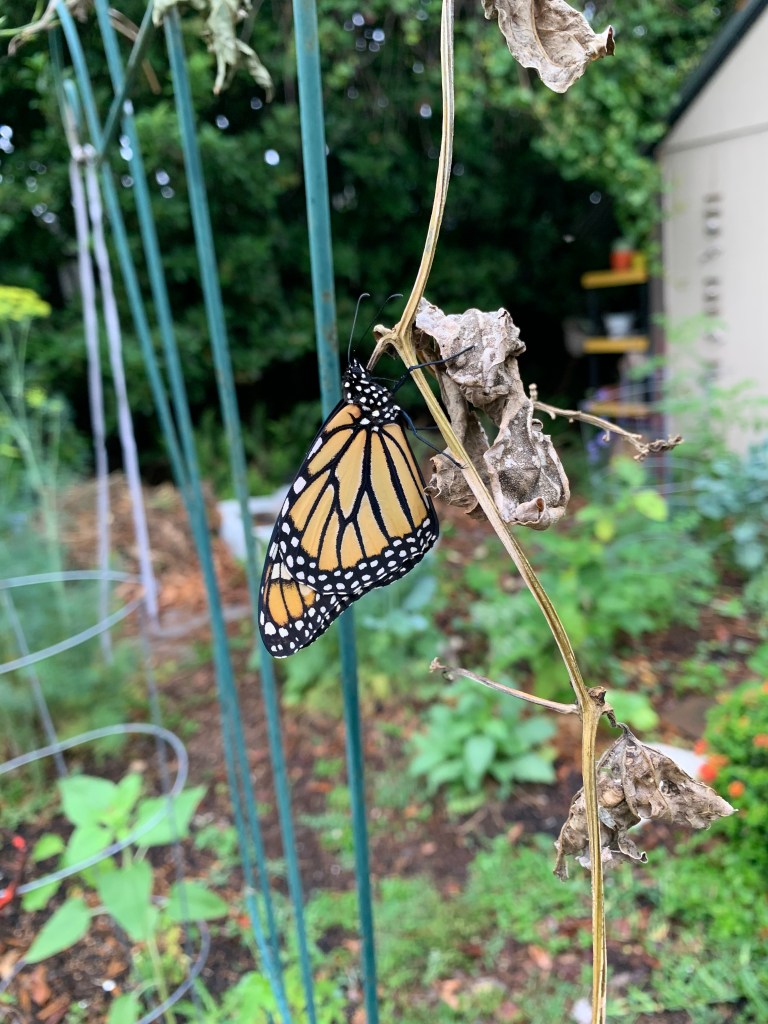
To date I have found three monarch butterflies, freshly hatched, in my yard. I can tell they are new when they don’t fly as I approach. A strong, healthy adult Monarch seems to never land, and will fly away if I approach. The only time I see them stop is when they lay eggs on the leaves.

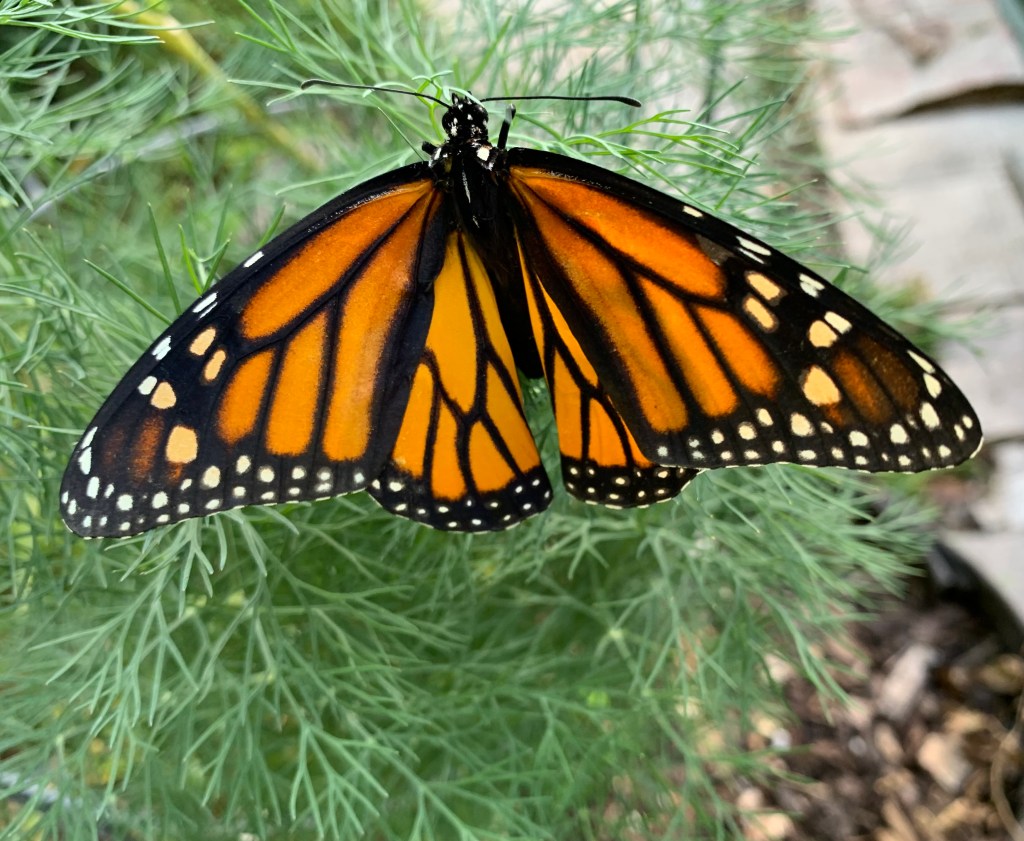
Monarch #1 had a pretty chrysalis on my Rosemary. Butterfly #2 was seen one morning attached to an old Loofah plant vine. Monarch #3 was holding onto some dill.

When I sit outside and simply enjoy my garden, I see them flying over the yard. Sometimes two fly together, and once I saw three together. Was it these three? I like to think so.

I recently learned that male Monarch butterflies have two black spots on their wings. They can be seen when the wings are wide open.

The photo below is not mine, but shows the spots a male would have.

Male monarch Butterly
Image by Graham Gladstone from Pixabay

Taking Care of the Monarchs

I need some good flowering plants to feed these butterflies. Although the caterpillars are only found eating milkweed, butterflies get their food in other places as well.

A lot of information can be found about feeding the caterpillars. I guess people will raise them inside and feed them stalks of milkweed. What I am looking for is information about planting to feed the butterflies without relying on milkweed flowers. I’ll write a new page about that.

Please keep reading…

One Summer Morning

July is nearing an end and the garden is teeming with living things.

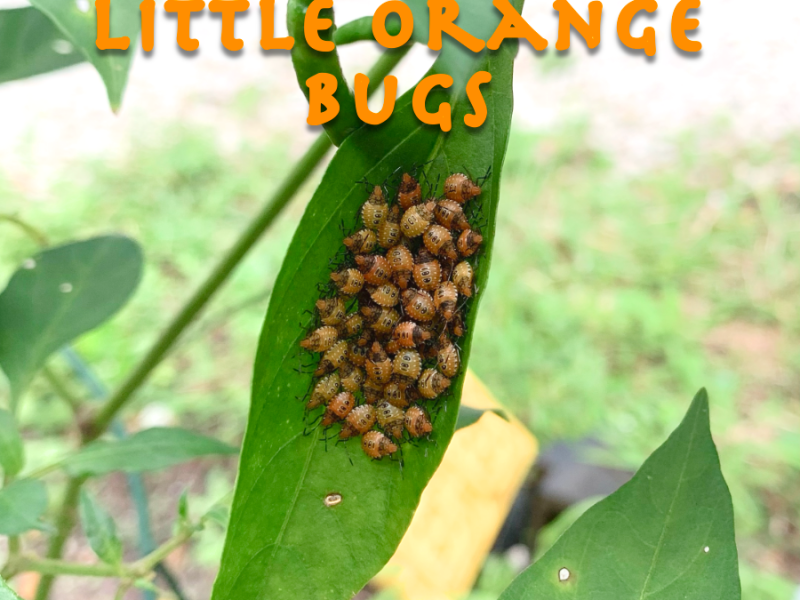
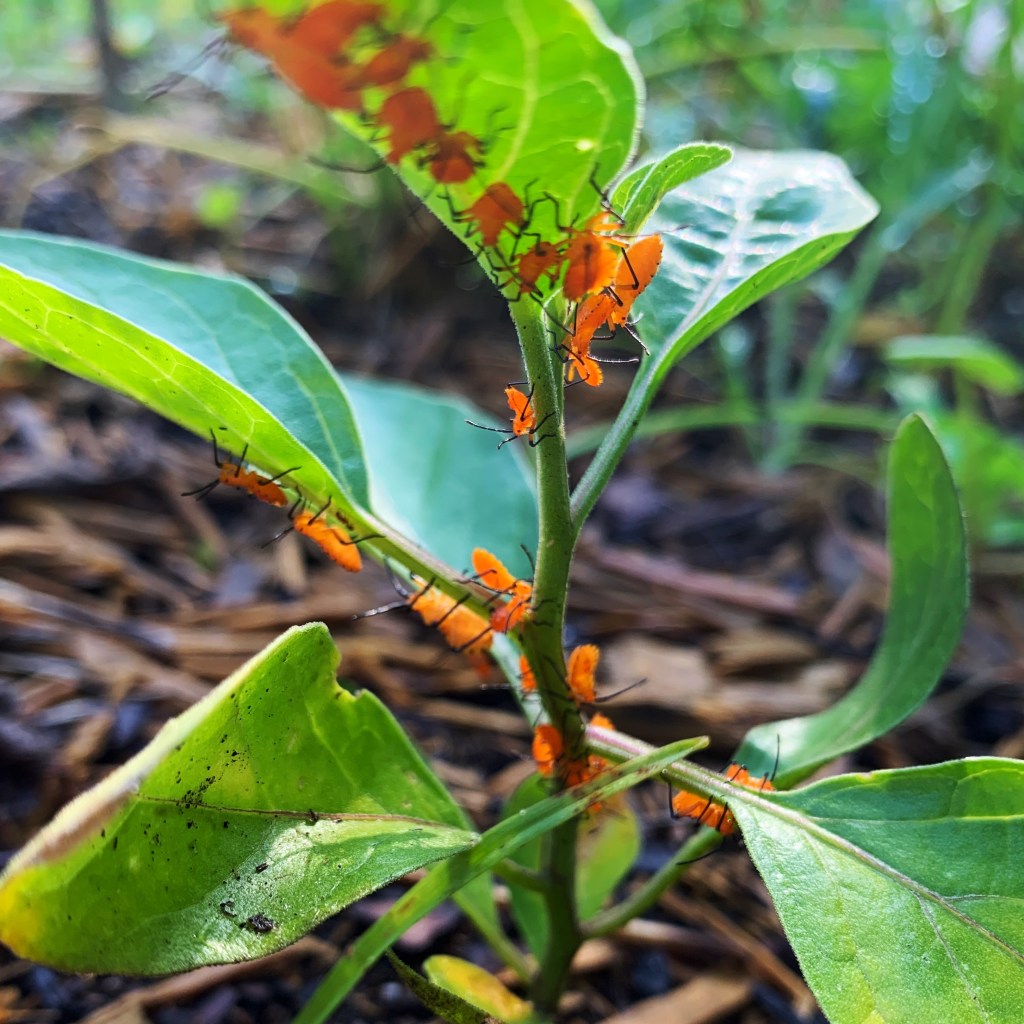
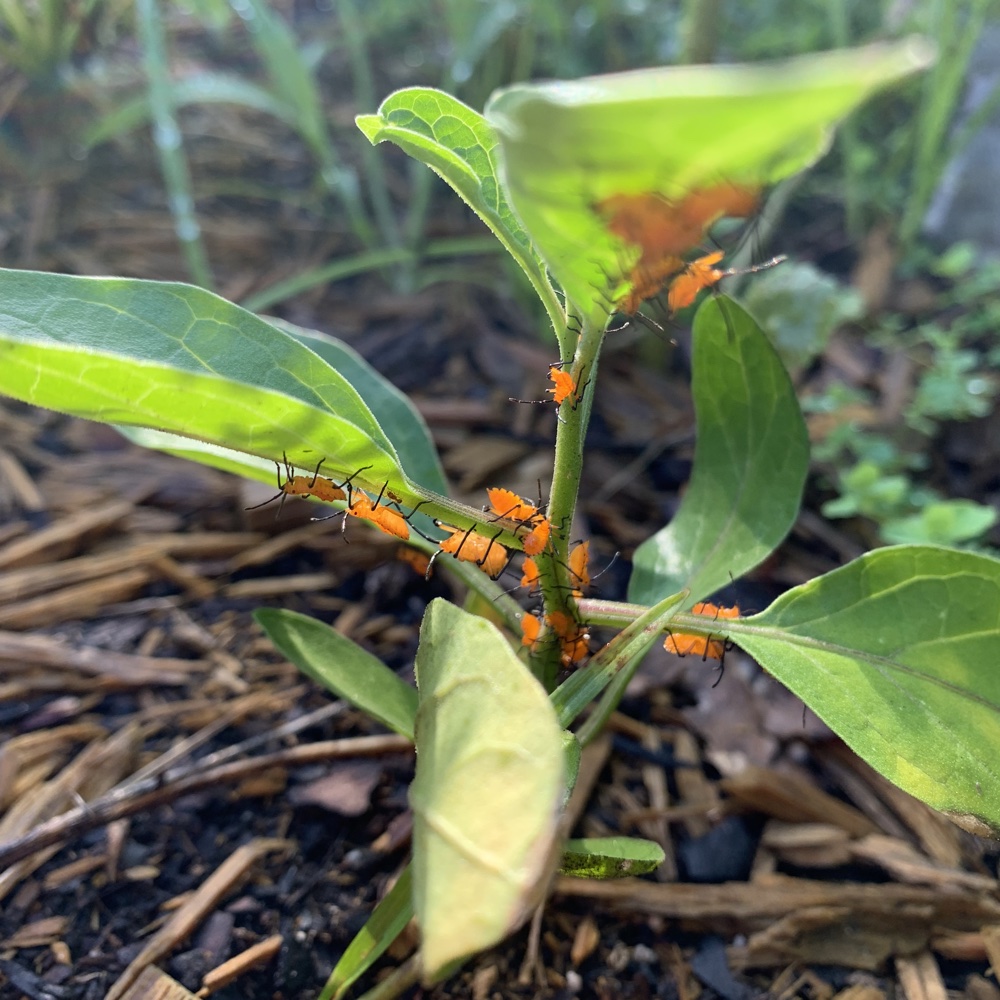
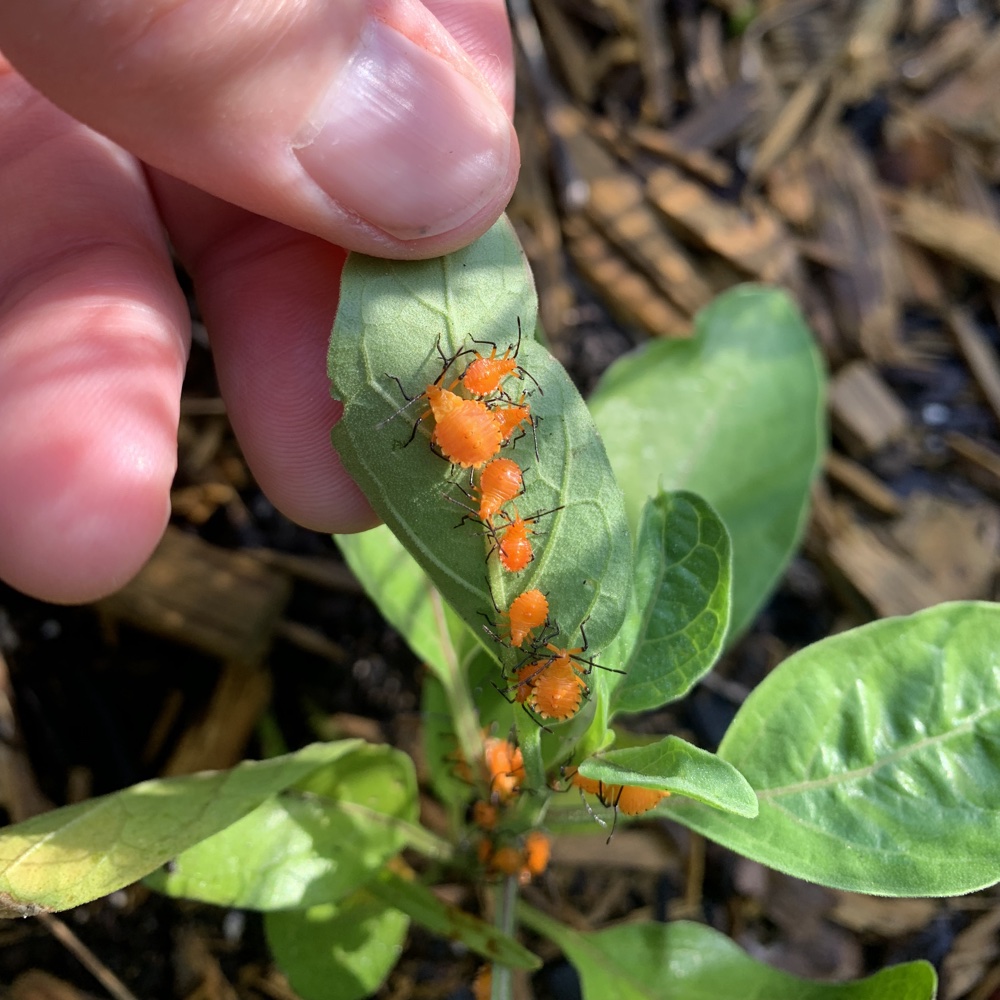
Need Help Identifying Mysterious Orange Garden Bugs

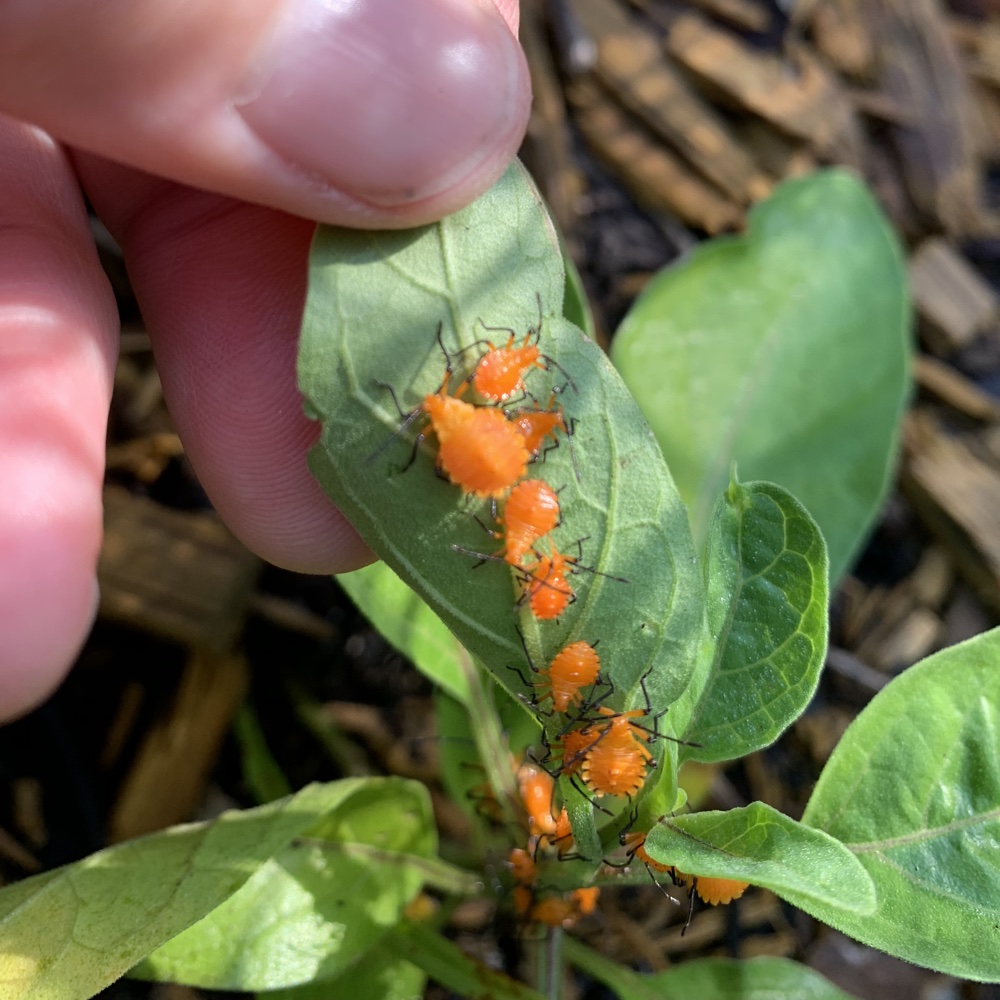
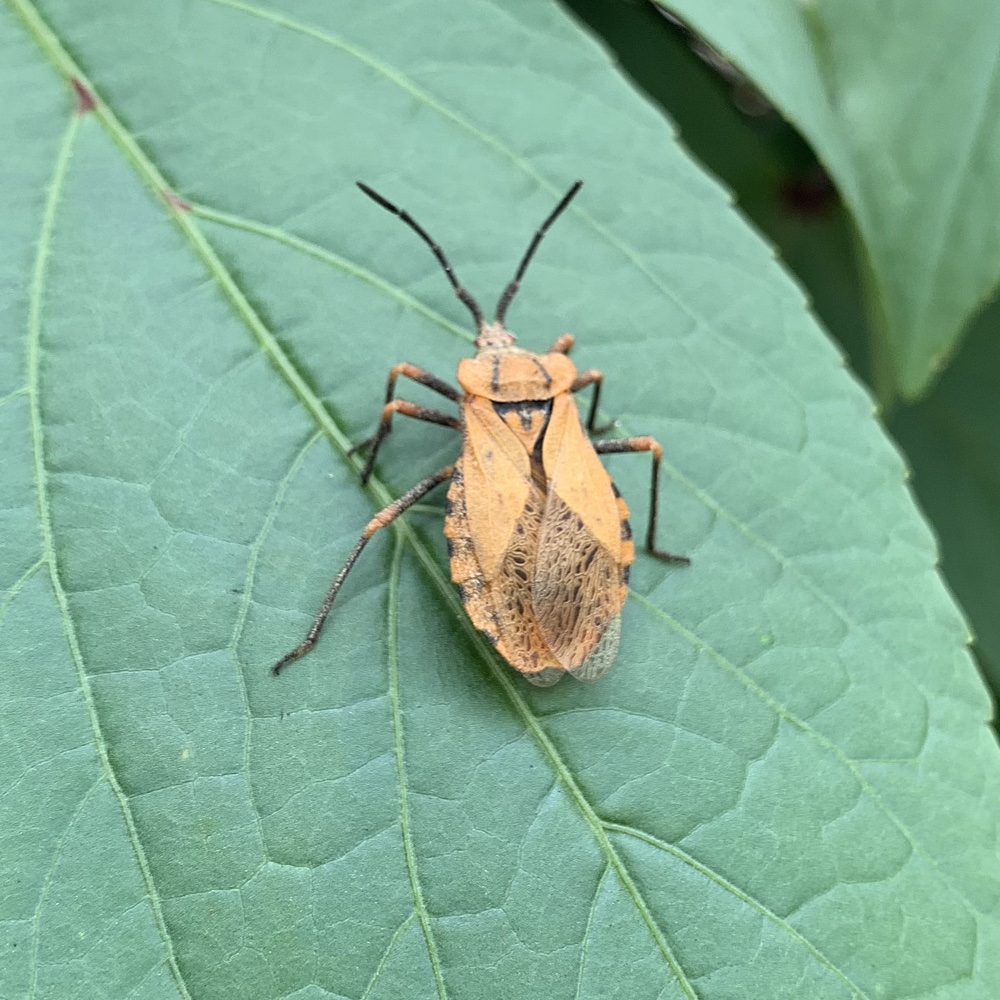
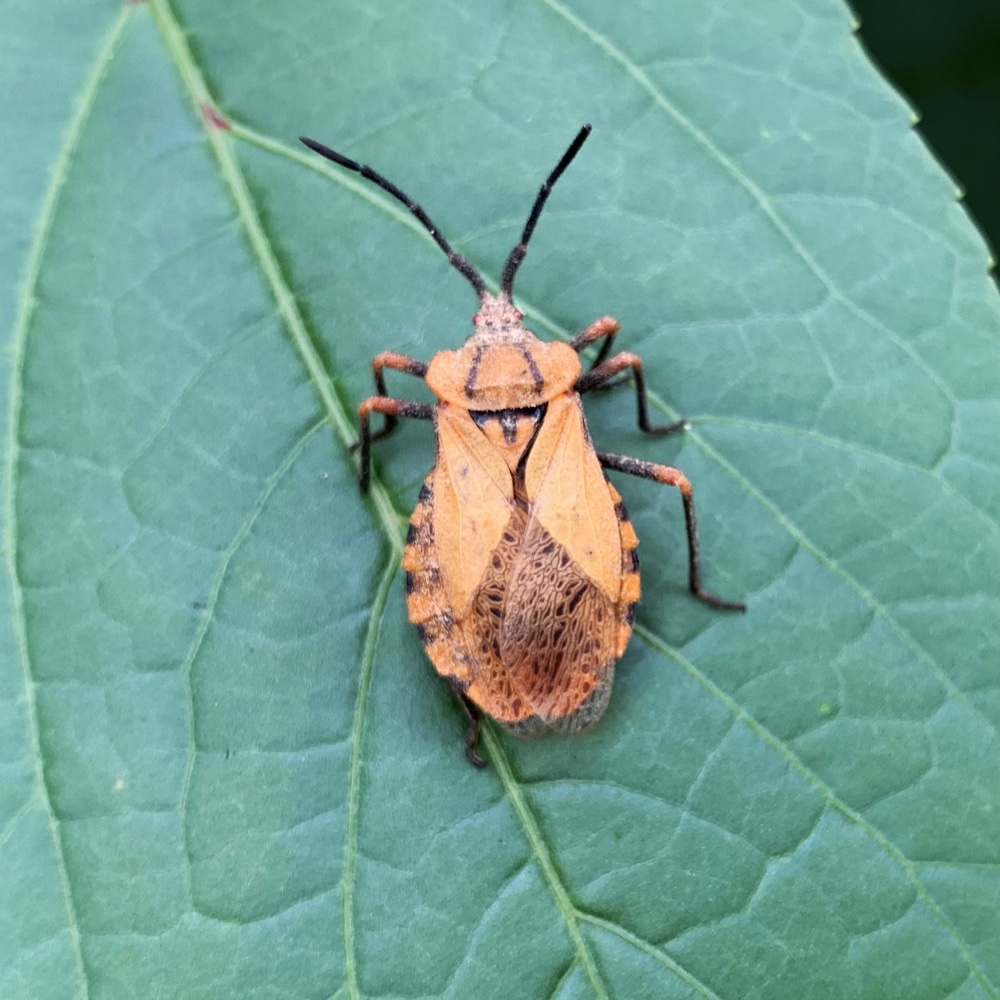
After beginning this post, I realized I was wrong about being able to identify this bug. It is not the leaf-footed bug, but I’m not sure what it is. The nymphs are bright orange and my best guess it is some type of stink bug.

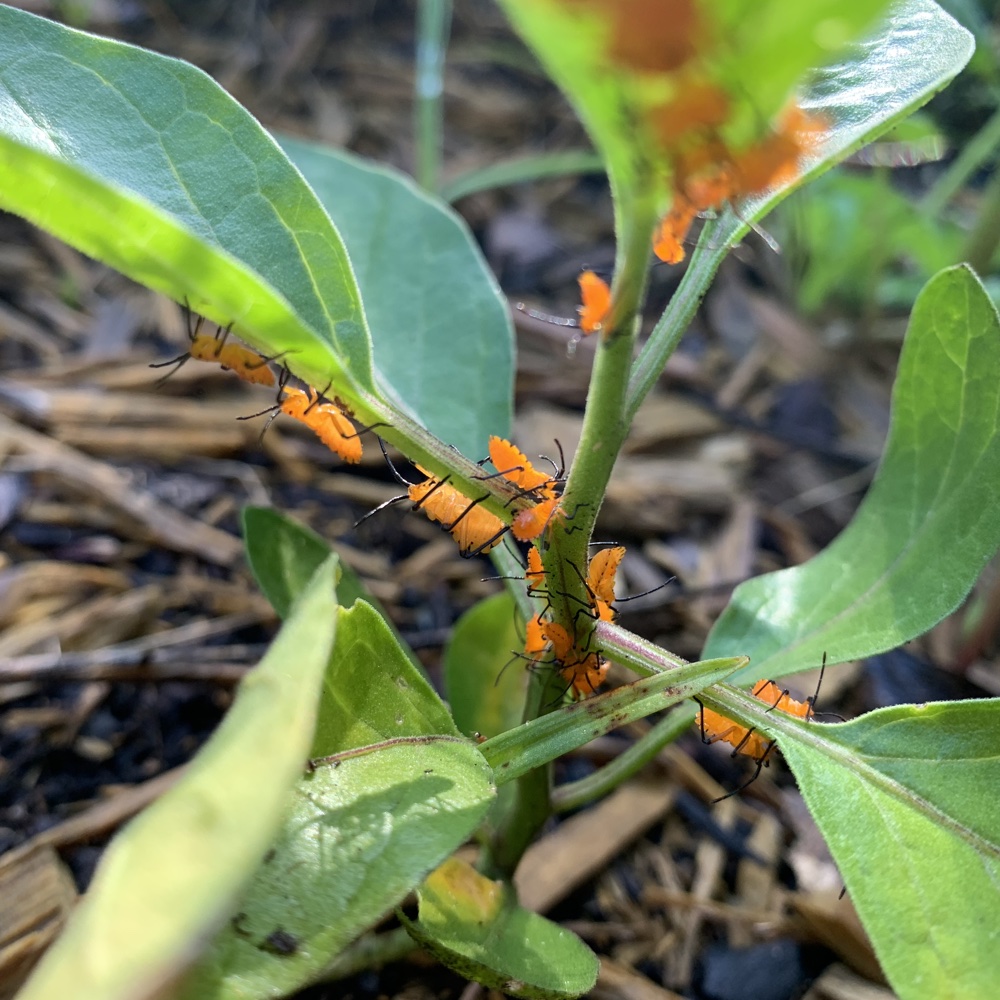
Well, I thought I had identified this bug at last. Now, I don’t think so. I’ve found them occasionally on the ground near Walter’s ground cherry plants. At the time, the ground cherry was covered in tiny, bright orange nymphs.

The nymphs don’t seem to eat the ground cherry, but just gather all over it.

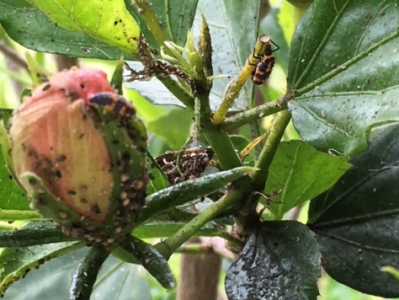
Here is an image of the Leaf-footed bug, which I thought it was at first. But the leaf-footed bug has wide “leaves” on its hind legs. The bug in my photos does not.

Is it some kind of stink bug? I’m still baffled. Other than seeing all those orange babies, I really never see this type of bug in the garden. The nymphs of the assassin bug are also orange, but have long legs. So, is this another type of assassin bug?

I’m quite sure the above photo is an adult and the bottom (nymphs) is the same bug. As you can see the little ones are very bright orange. The legs are orange at the top, and black the rest of the way. The back end is rounded and has tiny lines around the edge. This matches the lines seen around the body of the adult. It resembles the stink bug.

I’m still unable to find any photos online that look like these orange bugs. I’m tired of looking. Hopefully one of my readers will know and be kind enough to leave a comment. I’d love to know if it is a beneficial.

green divider leaves long

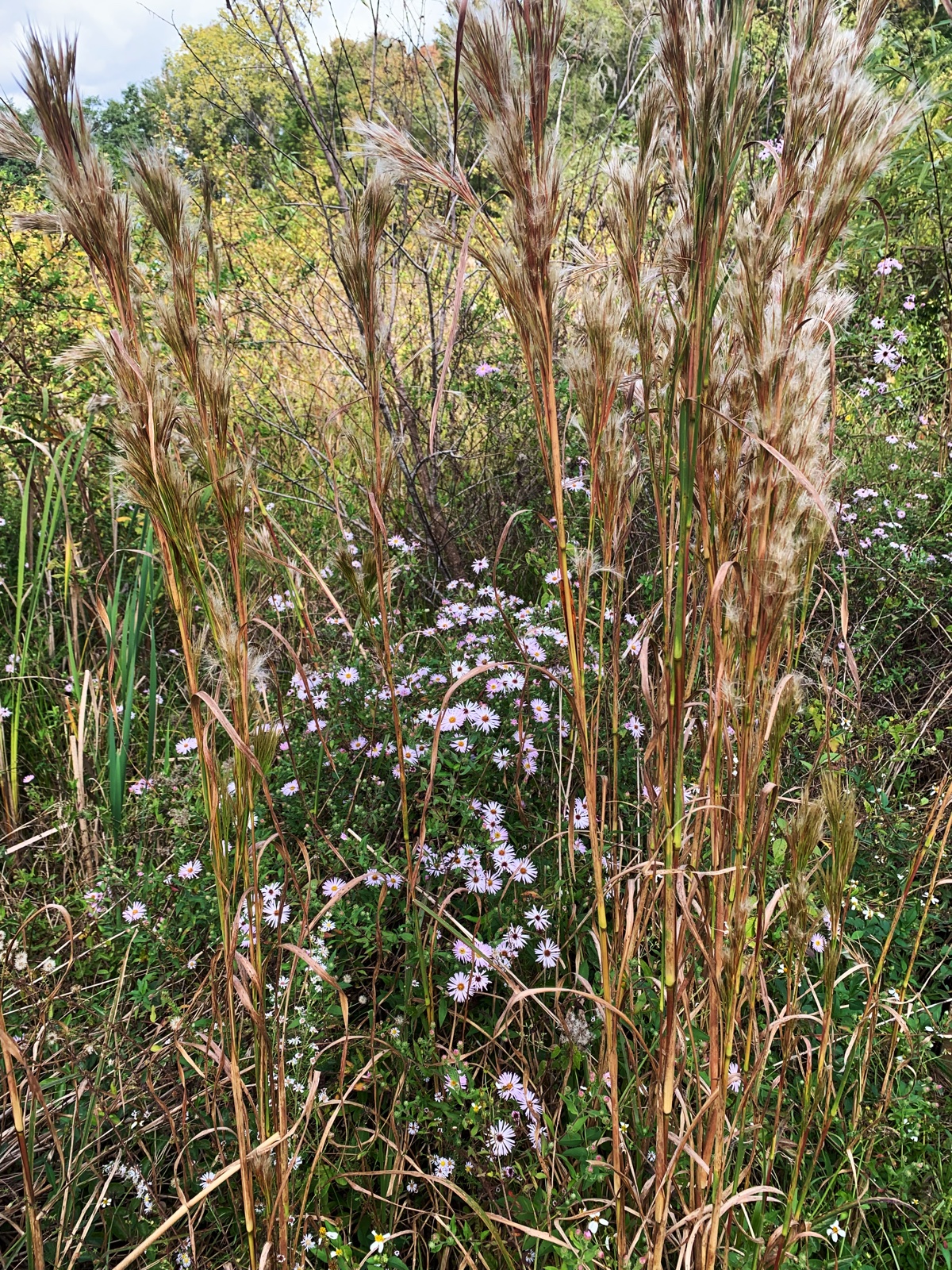
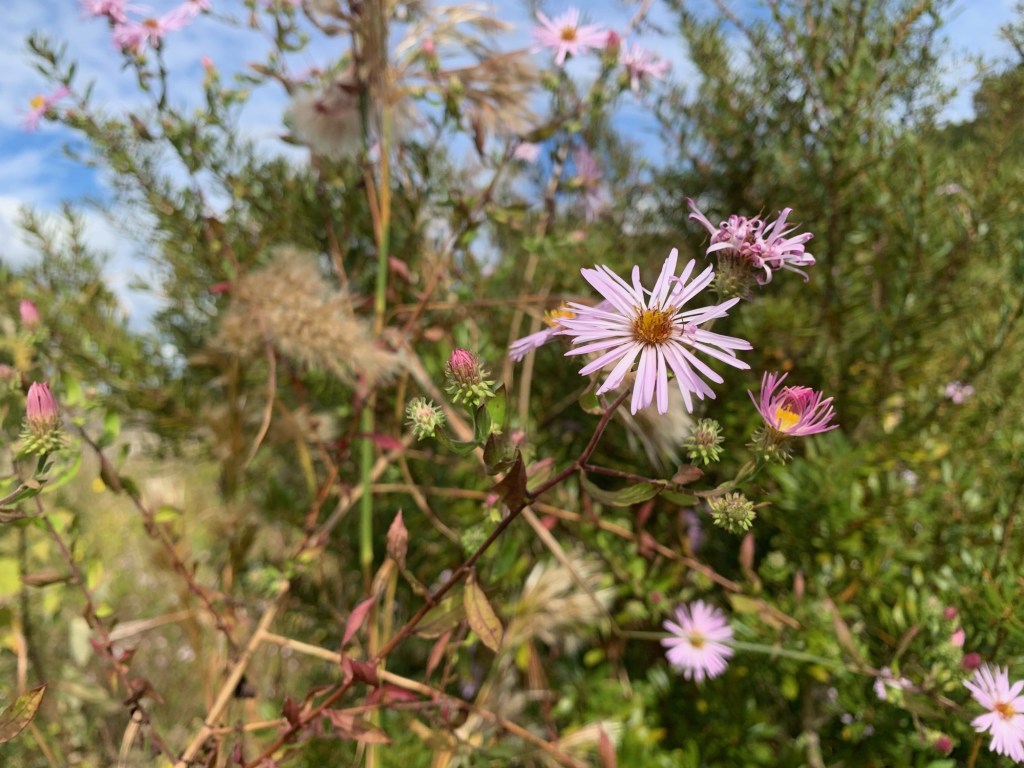
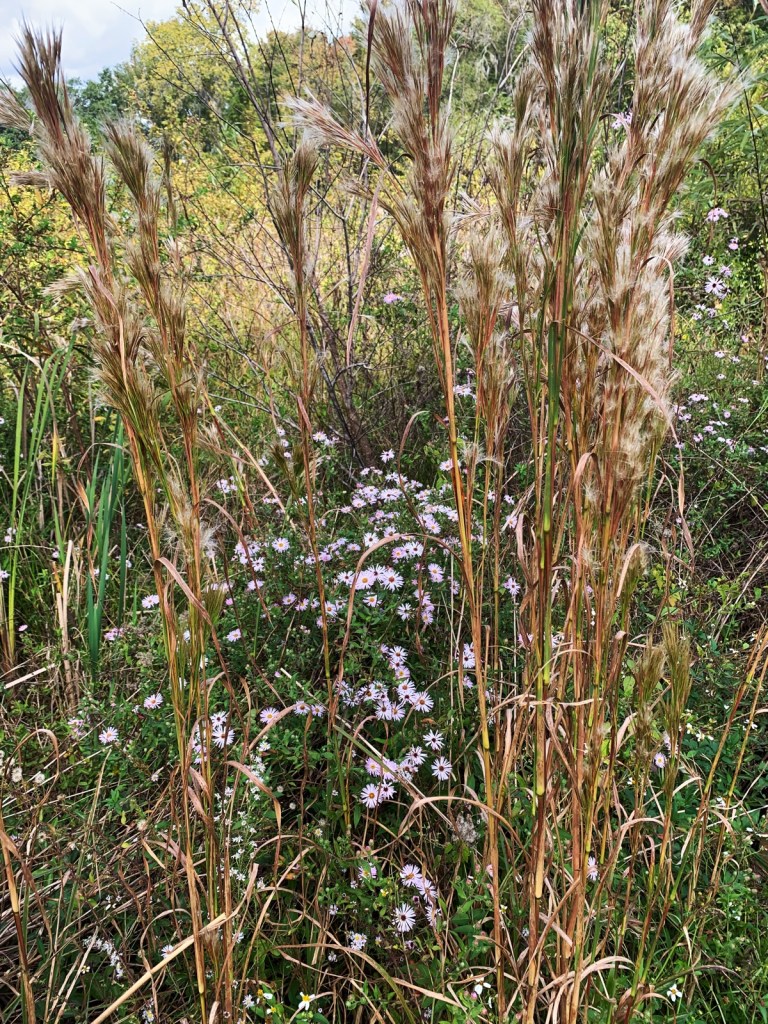
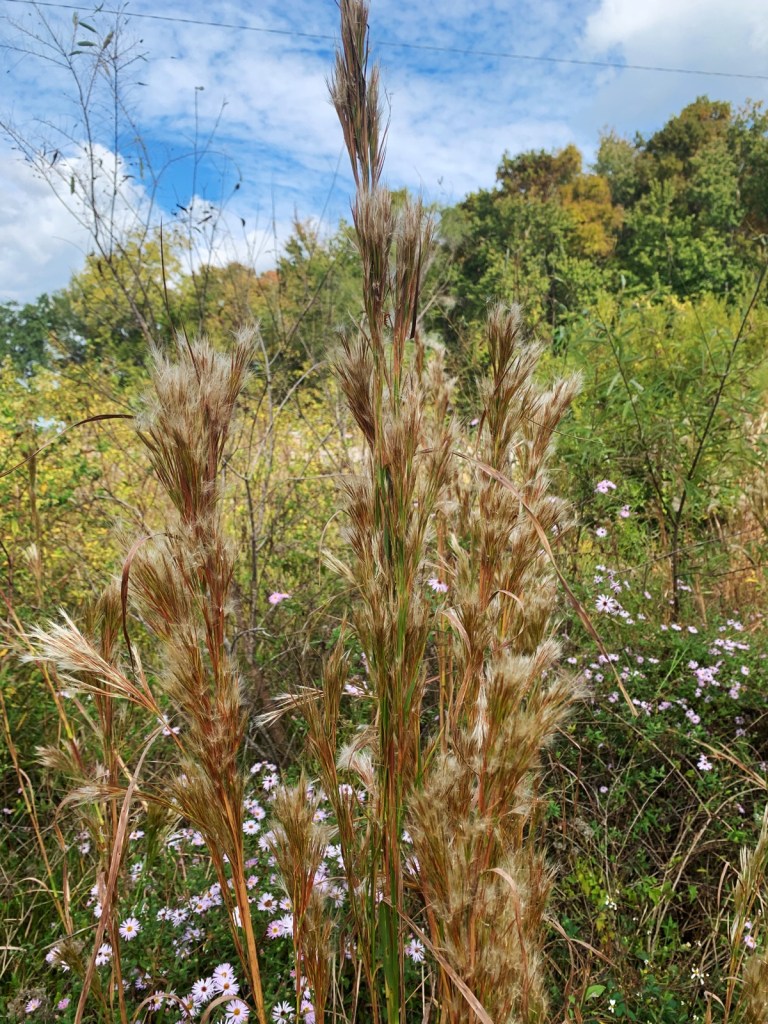
A Patch of Native Florida Wildflowers and Grass

Pictures of native Florida tall grass and flowers.

While camping at Rodman Campground in Palatka, Florida, we drove to the local dam. A central garden, or natural area, by the boat ramp, contained some beautiful native flowers and tall grass.

Loads of bees were all over the flowers. Not sure exactly what the grass is, or an exact name for the flowers, but the area was beautiful.

UF/IFAS Florida’s Astors

More Gardening Stories

Parsley Worm and The Butterfly it Becomes

Screen Shot 2017-04-20 at 1.55.56 PMThis is a story about the parsley worms in my backyard. My garden is small, and a bit unique in that at the present time my vegetables are in pots and fabric bags.  I use fresh parsley often, and I have it growing in two locations.
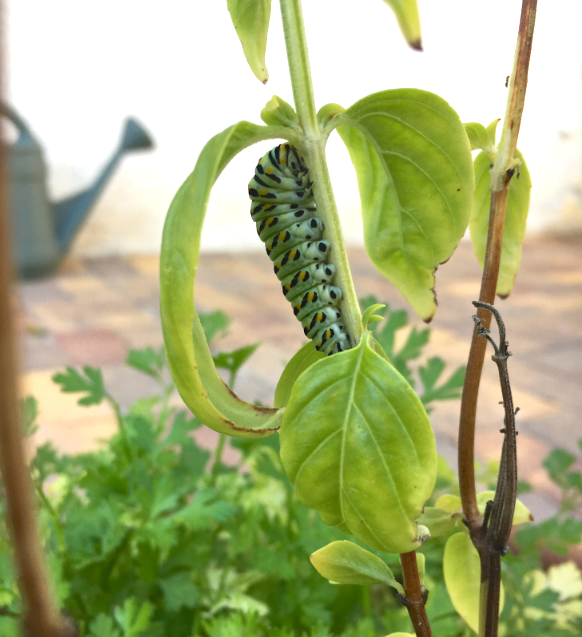
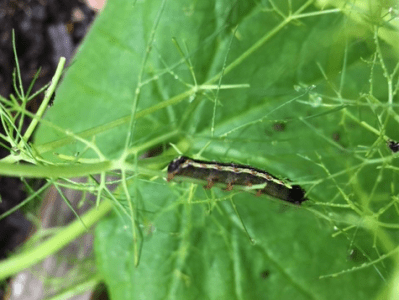
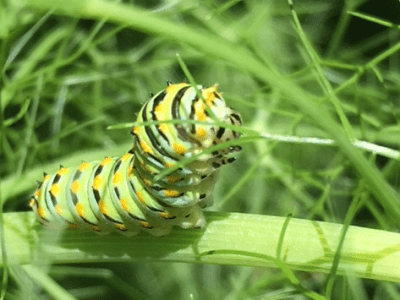
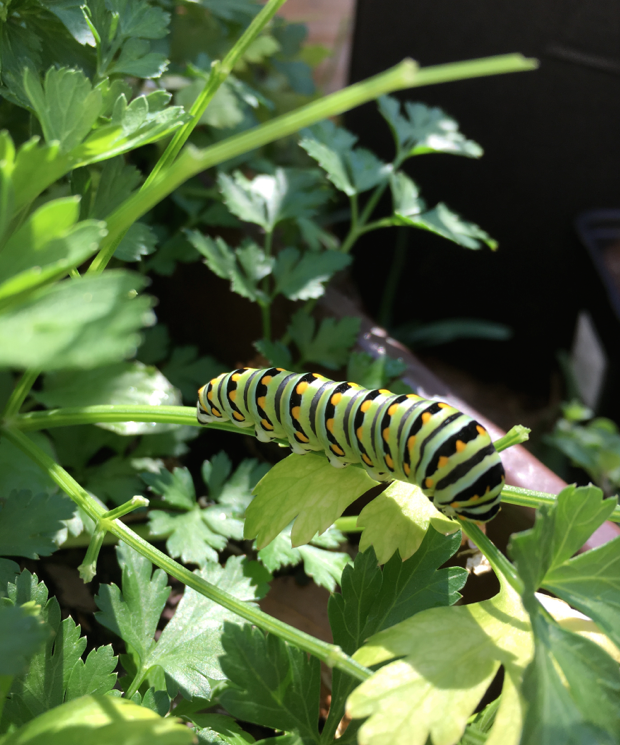
One day I found this colorful worm crawling along a parsley stem and munching away.  I could see that he had chewed off many of the surrounding leaves.  This striped guy is appropriately called a “parsley worm”.

I couldn’t remember what type of butterfly it would become, (had to look that up) but I knew it was getting ready to form a chrysalis.

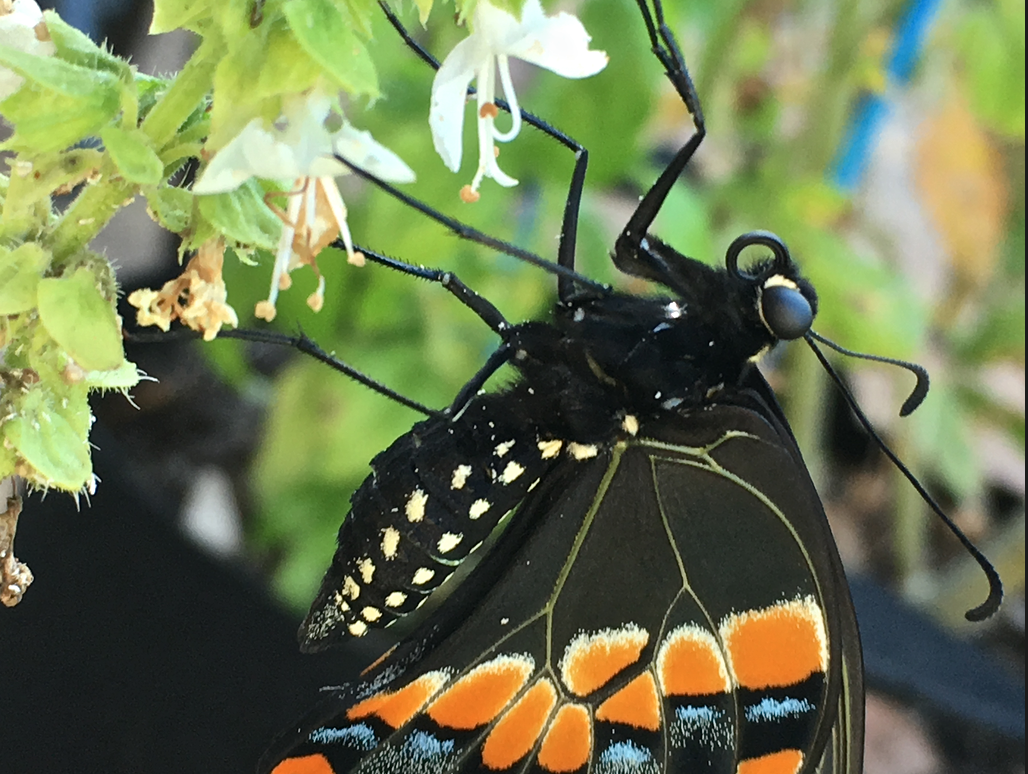
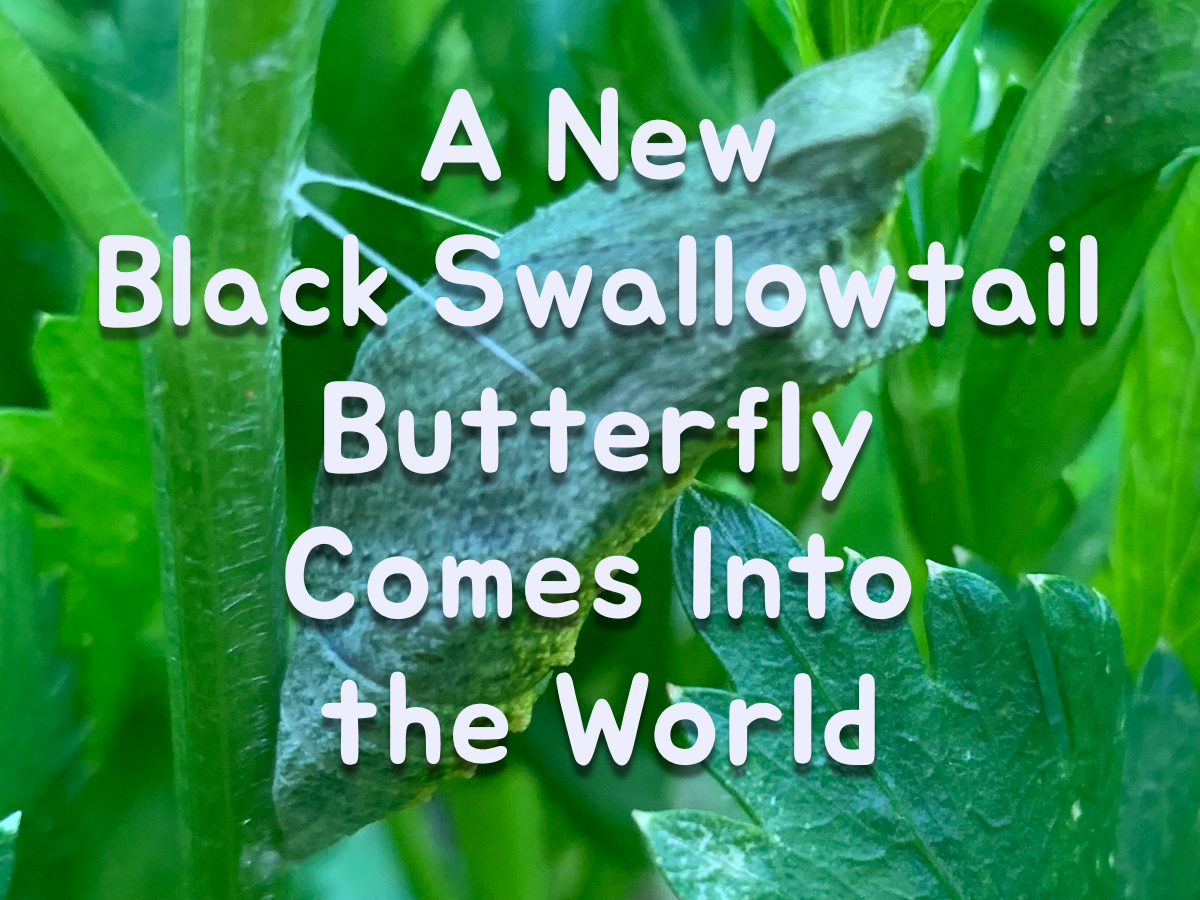
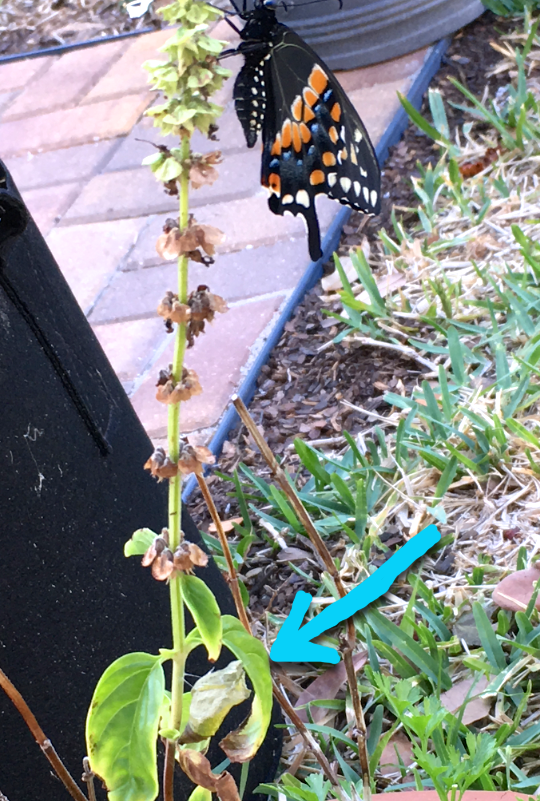
Turns out it’s a Swallowtail butterfly that emerged from the green chrysalis a few weeks later. The wrapped worm was attached to a stem of basil, which had gone to seed, but was in the same pot as the parsley the worm was eating.

But here’s what happened first.  I found the worm sitting in this position (below) and he was no longer eating.  In fact he was on the basil now, and not the parsley.  This is where he formed his chrysalis.  I checked it every day, and after a few weeks, there was something new to see.

Screen Shot 2017-04-20 at 1.58.07 PM
Worm beginning to form a chrysalis

Once the butterfly “hatched” he crawled to the top of the basil stem to try out his new wings.  Maybe this is the perfect set up for encouraging butterfly production.  I hope it happens again.

Screen Shot 2017-04-20 at 2.34.44 PM
Arrow pointing to the empty chrysalis

A few days ago I happened to go outside and saw this beautiful black butterfly at the top of the basil stem, and I knew… the baby was born!  The wind was blowing, but he held on for hours.  I kept checking on it, and then suddenly he was no longer there.

I felt like a proud parent.  I had helped a new baby butterfly enter the world. Course, I had done nothing but plant the parsley… haha!!!  But I felt good. And I’m glad I was able to see the beautiful butterfly before it flew away.  I took lots of photos, like a proud parent does, and one video.


It turns out that there are many types of Swallowtail butterflies, and the worms can be different colors too.  I honestly don’t know much about all of this, but I love it!  Imagine going from being earth bound and crawling among bunches of green parsley, to having big beautiful wings that take you up into the sky!  I will keep an eye out for eggs on the parsley leaves, and bright green worms among the branches.