Digging, Planning and Planting a Backyard Food Garden in Florida

Digging and planting a backyard garden takes muscle and planning, but is worth it to pick homegrown food. Here is my small beginner garden in my little Florida backyard.

I live on the central east coast of Florida. As a gardener, who knows quite a bit about gardening – in New England – this area has been a challenge. In fact, I have given up trying to grow my old favorites. Squash and zucchini turns moldy right away and even tomatoes seem to struggle in the heat. All I have had luck with are peppers and eggplant.

Time to change my outlook and ways, and adhere to a new way of growing things in this subtropical climate.

Over the past couple of years I have invested in a few grow boxes. My son made a few raised beds last year. We’ve been growing (or trying to) in these beds somewhat successfully.

This Spring I purchased a Tiller. It was not cheap but it did the work of creating a fairly small garden out back.
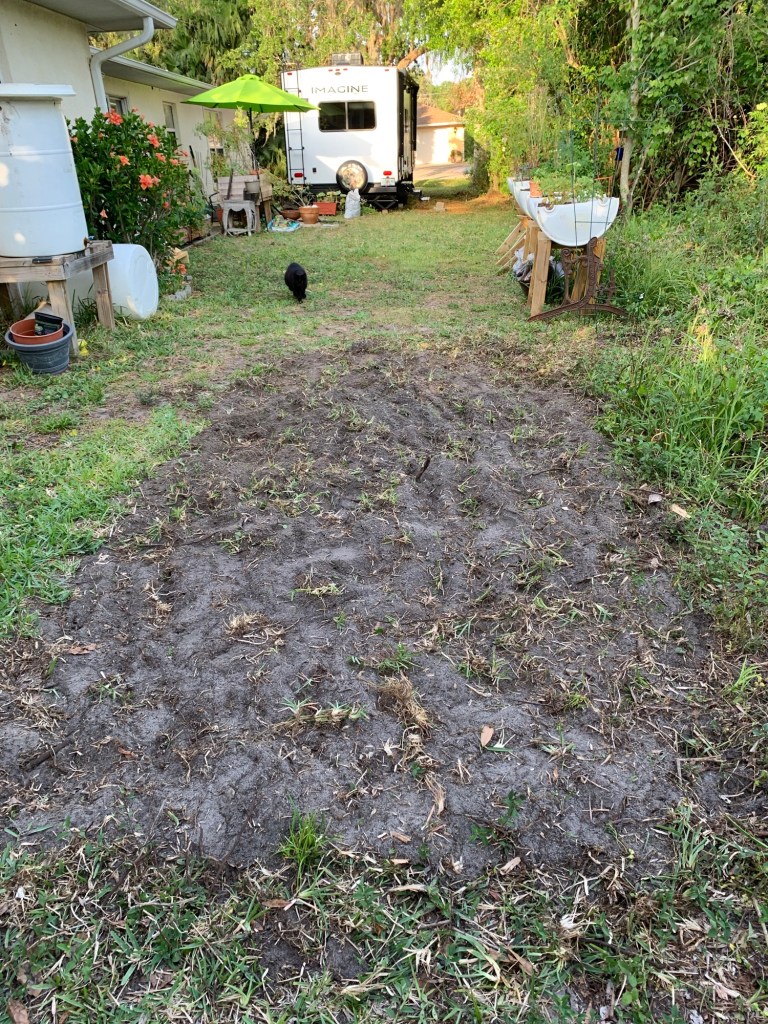
garden area tilled earth

I have removed a lot of the roots, vines and horrible grass that grows in tendrils. Next I mixed in three bags of compost.

The “dirt” in the ground here is sand. I never saw a single worm, which is typical. I think it will take a lot more compost over the months to create a decent place to grow things. For now, this will have to do. I can amend later with compost from the Hot Frog.

Spreading bags of compost into a freshly dug garden

First I found some boards to set down the center. I remember from my northern gardening that mashing down the earth is not a good thing. If I can remember to stay on the boards, the remainder of the dirt should stay loose for growing.

Next it was time to plan the layout for planting. I had to think about which things would be long vines (watermelon and sweet potato) and those would be in a place where the vines could go out into the grass.

Okra gets tall, I guess… have never eaten it or grown it … so I planted those seeds along the edge. I only planted it because it’s a southern thing and should grow well.

I saved a spot for the sweet potatoes yet to come, and will fill in the rest with some pepper plants and more eggplant.

My basic sketch for planting is subject to change.
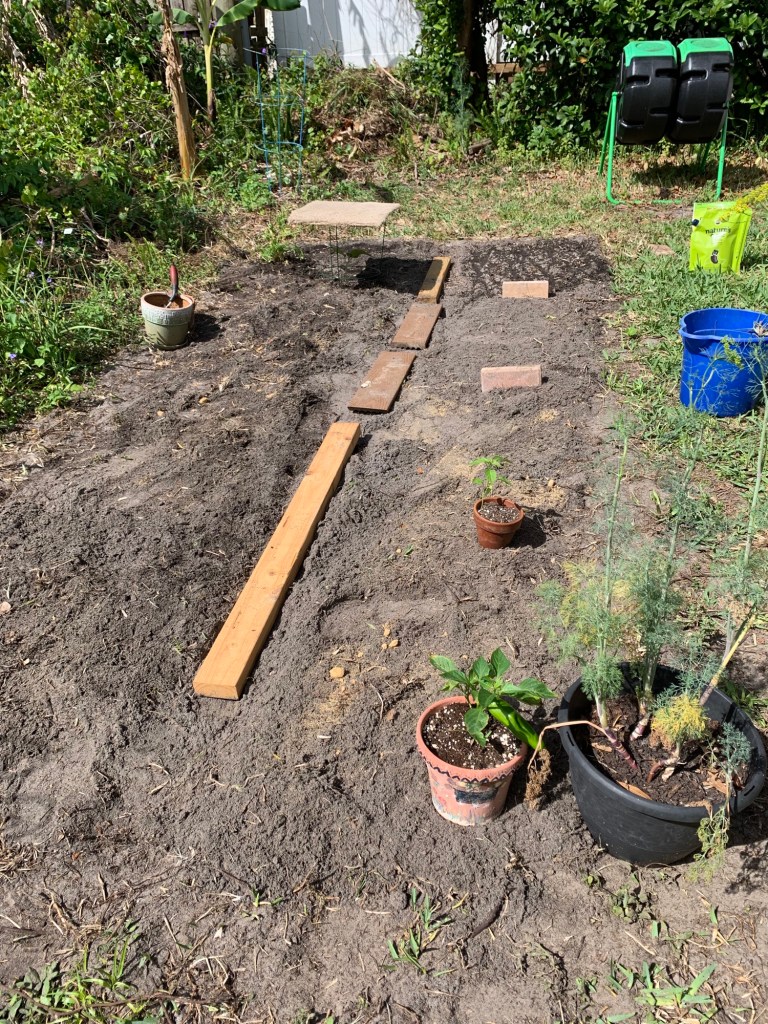
backyard garden planting

I managed to get some watermelon seeds and okra seeds planted. Then an eggplant, which I covered with a piece of rug to give it shade.

It was so hot by then, that I took a break inside and waited for the clouds. The forecast called for rain later, but all I got was tons of hot sun!

Some dill plants went in the corners, along with a parsley plant. Last of all, I threw in some saved Marigold seeds.
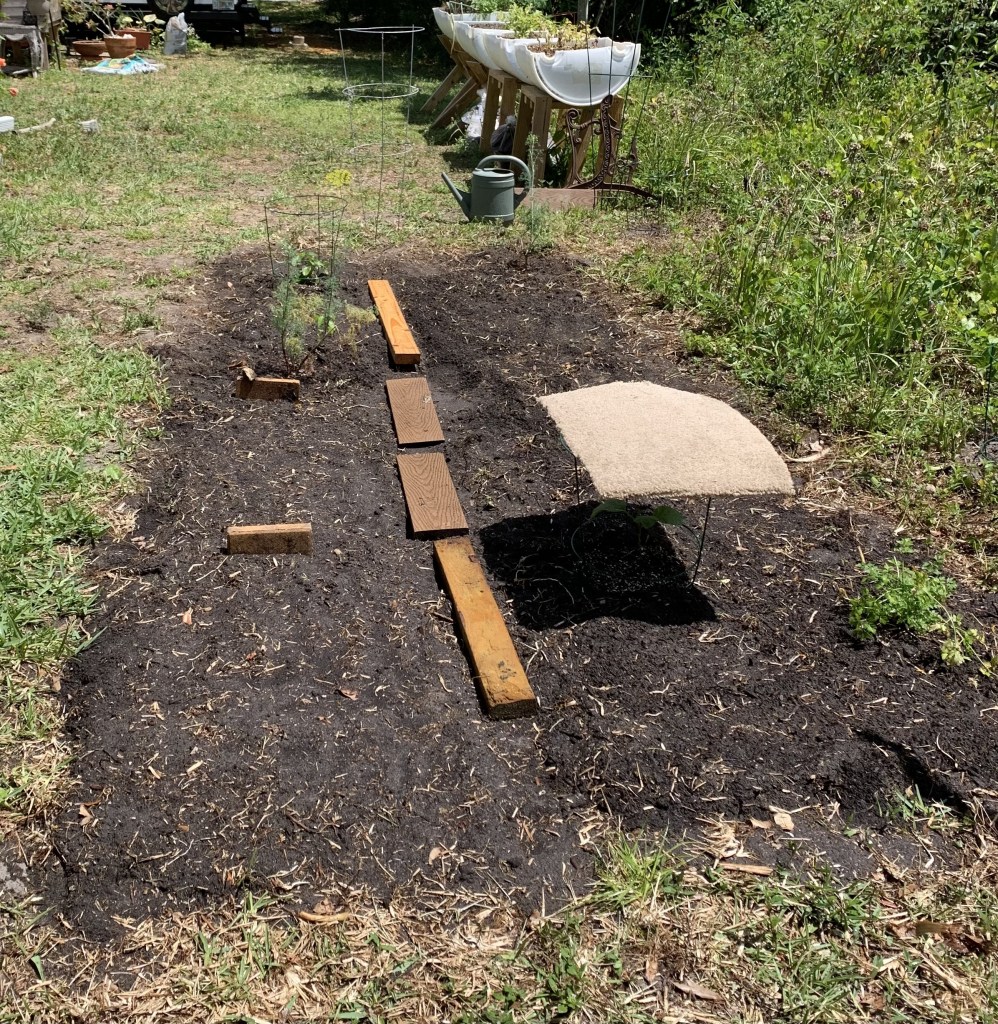
Backyard garden planted with seeds, dill, parsley, peppers and eggplant

As soon as I took the rug covering off the eggplant, it began to wilt. They really cannot take the midday sun. I quickly watered the whole garden (each plant got it’s own soaking as I planted it) and put the rug back.

Already I am thinking of moving the okra to in front of the eggplant to give it some shade. I can’t run outside every day to cover it because of the sun. (Side note here – the okra was popping up out of the dirt on day 4!). The seed packet says this okra will be 4 -5 feet tall!

okra seeds sprouting
Okra – tomato cage animal deterrent

Although my summer garden may not do well due to the heat, this section of yard will remain a garden bed. When winter comes I can plant lettuce and kale. Also, I will continue to look for hardy, Florida crops to plant.

Bought My Seeds From Urban Harvest

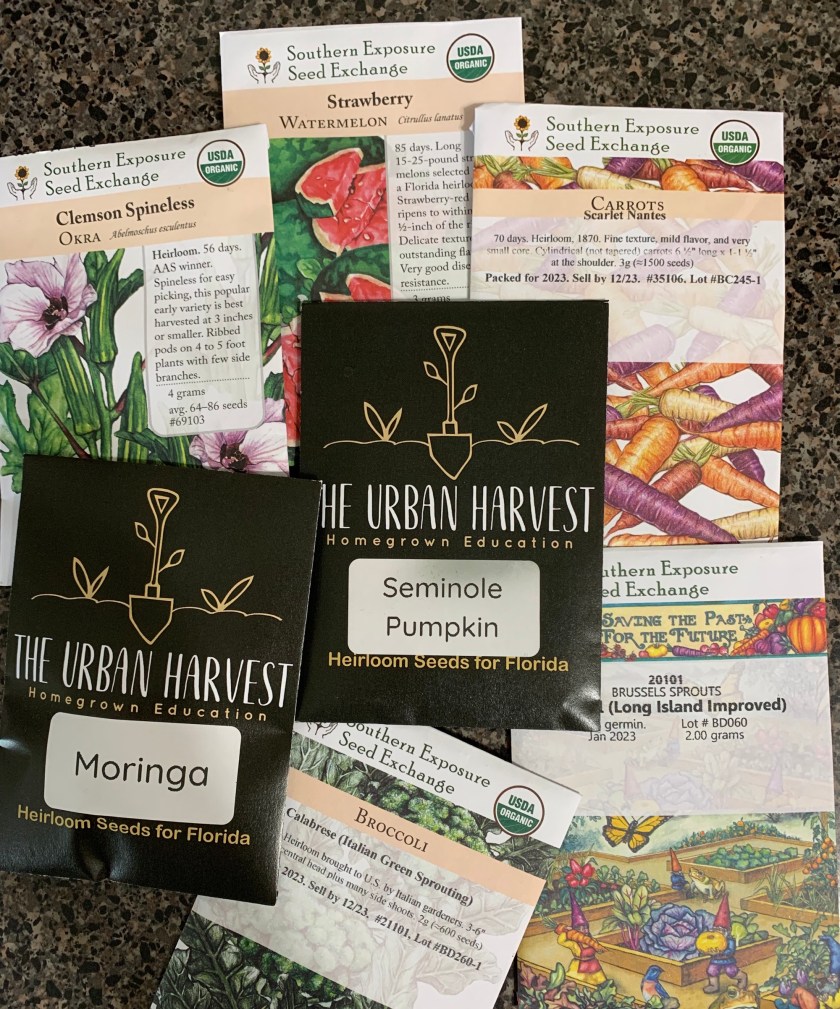
I found this wonderful gardener online who has a YouTube channel called: The Urban Harvest – Homegrown Education. She lives on the west coast of central Florida and has lots of videos about growing things that actually will grow here in Florida! Immediately, I bought some of her seed packets.
The Urban Harvest website

seed packets from Urban Harvest
Seeds from Urban Harvest

I bought some organic Coconut Coir blocks and have added seeds and other things to the pots. I’ve never used the stuff before and I will compare to planting in dirt.

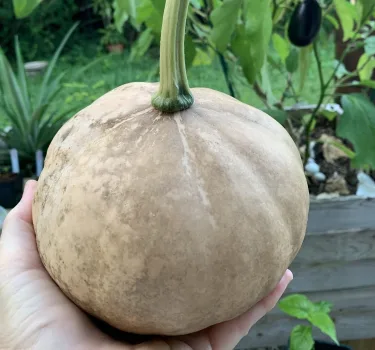
I’m getting ready to post this on April 15th and noticed this AM that one of my pumpkin seeds has sprouted! More about this unusual, southern Seminole pumpkin to come.

More Gardening Stories on the Blog

Pictures of My Small Backyard Garden

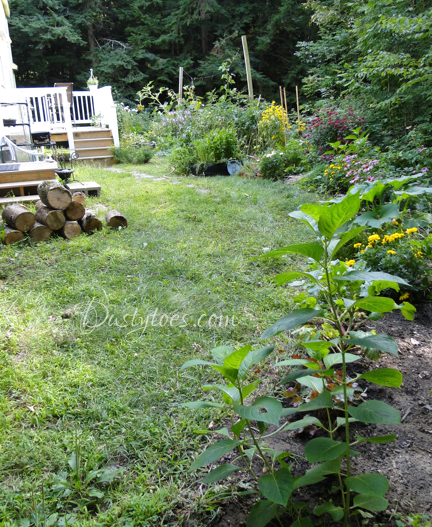
Pictures of my small, backyard garden space.

Although I have almost an acre of land, most of it is low-lying forest and wetlands.   My backyard is a narrow strip, with the sun hitting part of it only 6-7 hours a day.  I do my best, trying to plant crops in the space that gets the most sun.  It’s a challenge when I have to rotate plantings each year.  The photo below was taken last summer (2014).  That is pretty much my entire backyard. I plant flowers and vegetables along the edge of a slope, which drops off to woods beyond.  Only the part near my deck gets enough sun for good vegetable growth.  I concentrate my plantings there.

backyard garden
My Narrow Backyard

Photo Above: See my new propagated hydrangea there in the front?
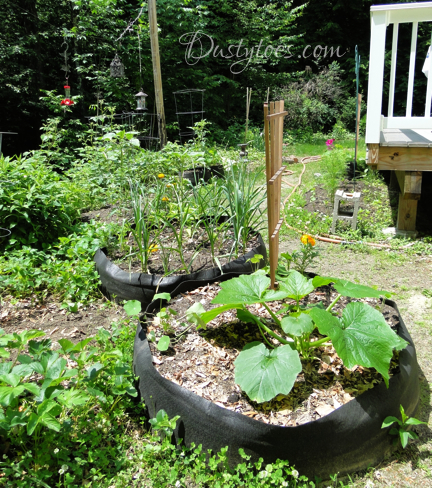
I’ve added raised fabric beds to the area, which has been a great help.  Last fall I planted my garlic bulbs, and they are doing very well – better than any garlic I’ve ever attempted to grow.  I hope the bulbs will end up being nice and big.

summer garden zucchini
Zucchini and Garlic Growing in Fabric Pots

What begins as lots of space, quickly fills in when the plants grow and expand. The tomatoes grew great last year (picture below) right up until they all died of late blight! It was depressing.

tomato bushes
Full Tomato Bushes

blackberries
Blackberry ? or Black Raspberry Bushes

It’s a constant battle with the black raspberry plants (or are they blackberries?) that threaten to overrun the yard. They grow upwards from the slope, where I think they were purposely planted to hold the earth in place.  It’s one of the few berries I dislike.  It figures that I have tons of them!  They are eaten by the chipmunks and birds, when my cats are not around.

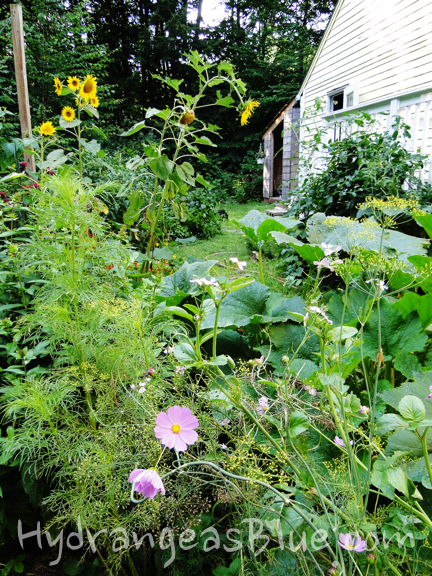
Raspberries grow at the side on my house, and I can find many wild strawberries in the yard.  The strawberries I planted have become overrun by weeds, and I didn’t have enough space for a proper strawberry field.  Occasionally I find a few nice ripe berries to munch while I survey my garden.  The sunflowers are volunteers that sprout wherever they choose.  The seeds self-plant from when I feed the birds in winter.

I sometimes wish I had acres of land to roam and plant, but I’m content with what I have. It takes a lot of time to garden, and especially when you do it all alone.

Lush Garden Foliage
Lush Garden Foliage

Fabric Bag Gardening in a Small Backyard

small backyard
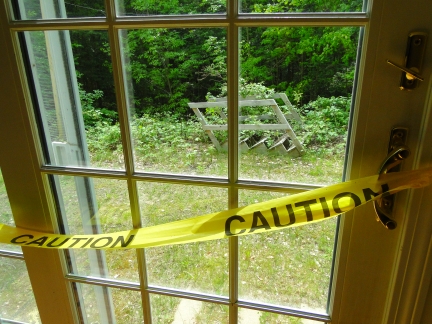
Small backyard space

Having a small backyard means facing some challenges when planning a garden. Throw in tall trees bordering the property taking away sunny patches, and it adds to headache. That is why I tried my hand at fabric bag / pot gardening.
My backyard is small and narrow. The picture I’ve added is one I took before I closed on my house. The slider was taped off so one would try to go out where there were no steps. Who would? Anyway… those are the old, wooden steps sitting out back at the edge of my small backyard. Although I have an acre of land, the usable part of my backyard stops right there. So the space I can use now (with a small deck that I added) is long and narrow with spotty areas of good sun.
Last summer I had planned to dig up a couple of new areas back there that tend to get pretty good sunshine, but that is so much work. I really didn’t want to have to dig and then add amendments and all that. Plus I didn’t have the time. I needed an alternative to the traditional way of gardening. So I decided to try container gardening.  But instead of regular pots I used fabric bags, in various sizes, filled with good dirt.
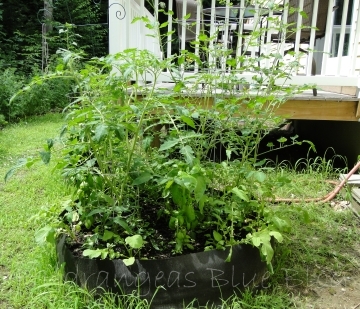
black fabric raised bed large bag
This large fabric bag held tomatoes, basil, radishes and some herbs. There was no digging involved, but I did buy a truckload of good loam and had to wheelbarrow it over to fill the bag. I planted my small seedlings and they took off.
I also used smaller fabric bags to plant potatoes, green beans, and carrots. I learned a few things from using these bags, and some things I will do differently this season, but all in all I was happy with them.
I wondered if I could save the bags and re-use them, so we’ll see how well they hold up when I try that this spring.