Ways to Use That Overload of Cucumbers From the Garden

It is mid-June as I write this and I am beginning to get an overload of cucumbers from the garden. I am the only one in the household who eats them. Since I hate to be wasteful, I’ve begun using my cucumbers in places other than salads.

Please note: Not all food here is Keto friendly.  I wrote this page before I changed my diet.

Cucumbers in Smoothies

A few years back I bought an Oster personal blender. Because of my diagnosis of poly-cystic kidney disease, I began to create healthy smoothies full of fruit and vegetables.

This morning I picked 2 more cucumbers from the garden to add to the collection of 5 I had already sitting on my kitchen counter. Cucumbers can be very good for for patients with CKD (chronic kidney disease) and of course, for everyone else as well.

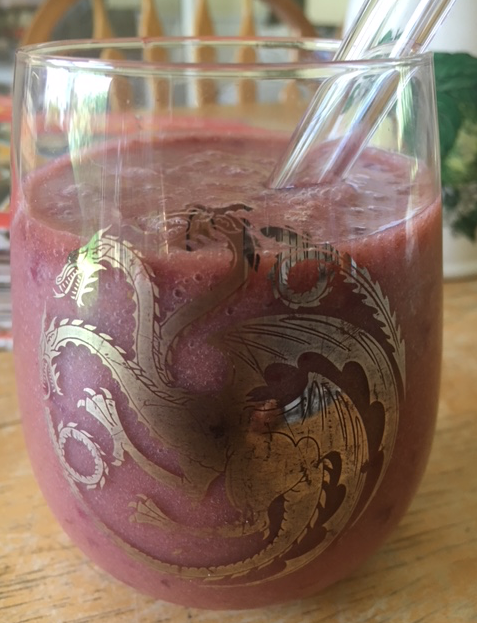
I chopped one whole cucumber for my smoothie. To that I added five frozen, organic strawberries, organic red grapes, and some unsweetened cranberry juice. Once I remembered that I had bananas to use, I added a small banana too.

Cucumber smoothie
Cucumber smoothie with fruit

For those with any type of kidney problem who have to watch their potassium levels, don’t add the banana.

Of course this is my made-up-on-the-spur-of-the-moment recipe, so change it up. Adding other greens along with the cuke would also work. Throw in some kale or spinach. That goes well with strawberries. Use orange juice or iced tea for the liquid. There are many options when it comes to creating a healthy smoothie.
Screen Shot 2018-06-23 at 11.04.34 AM
Ready to drink from my House Targaryen GOT glass

Easier still, add sliced cucumber to a glass of water. Throw in sliced apple, orange, lemon or lime if you have it. Most people should drink a lot of water every day and this may help you do so.

Cucumber Sandwiches

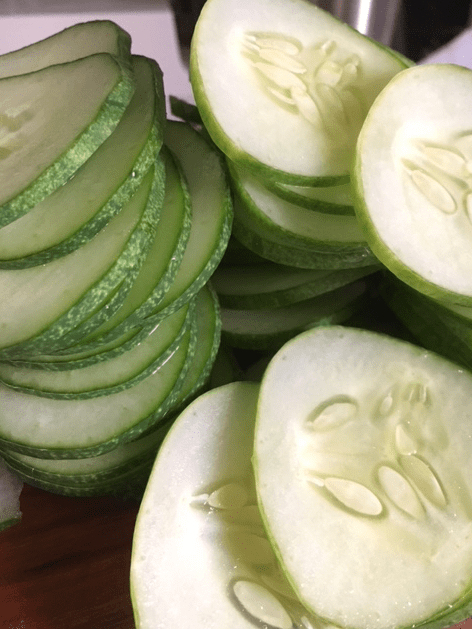
Although I try hard not to eat much bread, I love a cucumber sandwich. When slicing the cukes for a sandwich I leave the skin on. I only remove skin from store-bought cukes.

Add mayonnaise and a little pepper and yum… the perfect summer sandwich.

cucumber sandwiches
Crustless white bread cucumber sandwiches (photo: Pixabay)

Or choose a more healthy type “bread” by spreading hummus on a (gluten free, low sodium) tortilla and fill with chopped cucumber and other veggies. Roll it up and you have a tasty meal without the bread.

Cucumbers and Hummus Dip

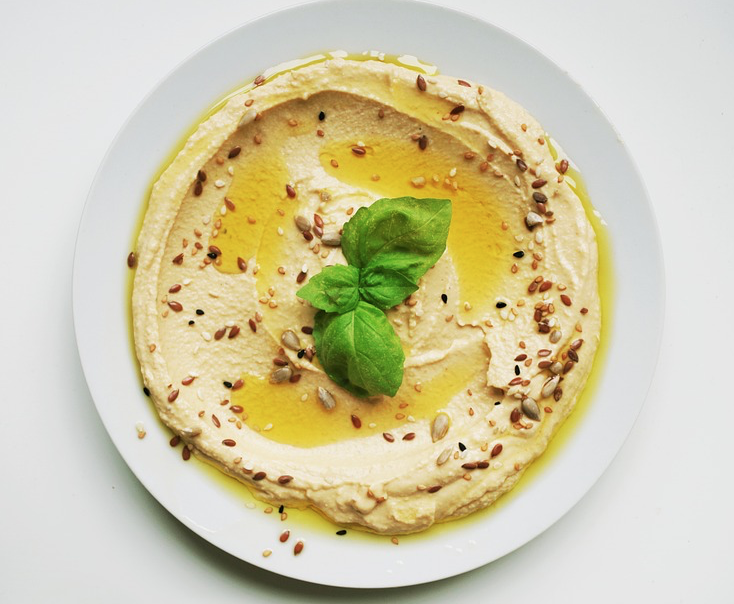
Cucumbers are quite delicious all by themselves, but it’s more fun to dip them into a healthy dip. I love cukes and hummus. Again, if you have no health issues, eat what sounds good. Chic peas are the main ingredient in hummus and most brands offer additional varieties along with plain old hummus.

Hummus is a wonderful and healthy dip that goes with any vegetable. It provides fiber and protein and other nutrients.
bowl of hummus
Hummus

More Ideas For Using Fresh Garden Cucumbers

I can get tired of eating salad pretty quickly, but the trick is to change it up. Use a small amount of greens and add lots of cucumber, tomato, sliced onion and green pepper. I like to add walnuts and fruit to my salads too.

For a simple cucumber only salad, check out this recipe at Taste of Home.

I have a no-cook recipe link for making sweet bread and butter pickles.  Be aware that these pickles last only a couple of weeks before the slices get soggy.  Eat them quickly or they will have to be thrown away.  Still, it’s a good and easy recipe for an abundance of cukes.  Maybe give some away?

Also, cucumber slices can be used to play checkers. (Smile)

Simple Bread and Butter Pickles Made From Garden Cucumbers

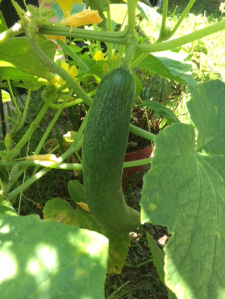
Cucumber on the vine

Now that the cucumbers are growing in my Florida garden, I was reminded of a simple bread and butter pickles recipe I found a few years ago. No canning was involved. Fortunately I was able to find my printed copy.  (Recipe Link Below)

I don’t do canning, but I love bread and butter pickles made with fresh from the garden cucumbers. These pickles are stored in mason jars (or any jar) but there is no boiling required. Slice and mix the six ingredients (and add some of your own) and store in the fridge.

Include sliced onion and green pepper for flavor. Garlic cloves and hot pepper slices may work as well. Other herbs could be added to change the flavor, like fennel and dill.

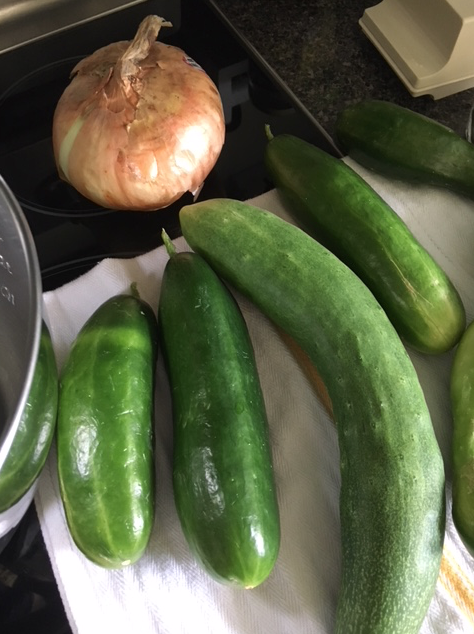
And by the way, you don’t need to use a specific type of cucumber.  I am growing two types, and I can’t remember what they are, but as you can see in my photo below, one type is very long!

The shorter, regular looking cukes taste better, but when making pickles it doesn’t matter.  There are many other ways to use fresh cucumbers from the garden.

Cucumbers and onion

The recipe calls for 7 cups of sliced cucumbers, so wait until you have a bunch to use up. Cukes don’t last long once they are picked, so plan to make pickles the day you pick the cucumbers.
A mandolin slicer makes all that slicing go fast.

Note:  One thing I changed in the recipe was the amount of sugar. The recipe calls for 2 cups, and I reduced that amount to 1 cup.  I also added a few slices of hot red pepper and fennel sprigs.

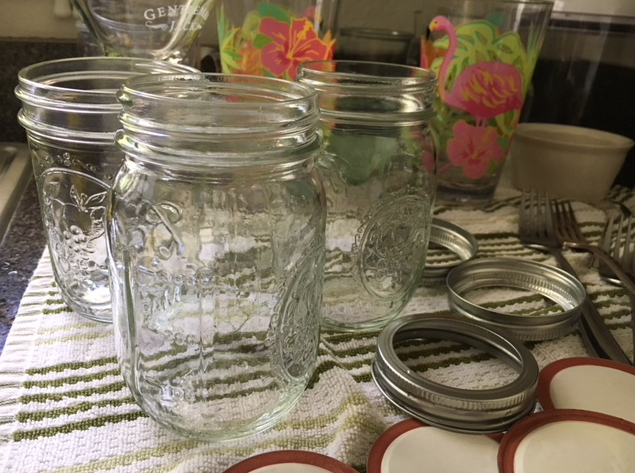
Spoon the mix into clean mason jars. Divide up the remaining liquid into the jars, cover and put in fridge for 5 days. Then begin eating!  They will be good for months.

mason jars
Clean mason jars

The full recipe can be found here: Mamaw’s Refrigerator Bread and Butter Pickles.

Black Swallowtail Butterfly Eggs, Larvae and Worms

Finding the Swallowtail butterfly in it’s life stages in my garden

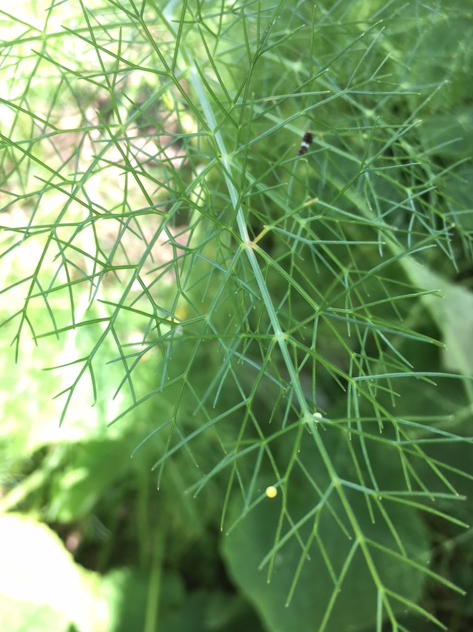
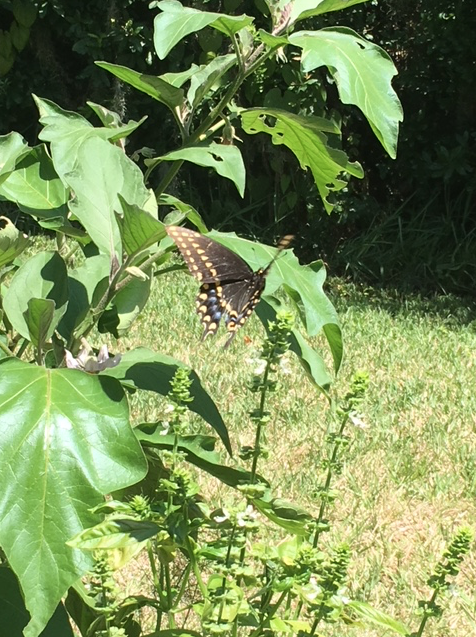
I’ve been watching as the Black Swallowtail butterfly flits around my vegetable garden laying eggs on the parsley and fennel. I took the camera out and got these photos. Everything looked good until the bees showed up!

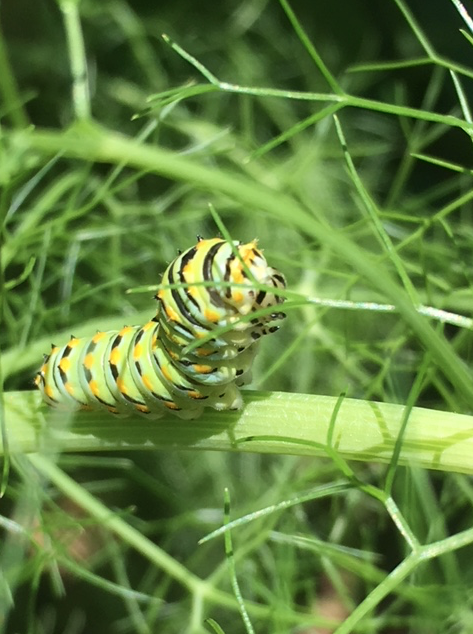
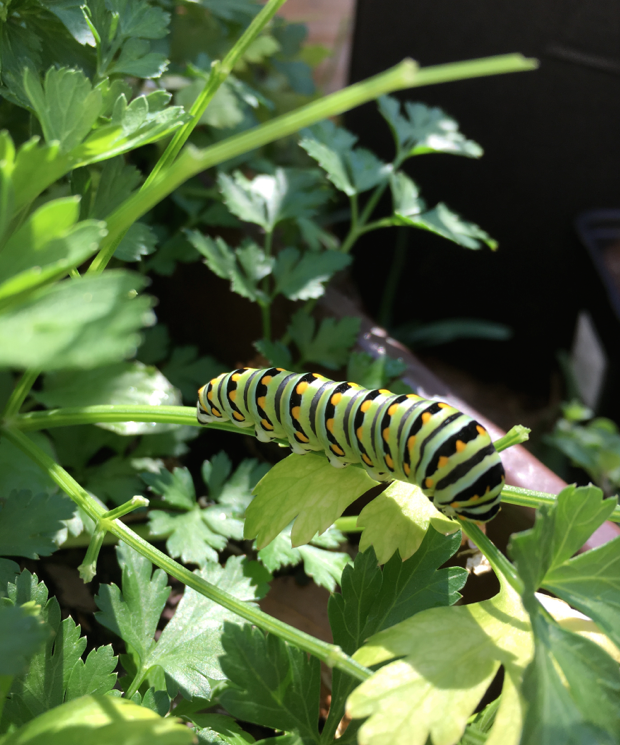
In the first photo here you can see two eggs and one tiny black caterpillar.  In the second photo see a more mature caterpillar.  All these are currently found in my garden – all the stages.  Right now I don’t think there is a pupa or chrysalis. Earlier this year a green one formed on the lower stalk of the fennel. They seem to prefer fennel over the parsley, although they are also known as parsley worms.

swallowtail butterfly eggs and larvae
Swallowtail butterfly eggs and larvae in fennel leaf

Grow some fennel if you want to encourage the Swallowtail to visit your garden.  The worms will eat down the vegetables, so plant extra to allow them to feed.  Check for eggs and worms before picking herbs!


Screen Shot 2018-06-16 at 4.02.39 PM
Worm on the fennel

Screen Shot 2017-04-20 at 1.55.56 PM
Worm on parsley

The “parsley worm” is so pretty, and fun to watch. They will twist and reach for those strands of fennel. In fact I was watching one the other day, and decided to go inside and get my iPhone. By the time I got back out to the fennel, a wasp was eating the caterpillar! I took the video below as one wasp, or hornet or whatever it was, got kicked off the meal and another took over.
I was tempted to pull off my shoe and kill those bees, but it’s nature, so I controlled myself.

Between the hornets and the birds, it is quite amazing that any caterpillars get the chance to turn into a butterfly.

Screen Shot 2017-04-20 at 2.02.19 PM
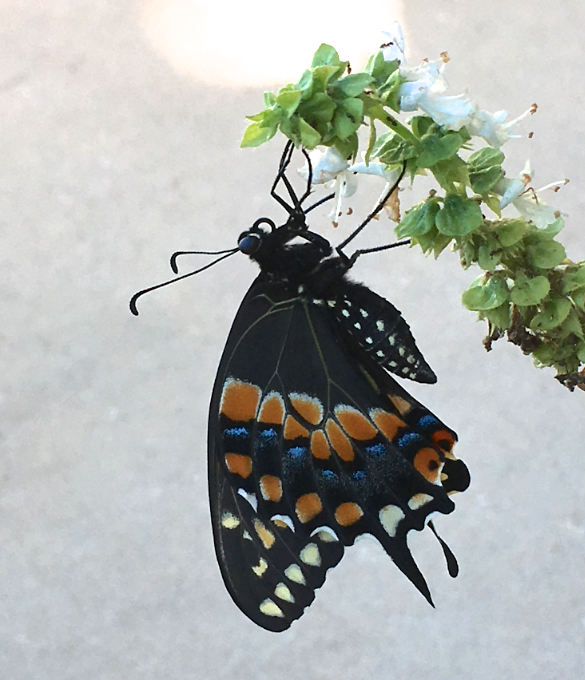
Newly hatched black Swallowtail on basil flowers

Screen Shot 2018-06-16 at 4.03.00 PM
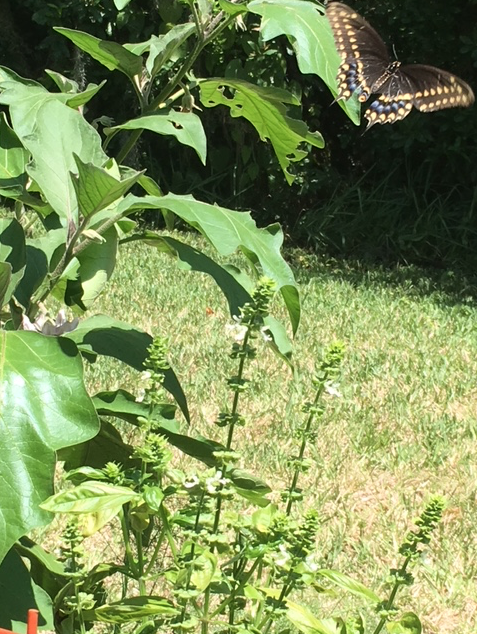
The Swallowtail butterfly hovers over my garden

And here she is, back at the garden laying eggs on the fennel and parsley. There you have it, the full cycle of the life of the Swallowtail, found in my backyard.
Screen Shot 2018-06-16 at 4.02.49 PM

For more great photos with life stages of the Swallowtail check out the post on Our Habitat Garden.

Finally, Growing Tomatoes Advice For the Florida Climate

As I was searching for some other gardening advice altogether, I came across a Florida gardening blogger who seems to have very useful information to share. Unfortunately it looks as if his blogging stopped a few years ago in 2015. Maybe he moved away to a better place.

I found a post with growing tomatoes advice which would explain why I have such a difficult time with tomatoes.

First of all he starts with seeds (Plant Your Tomato Seeds). I’ve been wondering if the fact that I buy seedlings from Home Depot (there is nowhere else I’ve found) is my biggest problem. He says store bought plants “are never very good”. I already suspected this.

Start planting seeds early enough to have seedlings ready for the garden by March first. He says to buy a combination of sizes, but tomatoes won’t grow very large in this climate. I’ve found that to be true as well. I don’t have the space for a lot of plants, but I can use my fabric bags.

Which Tomato Seeds to Buy?

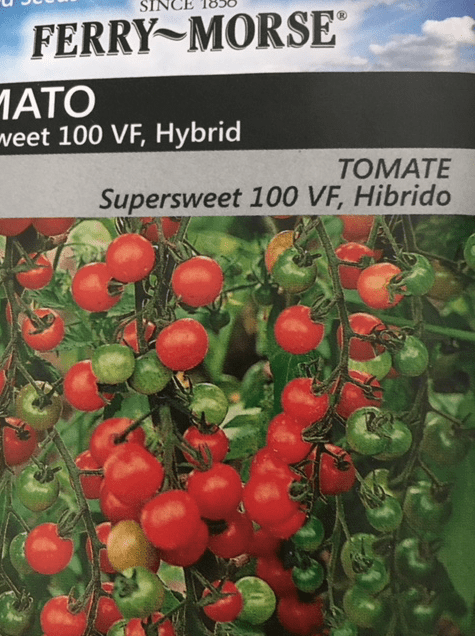
The blogger I am referencing plants Hybrid Tomatoes only.  I am not sure why, except that they are probably tougher than heirlooms.  A hybrid is a cross-pollinated plant.  The characteristics are better yield and disease resistance, among others.

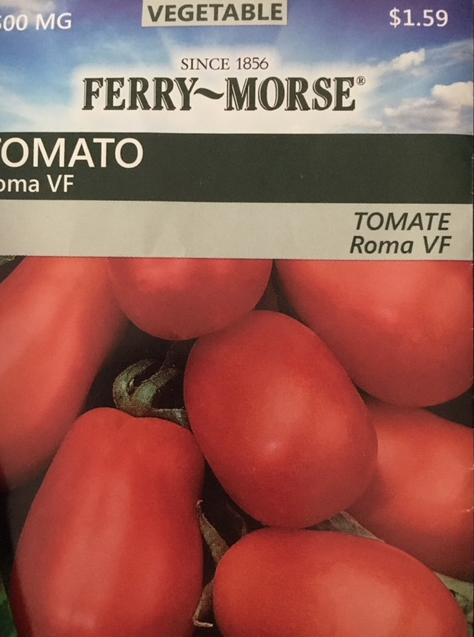
Roma tomato seed packet

In case you are interested in buying tomato seeds online:  Organic Heirloom tomato seeds can be purchased at the Tomato Fest site. These are NOT hybrids. Heirloom tomatoes give the grower the option to save seeds to plant the following year. You can’t do that with hybrids.

Buy the most disease and pest resistant varieties. Look at package labeling for letters that follow the name of the tomato. See the key list of what that lettering means on this page at Gurneys.  My packet above contains the letters VF which protects from wilt disease.

Indeterminates only – this means the tomatoes will continue to grow shooting out stems and growing tall all during the growing season. Indeterminates continue to set fruit while you pick ripe tomatoes. In other words, they just keep growing until something stops them. They need staking, whereas determinate varieties are more compact and can grow in pots.
**Note here: Indeterminates can grow to be 12 feet tall! I will need to re-think my staking. I suspect that in Florida they could easily grow to astounding heights.  I can see the raccoons climbing my stakes and destroying my crops.

Pick Tomatoes Early

Letting tomatoes ripen on the vine is my preference, but the raccoons tend to pick them before I get to.  My reference blogger picks his early and says they taste better when he lets them ripen indoors.  His blog is helpful, but not easy to navigate, so use the “search” area.

He mentions planting some tomatoes later in the season, in the shade, in a new area, and they did well.  Read about that at the bottom of this page where he “answers a question“.

I’m grateful for this info.

Caladiums and Impatiens Flower Garden Under the Trees

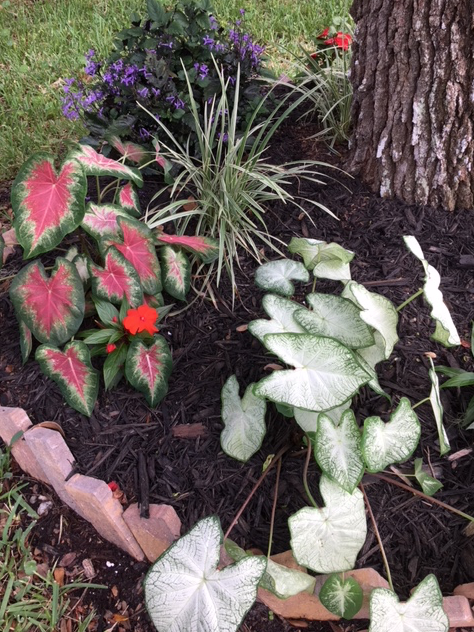
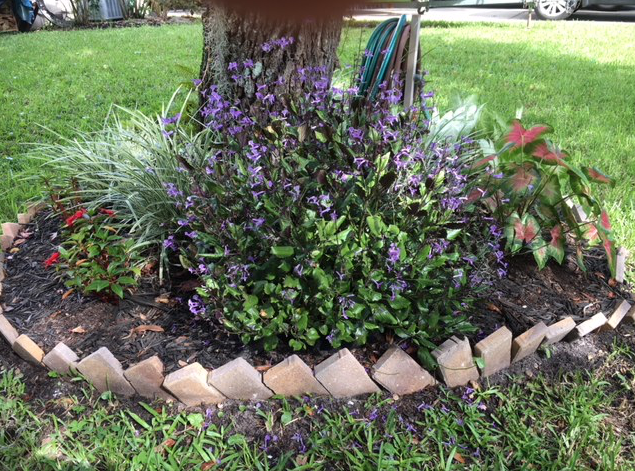
When I bought my house nearly 2 years ago, there was a little flower garden under the trees out front.  I neglected it and it became overgrown very quickly.  I’m not inclined to work outside in the heat, but the other day I decided a quick fix was in order.  The garden is small, so the work would be minimal.  We had brick pavers leftover from the building of the patio, so I used them to create a new border to hold the additional dirt needed.

I’m not yet very good with my Florida plant names, but the ones with the colorful, pointed leaves are Caladium.  The link to Eden Brothers calls them “bulbs”.  Mine came out of a pot so didn’t look like bulbs to me.

The white leaves are called “Florida Moonlight”.  I don’t know the name of the pink-leafed one, but they add lots of interest in the yard.  They love heat and humidity, which explains why they do so well here.

Flower garden under the trees

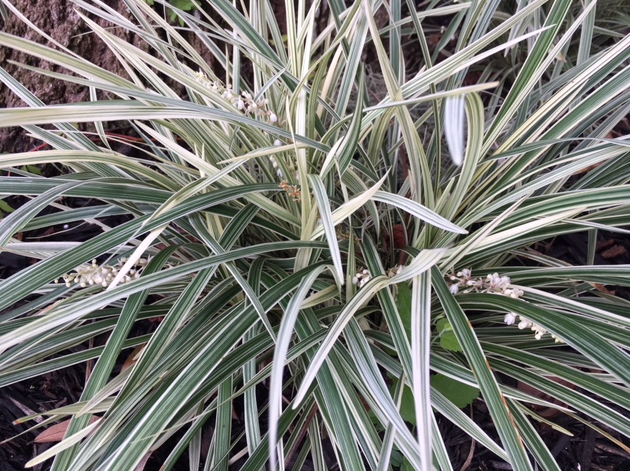
Also in the background around the tree are the thin leaves of the Variegated Flax Lily.  I spent a lot of time removing lots of dead leaves from them.  Even without attention they continued to grow, so I would say they are very hardy plants.  Now that I have given them some attention, the lily is blooming.  Each plant has tiny white flowers on stalks among the leaves.

little white flowers
Little stalks of white flowers on the Varigated Lily

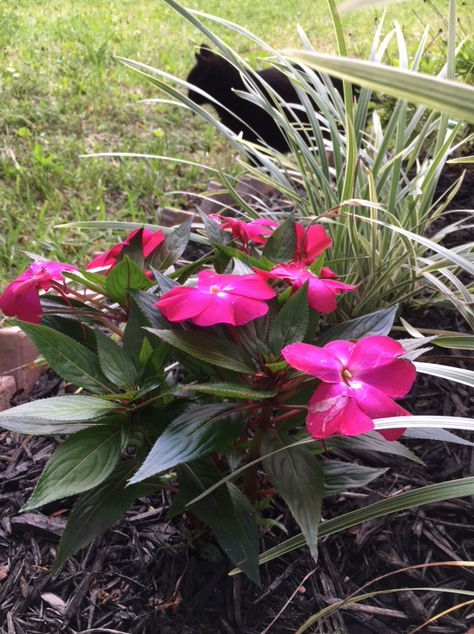
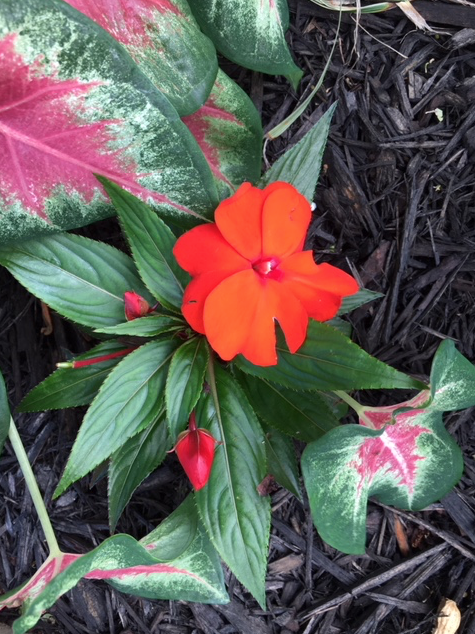
When I first moved in here I bought a bunch of New Guinea Impatiens and put them in the garden by the front door.   The brightly colored flowers add continuous color to the landscape.  It turned out those annuals lasted nearly a year. The very cold nights in January finally froze most of them. Because they did so well, I bought a few more to put under the tree.

New Guinea Impatien
New Guinea Impatien and Caladium leaves

University of Florida plants list for the shade.

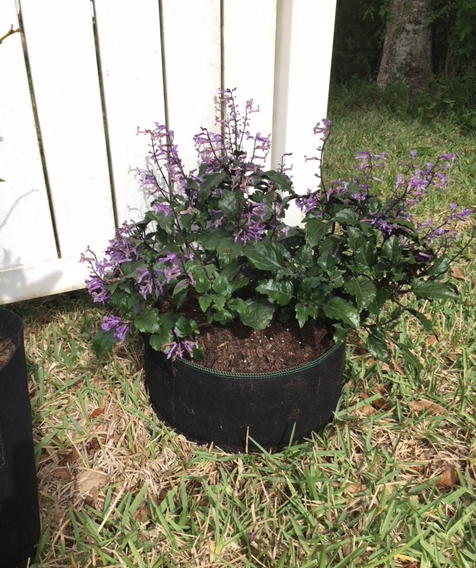
The purple flowering plant which is now under the tree is still in the short fabric pot. It is a Mona Lavender Plectranthus. I bought it because it was pretty, and I especially love the deep green of the leaves.

Now that I am researching this plant, I have discovered it needs some shade and is a perennial in warm climates. It seems that I have chosen a good spot for it to grow under the tree.  I moved the fabric pot and did not dig up this plant.  The potted Mona Lavender is now part of the shade garden and no one can tell it’s in a pot!

short grow bag
Plectranthus, Mona Lavender

Because planting around the base of a tree can be difficult because of roots, fabric gardening pots can be super helpful.

shade garden
The purple flowering plant is in a fabric pot.

All my new plants were purchased at the Home Depot. I also bought more organic garden dirt, and added blood meal and black mulch.

In my part of central Florida, plants can be killed in winter.  When freezing temperatures are coming overnight I will have to cover all these plants to keep them from dying.

Cut Worms, Pill Bugs and Squash Vine Borers Invade My Space

My little garden has been growing like mad, but now the cut worms and other creatures are making a mess of it.

Cut Worms

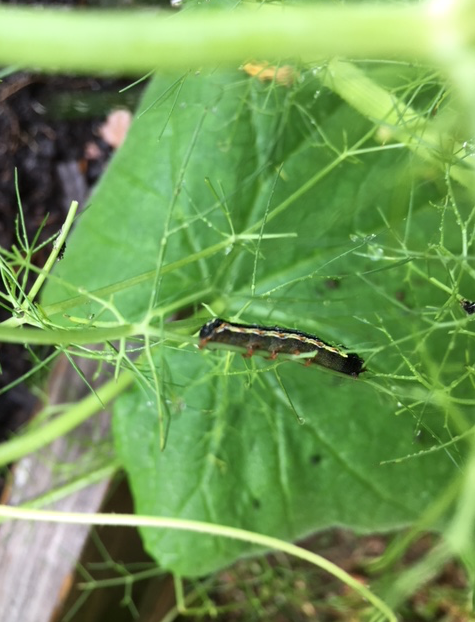
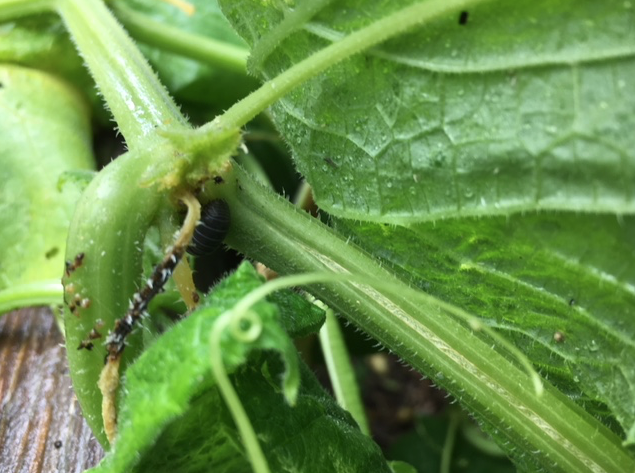
I’ve seen black worms eating leaves, and they are not picky which plant they attack. These are the cutworms – pictures below. Cutworms can also nip a new seedling at the base and kill the entire plant, but these are concentrating on the leaves.

Cutworm eating fennel

Screen Shot 2018-06-01 at 2.30.39 PM
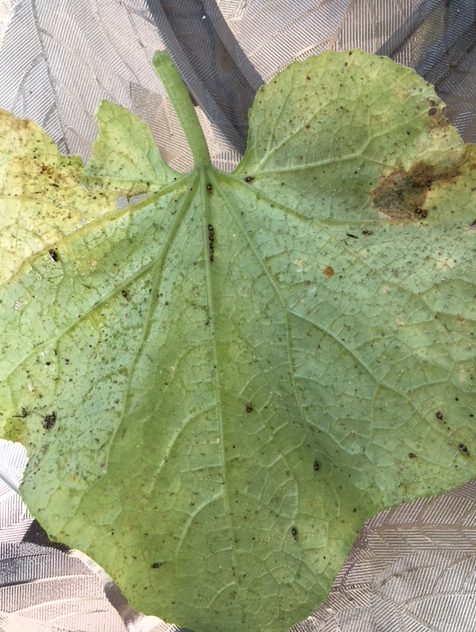
Black spots are tiny worms

Screen Shot 2018-06-01 at 2.30.23 PM
Small worms huddled together

Screen Shot 2018-06-01 at 2.30.32 PM
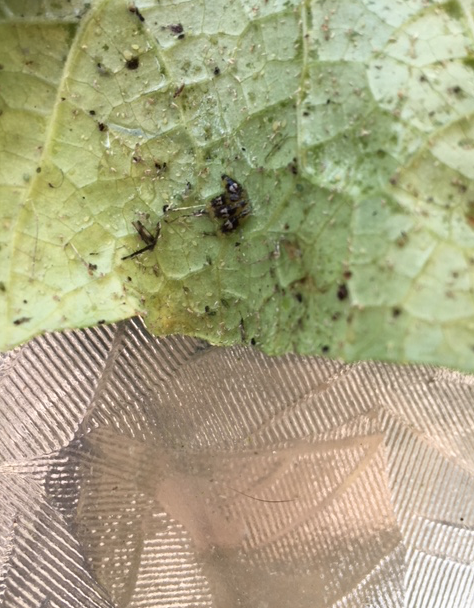
Tiny cutworms living underneath a cucumber leaf

It turns out getting rid of the cutworm is easier than getting rid of the other pest, the pill bug. I can pick the worms off the plants. The large ones are fairly easy to spot, and my garden is small. I plopped them into my tray bird feeder and the cardinals came and had a meal!

Pill Bugs

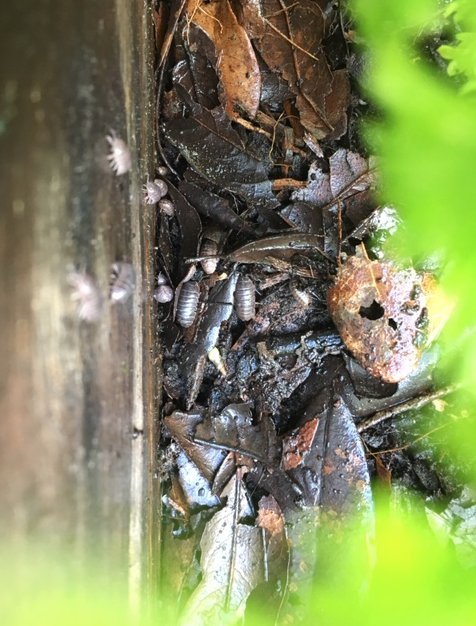
My other problem is all the tiny bugs, which I believe are Pill Bugs. They are everywhere from huddled along the wooden sides of the raised bed, to deep down under the soil. And I’ve found them munching on my cucumbers too.

At first I thought these were a form of the cutworm. These bugs range from tiny to fingernail size. I thought they were harmless, but have found them eating the vegetables, so they need to go.

Screen Shot 2018-06-01 at 2.51.52 PM
Along the inside edge of the raised bed

As I was inspecting the garden, I found colonies of the pill bug along the edges of the garden. Too many to pick off. And as I dig, I find more underground!

Screen Shot 2018-06-01 at 2.52.37 PM
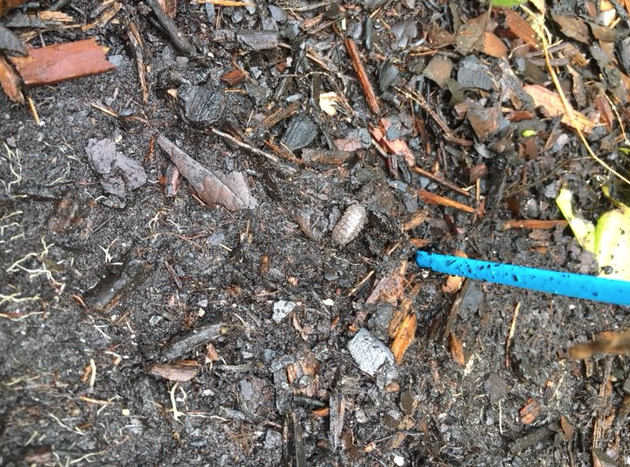
Single pill bug

I’m always looking for organic, natural ways to deter destructive bugs because I don’t use harmful sprays in my yard.

I read that the cutworm will eat corn meal and that will kill it. I’m hesitant to use cornmeal because of the raccoons that visit my yard each night.  I don’t want them digging through my garden because they smell corn!

One site suggested using Food Grade Diatomaceous Earth. I just happened to have some of that!  It’s made of crushed fossils which cut open bug that crawl across it which causes them to die.  I sprinkled it over the dirt in my garden paying attention to the edges.

Screen Shot 2018-06-01 at 2.52.28 PM
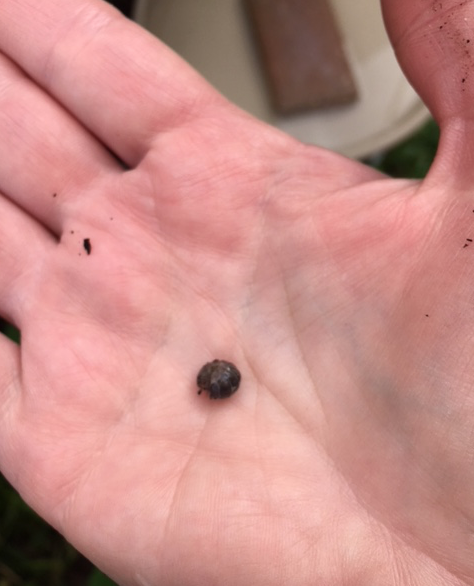
Pill bugs roll into a ball when disturbed

Screen Shot 2018-06-01 at 2.52.53 PM
Bug on the cuke – hard to see, but he’s there a little left of center.

Besides these two destructive pests, I’ve got worms boring into my cucumbers and summer squash. While I was outside dealing with these bugs, an orange wasp (it’s really a moth, but looks like a big bee) was buzzing around my garden. Come to find out it is a squash vine borer moth looking to lay it’s eggs in my garden!  The link has a photo of what those eggs look like.

The link above will give you lots of info about how to prevent the borer moth from laying it’s eggs all over the vegetables.

One idea is to use a Floating row cover.  If the moth can’t get to the crops, it can’t lay the eggs.

Another suggestion which I found to be a simple try is to place a yellow bowl of water in the garden to attract the moth and drown it.