How to Begin Growing Vegetables in Florida

Some things I did and places I bought seeds to get my Florida vegetable garden going.

Although I have lived in Florida for most of my life, I have not done much growing of vegetables. Now, I am interested, and have begun to slowly add garden beds to the backyard. But how to know what will grow here and where to find the plants and seeds?

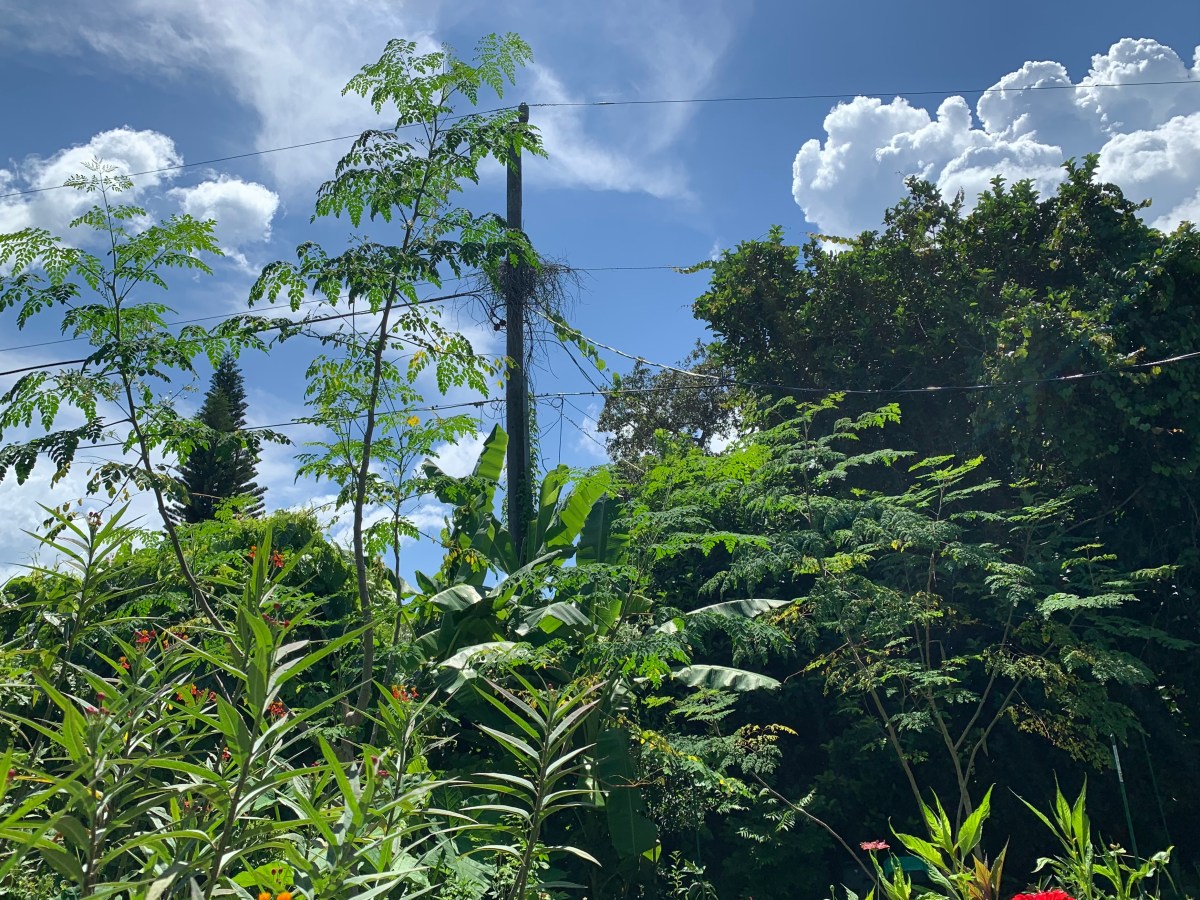
I always assumed that nothing would grow in a Florida summer. But, if you look around, the citrus and banana trees do just fine. Some vegetables are specifically known as being southern, such as collard greens and okra.
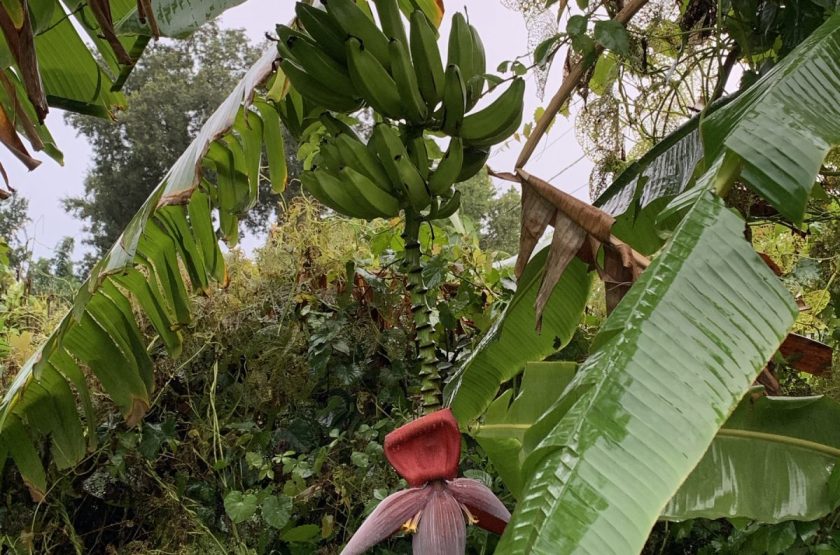
Bunch of bananas hanging from a tree in the yard
Bananas in my backyard

There is a definite advantage to having a very long growing season here in Florida. In New Hampshire my bell pepper plants would just be looking pretty good when suddenly it was cold again.

Peppers like it hot, and I’ve had good luck growing some types of peppers (jalapeño, Serano, and bell) in my southern location. If the winter is not too cold, they will come back and produce more peppers the following season.
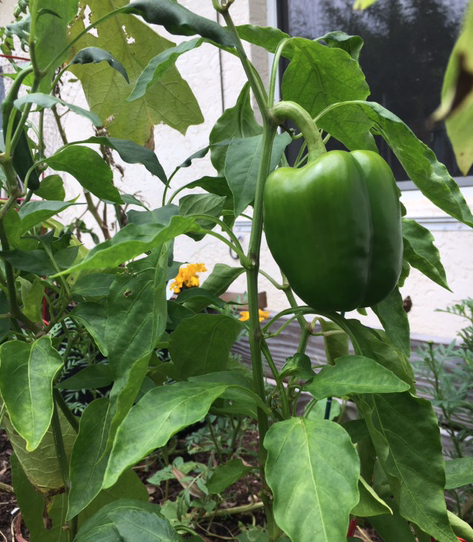
green pepper
Green Bell Pepper

Begin the Search

It’s tough to know what to plant and when, but the University of Florida has a collection of excellent advice for the southern gardener. This page, for central Florida gardening, is filled with flower, herb, lawn and vegetable advice.

Narrow it down by viewing the vegetable planting guide, and you will be ready with a list to use when seed shopping. Decide which foods you and your family will eat and see how to go about making it happen.

When I view the lists of warm and cool weather crops for Florida, I do disagree with some of the vegetables listed. This means that maybe each gardener will have different degrees of luck with certain crops.

Maybe I have planted at the wrong time, and maybe I need to try again and take notes. But at least these vegetables have a chance of growing and are worth a try. I have not had luck with carrots or beets.

If broccoli is a favorite with southern gardeners, I will put that on my “cool weather crops” list. Now I have expanded to have a ground garden where I can rotate “warm” and “cool” crops. The only thing is… many vegetables continue to grow year round – the growing season does not really end. I have had eggplant plants and pepper plants grow for years! So one garden may not be enough space.
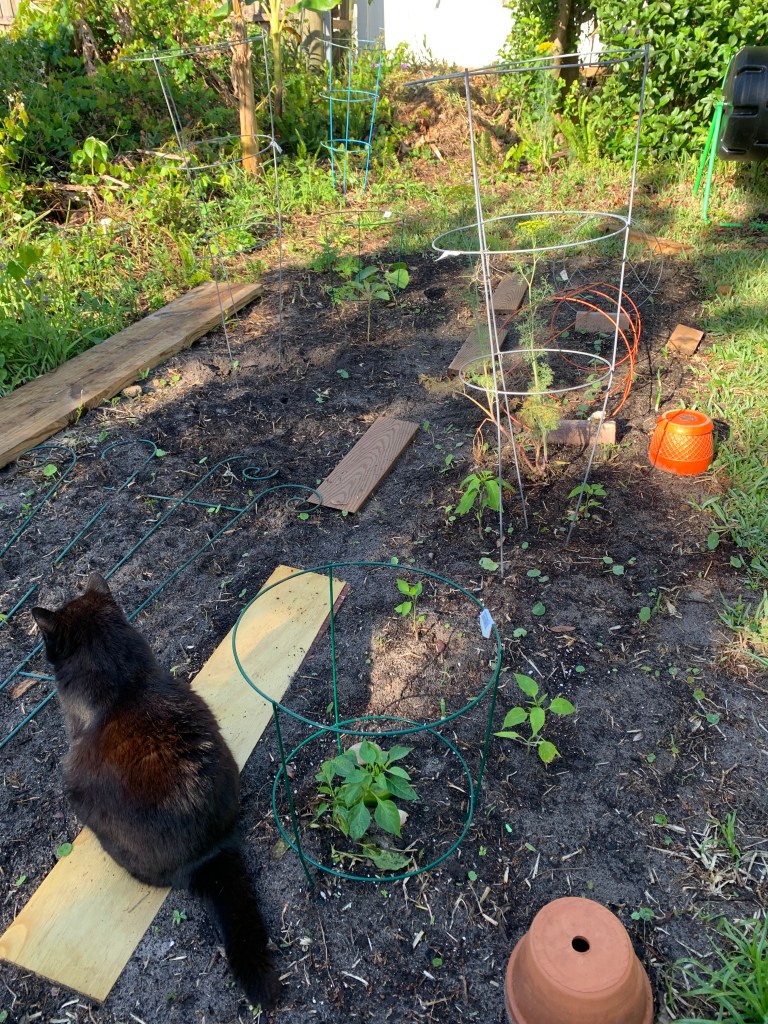
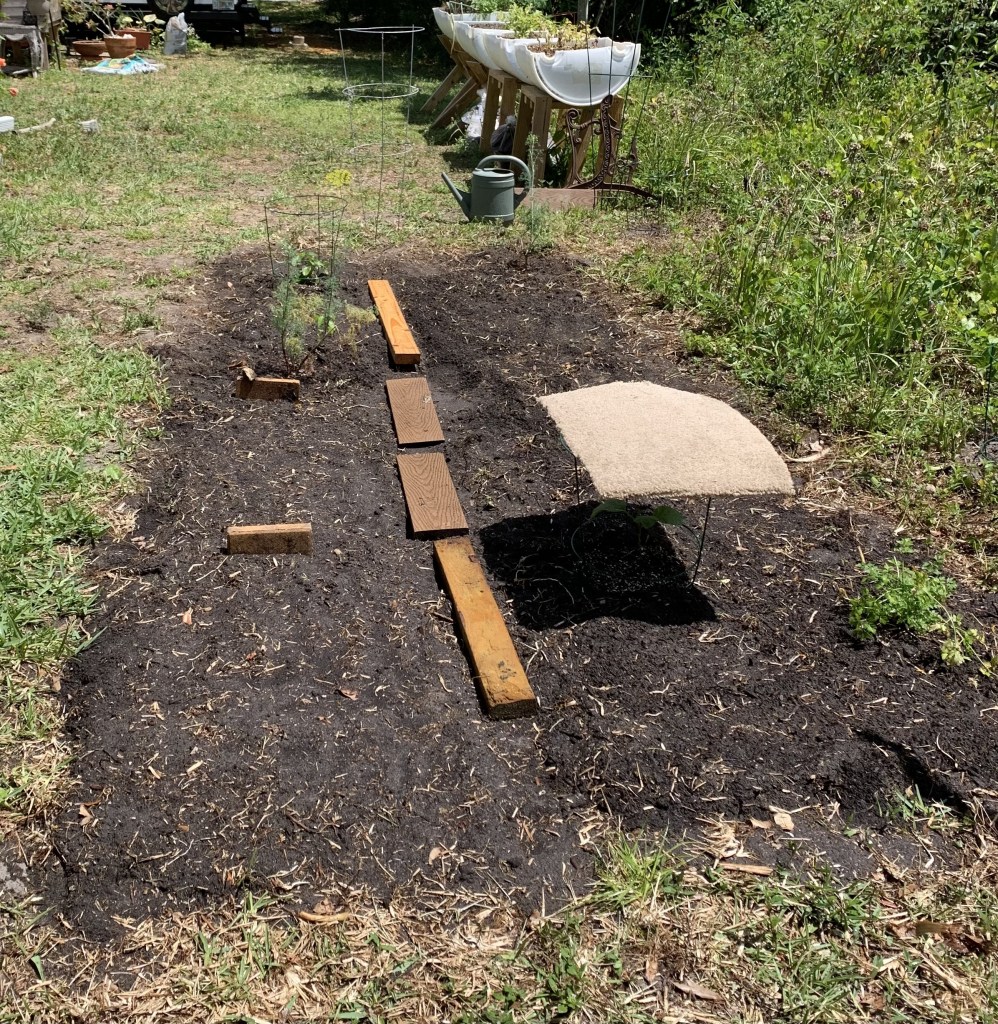
backyard Florida garden plot planted with seeds and seedlings
Peppers, dill and eggplant growing in the ground

Where to Buy the Seeds and Plants For This Climate

If you live near a nursery that sells plants that will grow locally, you are lucky! Big box stores like Home Depot don’t seem to specialize in selling local plants. I’d rather give my money to a small business but I can’t seem to find the plants and seeds I want at a location nearby.

The Farmer’s Market and flea market are places I plan to scour further. Sometimes local farmers will have plants for sale.

Shopping for Seeds Online

First, I bought seeds from The Urban Harvest, which is a central (west coast) based seed and plant seller – they also have many YouTube videos. I have had good luck with the seeds germinating, but they were sold out of many items I would have liked. If you live near them in St. Pete (I believe) they have a garden center where you can pick up live seedlings.

Some of the seeds I got will be planted in Fall, but I did plant the pumpkin, okra, and Moringa this Spring. I don’t know what to expect from okra, but the UF site has a whole page about okra.
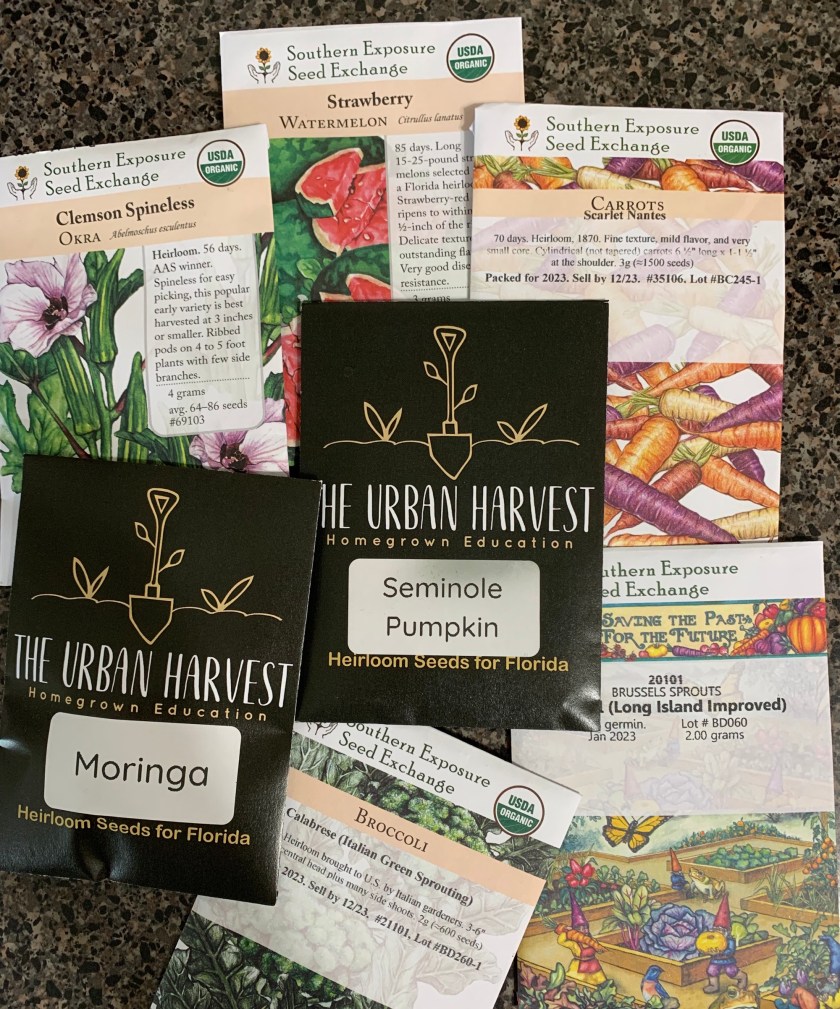
seed packets from the Urban Harvest, a florida based company
Seeds from Urban Harvest

So, I continued to look online. Johnny’s Selected Seeds had a nice variety, including heirloom and organic vegetable varieties, but they wanted $11.50 for shipping just a few packets of seeds! I moved on.

Mary’s Heirloom Seeds has a good selection of beans especially, but the seed potatoes were sold out. I liked this site, but had already purchased some seeds from the Eden Brothers site.

I found mimosa seeds (a flowering ground cover) at the Eden Brothers, and it is something I had been looking for. Then I found more flower seeds and a few veggies and placed my order. This time shipping was only $3.98 which is much more reasonable.

Most seed sellers do not specify what does well in a sub-tropical climate, so have that list of specific, Florida friendly crops, ready before you shop.

If you are a Floridian and have a favorite online place to buy seeds, please let me know! I also appreciate any helpful advice when it comes to gardening in our climate.

In Closing…

Check for vegetables and herbs that will do well in our area / your area of Florida. Decide what you have room for, and plant what you want to eat! Search for a place that can supply the seeds. Local nurseries, farmer’s markets, or online. Maybe a neighbor is also a grower and would share some seeds with you!

Remember that most seed packets are packed for a specific year, so don’t load up on seeds that you can’t use within the year.

I’ll be updating this blog with my garden stories as I try to grow more vegetables. Currently my “in the ground” garden is planted and doing well.
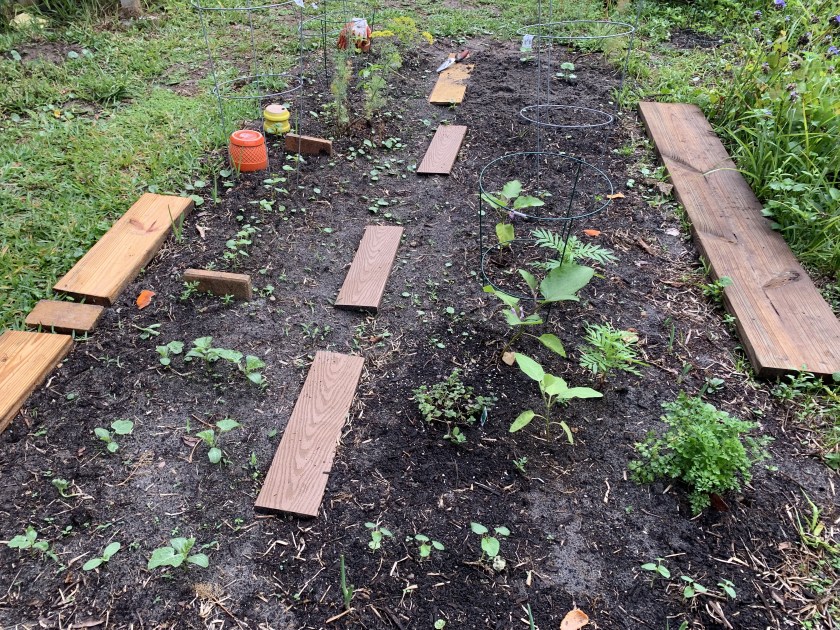

backyard garden with vegetable seedlings
The new garden – Nearly full, end of April

Keep Reading ….

Digging, Planning and Planting a Backyard Food Garden in Florida

Digging and planting a backyard garden takes muscle and planning, but is worth it to pick homegrown food. Here is my small beginner garden in my little Florida backyard.

I live on the central east coast of Florida. As a gardener, who knows quite a bit about gardening – in New England – this area has been a challenge. In fact, I have given up trying to grow my old favorites. Squash and zucchini turns moldy right away and even tomatoes seem to struggle in the heat. All I have had luck with are peppers and eggplant.

Time to change my outlook and ways, and adhere to a new way of growing things in this subtropical climate.

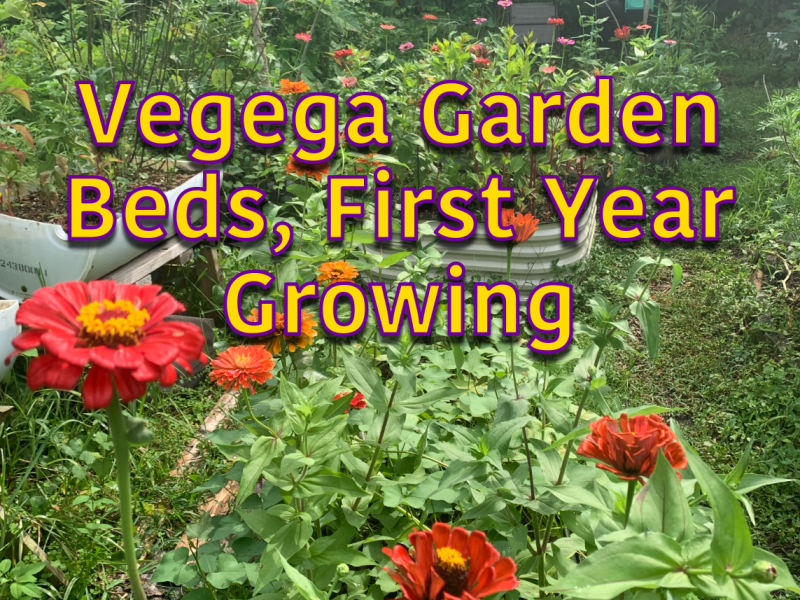
Over the past couple of years I have invested in a few grow boxes. My son made a few raised beds last year. We’ve been growing (or trying to) in these beds somewhat successfully.

This Spring I purchased a Tiller. It was not cheap but it did the work of creating a fairly small garden out back.

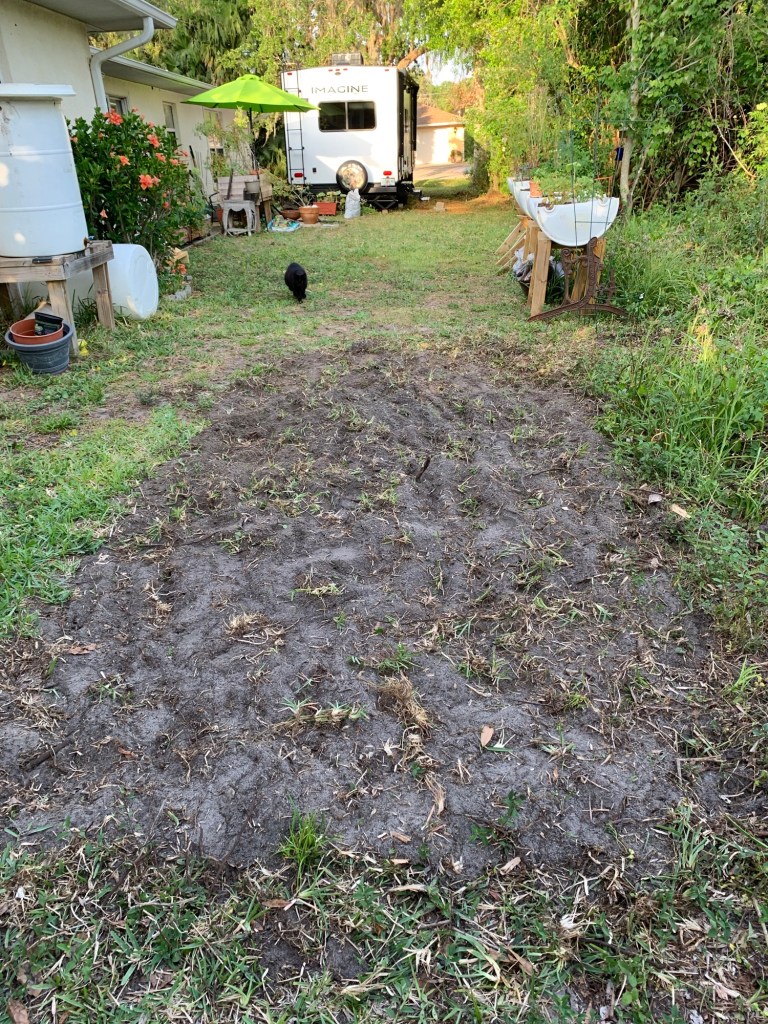
garden area tilled earth

I have removed a lot of the roots, vines and horrible grass that grows in tendrils. Next I mixed in three bags of compost.

The “dirt” in the ground here is sand. I never saw a single worm, which is typical. I think it will take a lot more compost over the months to create a decent place to grow things. For now, this will have to do. I can amend later with compost from the Hot Frog.

Spreading bags of compost into a freshly dug garden

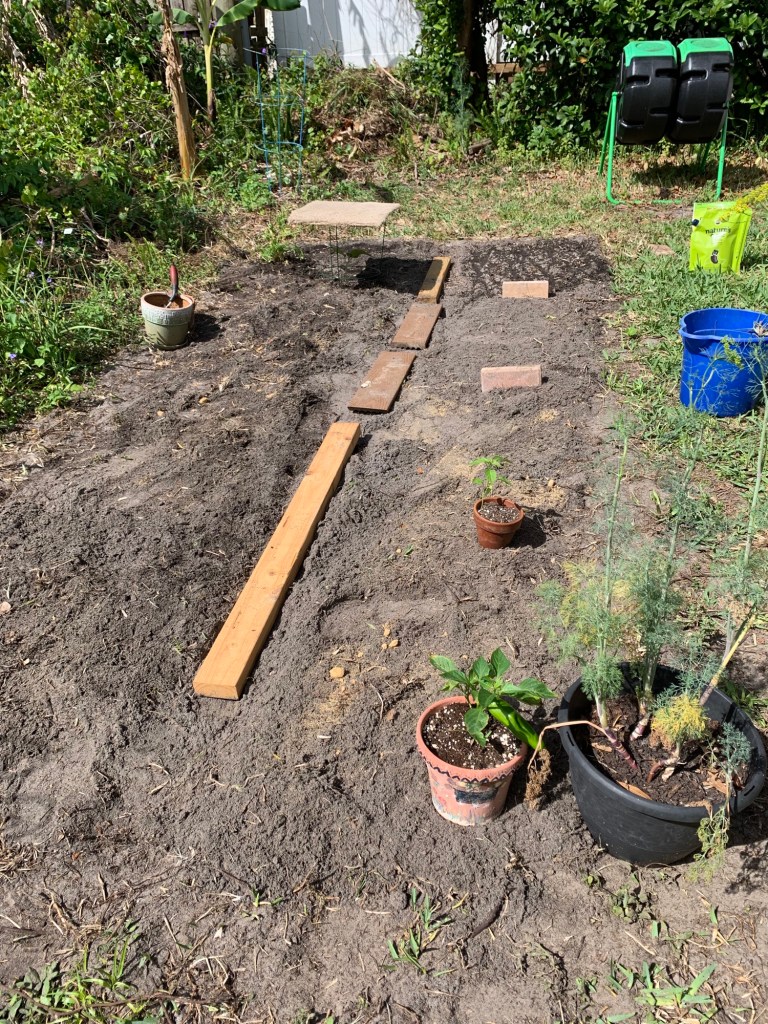
First I found some boards to set down the center. I remember from my northern gardening that mashing down the earth is not a good thing. If I can remember to stay on the boards, the remainder of the dirt should stay loose for growing.

Next it was time to plan the layout for planting. I had to think about which things would be long vines (watermelon and sweet potato) and those would be in a place where the vines could go out into the grass.

Okra gets tall, I guess… have never eaten it or grown it … so I planted those seeds along the edge. I only planted it because it’s a southern thing and should grow well.

I saved a spot for the sweet potatoes yet to come, and will fill in the rest with some pepper plants and more eggplant.

My basic sketch for planting is subject to change.

backyard garden planting

I managed to get some watermelon seeds and okra seeds planted. Then an eggplant, which I covered with a piece of rug to give it shade.

It was so hot by then, that I took a break inside and waited for the clouds. The forecast called for rain later, but all I got was tons of hot sun!

Some dill plants went in the corners, along with a parsley plant. Last of all, I threw in some saved Marigold seeds.

Backyard garden planted with seeds, dill, parsley, peppers and eggplant

As soon as I took the rug covering off the eggplant, it began to wilt. They really cannot take the midday sun. I quickly watered the whole garden (each plant got it’s own soaking as I planted it) and put the rug back.

Already I am thinking of moving the okra to in front of the eggplant to give it some shade. I can’t run outside every day to cover it because of the sun. (Side note here – the okra was popping up out of the dirt on day 4!). The seed packet says this okra will be 4 -5 feet tall!

okra seeds sprouting
Okra – tomato cage animal deterrent

Although my summer garden may not do well due to the heat, this section of yard will remain a garden bed. When winter comes I can plant lettuce and kale. Also, I will continue to look for hardy, Florida crops to plant.

Bought My Seeds From Urban Harvest

I found this wonderful gardener online who has a YouTube channel called: The Urban Harvest – Homegrown Education. She lives on the west coast of central Florida and has lots of videos about growing things that actually will grow here in Florida! Immediately, I bought some of her seed packets.

The Urban Harvest website

seed packets from Urban Harvest
Seeds from Urban Harvest

I bought some organic Coconut Coir blocks and have added seeds and other things to the pots. I’ve never used the stuff before and I will compare to planting in dirt.

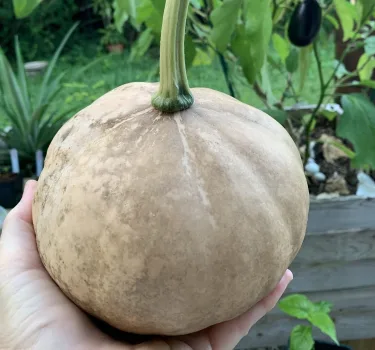
I’m getting ready to post this on April 15th and noticed this AM that one of my pumpkin seeds has sprouted! More about this unusual, southern Seminole pumpkin to come.

More Gardening Stories on the Blog

My April Backyard and New Garden Plans

My April backyard garden and what I’m growing and harvesting.

Don’t get too excited, I don’t actually have a lot of vegetables growing in the backyard. This is what I do have, and am enjoying at the beginning of April, in central east Florida.

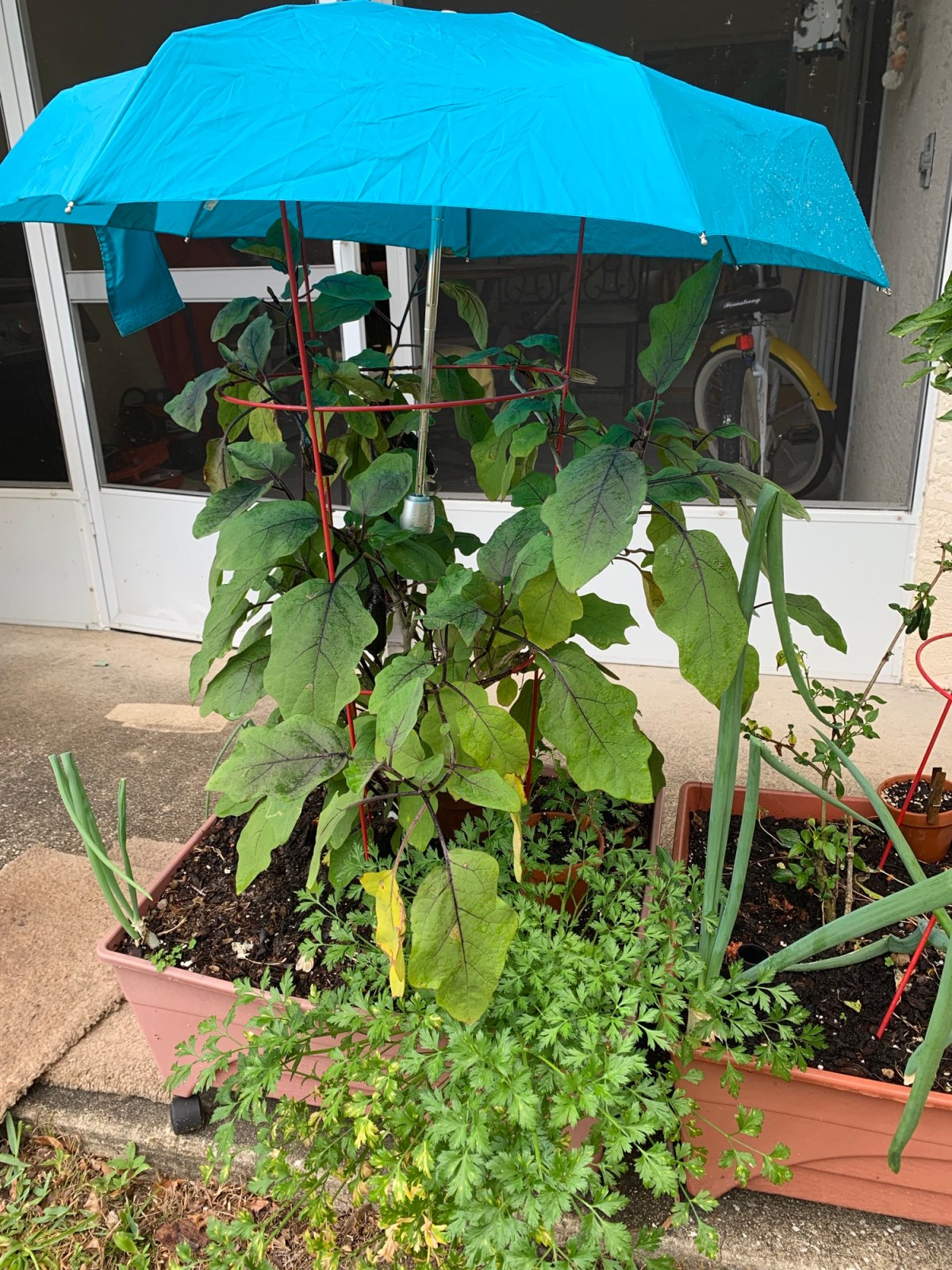
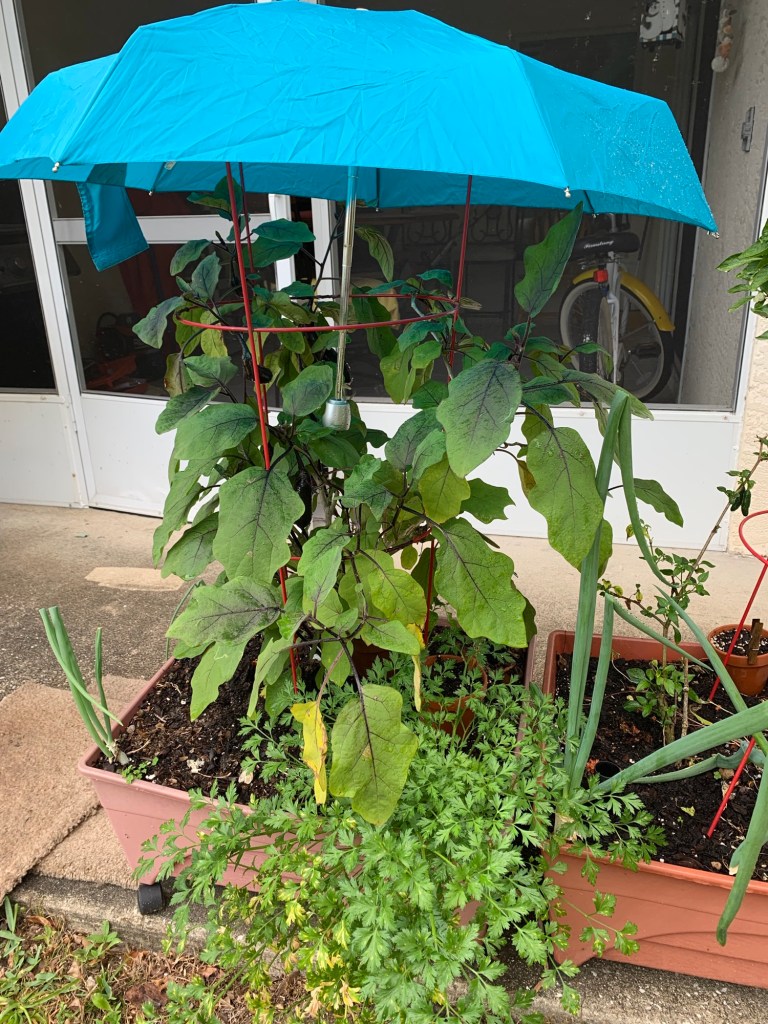
The Japanese eggplant are beginning to grow and I just ate one sliced and fried for lunch. The sun is a bit much for the eggplant. Adding my umbrella during mid-day seems to help with wilting.

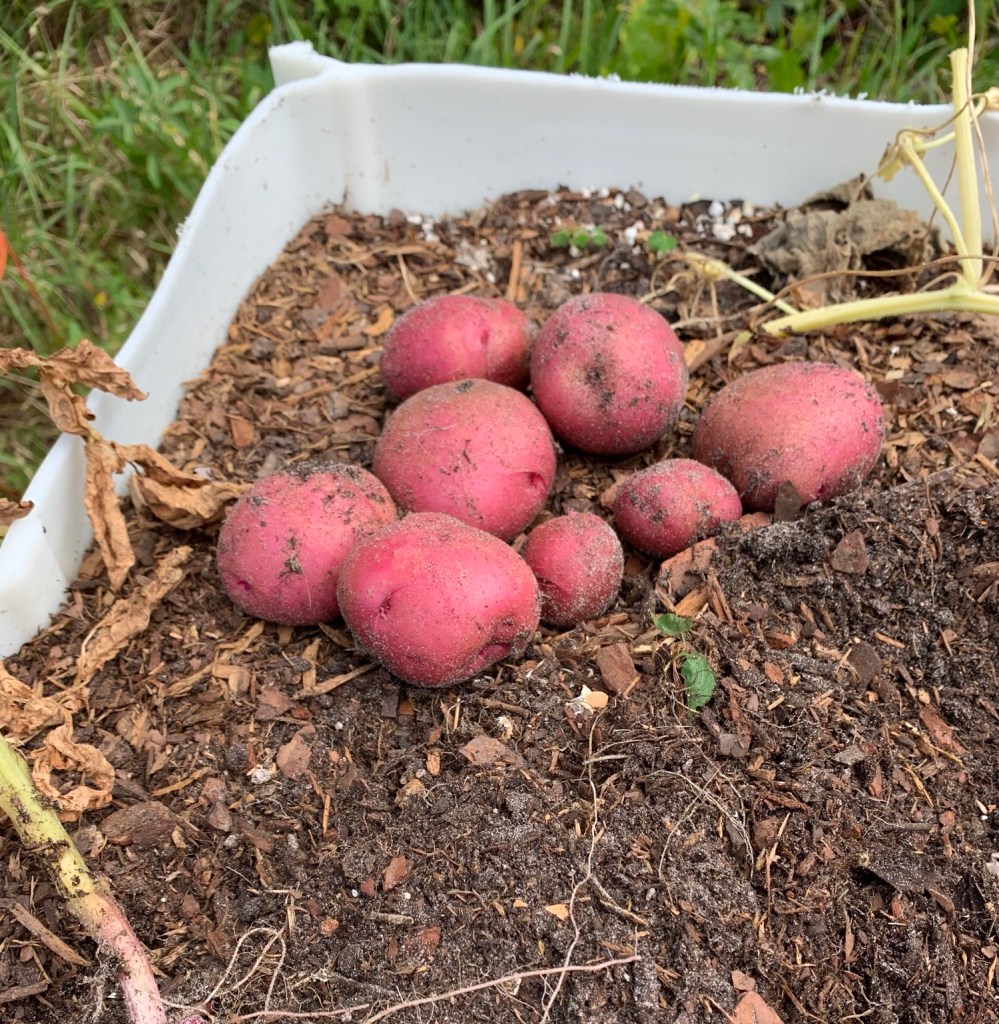
A day or two ago I dug up one raised bed of potatoes. All the stems on the potato plant had turned yellow and died, so I dug to see what they looked like. They look great! Now I am letting them sit and dry out.

As is true whenever I search for vegetable information, I get “northern” growing advice. Store potatoes in a cool dark place – like a cellar! That is not going to happen in Florida. So my potatoes are on the porch sitting in a pan to let them cure – I hope.

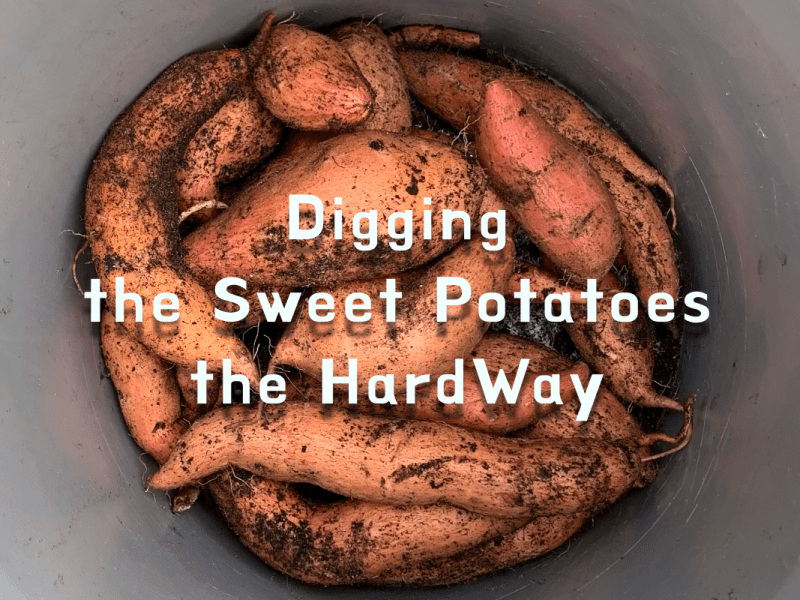
I’ve discovered that sweet potatoes are the thing to grow here. More on that later.

Growing Poblano and Squash From Grocery Store Vegetables.

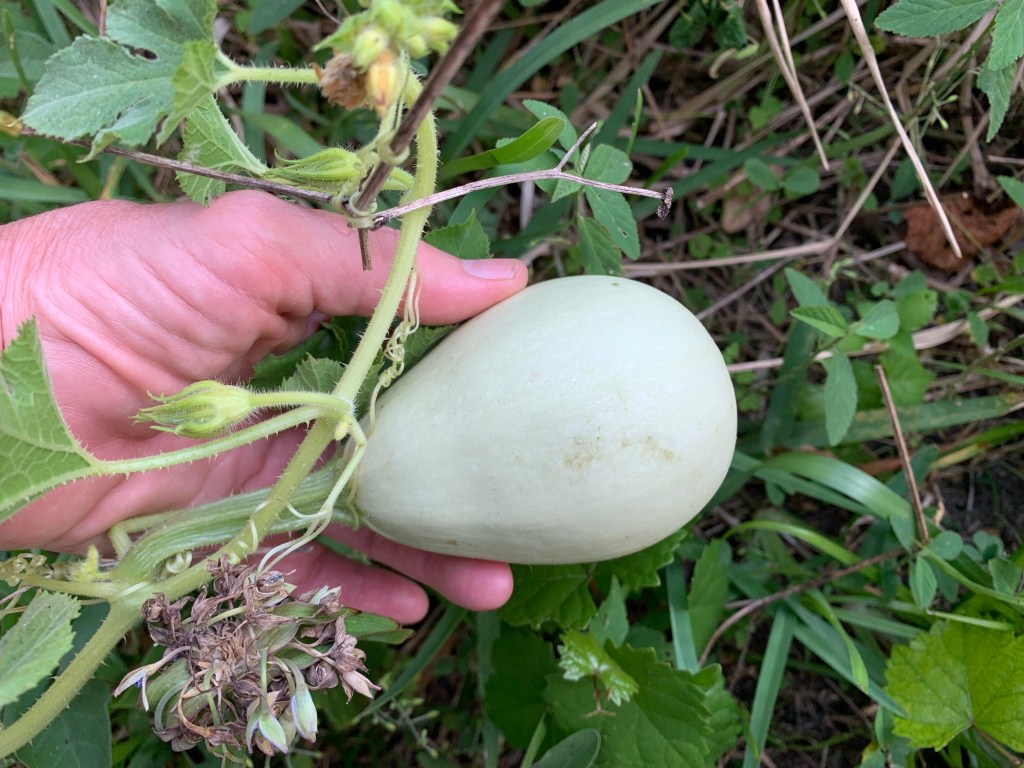
When I cook, I often save the seeds. They usually go into the composter, but one day I tossed the spaghetti squash guts into a raised bed. And squash began to grow. So I let it. And now I have this little squash! I don’t know if it will ever be big enough to eat because the plant looks pretty bad.

Nothing likes the extreme humidity here.

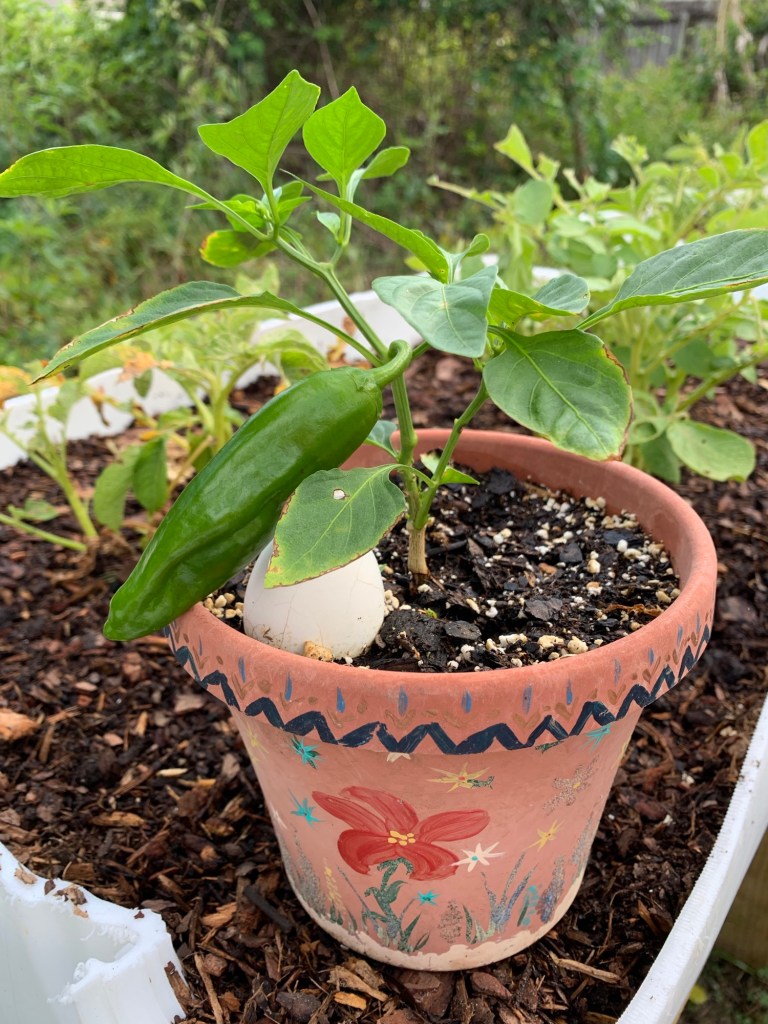
A few weeks after throwing poblano pepper seeds into the garden, the pepper began to grow. At first I didn’t know which kind of pepper it was (because I am growing all kinds), but when I saw the actual pepper, I knew from the shape.

Going to Seed

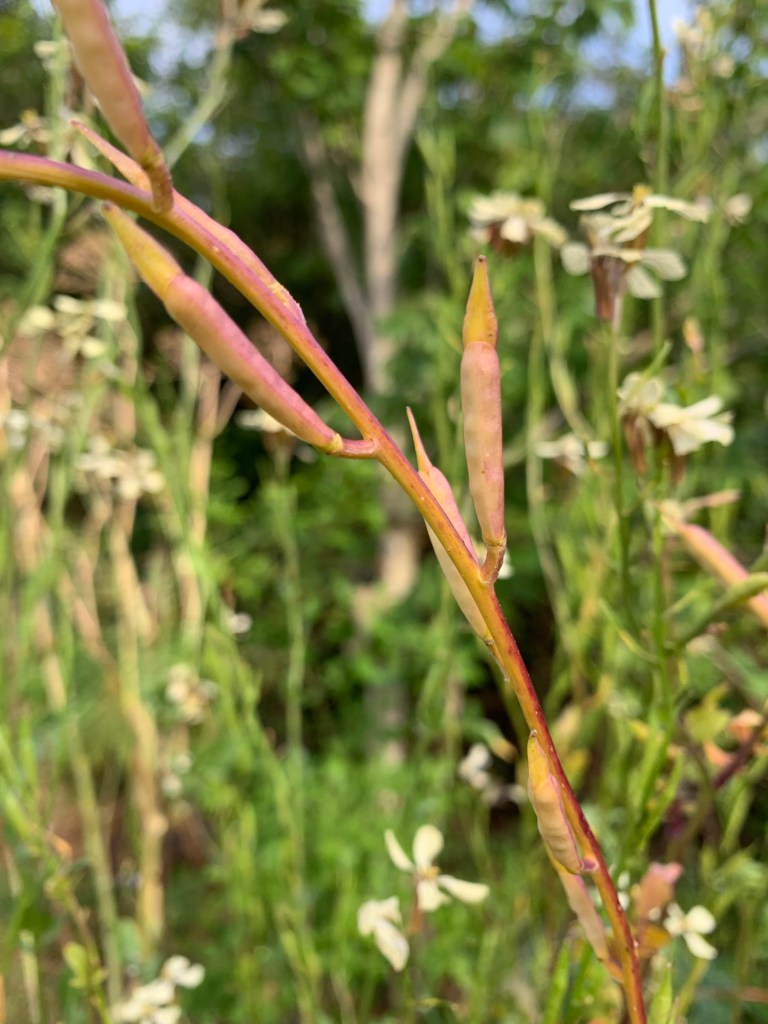
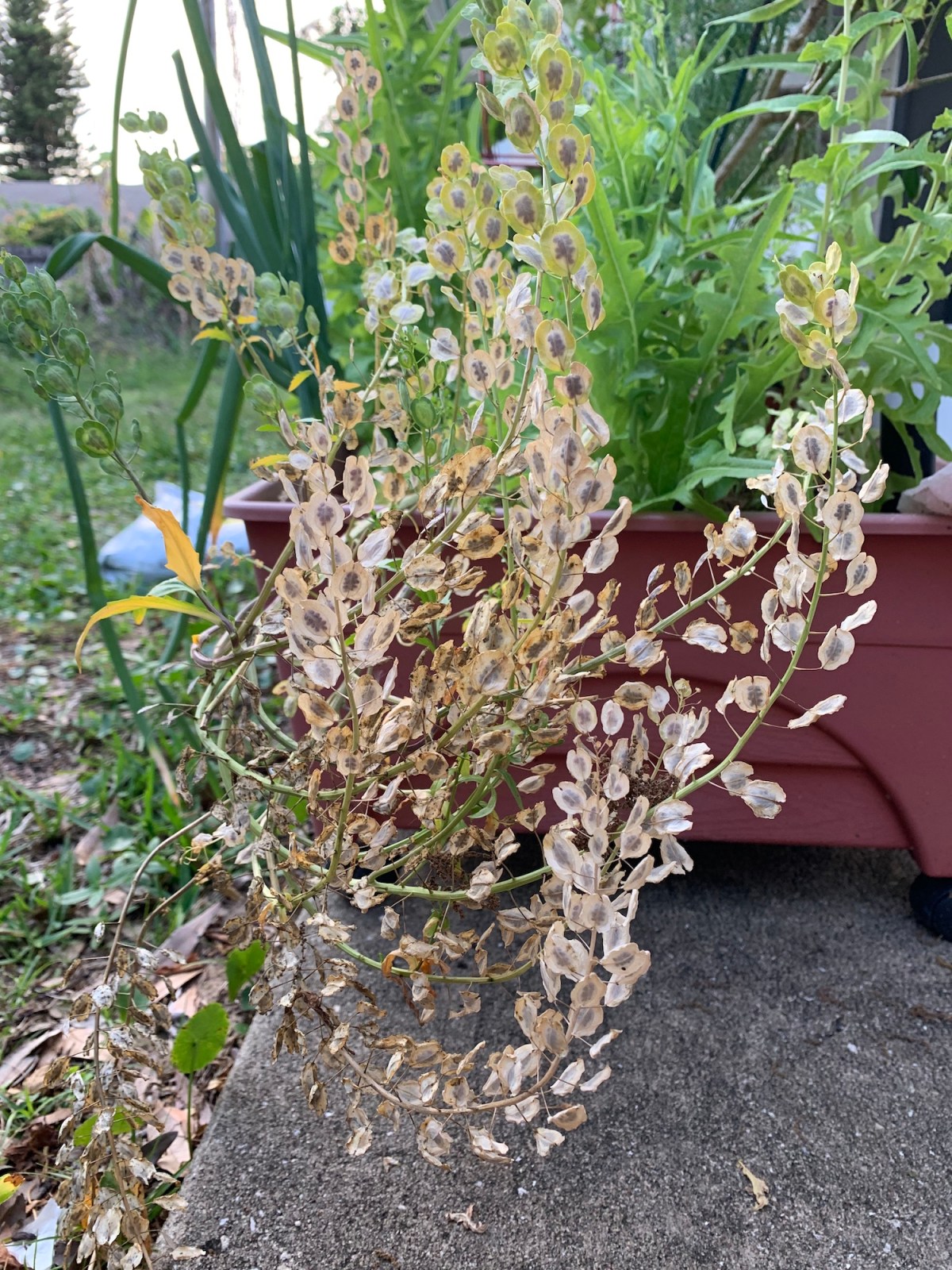
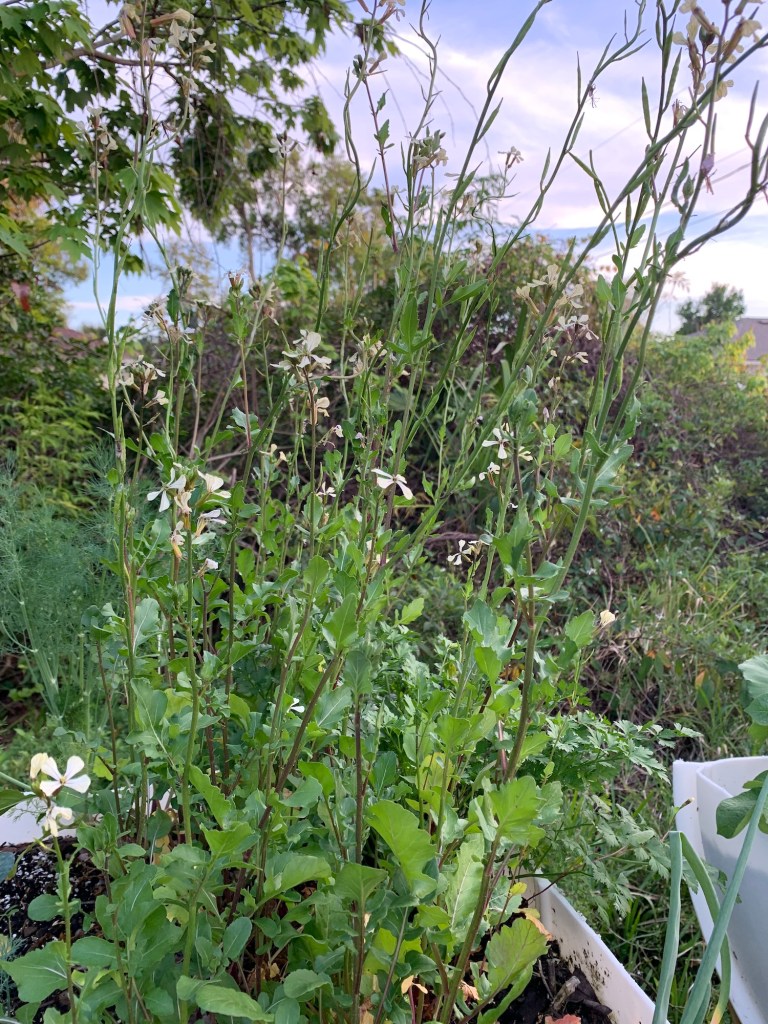
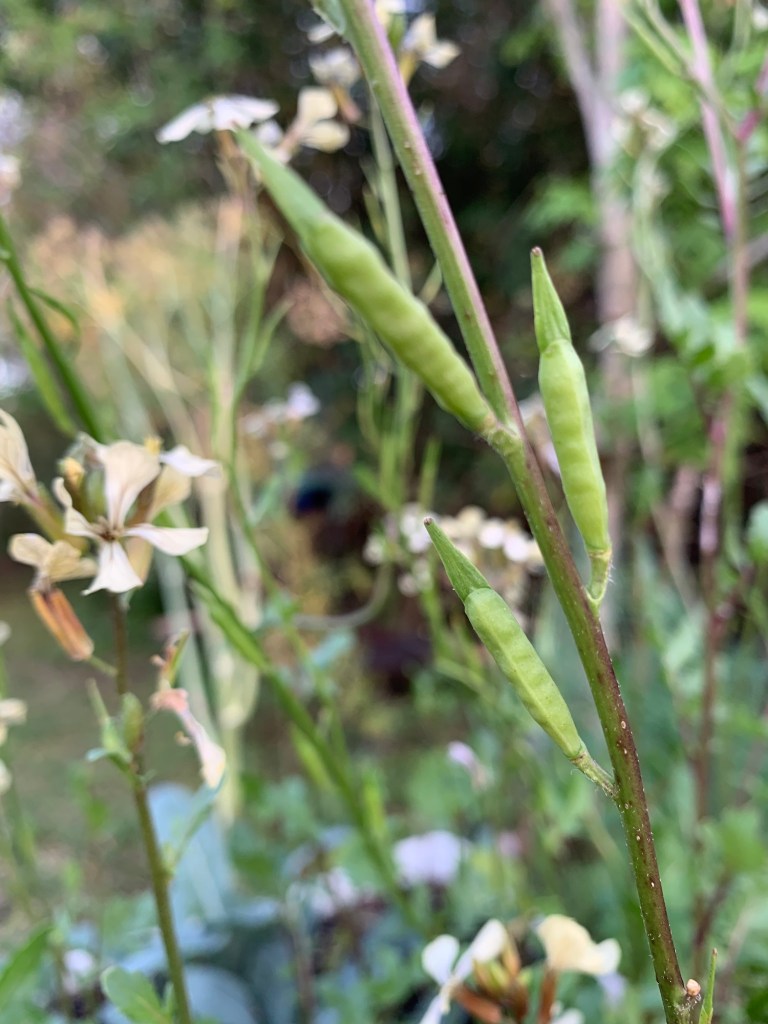
The arugula flower stems have been going to seed. The arugula grew quite well during the winter months, and then tall flowers grew. Now the stems are full of seed pods that I am allowing to dry. Each little pod has a ton of tiny black seeds.

arugula seed pods
Arugula seeds

Digging Into the Earth

I broke down and bought a garden tiller so we could dig ourselves a garden. I can’t even run the thing because the grass and roots pull like crazy, so my son did it for me. I am now removing the chopped up grass clumps and roots.

We’ve only used raised gardens so having a ground garden will be an experiment. We have raccoons and cats constantly in the yard. I don’t know what they will do to the garden. Its been a year since I bought the Hot Frog composter, and some of that dirt will go into the new bed.

More on creating that garden in another post.

More stories on this blog

Saving Seeds: Lettuce and Arugula

How to go about saving seeds from lettuce and arugula plants.

Gardening in Florida is still a new thing for me. Even though I have lived here in Florida for many years, I never had a vegetable garden until recently. Typical tropical plants and flowers I understand, but I never had time to try to grow crops like lettuce and arugula.

Finally, I think I am beginning to get the hang of it. I realize I can’t grow what I used to grow in New Hampshire’s short summers. I’ve tried to grow cucumbers and squash without luck. Maybe the seeds were bad, I don’t know. This is such a different climate. Everything is backwards as far as planting seasons.

Lettuce and arugula (and kale) like cooler temps. I planted those seeds in Fall. They have done well over the winter months, even with Christmas temperatures in the 20’s.

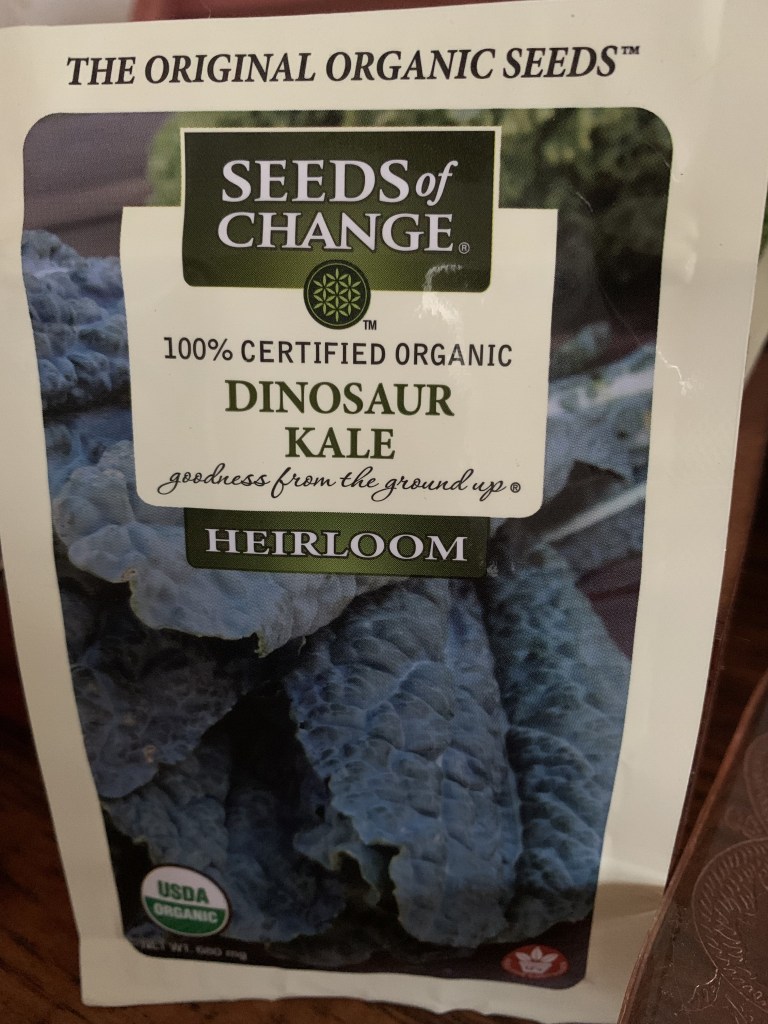
Now it’s time to save the seeds. My plants began from a company called Seeds of Change. I bought the seeds at my local Home Depot. The seeds are certified organic, and nearly everything I planted has done very well. I absolutely recommend this brand of seeds.

kale seeds organic

Collecting Seeds From Lettuce

The lettuce was planted in with some peppers so I didn’t have much space. I wasn’t too hopeful for it to do well. But it did! I never ate any because it was bitter, but I have collected the seeds to try again next season. I’ll have to save space for a lettuce garden.


Now that it is March, the hot weather is on the way, so I want to let my greens go to seed so I can collect those seeds. I’ll save them inside the house to plant in the Fall.

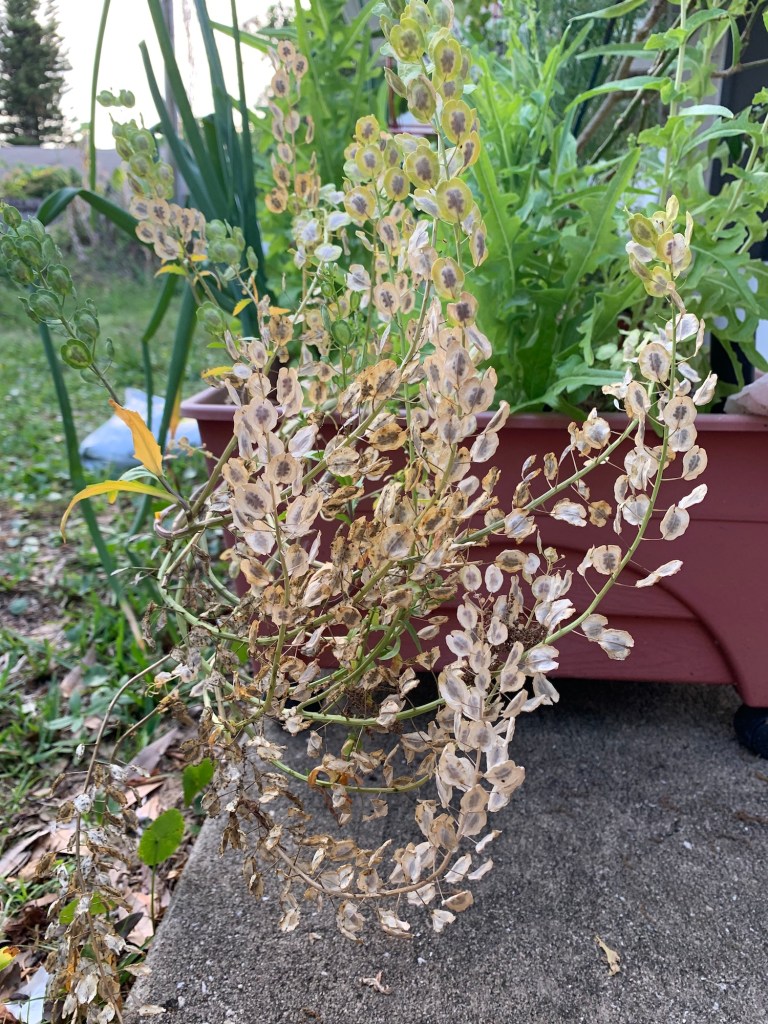
I’ve never had luck growing lettuce so this was a complete surprise. My lettuce was a mix, so I am not sure which types these were. But one of the plants sent off this long shoot which ended up hanging over the side of the garden bed.

The green leaves ended up dying back and the stems became full of seed pods!

The spiky, thin stems each held dried pods holding little black seeds! I have collected a bunch of them.

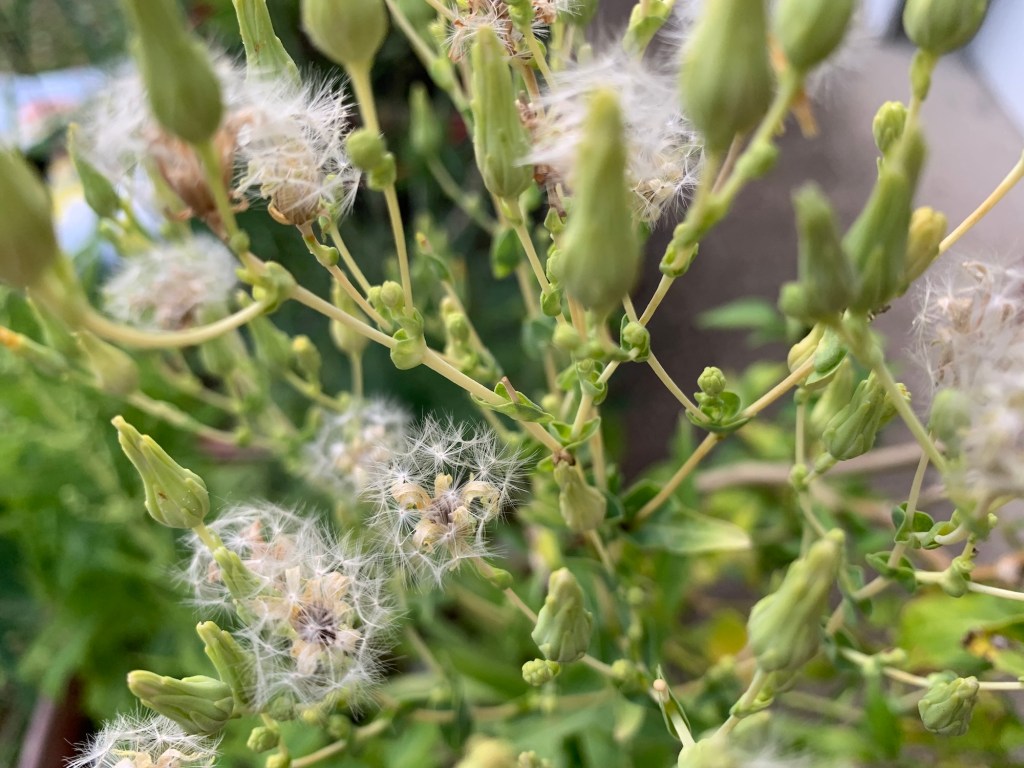
I’ve also collected seeds from a flowering lettuce stem that produced dandelion type heads. Once the weather gets cool again, I will plant them and see what happens.

Collecting Arugula Seeds

I’m sorry to say that I am unfamiliar with arugula. I tried some of the leaves, which are peppery and really good, but without something to mix them with, I rarely ate them.

Now I am letting the flowers grow to get the seeds. I didn’t realize that the stems hold the pods that will dry out and give me seeds, until I noticed them!

I’ve seen honey bees and many other insects on the arugula flowers. Even if you don’t use your greens or other herbs and vegetables, let them grow and create flowers to help the insects. Also, the stalks dry out to become useful sticks. I used those to direct my watermelon vines where I wanted them to go!

How to Save Seeds

In general, plants will “go to seed” once the growing season is done. Also called “bolting” it means the energy of the plant goes into making seeds to continue the vegetable / herb. Lots of flowers have seeds in the dead flower head and can be saved that way.

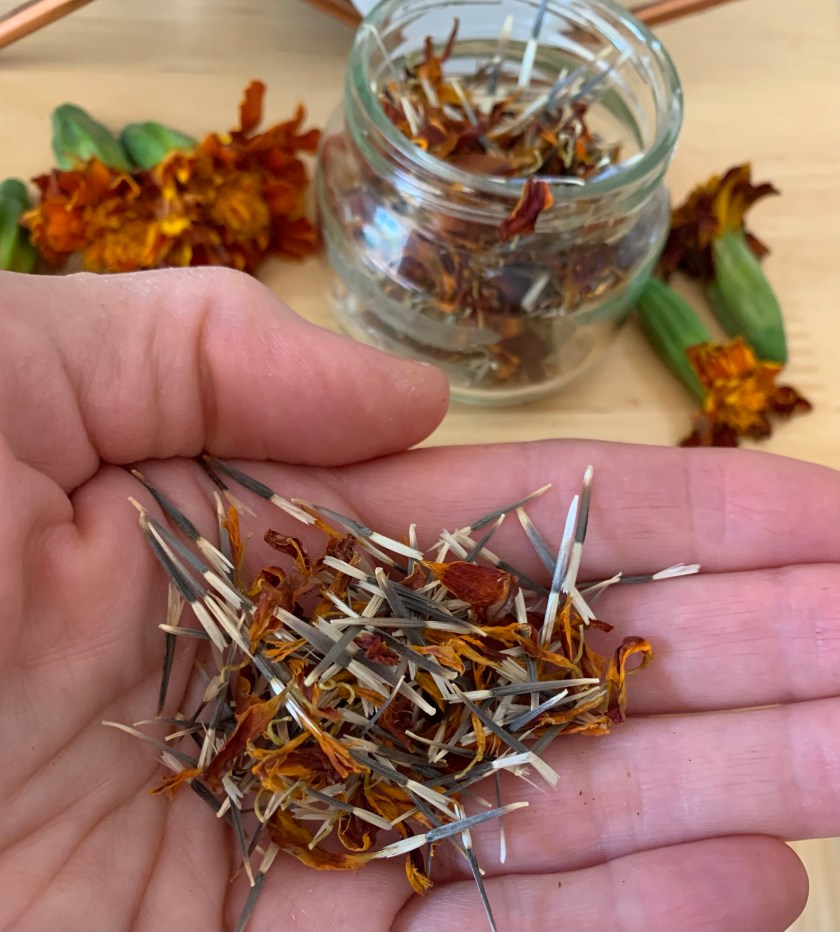
marigold seeds
Marigold seeds

Left alone, the seeds will dry, fall to the ground, and self-seed next time. But we can let the seeds dry and then collect them to plant.

The only trouble is, that plants may create seeds in different ways. Some seeds come from the “fruit”, like tomatoes, cucumbers and squash. Others “go to seed” and create seeds from flowers or pods.

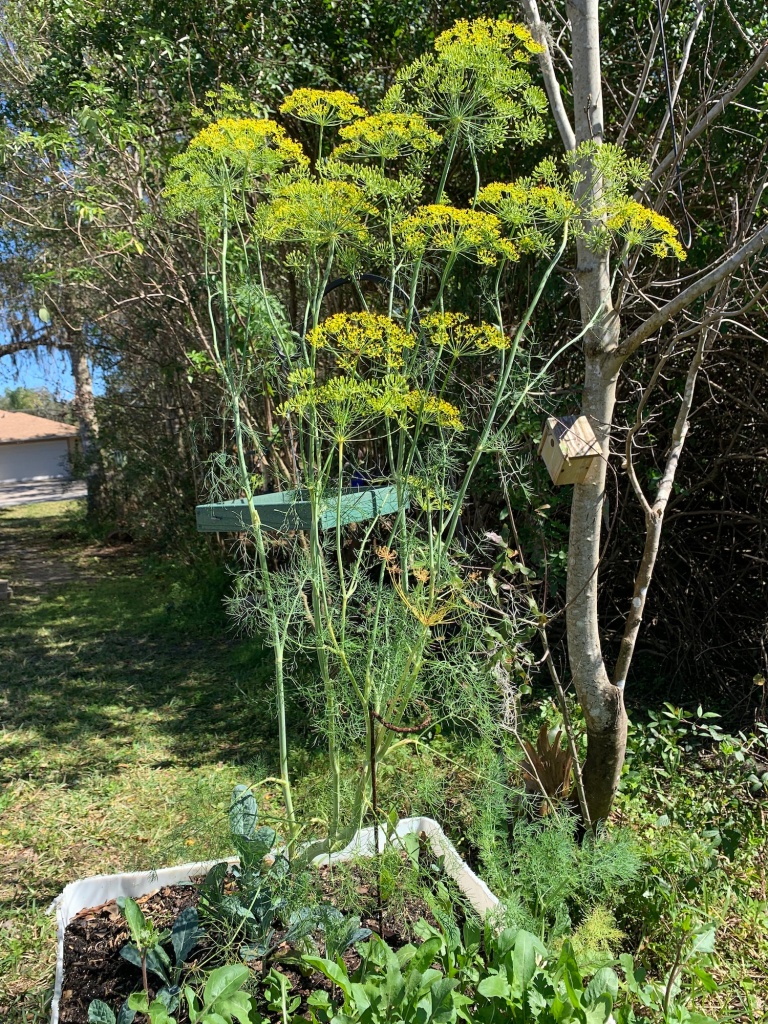
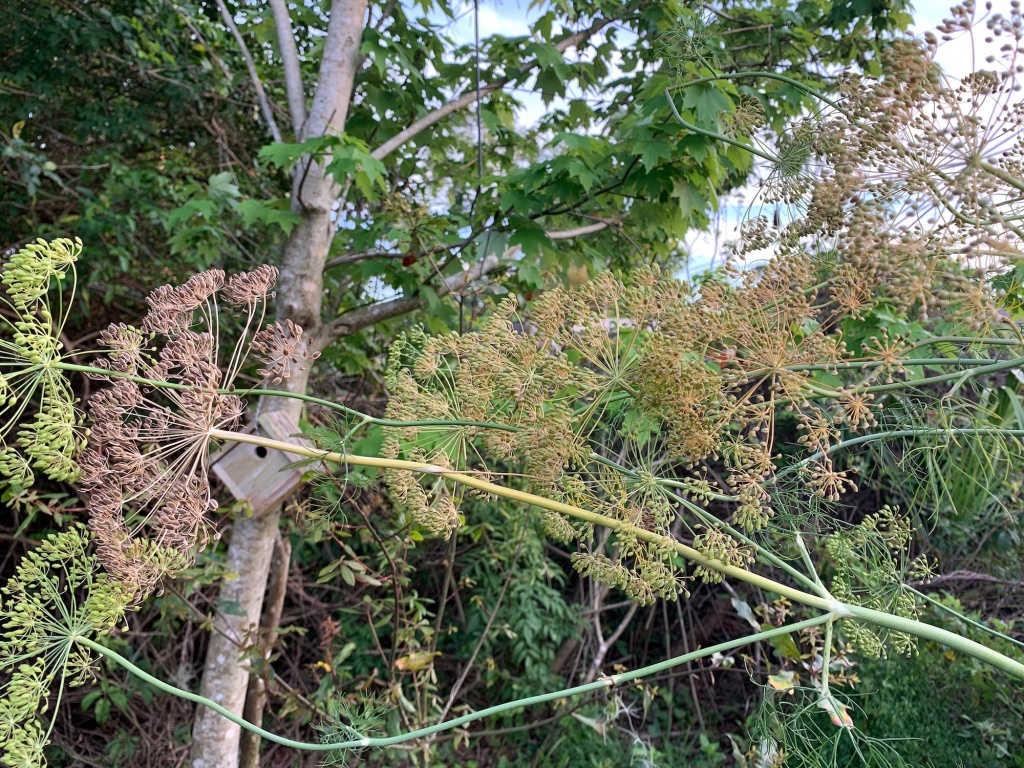
Here is a photo of the dill plant that produced beautiful flowers that turned into hundreds of seeds.

Dill flower heads turned to seeds

I ended up with too many dill plants. I dug them up and put them all around the edge of the yard. They are very hardy and don’t need much attention. I love dill and fennel (they are very similar looking) because their flowers attract beneficial insects. I do collect the leafy parts to chop and use when cooking.

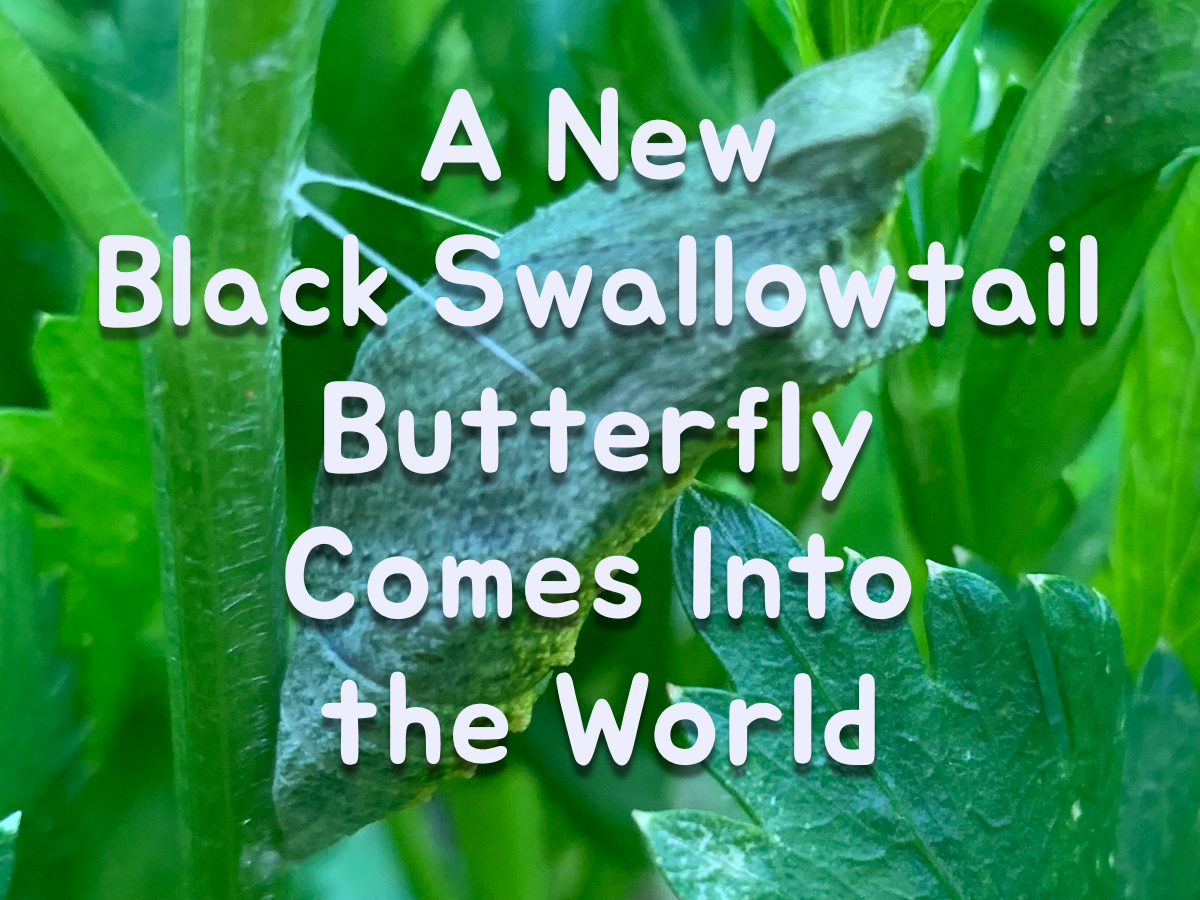
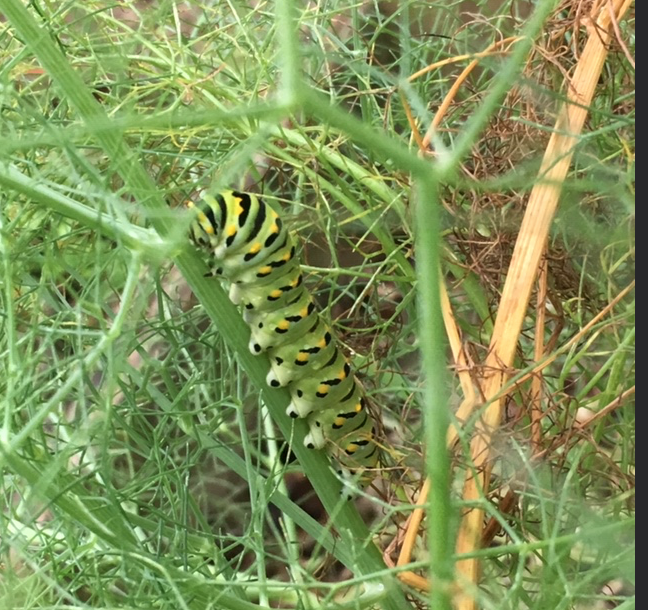
Dill and fennel are also host to swallowtail butterfly larvae. The caterpillars feed on the plant and are then eaten by cardinals – in my yard. If you are lucky, some will create cocoons and a new butterfly. Either way, the caterpillars are useful.

More garden stories for you

Starting Vegetable and Flower Seeds in Big Pots

With attention and lots of watering, the seeds I started in larger pots are doing well.
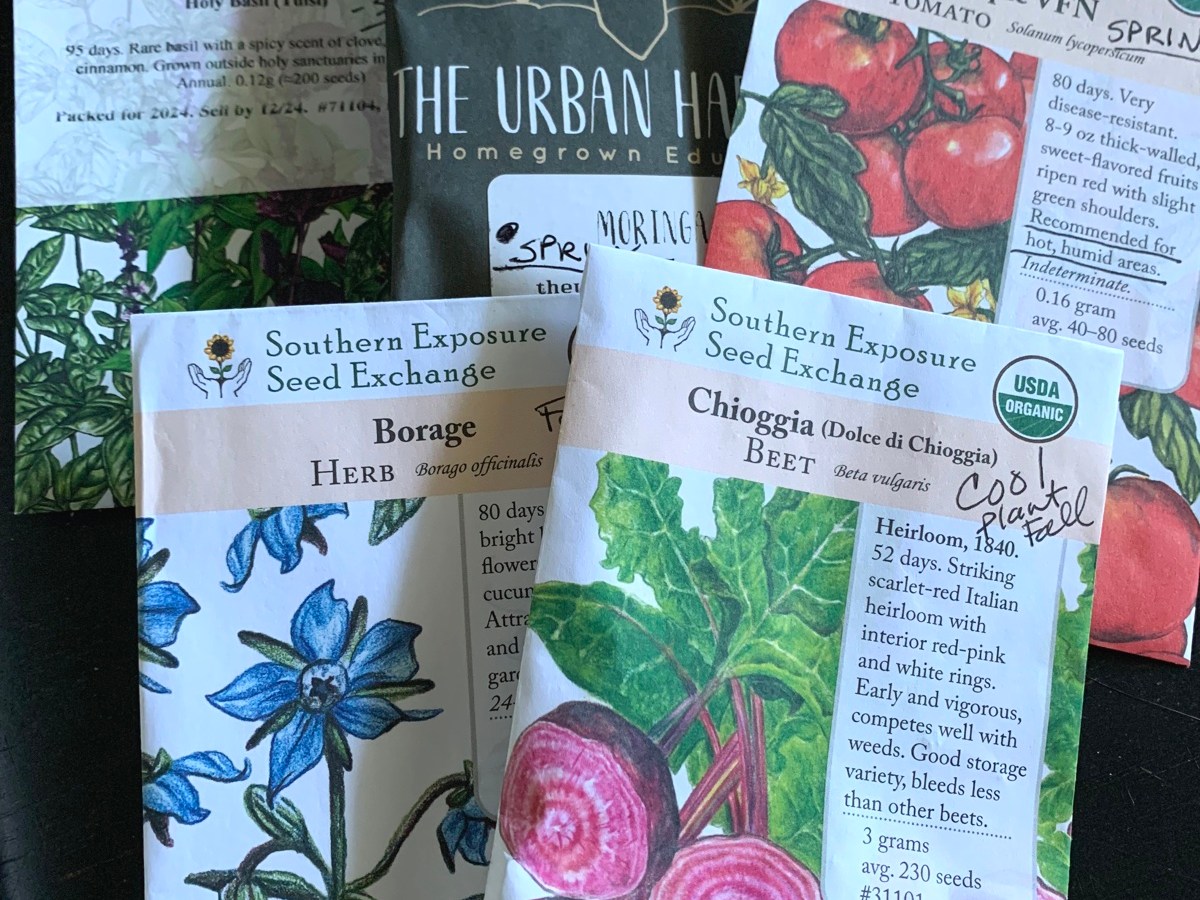
After caring for my seedlings in eggshell pots for weeks, I decided to start some seeds in big pots. They won’t dry out as quickly and are able to stay outside overnight.

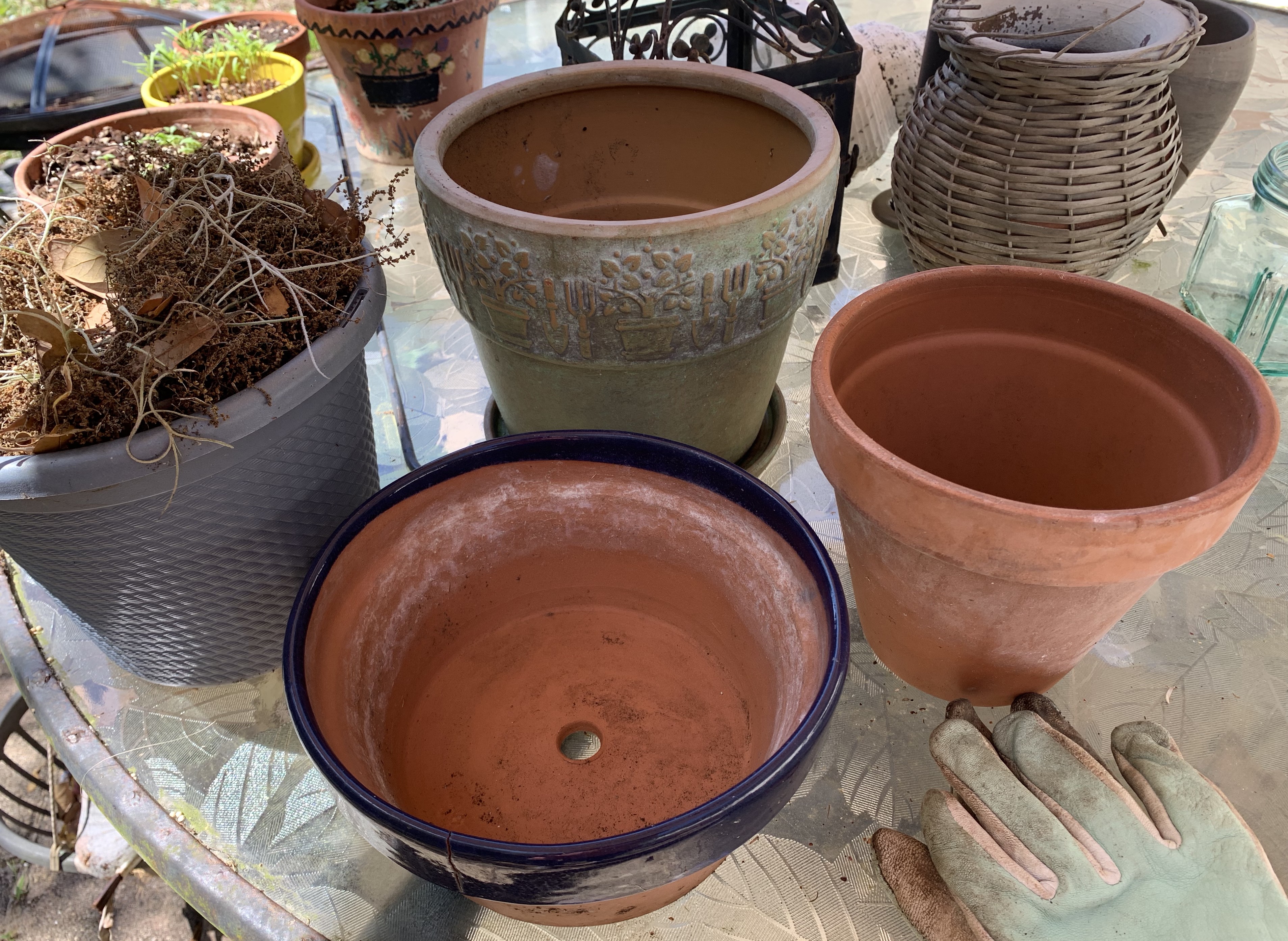
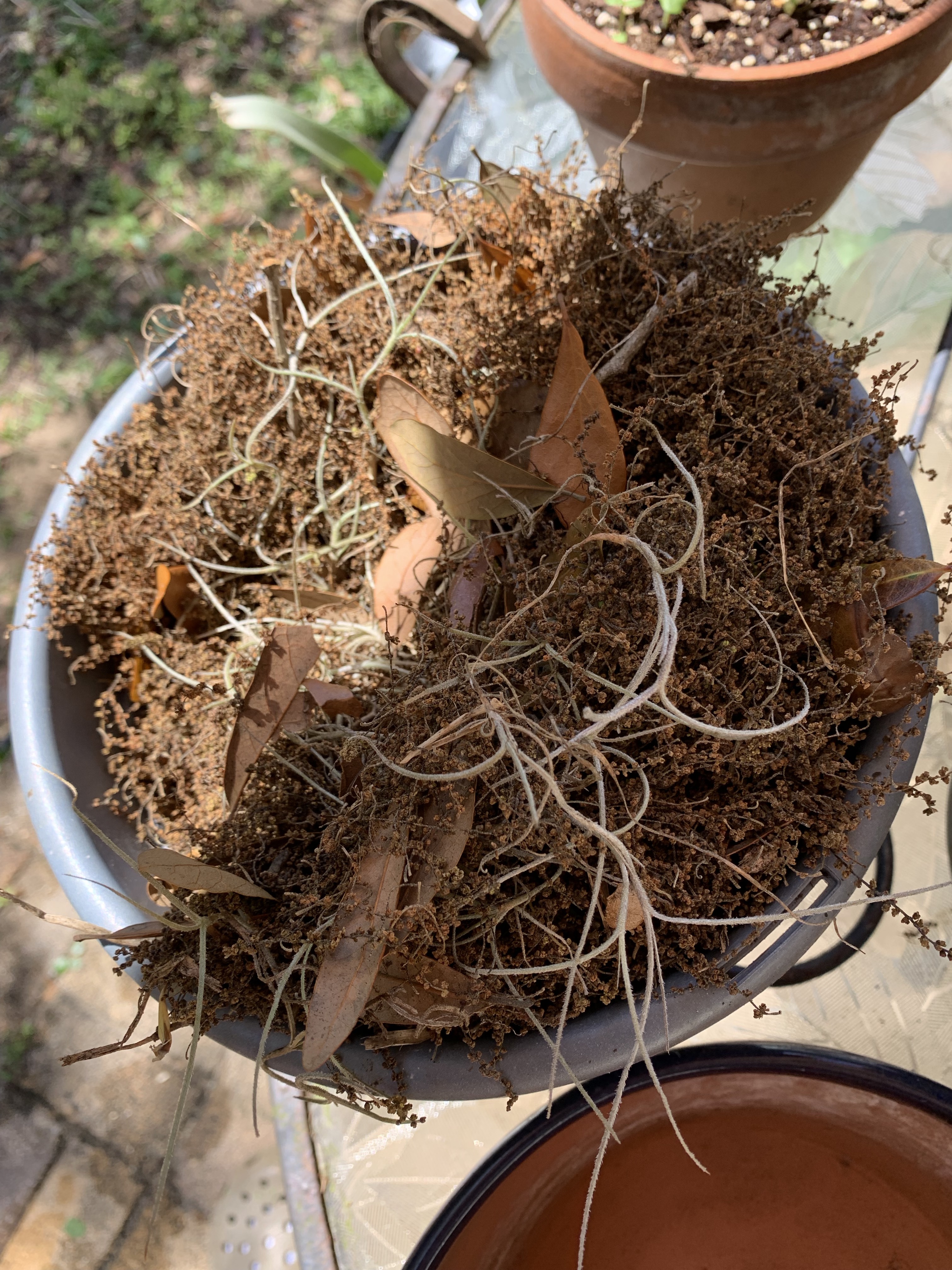
I gathered up pots of all sizes that had been lying around and cleaned them out. for drainage I used yard debris, which was a mix of oak leaves, catkins (those long brown things) and Spanish moss. That mixture was pushed into the bottom of each pot before adding dirt.

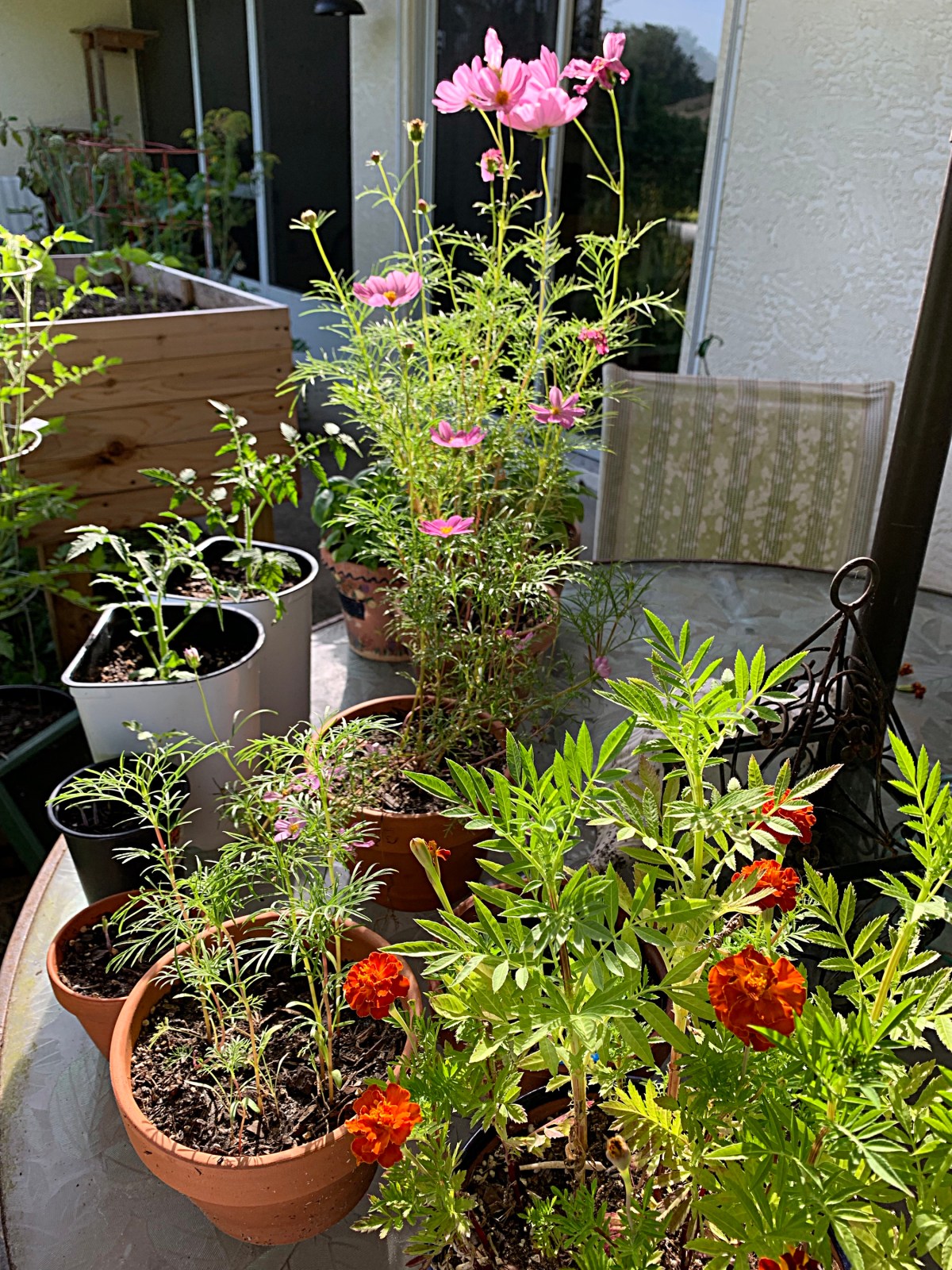
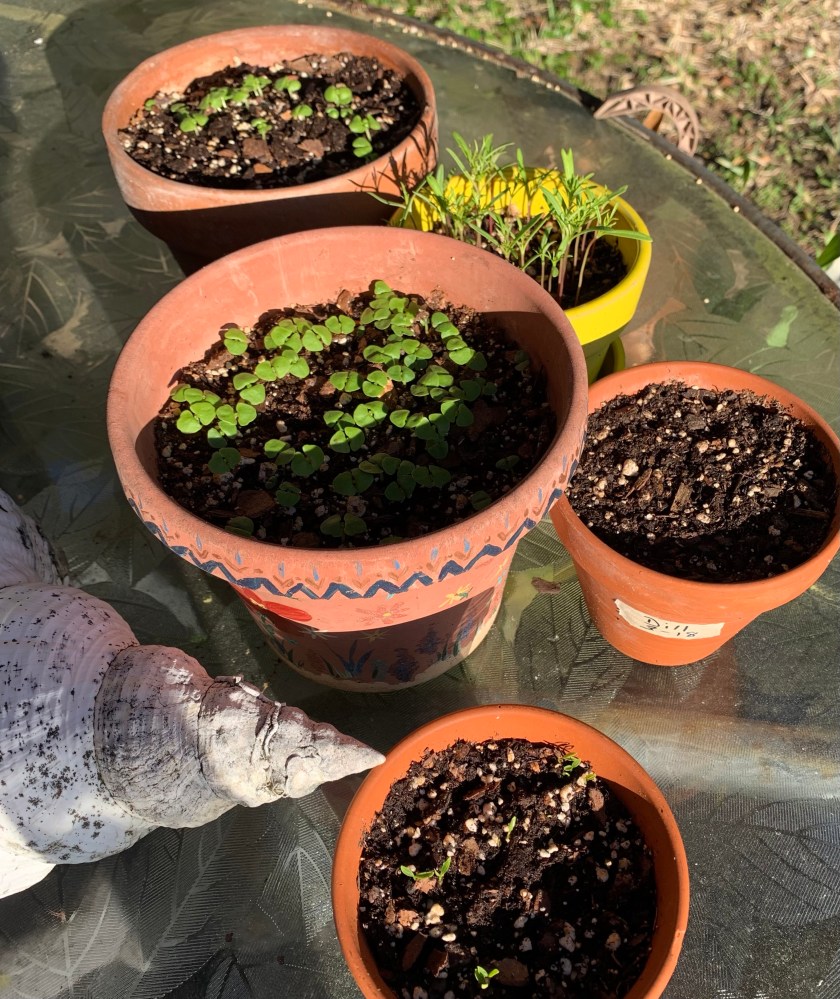
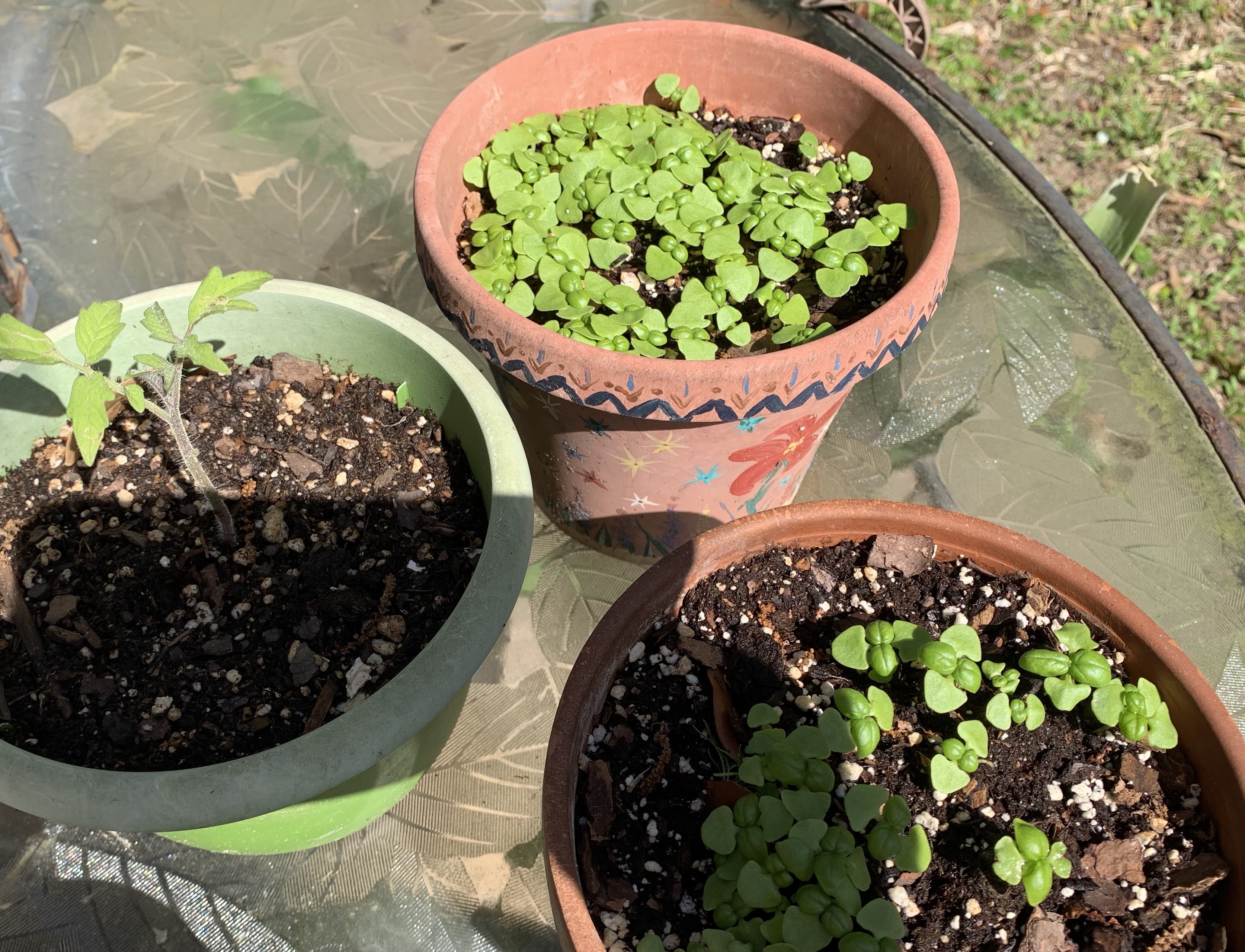
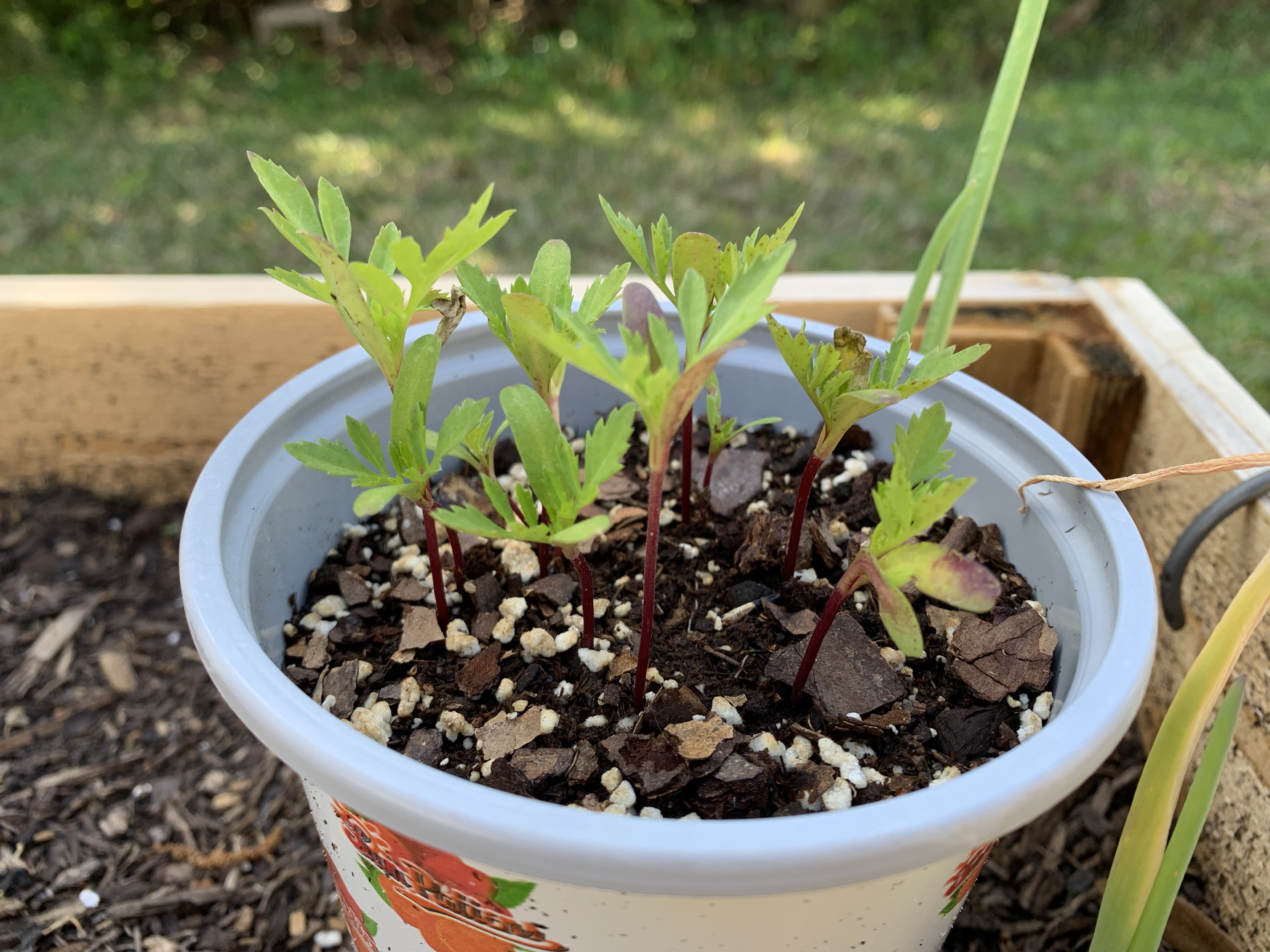
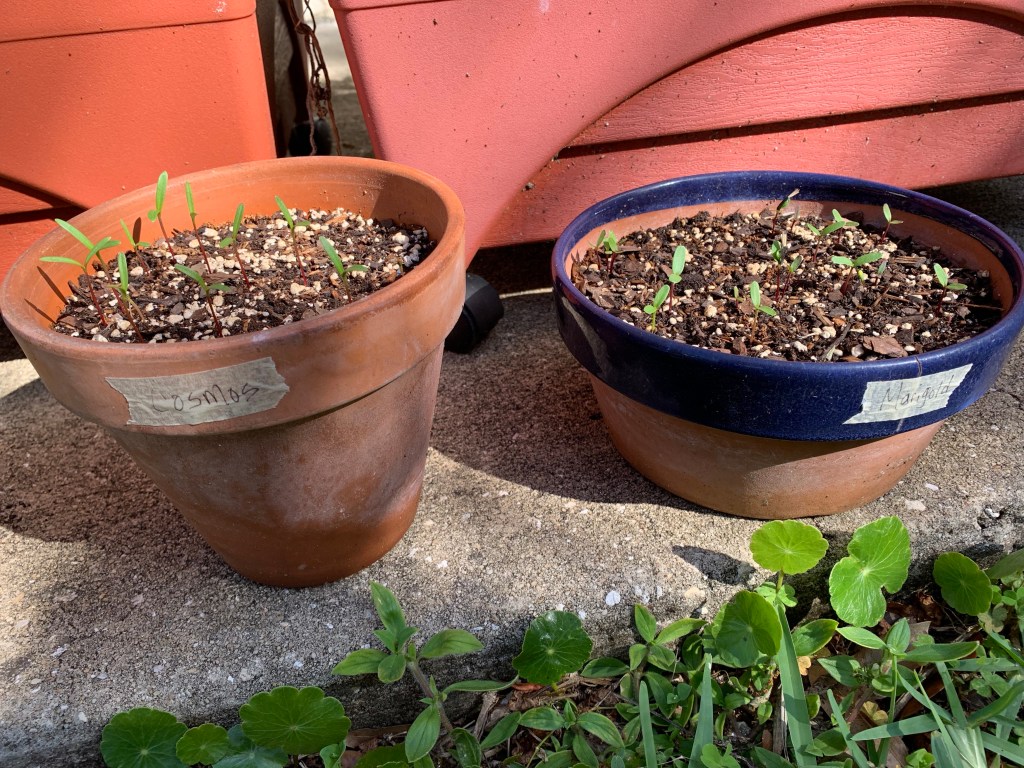
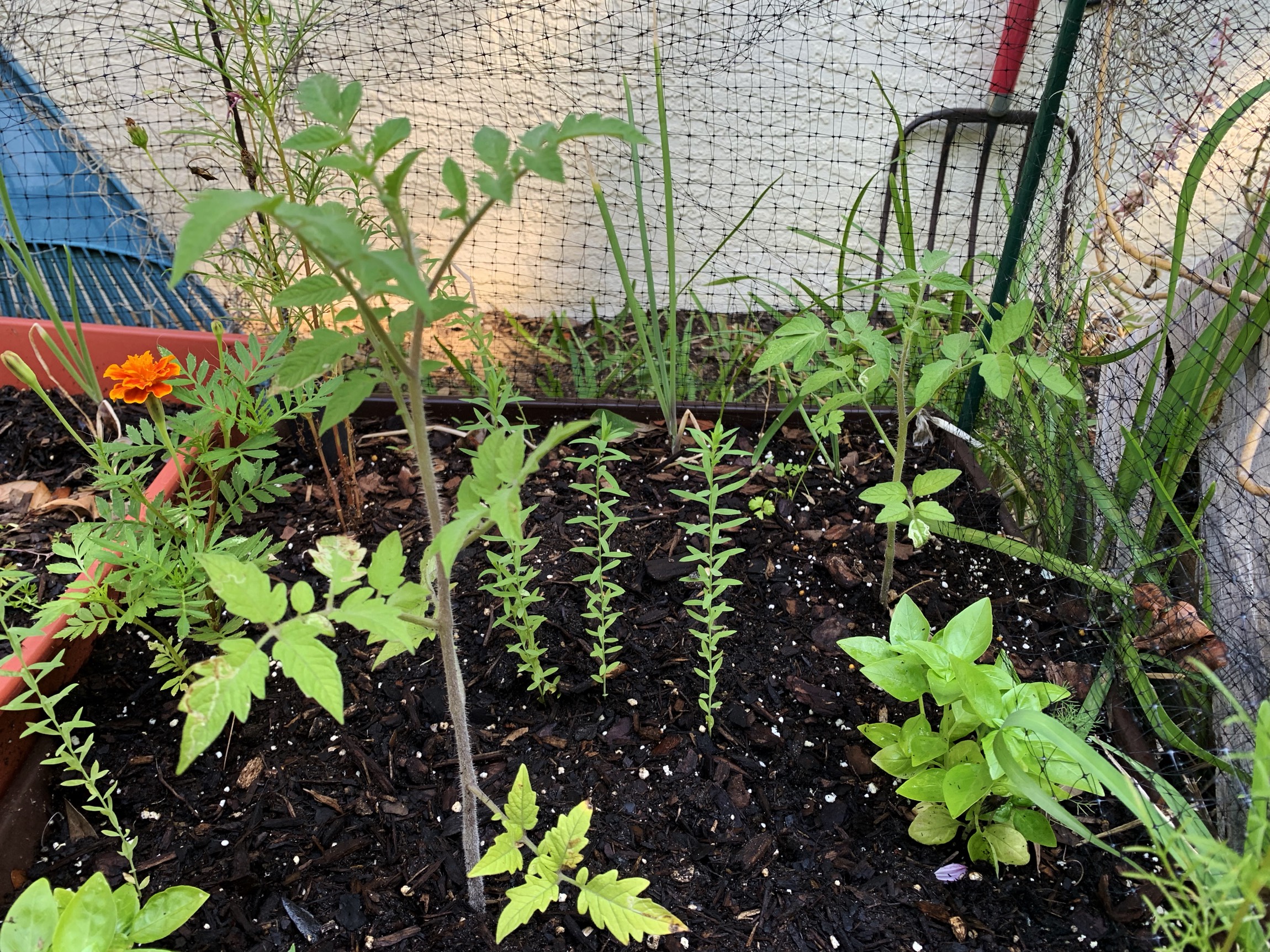
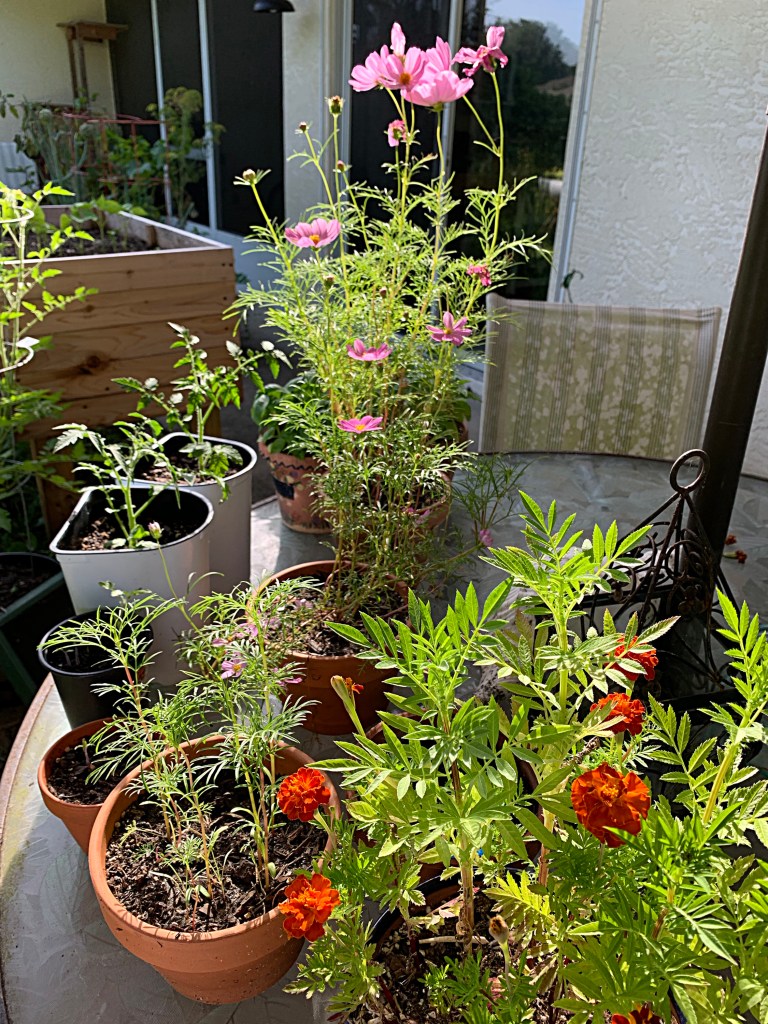
I’ve planted basil, dill, cherry tomatoes, marigolds and cosmos. I used freezer tape to label the pots with the date they were planted.

basil and other seedlings in pots

Growing Basil

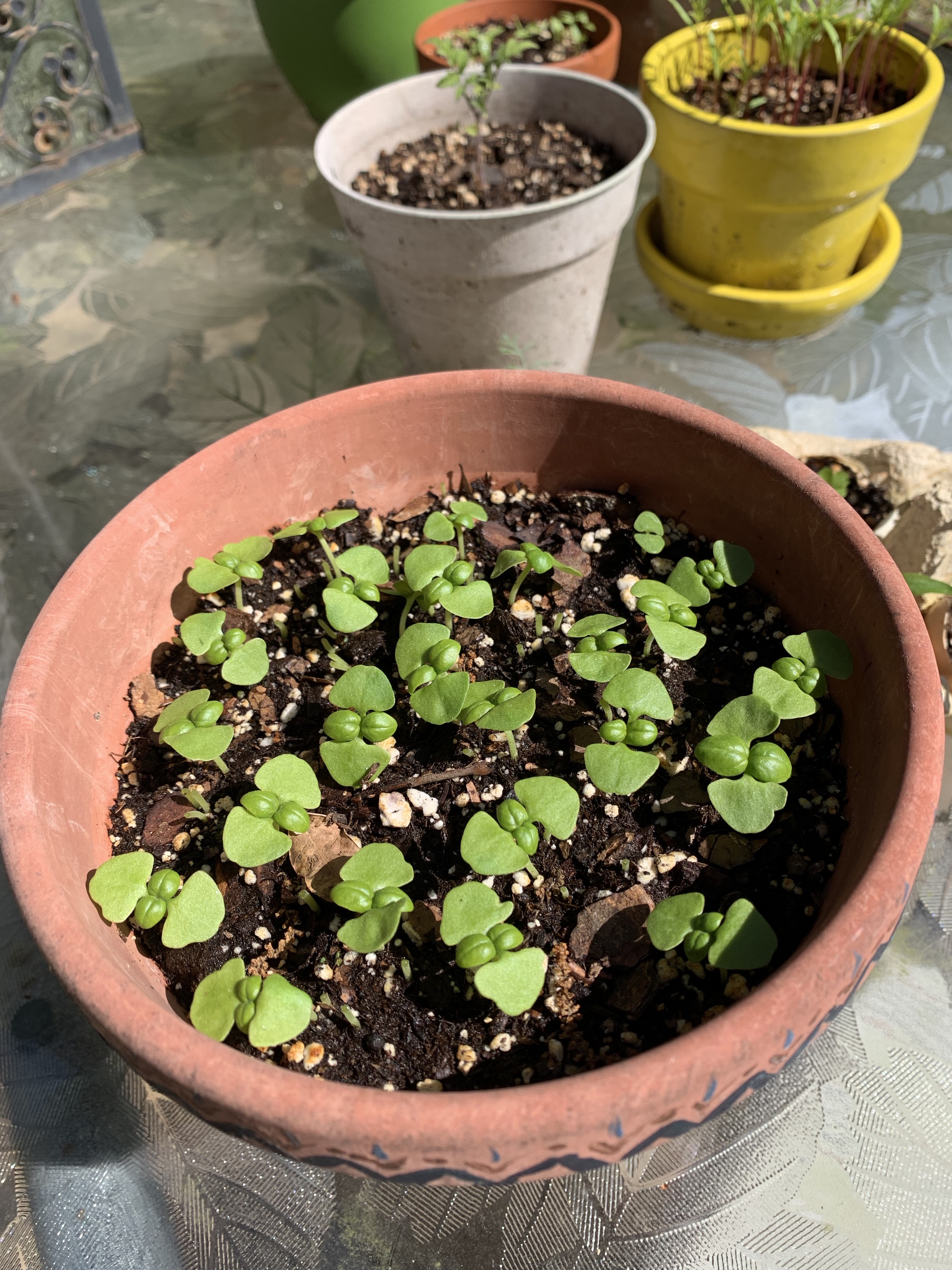
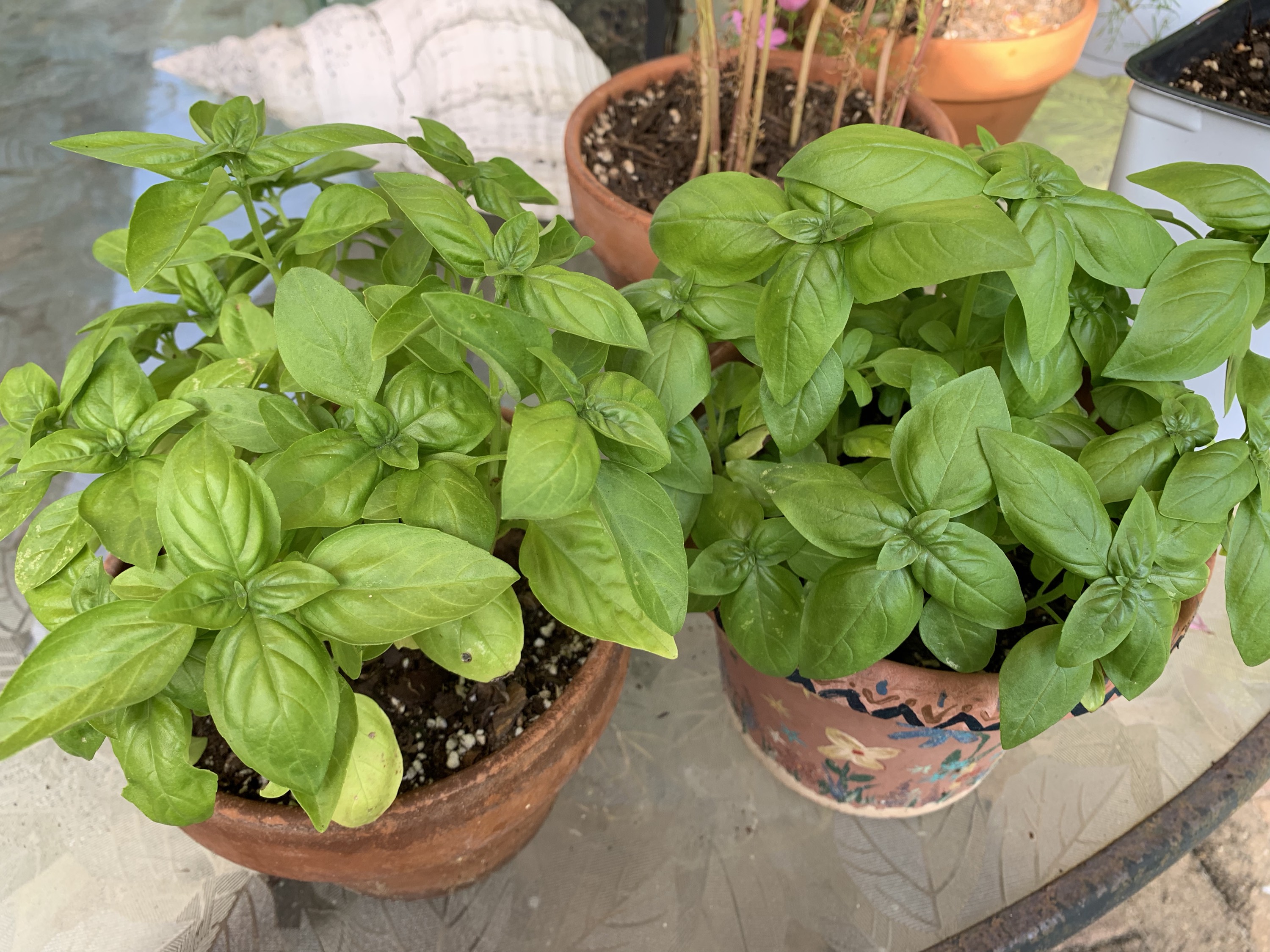
Basil can be difficult to grow in Florida, or so I’ve heard. I had some basil plants in the garden that lasted a couple of years, but then they died. Basil does self-sow if you let seeds form. I now have two pots of basil.

The basil seedlings became so crowded that I removed some of the plants by cutting them off. You should cut and not pull when thinning so as not to disturb the roots.

I kept the cuttings to use when cooking! So far, everything looks good and I hope to have nice big basil plants to pull from year round.

basil grown from seeds
Basil one month later – end of May

Cosmos and Marigolds

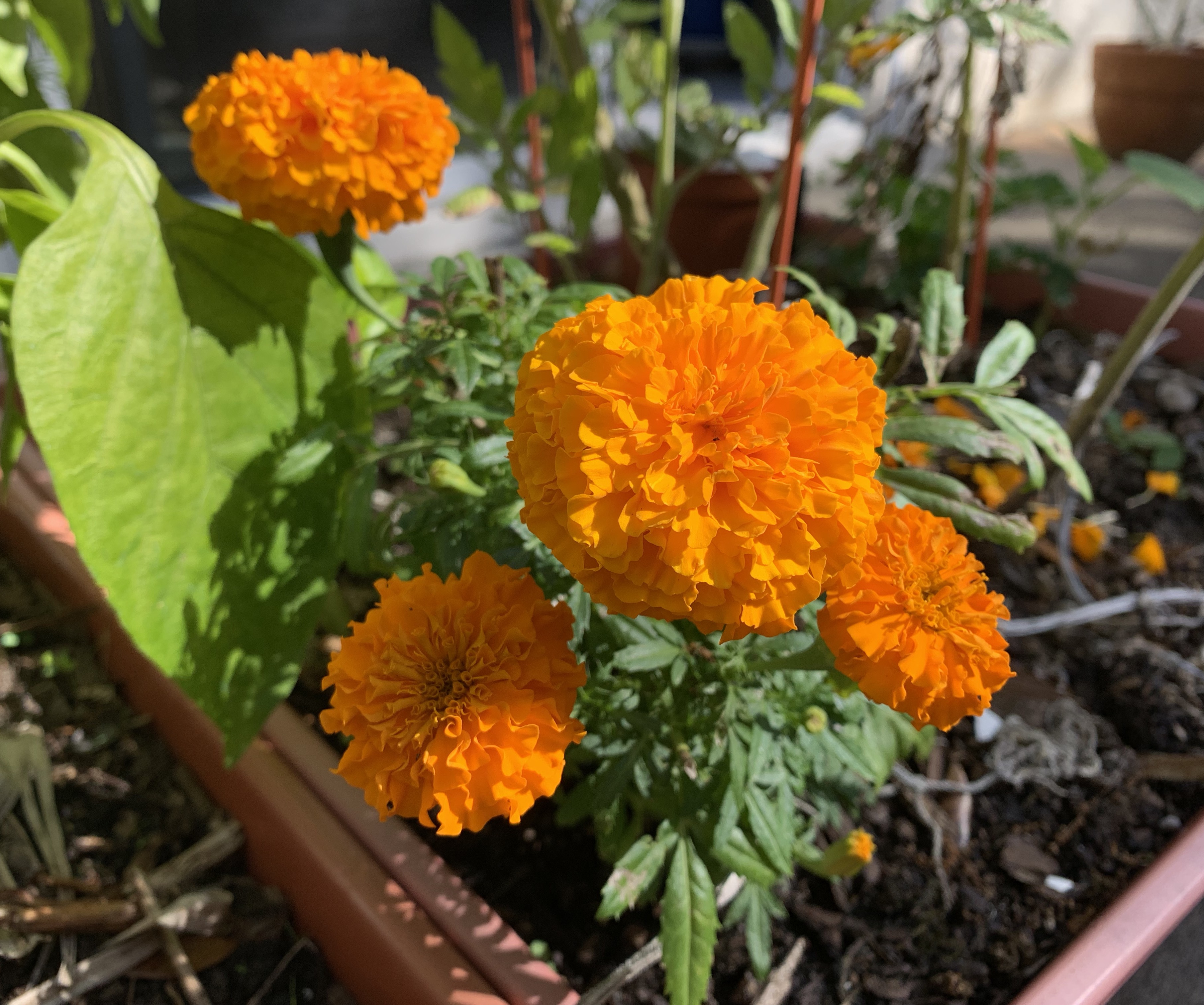
I chose two types of flower packets to grow from seeds. Marigolds are so wonderful for gardens, because they repel certain bugs that could be destructive. They should be dead-headed (pull off the old flowers) and I rip the flower head apart and scatter it among the vegetables. Every gardener probably includes marigolds when planting. I think certain varieties are better than others, but I didn’t have a lot to choose from at the store.

I bought two flowering marigold plants – see the orange one below – and will see what happens with the seeds.

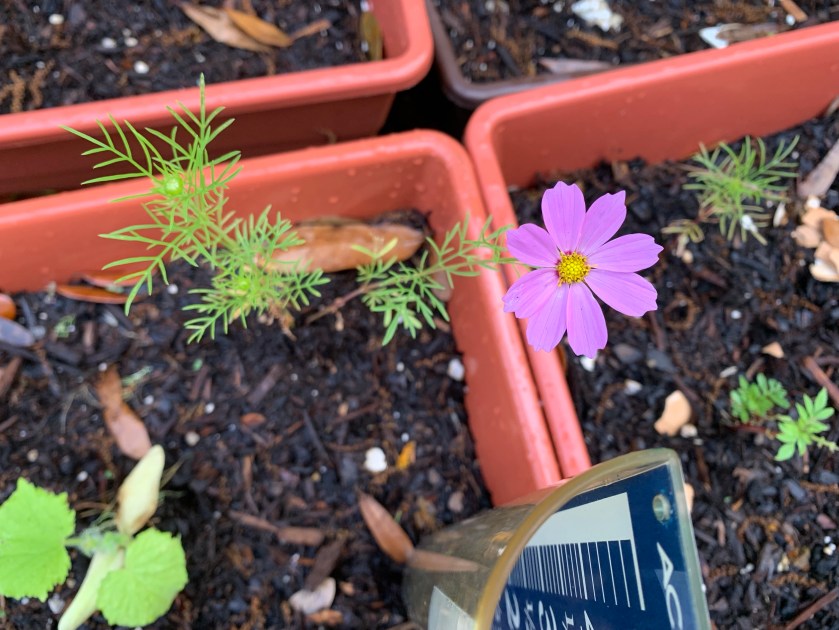
little cosmos flower blooming
Flowering cosmos in a grow box

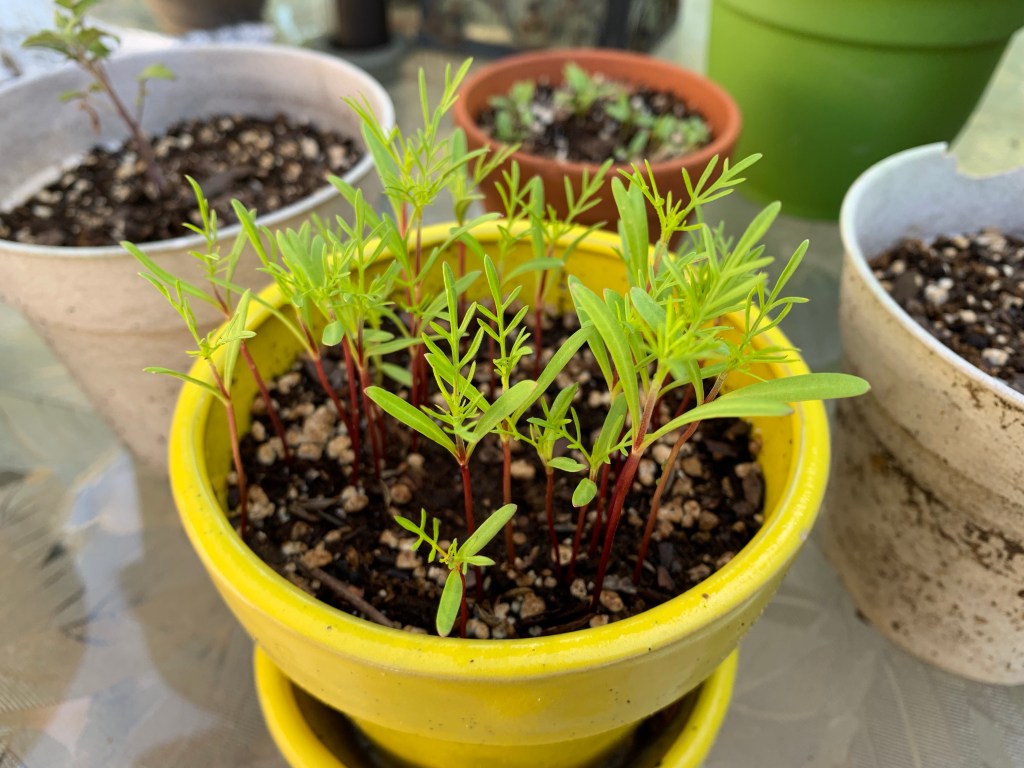
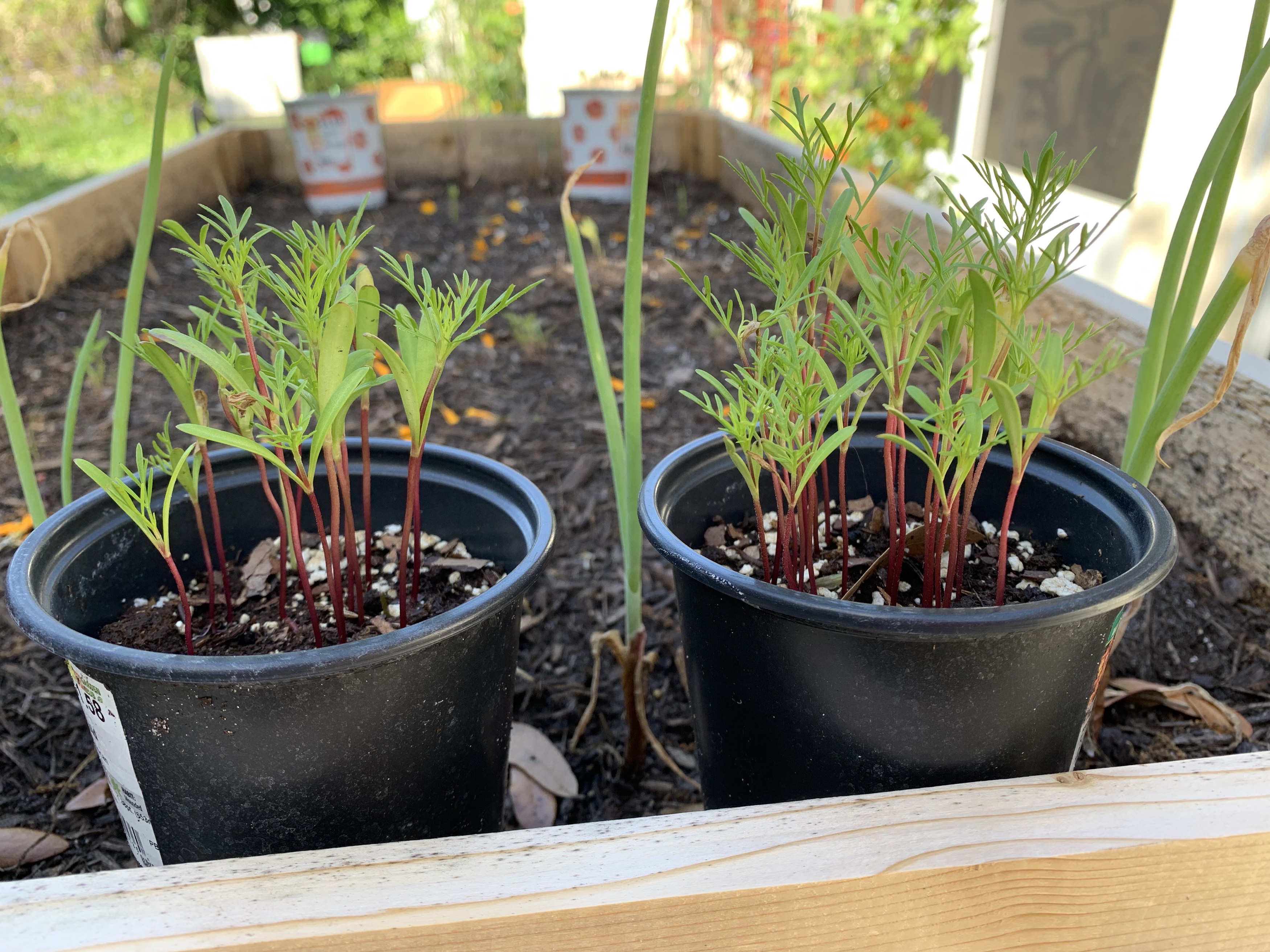
The cosmos seedlings are looking pretty good. A little purple cosmos flower has bloomed in my grow box. That plant was begun in an eggshell pot.

This is certainly a different looking cosmos from what I am used to growing in New Hampshire. Or maybe the plant needs to mature to grow larger.

Actually, the secret is to plant seeds in real good dirt.

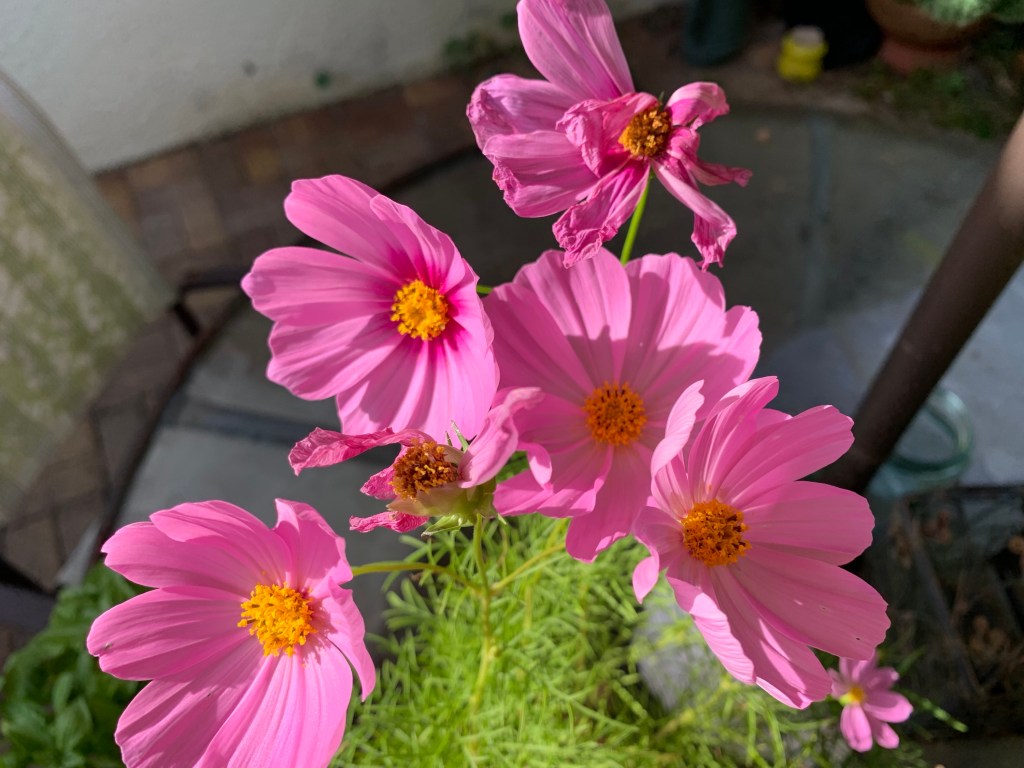
The cosmos in the larger pot is looking nice and blooming regularly

Growing Dill

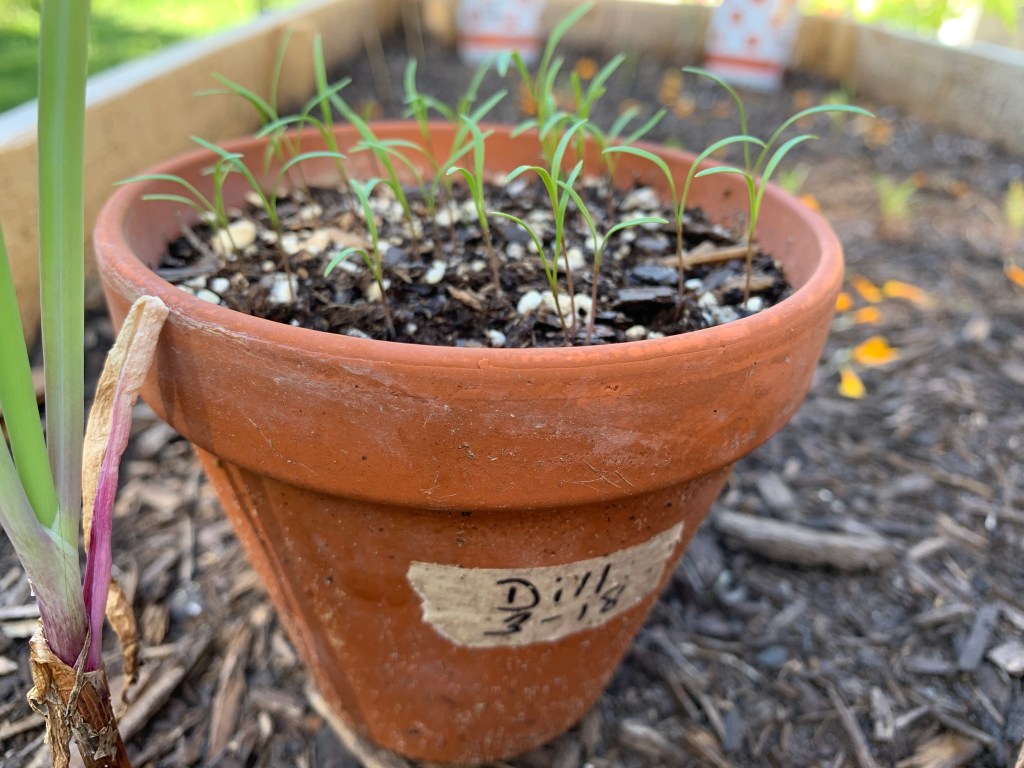
I always grew dill in my northern garden, but have not had luck growing it here in Florida. I do have a few small seedlings in the grow boxes, and now have dill sprouting in this terra cotta pot.

Because I don’t have much luck growing dill, I have chosen to grow fennel. It is similar in that it also grows tall and feathery and has flowers that attract beneficial bugs. Also the Swallowtail butterfly will leave her eggs on fennel, just like parsley and dill.
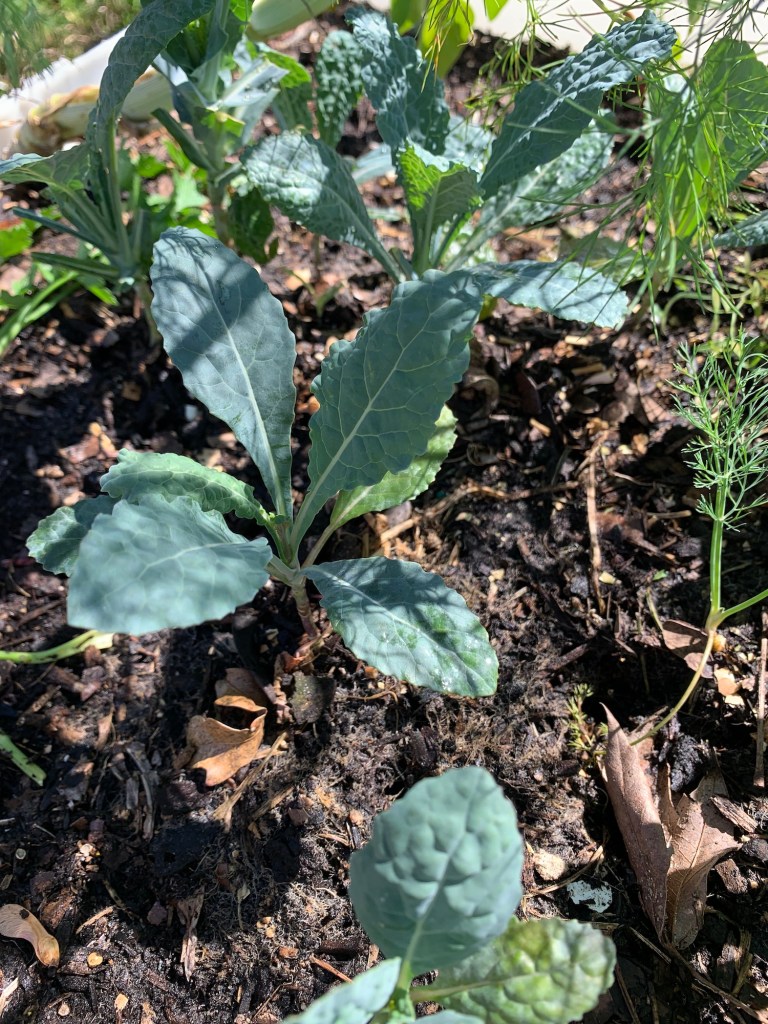
Dill seeds sprouting in a pot
Dill seedlings

I needed up putting the dill into the potato garden and planted more dill seeds in a large pot.

Dill plant

Cherry Tomatoes

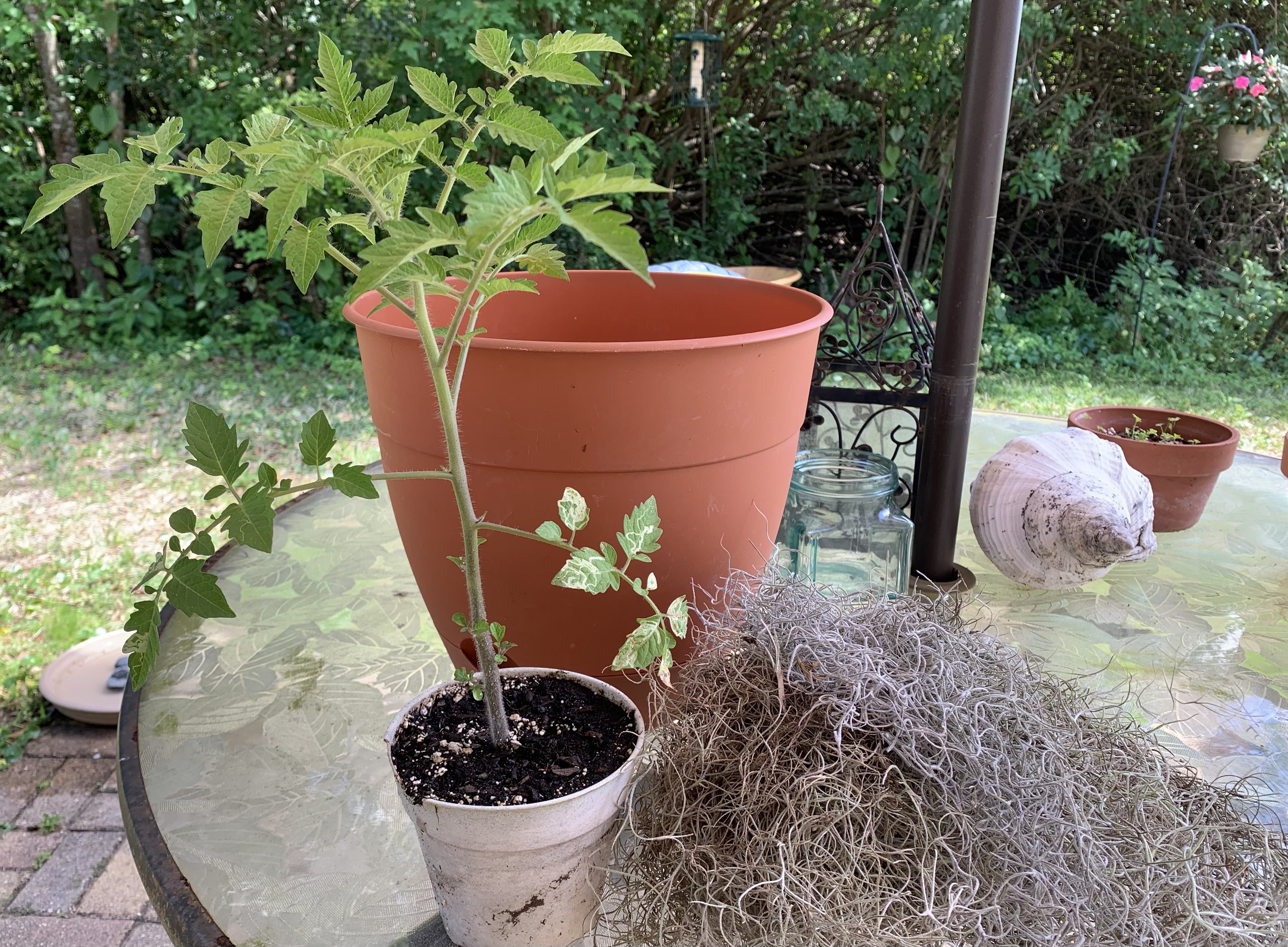
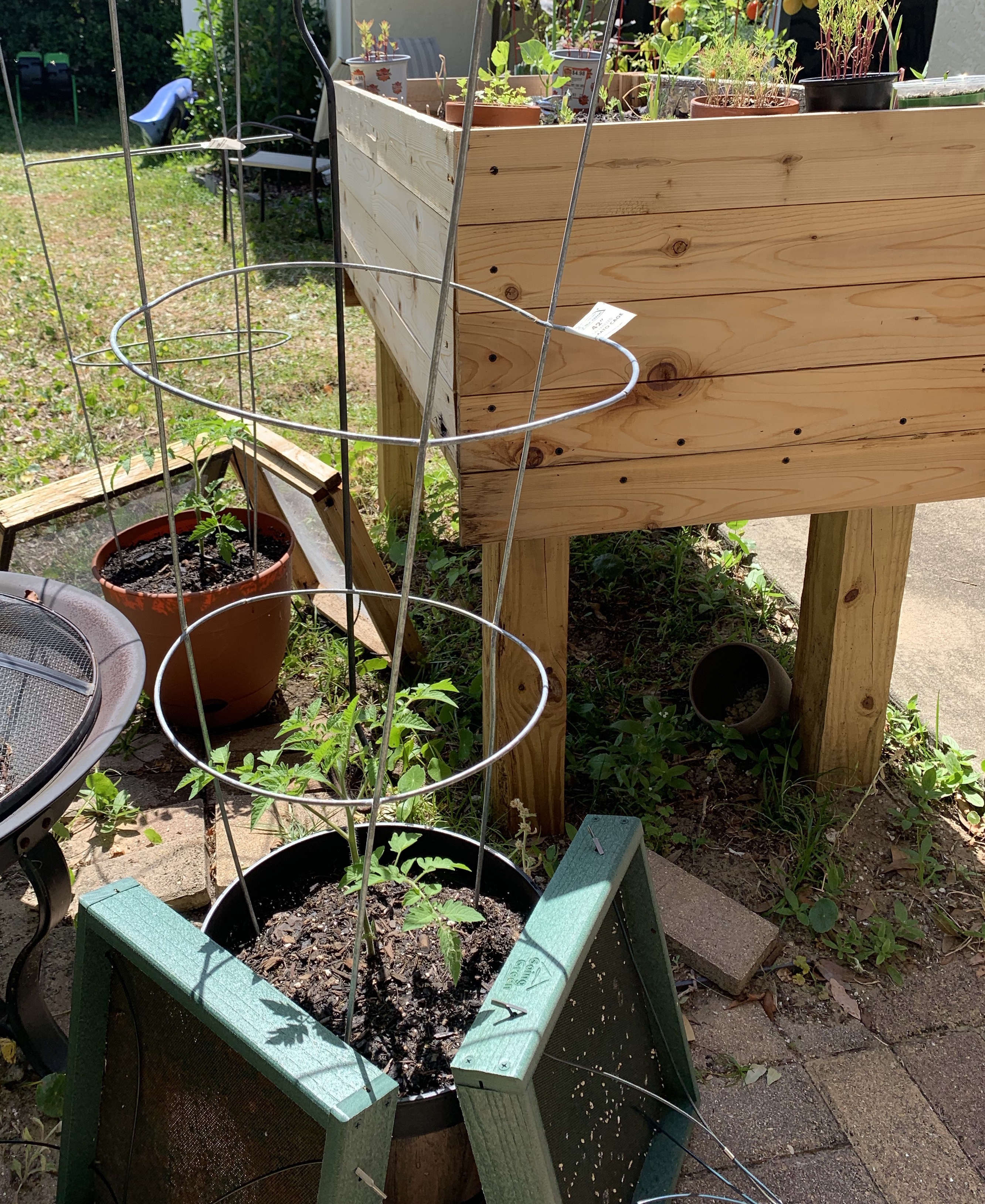
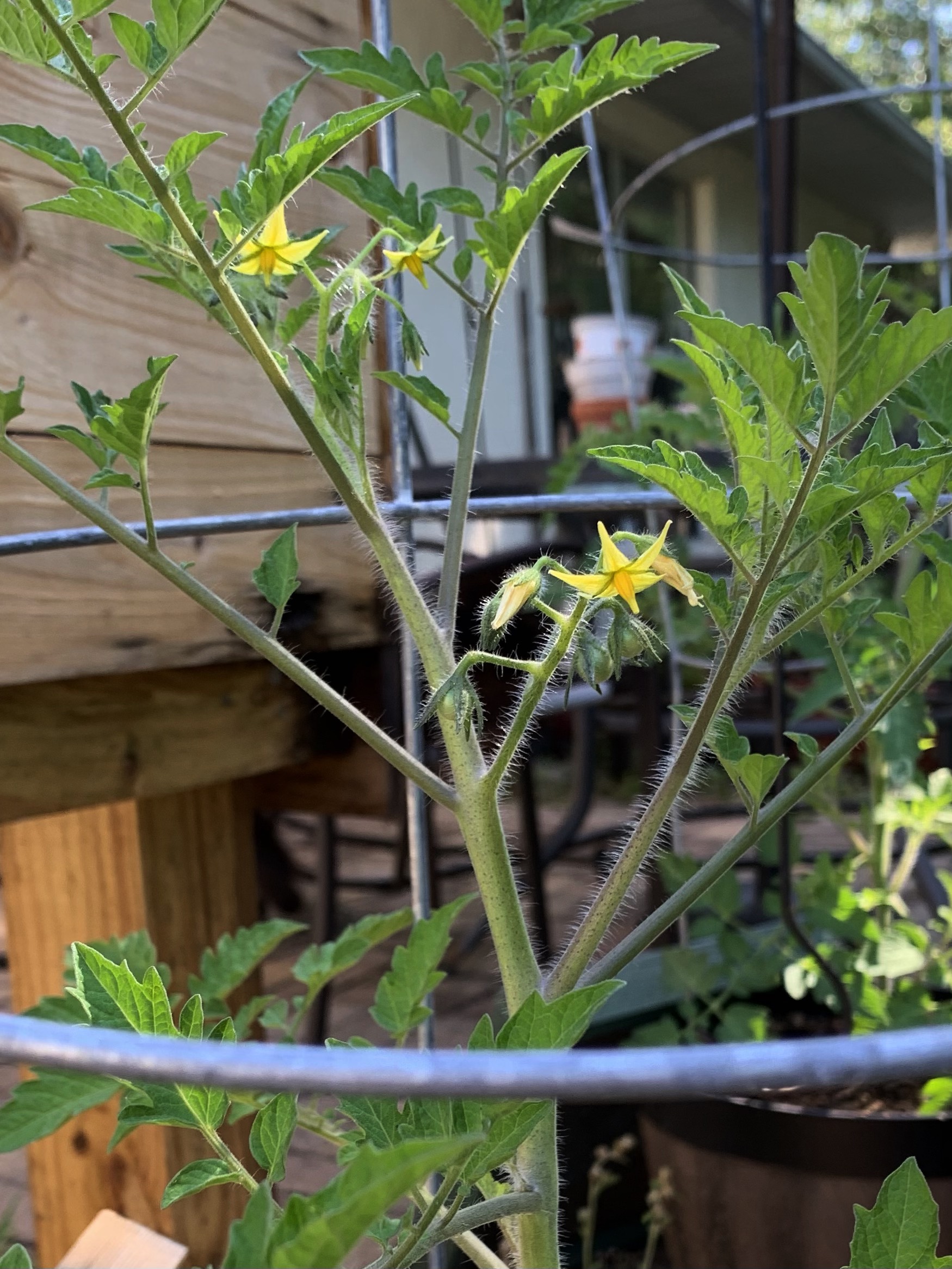
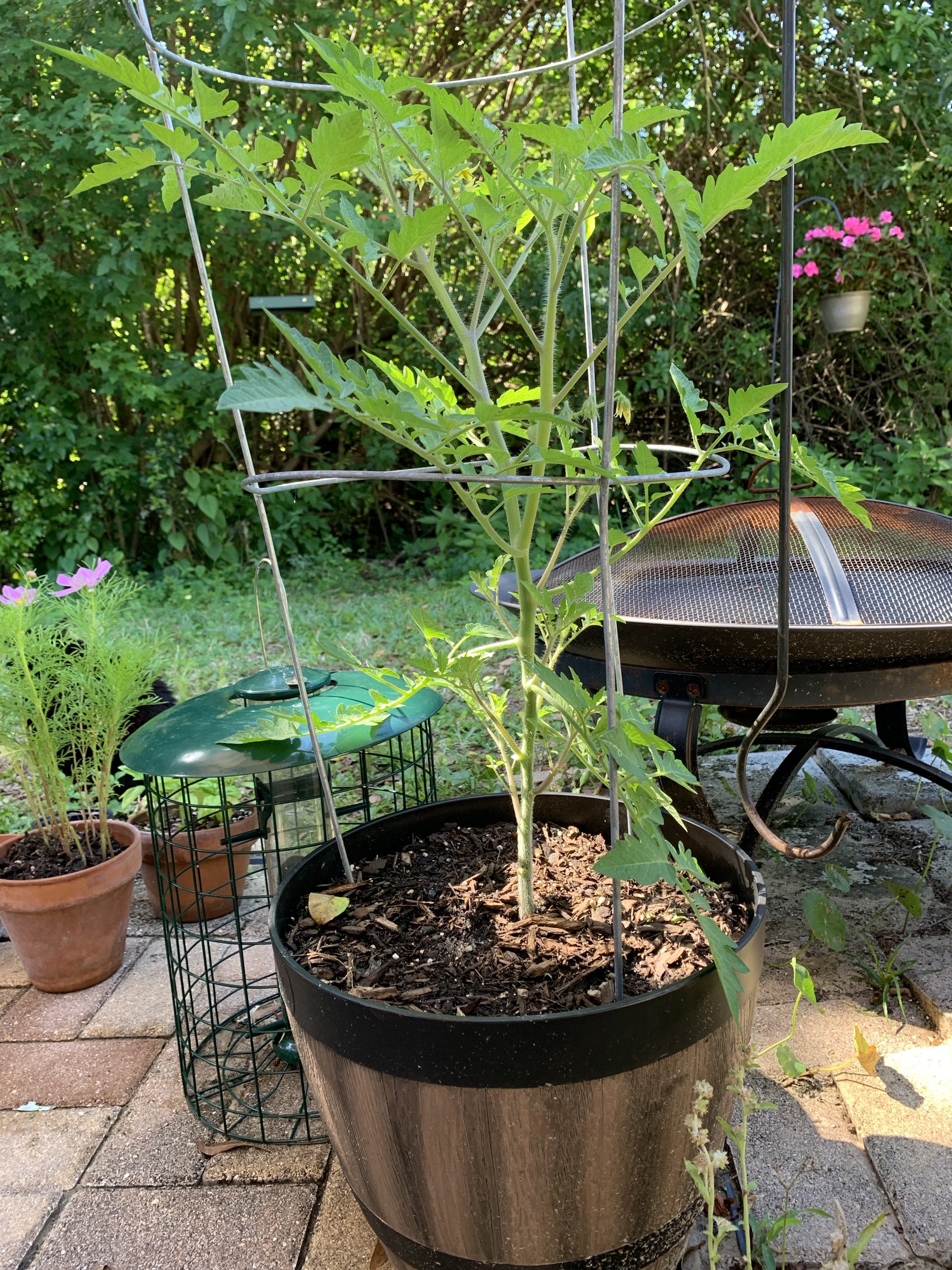
My cherry tomato seedlings were not doing much at first, but now in May they are large plants. I’ve transplanted them a few times and they have little tomatoes on the vine.

Plants by the end of May

Growing Dill and Fennel in a Florida Garden

Growing dill and fennel in a Florida yard.

I’ve combined these two herbs in this post because one of them I can’t seem to grow. Because dill doesn’t like my yard, I’ve grown fennel in it’s place.

The two herbs are not interchangeable for cooking and seasoning, as they are both different, but as far as gardening goes, they are similar. They are both airy and lacy and have big yellow, open flowers that attract beneficials.

Dill

I first grew dill in my New Hampshire yard. I absolutely loved the flowers that came at the end of the season, which attracted good bugs. Here in Florida I have tried numerous times to grow it without success. This potted dill you see here was grown from seeds.

Aside from the fact that the raccoons dug around in the pot one night, it looks pretty good.

Dill plant

Fennel

Fennel on the other hand grows all on it’s own. It is considered a perennial. It has successfully re-seeded itself in my front yard and I’ve seen caterpillars on it in past years. And often the stalks will last into the following year. Here in Florida that happens with many vegetables.
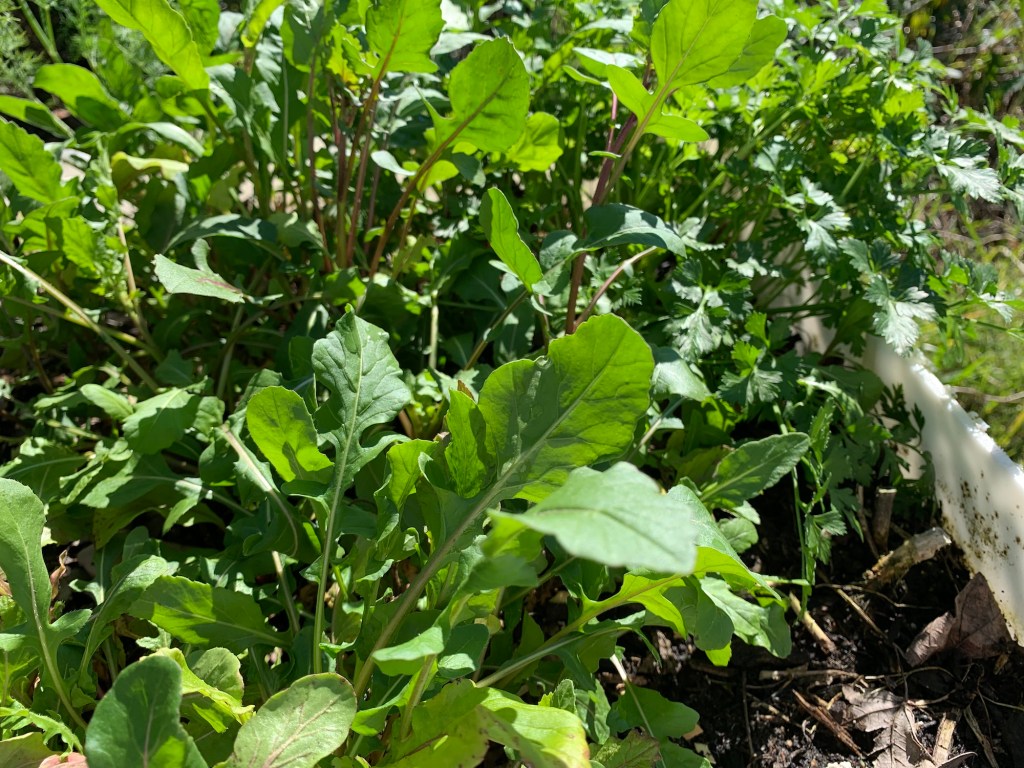
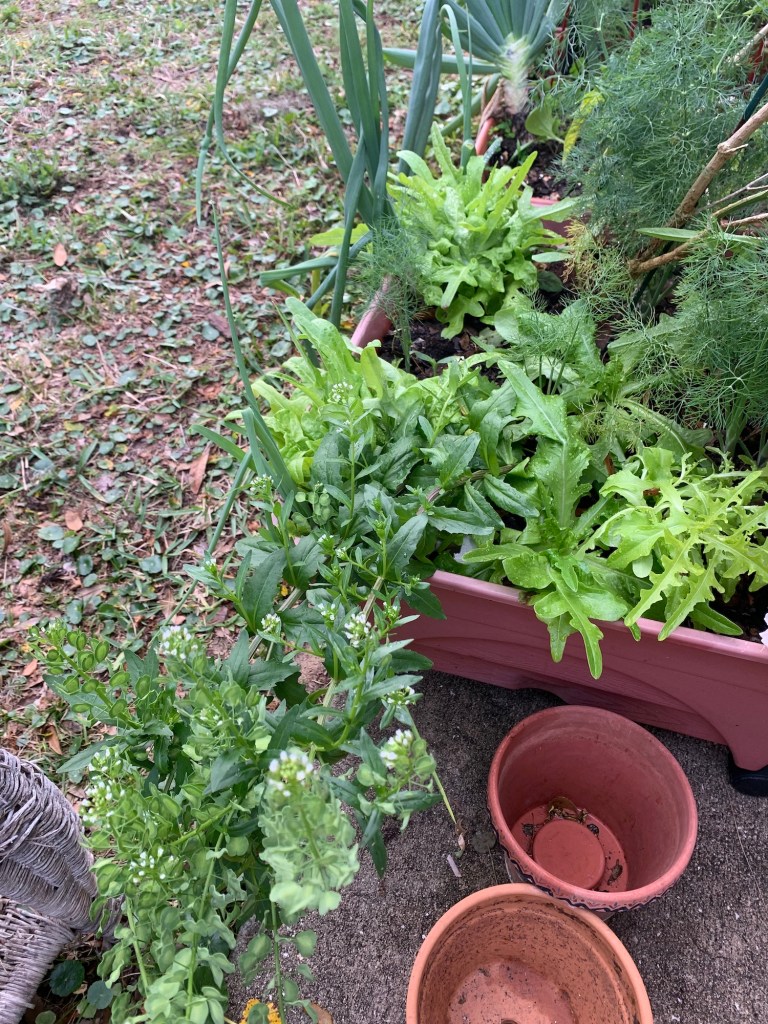
Unfortunately the brown lizards ate all the worms, so I didn’t see any turn into Swallowtail butterflies.

Swallowtail worm on fennel
Parsley worm which will become a black swallowtail butterfly

Saving Seeds

Both dill and fennel have seeds that form on the flowers and are very easy to save. Because I don’t have luck with dill, I have photos of fennel seeds only.

fennel plant with seeds
Fennel flowers turning to seeds

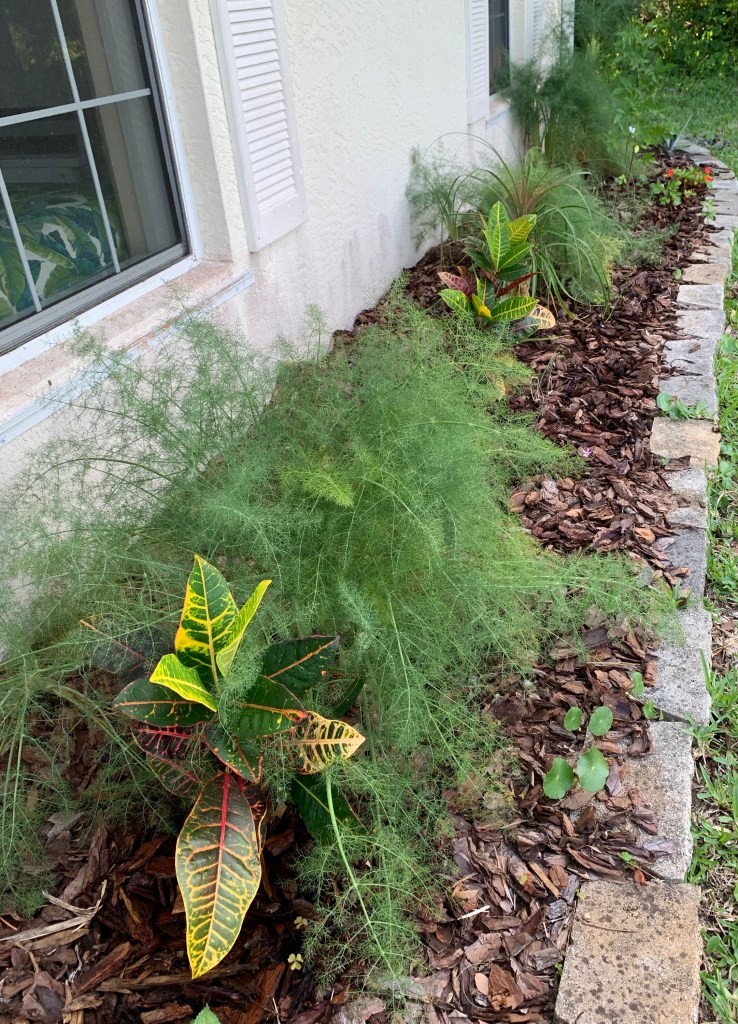
Fennel easily grows from seeds. I have some plants that have sprung up along the front of the house. This year I saw no caterpillars on them, but I like to have them just in case a butterfly comes by to lay her eggs.

fennel plants