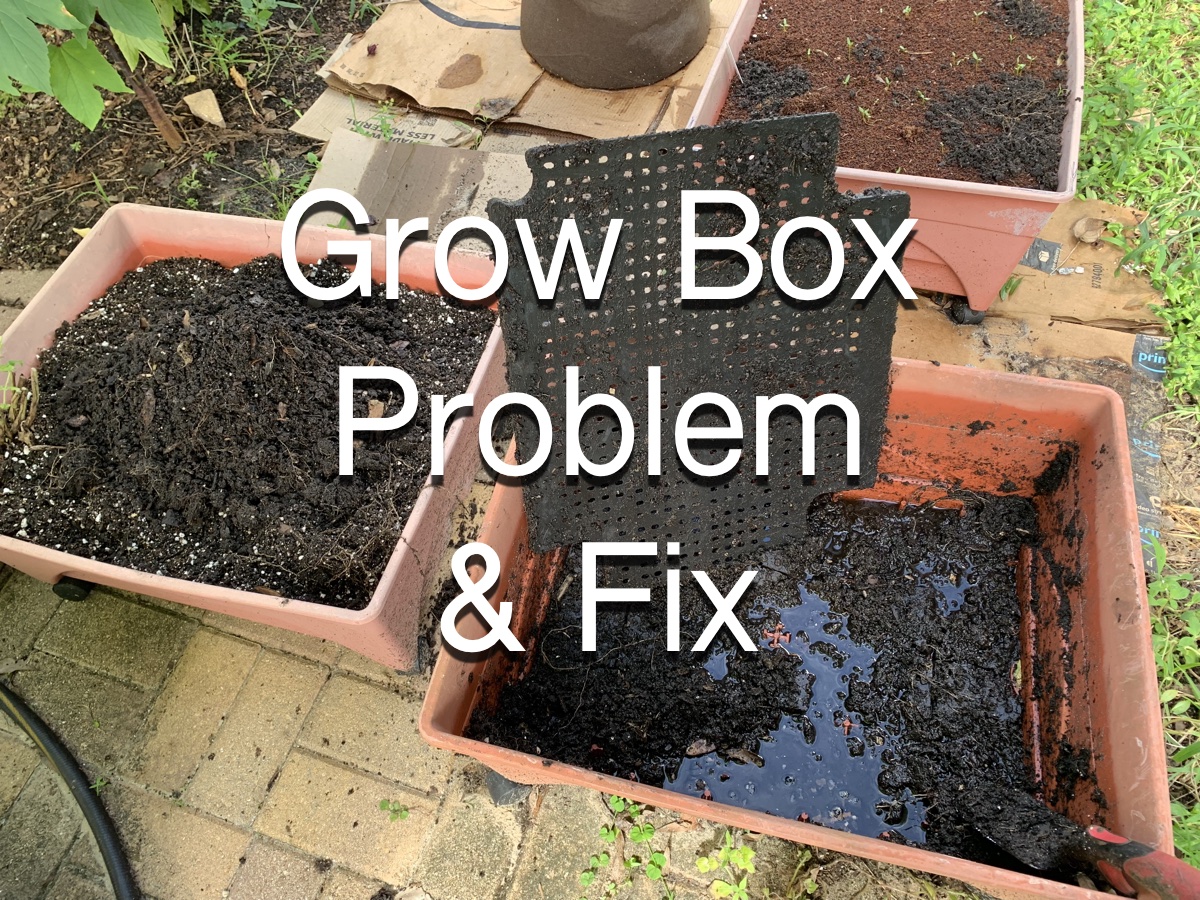
How to Fix Drainage Issues in Garden Grow Boxes

I’ve touched on this topic in my recent posts. My garden grow boxes need re-filling, but first the drainage problem must be solved.

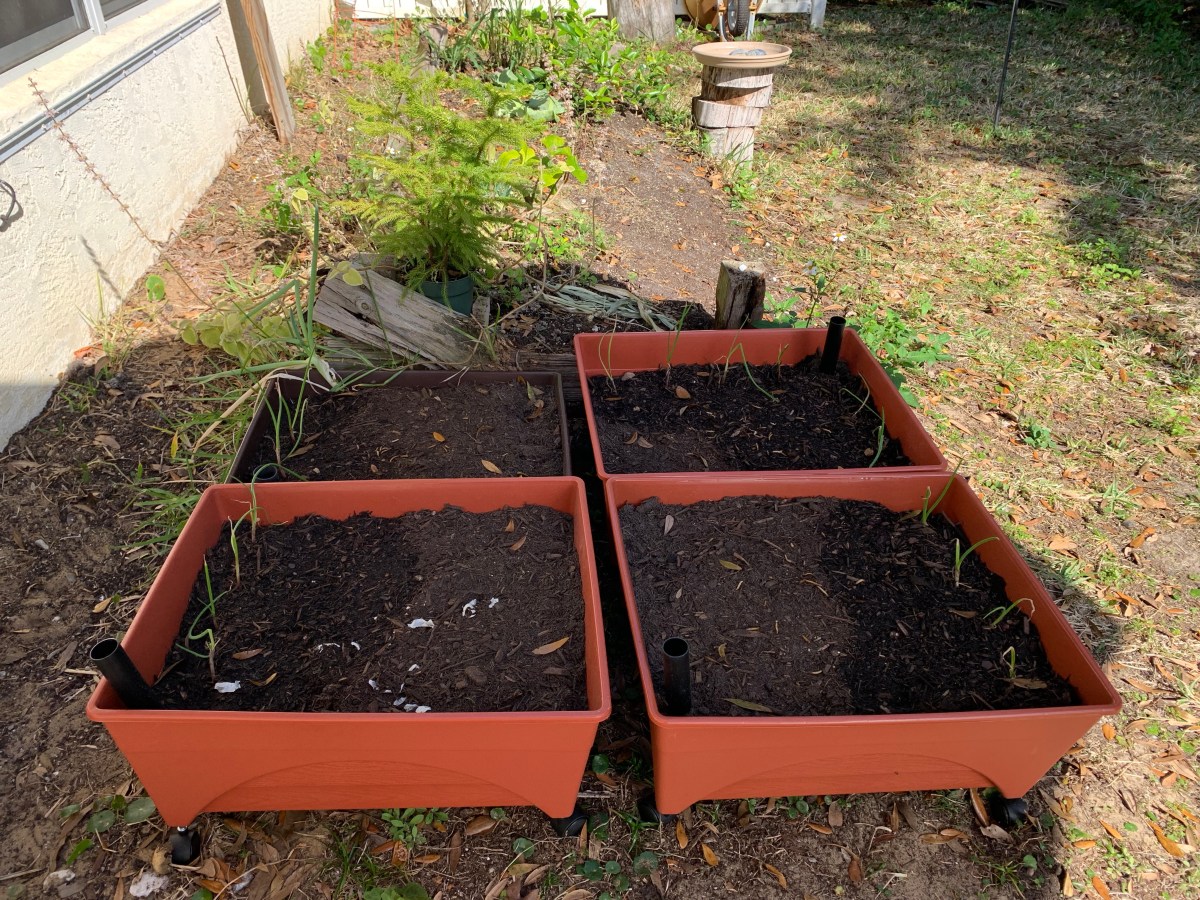
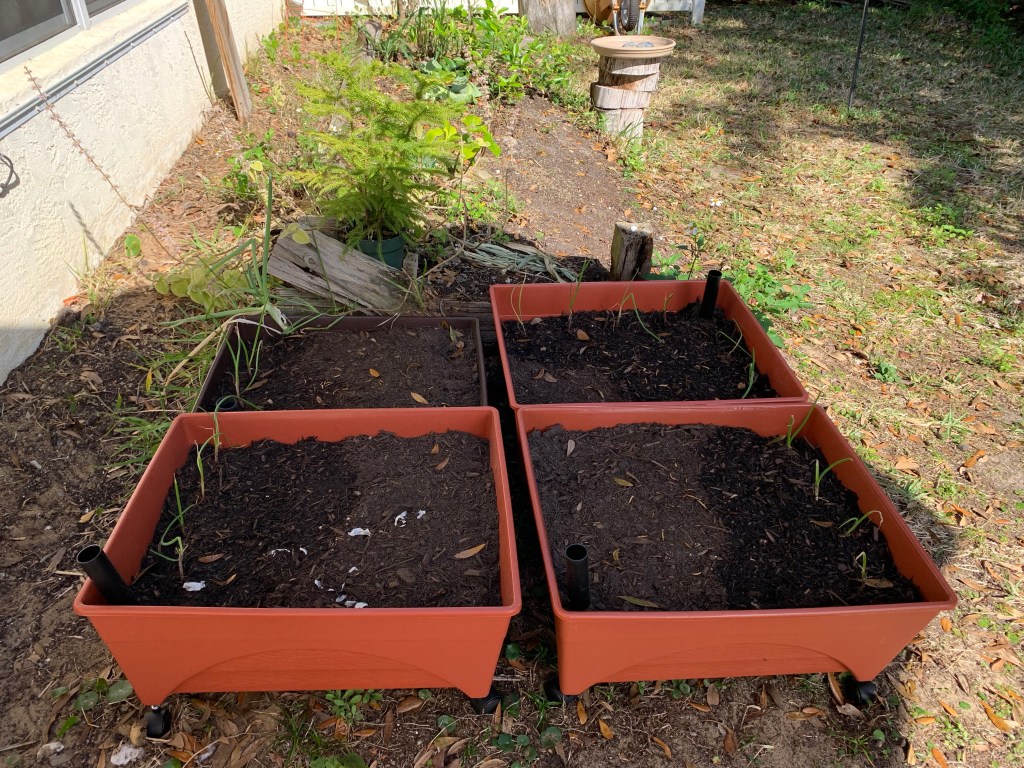
As I tackled the recent box I got some photos to better explain the problem. This is box number four or five in my line up. I have a few boxes left to fix. These are old boxes that I’ve had for a few years. Some are older than others, but they all need drainage issues addressed.
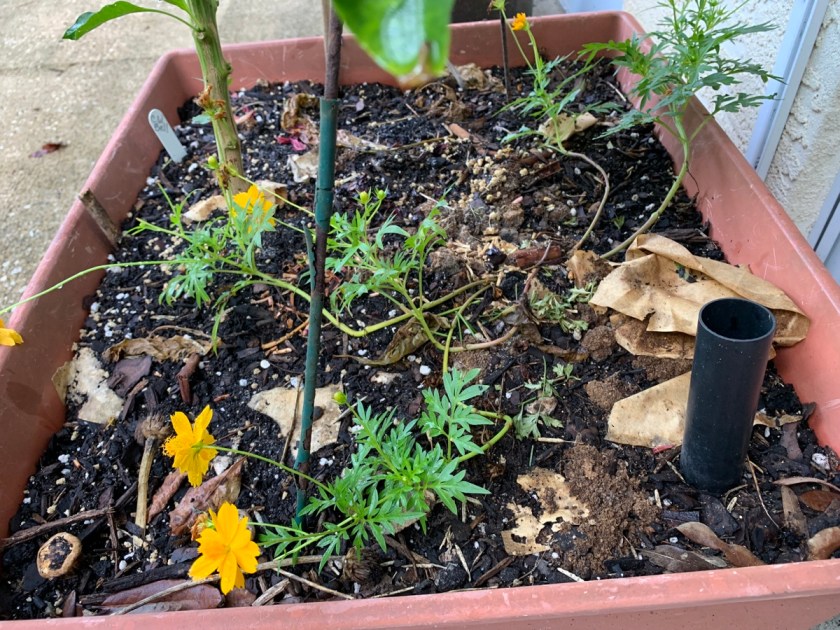
garden grow box
Grow box with watering tube in place

Grow Box System

The way this grow box is supposed to work, to my understanding, is that water collects in the bottom, while the dirt stays in the top. A plastic tube sticks up out of the dirt and that is how water is added. The roots of the plants pull water from the bottom, up through the dirt. A wide drain hole is located on each side of the bottom for water overflow. (See the box explanation on Amazon paid link – this is not my box, but very similar.)

This is a self-watering system, where you pour water in through the tube and the plants use it as needed. There will never be too much water because the excess comes out through the side drains. This only works for plants with roots long enough to reach the water reservoir!
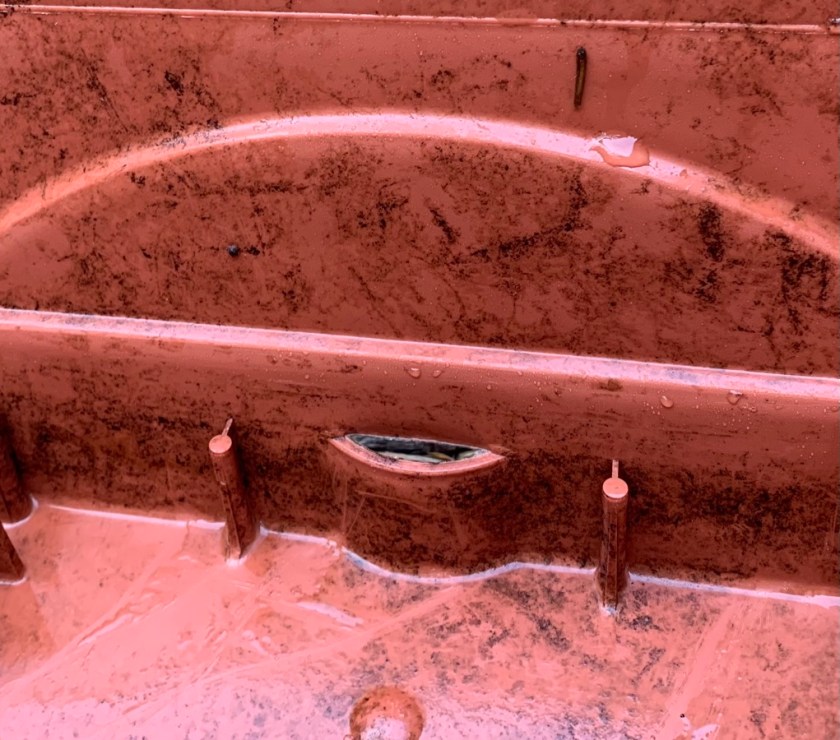
garden box drain hole
Drain hole (one on each side)

This box is a nice idea for gardeners who buy potted plants and add them to the box. Seeds and small plants will need to be watered from the top, which is how I have used these boxes. I grow most everything from seed.

Dirt tends to sift down through the holes over time. Once enough dirt has clogged the water basin, there is no drainage. The plant’s roots are sitting in mud and that means plant death.

Plant Death

The sudden decline and death of a seemingly healthy plant brought this problem to my attention.

A gorgeous, Nu Mex pepper plant was growing in one of my boxes and it looked great. Suddenly, it began to wilt and ended up dying. As I pulled it out, I realized the dirt was soggy! The water had not been draining. It was the beginning of my grow box overhaul undertaking.
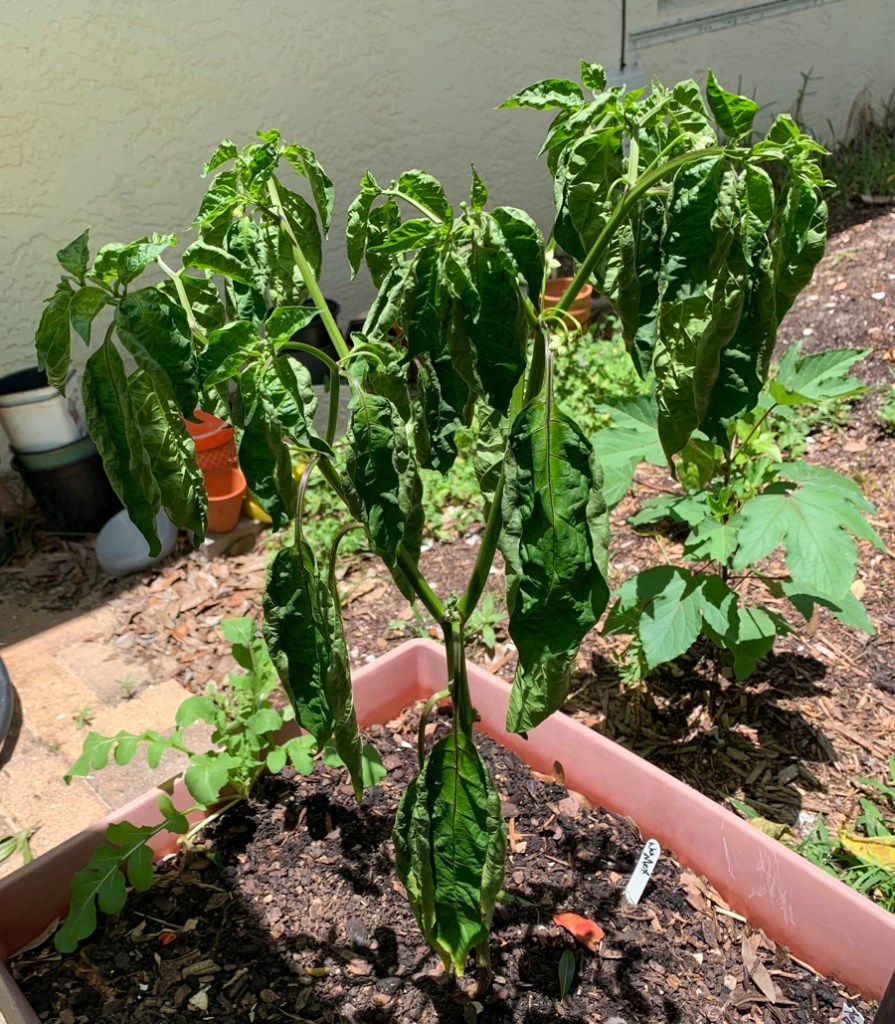
Nu Mex pepper plant in a grow box with bad drainage. It didn’t make it. Very sad.

I’ve been waiting for the plants in these boxes to either die off, or look bad enough to remove. Then, I dig out the old dirt and fix the box problem.

The Fix

Unless I take the time to remove all the dirt each growing season to check for this problem, the set up itself needs to be changed. Only time will tell if my “fix” is working.

Using a trowel I dig out the dirt from the problem box and add it to a pail or fabric bag. I’ll re-use the dirt, with some amendments added.

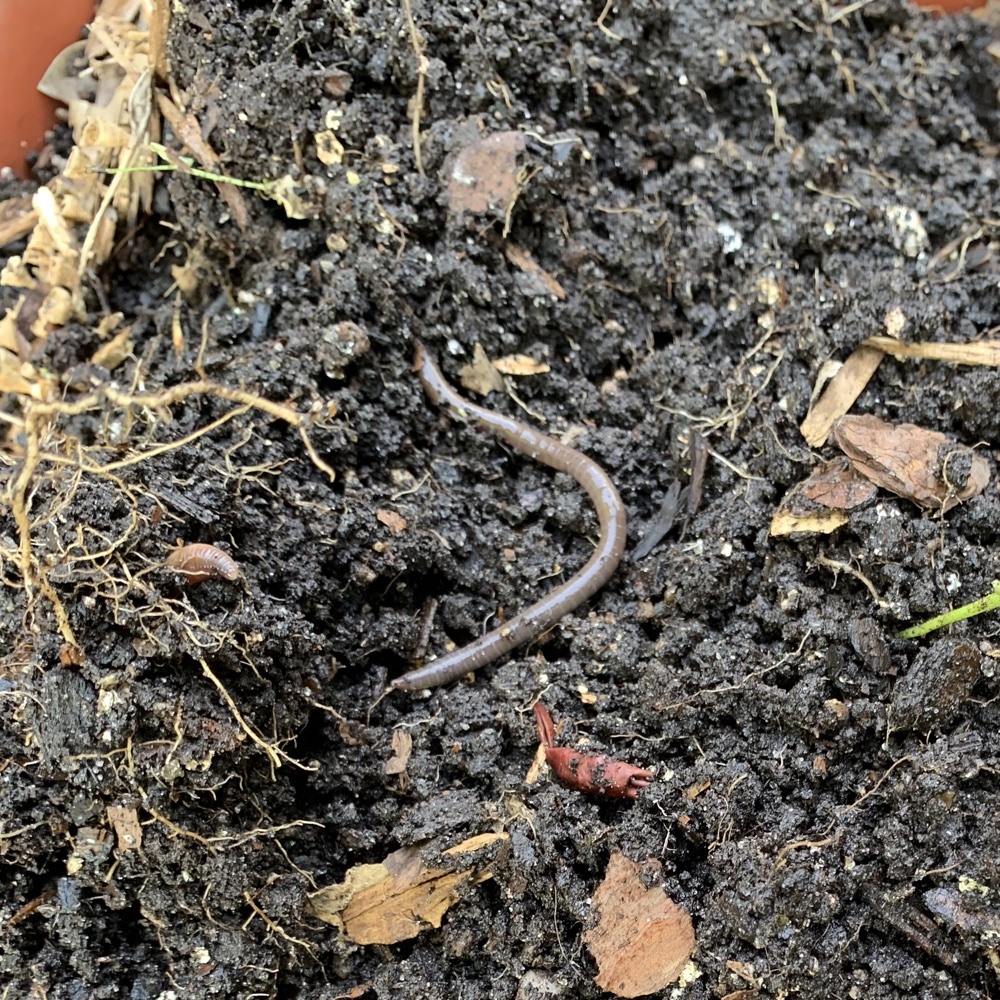
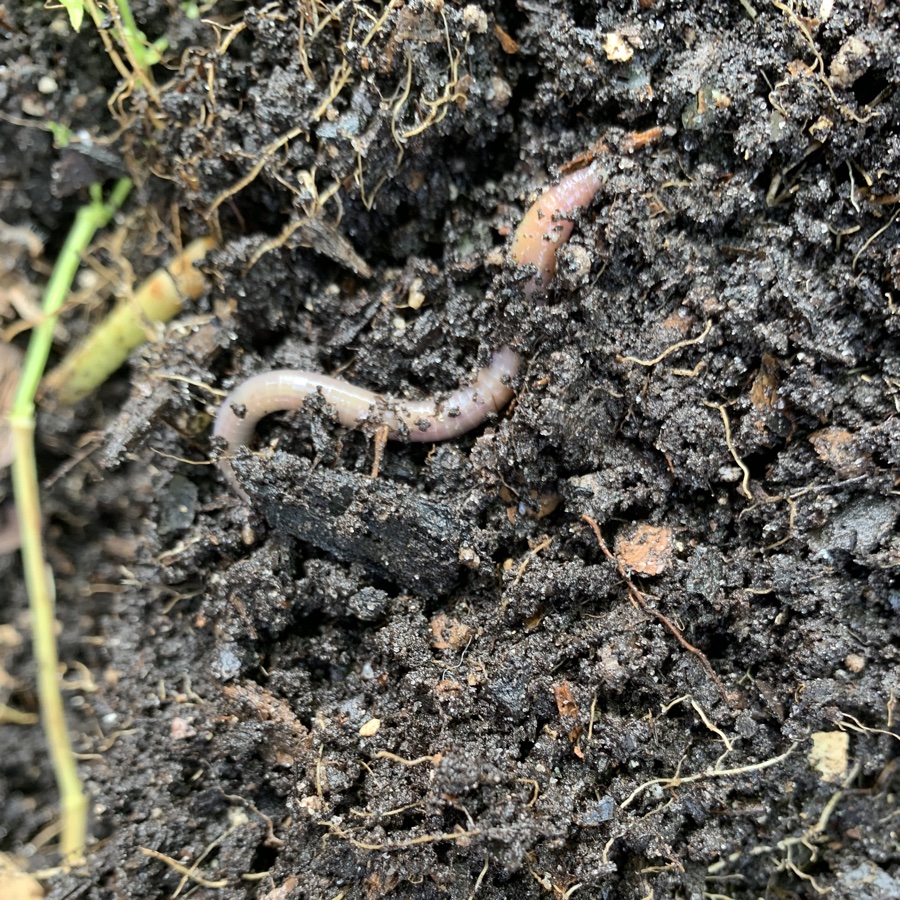
I found some lovely earthworms in this one. The dirt itself was crumbly and nice – thanks to the worm colony. Once I dug down to the panel with the holes, everything beneath it was mud. This was smelly, gross muck. As I dug through it carefully, I pulled out more worms. The worms were saved, and there were so many of them I added some to other pots and compost areas.
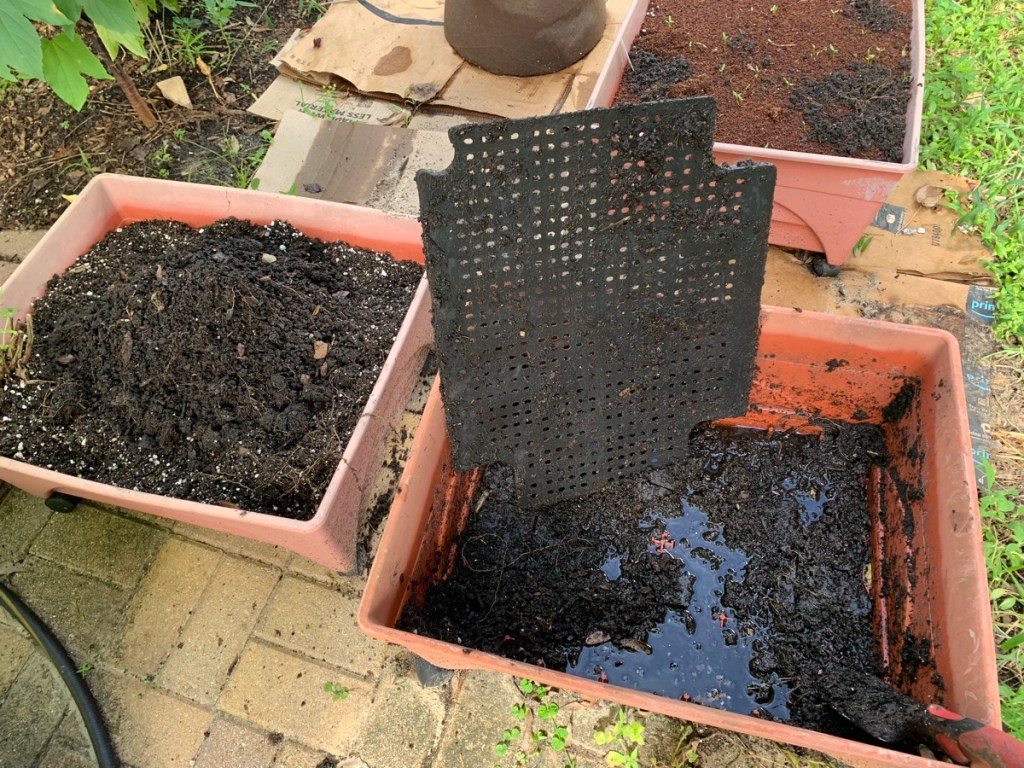
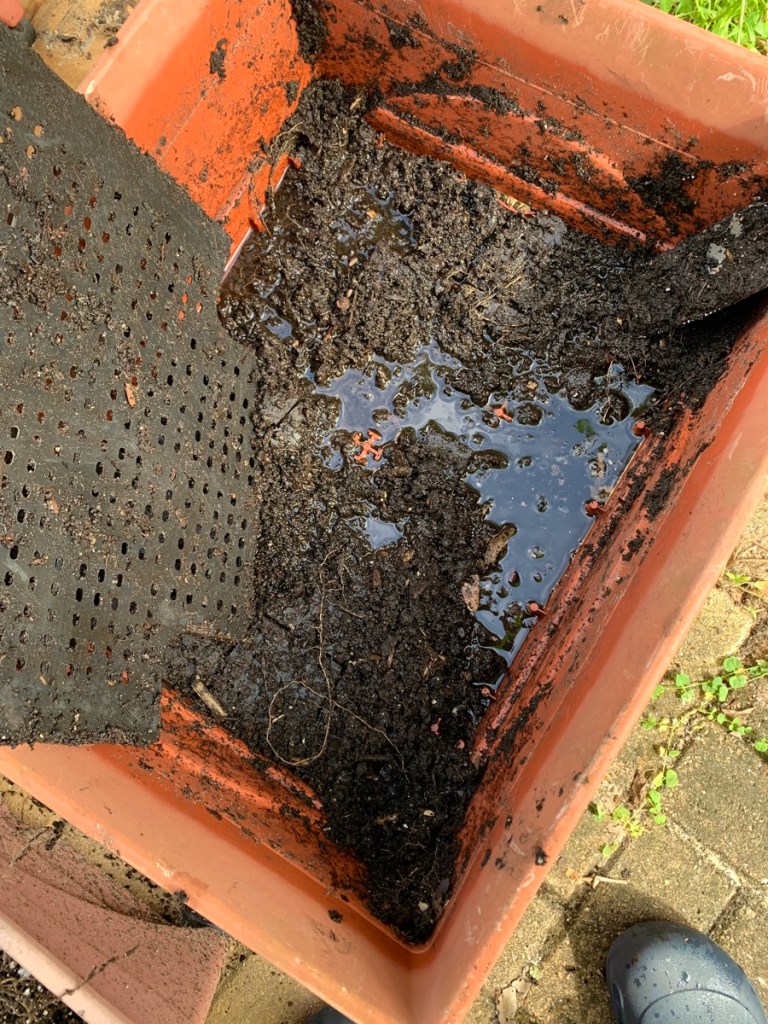
After the digging, the mud gets rinsed out. My son drills holes in the bottom of the box and it’s ready to re-fill.
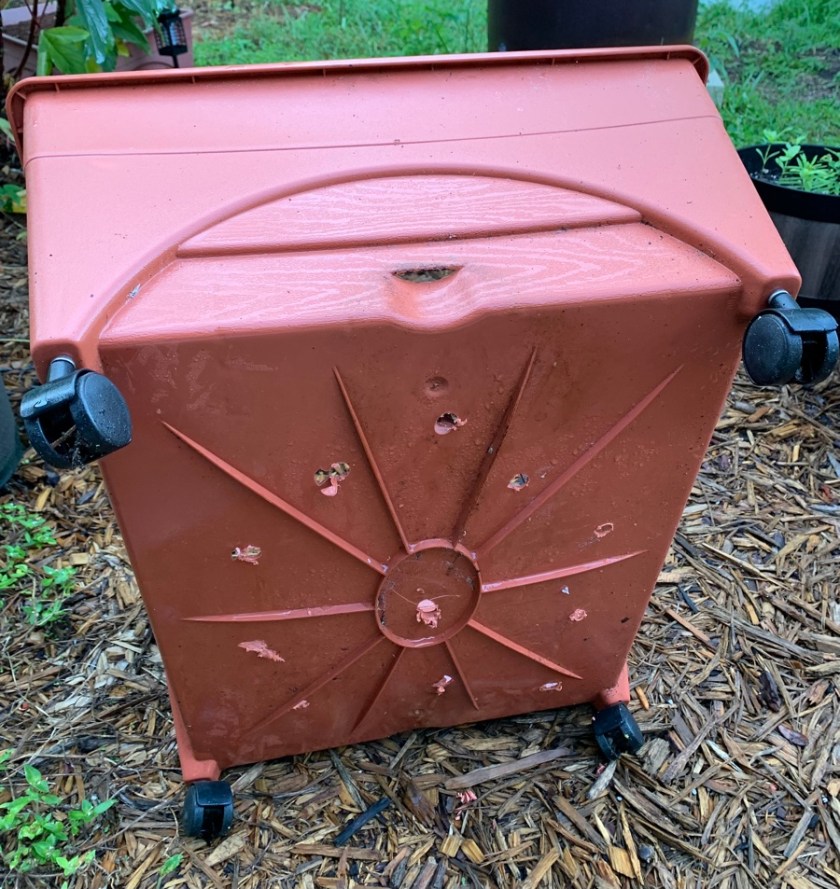
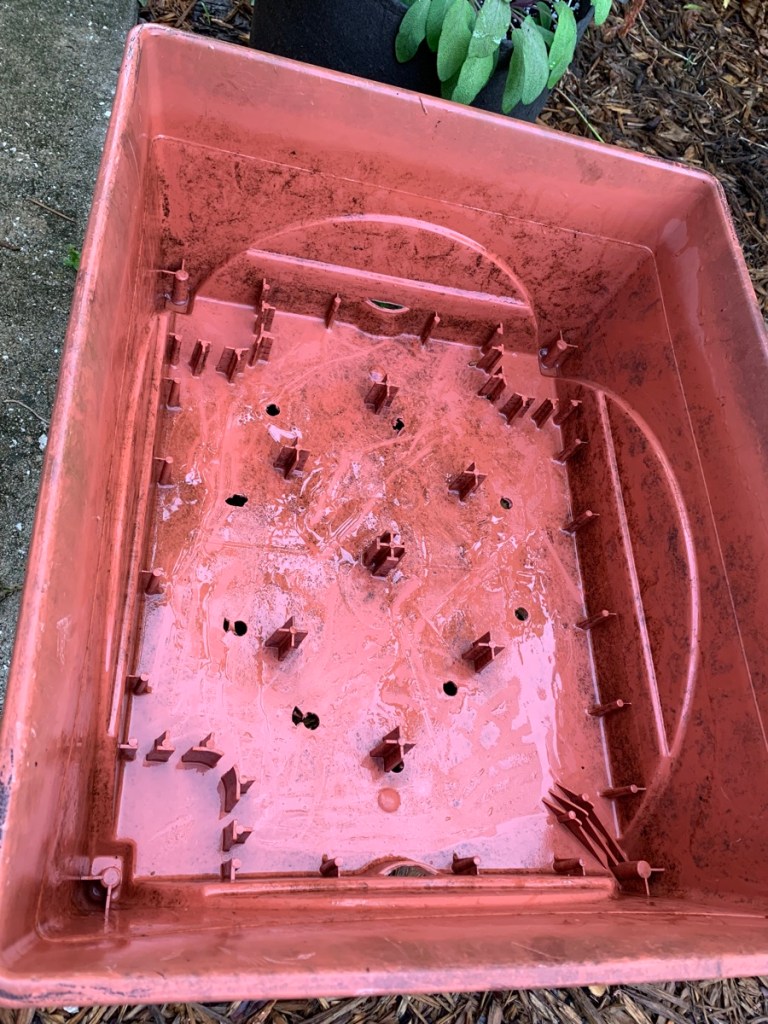
drilled holes in garden grow box
Drilled holes added to the bottom of the box. This box is old and becoming brittle so we didn’t drill quite so many holes.
garden grow box empty
Box emptied and rinsed

Before I can re-fill this box, I need to add something to the bottom for drainage. Dirt alone will end up clogging the holes. I don’t want another drainage problem!
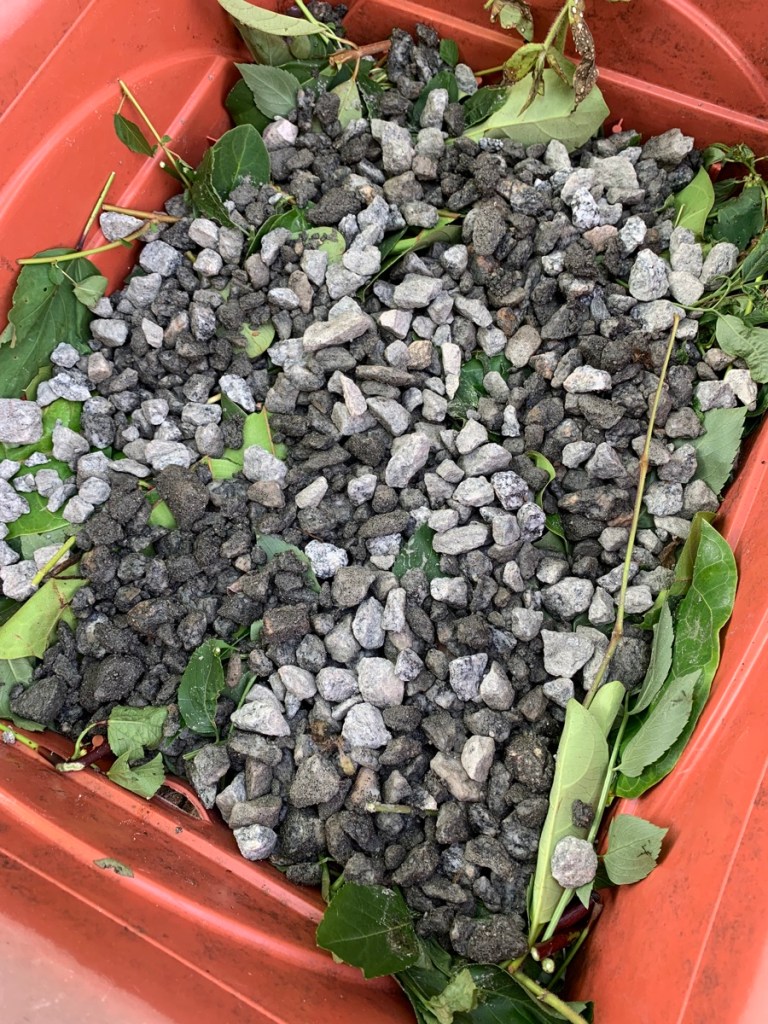
garden grow box drainage idea
Drainage cuttings and stones

Ideally, I would have mulch for the bottom. I don’t have any, so I used cuttings from some of my garden plants. The granite stones were purchased a while ago from the local yard shop.

It’s good to keep stones of some kind around because they make good bottom-of-pot drainage in any situation. Because there are no rocks or stones to dig up here in Florida, I have to buy them.

The original dirt from the box (except for the mud) gets added back in. Perlite (paid link) is added to keep the dirt crumbly and draining well. I like to add Bone Meal (Amazon paid link) too for future root development. Eventually the cuttings in the bottom will decompose.

Coco coir is something I use to spread over the top of the planting space for seed development. This is a new experiment of mine. I’m thinking the looseness of the coir will be better seed starting.
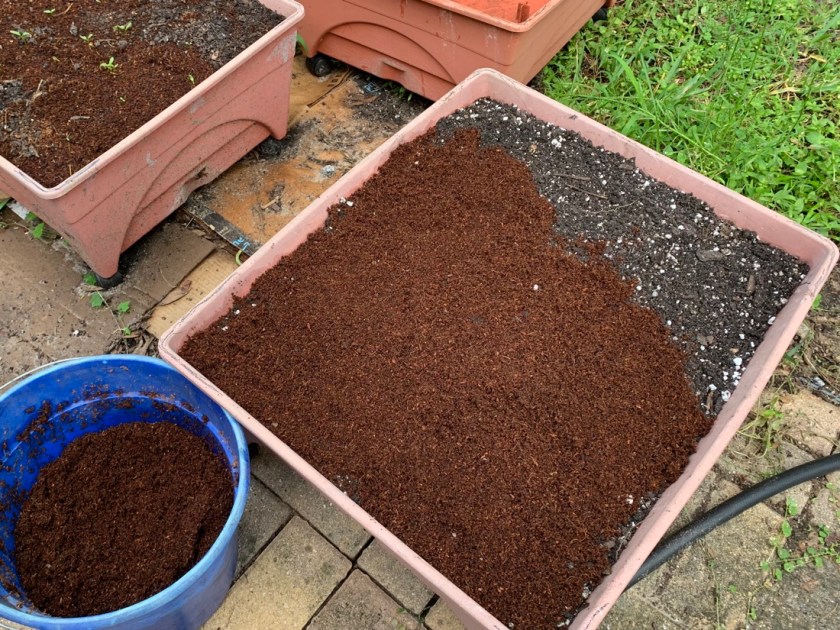
coco coir grow box gardening
Coco coir layer over dirt for seed starting

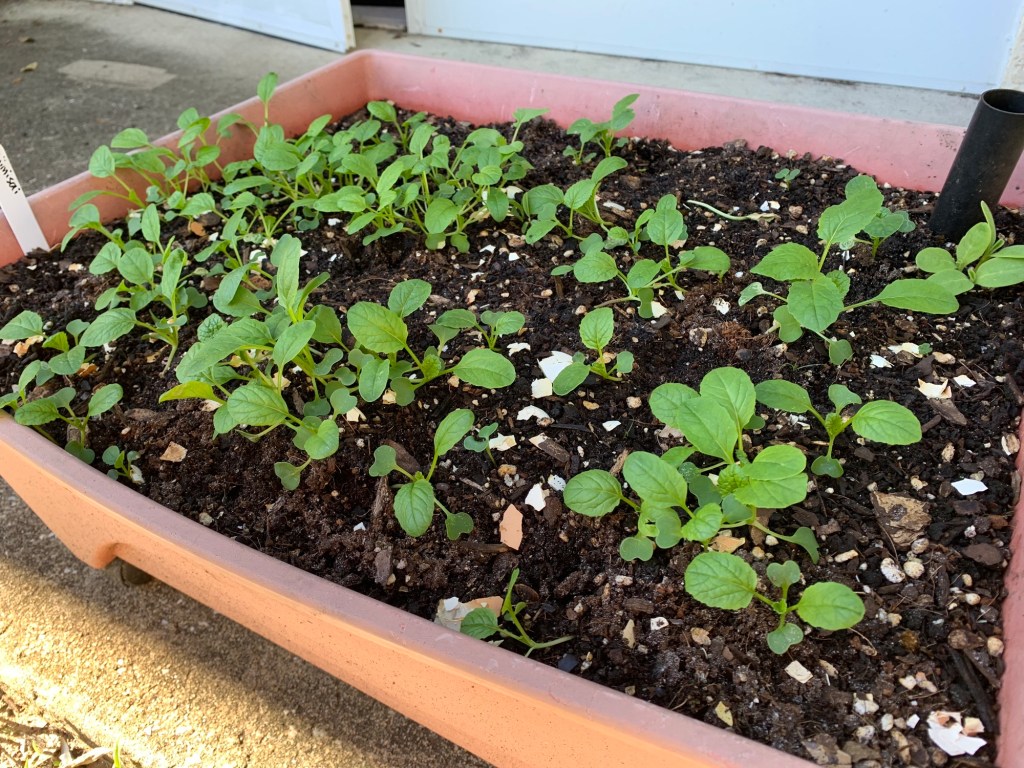
I have planted beet seeds in this box. It might be too early for them (too hot) but the box is ready for growing anything with a shallow root system.

Recent gardening posts…

Something went wrong. Please refresh the page and/or try again.

Splurged and Bought a Metal Raised Garden Bed

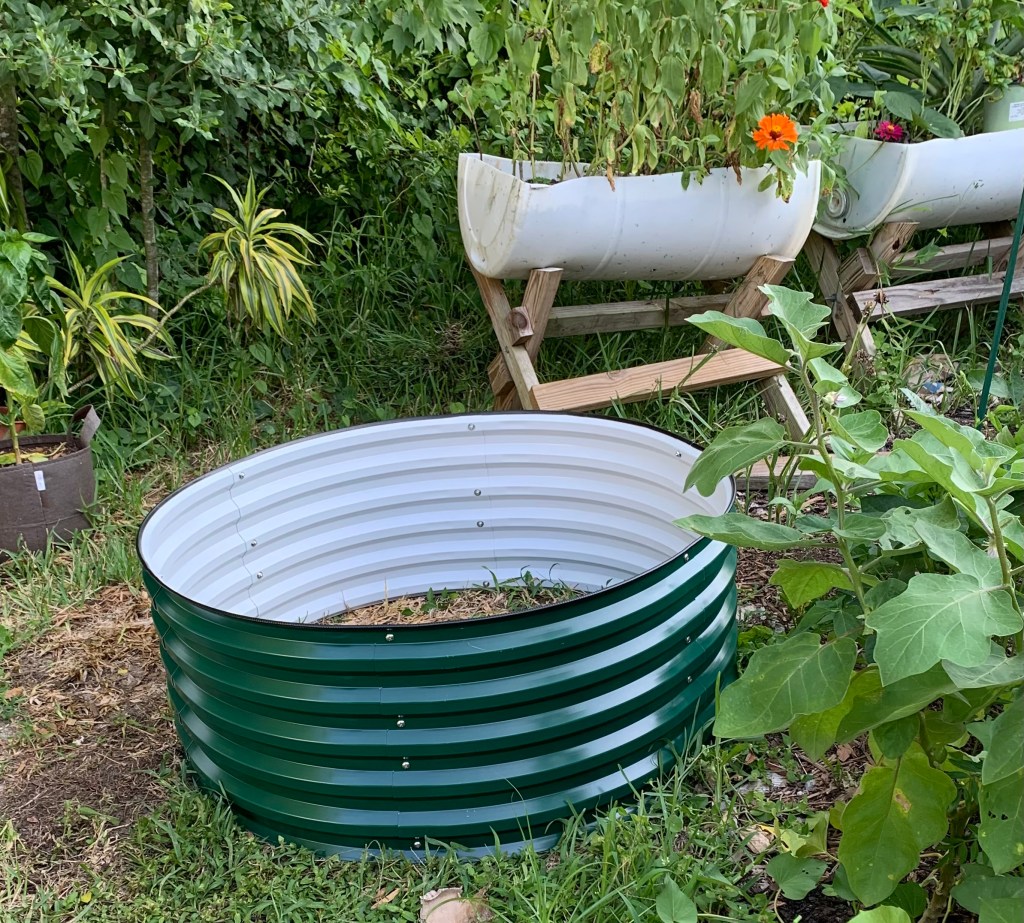
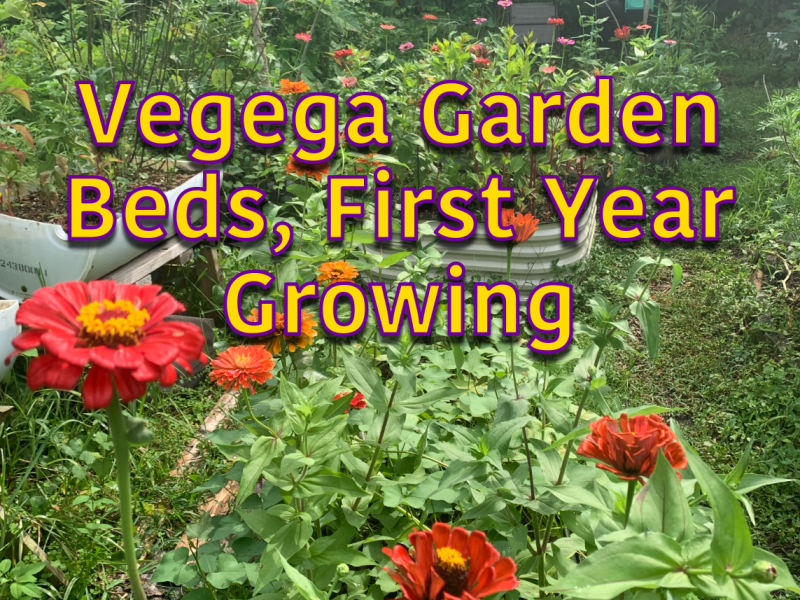
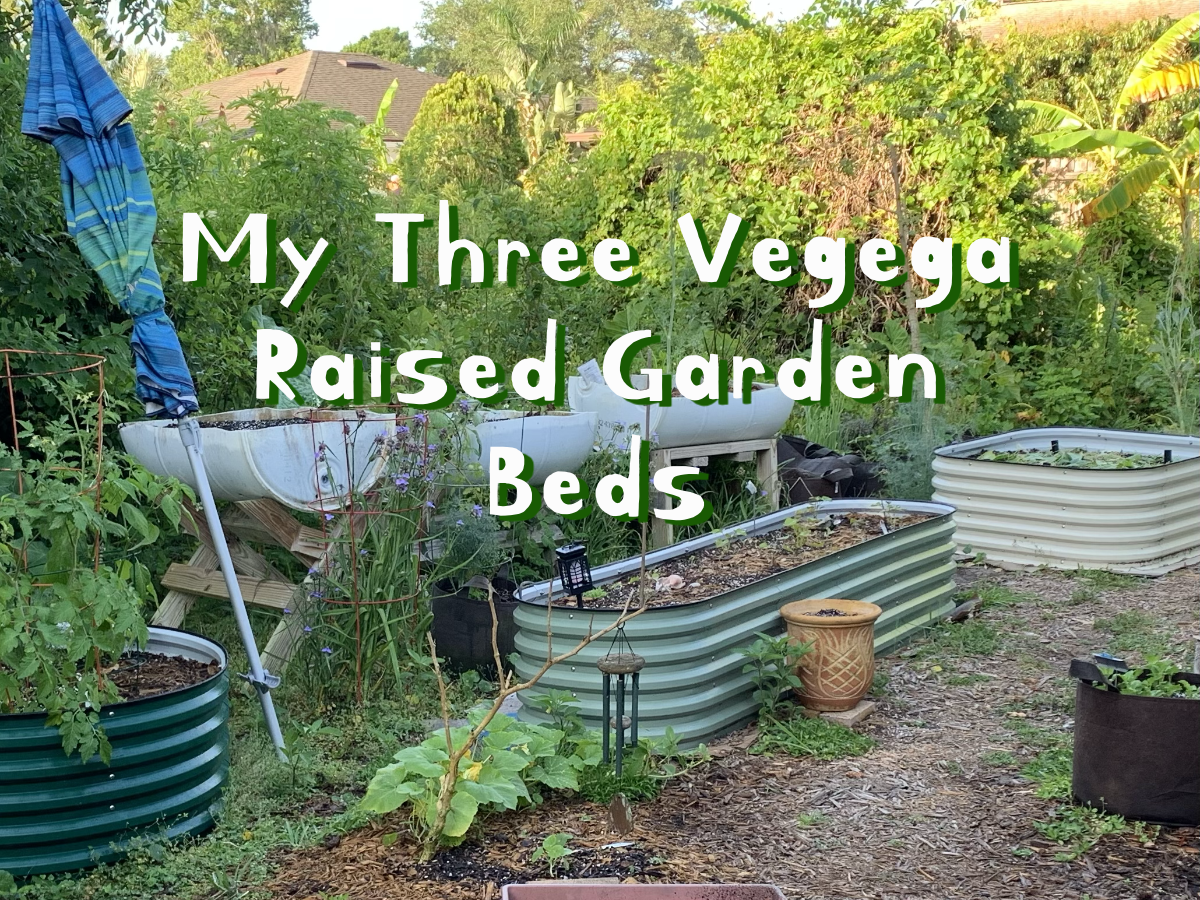
I’ve wanted a permanent (not made from wood that rots), large raised garden bed for a while. Raised garden vegetables are easier to manage than in the ground planting. I have better luck in a bed usually. This metal, round Vegega bed seems perfect.

Every time I have searched for metal raised beds, they have seemed way too expensive for me to buy. A few hundred dollars for one bed is way out of my budget. I had no idea of the quality either, until I found a review of the Vegega brand.

At Wild Floridian, I found a nice video review, and she offered a discount code to use for buyers. Her video convinced me to look into this brand further. See the review Vegega bed video by Wild Floridian where she has had the bed for a year and compares it to another type she had problems with (not named).

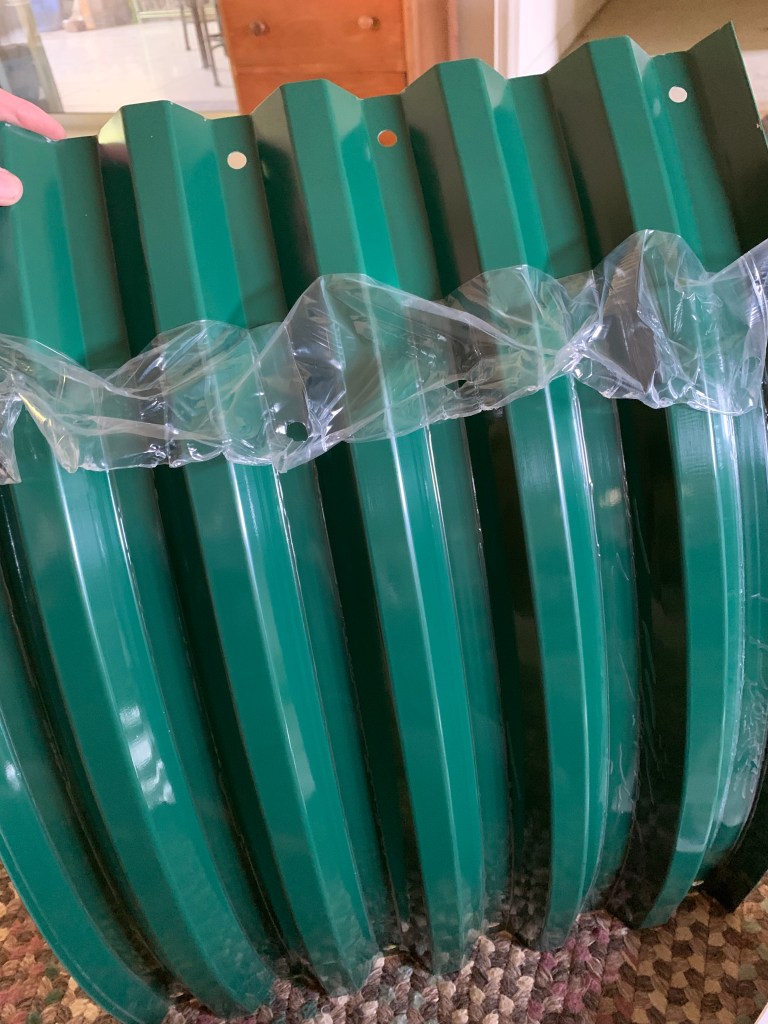
When I browsed the Vegega site, I liked the bed shape options. They offer sets that can be shaped as you wish once the product arrives – called 9-in-one, 10-in-one. Some of the pretty light colors were not available when I shopped, so I chose dark green.

My yard is small, and I was not sure where I’d put my bed. The round shape seemed perfect and I chose the 17 inch depth. This is a perfect depth to grow all kinds of vegetables including the ones with longer root systems like tomatoes, watermelon, and pumpkin. At this point, I have no idea what will be planted in this bed, but I will not be restricted by depth.

Putting The Vegega Bed Together

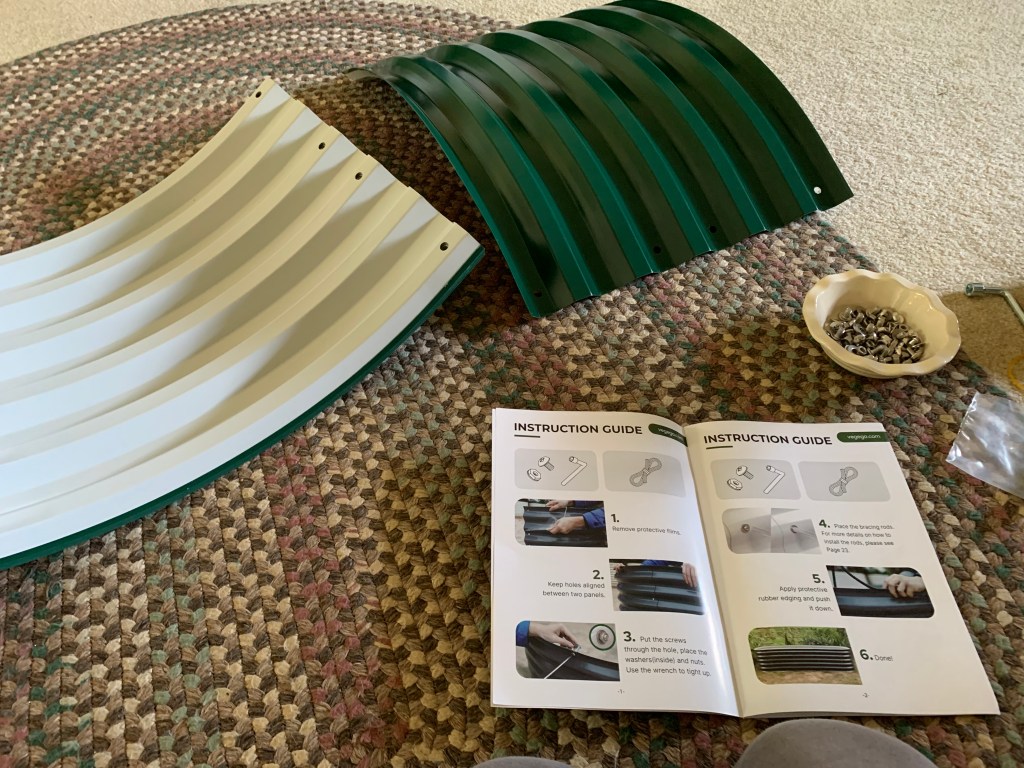
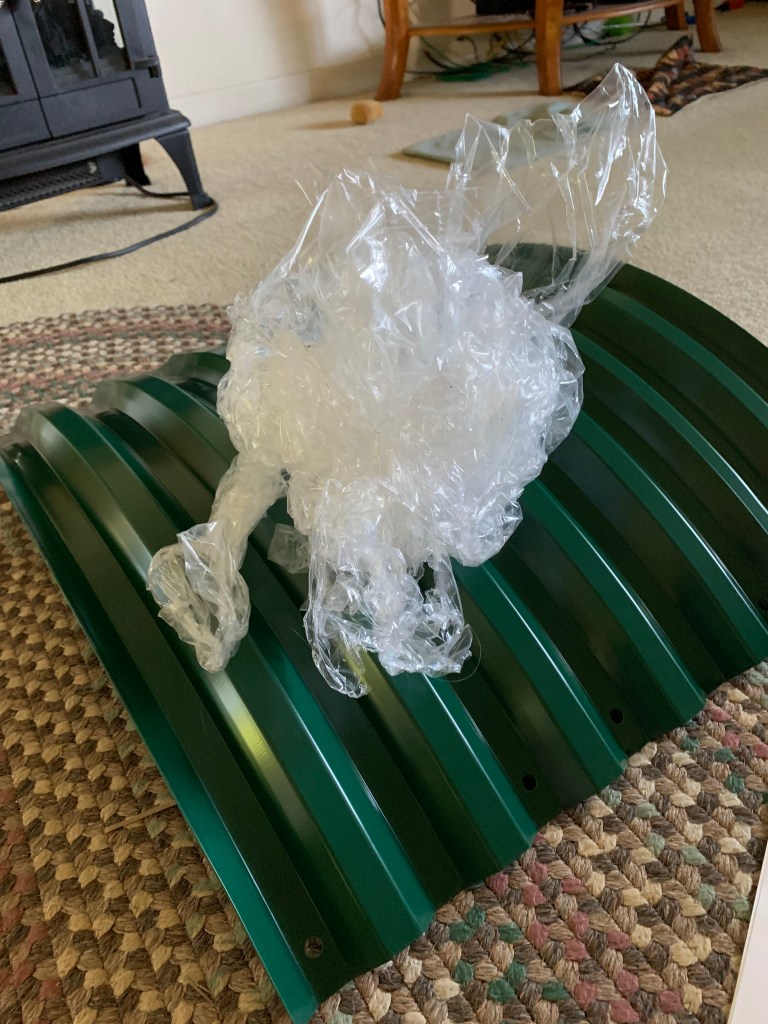
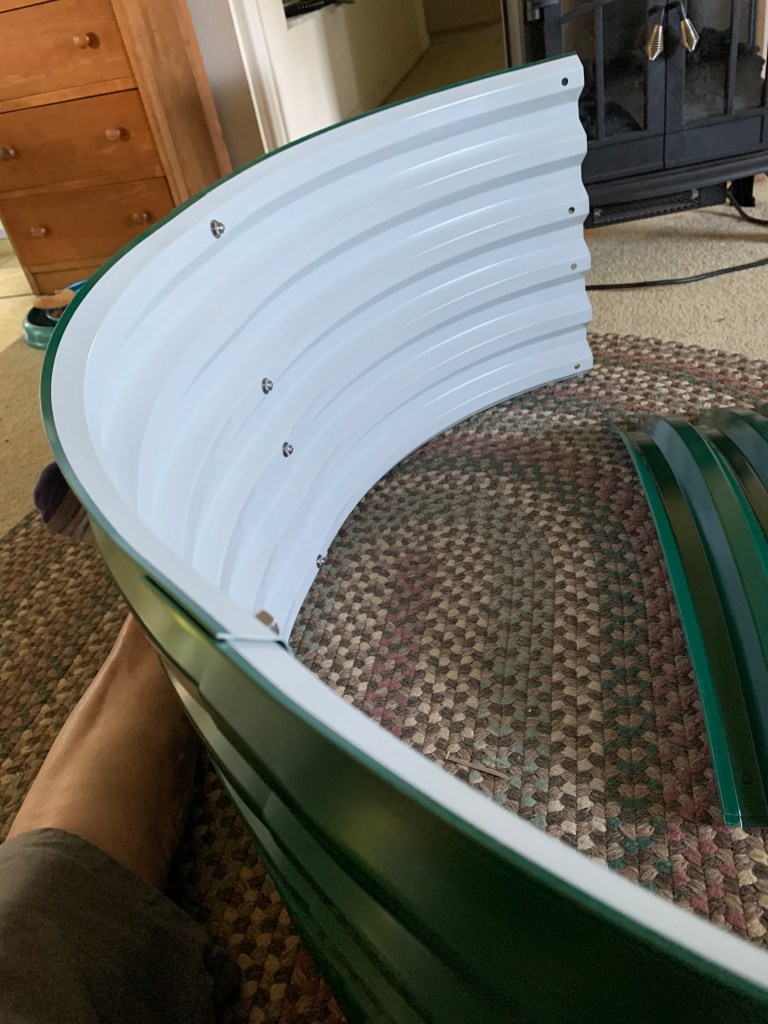
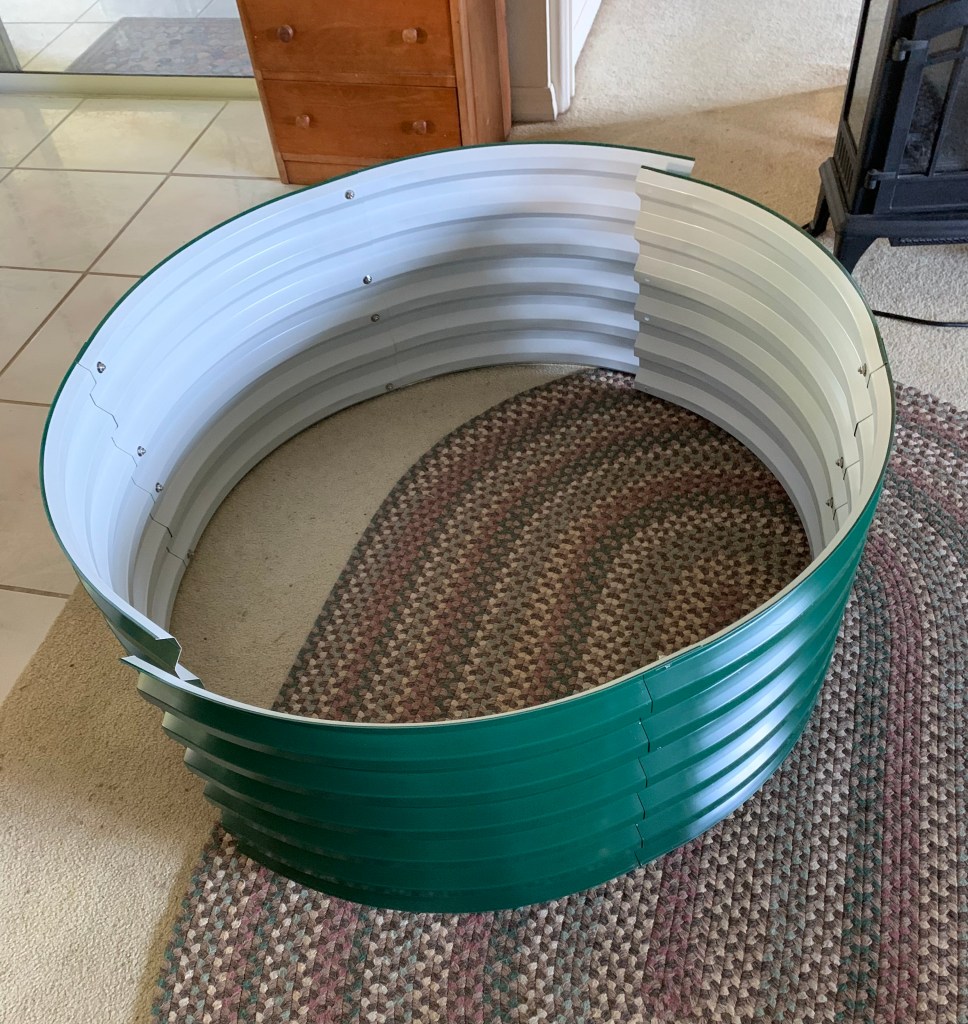
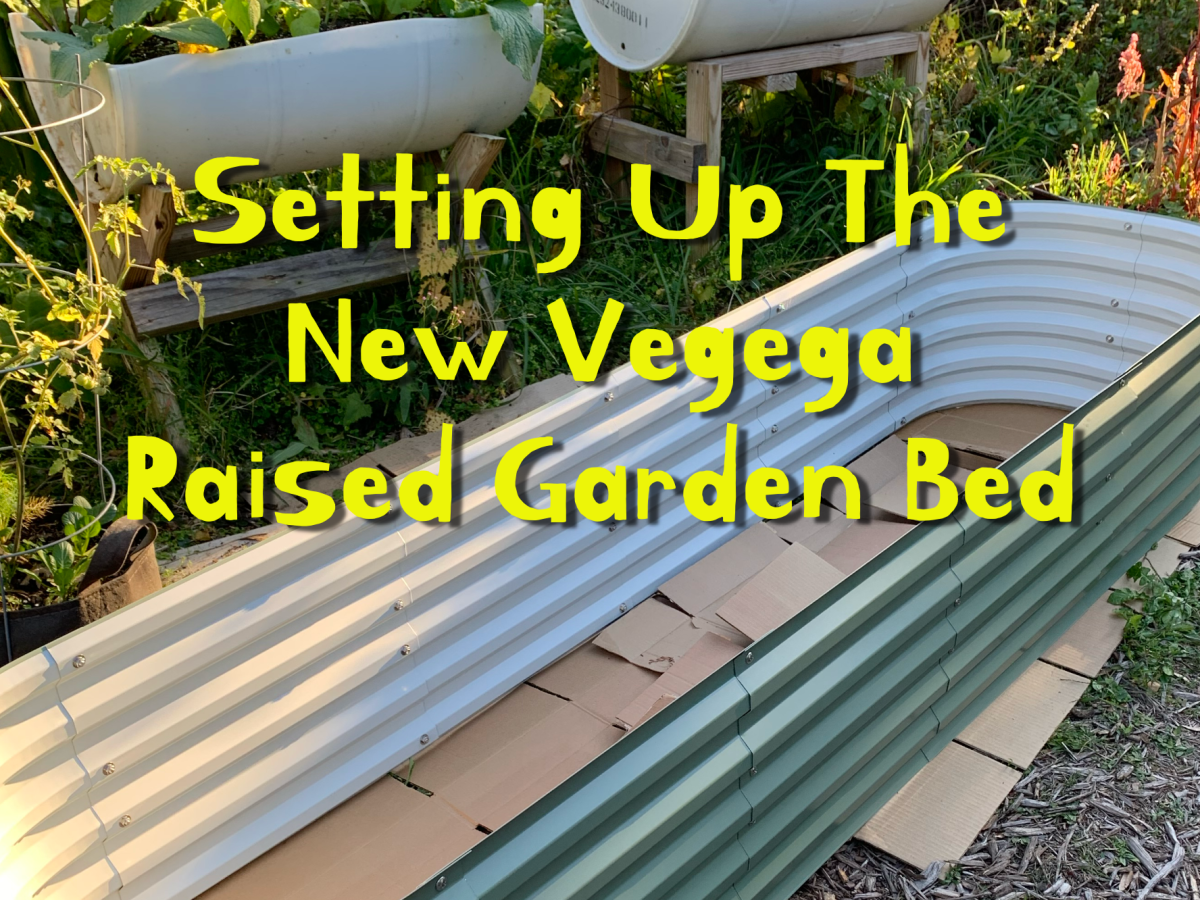
Assembly of the garden bed was fairly easy. I did it by myself in the house (it’s hot here). I think I spent the most time removing the film that covers each section! Screwing the pieces together was very easy. I decided to complete each half of the circle so I could move it outside in two sections to complete the assembly.

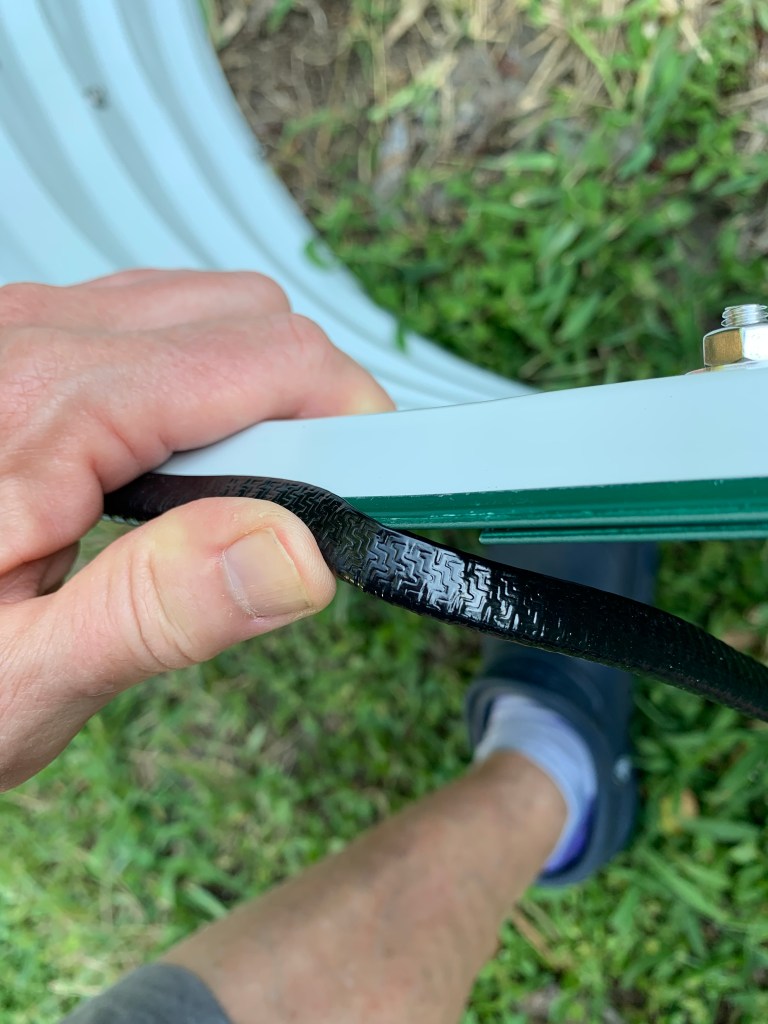
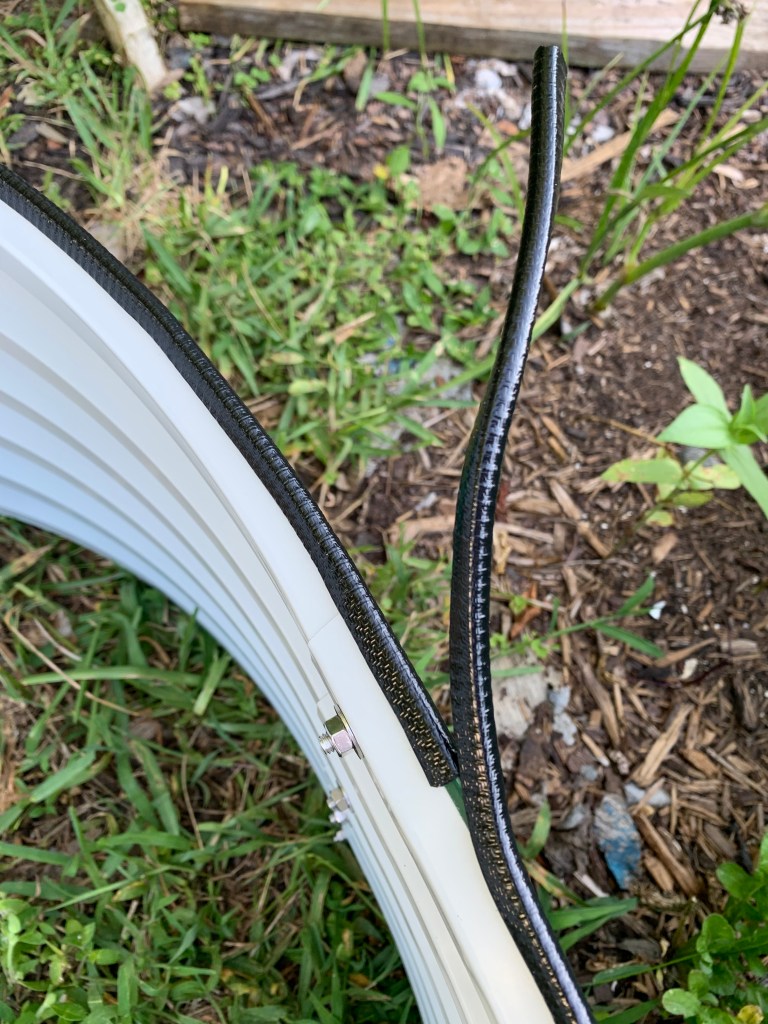
Once the sides are all screwed together, a rubber strip is added to the top. This also was very easy to do, with plenty left over.

How I Am Filling My Raised Bed

I’ve read all about various ways to fill a garden bed. This is part of the expense, but it’s worth it to create a good environment for the vegetables to grow. I’m not in a hurry, as I won’t be using this bed for a few months.

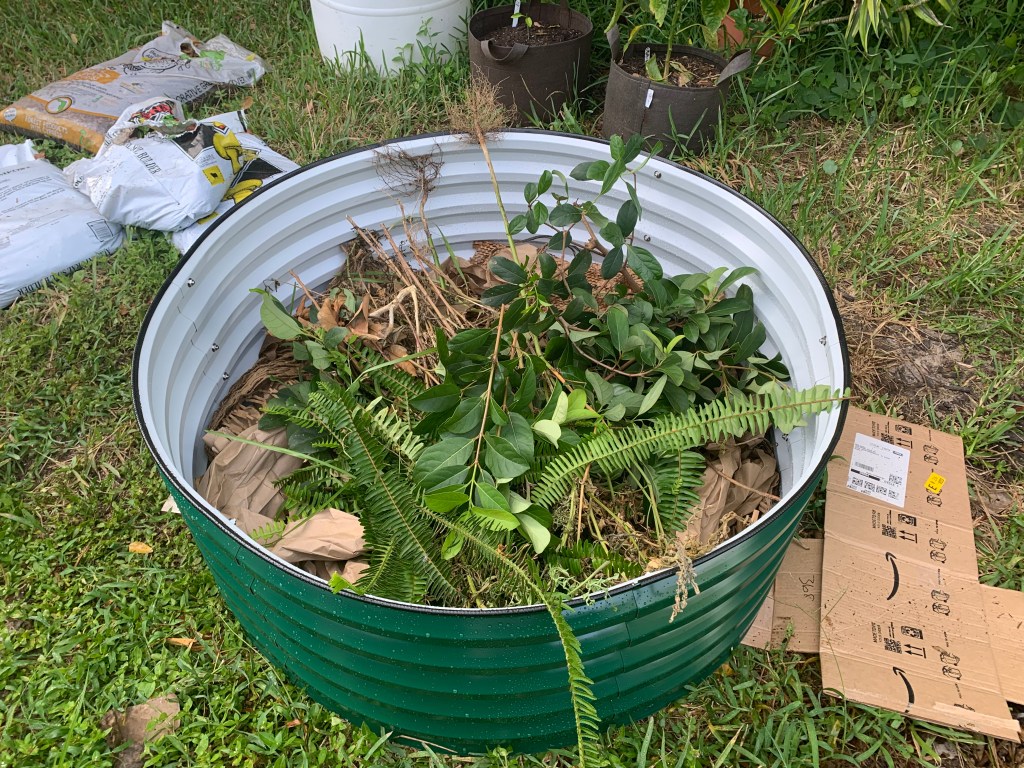
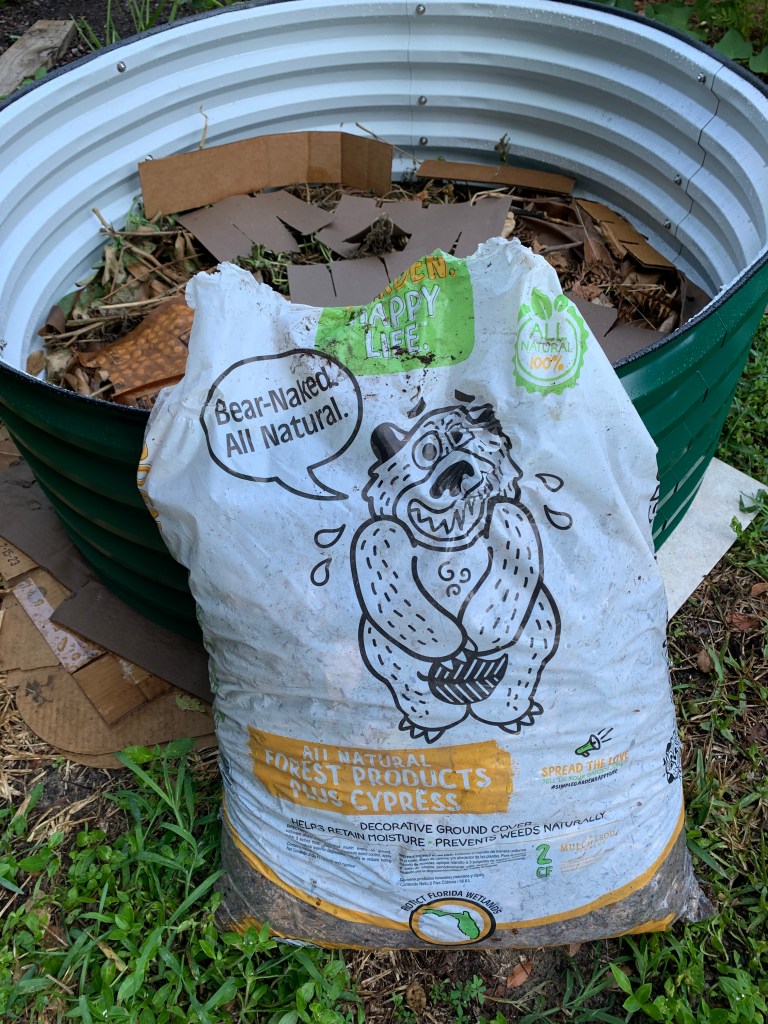
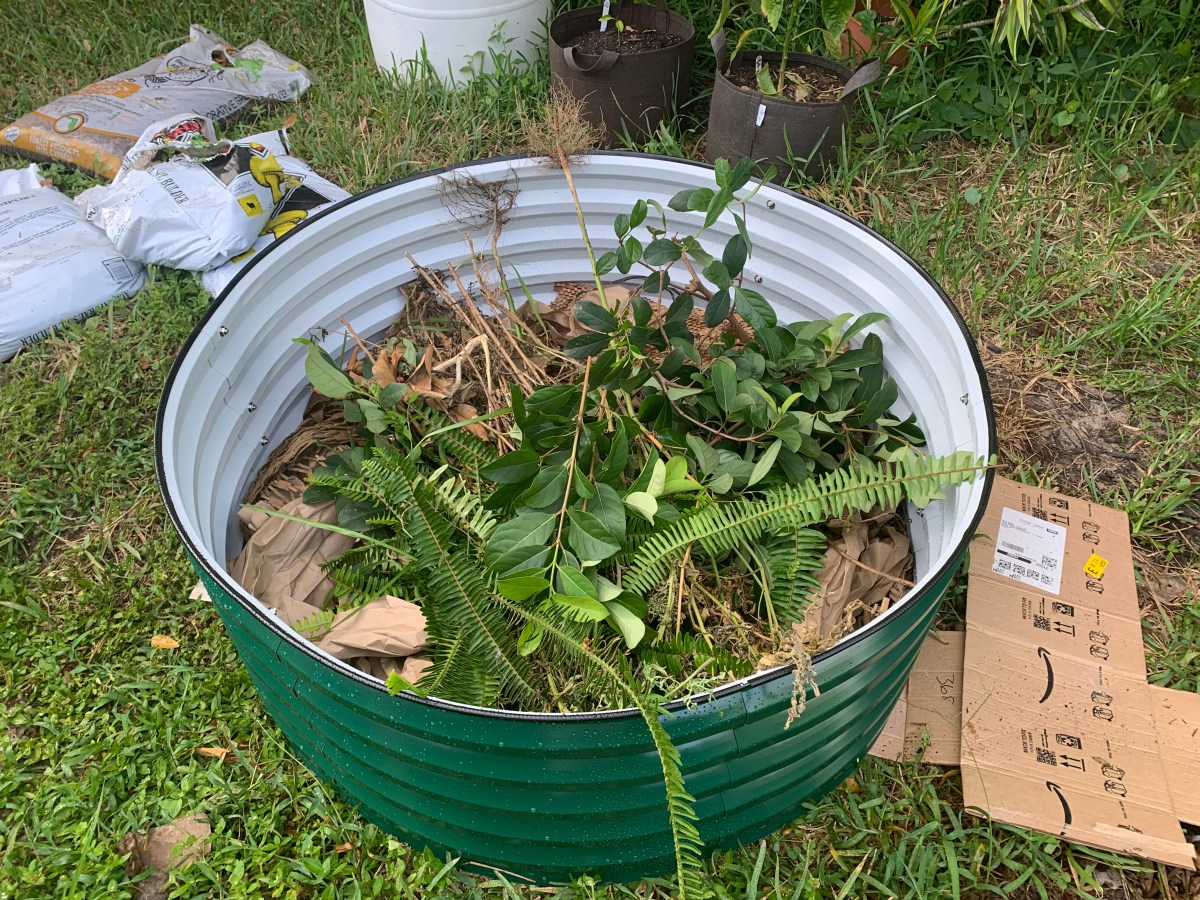
I have cardboard, so I am using it to level the bed. I also have added packaging paper, along with cuttings from the shrubs, and mulch to begin the fill.

Don’t try to make your raised bed into a restrictive “container”. Leave the bottom open just in case roots want to expand. Also, think about water drainage. Everything I am adding here will eventually break down. Soon, the greenery will turn brown and decomposition will happen. All of this will become a layer of nutrients at the bottom of the bed.

As my marigolds die, I will cut them off and add them here. The same with any other flowers. I’m growing cowpeas now, and some of those plants may end up as a layer.

*FYI: I read someplace that using rocks in the bottom for drainage may not be a good idea, especially if you want to move the bed later on. The rocks will have become part of the earth and will be difficult to move / remove.

My Reason For Wanting a Raised Bed

I want raised beds because it’s easier to add and keep nutrients in the soil. Whenever I compare similar plants that are in the ground, to the ones in the bed, the bed / grow box plants are always doing better.

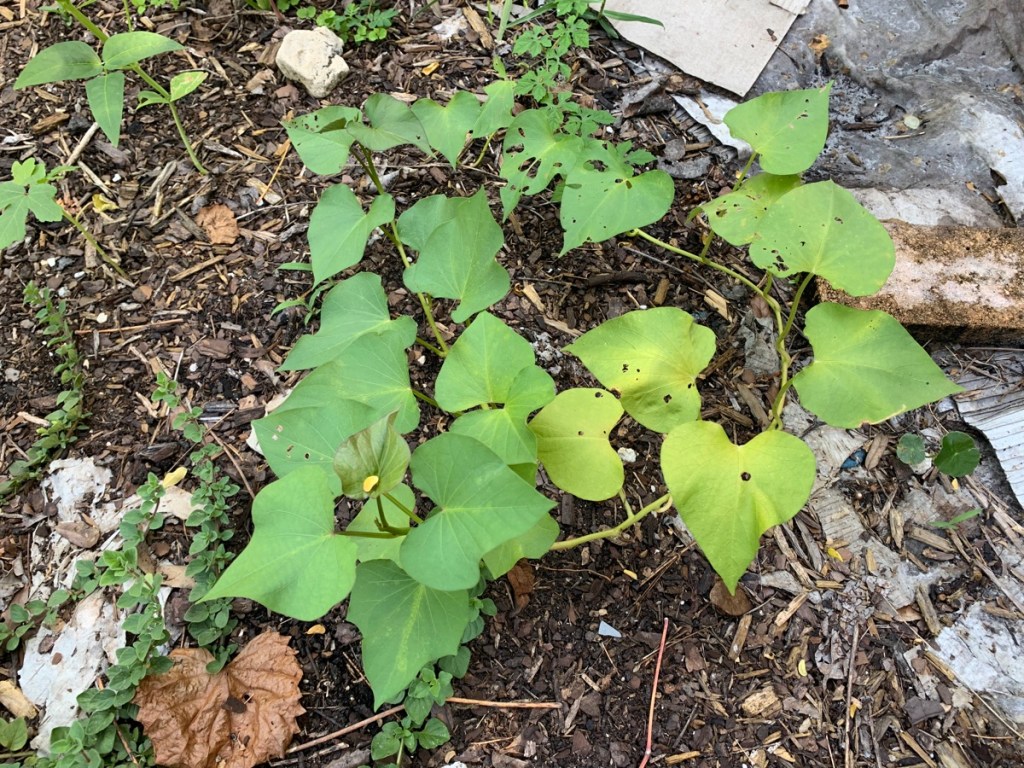
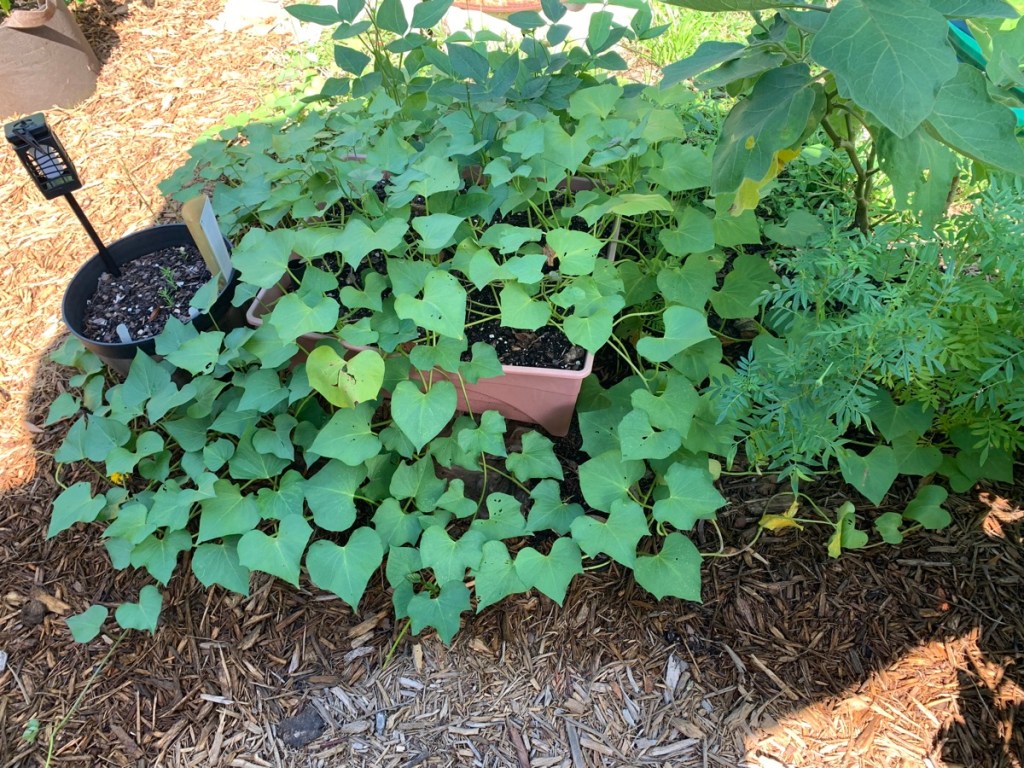
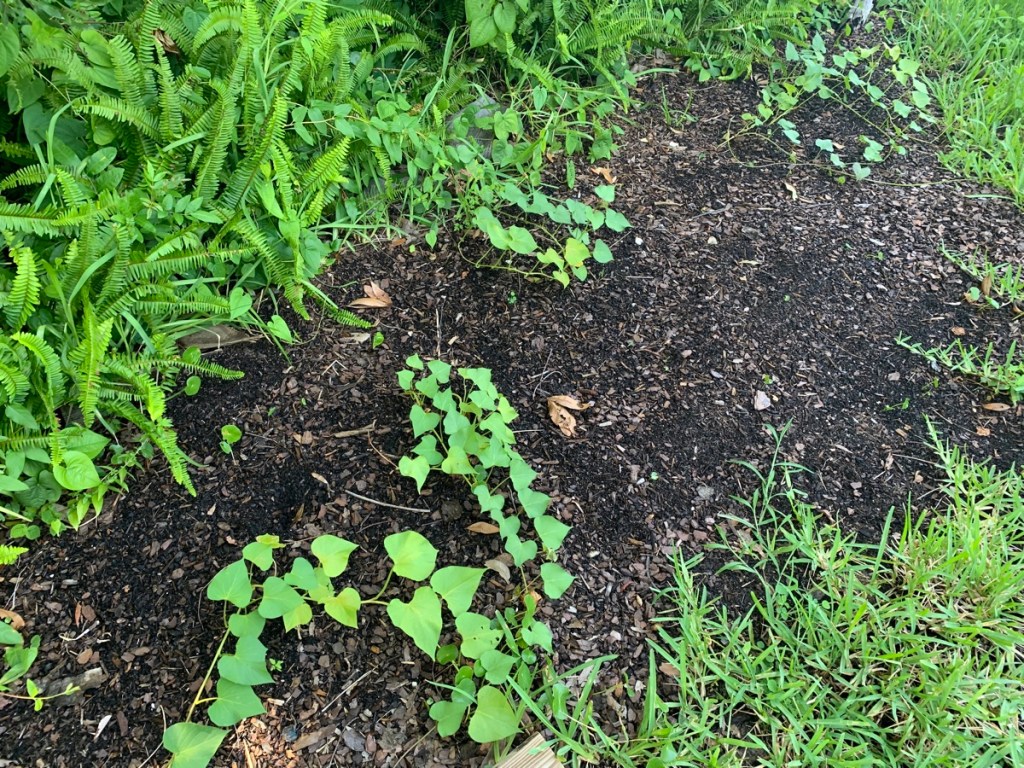
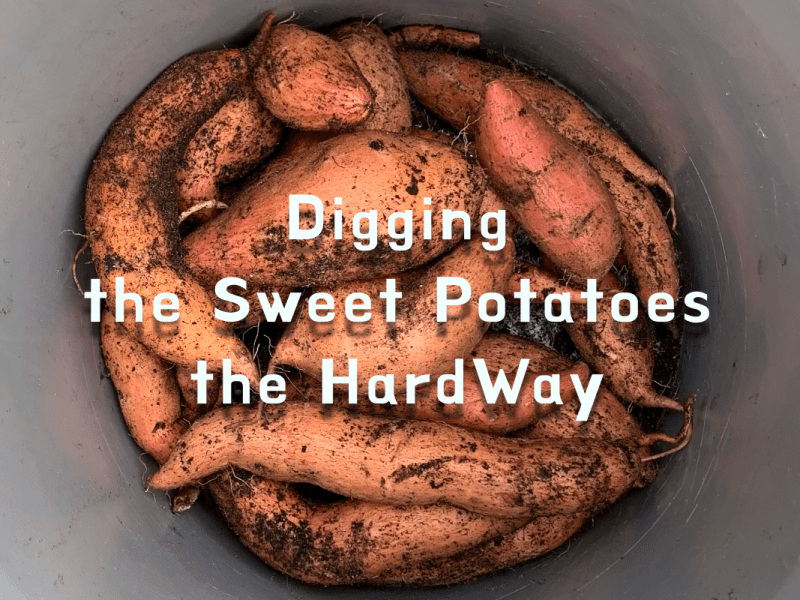
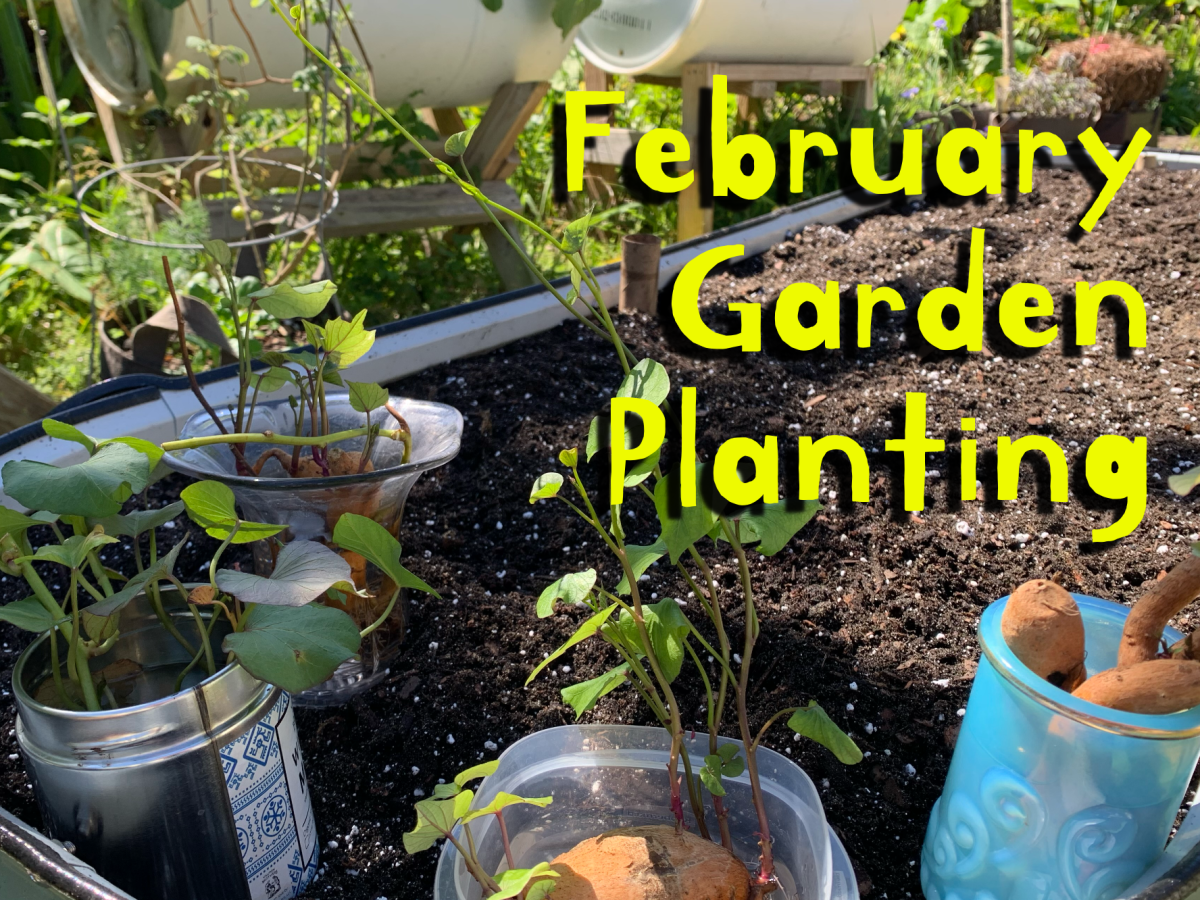
As an example, I bought and planted sweet potato slips just before my trip north. One slip went into a grow box (center) and others were planted randomly around the yard in the ground. The grow box sweet potato is going crazy with vines all over the place – even though that box is really not nearly deep enough. All the other sweet potatoes are much smaller. We’ll see in a few months if I get actual potatoes to compare.

Crop Ideas for a Round Raised Garden Bed

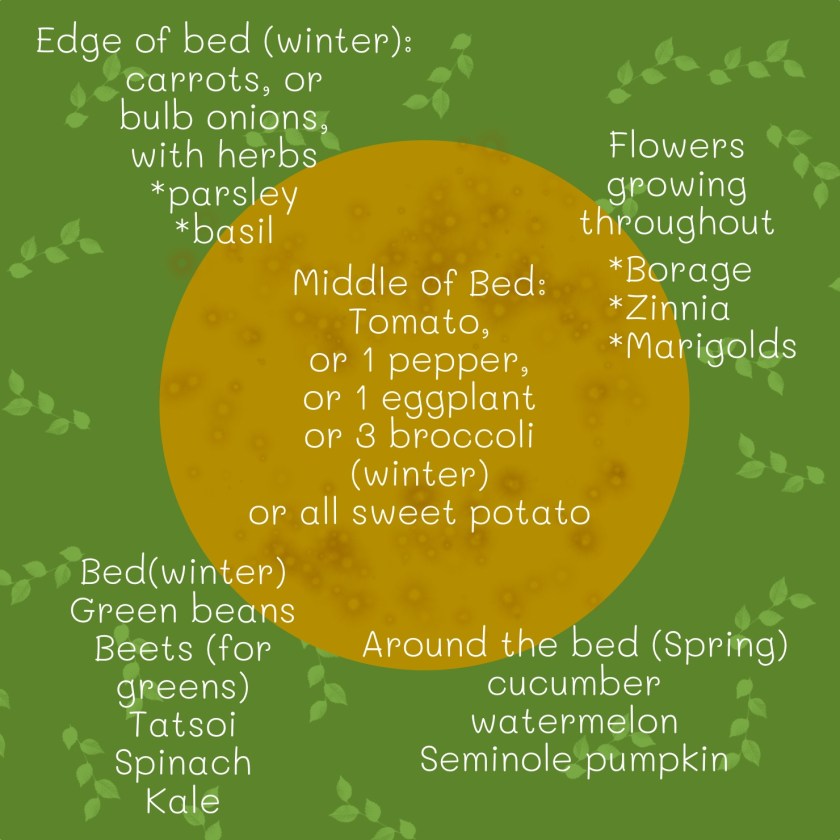
When considering what I have grown successfully (for the most part) I created this diagram with ideas for what to plant in my new, round raised garden bed.

That big circumference is perfect for root crops near the edge. I’m thinking carrots and bulb onions (garlic for you northerners). Both onions and carrots take months to mature. Putting them in as a border – out of the way – leaves space for bigger crops in the middle. I’m thinking of planting broccoli here this winter.

planting ideas for raised round bed
Planting ideas

Eventually I will be adding garden soil along with perlite for good drainage. Before I plant, I will mix in some other amendments such as bone meal. More to come about planting in this new space. I’m already thinking about buying one more bed in a rectangle shape.

All gardeners are invited to keep reading…

Building a New Garden Path

The past winter and spring months have kept me busy in the garden. The planing, planting, weeding, and watering has been a first priority and I’ve neglected the walkways. Also, I still don’t have my own vehicle and must depend on getting rides to the yard shop. Between all that and the weather, I’ve put off buying the items needed to build my new garden path.

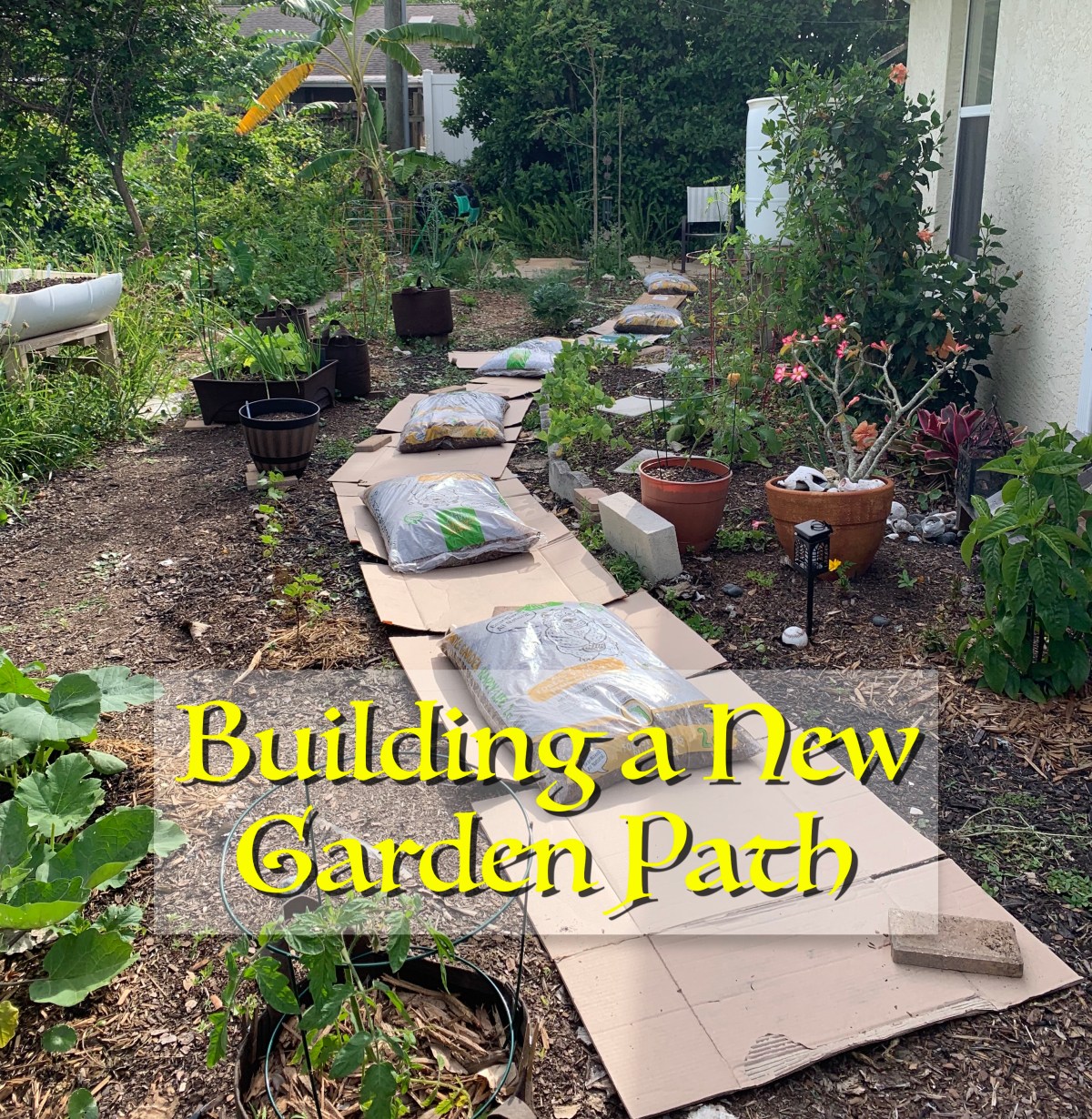
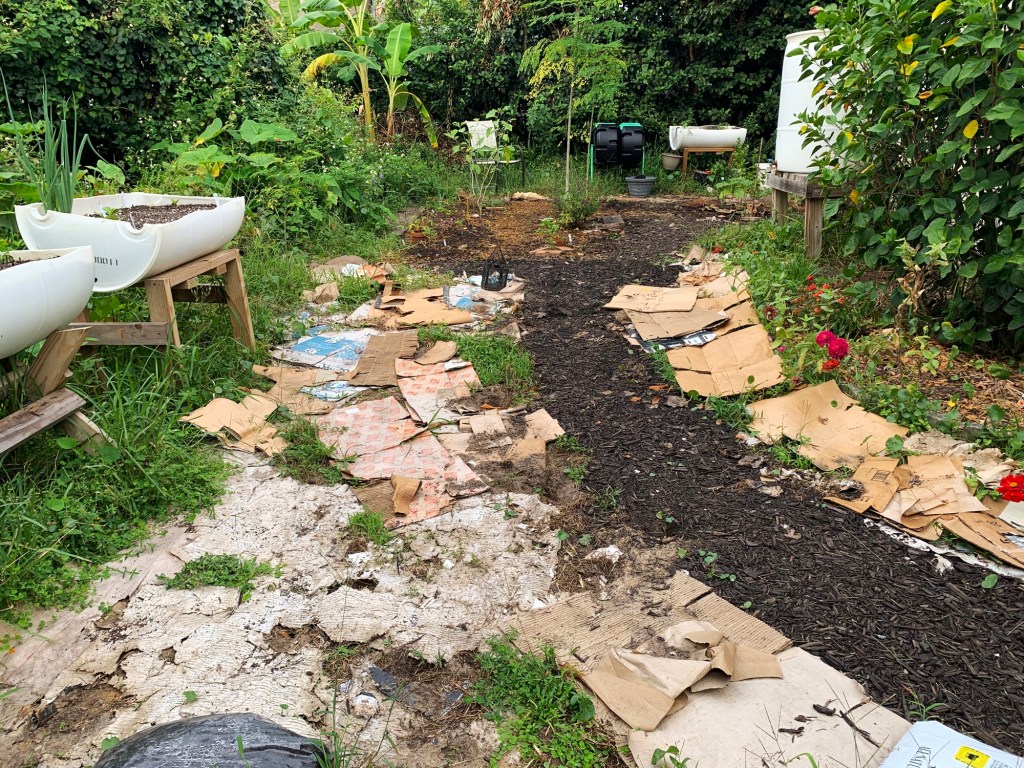
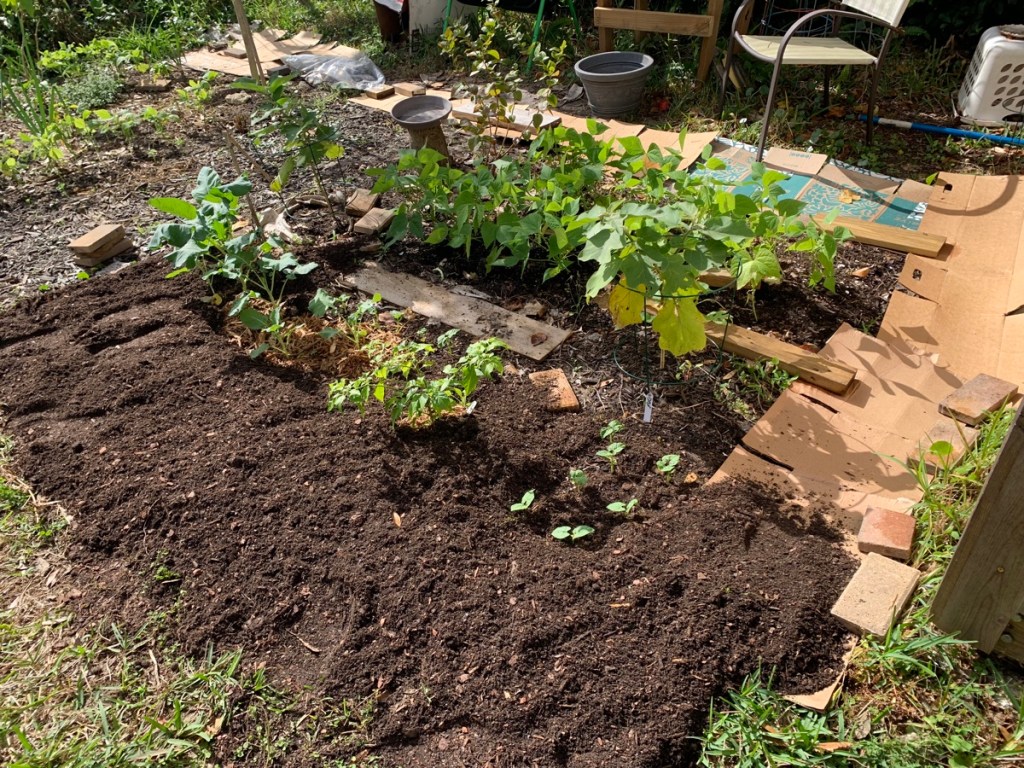
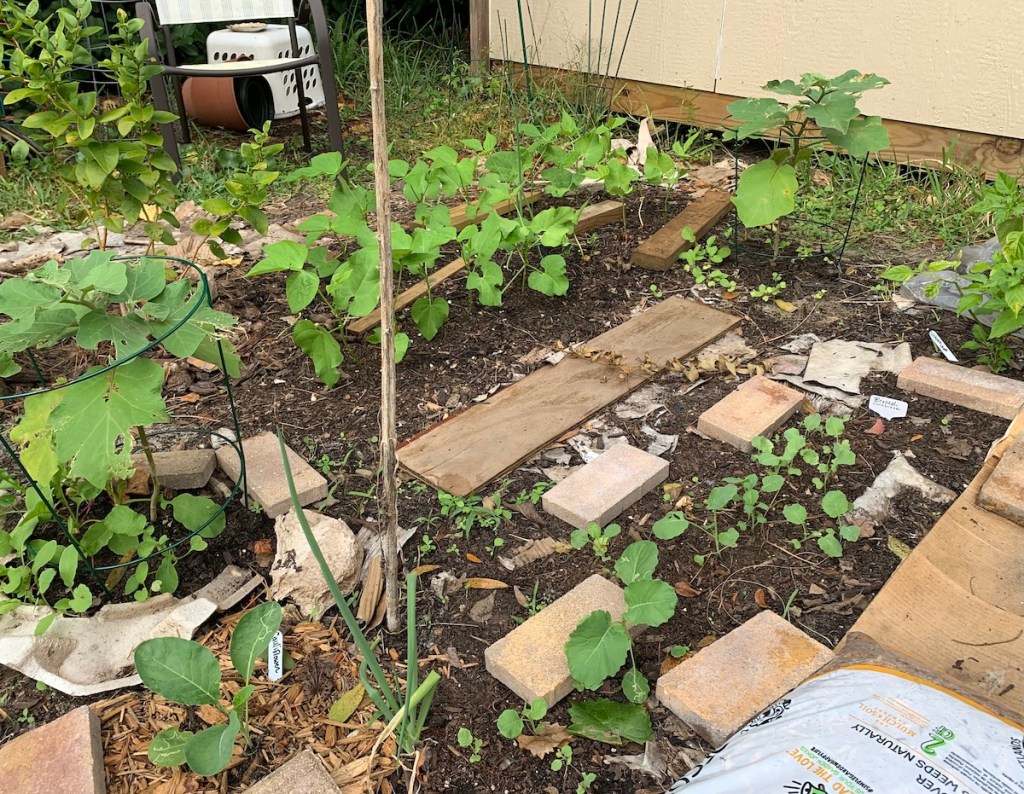
Even though I had put cardboard and mulch down about a year ago, the mulch has broken down and the weeds are coming through. A new path is a good reminder of where to walk too! I know where my veggies are planted, but other people don’t, and if they venture into my yard, they could crush little growth that is difficult to see.

Cardboard and Mulch

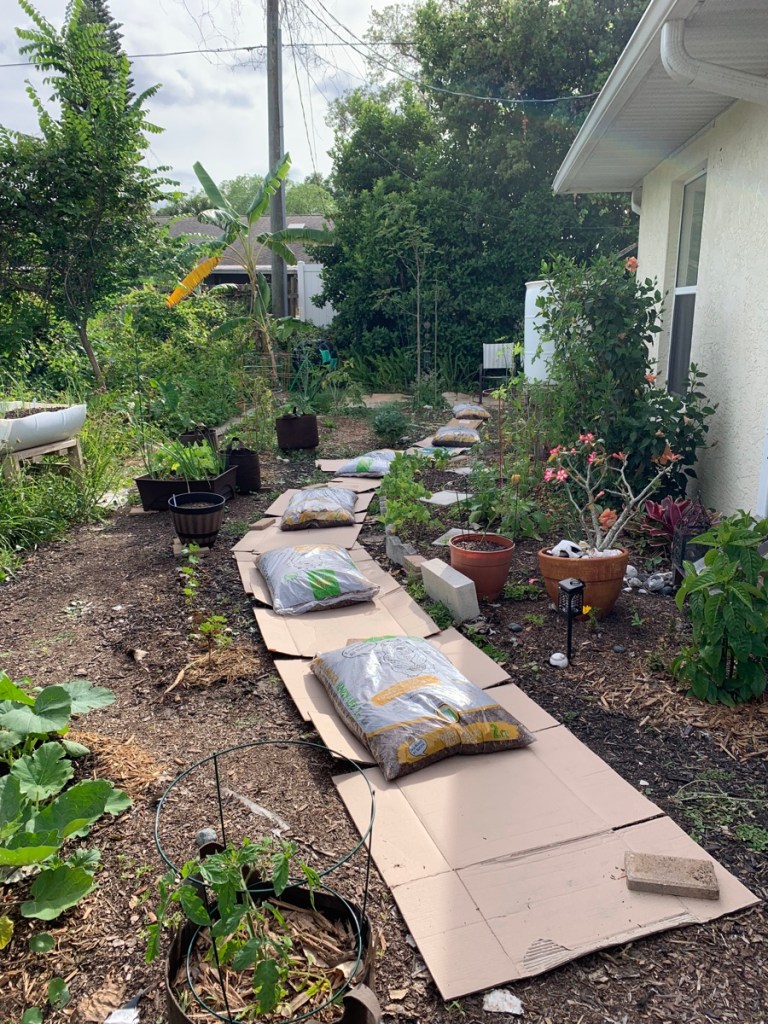
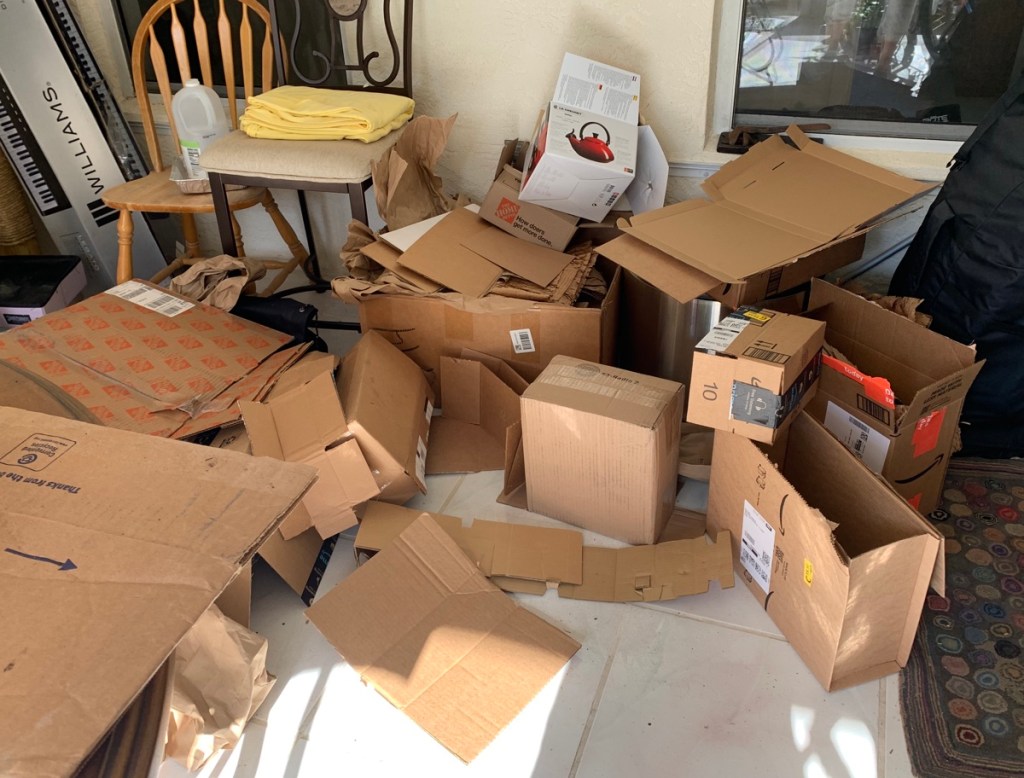
Saving cardboard boxes is a regular pastime at my house. I stack them up on the porch, along with shipping paper that comes in boxes. Anything that I won’t use gets burned in the burn barrel, or put out for recycling. The cardboard collection is large, so I had no trouble filling up the walkway.

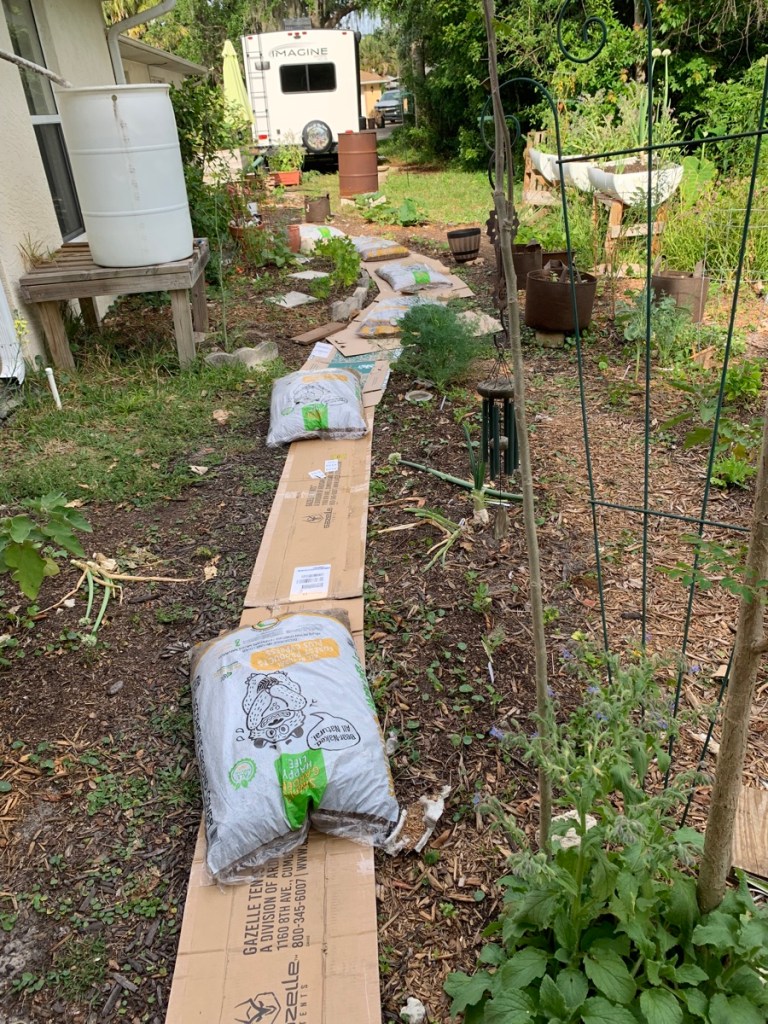
I had to have the mulch bags to hold the cardboard in place so the wind wouldn’t blow it around.

My son drove me to the Yard Shop to pick up some bags of mulch, and I was in business.

I’m an older lady and know my limitations when it comes to yard work. So the first day I put out the cardboard and set the bags of mulch on top. Thankfully the mulch was dry and the bags were easy enough for me to move.

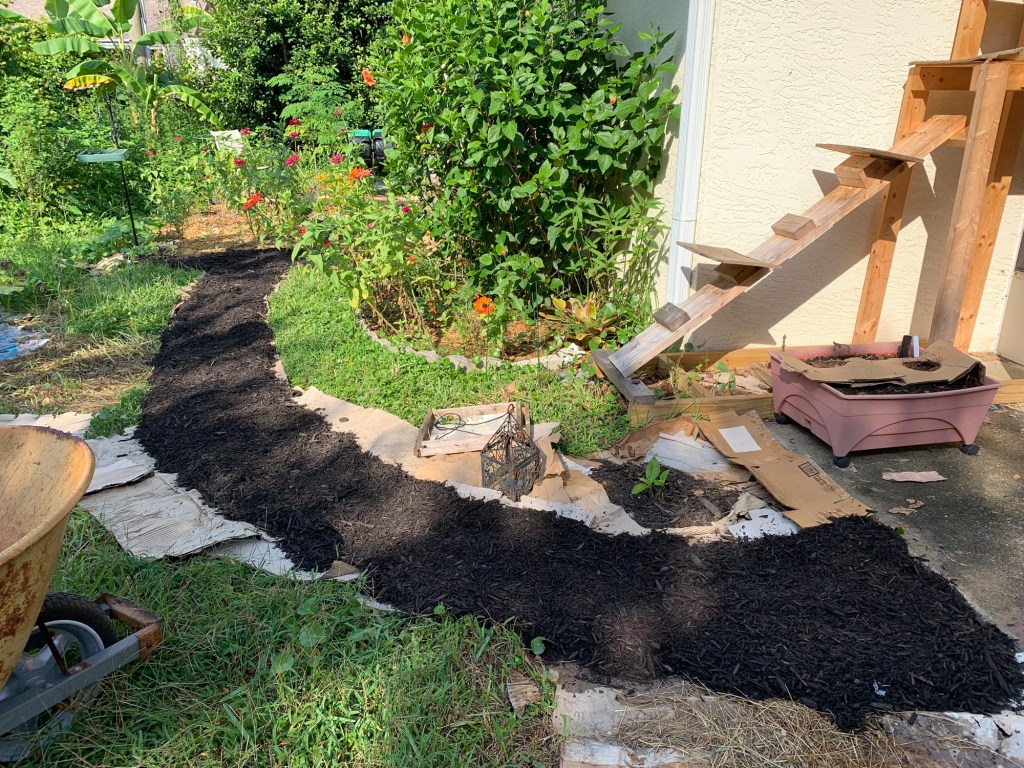
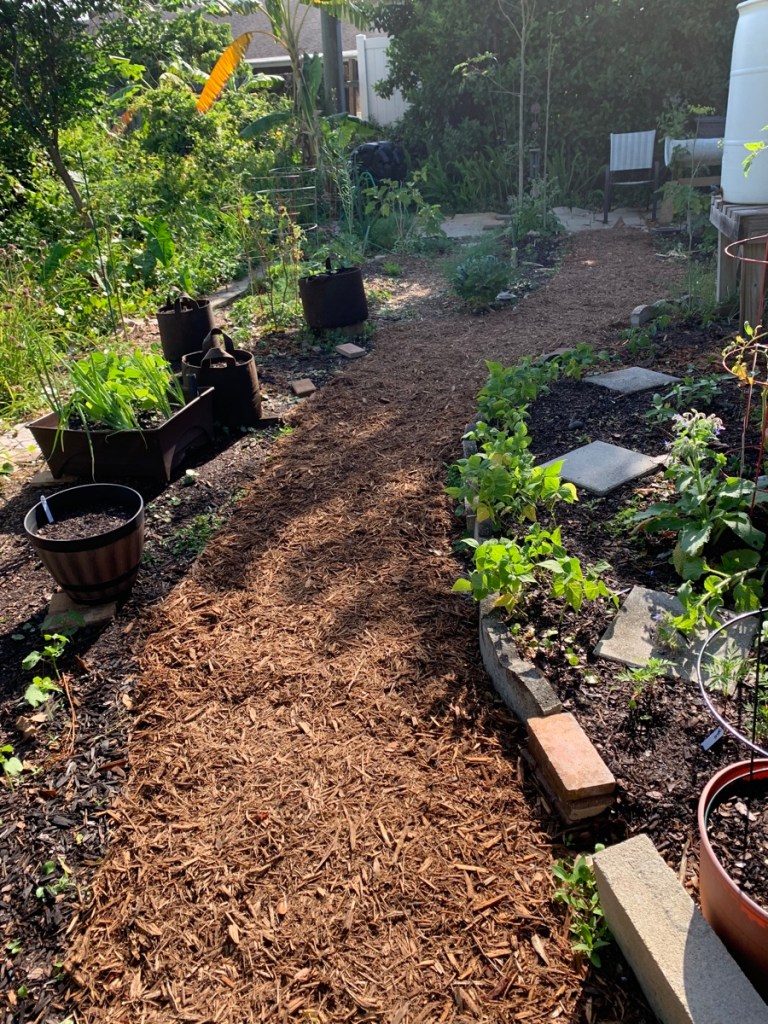
The following day, I opened up the bags and spread them over the cardboard, adding more cardboard in places that needed filling in.

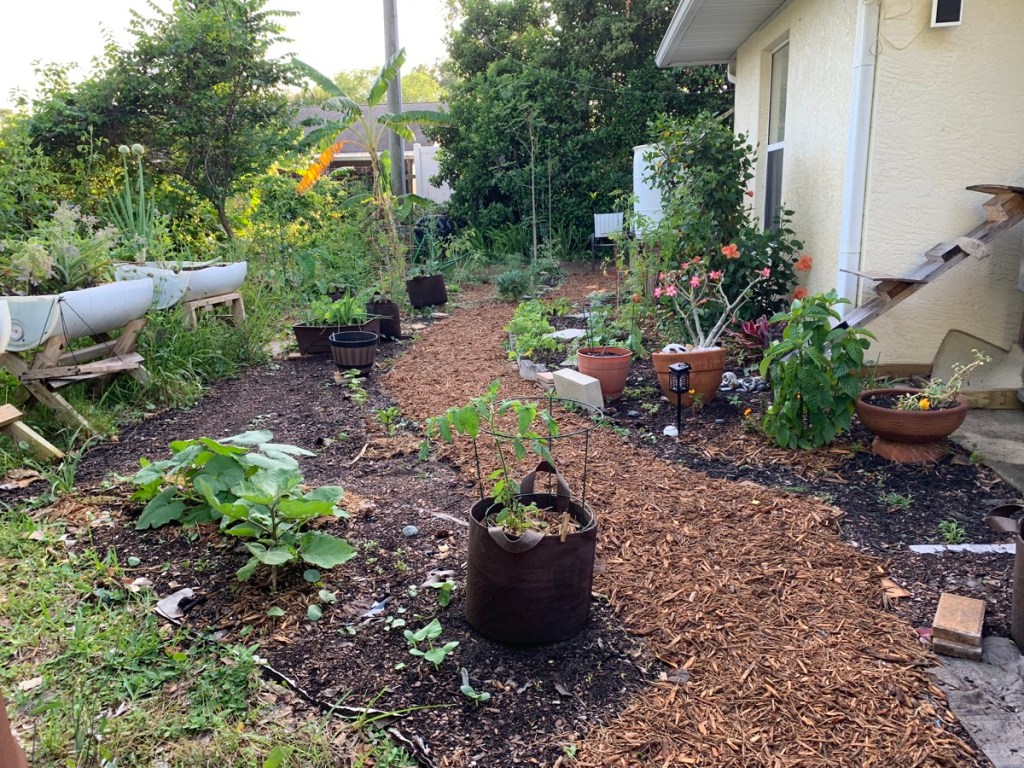
And there it was – my new garden path!

I’d like some flagstones, or slate pieces, to put on top of the mulch. Maybe I will pick some up at some point.

We also picked up a few bags of mushroom compost and potting soil, which I am mixing up 50/50 in the wheelbarrow and putting around the plants that are currently growing.

Our weather here on the east coast of Florida has been beautiful and fairly cool for about a week now. Have to get this stuff done while we can. Oh, and I just ordered a collection of veggie seeds for the year… will be writing about that soon.

Happy gardening!

garden scene

Stories for the gardener…

Something went wrong. Please refresh the page and/or try again.
Three Ways to Begin Vegetable Gardening in a Small Space and Not Using a Raised Bed

Want to grow your own food but don’t have much time, space or money? Start small with a grow box or fabric pot and see how it goes.

If you have been bitten by the gardening bug, but don’t know where to start, I suggest you start small. A small space is easier to manage especially if one person alone will be tending it. I am not covering raised beds that cost a lot to buy and / or build. The garden ideas I mention here are inexpensive to create.

Take your time and abilities into consideration. Begin with a small, manageable space outside, such as a grow box, fabric pots, or little area of the yard to plant. All of this works for growing flowers too.

Plant For Your Climate

No matter where you live, do some research about what grows well in your area. I made the mistake of trying to grow the same types of veggies I grew in New Hampshire when I moved to Florida! It was a disaster and I became very discouraged. 

I live in east, central Florida where gardening can happen year round, if the correct types of veggies are planted.

Grow Boxes Keep Everything Contained

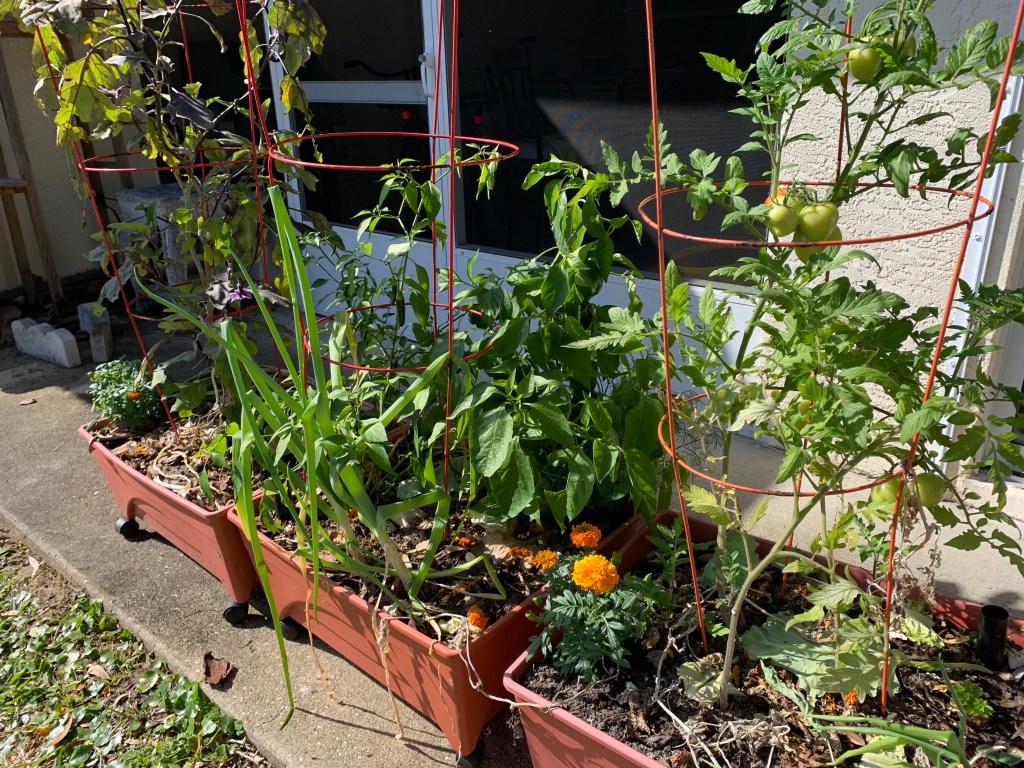
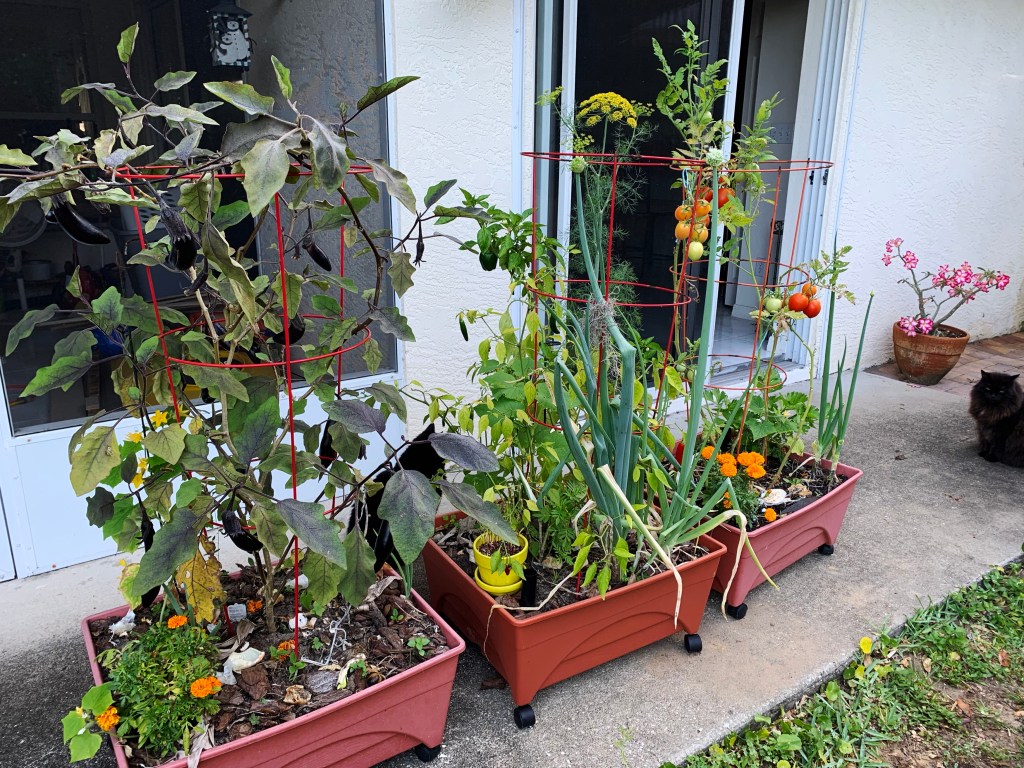
I started my Florida gardening journey with a few grow boxes. I bought them at Home Depot and filled them with potting soil. This was a great way to get started without having to dig up the yard or do sheet mulching. The boxes are on rollers which makes them easy to move on my patio.  Weeds can’t grow in, but you will see some pop up.

The downside of grow boxes is that they are not very deep. But, I have grown green pepper, eggplant, and tomatoes in these boxes. If you attempt this, keep it down to one large plant per box.

These boxes will easily hold some herbs or greens such as spinach, arugula and lettuce. A flowering plant, such as a marigold could be added, or plant scallions along the edge.

Raise some worms

The boxes are also great for starting worm families. I am not a worm grower, but when I added a few worms from the yard to a box they multiplied! From there the worms can be added to other boxes, or back into the yard. Worms are excellent for making the soil better.

A place for some compost

At the time, I did not have a compost area, or my Hot Frog, so my fruit and vegetable skins, tops and leftovers were chopped and added right to the soil in the box. Mostly I added banana skins and coffee grounds, and I didn’t overdo it.

My boxes are similar to the ones in the Amazon link below. They come with a tube where the water is supposed to be added, but I treat my boxes normally, watering from the top, unless it’s very hot and dry.

Fabric Pots For Vegetables

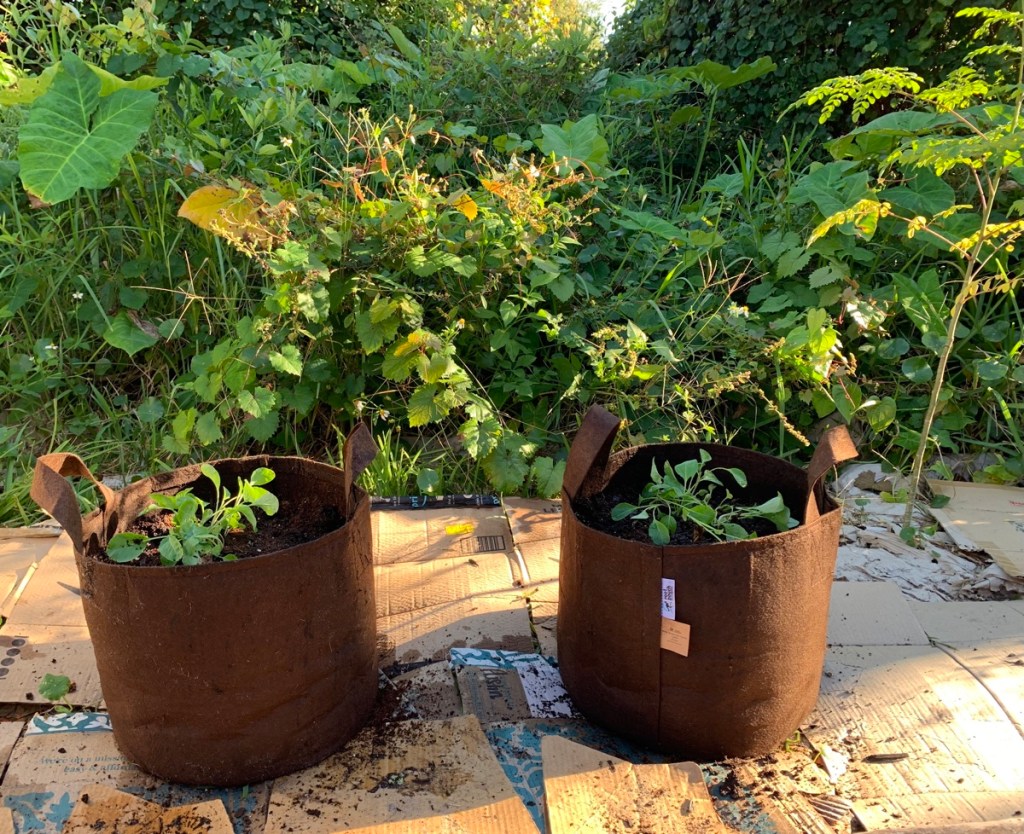
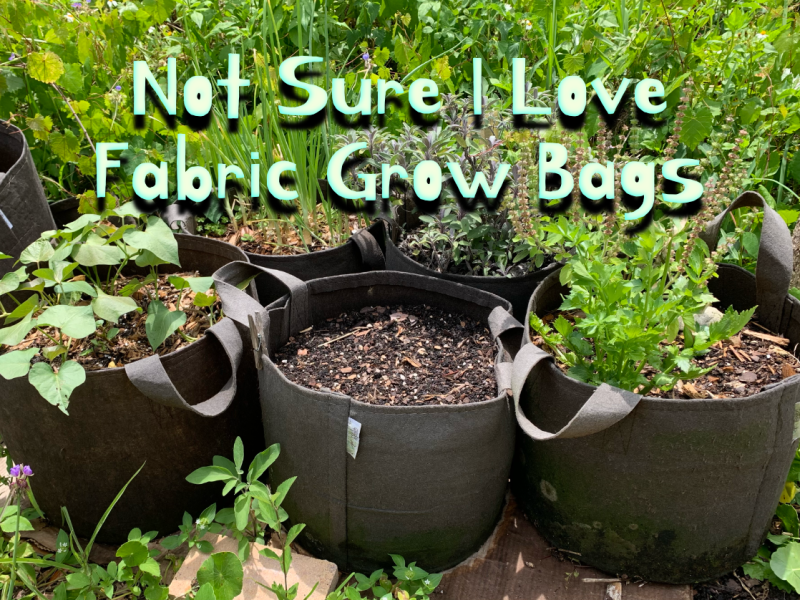
Fabric pots come in many different sizes and can work to grow small amounts of vegetables. Either use one bag to grow a large type plant, such as eggplant or tomato, or fill it with carrots, greens, or herbs, that can be grown closer together. The pots are usually taller than the boxes, but not as wide. Be careful not to overcrowd vegetables. 

I wrote a whole page about Gardening in Fabric Pots and my experiences in New Hampshire and Florida. Dark colored pots can help warm the soil for growing in the northeast and other colder climates with a short growing season. In Florida, I like the ability to move the pots out of hot sun as needed.

Most pots have handles and can be carried, or dragged, to a new location. Do this before watering, or when the soil is fairly dry. Be aware that water runs out of the bottom and sides of the fabric.

Sheet Mulching in Small Spaces

This small gardening idea would be a permanent addition to the yard and is recommended for someone who knows they want to garden, and will continue. Sheet mulching will kill the grass. This is also a time intensive way to garden.

If you have never heard the term “sheet mulching” it is simply this; not digging up what is already there. Cover the lawn / garden area with paper / cardboard with dirt or mulch on top. (Buy dirt and mulch = expense.)

Why do it this way? If your yard is grass, as many are, and if you are not heavily spraying or using chemicals on the grass, things will be living just beneath the surface. Worms tend to be crawling around the grass roots. You may not like bugs, but they are necessary and all have a role to play.

Using a rototiller or digging with a shovel, disrupts whatever good is already there. Putting down cardboard or newspaper leaves it all alone. Yes, the grass will die, but the dirt will remain in good shape. But this is just the beginning. Amendments to the soil and fertilizer will have to be applied. This is the start of “real” gardening.

Also, please note that cardboard and newspaper will break down and eventually weeds may begin to come up. More cardboard can be added, or mulch, but this is an ongoing process. Sheet mulching just gets you started.

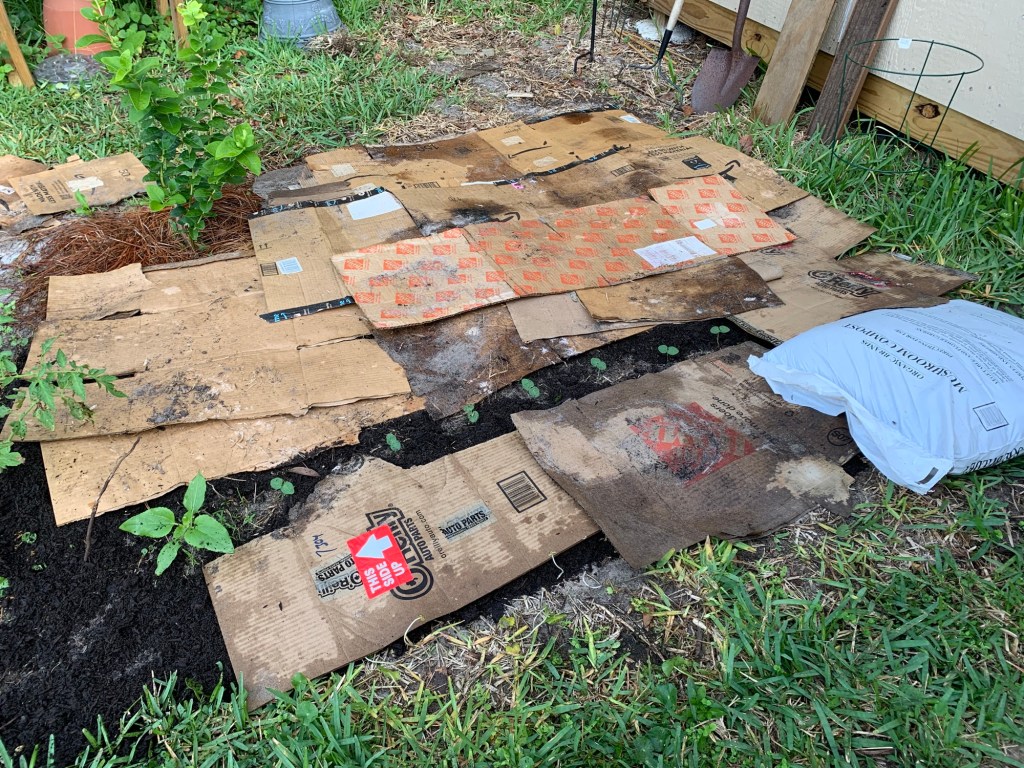
My yard, Spring to Winter using cardboard

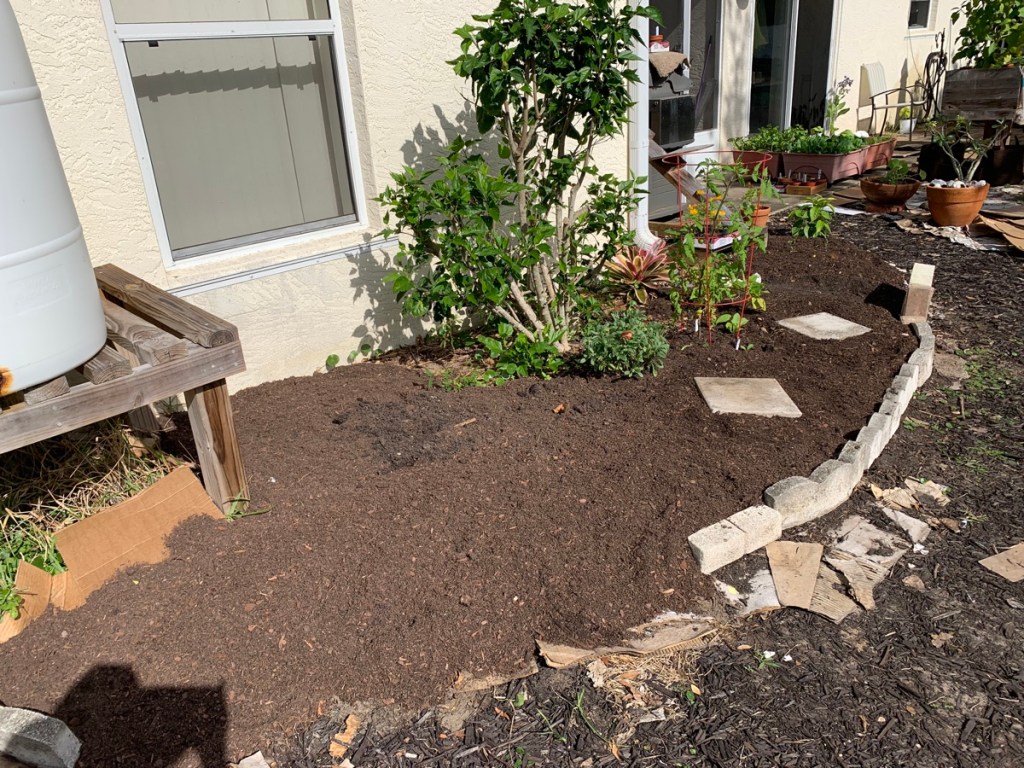
Above – Spring and summer cardboard. Below – Dirt added for garden space (Fall and winter seasons).

If you choose to go this route, save boxes and / or newspaper and plan to spend quite a bit more in dirt and mulch. A ground garden needs to be weeded continuously, unlike boxes and bags. Probably the biggest problems with gardening normally, in the ground, is that critters that will destroy crops. I deal with destrucion by raccoons and armadillos.

My Thoughts on Grow Boxes, Fabric Bags and Planting in the Ground

I use all of these types of gardens, but I began with a couple of grow boxes and expanded from there. I’m still expanding, saving cardboard and buying dirt and mulch. In Spring 2023 I dug up (yes, dug) an area for the first phase of my garden and I am continuing to expand.

Each type of garden has its own good points. Gardening in the ground is a lot of work, but the plants have space to expand as they need. I’ve always believed that anything planted in the ground will do better than in a confined space. Some things, like watermelon and pumpkins, need to be in the ground.

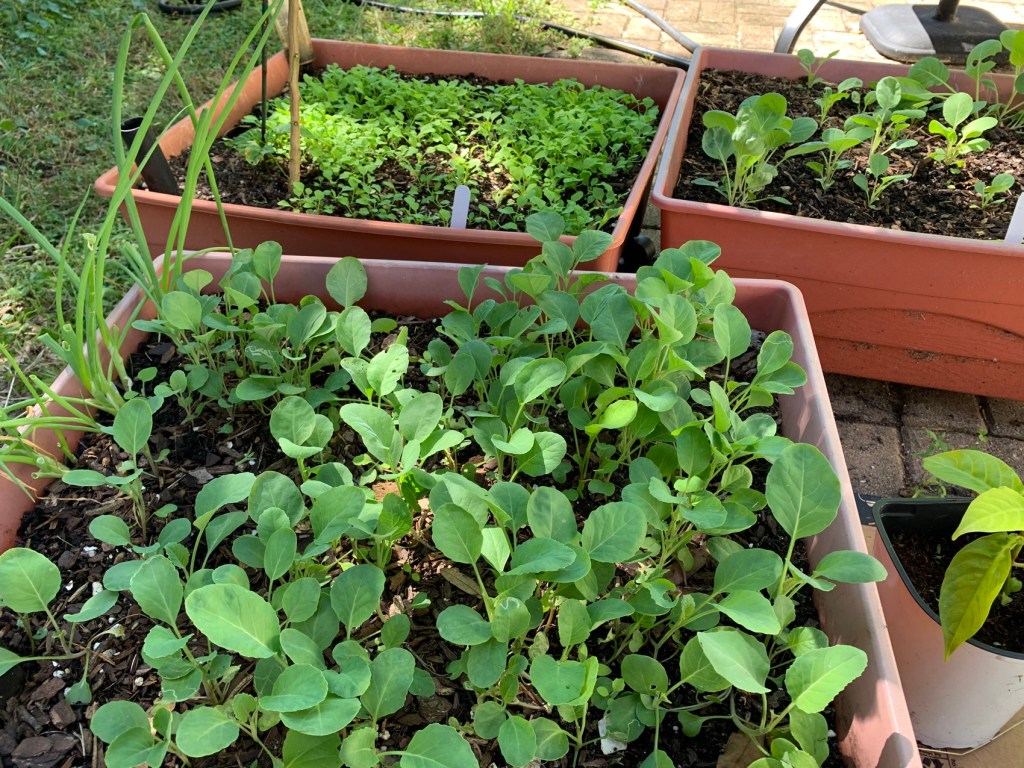
Vegetables that normally grow and die by winter don’t always do that here in zone 9b. Anything that continues to grow for years could work in a fabric bag, leaving garden space for other vegetables. My boxes are used mostly for greens now, or as nurseries to begin plants that will be moved to the garden when they grow.

Time vs. Food

I am an older woman with a job, but my kids are grown.  I have a lot of time to garden as I want, and I do it all by myself. Consider the time you have and want to spend gardening, and figure out what you want to grow (eat) the most. If it’s herbs you’d like for cooking, a grow box is the way to go. If you love fresh tomatoes, maybe a large fabric pot or two would be best (one plant per bag).

Once your garden (in whatever form you choose) is ready to plant, determine the right planting time in your area, buy seeds or seedlings, and get gardening! I wish you luck.

Keep reading my garden stories:

The Best Way to Acquire Garden Dirt if You Have the Muscles For It

Changing my small backyard from all grass to a permaculture plot for growing food has been a challenge. It can also be expensive. Although I was dreading doing this, the best way to acquire my garden dirt was to fill the truck with purchased soil. We had to buy in bulk and do some shoveling.

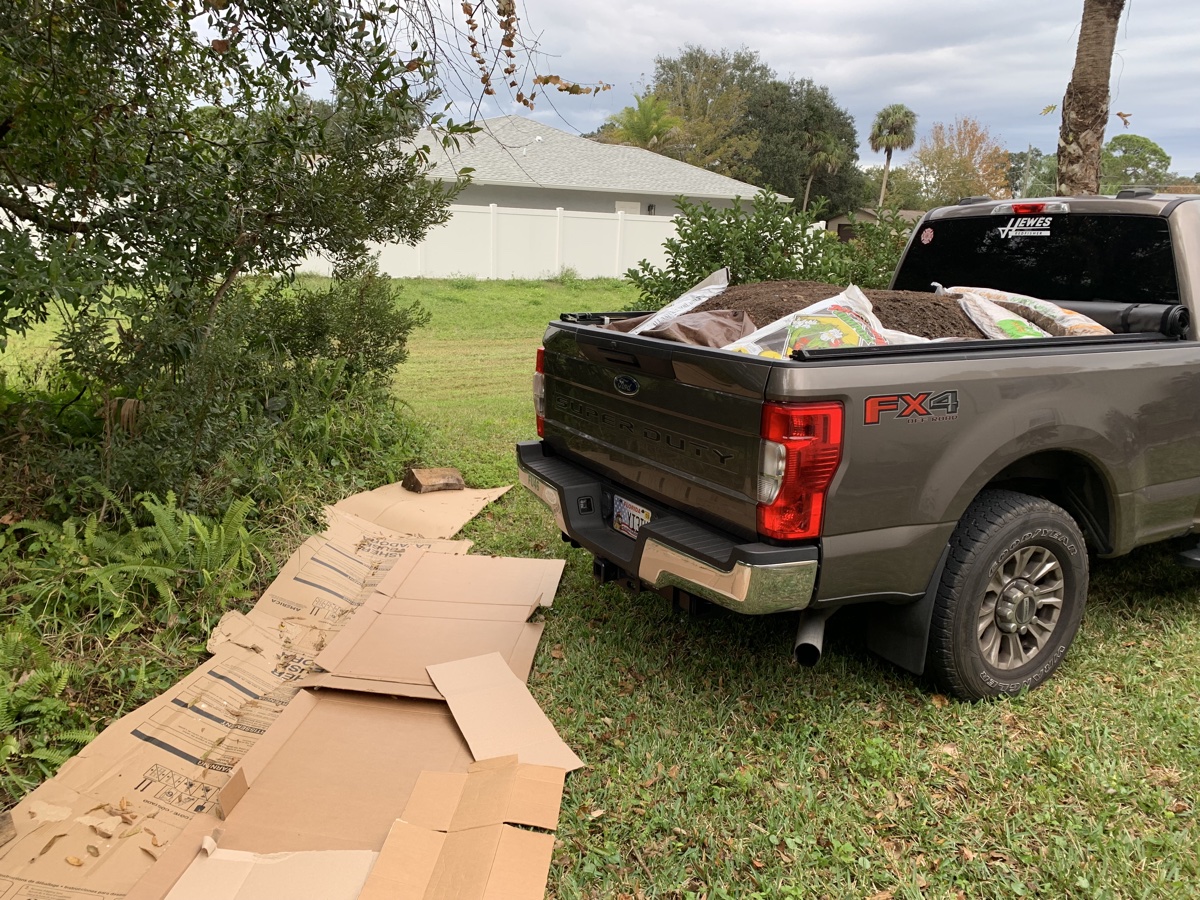
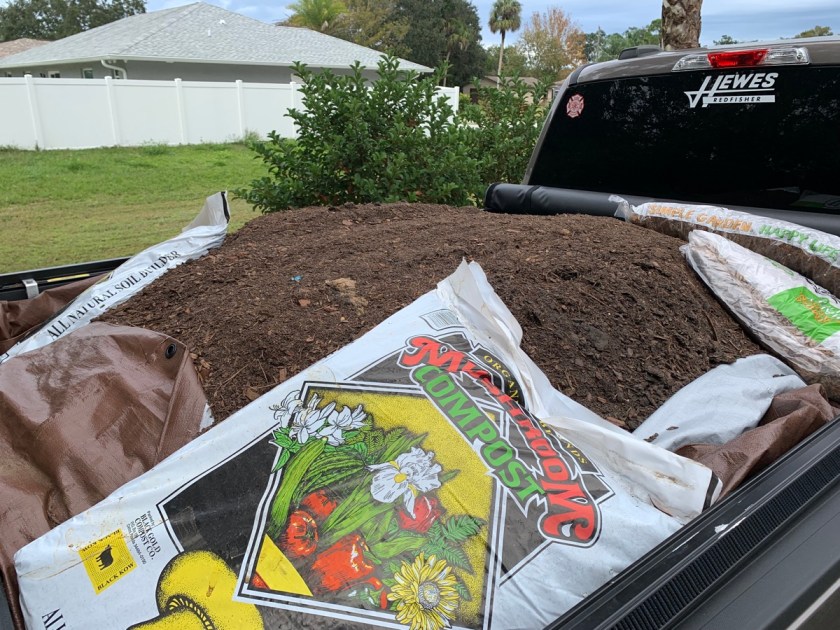
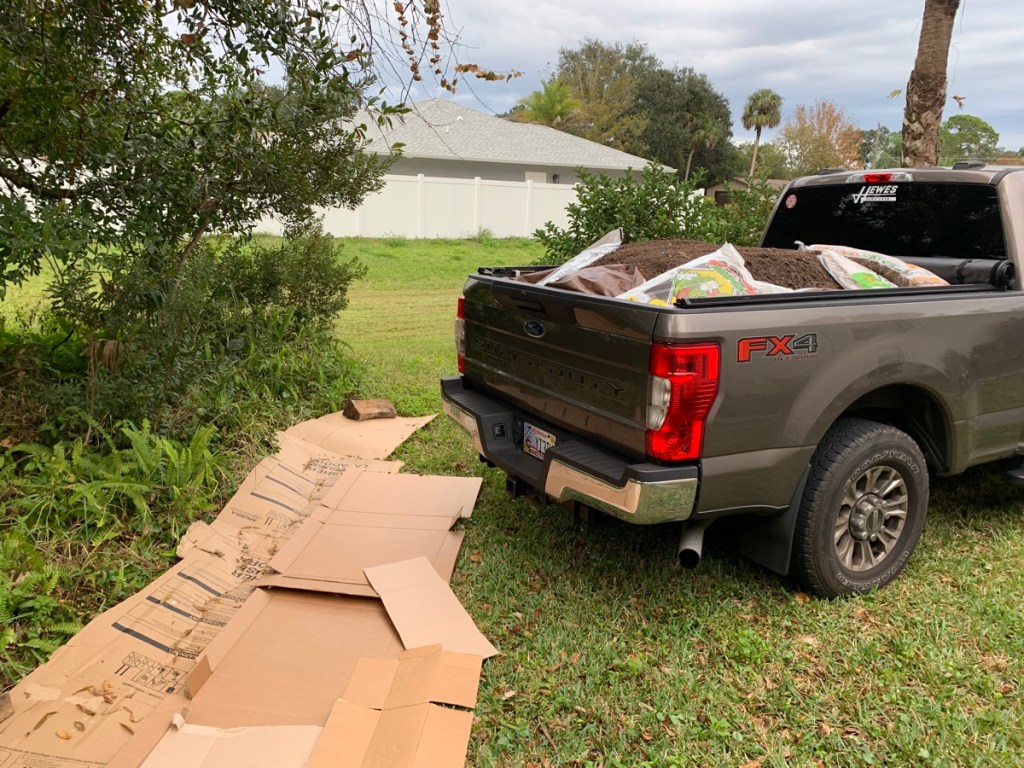
Not only would I have lots of dirt to work with, but buying dirt by the yard is cheaper. I bought two yards of soil which filled the back of the F250, along with two bags of mushroom compost and two bags of mulch.

dirt and compost in truck bed
Two yards of dirt fills the truck bed.

Winter is the Time to Do Yard Work

Now that a Florida winter is upon us, the desire to get outdoors and fix things up is high. After a long, very hot summer, the cooler weather feels great. And by cooler I mean near 80 degrees some days, but cooler in the morning and evening. In other words, it’s more like a normal “summer” elsewhere.

Finding a Place to Store the Dirt

I need dirt. I’ve had the boxes piling up on my porch but can’t put that cardboard out on the grass without some dirt to help hold them in place. I’ve been buying bags of dirt, but that doesn’t go far. I considered ordering a load of dirt to be delivered, but there is no good place near the road for the shop to dump it.

As my garden planning has progressed, I realize that I need more sunny spaces. I want to grow Roselle Hibiscus which will be large plants. They can’t grow where my vegetables area, so the plan is to begin a new garden in the front yard.

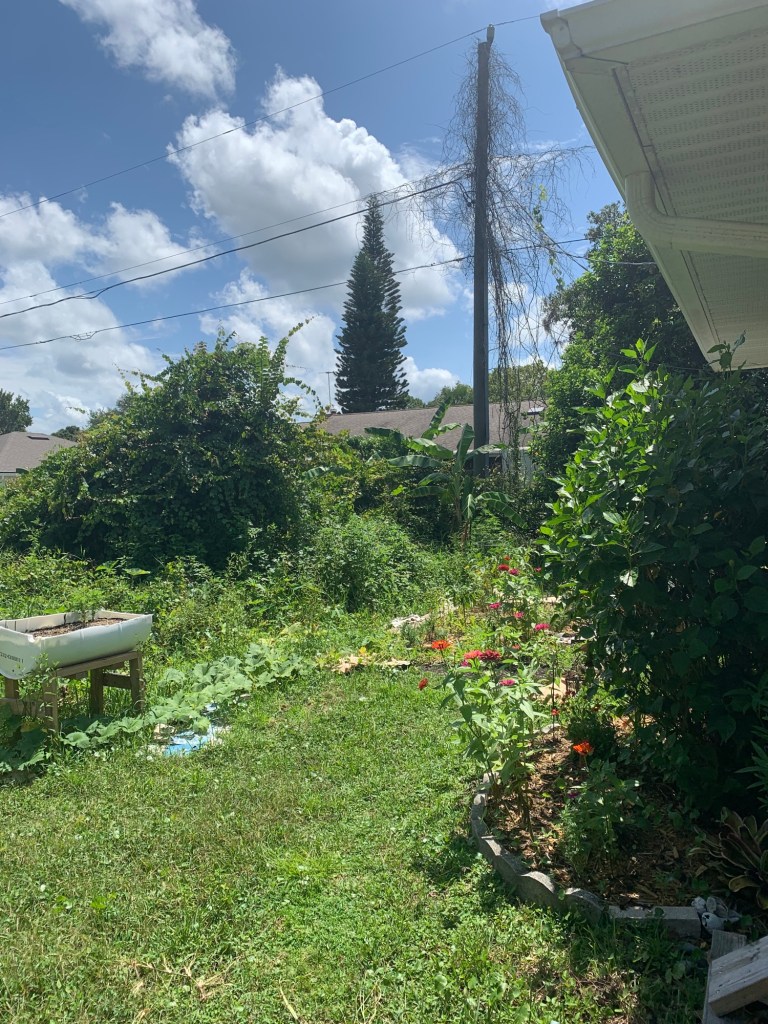
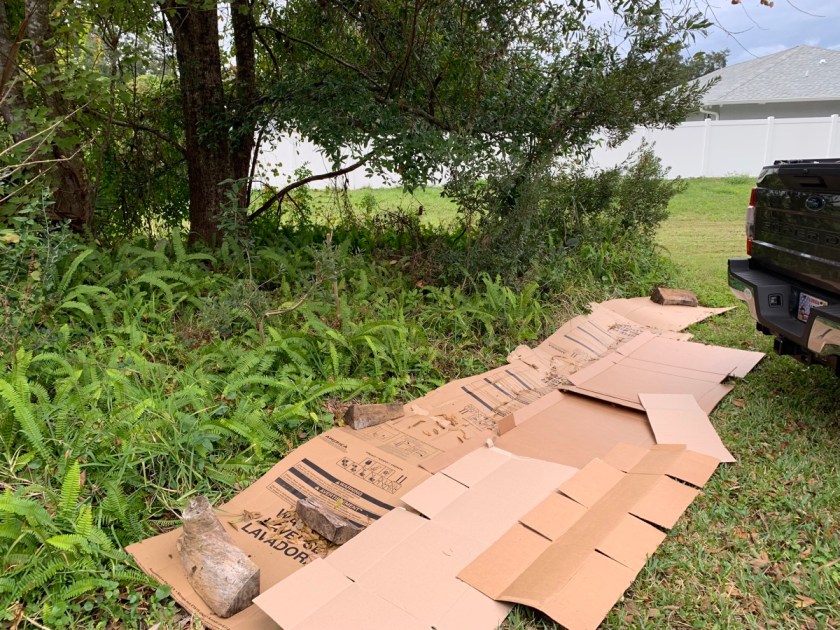
The area pictured below is where I believe there was once a flower garden. I’ve found a Beautyberry Bush and Firespike back in this overgrown location. Now it is also full of ferns, and little trees are growing. The only tree I have cut down is the invasive Brazilian Pepper. The front of this patch of ferns gets lots of sun all times of the year. If I can get the Roselle to grow, they will be planted here.

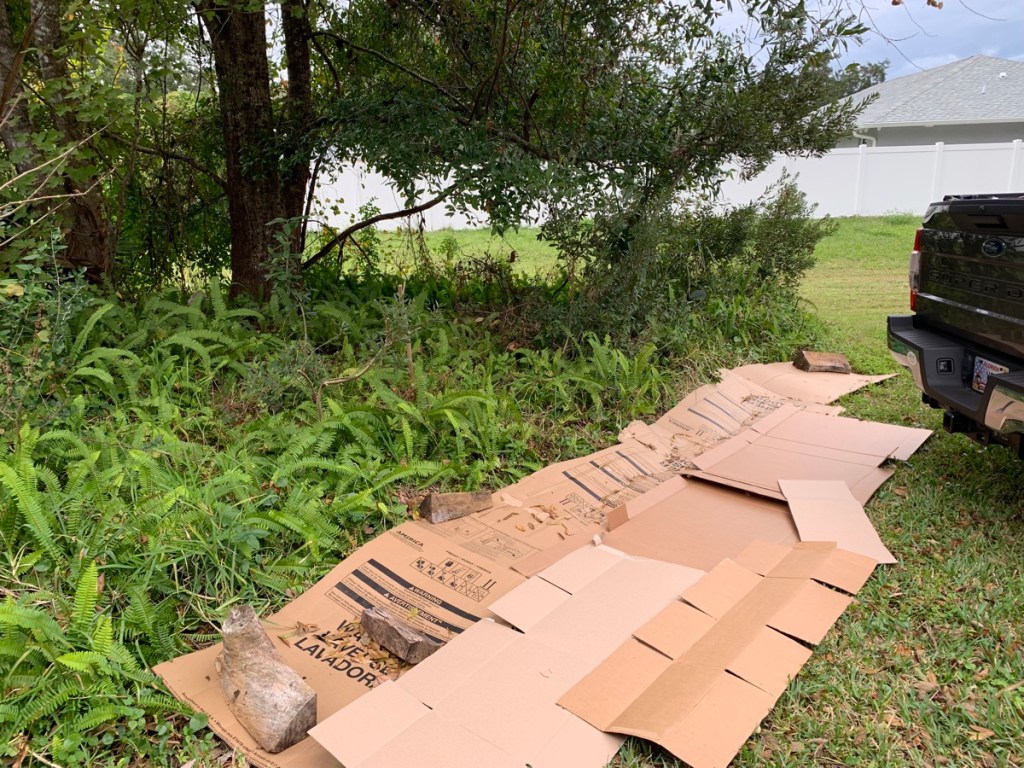
cardboard spread on grass
Broke down some big cardboard boxes for the new front garden

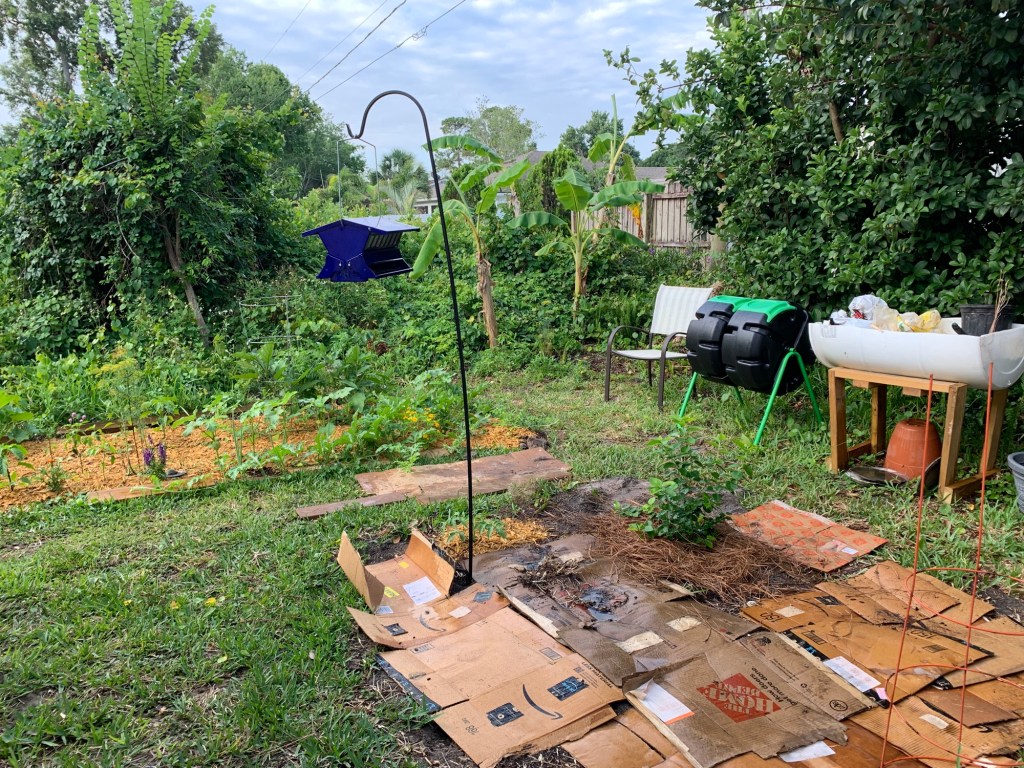
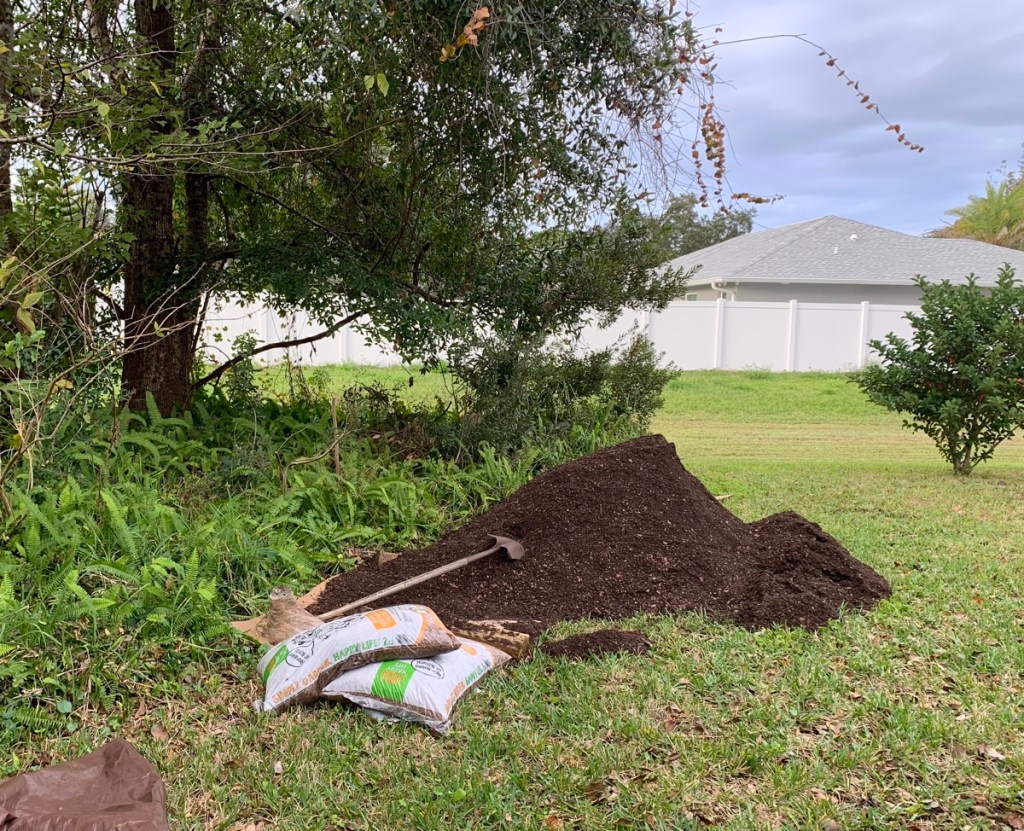
This was where the dirt pile would sit until I needed it. I put down big pieces of cardboard, (see my post about using cardboard in the yard) and we unloaded the dirt onto it from the bed of the truck.

In order to get to this spot, we had to back the truck across the front yard. It meant moving some of the Christmas lights and taking down part of the fire pit. Then, of course, we (my son and I) had to shovel all that dirt out of the truck! It was a chore, but worth it.

From here, I can fill the wheelbarrow and move the dirt to the back gardens as I need it. And the cardboard underneath, will be the spot to plant new things once all that dirt is gone.

The cost for all of it was right around $100. If you live near The Yard Shop in Edgewater, I highly recommend them for dirt, mulch, compost and stones. The people are super nice and helpful.

Now the Garden Plans Can Move Ahead

I have the dirt and I have the cardboard. My gardening plans continue to emerge with more space being made to plant. Over winter I am growing green beans, arugula and Chijimisai spinach, and a few other things.

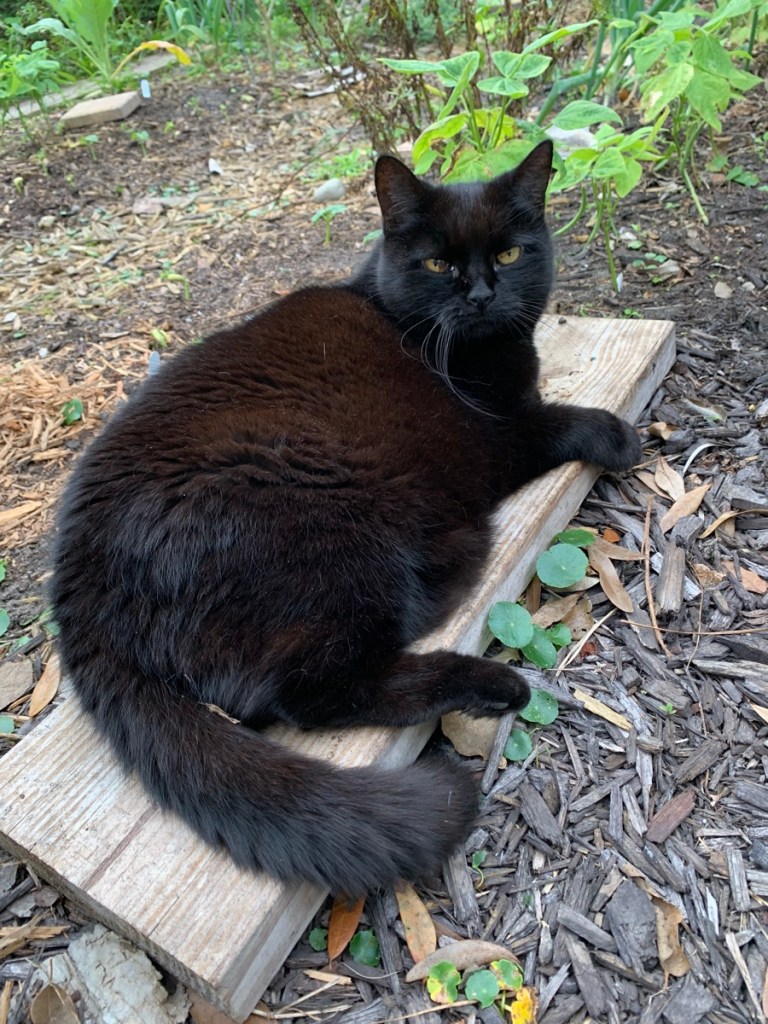
Skittle is overlooking my garden work, and I’m not sure if she approves or not!

Skittle in the garden

Keep reading my Florida gardening stories

Recycle Cardboard Boxes For Use in the Garden

Cardboard boxes and paper get recycled into the yard as I plan out spaces for my flower and vegetable gardens.

It might look messy for a while, but cardboard boxes can be recycled as ground cover in the yard and garden. They serve several purposes in fact.

We get a lot of deliveries coming in cardboard boxes and now that I am planting, they have become useful in the yard. I keep all sizes!

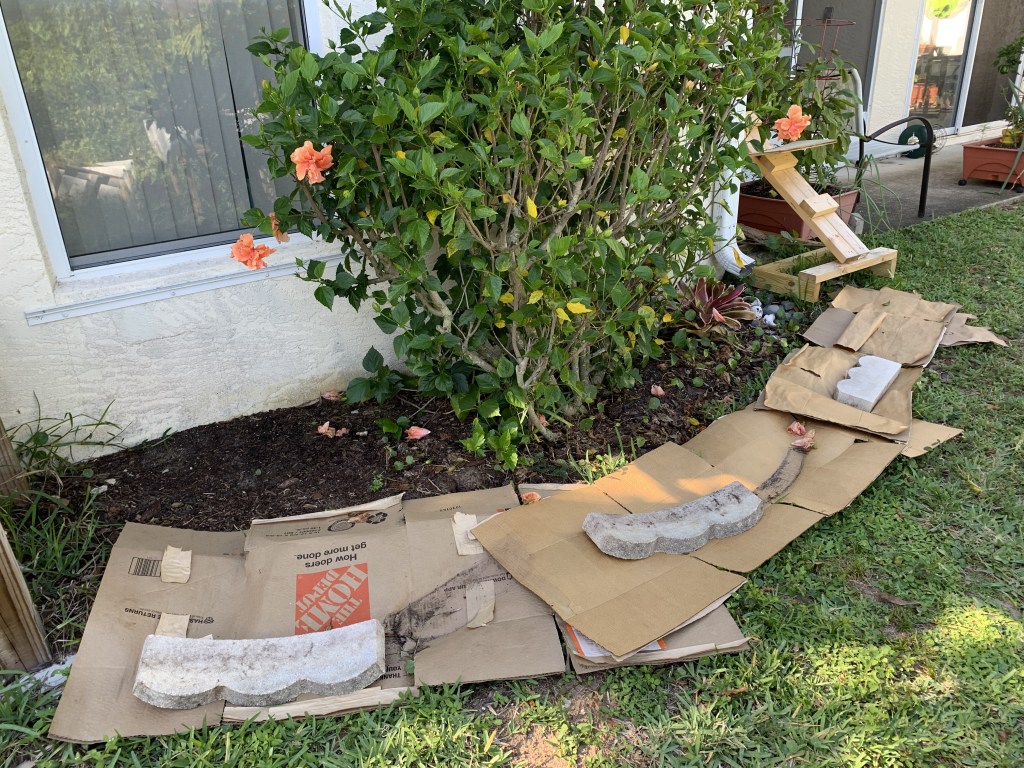
cardboard boxes in the garden
Cardboard keeps the ground cool and weeds from growing

I began using cardboard and newspaper when I gardened in New Hampshire. In order to create a new garden space for the following summer, I would layer paper and cardboard over the garden spot and leave it all winter.

Florida growth is different, and quite difficult to control, especially since it gets to grow year round! In winter it slows down, and many vines die back. But, in summer it’s like some horror movie where the vines grow faster than I can cut them back. And everything here grows by vines and runners.

Soil Protectors

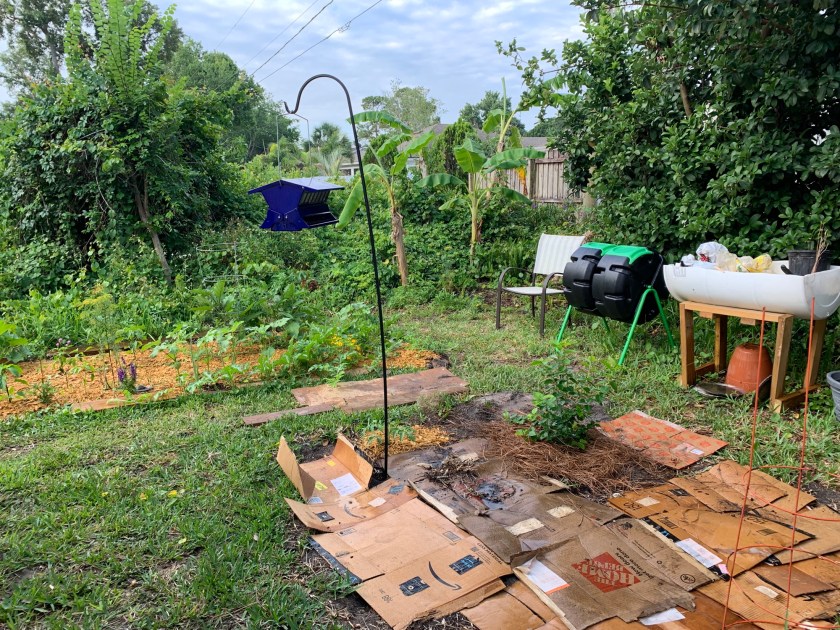
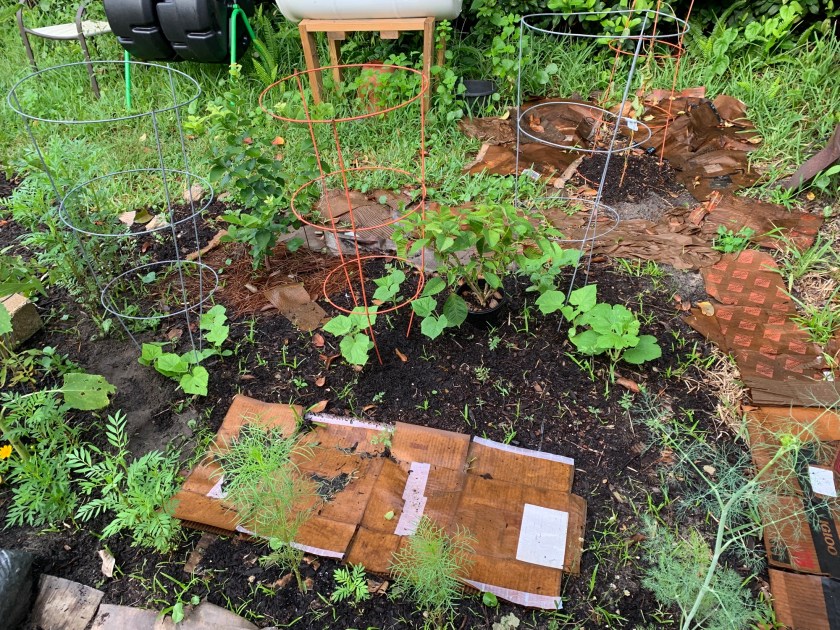
Now that it’s hot, I am using my old boxes to keep this bare garden cool and wet as I plan what to plant.

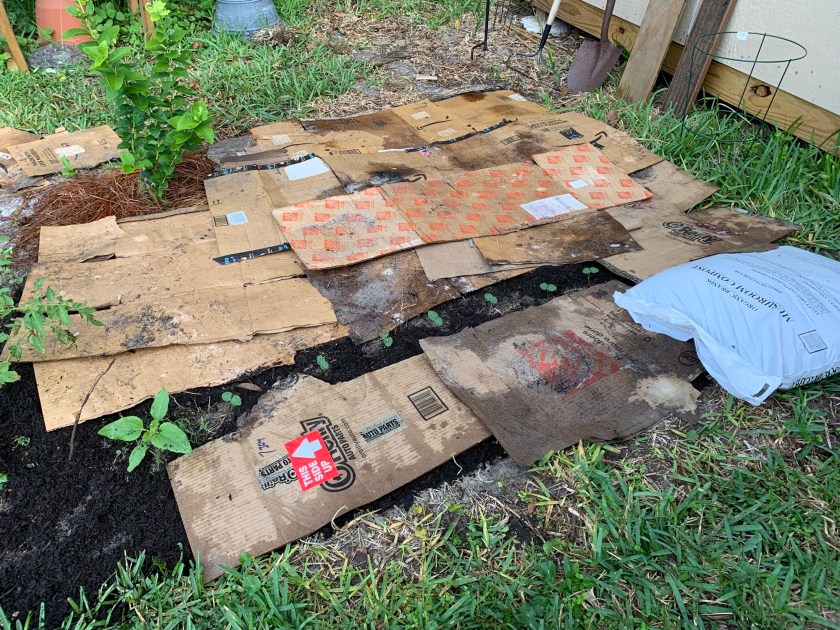
The cardboard works great to keep weeds from growing. It is also perfect to create quick walkways. It’s helpful to have some mulch or dirt to put on top, but when it’s wet, and not windy outside, it will stay in place.

cardboard in the garden

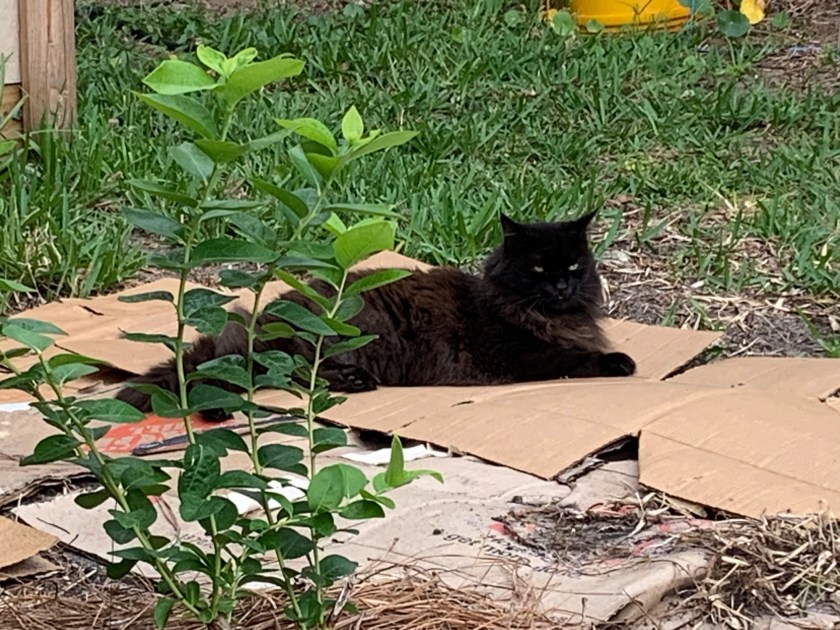
cat on cardboard
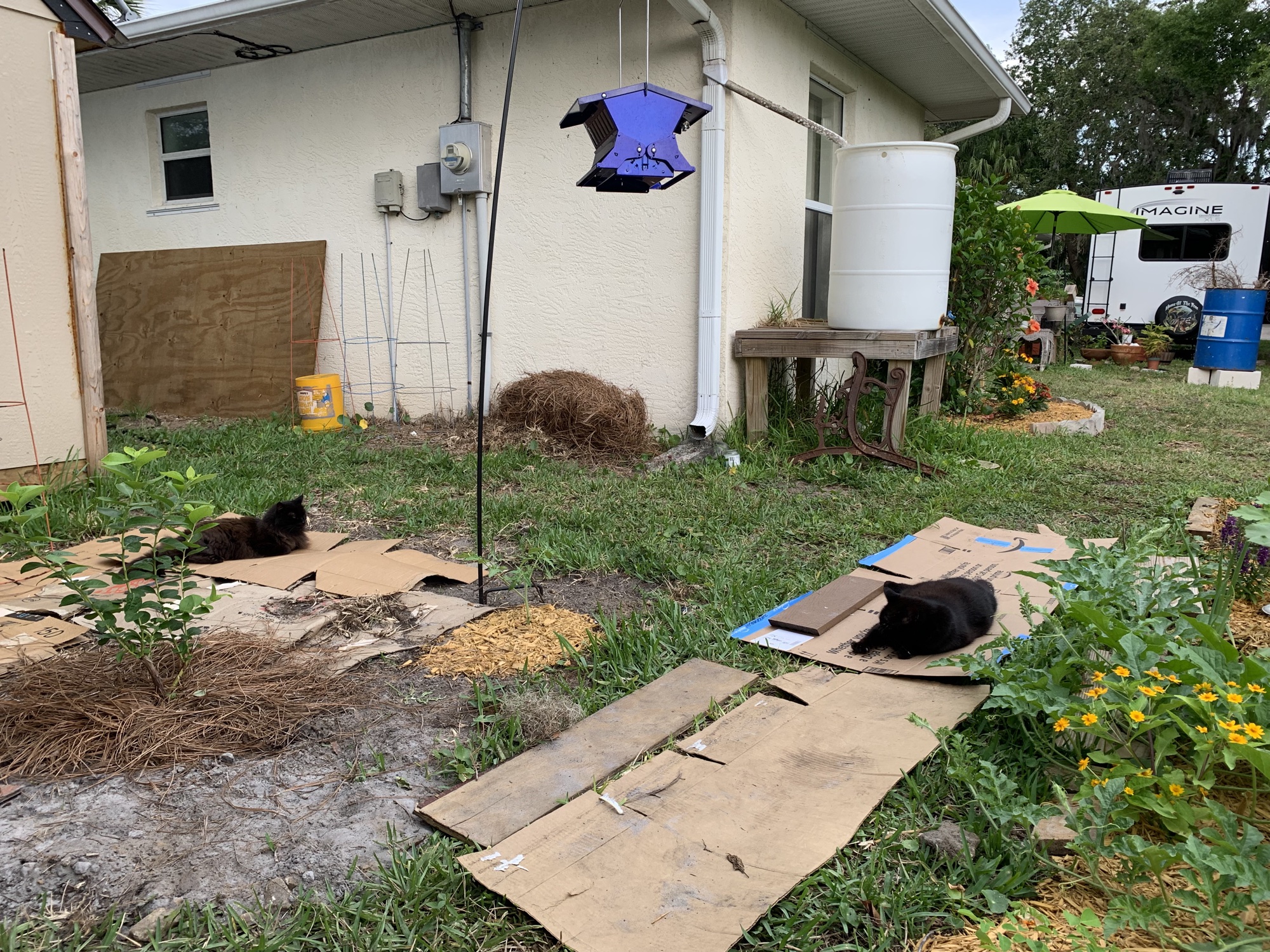
Fontana enjoys this place to rest

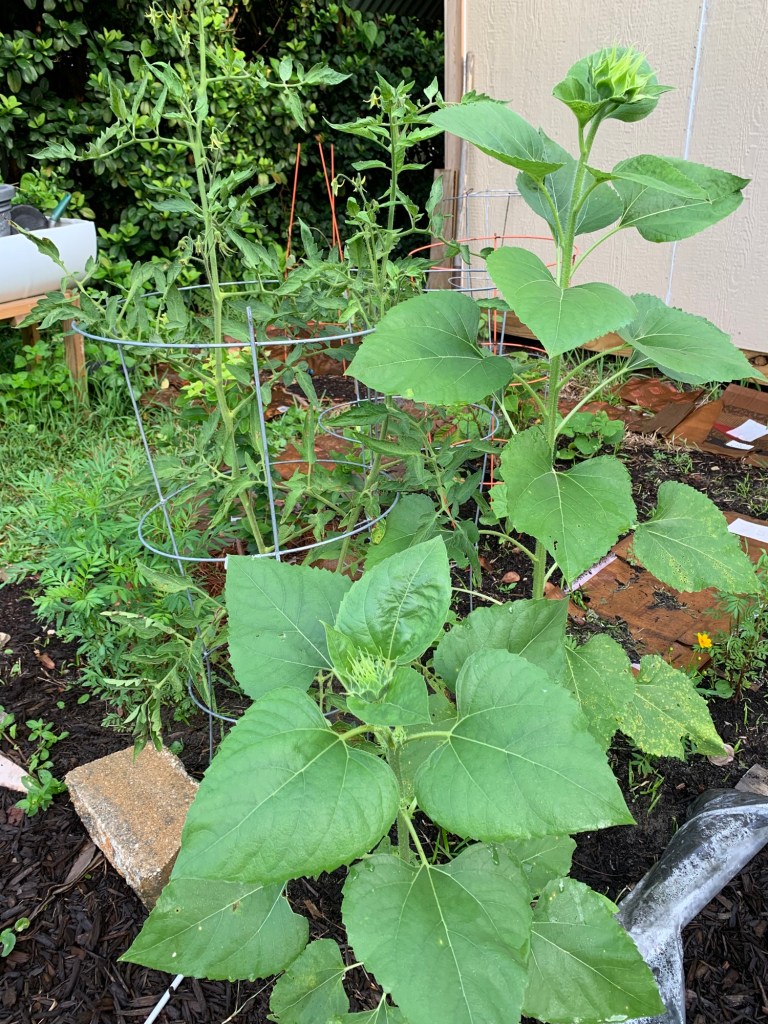
Once the garden area was tilled, I had nothing really to plant. Placing cardboard over the dirt keeps the weeds and grass from filling back in. Fontana likes it too. I’ll be planting here in Fall – oops, I planted here in July. One tomato seedling needed a home, so I planted it here. Also, two sunflowers sprang up on their own! Next I put in some Suyo Long cucumbers, which are supposed to do well in the heat.
  • volunteer sunflowers
  • Cardboard as mulch in the garden

Outdoor Cat Beds (and Walkway Markers)

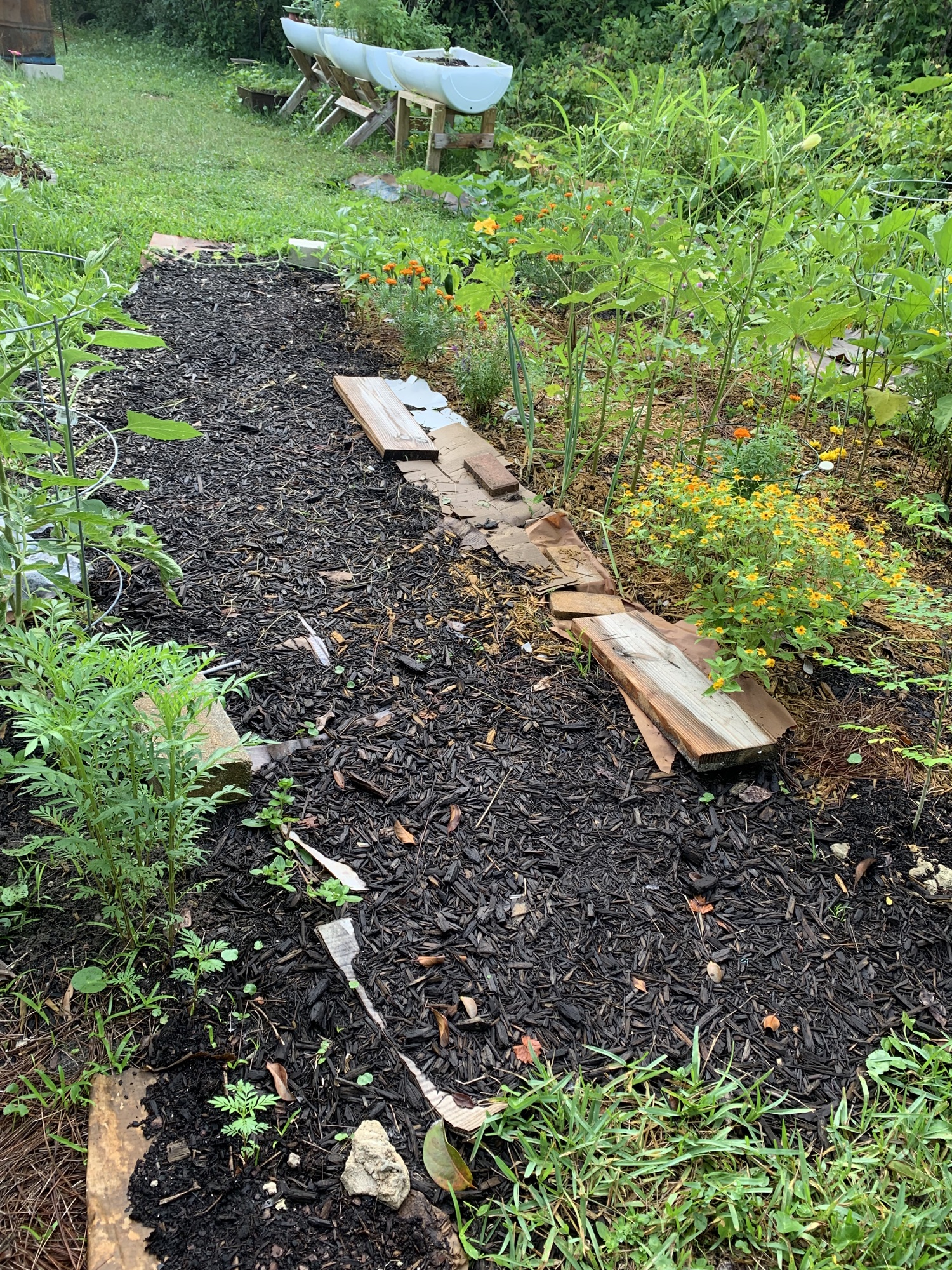
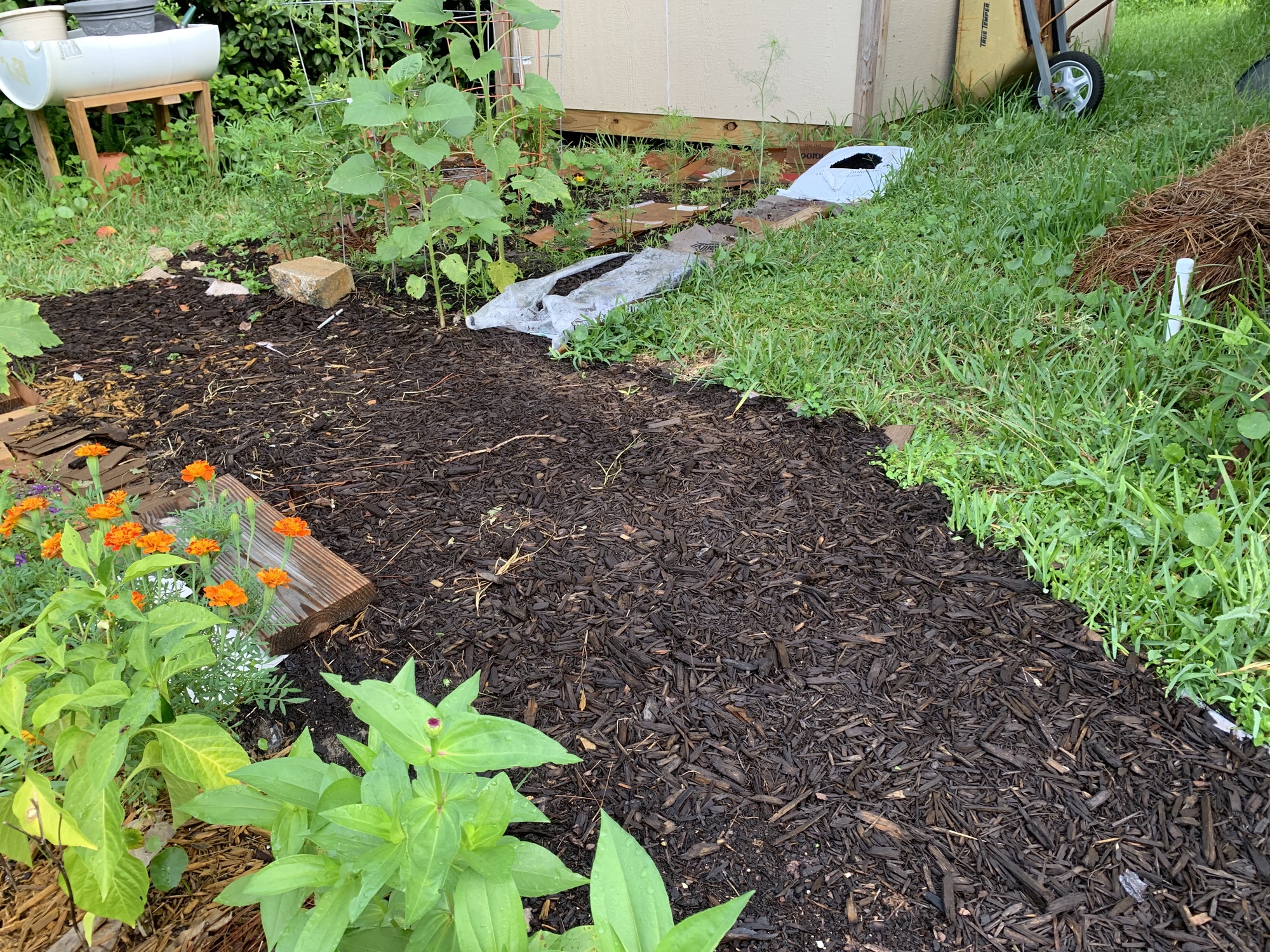
I’ve noticed that here in Florida, placing cardboard on grass won’t kill it. The runners just come out the sides and continue on! The grass here is tough. But by using cardboard and then mulch on top, you can make yourself a pretty nice walkway. Once the yard it covered, this will be much more manageable.

  • uses for cardboard in the yard
  • mulched garden path
  • mulched garden path

Skittle’s Bed

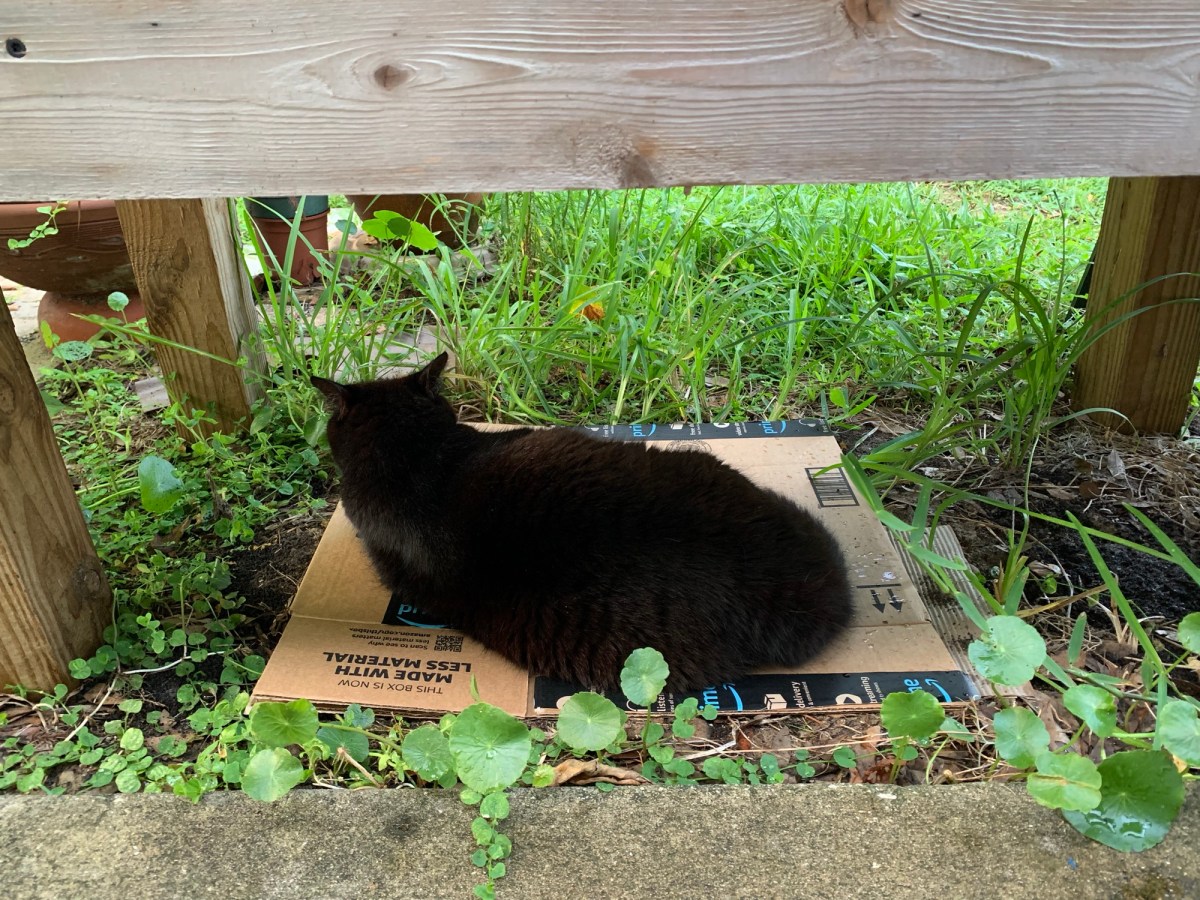
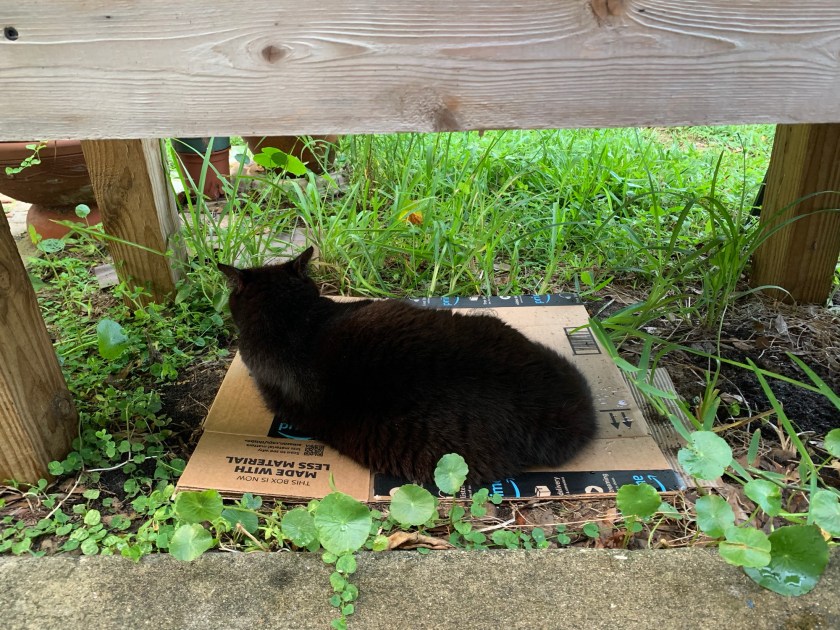
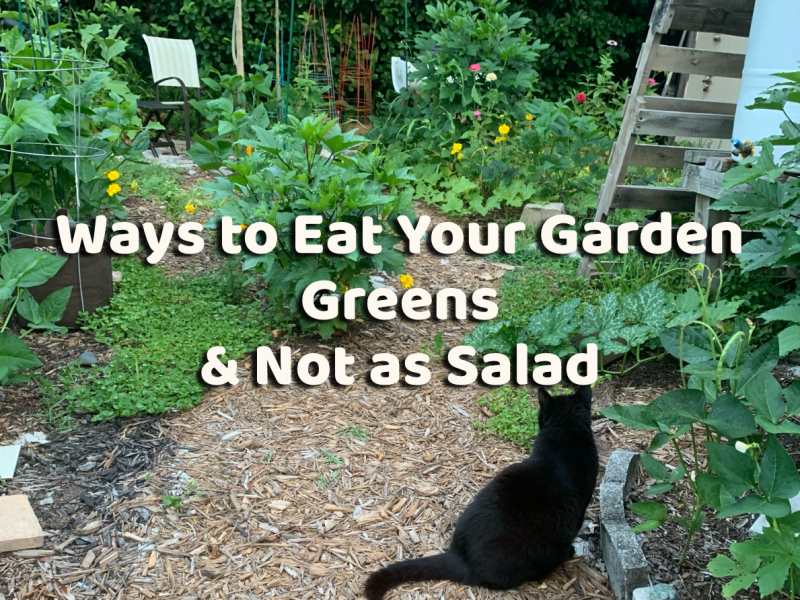
My black cat Skittle has a favorite, shady outdoor spot. She sleeps under the raised, wooden bed my son built. When the cardboard gets wet and dirty from rain, I just switch it out with a new piece, and use the dirty piece for the garden.
black cat sleeping on cardboard
Cardboard cat bed

By the way, even though it’s very hot this time of year, my cat loves to be outside. She stays in the yard, ignores the birds, and comes in every so often to cool off and eat. I don’t know how she stands the heat, but she loves it. This is her happy place.
Did you know that earthworms like paper and cardboard?

I find lots of nice, juicy earthworms under Skittle’s bed! They like that cool space too. Sometimes I will move the worms into a garden bed. I do have a lot of worms in each of my raised beds, which I worked at.

Kneeling Mat For Planting

What is there to say? I kneel on cardboard to plant gardens when there is a good size project to accomplish.

cardboard for kneeling
A piece of cardboard for kneeling while planting

Cardboard Tray For Little Pots

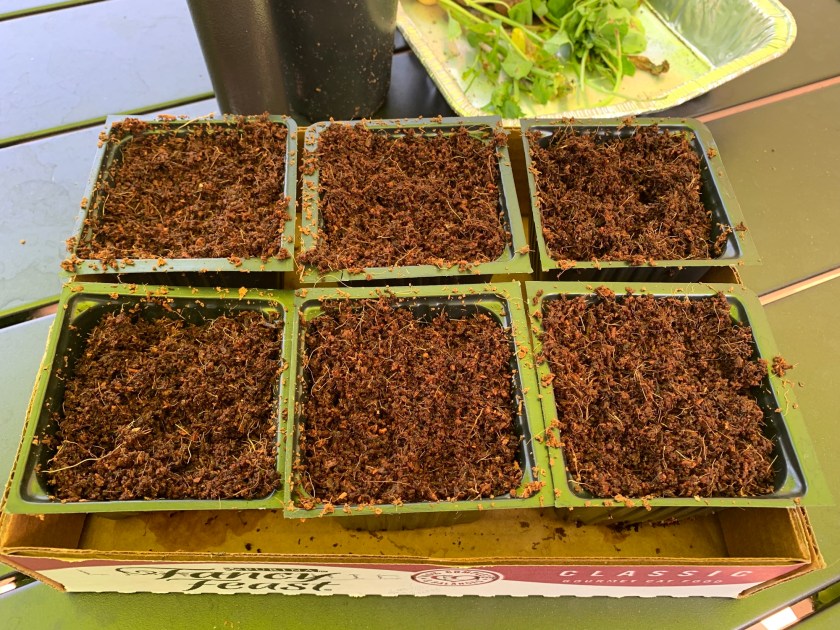
Any time I get these cool little trays made of cardboard, I keep them. They can hold garden things, or be used to move small pots indoors. They won’t work well for pots that need to be watered, but this coconut coir takes a while to dry out.

I also keep some little cardboard boxes in the back of my car. They work well for bringing new plants home from the nursery!

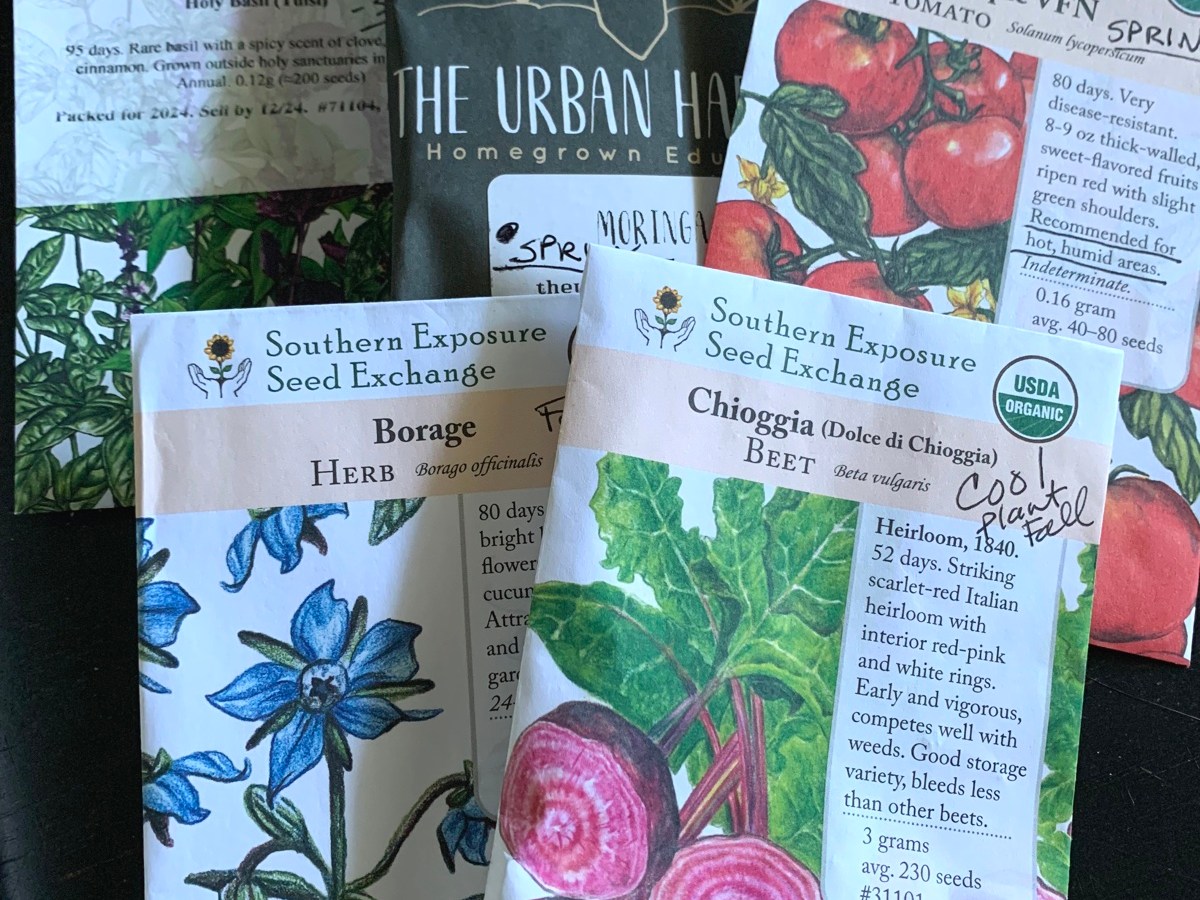
Six pots of coconut coir for seeds
Coconut coir pots for catnip seeds, placed in a cardboard box.

Moving Boxes and Their Many Uses

Did you just make a big move? Many Floridians are new to the state. If you have just made the big move, the cardboard boxes may be overwhelming your space.

We’re featured in Rent.’s 10 Ways to Get Rid of Moving Boxes article. Find out what we had to say here!


More stories from the blog