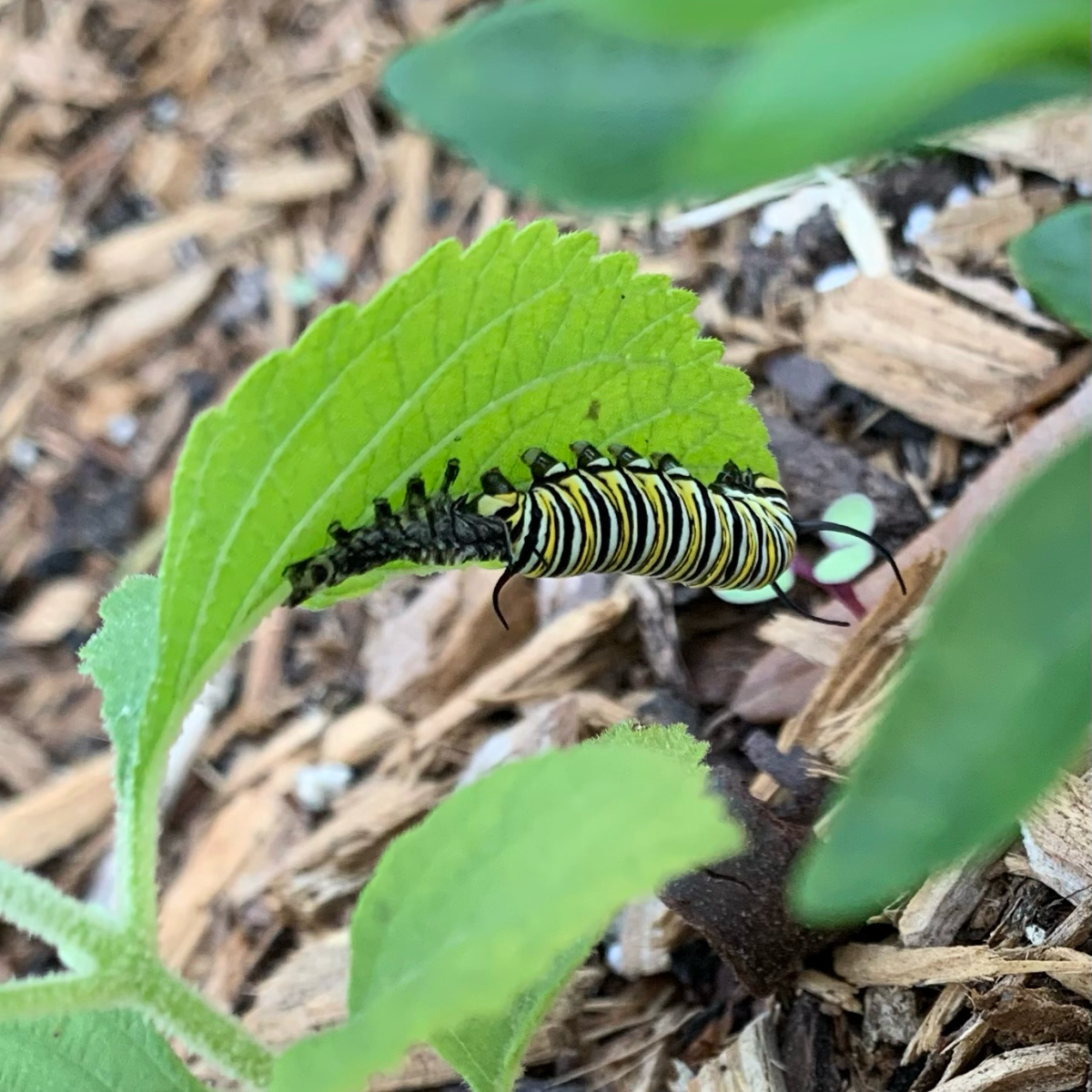
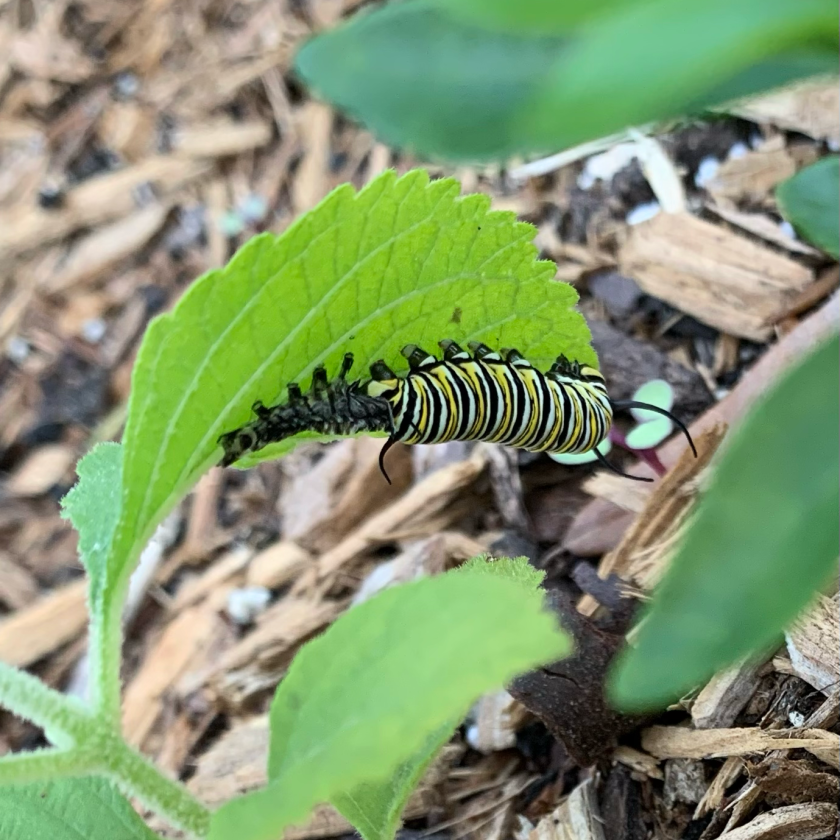
I found a strange black thing next to one of the Monarch caterpillars. I need help identifying this.
I don’t know how to describe this image. I found the Monarch caterpillar on the underside of a Beautyberry bush leaf. This little Beautyberry is a small plant that sprang up next to the milkweed.
As I was checking for caterpillars the other morning, I found this one with a strange black thing. It looks like a shell or skin and the caterpillar was crawling out of it! This caterpillar was fairly good size, and I’ve never seen anything like this on my milkweeds.
If you know what is going on here, I’d love to know. And thank you for your input!
So one of my faithful readers said to look into caterpillar molting. I found this page at Naturedigger where they explain. Monarch caterpillars shed their skin, and eat it, five times before they become a chrysalis. I’ve seen many Monarch caterpillars and have never seen them shed their exoskeletons!
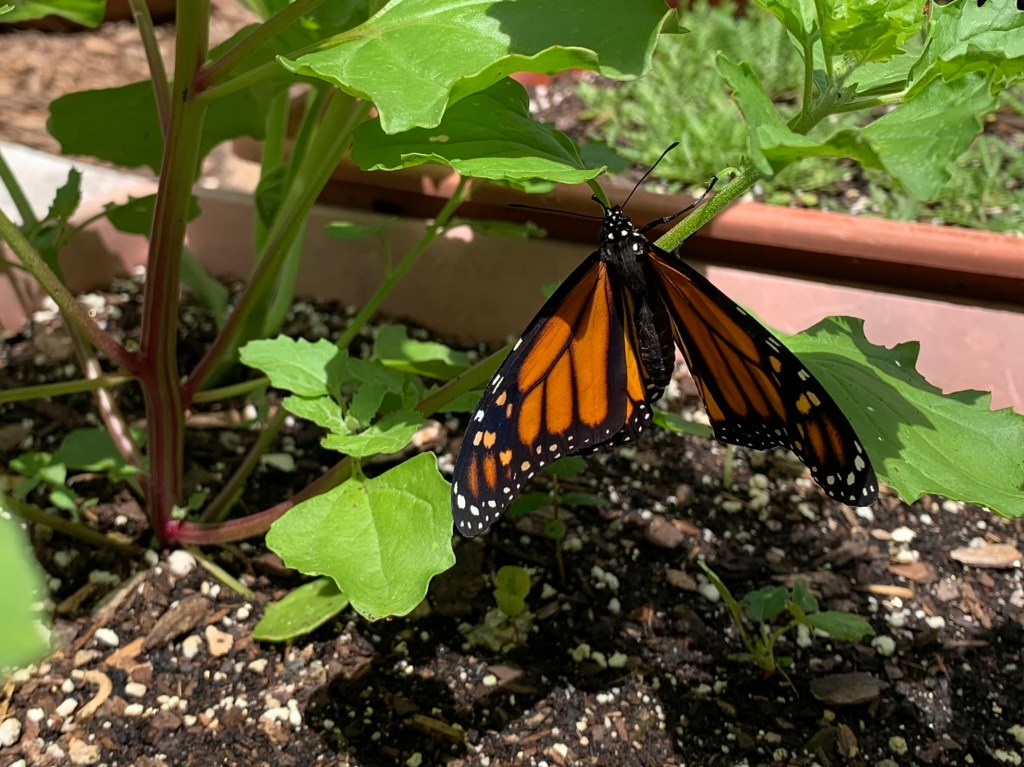
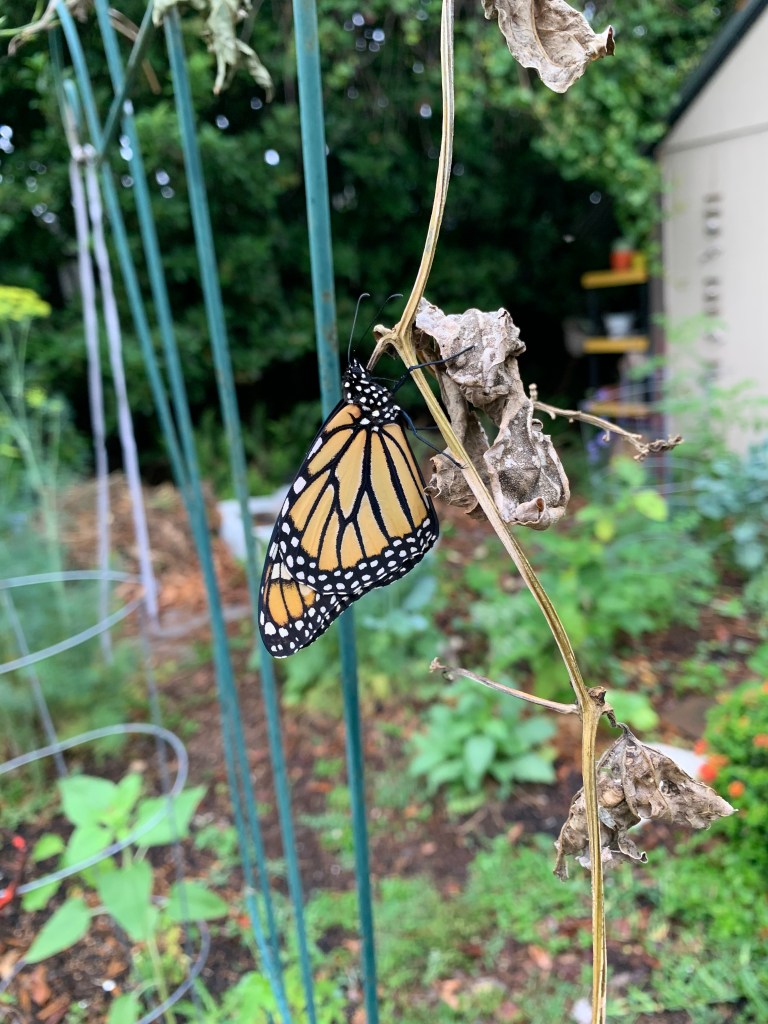
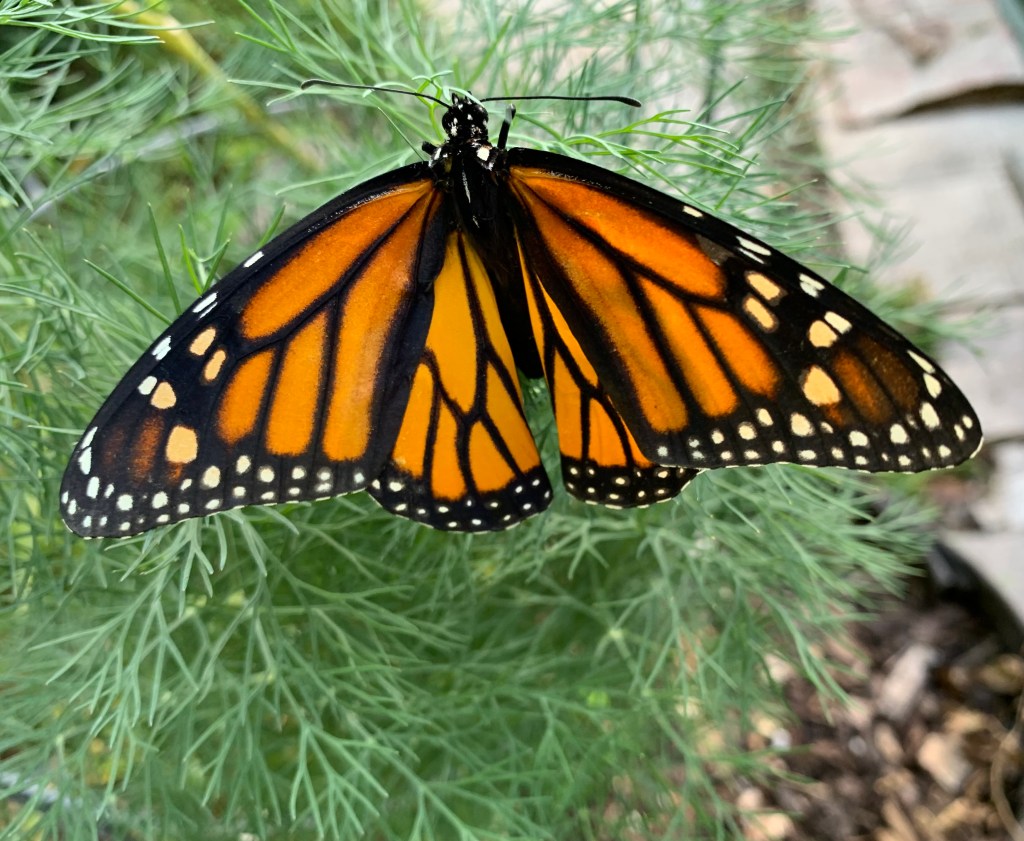
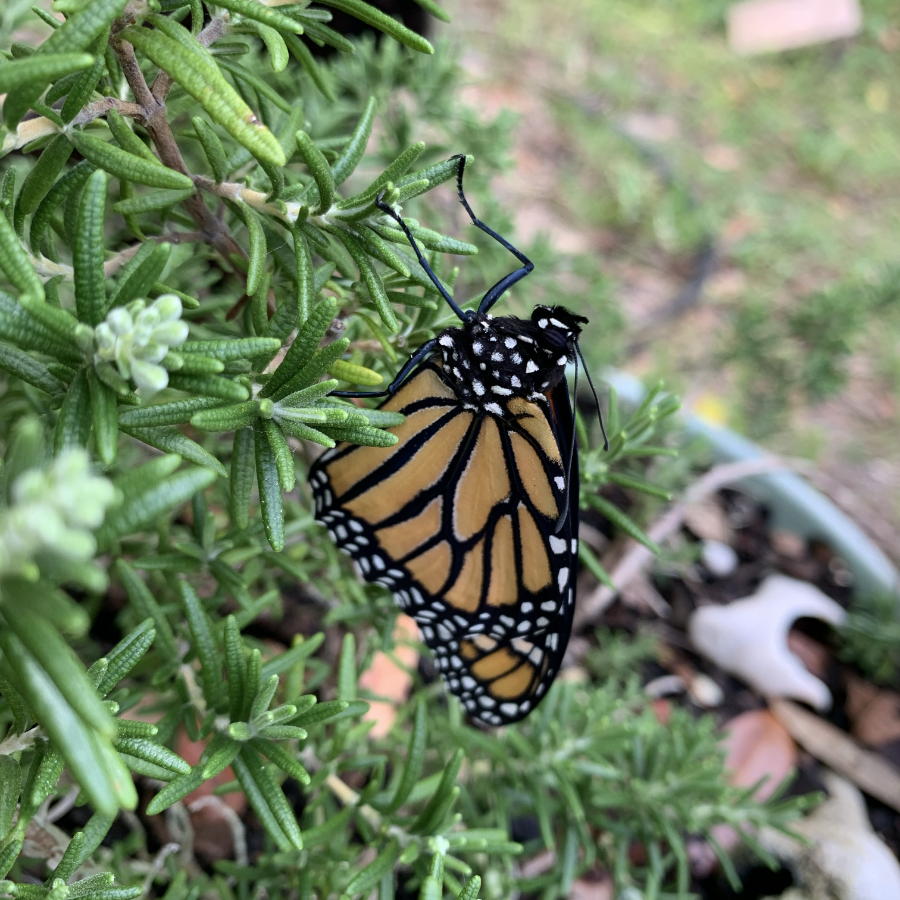
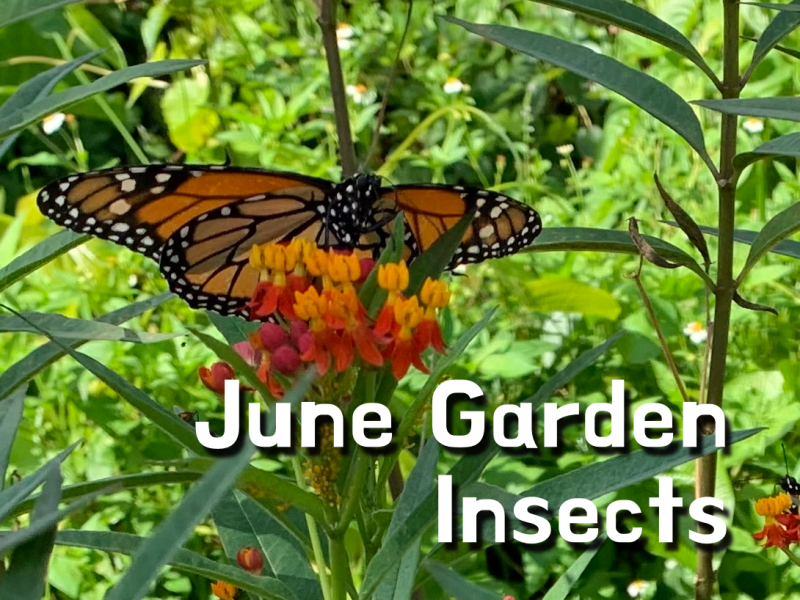
To date I have found three monarch butterflies, freshly hatched, in my yard. I can tell they are new when they don’t fly as I approach. A strong, healthy adult Monarch seems to never land, and will fly away if I approach. The only time I see them stop is when they lay eggs on the leaves.
Monarch #1 had a pretty chrysalis on my Rosemary. Butterfly #2 was seen one morning attached to an old Loofah plant vine. Monarch #3 was holding onto some dill.
When I sit outside and simply enjoy my garden, I see them flying over the yard. Sometimes two fly together, and once I saw three together. Was it these three? I like to think so.
#1 Male#2 Unknown#3 Female
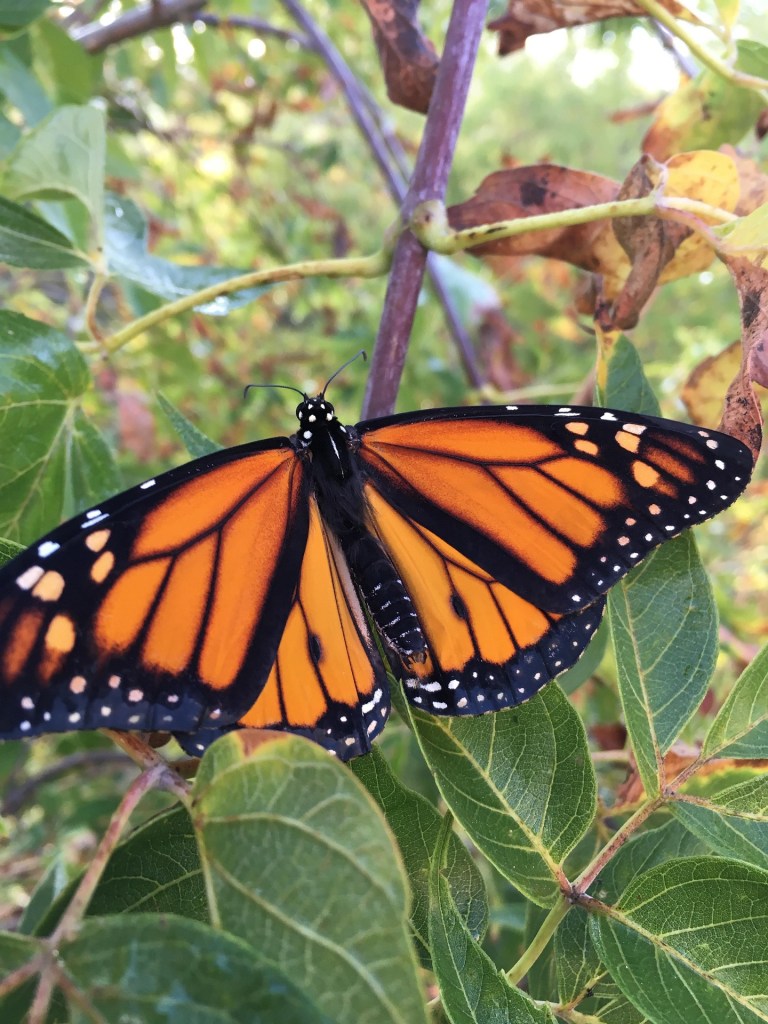
I recently learned that male Monarch butterflies have two black spots on their wings. They can be seen when the wings are wide open.
The photo below is not mine, but shows the spots a male would have.
I need some good flowering plants to feed these butterflies. Although the caterpillars are only found eating milkweed, butterflies get their food in other places as well.
A lot of information can be found about feeding the caterpillars. I guess people will raise them inside and feed them stalks of milkweed. What I am looking for is information about planting to feed the butterflies without relying on milkweed flowers. I’ll write a new page about that.
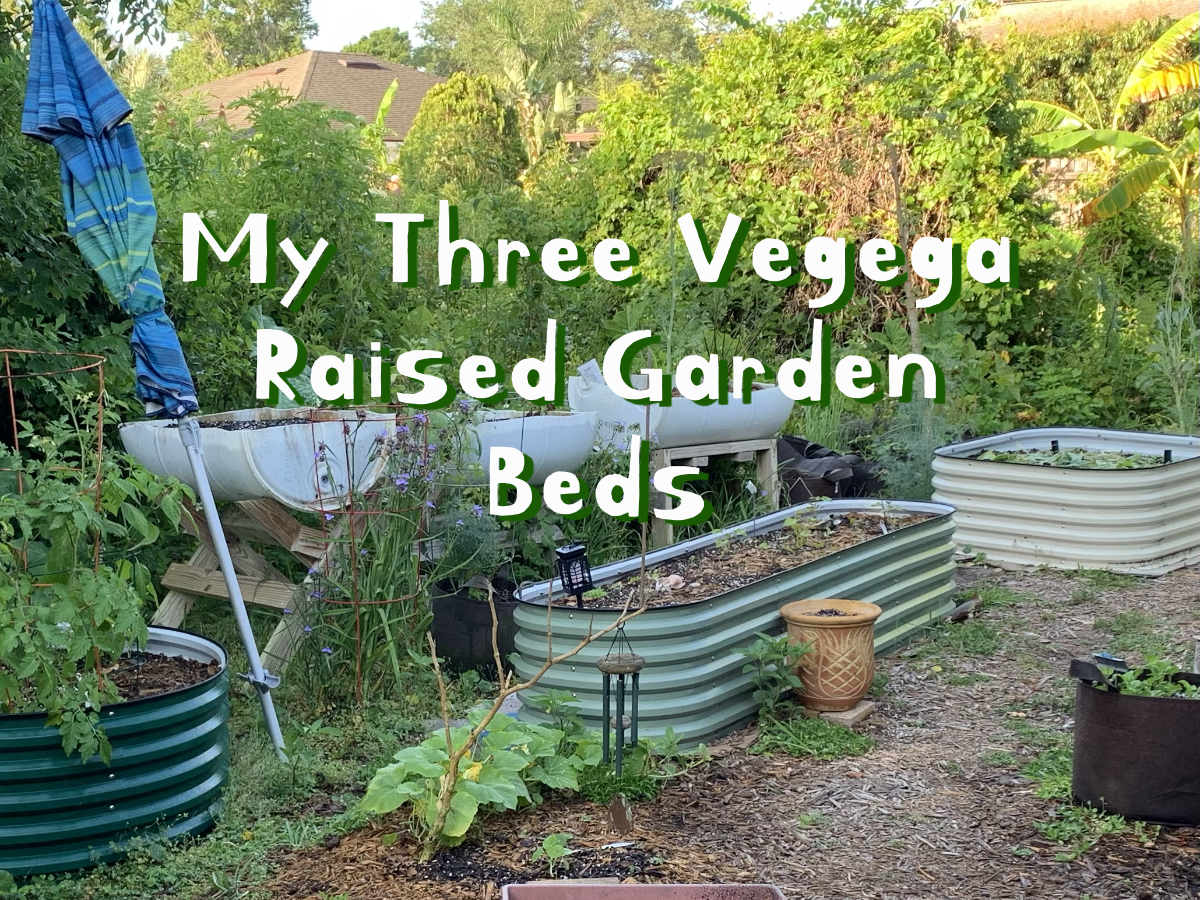
My three Vegega metal raised garden beds are now set up. They are all mostly filled, but only two are planted.
I have three Vegega raised metal beds. It has taken me months to set them up (only a day or two) and then get them filled (this is the hard part). Now, two of them are filled with plants and the third one is nearly ready.
The first bed was round, and easy to manage. The second, larger bed was not so easy, but I got it done. It was a long bed, called a 9-in-1, and it had so many pieces! I put all of them together by myself, and I’m not so young! If you have a partner to help, or if your husband does all the work, then it would be a breeze! LOL…
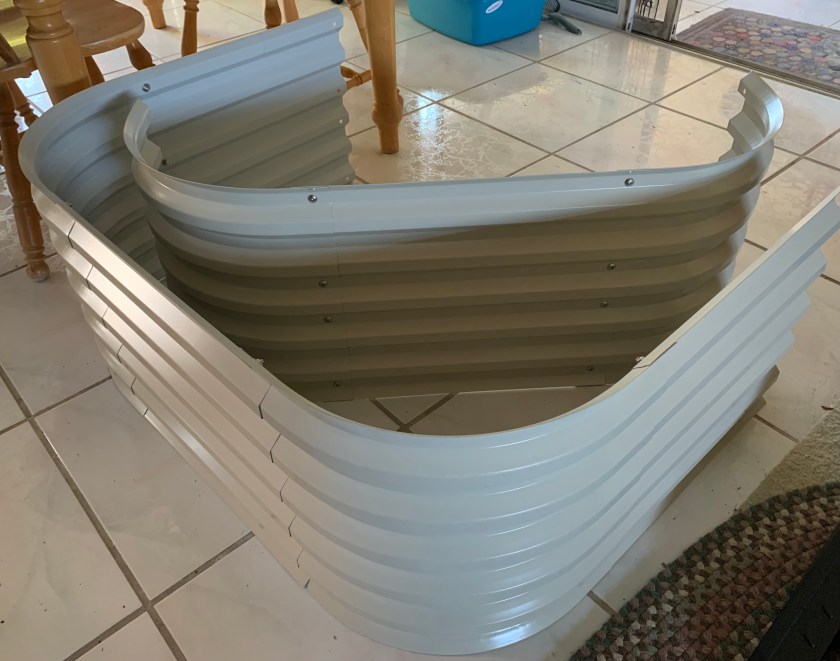
I was able to put my third Vegega metal raised garden bed together inside the house. Thankfully, it was a smaller one.
I’m sharing photos, and information, of all three of my Vegega beds on this page. I’m very happy with them, and so far, my plants are too!
17″ tall, 3.5 ft. square Vegega bed with rounded corners.
I just signed up to become a Vegega affiliate because, why not? It’s super easy to sign up, and I am giving an honest review of a product I’m using, and that other gardeners may be interested in. If anyone clicks through and buys something, I could get a small royalty percentage. (Thank you if you do that, but I am not writing this page to make money.) I will mention it is a “paid link” whenever the link could earn for me.
Vegega Metal Beds, #1, #2, and #3
These beds are not cheap, and I really hope they do last many years (20 supposedly). It is work to peel the covering off each of the metal section. Then they are screwed together, placed in the yard and leveled. But the longest job is filling them.
Buy and begin the assembly and filling way before you think about planting. Especially if you are a one woman (older) gardener. My goal was to have the beds ready in March. I’m only a few weeks off.
So far, I am happy with the outcome. I have vegetables happily growing in two of the beds.
Bed #1
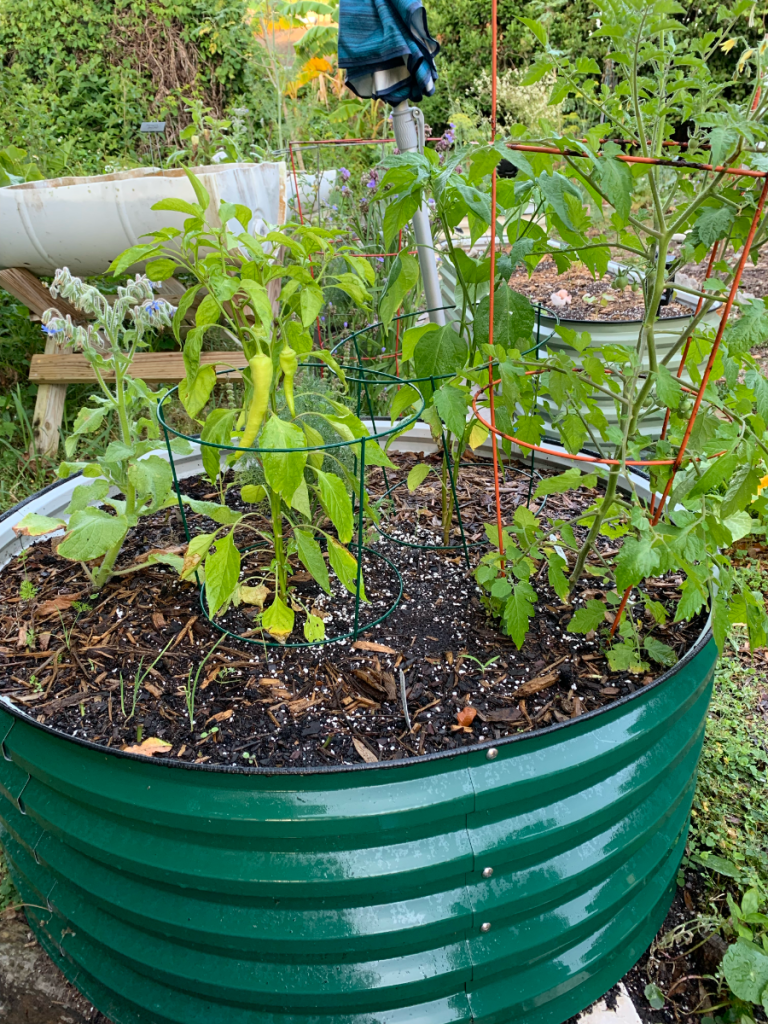
My first bed, or the first one I purchased and set up, is dark green and round shape. I have banana pepper plants, and an Everglades cherry tomato plant currently growing in this bed. Some holy basil, onions, and borage are growing around the edge.
Read more about the Vegega round raised beds (paid link) at their site. I like the 17 inch depth, and all three of mine are that height. It gives long roots plenty of space. This one was pretty easy to assemble and fill.
42″ round, 17″ high Green Vegega bed
Bed #2
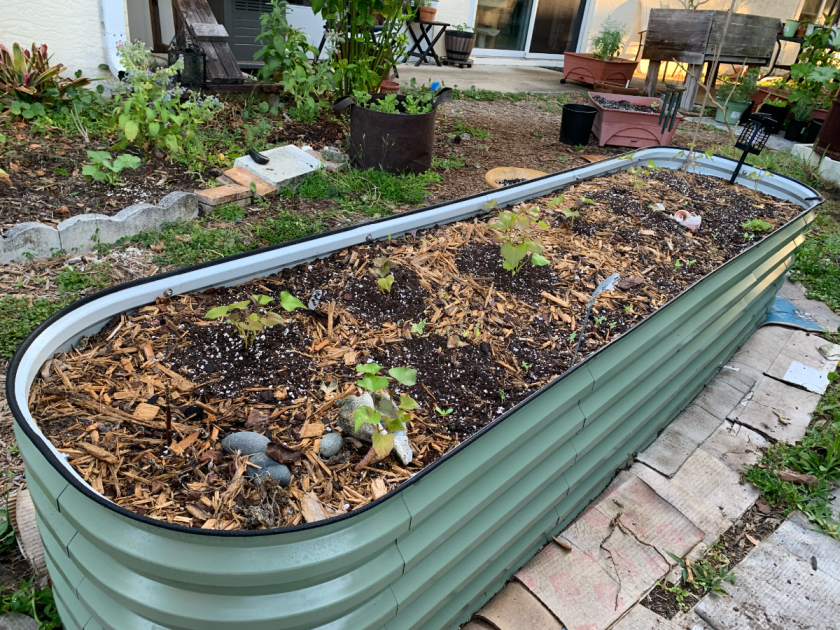
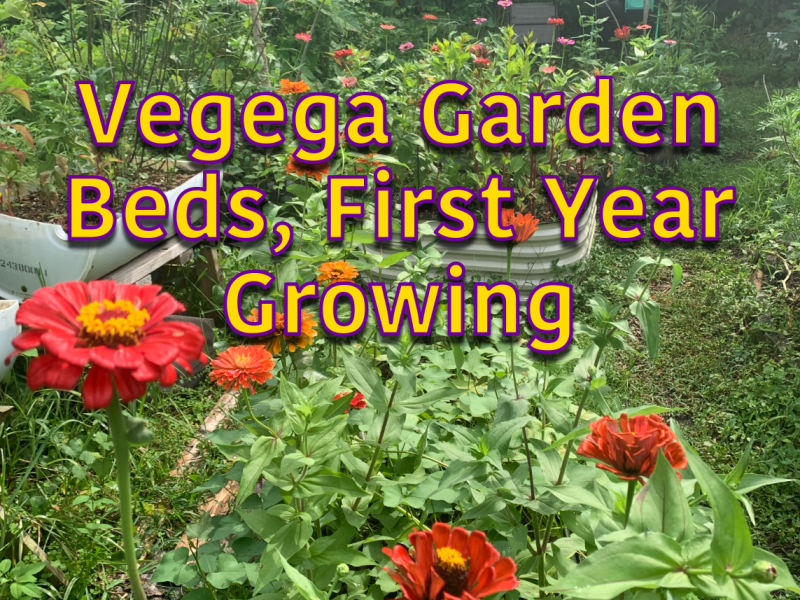
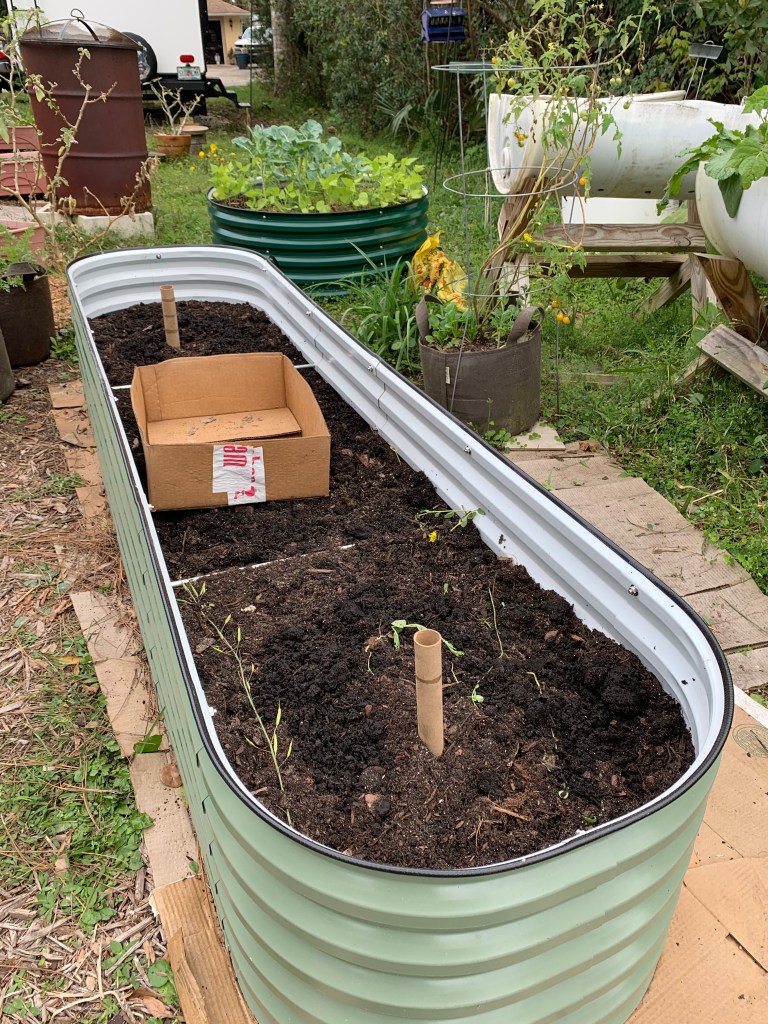
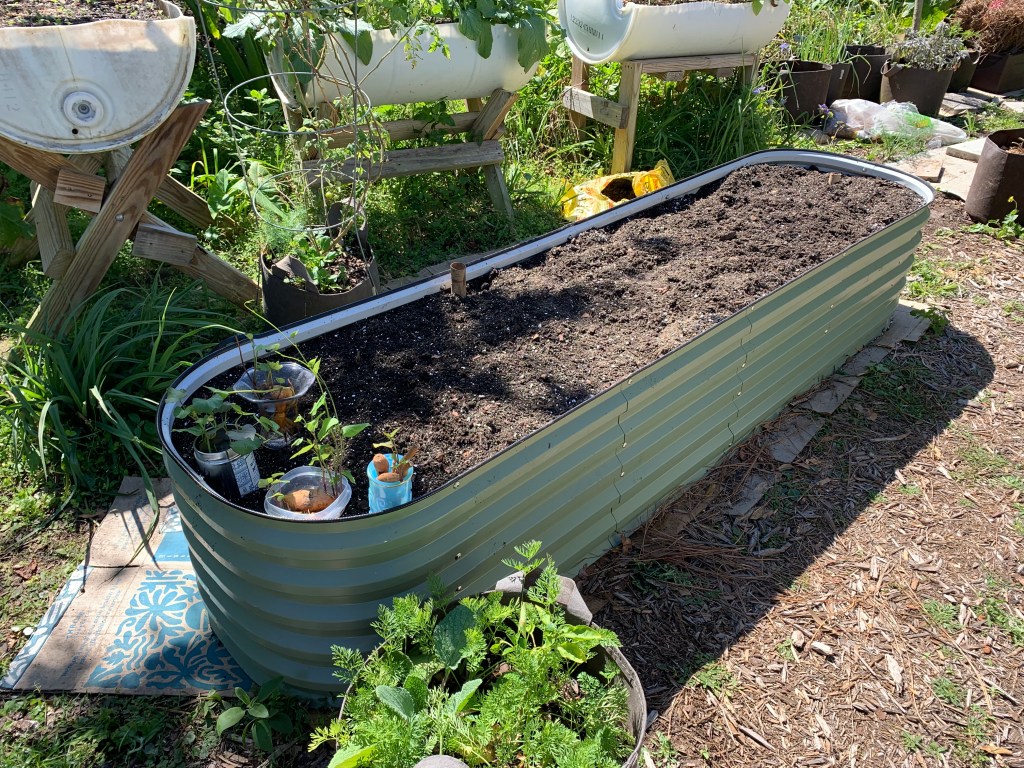
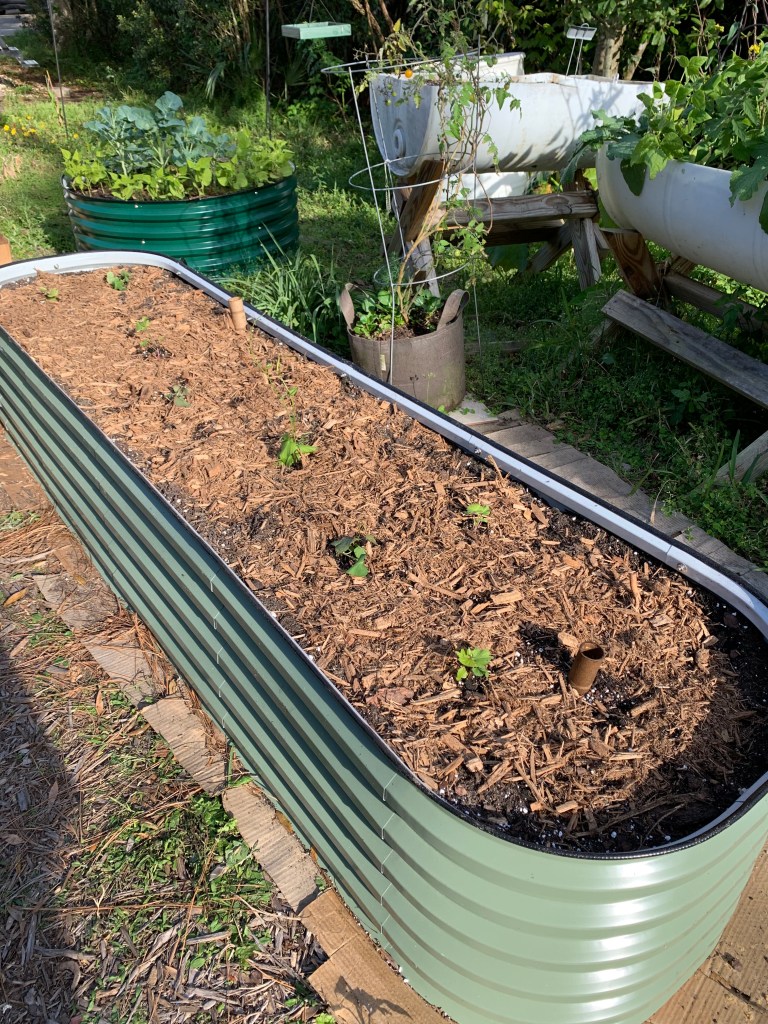
The second bed I bought is long and narrow. It is a light green color, and I’m not sure of the official color name. It is planted right now with sweet potatoes. I also have Zinnia seeds popping up along one side. There is space for other flowers or small herbs at the ends.
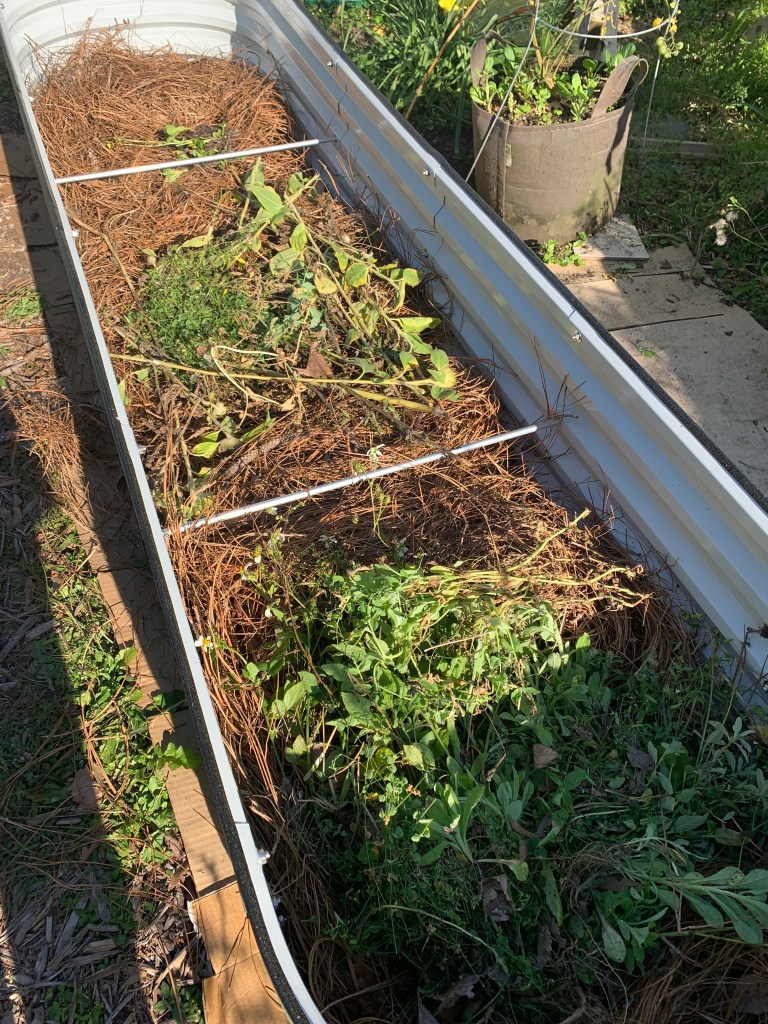
This long bed was the most difficult for me to set up. It took longer to assemble and fill. This bed has two bars down under the dirt which help to keep the sides in place.
The metal is safe for growing food, and will hold up much longer than a plain, wooden bed. This is especially true in Florida where wood rots in no time. Some people complain that metal is not environmentally a good choice. Wood comes from trees, so how environmentally friendly is that? These metal beds are supposed to last for 20 years or more. Read more about Metal vs. Wood Raised Garden Beds here (paid link).
Bed #3
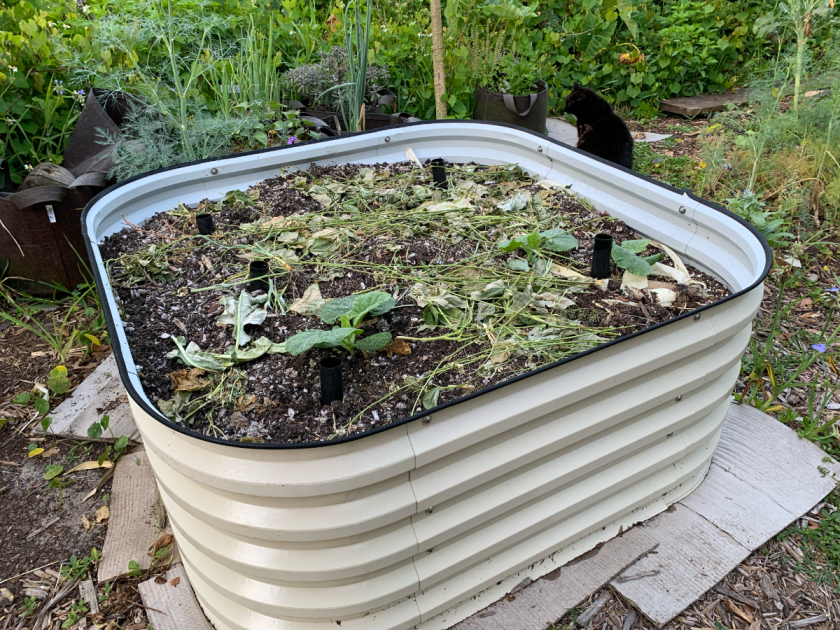
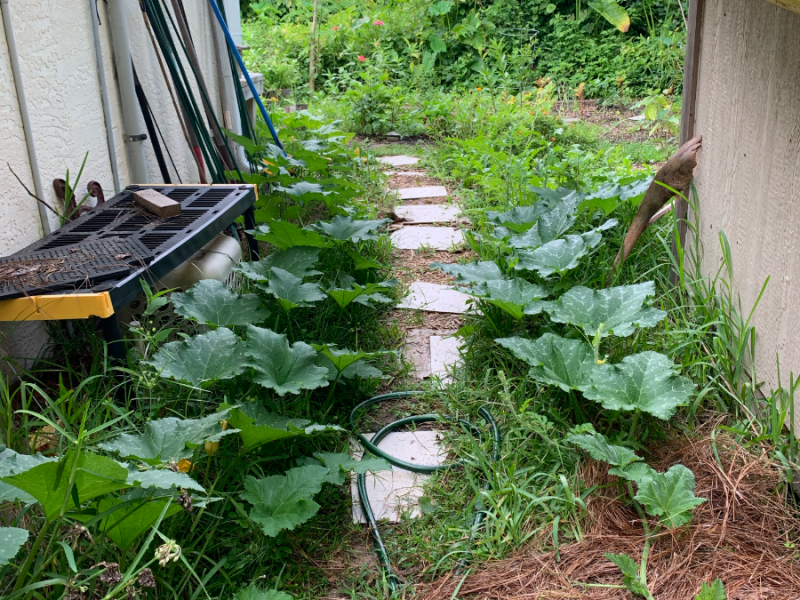
The third bed (featured on this page) is 3.5 feet square, with rounded corners. The color is Oyster White. Volunteer (squash or pumpkin) seeds have begun to grow, but nothing has been officially planted here yet.
3.5′ square metal raised bed. Volunteer squash or pumpkins are growing.
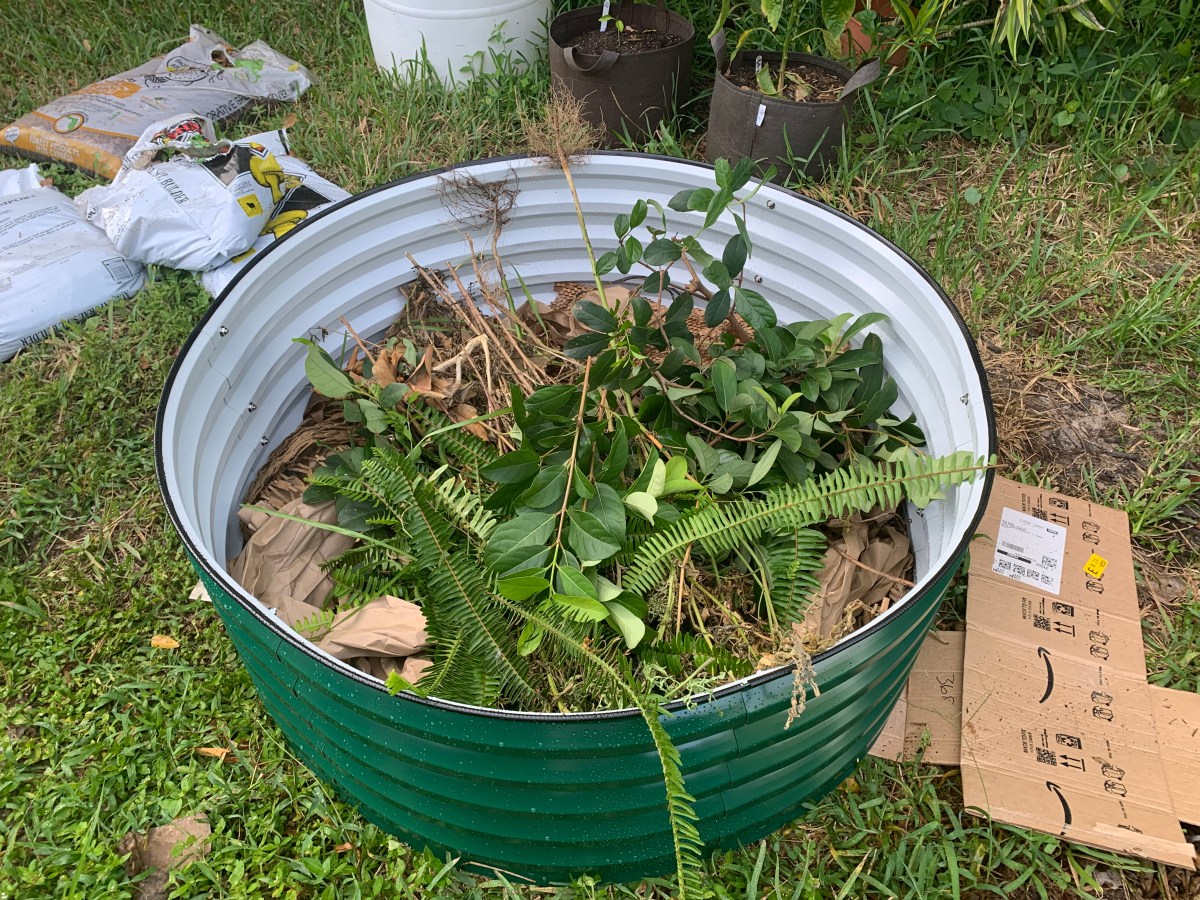
Although this Vegega bed has been sitting in my yard for weeks, it is not completely full. I have been cleaning up old vegetable plants and chopping the stems into this bed. The green beans are gone, and most of the broccoli. Because summer is coming, I’m not sure what I would plant in this bed, so I’m in no hurry. (I’m in Florida and summer is a tough time for gardening.)
To fill this bed, I have used the following;
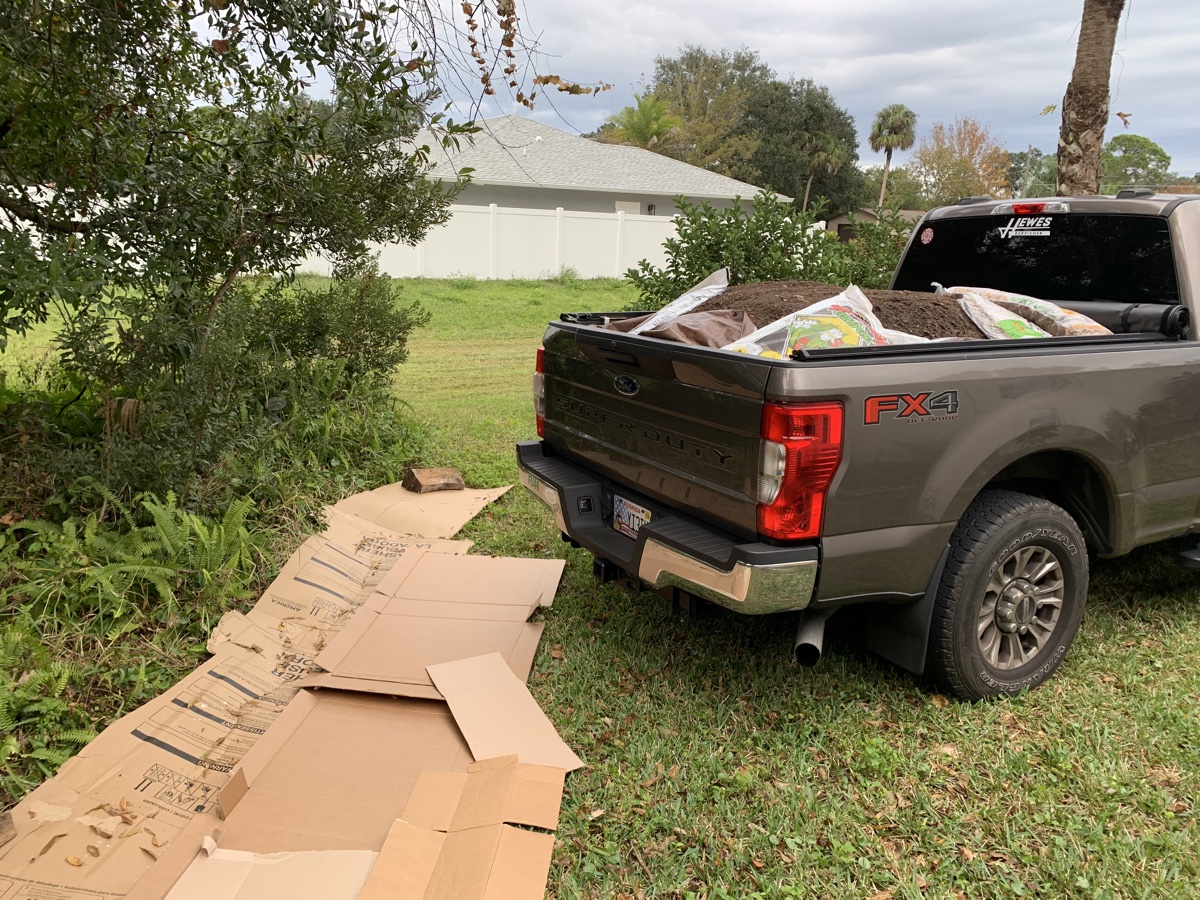
Cardboard (in bottom – helps to level the bed) & random packing paper
Pine straw – also on the bottom over the cardboard. I chose this because they had it at my local yard shop. Straw would be a good choice.
Vegetation – old broccoli plants, stems, carrot tops, old vegetables for compost, and cuttings from the yard.
Purchased potting soil, my own compost, and Perlite.
Florida Vegetables For a Raised Bed
Summer is not a great time for gardening in Florida. It is our “winter” where we need to be inside where the AC keeps us cool. But gardeners know that the weeds never stop, so early morning garden checks are necessary.
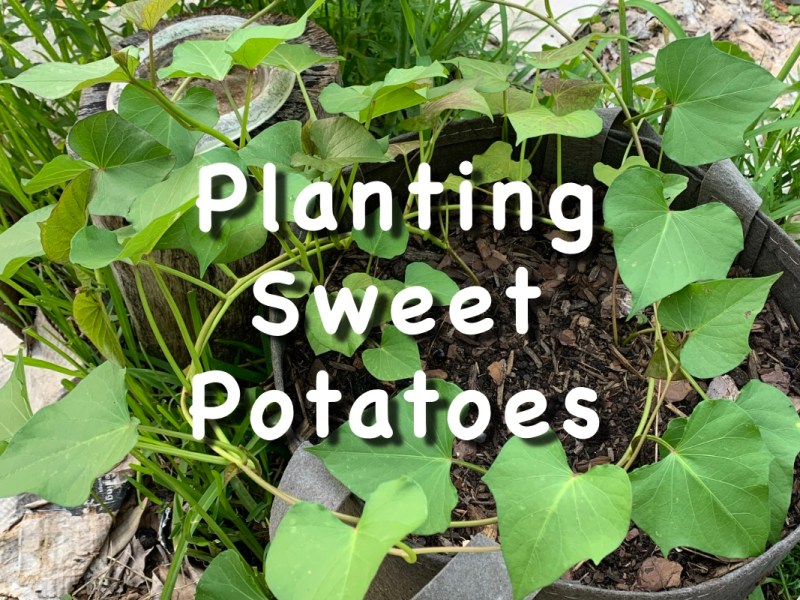
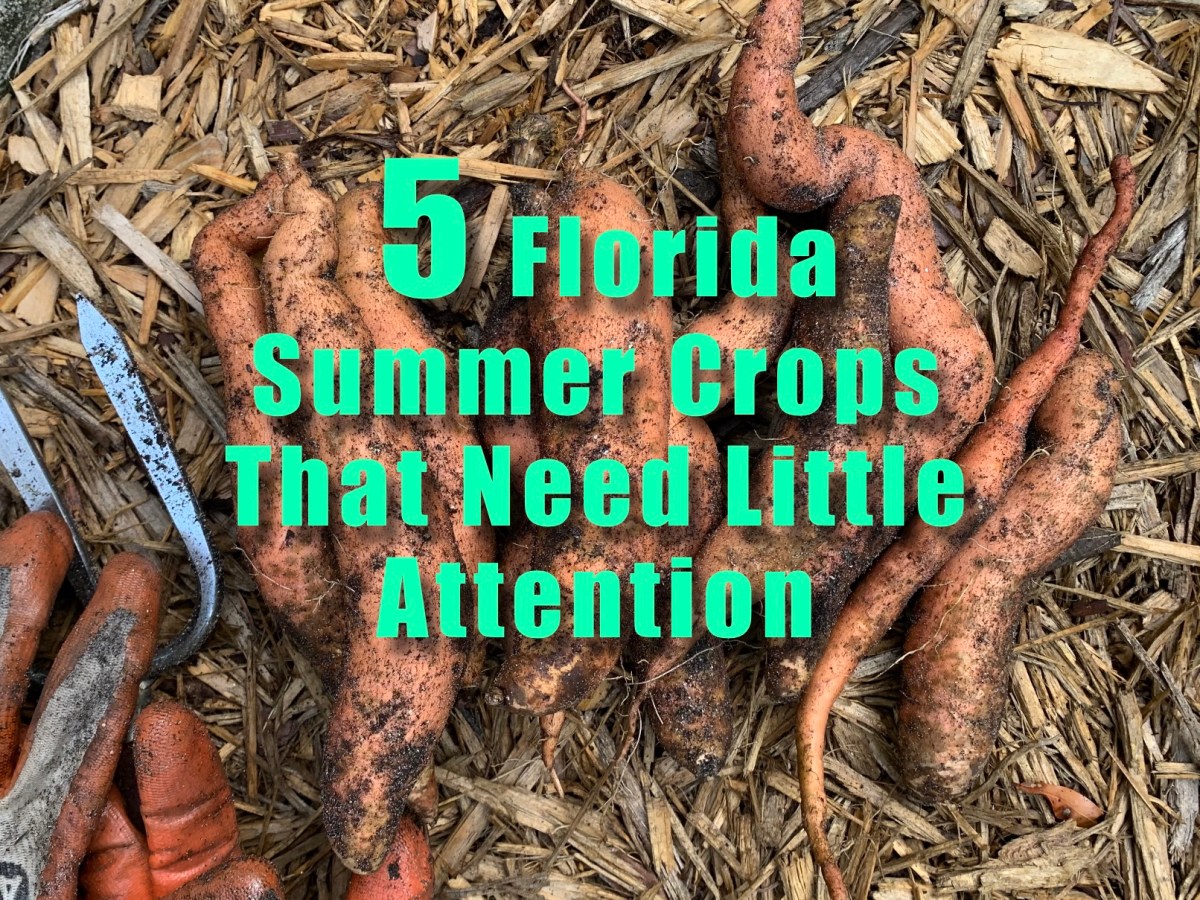
Crops growing in summer should be hardy, drought tolerant, and love the heat. Sweet potatoes fit that category. My entire long bed is planted with sweet potatoes. They don’t need much attention. I have found old sweet potato vines in my yard, from years ago!
Okra, if you like it, is easy to grow and would probably love a raised bed.
Seminole pumpkins might work if the vines can travel over the edge to the ground without a problem. These pumpkins like some shade too, and root along the vine.
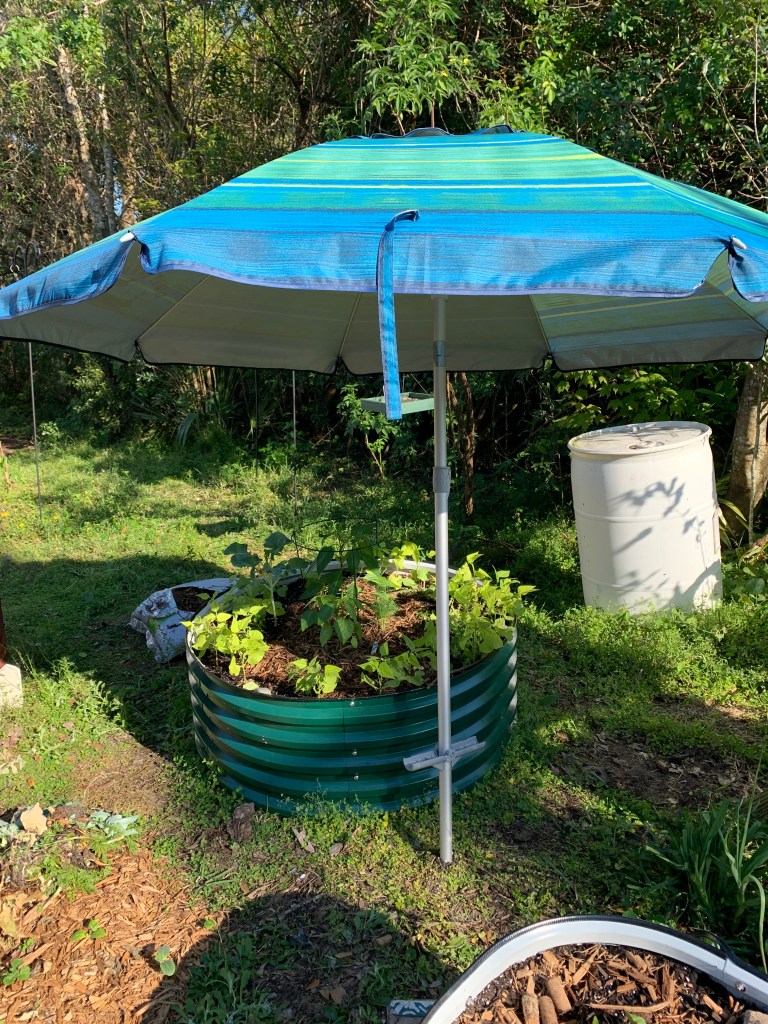
Even crops that like it warm may need some shade during a Florida summer day. My pepper plants are in the round bed which gets a lot of morning shade. I have an umbrella that can be opened to give them more shade as we heat up.
Eggplant will last for years here. An eggplant in the center of a round bed, or at the end of a long bed, would be a good idea. In fact, if you need the shade, put the eggplant at the end that blocks the sun. Eggplants attract ladybugs too, which is a plus.
In Fall, I will be using these beds to grow lots of crops. I have success with bulb onions, carrots, broccoli, beets, arugula, Tatsoi spinach, dill, parsley and basil. Radishes take up little space and could go around the perimeter. Tomatoes can go into the beds in early spring.
I plan to include flower seeds around the edges of all the beds, and seasonal herbs. Holy basil grows nicely in summer, but most others like cool weather.
I’m excited to get growing in my Vegega beds! I’ll keep you posted.
It is not usual to see a Monarch caterpillar on a Rosemary plant. Monarchs like Milkweed. But this one had a purpose, and had traveled quite a long way to be there.
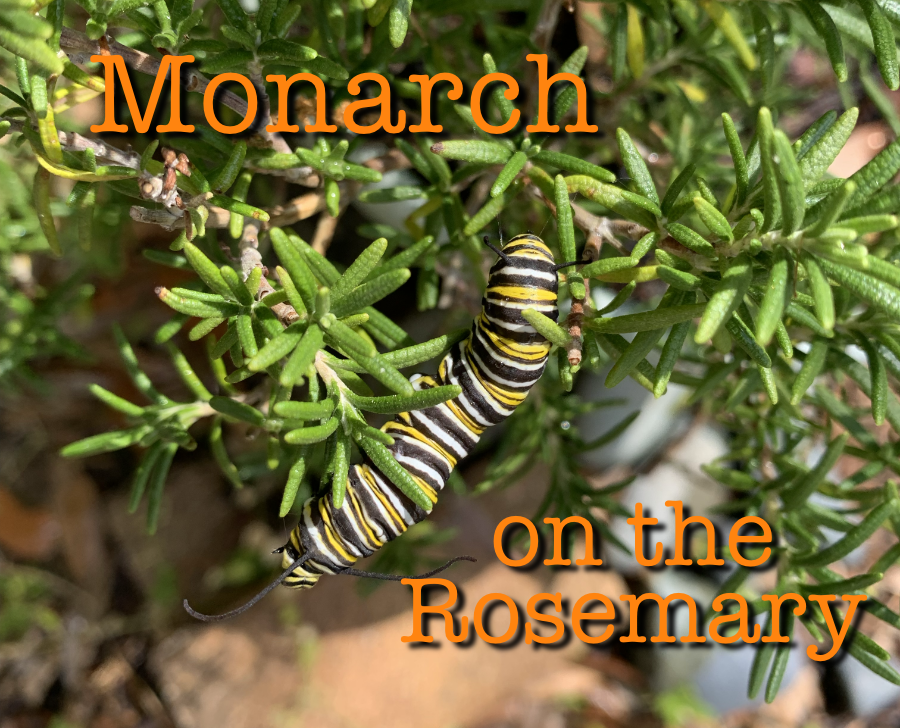
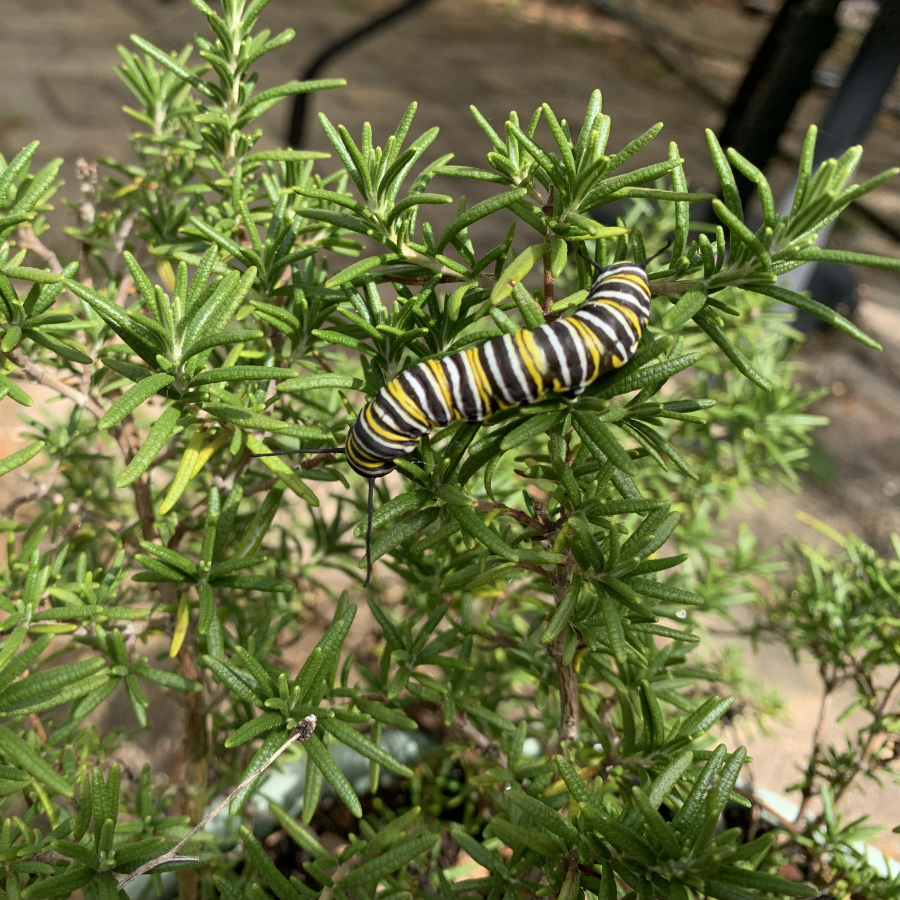
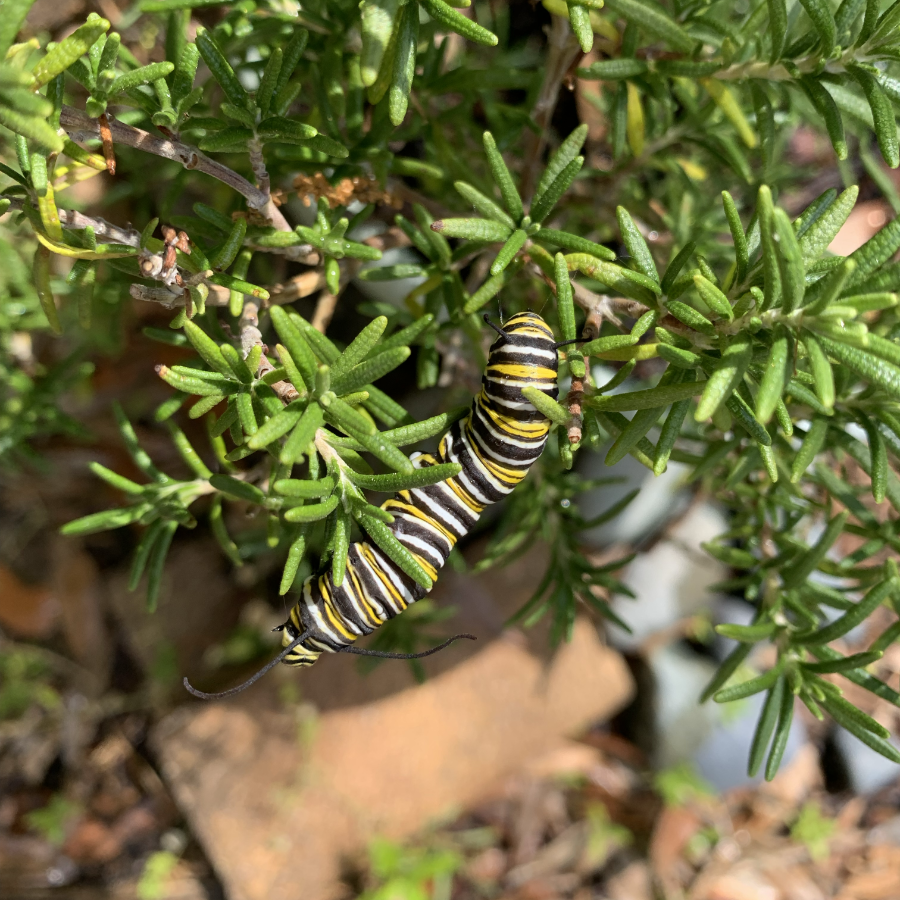
I have one Rosemary plant in a pot on my back deck. On March 24th I noticed this caterpillar climbing all over it. I recognized it as a Monarch caterpillar and wondered what it was doing on the rosemary.
My first thought was, “You poor thing, you must be lost.” I know he needed milkweed to eat. But, I also know that some caterpillars crawl away from the host plant to create their pupa. I left him alone, and didn’t see him the next day. I figured the birds got him.
Monarch caterpillarMarch 24th
I worry about cardinals eating the caterpillars, but I guess birds don’t like the taste. I do see lots of caterpillars, and then they disappear. I always figure something ate them.
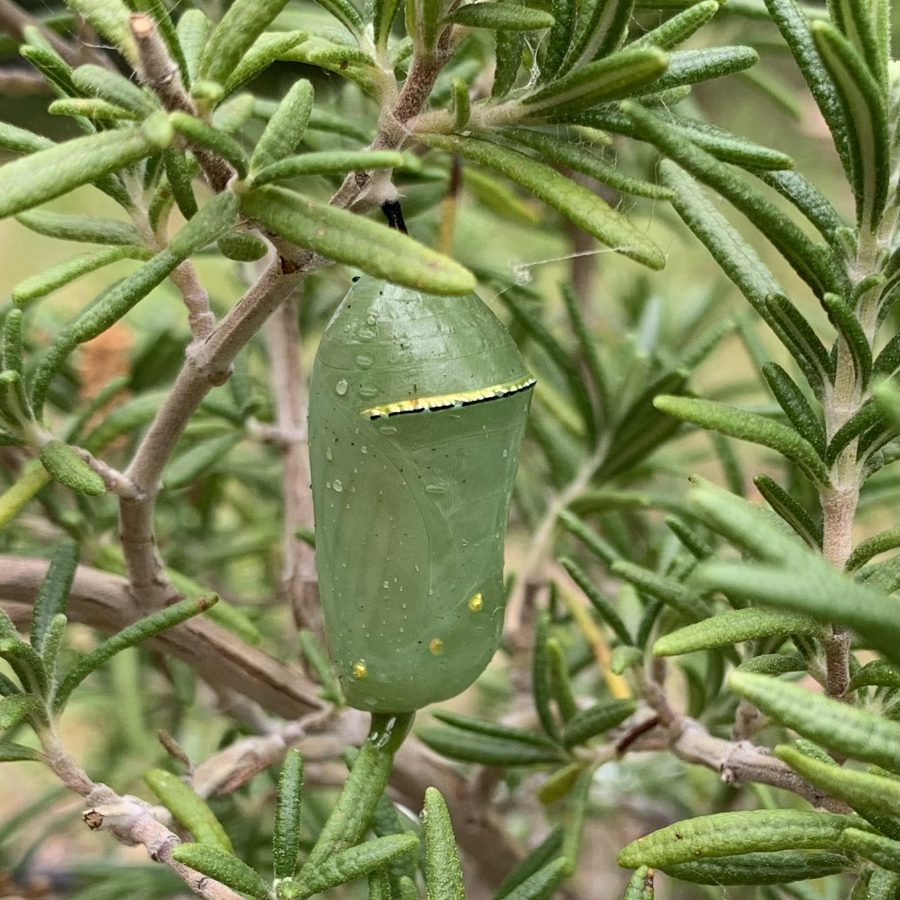
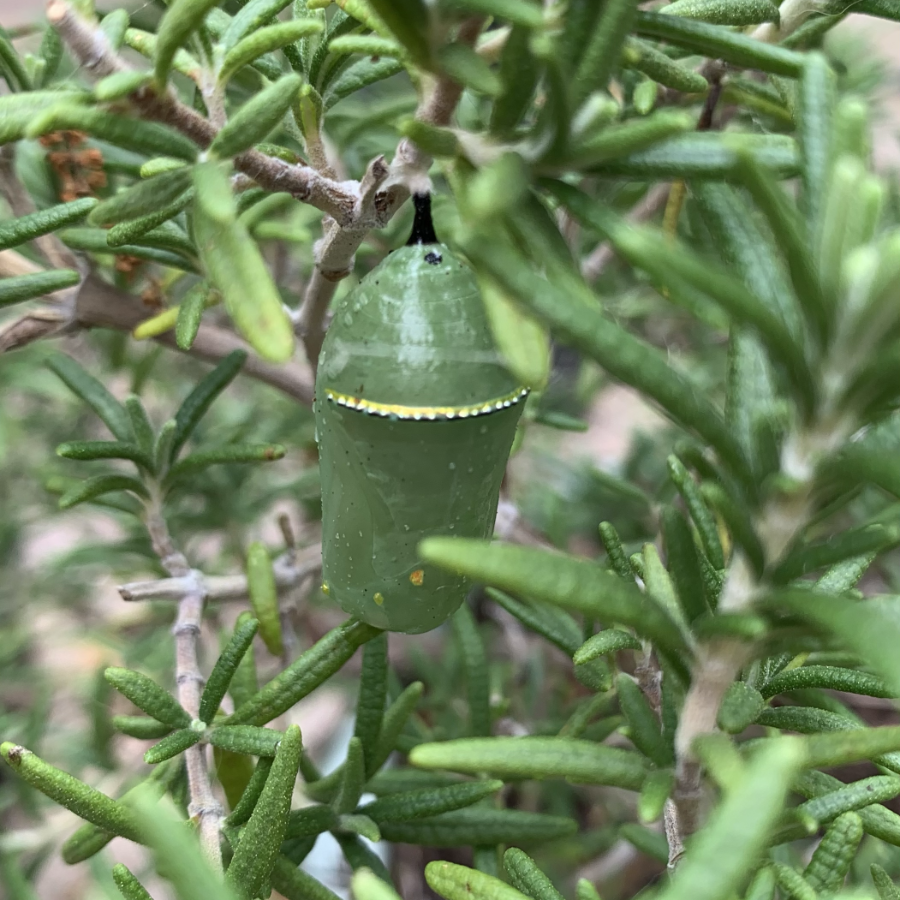
A day or two later I was at the Rosemary plant to cut a piece for my tea. And there it was. A beautiful green chrysalis! It had what looked like a gold band near the top and little gold specks. The caterpillar chose a spot down under a branch, which makes it difficult to see. The caterpillar had not disappeared. He, or she, had morphed and was no longer a caterpillar.
Although I do have some milkweed in my yard, it is pretty far away from the rosemary. It is a long way for a caterpillar to crawl!
I had to look this up. One notation mentioned they will crawl as far as 30 feet from the host milkweed! I don’t know how this little guy made it to the rosemary. My best guess is that it is 20 to 30 feet, from my milkweed.
The day after I found the chrysalis, we had a huge, windy rain storm. The wind blew hard, from all directions and I was a bit worried. The attachment was good and the chrysalis remained.
Monarch chrysalisOn Rosemary plant
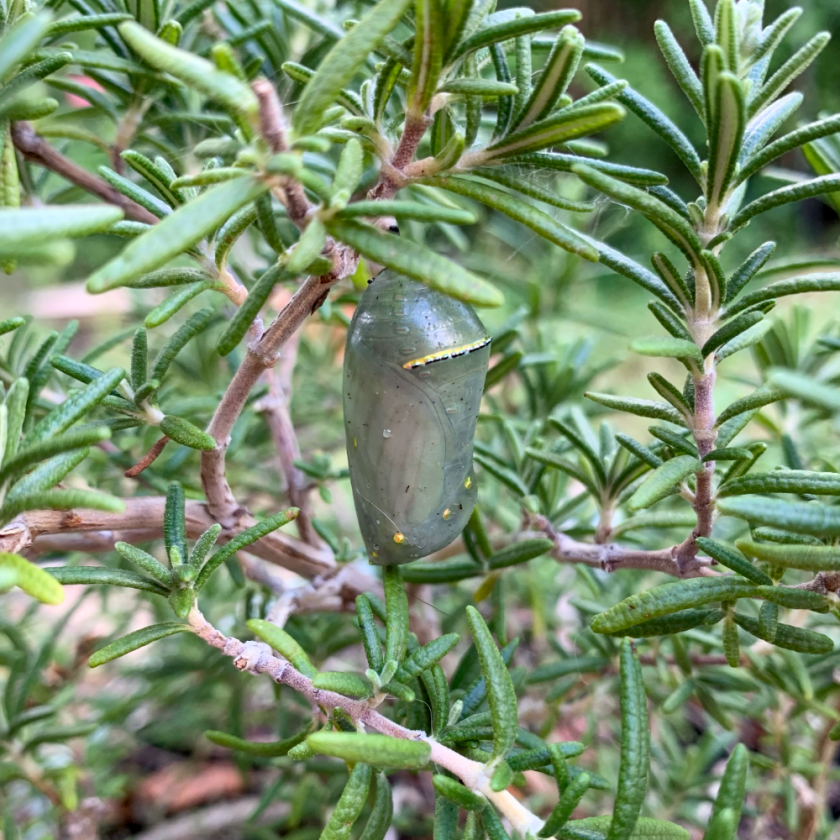
Today is April 5th and the chrysalis is darker in color (see photo below). I can see a wing inside! It has been 11 days since I saw the caterpillar. The Life Cycle, Monarch Joint Venture page says this stage can last 8-15 days.
I should expect to see a butterfly soon!
Can you see the wing?
Even if I miss the butterfly emerging, I’m happy to have had this chrysalis in my garden. I might get more rosemary and put it nearer the milkweed. The sturdy branches might be what drew him all this way. It makes me wonder if the caterpillar somehow knew the rosemary was here and purposefully headed to it.
I’ll be watching this one closely.
*Update – The next day…
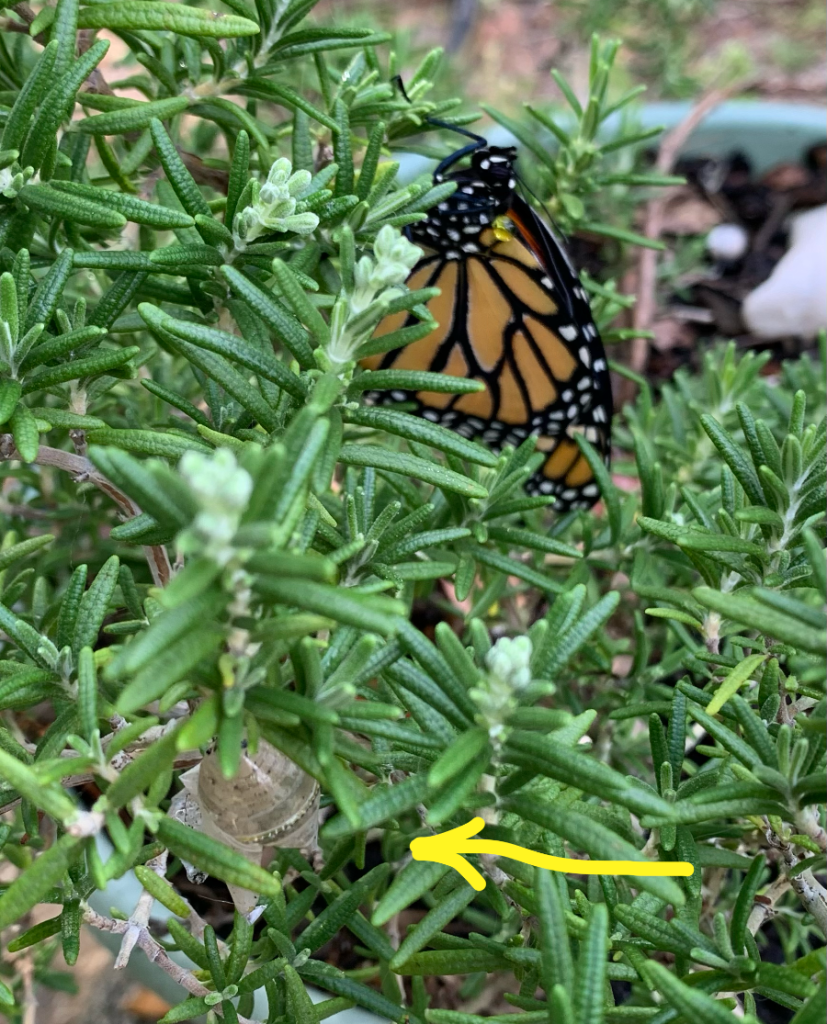
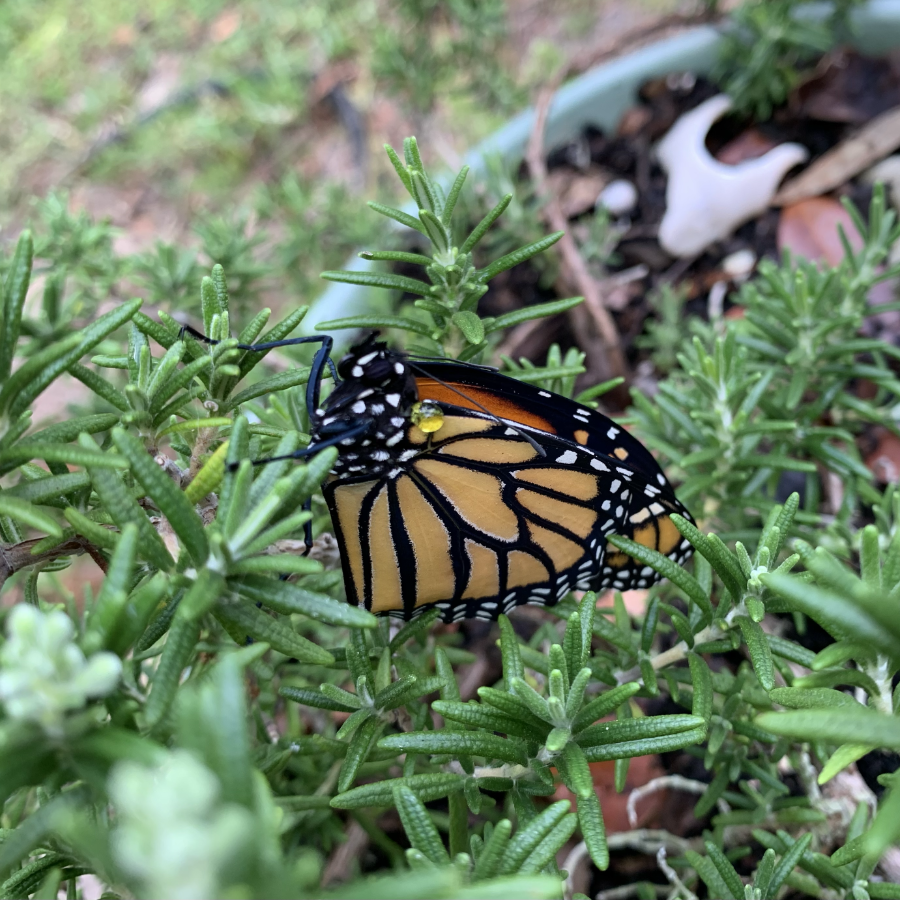
The chrysalis was very dark the next morning. I had some vegetable plant watering to do, but finally went to get my iPhone for a picture. I was too late! The butterfly was already out and on the Rosemary.
If you see a very dark colored chrysalis, sit and watch! It wasn’t long at all. I’m sorry I missed his emergence, but I got to see him before he flew away.
In fact he has been sitting on the plant for hours now.
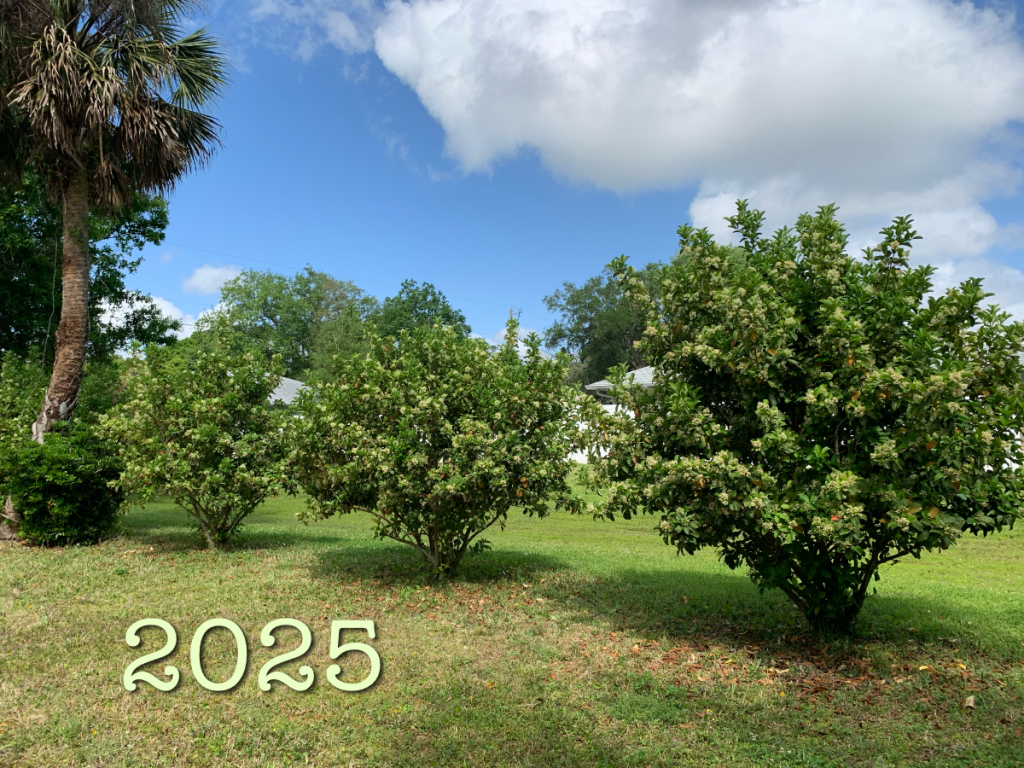
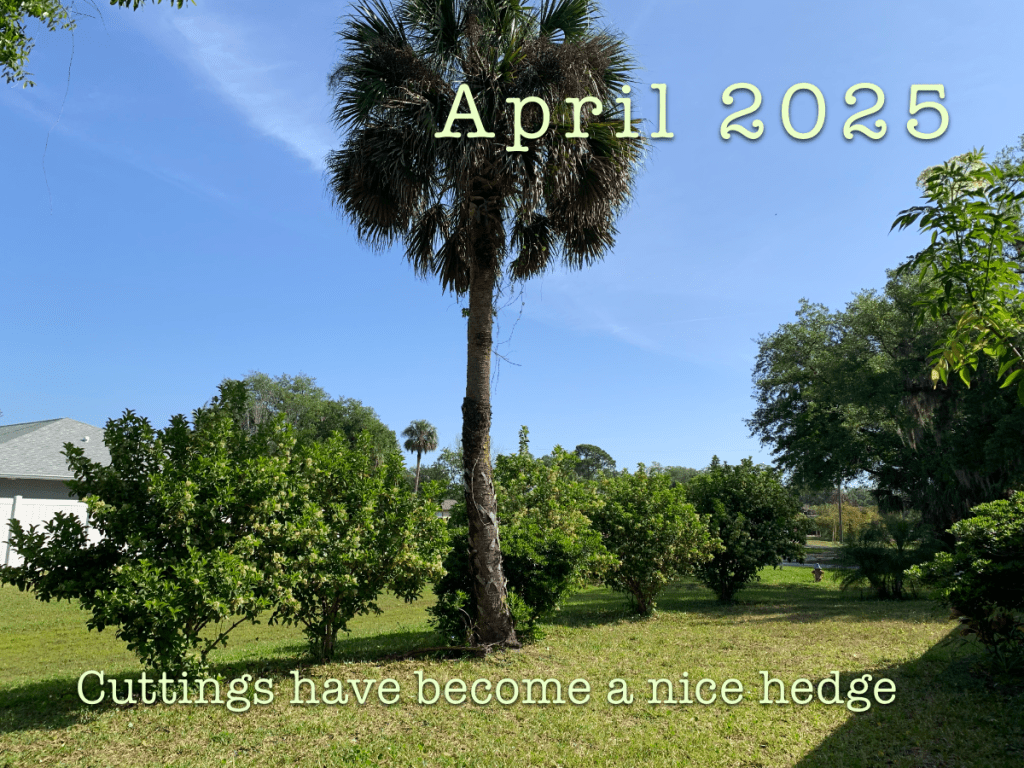
Propagated cuttings created this flowering hedge in my front yard.
Here is the simple way I grew a bushy hedge full of flowers. I did it in five years time.
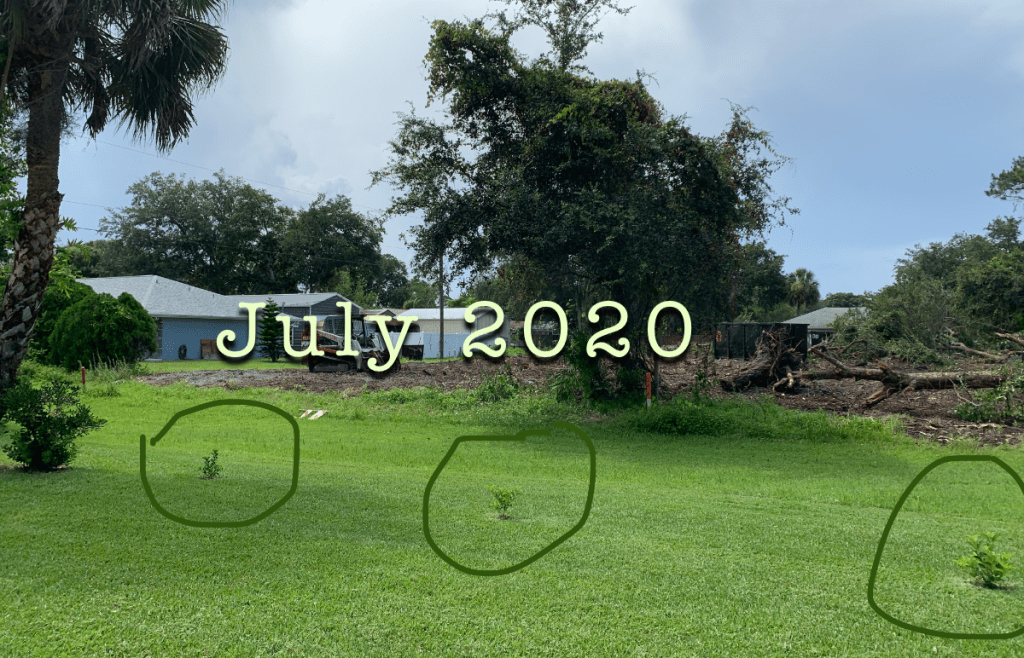
Actually, I did very little. I took cuttings from the tall shrubs in my backyard. When they rooted in water, I put them into pots. They kept growing. Once they were large enough, I planted them in the front lawn. I gave each shrub plenty of space.
I had considered putting a few bottlebrush trees between them, but it never happened.
Seedlings plantedAfter five years
The Premna Serratifolia is Quite Awesome
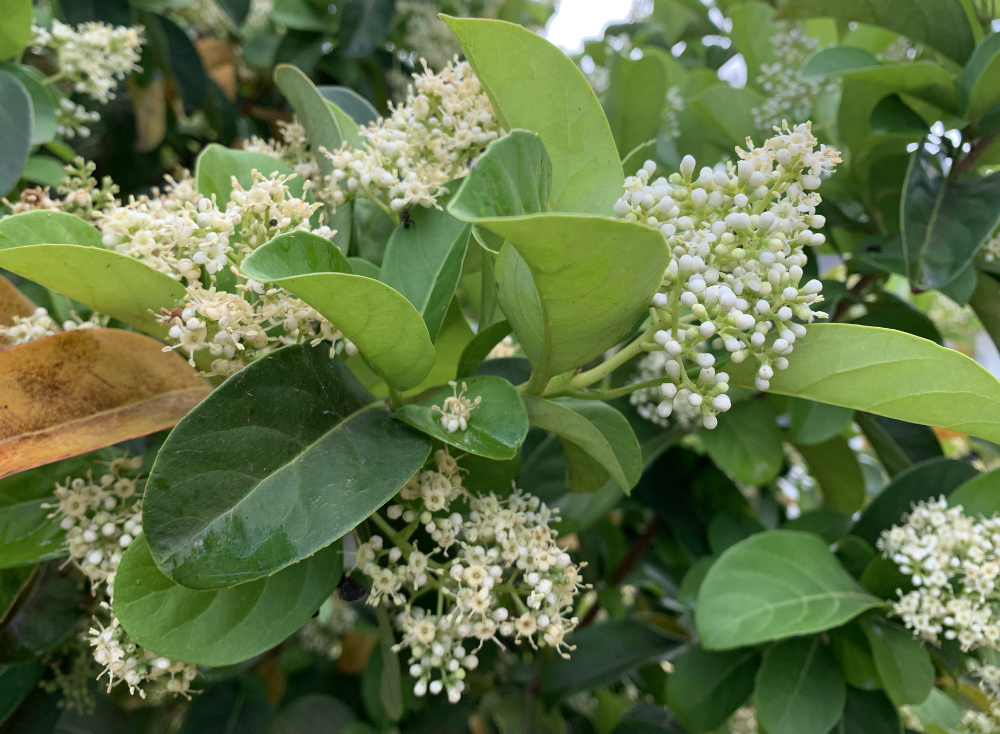
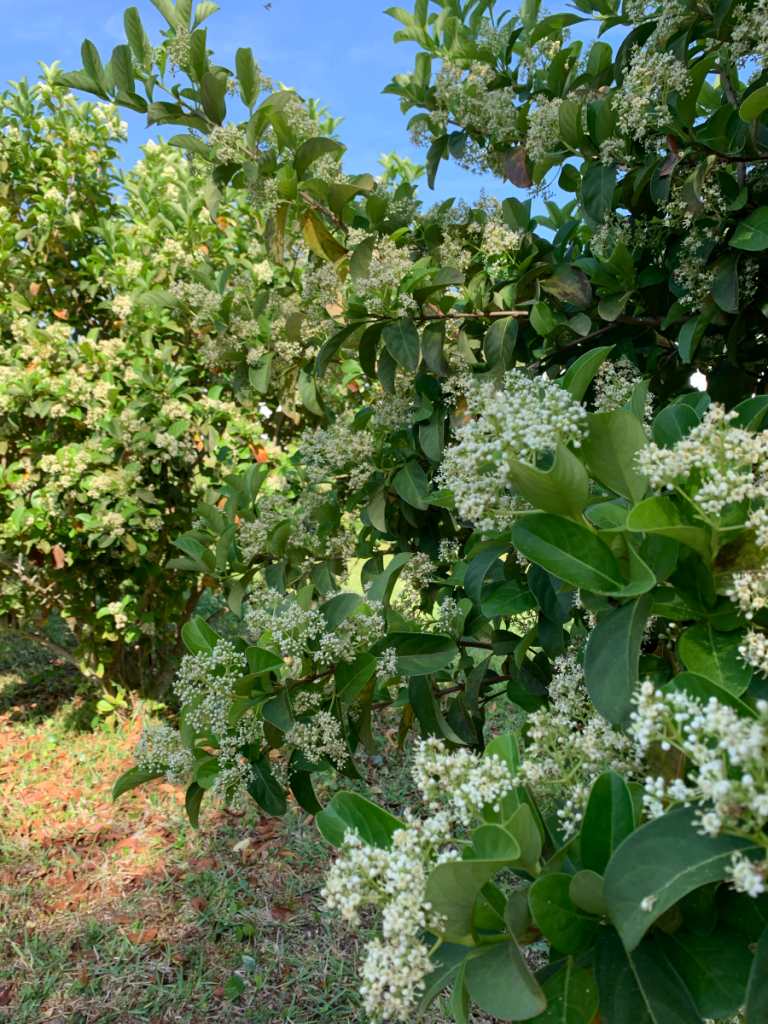
I had no idea what this shrub was until I researched it for this blog post. The Premna Serratifolia is fast growing and blooms profusely in March and April where I live, but only for a short time. The leaves supposedly have health benefits and are edible.
At the time I am writing this page (April 2), The blooms are already going by. The clusters of tiny white flowers smell wonderful, and attract all kinds of beneficials.
Flowers appear end of March
If I were a better photographer, I could show you the bee variety and even a few Monarch butterflies that were all around those flowers. This shrub is loved by the pollinators.
When we bought our house in 2016, the land across from us was wild. Once it went up for sale, I realized that we could have neighbors soon. That’s when I took cuttings from the shrubs in the back. I had no idea if I could root them.
It turned out that this plant is very easy to propagate. Every cutting grew roots in water and then grew nicely in a pot. After a few weeks I ended up with five new plants.
The big mistake many people make when planting crops and new trees and shrubs is that they put them too close together. I gave these little cuttings a lot of room. The roots would not have to compete for water and nutrients.
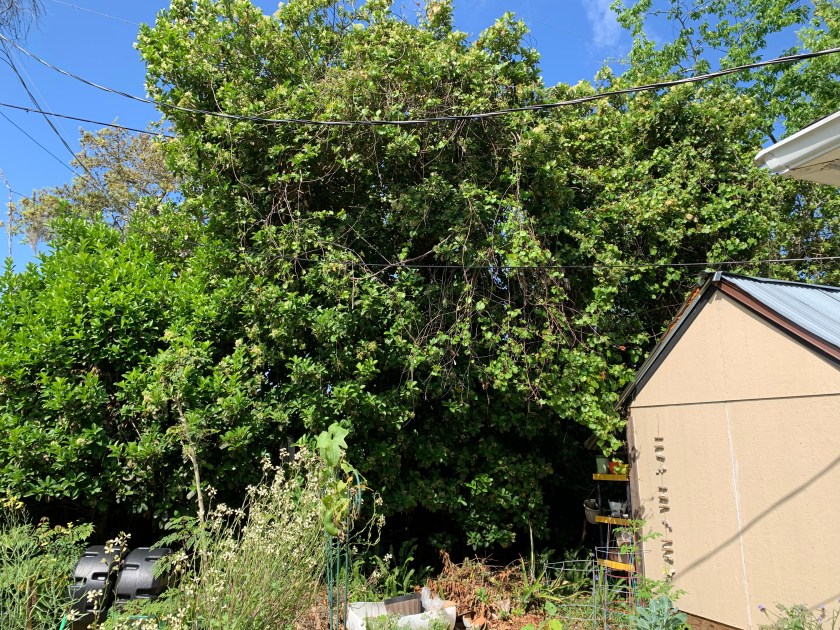
Below is a photo of the old plants behind our house. As you can see they are very tall. A lot of vines have taken over too. Typical of Florida.
The flowers are now falling like snow from the tall shrubs.
The “baby plants” are now taller than I am. I’m guessing they have reached 8-10 feet – in five years time. I think that is pretty fast growth.
The plants outback were probably planted when the house was built.
Growth in 5 years.
So now we have new neighbors where a Florida forest used to be. Three new houses went up, and every bit of vegetation was removed. Perfectly beautiful oak trees, pines and other things were torn up and removed. This is just one reason I dislike living here. Why not leave the trees that are not in the way of where the new house will go? Builders don’t care – just make it easy and remove everything.
My new, and free, hedgerow is growing up nicely and blocking the view. I also love that I’ve provided food and nectar for the insects. A living border also provides places for birds and other wildlife to hide.
I’m not sure if this shrub is available in local nurseries, but I think it makes a very nice addition to the yard. The Premna serratifolia is not a Florida native.
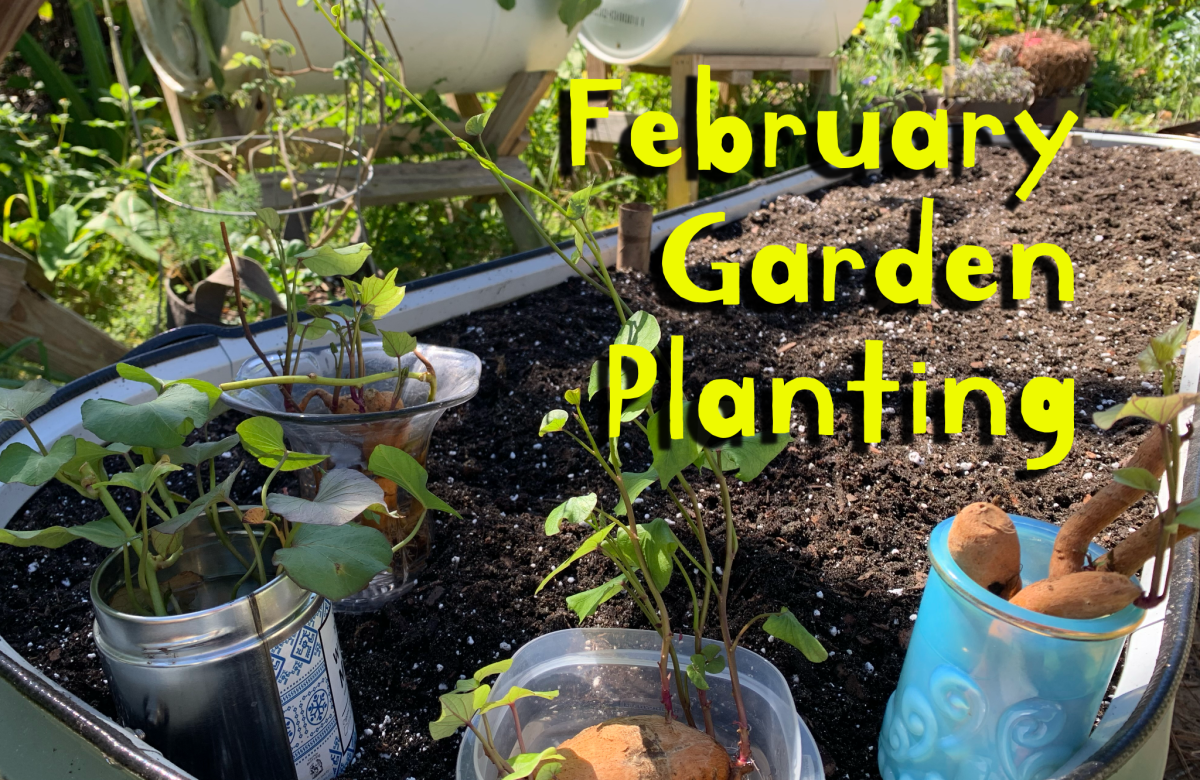
It is the end of February and here in Florida I am getting some seedlings and sweet potato slips into the raised beds.
Finally I have filled my long raised bed. This took some real effort. The metal bed is from Vegega and is 17 inches high. It had 12 pieces to assemble and it was a hot day. It actually took me 2 days to put it together, and then it was time to fill. That took many days and a couple of trips to the Yard Shop.
The last push to fill it took 8 bags of purchased soil. I also mixed in some perlite, compost, and fertilizer. At last it was full.
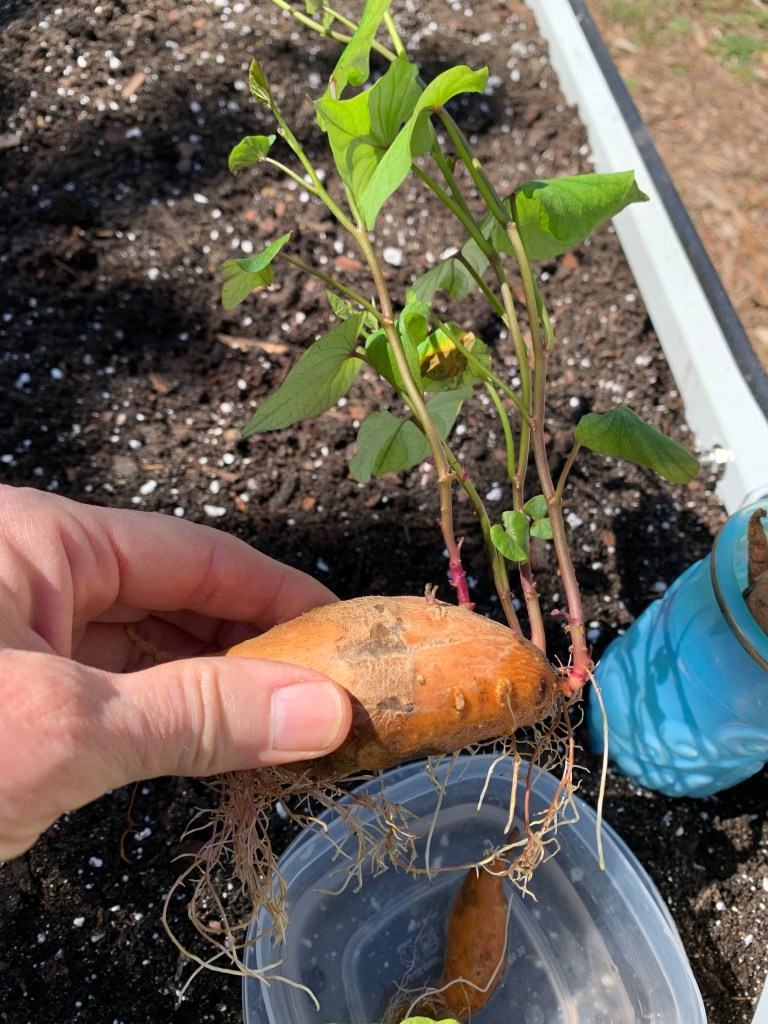
Garden bed set up and leveled with cardboardFilling with cut plants, paper, and soilFilled to the topSweet potato slips are planted
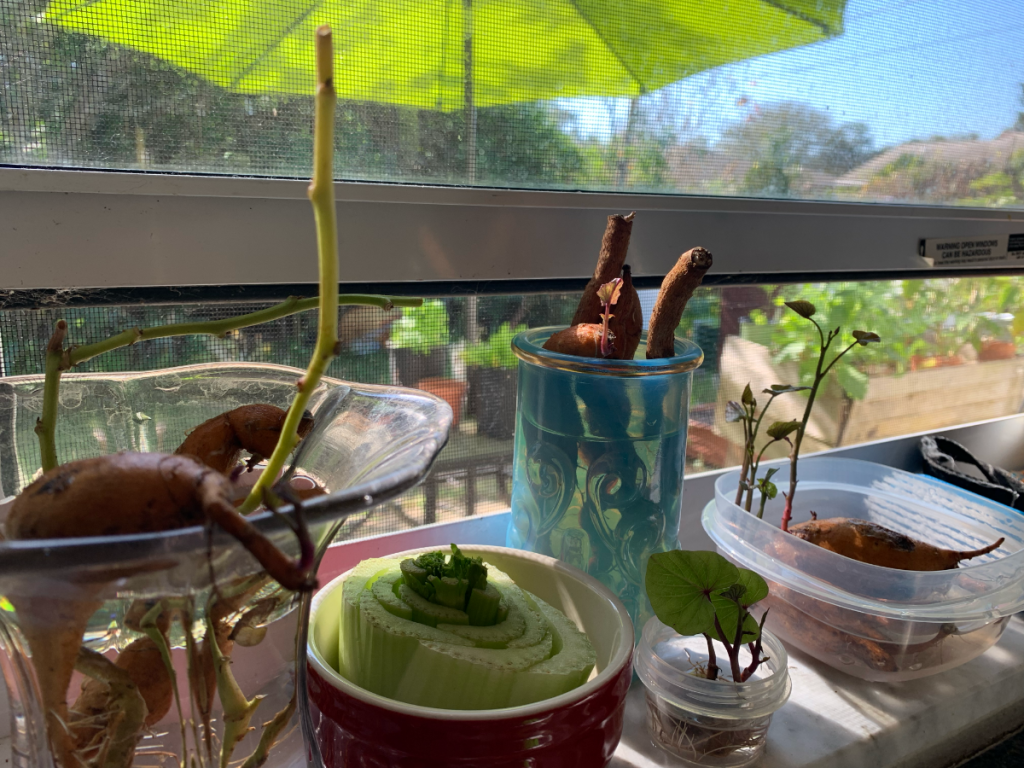
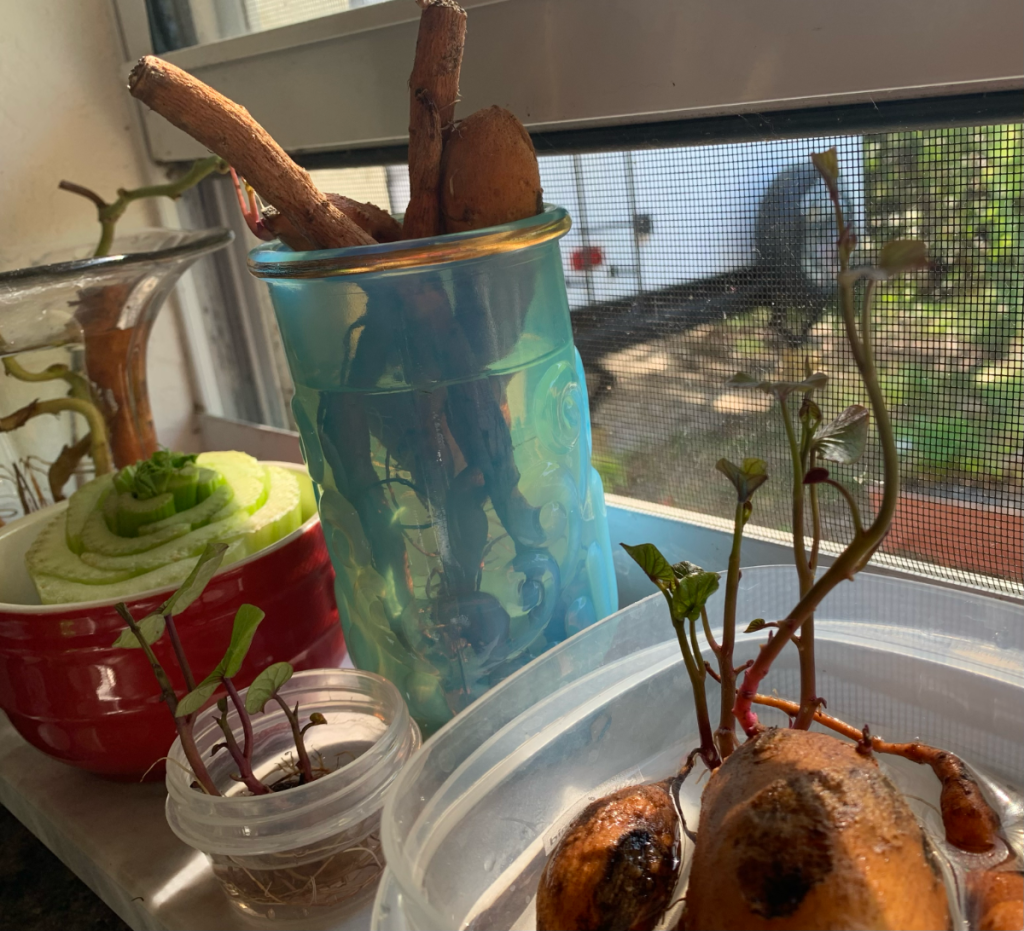
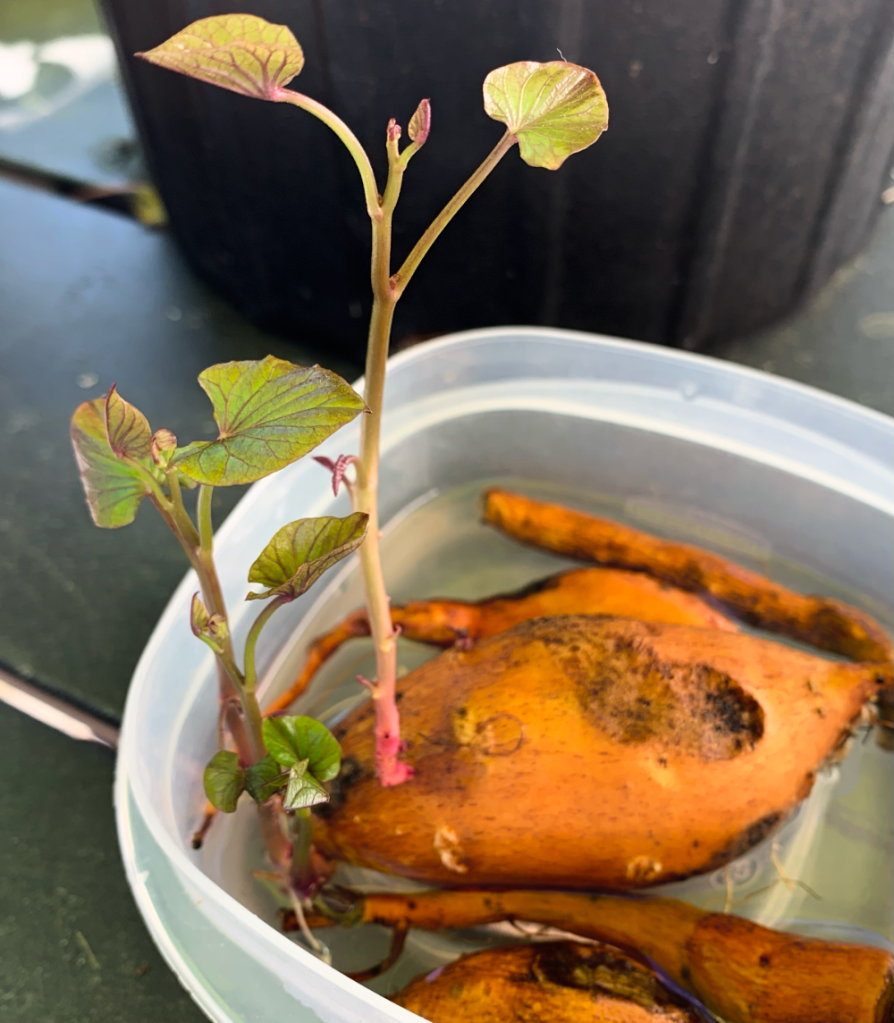
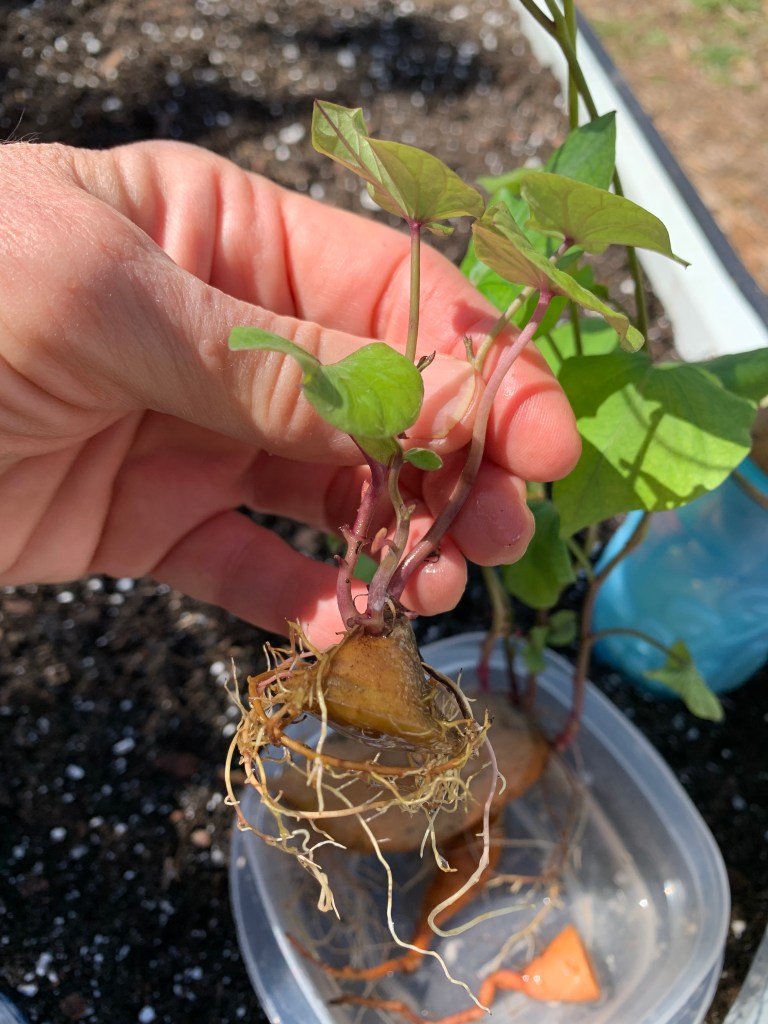
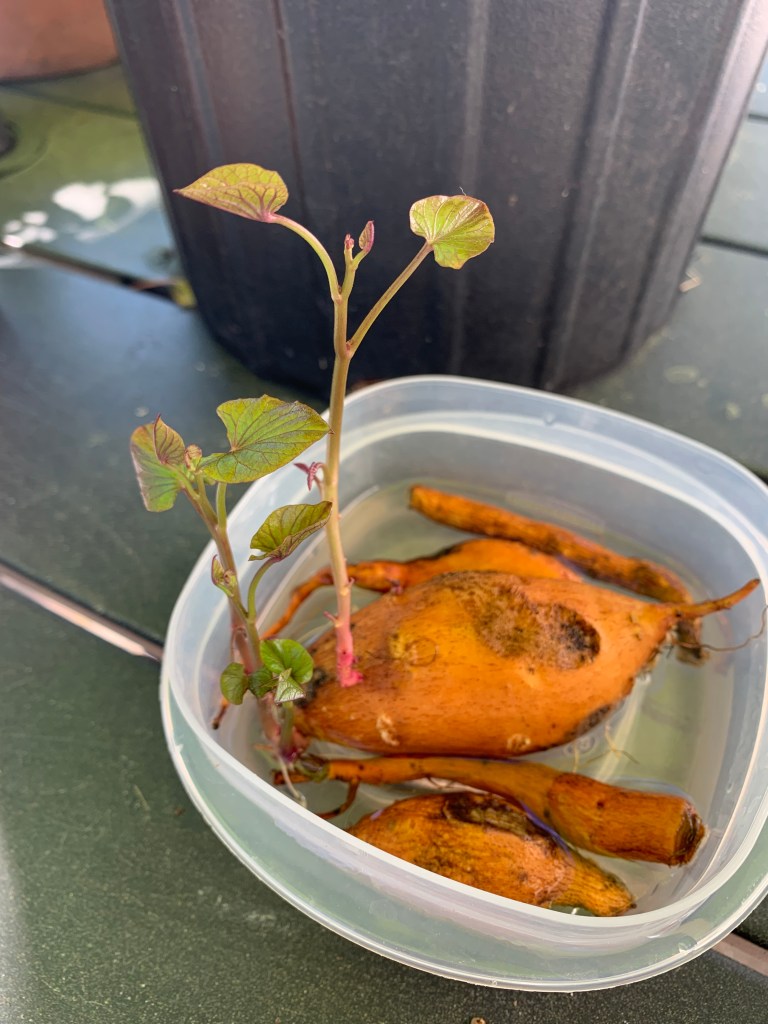
I’ve had some sweet potato slips growing on my windowsill for a few weeks. I kept finding sweet potatoes buried in the yard that were rooting. They really needed to get into the ground. Our weather is not super hot yet, but I figure the plants are better off in dirt than in water in my house. Also, we have an upcoming camping trip. The goal is to plant things before I leave.
Originally, I had planned to order some sweet potato slips. When companies send out the slips, they do not specify when they will come. We have a couple of camping trips coming up and I’m afraid I will not be home when the slips arrive. Also, I found so many potatoes in my yard that were already growing, that I don’t really have room to plant more.
I have one more raised bed to set up. It could take me a while. I’m feeling good that this one is planted and hopefully I will have sweet potatoes to eat in a few months.
Peppers and Eggplant
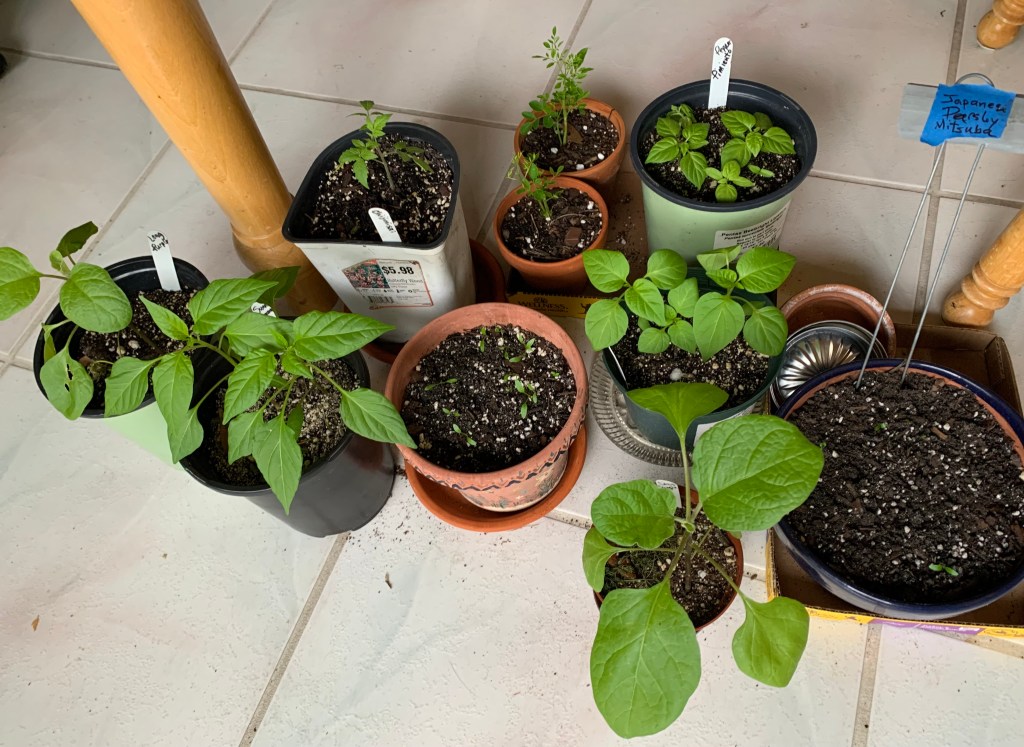
Both pots of peppers were doing nicely. I have not tried to grow either type before. I planted the seeds for the Sweet Banana and Ubatuba months ago. The seedlings were thinned to 2 in each pot. Have you ever heard that peppers like to touch each other? I remembered this so I left 2 together. I’ve always had a very hard time getting peppers to grow, so I don’t have high hopes for these.
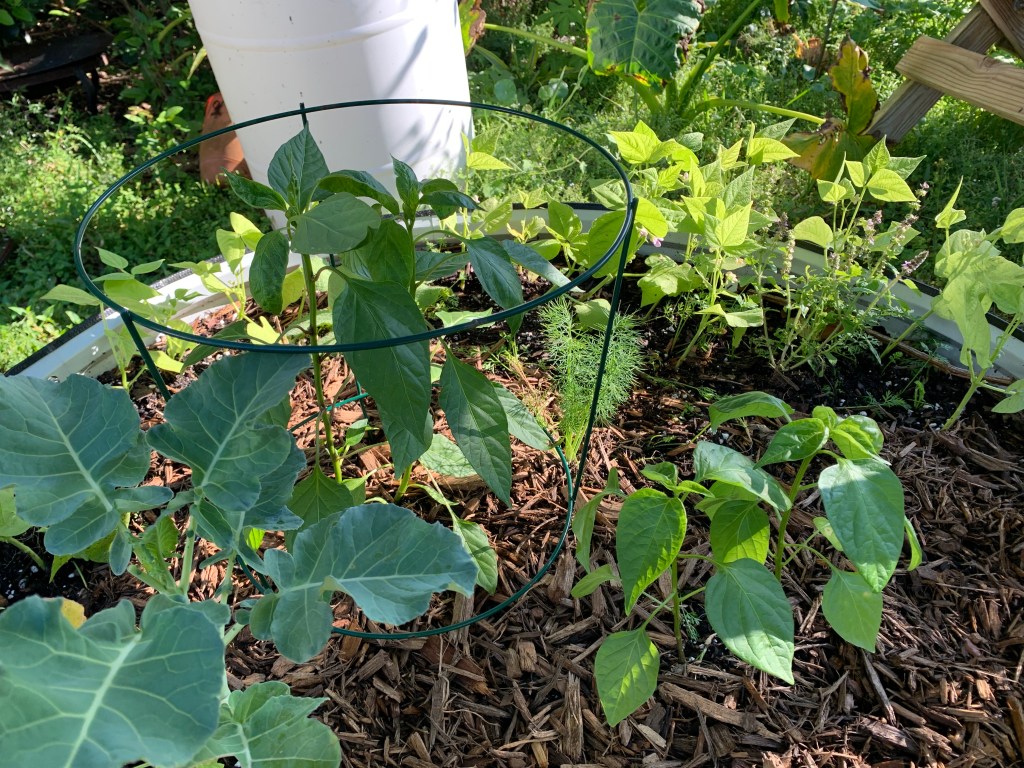
Now they are safely planted into the round metal bed. I had to set up my umbrella because it was very hot and sunny. I’ll let them have sun all day once they are adjusted to their new grow space, or if it cools off a bit. They will definitely need this shade every afternoon during summer.
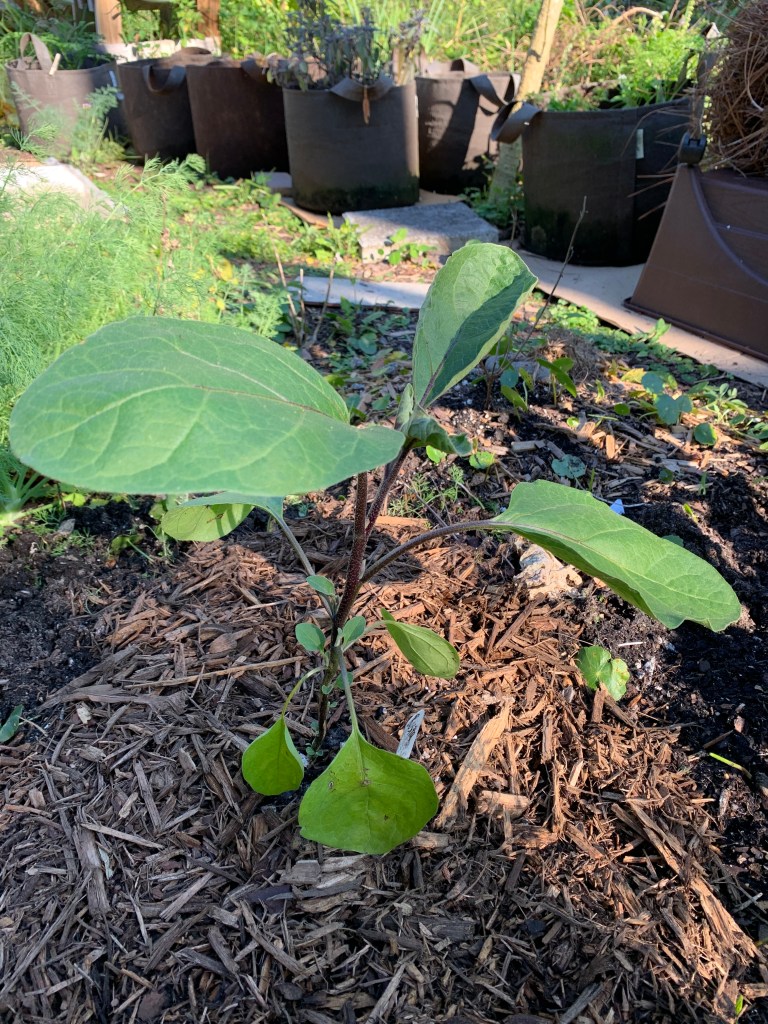
Seedlings with peppers4 pepper plantsLong purple eggplantShaded
In Hindsight
I’ve written about growing peppers often. Last year I had many plants that looked great for a while and then suddenly died. One had waterlogged roots, so I knew the cause of that. It made me empty my grow boxes and drill holes for drainage.
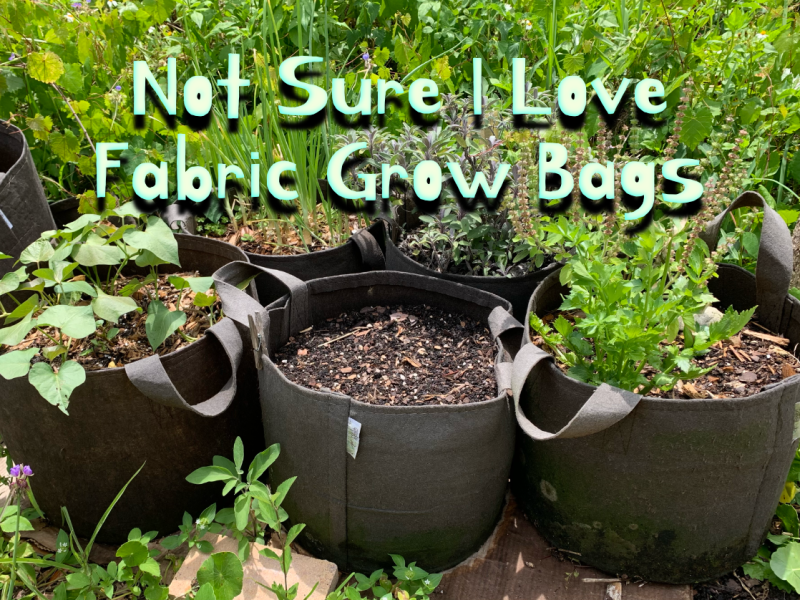
The other pepper plants were in fabric bags. I think there is a problem with these bags. First, I moved the plants from one area to another. I suspect the roots were damaged when I did that. Also, fabric bags dry out fast. I’m learning this from emptying them now. Even though I water like mad, there is lots of dry soil in every bag. I plan to write more about this.
Happy gardening! … to those who are lucky enough to be able to do it in February.
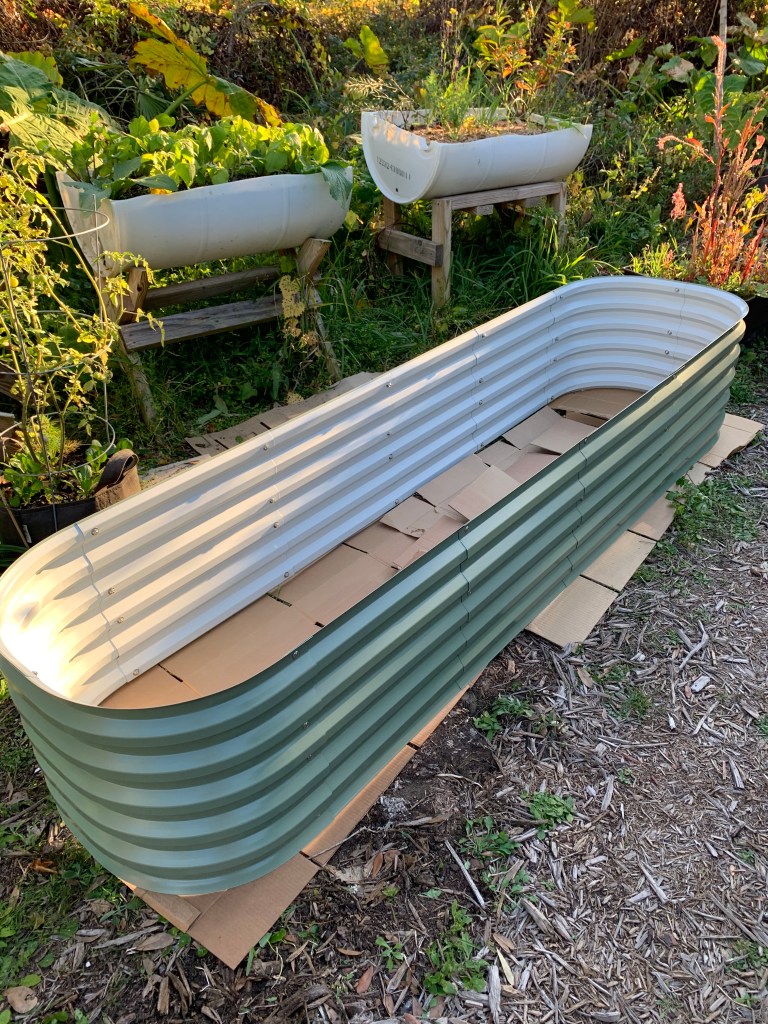
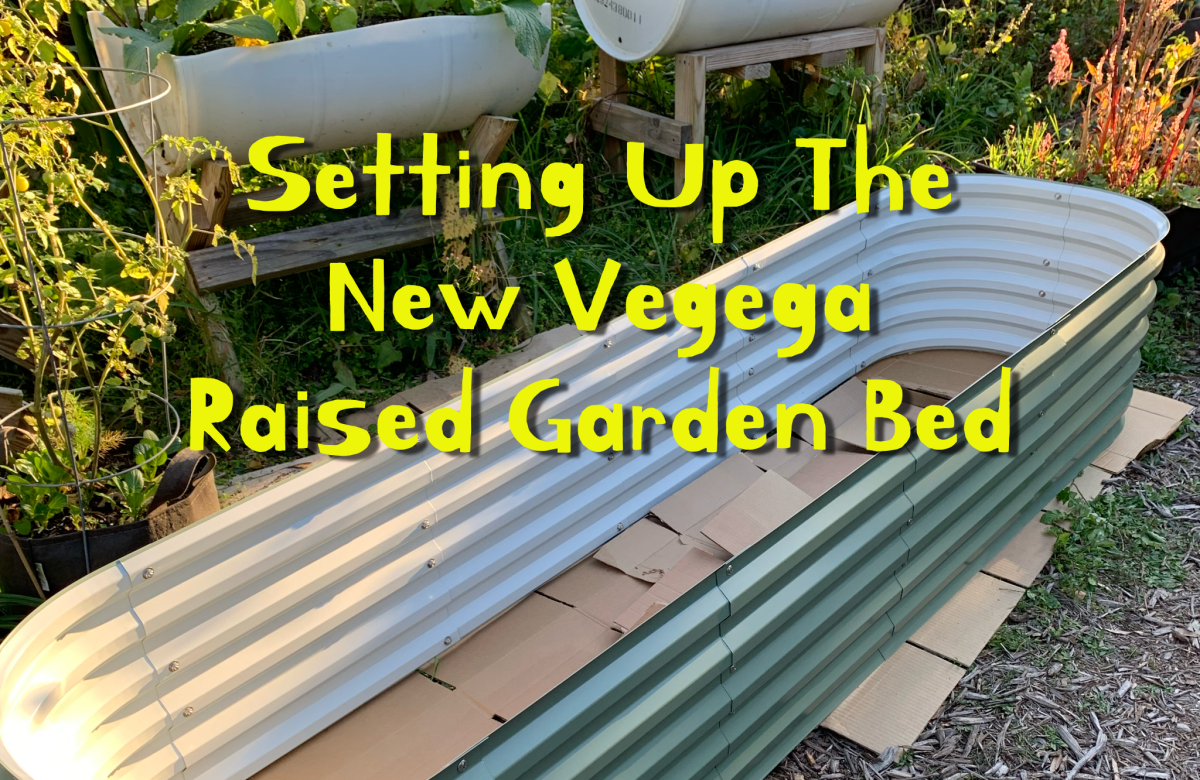
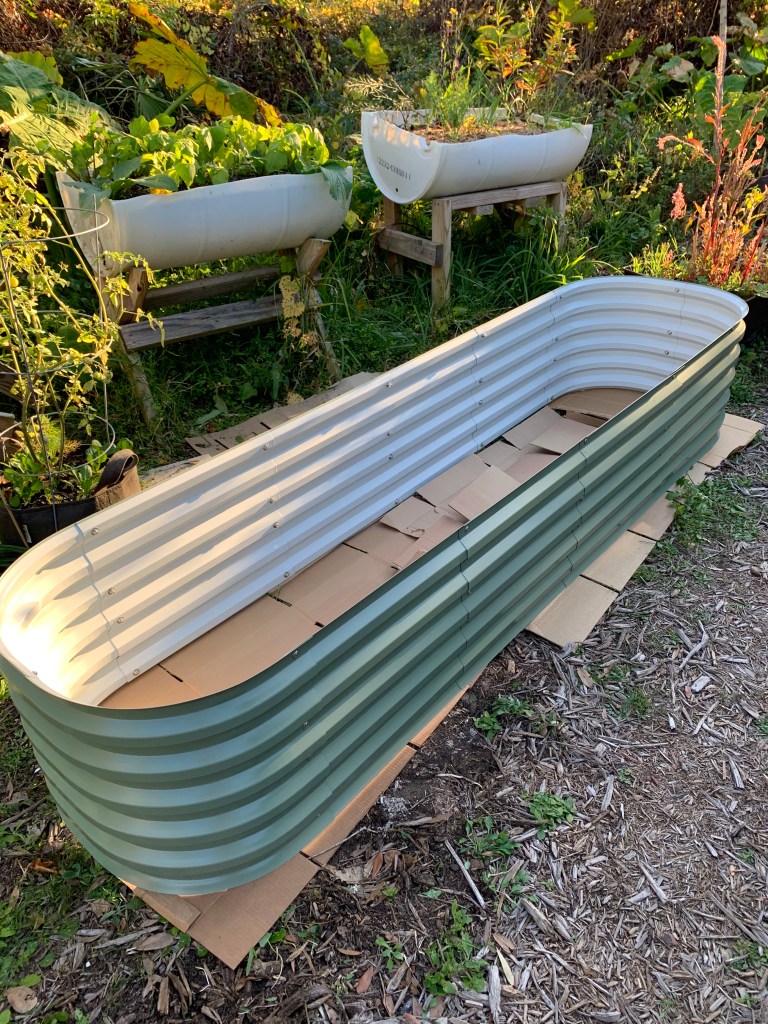
My new, long raised bed came from the Vegega company. It is 17 inches high and 8 feet long. This one has been a challenge to set up.
Today, and for days after, I have spent time putting together my Vegega raised garden bed. This is a metal, raised bed that is a long, skinny shape. The size is 8 feet long by 2 feet wide, and 17 inches high.
A while ago I bought a round bed and it was fairly easy and quick to put together. This new, larger bed was not nearly as easy. Having help, or better yet someone young, or a husband, to do it for you, would be ideal!
Pieces of the Vegega are up and loosely screwed together.
The round one went together fast. I did one half of the circle at a time, in the house. Then I assembled the two halves outside. I think I did it all in one day. The long bed took more effort because of it’s size and shape.
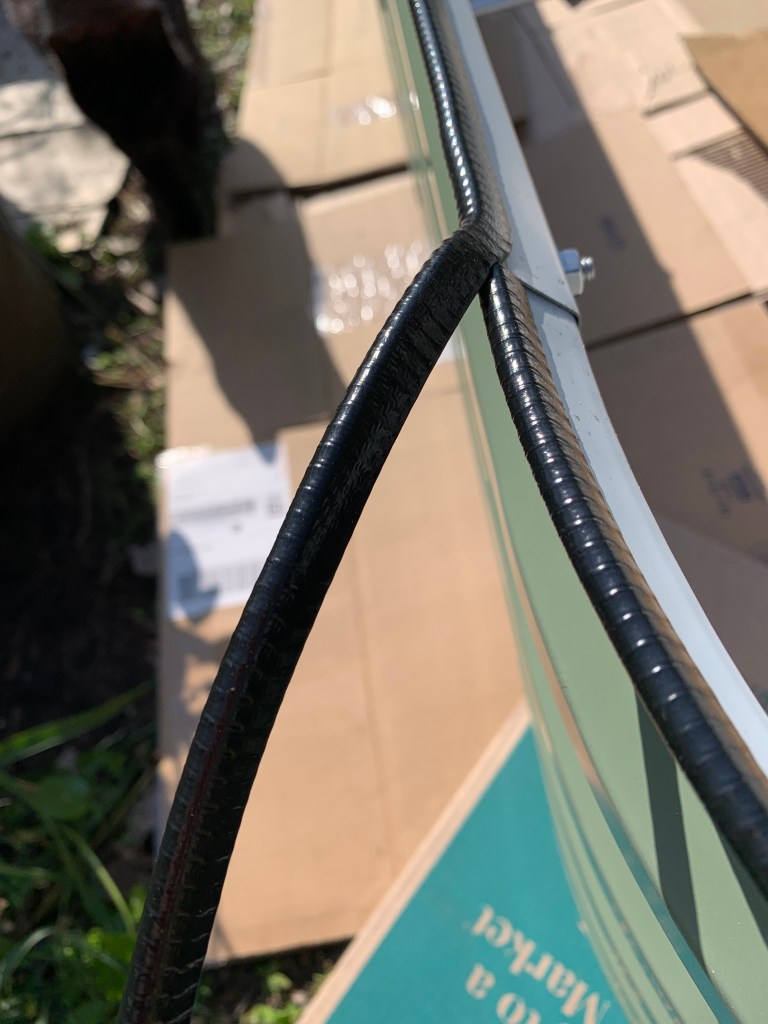
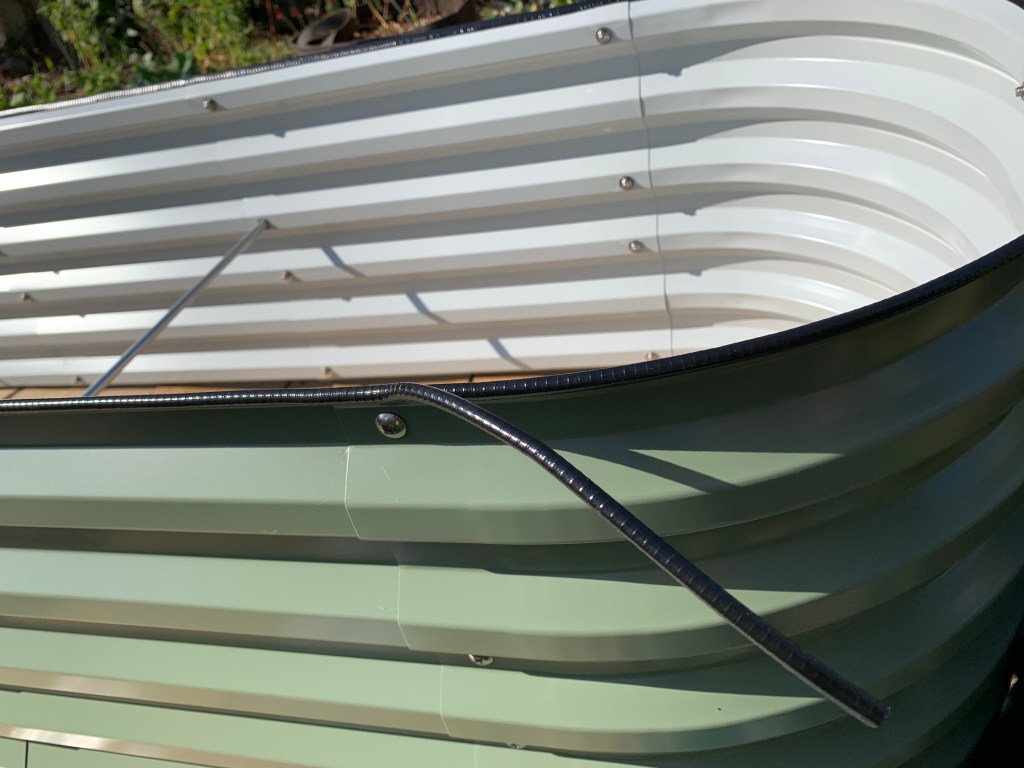
What is left to do? There are bars, to act as supports for the sides, that need to be placed. The directions are not great, but it appears they hook over the screws. – Nope, they take the place of the screws. A rubber edging needs to be applied all the way around to shield from sharp edges. I need to make sure it is fairly level, and then begin the filling.
The Beginning
I want my beds ready to plant by March. Time is passing. Not only do they (I have two) have to be set up and filled with dirt, there is prep work.
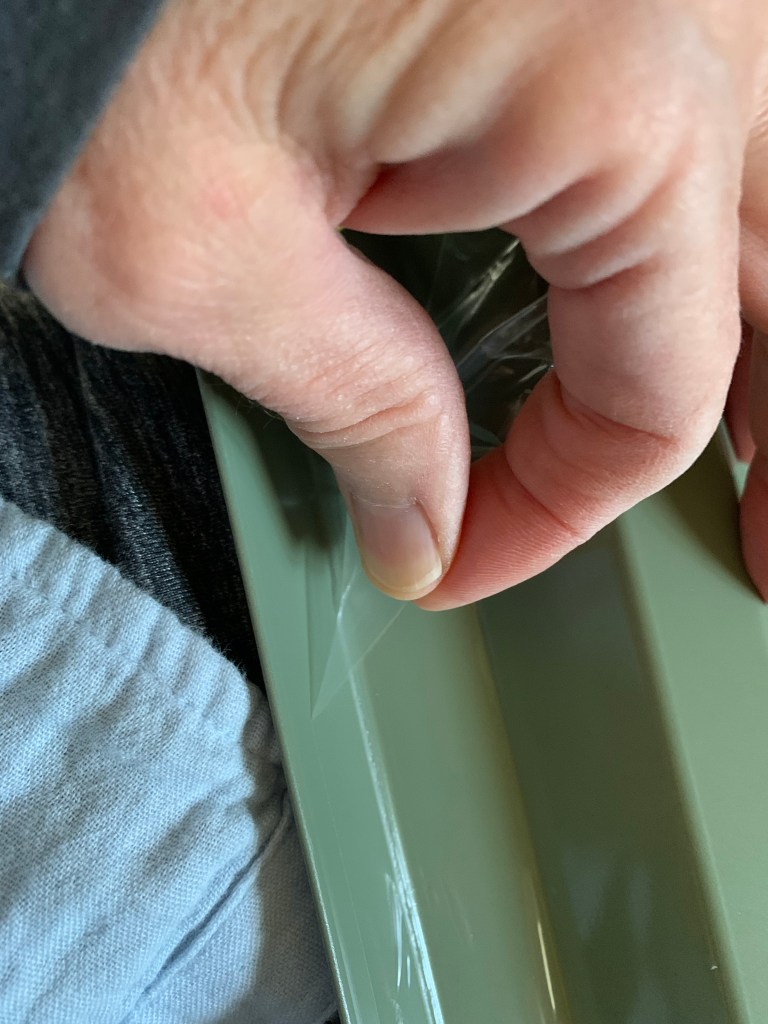
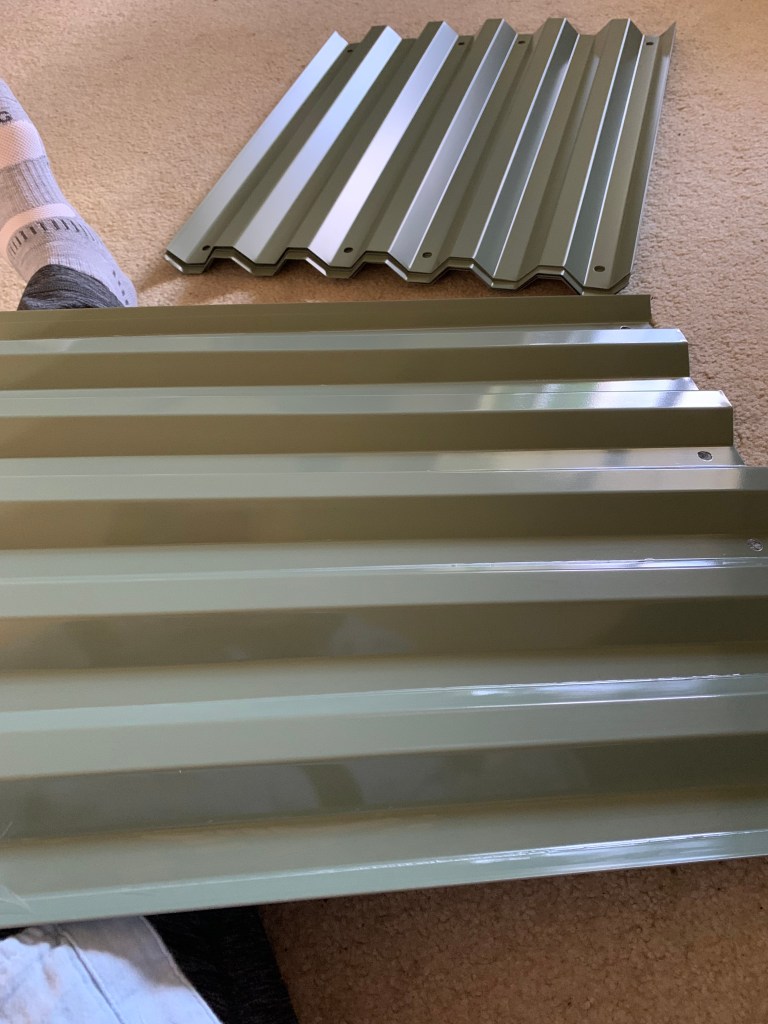
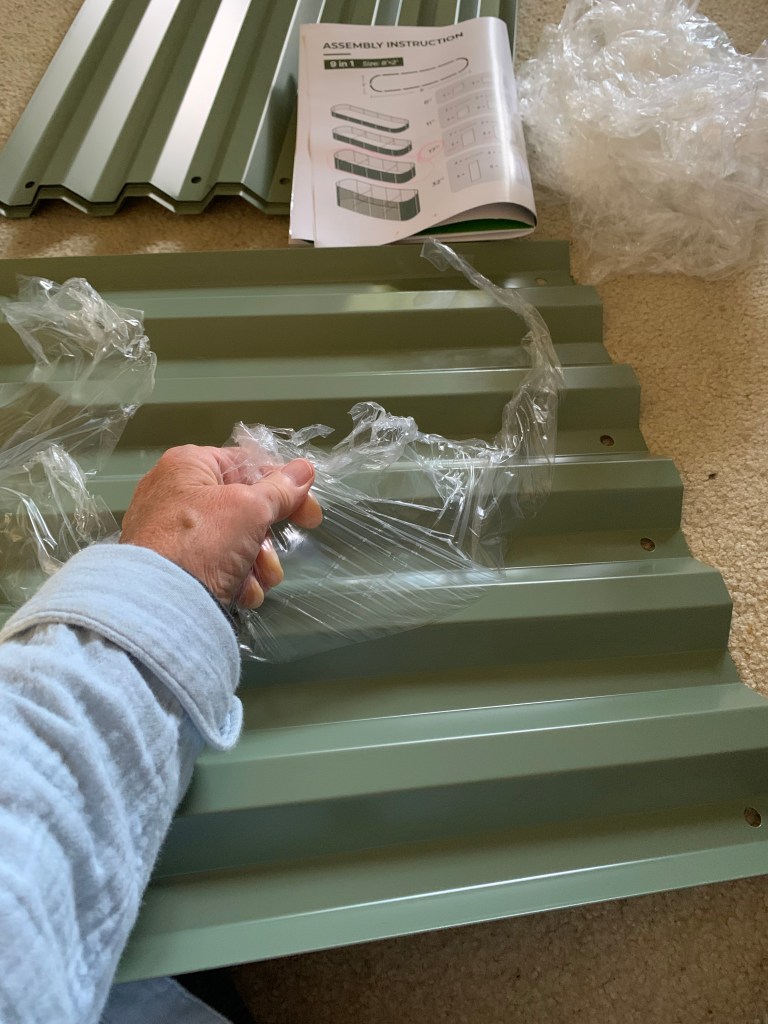
Each piece is coated. This bed has 12 pieces and the plastic coating needs to be removed from all of them. I did sit on the floor to peel all that coating off. This is almost the worst part. It comes off in one piece nicely, but there is lots of tugging to be done.
PeelingEvery piece is coatedLots of pulling
It took me 2 partial days to set up this bed, tighten the screws and add the two braces needed for this size. I did a few sections inside the house. I carried the sections out and attached them as I went.
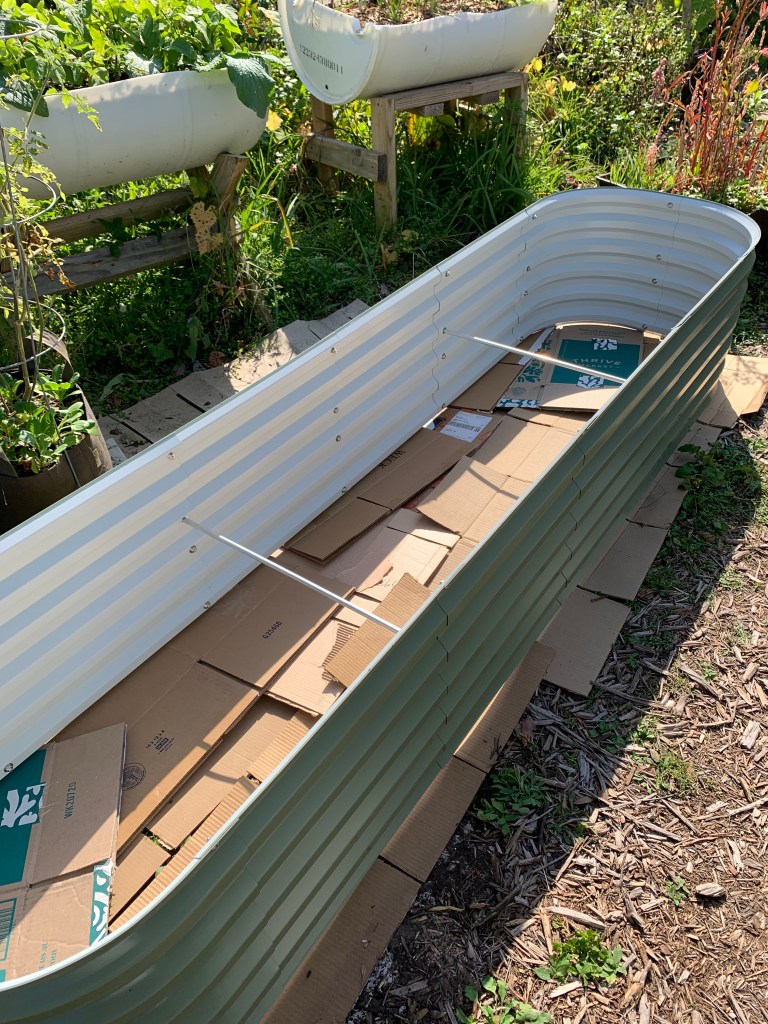
A few days later I added the support bars – of which there are no directions, except where to place them (image). They take the place of the nuts in two sections. After that, I tightened all the 1,000 screws. Just kidding, but seemed like it. The day was quite hot, and my new Vegega is directly in the sun.
It took 7 minutes to put the black edging on (yup I timed it), and there was plenty of it with a bit leftover.
I feel like the round Vegega was a LOT easier to do. It’s smaller, was easier to set up and quicker to finish. I kept waiting for a good sale, but they never had one. Each bed is a different shape. The next one is 4×6 I think. Hopefully it is easy.
Screwing it together took a lot of bending over. I don’t have a real problem bending, but the angle to tighten the screws was awkward. Also, did I mention? It was hot.
This bed has two cross supportsLeftover edgingAdding the edging
Filling The Raised Bed
I’ve found that the easiest, and cheapest, way to fill a raised bed for planting is to use a variety of things. I want this bed ready to plant by March. I only have a few weeks.
Cardboard boxes are something I save. They have been building up on my porch all summer. It is so hot that we don’t use the porch for much except storage, until the few winter months.
Cardboard works well to level the bed and fill the bottom. It is not there to keep weeds out! Weeds grow from the top, not 17 inches upward from the bottom. It amazes me that everyone puts black plastic under their beds to keep the weeds out! I like something compostable incase whatever I grow needs more root space beyond the depth of the bed. I didn’t do anything to the ground beneath the bed.
Next I added some paper filler that came in some deliveries. On top of that I added pine straw. The local Yard Shop only sells this and not regular straw. It will be flattened once the dirt is added. Pine is acidic, but it will be way down in the bottom and will eventually decompose.
Cuttings from old vegetables, flowers, and shrubs are added next (nothing diseased). Sometimes I have dirt from a box or pot to throw in. I’ll be buying and adding more new dirt, along with fertilizer and homemade compost. I’ll mix the cuttings with all the other dirt to fill this bed. Some Perlite will be added to keep the dirt loose.
All of this will compost over time. It will break down and become part of the bottom layer of soil.
Mid-February: Still adding dirt, compost and cuttings to this bed. It’s taking a lot to get this thing filled. I still have to buy more dirt. In the end, I will have a nice, big bed for planting.
This metal bed is 17 inches tall, so most of what I grow in it will not have roots that deep.
Ideas For Planting in This Raised Bed
I have one idea for summer planting in this new raised bed. I will grow sweet potatoes. Maybe some Holy Basil plants will work next to the edge. Not much else grows in summer. At least nothing I would plant in this bed.
Next winter I will use this new bed for planting broccoli, onions, and carrots.

















 Hydrangeas Blue