March is When The Hibiscus Can Be Trimmed Back

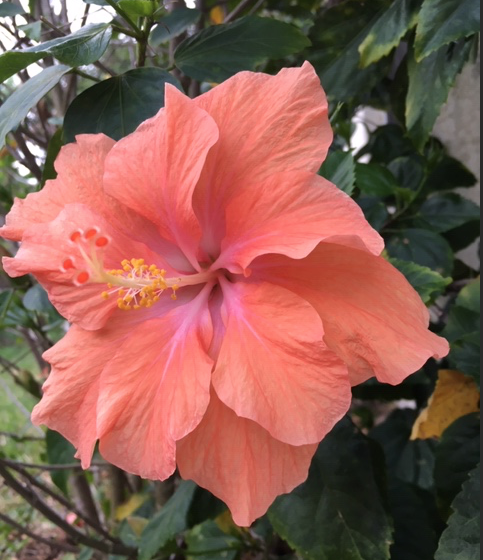
Two years ago I planted a little hibiscus plant out behind my house. It grew quickly and flowers all the time with double flowers. Double flowers means each bloom is more ruffled looking with layers of petals as opposed to flat, 5-petaled flowers.

double orangea hibiscus flower

Hibiscus grow very well here in Florida, and this past winter was quite mild without any overnight temperatures dropping below freezing. At least not where I live. I never had to cover any plants and everything looks great. The chances of having a freezing night now are slim, so it’s safe to cut back outdoor plants that need it.

Continue reading “March is When The Hibiscus Can Be Trimmed Back”

Repotting the Lime Tree and Corn Plant

With the cooler weather comes the time to do things outdoors.  My winter is like a northern summer.  I’ve been waiting for months for the heat to go away so the days will feel more normal.  It’s just like suffering through a long, frozen winter and waiting for the warmth of Spring.  Except in reverse.

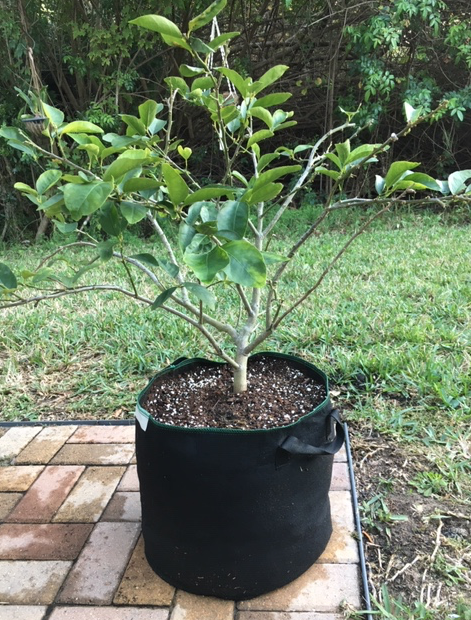
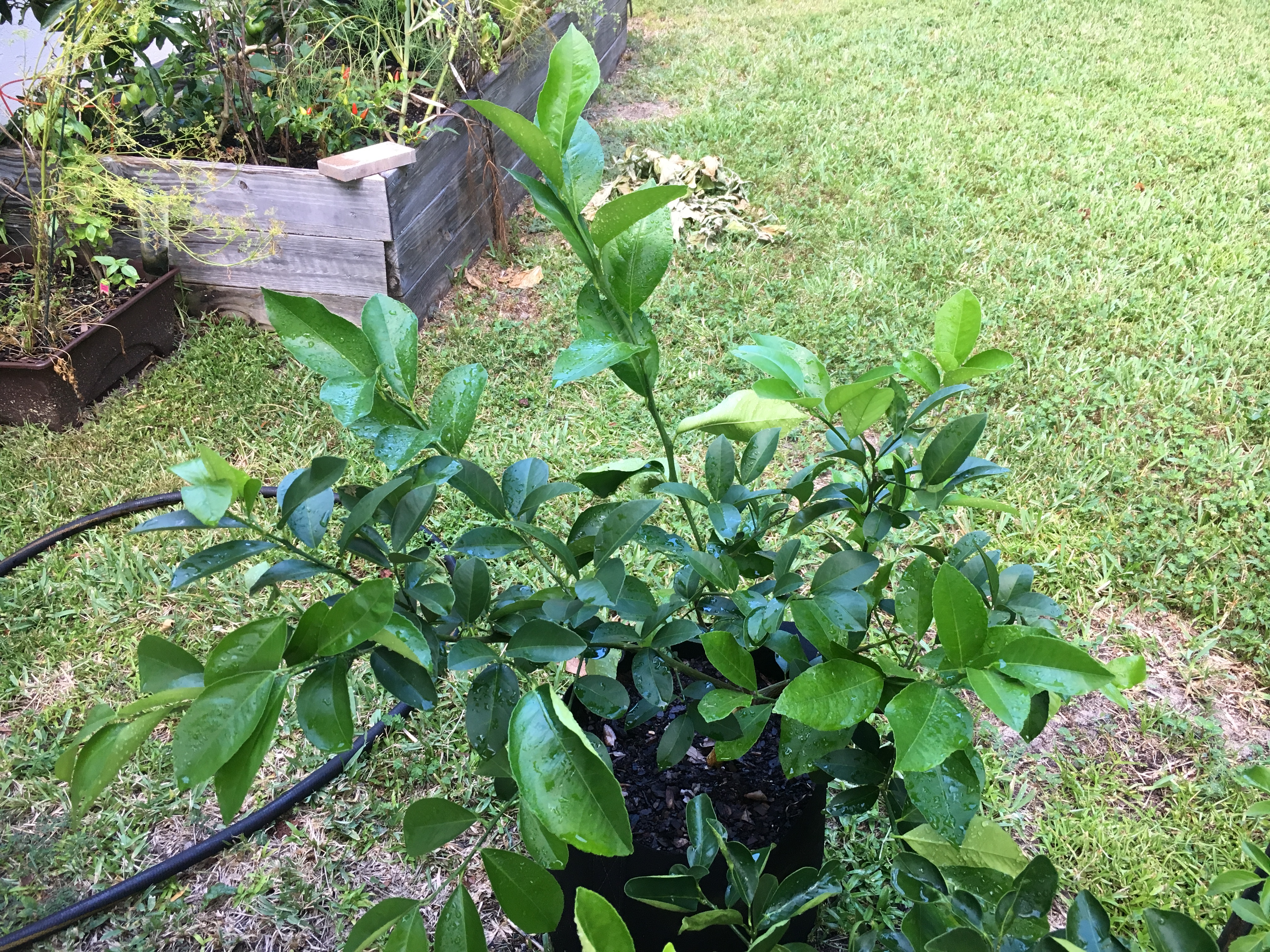
January has brought cool breezes, lots fewer bugs, and breathable air.  It rains less, but the plants are not burning under the sun, so watering is occasional.  I still check on my plants and vegetable garden.  The Lime tree seemed to be in need of help, and the pot it was in needed an upgrade.  I bought a couple pots at Home Depot, but then decided to use one of my larger fabric bags.  The Lemon tree is doing great in a fabric pot.

Lime tree in fabric pot

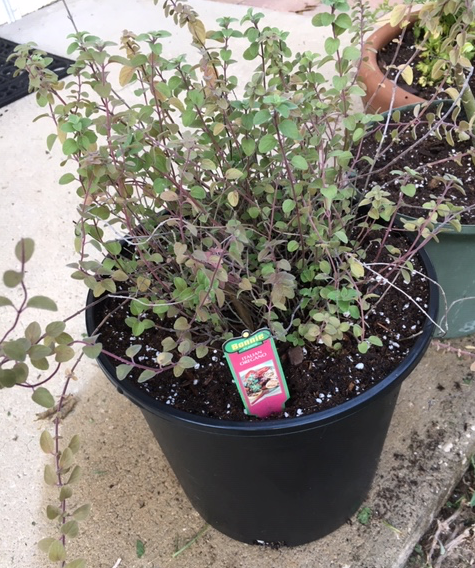
The Italian Oregano plant was in need of attention and got a new home in a deeper pot. I also added some bone meal for root growth.

Italian oregano
A new pot for the Italian oregano plant

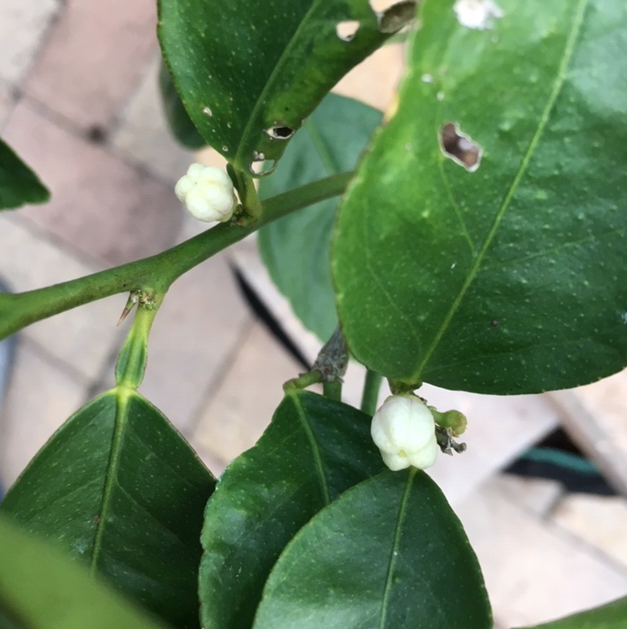
White flower buds on lime tree
Little white buds on the Persian Lime tree!

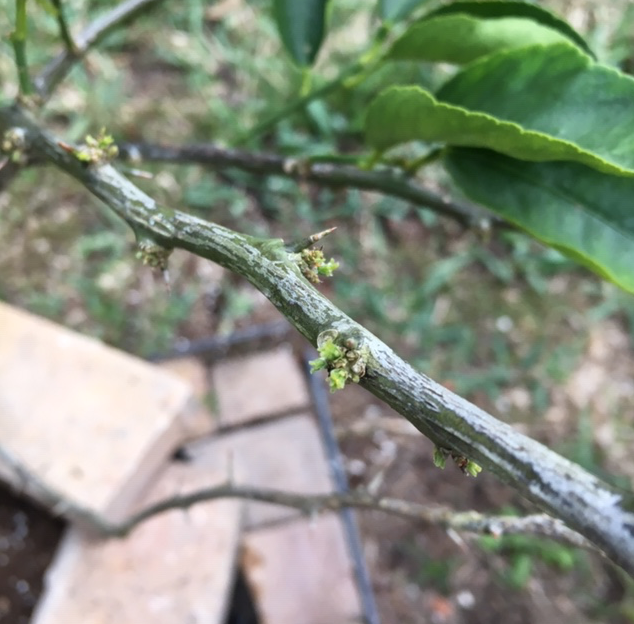
new growth
New growth beginning on the lime tree in January

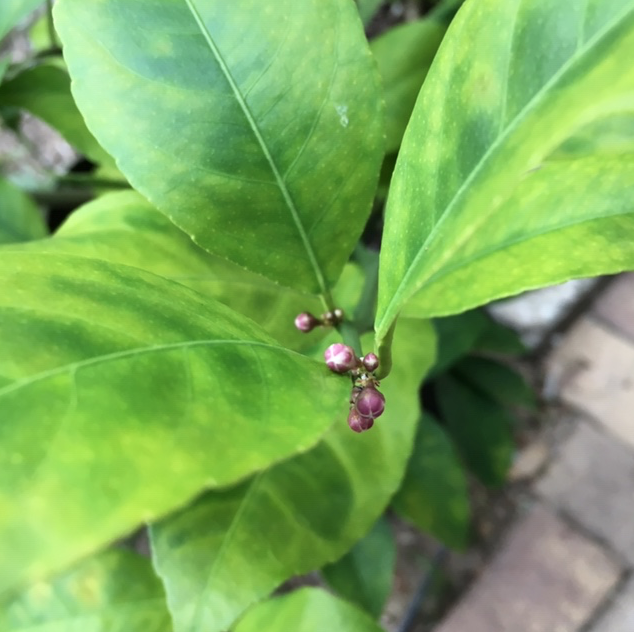
The Meyer Lemon has some pink flower buds, and the Persian Lime has little white buds and greenery popping out along the branches.  Although freezing temperatures could hit, both my citrus trees can be brought indoors for the cold weather.

Pink flower buds on the lemon tree
Lemon tree buds

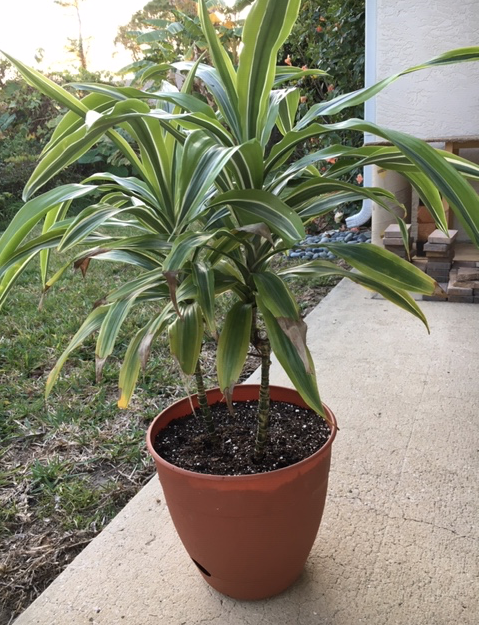
One other plant that was in need of attention was my corn plant. This one came with me down from New Hampshire. I had purchased some houseplants to decorate when my house was up for sale. The corn plant (this is what I call it, but I’m not sure what the real name is) is meant to be an indoor plant in the north, but here in Florida it does fine outside as long as it’s in the shade. The front of my house doesn’t get direct sunlight, so the corn plant is generally happy by the front door. But the pot was ugly and too small, so now it is in a bigger one.   I think it is happy.

corn plant
The corn plant in a new pot

Growing Squash in Florida is Not So Easy

In New England squash and zucchini were always part of my summer gardening design.  Usually a couple of plants gave me more squash than I could eat.

In Florida I have had no luck growing any type of squash.  Now I read that “summer squash” is not grown in summer here.  In fact, I am discovering that not much does grow well here in summer, except the tropical plants and citrus.

The Summer Squash Gardening Solutions page at the University of Florida has some recommendations when it comes to planting and growing squash.  My garden is very small so I’ve tried to grow squash in my fabric bags.  The plants begin fine, but eventually rot away.   The types suggested are: Black Beauty and Spineless Beauty zucchini, and Summer Crookneck and Early Prolific Straightneck.  I’ve never grown pattypan squash, but the site recommends Early White Scallop.

Another mistake I may be making is buying my seedlings (and seeds) at Home Depot.  I have not had luck growing any plants that come from that store!   Both of my caladiums have disappeared totally from the garden!  I don’t know much about growing caladiums but I guess they need attention I did not give them.

Recently I visited a local nursery called Lindleys, in New Smyrna, where I found my Staghorn fern and Fiddle leaf fig tree, and a little thyme plant, but I’m thinking they might have seedlings to plant as well.  I believe the real growing season begins in February here.  I will go back and see what they have next month.

Go With the Flow and Stop Wasting Time

I’ve been growing fresh vegetables in my backyard for years. Now I struggle to get food to grow.

We learn from experience and observation. Life is about change. If we are wise, we will go with the flow and not waste time with something we cannot change. I am applying this philosophy to my backyard vegetable garden.

Observation and Common Sense

One thing I have observed since I began gardening in Florida is that a lot of vegetables simply won’t grow here. Maybe I am doing something wrong, but I grew veggies fine in New Hampshire. I am not an inexperienced gardener, but vegetable gardening in this climate is obviously beyond my grasp.

It’s been two years. That is plenty of time to grow something well. I’ve built up the dirt with compost and fertilizer, watered like mad, and thwarted raccoon attacks on the plants. I’ve picked worms, loved the lady bugs, and sprayed off mites. My little raised bed garden has given me very little to eat in return.

With the exception of about three eggplants (total) and occasional small bell peppers, there is little food coming from the backyard.

Herbs Seem to Flourish

On the other hand, my observation is that many herbs do grow very nicely here. In fact, my parsley, basil, thyme, mint and fennel have lasted a very long time.

Herbs are hardy. When I first began growing parsley I lived in New Hampshire. The green stems would push up through the first snowfall, which amazed me. Deer used to help themselves to the lush green herb.

In Florida I have had the same parsley plants growing in my garden for over two years! Parsley not only survives the cold, it can take the heat and oppressive humidity.

It is depressing to put work into trying to grow decent tomatoes, squash, zucchini and root vegetables, only to watch them rot, wilt or end up too tiny to bother with.

How long do I keep trying, only to watch the plants produce nothing I can eat? I’m about over it.

Changes All Around

My life is always changing, and recently it went through another change. My youngest son has moved out. He’s nearly done with college and does online classes, so he went back to the northeast to live. Good for him. Wish I could afford to do the same.  I did take a trip back to stay for a week, which was so nice.

My youngest son has always been a very picky eater. If I don’t make food he likes, he could literally go all day long without eating. So, I tended to make food he would eat. That type of food was very different from the type of food I eat.  Now that he has moved out, I can concentrate on cooking for me only.

This is a very new idea and it will take a while for my brain to wrap around the concept. I’ve been cooking for my children for over 40 years!  My way of cooking will be changing. Although I am not crazy about spending a lot of time in the kitchen, I am a very good cook. As an “almost vegetarian” meat is not my main focus. I love to cook soups, stews and one pot meals (using my Dutch oven) which are full of fresh vegetables.

Since I can’t grow all the vegetables I’d like to, I will concentrate on growing the herbs. I learned very late in life how much herbs can brighten the flavor of a meal. Now I can’t make anything without using herbs because it’s not worth eating.

Because my herbs will grow year round, I don’t have to spend time drying or freezing them.  Sometimes I even get to collect their seeds.  I still need to find a store that sells good fresh, organic vegetables.  Publix is a good store, but as I have discovered, their produce is not the best.

I also have access to fresh citrus, which I should begin incorporating into my food as well.  Both my lime tree and lemon tree are still growing, but the lime needs re-potting.

So I’m collecting recipes to make for myself and will concentrate more on eating healthy. The weather is much cooler now here in Florida, and I do get outside for walks as much as possible.  My neighborhood is a boring place to walk, and there are no hills to get my heart pumping, but I do what I can.

(They Yacht is not mine. Photo taken at a nearby Marina.)
End of Summer Florida Garden News

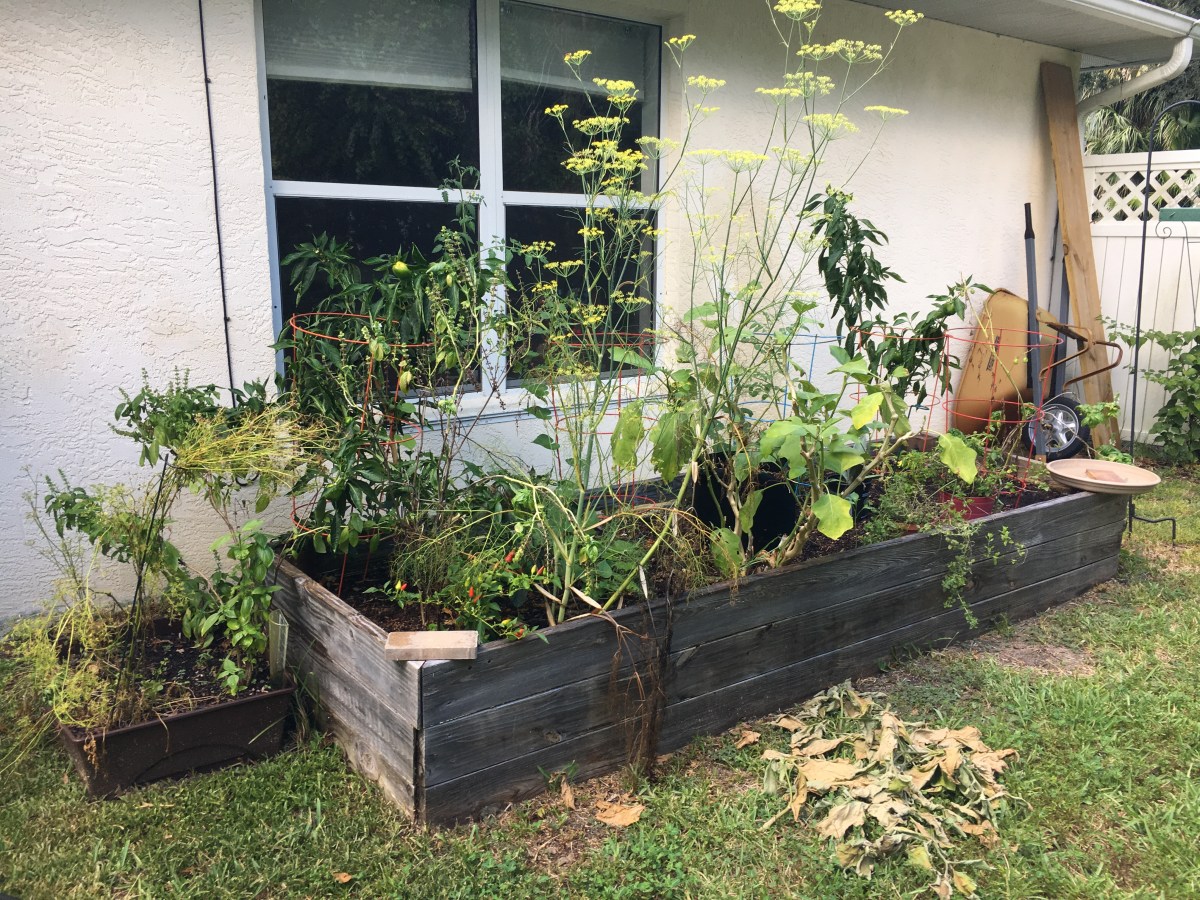
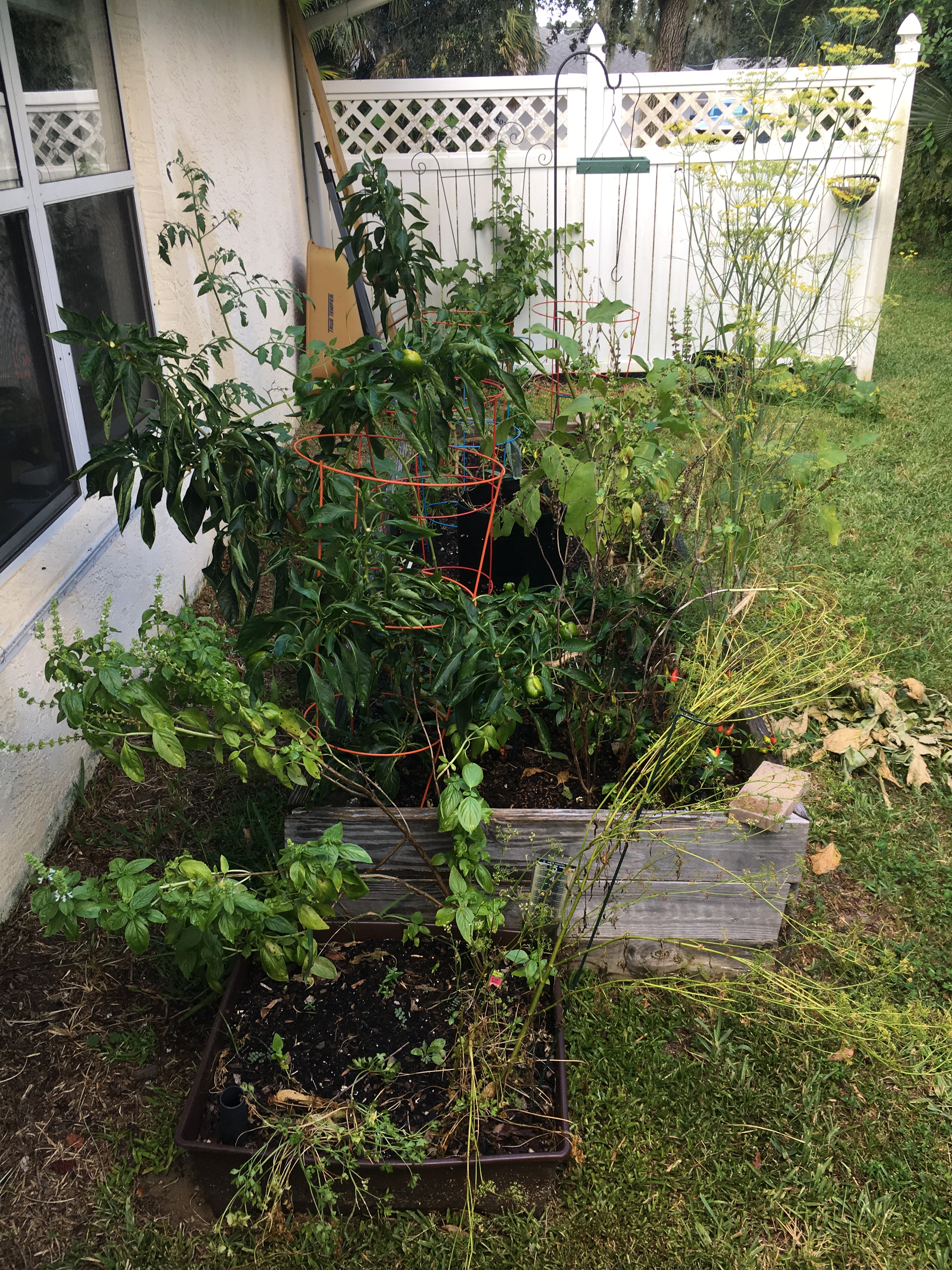
Here in Florida it does not feel like the end of summer transitioning into Fall.  The September garden is overgrown and producing little.  My garden looks like a mess.  Temperatures are still in the 90’s and it’s too hot to stay outdoors for any length of time.  I water the garden at least once a day, and usually twice, and it still wilts in the heat.

September garden in central Florida
September Garden

I now have two new bell pepper plants growing from seeds. One is tall and has given me a few green peppers. The other is still tiny.  You can see the big (old) pepper plant in the raised bed, front left area.  The peppers are small and thin walled, but I use them in cooking.

I’ve cut back the eggplant once more and haven’t had an edible eggplant from it in a long time.

The tomatoes are long and gangly and will probably just die before they produce edible tomatoes.   I may try to grow them again in early spring.

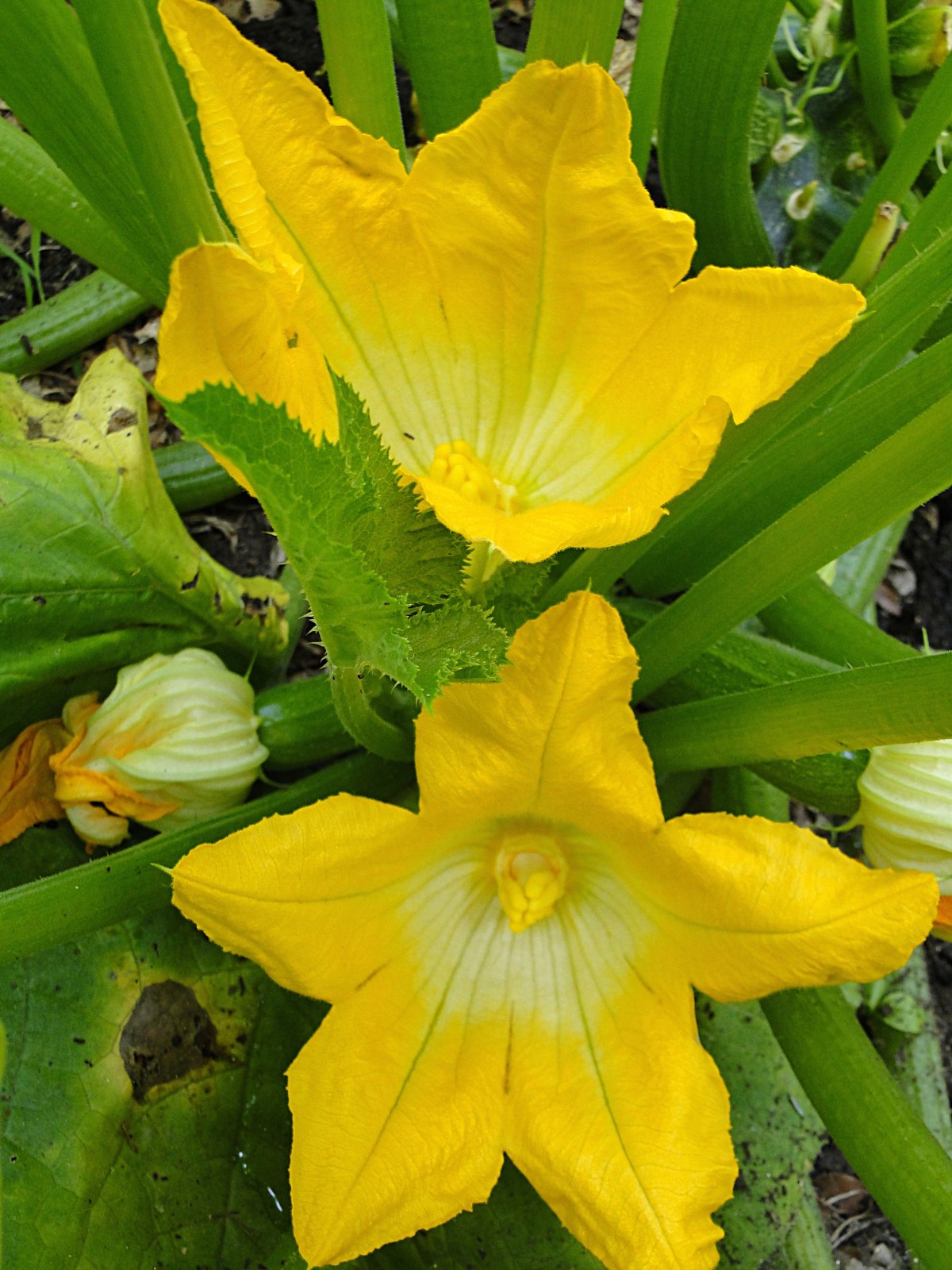
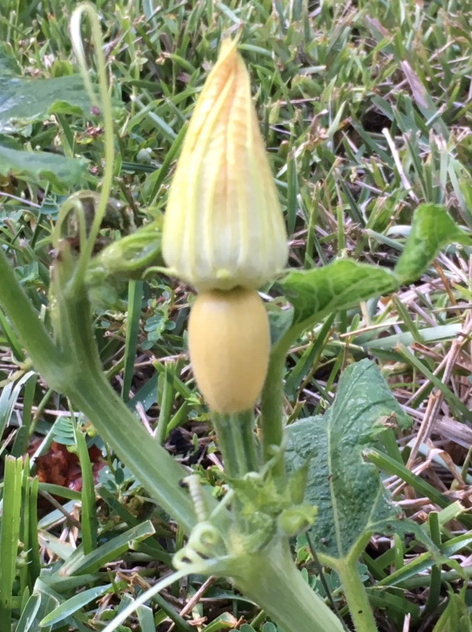
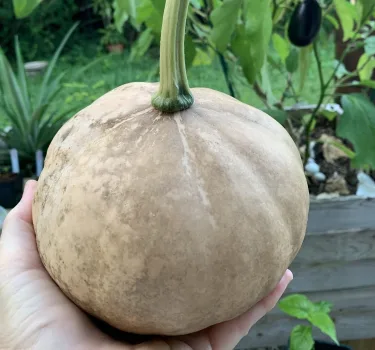
And I have a couple of squash plants – one has a tiny squash growing. I honestly can’t remember what type of squash it is. Either a winter / butternut or spaghetti squash. I threw seeds in the dirt to see what would happen. I can’t grow summer squash or zucchini for some reason.  (This little squash rotted and fell off the vine.)

yellow squash
Little yellow squash, not sure what type

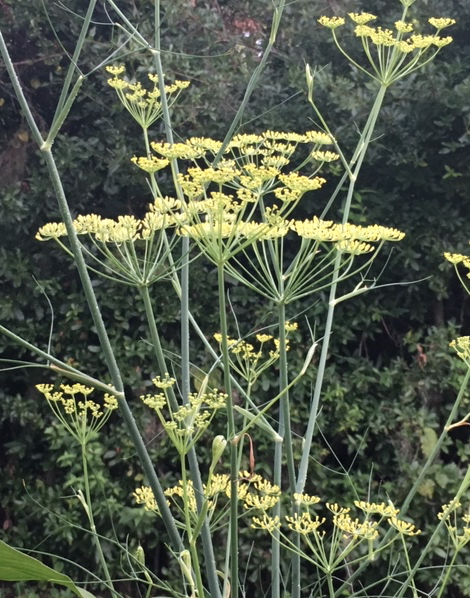
The most beautiful plant in my vegetable garden right now is the fennel. I had two plants and one died, but the other has grown tall stalks of pretty yellow flowers which bring bees every day. This is why I let my plants continue to grow even if they don’t produce. Their flowers bring bugs searching for nectar and birds hop through the garden in search of bugs for dinner.  Eventually seeds will form.

fennel flowers
Flowering fennel

I was inspired to draw the fennel with flowers and turn it into a custom card at my Zazzle store.

I’m not sure what will become of my vegetable garden. I’m considering giving up on growing my favorite vegetables. I seem to have more luck with herbs, so maybe I need a big herb garden.  I love to pick fresh herbs from the yard.

The parsley that has been growing for over 2 years is finally dying.  I let it go to seed and maybe it will produce new plants.  I haven’t seen any parsley worms for a while.

My neighbors across the street told me they turned their vegetable garden into a citrus garden. They said that bugs ruined everything they tried to grow so they gave up.  It seems that the smart thing to do is grow what works in this tropical climate.

My Little Citrus Trees

I am happy to see that my lemon tree is making a come back.  Once it gave up trying to produce lemons, it could concentrate on new growth, and the greenery is beautiful. I have it planted in a fabric pot and it seems very happy.

lemon tree greenery
The lemon tree is making a come back

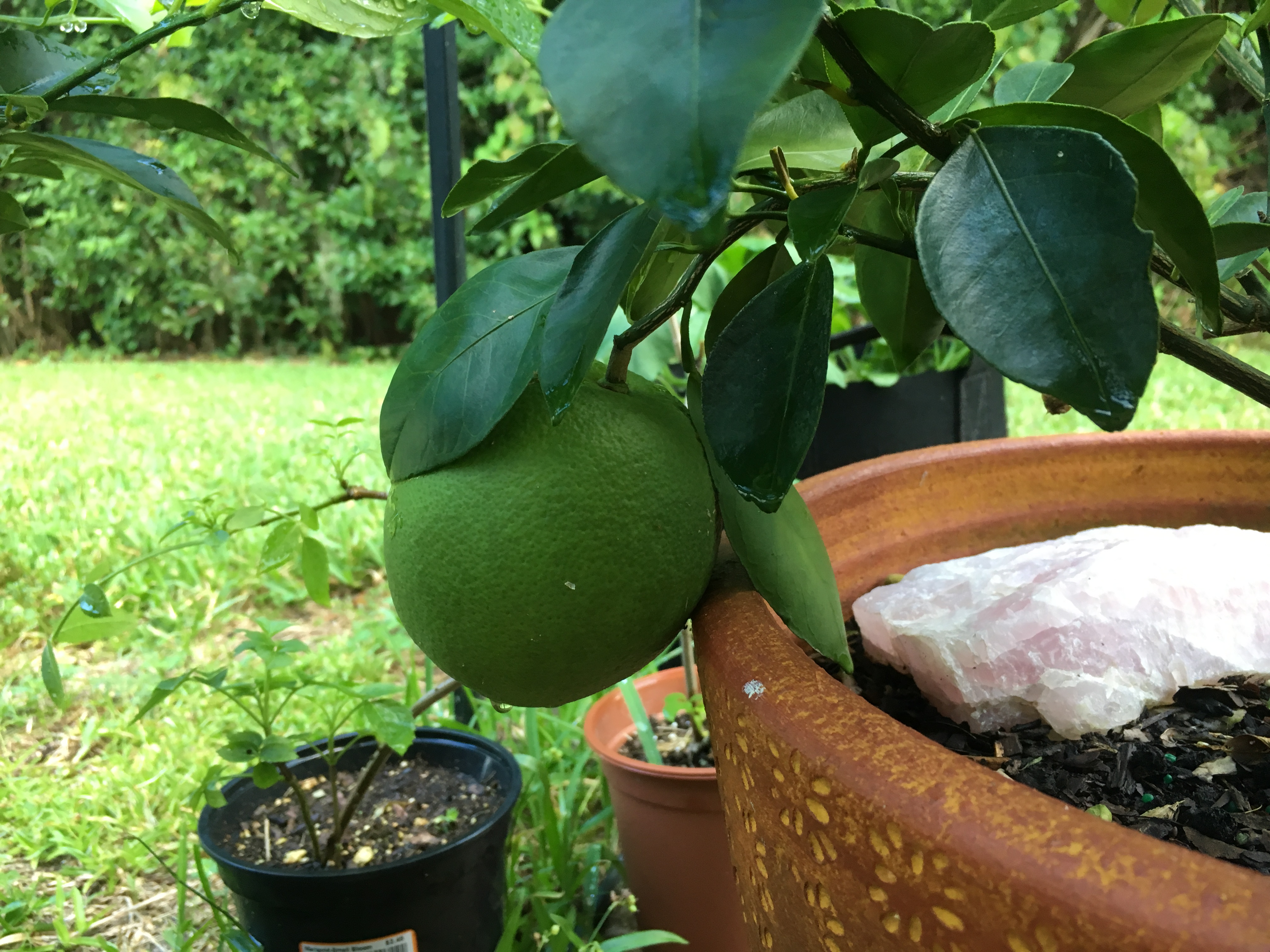
The new orange tree still has one orange growing. The tree is small, and I did have 2 oranges, but one fell off and was no good.

Orange growing on tree
A single green orange on the little Valencia tree.

The Persian lime tree is full of limes, which I will be able to start using soon, but the tree and fruit don’t look as good as last year.  I think it needs a bigger pot.  With all the spikes on the stems, that will be a chore!

I look forward to cooler air… please… !

Found Some Bananas Growing in the Backyard

I only venture outdoors for about five minutes at a time these days because of the heat, but I do go out to get photos and check the vegetable garden.

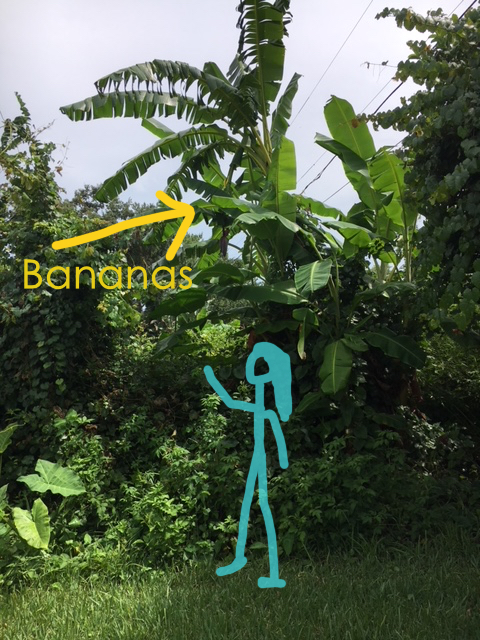
Although the banana trees in the back corner of the yard were frozen this winter, they have come back and grown very tall.  In fact, one of them recently put off a shoot of bananas!

banana tree height
Height of tree and bunch of fruit – I am 5’5″ and can’t come close to reaching it. (That’s me in blue LOL)

I’ve had banana trees bear fruit before, but the bananas were never very good. Maybe we didn’t wait long enough to pick them. The only bananas I know about are the ones sitting on the grocery store end caps. So maybe it’s time to learn about those wild bunches of bananas.

How to Grow and Harvest Bananas – I Just Learned This!

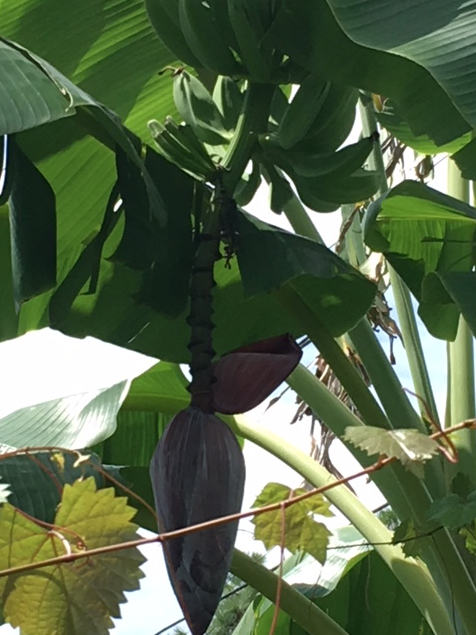
All those little bumps along the stem above the bulb on the end (photo below) will become bananas!  This plant is just getting started.  The Dole video below mentions waiting 12-13 weeks after the bananas begin to grow before harvesting.  They cut theirs while they are green.

As the bananas fill in along that stem, they will get heavy (60 plus pounds!) and some trees need propping up. I don’t think I will be able to do that.  This tree, and other little ones around it, are in the bushes next to my yard and not in a “garden” area.  This bunch of bananas is on a tree that must be 15 feet tall (photo above).  Since I took this photo, the branch has elongated so more bananas can form along the stem.

bananas on tree
Bananas on the tree

First, I want to say that I did not plant those banana trees. The house behind mine has a big garden area and they do have banana plants in their yard.  I’m guessing that the banana trees now growing on this side of their fence came from their yard. I have no idea what type of banana trees they are.

The University of Florida Gardening Solutions page says that because of sandy soil bananas need to be fertilized. No one has fertilized “my” banana trees.

Something I have learned is that once a tree produces bananas it is done. It will not produce any more. That is why bananas have off-shoots, or baby banana trees growing near the large one. The little ones will grow and do the same thing as the “mother” tree.

Growing Bananas Videos

In my search for growing bananas information I came across a couple of cool videos. The first one is nearly 30 minutes long and the grower is growing (and eating) “ice cream” bananas.

He makes a mistake by cutting of the 60 pound bunch of bananas thinking he can hold it in one hand – and drops it! Then, according to the comments below the video, he hangs the bunch the wrong way – I don’t know about that. Some viewers also left comments that cutting down the main tree is not necessary.

In the second video, which is about the Dole company and how they grow bananas, all the workers do is chop the leaves off the main plant and leave them on the ground to provide nutrients. They do not cut down the whole tree.

Dole company video – which I found to be interesting.

Potential Problems With Growing Bananas

A healthy banana tree can add interest to the yard, but when they turn brown, or begin to die and fall over, not so much.

Plant in an area where there is space for more “baby” plants to spring up. None of those banana trees in my photo were planted. They sprung up on their own.

The hurricanes – we’ve had two major ones come through within the two years I’ve lived in this house – the wind shredded the leaves of the trees to bits.

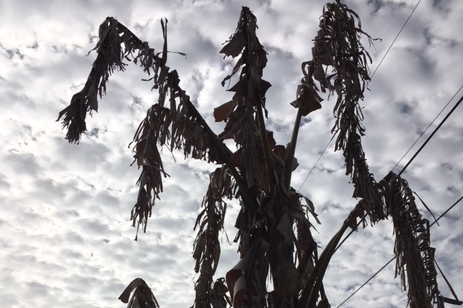
Then we had some very cold nights over the past winter which turned the trees brown.

Yet, here we are with very tall, lovely trees less than a year later, and one is growing bananas already. The trees bounce back quickly in this hot, tropical climate, but they can die way down.

dead brown leaves plants after freeze
The same tree in winter this past year