Digging, Planning and Planting a Backyard Food Garden in Florida

Digging and planting a backyard garden takes muscle and planning, but is worth it to pick homegrown food. Here is my small beginner garden in my little Florida backyard.

I live on the central east coast of Florida. As a gardener, who knows quite a bit about gardening – in New England – this area has been a challenge. In fact, I have given up trying to grow my old favorites. Squash and zucchini turns moldy right away and even tomatoes seem to struggle in the heat. All I have had luck with are peppers and eggplant.

Time to change my outlook and ways, and adhere to a new way of growing things in this subtropical climate.

Over the past couple of years I have invested in a few grow boxes. My son made a few raised beds last year. We’ve been growing (or trying to) in these beds somewhat successfully.

This Spring I purchased a Tiller. It was not cheap but it did the work of creating a fairly small garden out back.
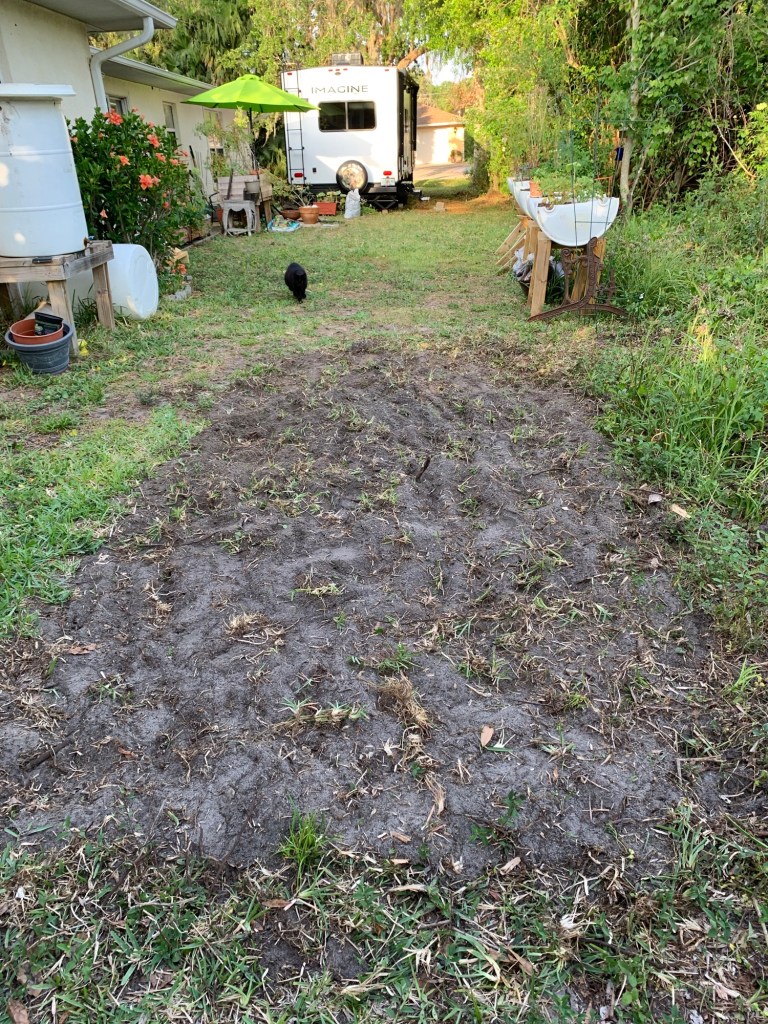
garden area tilled earth

I have removed a lot of the roots, vines and horrible grass that grows in tendrils. Next I mixed in three bags of compost.

The “dirt” in the ground here is sand. I never saw a single worm, which is typical. I think it will take a lot more compost over the months to create a decent place to grow things. For now, this will have to do. I can amend later with compost from the Hot Frog.

Spreading bags of compost into a freshly dug garden

First I found some boards to set down the center. I remember from my northern gardening that mashing down the earth is not a good thing. If I can remember to stay on the boards, the remainder of the dirt should stay loose for growing.

Next it was time to plan the layout for planting. I had to think about which things would be long vines (watermelon and sweet potato) and those would be in a place where the vines could go out into the grass.

Okra gets tall, I guess… have never eaten it or grown it … so I planted those seeds along the edge. I only planted it because it’s a southern thing and should grow well.

I saved a spot for the sweet potatoes yet to come, and will fill in the rest with some pepper plants and more eggplant.

My basic sketch for planting is subject to change.
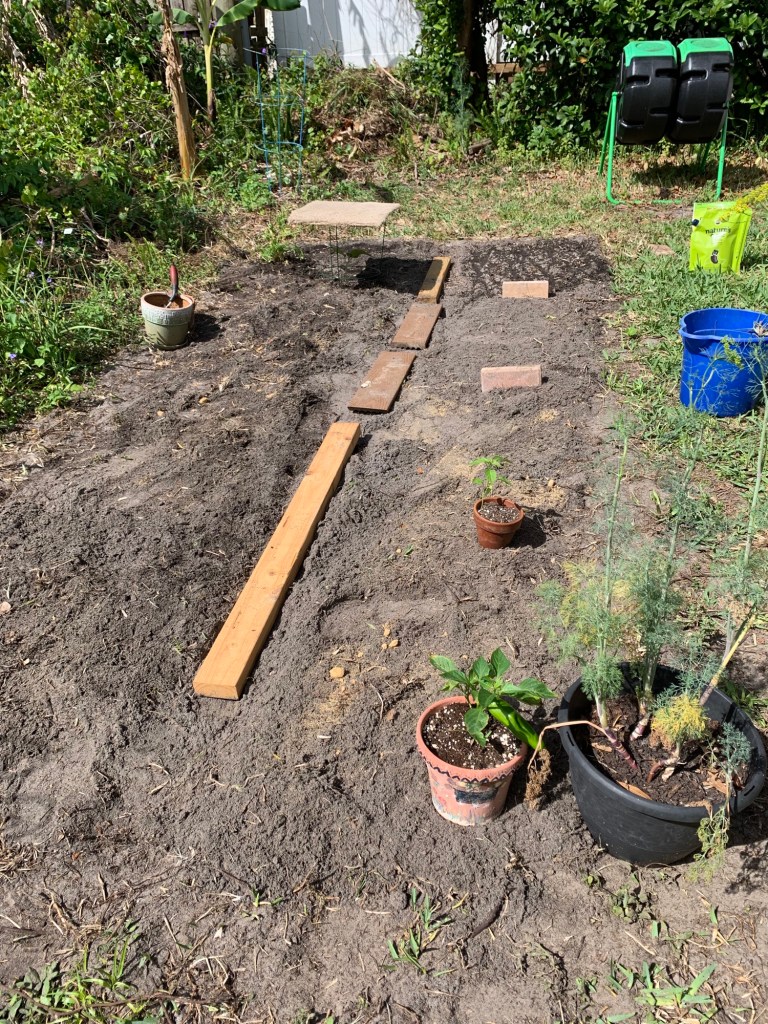
backyard garden planting

I managed to get some watermelon seeds and okra seeds planted. Then an eggplant, which I covered with a piece of rug to give it shade.

It was so hot by then, that I took a break inside and waited for the clouds. The forecast called for rain later, but all I got was tons of hot sun!

Some dill plants went in the corners, along with a parsley plant. Last of all, I threw in some saved Marigold seeds.
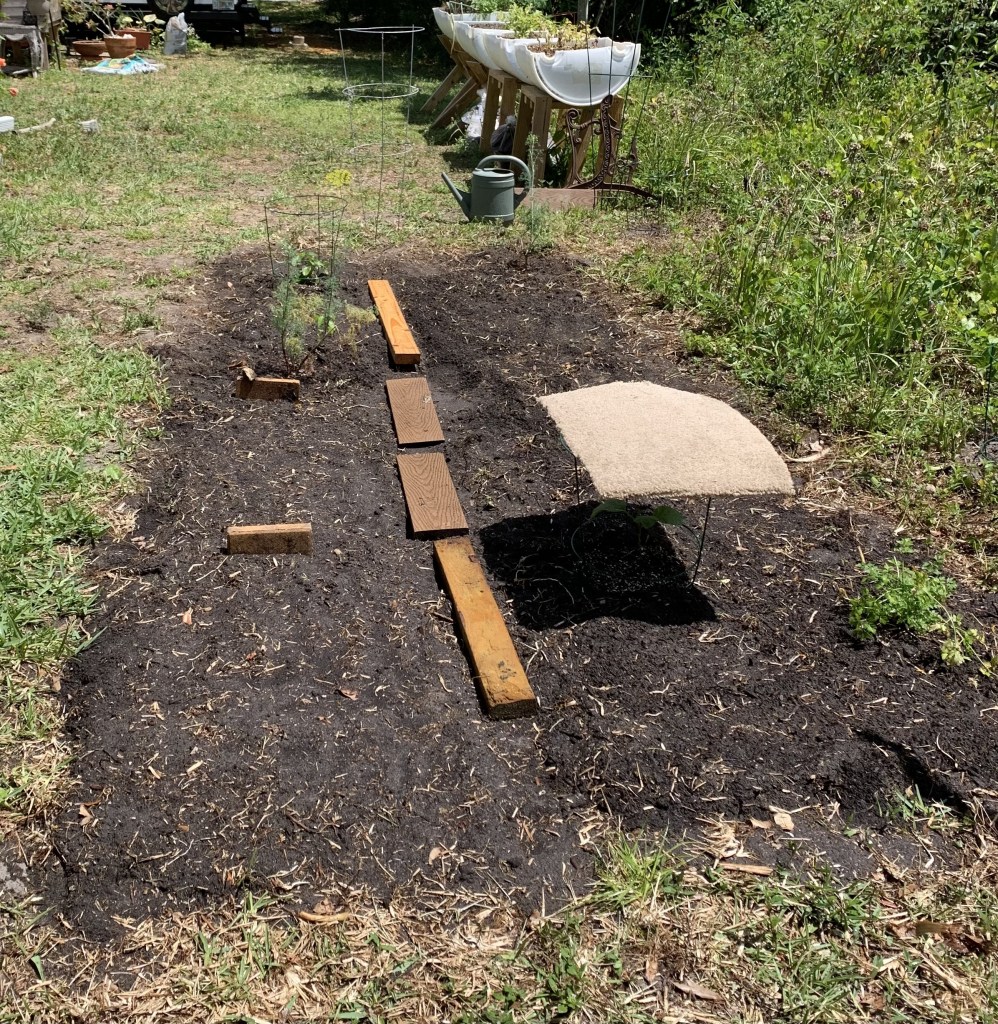
Backyard garden planted with seeds, dill, parsley, peppers and eggplant

As soon as I took the rug covering off the eggplant, it began to wilt. They really cannot take the midday sun. I quickly watered the whole garden (each plant got it’s own soaking as I planted it) and put the rug back.

Already I am thinking of moving the okra to in front of the eggplant to give it some shade. I can’t run outside every day to cover it because of the sun. (Side note here – the okra was popping up out of the dirt on day 4!). The seed packet says this okra will be 4 -5 feet tall!

okra seeds sprouting
Okra – tomato cage animal deterrent

Although my summer garden may not do well due to the heat, this section of yard will remain a garden bed. When winter comes I can plant lettuce and kale. Also, I will continue to look for hardy, Florida crops to plant.

Bought My Seeds From Urban Harvest

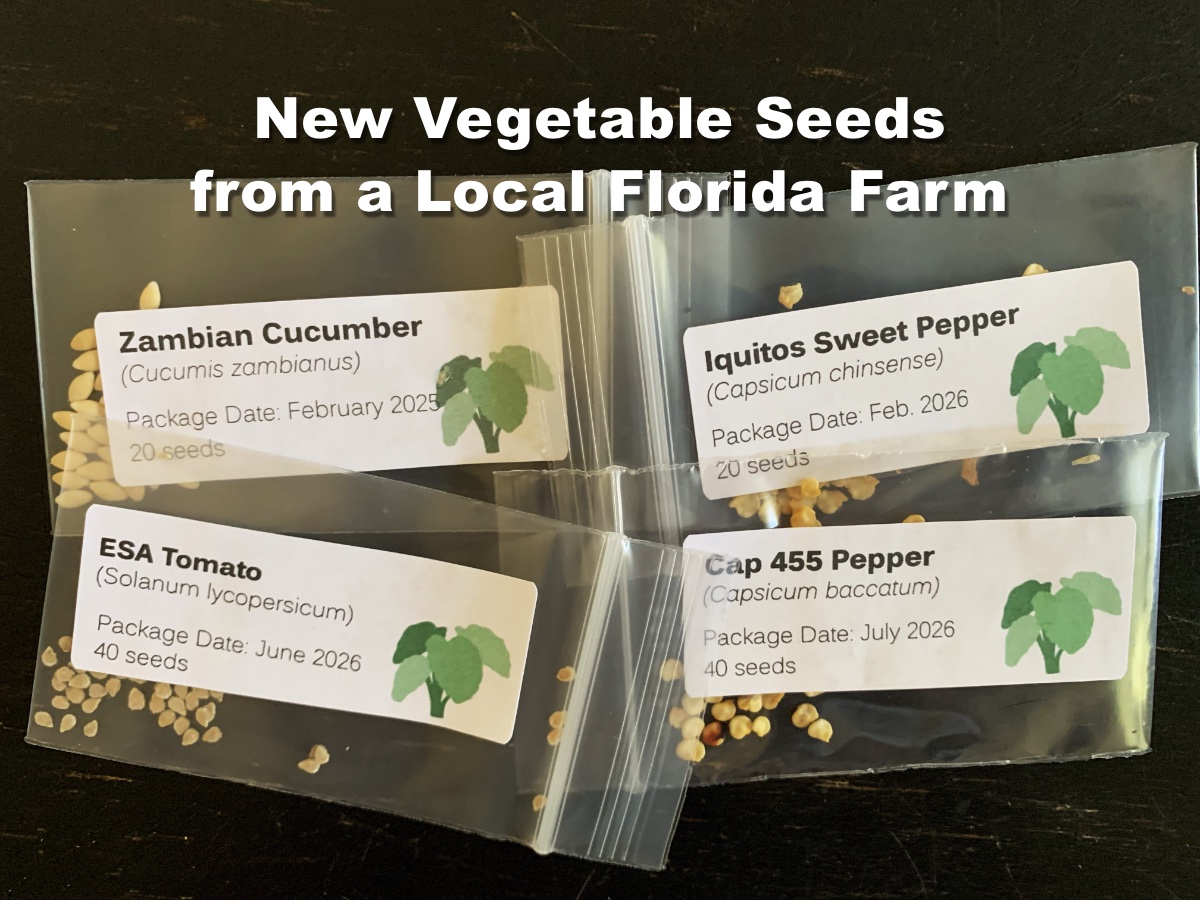
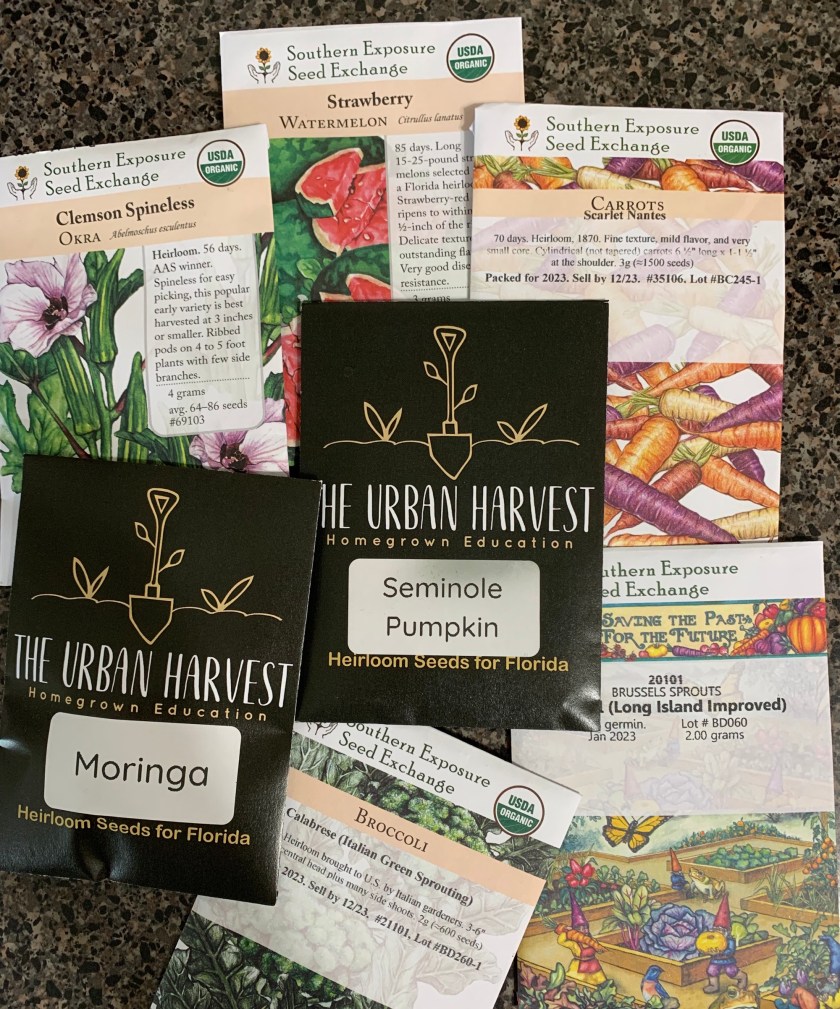
I found this wonderful gardener online who has a YouTube channel called: The Urban Harvest – Homegrown Education. She lives on the west coast of central Florida and has lots of videos about growing things that actually will grow here in Florida! Immediately, I bought some of her seed packets.
The Urban Harvest website

seed packets from Urban Harvest
Seeds from Urban Harvest

I bought some organic Coconut Coir blocks and have added seeds and other things to the pots. I’ve never used the stuff before and I will compare to planting in dirt.

I’m getting ready to post this on April 15th and noticed this AM that one of my pumpkin seeds has sprouted! More about this unusual, southern Seminole pumpkin to come.
More Gardening Stories on the Blog

Planting Moringa Tree Seeds

I’m getting to know about the Moringa tree, which is also known as the miracle tree because of its many health benefits. It should thrive in my yard and I just planted some seeds.

Just a few days ago I knew nothing about the Moringa Tree. After watching some videos about planting for central Florida, I decided the Moringa had to be added to my yard.

I’ve been discouraged by trying to grow vegetables here in Florida, and finally I realized that I need to plant differently. The Moringa contains lots of good healthy stuff and the leaves can be eaten right off the tree. I need it!

During my YouTube search, I came across the Urban Harvest channel. The woman in charge – Elise Pickett – lives on the west coast of Florida and has turned her yard into a beautiful food forest. (See the link to her channel below).

One of the plants she raved about was the Moringa tree. I can’t find that video right now because she has soooo many… and I still need to watch most of them. I’m in zone 9B and my research finds that the Moringa can grow in zones 8-10.

Moringa tree seeds
Seven Moringa seeds came in the packet

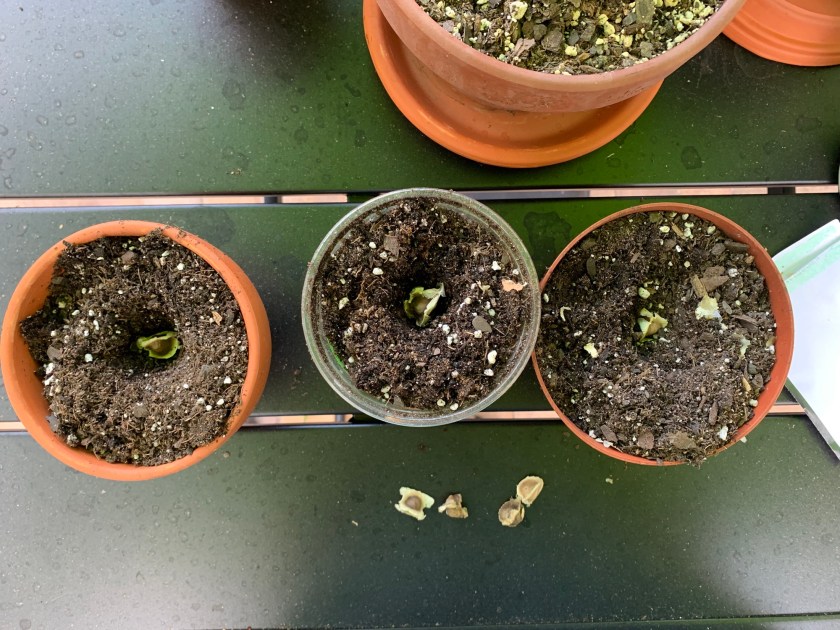
I planted them as is into three pots – one per pot. I also planted two seeds right in the ground, out in the side of the yard.

Later, when I came in to cool off, I found this video about how to plant the seeds. The gentleman suggests taking the outer layer off… Oh well, I’ll see what happens.

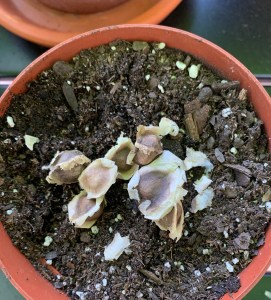
Mooring tree seeds
Planting Moringa seeds

The first Moringa seedling appeared ten days after planting. None of the others have sprouted yet. I also put one seed into the new coconut coir to see if it germinates faster.

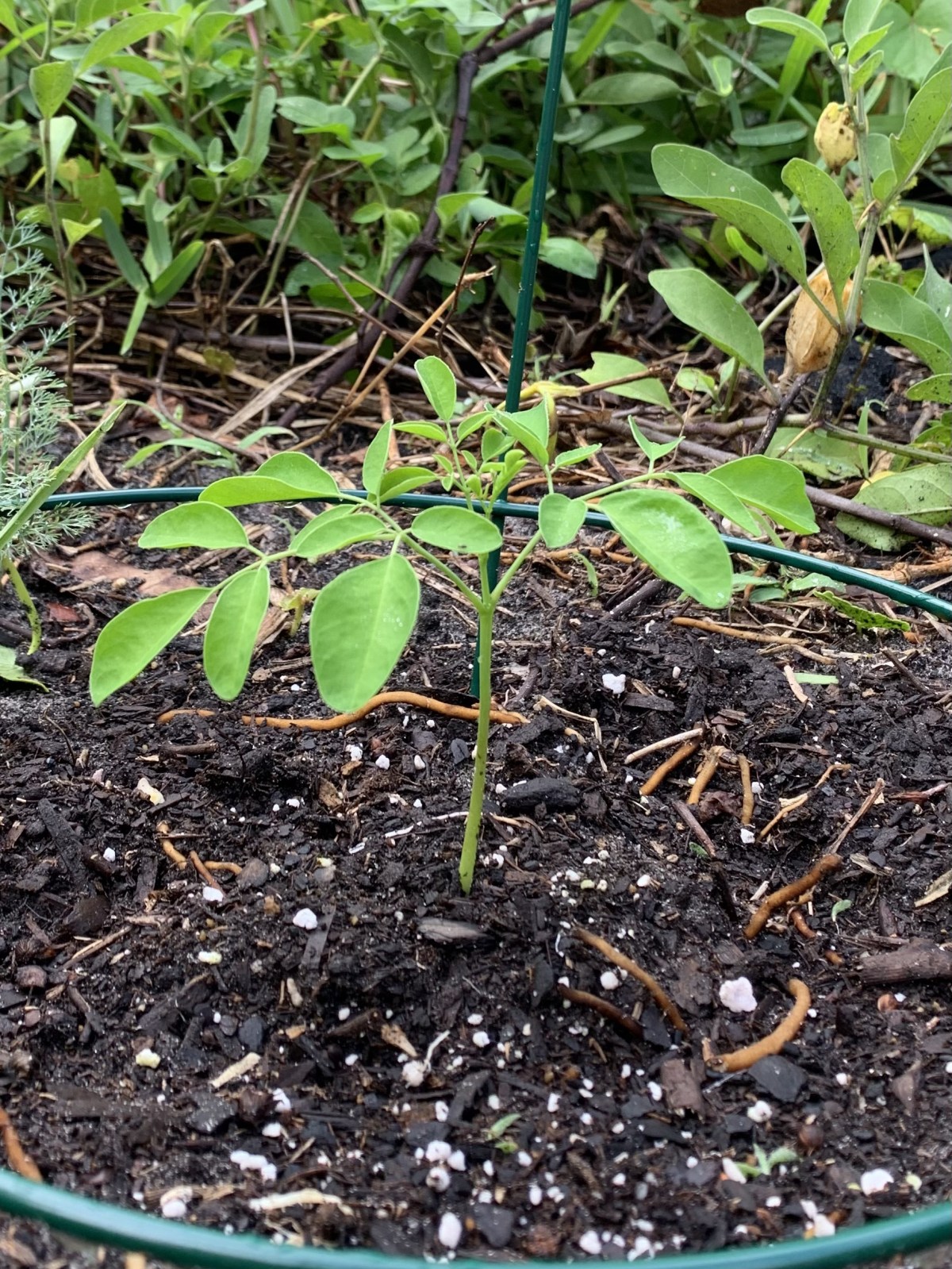
Moringa tree seedling
Moringa seedling

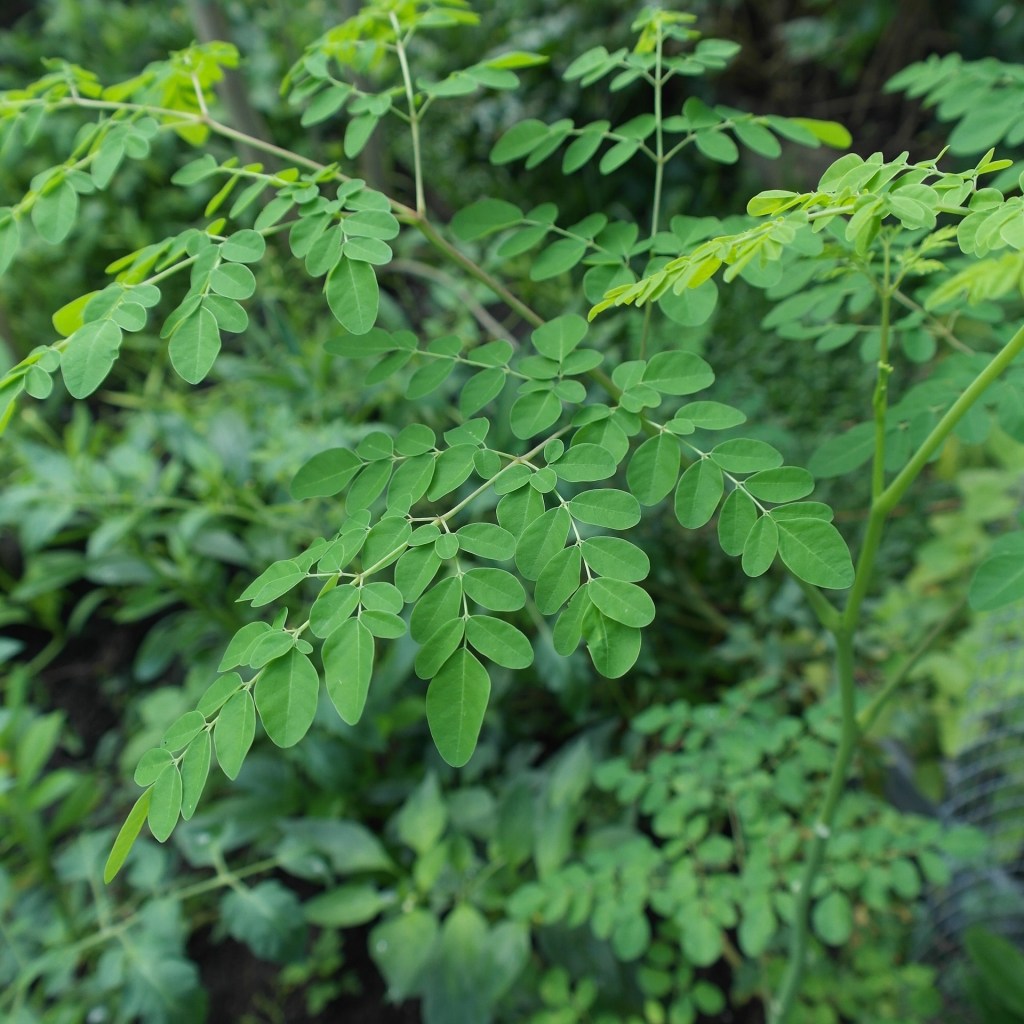
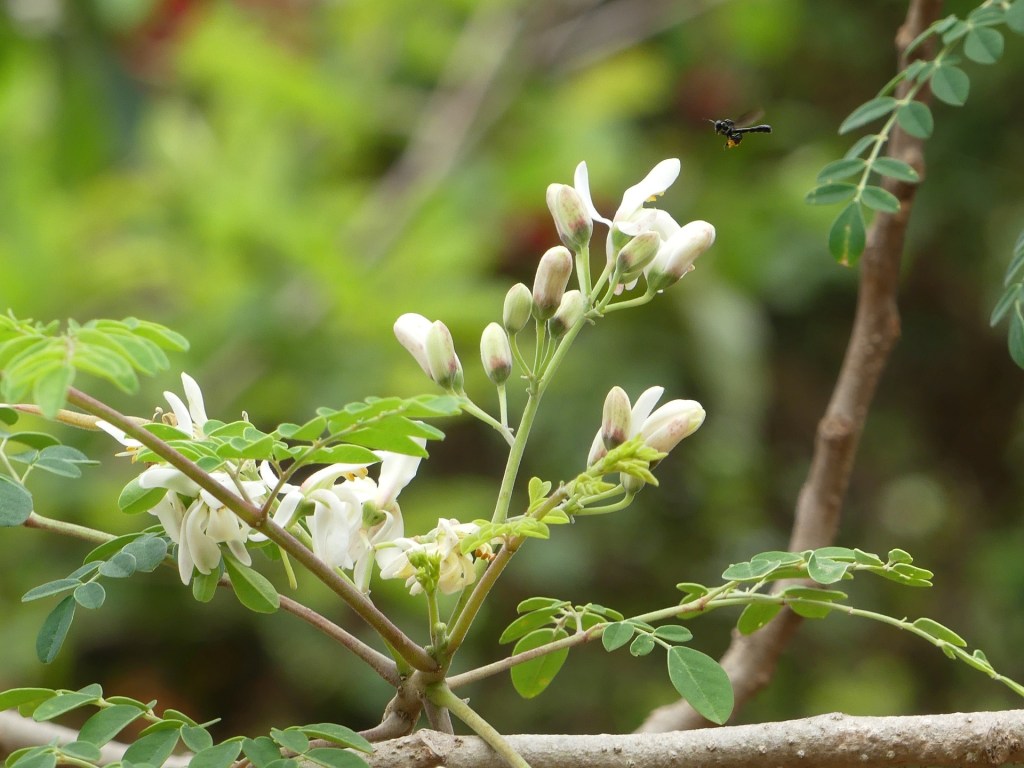
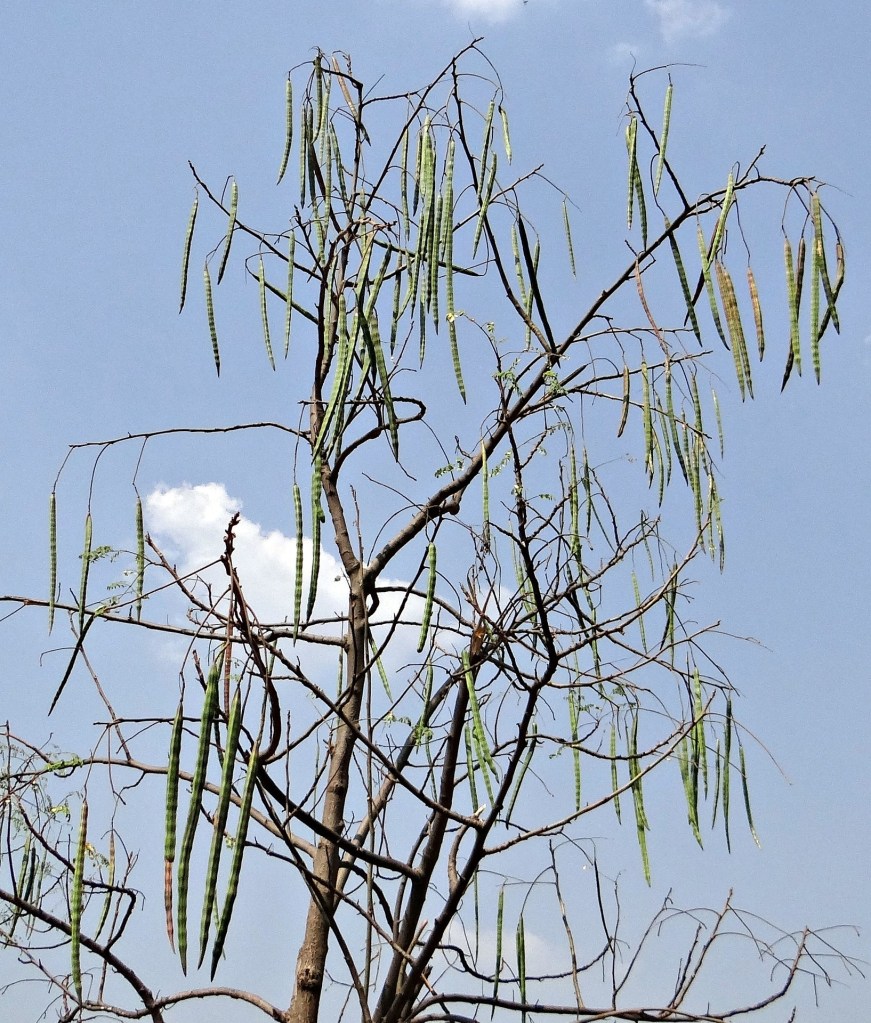
Moringa tree images from Pixabay

It is also called the drumstick tree.

Visit the Urban Harvest YouTube site here, with advice for a Florida gardener.

I ordered some seed packets from the Urban Harvest and got the seeds within a couple of days. It is April, which is leading us into the hotter months here. Not much likes to grow during summer, so I may wait to plant most of my seeds until Fall.

I’m off to plant my garden! Blog post to come.
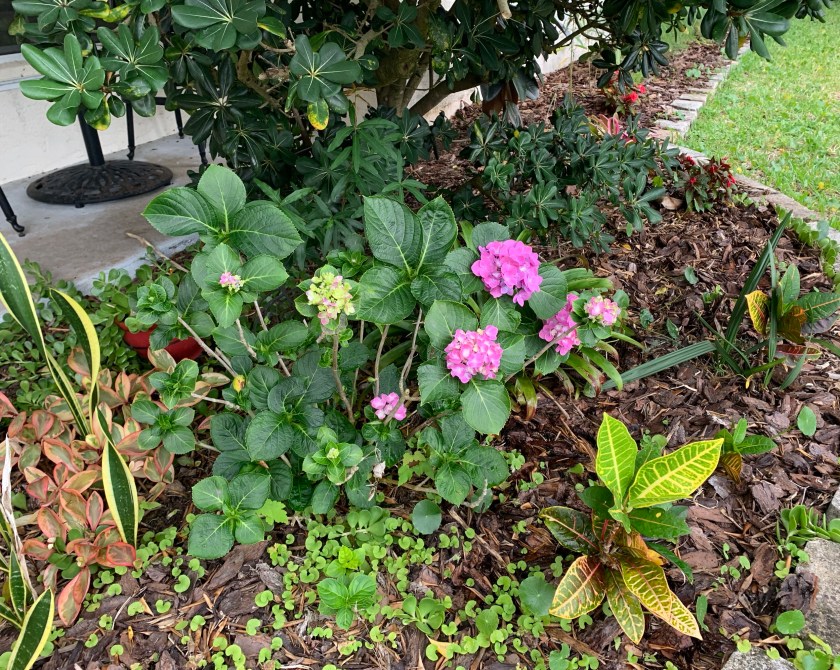
Pink Hydrangeas Are Blooming in June

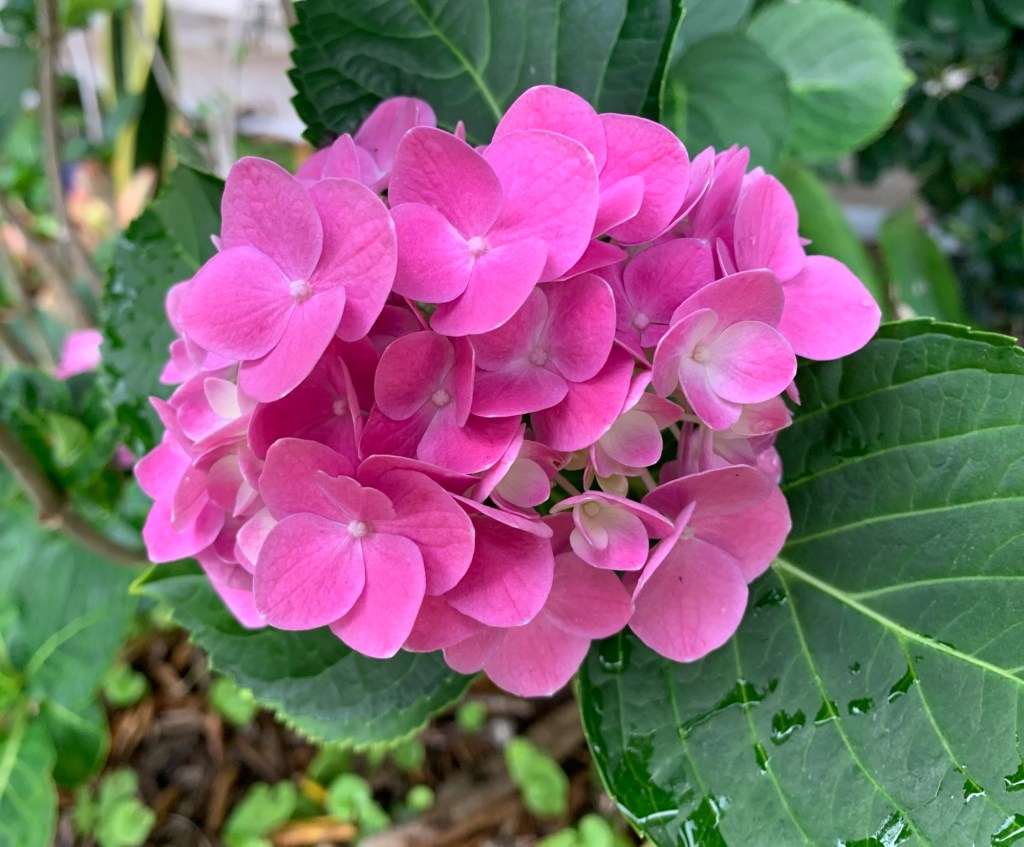
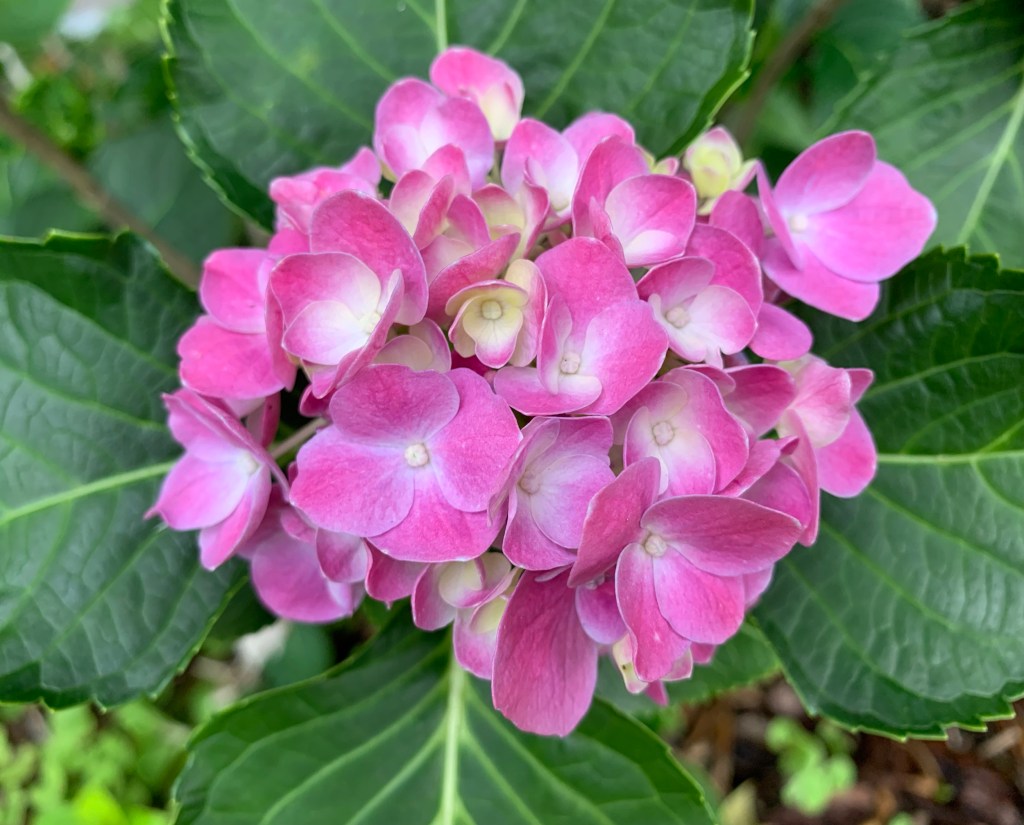
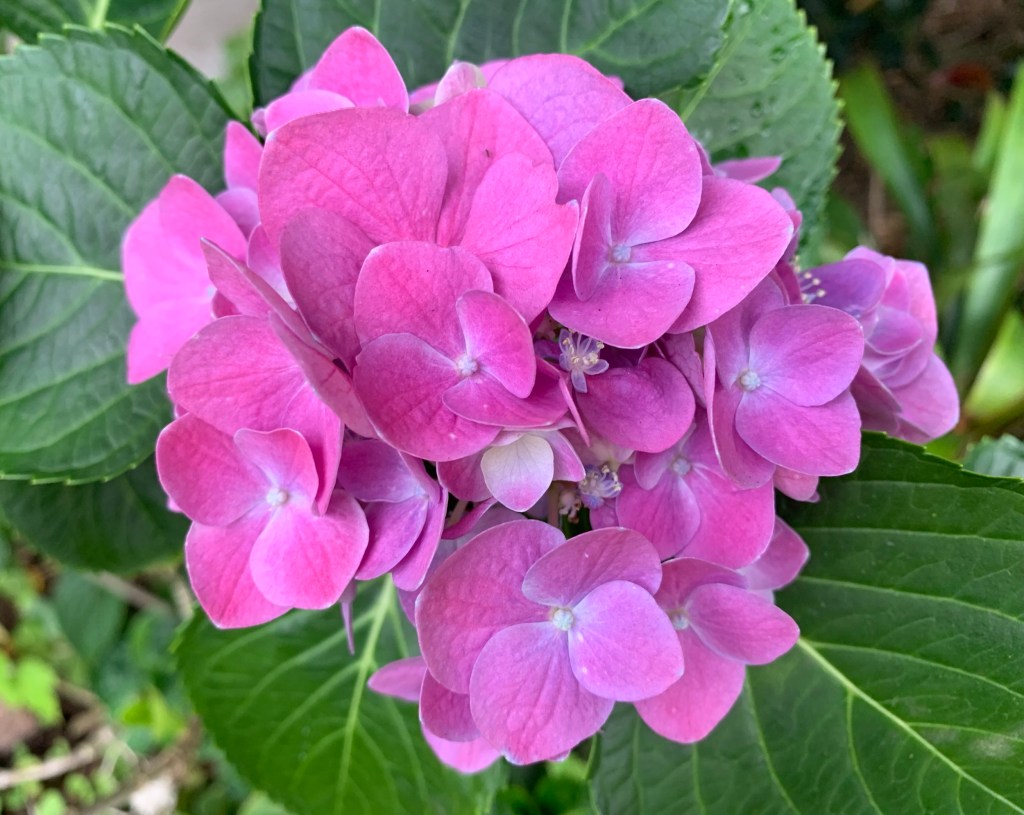
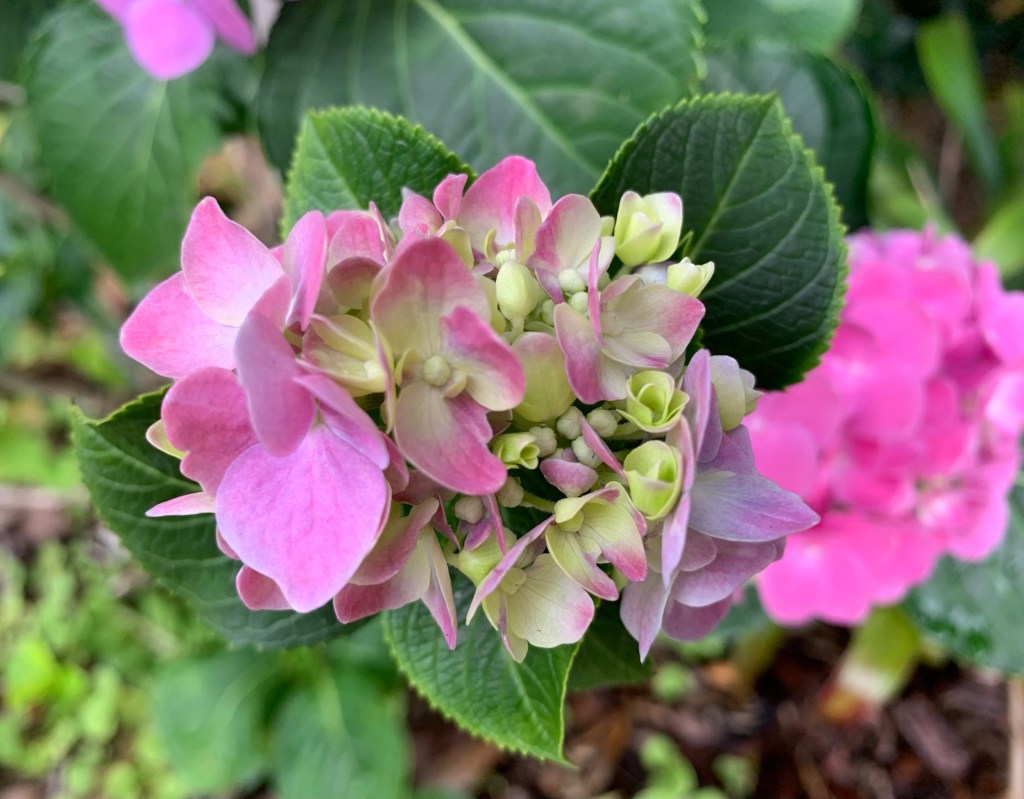
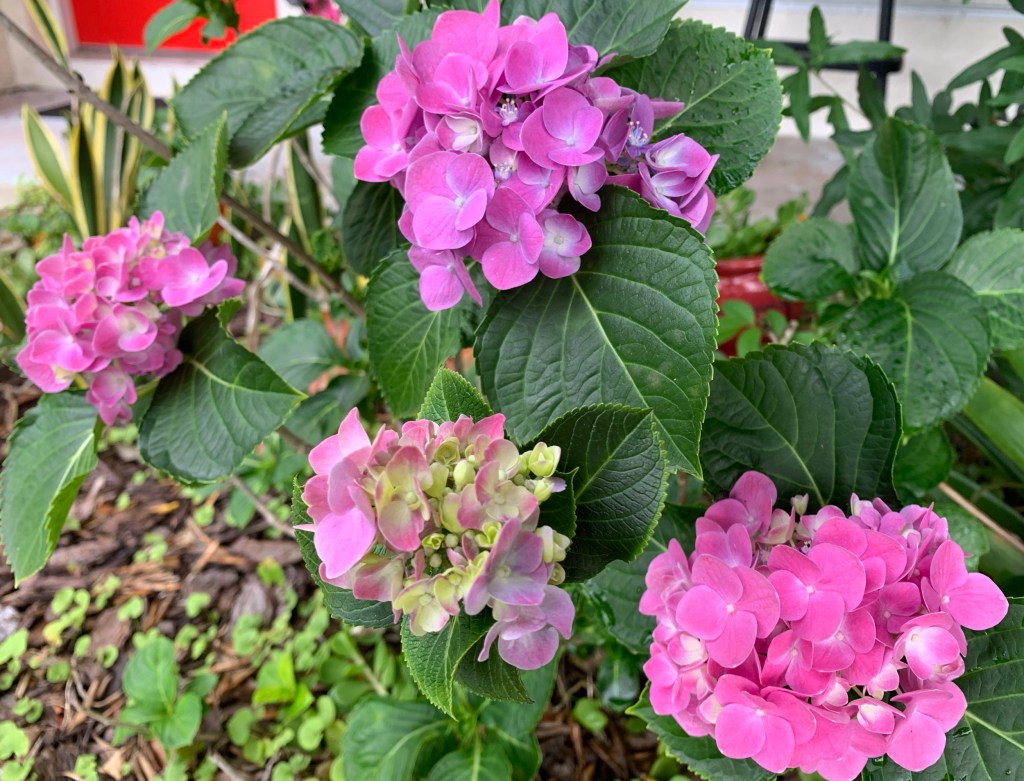
The hydrangea shrub in my Florida yard is doing well and blooming with pink flowers.

The hydrangea I planted in my Florida garden a few years ago is now blooming once again. Soil in Florida tends to be alkaline so the flowers are pink. When I first bought the plant the flowers were blue, no doubt due to amendments to the soil. Everyone wants blue flowering hydrangeas.

But when this hydrangea plant was left to grow in the sandy soil in my southern yard, the flowers became pink. I don’t care. Pink is pretty too.

The key to success when growing hydrangeas in the hot and humid Florida climate is to give the plant shade. All the leaves fall off for winter but the greenery comes back along the stems in Spring. Don’t cut the plant back! The first year I did cut it, but it’s not necessary.

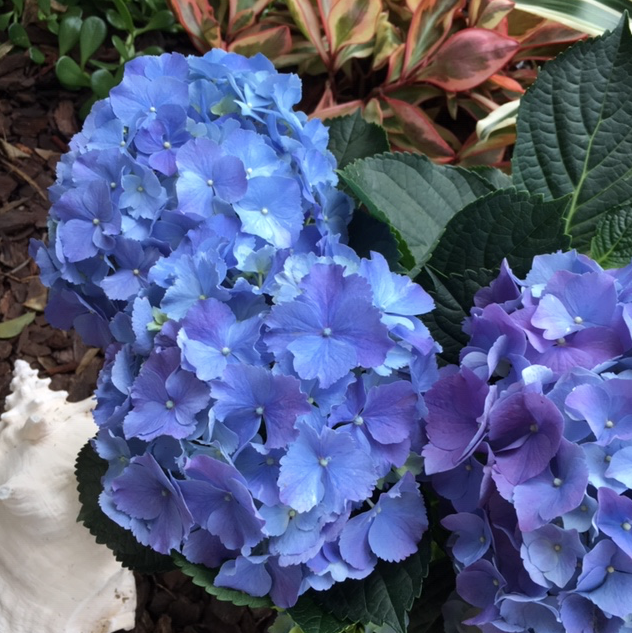
2017 Potted and blue

Here is the hydrangea plant when I first bought it. It was probably grown in a greenhouse and given something acidic for the flowers to bloom blue.

Blue hydrangea
2017

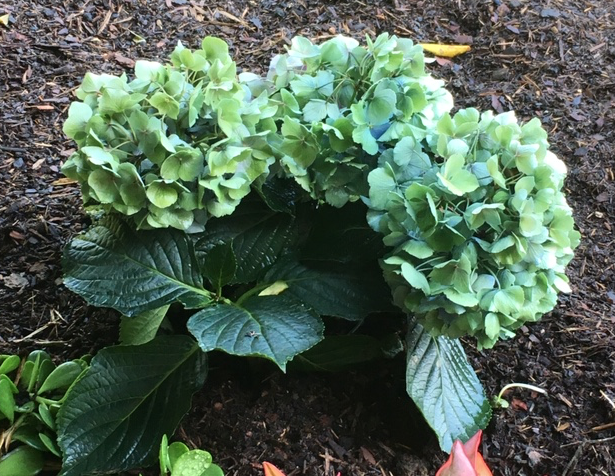
The blue flowers faded to green, just like my New Hampshire blue flowers!

hydrangea
My blue hydrangea flowers have faded to green

Each year the leaves fall off

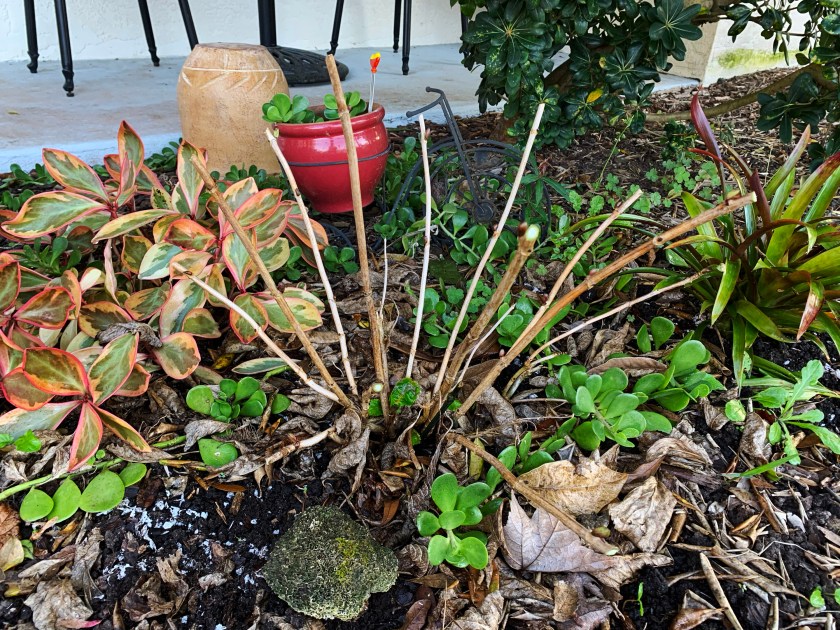
For the winter months in Florida, the plant is nothing but stems. Once the weather gets permanently warm again – around February – the stems will begin to show green growth.

hydrangea February garden Florida stems
February – hydrangea is stems only!

2022 June – Pink flowers

The flowers will only be blue if the soil is acidic. In Florida, azaleas, camellias, gardenias, and crepe myrtle all like acidic soil. So planting hydrangeas near these plants means they can all be amended with bone meal, or something to naturally turn the soil acidic. Read about more ways to turn soil acidic.

It seems that each year this plant has more, and larger, flowers. I try to give it plenty of water and it is never in direct sunlight thanks to the fact that a large shrub covers it.

Growing hydrangeas in Florida
June 2022

July and the Blooms Are Fading

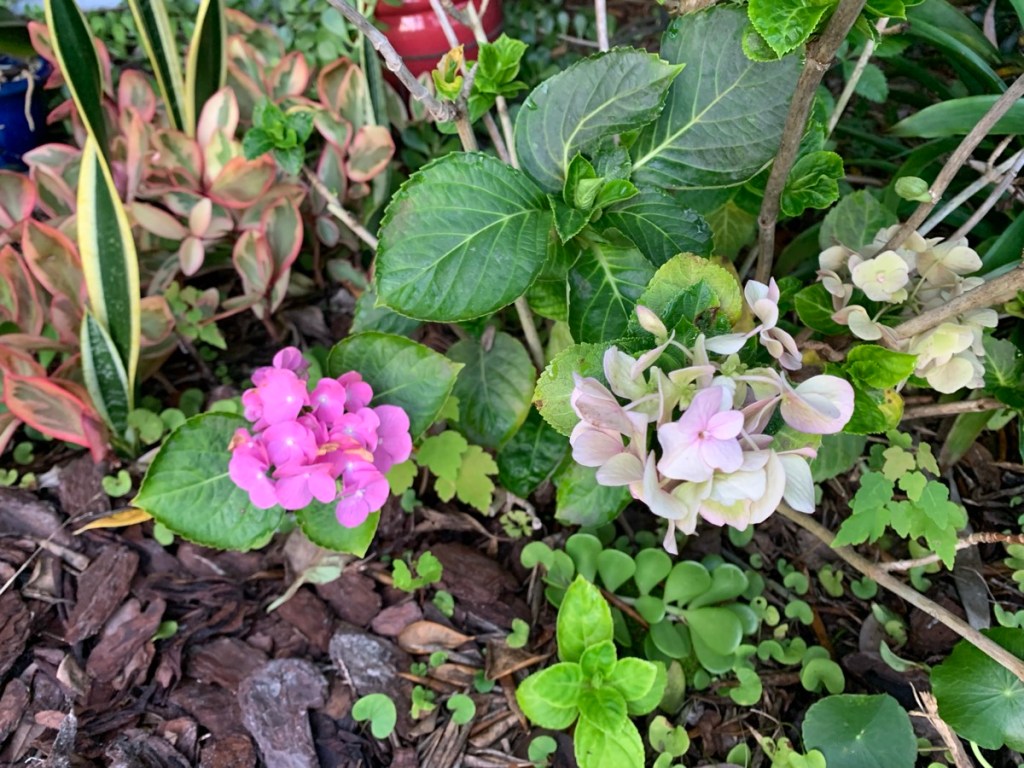
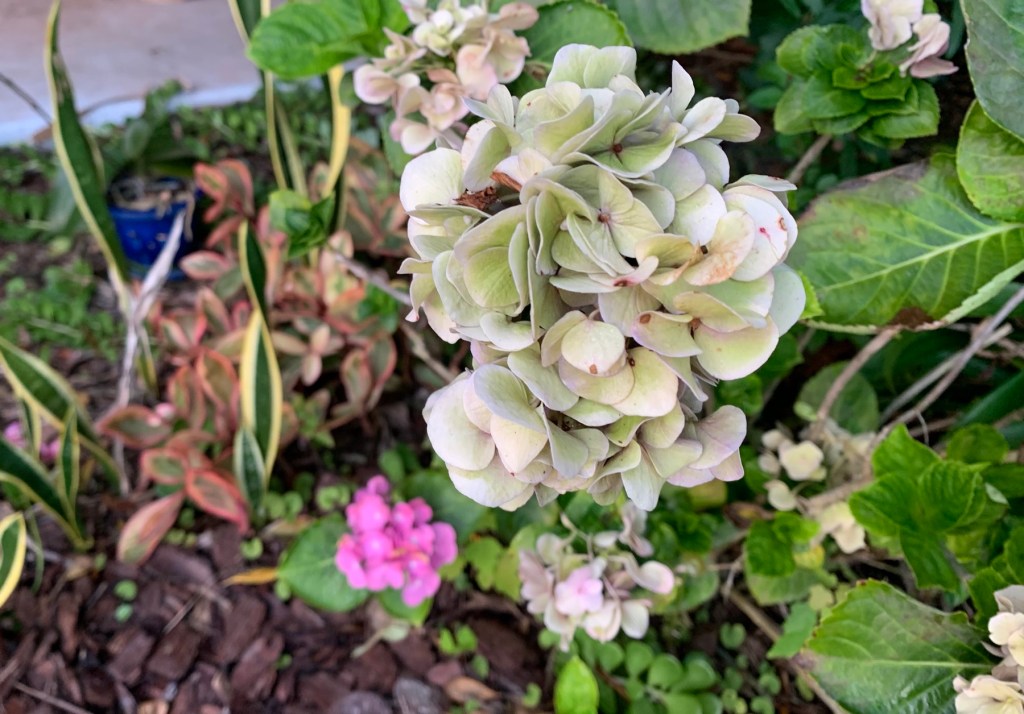
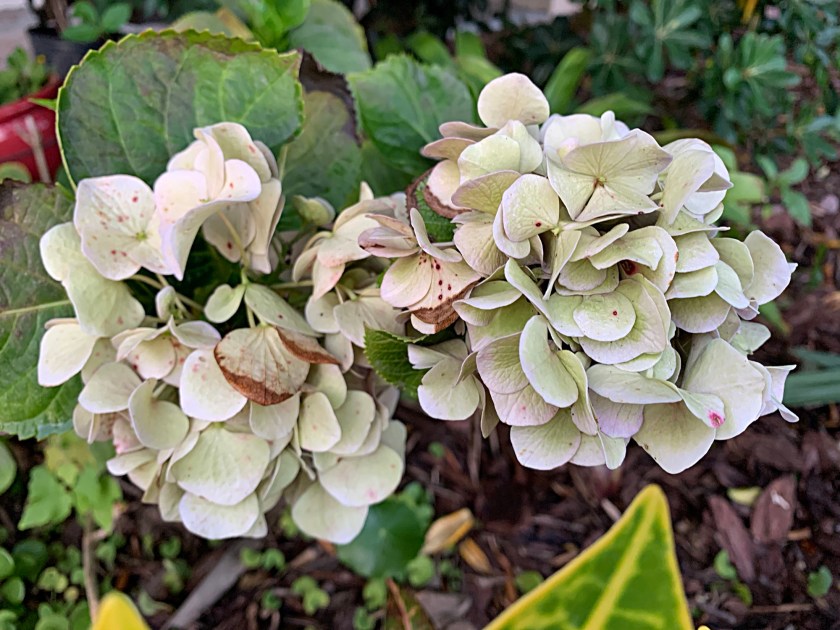
I was sick with Covid for nearly a month and only recently have been back out in my Florida yard. Now my pink hydrangea flowers are a very light greenish color. One little pink bloom hangs on.

faded hydrangea flowers in Florida
Hydrangeas drying on the stem

Please Keep Reading the Blog

End of Summer Garden Clean Up

It is the beginning of September and my end of summer garden clean up is underway. I happily pulled up all the Seminole pumpkin vines. I managed to haul in my huge harvest (not) of three little pumpkins. Two of them have holes from something trying to bore in. I’m so over the vines that…

Keep reading

My First Moringa Tree Drumstick Bean

Two Moringa trees are growing in my backyard. I’m in Central Florida and the trees grow great all summer, but slow down the remainder of the year. Hurricanes, or strong wind, will knock these trees over. I had to cut mine last year because it fell over the garden. New stalks have grown and I…

Keep reading

Growing Dill and Fennel in a Florida Garden

Growing dill and fennel in a Florida yard.

I’ve combined these two herbs in this post because one of them I can’t seem to grow. Because dill doesn’t like my yard, I’ve grown fennel in it’s place.

The two herbs are not interchangeable for cooking and seasoning, as they are both different, but as far as gardening goes, they are similar. They are both airy and lacy and have big yellow, open flowers that attract beneficials.

Dill

I first grew dill in my New Hampshire yard. I absolutely loved the flowers that came at the end of the season, which attracted good bugs. Here in Florida I have tried numerous times to grow it without success. This potted dill you see here was grown from seeds.

Aside from the fact that the raccoons dug around in the pot one night, it looks pretty good.

Dill plant

Fennel

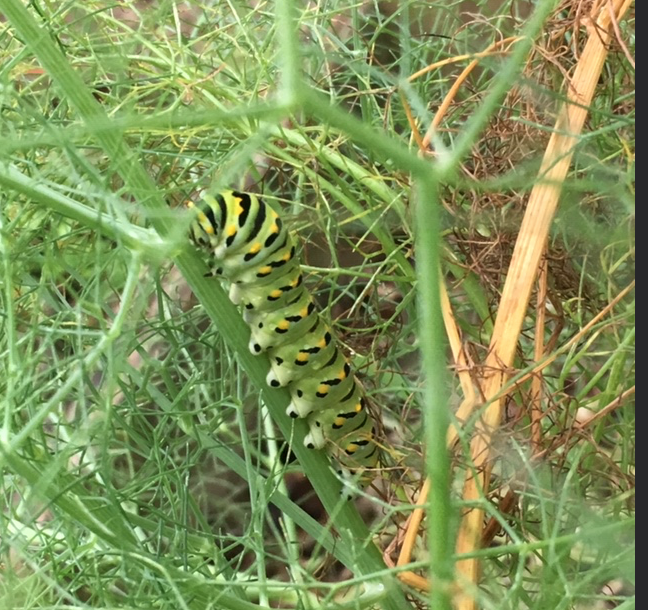
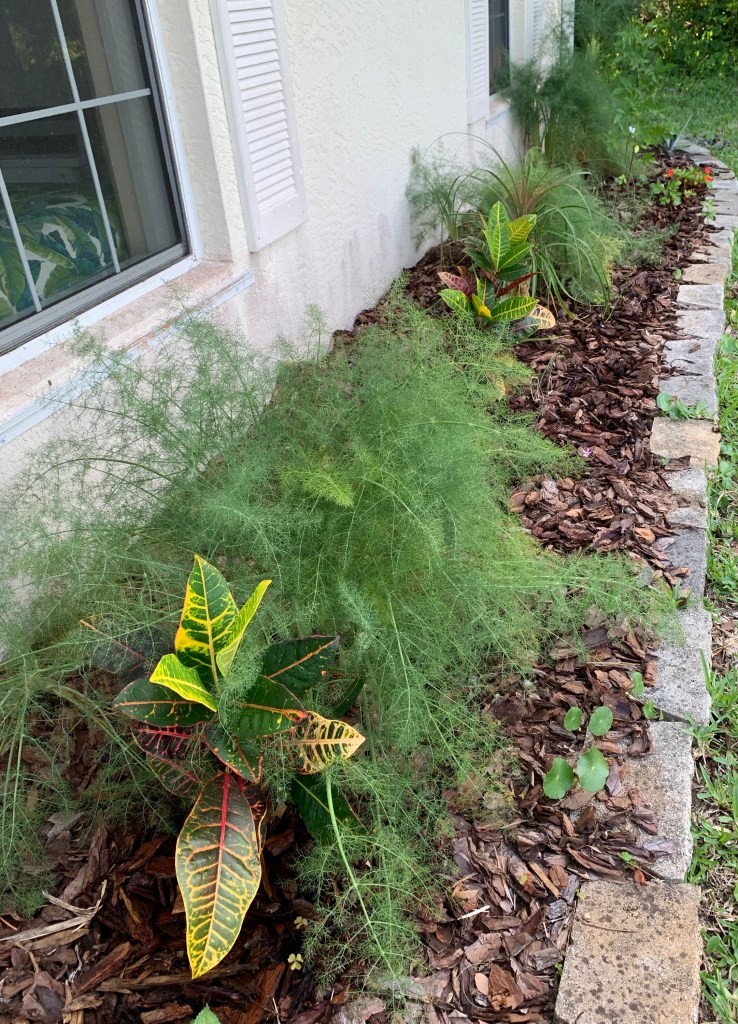
Fennel on the other hand grows all on it’s own. It is considered a perennial. It has successfully re-seeded itself in my front yard and I’ve seen caterpillars on it in past years. And often the stalks will last into the following year. Here in Florida that happens with many vegetables.

Unfortunately the brown lizards ate all the worms, so I didn’t see any turn into Swallowtail butterflies.

Swallowtail worm on fennel
Parsley worm which will become a black swallowtail butterfly

Saving Seeds

Both dill and fennel have seeds that form on the flowers and are very easy to save. Because I don’t have luck with dill, I have photos of fennel seeds only.

fennel plant with seeds
Fennel flowers turning to seeds

Fennel easily grows from seeds. I have some plants that have sprung up along the front of the house. This year I saw no caterpillars on them, but I like to have them just in case a butterfly comes by to lay her eggs.

fennel plants

Florida Native Frogs or Cuban Invaders?

Summer brings an over-abundance of frogs to my yard. I often find them tucked down inside curling pepper leaves or snoozing on top of a growing pepper. They don’t hurt the plants, but the invasive Cuban tree frog can hurt the environment, by killing off our native frogs.

Cuban Tree Frogs?

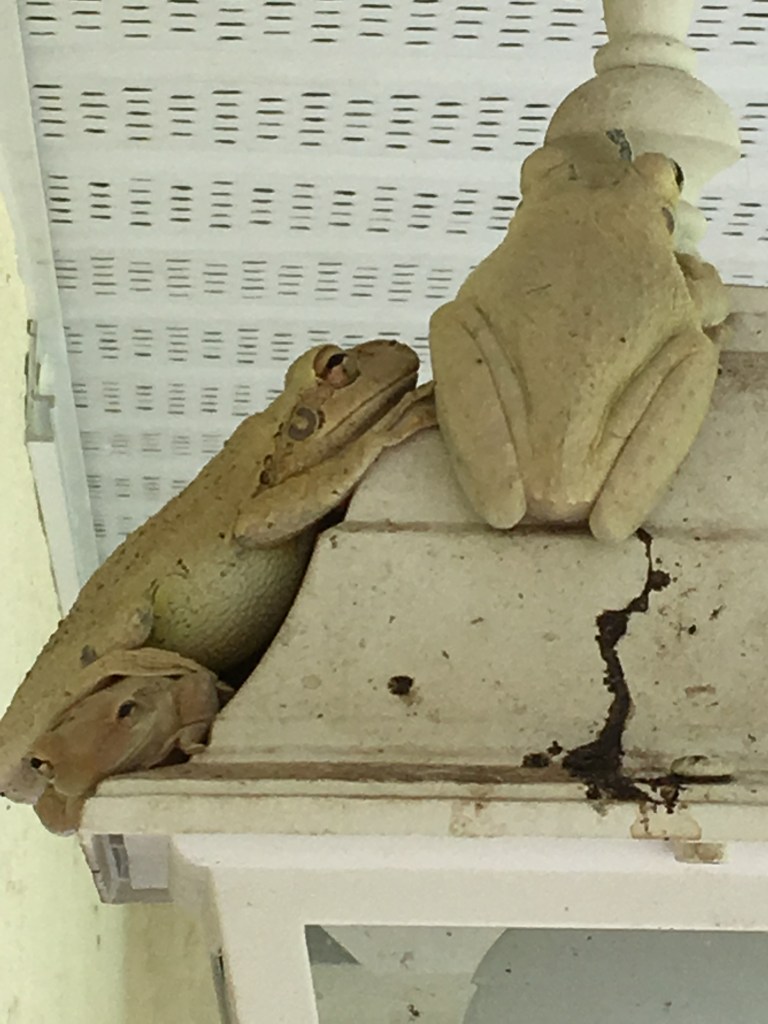
I think these are Cuban tree frogs. I have seen frogs like this inside my house. One day I had one sitting on a plate in my kitchen. When we first moved into our house a huge, whitish frog came out of the tub drain! I’d never let frogs creep me out before, but there was something about these that I never liked.

frogs sleeping the day away
3 Frogs on my front light – one is sitting on another

They are nocturnal and come alive in the evening when they hop all over the windows and door eating bugs.

Identify Your Florida Frogs

This link goes to the page for identifying your Central Florida Frogs. Or, go to this page and select the part of Florida where you live. Click on each frog photo to see more about that species.

They also leave their poop everywhere as you can see by my disgusting looking light. I think this photo shows the Cuban frog. This type of frog will kill and eat the cute green ones – which I never see these days. And the Cuban frog can become quite large. They can also get into the plumbing – they do that by getting onto the roof – and other places and become a big problem.

It is true that these frogs do not appear to be the cute little green frogs that were once everywhere in Florida. You literally could not avoid them and they were simply part of Florida life. Florida life has changed.

Tree frog sleeping on a green pepper
Tree frog napping on my garden pepper – he is what type???

After I had a palm tree cut down in my front yard, the frog population seemed to decline. They may have been living in the tree.

frog on pepper leaf
Frog on pepper leaf

Good Frogs

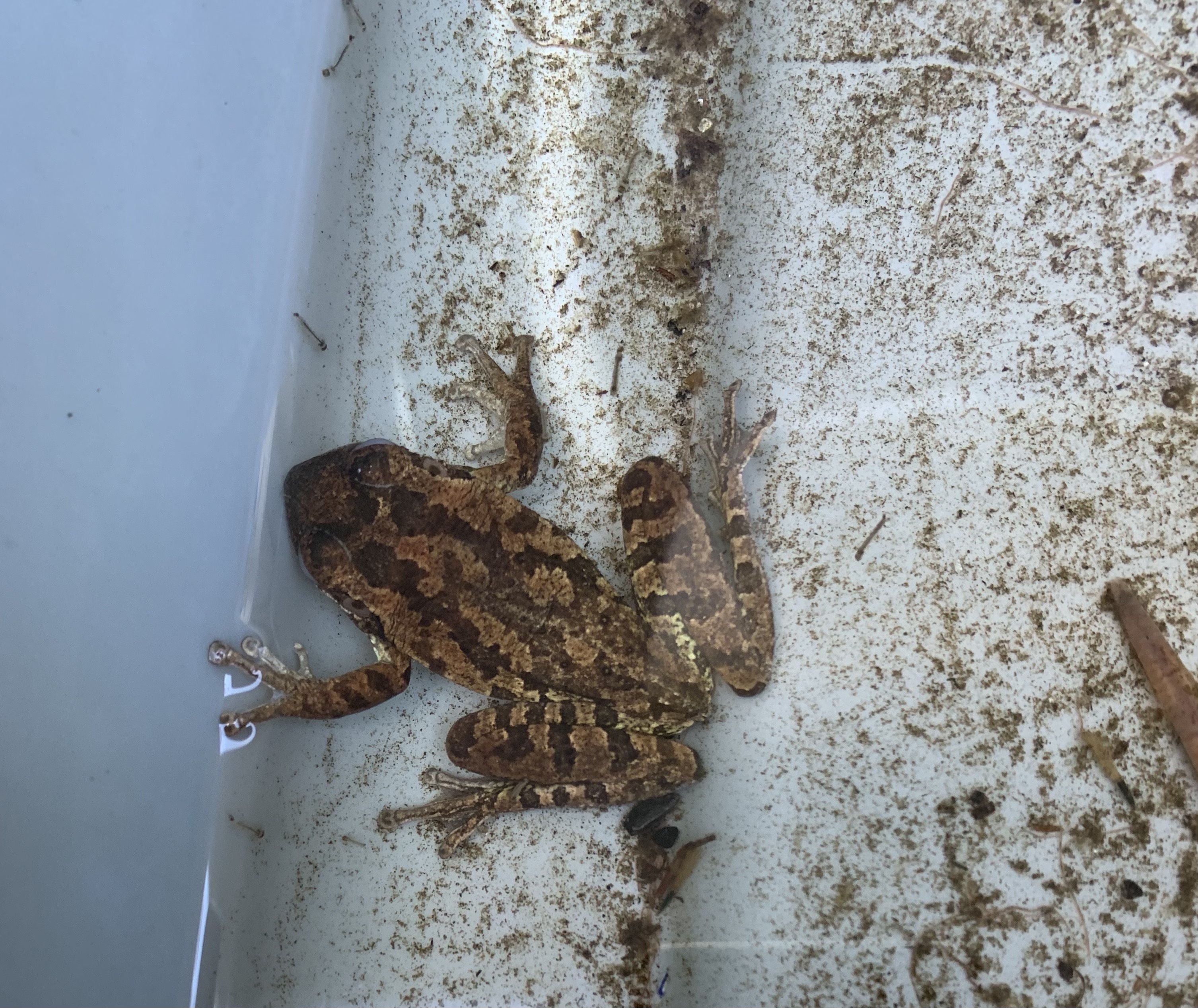
This striped frog is one I came across while cleaning out the yard. I’d had some plastic containers stacked, which had filled with water. I was getting rid of the containers and discovered this frog swimming around with a bunch of tiny creatures – possibly tadpoles..? Once I disturbed his home, he climbed out of the container and disappeared.

I think this frog may be the Florida Chorus frog, but I’m not sure. I hope he makes it. Life is tough for Florida wildlife.

Florida Tree Frogs or Cuban Pests?

Just like the little green lizards, the green Florida tree frog seems to be disappearing. Well, the Cuban tree frog could be the reason. This article at the UF site says to catch the invaders and humanely euthanize them! Put them into the fridge, then the freezer! Yikes.

I would have to know for sure I had the right type of frog. Some of the links below lead to pages with photos of Florida’s various types of frogs.

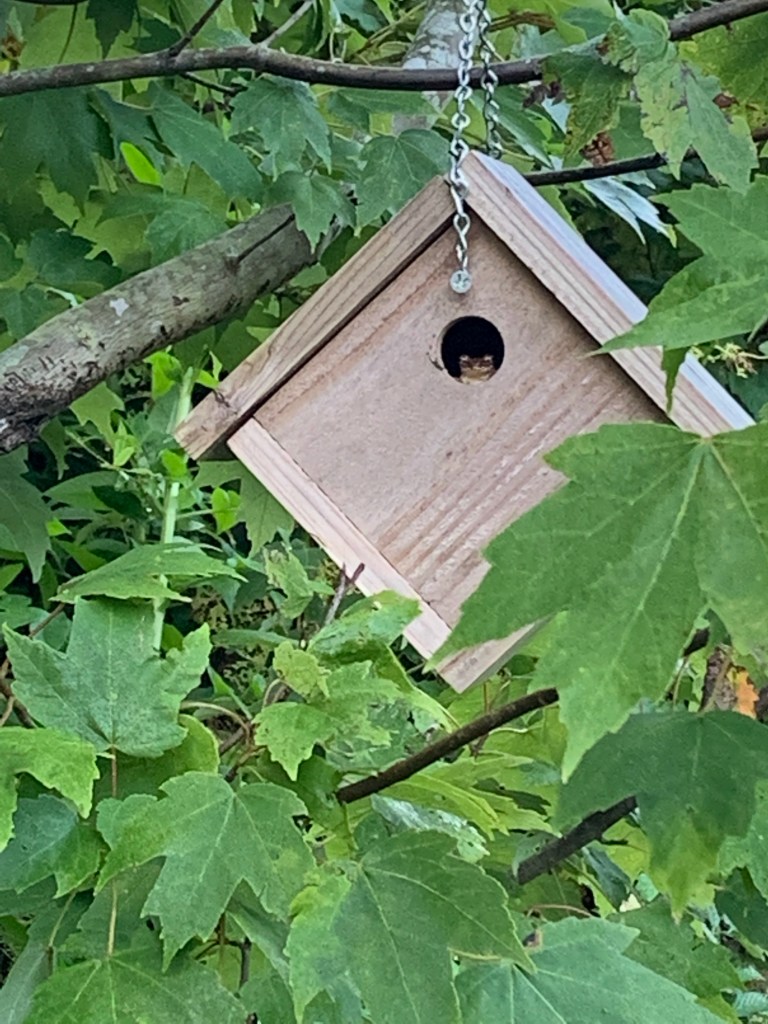
That is not a bird peeking out of my birdhouse. In fact, frogs can take over birdhouses so the birds can’t use them to nest.

Frog inside this birdhouse

One more thing to mention. We have a Ring camera set up in the backyard and witnessed an opossum climb the wall to the light and pull a frog off to eat it! I can’t say which type of frog it was, but I rarely ever see the cute green frogs. I would assume that the opossum ate a Cuban tree frog. Let’s hope so.

More Florida Frog Info Links

All links go to the University of Florida website pages.

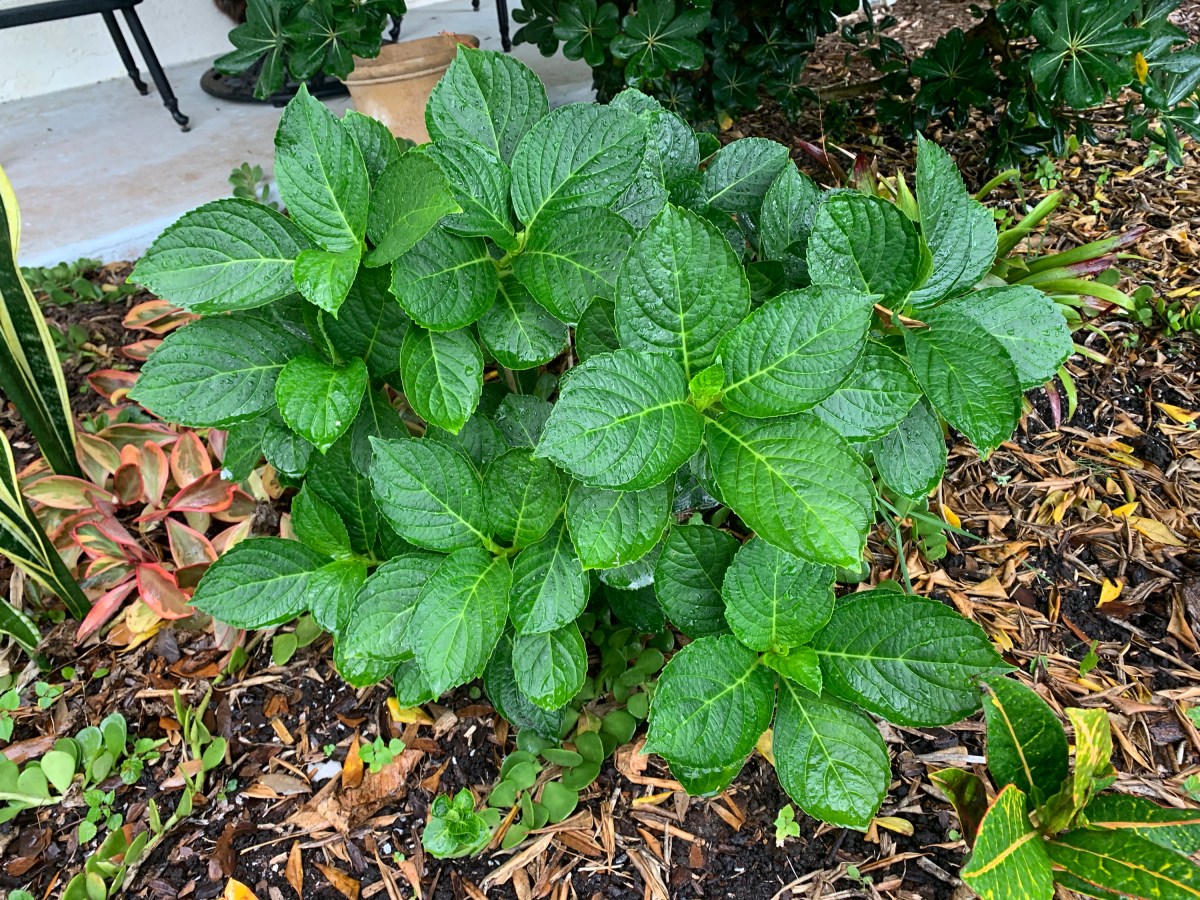
Back to Life, My Florida Hydrangea Looks Good

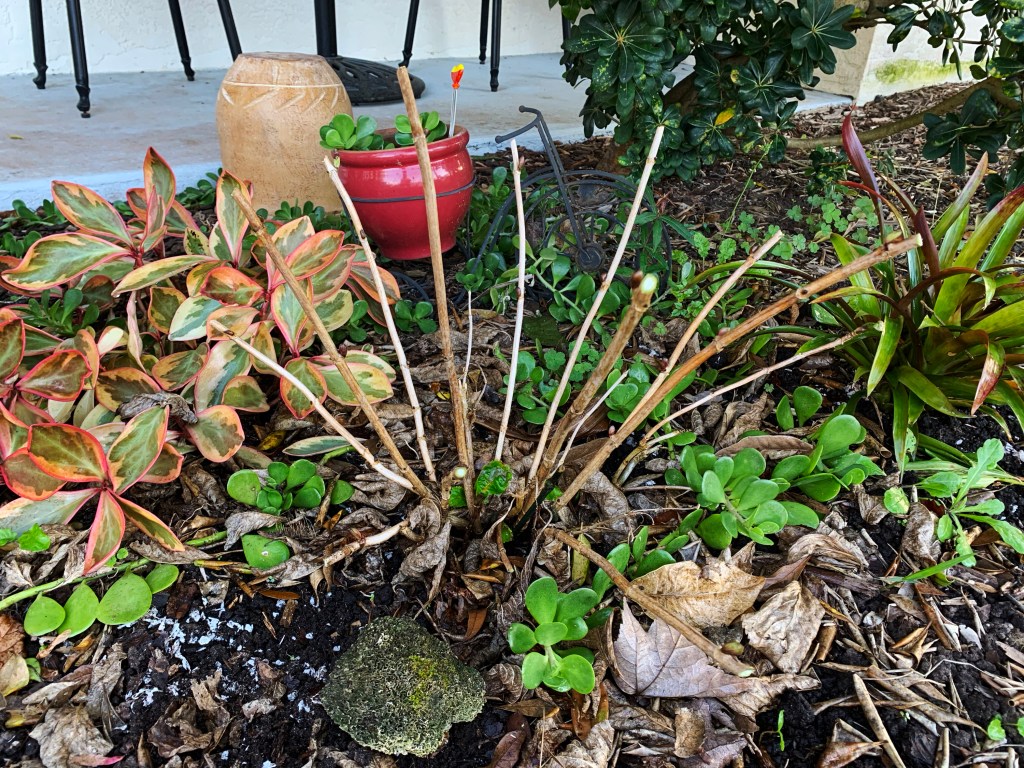
Over winter here in Florida my hydrangea shrub became a bunch of sticks. The stems lost nearly all their leaves.

Hydrangea winter Florida January
January

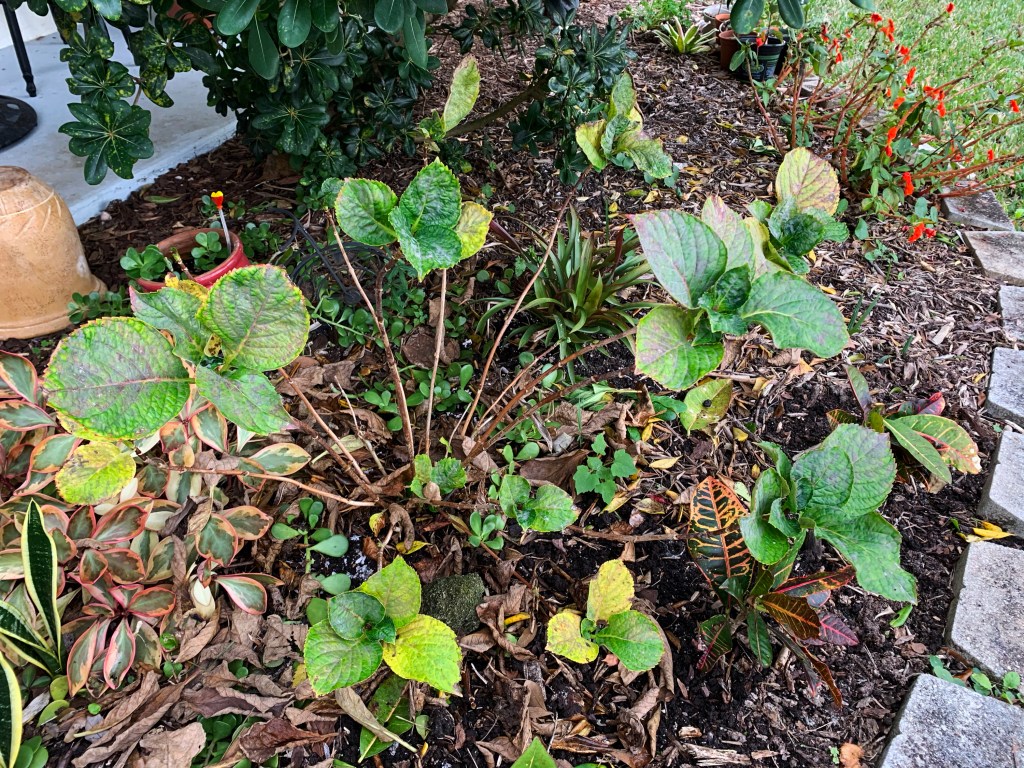
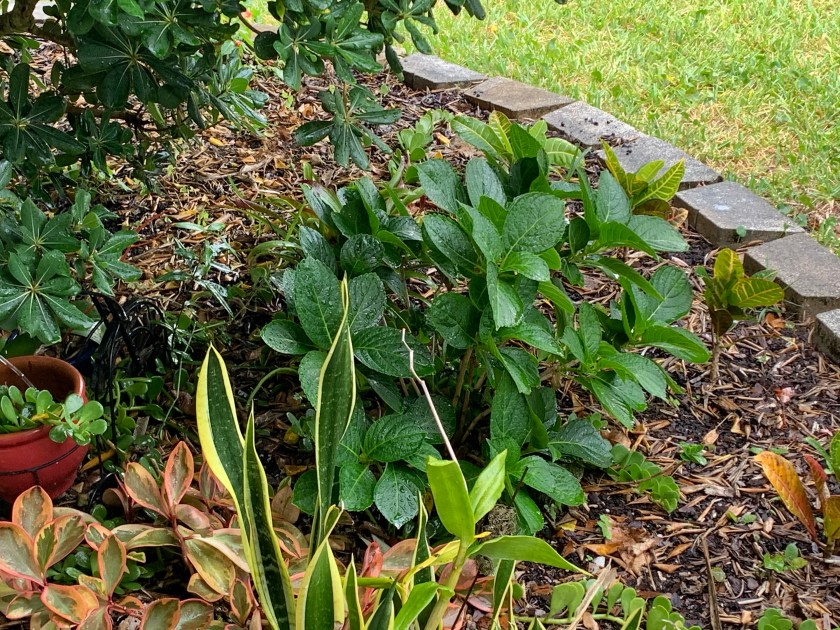
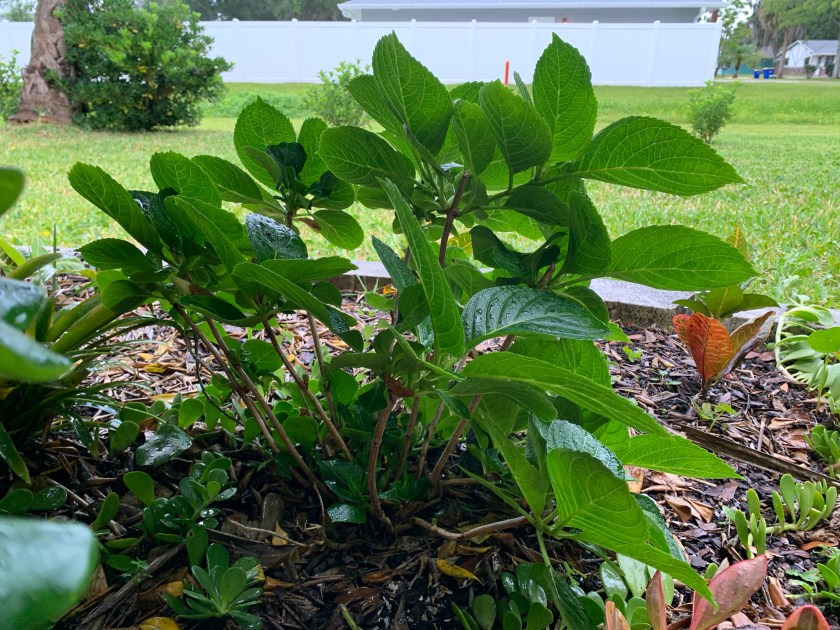
After all danger of frost – around the end of February – I cut the stems back removing the old leaves. There were new leaf bud growths already forming along the stems.

hydrangea February garden Florida stems
February, after cutting back

Attempting to Propagate a New Plant

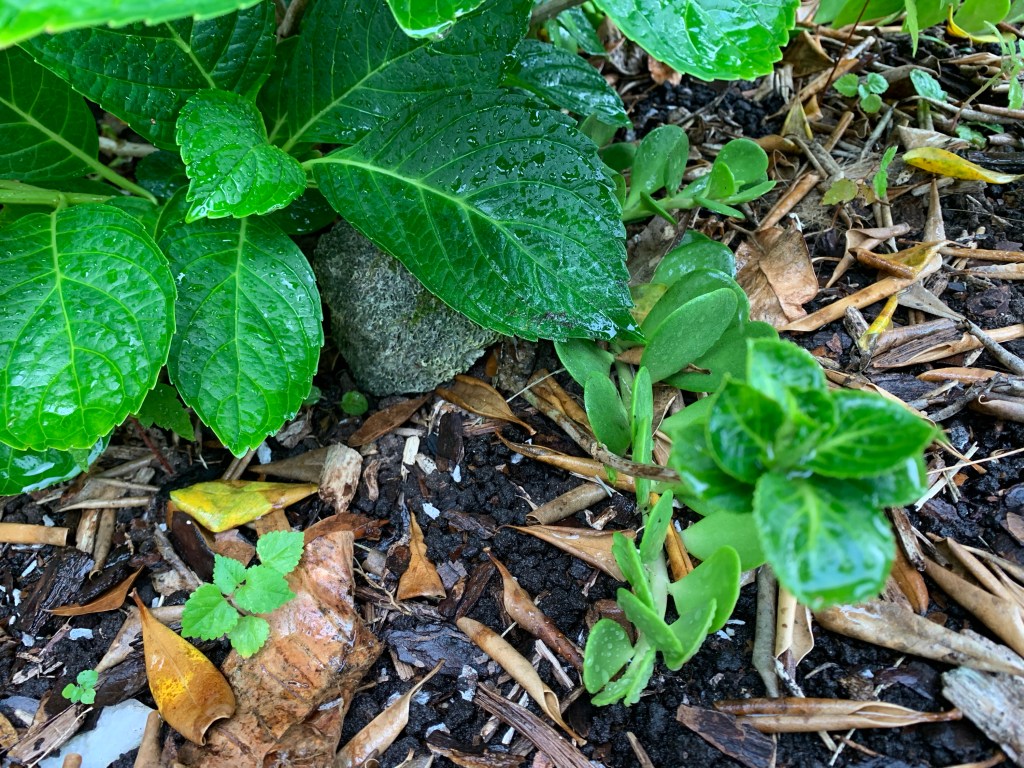
In the photos above and below I have placed a rock over a low hanging stem. I’m hoping that roots will form so I can cut this part off and plant it creating a new hydrangea plant!

Florida hydrangea garden perennial Spring
Rooting a stem

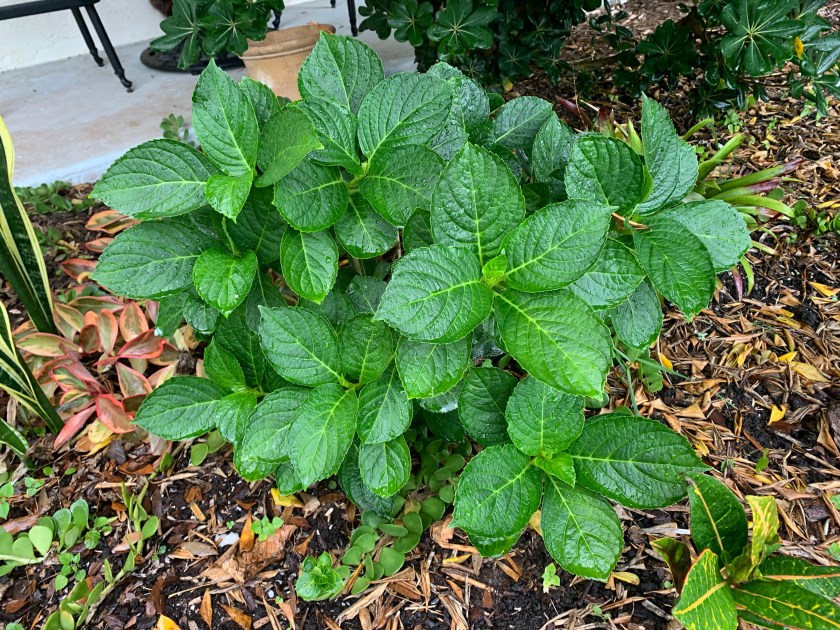
This hydrangea is growing in a nice shady location beneath a larger shrub. It seems to be happy and now I’ll just wait for the flowers.

All I’ve used for fertilizer is some bone meal and fish emulsion.

  • Florida hydrangea garden perennial Spring
  • Florida hydrangea garden perennial Spring
  • Florida hydrangea garden perennial Spring