My Florida yard is small but I am trying to fill it with native plants to attract bees, butterflies and wildlife. After reading another blog about planting milkweed to help monarchs survive and thrive, I began researching the types of milkweed to plant here in central Florida where I live.
Do Your Research and Plant Native
Big box stores sell plants that look nice, and are not necessarily concerned with native species. Customers usually want pretty things to brighten up the home landscape.
Bringing non-native plants into the yard can end up being a problem. Florida contains many invasive species – the air-potato and Brazilian Pepper trees come to mind. They invade and push out more native plants. This is also true for wildlife that has been imported, but that is another blog post.
Although this page is about milkweed, researching all types of native plants for the landscape will go a long way in helping the butterflies and birds. Native plants will survive nicely, with little help, when planted where they should be.
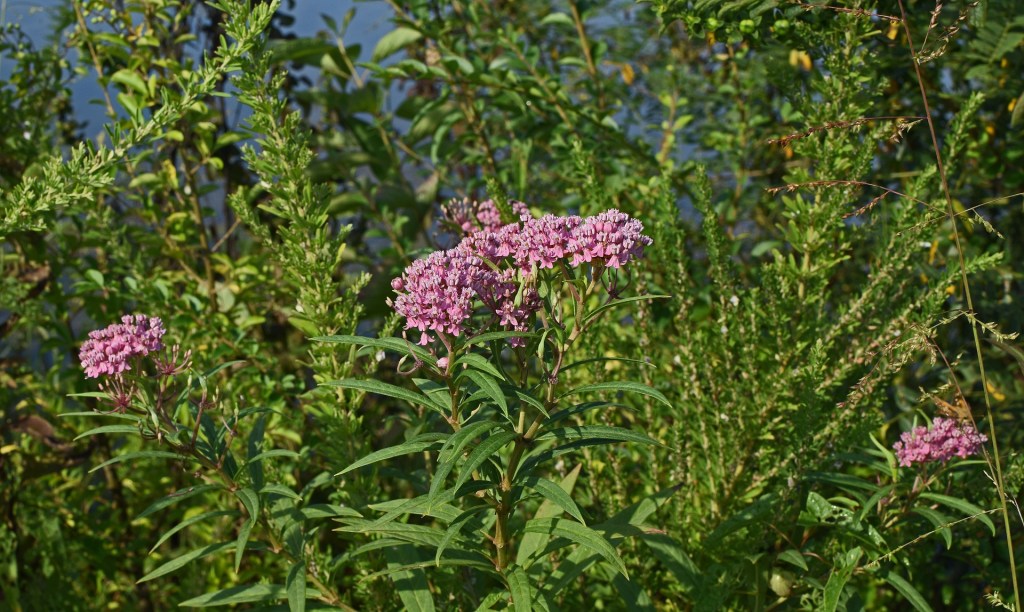
Butterflyweed
Types of Florida Native Milkweed
There may be more types, but this is what I found when writing this page. Visiting a local nursery that sells local plants could be very helpful.
Orange Butterfly Weed – reddish orange flowers, blooms late spring through fall – I had a volunteer pop up in my yard!
The link above goes to a file found on the Xerces Society site which has many articles about Project Milkweed and has Regional Milkweed Guides in printable pdf. form for many areas of the country.
It may be no surprise to my readers that I dislike the way things are going in Florida. I visit the cities as little as possible, but had to go to Daytona the other day. With the races, bike week, and whatever else goes on to attract tourists to this place, Daytona is definitely a place I avoid.
This Covid mask-wearing thing is getting so old. I am grateful to have a work-from-home job where I can be mask-free all day long. But I am not sure how long it will be worth it to work. Last year things began to slow down and it just got worse and worse. Products are not available to put designs on, and people are out of work and can’t buy things anyway.
Whenever I think about leaving the house to go shop and then I remember I will have to wear a mask – and I stay home.
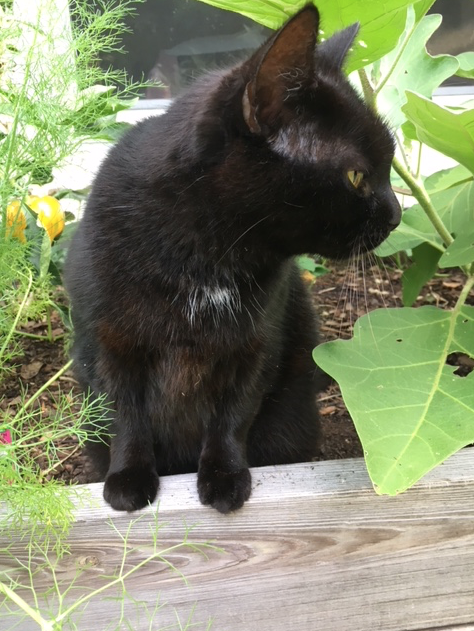
Many products are hard to get, including specialty cat food. My cat needs special food because she has intestinal issues. She tends to have diarrhea if she eats the wrong things and a cat with diarrhea is not fun! So I spend loads of money on special, prescription cat food. Now this type of cat food has become hard to get. The store in Daytona had it, so I picked up my prescription from the vet (so ridiculous) and my son drove us up to PetSmart.
It turned out they had one bag left… so kitty will be diarrhea free for now.
Skittle the Cat
By the way, Daytona is not a place I EVER visit. Long ago I used to drive to the mall, and pass the Speedway and the dog track and lots of green forests. But developers see trees as being in the way, and they can’t wait to flatten acres of land to put up stores, restaurants, car dealerships, and apartment buildings and condos. This is typical Florida now.
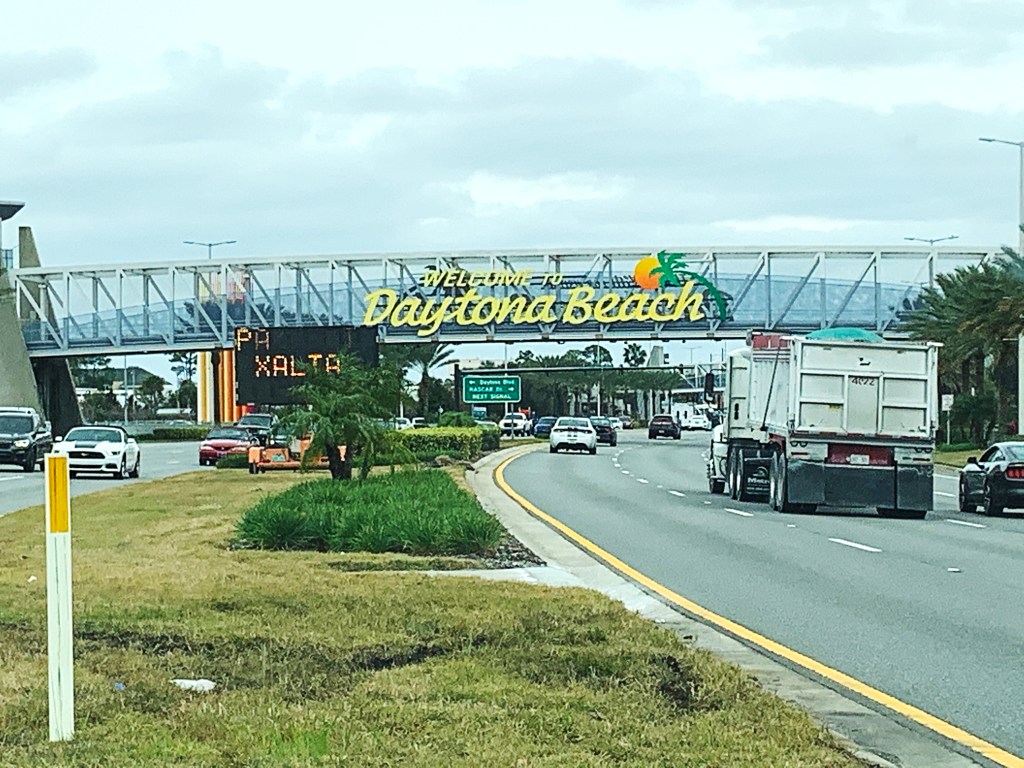
Roads are now 4-lane where they used to be single lane. This is a good reason to stay home. I took these photos the other day as we sat in a turn lane with the big “Welcome to Daytona Beach” sign in front of us. We were right next to the Daytona Speedway (below).
I always wonder where people lived before Florida that was so bad that they actually like it here. My eyesight is getting bad so I don’t drive much, and I certainly don’t like to drive to Daytona. It used to be an iconic place and now it is dumpy and touristy and traffic is crazy.
If you like traffic, crowds of people, sitting at lights for long amounts of time, eating fast food, shopping, and being baked under the endless sunshine, come on down. This is the place to be.
My Florida yard is very small but I have wild growth on two sides. A vacant lot behind the house is full of trees, brush, and vines and it’s where I set up my bird feeders for the Painted Buntings. I have identified some of the growth thanks to a good site I finally found.
Searching for photos online has proven difficult because often there is no image of the leaves. The whole tree or bush is not really helpful without some up close images.
I’m adding photos from my yard to this page to help me remember what is what. I have to know what to keep and what to destroy as I clean up.
Unknown Tree or Shrub – Laurel Fig?
This plant was uncovered as I cleaned up for a small garden space in January. The leaves are widely spaced and are dark green and oval in shape. The bark is very light gray. Possibly the Laurel Fig and if so, it is an invasive tree. I was hoping this was a nice bush to save, but it seems that I may have to cut it out.
No name for this yet.
Read, and see amazing photos, on this interesting page on Strangler figs and how the roots cause havoc.
The Brazilian Pepper Tree is an Invasive Species – Non Native
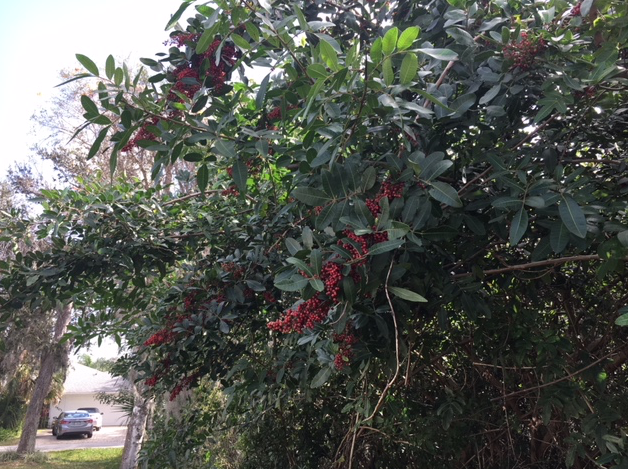
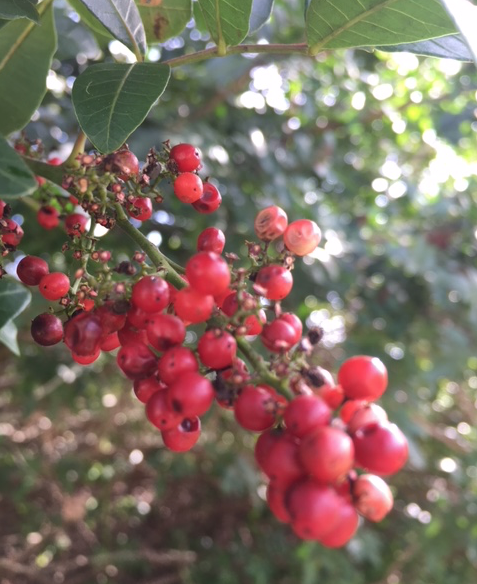
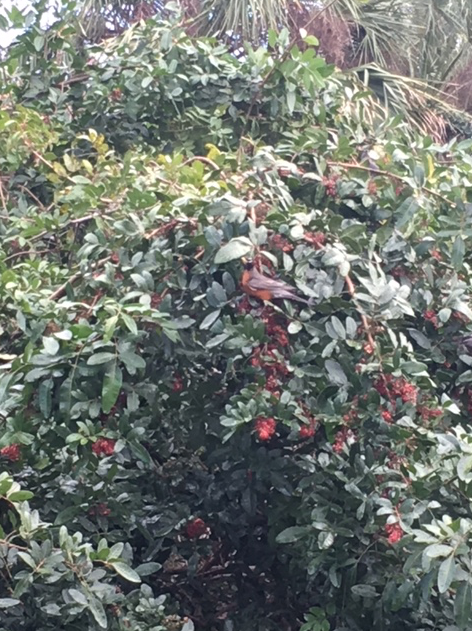
I have a group of Brazilian Pepper trees just over my lot line. During the winter months loads of red berries appear which bring robins and other birds to feed.
It is an attractive tree, but is an invasive species and not a Florida native. In fact, the trees should be destroyed when possible according to many articles I have read. This clump of trees is huge, with a large root system. It is also not on land I own but the branches arch over my yard.
Brazilian Pepper
Red berries
Robins eat the berries
This is an invasive species
A mass of roots of the Brazilian Pepper
Florida Maple Trees
The Florida maple trees lose their leaves during the cooler months. This photo was taken in February. Soon new leaves will form. I saved this little tree which is growing on the edge of my property when it was covered in potato vines (see below) and unable to grow. Now this maple tree is thriving and has tripled in size.
The Maple tree loses leaves in winter
The Elderberry Shrub – Florida Native
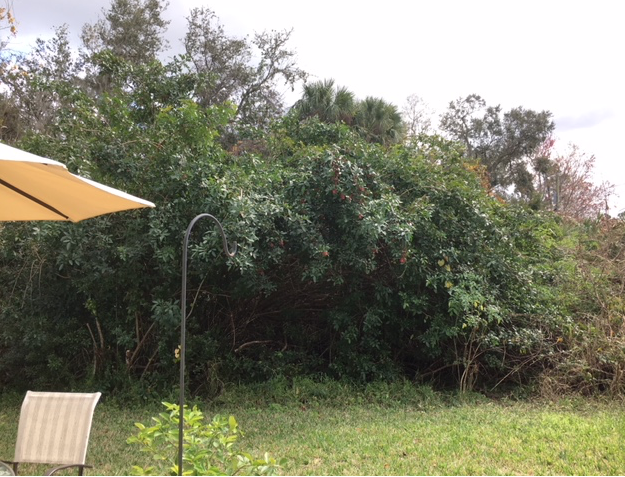
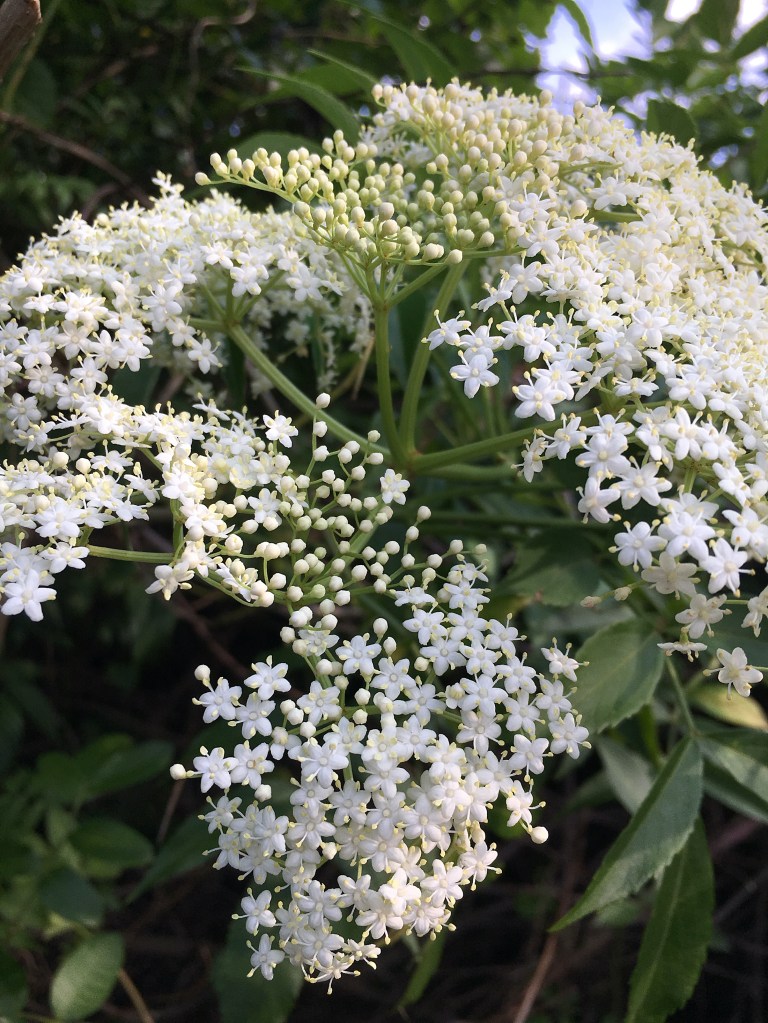
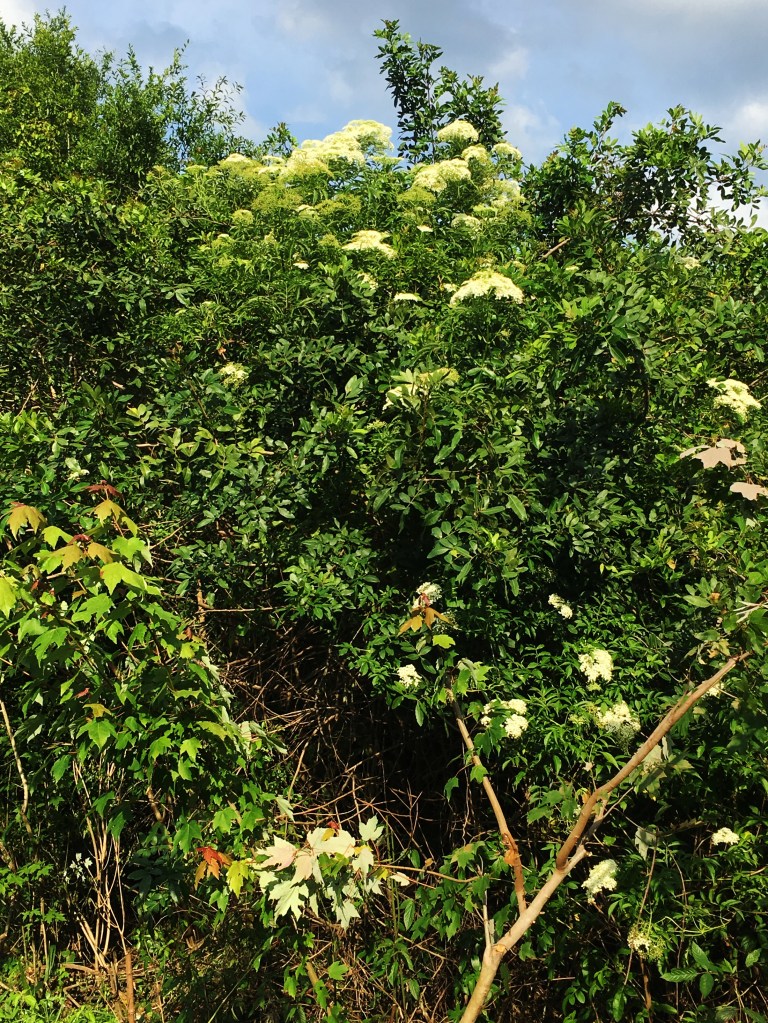
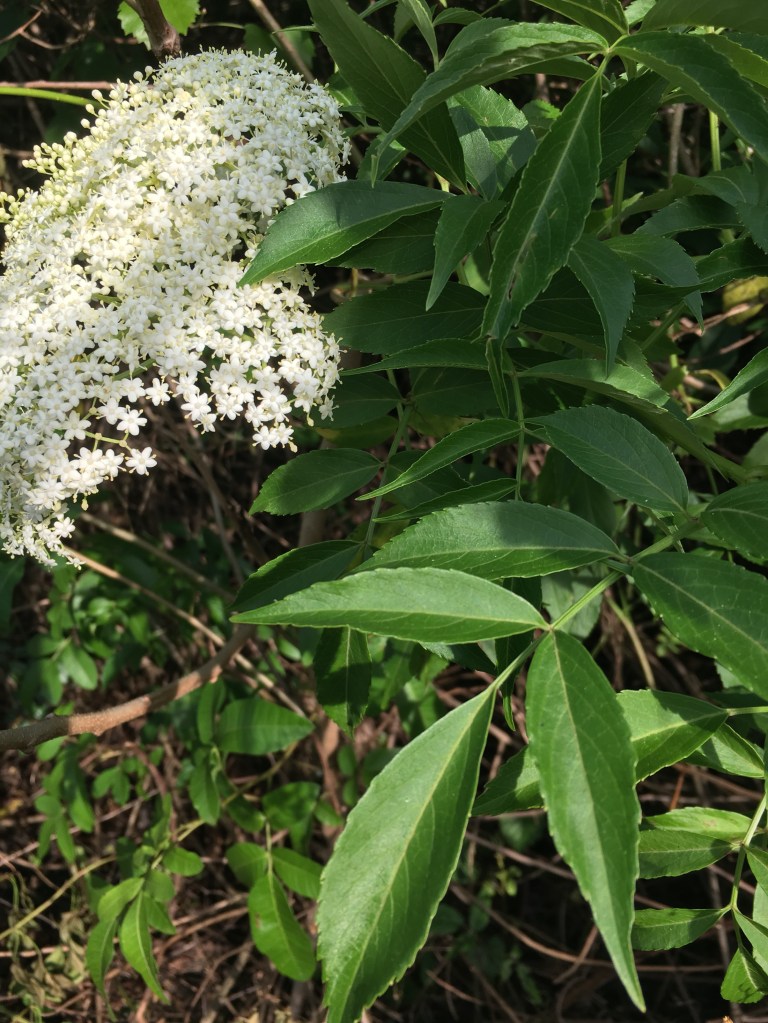
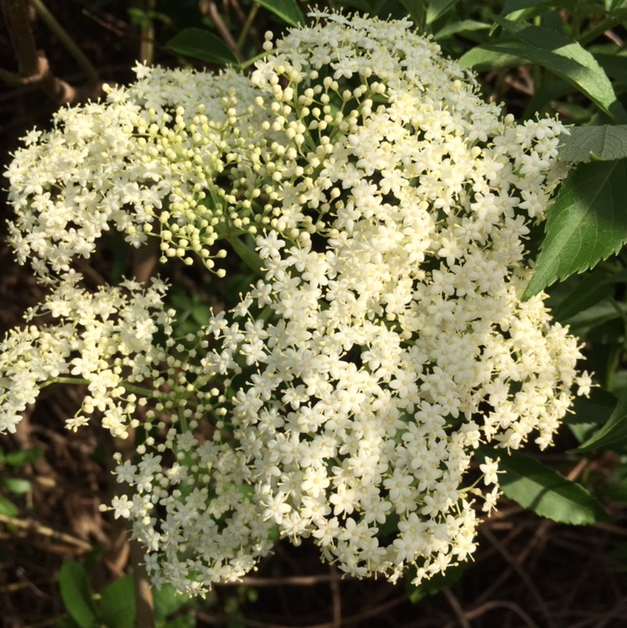
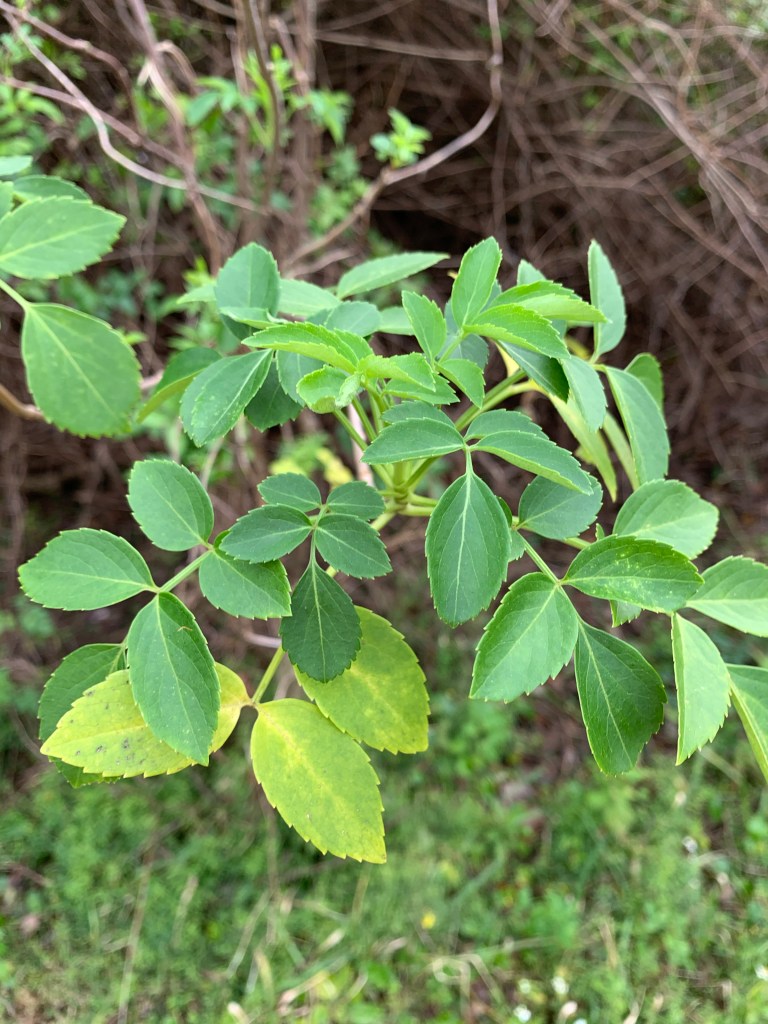
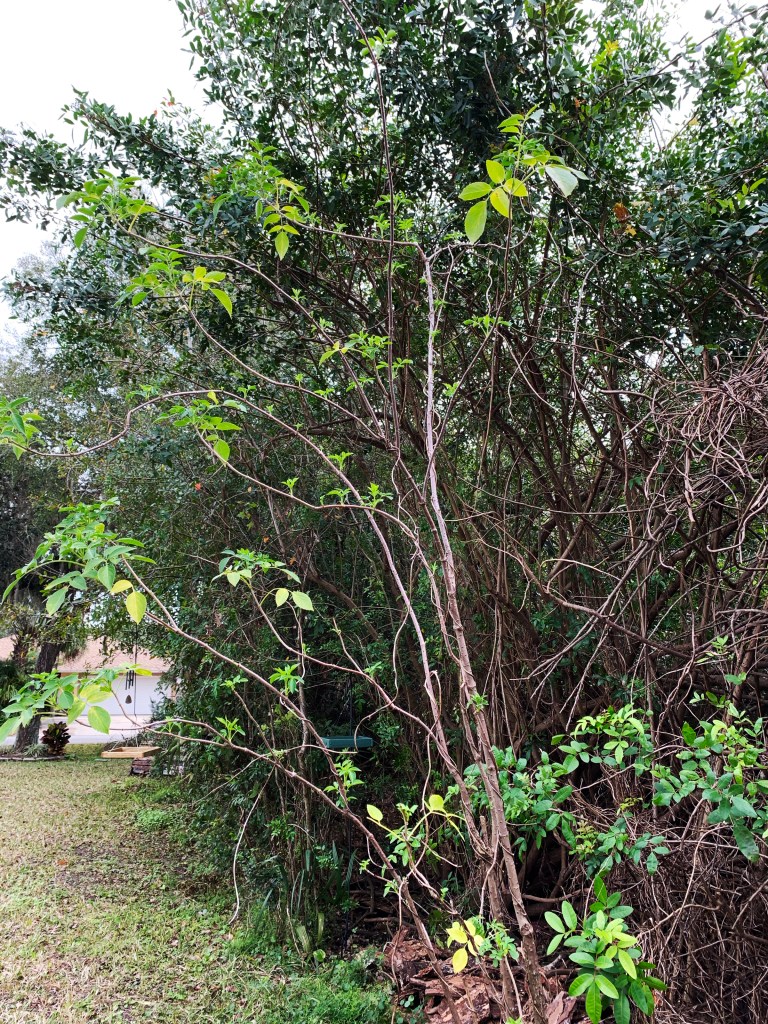
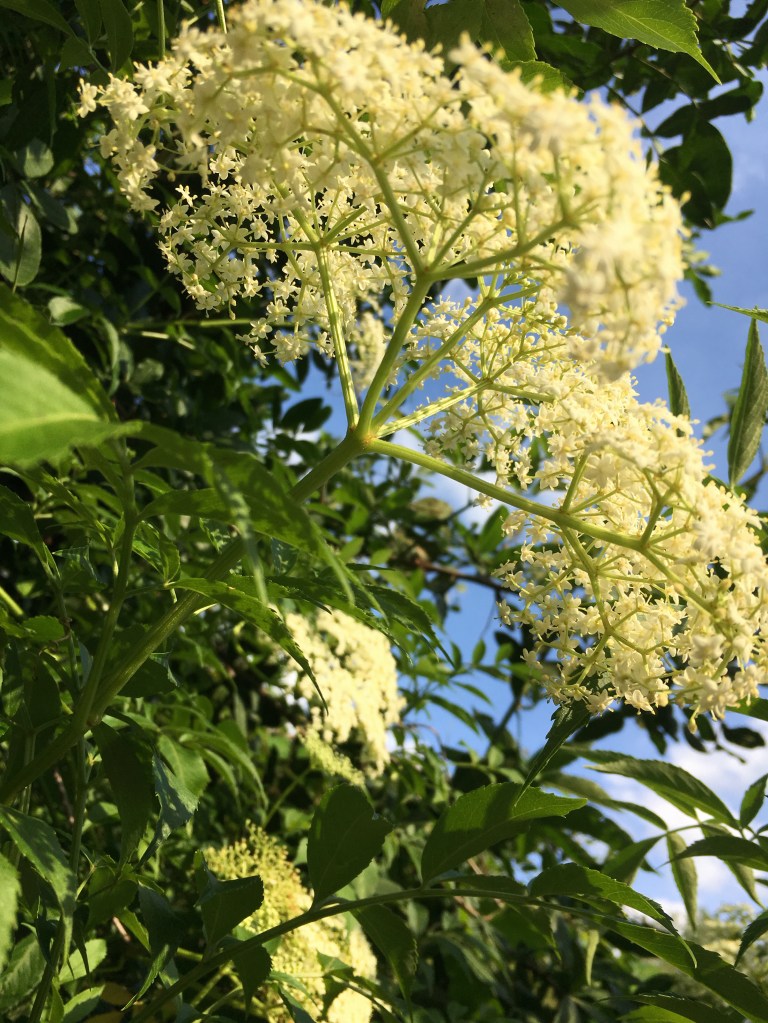
I’ve included a new volunteer Elderberry with a photo of the larger Elderberry in the woods. The tree has pretty white clumps of flowers and dark berries during the warmer months. The berries are toxic to humans when raw, but edible when cooked. Many animals and birds can eat the berries, but I think I will pass!
Elderberry flowers
Elderberry leaves and flower head
White Elderberry flowers
The Elderberry has berries and white flowers
A young Elderberry tree growing at the edge of my yard
Elderberry flowers
The Beautyberry – Florida Native
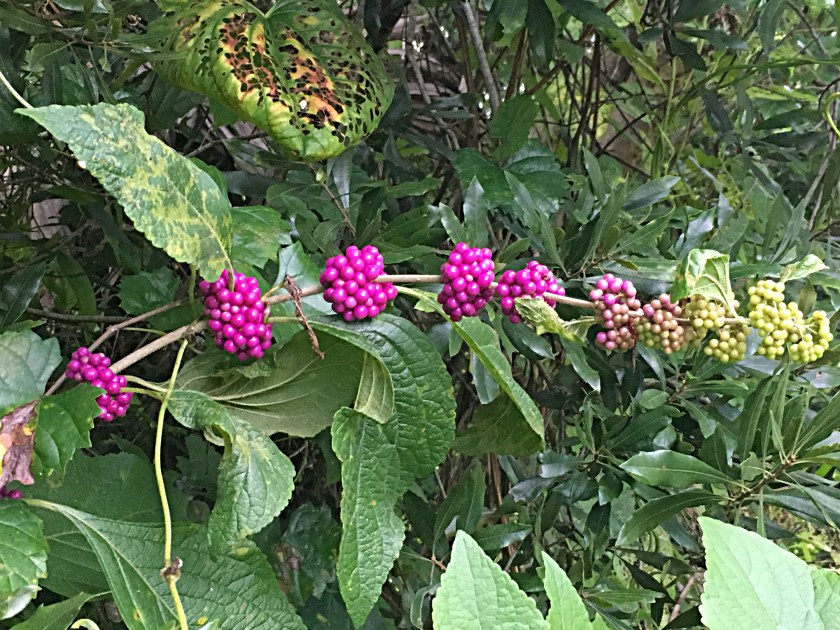
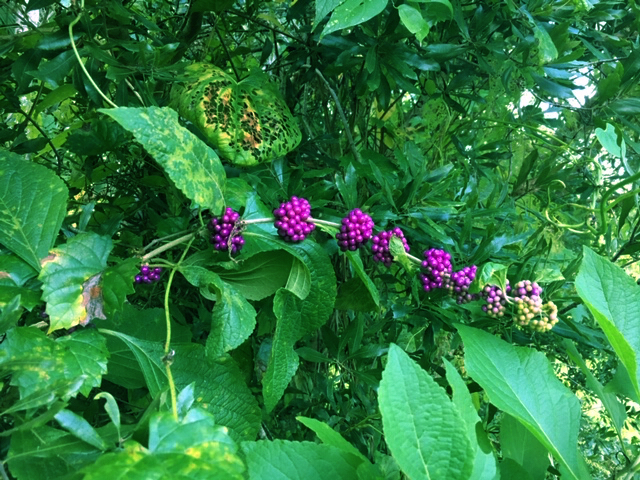
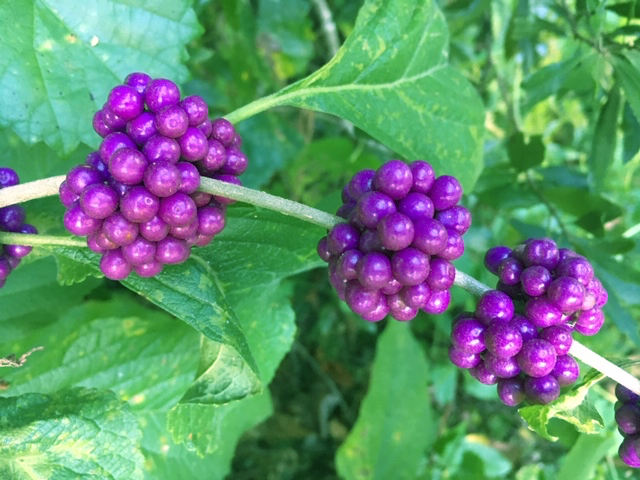
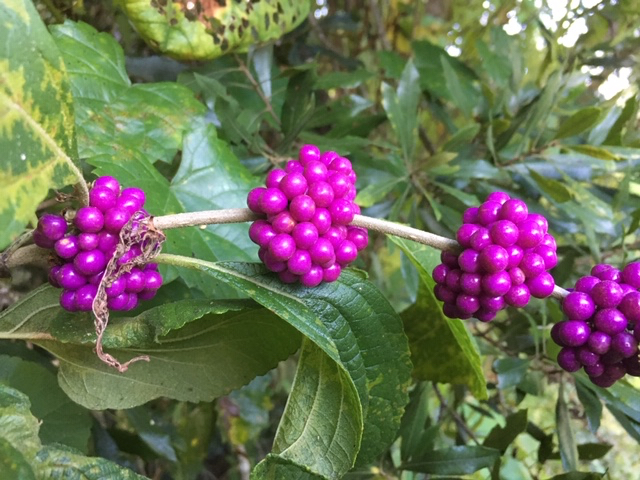
When I came across this stem of berry “bubbles” I took some photos not knowing what it was. The Beautyberry bush is a Florida native plant and this one is located in my backyard.
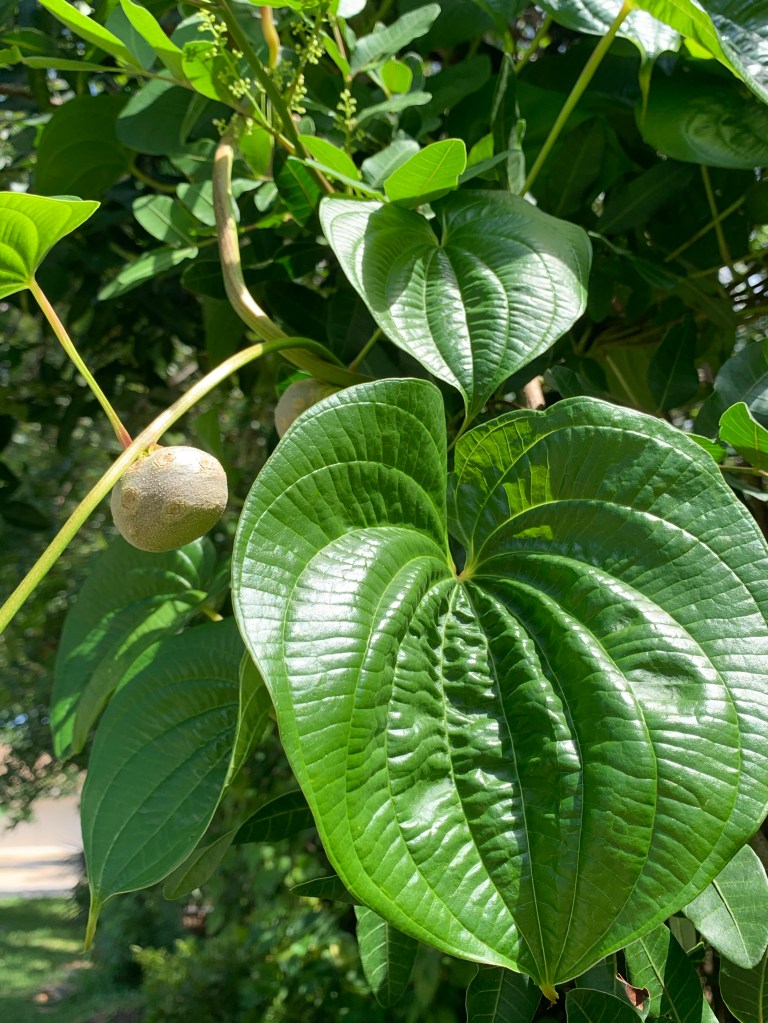
There are many obnoxious and non-native vines in Florida. Most were purposely brought here for some reason and then they grew out of control. The potato vine is one. See my photos below and more photos at the UF site.
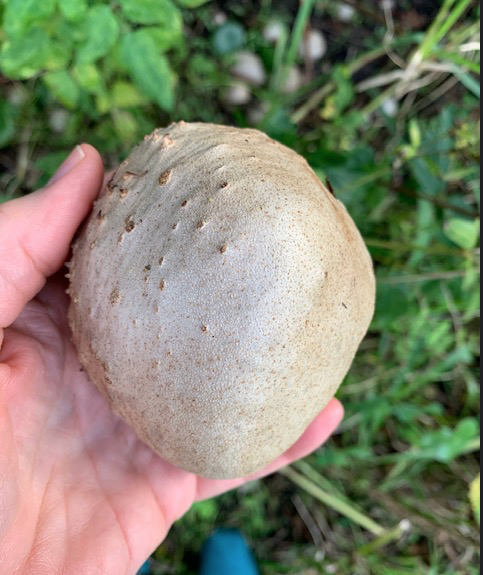
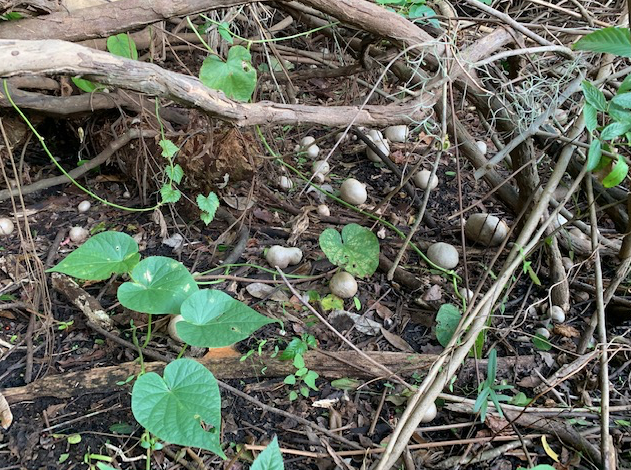
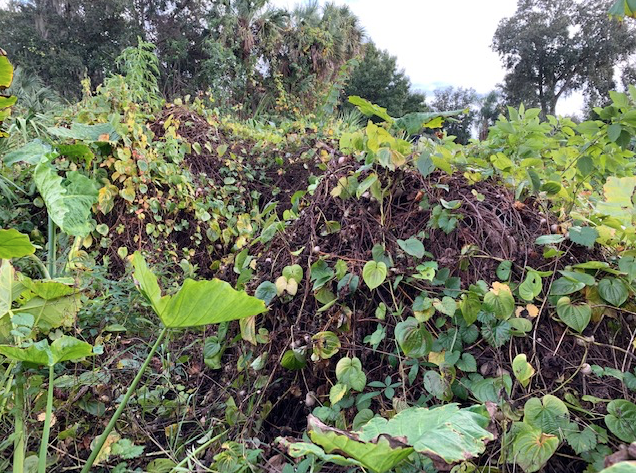
Because of the long months of agreeable weather for growing, vines can easily take over a landscape. The potato vine creates loads of potato-looking things of all sizes that become more vines. Native trees and shrubs can become smothered.
Leaves of the potato vine
Air potato, large size
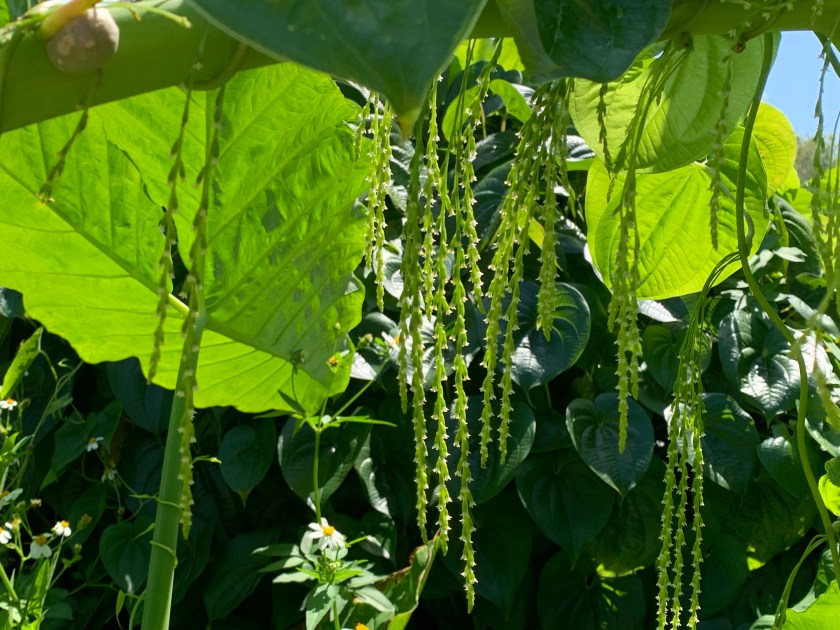
Hanging flowers on potato vines
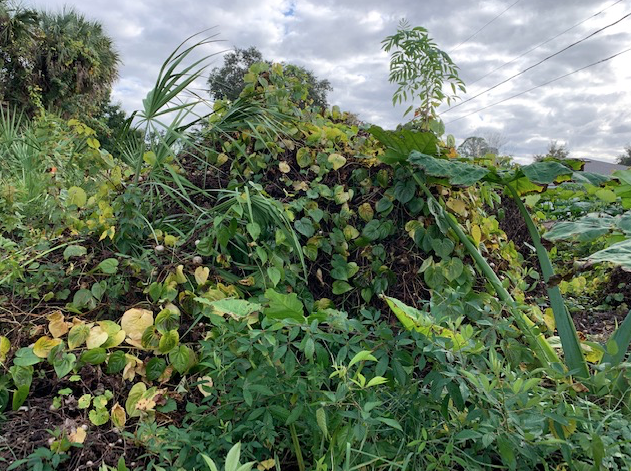
The empty lot next to my yard has many potato vines crawling all over the vegetation
Potatoes at the edge of my yard
Potatoes and vine under roots of the Brazilian pepper tree
Vines growing over vegetation
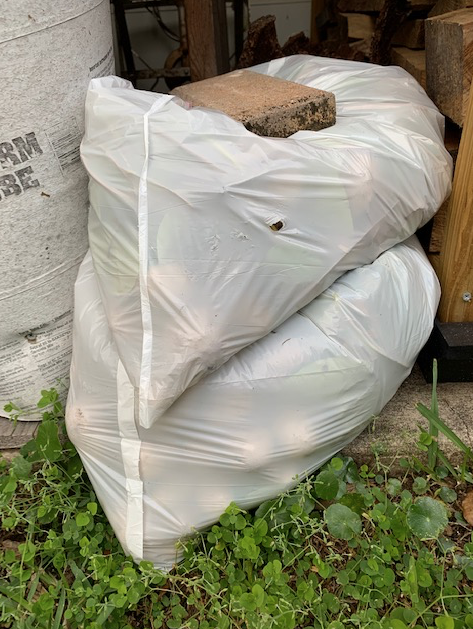
I filled these bags with potatoes to destroy them
Thorny vine – unknown
Unknown vine with thorns
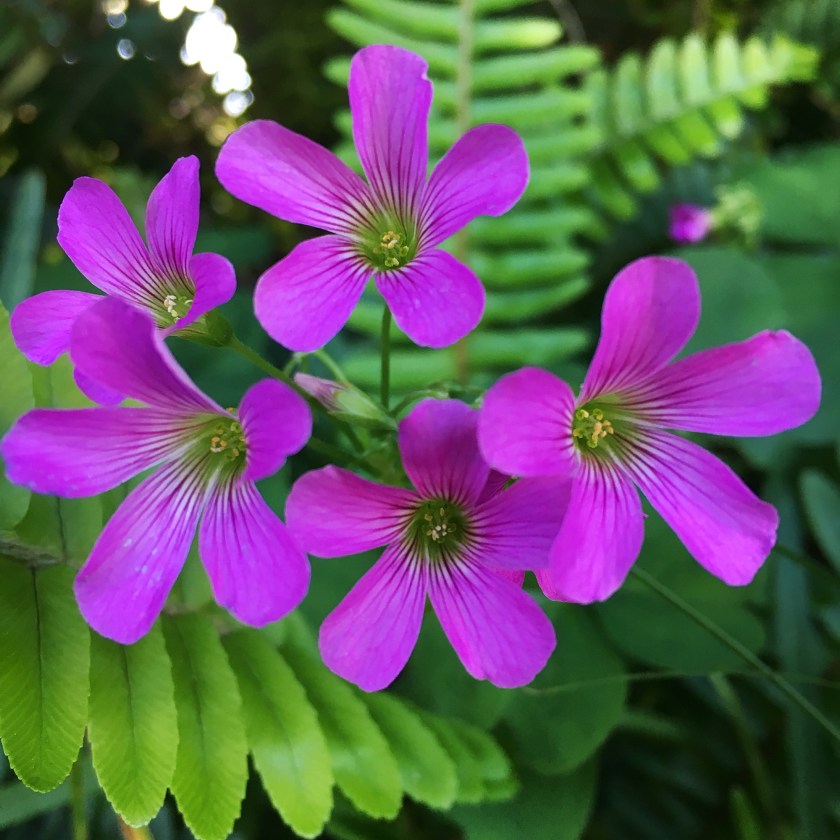
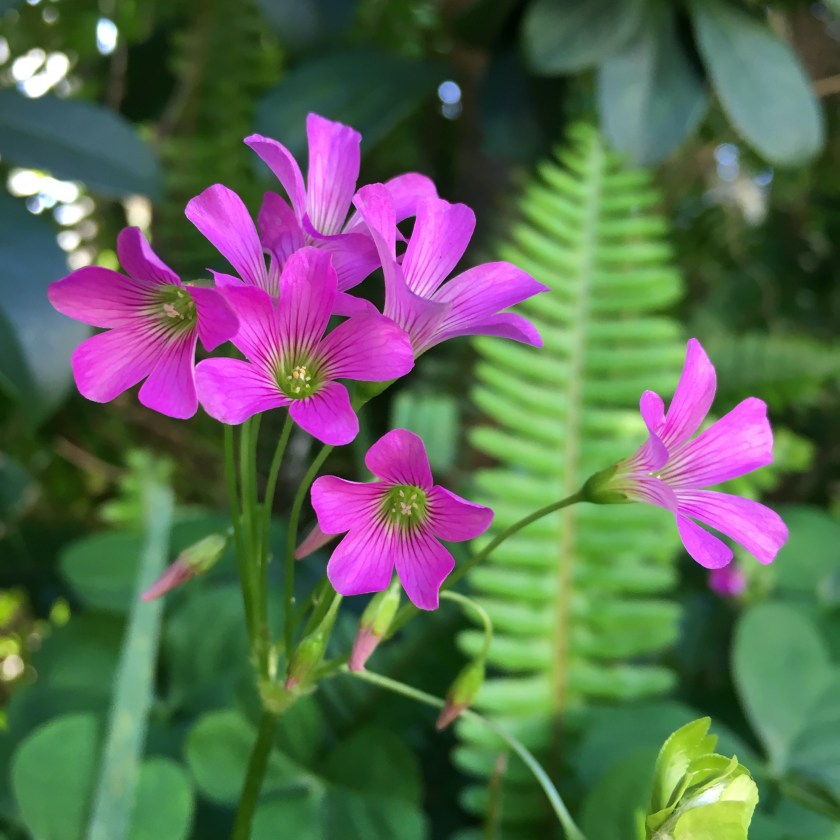
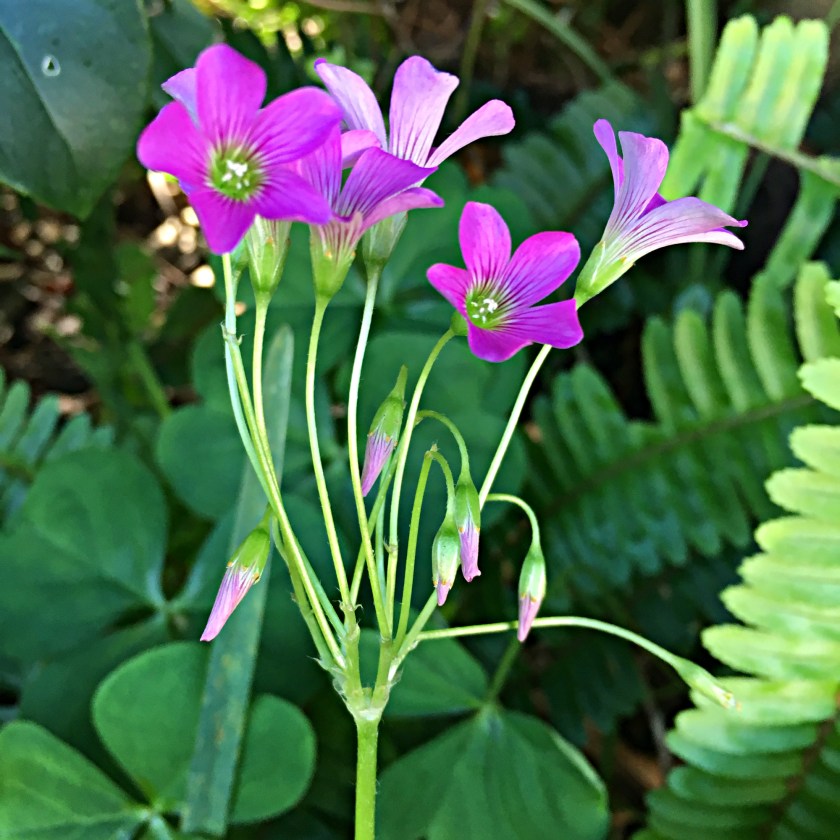
Pink Wood Sorrel – Clover
I call this pink wood sorrel plant a “clover” because of the leaves. I don’t know if it is a relative to clover, but it blooms with the prettiest little dark pink-purple flowers. I’ve had it pop up in my front garden bed all on it’s own, but this plant below I photographed along the shrub line out back.
It does die down and disappear, but comes back.
Clover flowers
Pink wood sorrel
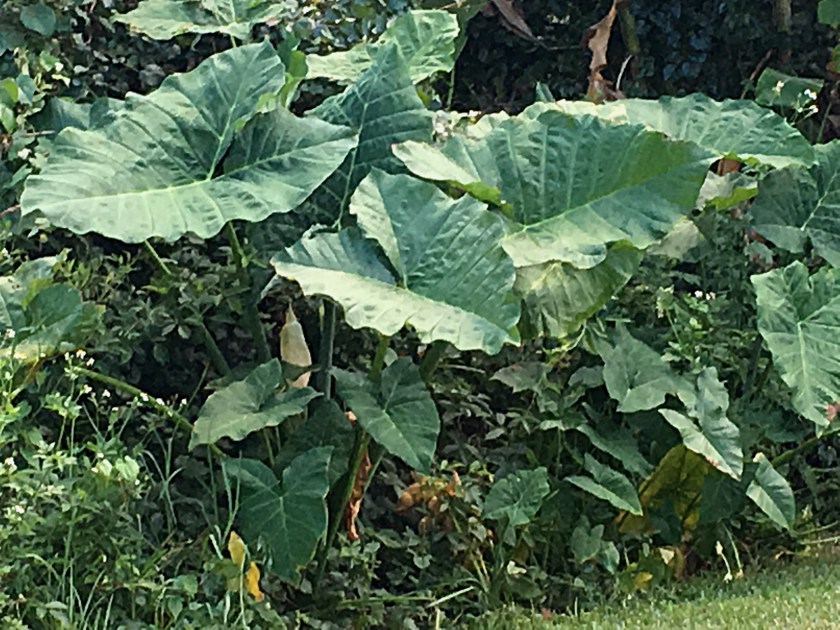
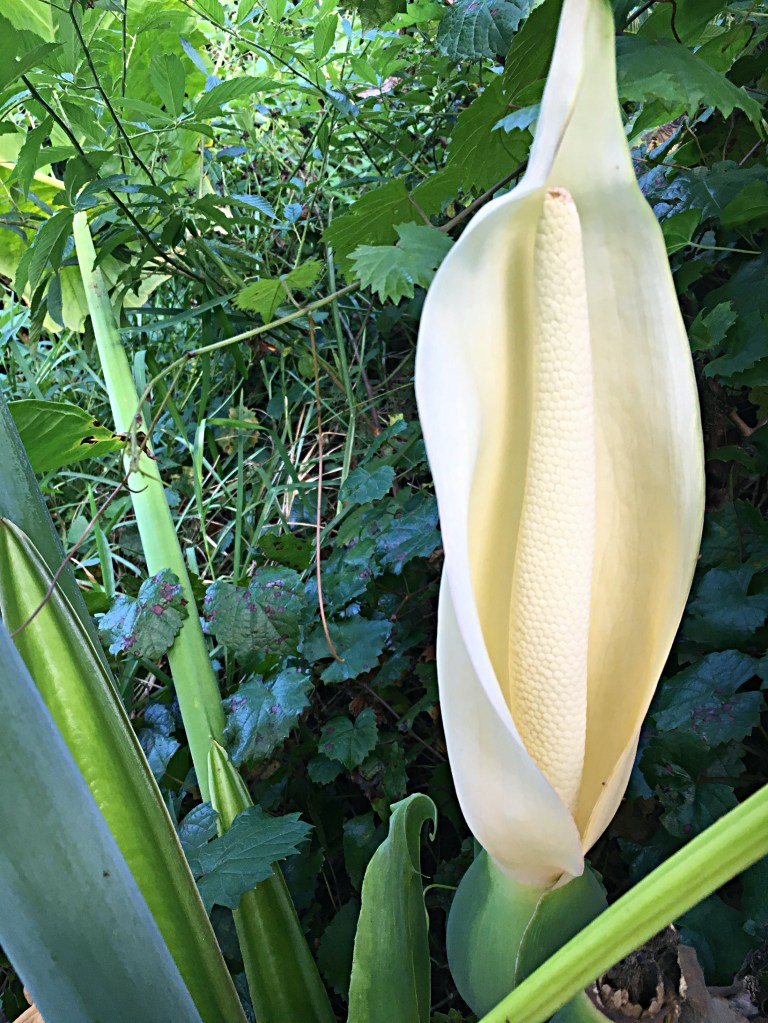
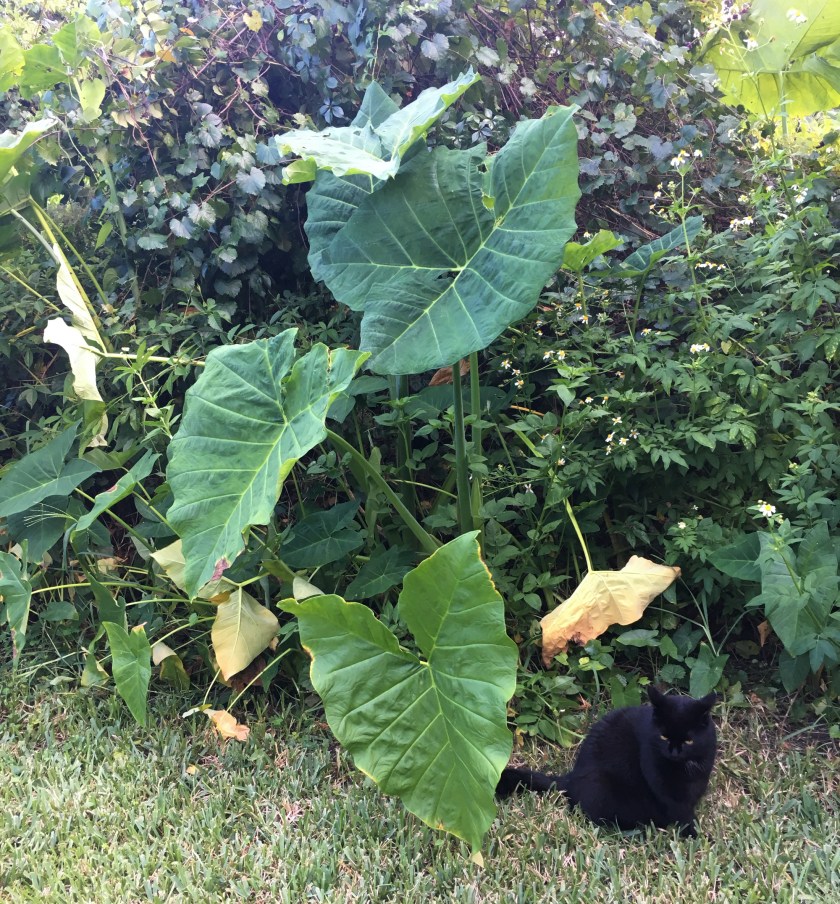
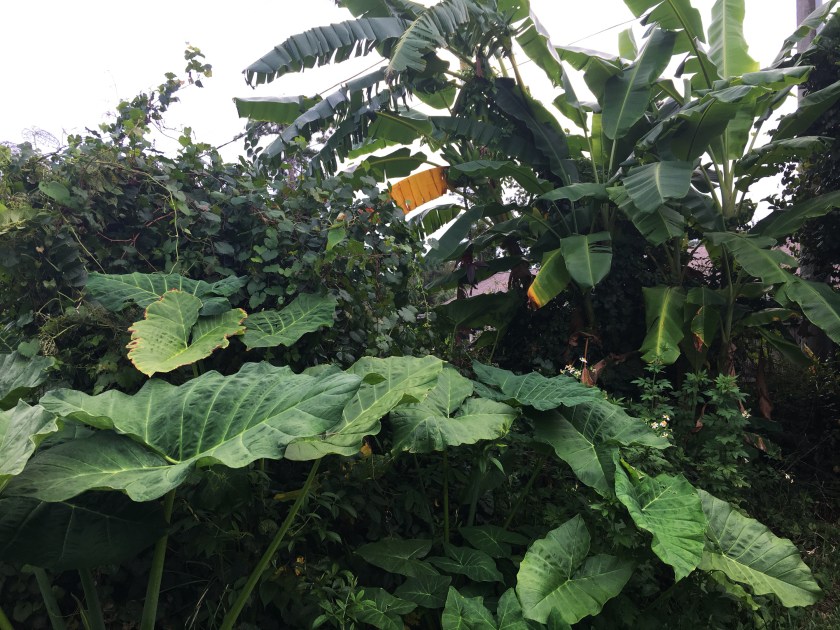
Elephant Ear – Non-native / considered invasive
I was surprised to see that the Elephant Ear plant is not a Florida native. I always associated it with this tropical climate, but it came from South America. An interesting note: The tubers of this plant can be eaten.
Elephant Ear
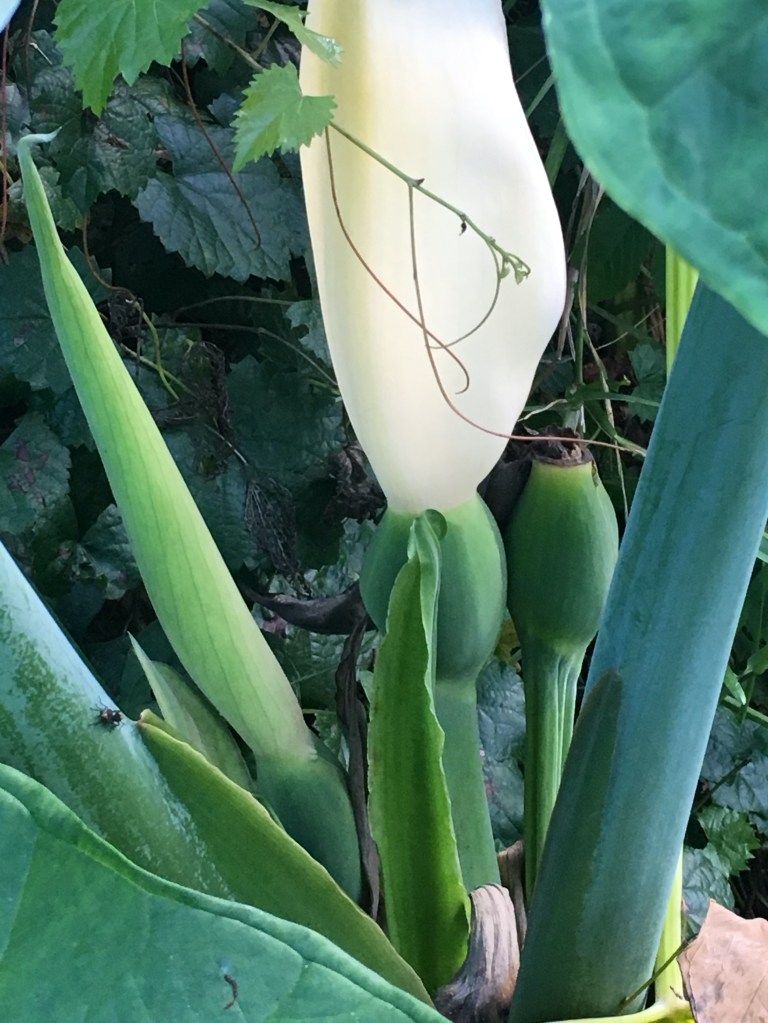
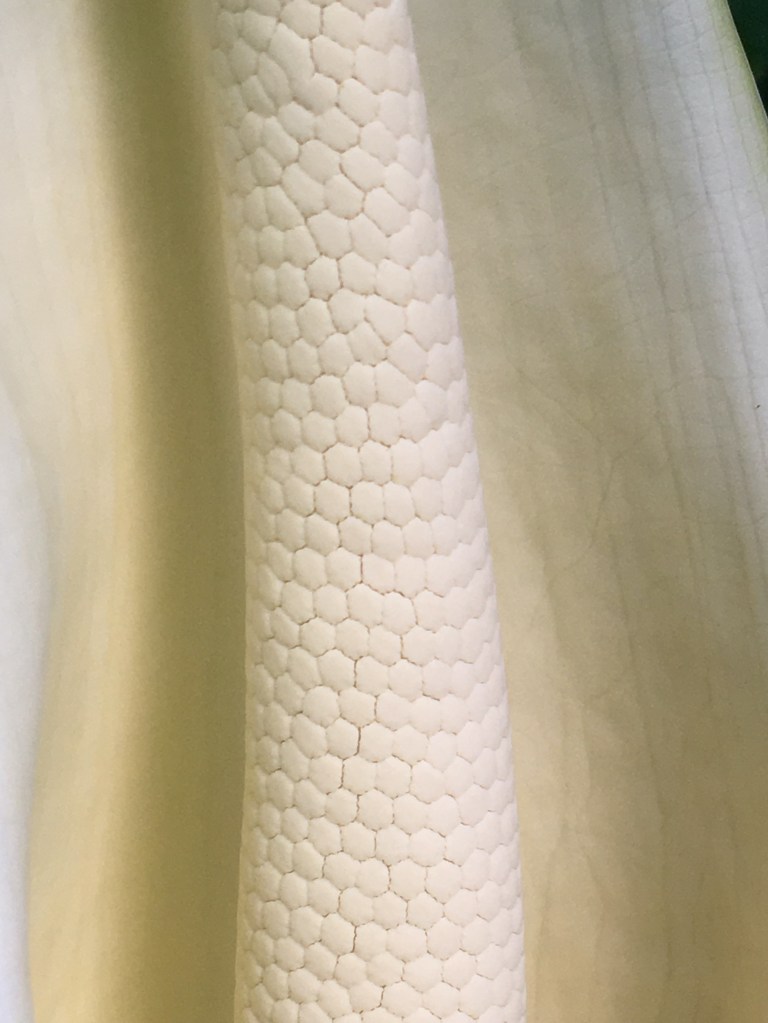
The elephant ear has quite a unique flower
Flower closeup
Florida jungle growth
Muscadine Grape Vine – Native (no photo)
The Muscadine Grape vine is not unwanted like the other vines mentioned here. It is a Florida native and grows all over the state.
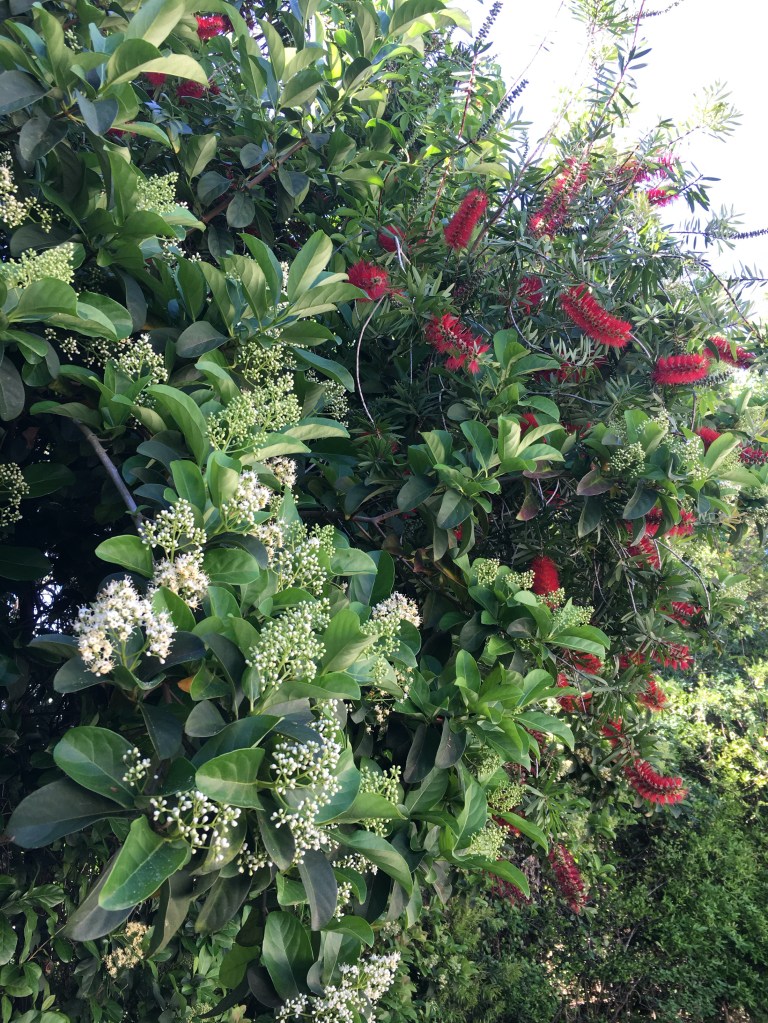
Bottlebrush
Along the back of my lot an overgrown shrub border contains a couple of bottlebrush trees.
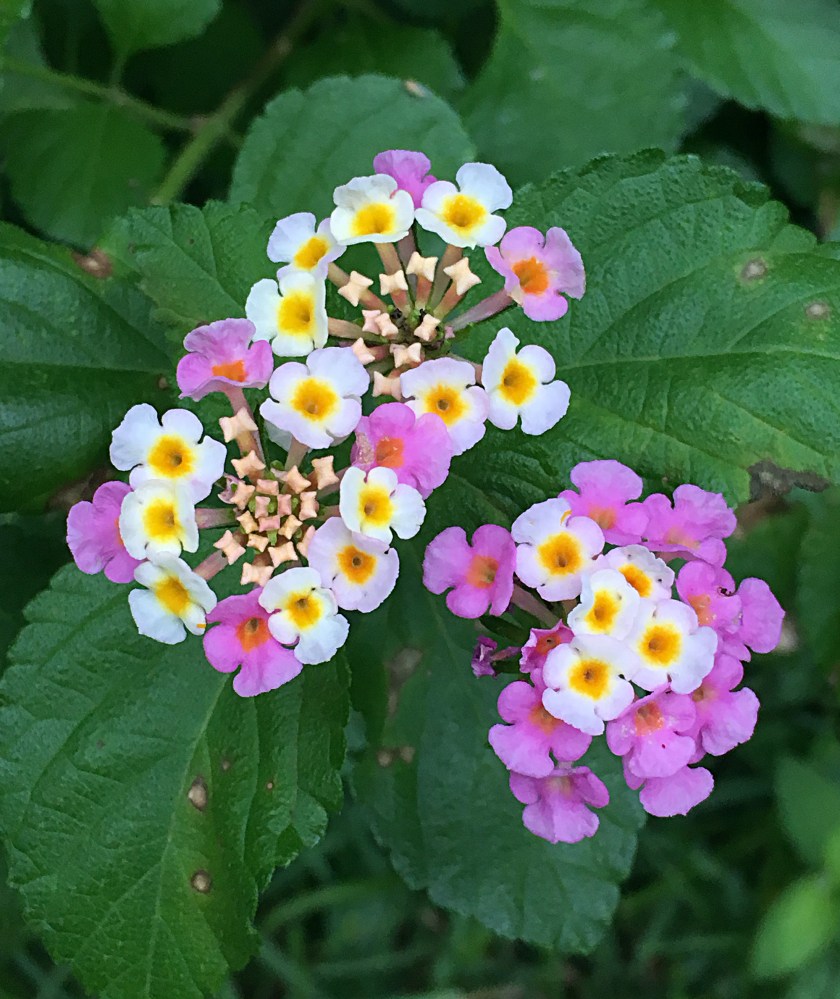
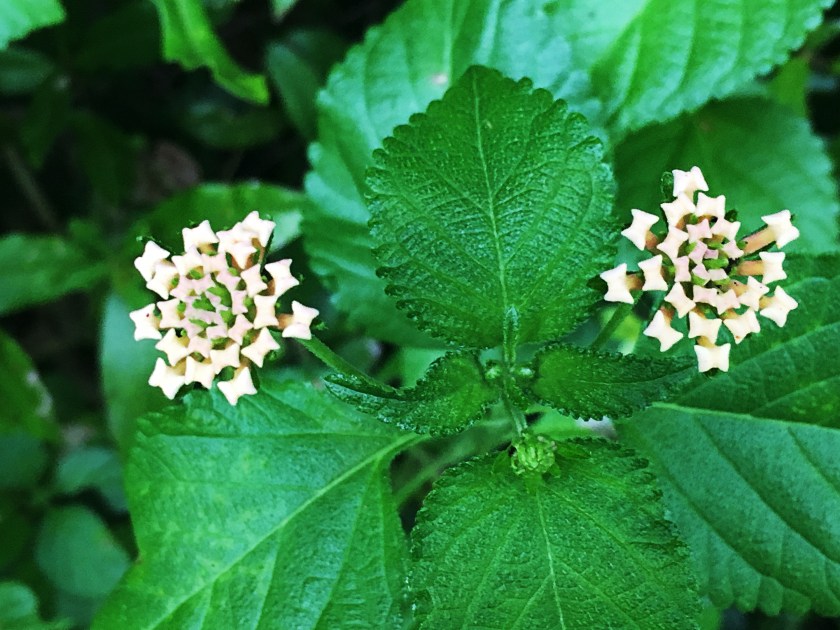
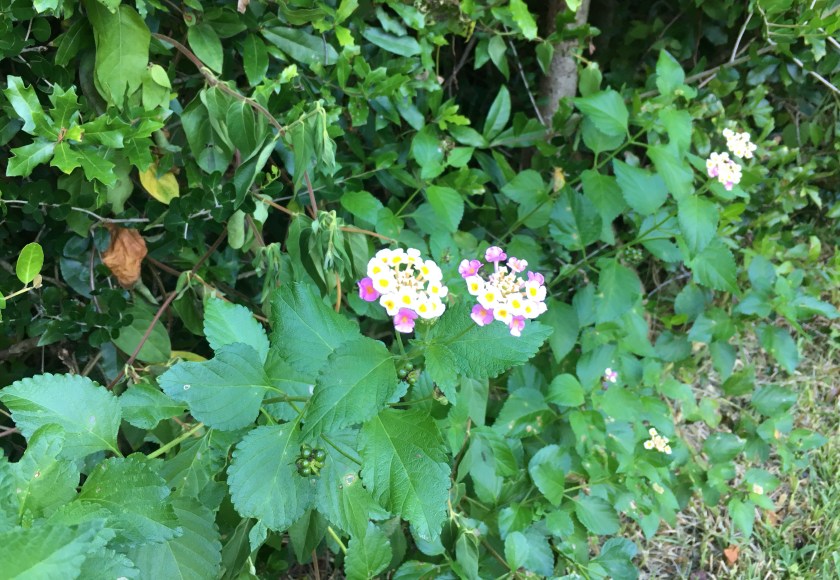
Lantana?
I photographed these little flowers without knowing what they were. Possibly they are Lantana, which is also an invasive plant here in Florida. It is listed as a non-native plant at the UF site.
Lantana
Lantana buds
Unknown Flowering Vine – Probably the Invasive Japanese Honeysuckle
I took this photo of what I think was a vine with white flowers resembling the honeysuckle. I’m not sure if it is the invasive Japanese Honeysuckle or not. I will look for it again in the side yard when plants begin to flower. Unless….
I have been pulling out long vines with leaves similar to this vine. The description is that it grows over everything blocking out light and killing smaller plants, and the vines are definitely long enough to do that. Some of the vines I pulled have black berries, which can be seen in a photo at the link above. I’ve been dealing with the vines while cleaning up a space for my new backyard garden.
So not be tempted to plant this as it is a real pain to remove. It is NOT a Florida native, so choose a vine that is.
Japanese Honeysuckle?
In Closing
Once I began to add photos and identify the growth around my yard, I have found that many of them are invasive and unwanted. Trees, shrubs and vines are labeled “invasive” when they block out native growth by taking over spots where native things should grow.
When shopping for yard plantings look for “native” plants. I will have to remove as best I can the plants that should not be allowed to grow. The new garden area I am creating already has a small Brazilian Pepper tree which is small enough to cut down.
Once I have cleaned out the vines, I’ll look for native plants to add to the landscape.
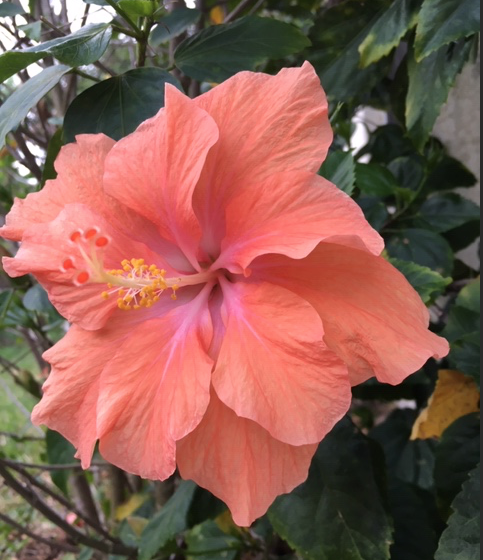
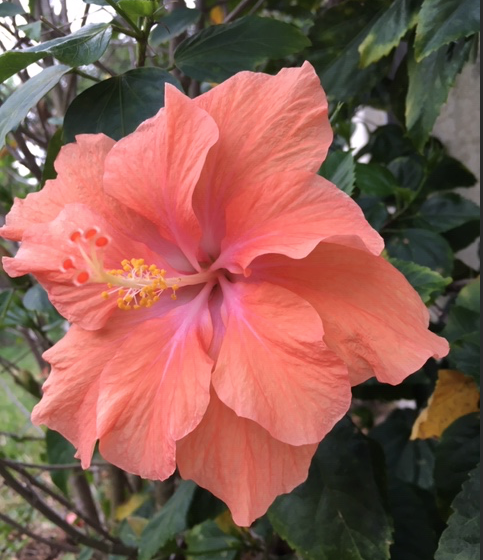
Two years ago I planted a little hibiscus plant out behind my house. It grew quickly and flowers all the time with double flowers. Double flowers means each bloom is more ruffled looking with layers of petals as opposed to flat, 5-petaled flowers.
Hibiscus grow very well here in Florida, and this past winter was quite mild without any overnight temperatures dropping below freezing. At least not where I live. I never had to cover any plants and everything looks great. The chances of having a freezing night now are slim, so it’s safe to cut back outdoor plants that need it.
With the cooler weather comes the time to do things outdoors. My winter is like a northern summer. I’ve been waiting for months for the heat to go away so the days will feel more normal. It’s just like suffering through a long, frozen winter and waiting for the warmth of Spring. Except in reverse.
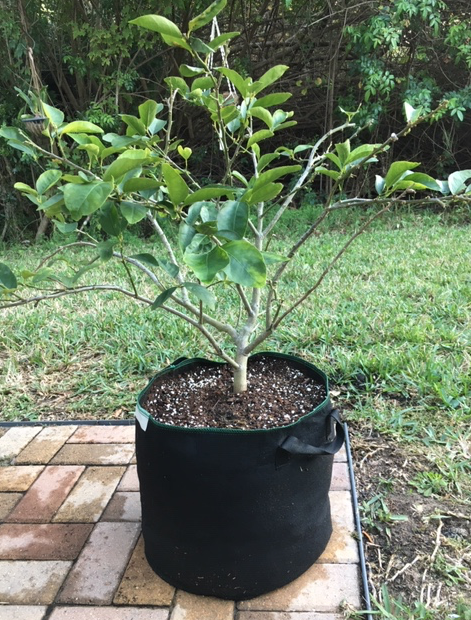
January has brought cool breezes, lots fewer bugs, and breathable air. It rains less, but the plants are not burning under the sun, so watering is occasional. I still check on my plants and vegetable garden. The Lime tree seemed to be in need of help, and the pot it was in needed an upgrade. I bought a couple pots at Home Depot, but then decided to use one of my larger fabric bags. The Lemon tree is doing great in a fabric pot.
Lime tree in fabric pot
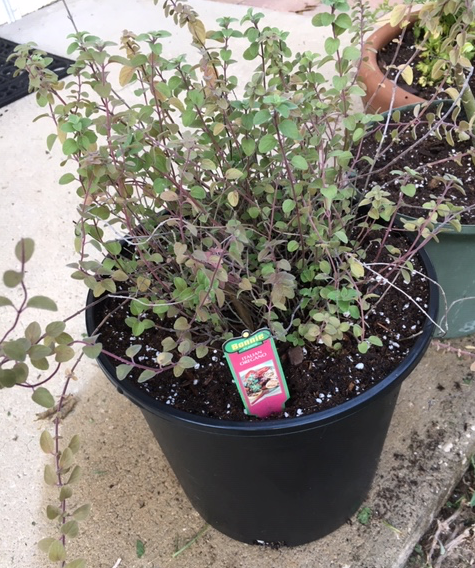
The Italian Oregano plant was in need of attention and got a new home in a deeper pot. I also added some bone meal for root growth.
A new pot for the Italian oregano plant
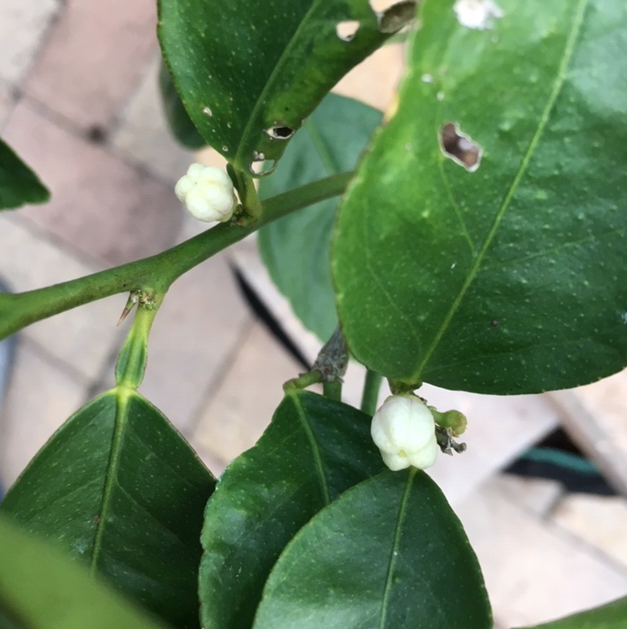
Little white buds on the Persian Lime tree!
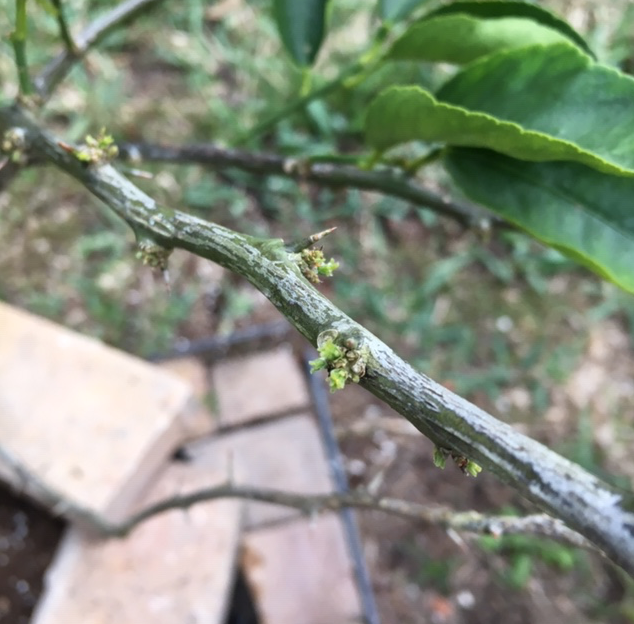
New growth beginning on the lime tree in January
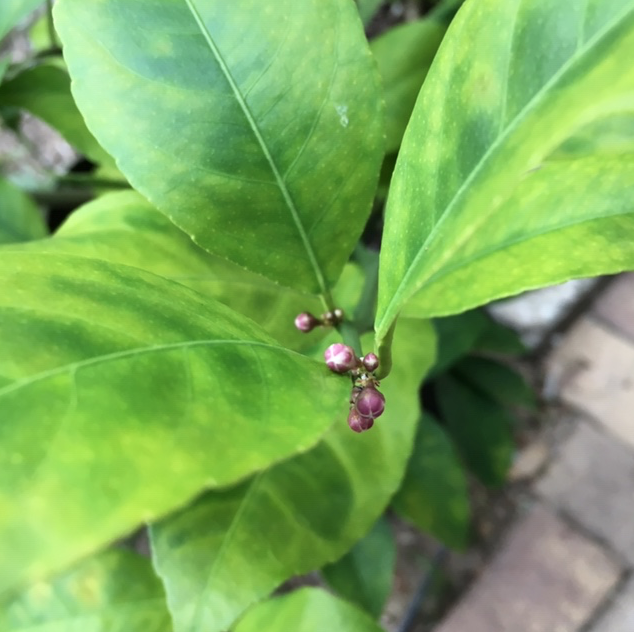
The Meyer Lemon has some pink flower buds, and the Persian Lime has little white buds and greenery popping out along the branches. Although freezing temperatures could hit, both my citrus trees can be brought indoors for the cold weather.
Lemon tree buds
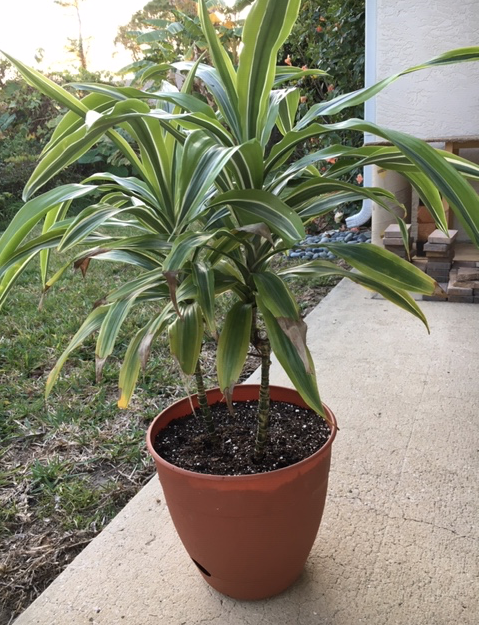
One other plant that was in need of attention was my corn plant. This one came with me down from New Hampshire. I had purchased some houseplants to decorate when my house was up for sale. The corn plant (this is what I call it, but I’m not sure what the real name is) is meant to be an indoor plant in the north, but here in Florida it does fine outside as long as it’s in the shade. The front of my house doesn’t get direct sunlight, so the corn plant is generally happy by the front door. But the pot was ugly and too small, so now it is in a bigger one. I think it is happy.
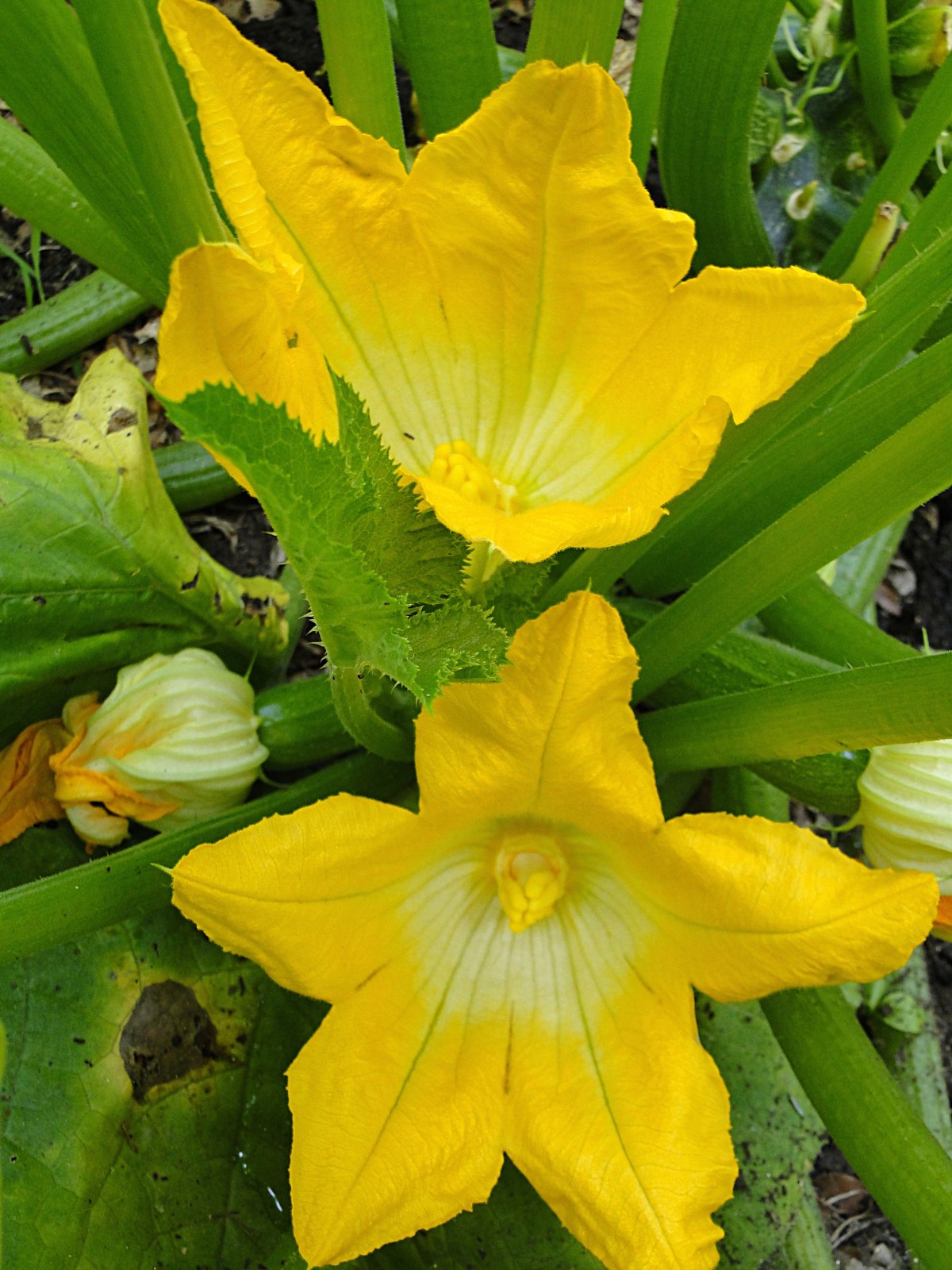
In New England squash and zucchini were always part of my summer gardening design. Usually a couple of plants gave me more squash than I could eat.
In Florida I have had no luck growing any type of squash. Now I read that “summer squash” is not grown in summer here. In fact, I am discovering that not much does grow well here in summer, except the tropical plants and citrus.
The Summer Squash Gardening Solutions page at the University of Florida has some recommendations when it comes to planting and growing squash. My garden is very small so I’ve tried to grow squash in my fabric bags. The plants begin fine, but eventually rot away. The types suggested are: Black Beauty and Spineless Beauty zucchini, and Summer Crookneck and Early Prolific Straightneck. I’ve never grown pattypan squash, but the site recommends Early White Scallop.
Another mistake I may be making is buying my seedlings (and seeds) at Home Depot. I have not had luck growing any plants that come from that store! Both of my caladiums have disappeared totally from the garden! I don’t know much about growing caladiums but I guess they need attention I did not give them.
Recently I visited a local nursery called Lindleys, in New Smyrna, where I found my Staghorn fern and Fiddle leaf fig tree, and a little thyme plant, but I’m thinking they might have seedlings to plant as well. I believe the real growing season begins in February here. I will go back and see what they have next month.