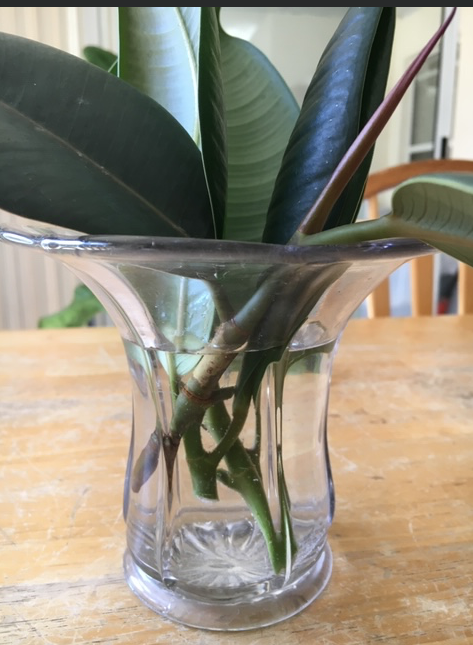
It all began with one indoor rubber tree plant. When it started to look gangly, I cut it back and stuck the cuttings in water to see what would happen. You can read about the rubber tree trimming here. Many of the cuttings did root and I simply planted them in the ground. A few never rooted for whatever reason.
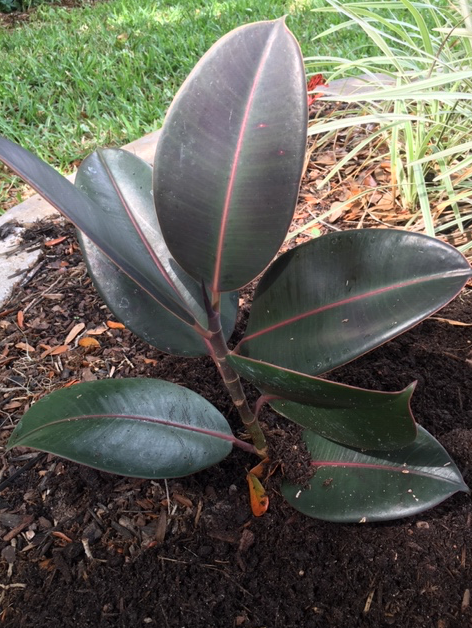
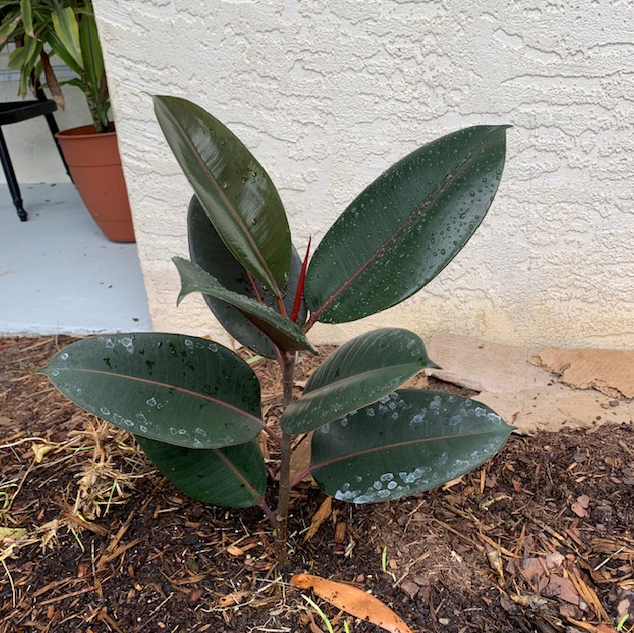
I ended up with four rooted stems which I planted straight into the dirt outside. I’m finding that my rubber tree babies are growing wonderfully in my Florida yard. But is there a drawback to having rubber trees in the yard?
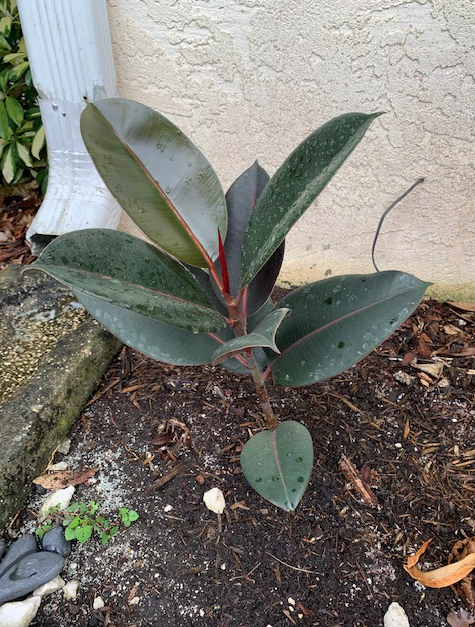
The secret is to have a warm climate for trees like this. In fact I am a bit too far north, according to grow zones, because we do sometimes get freezing temperatures in winter. According to this article at the Gardening Knowhow site, rubber plants to grow in warm climates without a problem. In fact they can become very large in the right conditions.
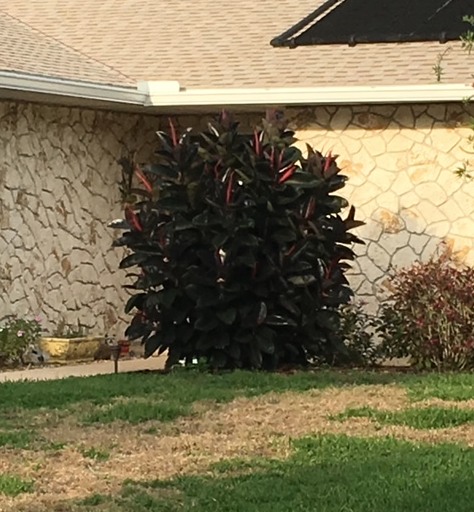
A few houses in my neighborhood (see photo below) have very large rubber plants in their yard, but nothing that looks like a huge tree.
This Tropical Plant is Easy to Grow
I don’t think there are secrets to growing outdoor rubber trees if you live in planting zones 9, 10 or 11. I’ve found that once in the ground, they need little attention. Even when there was no rainfall, and I expected to find them wilted, they looked perfect!
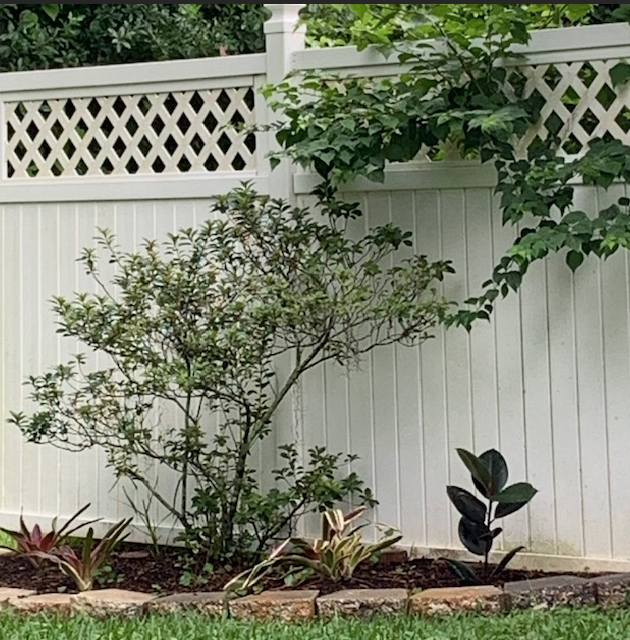
Every one of the four new plants in my yard are continuing to grow new glossy leaves. The only concern I have is that they may not have enough room to grow too large. But trimming them and keeping them small shouldn’t be a problem.
Rubber trees can grow huge in the rainforests, but around here I’ve never seen a really large one. They tend to break easily so hurricanes or strong storms can probably cut them back. Their lack of sturdiness may be a problem.
Protecting Tropical Plants From Frosts
I learned long ago that central Florida winters can have very cold nights. Sometimes that cold hangs around during the day as well. Any time a tropical location, where many tropical plants are growing, must deal with lower than normal temperatures, many plants can die.
So here is what we can do to protect our tropical plants. Bring them indoors if it’s possible. If they are too large to move very far, put them as close to the house as possible. The only other option is to cover them. Sheets may not be warm enough, but don’t use something too heavy that may break the limbs or branches. Make sure the plants have plenty of water BEFORE the frost arrives. And be sure to uncover all plants in the morning. Don’t leave them covered even if another frost is predicted for the next night.
If something in the yard looks dead by the end of winter, give it a little time. It may come back. That is what happened to my bougainvillea two years ago when we had a lot of cold weather. It died to the ground, but eventually grew back and is now a huge plant!
The big croton was not so lucky, but it was in a container and that makes a difference too.

Thank you for sharing!


 Hydrangeas Blue
It’s funny that you say they don’t grow huge in Florida. There’s many massive ones throughout Pinellas county. Pinellas county is mainly USDA zones 10a with the exception of most of Saint Petersburg which is now classified as zone 10b. I’ve even seen large rubber trees (Ficus elastica) towering above homes in Hillsboro county (zones 9b through 10a).
LikeLike
Where I live and I live in zone 9B, rubber trees do not grow large. I’ve lived in this area since 1979 and do not recall ever seeing this type of tree towering over homes, or come across one out in the wilderness. Of course, maybe they are there and I just haven’t seen them, but they are certainly not common. I don’t claim to know about how they grow in other parts of the state and it is entirely possible they grow huge in some places.
LikeLike
the downside of growing a rubber tree anywhere on your property is that it will continue to grow tall and wide forever
unlike “normal” trees, that will just grow tall and possibly have roots big enough to crack the sidewalk pavement, the rubber tree’s roots will dig so deep and wide, that it will take over your property, if it continues to grow for over 10 years
I have one that’s been on the back of my property since before I had built my home
it is not killable. It is so gigantic, I would have to pay thousands of dollars for a landscaping company to cut it down
I cannot cut it down myself because it is so high up, that my chainsaw won’t reach up to it, even if I stood on top of my truck bed
so I hope you’ll take my advice to try to “tame” your rubber plants to stay within a limited amount of space on your home property
mine takes over almost a quarter of my acre-sized land
LikeLike
Holy cow… Do you live in a very tropical place? I’ve never seen a rubber tree that huge where I live. I do plan to trim them for sure.
LikeLike
I planted one next to my house 15 years ago. I cut it back every year by cutting out the stalks that have reached the soffit. No much trouble keeping it small.
LikeLike