Building a Flower Garden

See how I planted a little flower garden in my Florida yard.

My son took me to Lindley’s Nursery in New Smyrna Beach the other day and I picked up some flowering plants for the yard. (More about Lindley’s further down the page.)

I’ve been saving cardboard boxes to use as grass killers in the yard. It is not that easy to kill Florida grass and weeds, but this type of thing works very well in New Hampshire! Haha… I’m not there, I’m here, so we used the rototiller.
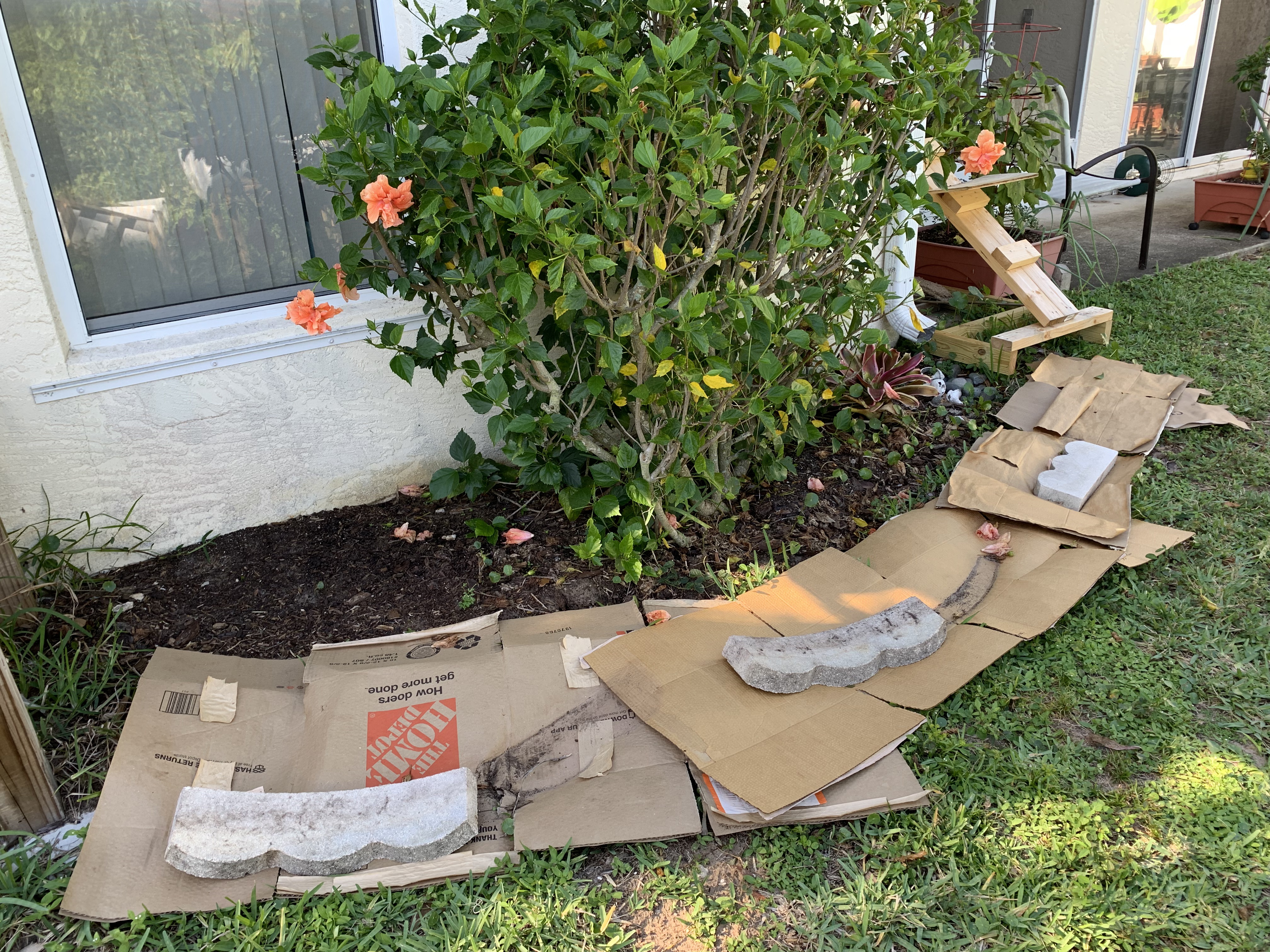
cardboard on grass

Step Two

Dig up the grass, roots, and dollar weed (ugh) and pull it all out. (There is no way to remove all the dollar weed.) This leaves a sandy “dirt” to which I added a bag of store bought soil. (We buy our dirt, compost, and mulch from The Yard Shop in New Smyrna.)
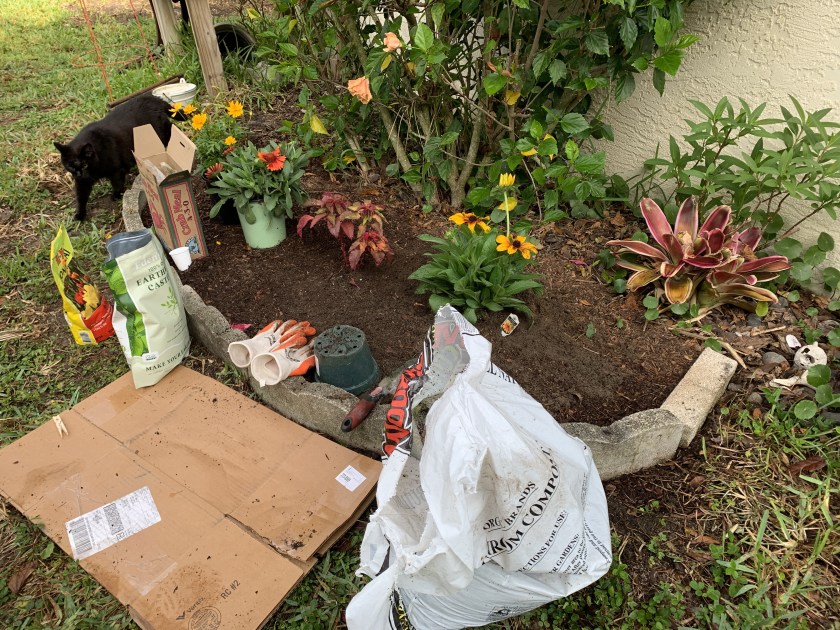
creating a new flower garden
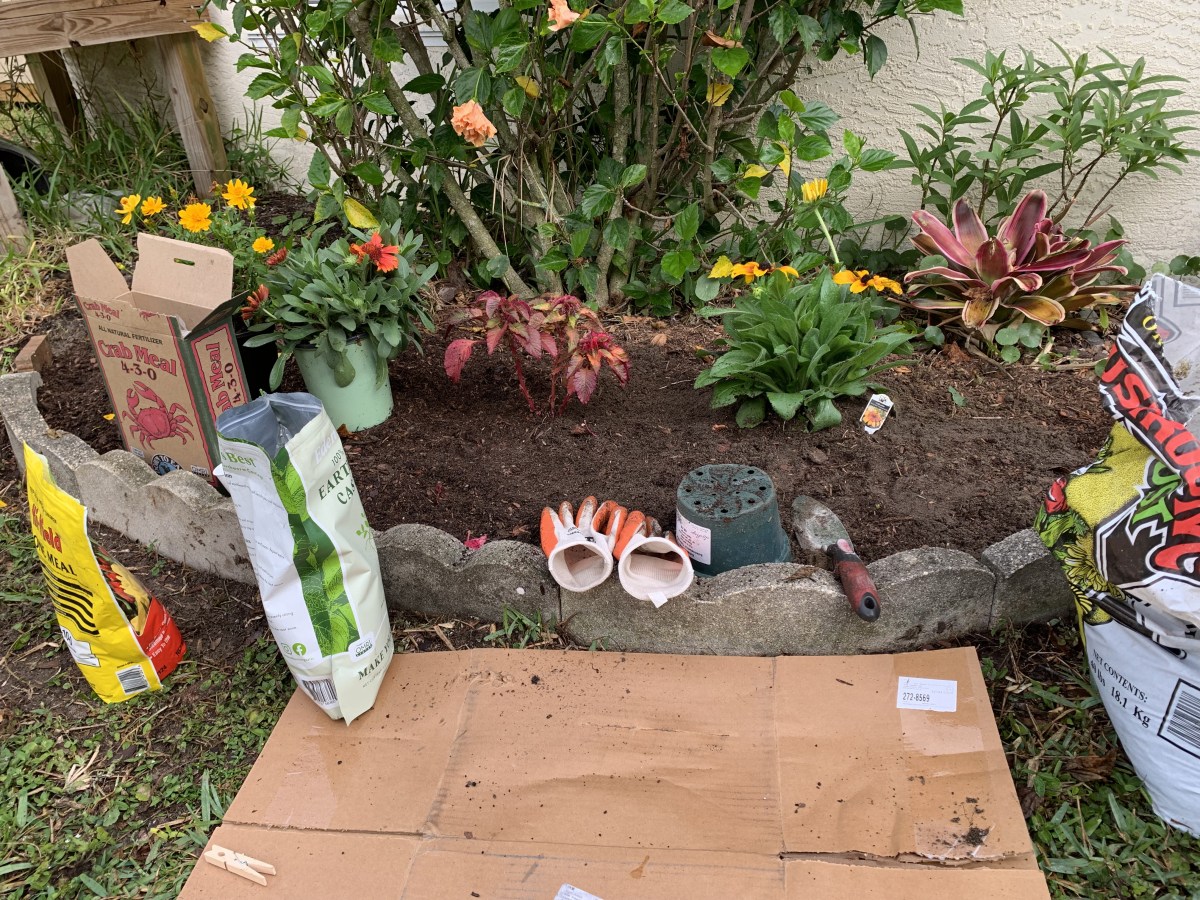
Nearly done with the garden

Plant the Shrubbery

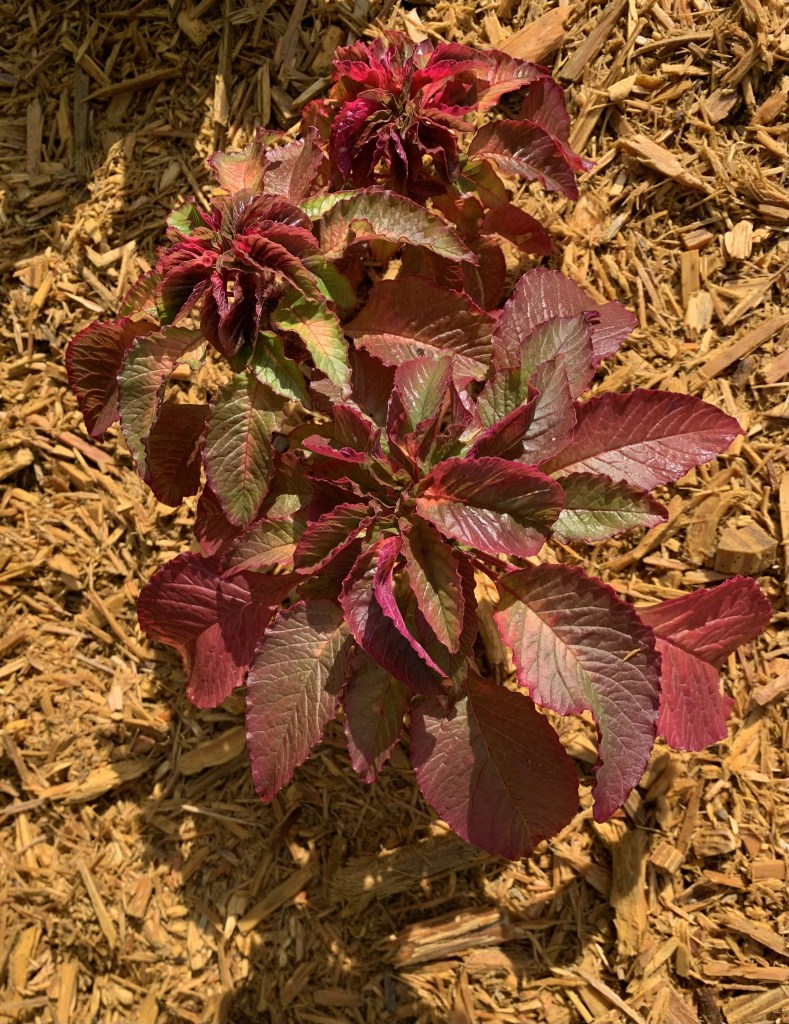
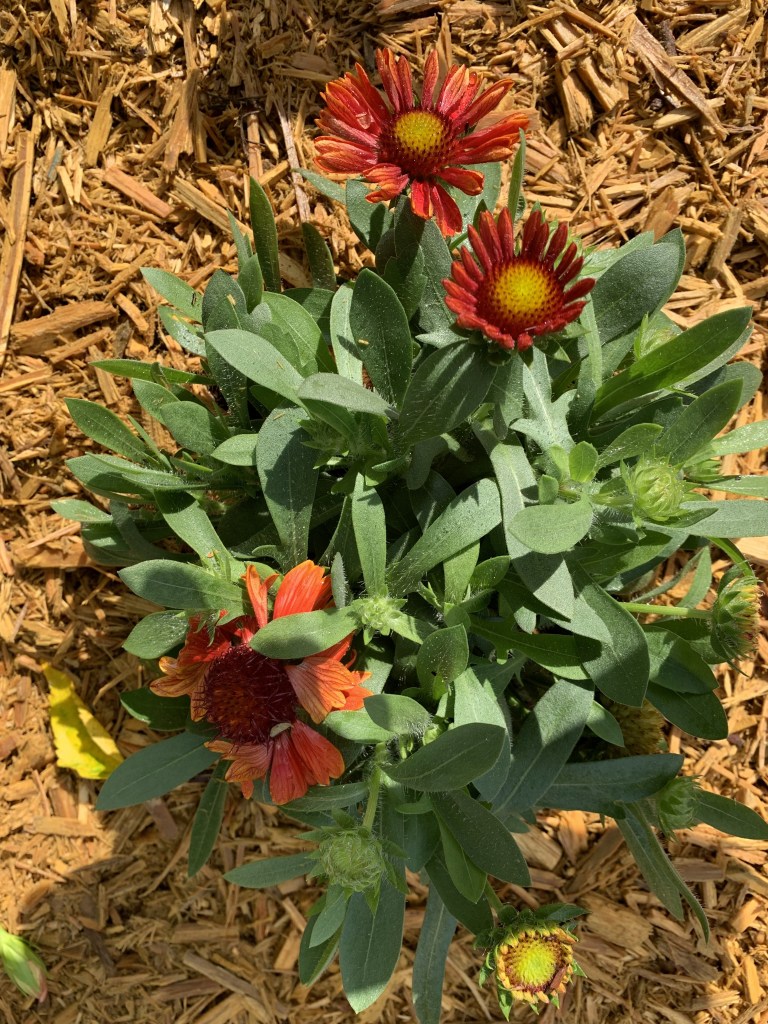
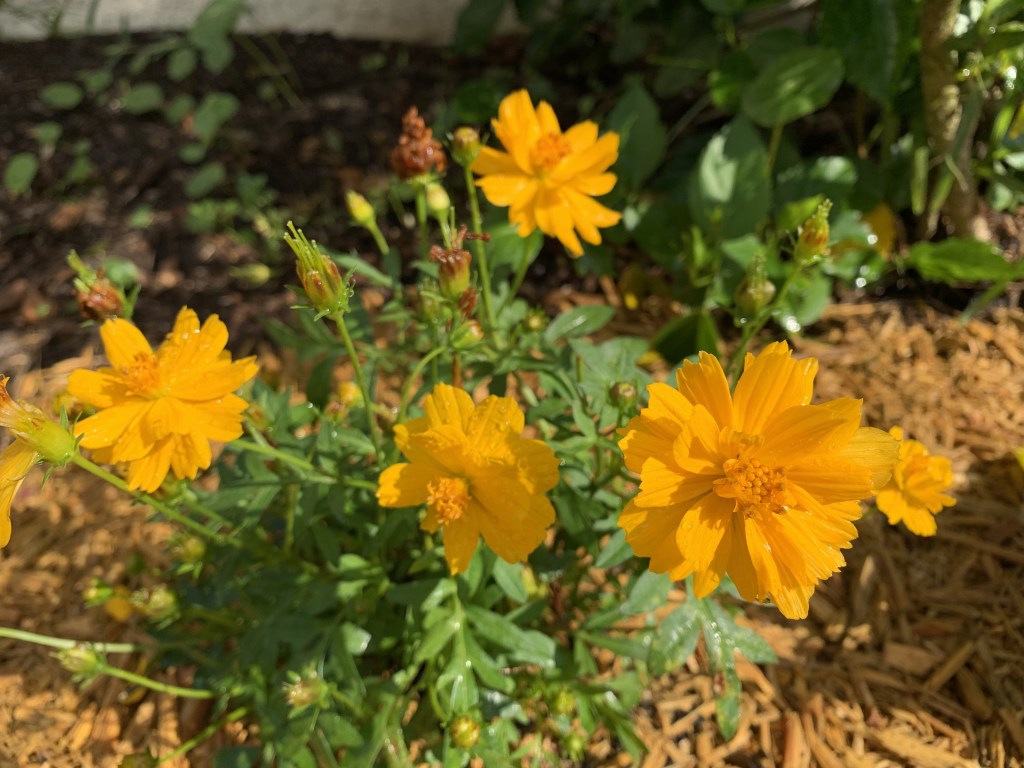
I had four plants to put into the space and I planted them back a bit to leave room for something in the front. Also, I’m not sure how big they will become. I used a piece of the cardboard to kneel on while planting.

These plants came from Lindley’s Nursery in New Smyrna Beach. I was so impressed with the upgrades they had done to the place since my last visit (quite a white ago). I would have stayed longer because the grounds were beautiful and they had so many wonderful plants, but I was with my son who was not into plant shopping.

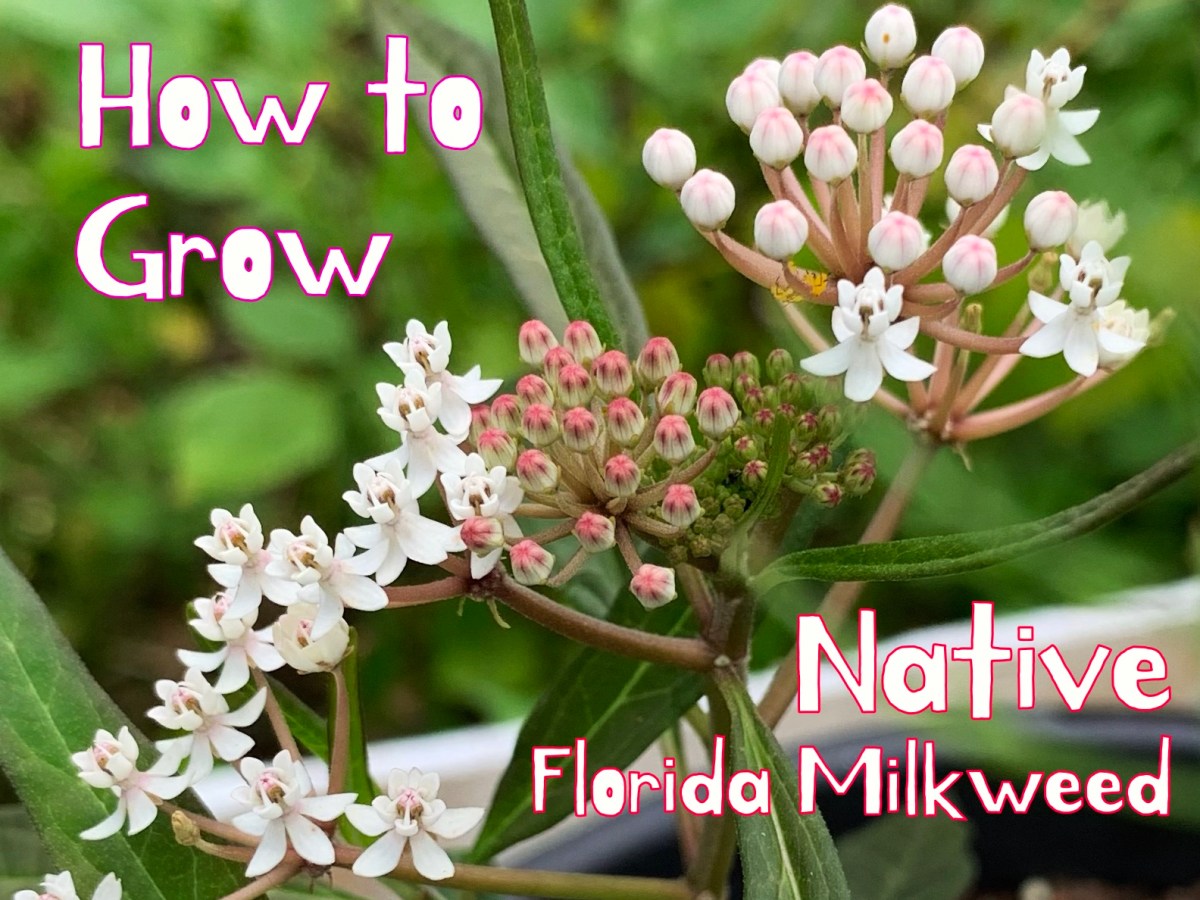
I grabbed some flowering things that seemed to attract bees (if the bees are on the plants while shopping, it’s a good indication!). All the Florida native plant names totally left my head, but I will probably go back at a later date to find more plants. They did not have any native milkweed because I asked. It was sold out – and there was no sign – so I’m not sure which type they were selling. I hope it was not the tropical milkweed.

I’ve never grown any of theses plants before.
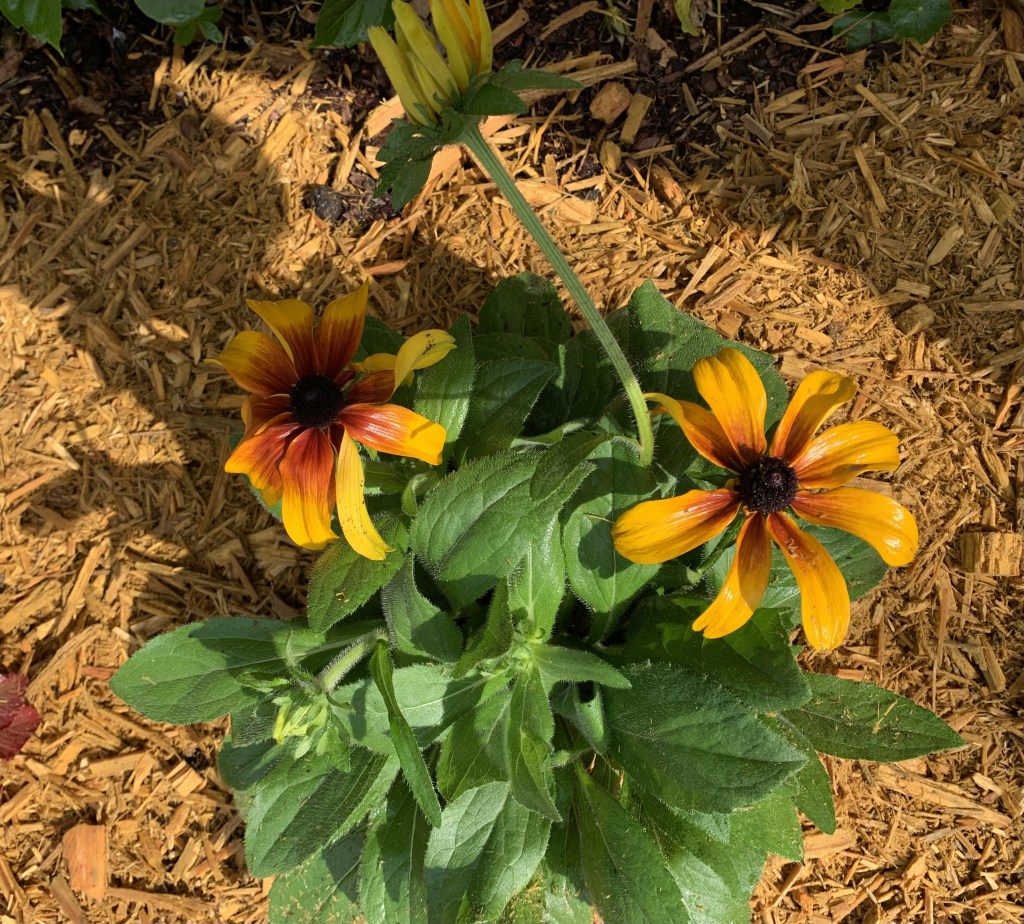
The Garden is Finished!

The digging began early in the morning to beat the sun. I have until around 9:00am until this area becomes sunny. I did have to finish with the mulch and do the watering in the sun, but at least the digging was finished.
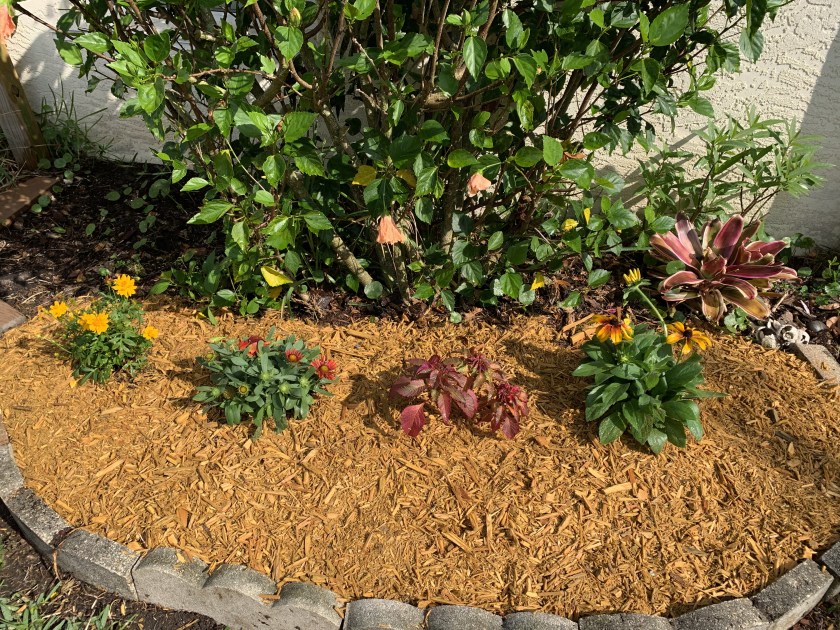
New flower garden planted
Finished!

Planting Tips

For each plant I added to the garden, I included some bone meal, crab meal, earthworm castings, and compost. All these things should help improve the soil and keep the plants happy for now. I used these amendments because I had them, but bone meal only would have been fine for now. (All links are Amazon affiliate links.)

A couple of the plants were very root bound, so I disturbed the roots by pulling them a bit to keep them from being tight. This helps them to grow outward instead of round and round like they had to do in the pot.

All the soil amendments I mentioned above were mixed with the ground soil once the plant was in its place. After planting, each plant was soaked with water, and once the mulch was added, I watered them all again.

Keep Reading the Blog

So Long For Now

I’ve given it a lot of thought and I really don’t have time to continue writing on this blog. Or, maybe I should say I’m cutting way back. My…
Fall Gardening is Underway

Here I have a photo of my Fall garden. It is hard to tell what is growing, and honestly not much in the way of food just yet. The…
American Beautyberry Bush Propagation From Seeds

The American Beautyberry bush is an unusual and large blooming perennial here in central Florida. I’m trying to propagate from seeds that come from the shrub in my yard.

I’m beginning this post well before it will actually be completed. My goal is to start Beautyberry plants from seeds.

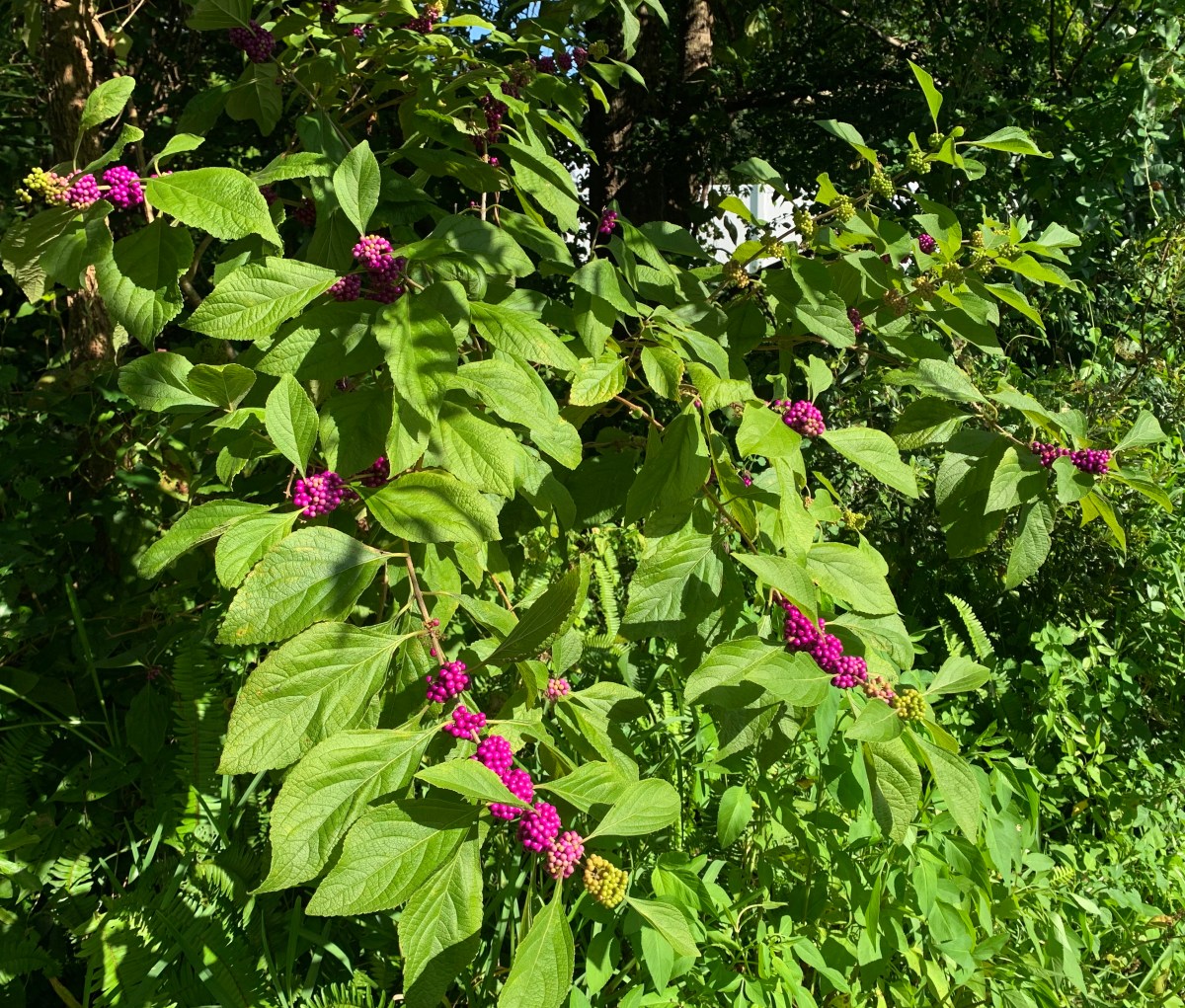
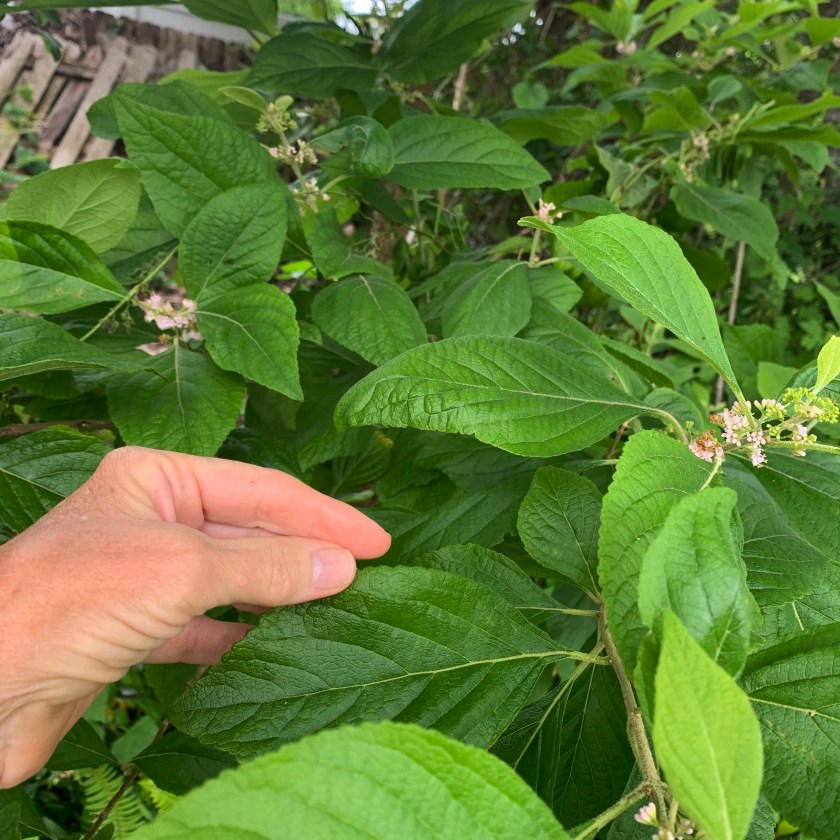
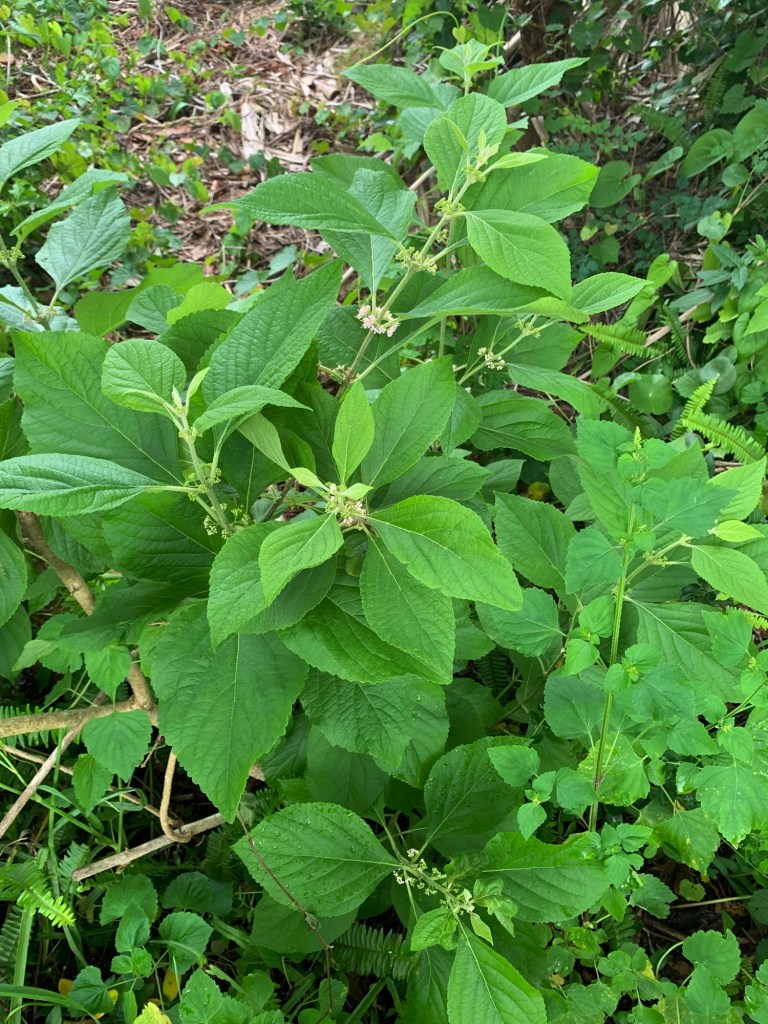
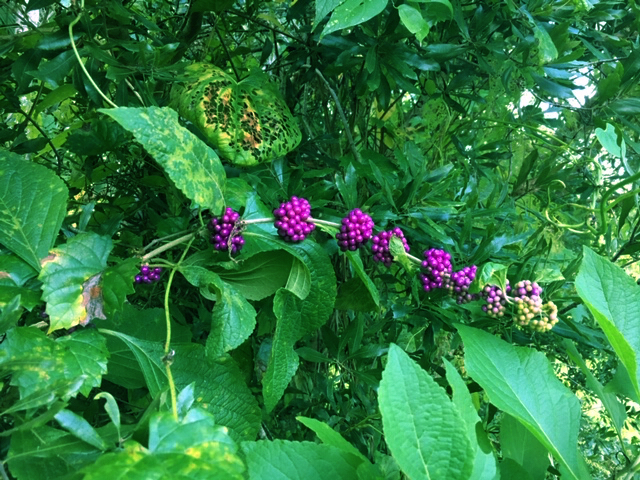
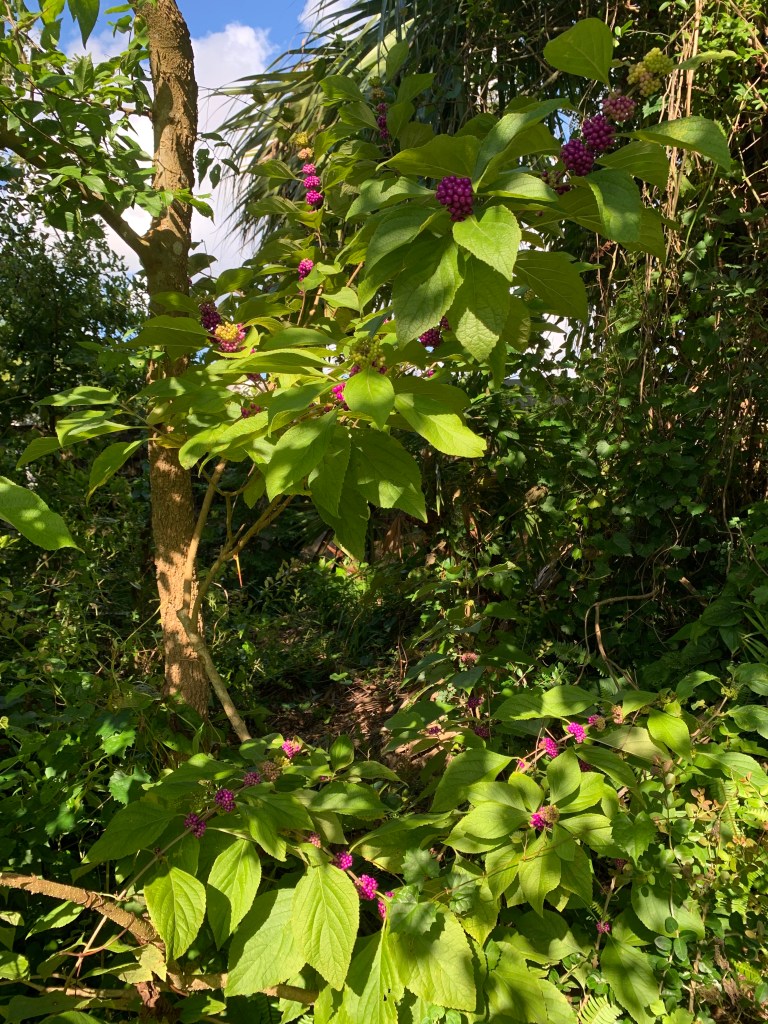
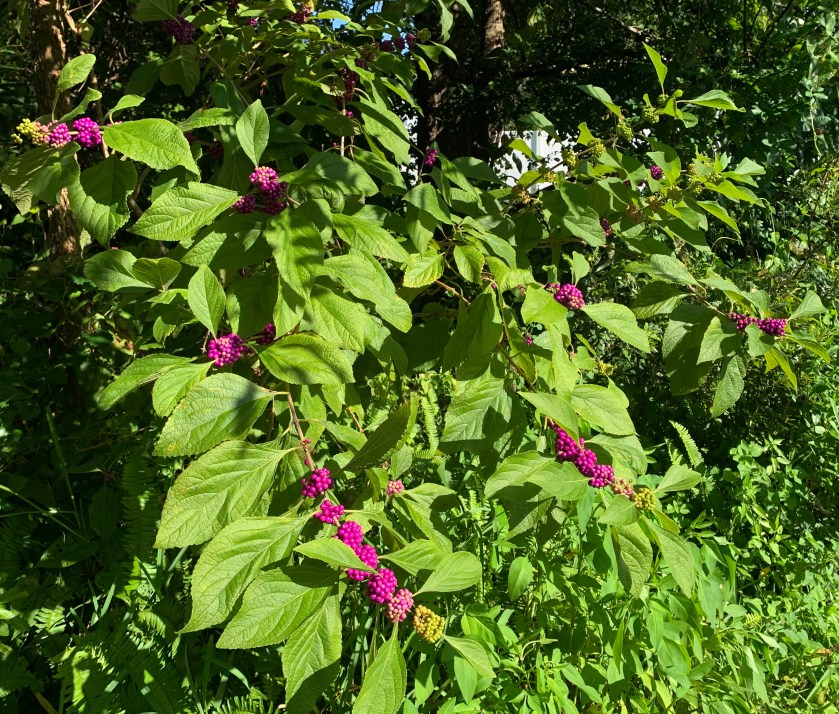
The Beautyberry bush, or American Beautyberry (Callicarpa americana) is a unique plant and I have two growing at the edge of my small Florida yard. I thought they were some sort of big weed until I saw the berries.

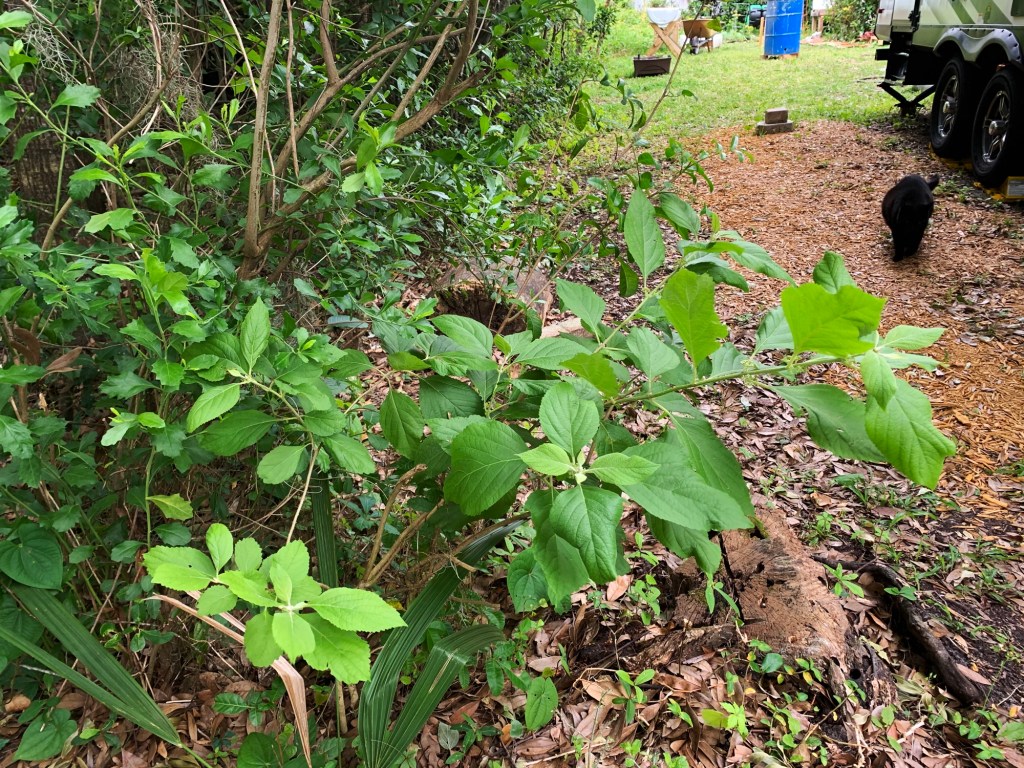
I have learned that it is a Florida native plant. It is easy to grow and needs no care. I have certainly done nothing to help these plants thrive. Both plants are growing among natural growth at the edge of the yard.
The Hidden Bush

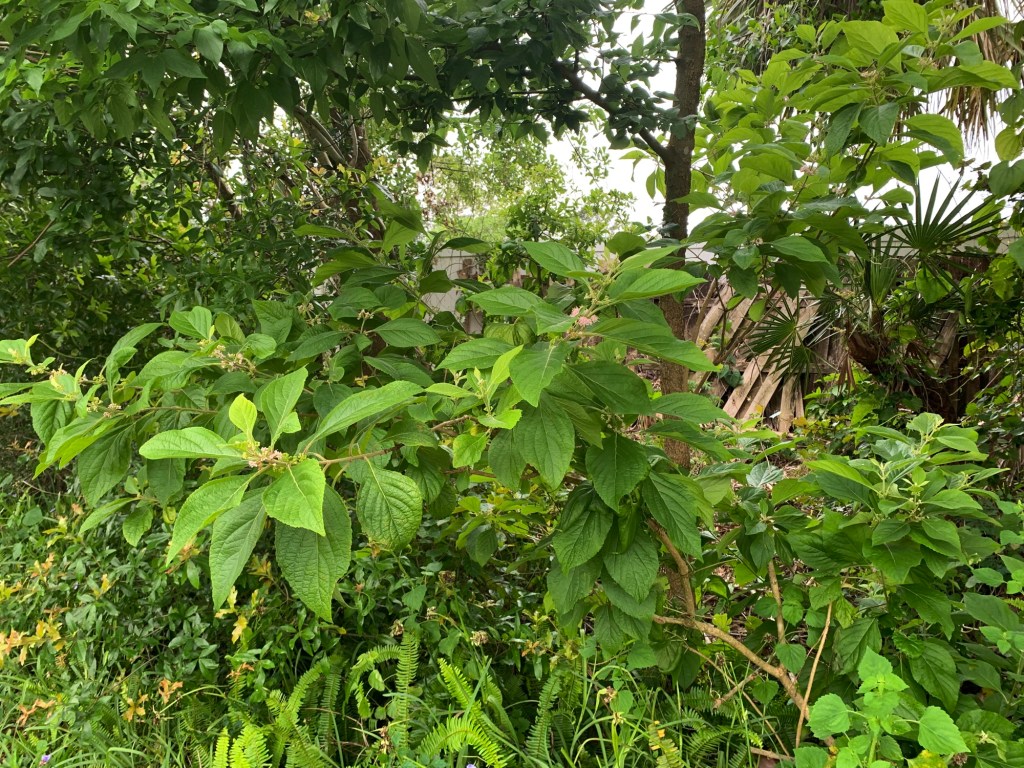
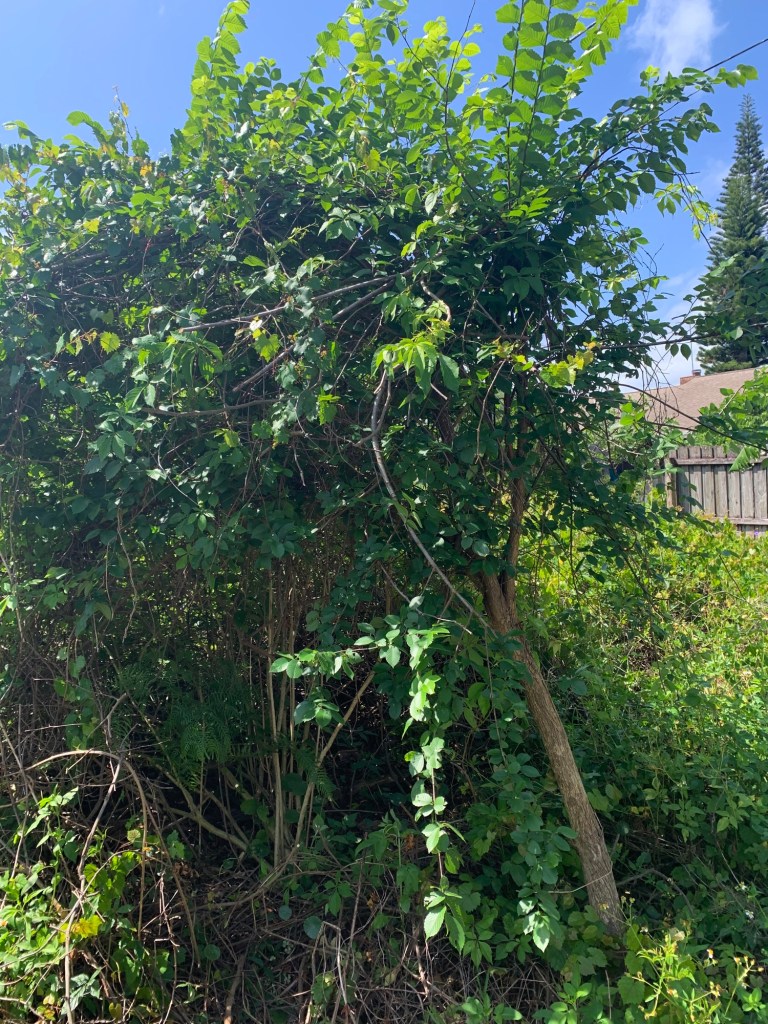
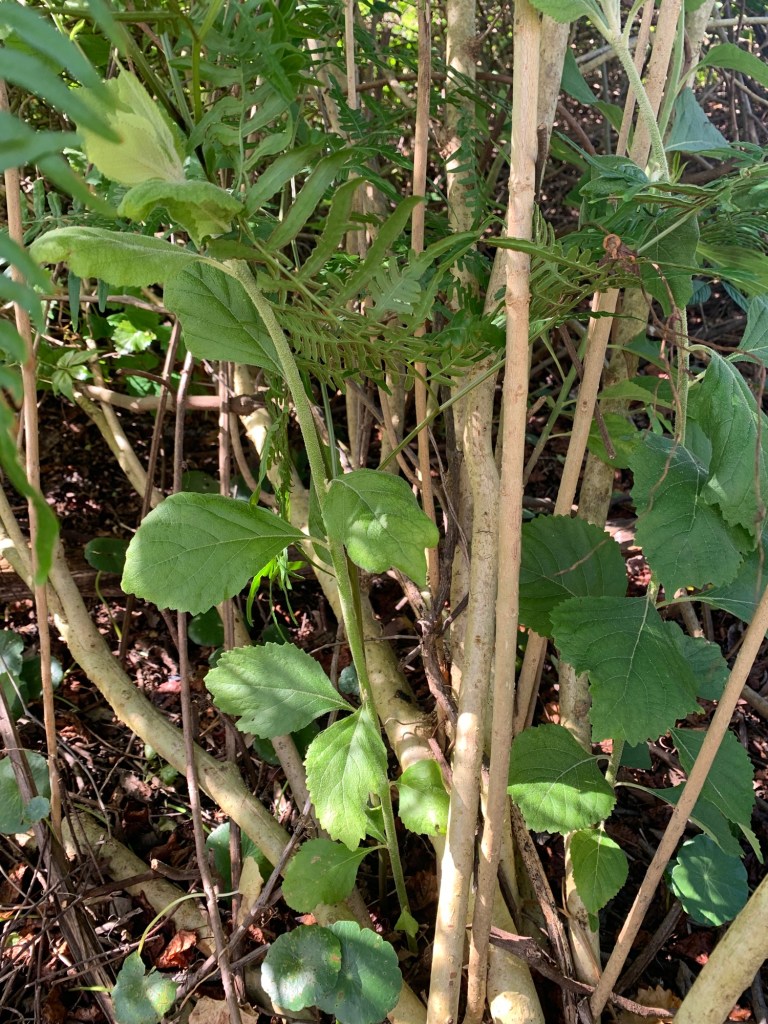
On the lot next door, there is also a Beautyberry and an Elm tree side by side. However, both are covered in vines . The only reason I realized there is a beauty berry in that clump is that I went in to remove the vines (failed) and found new growth at the base of the bush.

This is not on my land, but I’d love to uncover them so they can grow correctly. In winter when the vines die, I will try again, unless the land is cleared by the owner before then.

A Natural Mosquito Repellant
Beautyberry bush

The leaves are a bit fuzzy and I’ve read that they can be used to keep mosquitos away by rubbing them on the skin. I’ve tried this and it seems to work!

Timeline of Flowers to Berries

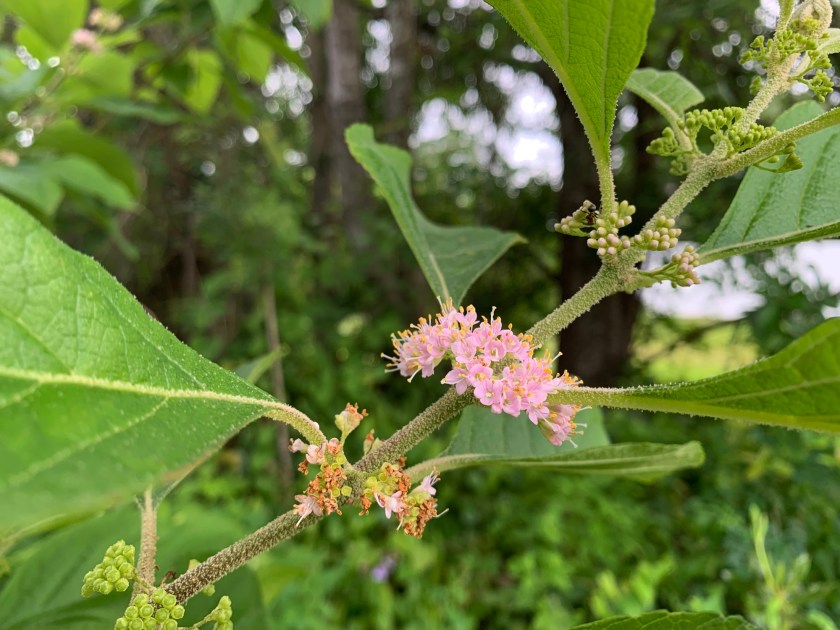
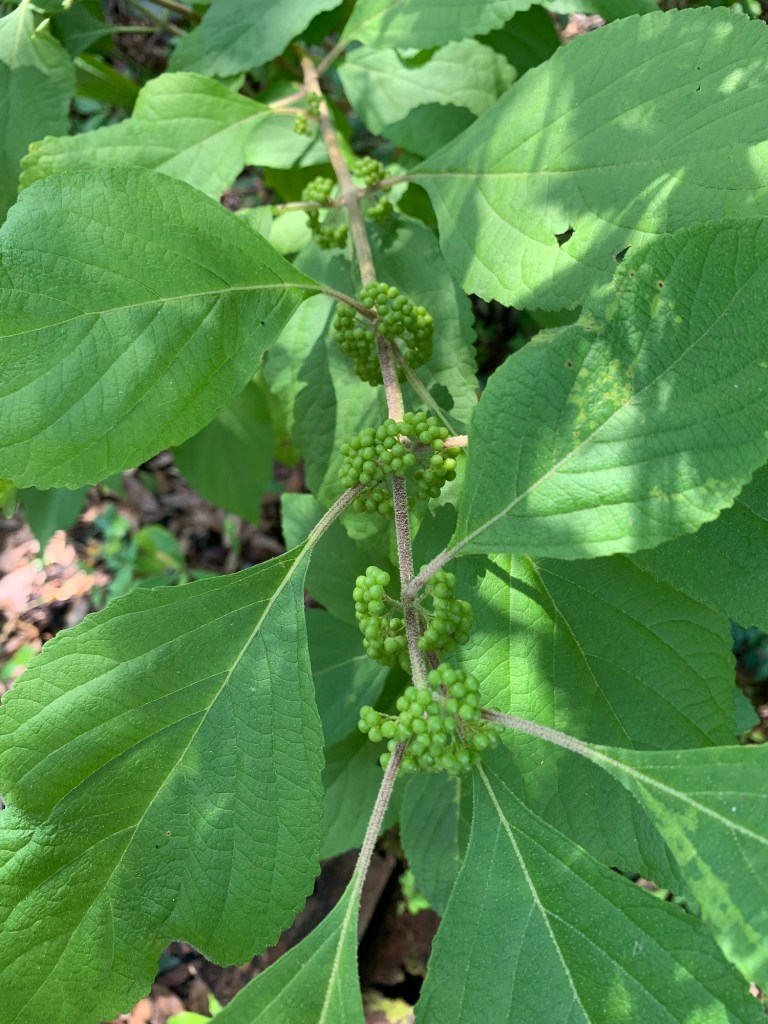
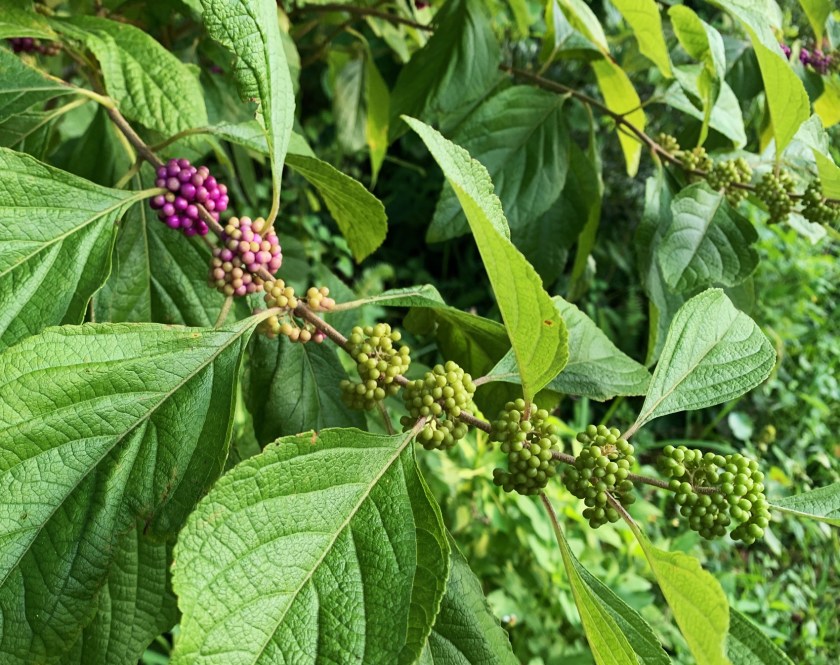
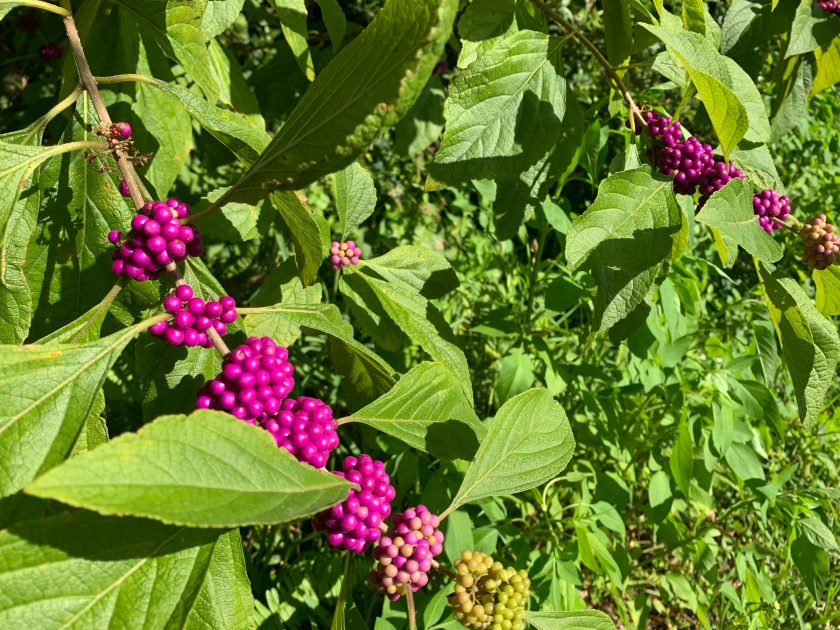
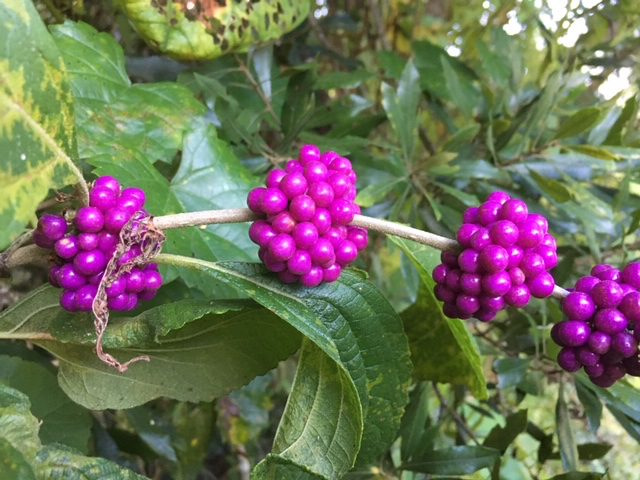
The little pink flowers begin to show up along the stems in May. By June, the flowers have become green berries. In July the berries begin to turn purple from the back of the stem toward the front.

  • Beautyberry bush
  • Beautyberry bush flowers
  • Beautyberry bush with green berries
  • Beautyberry bush stem of berries
  • beauty berry bush in August

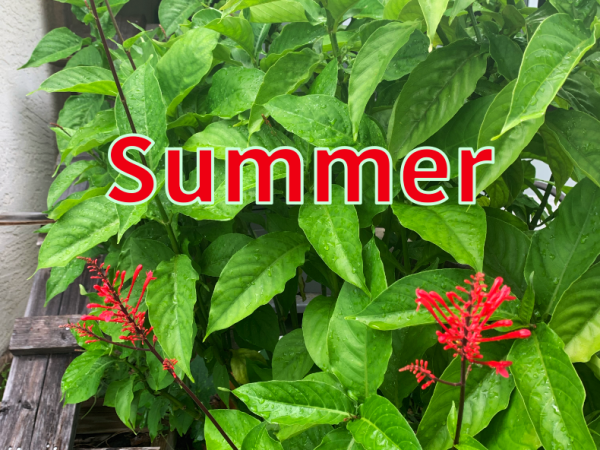
Birds love to eat the seeds and have therefore have helped this plant to spread. Because I have found another nice shrub (the Firespike) back behind this Beauty Berry, I suspect that this area of the yard was once a garden. It is overgrown with vines and weeds that are impossible to keep clear, but these nice, flowering shrubs have survived.

A Propagation Plan

Now, I know that this plant is hard to find, so I cherish the plants I already have. But, what if I could start new Beautyberries from the seeds?

purple berries
A striking stem of purple berries

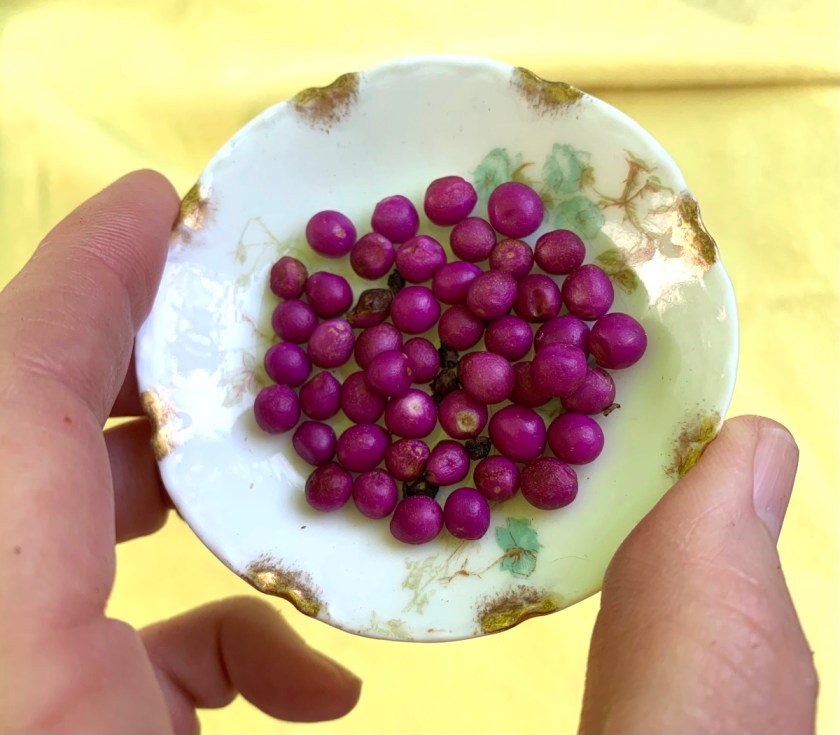
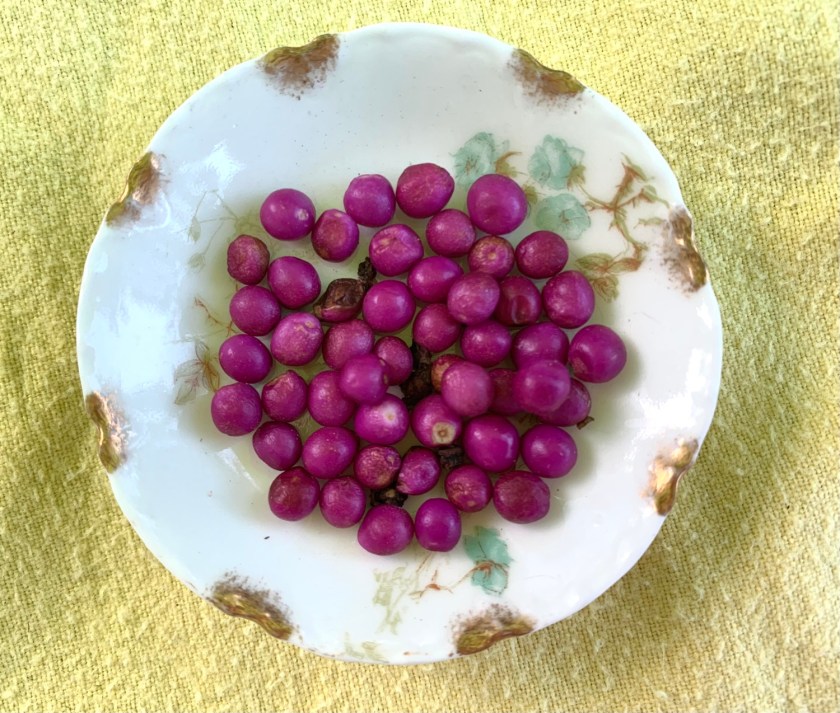
Collect the purple berries and find the seeds inside. Seeds form around the end of summer.

Let the seeds dry and then plant them in early spring.

purple berries

End of August collection of berries from the Beauty Berry Bush.

Beautyberry bush berries
beautybush berries

More Good Info About the Beautyberry

Large beauty berry bush
Sprawling Beauty Berry Bush
beauty berry bush
Long stems with purple berries, August photo

Fill the Yard With Milkweed – The Right Kind!

Be sure to select a native milkweed for the yard, or you could be harming the Monarchs instead of helping. Don’t take store and seller’s word for it – be informed.

When I wrote this blog post, over two years ago, I had read an article about Tropical milkweed being horribly bad for Monarchs. It seems that is not completely true. As I’ve continued to learn about growing milkweed, I think the Tropical variety can be used as a good stand in if native milkweed is not available. But it must be cared for correctly.

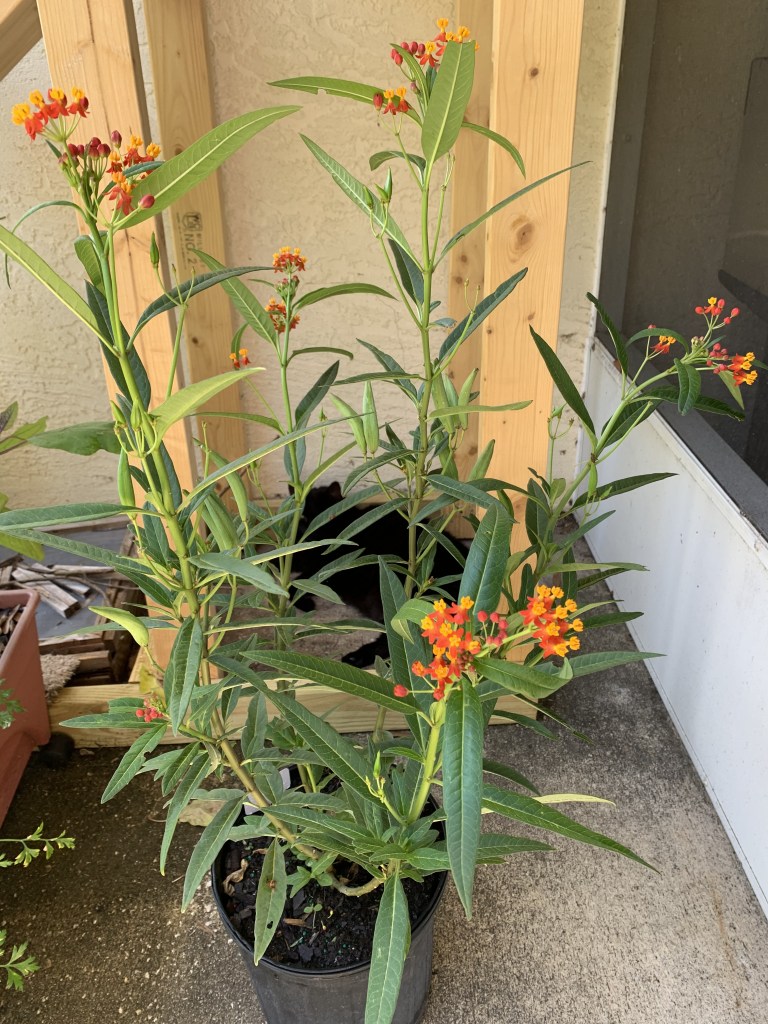
Back then: On a trip to the Farmer’s Market, we found some plants for the yard. I was happy to find this plant at the market. It cost me $15.00 but I was very excited to find such a wonderful, big plant to help the monarchs. What I didn’t realize is that it is NOT native. I bought Tropical Milkweed which is becoming a problem in the south.

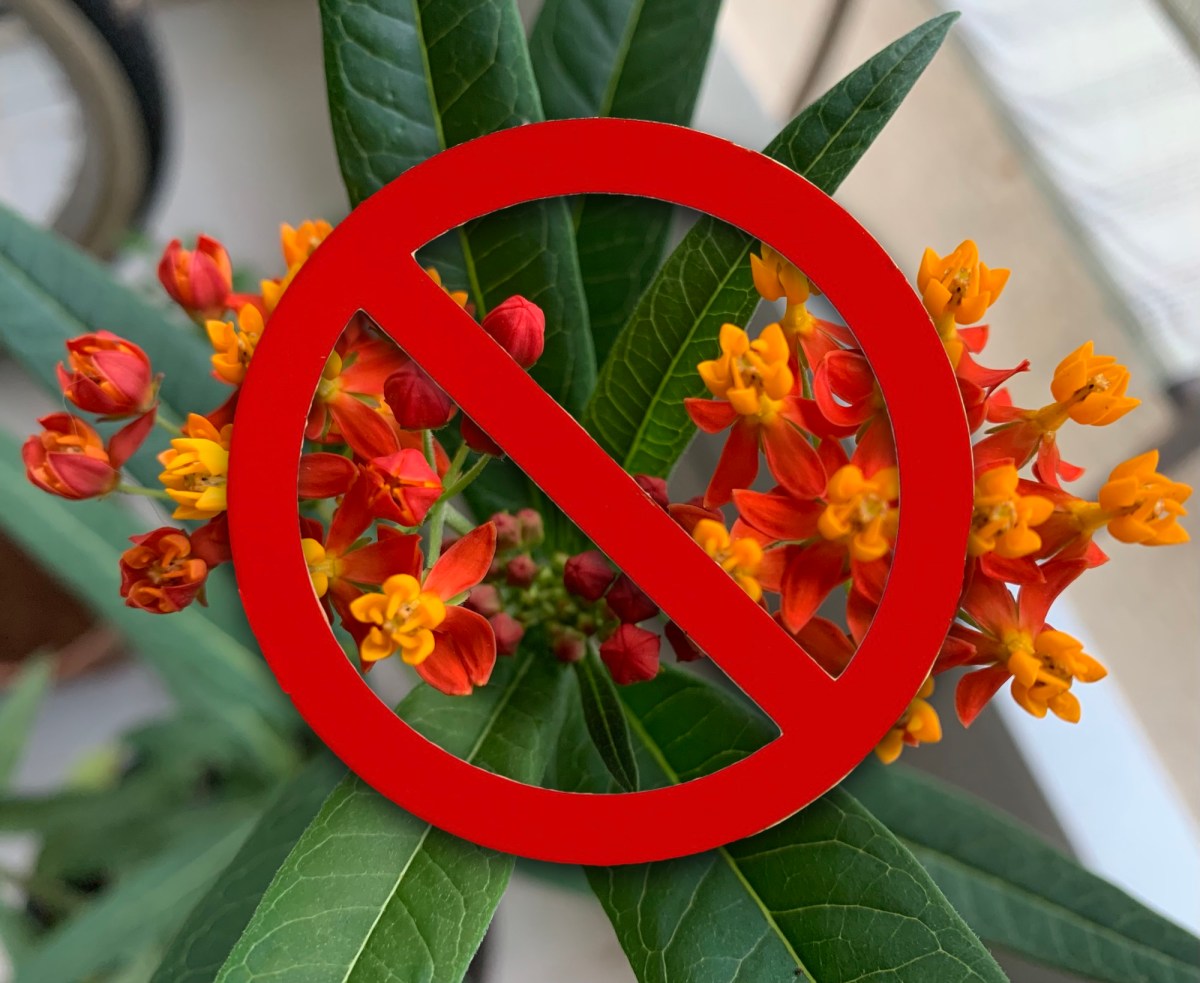
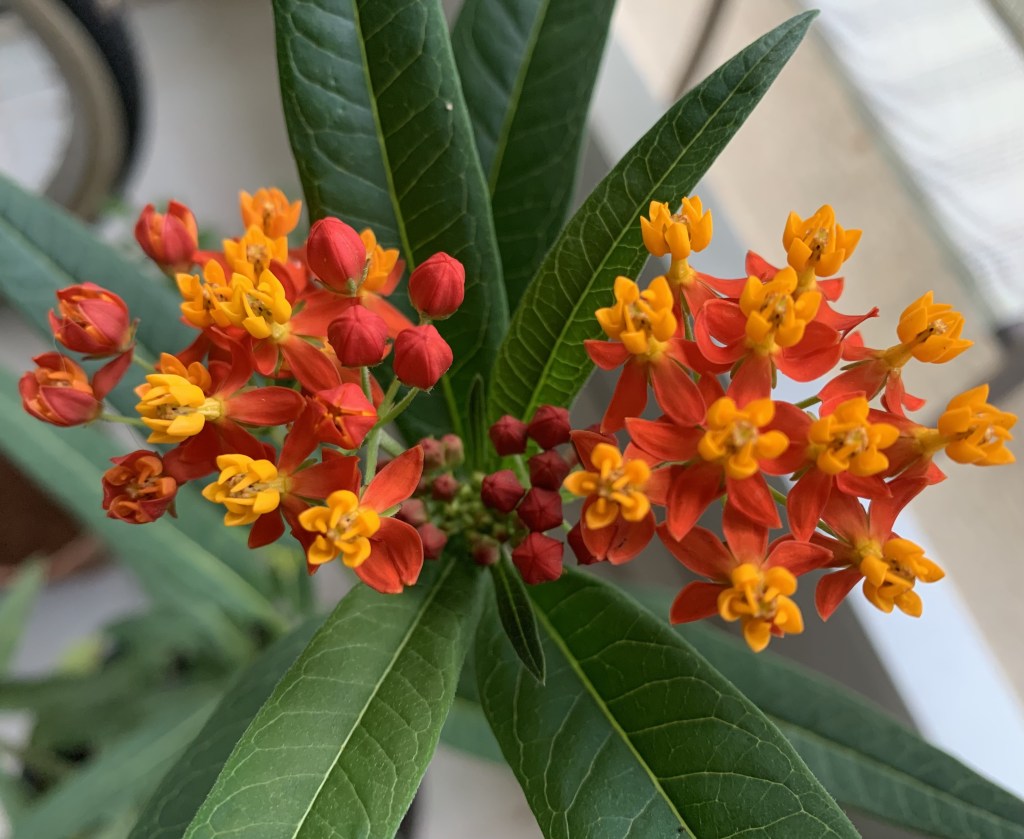
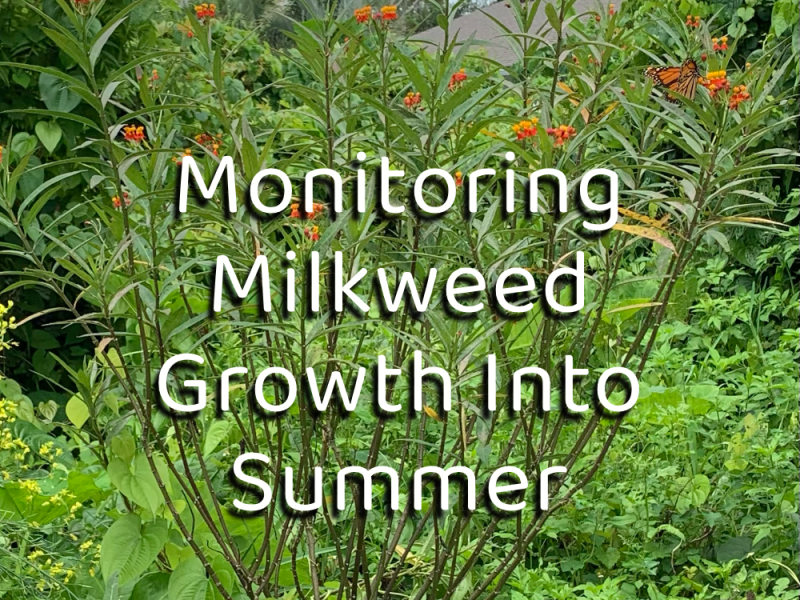
Two-colored flowers (red and orange/yellow) with pointed leaves – this is the non-native Tropical Milkweed. But, the only reason it seems to be a problem is that it does not die back in Fall / Winter.

Good Intentions

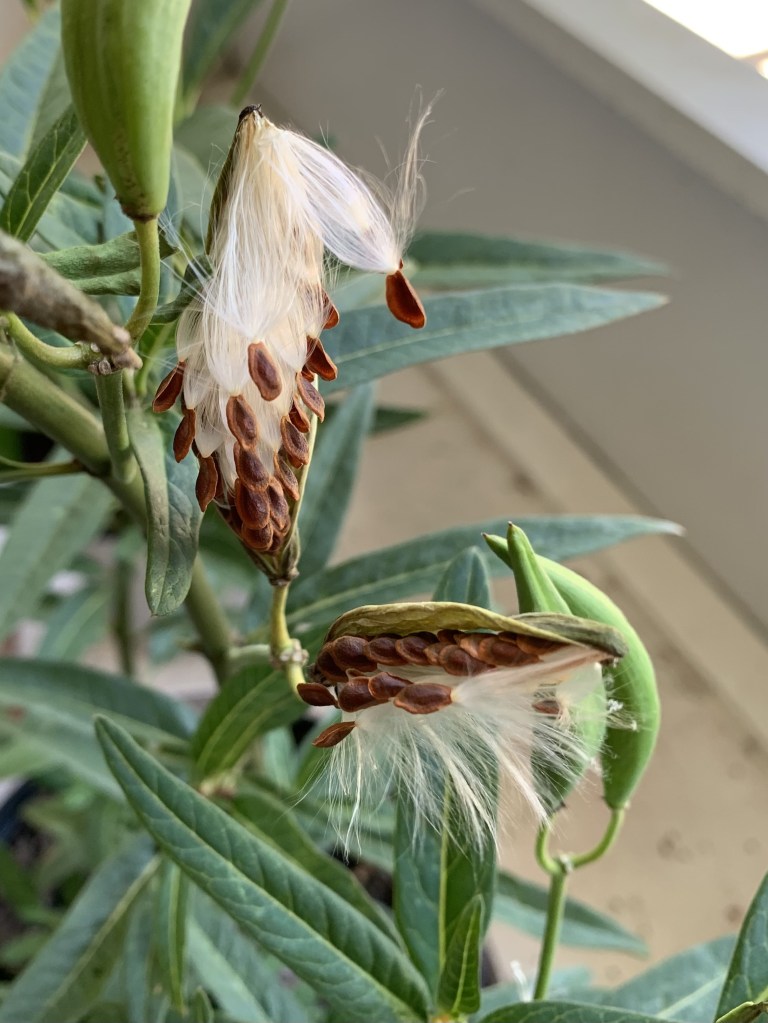
I want to fill my yard with food for the bees and butterflies (namely Monarchs)… BUT… this is not the right kind of milkweed for my area. When this milkweed plant began to drop its seeds, I looked for information about planting them. I’m so glad I searched for information. BUT, now there is more information.

I suggest removing the seed pods so the plant doesn’t spread into the wild where it can’t be cut back over winter.

This is when I realized that I have the wrong type of milkweed. Wrong meaning not native. It was time to learn more about milkweed.

Updated Info on Tropical Milkweed

Tropical Milkweed (Asclepias curassavica) is NOT a native Florida plant. It is native to Mexico. It’s always best to plant native. However, I have not easily been able to find nice, native milkweed plants at local nurseries and garden shops. Tropical milkweed is easy to grow, and it grows fast. No wonder plant sellers prefer this one.
If you have tropical milkweed, the most important thing is to cut it back by December. It won’t die back on its own in many locations. This keeps the Monarchs from migrating. If they stick around and continue to breed, the caterpillars can develop a lethal parasite (OE). Read the article about this at IFAS for more info.

I doubt that many sellers of the tropical milkweed even realize it is not native to Florida. And many probably don’t understand the need for cutting it down.

Non-native, flowers are bi-color red and yellow.

Tropical milkweed is not native to Florida and can cause problems for the Monarch butterflies.

When is it Okay to Plant Tropical Milkweed?

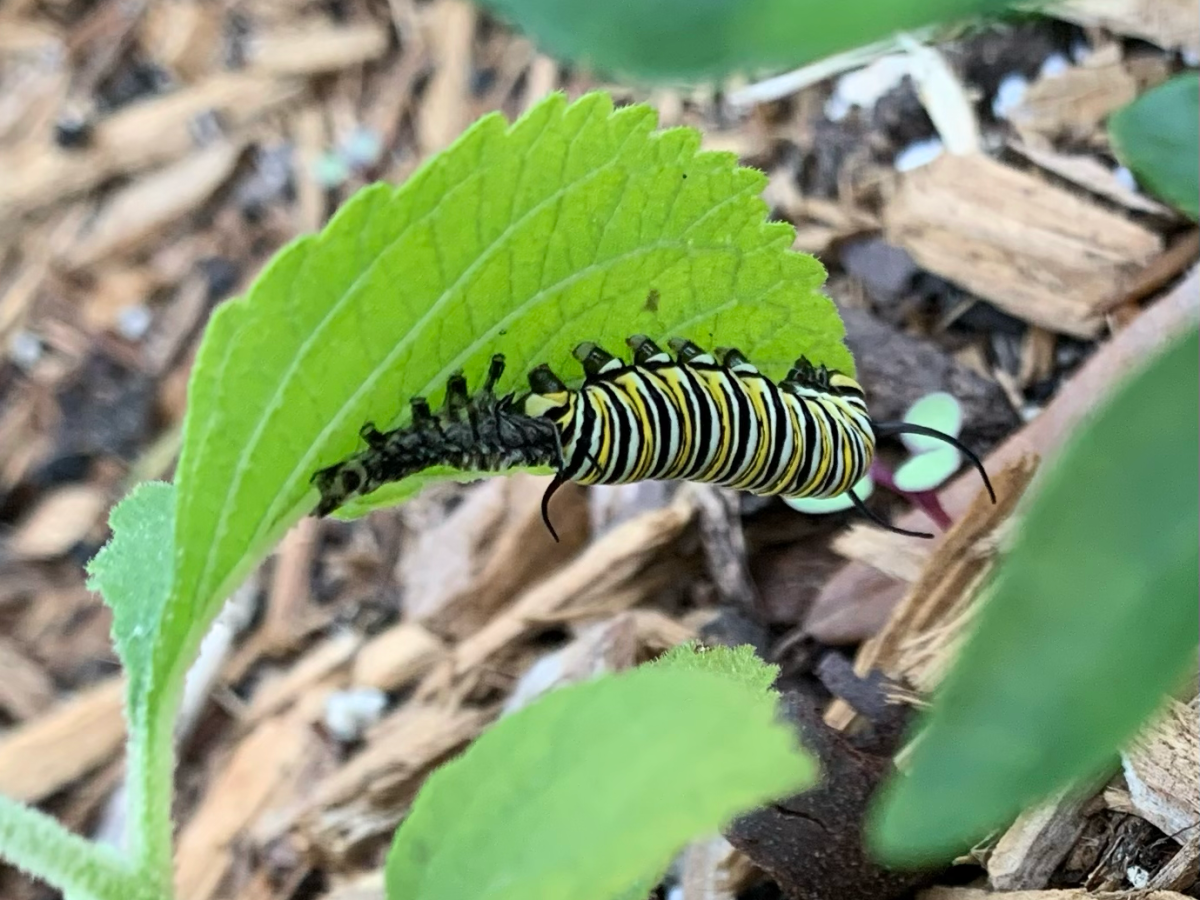
So what if you have this milkweed growing in your yard? After I removed my Tropical milkweed plants, two more plants grew – 2 years later. Right away I began to see caterpillars. I knew this was the wrong milkweed, but it was feeding those hungry caterpillars. So, is it better to help the Monarchs even if the milkweed is not native? I say yes.

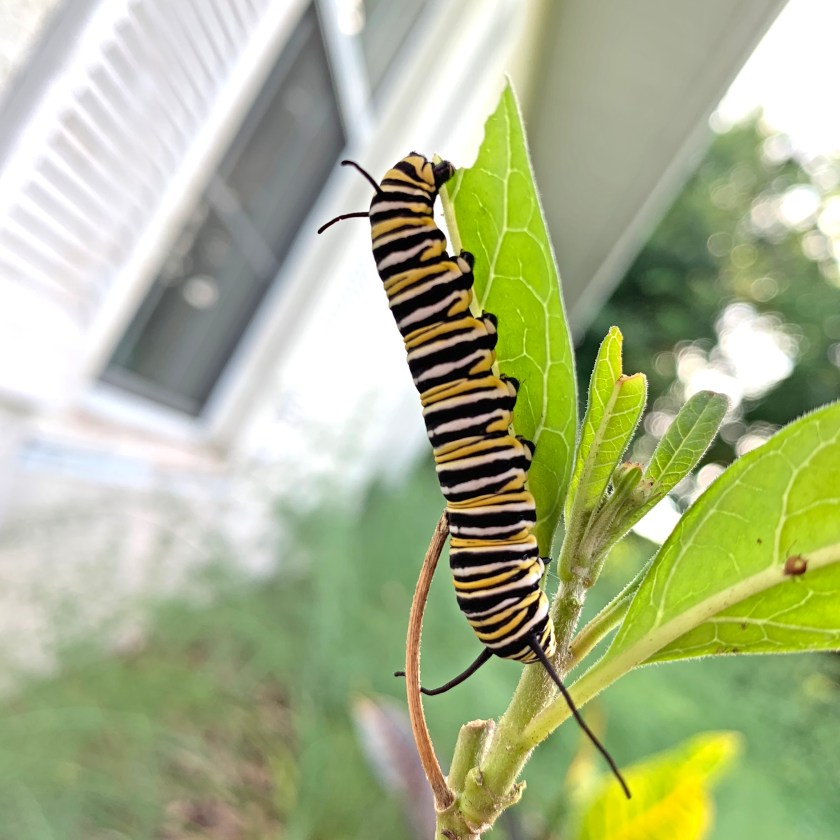
monarch caterpillar

I now believe that having some tropical variety can be good to supplement the native types. Native milkweed is hard to find to buy. Certain types need sun and lots of moisture (swamp variety). Others need sun and dry conditions (Sandhill). Milkweed is meant to grow in Florida’s diverse ecosystem, which is vanishing. It should not be grown in a yard that is sprayed with chemicals.

All these things make native milkweed hard to find. With roadsides mowed, and lawns taking the place of fields, butterflies are now endangered. If we can help by providing some plants – native or not – I say let’s do it.

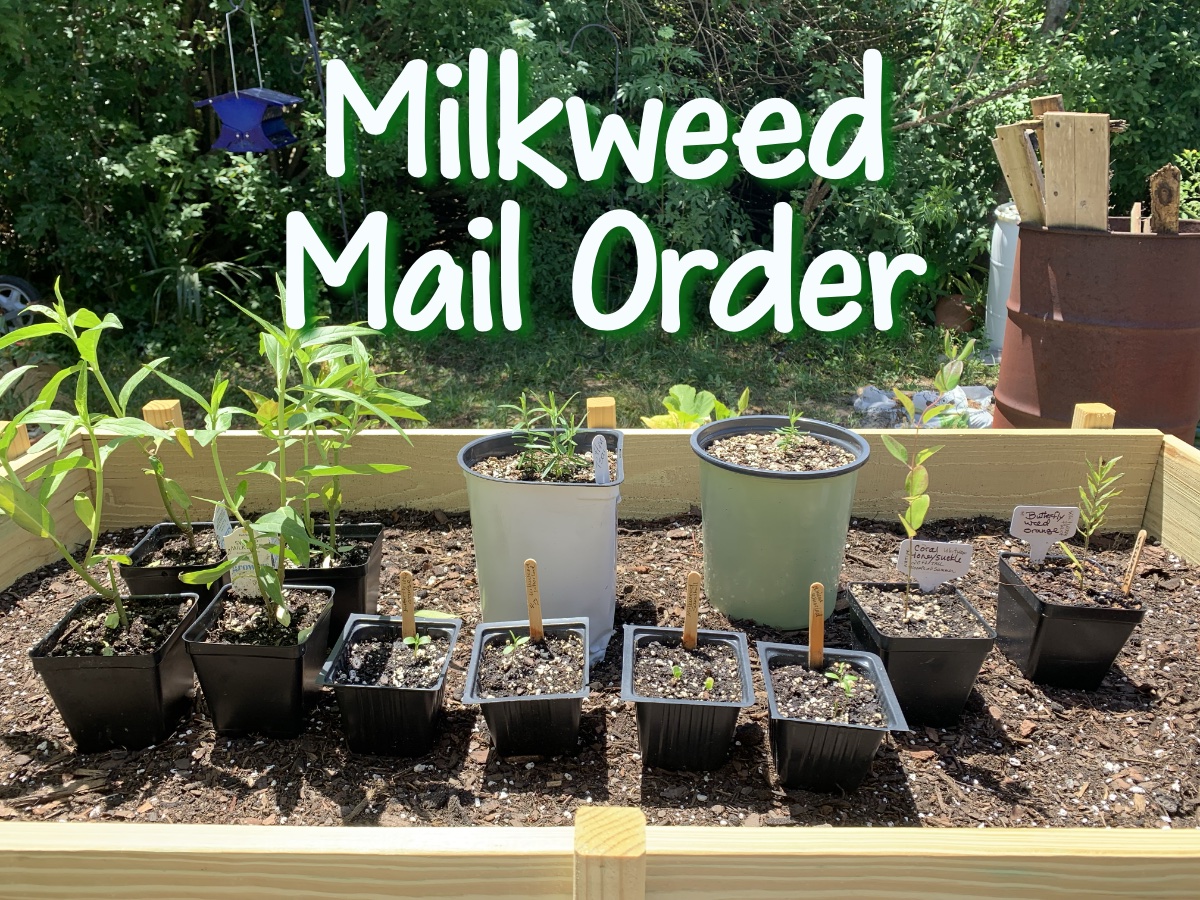
Right now I am trying to grow native milkweed for my yard. I have planted seeds, and purchased milkweed seedlings online. My goal is to have a variety, with many native plants (mainly) for the butterflies.

Florida Native Milkweed Links

  • Sandhill Milkweed – Big, dark leaves and pink flowers. Likes to grow in sand and doesn’t need lots of water.
  • Orange Butterfly weed – Not preferred by monarchs (so I’ve read) but great for butterflies and other insects.
  • Swamp Milkweed, white / pink – Moist, well-drained soil. Full sun to part shade.
  • Whorled Milkweed – blooms longer, into Fall, and can supplement if other native milkweed has died back.

Find Milkweed Seeds and Plants Online

You may find what you want, along with other Florida native plants, from this list of growers / nurseries on the Plant Real Florida site.

I have purchased seeds from Johnny Butterfly seed. They have sprouted at this stage, but are still tiny.

Keep reading the blog…

Planting Some New Flower and Herb Seeds

Planting new types of seeds purchased from Eden Brothers online.

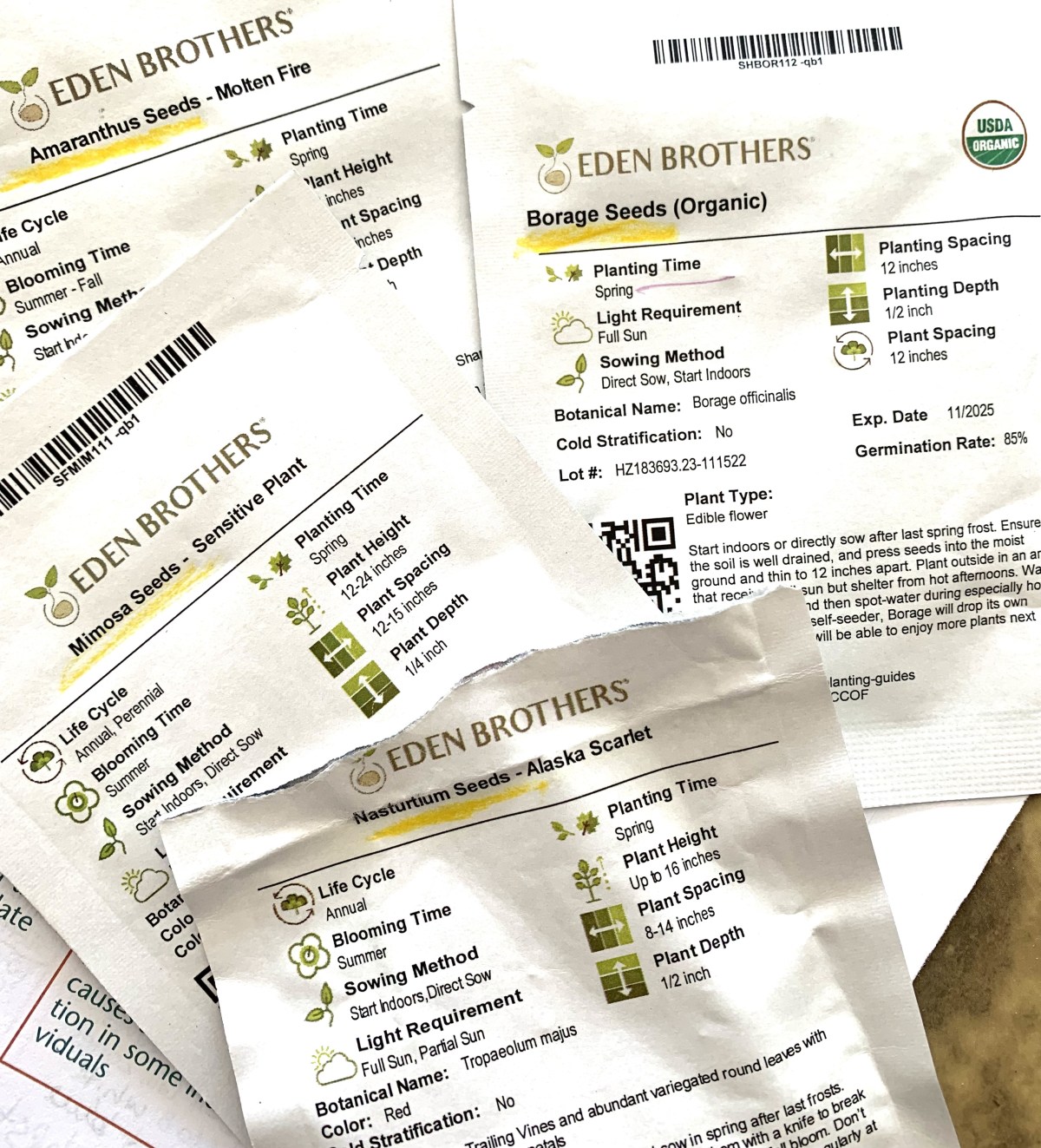
Finally my seed packet order from Eden Brothers arrived. It took ten days, and I’d actually forgotten about the order because they sent no information updates at all! I’m not too happy with the company for that reason. I chose them because they had the Mimosa seeds.

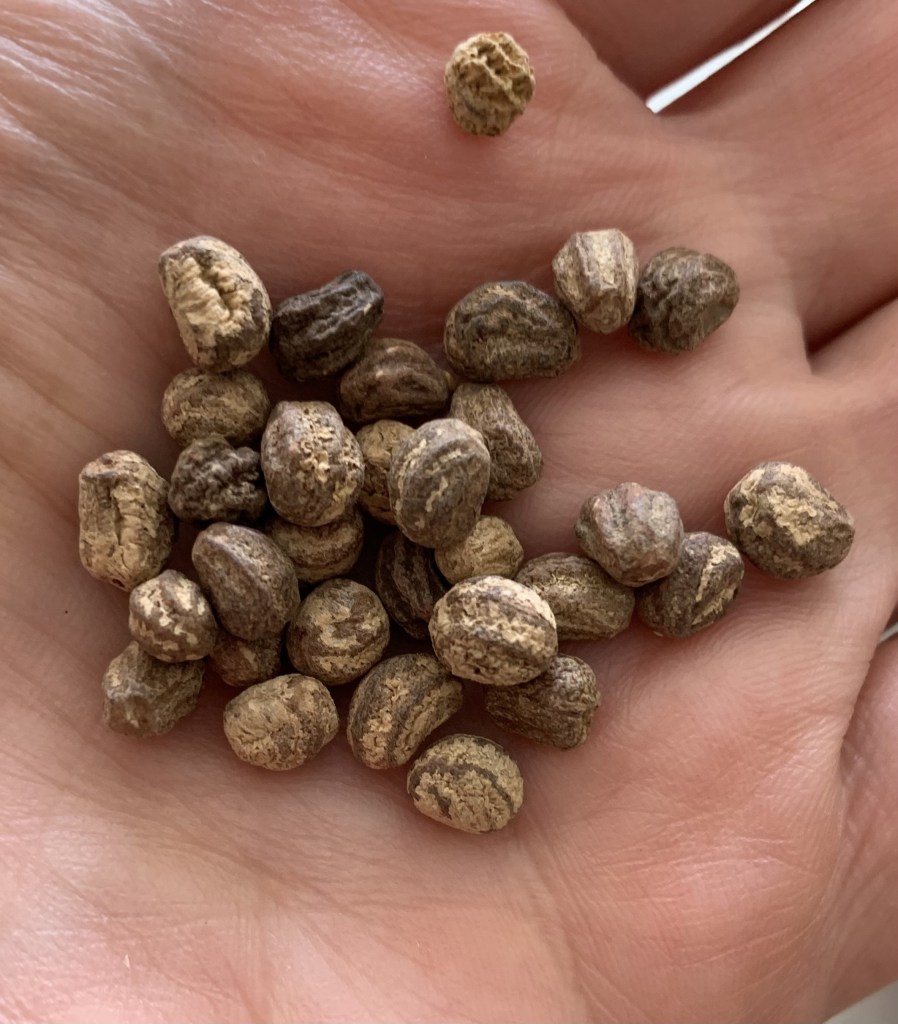
Now I need to figure out what to do with these seeds, which include Nasturtium, Amaranthus, Powderpuff Mimosa, and Borage.

Nasturtium

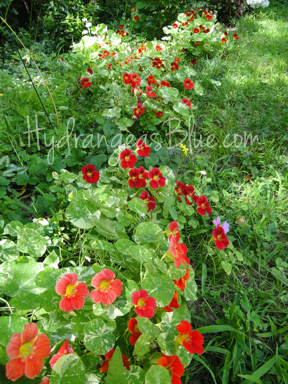
I had loads of lovely nasturtium growing in my northern summer garden. I’ve never tried growing them in Florida. For that reason I will plant some seeds into the garden dirt, and the others will go into pots.

The seeds went into the ground around my pumpkins plants and watermelon. Two clay pots also hold seeds. They are the Alaska variety which is pictured below. The leaves and flowers are edible.

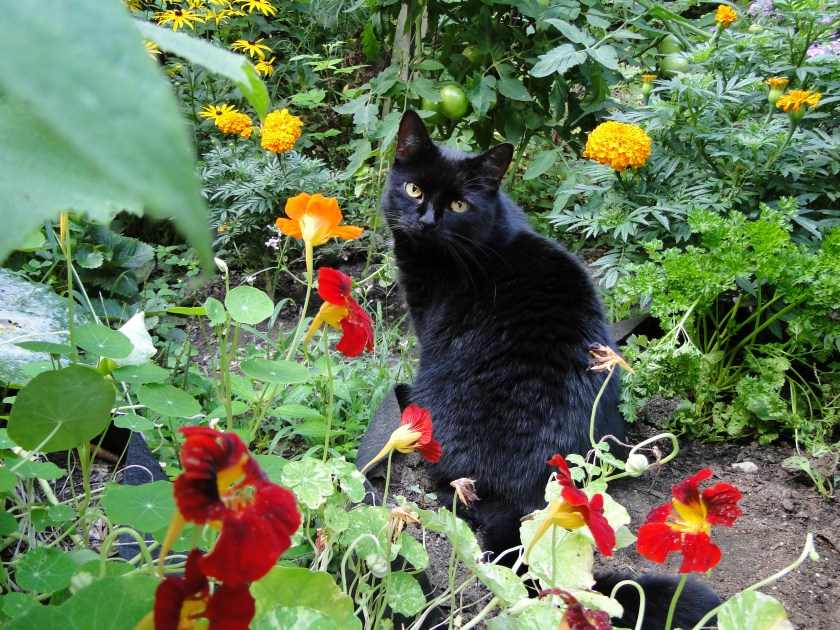
This is one of my favorite photos of my cat Skittle sitting amongst the nasturtiums and marigolds in my New Hampshire garden.

flowers of fall
Nasturtiums and Marigolds (and Skittle the Cat) in my NH garden

Mimosa Seeds (Powderpuff)

I know nothing at all about the mimosa ground cover except that it has fluffy pink flowers. Most sites talk about growing it indoors, but here in Florida it should grow easily outside in the sun. Because I don’t care if it covers the grass, I’ll plant the seeds at the edge of my hibiscus garden.

This one is also called the Sensitive Plant because the leaves close / move when touched. And, I found it listed at the UF gardening site under Powderpuff Mimosa. I will put a few seeds in a pot and the remainder into the ground.

Amaranthus – Molton Fire (Edible)

Here is a page at UF, Gardening Solutions in the “food” section, all about the Amaranth. I guess it needs to go straight into the garden. Since I don’t have a lot of space left, some have been put into pots.

Borage (officinalis) – Edible

Borage is a herb that grows tall and is listed on this page at the IFAS site as a cool season crop. My Eden Brothers packet says that planting time is Spring, but shelter from “hot afternoons”. I think I will put some seeds into pots for now.

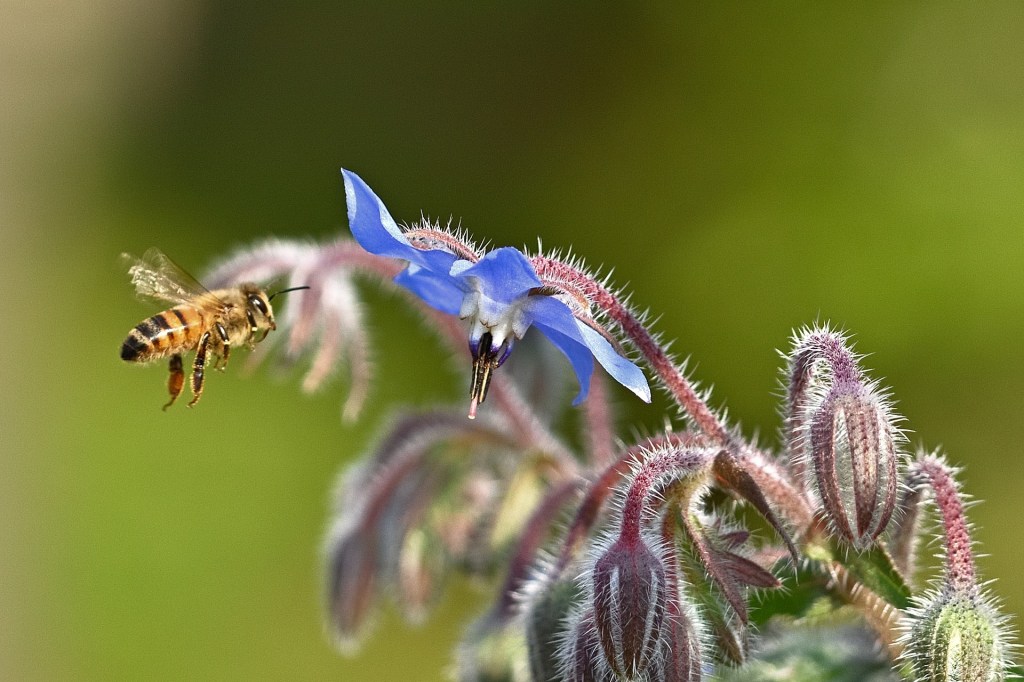
Borage has pretty blue flowers and it is edible. It also attracts bees. It grew wild near my house in New Hampshire, but I’ve never seen it here.

Borage (photo credit: Pixabay)

Herbs & Spices in the Florida Garden – UF IFAS


Recent garden stories…

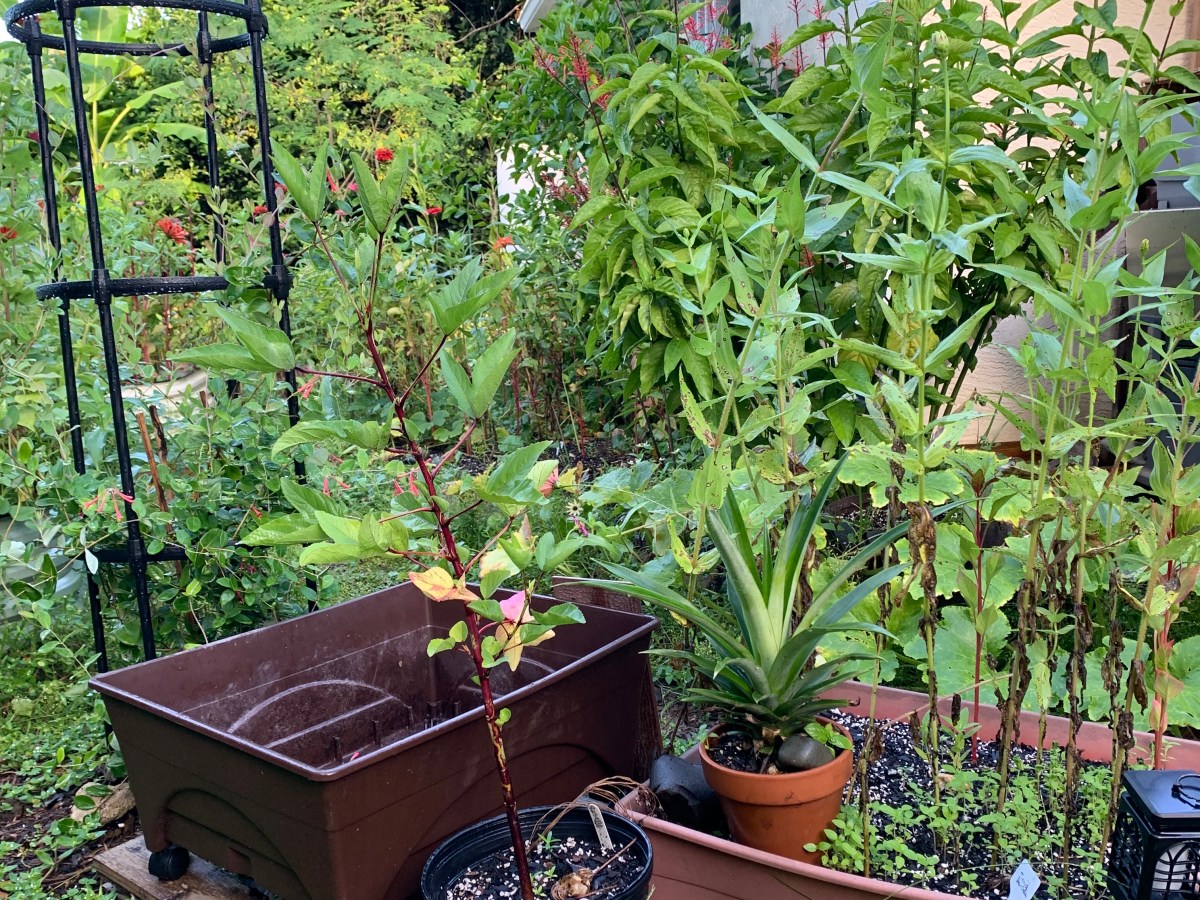
A Vegetable Garden Begun From Seeds

Planting a garden, year two, from saved seeds. Everything growing in my small backyard vegetable garden was begun from my own seeds and seedlings.

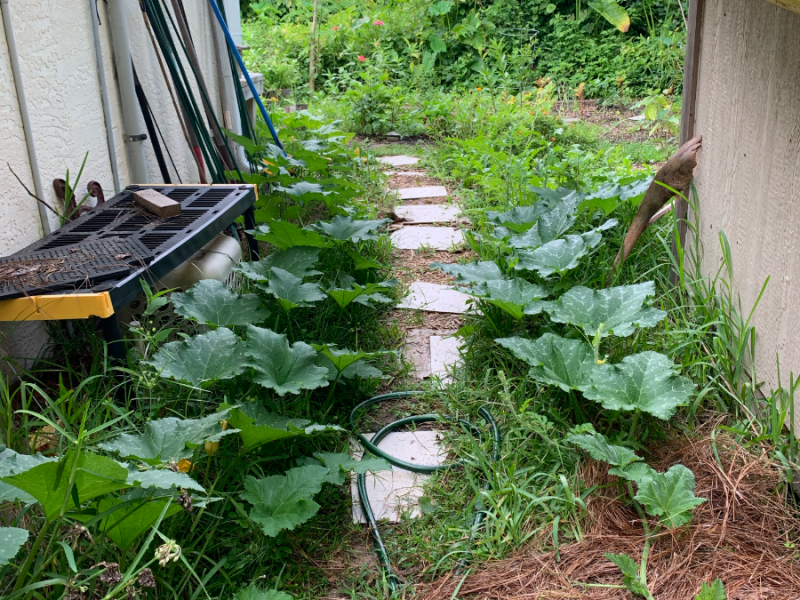
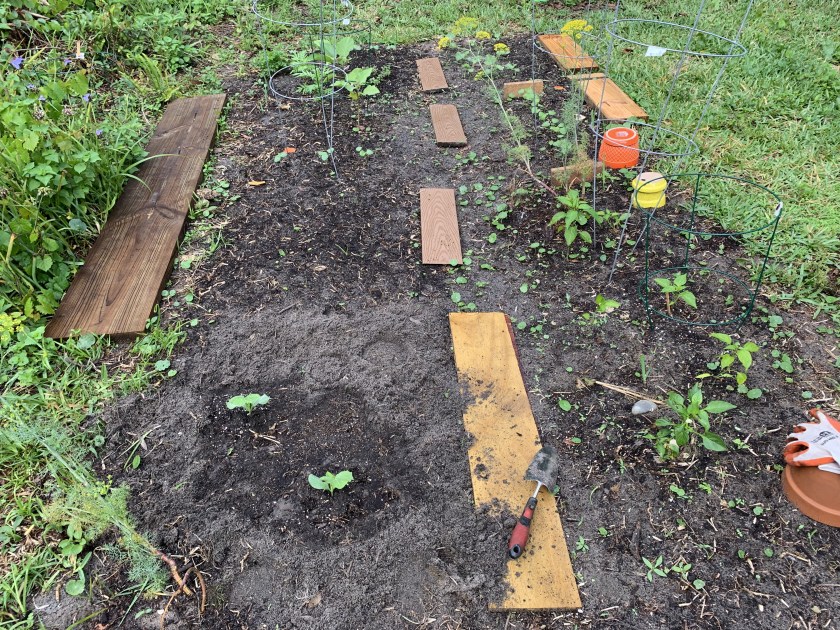
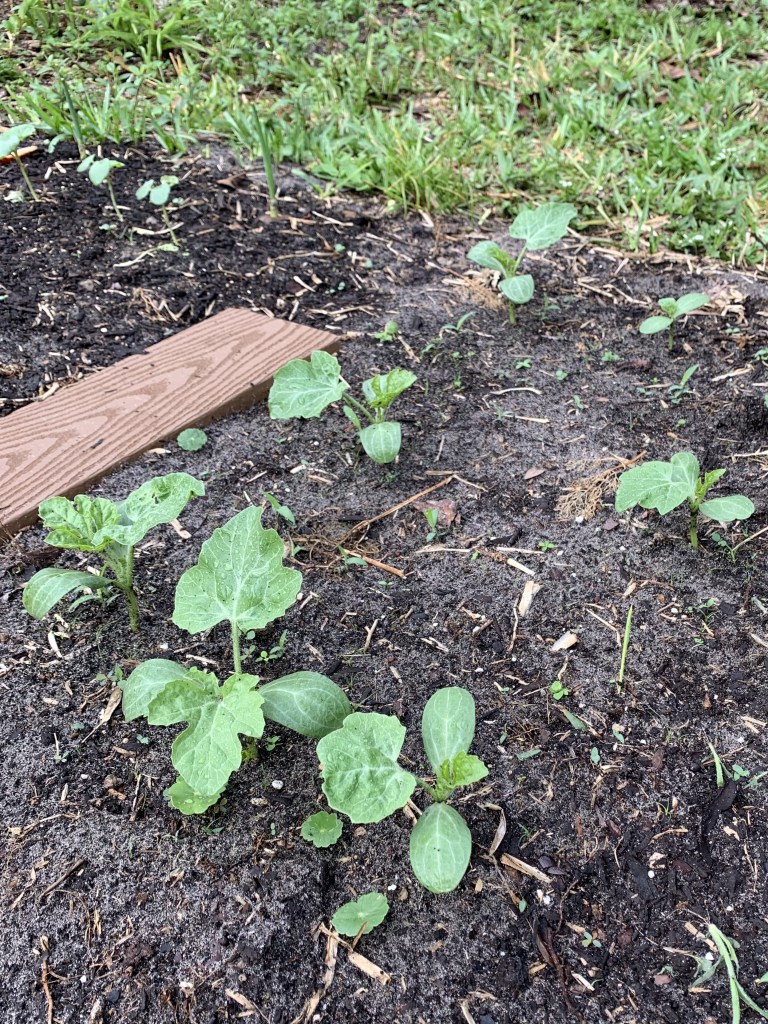
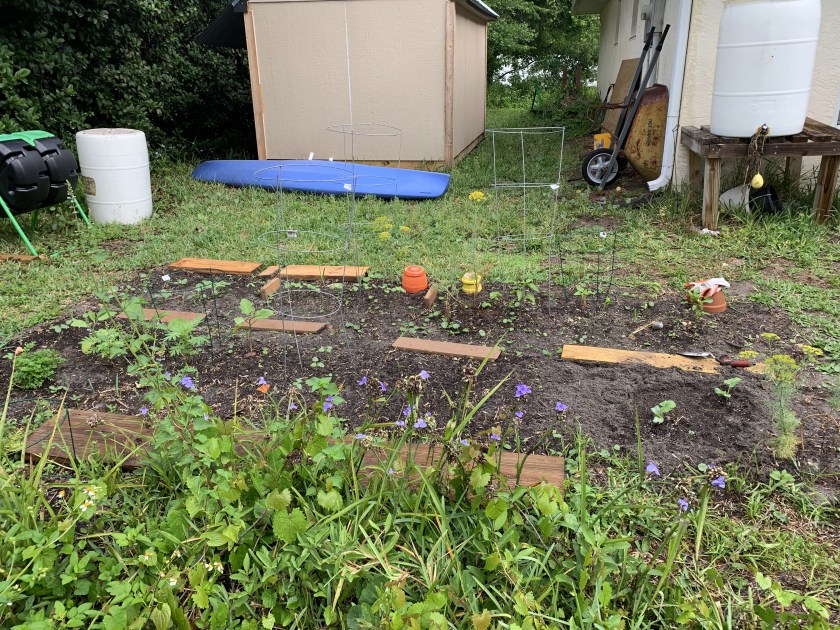
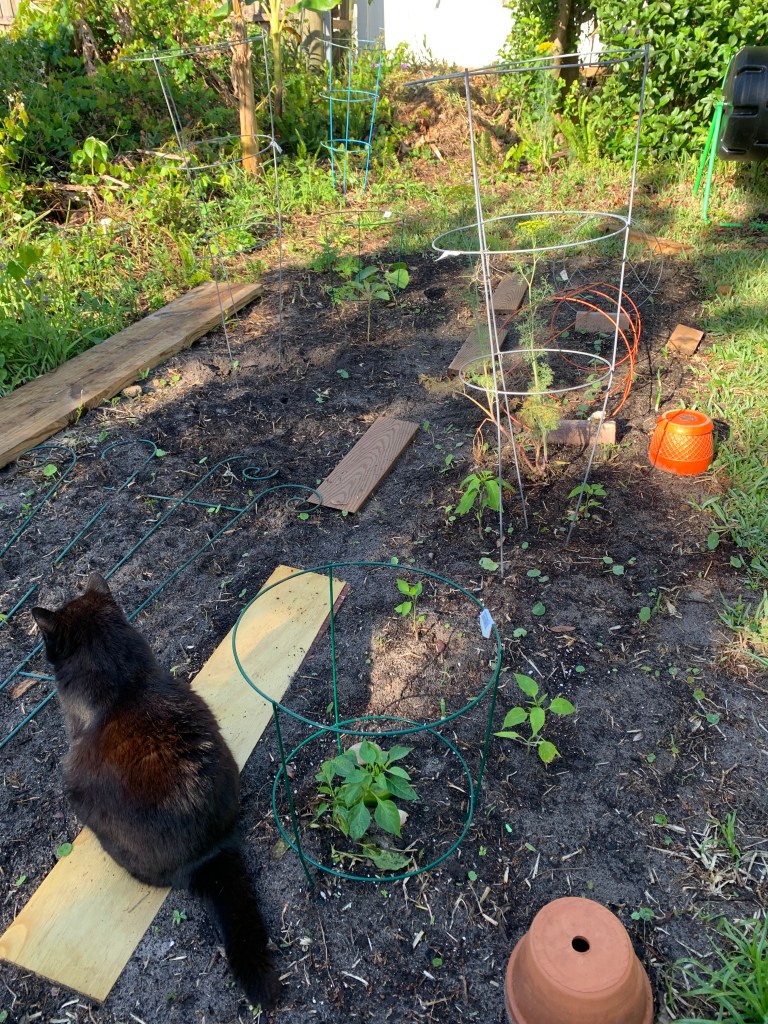
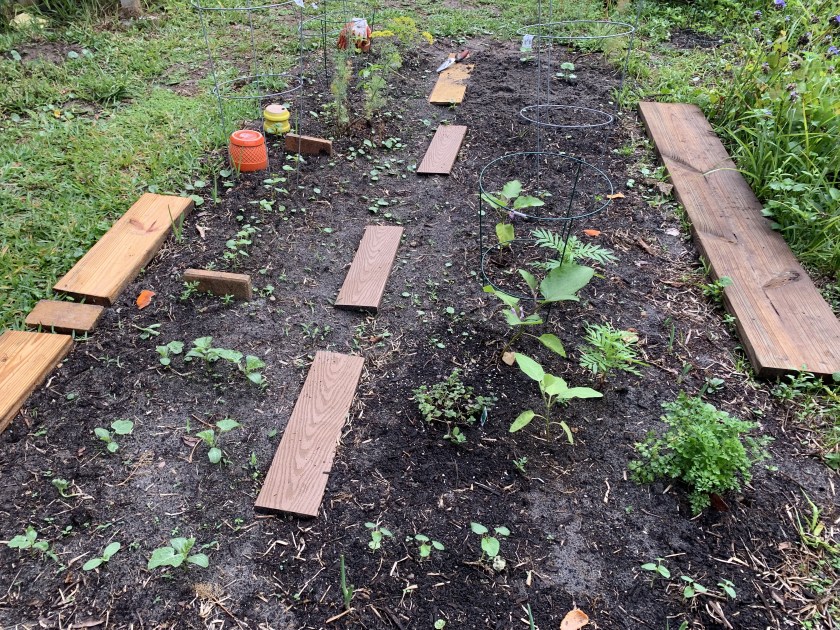
As of the end of April, my backyard garden is nearly full of little vegetable plants. Today I added two pumpkin plants after they grew from seeds in little pots.

The eggplant plants have been growing in garden boxes near the house and were transplanted into this garden. They came from seeds I saved from the eggplants.

vegetable garden spring
April vegetable garden

Vegetables I am Growing This Summer

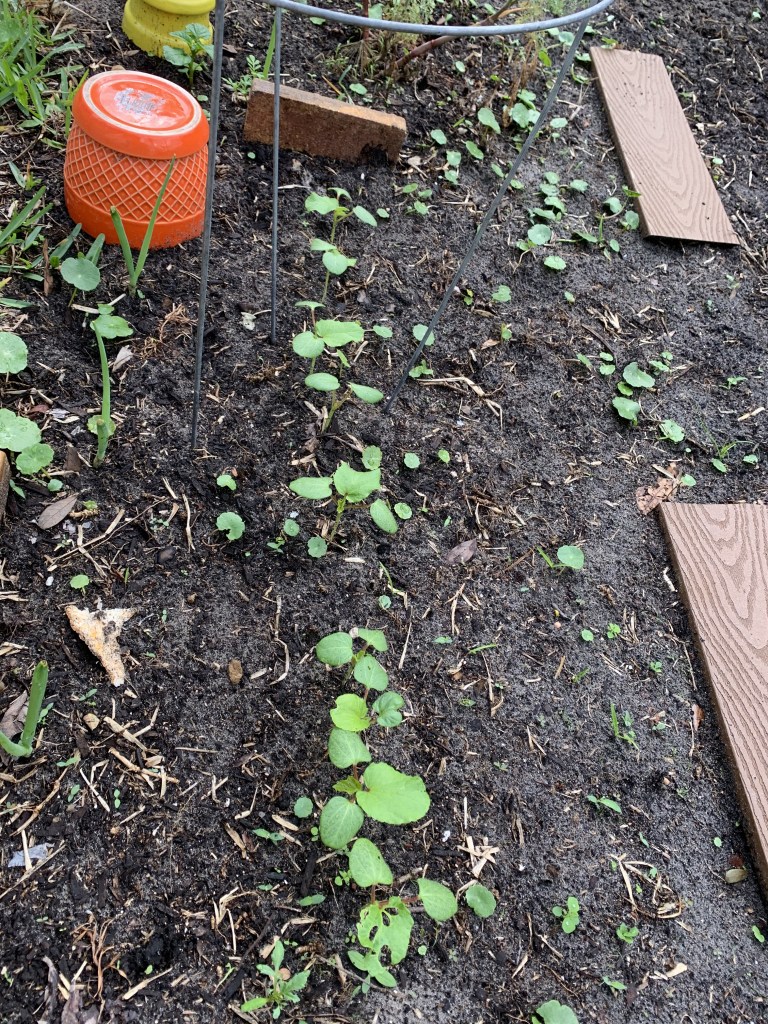
In the garden I have okra (purchased seeds) that was planted as seeds. I’ve never grown (or eaten) okra, so this is new. I’m finding that okra plants are pretty hardy. Some animal dug up some of the seedlings and I replanted them and they are doing fine! Soon I will thin the row by cutting off the okra I want to remove.

The watermelon (seeds I purchased) is beginning to take off, and I will choose only a few of the best plants to keep.

Also in the garden: Hot peppers (from seeds I saved). I have planted one poblano, a couple jalapeños and one Habanero. We have more seedlings in pots, but I am running out of space.

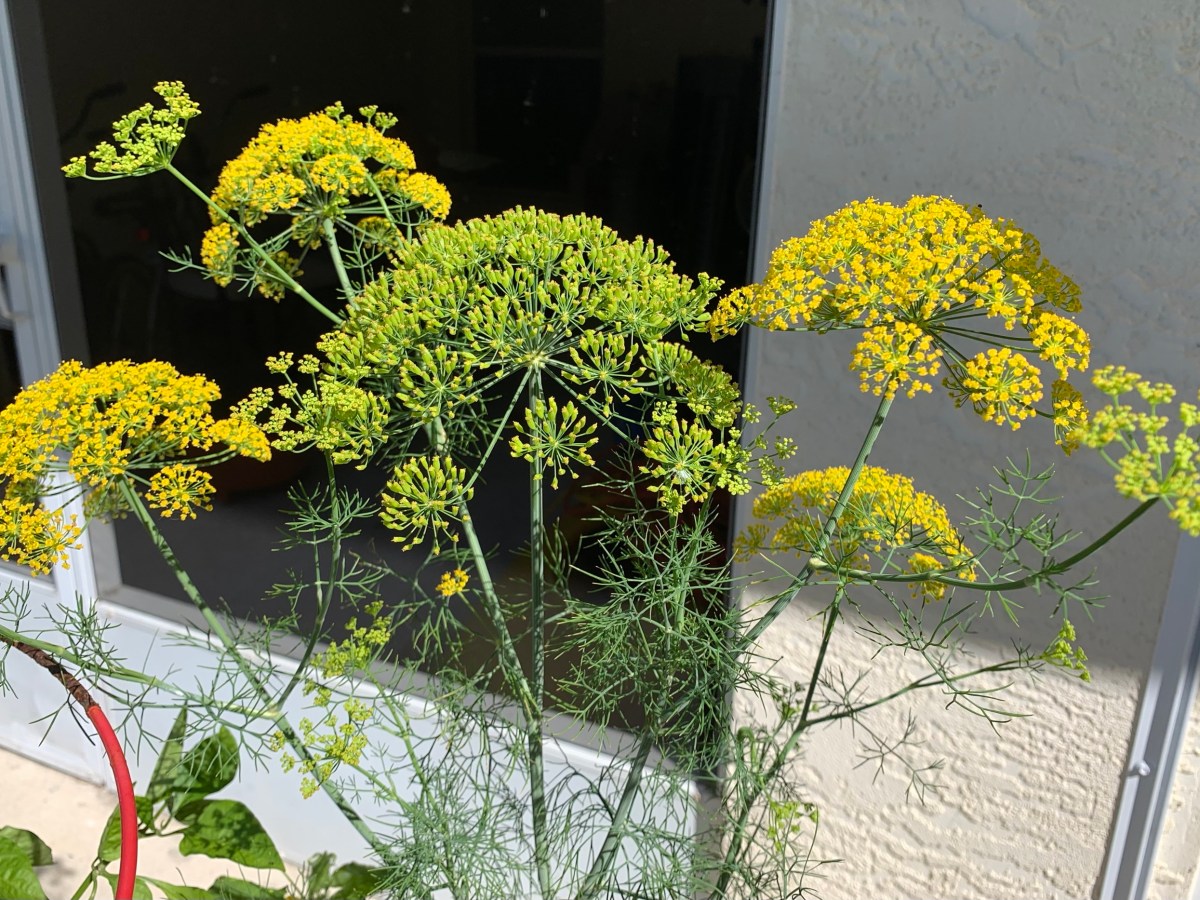
Also growing are eggplants, watermelon, okra, pumpkin, dill, and marigolds. Everything started from seeds. Most plants grew up in pots and were transplanted, but the okra and watermelon were put directly into the dirt.

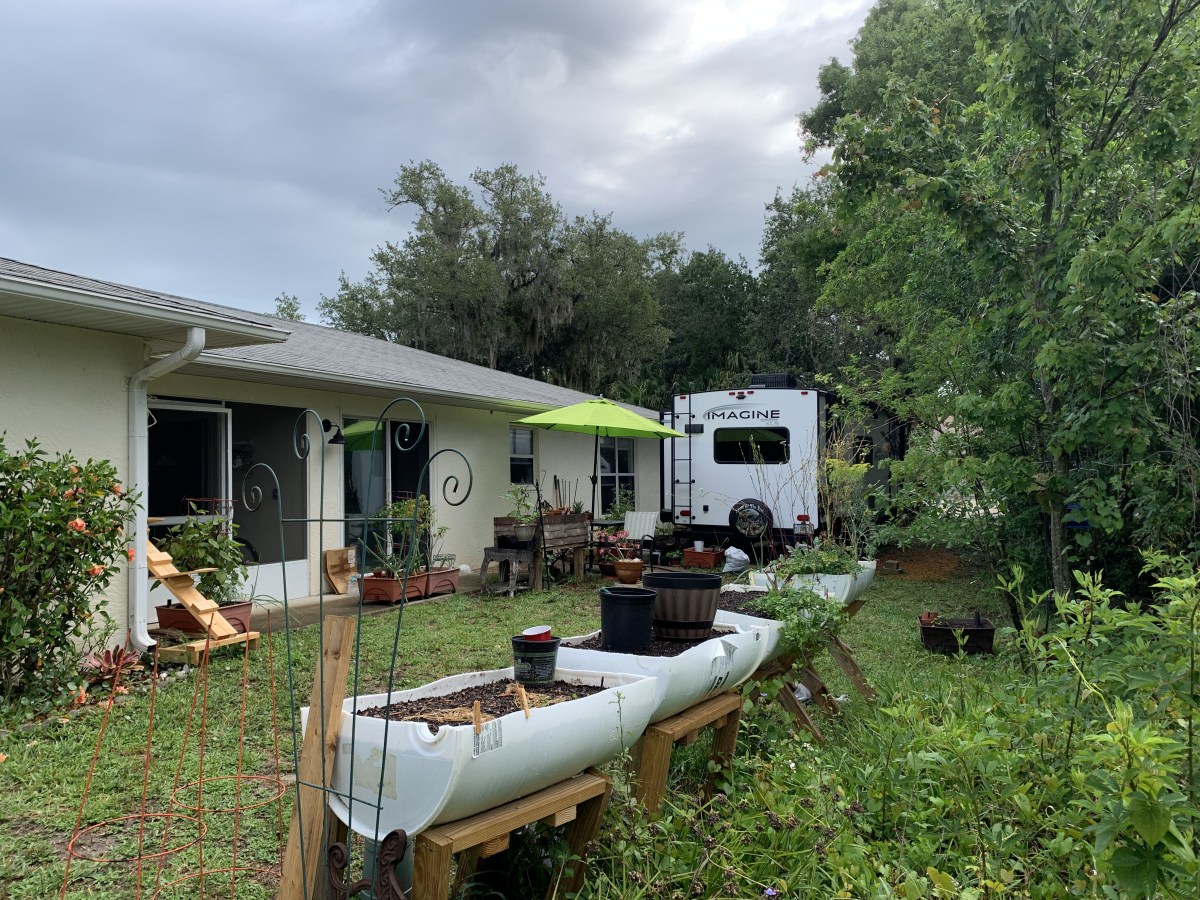
I’m already planning a couple more gardens in the small yard. I’ll be moving the kayaks and white barrels to dig up that area for my “winter” garden. It’s an area that gets a lot of sun.

garden

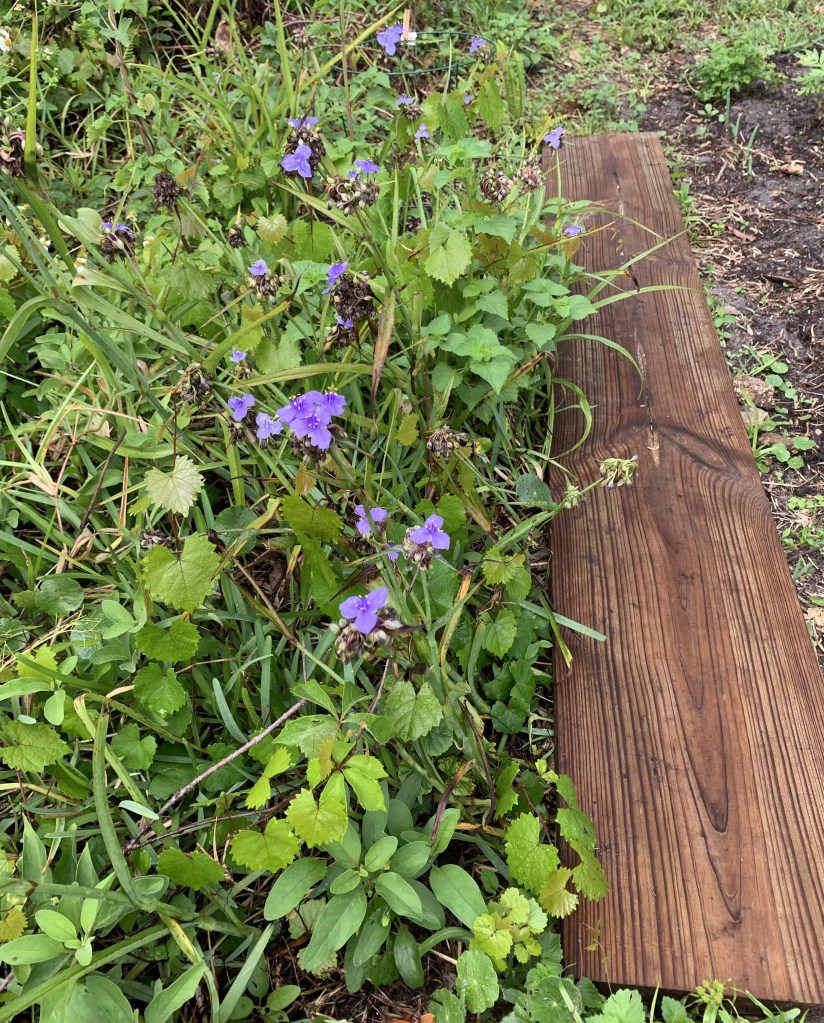
The picture below is of the edge of my garden where I put a board to walk on. I’m hoping it will help keep all those weeds out from the edge of the yard.

board to keep out weeds

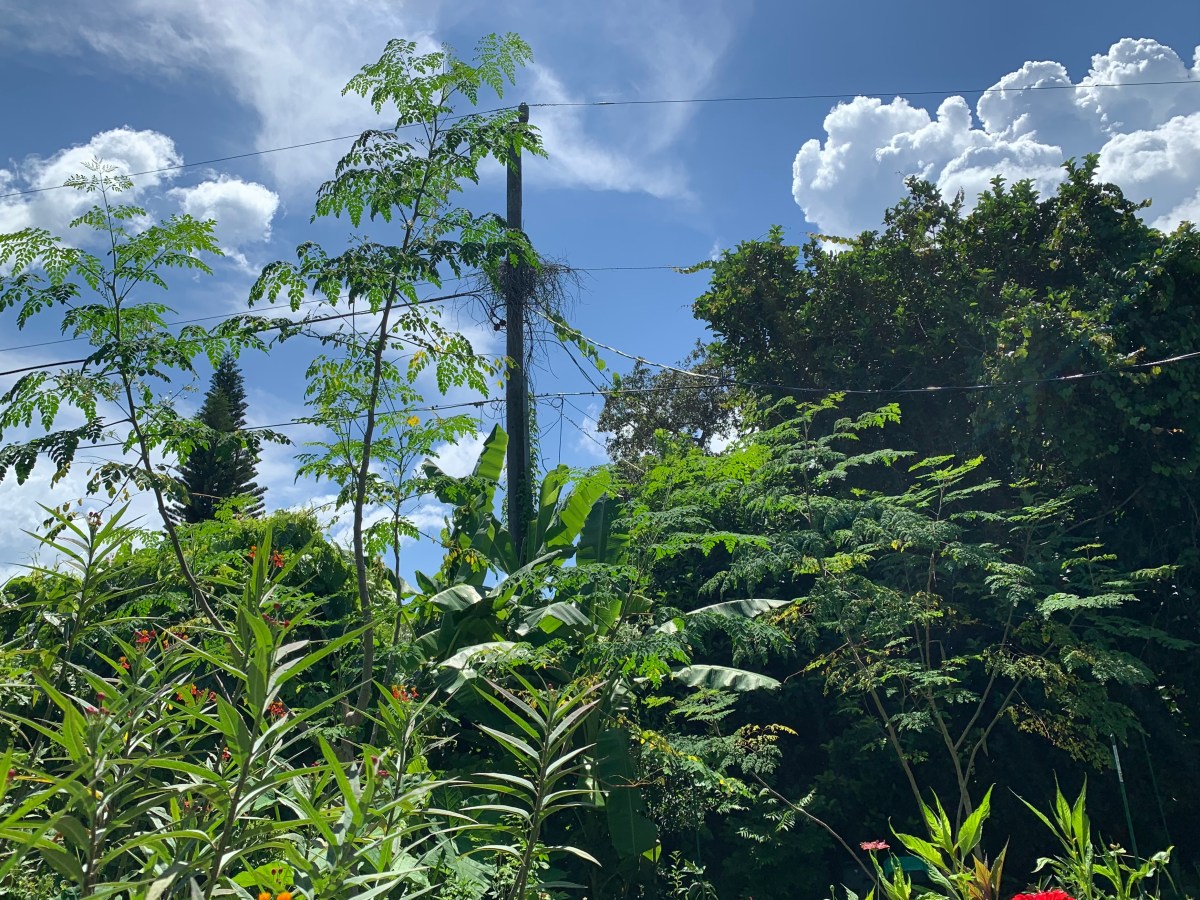
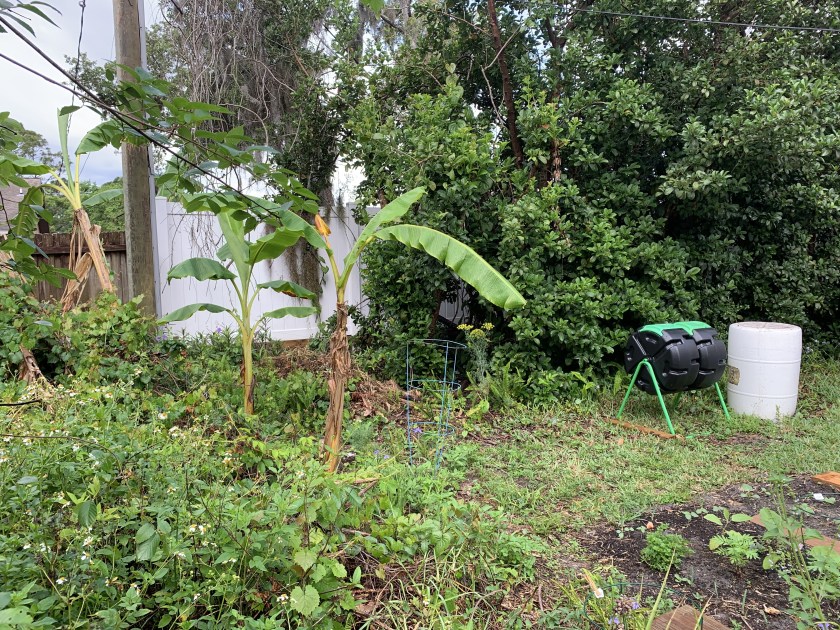
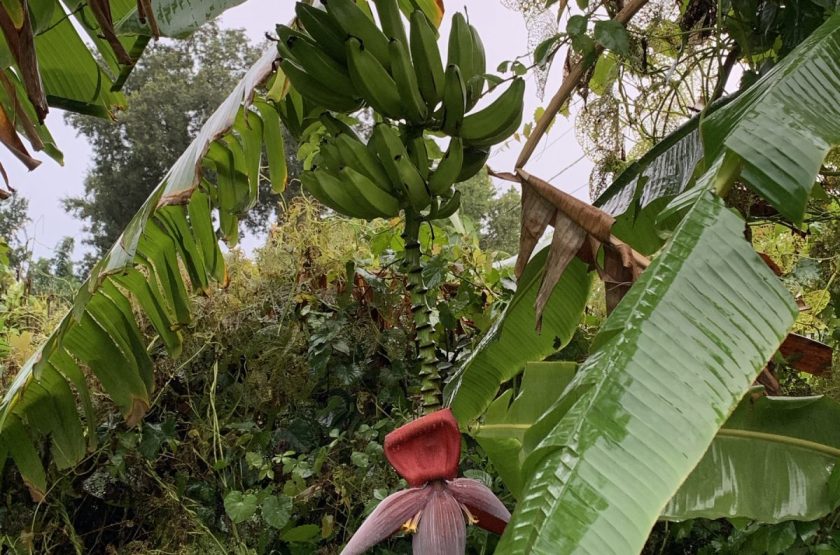
I am standing in the lot next door to take this photo (below). The back corner of my yard contains a few banana trees which I did not plant. They moved in from the back of the empty lot next door. Each year a big banana tree would have a bunch of bananas, grow a couple of new baby trees, and then die. The baby trees kept moving this way and are now in my yard.
banana trees in back of yard
Back corner of the yard

Saving Seeds

By saving seeds from your own (and sometimes store bought) vegetables and flowers (marigolds in my case), you will always be able to re-plant your favorites. And it saves money, obviously.

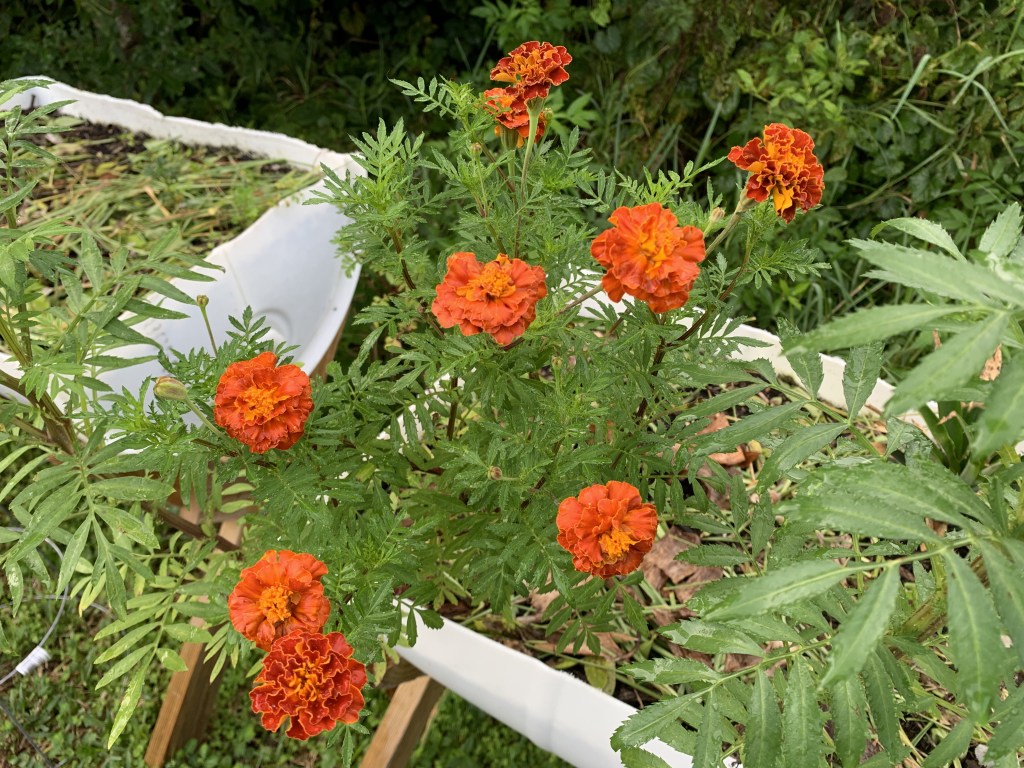
Marigolds are very useful in the garden as bad bug deterrents. To make sure you have plenty for the following year – or all season long here in Florida – snap the old flower heads off and save them.

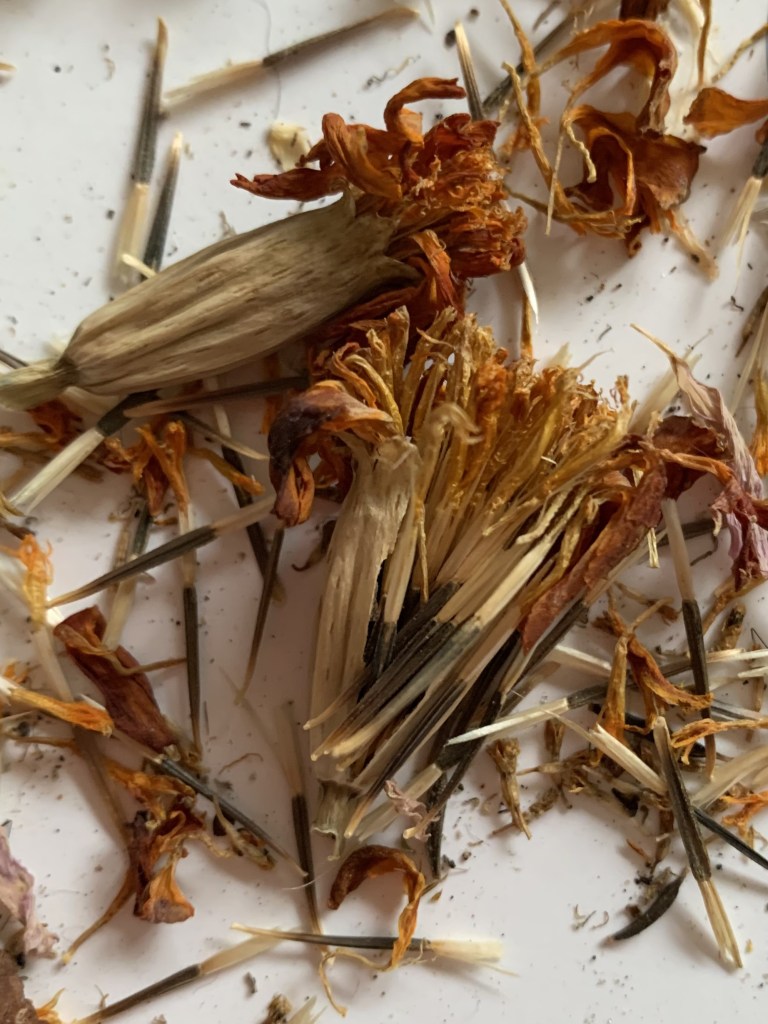
After a while they will dry out and all the seeds are inside. Every flower contains many seeds, so I sprinkle them generously all around the garden.

Not every seed will root, and they can be thinned.

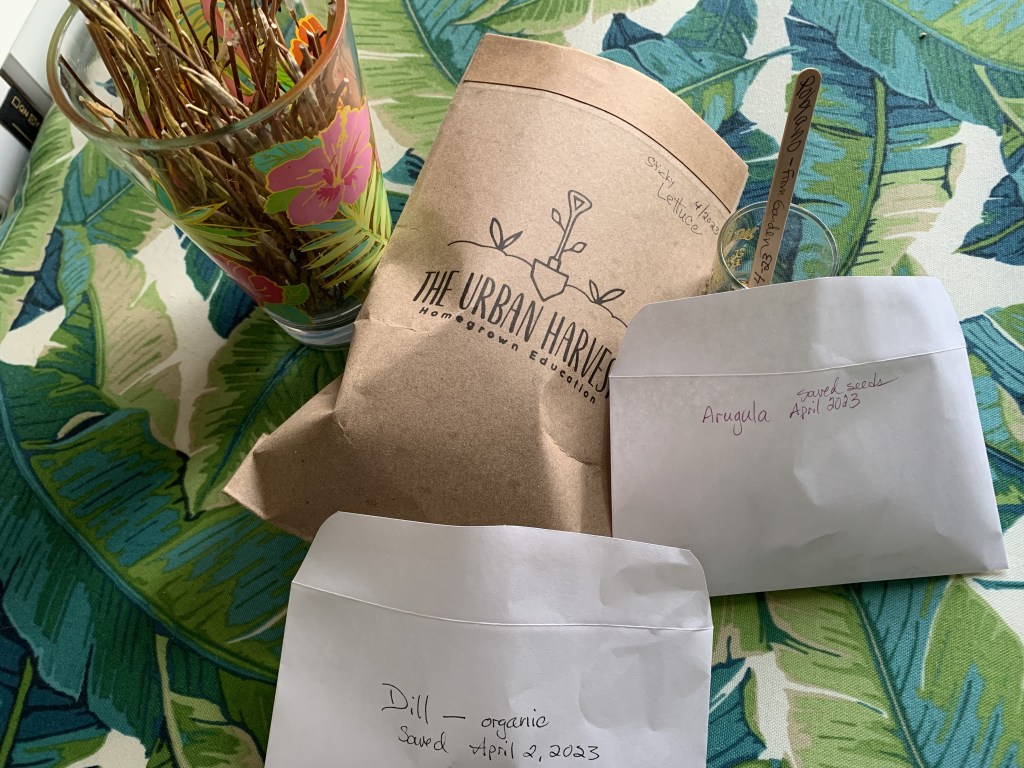
To save vegetable seeds, simply do that. When you cut a pepper, eggplant, tomato, etc., cut out some seeds to dry. I put them on a plate. Seeds must dry out to store. Don’t put them into a closed bag or bottle. An envelope or paper bag works, and don’t forget to label with type of seed and the date.
Because of the humidity here, I store my seeds inside and not on the porch.

Saving seeds
Saving seeds – arugula stems and seeds, dill, lettuce and pepper

The Seed Garden Beginnings

Although every vegetable and flower in the garden began from seeds, I did have to first buy a few packets. Last year I began all my seeds in saved eggshells – and I do not recommend this. I purchased Dill and Marigolds as seeds and started them last year. Both plants are prolific seed providers.

So all my purchased and saved seeds have carried over to this year.

Please keep reading….

May Garden Photos With Plant Updates

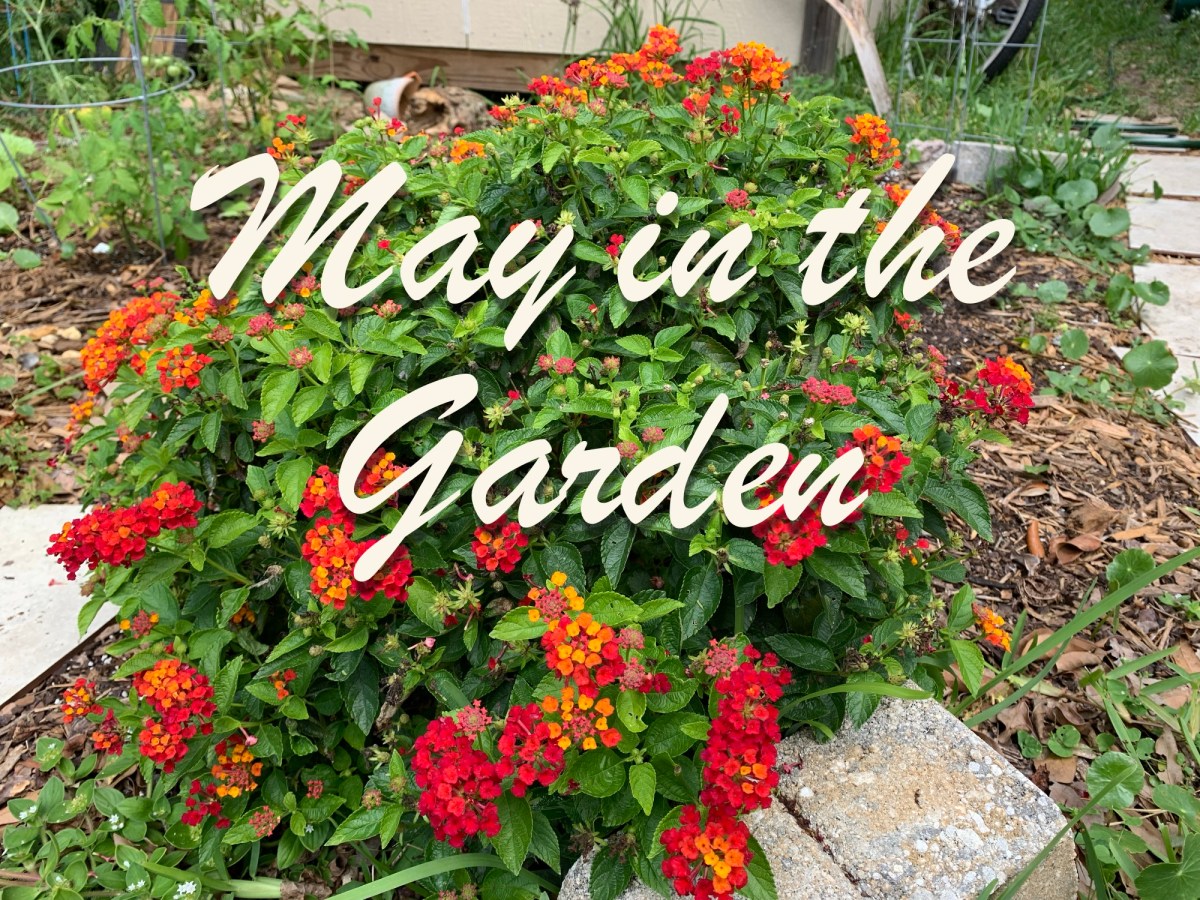
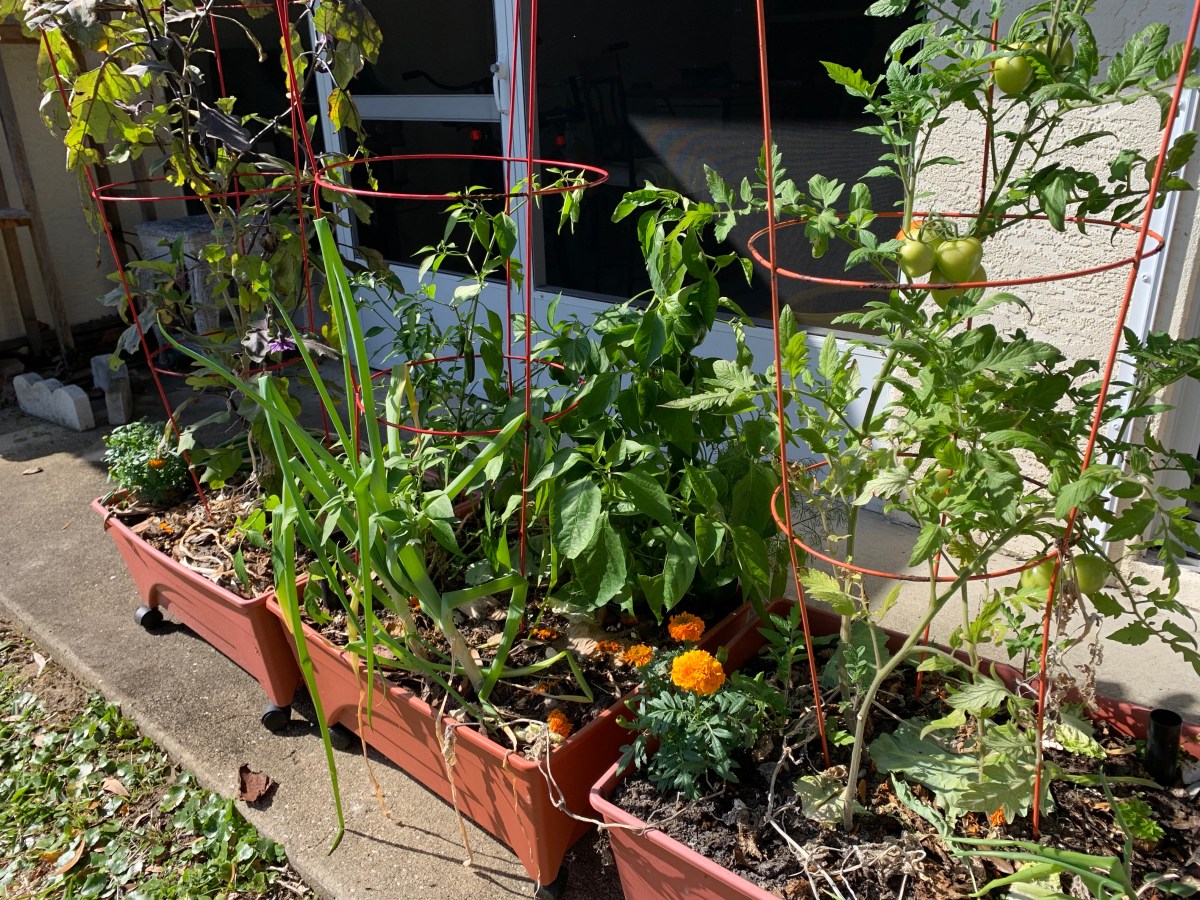
May in the garden is mostly about finalizing the switch from winter crops to summer. This quick post shows photos of some of what I have growing at this time.

How to Begin Growing Vegetables in Florida

Some things I did and places I bought seeds to get my Florida vegetable garden going.

Although I have lived in Florida for most of my life, I have not done much growing of vegetables. Now, I am interested, and have begun to slowly add garden beds to the backyard. But how to know what will grow here and where to find the plants and seeds?

I always assumed that nothing would grow in a Florida summer. But, if you look around, the citrus and banana trees do just fine. Some vegetables are specifically known as being southern, such as collard greens and okra.

Bunch of bananas hanging from a tree in the yard
Bananas in my backyard

There is a definite advantage to having a very long growing season here in Florida. In New Hampshire my bell pepper plants would just be looking pretty good when suddenly it was cold again.

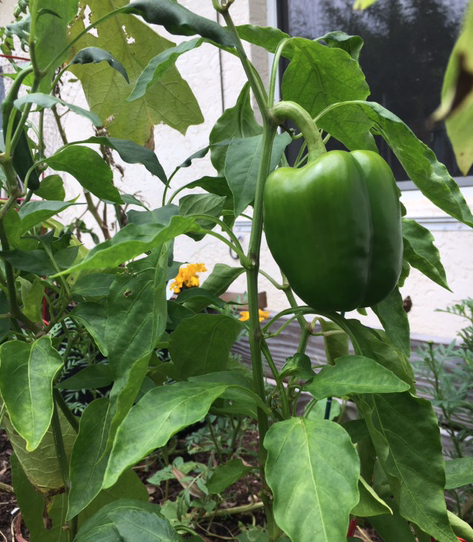
Peppers like it hot, and I’ve had good luck growing some types of peppers (jalapeño, Serano, and bell) in my southern location. If the winter is not too cold, they will come back and produce more peppers the following season.

green pepper
Green Bell Pepper

Begin the Search

It’s tough to know what to plant and when, but the University of Florida has a collection of excellent advice for the southern gardener. This page, for central Florida gardening, is filled with flower, herb, lawn and vegetable advice.

Narrow it down by viewing the vegetable planting guide, and you will be ready with a list to use when seed shopping. Decide which foods you and your family will eat and see how to go about making it happen.

When I view the lists of warm and cool weather crops for Florida, I do disagree with some of the vegetables listed. This means that maybe each gardener will have different degrees of luck with certain crops.

Maybe I have planted at the wrong time, and maybe I need to try again and take notes. But at least these vegetables have a chance of growing and are worth a try. I have not had luck with carrots or beets.

If broccoli is a favorite with southern gardeners, I will put that on my “cool weather crops” list. Now I have expanded to have a ground garden where I can rotate “warm” and “cool” crops. The only thing is… many vegetables continue to grow year round – the growing season does not really end. I have had eggplant plants and pepper plants grow for years! So one garden may not be enough space.

backyard Florida garden plot planted with seeds and seedlings
Peppers, dill and eggplant growing in the ground

Where to Buy the Seeds and Plants For This Climate

If you live near a nursery that sells plants that will grow locally, you are lucky! Big box stores like Home Depot don’t seem to specialize in selling local plants. I’d rather give my money to a small business but I can’t seem to find the plants and seeds I want at a location nearby.

The Farmer’s Market and flea market are places I plan to scour further. Sometimes local farmers will have plants for sale.

Shopping for Seeds Online

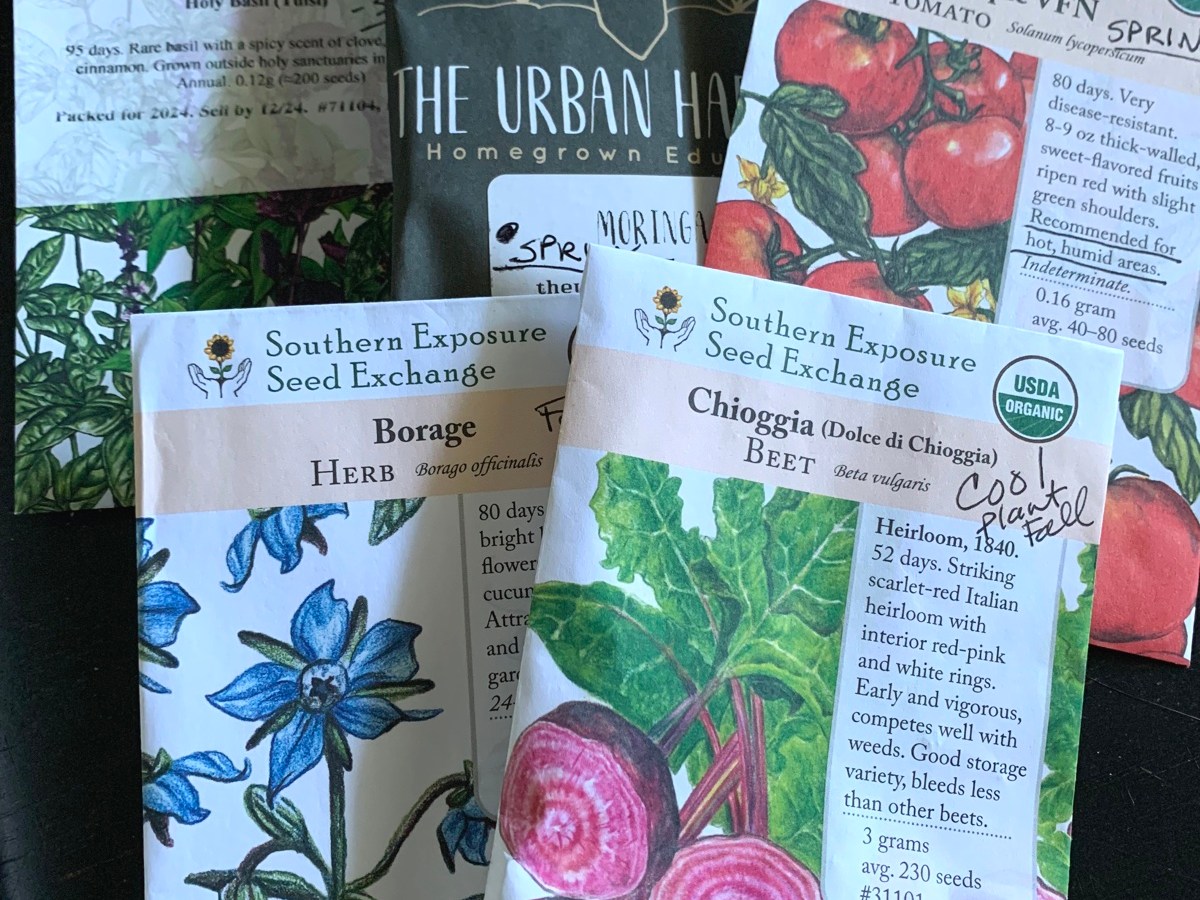
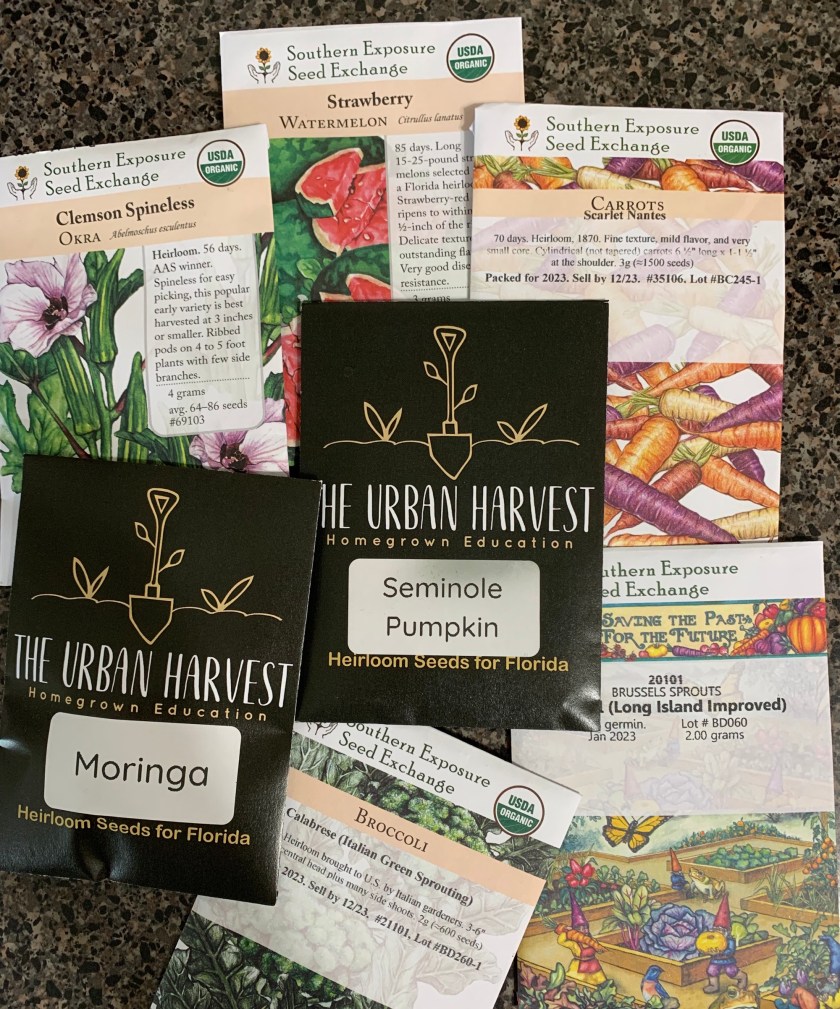
First, I bought seeds from The Urban Harvest, which is a central (west coast) based seed and plant seller – they also have many YouTube videos. I have had good luck with the seeds germinating, but they were sold out of many items I would have liked. If you live near them in St. Pete (I believe) they have a garden center where you can pick up live seedlings.

Some of the seeds I got will be planted in Fall, but I did plant the pumpkin, okra, and Moringa this Spring. I don’t know what to expect from okra, but the UF site has a whole page about okra.

seed packets from the Urban Harvest, a florida based company
Seeds from Urban Harvest

So, I continued to look online. Johnny’s Selected Seeds had a nice variety, including heirloom and organic vegetable varieties, but they wanted $11.50 for shipping just a few packets of seeds! I moved on.

Mary’s Heirloom Seeds has a good selection of beans especially, but the seed potatoes were sold out. I liked this site, but had already purchased some seeds from the Eden Brothers site.

I found mimosa seeds (a flowering ground cover) at the Eden Brothers, and it is something I had been looking for. Then I found more flower seeds and a few veggies and placed my order. This time shipping was only $3.98 which is much more reasonable.

Most seed sellers do not specify what does well in a sub-tropical climate, so have that list of specific, Florida friendly crops, ready before you shop.

If you are a Floridian and have a favorite online place to buy seeds, please let me know! I also appreciate any helpful advice when it comes to gardening in our climate.

In Closing…

Check for vegetables and herbs that will do well in our area / your area of Florida. Decide what you have room for, and plant what you want to eat! Search for a place that can supply the seeds. Local nurseries, farmer’s markets, or online. Maybe a neighbor is also a grower and would share some seeds with you!

Remember that most seed packets are packed for a specific year, so don’t load up on seeds that you can’t use within the year.

I’ll be updating this blog with my garden stories as I try to grow more vegetables. Currently my “in the ground” garden is planted and doing well.

backyard garden with vegetable seedlings
The new garden – Nearly full, end of April

Keep Reading ….