Planting a Garden In Tiers: Flowering Perennials For the Middle Section

I picture a tiered garden in three sections.  The tall, back section which will be the backdrop for the rest of the garden flowers;  the front area which will hold the ground cover plants and low growing annuals and / or perennials;  and the middle section which holds everything else!

It would be a bit more organized that a cottage garden where things of all sizes grow amongst each other.

flower garden landscape design

Filling in the central part of the garden may be the easiest task since finding perennials that are average in height may be the easiest.  Not only that, but mixing in a few taller varieties here is also okay. 

The middle area is a good place to add medium size hydrangeas or some day lilies

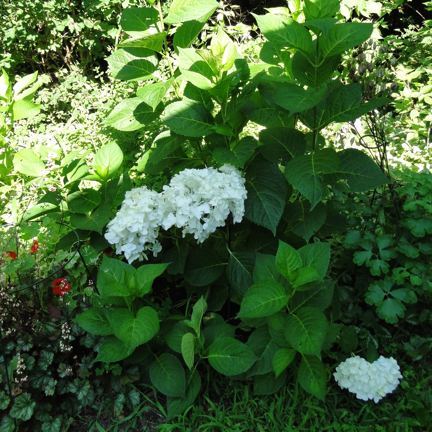
white flowering hydrangea
Blushing Bride white hydrangea (macrophylla)

Depending on how large your garden will be, or is, adding a central focal point such as a compact tree or larger bush would be a good idea.  I’ve never used tall, ornamental grass, but it can add character to the garden too.

Choose some type of garden ornament or giant pot to be the garden focal point or to add interest.
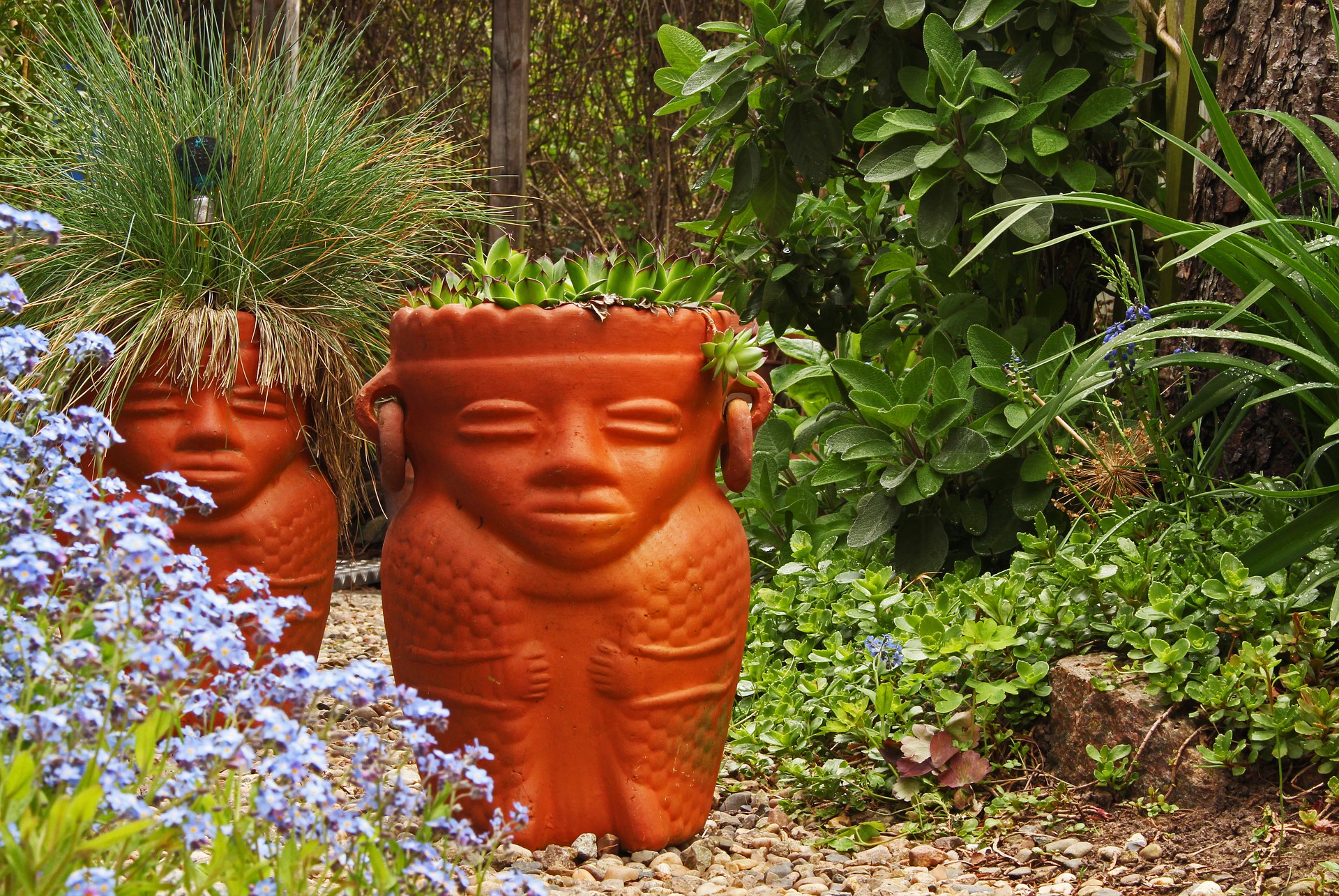
garden ornaments ornamental design focal point
Ornamental pots can be a garden focal point

The middle section could have some peonies (another favorite of mine) and stand alone asiatic lilies to add varying colors.  If you love roses, they could be planted in the middle section.

Just keep in mind the different needs of plants when you mix together a tiered garden, or any garden.  Roses need loads of sun, and good air circulation around their leaves.  They also need to be fertilized regularly.

When planting your tiered garden be sure to give everything room to grow.  It may look a little sparse the first year or two, but it can be filled in with annuals until the perennials grow up.

Pink and Cream Dried Hydrangea Bouquet

dried hydrangeas
Pretty Little Dried Bouquet

This little pink and white – or cream colored – bouquet of hydrangeas came from a shrub that was planted out near the woods in a house I once owned.

When I first moved to the northeastern U.S. from Florida, I didn’t know much about hydrangeas, or many northern flowering shrubs to be truthful. My new home had some very interesting and beautiful plantings, and I decided to find out what was growing in my yard.

Fortunately my next door neighbor was a big-time gardener himself, and his house was about 200 years old with huge flowering bushes growing all along the side of his yard. He came over and pointed out the Lilacs, hydrangeas and others for me, and between his help and visiting local nurseries, I finally figured out what I had.

The little hydrangea “tree” was (I think) a PeeGee and in the Fall the white flowers turned tan, cream and light mauve pink. So pretty! I cut a few and added them to a little vase and got a photo.

This little shrub was doing quite well neglected and tucked under a pine tree at the edge of the woods, so I might try growing one this year in my new, not-too-sunny, yard.

Out of The Box And Into the Yard – Mail Order Perennials

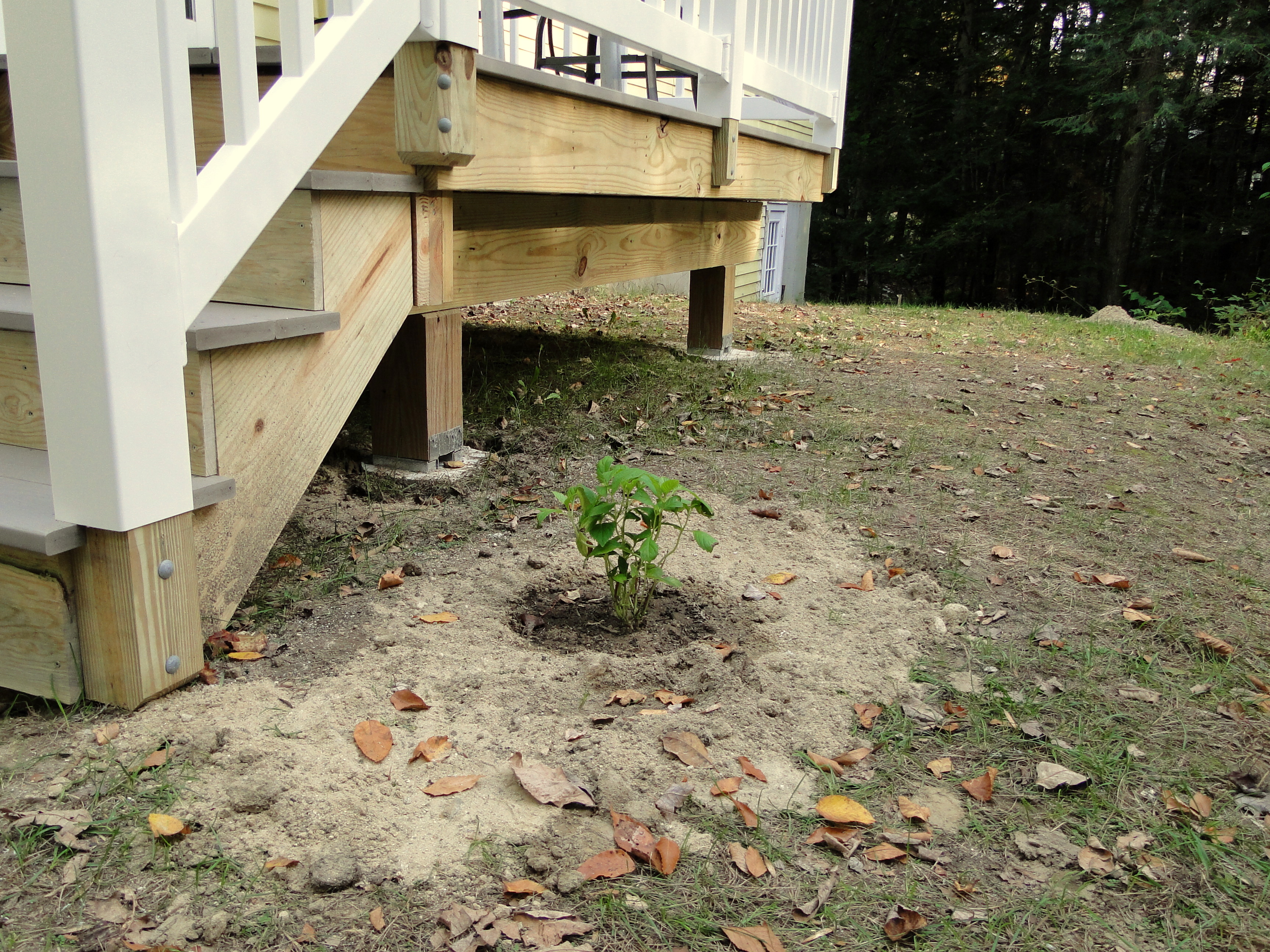
New little hydrangea plant
One of The Hydrangea Plants

I was impressed with the packaging of the perennials I had ordered from American Meadows, and even though they were a little droopy, they bounced back.

Both Hydrangeas are planted in the backyard where they will get sun and the forsythia is out front. Unfortunately we got a freak 2 feet of snow the end of October, so they hadn’t been in the ground for long before they were covered. One of the long stalks of the forsythia broke off so it’s pretty small now, and the hydrangeas are droopy and partially broken. (The photo was taken before the snow – which may seem obvious, but the snow has all melted now).

I ordered from an online store because I was anxious to get my gardening started here at my new place, but I have my doubts as to how well these plants will do once Spring arrives. And more importantly, how much will they grow. I will be saving up this winter to buy some local hydrangeas and probably more forsythia so we’ll see how much of a difference it makes as far as growth.

Got My New Little Mail Order Hydrangea Plants

mail order hydrangea plants
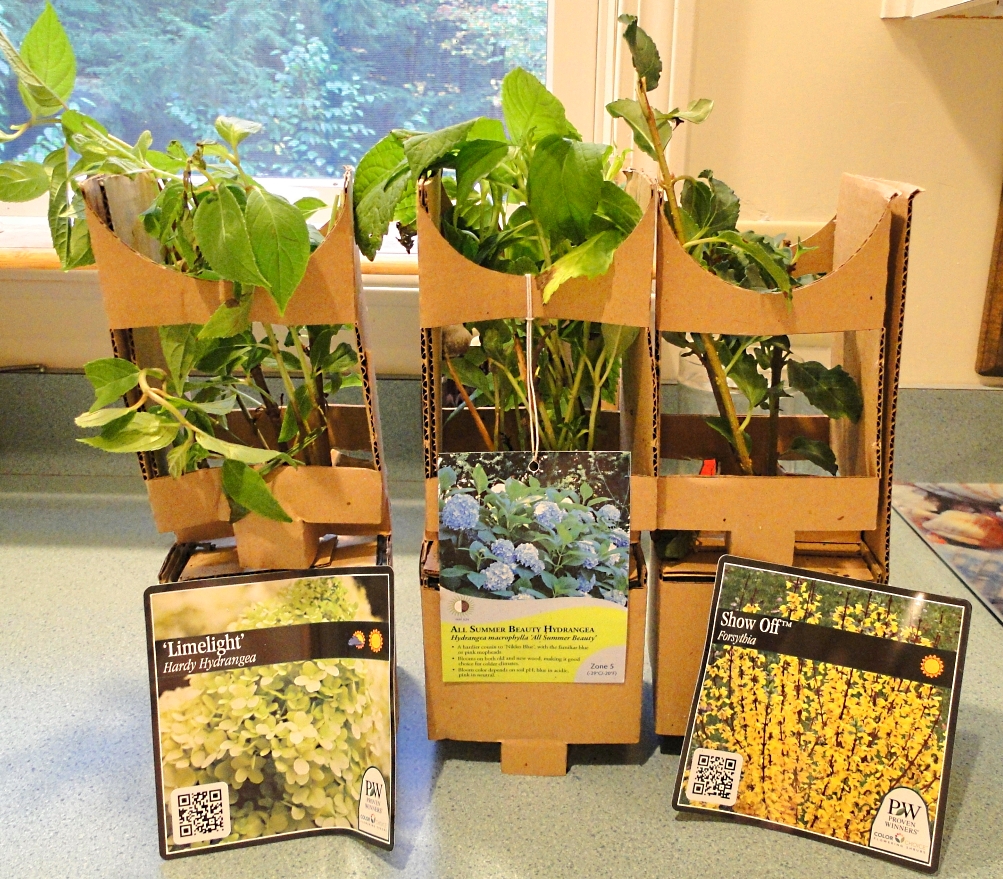
Mail Order Hydrangeas & Forsythia

I actually received these plants October 11th, but I’ve been busy with renovations to my house and didn’t have time to post.

I ordered two hydrangeas, a forsythia and some other perennials and bulbs from American Meadows (link on my sidebar) and the hydrangeas and forsythia came in pots wrapped in little cardboard boxes, which you can see in my photo here. I just took the boxes and “unwrapped” them from around the plant. It was a pretty cool way to ship them with little damage showing.

On the left, is the Limelight hydrangea which has greenish flowers. In the center is the “All Summer Beauty Hydrangea” which (as the tag says) is a hardier cousin to the Nikko Blue.

They were in pretty good shape and it rained for days after they arrived so I set them out on the deck to get watered and adjust to the outdoors during that time. Then I dug big holes and mixed in some Bonemeal with the dirt and watered them well. I planted the All Summer Beauty next to the porch steps and the Limelight at the side yard next to my new red, rhododendron.

All the plants are doing very well and I’ve finally finished planting all my tulip, daffodil and hyacinth bulbs.

Are you a mail order person or do you prefer to buy local – or maybe a bit of both.  I have written a page on Buying Perennials about my thoughts on this subject with pros and cons as I see them.

Edible Nasturtium Flowers Are Easy to Grow

Certain flowers can be grown and used to add flavor and goodness to food. The edible nasturtium flowers are easy to grow. The plant is an annual, but if you allow it to go to seed it will replace itself each year in the garden. Or collect the seeds and store them overwinter.

So how do you know which flowers are okay to eat? One way to begin growing edible flowers is to buy a book with accurate information.

Red and yellow Nasturtiums are edible plants
Pretty and Edible Nasturtiums

Edible Nasturtiums

Last year I began adding Nasturtium flowers and leaves to my salads, but I hadn’t grown nearly enough of them to last long.  I love their peppery taste and plan to grow lots of nasturtiums in my new gardens this next Spring.

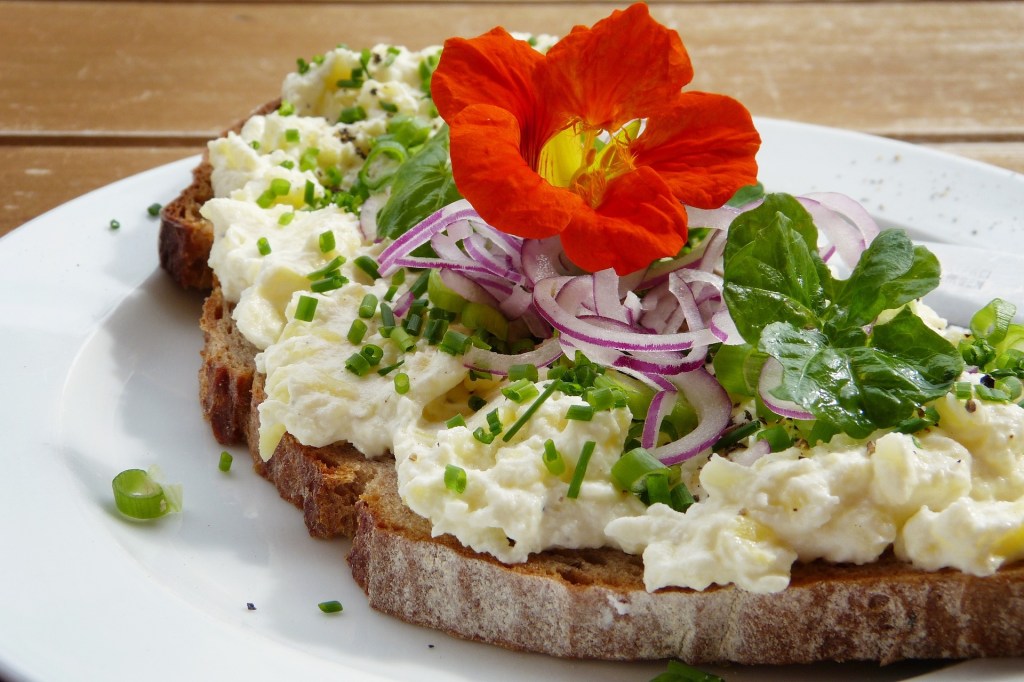
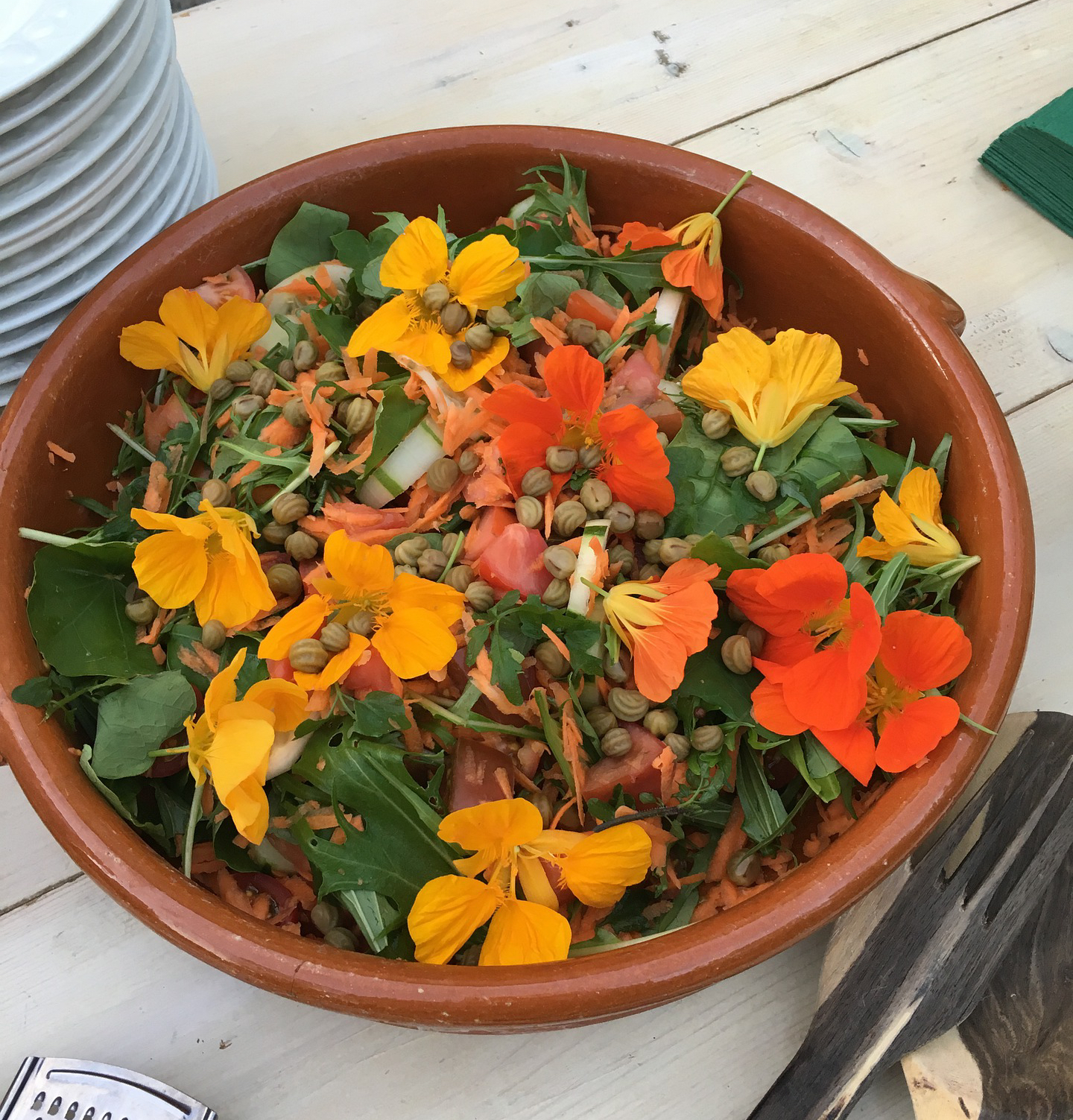
This salad photo below includes the seeds of the nasturtium, which I have never eaten.

nasturtium salad flowers seeds greens
The flowers and seeds are part of this salad

Growing Nasturtiums

Nasturtiums are easy to grow and all you need is one or two plants as starters. At the end of the growing season, let the seeds dry on the plant and then collect them to use the next season.  These are great flowers for kids to grow because the seeds are quite large and easy to handle.

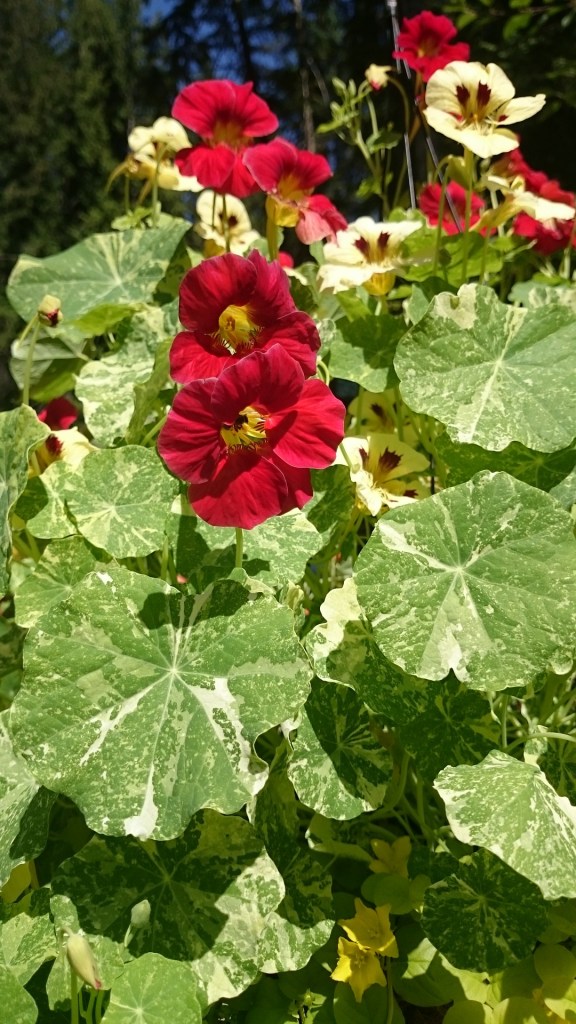
Leaves are green or variegated (Alaska variety) and flower colors are usually red, yellow, and orange. Read more at this master gardener site.

nasturtium plant with variegated leaves

They come in a variety of colors and are easy to grow by planting their big seeds after the last frost.  Don’t fertilize them or you may get only big bunches of leaves and no flowers!

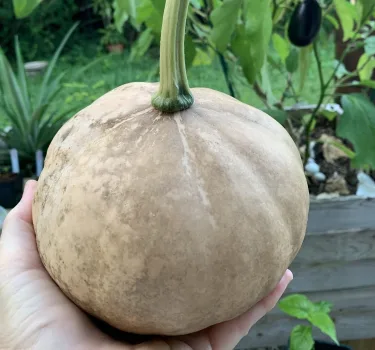
holding nasturtium seeds
The seeds

Compact Hydrangeas to Grow In Pots

Compact hydrangeas to grow indoors in pots.


If your patio or living room needs some color and you’d like to add a beautiful flowering plant, why not consider growing a compact hydrangea in a pot. I have never grown a hydrangea indoors, but I may try it at some point now that I have a house with plenty of room.

The macrophylla (rounded blooms) hydrangea would be a good choice for pots. It can be trimmed down to a smaller size and will bloom on new and old stems.

Or find a variety that is meant for pots. HGTV has a post which lists the varieties that will do well in pots. They list the Limelight, but I must disagree with that! My Limelight plants grow a lot during the summer and have very long lanky stems with huge flowers at the end of each stem that are heavy. Not a good choice for an indoor pot, in my opinion.  You want to choose a variety that will stay compact, or can be trimmed to stay smaller.

Advantages to container grown plants;

  1. They can be moved around (use a stand with wheels for the big plants)- out of the sun if it’s too hot; or into the sun if needed.
  2. Use them to beautify areas that are dull and boring.
  3. Enjoy the flowers up close and not only when you walk out to the garden.
  4. It’s easy to provide nutrients to keep the flower color blue or pink (if you have the macrophylla type that changes).

Possible disadvantages to growing indoors;

  1. Controlling the soil moisture can be more difficult.  I tend to overwater.
  2. The plant could outgrow the pot and need re-potting
  3. Your cat / pet could eat the leaves!
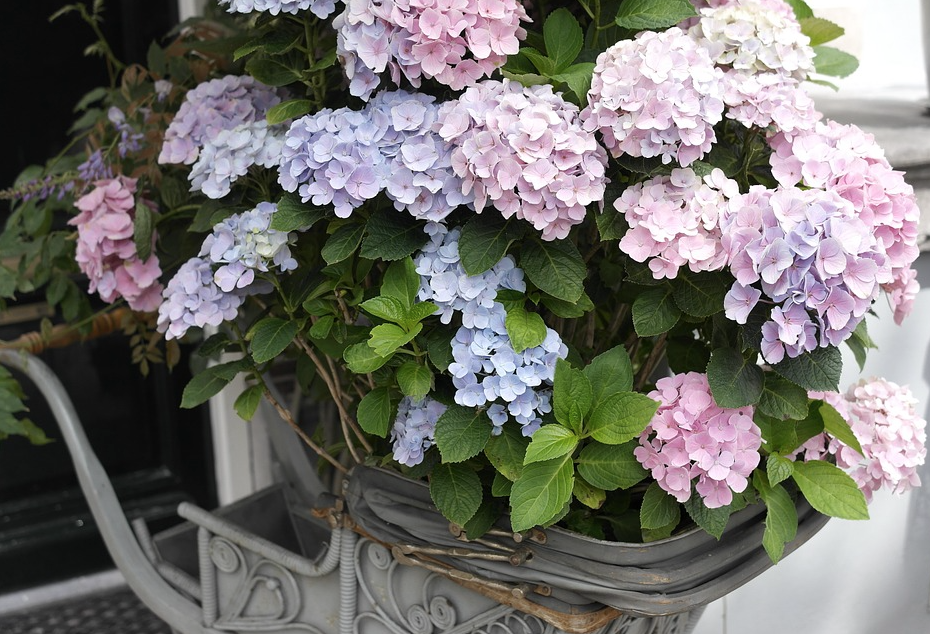
baby carriage potted hydrangea
Baby Carriage as Potted Hydrangea Container (Photo credit: Richgold @ Pixabay)

(Photo credit: Pixabay, top image by congerdesign.)