Starting Vegetable Seeds in Eggshells

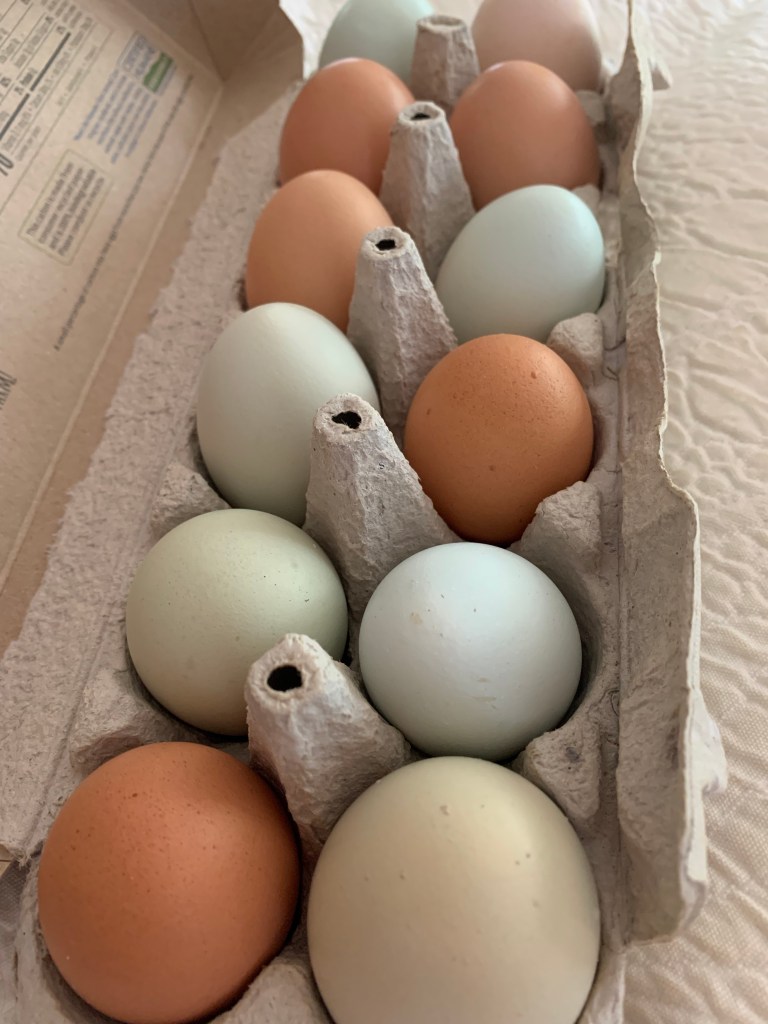
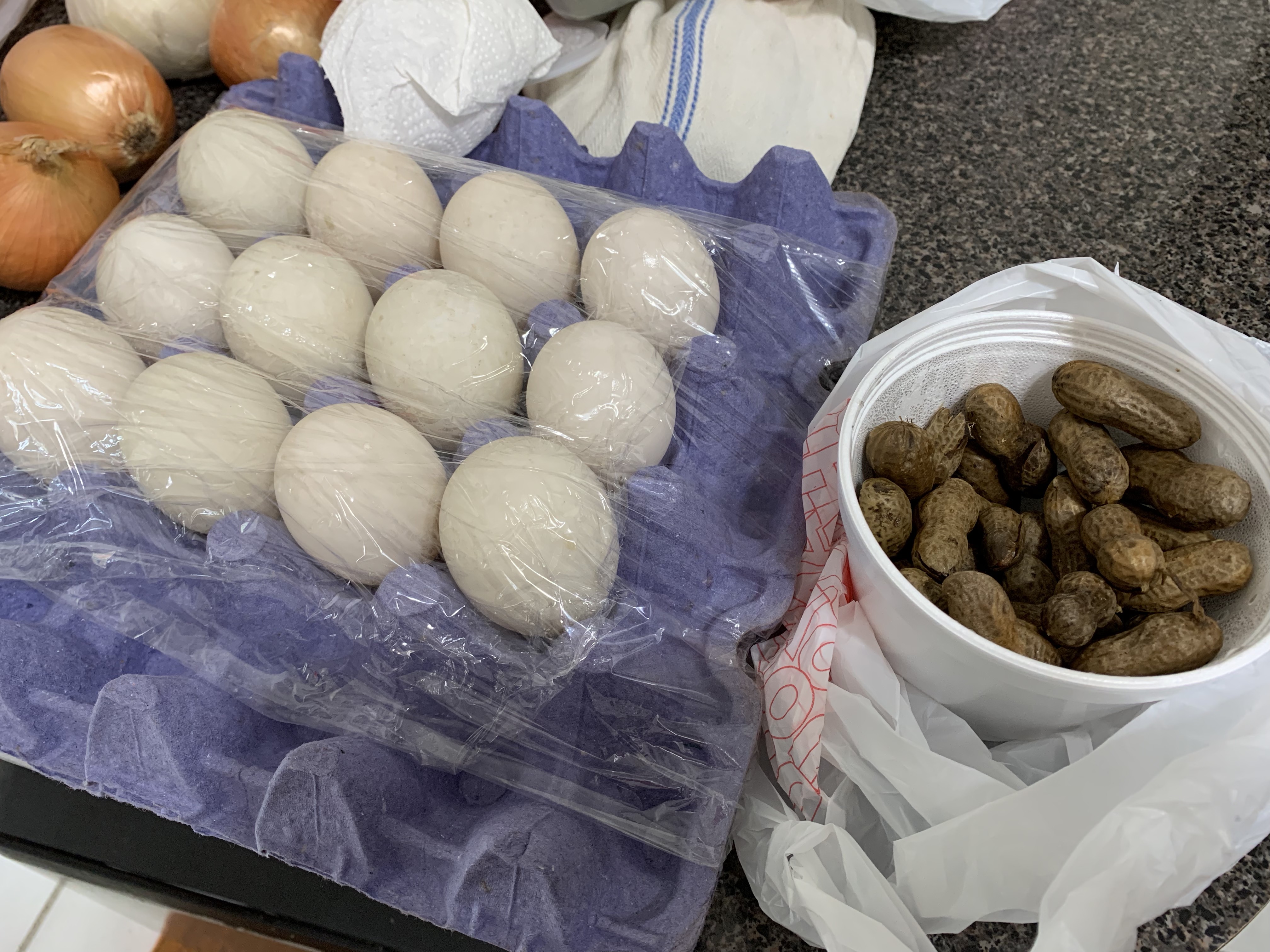
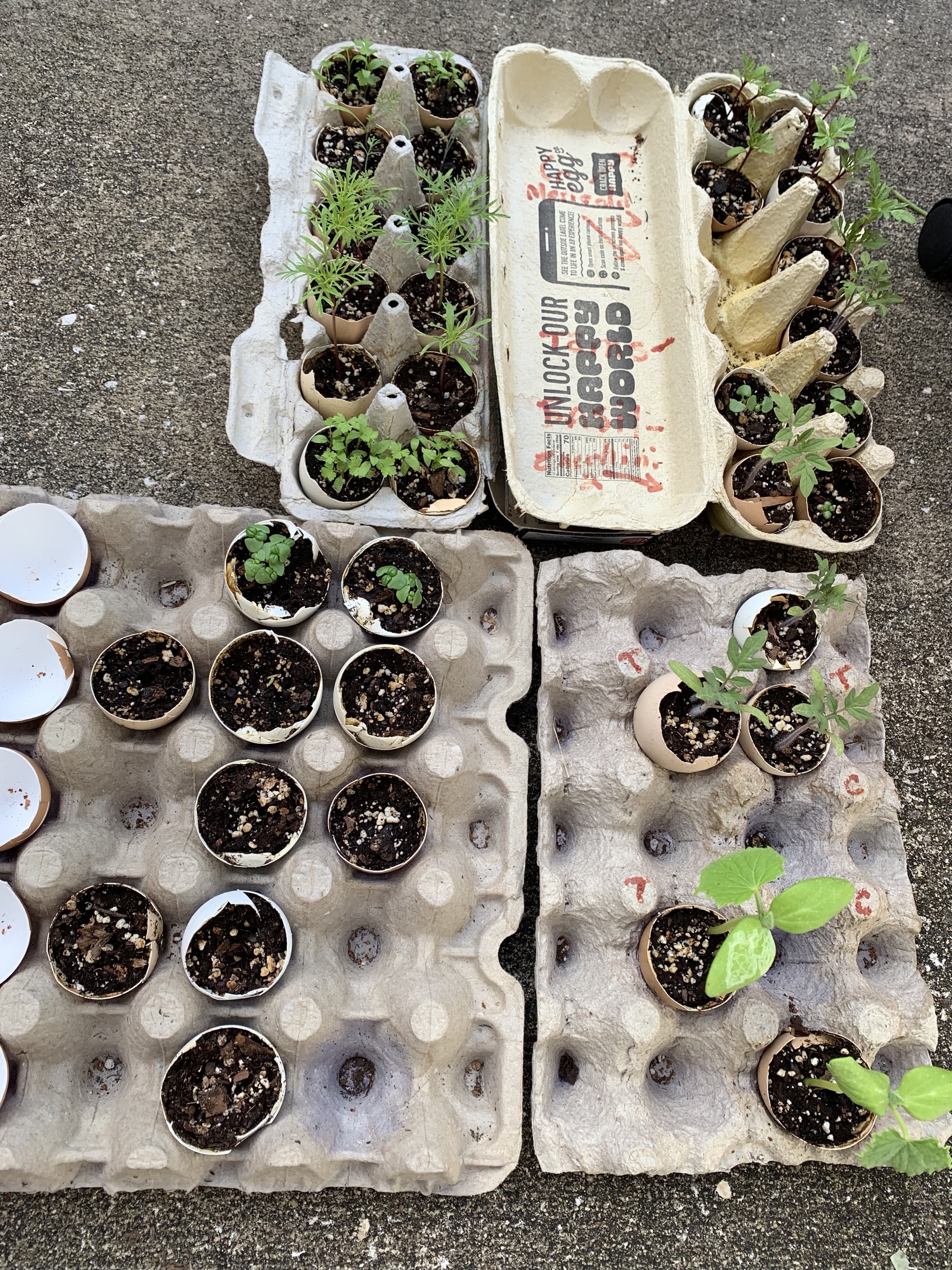
While using my local, fresh, free range chicken eggs one day, I looked at the beautiful shell color and remembered something. I had read, at one time, about using eggshells as pots to start seedlings for the garden.

The shells were so pretty that I hated to just throw them out, so I began rinsing the broken shells to save.

free range chicken egg colors

Getting Ready to Plant Seeds in Eggshells

Here in central Florida frosts and freezes tend to happen in January and February, if they happen at all. By March the weather seldom gets all that cold, but can be chilly overnight. March is the month to plant in Florida.

However, seeds can be started indoors in February, or sooner, to have little seedlings ready to go into the ground by March. I planted mine in the middle of February.

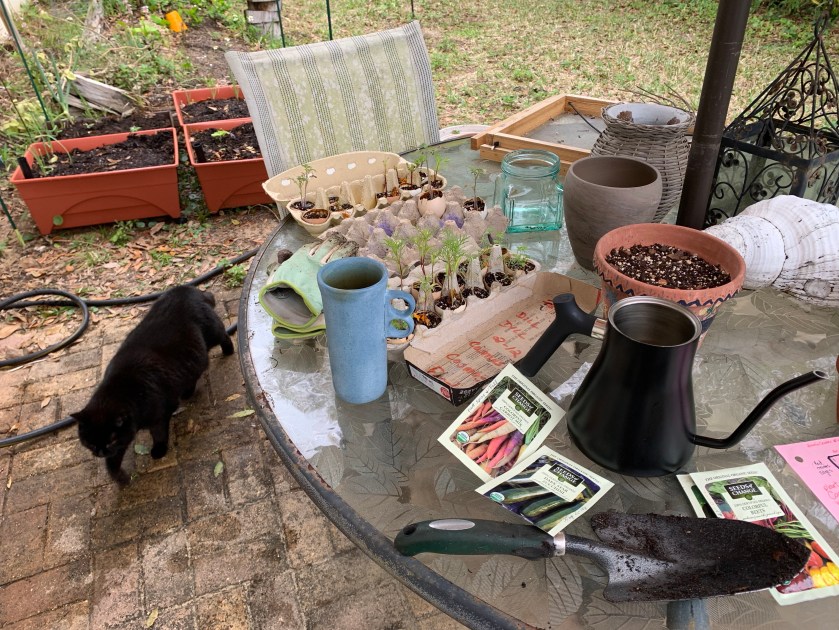
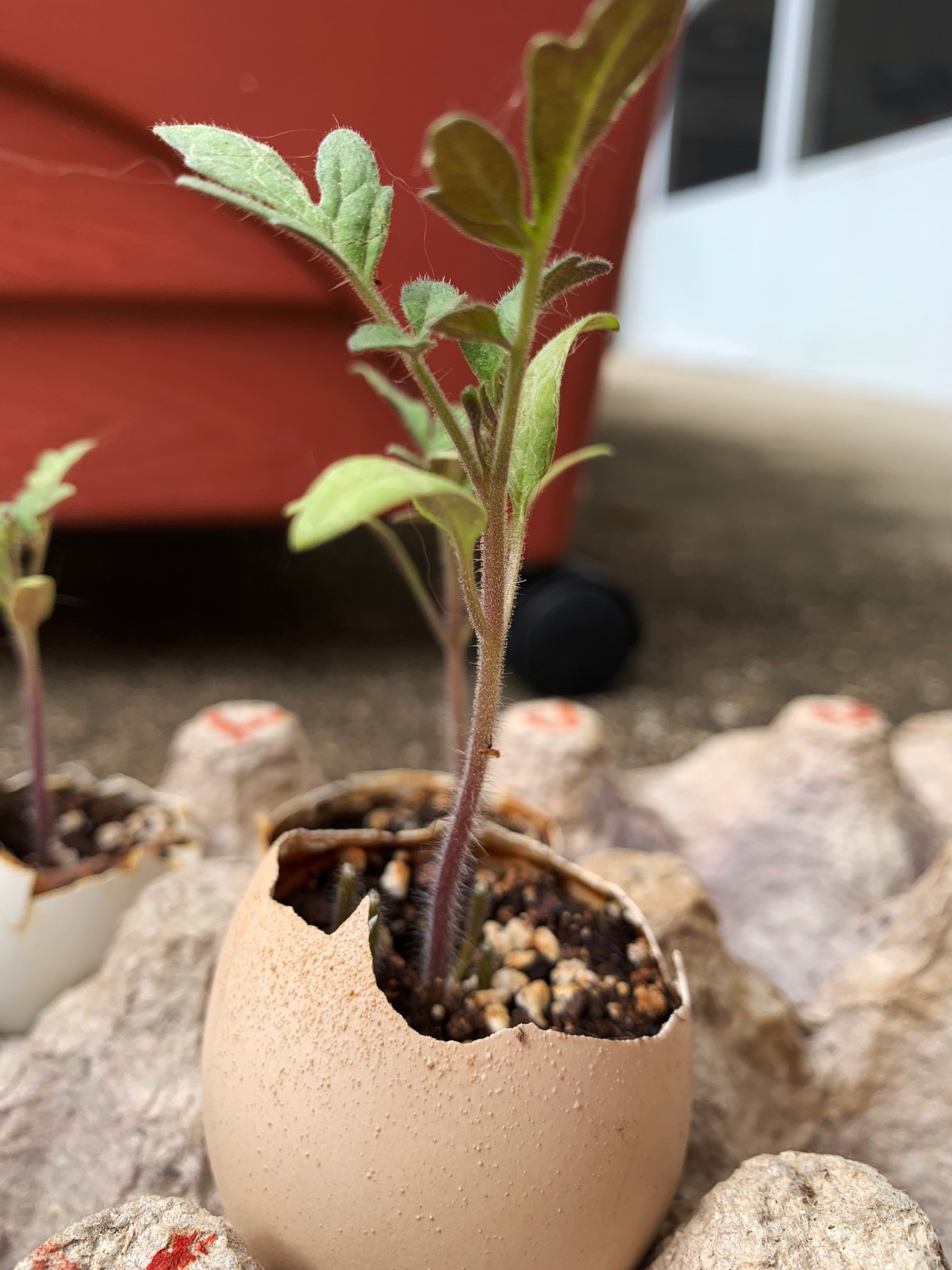
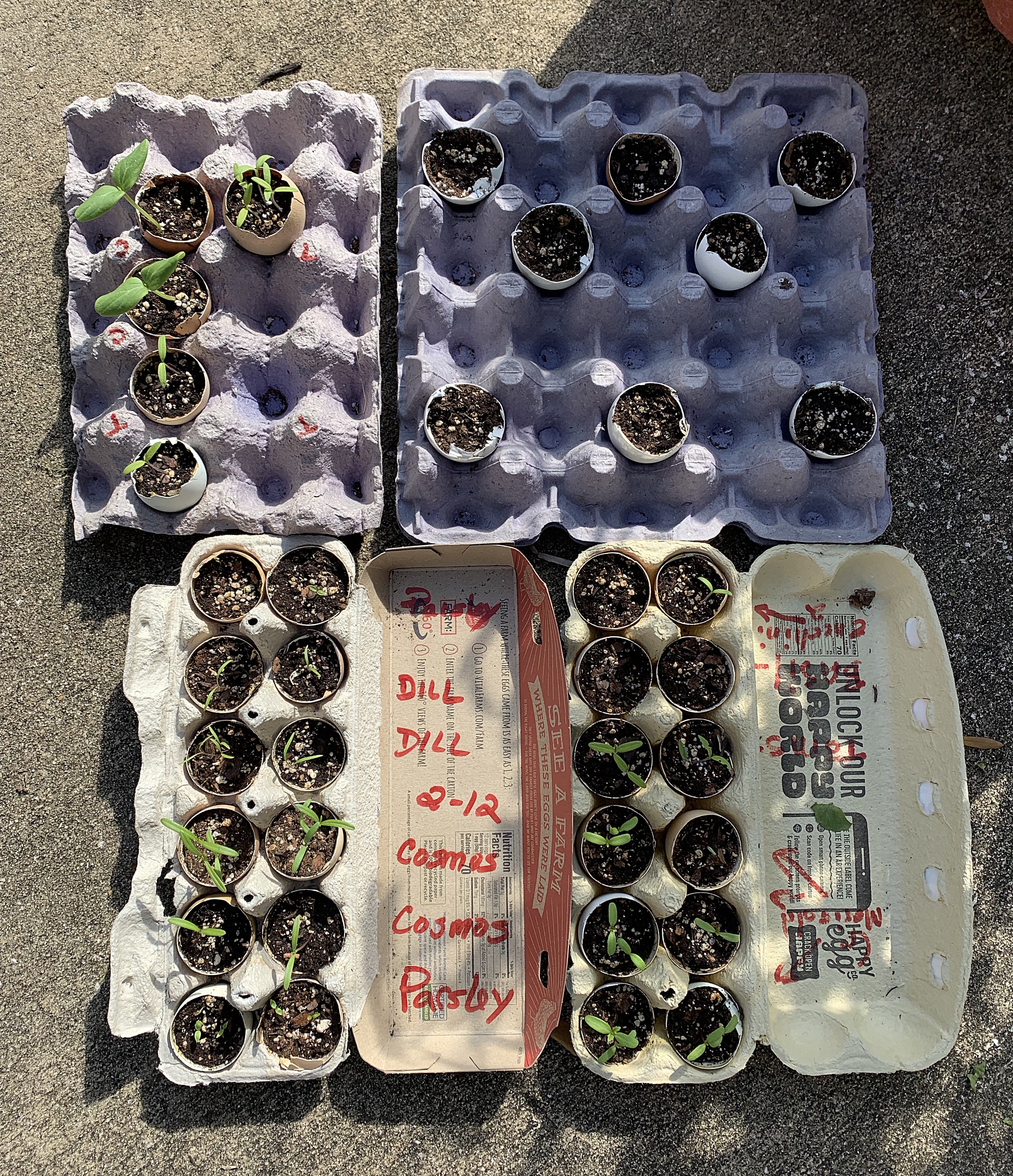
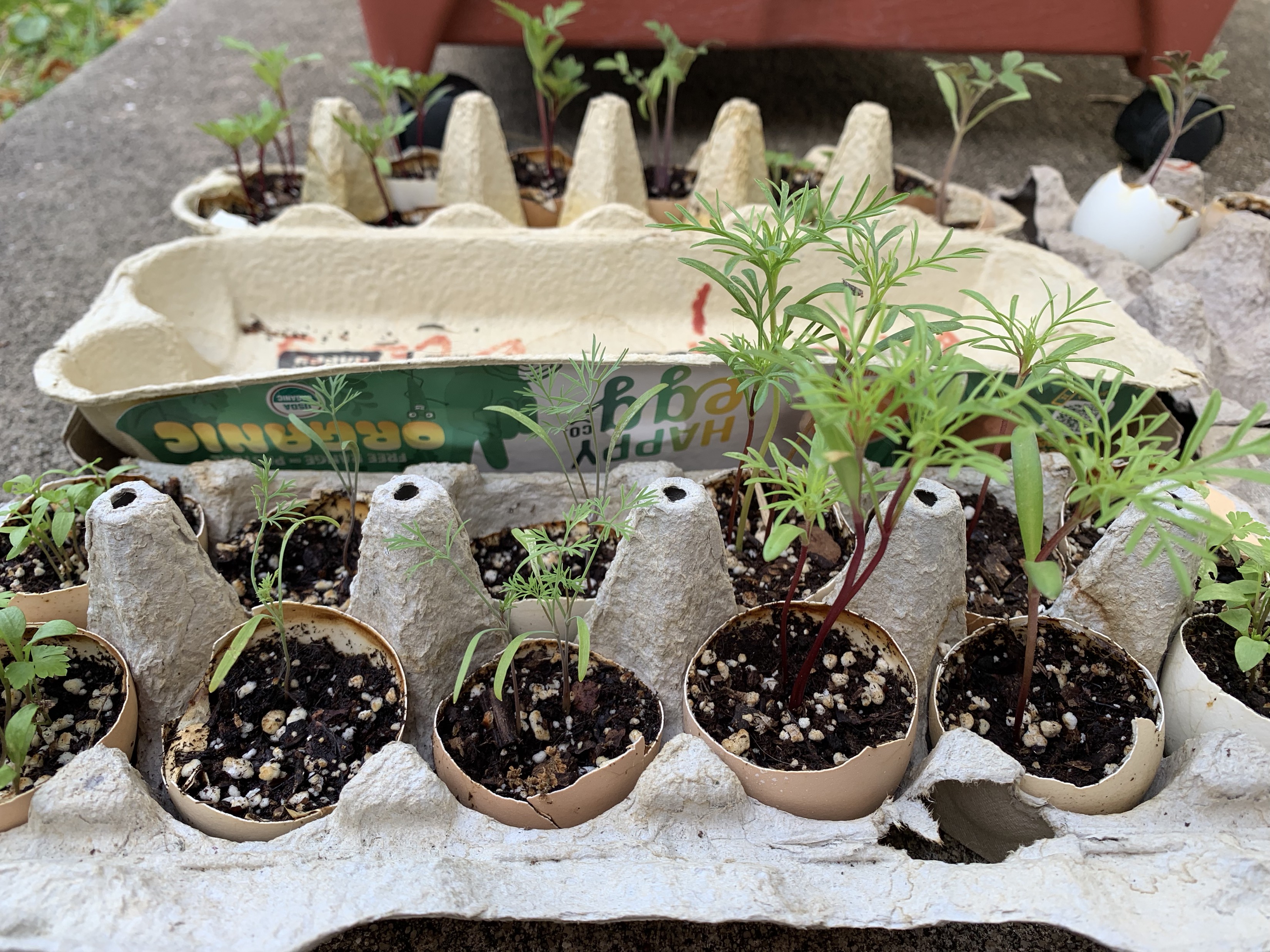
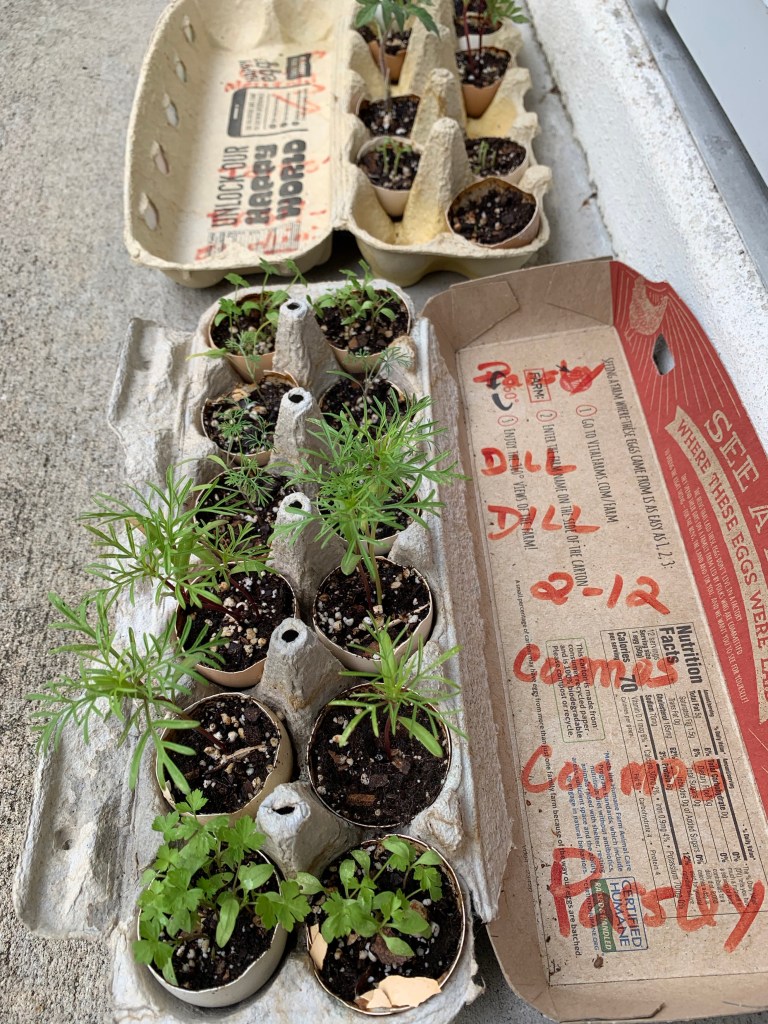
With my organic bags of dirt – Black Gold by Sungro (Amazon affiliate link)- is what I used, and organic seeds purchased, I filled each eggshell and then stuck seeds down into the soil. Keep the egg cartons to use as the plant tray.

When the weather got nice enough, I put all the cartons outside in the sun for the day. I brought them inside each evening. And checked them often to add water.

Difficulties and Challenges to Eggshell Gardening

Unlike little pots, the eggshells are delicate. One online site said to put a pin hole in the bottom of the shell for drainage. I did not do that because I tried and failed to make a little hole. It is not really necessary as long as you don’t overwater. Also, with a hole in the bottom, the cardboard containers would be wet.

Watering can be challenging. The eggshell pots are very small. They will dry out quickly when outside in the Florida sun. I water the seedlings twice a day, and this is March. Because the pots are so small and I don’t want to overwater and have them sitting in a puddle, I use my pour-over tea pot which has a small thin spout. Alternatively you could use a paper cup or anything that allows you to easily add small amounts of water.

Get the Seedlings Outside During the Day

Each day I put the seedlings – or soil with seeds – outside into the sun. Once the plants begin to grow they will need lots of direct sunlight and also some moving air. When plants grow in slightly windy conditions, it causes the stems to become strong. Or so I’ve heard.

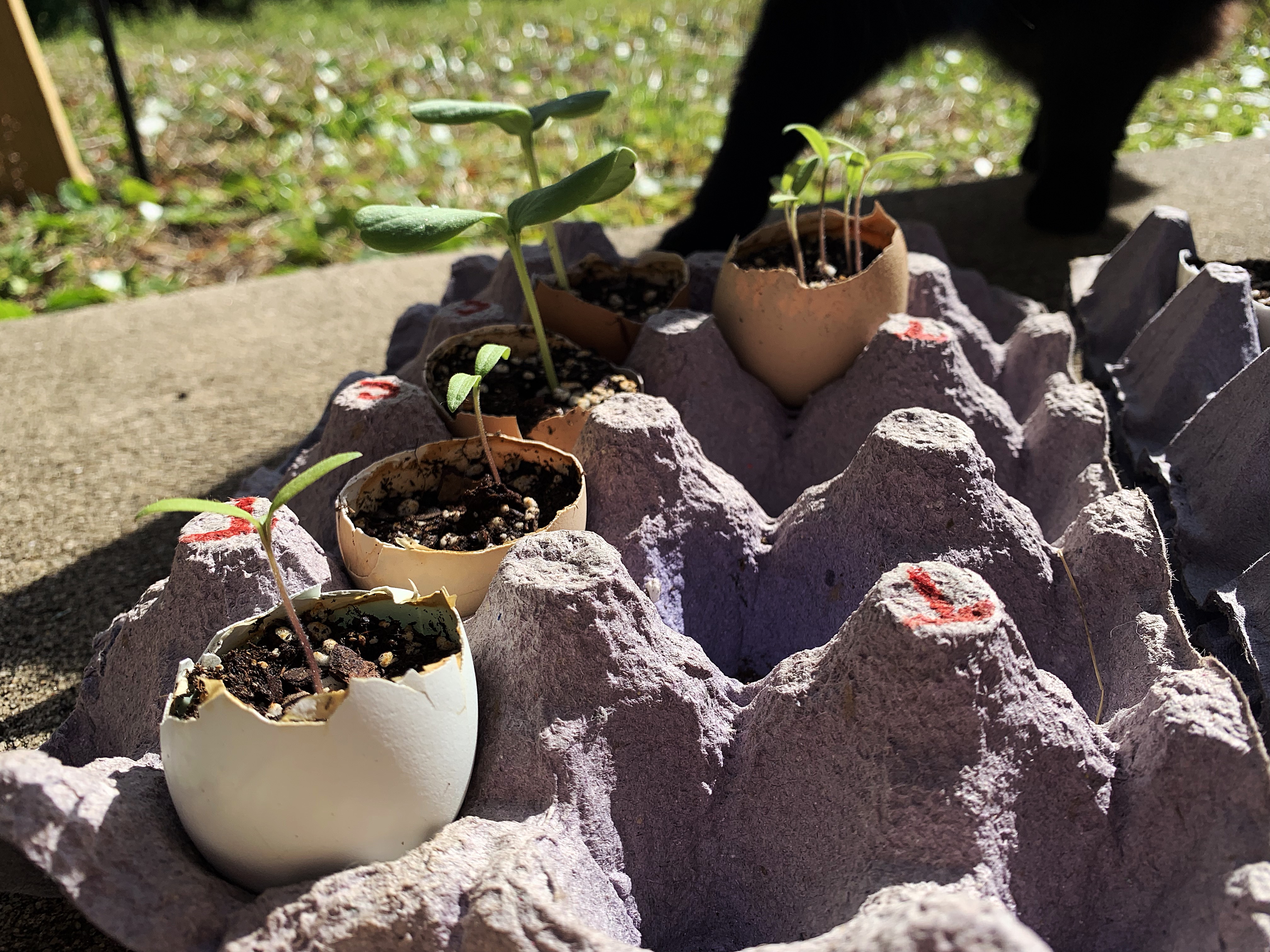
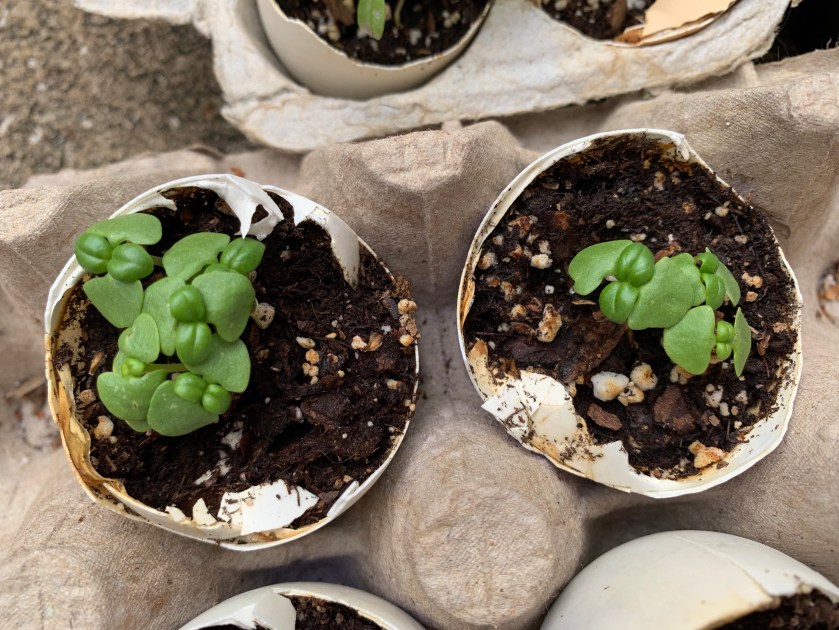
Seedlings growing in eggshells
Seedlings are about a month old

I’m lucky enough to be home all day and can easily do this. Even if the plants can sit in front of a sunny window it will be helpful.

All in all, be ready to spend some time caring for the little pots. You can’t just plant and forget.

Choosing Seeds to Grow in Starter Pots

It is tempting to go overboard when picking out seed packets! I’m picturing the bounty of fresh veggies – arms loaded as I come in from the back yard. Realistically, I certainly don’t have space for many plants and seeds are generally good for one year only.

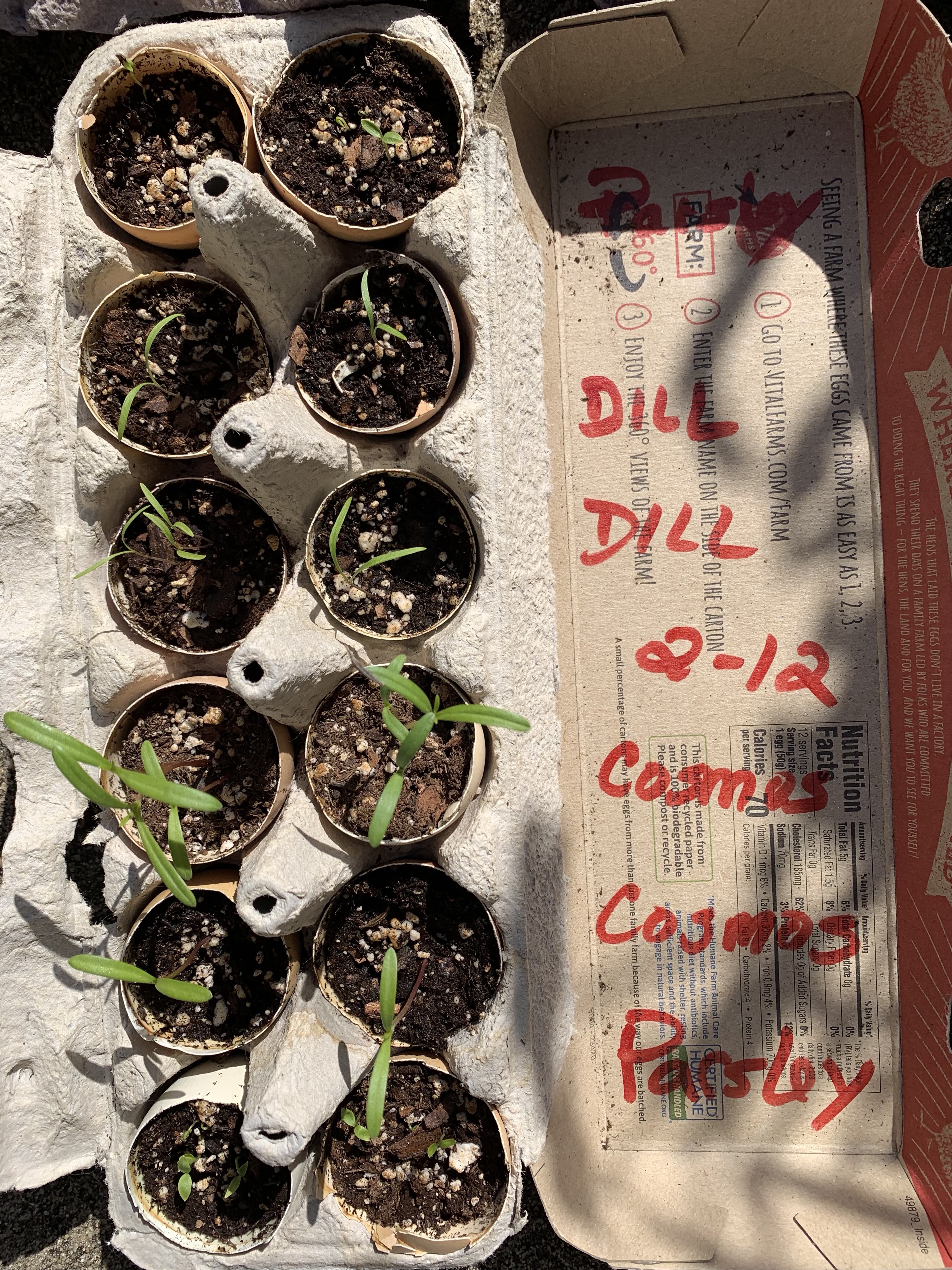
I love almost all vegetables, but must be picky about which ones I will grow. Fresh herbs are one thing I would use often. My basil and parsley has diminished over the years so I wanted to grow those two things again. I also have had difficulty finding dill plants here in Florida, so I am trying to grow that. Dill and fennel plants have flowers that attract the Swallowtail Butterfly.

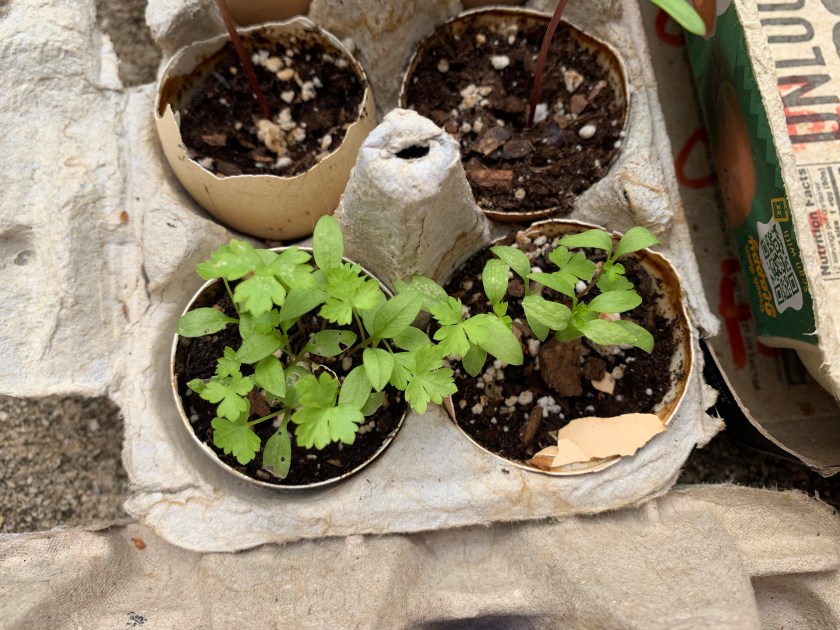
Italian flat leaf parsley seedlings
Flat leaf Italian parsley seedlings – lookin good!

Getting to start plants from seeds gives me the chance to learn what’s what in newly sprouted form.

The basil did pretty well, but something did eat some of my basil. I planted as much as I could, filling all the saved eggshells. I knew that some things would do better than others.

Basil seedlings in eggshells
Little basil plants

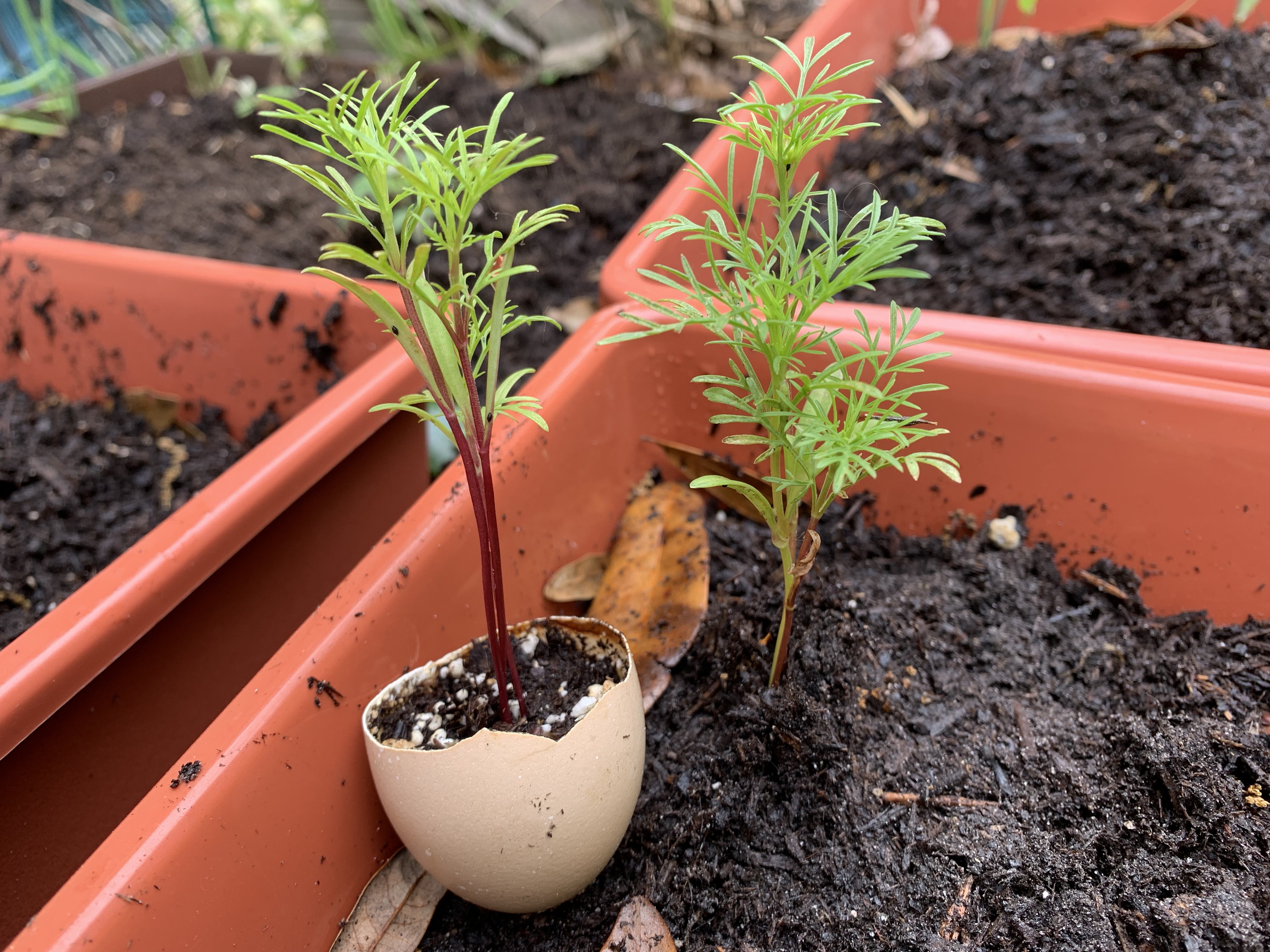
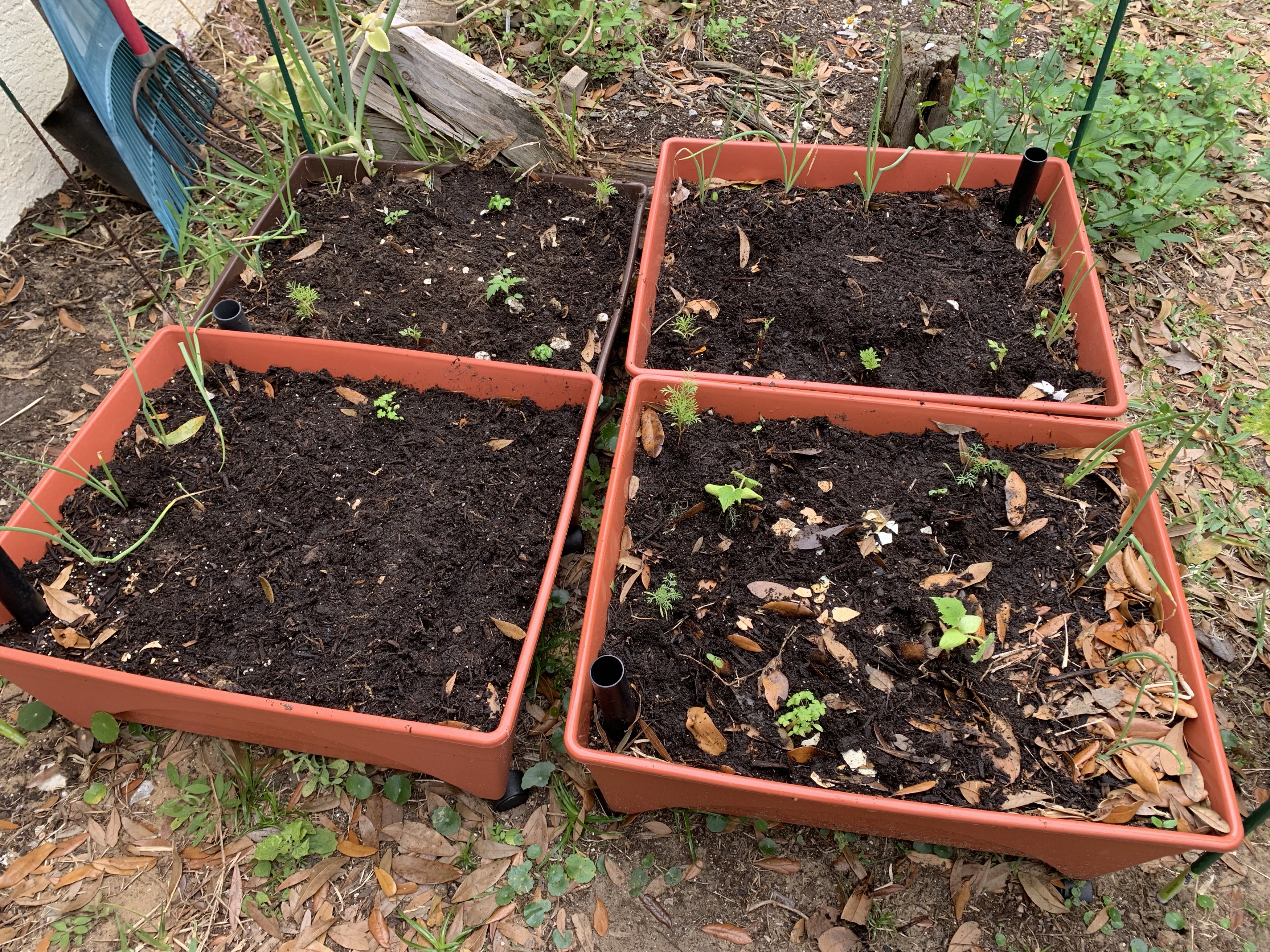
My yard needs more flowering plants. Some of these eggshells contain marigolds and cosmos. I plan to plant more of those flower seeds in larger containers as well. Flowers don’t have to be planted in the garden – especially when your garden is made up of a few grow boxes. They can be in containers to save on garden space.

Flowering plants in pots can be moved around the yard as needed to keep bad bugs away and hopefully draw in the beneficials.

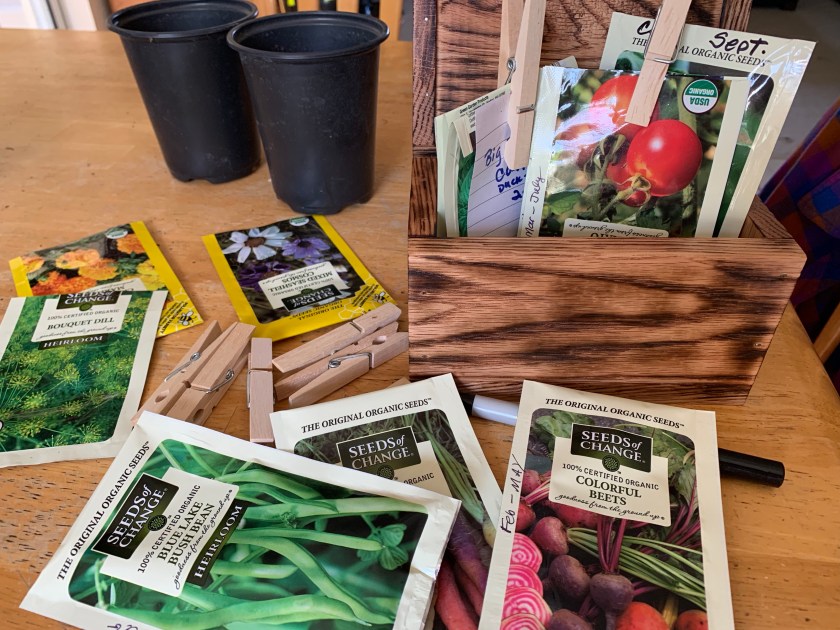
organic seed packets

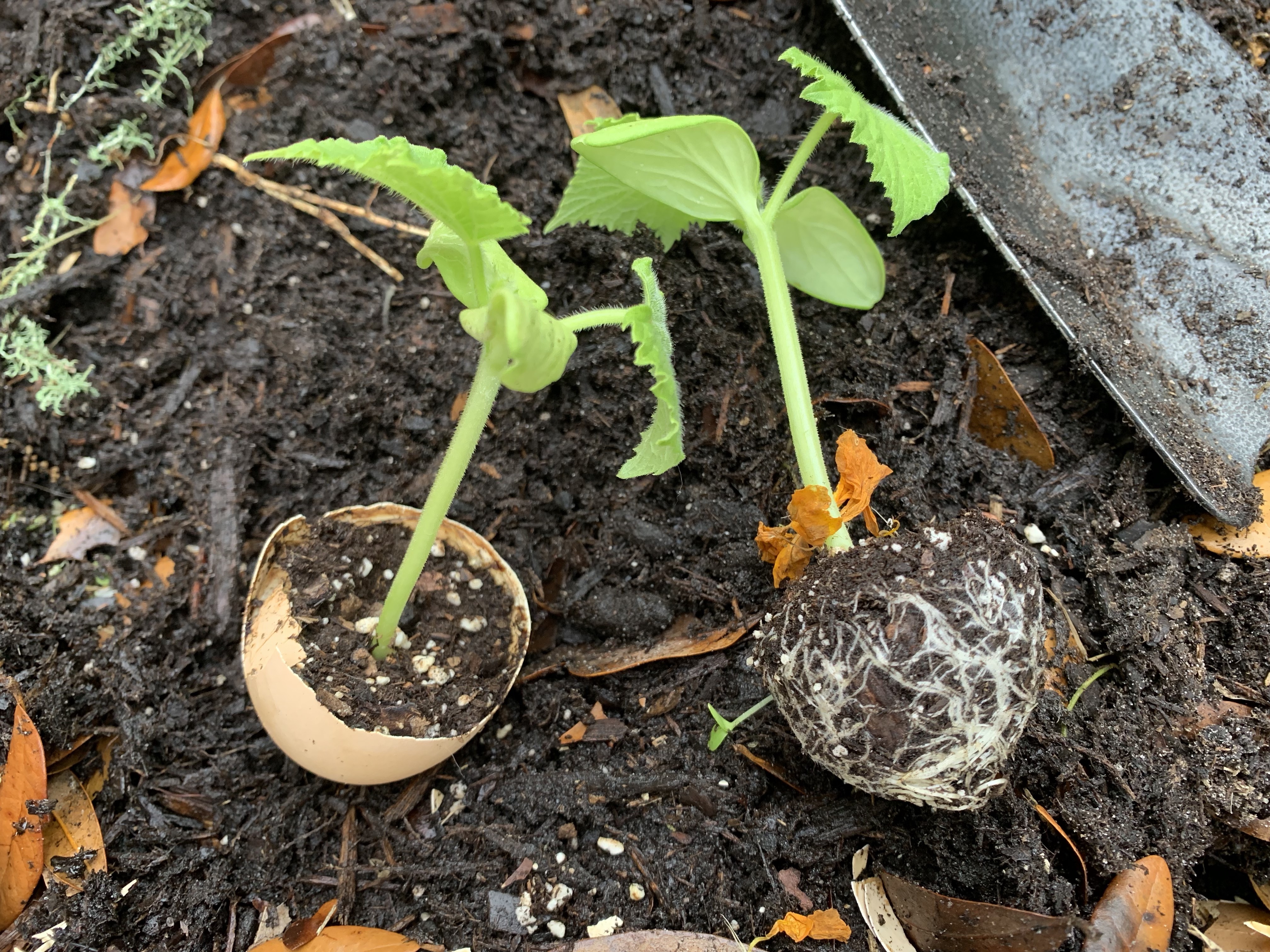
Larger seeds such as zucchini and cucumber can go directly into the ground. Let’s face it, I would need a lot more egg shells to get everything started. Also, I don’t know how well transplanting will go. More to come on that!

For now I am keeping up with the shell starters.

Native Milkweed That Survived the Freeze

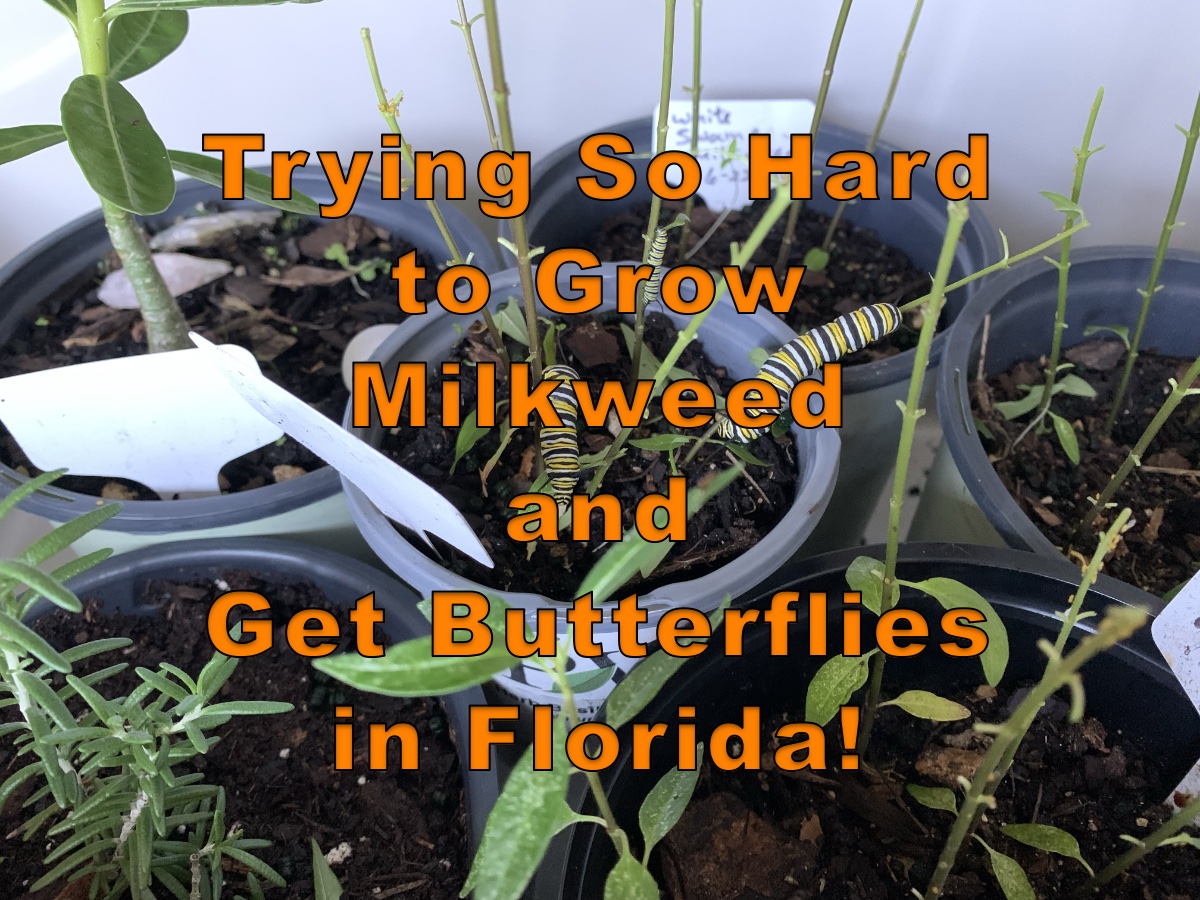
I’m still trying to fill my yard with native milkweed. After the cold spell over winter froze most things back, and killed many things, I have fewer milkweed plants. All the tropical milkweed is gone. Tropical milkweed is not native, and therefore not a great loss. Three of the four swamp milkweed seedlings I purchased…

Growing Squash in Florida is Not So Easy

In New England squash and zucchini were always part of my summer gardening design.  Usually a couple of plants gave me more squash than I could eat.

In Florida I have had no luck growing any type of squash.  Now I read that “summer squash” is not grown in summer here.  In fact, I am discovering that not much does grow well here in summer, except the tropical plants and citrus.

The Summer Squash Gardening Solutions page at the University of Florida has some recommendations when it comes to planting and growing squash.  My garden is very small so I’ve tried to grow squash in my fabric bags.  The plants begin fine, but eventually rot away.   The types suggested are: Black Beauty and Spineless Beauty zucchini, and Summer Crookneck and Early Prolific Straightneck.  I’ve never grown pattypan squash, but the site recommends Early White Scallop.

Another mistake I may be making is buying my seedlings (and seeds) at Home Depot.  I have not had luck growing any plants that come from that store!   Both of my caladiums have disappeared totally from the garden!  I don’t know much about growing caladiums but I guess they need attention I did not give them.

Recently I visited a local nursery called Lindleys, in New Smyrna, where I found my Staghorn fern and Fiddle leaf fig tree, and a little thyme plant, but I’m thinking they might have seedlings to plant as well.  I believe the real growing season begins in February here.  I will go back and see what they have next month.

Surprise Little Flower on Sweet Potato Vines

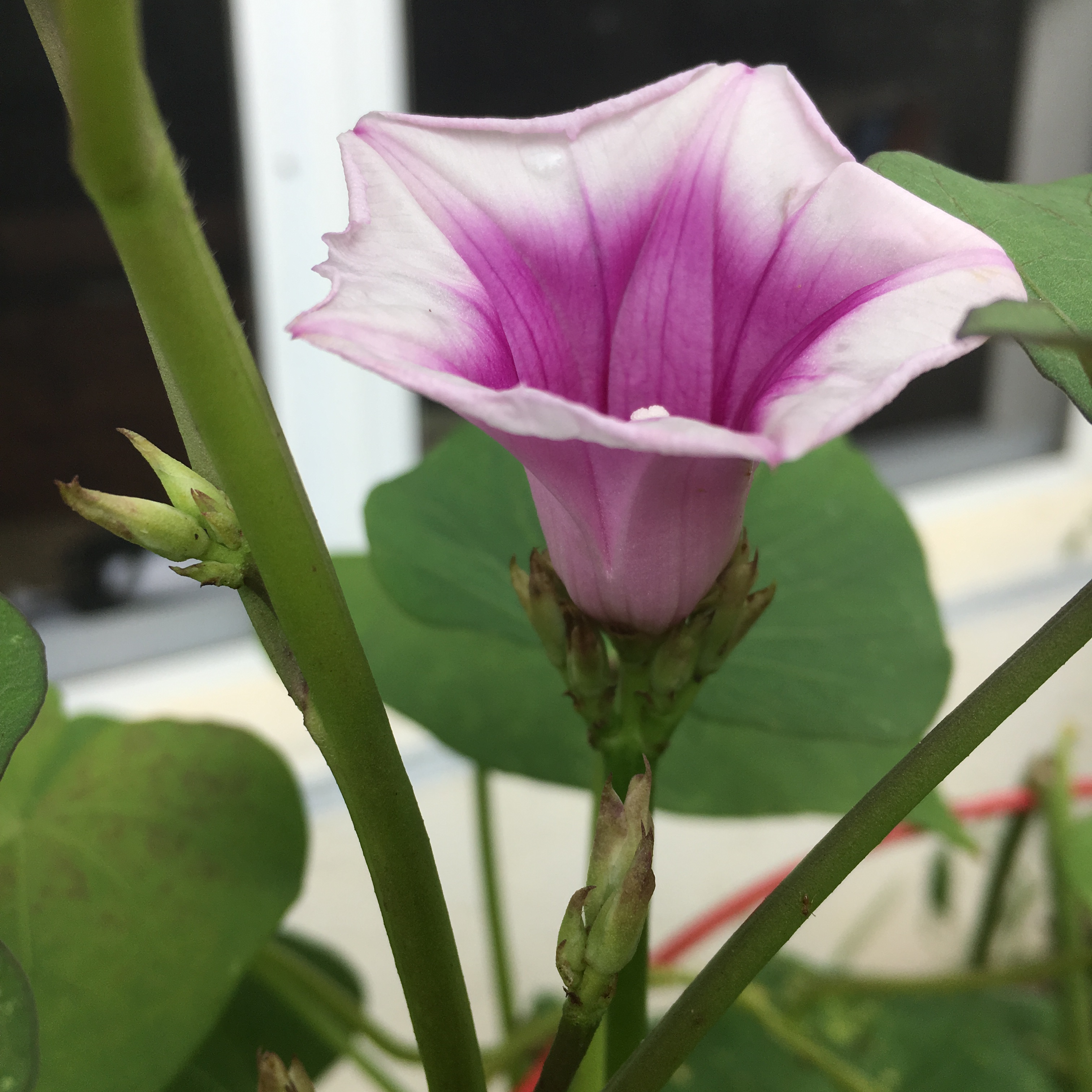
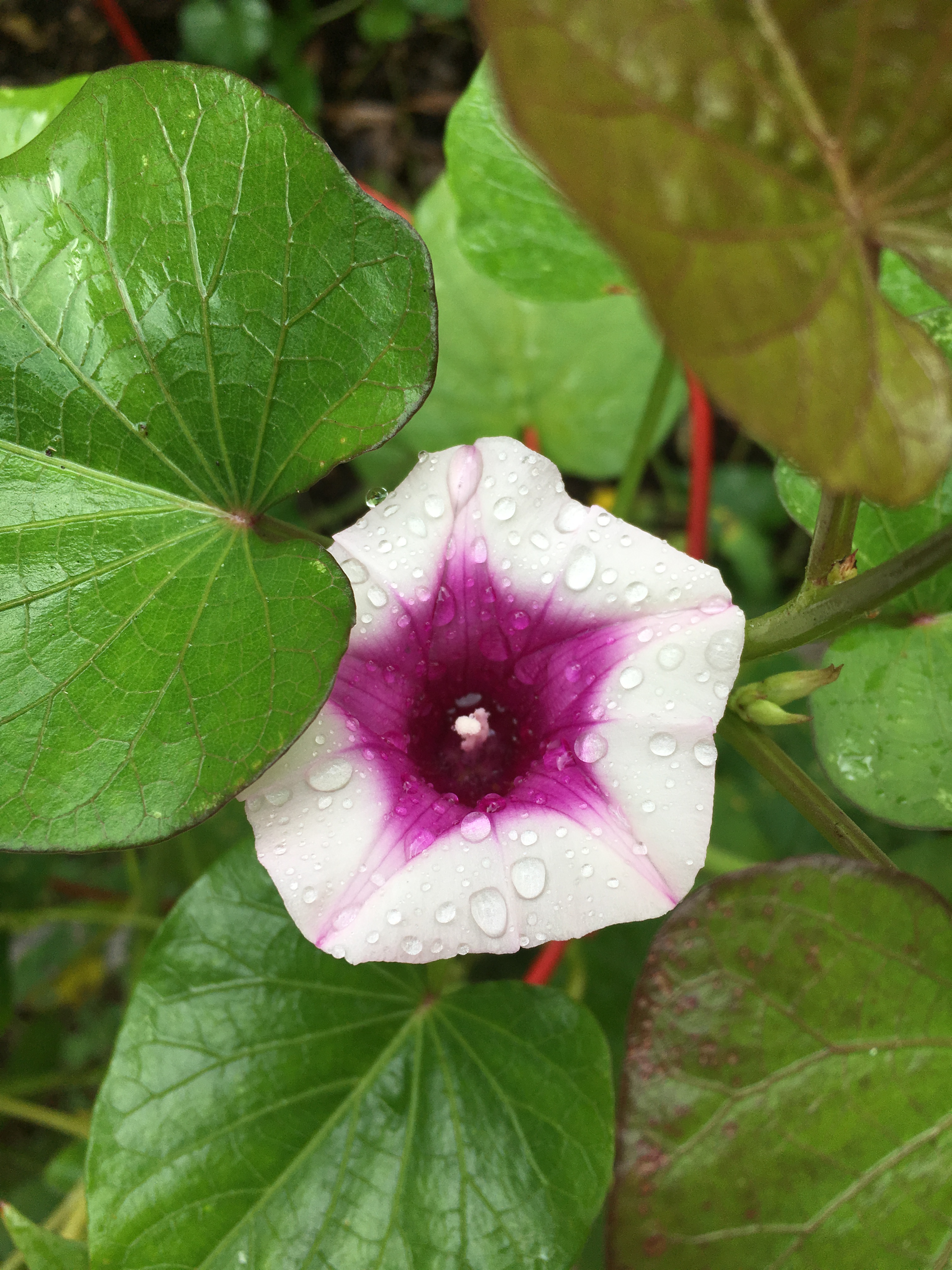
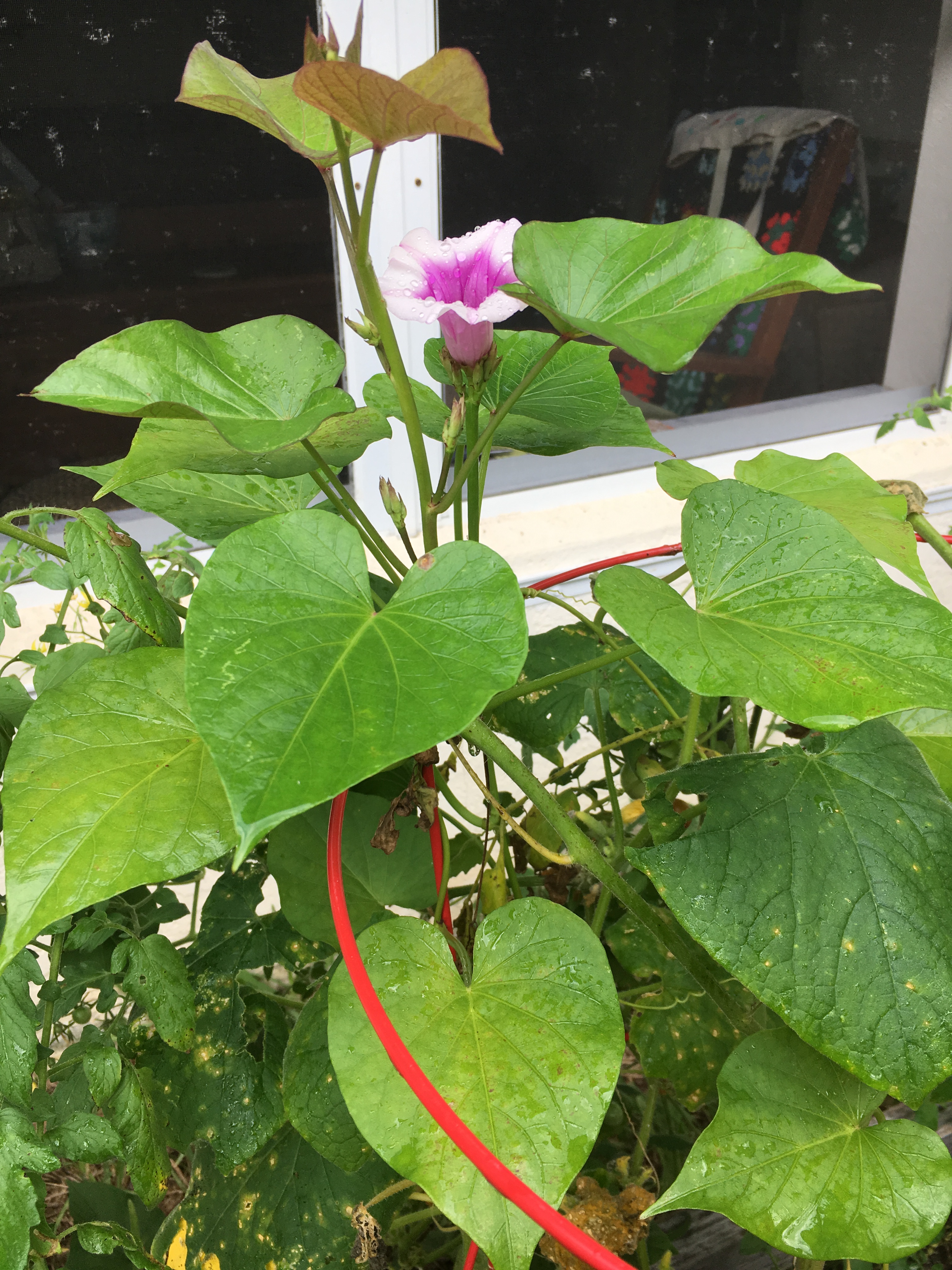
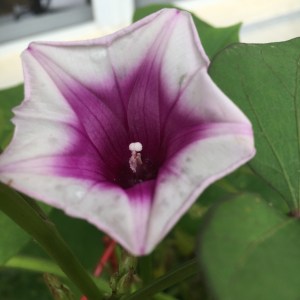
It’s November and my Florida vegetable garden is a bit of a mess. I don’t do much with it, but I look at it every day out my bedroom window. And today, I noticed a lavender-pink flower that was out of place. The outside color is about the same as the eggplant flowers, but this bloom was larger. It looked like it was on the trailing vine of the sweet potato plant.  And sure enough it was!

Lavender, pink and purple sweet potato flower
The inside of the flower is darker purple

sweet potato flower on vine
Sweet potato vines can flower!

Any day I can learn something new is a good day, in my opinion. And today I did. After neglecting my overgrown raised bed garden for months due to the heat, I am pleased to see new things happening in November.  Maybe a cool down was all it needed.

Sweet potato vines
Sweet potato vines trailing over the garden bed

After doing a quick search about flowering potato vines, I found an article at The Walden Effect which said flowers on potatoes were unusual. Then, I read comments from lots of people who have had flowers like mine. So whether it is uncommon or not, I don’t know. Maybe flowering sweet potatoes are only common in Florida, or other humid areas. It certainly looks like more flowers will be blooming on my vine. And yes, as someone mentioned, they do look like Morning Glories.

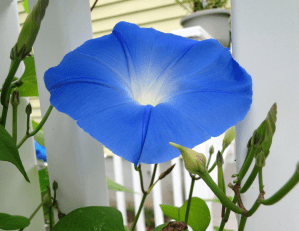
blue morning glory flower and buds
Blue morning glory flower and buds – my photo

At my house in New Hampshire I grew a big Morning Glory plant with blue flowers. The vine grew up the side of my deck railing, but the plant was frozen just as loads of buds were forming. I decided not to grow them again, but the blue flowers were gorgeous.  The buds were twirled around and unfolded like a mini umbrella.  You can see that in my photo above.

Getting Seeds From Sweet Potato Flowers

Another interesting sweet potato article talks about how sometimes the blossoms can turn into tomato-looking berries.  This is where the seeds will be.  I have never grown a sweet potato from seeds, only from tubers, or bits of old sweet potatoes with eyes.

sweet potato flower on vine
Potato vines climbing through tomato cages

I will watch and see what happens to the flowers, and if I get any of those seed pods.

IMG_6644

Finally, Growing Tomatoes Advice For the Florida Climate

As I was searching for some other gardening advice altogether, I came across a Florida gardening blogger who seems to have very useful information to share. Unfortunately it looks as if his blogging stopped a few years ago in 2015. Maybe he moved away to a better place.

I found a post with growing tomatoes advice which would explain why I have such a difficult time with tomatoes.

First of all he starts with seeds (Plant Your Tomato Seeds). I’ve been wondering if the fact that I buy seedlings from Home Depot (there is nowhere else I’ve found) is my biggest problem. He says store bought plants “are never very good”. I already suspected this.

Start planting seeds early enough to have seedlings ready for the garden by March first. He says to buy a combination of sizes, but tomatoes won’t grow very large in this climate. I’ve found that to be true as well. I don’t have the space for a lot of plants, but I can use my fabric bags.

Which Tomato Seeds to Buy?

The blogger I am referencing plants Hybrid Tomatoes only.  I am not sure why, except that they are probably tougher than heirlooms.  A hybrid is a cross-pollinated plant.  The characteristics are better yield and disease resistance, among others.

Roma tomato seed packet

In case you are interested in buying tomato seeds online:  Organic Heirloom tomato seeds can be purchased at the Tomato Fest site. These are NOT hybrids. Heirloom tomatoes give the grower the option to save seeds to plant the following year. You can’t do that with hybrids.

Buy the most disease and pest resistant varieties. Look at package labeling for letters that follow the name of the tomato. See the key list of what that lettering means on this page at Gurneys.  My packet above contains the letters VF which protects from wilt disease.

Indeterminates only – this means the tomatoes will continue to grow shooting out stems and growing tall all during the growing season. Indeterminates continue to set fruit while you pick ripe tomatoes. In other words, they just keep growing until something stops them. They need staking, whereas determinate varieties are more compact and can grow in pots.
**Note here: Indeterminates can grow to be 12 feet tall! I will need to re-think my staking. I suspect that in Florida they could easily grow to astounding heights.  I can see the raccoons climbing my stakes and destroying my crops.

Pick Tomatoes Early

Letting tomatoes ripen on the vine is my preference, but the raccoons tend to pick them before I get to.  My reference blogger picks his early and says they taste better when he lets them ripen indoors.  His blog is helpful, but not easy to navigate, so use the “search” area.

He mentions planting some tomatoes later in the season, in the shade, in a new area, and they did well.  Read about that at the bottom of this page where he “answers a question“.

I’m grateful for this info.

Why I Remove the Peat Pot When Planting Seedlings

From the time I first began buying plants from Pell’s Nursery in Osteen, Florida I was told to “rough up” the roots when the plant was removed from the pot.

I’m talking plastic pots here, which are the way big plants usually come. Often the plant is a bit root bound from growing in a container. In order for the plant to do well when it’s in the ground, the roots need to know they can now grow outwards.

Some plants with thick roots can actually be sliced, or cut to train them to spread. You do this at a few intervals around the root and dirt ball before it’s set into the ground.  The Pell family gave me good advice and I always had excellent luck when adding their trees and bushes to my Florida landscape.  Their planting suggestion was a good one.

Screen Shot 2018-05-13 at 8.17.22 AM
Hot pepper plant from store

These days little seedlings are often sold in biodegradable, plantable pots, which will disintegrate in the dirt. We are told to plop the whole thing (minus the bottom, says the label) into the ground. Easy-peasy, no muss, no fuss.

I don’t like it. Why would I want a pot in my garden? And what is it really made of? I also believe it inhibits plant growth.  “Peel off bottom of pot for optimum root growth” – it says this on the plastic.  So imagine if you let the roots around the sides have that optimum growth chance as well!

In short, it’s not necessary. Treat it like a regular pot and remove it.

Screen Shot 2018-05-13 at 8.17.15 AM
Everything removed and ready to plant

I always remove the peat pot when I plant something purchased at the store (in my case the Home Depot). I do this because it releases the roots so they can instantly grow into the garden dirt in a natural way. I see no reason to add a pot to the garden soil. It’s just as easy to remove the plastic wrap and the pot.

This type of pot is often used for starting seeds. When I tried this when growing things for my northern garden, the pots began to turn moldy! So they aren’t necessarily a good choice for that either.

Screen Shot 2018-05-13 at 8.17.05 AM
New little pepper plant

By the way, I’ve found that hot pepper plants are one of the easiest types of vegetable to grow.

Starting New Tomato Plants From Suckers

I always plant little tomato plant seedlings when I garden. But there is a way to start new little plants from the original seedlings.

Once the seedling begins to grow, it will probably grow “suckers” which sprout from between stems.  (If you don’t know what I am talking about, see an image of suckers at the Gardener’s Journal site.)  The key is to only remove suckers below the fruit producing area. Usually down by the first or second stems of the plant. The reason is to give the tomato plant fewer stems and leaves to deal with, sending production to the tomatoes themselves.

But the suckers can be turned into new plants! Warning if you live in an area of the country with a short growing season. The season is too short for these propagated plants to produce before the weather turns cold. I’ve tried.
The “sucker” below was pulled off one of my store bought plants and I simply stuck it into the dirt in my garden bed. Each day I gave it plenty of water, and in the beginning it looked droopy. But they come back and begin to grow (plenty of water is the key here).
It doesn’t get any easier to have yourself a new, free tomato plant!

tomato propagating
Little tomato plant started from original, store bought plant

The other sucker plant (below) was brought into the house and stuck in a vase of water for about a week, or until it sprouted little white roots. Then I put it out in the garden.

As you can see, the water grown sucker looks better than the one simply stuck into the dirt. But you can do it either way. I look forward to seeing if these free plants do grow tomatoes eventually. It may become too hot before they get the chance.

propagating tomato plant
Propagating tomato

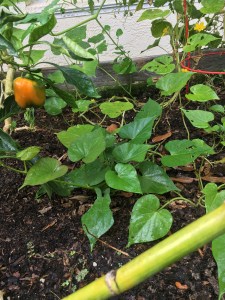
On a side note, this green pepper plant sprung up in the garden beneath my big pepper plant. I moved it to a better spot and it is growing nicely.

Be careful when weeding, and know what is what. I recognized the leaves of this little pepper and let it grow. It’s easy to simply pull out all the “weeds” and inadvertently remove a volunteer plant!

seed pepper volunteer
Bell / Green pepper plant started from a seed which dropped from the big plant