Building a Garden is Slow and Steady Work

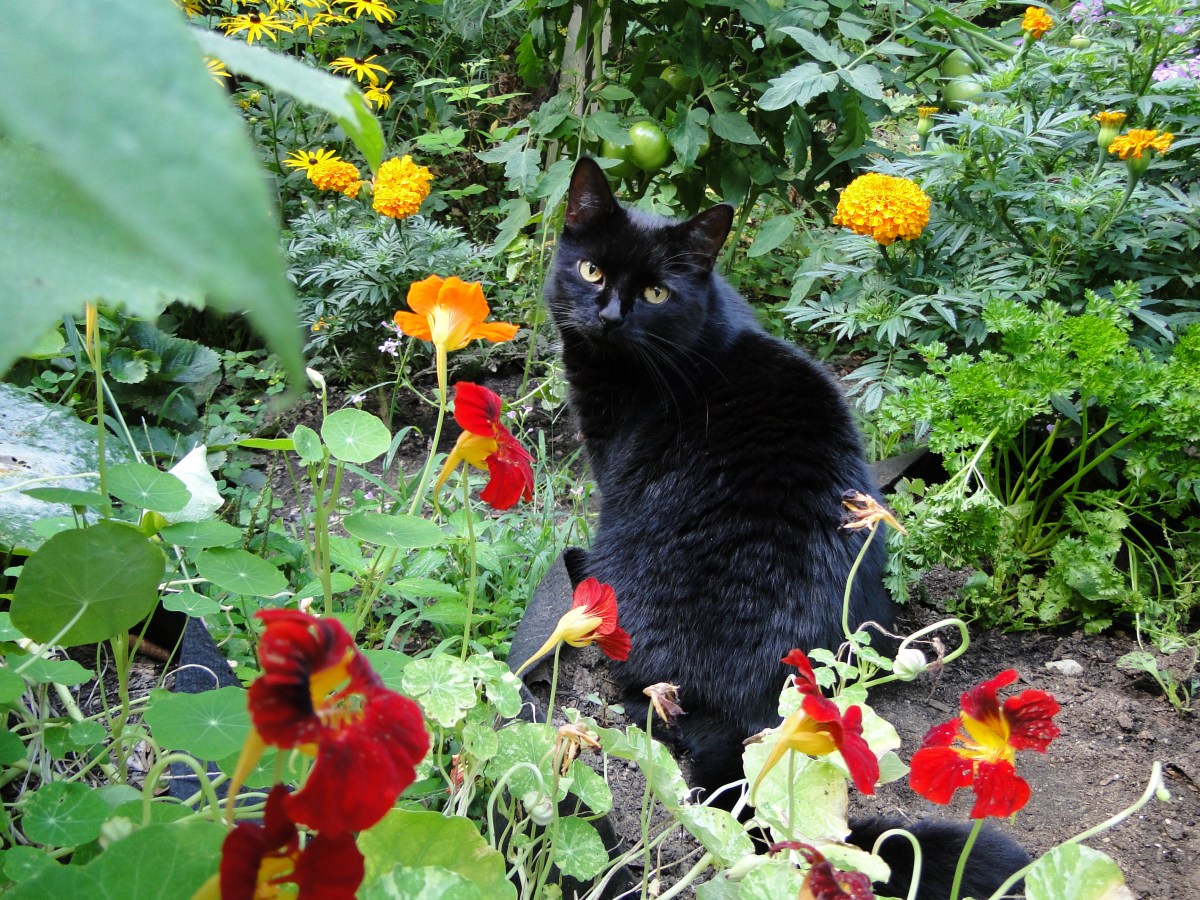
Building a garden is slow and steady work, but once the ground is prepared, the fun begins. This may take days, weeks, months or years depending on the size of the garden and how much help you have in doing it.  Cats not included.

As a new gardener you may think that growing things is pretty straightforward. Buy the plants, dig a hole and put them in the ground. A little water here and there and soon you’ll see flowers or vegetables emerge.

Experienced gardeners know it is far from being that simple.

A Little Back Story

The first house I bought in New Hampshire had ready-made, lovely garden areas. I enjoyed picking asparagus from the perennial asparagus bed. Stunning tulips popped up in Springtime all over the yard, and the large perennials included wisteria, dogwood, and hydrangea trees! I enjoyed that yard for only two years, then moved on, through no fault of my own.
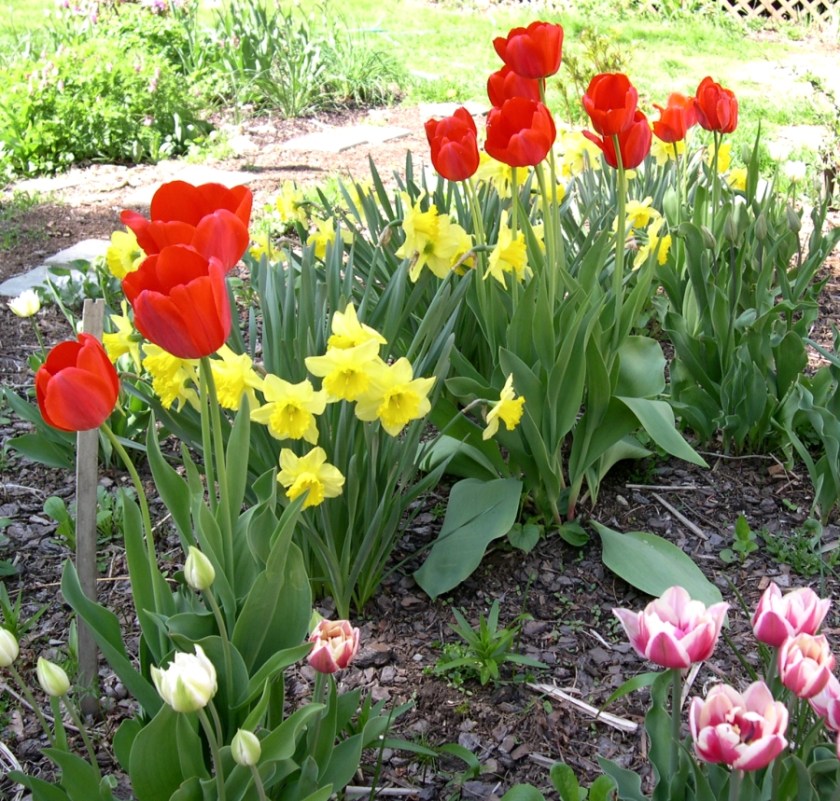
tulips and daffodils
My old New Hampshire Garden in Spring

The nice thing was the fact that the gardens were ready for planting. I could go buy pretty plants, or vegetables and put them into the ground and they grew nicely alongside already established additions. Prepared beds and established perennials are a wonderful treat for a homeowner.

After that, I have never lived in a ready-made gardening landscape. This means planning the site, tilling the soil, adding amendments, and finally buying the plants which will hopefully grow happily in their designated spots.

Without the extra finances (or help in the yard) to put toward all this, it can take years to accomplish a garden plan. Really.

In New Hampshire I had loam delivered each year. I moved wheelbarrows full of the dirt to various areas in my yard over the course of weeks. I’m an older lady and can’t do a lot in any one day, so I had to pace myself. Within five years time I had some pretty nice gardens in my yard – then I moved away.

The Here and Now

I moved into my Florida home in Fall 2016. My son built me a raised bed and I’ve been working on filling it since then. At the time this writing it is April 2018 and finally the bed is full of good soil which is ready for planting.
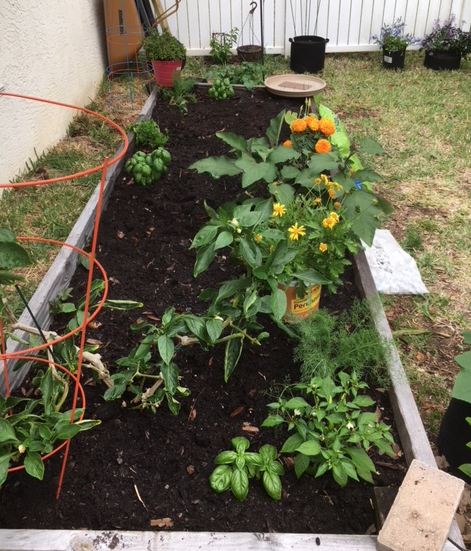
raised bed garden dirt
The raised bed is ready for planting

I’ve been using the raised bed as a mixing station. One end is free of plantings so I can dump bags of dirt and compost in and mix it up. After adding blood meal, bone meal, and fertilizer, I mix it up like a big stew and fill black pots to grow individual plants.  (By the way, as I was writing this, I discovered that not all “organic” labeled fertilizer is really organic.  Read my post about identifying real organic fertilizer and even bags of dirt.)

I also had to re-plant a big bucket in the yard where everything froze over the winter.  This pot used to hold a huge croton.  Now you can see what’s left in the background.

bucket of flowering plants
Big pot re-planted with crotons and flowering plants

Now that I’ve used that good dirt mix everywhere it was needed, I will plant more vegetables in the raised bed. From here on out, all that is needed is to amend the dirt with compost every so often and re-plant when needed. The hard work is complete.

Yahoo! Yippee! Hallelujah!

Pictures of Bromeliads

Pictures of bromeliads, which grow in the tropics. All photos are courtesy of the photographers of Pixabay, the home of free, public domain images.

Please scroll down for links to sites with information about growing bromeliads.


Places to find good information about growing bromeliads. Remember they are tropical plants which means they like sunlight (not necessarily sunshine), heat and humidity.

JoyUsGarden – Growing bromeliads indoors.

Home Guides – What to do after the flower has died.

Growing Bromeliads in the Yard – For those who live where temperatures rarely fall below freezing.

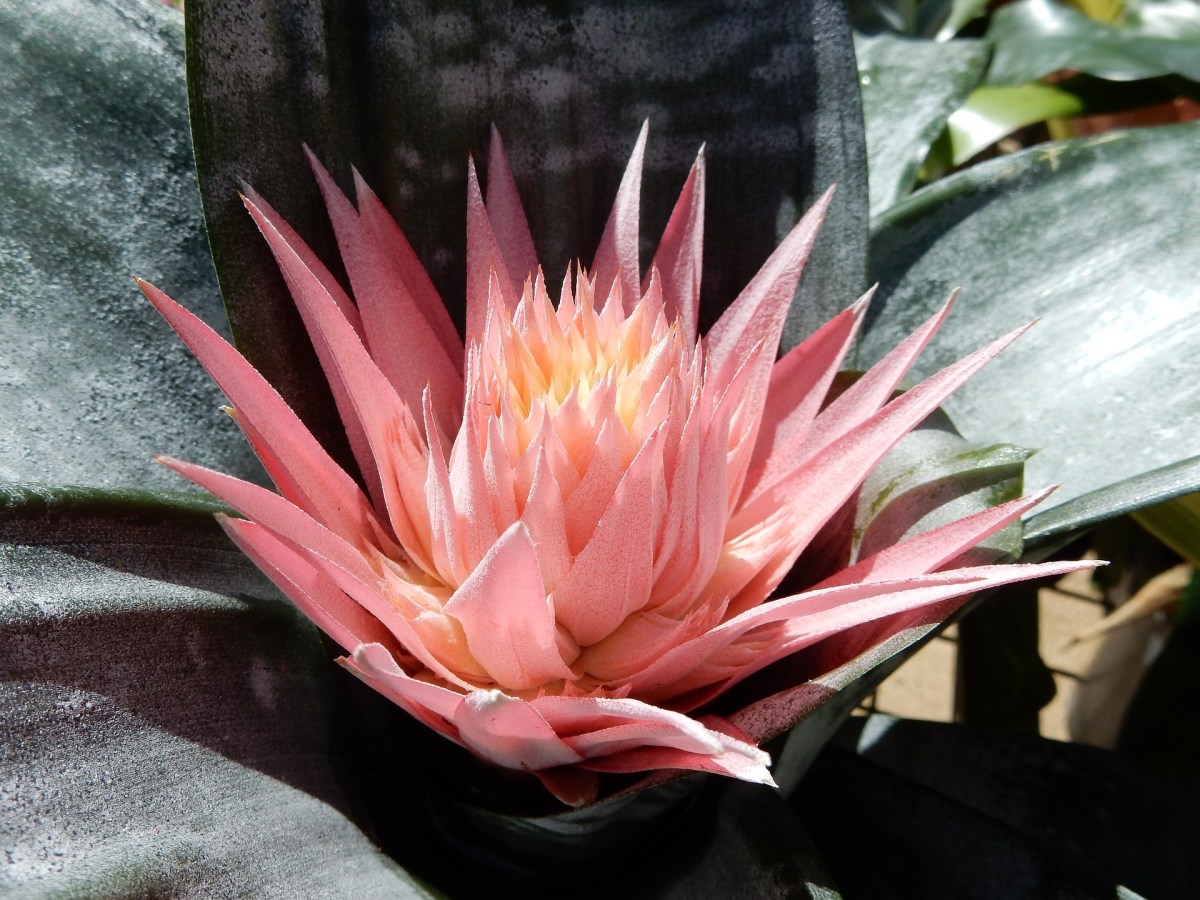
pineapple bromeliad
Pineapples are bromeliads

I’ve grown pineapples in my yard here in Florida, but it was many years ago. I remember that I simply planted the cut tops and after a couple of YEARS I got little pineapples.

Here is more information about Growing Pineapple Plants from The Spruce website.

Air Plants Need Only a Branch to Grow

No dirt needed.  Air plants seem to be just that – plants that grow in air. This is one of the coolest plants that grow in Florida.  It is a type of bromeliad.

You may see air plants in the wild way up on the branches of oak trees. Or sometimes they grow off the side of the tree or closer to the ground.

air plant
Air plant down inside my Schefflera plant

Yesterday I happened to spot a small clump of air plants down inside my Schefflera.  I thought it may have attached itself to the branch and wanted to get a photo.  As I began picking the dead leaves off the plant, I realized it was not attached.  It had fallen out of the nearby oak and lodged itself in the Schefflera.

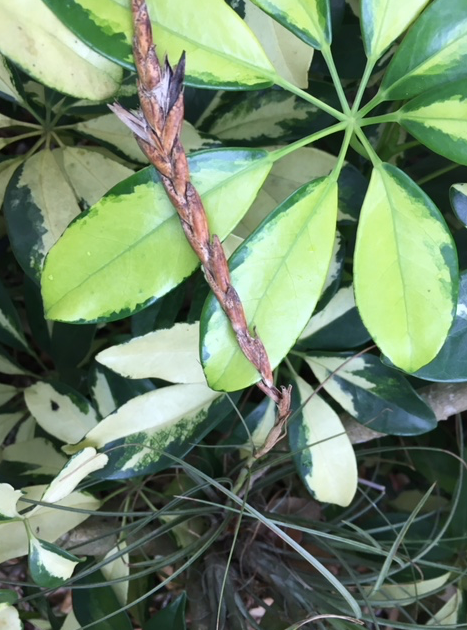
I’m not sure which type of bromeliad this is.  Could be the leatherleaf or broad needleleaf type.  Below is a picture of the dried flower attached to the plant.

air plant flower
Air plant dried flower

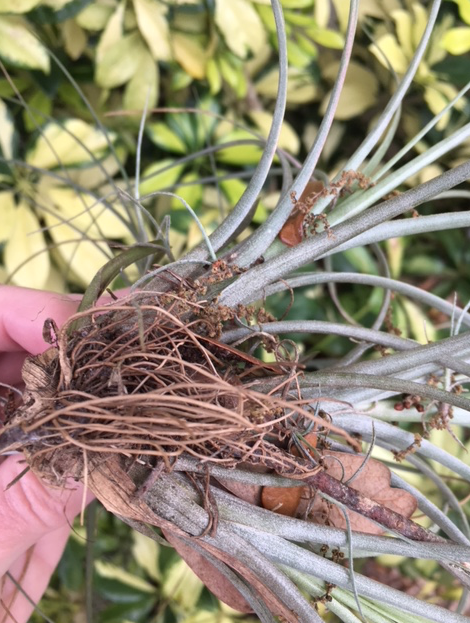
The roots are used to attach itself to the host tree, which in this case would have been one of the tall oaks in my yard. The shape of the leaves funnel water, insects and other things down into a “tank” where minerals are absorbed to feed the plant. There is no need for dirt and this is why they can attach to a limb and exist happily there.

roots of air plant
Roots of air plant

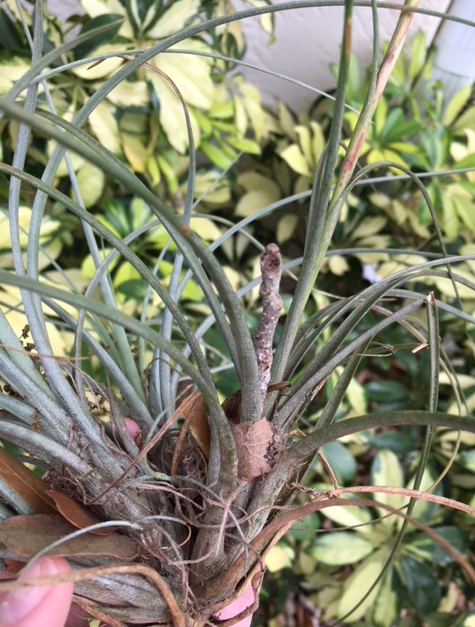
There is still a small oak branch which runs through this air plant. It must have broken off the tree in high winds and sent this air plant to the ground.

air plant
See the little oak branch?

After Hurricane Irma I found a large air plant in the yard. I picked it up and put it in the low branches of a shrub. I hoped it would be okay, but the leaves began to fall off and eventually the whole thing fell apart. It was too damaged to survive, or didn’t have the right stuff to live.  Maybe I should have set it some place else.  It was beautiful.

I believe this one is called the “Giant Air Plant” according to the UF site (link below).  It is now endangered thanks to the infiltration of the Mexican bromeliad weevil (and possibly hurricanes.)

giant air plant
Giant Air Plant blown from a tree during hurricane

Unfortunately people seem to think they should collect them as souvenirs. Also, with all the land clearing and building that goes on here, their natural habitats (trees) are being destroyed. Between that and the Mexican bromeliad weevil, which kills the plants, 10 of Florida’s 16 native bromeliad species is threatened or endangered.  This is according to the University of Florida which has a page about Florida’s Native Bromeliads. Visit the page to see photos of the many different types found in the state.
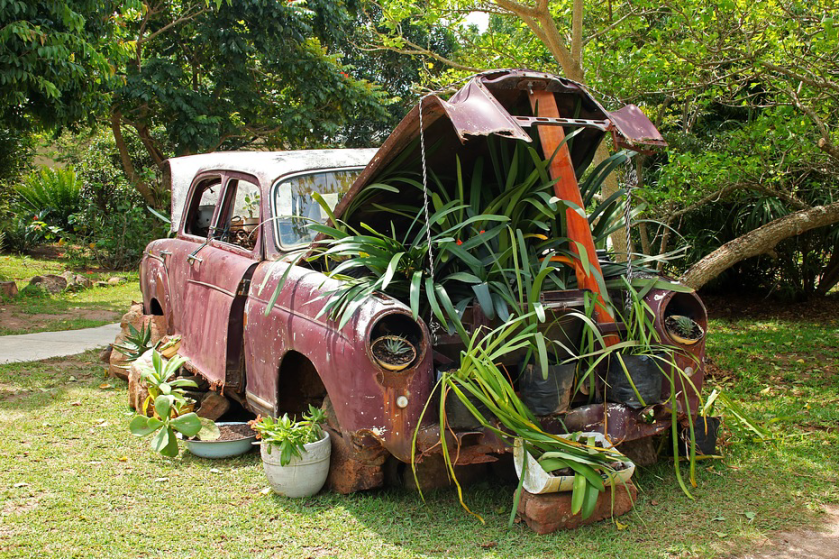
The photo below shows a unique way to display a bromeliad and tropical plant collection in the yard.

old car used as plant stand
Photo credit: Pixabay

February Yard Work Getting Some Planting Done

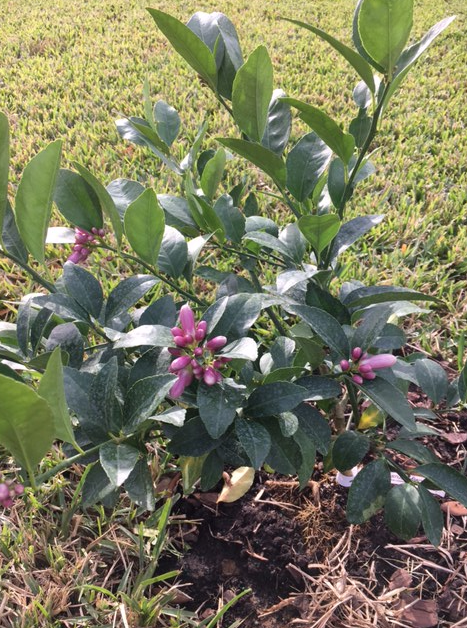
This past weekend (mid-February) I did some garden work and planted a few seeds. It was a hot day but I decided it was time to move the lemon tree from the front to the back yard. Thanks to that digging and lifting my back was aching the next day. But I have high hopes that the tree will recover and give me some lemons one day. (Photos below)

The raised bed still needs more soil. While my son was cutting the grass he bagged up some oak leaves (oak leaves are small here, not like the majestic oaks of the north which drop big leaves) and dumped them into the bed.

raised bed garden
Adding oak leaves to the raised bed

Creating good garden dirt takes a lot of adding and mixing, not unlike making a good soup or stew. All the ingredients together will give me some delicious dirt to help my vegetables grow well.
I still have two potted crotons which were cuttings taken from the big croton out front – which is now dead thanks to the cold. I’m not sure what I will do with them.
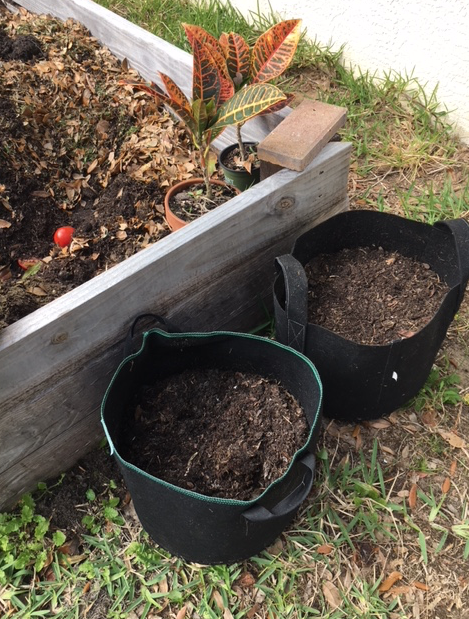
fabric pots
Filling the fabric pots to be ready for planting

Bone meal and blood meal was added, and I threw in an old tomato (I regularly add kitchen scraps to make compost within the bed. I’ve even seen a couple of big worms in the dirt recently …. yay!
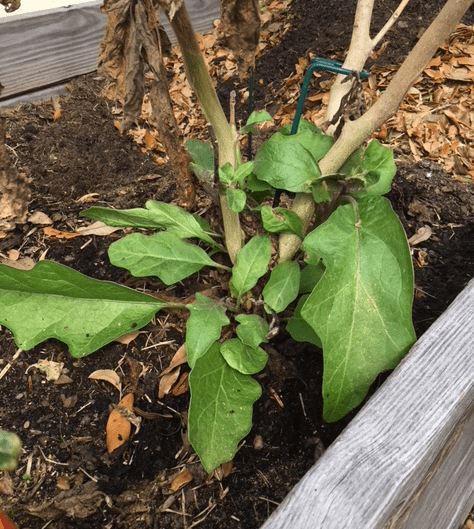
gardening in February
Eggplant coming back after the freeze

During the winter months it’s not a good idea to trim back dead growth, but I made an exception with my eggplant. With all the top brown branches trimmed away I can more easily cover it if cold temperatures come back.

I planted lettuce seeds in one black pot and yellow squash in another. I should have planted the lettuce earlier, but oh well.

The Lemon and Lime Trees

About a year ago I added a Persian lime tree and Lemon tree to my yard. The lime tree has done very well, providing me with loads of limes in the Fall season. I kept it in it’s original pot and it’s in the backyard.

The lemon tree was planted in the ground in my front yard. Right off it began to have problems. When I planted it, I wasn’t used to our new home location yet. I didn’t realize that front yard gets a lot of wind which makes it an inhospitable place for most plants. Even though the new tree bloomed and grew some lemons, it’s leaves fell off and none of the lemons were nice enough to eat.

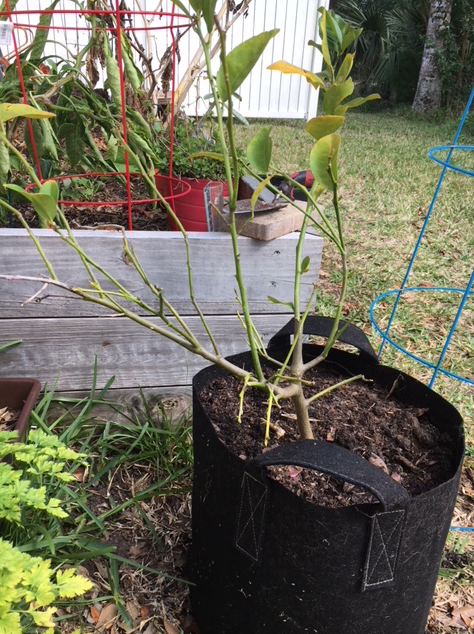
lemon tree
Moved the Lemon tree – Feb. 2018

This was a lesson in choosing a good spot for my trees and shrubs. I doubt I will try to grow anything out front.

I really thought the tree would be dead by now. Besides the wind, we’ve had a few nights of cold temperatures. I covered the tree, but lots of things died even though I covered them. Still the tree lived on.

Many of it’s branches are bare and it looks like some animal maybe had been chewing on the stems. Plus my son often hits the branches with his weed-eater.

Even after all this, the lemon tree still grows. Below you can see how pretty the Lemon tree was when I planted it. Because it is still trying to live, I feel guilty for leaving it unattended for so long.

I’m hoping that with it’s new spot in a fabric garden bag in my backyard, I can bring this tree back to it’s original beautiful form.

screen-shot-2016-12-31-at-8-57-26-am
Meyer Lemon Tree – 2017

Brazilian Pepper Invasive Florida Plant

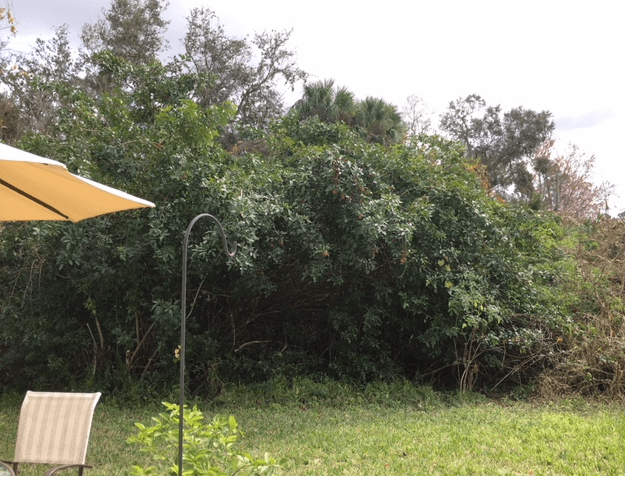
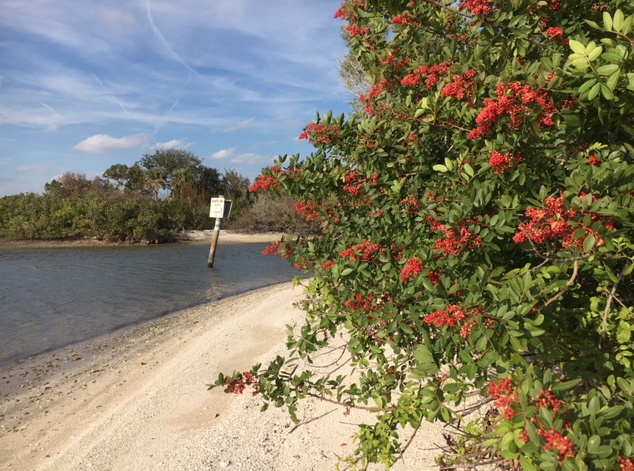
At the edge of my property a stand of trees, with winding branches and dark green leaves makes the perfect hideout for wildlife. I did think they were Dahoon Holly trees, but I was mistaken. They are invasive Brazilian pepper trees and have become a problem for Floridians.

backyard
Trees with red berries

This thick area of trees and shrubs is where the raccoons come from each night. It’s also where the zillions of stray cats walk as they pass through the yard.
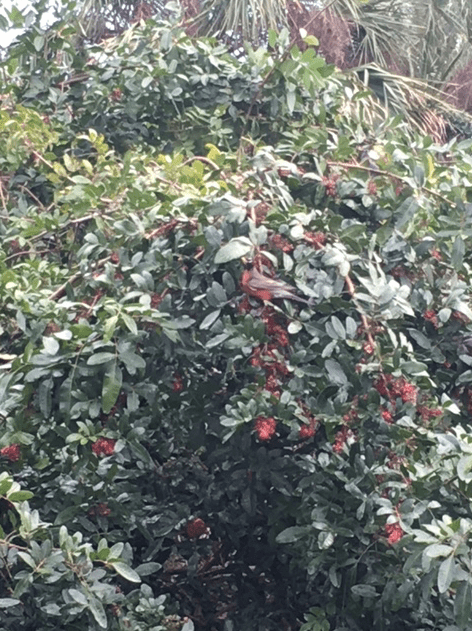
I don’t know if the birds knew I wanted photos today, but they showed up in droves.  Unfortunately I am not such a good wildlife photographer!  I saw a bunch of grosbeaks gathered on a berry laden branch, and got this photo of a robin (center of picture) – not a good photo, I know.  In fact, the many birds have nearly eaten all the berries!

Even as the berries give the birds food, it is also what helps to spread the growth of these trees.  The birds spread the seeds.

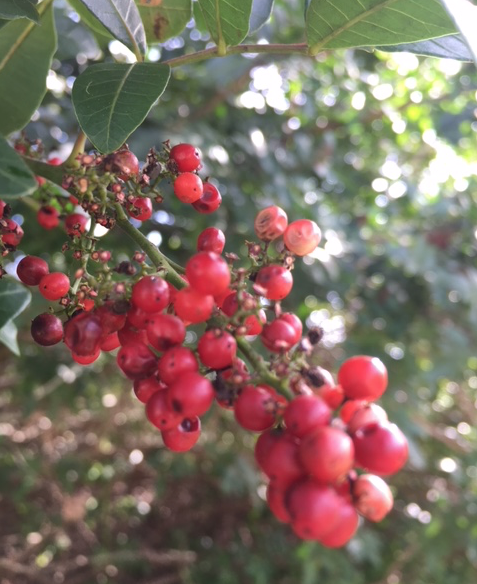
So how to tell the difference between trees that have clumps of red berries?  The Brazilian Pepper has 9 leaves and the leaves are dark green.  The Dahoon Holly’s leaves are more true green and are fewer.  At least, from photos I’ve seen, that looks like the difference.  Also the pepper has that tangled mass of trunks, whereas the holly grows more like a regular tree.

Robin

The trunk can actually be split into many trunks, like in my photo below.

tree trunk
Mass of tree trunks
tree with red berries
Red berries
red berries of Brazilian pepper
Brazilian Pepper
branches, thicket underbrush
The thick growth prevents other plants from growing.
Screen Shot 2018-02-21 at 6.22.02 PM
Indian River at Edgewater, Florida

Getting Ready to Fill The Yard with Flowering Plants

February is the time to begin thinking about planting here in Central Florida. Not only vegetables, but replenishing the yard after the winter freeze. I’m still getting used to gardening in this weird climate.

In New Hampshire

I had gardening down pat in the north.  I had a yard full of wonderful flowers.  It took me a few years to get them going, but once the Monarda (Bee Balm) and Cone Flowers (Echinacea) began to grow, I counted on them bringing birds and beneficial bugs to my yard.  And they did.

Besides those perennials, I had wild blackberries and raspberries, lots of dandelions, some Queen Anne’s Lace, and other “weeds” which flowered as well.  And then there were the hydrangeas, lilacs, daisies and peonies that kept the yard pretty throughout the season.  If you live in a climate that supports these types of plants, put them in your yard!

nasturtiums in glass pot
Nasturtiums in pot – my photo

I knew what I could plant in my yard. I dug in the rich New England dirt, added some bone meal and fertilizer and the plants were happy. In winter they went to sleep and appeared again in Spring. They grew bigger each year.

Florida Growing is Not Easier

Now my growing knowledge is turned upside down.  I don’t know what to plant.  I live in a place without winter, but we do get freezing temperatures. We also get months of extreme heat which some flowering plants can’t handle. Nothing hibernates here. I think I’ve lost my beautiful croton this winter.  Yes, it’s in a big pot – and that makes a difference, but this one I can’t move indoors.

dead croton in a barrel
This was a beautiful croton and hibiscus

See how pretty this was on this page. Makes me want to give up on planting altogether.

I have to learn what to plant and what will live in 100 degrees and also in 20 degrees. I covered my outside plants this winter, and they died anyway. These tropical plants do best when they can be brought indoors overnight if temps will be dropping.

I don’t want a yard full of pots that I have to lug back and forth… I want a pretty flower garden. I’m not so sure it’s possible, but I will give it a try.

Since the “dirt” here is simply worthless sand, any time I think about growing something, I know I will have to build my own dirt.

At the present time my plan is to fill up some of my grow bags with a mixture of good garden dirt (from my raised bed) and bone meal or blood meal and plant something that flowers.

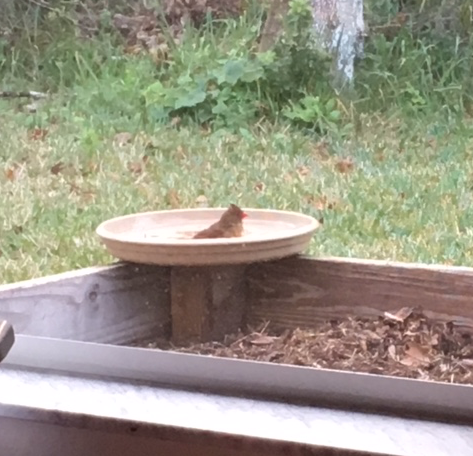
bird bath with cardinal
Female Cardinal in Bird Bath

For the birds, I already have a birdbath which I view birds using every day. In fact they sometimes fight each other over the water, to drink and bathe in.  Next I will add a tray feeder.  Because I live next to a lot that has not been cleared, there are plenty of trees and bushes where the birds can land and hide. They especially love the Dahoon Holly tree which is not in my yard, but close.