The Best Way to Acquire Garden Dirt if You Have the Muscles For It

Changing my small backyard from all grass to a permaculture plot for growing food has been a challenge. It can also be expensive. Although I was dreading doing this, the best way to acquire my garden dirt was to fill the truck with purchased soil. We had to buy in bulk and do some shoveling.

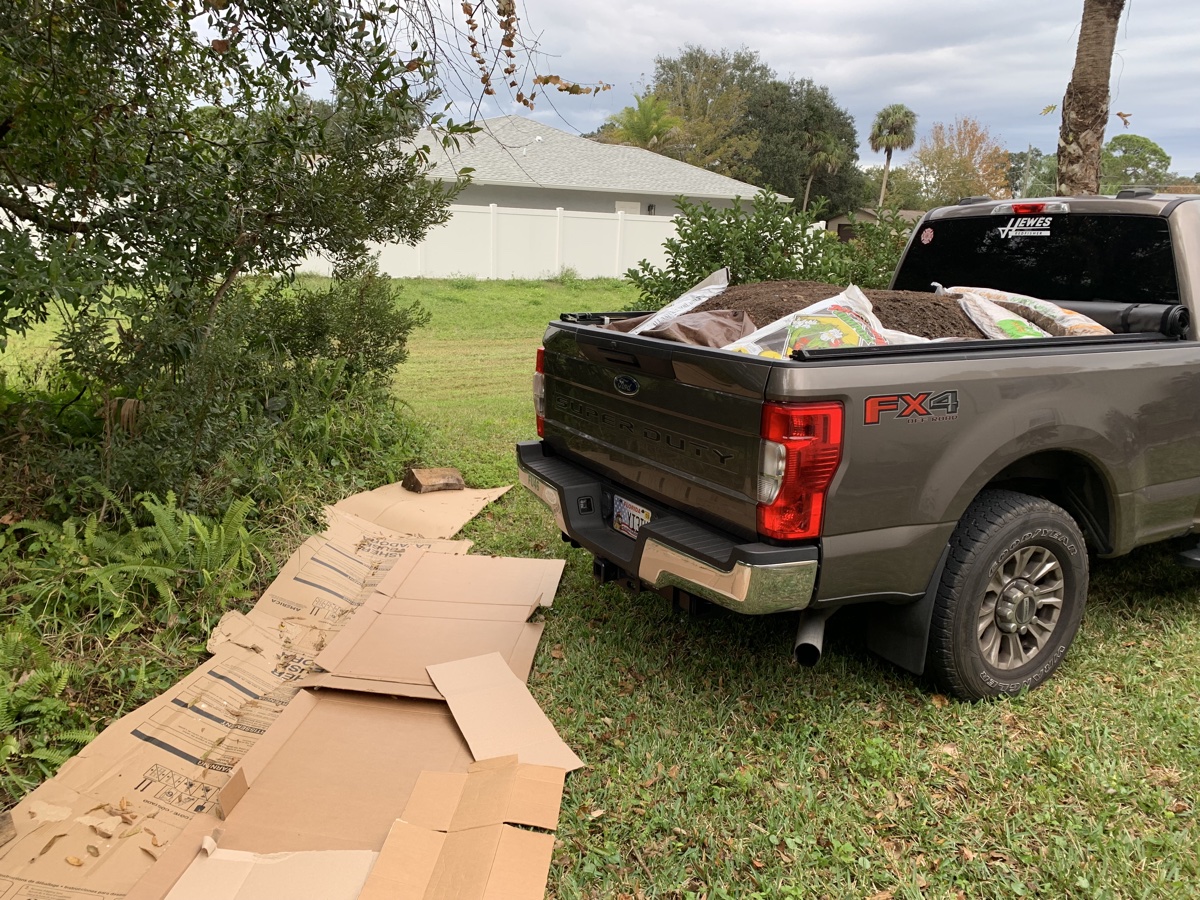
Not only would I have lots of dirt to work with, but buying dirt by the yard is cheaper. I bought two yards of soil which filled the back of the F250, along with two bags of mushroom compost and two bags of mulch.
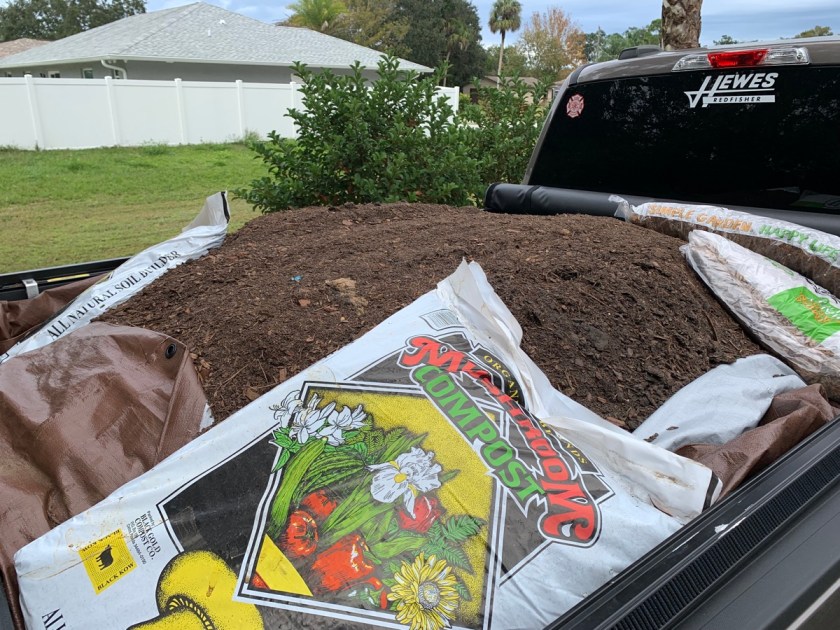
dirt and compost in truck bed
Two yards of dirt fills the truck bed.

Winter is the Time to Do Yard Work

Now that a Florida winter is upon us, the desire to get outdoors and fix things up is high. After a long, very hot summer, the cooler weather feels great. And by cooler I mean near 80 degrees some days, but cooler in the morning and evening. In other words, it’s more like a normal “summer” elsewhere.

Finding a Place to Store the Dirt

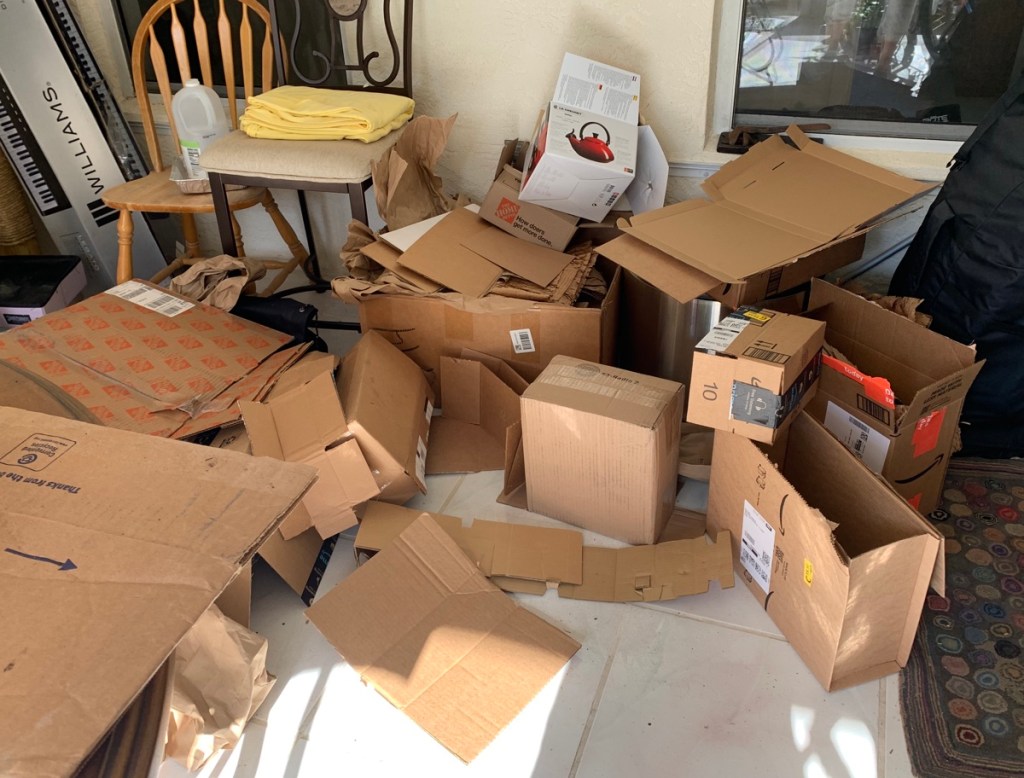
I need dirt. I’ve had the boxes piling up on my porch but can’t put that cardboard out on the grass without some dirt to help hold them in place. I’ve been buying bags of dirt, but that doesn’t go far. I considered ordering a load of dirt to be delivered, but there is no good place near the road for the shop to dump it.
As my garden planning has progressed, I realize that I need more sunny spaces. I want to grow Roselle Hibiscus which will be large plants. They can’t grow where my vegetables area, so the plan is to begin a new garden in the front yard.

The area pictured below is where I believe there was once a flower garden. I’ve found a Beautyberry Bush and Firespike back in this overgrown location. Now it is also full of ferns, and little trees are growing. The only tree I have cut down is the invasive Brazilian Pepper. The front of this patch of ferns gets lots of sun all times of the year. If I can get the Roselle to grow, they will be planted here.
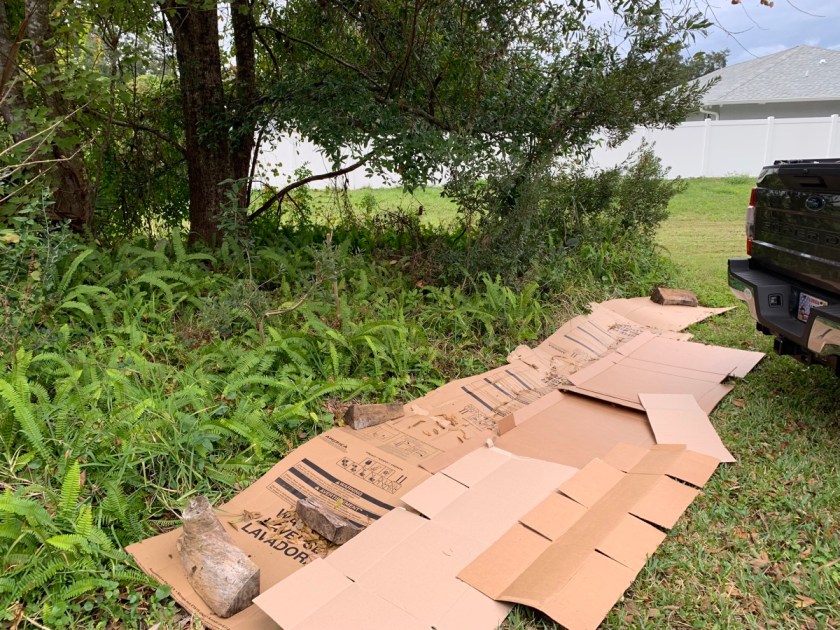
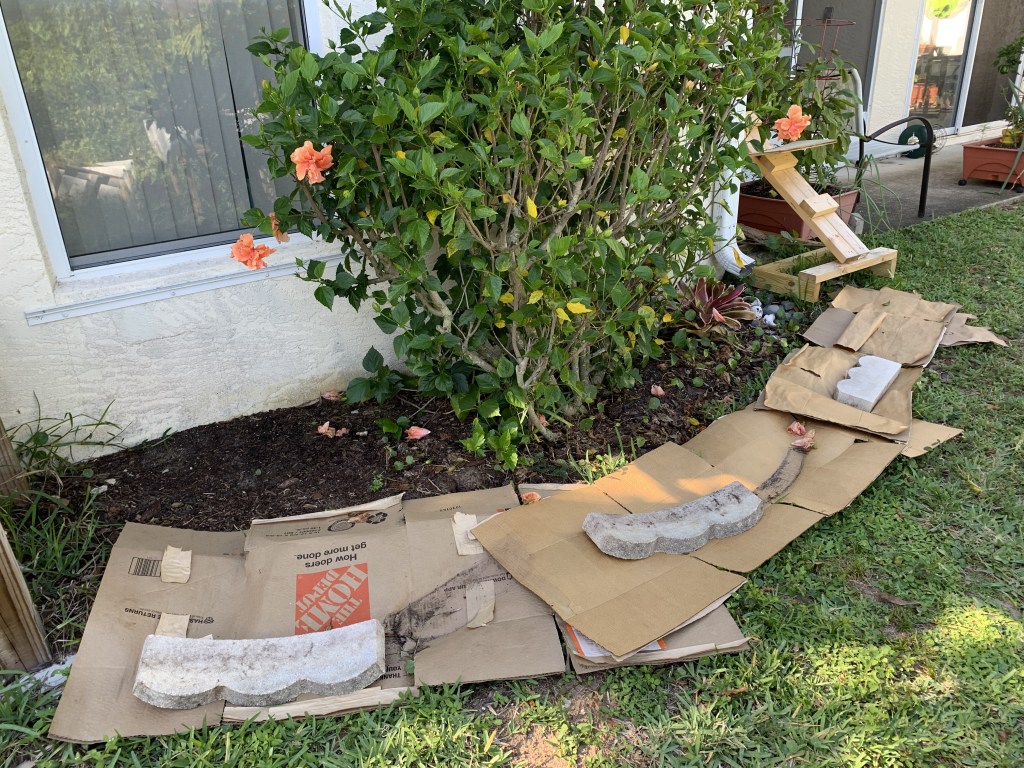
cardboard spread on grass
Broke down some big cardboard boxes for the new front garden

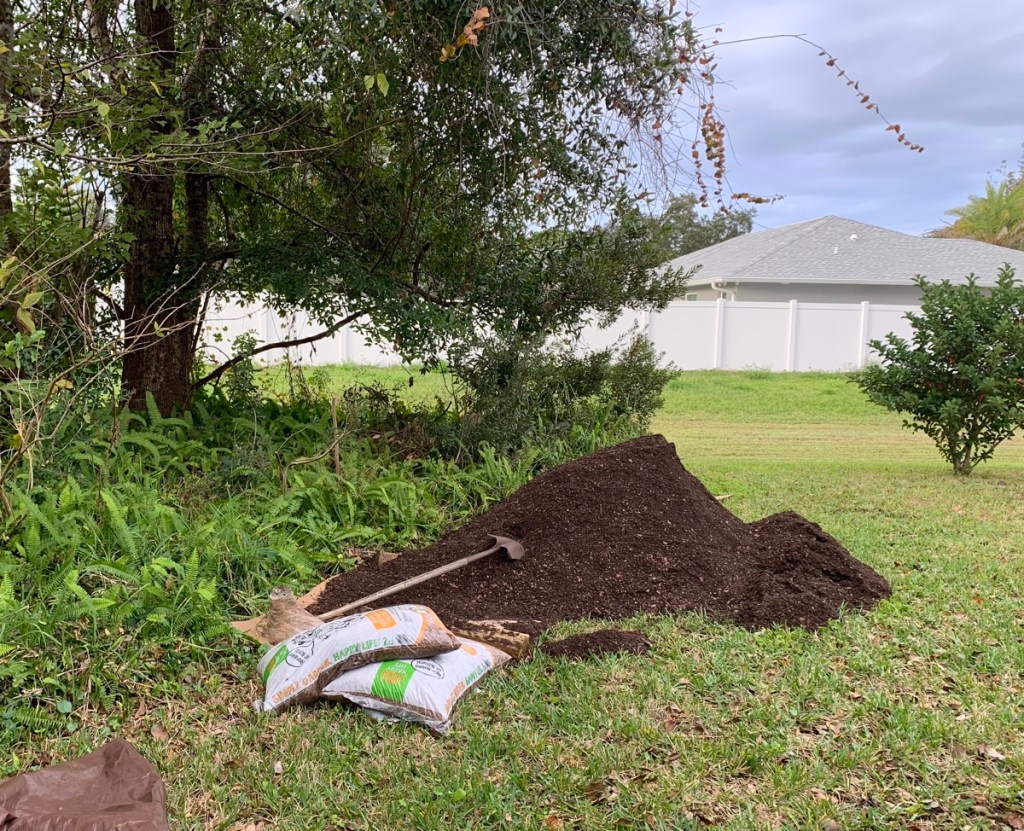
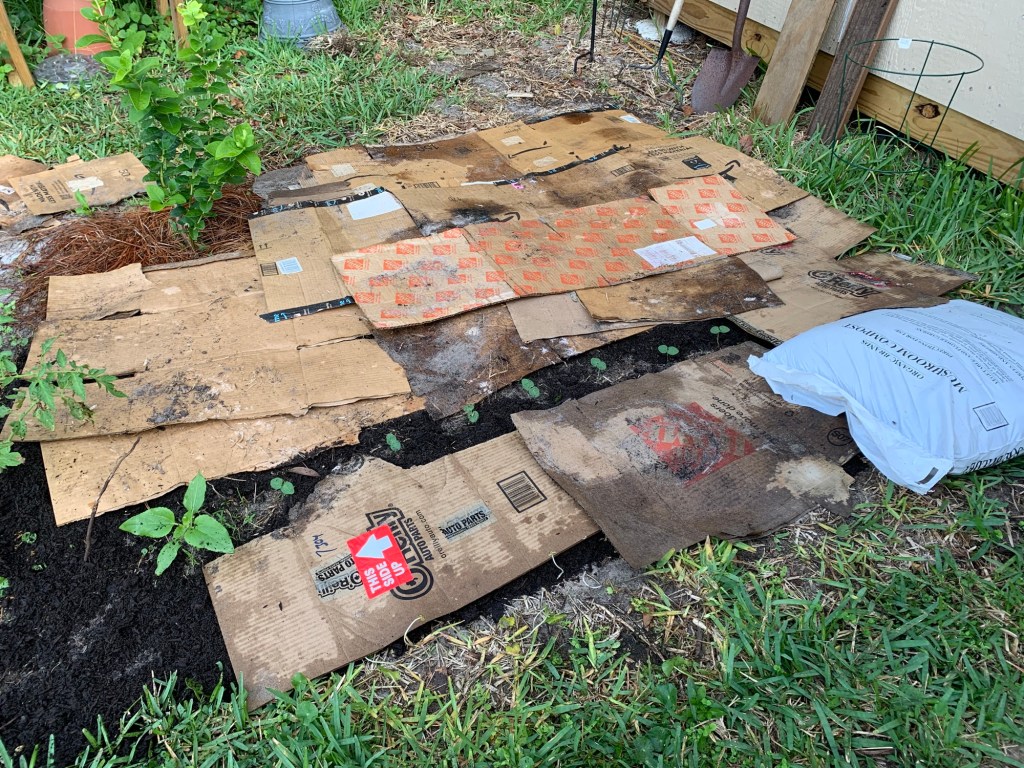
This was where the dirt pile would sit until I needed it. I put down big pieces of cardboard, (see my post about using cardboard in the yard) and we unloaded the dirt onto it from the bed of the truck.

In order to get to this spot, we had to back the truck across the front yard. It meant moving some of the Christmas lights and taking down part of the fire pit. Then, of course, we (my son and I) had to shovel all that dirt out of the truck! It was a chore, but worth it.
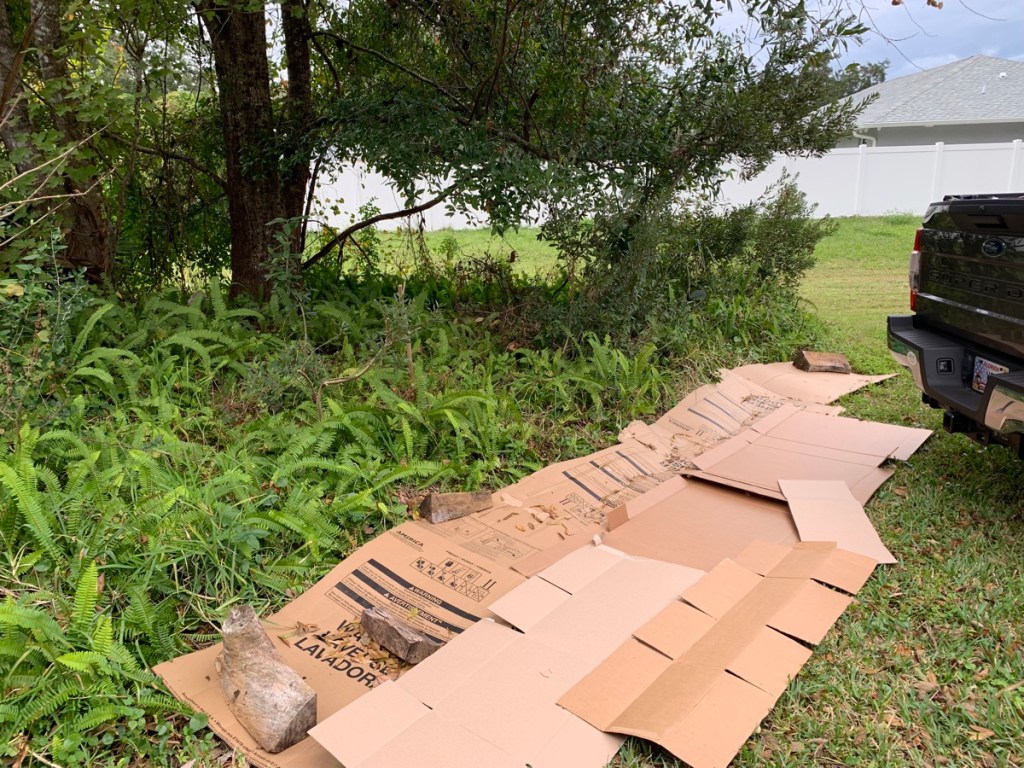
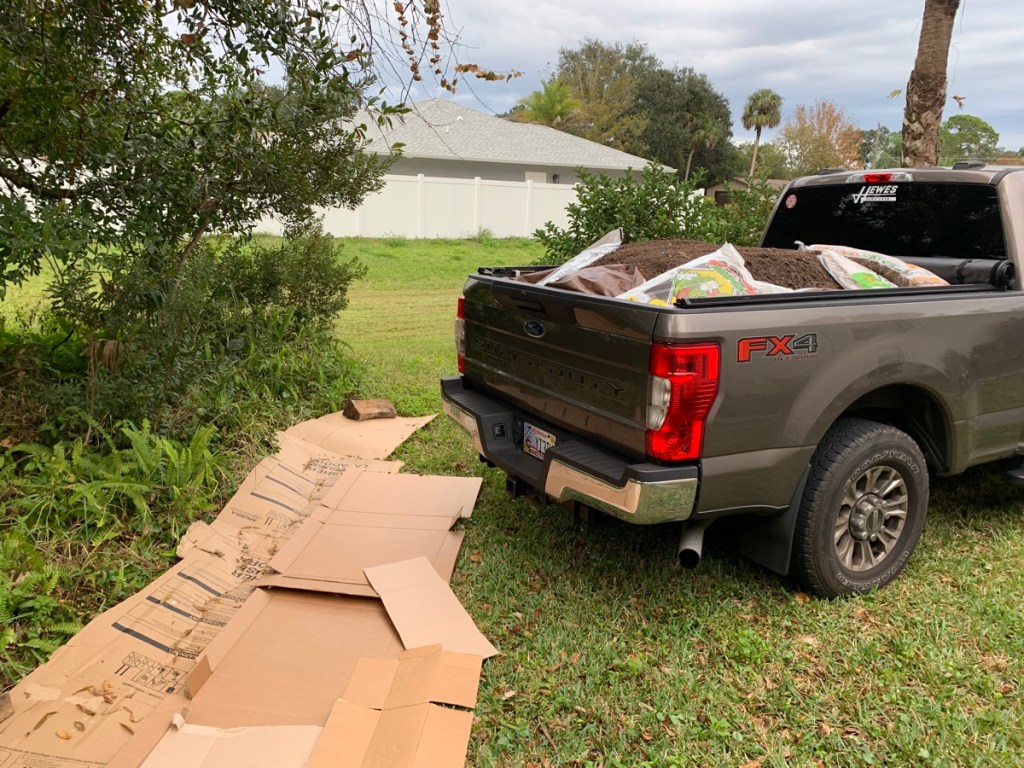
From here, I can fill the wheelbarrow and move the dirt to the back gardens as I need it. And the cardboard underneath, will be the spot to plant new things once all that dirt is gone.

The cost for all of it was right around $100. If you live near The Yard Shop in Edgewater, I highly recommend them for dirt, mulch, compost and stones. The people are super nice and helpful.

Now the Garden Plans Can Move Ahead

I have the dirt and I have the cardboard. My gardening plans continue to emerge with more space being made to plant. Over winter I am growing green beans, arugula and Chijimisai spinach, and a few other things.

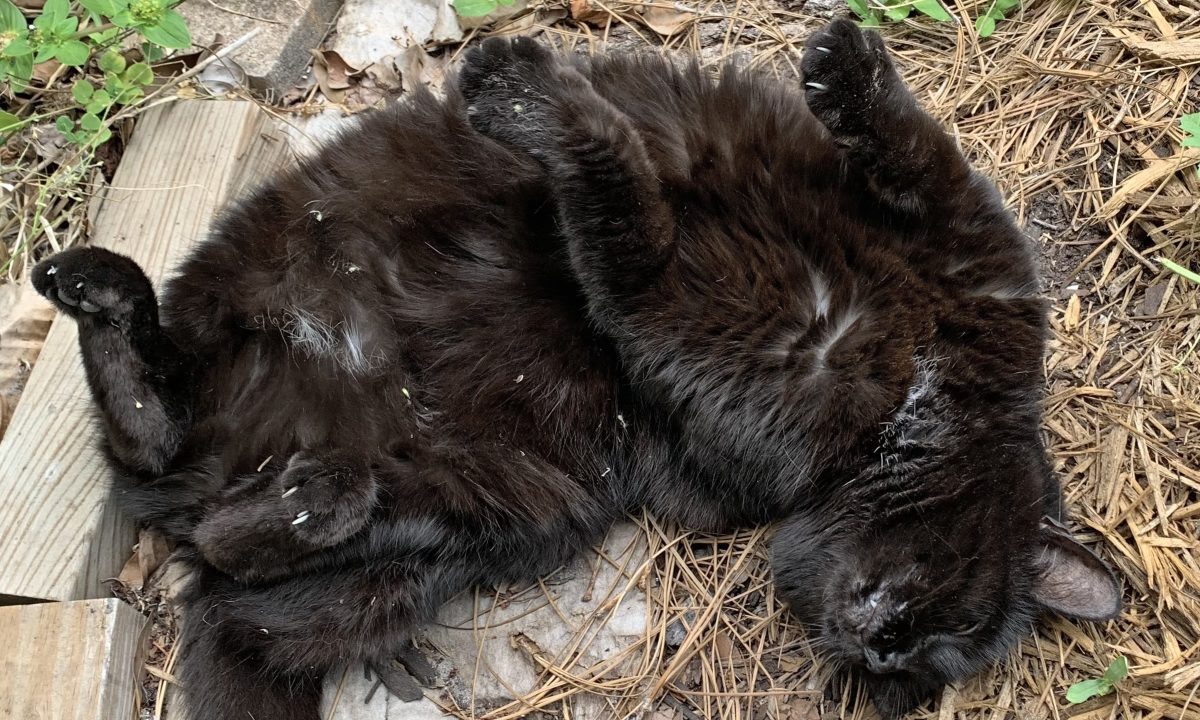
Skittle is overlooking my garden work, and I’m not sure if she approves or not!
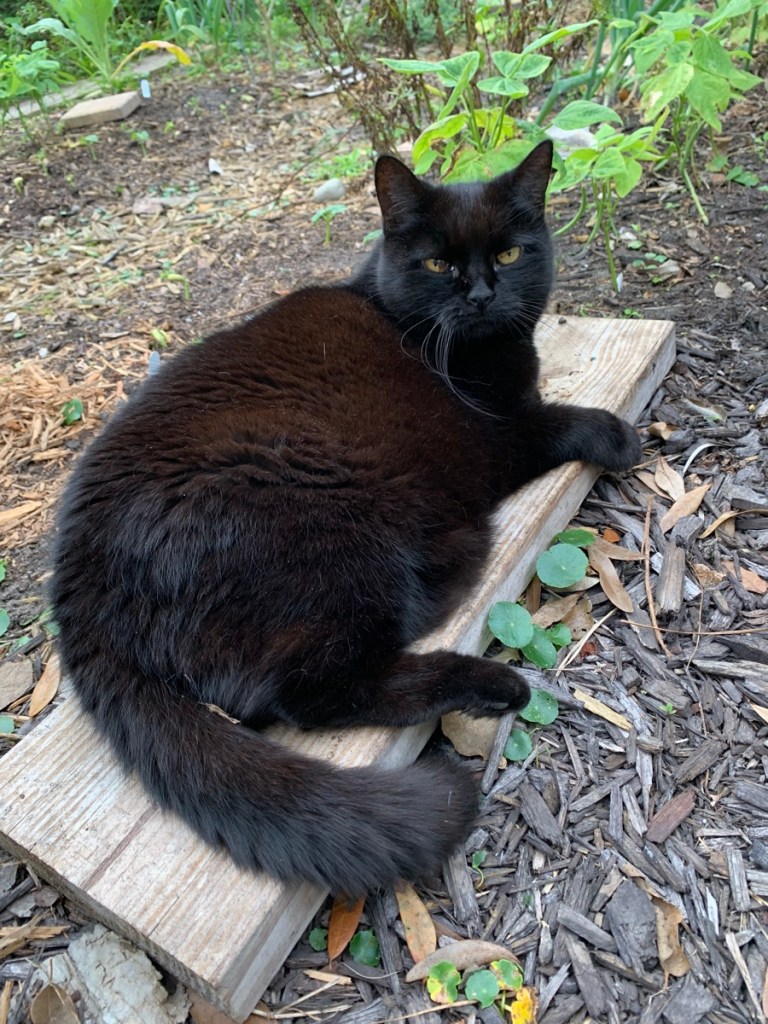
Skittle in the garden

Keep reading my Florida gardening stories
Picking Green Beans in December

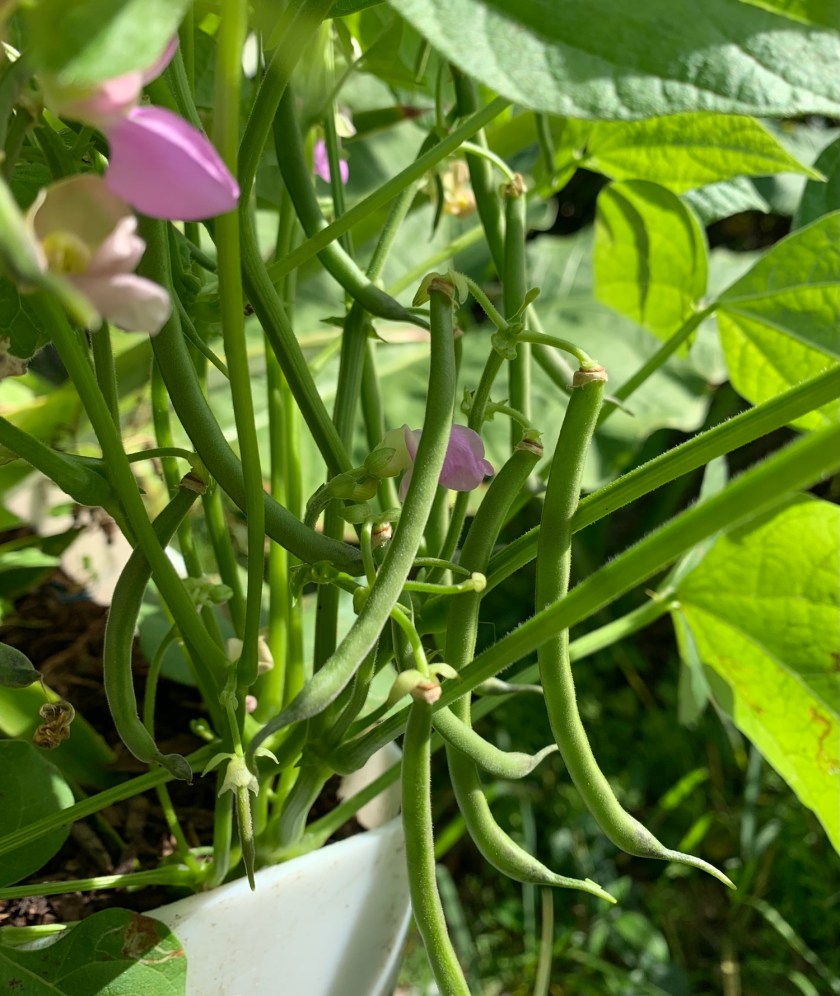
I planted Contender bush beans back on October 16th. Today is December 1st and I have picked my first batch of little green beans!

One plant is doing especially well in a raised bed. I planted it next to the pineapple.

one green bean plant
One green bean plant is growing next to the double-pineapple plant in a raised bed. This plant is full of beans!
green beans in garden
Beans on one plant

Finding Space For the Bean Plants

Before planting, I soaked the bean seeds overnight, then I read that they don’t really need to soak. I did not have any innoculent so they went straight into the ground. The hardest thing was trying to find space for all the plants in my small yard. Not all garden areas are ready for planting yet.

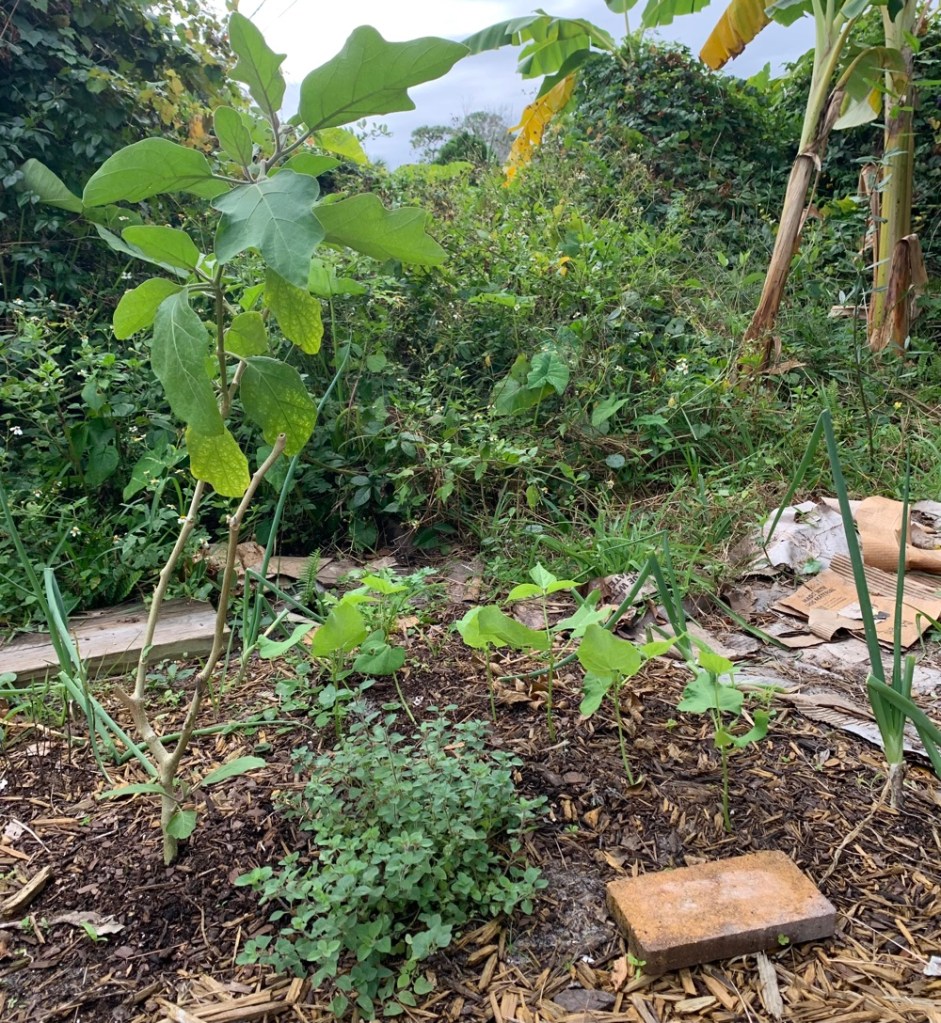
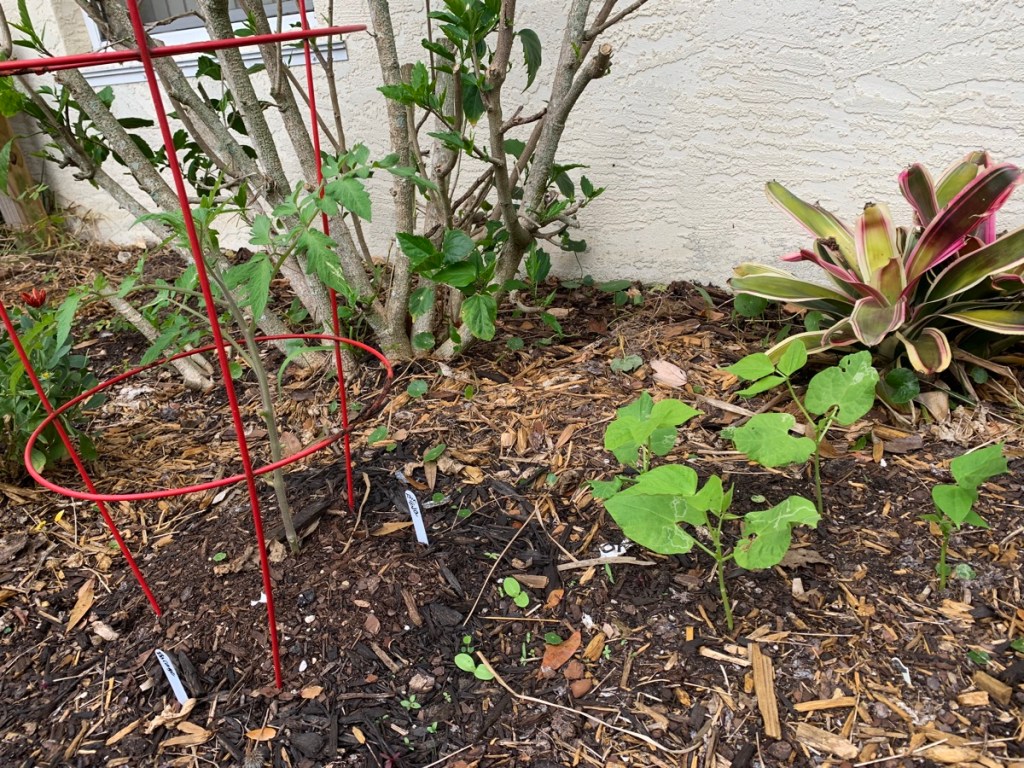
Besides the two rows of beans, I planted a few beans beside the eggplant, and a few near the hibiscus. A few more seeds were placed randomly into my white barrel raised beds.

The Leafroller Worm

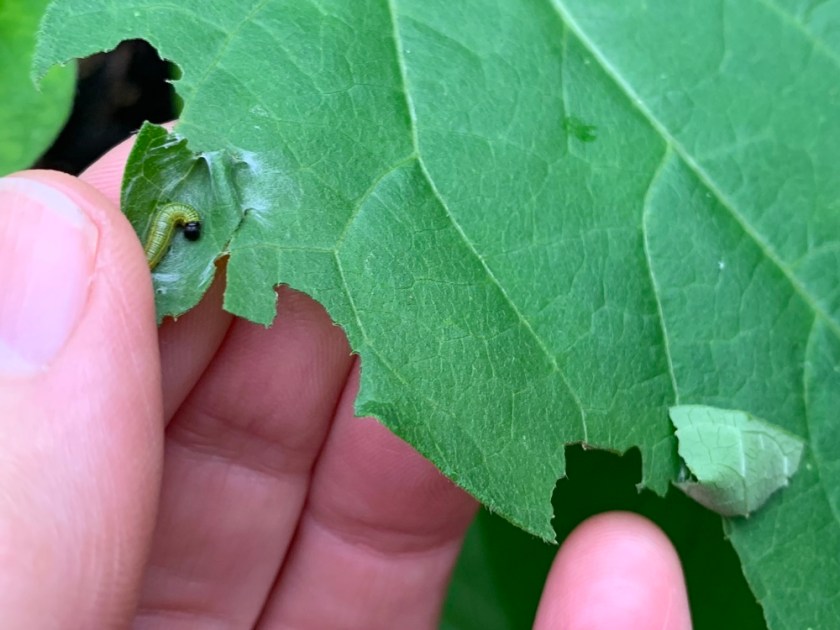
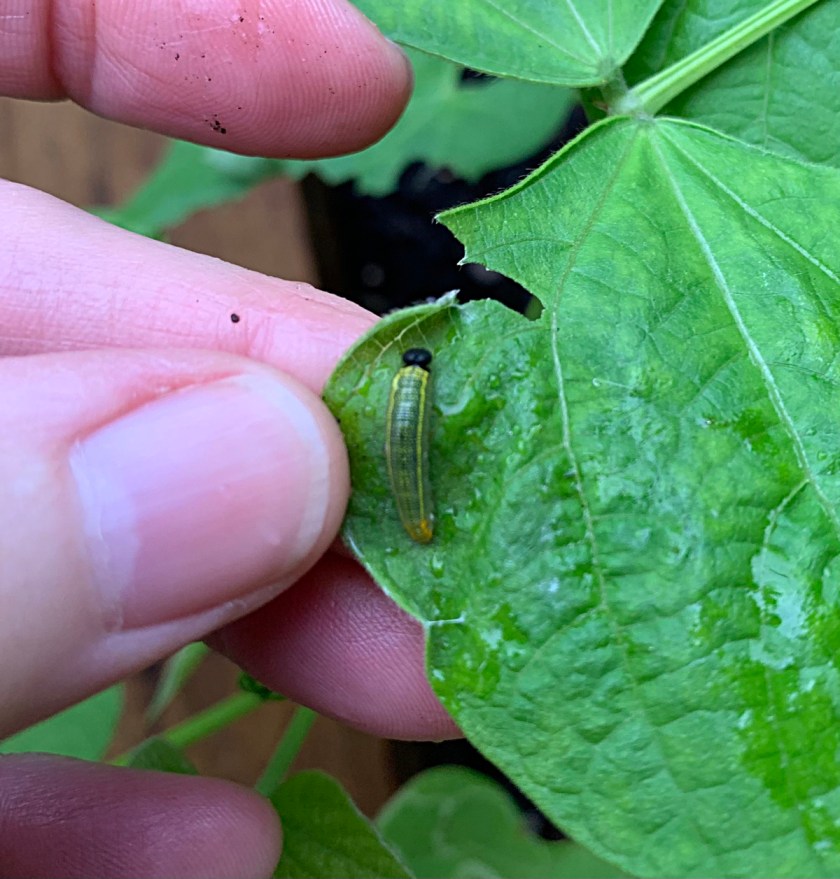
I created two rows of Contender bush beans in the little garden area where my Suyo Long cucumber plants had been growing. I had lots of worms on my cucumbers, but they were pickleworms, and much more of a nuisance.

The Leafroller worm is named very well. It cuts a little bit of the leaf and rolls it over itself and hides inside. The worms are green with black heads. It was easy to spot their hiding places because the underside of the bean leaves is light green.

I pulled back the leaf, picked off the worm, and threw it into the grass for the lizards.

rolled leaves and worm
Leafroller Worm on bean leaf
bean leafroller worm
Leafroller worm

Whereas I gave up on picking all the worms off the cucumber plants, the bean plant infestation was not bad at all. As of this time, I don’t even see any more worms on the leaves.

December 1, 2023

Contender bean plants
Bean plants December 1st

The Weather

We’ve had some crazy up and down temperatures this fall, which is pretty typical for Florida. We can have temps in the 40’s and 50’s overnight but it gets into the 80’s during the day. A few days stayed quite chilly all day. We’ve also had a few bouts of rain which lasted for about a week each time.

It is interesting to see that the beans did very well through all these weather changes. For that reason, I have planted my second crop of green beans. The new crop is organic Blue Lake Bush beans. I have one more packet left to plant when my first batch of plants goes by.

More garden stories:

A Patch of Native Florida Wildflowers and Grass

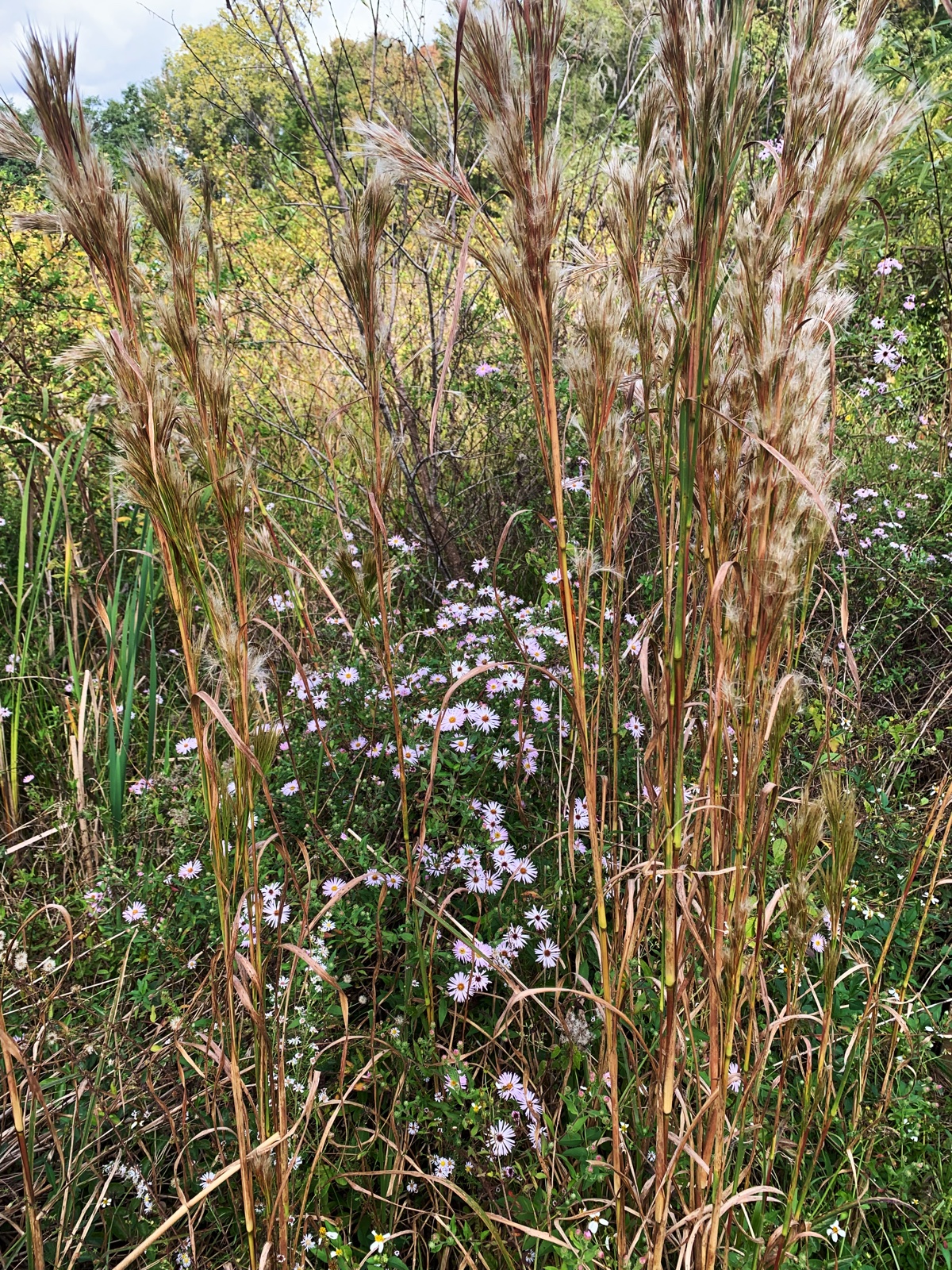
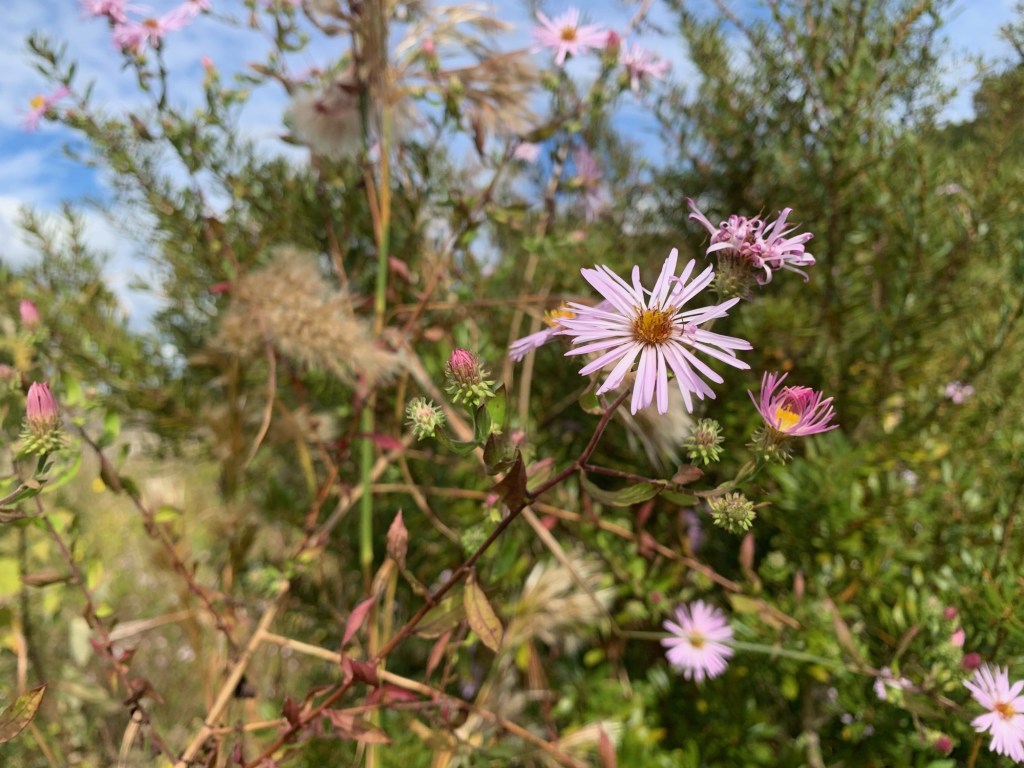
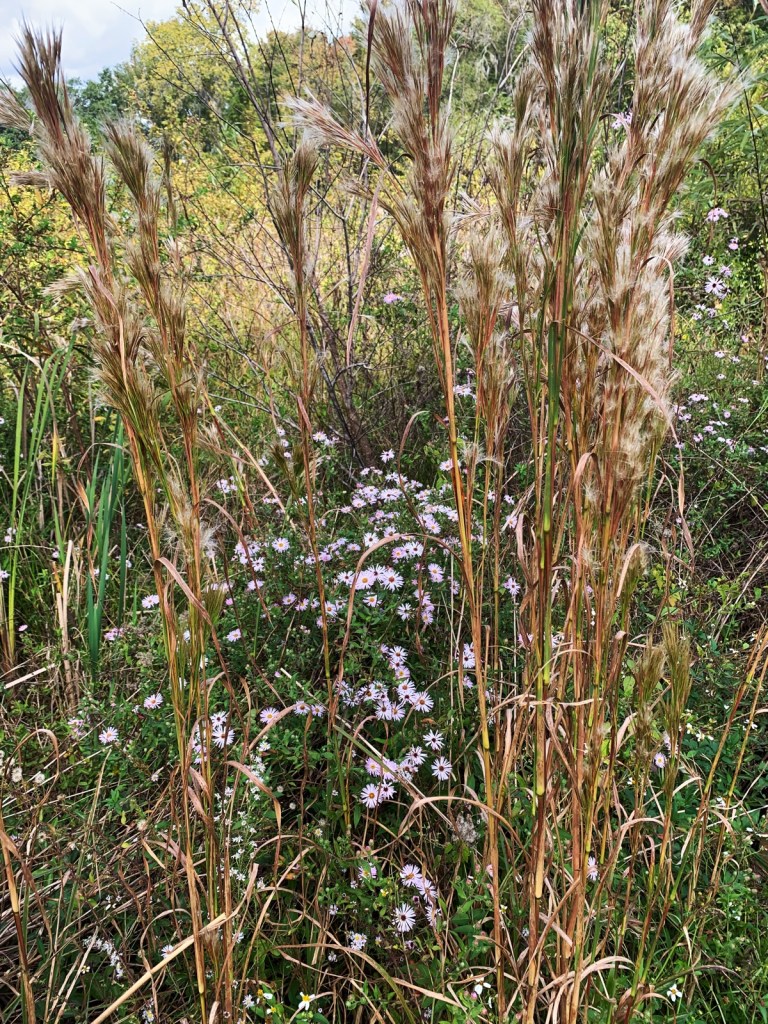
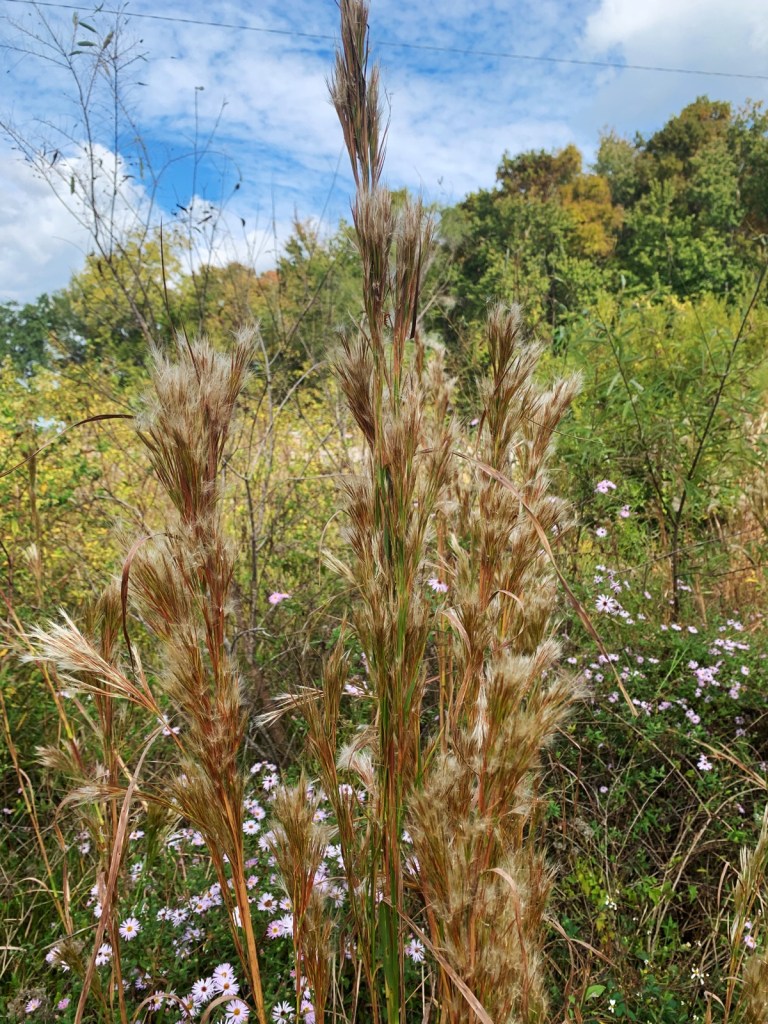
Pictures of native Florida tall grass and flowers.

While camping at Rodman Campground in Palatka, Florida, we drove to the local dam. A central garden, or natural area, by the boat ramp, contained some beautiful native flowers and tall grass.

Loads of bees were all over the flowers. Not sure exactly what the grass is, or an exact name for the flowers, but the area was beautiful.

UF/IFAS Florida’s Astors

More Gardening Stories

Compare: Soil, Site and Seeds

When something doesn’t grow well from seeds, it’s easy to blame bad seeds. But take into consideration the location of the planting. Does the site have enough sun, or too much? How is the soil? Were amendments added and were they the right ones needed?

I’m not much of a soil tester – okay, I never test my soil. This is probably a mistake, but I’m not ready for that yet. If nothing grew, I would blame the soil completely, but I have had lots of success. I’m not ready to check my soil.

Soil

When the same types of seeds are planted at the same time, but in different locations, comparing growth should tell me something.

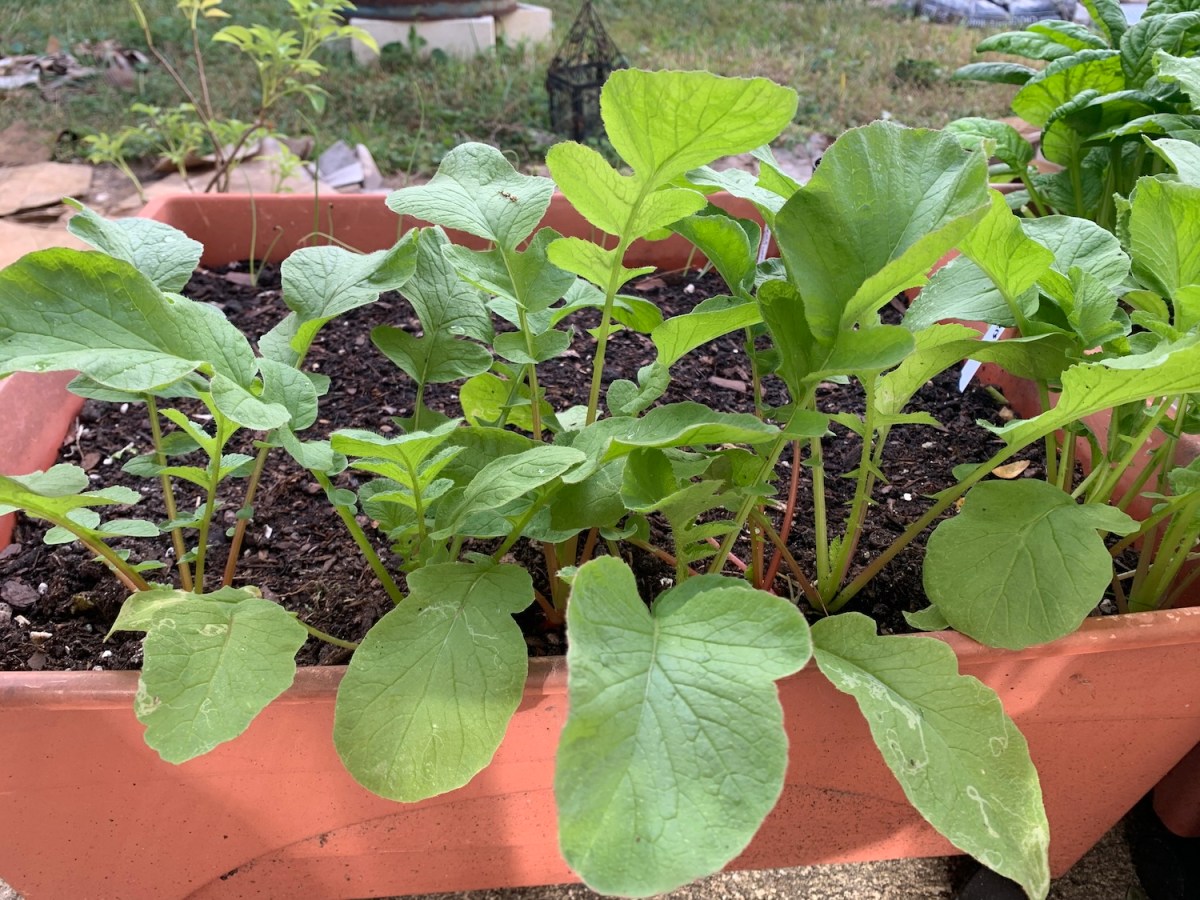
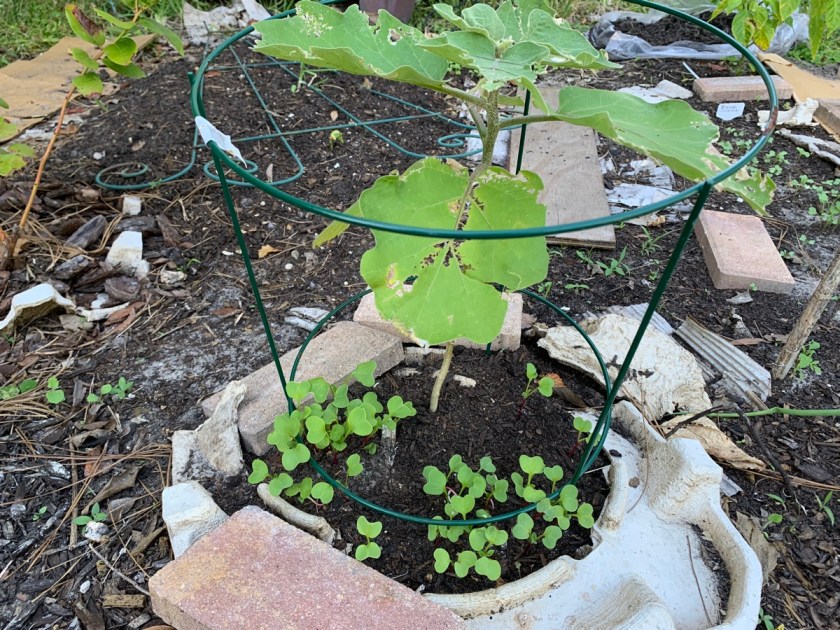
In the case of the radishes, which I planted only because I happened to have a packet of seeds, some did way better than others.

radish growing under an eggplant in the garden
Radish under the eggplant
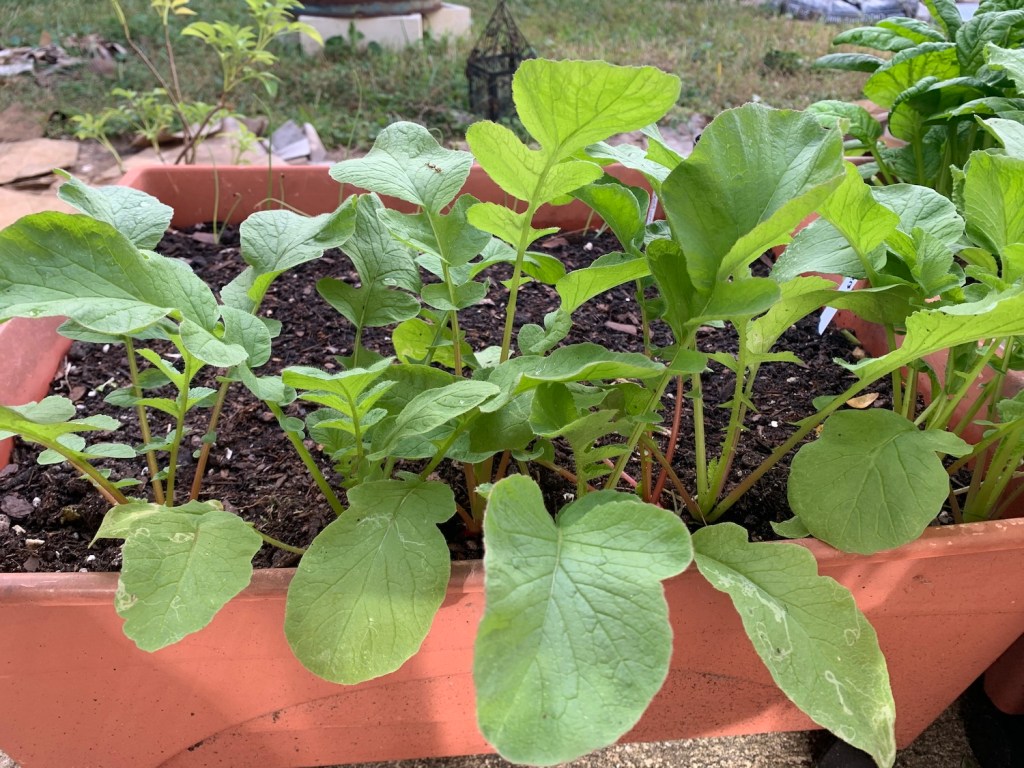
radishes growing in a box outside
Radish in the grow box

The radishes in one of my grow boxes have become very large. I have already eaten one small radish. None of the other radish plants, which grow everywhere in the garden and other boxes, are nearly as big. Most of them get the same amounts of sunlight, so it figures that this one specific grow box has some very nice dirt.

Lettuce was growing alongside these radishes, but it was from seeds I had saved, and the lettuce was bitter so I pulled it up. Now I have carrot seeds planted.

The Carrot Experiment

The carrots which were planted in my first choice bed are doing poorly. I choose the tallest grow box so the carrots would have lots of room for rooks. I had loosened the soil, and added some good stuff. I had high hopes, but they are barely growing.

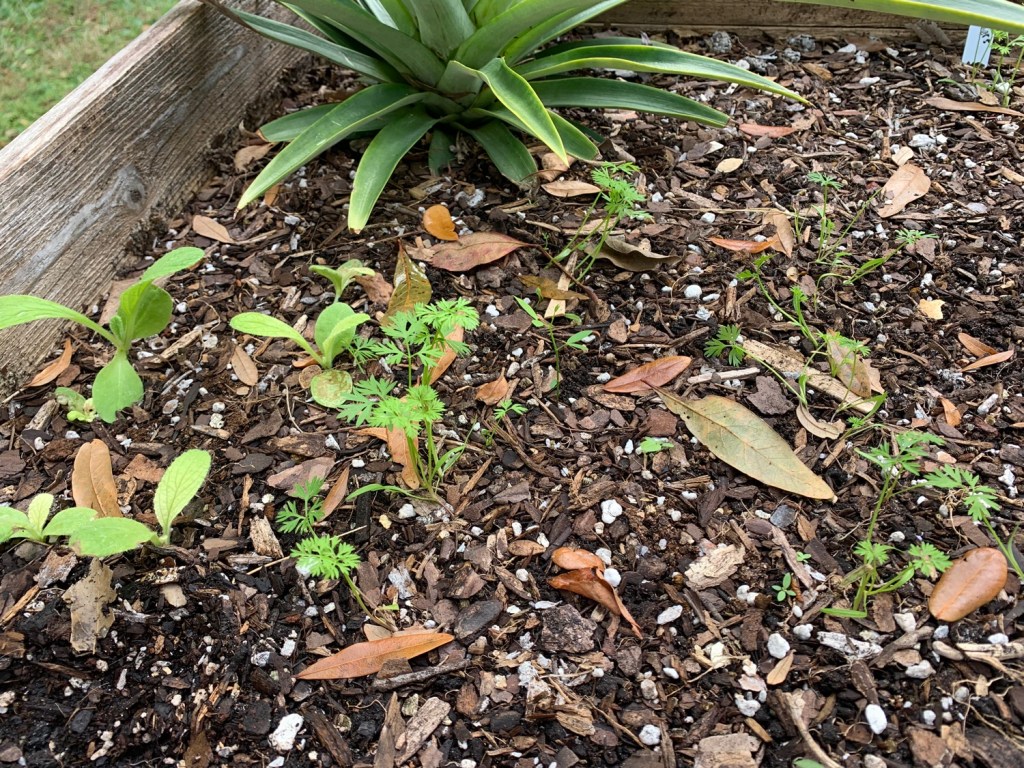
Carrot seedlings after one month, alongside borage and a pineapple. The borage is not doing well either, so soil problems?
carrots growing in the raised bed

The carrot seeds were planted just about a month ago. According to the packet, they will be ready in 65-75 days. It is hard to believe that these tiny things will be ready to eat in just over a month’s time! I seriously doubt it.

My second carrot planting is in that box with the radishes. I am very sure that the soil is good. If the carrots still don’t grow, I will blame the seeds. The weather is cooler now, and both spots get good sun.

Growing Sites – Choose Many

If you are unsure about growing a crop, select more than one place to try to grow seeds. Everyone knows that most things need sun to grow, so definitely choose sunny locations.

I have two ground garden areas and a bunch of grow boxes and “raised beds”. It is easier to manage the boxes, and the dirt has been amended over and over. I can move them to shade, or sun, as needed.

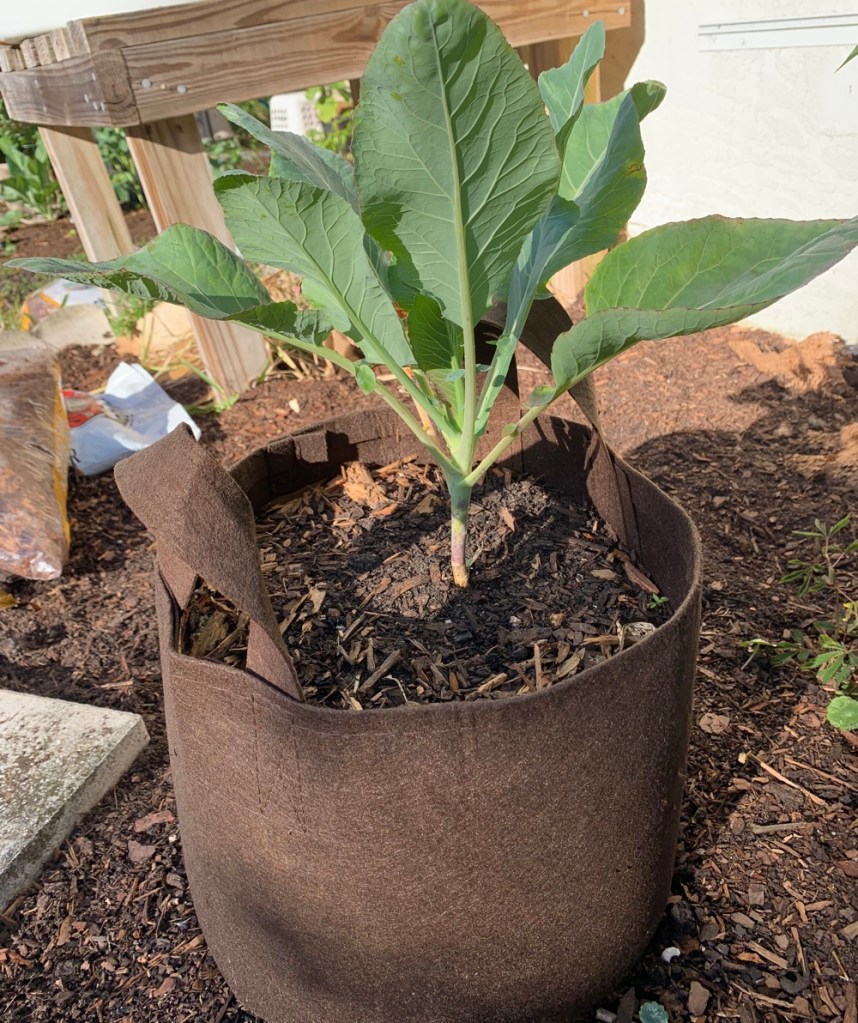
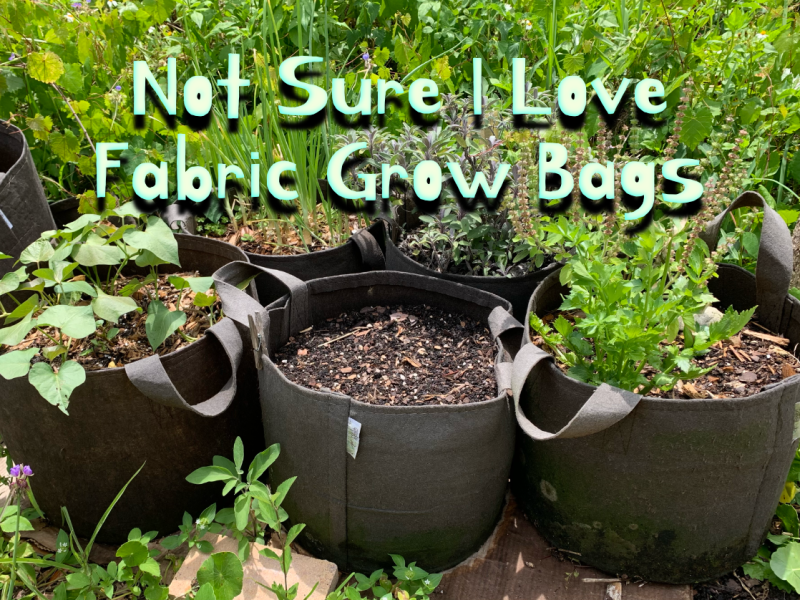
This year I also added some new grow bags as well.

Interplanting of Crops

This fall I am doing a lot of interplanting of crops. For one thing, I am not sure which ones will do best and which won’t grow at all.

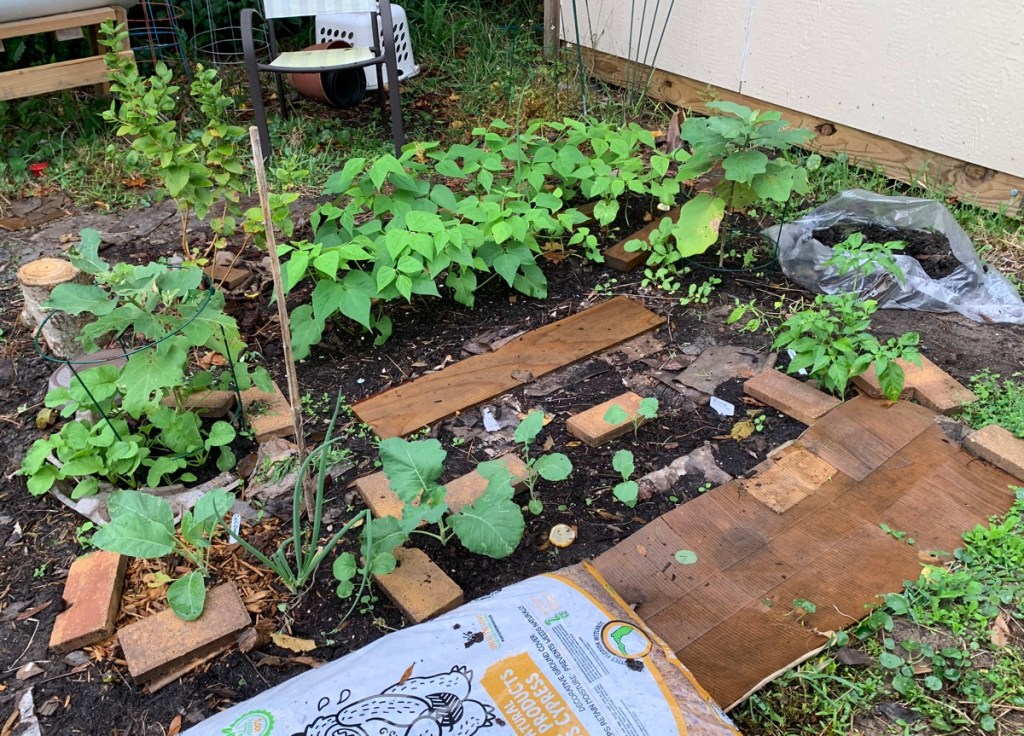
This small garden in my photo contains snap beans, 2 eggplant, radishes, broccoli, 1 cauliflower, 1 pepper, and a blueberry bush! I know it is not optimal, but I am trying to make the best of a small space.

interplanting beans, eggplant, broccoli, cauliflower
Fall 2023 garden in the backyard

As was true for my summer garden, I am experimenting with fall and winter crops. Whichever vegetables do well, will be planted again next year. I’m keeping lots of notes.

Seeds

Sometimes it is best to grow crops from seeds. Big seeds can be planted directly in the ground, and I’ve had great success with watermelon and pumpkin in spring, and snap beans now.

Buy seeds as close to planting time as you can, in the hopes that they will be freshest. Packets should have a date. I try to use my seeds within a year.

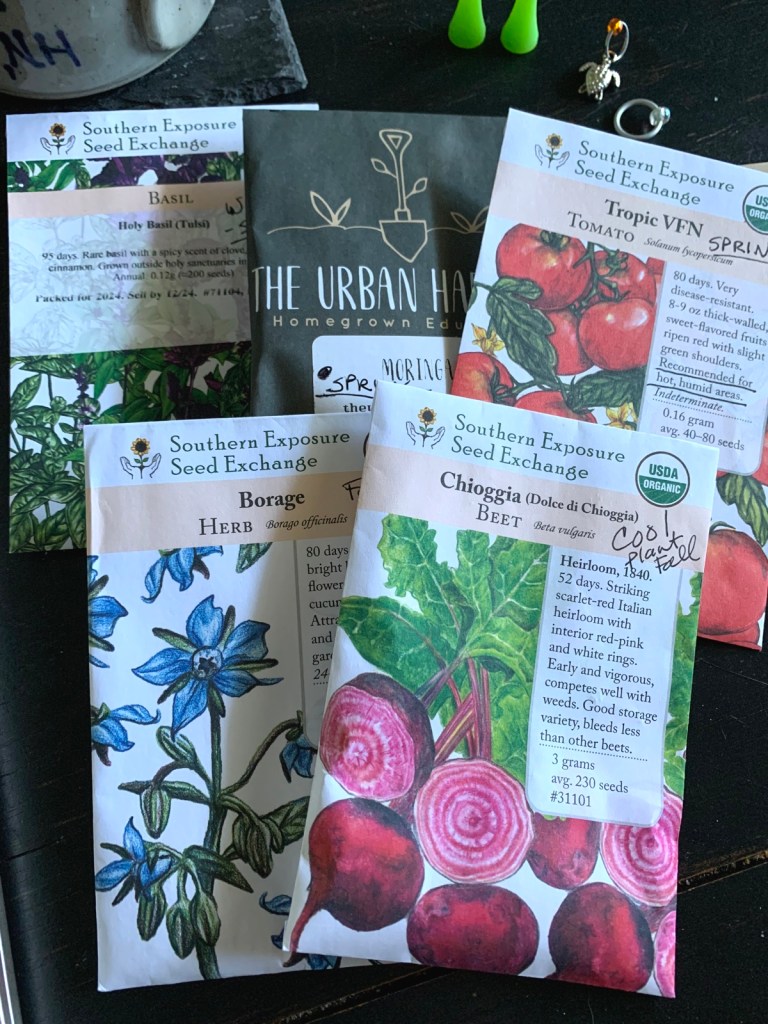
But first I needed to figure out when to plant what in my central Florida location. Even the seeds from Southern Exposure can’t be relied on to give Floridians planting advice. SESE sells seeds to the southeastern US, which means many growers don’t live in a Florida climate. The packets mention “last frost” and freezes.

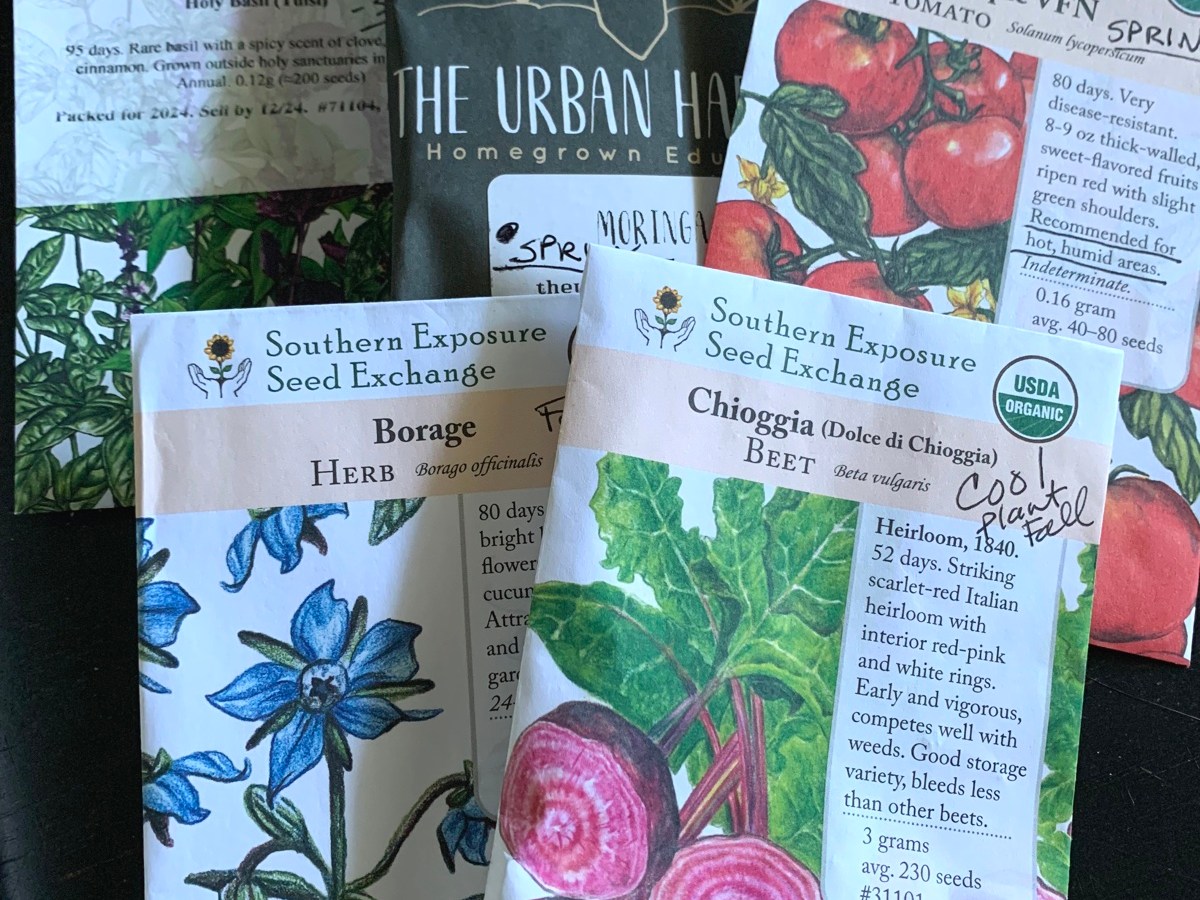
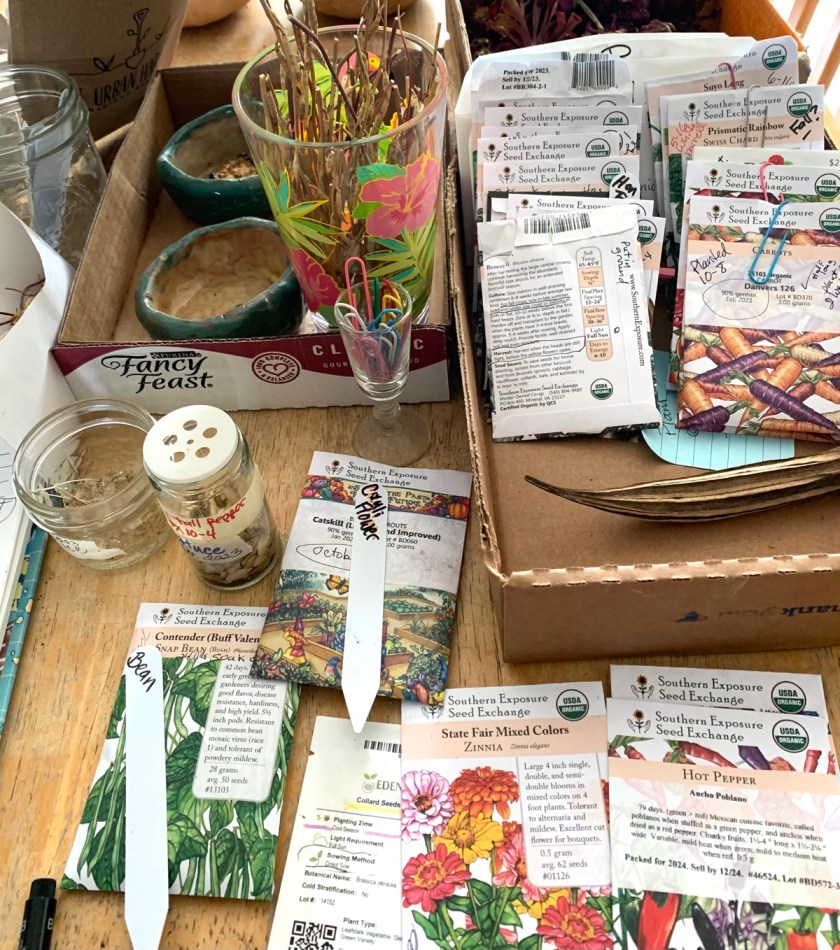
seed packets
Seed order from The Urban Harvest

There are a few things I’ve purchased that just haven’t grown. I’ve tried them at different times, in different locations, and been unsuccessful. It probably means either bad seeds, or the stuff just doesn’t want to grow in my yard. I’m not going to fight with it, I will move on and grow something else.

The South is Nothing Like the North

Although I would love to grow some of the same plants I grew in New Hampshire, the south is nothing like the north.

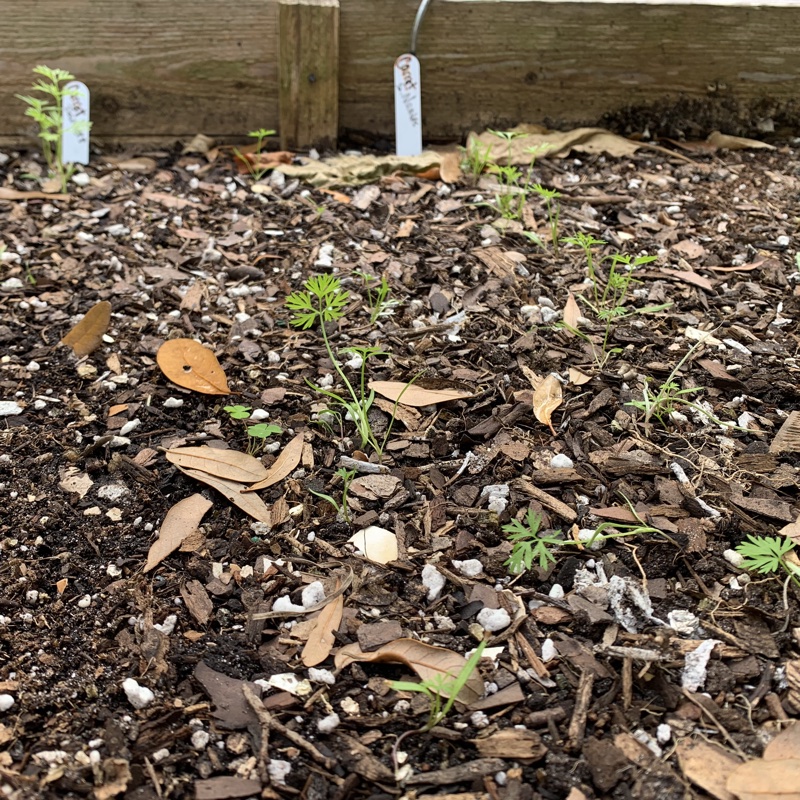
Borage is one of the failures. It hates the heat, and I do have a few little seedlings coming up, but none of them look great. I’ve read that borage grows great here in Florida, but I don’t believe it.

Nasturtium has also done nothing. Most of the seeds didn’t even sprout. In this case I am blaming the seeds. But I doubt that the plant will like this Florida climate. Sticking with what works well in my area if a good choice and I won’t buy these again.
Experiment and Take Notes

Do your vegetable gardening research for your particular area, and then plant what is expected to grow well. The UF/IFAS gardening site is a good place to start.

Eventually, I plan to have a list of favorites to grow for every season in my area. The mistakes I make now will only enhance my knowledge of gardening.

Redistributing The Cauliflower From the Nursery

It is not often that I buy cauliflower, but I do eat it. When I had the chance to buy seeds, I decided to try my hand at growing my own. One nice head would be just fine, but the packet has 600 seeds!

Often my grow boxes, aka little raised beds, become a nursery for seedlings. Once the babies grow, I can redistribute them to large pots or into the ground. A lot of these plants will be pulled up, or cut off, and added to the compost bin.

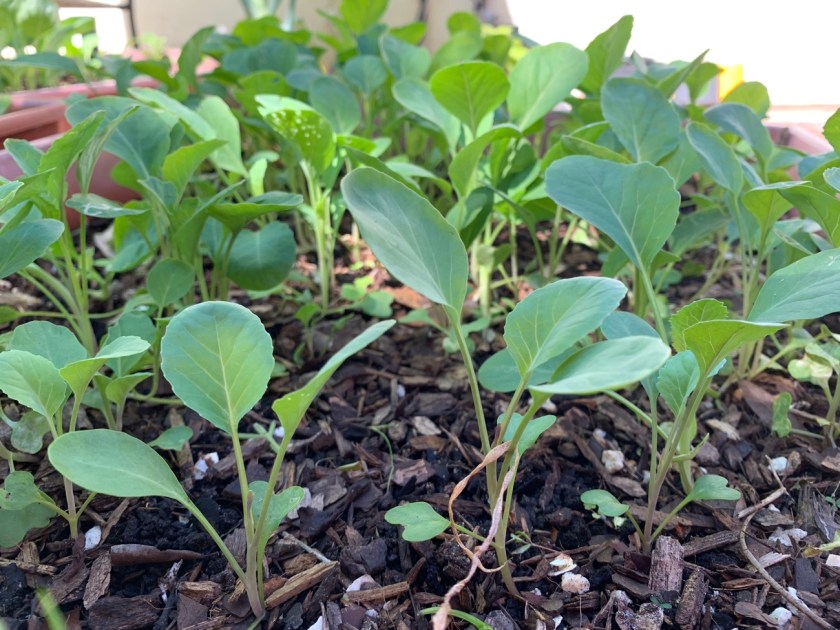
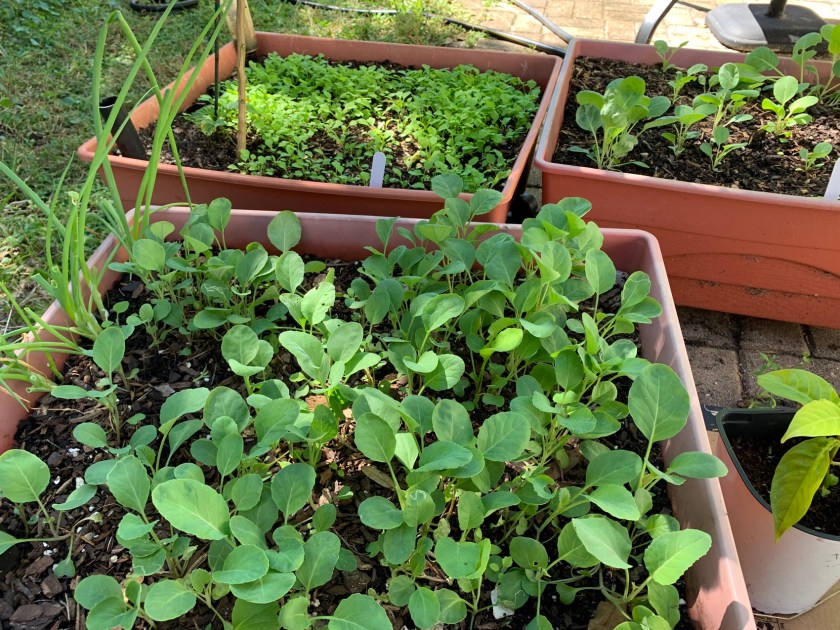
Cauliflower likes cooler weather. Here in Central Florida it can be planted in fall. I put some of my seeds into a grow box on September 12th, and by October 21st they have really sprouted! (photo below)

cauliflower seedlings
Overcrowded cauliflower seedlings – 10/21

Cauliflower plants need a foot or more of space for each plant to grow. That means I will probably grow only one plant in this box! Obviously a lot of these seedlings will have to go. A few can be put into the back garden, and I might use my grow bags for a couple.

According to the UF|IFAS Gardening Solutions “Cauliflower” page, each plant needs to be 12-18 inches apart. All of my gardening areas are small, so I will only be attempting to grow a few cauliflower plants. How much cauliflower do I need anyway?

Self-blanching cauliflower means that when the leaves grow, they will automatically wrap around the head. This is for protection from the sun. Thankfully, I had purchased Snowball Self-blanching, so I shouldn’t have to worry about that – BUT the seed packet says this, “Tie the inner leaves around the crowns as they form to blanch them white.”

Cauliflower Seedlings

After the seeds were planted in this box outside, and just beginning to grow, we had over a week of rain – lots of rain. We had 9 inches in just 2 days and it rained for over a week. I wondered if any of my newly planted seeds would survive, but they did.

Snowball cauliflower seedlings

The seed packet directions also inform me to provide fertile, well-drained soil and even moisture. I guess they can handle the water. This grow box is not getting a lot of sun. The plants will have more sun in the grow bags.

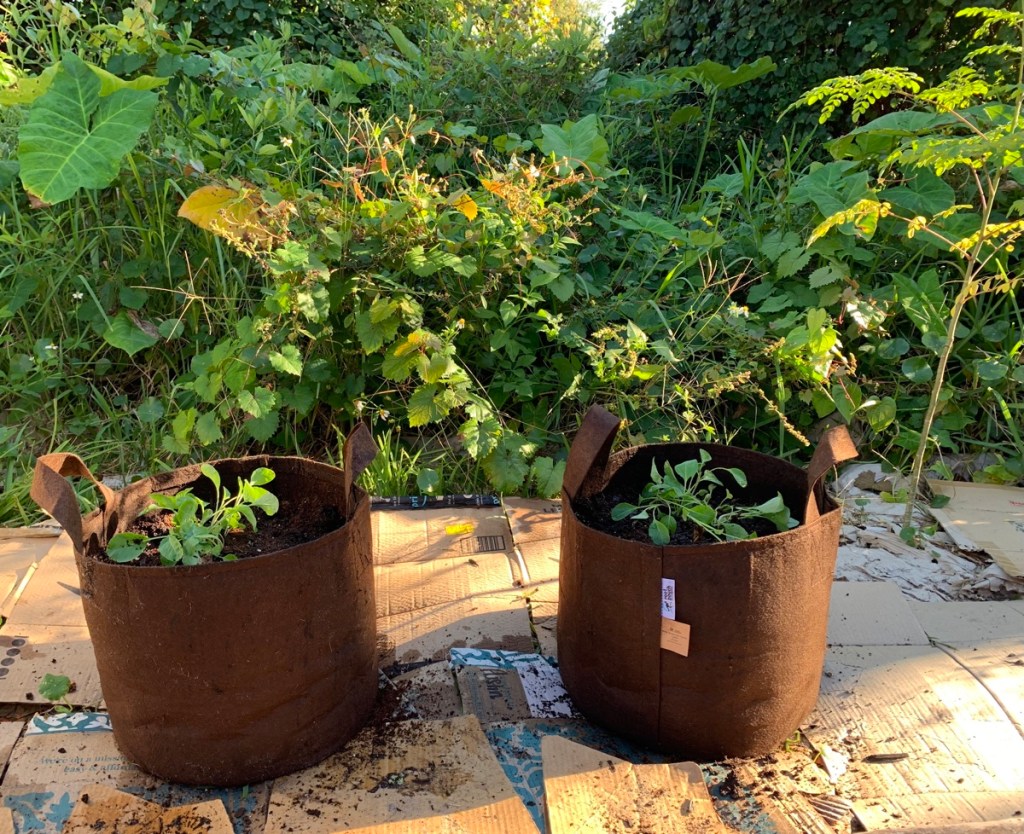
Once the sun was heading down, I dug up groups of the cauliflower seedlings, from the box, and planted the whole clump into each of two bags.

Once they began to grow, I thinned them down to one plant per bag. After months of growing, I never got an actual cauliflower head, so I began to eat the leaves! Many cruciferous vegetable leaves are edible.

Tendency to Overbuy Seeds

Little seed packages are inexpensive. Because of this, we tend to overbuy. Each seed packet usually has more than enough seeds for a small, backyard garden area.

I’ve divided my seed packets into Fall and Spring, with a few Cow Peas / Black Eyed peas to use in summer. I’m not going to try to grow much next summer.

garden seed packets planning
My garden planning area and my used (and unused) seed packets.

The exception to this packaging of seeds, is the Moringa. The seeds are large and I think there were only seven or eight in the packet. Also, other larger seeds like squash, cucumber, beans, and watermelon won’t have a lot of seeds. But, if your garden is small, one package will probably work.

grow boxes with seedlings

I am still learning what to grow in my area, so I have over-bought this past year. Seeds don’t stay viable for more than a year or two – unless the packet says differently. They can’t be kept and stored for long (as far as I know), so there is really no need to stock up without having a plan for sowing.

Saving seeds is fun too, although I am learning that it should not be done if you grow more than one type of that vegetable, or from that family. They can get cross-pollinated and the seeds won’t give you the correct vegetable next time – when you use the saved seeds to grow again. It gets complicated. If you want more info on saving seeds, read this article at Seed Savers Exchange.
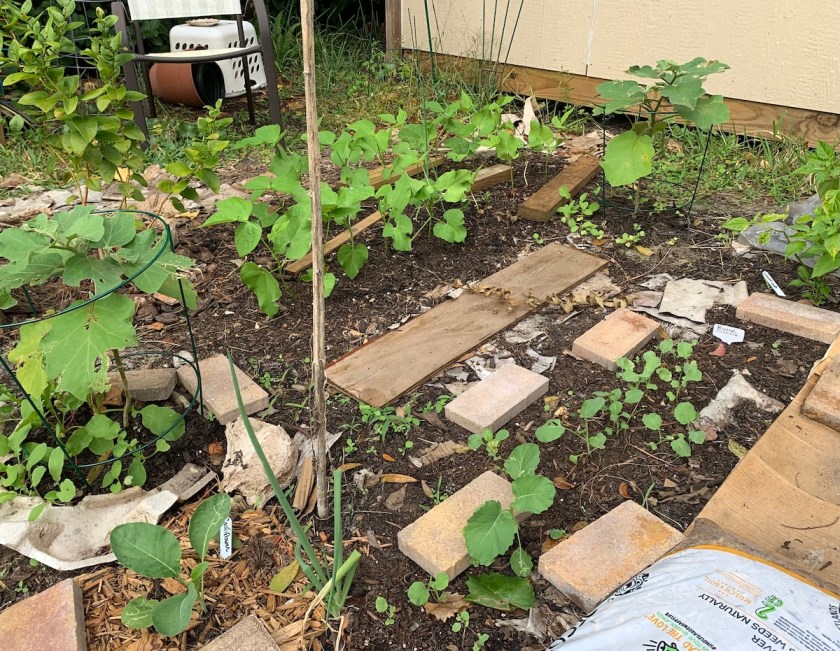
I saved lettuce and arugula seeds from Spring and have recently planted those seeds. Both veggies are growing well. I have a lot of seeds left over too.

Stories

Fall Garden: Growing Hon Tsai Tai Flower Broccoli

Experimenting with growing Hon Tsai Tai Flowering broccoli during fall and winter here in Central Florida.

I’d never heard of Hon Tsai broccoli until I saw it mentioned by Elise Pickett of The Urban Harvest. Now, I can’t find the location of that mention, but here is what I am doing.

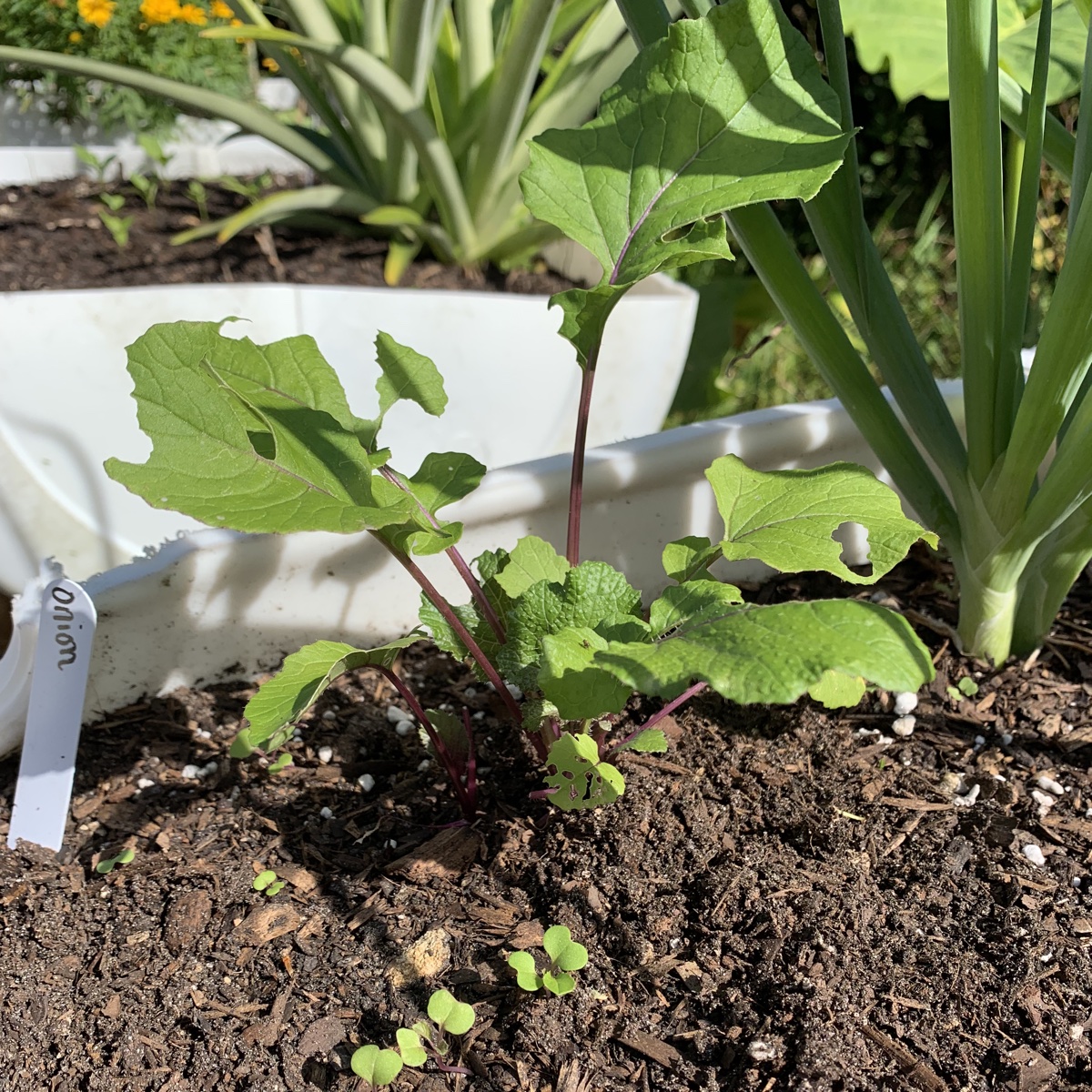
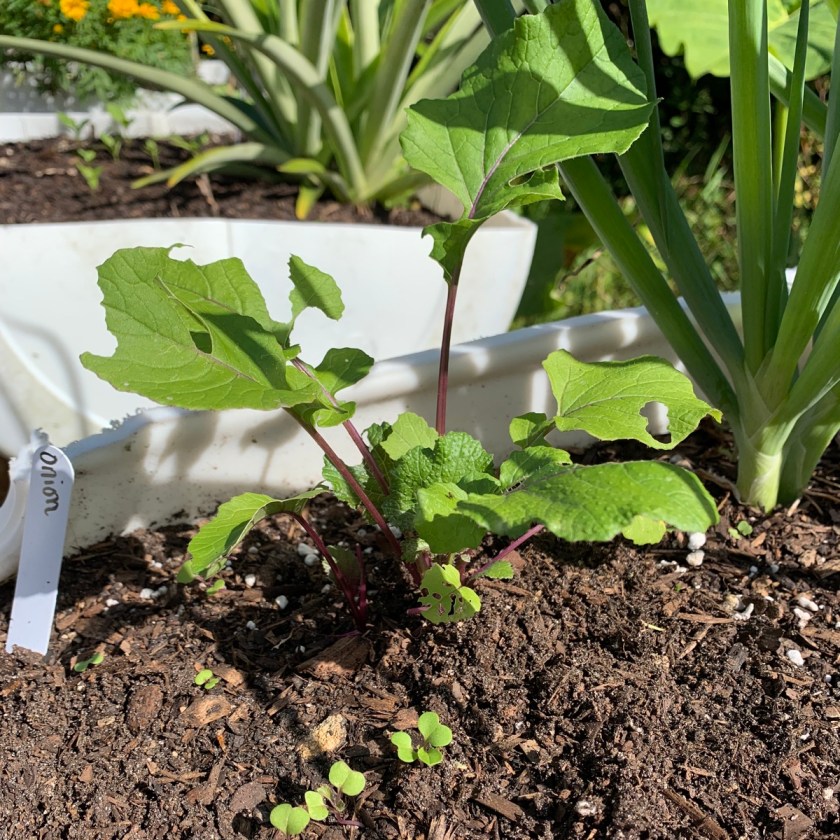
I bought a packet of her seeds and planted a few in pots in September. Just a few weeks ago I transplanted the two seedlings into a raised bed (October 4th). More seeds were added and have now sprouted. The early starts are much bigger. Some of the leaves have been chewed by something that I can’t see.

Hon Tsai Broccoli
Hon Tsai broccoli

Info on Hon Tsai Tai Broccoli

I love broccoli, and I’m not sure if the normal stuff can be grown here (planted in Fall also, but have only leaves to eat), but I’m trying to grow this type from Heirloom seeds. It will not look anything like “normal” broccoli though. I’ll take it for the fresh greens and make a stir fry. 

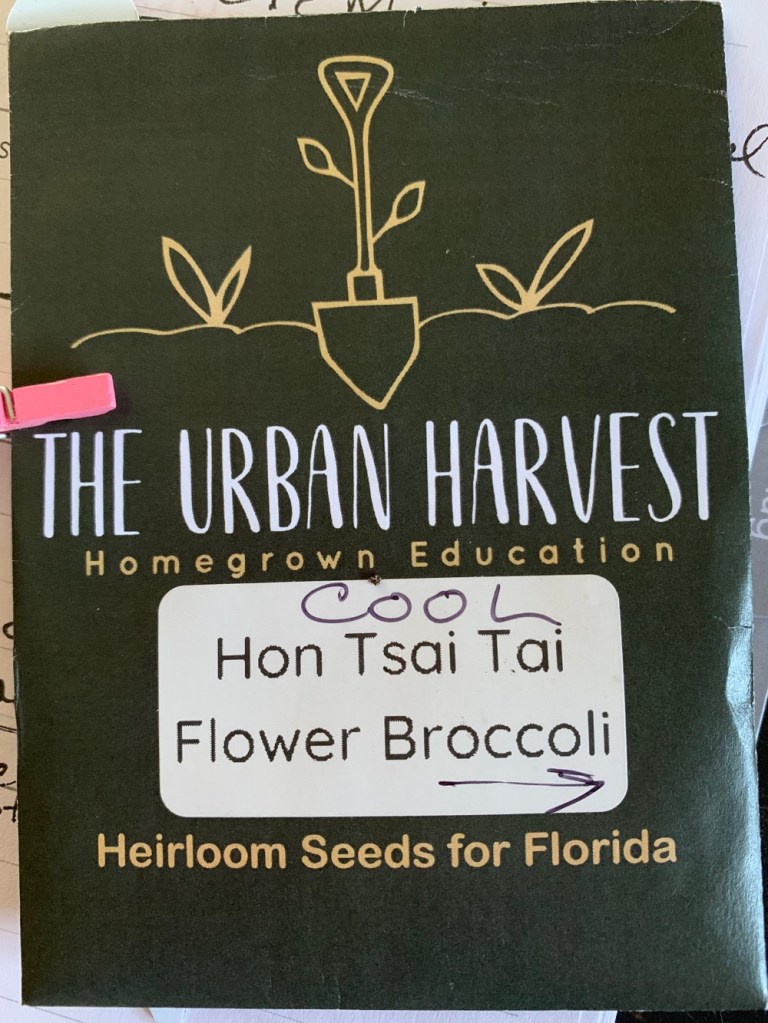
The packet of seeds, which came from The Urban Harvest, doesn’t have any information – the back of this packet is plain white. I have made notes about the Hon Tsai but I have no idea where I got the information! I’ve searched and searched. I think it was an Urban Harvest video, but I can’t find it.

Hon Tsai broccoli seed packet

Here is what I will share from the notes written on the back of my seed packet. This link goes to the page to buy the item at The Urban Harvest. There is some information on that page.

Another site, High Mowing, has information about the Hon Tsai Tai Flowering broccoli they sell. Information on Hon Tsai Flowering Broccoli. The goal is to have leafy shoots with unopened flower buds that can be eaten.
This type of broccoli is a cool weather crop. Articles online mention that temps should be in the 70’s and below. Here’s the thing – seeds need warmth to germinate and in general seedlings like it warmish. A Florida fall season can be very hot at times. It can also be cold overnight as we get into November and December.  Right now, we are still getting hot days (it was 80 today on Oct. 20th).
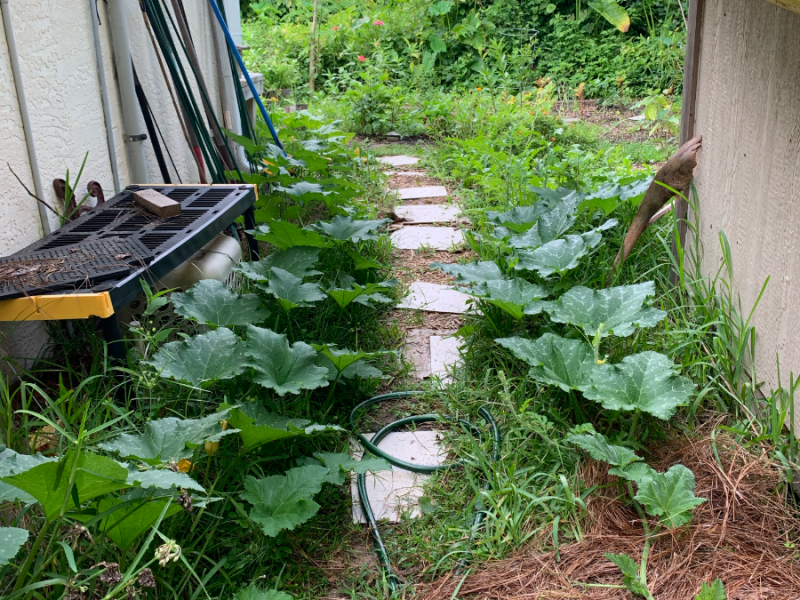
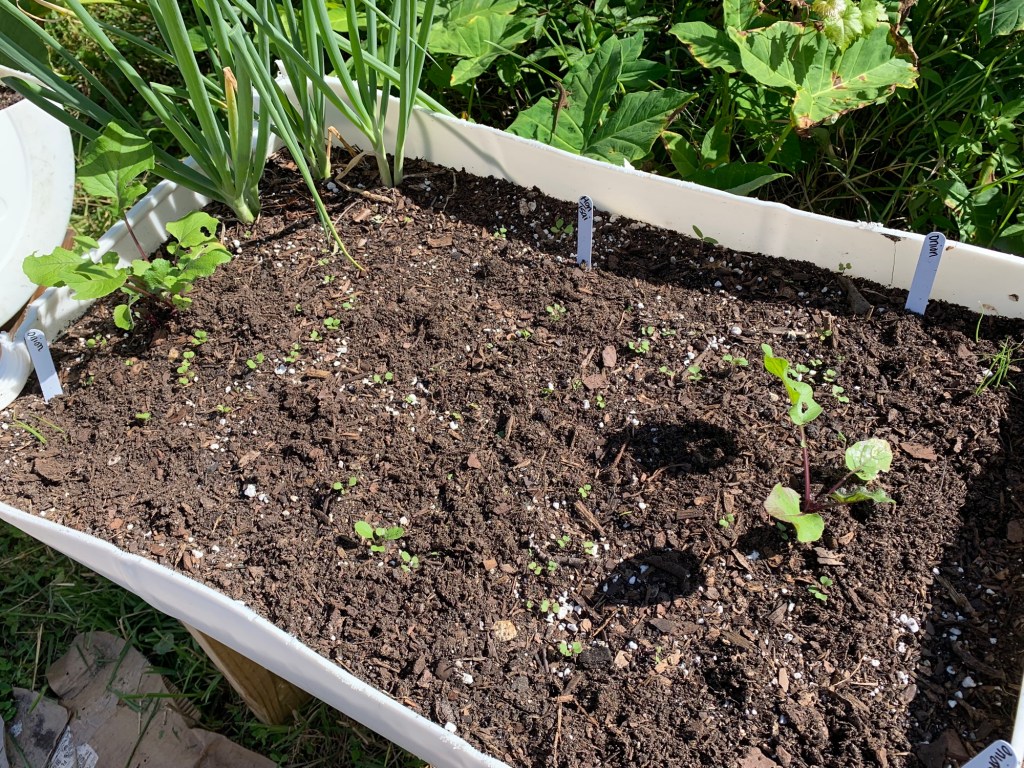
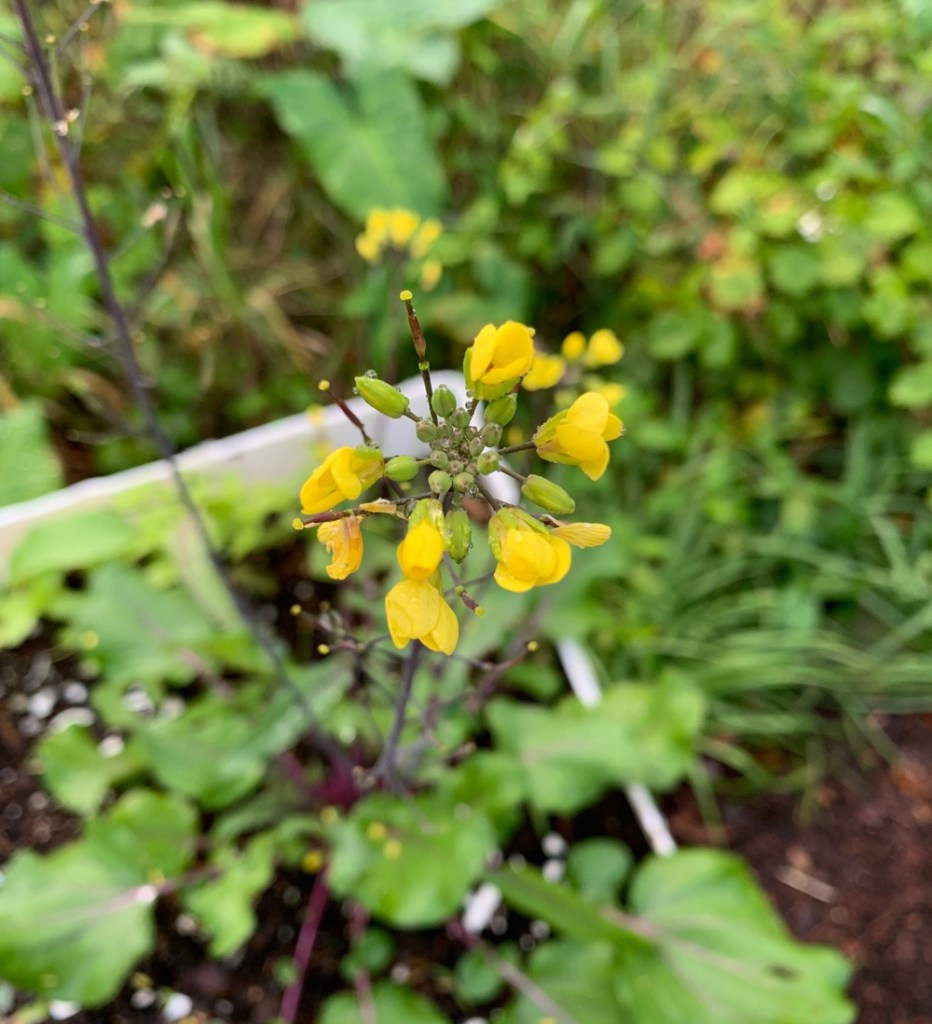
 * I ended up replanting this bed (pictures below) with kale and Texas Early Grano onions. I did keep one Hon Tsai broccoli plant and it turned out to have some beautiful flowers.

In closing, I’ve decided to grow the Hon Tsai broccoli again next Fall, but I will put it into the ground gardens. I’ll start it from seeds in pots, in September – because those plants did the best. Although I have been eating the leaves, they are not a favorite food. The flowers are fragrant and pretty and I wouldn’t mind having those growing all over the ground.


Videos For Growing Greens in Florida

Here is a list of videos that might give Florida gardeners an idea of what to plant during our winter months. It’s a bit tough to decide what to grow and when because our winters can be hot, and very cold. We can get freezes – at least where I am. If things are growing, they might need covering on very cold nights. Save up those old sheets and buy some clothespins!

Growing Bulb Onions

I can easily grow chives / scallions – those thin green stalks, but actual onions were thought to be impossible to grow here.

Then I saw a post on Instagram by a local farmer who successfully grew onions. They were planted in Fall and harvested before summer. The Texas Early Grano (link above) is the type mentioned. So I immediately bought some seeds.

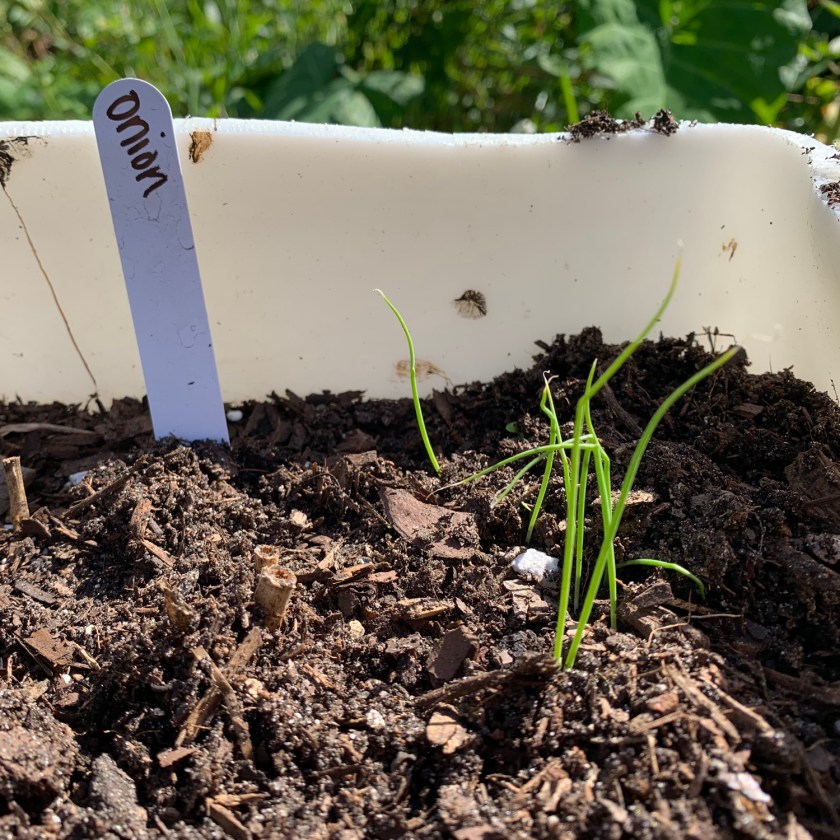
I now have onions coming up all over the place. Onions take up very little space. I don’t have much space, so my onion seeds are tucked in all over the place. I really hope to have some slicing onions by next Spring.

growing onions
Texas Grano onion sprouts

Here’s What Else is Happening in My Yard