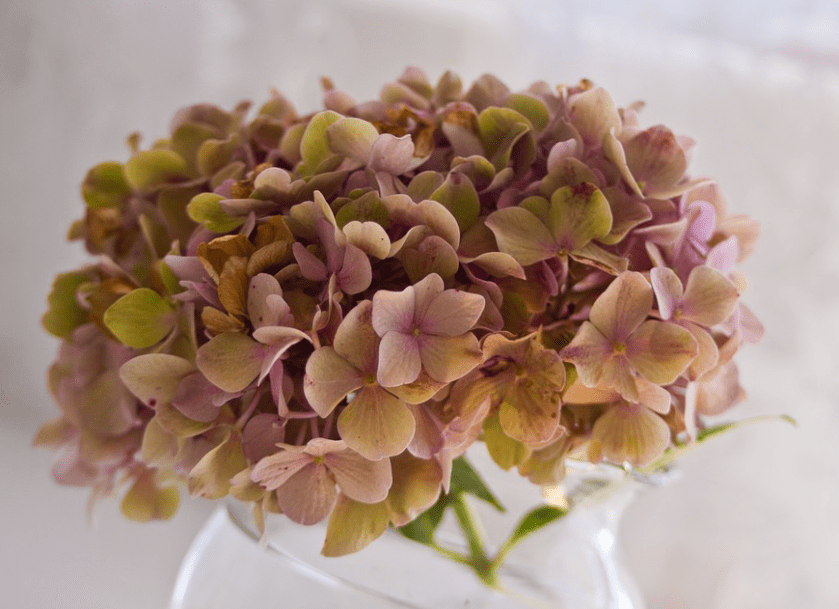
When I grew hydrangeas in my New England yard, my favorite time of year was end of summer. The blooms would begin to fade and change color. Sometimes they didn’t look all that great, and at other times the Fall colors could be even more beautiful.
Fading pink bloom
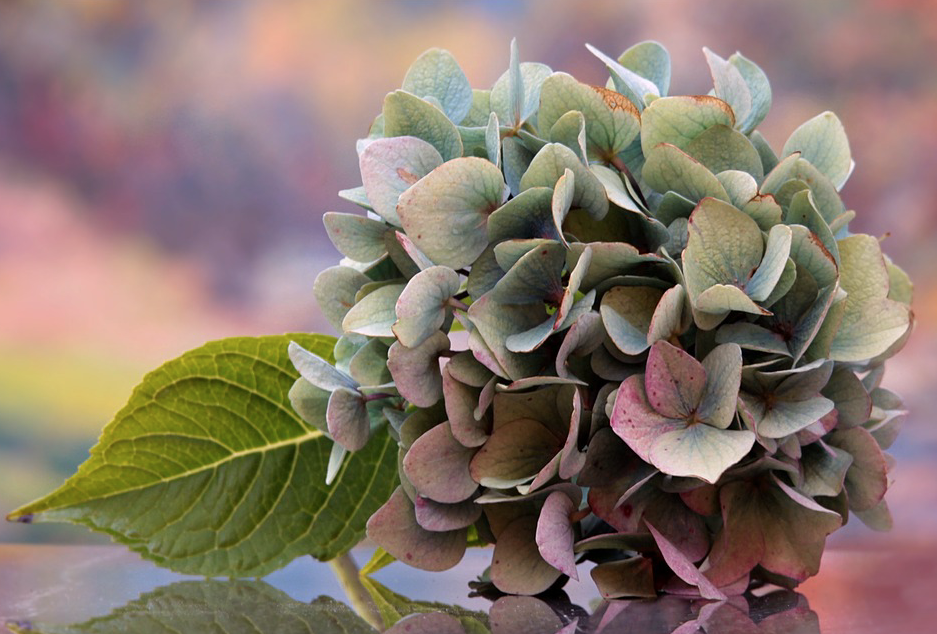
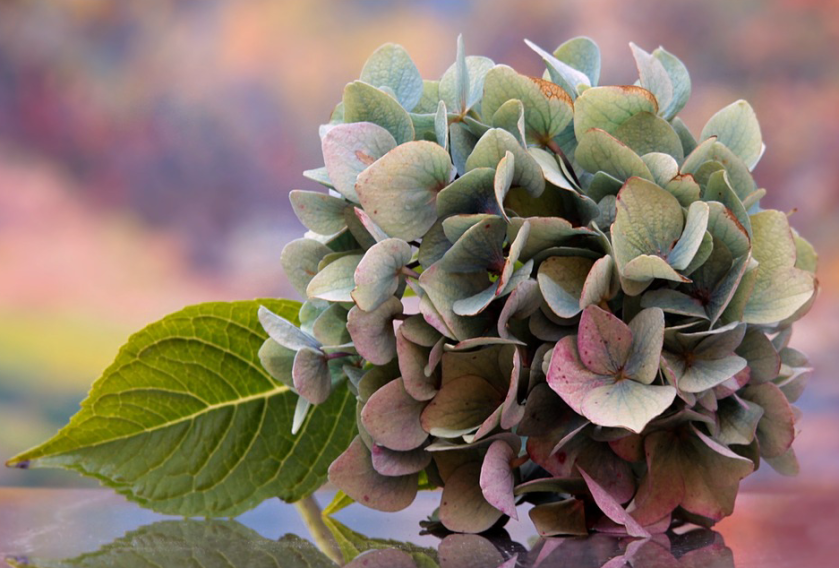
I didn’t have pink flowering hydrangeas. Mine bloomed white (Blushing Bride) or blue (Endless Summer). Usually the blue flowers would turn an amazing green color, like the picture below.
Blue hydrangea bloom fading to green and pink
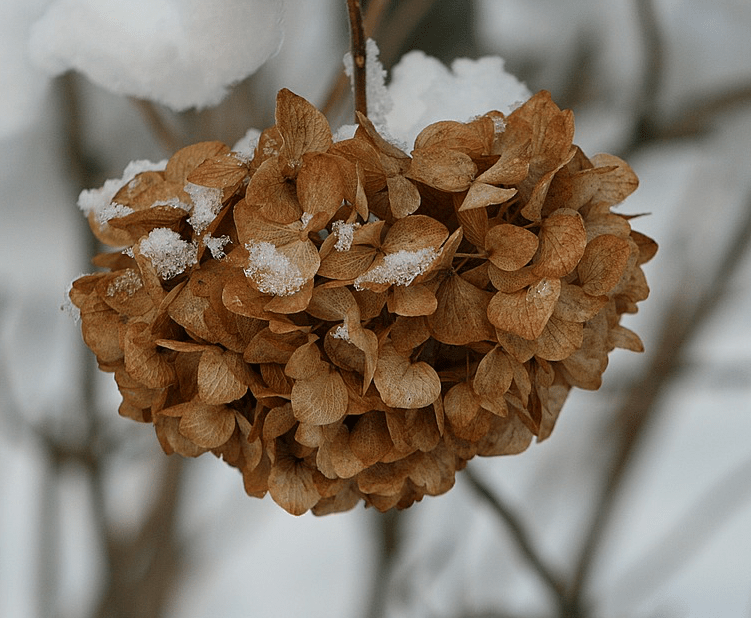
Even the dried flowers left on stems add beauty to a winter landscape.
Dried hydrangea bloom still on the stem as snow falls.Fading Pink Hydrangea Bloom
Fall is an awesome time to look forward to. Summer heat is gone, and changes in the yard bring new colors to enjoy. Don’t be sad. Spring and summer will come again and offer a whole new set of flowers to enjoy.
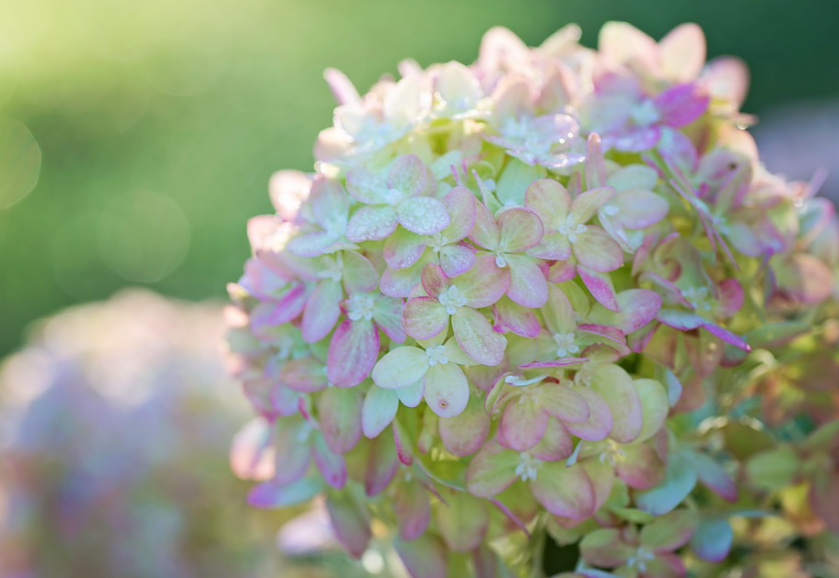
Pale green and pink hydrangea flower
All flower photos on this page came from the free, public domain site Pixabay.
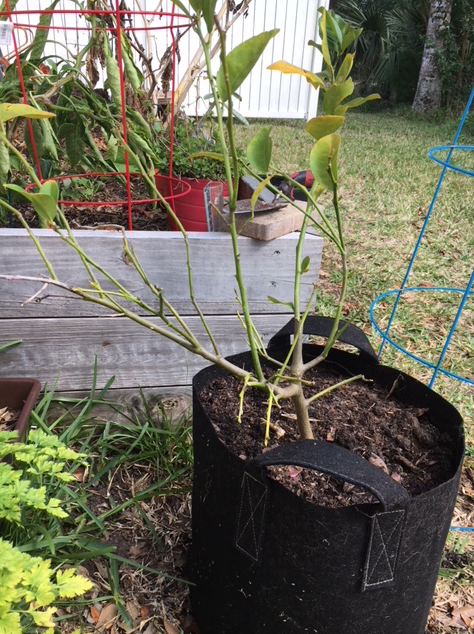
This past weekend (mid-February) I did some garden work and planted a few seeds. It was a hot day but I decided it was time to move the lemon tree from the front to the back yard. Thanks to that digging and lifting my back was aching the next day. But I have high hopes that the tree will recover and give me some lemons one day. (Photos below)
The raised bed still needs more soil. While my son was cutting the grass he bagged up some oak leaves (oak leaves are small here, not like the majestic oaks of the north which drop big leaves) and dumped them into the bed. Adding oak leaves to the raised bed
Creating good garden dirt takes a lot of adding and mixing, not unlike making a good soup or stew. All the ingredients together will give me some delicious dirt to help my vegetables grow well.
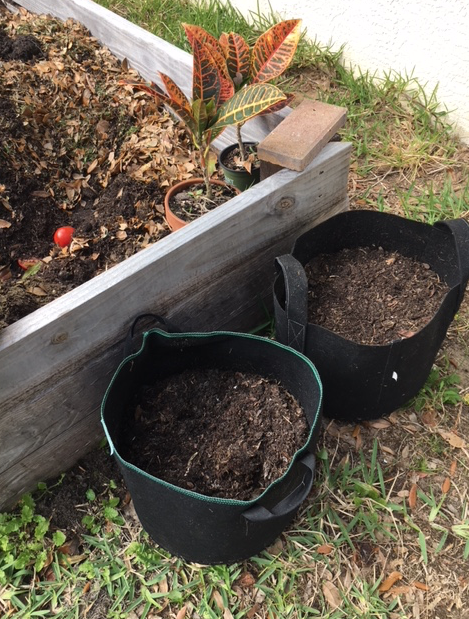
I still have two potted crotons which were cuttings taken from the big croton out front – which is now dead thanks to the cold. I’m not sure what I will do with them. Filling the fabric pots to be ready for planting
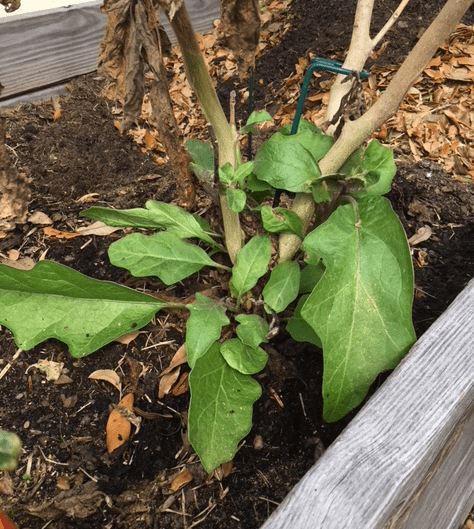
Bone meal and blood meal was added, and I threw in an old tomato (I regularly add kitchen scraps to make compost within the bed. I’ve even seen a couple of big worms in the dirt recently …. yay! Eggplant coming back after the freeze
During the winter months it’s not a good idea to trim back dead growth, but I made an exception with my eggplant. With all the top brown branches trimmed away I can more easily cover it if cold temperatures come back.
I planted lettuce seeds in one black pot and yellow squash in another. I should have planted the lettuce earlier, but oh well.
The Lemon and Lime Trees
About a year ago I added a Persian lime tree and Lemon tree to my yard. The lime tree has done very well, providing me with loads of limes in the Fall season. I kept it in it’s original pot and it’s in the backyard.
The lemon tree was planted in the ground in my front yard. Right off it began to have problems. When I planted it, I wasn’t used to our new home location yet. I didn’t realize that front yard gets a lot of wind which makes it an inhospitable place for most plants. Even though the new tree bloomed and grew some lemons, it’s leaves fell off and none of the lemons were nice enough to eat.
Moved the Lemon tree – Feb. 2018
This was a lesson in choosing a good spot for my trees and shrubs. I doubt I will try to grow anything out front.
I really thought the tree would be dead by now. Besides the wind, we’ve had a few nights of cold temperatures. I covered the tree, but lots of things died even though I covered them. Still the tree lived on.
Many of it’s branches are bare and it looks like some animal maybe had been chewing on the stems. Plus my son often hits the branches with his weed-eater.
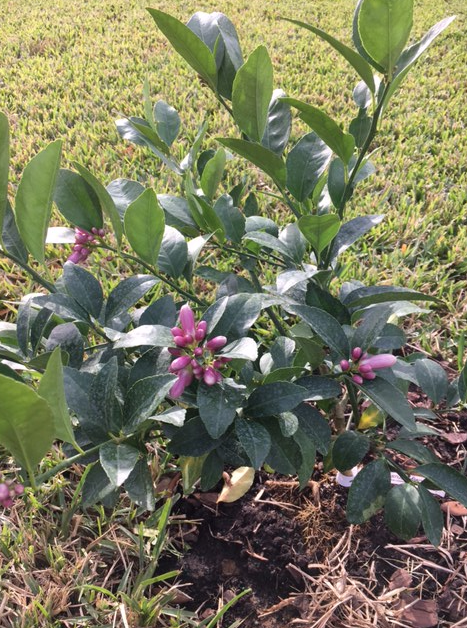
Even after all this, the lemon tree still grows. Below you can see how pretty the Lemon tree was when I planted it. Because it is still trying to live, I feel guilty for leaving it unattended for so long.
I’m hoping that with it’s new spot in a fabric garden bag in my backyard, I can bring this tree back to it’s original beautiful form.
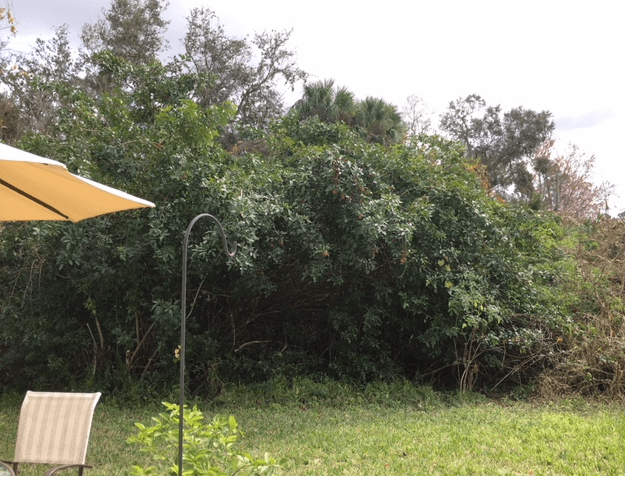
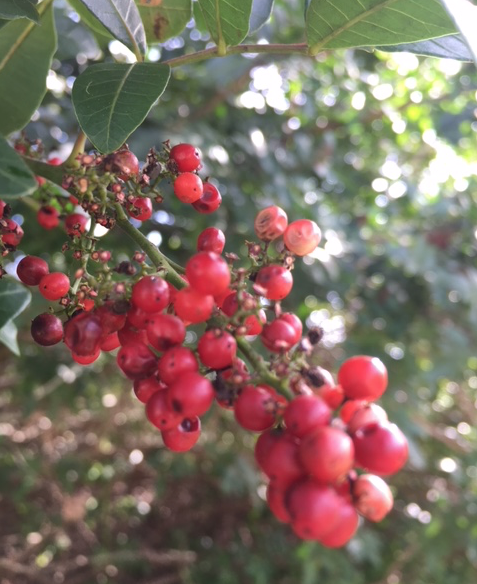
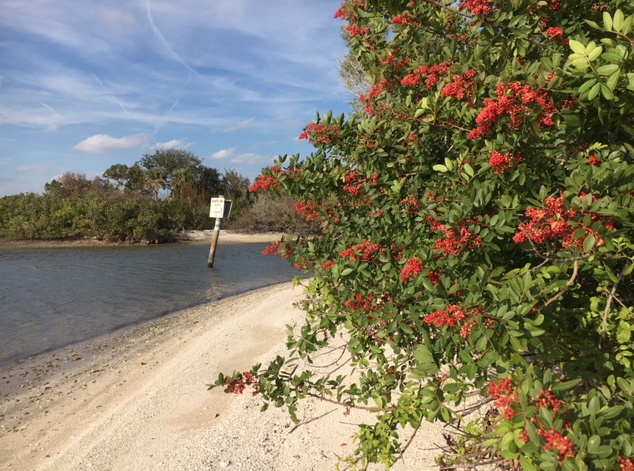
At the edge of my property a stand of trees, with winding branches and dark green leaves makes the perfect hideout for wildlife. I did think they were Dahoon Holly trees, but I was mistaken. They are invasive Brazilian pepper trees and have become a problem for Floridians.
Trees with red berries
This thick area of trees and shrubs is where the raccoons come from each night. It’s also where the zillions of stray cats walk as they pass through the yard.
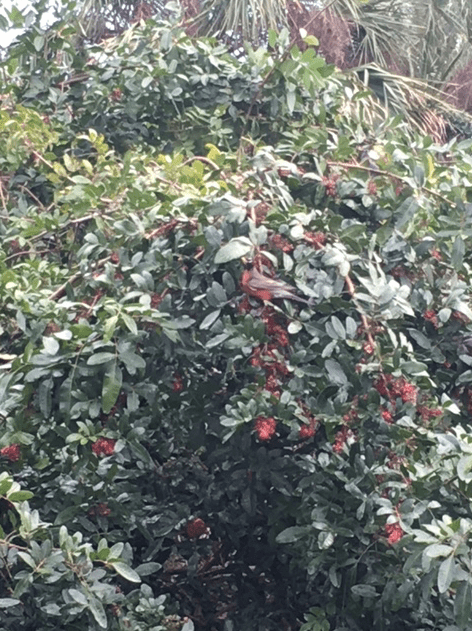
I don’t know if the birds knew I wanted photos today, but they showed up in droves. Unfortunately I am not such a good wildlife photographer! I saw a bunch of grosbeaks gathered on a berry laden branch, and got this photo of a robin (center of picture) – not a good photo, I know. In fact, the many birds have nearly eaten all the berries!
Even as the berries give the birds food, it is also what helps to spread the growth of these trees. The birds spread the seeds.
So how to tell the difference between trees that have clumps of red berries? The Brazilian Pepper has 9 leaves and the leaves are dark green. The Dahoon Holly’s leaves are more true green and are fewer. At least, from photos I’ve seen, that looks like the difference. Also the pepper has that tangled mass of trunks, whereas the holly grows more like a regular tree.
Robin
The trunk can actually be split into many trunks, like in my photo below.
Mass of tree trunksRed berriesBrazilian PepperThe thick growth prevents other plants from growing.
Wildlife is abundant in Florida. Birds are everywhere so getting them to come to the backyard is not difficult. They enjoy the same things here as they did when I lived in the North. If you’d like them to visit regularly, give them a proper welcome. They need food, water, trees and places to land and hide.
Birds Love Water
Like us, birds need water to drink. Birds also love to play in the water. It looks like playing, but they are cleaning their feathers. They dip their heads and swiftly shake from head to toe while fluffing out their plumage.
In the north cardinals are more rarely observed than they are in Florida. It was a wonderful sight when they landed in my snowy winter yard. Here they are everywhere. But they are still just as afraid and skittish. Any movement will scare them off.
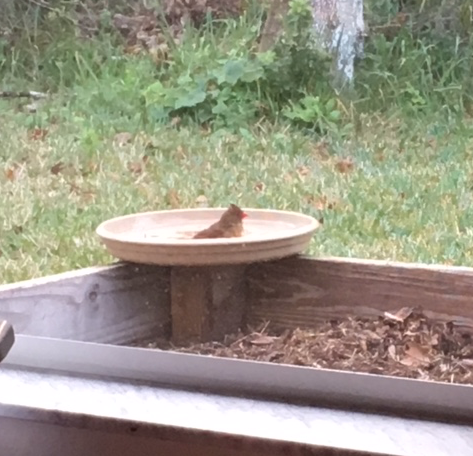
I captured (not so great) video of this red cardinal splashing around in my makeshift birdbath. I have a good view from my home office area and with the windows open, I can hear the birds land in the birdbath. He stayed there preening for a good five minutes, but the video is short.
This cheap “bird bath” was thrown together one day using a large plastic plant saucer with a brick in the center (or a rock would work). The brick helps hold the saucer in place and gives the birds a place to stand. Birds don’t like deep water and I don’t like the price of real birdbaths, so we are both happy! Sometimes birds will line up waiting for one bird to finish for the next to have his turn – like these gray catbirds waiting for the cardinal to finish up.
The Gray Catbird waits for the cardinal to be finished.
I’ve also seen robins, mockingbirds, goldfinches, a thrush, brown wren, and bluejays at the water. Change the water daily, and put it in the sun to remove mold in summer. The water can get pretty hot in summer, so it needs to be changed more often.
Feed the Birds
A winter ritual for me when I lived in New Hampshire was to stock my big metal barrel with sunflower seeds. I had to keep a heavy rock on top so the black bears wouldn’t get into it. Feeding the birds in winter was a nice thing to do. Here in Florida I will not feed them, except to provide plants that may have berries or fruit they eat.
In the North I would make my own suet, which the birds LOVED. Suet is not used in summer (unless you buy the non-melting kind), nor is it used in Florida where it will go bad quickly. If you decide to make your own, you’d better make a lot – it goes fast.
Going Green, recycled tray feeder for birds
The tray feeder is something I will try in my Florida backyard. I don’t plan to buy seeds for it. Seeds will draw squirrels and the birds don’t need feeding here.
The tray feeder will be used for old bread and fruit bits that some birds may like. When pulling worms from garden vegetables (think big juicy tomato hornworms) or grubs from the grass they can be plopped into this feeder and birds will swoop down and scoff them up! I already have the shepherds hooks .
Trees and Bushes
Birds like to have a place to hide, or land, which is up off the ground. I have two cats, but they have never caught a bird in this yard. I had a cat once that was an absolute killer, but these cats are not. The birds seem to know this because they come to my yard even when the cats are sleeping near the garden.
Trees, like the Dahoon Holly which grows next to my property, are perfect places for birds to gather. My yard has scrawny oak trees and a few palm trees, but the birds love the tangled mass of branches right next door.
The Dahoon Holly treeis not something I was familiar with. This wild specimen grows hanging berry clumps and draws the birds to feed. It’s maze of branches give the birds a great place to rest and feel safe.
Dahoon Holly
Bird Houses and Shelter
The previous section pretty much covers shelter in my opinion, but some people like to add a birdhouse to the yard.
I used to have one and watched the chickadees build a nest inside. If I see a chickadee in Florida it won’t be the northern Black-capped chickadee (in my photo), it will be the Carolina Chickadee.
New Hampshire – Black-capped chickadee at birdhouse
Then there are the curious big birds that stroll through.
Don’t you love the Sandhill Cranes? They are the coolest birds. These three come strolling through the yard regularly, and they are not afraid!
(For great photos of backyard Florida birds visit the CatandTurtle blog. It’s how I discovered that the gray birds in my photo were catbirds.)
February is the time to begin thinking about planting here in Central Florida. Not only vegetables, but replenishing the yard after the winter freeze. I’m still getting used to gardening in this weird climate.
In New Hampshire
I had gardening down pat in the north. I had a yard full of wonderful flowers. It took me a few years to get them going, but once the Monarda (Bee Balm) and Cone Flowers (Echinacea) began to grow, I counted on them bringing birds and beneficial bugs to my yard. And they did.
Besides those perennials, I had wild blackberries and raspberries, lots of dandelions, some Queen Anne’s Lace, and other “weeds” which flowered as well. And then there were the hydrangeas, lilacs, daisies and peonies that kept the yard pretty throughout the season. If you live in a climate that supports these types of plants, put them in your yard!
Nasturtiums in pot – my photo
I knew what I could plant in my yard. I dug in the rich New England dirt, added some bone meal and fertilizer and the plants were happy. In winter they went to sleep and appeared again in Spring. They grew bigger each year.
Florida Growing is Not Easier
Now my growing knowledge is turned upside down. I don’t know what to plant. I live in a place without winter, but we do get freezing temperatures. We also get months of extreme heat which some flowering plants can’t handle. Nothing hibernates here. I think I’ve lost my beautiful croton this winter. Yes, it’s in a big pot – and that makes a difference, but this one I can’t move indoors.
This was a beautiful croton and hibiscus
See how pretty this was on this page. Makes me want to give up on planting altogether.
I have to learn what to plant and what will live in 100 degrees and also in 20 degrees. I covered my outside plants this winter, and they died anyway. These tropical plants do best when they can be brought indoors overnight if temps will be dropping.
I don’t want a yard full of pots that I have to lug back and forth… I want a pretty flower garden. I’m not so sure it’s possible, but I will give it a try.
Since the “dirt” here is simply worthless sand, any time I think about growing something, I know I will have to build my own dirt.
At the present time my plan is to fill up some of my grow bags with a mixture of good garden dirt (from my raised bed) and bone meal or blood meal and plant something that flowers.
Female Cardinal in Bird Bath
For the birds, I already have a birdbath which I view birds using every day. In fact they sometimes fight each other over the water, to drink and bathe in. Next I will add a tray feeder. Because I live next to a lot that has not been cleared, there are plenty of trees and bushes where the birds can land and hide. They especially love the Dahoon Holly tree which is not in my yard, but close.
In life and gardening, we must be ready to face a challenge and persevere to overcome and move on.
I will not get into the series of unfortunate events that have been my life thus far, but I have learned to always be ready for a challenge. Challenging times come more regularly for some of us and I am currently under the impression that we are either born lucky, or unlucky.
The unlucky ones face adversity often in whatever form it takes. Non-quitters will face the challenge and do their best to overcome. We persevere until we get it right, or acknowledge that we simply don’t have what it takes to do so.
And move on.
Gardening is in my blood. Like so many people who simply enjoy digging in the dirt, planting and watching the miracle of plant growth happen, I can’t stay away. Making a dull yard come to life with plantings is exciting. It is also a lot of work and costs money.
My current yard is the biggest gardening challenge I have faced. This is one of the only places I have ever lived where I don’t want to go outside and see what is going on in my yard. This makes it hard to plan, and plant, and grow things.
I can picture a nice backyard in my mind. In involves a fence, pool, patio, potted citrus trees and other Florida native species enclosed in my little oasis. In my younger years I would have gladly taken on this challenge. It could have happened a little at a time. I’m not so sure these days.
Backyard Paradise
Trying to be positive in a bad situation means putting on blinders. Be blind to what I don’t like. Focus on what is good. Eat that elephant one bite at a time. Story of my life. The thing is that life runs out. Time runs out. Will I still be trying to get to where I want to be on my dying day?
No matter. The first bite I take will entail garden soil readiness. In March I can plant tomatoes, zucchini (in a fabric bag because of it’s size), beans, peppers and cucumbers. First I need more soil added to the raised bed, and for the fabric pots.
Being prepared for planting is necessary if I want to attempt to grow vegetables. I’m not thinking about the vegetable stealing raccoons (except to write it here). They will be a future challenge.
Once that first bite is swallowed, on to the second. This is a good way to face a challenge. Circumstances can seem too overwhelming to move forward unless changes happen a little at a time. Making progress is what keeps us going.
My Backyard Garden – 2014 (NH)
Gardeners always face challenges. I’ve found that yard difficulties are easy to deal with than life difficulties but every problem can be faced the same way. And it teaches patience. One year I had a ton of beautiful tomatoes growing in my New Hampshire backyard. Then blight struck. I ended up with NONE! After months of waiting and wondering what I would do with all those beautiful, fresh tomatoes, they rotted before they could be picked.
Often we have no choice but to go with the flow and make the best of it. Learn from our mistakes and say, “Maybe next year”. It is disheartening, but we get over it. Dwelling is not a good thing. It changes nothing and saps our energy for overcoming the next challenge. And they keep coming…. stay strong.
(Thanks to the artists and photographers at Pixabay for the images on this post.)

















 Hydrangeas Blue