We have had some cold weather here in Florida recently and I guess it’s so we don’t feel left out this winter. With temps in the minus 20’s back in New England, I won’t get any pity for the cold I deal with in Florida. But for us here in the south, ice is not so common.
It felt like 22 degrees overnight for three nights in a row and that has done some damage to plantings.
My eggplant stalks are now dead at the top and it looks like the poinsettia is totally dead. I could have gone out and covered the plants each night, but I just didn’t care enough to do so.
Frozen top of eggplant
This plant has grown like mad but given me only one eggplant to eat. I am not so sure I want this plant taking over my tiny garden area without giving me any vegetables to eat.
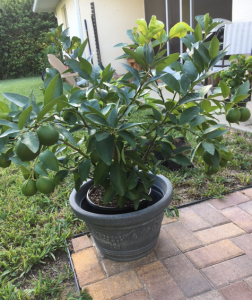
Winter is only beginning and if I want to save my outdoor plants they will have to be covered every time the temps drop below freezing. I have sheets and towels ready to use for covering, but I don’t have anything that important to save. Only my lime tree is worth the trouble and I can bring it indoors on cold nights, which I did.
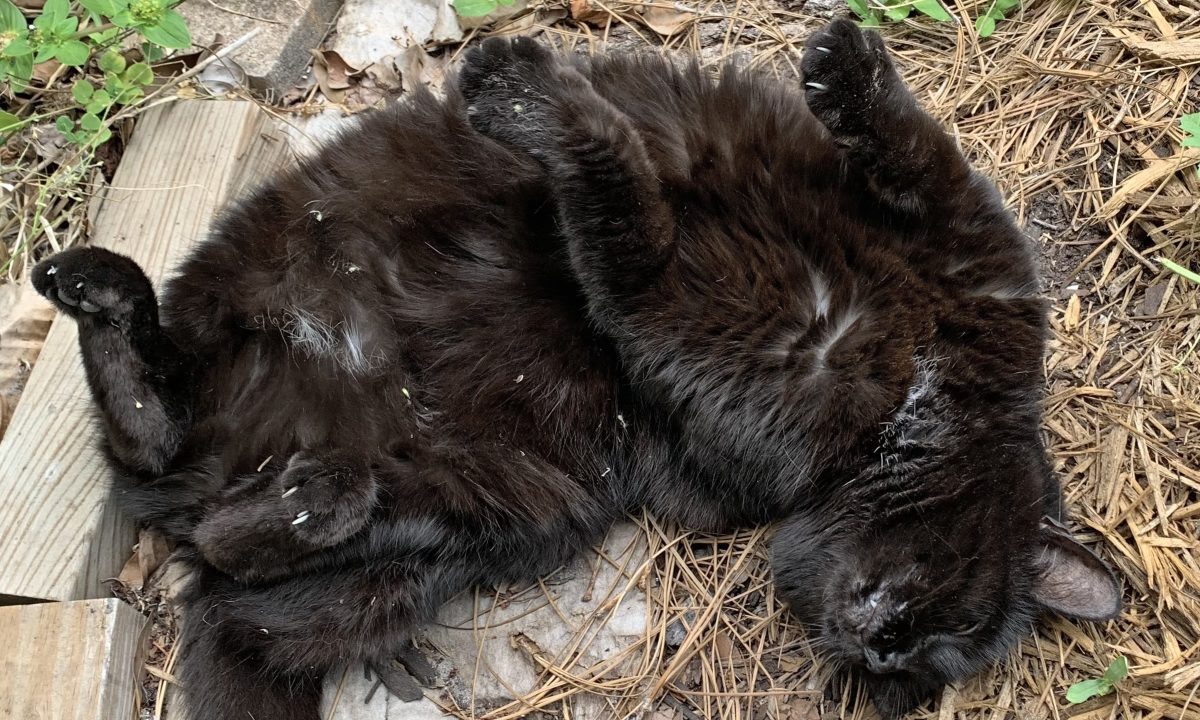
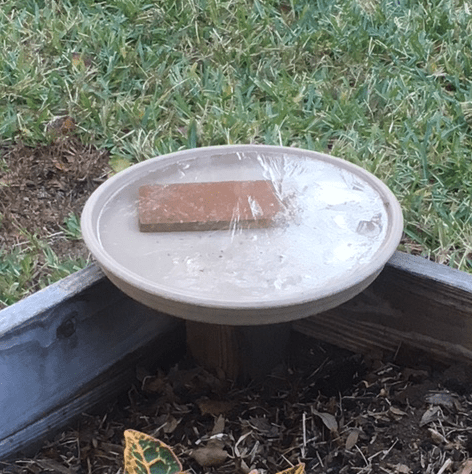
The birdbath iced over for three nights and my cat, Skittle, was confused as to why she couldn’t drink from it. I took a short video with my iPhone which you can see below.
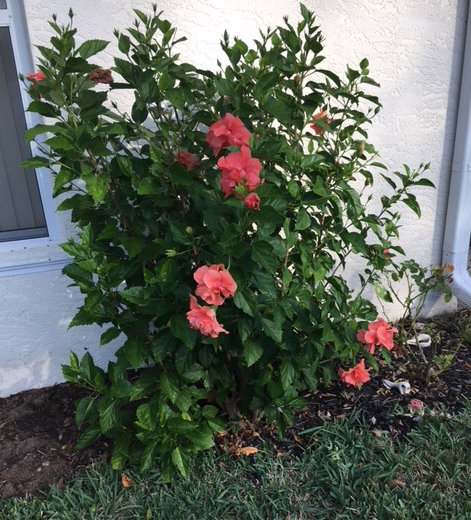
The photo below is of my orange hibiscus and rose bush after planting in my yard. This past April, 2017, I dug up a little patch of grass in the back yard to create a space for a colorful flower garden.
The pretty double-flower orange hibiscus is a typical plant to grow in Florida. I prefer the double type flower, and I thought the color was lovely. You can see that it was a small plant.
New Garden, Hibiscus and Rose Bush – April 2017
Roses are such a bother, but this one was pretty and I decided to try it. The rose bush looks awful now, but the hibiscus has grown like crazy. This just goes to show that if you plant what likes to grow in the local climate it will flourish.
Here it is 7 months later.
Hibiscus and Rose Bush in November 2017
The hibiscus plant was watered regularly after it was planted, as was the rose. There were some mites on the buds, so I picked off the buds and threw them away. I’ve noticed that sometimes there are still mites on the plant, but it is not affecting the growth. I never water it now and it is flourishing in the sunny spot by the house.
Hibiscus are tropical plants and I fully expected it to survive quite well. I didn’t realize it would grow so fast. It constantly buds and blooms and the leaves are nice and green.
All I do is occasionally pick off the bug infested buds and give it fish fertilizer and sprinkle some bone meal around the base for good root strength.
I have plans to plant more like this in the front yard. The wind blows from the front and it’s also more shady, so I don’t know if that will be a good location.
Something I’ve always enjoyed is watching my plants grow and change. I once took photos of the Pinky Winky hydrangea in my New Hampshire yard for an entire blooming season to show the changes in the flowers from summer through fall.
Gardening and growing things here in Florida is an ongoing learning process for me. Last November I bought a Persian lime tree and a Meyer lemon tree to put in my yard. I knew nothing about growing either type of tree but I hoped to pick fresh fruit one day.
That day has arrived! So here’s what I have learned from growing a lime tree. And it’s good news for anyone considering growing a lime tree in a pot. (The lemon tree isn’t doing so well, but I’ll get to that later.)
Flowers to Fruit Timeline
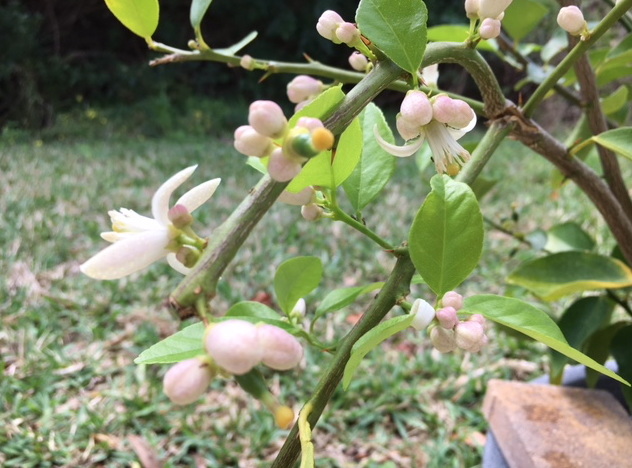
Buds and flowers begin showing up in December and continue to flower and set fruit into February.
Buds and flowers on the Lime tree in February
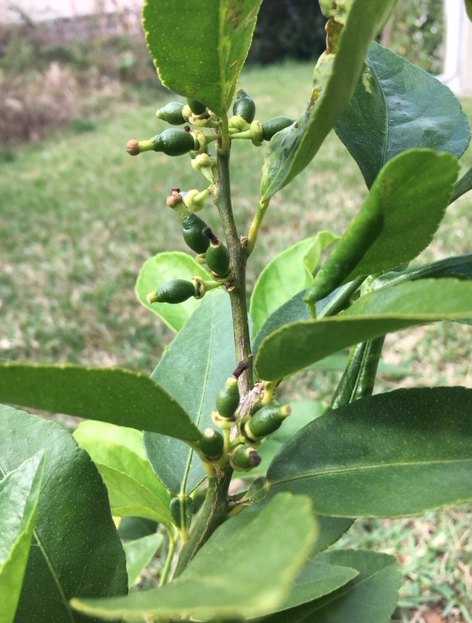
There are buds, flowers and little limes on the tree at the same time. I even have one lone big lime still hanging on from the previous Fall.
Setting fruit – little limes on the tree in February
By October the limes should be ready to eat. They will last for a couple of months, and I pick them as needed so they are nice and fresh – and delicious!
Once the fruit is gone, the buds begin again. So the tree is always doing something.
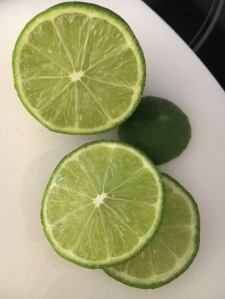
My first lime!
A few days ago I picked my first lime! I sliced it and put it into my glass of water… and boy was it good! I love limes… what awesome flavor. I had really been hoping for lemons, but I think I like limes more. It reminded me of the Mojitos I’ve had – but without the booze. The lime I picked was small, but juicy. I won’t go nuts picking all the fruit, but I will definitely be using the larger limes.
I had wondered when to pick my limes and I simply waited for them to be the size of the ones I see at the grocery store. The time from flowering to picking was about 6 months. It is so worth the wait!
Benefits of Growing Limes in a Pot
I kept the lime tree in it’s pot and set it on the corner of the patio in my backyard. I have read that these smaller citrus trees can be grown in pots. In fact they can be purchased through Amazon. This is something I never knew, and the buyers leave very good reviews. They won’t ship to some areas – like the places that can grow and sell their own trees, it seems. Florida is one.
One of the big advantages of growing in pots is the ability to move the plant / tree. Over winter it did get very cold one or two nights and I brought the tree inside. The Persian Lime tree is hardy to zone 10 and I am in zone 9b – a little too far north. When the temps get at, or below, freezing it needs to be covered or moved inside.
Besides the fact that a lime tree can do well and bear fruit while still in it’s original pot, I’ve learned that being in a pot means the fruit-laden branches won’t hit the ground.
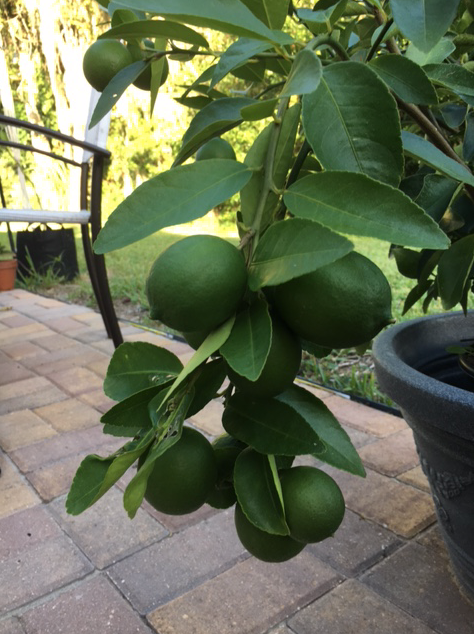
This is the trouble I am having with the lemon tree. Once the heavy fruit began to grow, the branches drooped considerably. As you can see in my photo, many limes are growing in a cluster at the end of this branch which weighs it down.
If this tree was in the ground, this branch would be rubbing along the dirt – and in danger of being hit by the mower or weed-eater.
Cluster of Limes
The Lemon Tree is Not Very Pretty
Shortly after I planted the lemon tree in the ground, I realized that my dream of having a row of citrus trees along the front of the house was unrealistic. The north wind blows from that direction and it can get very windy some days. I’m not saying it’s cold, I am in Florida, but the constant wind on the Lemon tree has been detrimental to it’s growth. Between that and being hit by my son’s weed-eating job, the poor lemon tree is having a hard time. I also think something may be eating the branches. I may not have any edible lemons.
*Update, I recently dug up the lemon tree and it’s now growing in a pot out back near the lime.
How to Care for Citrus Trees
Both trees receive citrus fertilizer every few months, except in winter. Fertilizing stops in November and begins again in March. This is according to the pamphlet I got at the plant nursery.
Here in Florida, if it doesn’t rain, everything needs to be watered daily in summer. I usually water the Lime tree twice a day. Being in a pot, out in the sun, means it will dry out faster. This changes in winter, when it needs less water. The leaves began to turn yellow and fall off because I watered it too much. Watering every few days in winter (Florida) is fine.
I did have to set the potted tree inside a larger plastic pot and weigh it down with leftover bricks from building our patio. I had to do this because once the fruit began to grow the tree was top heavy and would blow over whenever the soil dried out.
In a Nutshell
I bought my Persian Lime tree in November 2016 from a local nursery for $12.99. It immediately began to grow longer stems and more leaves. Maybe it was the direct sunlight compared to the nursery conditions, but the tree doubled in size!
A few months later it began to flower profusely and set many limes. Lots of those fell off, leaving the larger ones to continue to grow. Don’t worry if lots of the small limes fall from the tree. The tree seems to know just how many limes it can handle! Many will stay and continue to grow.
I picked one lime, and there are 28 limes left on the branches (I just went out and counted them). I see a few very tiny limes growing also, but they may fall off. Not a bad first harvest!
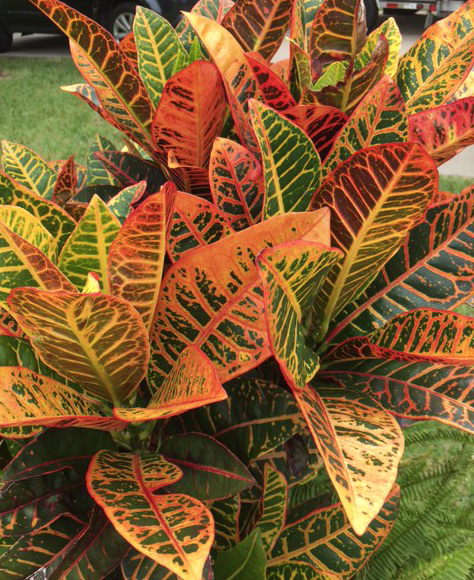
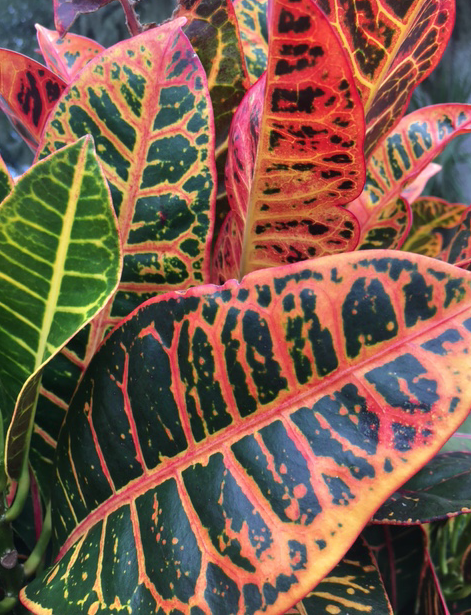
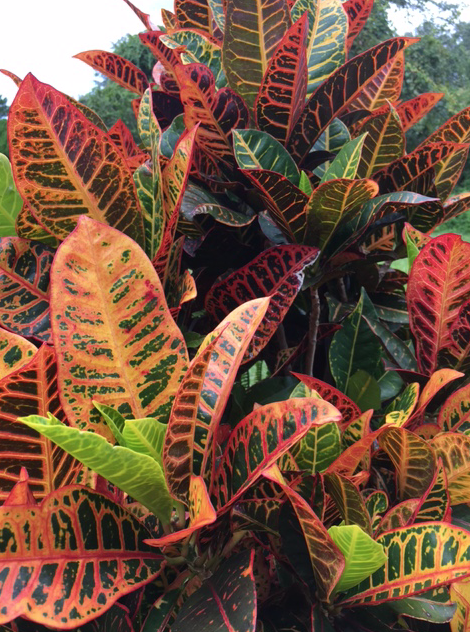
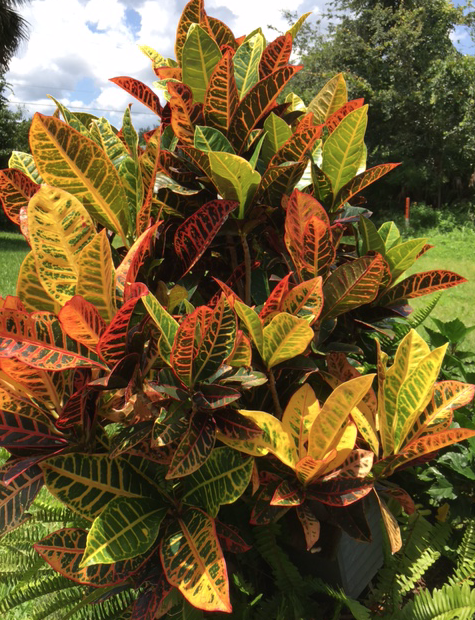
The leaves of the croton are really stunning. They are as pretty as any flower, and come in such an array of colors, that they can brighten any landscape, as long as it’s subtropical.
Crotons don’t handle cold well, with established, older plants handling it best. I live in climate zone 9 and have this big croton plant in my yard. I have no idea how long it’s been there, but I did not cover it at all last winter.
Then again, last winter in Florida was not all that cold.
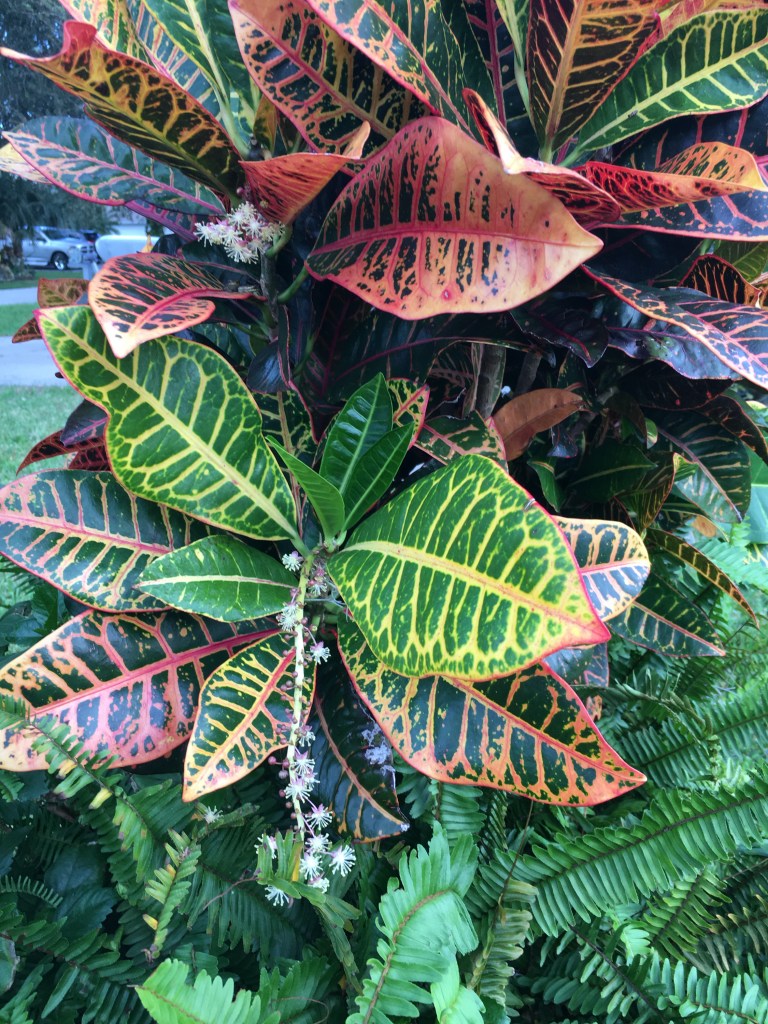
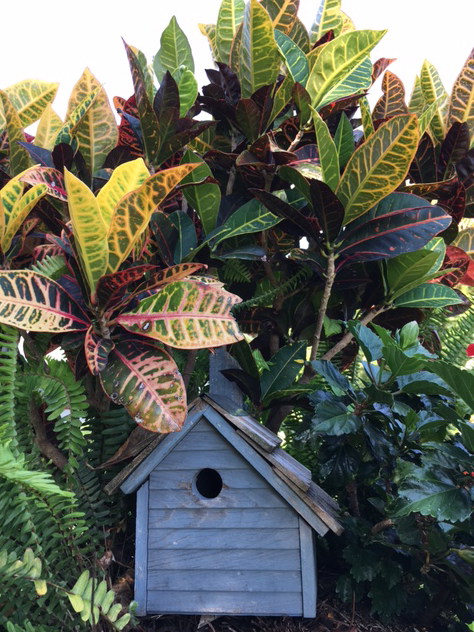
My croton is in a big pot with ferns and a red hibiscus bush… also a birdhouse is stuck within the branches.
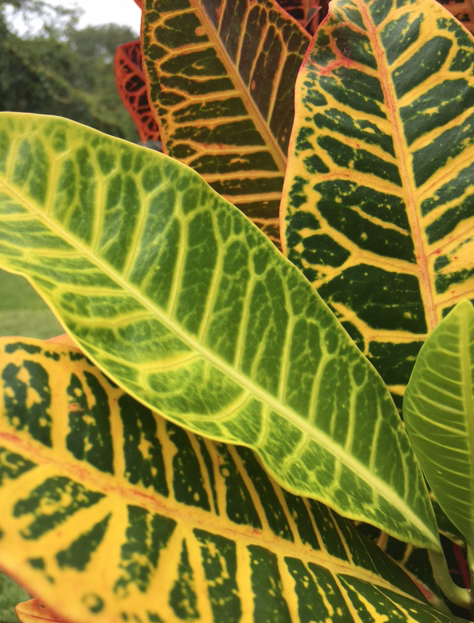
Recently I went out in my yard and took some photos of the croton leaves and wanted to share them with you.
If you are looking for brightly colored plants for your Florida, or tropical, landscape, check out the Cordyline plant and Caladium.
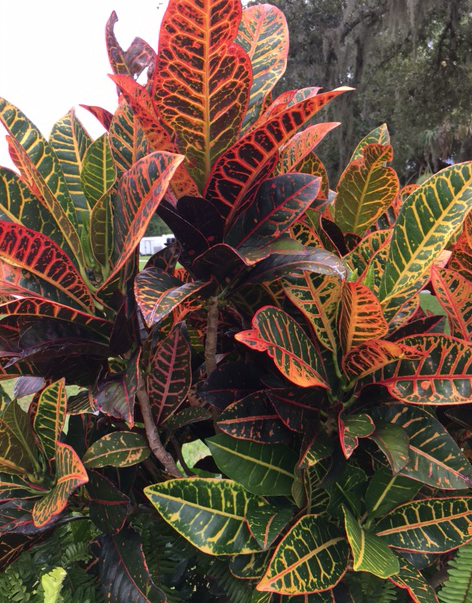
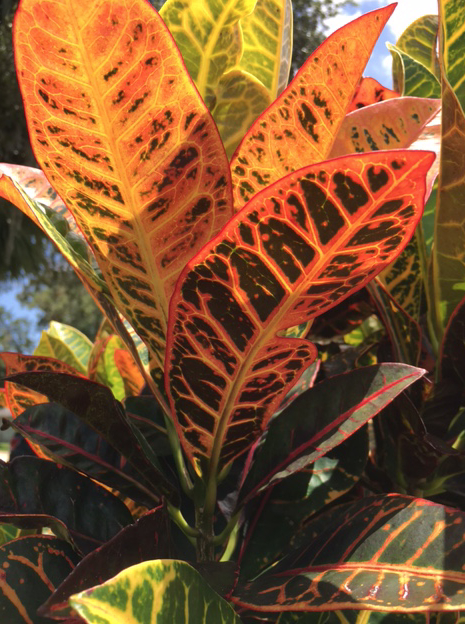
The bright reds can become dark purple as the leaves age
This croton has been growing for years, I imagine
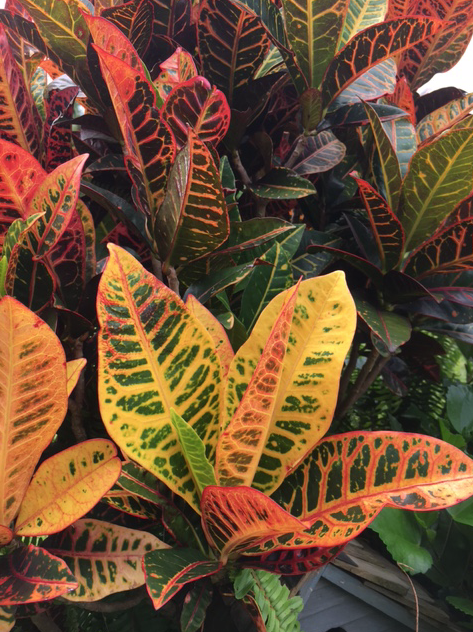
Even the yellow and green leaves are outstanding
For those of you who do not live in a warm climate, the croton can grow indoors. I’ve never done that, but you can search the internet for helpful advice on doing so.
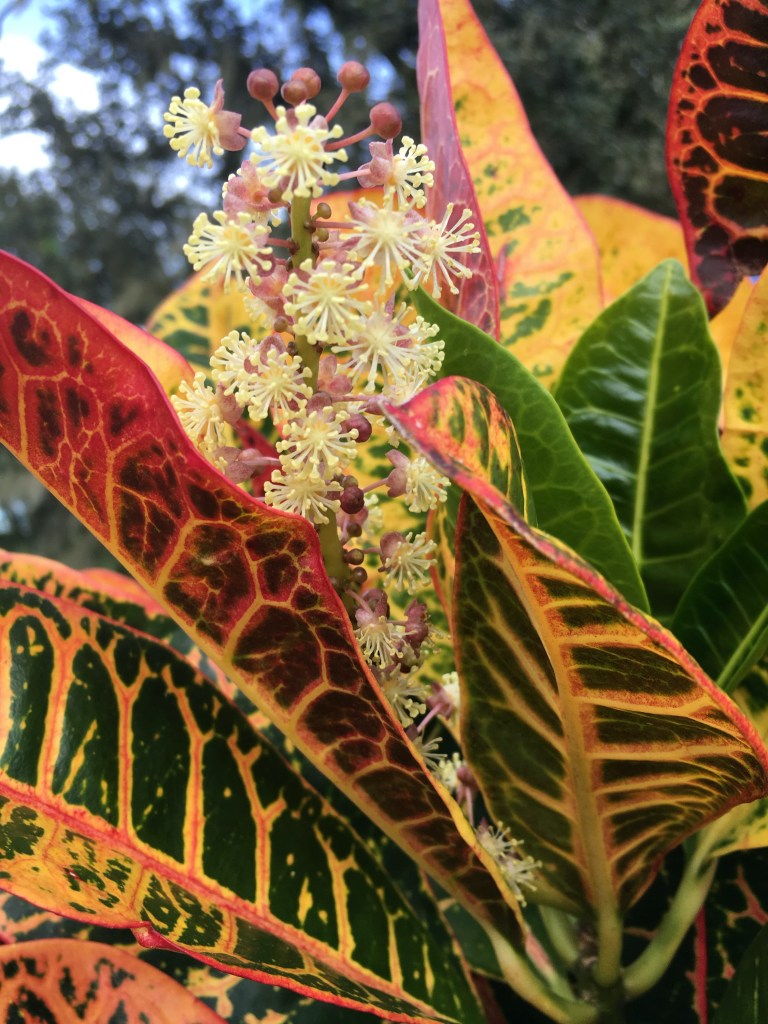
Croton with stems of flowers
Flowering croton plant
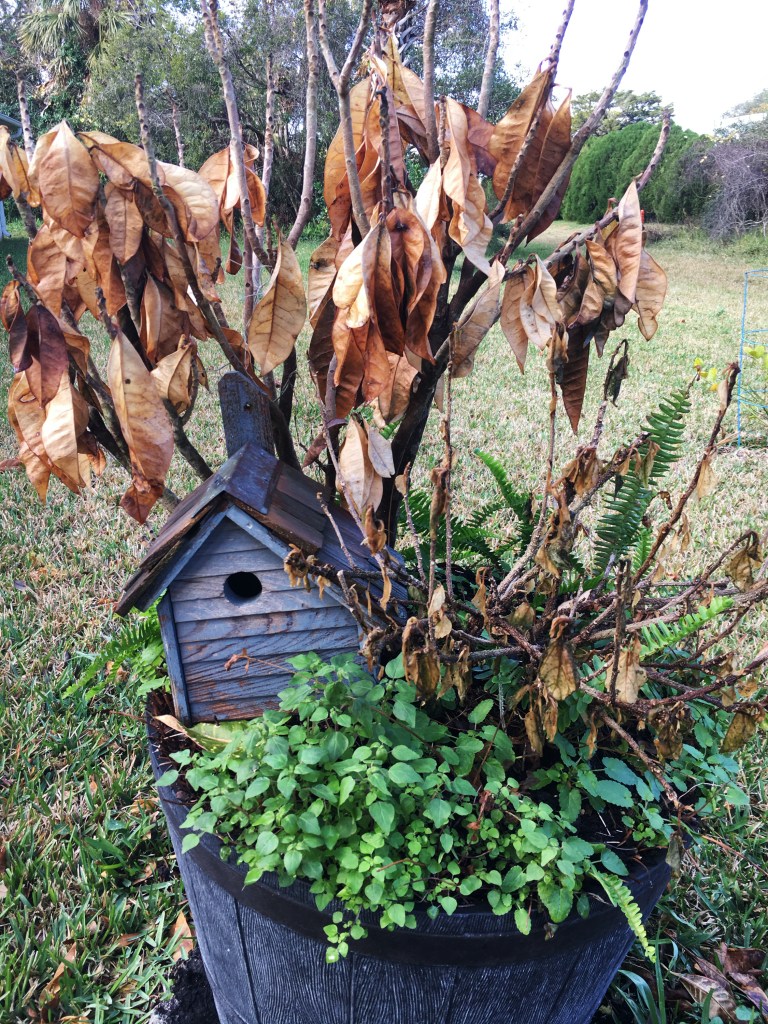
My big beautiful croton died over winter when we had exceptionally cold weather. But… I had taken cuttings and begun new plants so it lives on through it’s “babies”.
It’s easy to start new croton plants from cuttings.
Finding plants that will propagate easily has always been a goal of mine. Starting new crotons from old plants is easy. In fact it’s easier than propagating most things I’ve tried. Cut the stem, put cuttings in water and wait a few weeks. More detailed explanation below.
It is possible to propagate hydrangeas, but that takes time. It’s worth it, because in the end you have a new, lovely hydrangea bush. In fact my baby hydrangeas grew quite large before I had to move.
But back to the crotons. These plants love sun and heat and can live through a draught. The wilted leaves come back after getting some water. Crotons like well-drained soil, and the sandy soil of Florida helps this plant to love it outdoors. It can even survive the cold nights we sometimes get here in Central Florida.
This first photo below was taken over the winter months, when the leaves are duller in color with more green and dark purple colors. Or maybe this one just needed better care.
Winter Croton
In this second photo, you can see that this plant’s leaves have turned stunning red, orange, yellow and pink from the bright Florida summer sun. I’ve also given it fertilizer and cleaned out the pot a bit. It was full of ferns.
Summer Croton
So, to propagate this croton, I waited until Spring when it began to grow some new leaves. Then I cut off the top of a longer stem, also making the stem long enough to drink from a vase of water. Remove the lower leaves of that cutting, and put it in water.
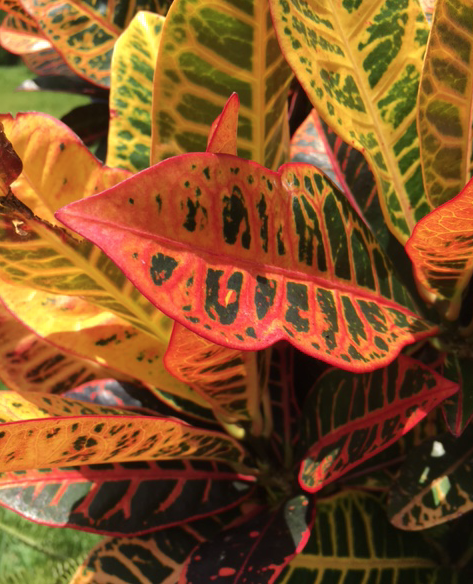
Bright Orange Leaves of the Croton
You will want the stem to not be touching the bottom of the vase, so find one that leaves it hanging. The new roots will grow out of the bottom of the cut stem. Wait a few weeks and the roots will emerge. Be sure to change the water in the vase daily! Once you see roots, it won’t be long before they are long enough and you can plant the new croton in a pot or the ground. Don’t plant until the roots are at least an inch long.
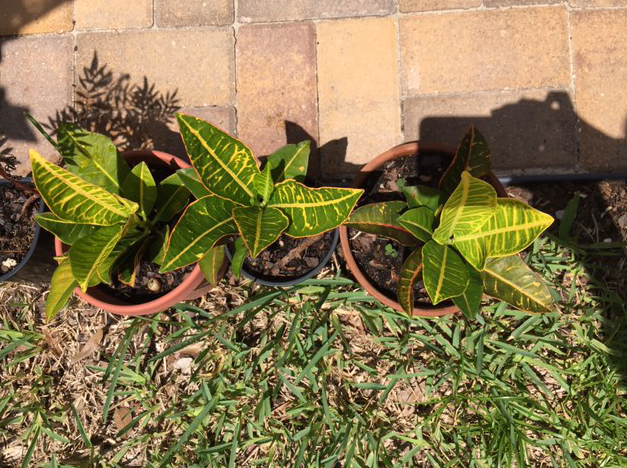
Three New Croton Plants
These are my three new croton plants. Their leaves are not as bright because I took the cuttings before the mother plant’s leaves turned so pretty. But once these new plants are in the ground, in a sunny location, they will turn just as bright.
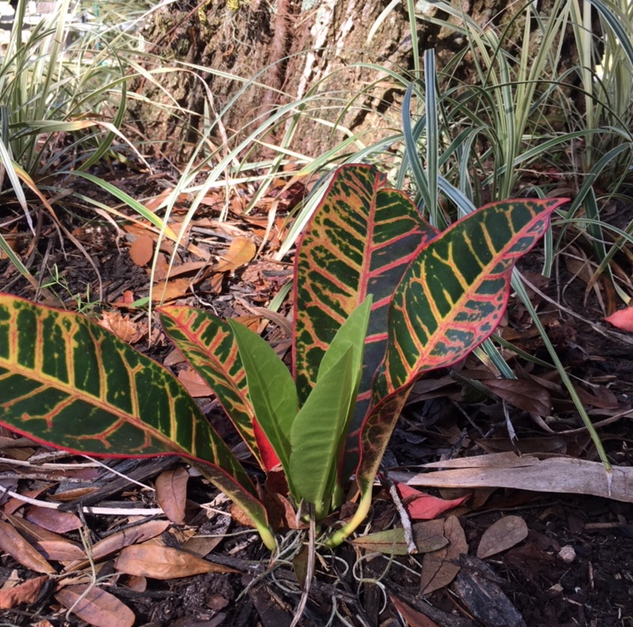
As you can see below, the baby croton is turning color. I need to fertilize these plants for better result, but even without much attention, crotons will grow beautifully.
It is so hot down here in Florida in the month of July that I rarely go outside. This morning I scurried around my yard and took some photos until I just couldn’t stand being out there. I think I lasted less than 5 minutes. The heat index says it feels like 100 out there. Add in tons of humidity, and you have Yuk.
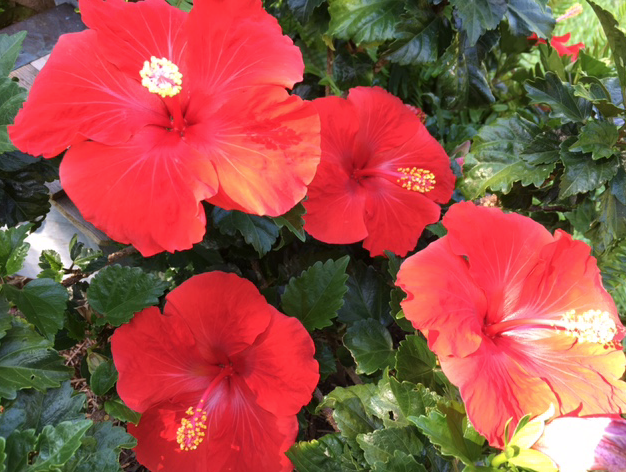
So lets begin with the flowers. The crotons and hibiscus are loving the heat. They were made to withstand summer heat in this disgusting climate. Thankfully we are getting lots of afternoon thunderstorms that keep me from having to go out and water.
Red Hibiscus
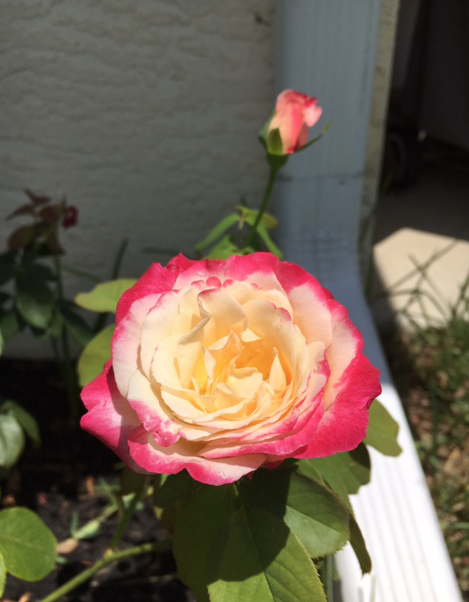
My rose bush hasn’t had any blooms for a while, but I noticed a small rose and bud today. It probably needs more attention, and more fertilizer.
Small Rose and Bud
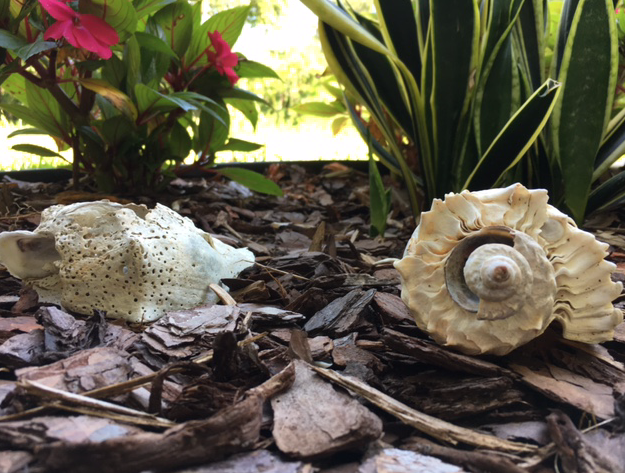
I bought some Impatiens when I first moved into the house, and unbelievably they are still looking pretty good! I also planted my mother-in-laws-tongue, or snake plant, in the ground and it is doing well. I’ve put a few of the big seashells I’ve collected into the garden as decoration. The older, worn shells look good displayed that way. I had to put them out front, away from the raccoons, so they wouldn’t drag them off!
Seashells Decorate the Garden Bed
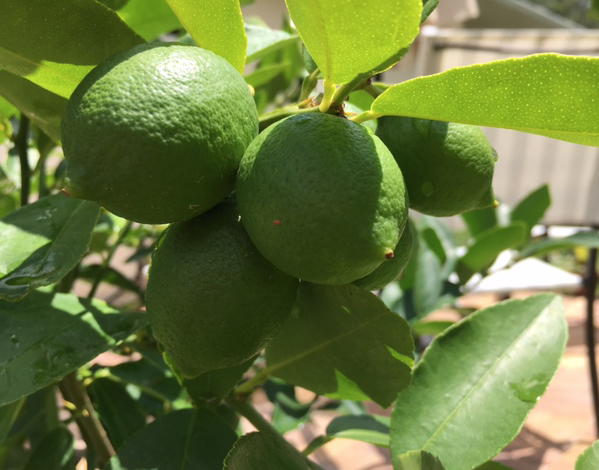
The Persian Lime tree is doing great. It’s still in a pot, and has lost a lot of the fruit it started with, but I still have some good size limes coming. I’ll have to figure out when to pick the fruit.
Persian Lime Fruit
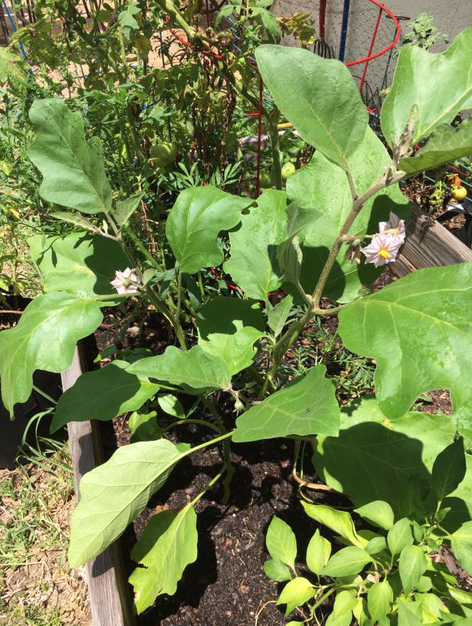
I have 2 eggplant plants, but neither one is growing any eggplants. They flower, and lose the flowers and keep growing tall. They are a good spot for ladybugs to lay their eggs and eat aphid infestations, but that is about it.
Maybe there aren’t enough bugs to pollinate the flowers. I need more flowering plants in and around my garden.
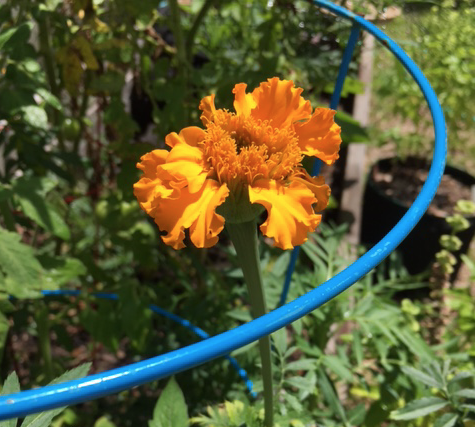
But I tried. I bought a bunch of marigolds because I always grew marigolds in New Hampshire. They usually became beautiful rounded bushes with tons of flowers. But that is not happening to these marigolds.
Eggplant
The marigolds have been growing for months, and I only have about 3 flowers total. The stalks have grown very long and tall, without flowering. It’s very bizarre. Marigolds are good to grow near tomatoes and other vegetables because they will help keep certain unwanted bugs away.
Orange Marigold
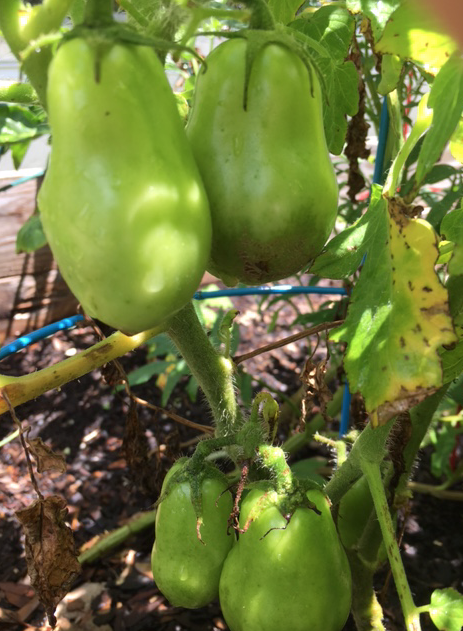
On to the tomatoes. I have 2 tomato plants still growing, but neither one looks exceptionally good. Both have some small green tomatoes, and I don’t know if I will get red ones to eat before the raccoons decide to help themselves.
Tomatoes
I tried covering the vegetable garden with netting, and I think that helped. But a papa cardinal somehow got inside the netting and was trapped in the garden! I went out and freed him, but I had to cut the netting off in the process. He was really freaking out, so I left the garden uncovered.
I’m not trying too hard to garden these days. It’s too hot, and I don’t think the vegetables like it either.
……. Happy 4th!










 Hydrangeas Blue