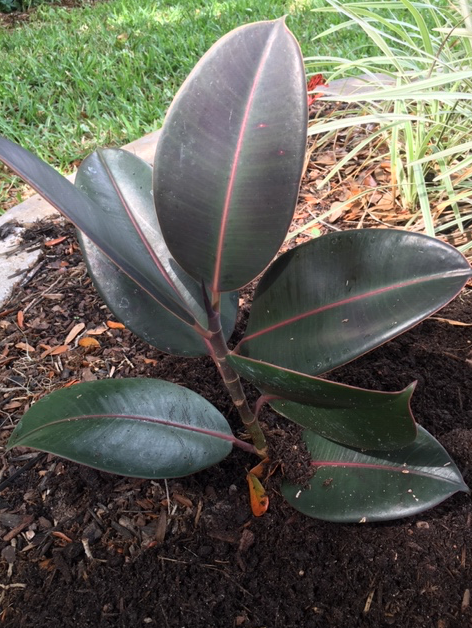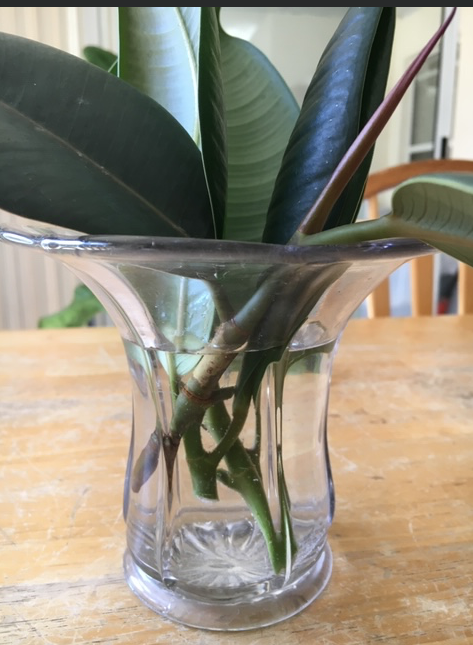
It all began with one indoor rubber tree plant. When it started to look gangly, I cut it back and stuck the cuttings in water to see what would happen. You can read about the rubber tree trimming here. Many of the cuttings did root and I simply planted them in the ground. A few never rooted for whatever reason.
Cuttings in water
I ended up with four rooted stems which I planted straight into the dirt outside. I’m finding that my rubber tree babies are growing wonderfully in my Florida yard. But is there a drawback to having rubber trees in the yard?
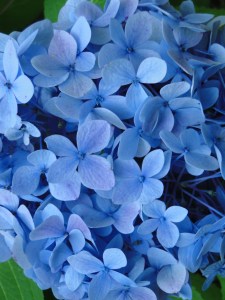
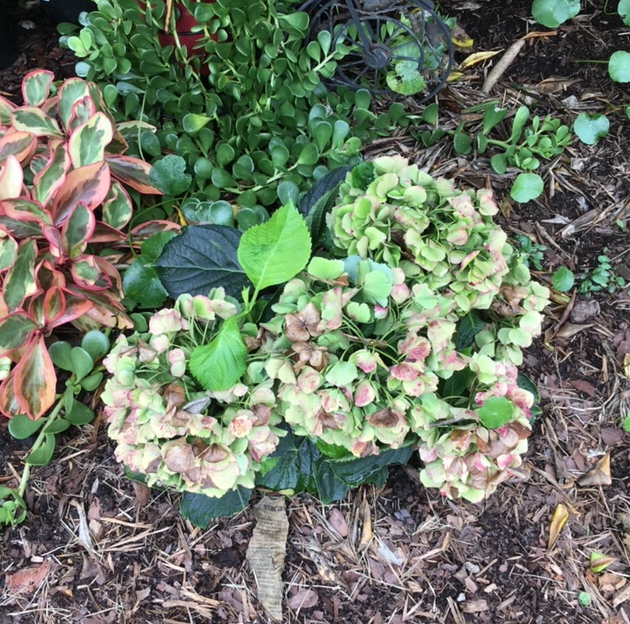
Some people love the uniqueness of green hydrangeas and some wonder why their bright blue blooms fade away to ugly green. Everyone is different. But if you wonder where green blooms come from – they are seldom found in nurseries – the answer is they come from blue blooms, and sometimes from late in the season white-flowering plants (Blushing Bride).
The Limelight hydrangea can also have green flowers, especially in early stages of growth. It’s flower is elongated in shape so it is different than the blue macrophylla, big leaf hydrangea, I’m writing about here.
Now my little hydrangea is in the ground and here is what I’ve learned. Deadheading Florida hydrangeas is a good idea. I found new growth and new flowers hidden beneath those huge, dying blooms.
Blooms turning green and dying
Until a few weeks ago I had not tried to grow a hydrangea in my Florida yard. I kept thinking there was no way it would do well in all this heat. So the fact that my little hydrangea plant is doing so well is a nice surprise. If it has been growing in a greenhouse it would adapt well to warmth, and it does seem to be thriving this summer.
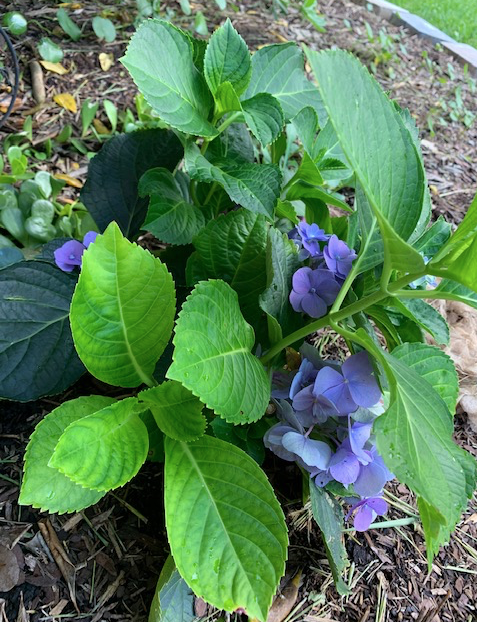
Walking through Home Depot the other day I came across a small display of potted hydrangeas. Because I have been wanting to see how hydrangeas do in this southern climate, I splurged and bought it. It cost around $12.00.
New hydrangea plant
Difference Between Indoor and Outdoor Hydrangeas
This potted plant is meant to stay in a pot and be grown indoors. It has probably been growing in a greenhouse and has been babied along with attention and fertilizer and whatever to make it bloom. This helps to get it sold. But once the plant is home and the blooms have gone by, then what? Well, I have no experience with growing potted hydrangeas.
In New England, where I learned first hand about growing beautiful hydrangea perennials in my yard, the plants I bought were large and flowerless. I bought them in Spring or early Fall and planted them in the ground. They were meant to grow and thrive outdoors. Each year the plants grew larger and would provide pretty blooms in summer. Each winter they went into hibernation and came back to life in Spring.
Limelight Hydrangea – August 20th, 2014
I don’t know what to expect from this new little plant, or how it will do in my Florida yard. I won’t be keeping it in the pot because potted plants demand a lot of care.
Read my update on how the flowers changed color and what is happening now that it is in the ground.
I just bought a new iPhone XR and wanted to try out the camera so I took a quick walk around the yard this evening. The no-see-ums were brutal so it was a quick photo shoot. Not all photos were taken with the new camera.
My caladiums are doing well. The white-leafed variety is not looking so good, but the red looks nice. Did you know they come back each year after winter?
Caladium with red leaves
My bromeliad is shooting off some new little babies. I already started two new plants from this one and it looks like I will have more.
Bromeliad with “babies”
The hot house hydrangea, which I planted in the garden, is doing very well! It is in the shade most of the day and I think that helps a lot. I just cut off the dead blooms to find new flowers hidden among the greenery.
The hydrangea shrub is doing well!
The swallowtail butterfly has been busy laying her eggs on my fennel plant and I counted 40 worms, in all stages, crawling on the stems and chowing down on the flowers. The cardinals have grabbed some, but many remain. I hope some of them survive to become butterflies.
This worm will become a Swallowtail butterfly if it survives the cardinal attacks
Along the back hedge I spotted this pretty white flower which looks quite exotic. I believe it is an invasive species (it’s Florida, what else is new?) called the Japanese Honeysuckle. On the other side of the house I have the invasive Brazilian Pepper plant growing like mad.
Japanese Honeysuckle?
The frogs were napping in their usual spot on top of my front door light. They make an awful mess, pooping all over the place. At night they travel over the window, front door and walls catching bugs.
If you look closely you can see the head of the third frog in the lower left of the photo. They are literally piled on top of each other. I believe this is an invasive species of frog which has killed off the beautiful green tree-frogs that used to be plentiful in Florida. I don’t know if these are Cuban tree frogs, but our outdoor security camera captured a possum climb the wall and snatch a frog off the light in the back yard! I also find dead frogs in the yard, so something is after them. The University of Florida has a page about frogs comparing the unwanted invaders with the cute green tree frogs which I never see these days.
Frogs on my front light
Of course my two cats followed me all around the yard. They love having my company outdoors and since it’s usually too hot, I don’t do much outside with them. Below is Skittle who is always interested when I am pulling weeds.
Skittle
Beautiful Fontana is my older cat but she loves to be outside as well. Both cats spend most of their day sleeping outdoors even though it is extremely hot this time of year. I am home, and always let them in to cool off and fill their bellies, but they usually go right back out.
Fontana
So that is my yard at the end of July. When we get through the next two months I will feel better. Nights will become cooler and I look forward to having a fan in the window at night. Aside from cutting the grass, not much is getting done in the yard. My vegetable garden is producing nothing much and my citrus trees are doing very poorly. I keep the bird bath filled and enjoy watching the birds that come to eat bugs and take baths.
My vegetable garden is failing, but that may be good for the beneficials and butterflies. By letting vegetables flower and go to seed, they might attract interesting creatures. I’m becoming familiar with the bugs that visit the garden and learning the good (beneficial) from the troublemakers. Nature is the way it is for a reason and I rarely like to interfere.
Because it’s tough to grow vegetables in Florida summer months, I’ve let my cherry tomato vines grow to produce only a few little tomatoes which mostly keep the cardinals happy. They pick through the skins to get the seeds! Myfennel is once again tall and I’ve found that it has become a nursery for the Swallowtail butterfly.
Fennel Flowers Become A Swallowtail Butterfly Nursery
Many tiny worms on a fennel flower head
I’m not eating my fennel because it is often home to eggs and worms of the Black Swallowtail butterfly. I’ve seen the butterfly land to deposit eggs, but seldom spot the eggs.
As I scouted the plant (it’s taller than I am) for signs of worms, I noticed that the flower heads were full! Nearly every flowering part of the plant held larvae in some stage. And near the bottom of the plant I found one large caterpillar who has managed to avoid becoming bird food.
Parsley worm which will become a black swallowtail butterfly
It used to be that the Swallowtail would lay eggs on my parsley. I documented thestages of the Black Swallowtail, eggs through hatching, on a previous post. Now that I have begun to grow fennel, I think the butterfly likes using it better than the parsley to deposit her eggs. This could be due to the flowers and the large size of the plant.
Who doesn’t love a butterfly? They don’t live long lives, but serve a purpose as pollinators and as a meal for birds and lizards. I really hope to see the lifecycle of these little hatchlings continue.
Update on the caterpillars
I have read that these types of crawlers don’t appeal to birds, the cardinals say otherwise. Each day I found fewer and fewer caterpillars feeding on the fennel. I first counted nearly 50 worms! But the following day I saw only about half that number. Now I find NO caterpillars at all left on this plant!
Cardinals are the birds I see most in my garden and I have witnessed their cherry tomato thievery. They are also very good about cleaning out the bugs – including butterfly larvae. But, that is nature for you. I will see no new butterflies but the birds are very well fed.
Beneficials (and Baddies) I’ve Seen
Beneficials, or good bugs, will remove unwanted pests from the garden. A year or so ago I found manyaphids on my squash, hibiscus, citrus and in other places. I also saw little black and red bugs. Because I didn’t recognize the bug I looked it up online. Come to find out it was ladybug larvae. It was there because of the aphids, which are it’s food.
My next-door neighbor recently told me that she was trying to kill “black and red bugs” in her garden. I warned her that they might be beneficial ladybugs.
You want beneficials in the yard and garden. They keep things in order naturally. If my neighbor kills her “black and red” bugs she will be doing more harm than good.
After larvae eats… attaches to leaf and curls up. It will change and become an aphid-eating ladybug!
With the internet close at hand, we can easily look up insects and find out which they are, harmful or beneficial. It’s worth knowing if you want harmony in the yard.
More beneficial bugs you may encounter are the Assassin bug (this one can sting a person), bees and butterflies (as pollinators), parasitic wasps, lacewings, and many more.
The truth is that we usually must see a problem before we see a beneficial. If the aphids (or other pests) are not present, neither will the good bugs come to stay.