Got My New Little Mail Order Hydrangea Plants

mail order hydrangea plants
Mail Order Hydrangeas & Forsythia

I actually received these plants October 11th, but I’ve been busy with renovations to my house and didn’t have time to post.

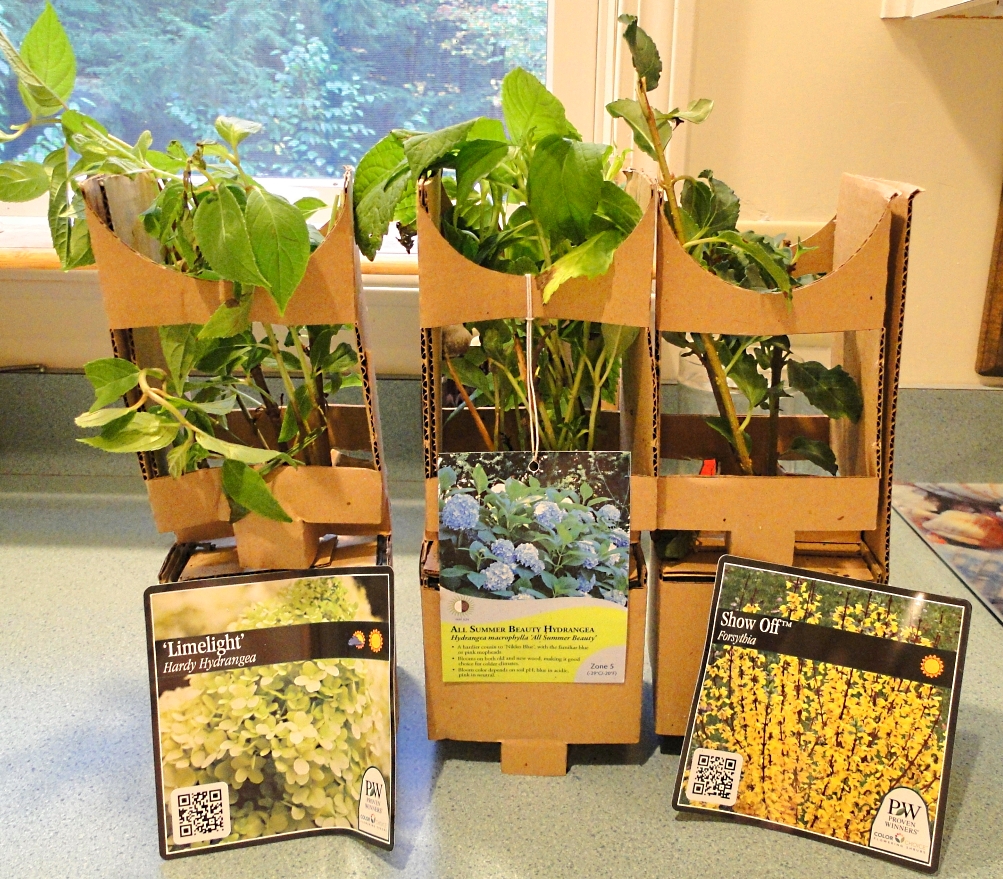
I ordered two hydrangeas, a forsythia and some other perennials and bulbs from American Meadows (link on my sidebar) and the hydrangeas and forsythia came in pots wrapped in little cardboard boxes, which you can see in my photo here. I just took the boxes and “unwrapped” them from around the plant. It was a pretty cool way to ship them with little damage showing.

On the left, is the Limelight hydrangea which has greenish flowers. In the center is the “All Summer Beauty Hydrangea” which (as the tag says) is a hardier cousin to the Nikko Blue.

They were in pretty good shape and it rained for days after they arrived so I set them out on the deck to get watered and adjust to the outdoors during that time. Then I dug big holes and mixed in some Bonemeal with the dirt and watered them well. I planted the All Summer Beauty next to the porch steps and the Limelight at the side yard next to my new red, rhododendron.

All the plants are doing very well and I’ve finally finished planting all my tulip, daffodil and hyacinth bulbs.

Are you a mail order person or do you prefer to buy local – or maybe a bit of both.  I have written a page on Buying Perennials about my thoughts on this subject with pros and cons as I see them.

Edible Nasturtium Flowers Are Easy to Grow

Certain flowers can be grown and used to add flavor and goodness to food. The edible nasturtium flowers are easy to grow. The plant is an annual, but if you allow it to go to seed it will replace itself each year in the garden. Or collect the seeds and store them overwinter.

So how do you know which flowers are okay to eat? One way to begin growing edible flowers is to buy a book with accurate information.

Red and yellow Nasturtiums are edible plants
Pretty and Edible Nasturtiums

Edible Nasturtiums

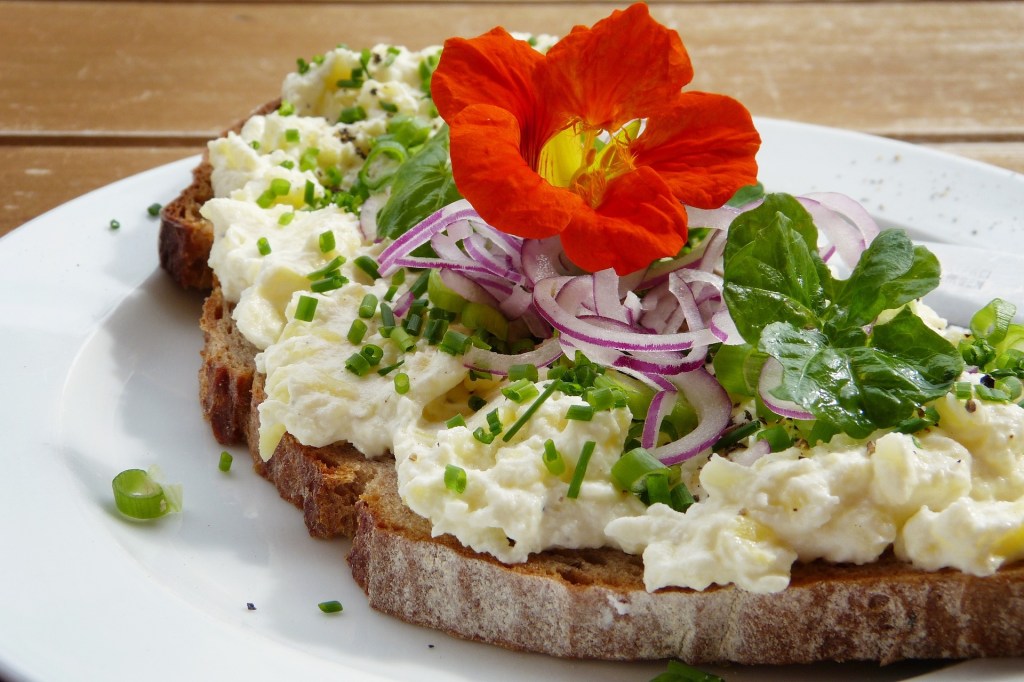
Last year I began adding Nasturtium flowers and leaves to my salads, but I hadn’t grown nearly enough of them to last long.  I love their peppery taste and plan to grow lots of nasturtiums in my new gardens this next Spring.

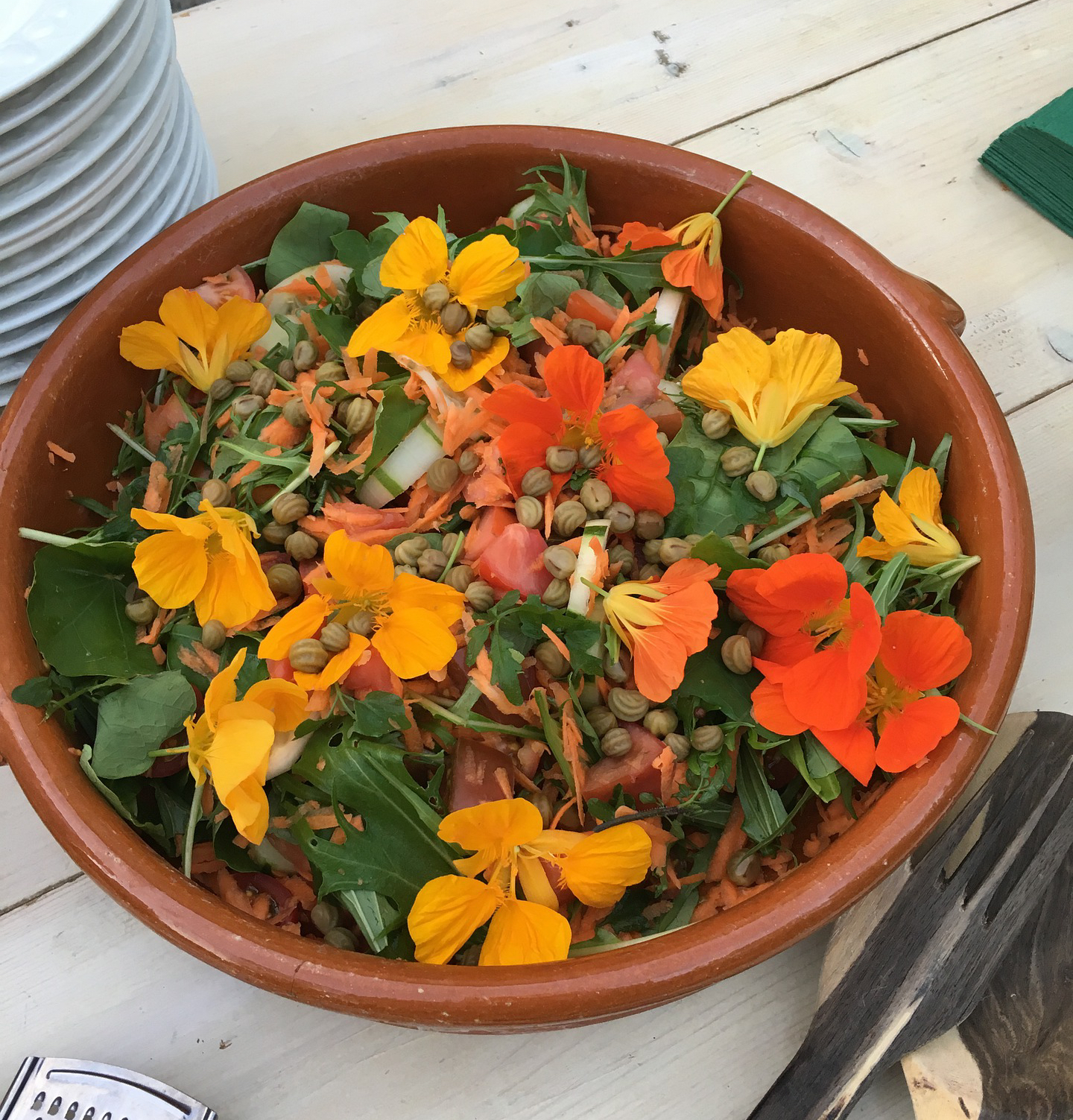
This salad photo below includes the seeds of the nasturtium, which I have never eaten.

nasturtium salad flowers seeds greens
The flowers and seeds are part of this salad

Growing Nasturtiums

Nasturtiums are easy to grow and all you need is one or two plants as starters. At the end of the growing season, let the seeds dry on the plant and then collect them to use the next season.  These are great flowers for kids to grow because the seeds are quite large and easy to handle.

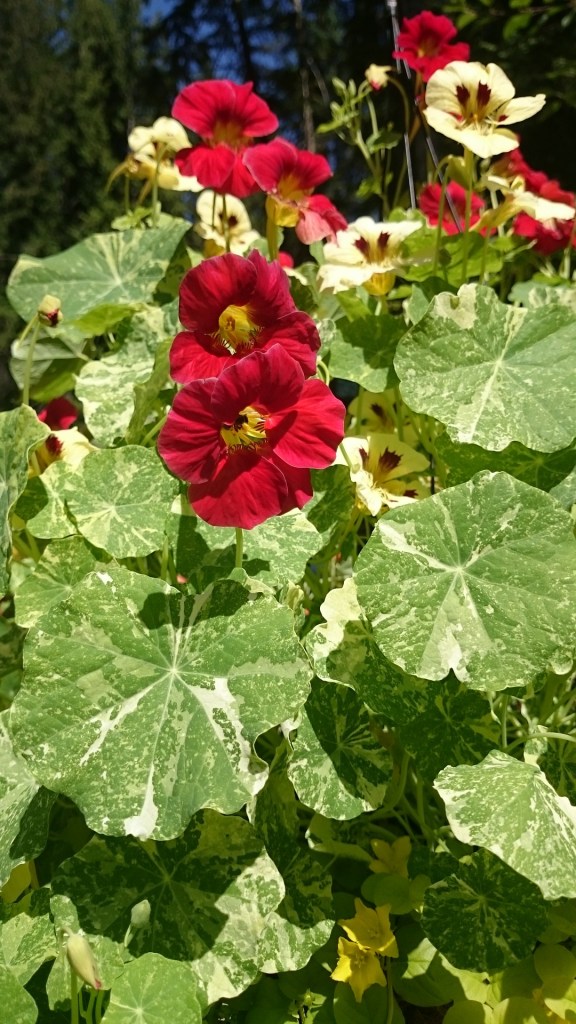
Leaves are green or variegated (Alaska variety) and flower colors are usually red, yellow, and orange. Read more at this master gardener site.

nasturtium plant with variegated leaves

They come in a variety of colors and are easy to grow by planting their big seeds after the last frost.  Don’t fertilize them or you may get only big bunches of leaves and no flowers!

holding nasturtium seeds
The seeds

Heading Into Fall and Not Doing Much Planting

Extinct?
Image by Chiot's Run via Flickr

The New England Fall season brings us a new set of circumstances to deal with and probably not many people are thinking about planting anything.  They are thinking about chopping, splitting and lugging firewood and maybe buying a new or used wood stove.  They are concentrating, like I am, on the cold season that is coming all too soon.

Fall is a great time to plant perennials and get them established before snow to bring beauty to the landscape the following year.  I have mail-ordered some hydrangeas and other things – I can’t even remember what – that should be showing up on my doorstep any day now.  Or maybe it’s October that they ship?  The problem with mail-order is that I tend to forget.  I have too many other things to worry about and when the arrive I will worry about planting them.  I have the bonemeal, a shovel, work gloves and spots selected in the yard, so I am ready.  I think.  As long as they arrive in decent weather.

In the mean time, I will be waiting for my wood delivery to arrive and after the new wood stove is broken in (I have to do a couple of low temperature burns) I’ll be getting my wood organized before it’s covered with snow.  Then it will be time to rake the abundance of leaves that will surely cover my yard.

I enjoy Fall tremendously, but it’s a busy time.  For me, it’s the whirlwind before the calm.  Once the snow falls, it seems that things calm down and people stay inside as much as possible unless they ski or drive a snow plow.  Winter brings it’s own chores that are not nearly as enjoyable and there will be no planting going on then.

Compact Hydrangeas to Grow In Pots

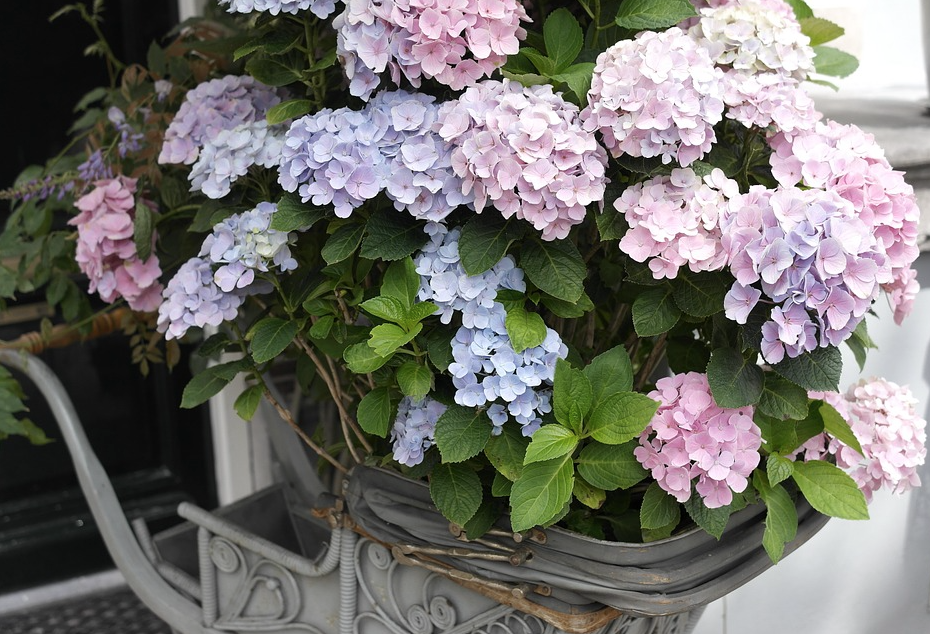
Compact hydrangeas to grow indoors in pots.


If your patio or living room needs some color and you’d like to add a beautiful flowering plant, why not consider growing a compact hydrangea in a pot. I have never grown a hydrangea indoors, but I may try it at some point now that I have a house with plenty of room.

The macrophylla (rounded blooms) hydrangea would be a good choice for pots. It can be trimmed down to a smaller size and will bloom on new and old stems.

Or find a variety that is meant for pots. HGTV has a post which lists the varieties that will do well in pots. They list the Limelight, but I must disagree with that! My Limelight plants grow a lot during the summer and have very long lanky stems with huge flowers at the end of each stem that are heavy. Not a good choice for an indoor pot, in my opinion.  You want to choose a variety that will stay compact, or can be trimmed to stay smaller.

Advantages to container grown plants;

  1. They can be moved around (use a stand with wheels for the big plants)- out of the sun if it’s too hot; or into the sun if needed.
  2. Use them to beautify areas that are dull and boring.
  3. Enjoy the flowers up close and not only when you walk out to the garden.
  4. It’s easy to provide nutrients to keep the flower color blue or pink (if you have the macrophylla type that changes).

Possible disadvantages to growing indoors;

  1. Controlling the soil moisture can be more difficult.  I tend to overwater.
  2. The plant could outgrow the pot and need re-potting
  3. Your cat / pet could eat the leaves!
baby carriage potted hydrangea
Baby Carriage as Potted Hydrangea Container (Photo credit: Richgold @ Pixabay)

(Photo credit: Pixabay, top image by congerdesign.)

Expect to Pay A Bundle For Large (Older) Hydrangea Plants

I’ve found that online shipping services will ship small shrubs at a relatively cheap price.   But if you want a big plant, head to the bank because you will pay lots for larger hydrangea plants.

If you’ve never ordered perennials online, you might be very surprised at what arrives on the truck. Because of the stress on the plants during shipping, the plants will be mostly dormant and without flowers – some may be just roots and not potted. In fact they could look pretty dead to you, but don’t worry, if you follow the instructions included, they will perk up once they are in the ground where they should be happy.

I’ve ordered plants other than hydrangeas, so this will be my first try. I ordered an “All Summer Beauty” hydrangea from American Meadows who says that shipping will be the week of September 19th for my area. It’s costing me $9.98 and will come in a 4 inch pot. They say I will get an e-mail telling me when to expect it.

If you are looking for the chance to choose from a huge variety of hydrangeas to purchase, check out Hydrangeas Plus.  You can search by planting zone, size (age), container flowers, biggest blooms and other.  I’ve never bought anything from them, but it looks like a promising site.

They sell hydrangea plants as “1 Year” “2 Year” and “3 Year”. Their one year, All Summer Beauty was out of stock, so I couldn’t check the price, but some of their two year blues were “$18.95. the three year old plants in blue (that were available) were priced around $39.95. In their FAQ section they explain what the age difference means and what to expect from each. (Check out the timeline photos of mine below.)

April 2010 Photo

Here are the photos from 2010 and 2011 of a new little hydrangea that I propagated from a large shrub in the yard at my old rental place.
I don’t have a picture of when it was first planted in 2009, but I cut it from a large plant where it had rooted itself from a branch hanging near the ground.
These pictures show it’s growth in the first Spring (2010) up to this summer (2011) just before I moved out.

small hydrangea plant
Summer 2010 Photo

There were no blooms during it’s first year in the new spot near the steps. Only two long stalks developed and I suspect that the roots were getting established.

hydrangea shrub with blue flowers
July 2011 Photo

Then, this summer, lots of growth appeared and bunches of small, light blue flowers.

Read more about the new “baby” hydrangea that I grew at my old rental house.

Planning A Garden: Sketch A Picture of Your Yard

sketch of yard on paper
Sketch it Out

Whether you want to add a small perennial garden to your already established and well landscaped yard, or are re-doing an entire yard, planning a garden takes time and thought.  Sketching a picture of your yard will help you remember important features that disappear in the winter months.

One of the most important factors in planting is the amount of sun those plants will be getting. If you’ve just moved to a new place or simply haven’t been paying much attention to what goes on in your yard, then begin to take notice of when and where the sun hits in the areas you’d like to turn into gardens.

You’ll have to watch through out the day and the sun will change it’s path depending on the season, but summer is when the plants will do most of their growing so having a sun-loving plant in a spot that gets plenty of sun is important.

Once you know about the sun, then search for plants that will work to your advantage in the spots they will like best. Make a list of the plants you’d like to have and sketch out the section of the yard where you plan to do the work. This helps me to remember what I planned to do. Next Spring I can read my notes and continue on with my plans.

I also like to keep track of where I bought my plants. That way, if I really love the color of the flower I may be able to go back and buy another one just like it.

As you can see in my sketch above, I plan to add a few hydrangeas along the back front area of my yard. That spot gets a good amount of sun and although hydrangeas can live in shady conditions, they don’t flower as well if they don’t have some sun so I think that might be a good spot.

Who knows, by next Spring I may have changed my mind!