My Perennial Choices to Plant This Fall

Convallaria majalis cv. Plena
Image via Wikipedia - Lily of the Valley - for Shade

Besides Spring, the end of summer is a great time to plant and divide perennials. The hot days of summer are not the time to consider adding a garden or moving plants around. In fact, when planting a new perennial shrub or annual, it’s best to do so on a cool, cloudy day. Or plant them in the evening when they have the night to adjust to their new spot.

I was thinking about this when I disregarded my own advice and uprooted a little azalea I found among the overgrown front border at my new home. Considering where the poor thing was, I felt that it had a better chance in a new spot in the sun by the driveway. So I planted it mid-day but gave it lots of water and covered the top with leaf mold.

Digging holes for planting up here in the Granite State (New Hampshire) means dealing with rocks. Lots of rocks. In fact it can take me up to 10 minutes to dig a decent size hole for a quart size root ball because I have to pull all the rocks out of the hole and usually cut some roots that are criss-crossing the opening.

Next I add some good dirt. It can come from a store or from your compost or from another section of your yard. And I add bonemeal to strengthen the roots. Always mix it in well with the dirt in the hole. And then water – really well. Soaking the entire root system is important when first planting something. In fact, if you bought a plant and the pot is dried out, give it lots of water before transplanting.

Since I am starting from scratch at my place, I need to find some shade loving perennials for the front under a line of trees along the road. I also have lots of sun in the back so a few sun-loving perennials will go back there to grow among my vegetable garden.

This is what I will shop for this Fall and next Spring:
Shade plants – Astilbe, Hostas, Lily of the Valley and Bleeding Heart.

Sun plants – Coneflowers, Monarda (red flowers for hummingbirds), Peonies and Hydrangeas.

These may be hard to find at this time of year and most likely they won’t be looking too good if they are dormant and without blooms, but as long as they look healthy they will come back next spring. Depending on the cost, I hope to add all these favorites to my zone 5 landscape before winter. Pictures to come!

A Yard Without Hydrangeas – The Horror!

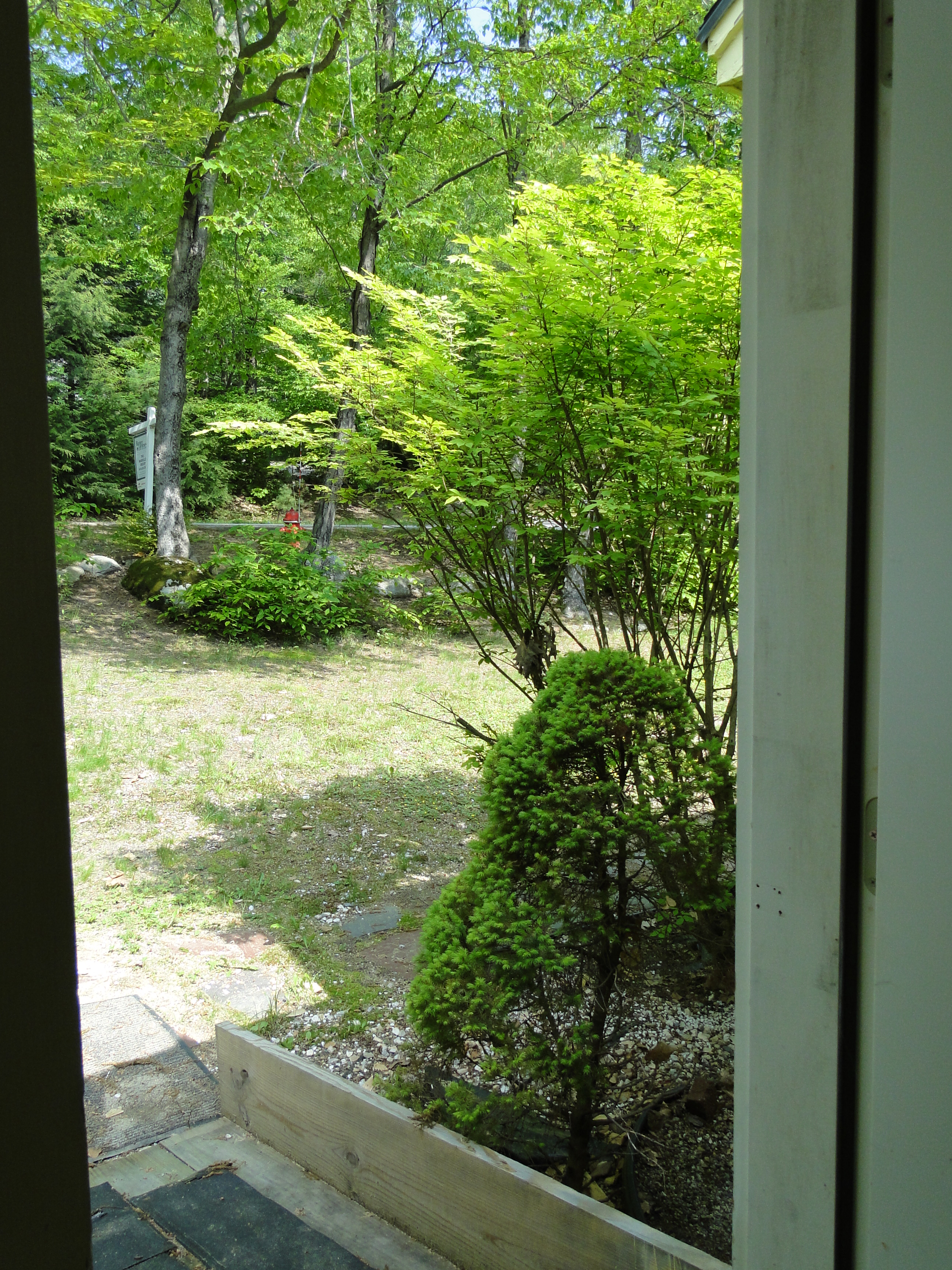
View out the door
Time to Make Some Changes in the Yard

Now that I have moved out of my rental, I live in a flowerless environment.   I have a yard without hydrangeas and in fact, there are no flowering plants.  The house I bought has been sitting empty for about a year and apparently the previous owners didn’t believe in growing flowering shrubs. Two huge tree looking bushes were blocking the front windows (until I trimmed them- quite a bit – you can see one of them in my photo) and the only other plants in the front are holly. Oh, I did find a small azalea amongst the weeds and dug it up and gave it a sunnier location. I imagine it will be light purple since most azaleas I see in the north seem to be. I’ll have to wait until next Spring to find out.

My landlady had talked about letting me dig up part of one of her hydrangeas, but I got too busy to even think about doing that, so I came to the new place empty-handed.  Now the search is on for blue hydrangeas of my own.  I am not searching too frantically, since the front yard still needs some work – maybe grading – so the planting might have to wait.  I’m also watching the sun to find the best locations for planting.

Also, I spent 5 hours in the yard on Saturday and have been in pain ever since.  I should know better.  This body is not used to yard work, so I will have to remember to pace myself and stop after an hour or two.  Also, I’m not as young as I’d like to be!  A nice reader suggested I do a soil test and that reminded me that we have a great resource here in New Hampshire at the UNH campus.  The UNH Cooperative Extension will test soil for you (if you live in the area).

As I find good places to buy hydrangeas (and other plants), I’ll be sure to share with you.

Too Late To Garden?

A couple of daylilies (Hemerocallis) in spring...
Image via Wikipedia

It’s July already and I just moved out of my rental and into a new home! Yes, I am very excited. All the moving and unpacking has kept me away from the computer and more importantly, it’s kept me out of the yard. And this yard – my new yard – needs a lot of help. Not a flower is to be seen, and all the shrubs – ahh, small trees – are overgrown.

This house sat empty for about a year and apparently the previous owners weren’t very good at outdoor upkeep so I have my hands full.

Although I’d love to get to gardening, there is an issue with grading the land to get rainwater away from the house so I won’t do too much until that is taken care of.

It feels like I’ve spent this entire year buying a house. I started looking in March and then found this place in April, and just moved in July 11th. I’ve missed planting, weeding, picking flowers and all the summer fun of blueberry picking and mountain hiking. All my efforts have been towards home-ownership. It’s well worth it, but I have a feeling of not living among the world.

So, is it too late, when August is right around the corner, to think about gardening? No!!! In fact, I know that many plants need to be planted in Fall. It’s the second best time of year to plant (other than Spring).

Unfortunately, most of the great looking plants have been bought already, but the positive aspect would be finding bargains in the perennial section.  I was at Tenney Farms in Antrim the other day and picked up a couple of yellow (Stella d’oro) day-lilies, a white phlox, and red coneflower.  The hydrangeas have all been bought, of course, but I have other favorites and the Stella d’oro will bloom for such a long time.  I also love daylilies because they are easy to divide and one plant can become several over the years.

So it’s not too late to garden but planting hydrangeas might have to wait until next Spring.

The Petiolaris is a Climbing Hydrangea

Hydrangea petiolaris photo by Bruger:Sten
Image via Wikipedia

I am unfamiliar with the climbing form of hydrangea, or at least I was before I researched it for this blog post.  I will be moving soon into a house of my own where I plan to do lots of gardening so I need to know what is available for my area of the country.  I live in growing zone 5 so my plants have to be able to withstand cold and lots of snow cover.  Always check before you buy plants online to make sure they are suitable for your area.

The petiolaris, or climbing hydrangea plant, can be used as a ground cover as well as a climber.  The blooms are white and lacey looking and show up around the month of June and the leaves are heart-shaped and green.  If you want this flowering vine to climb, then plant it near a sturdy structure that will be able to bear the weight of the full grown bush which can be up to 50 feet in height… yikes!  That is big, so think long term when planting this one.  It likes shade or semi-shaded areas which is good to know since my new yard will be surrounded by trees and I’m assuming will be quite shady most of the day.

I like the idea of planting it to cover an unsightly tree stump (I have a tall one in my new yard) or some other part of the yard that isn’t very nice looking.  According to what I’ve read, it takes a year or two to get established and then it takes off and grows like crazy.

Scroll down this page at Dave’s Garden site and read what people who are growing this plant have to say.

Check with local nurseries to purchase.

This Year We Get The Flowers

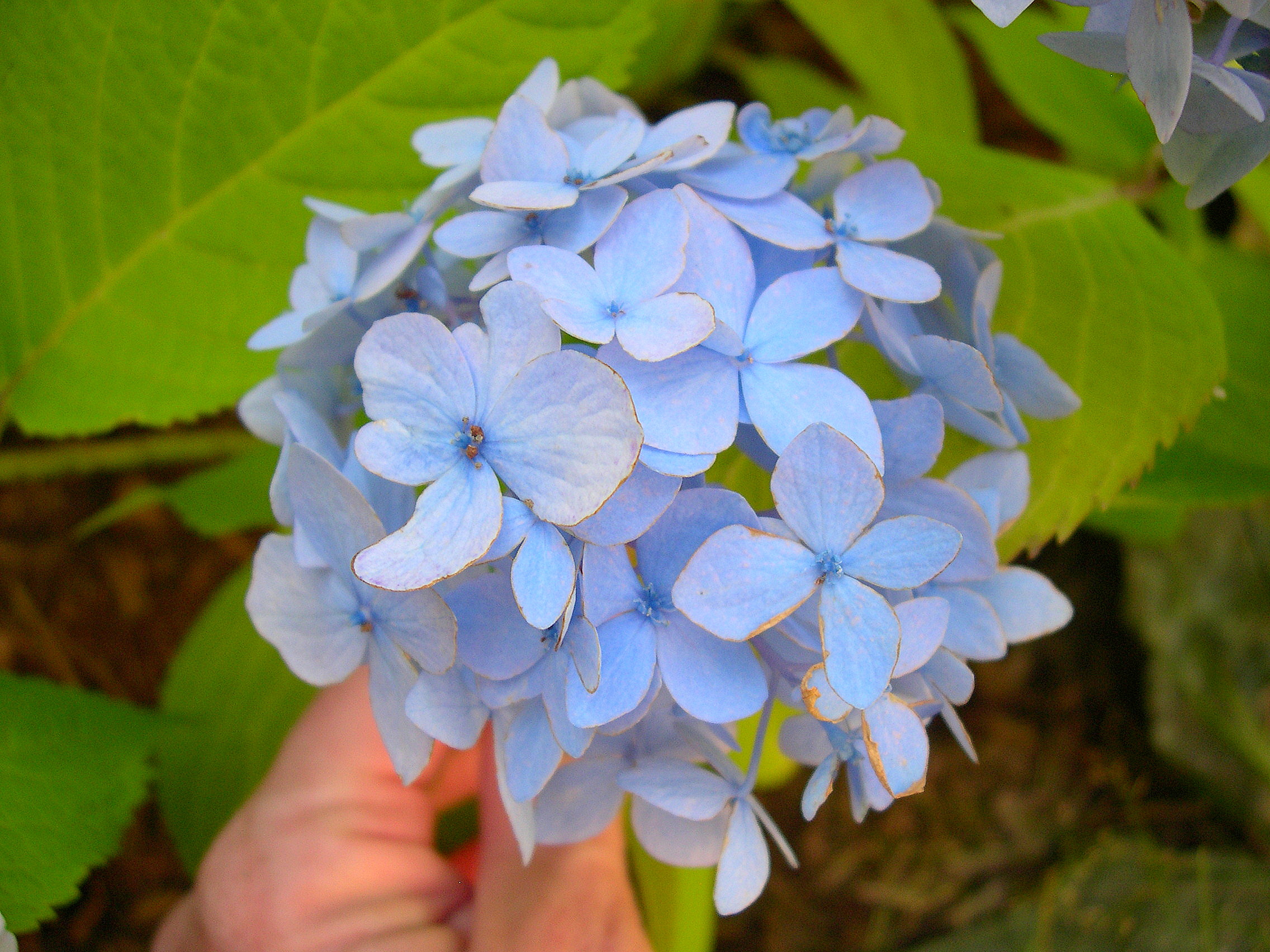
blue hydrangea flower
The Propagated Shrub is Showing New Blooms

Recently our weather in the northeast has improved greatly. After a very rainy and quite cold June, July is off to a much better start and the hydrangeas love it.

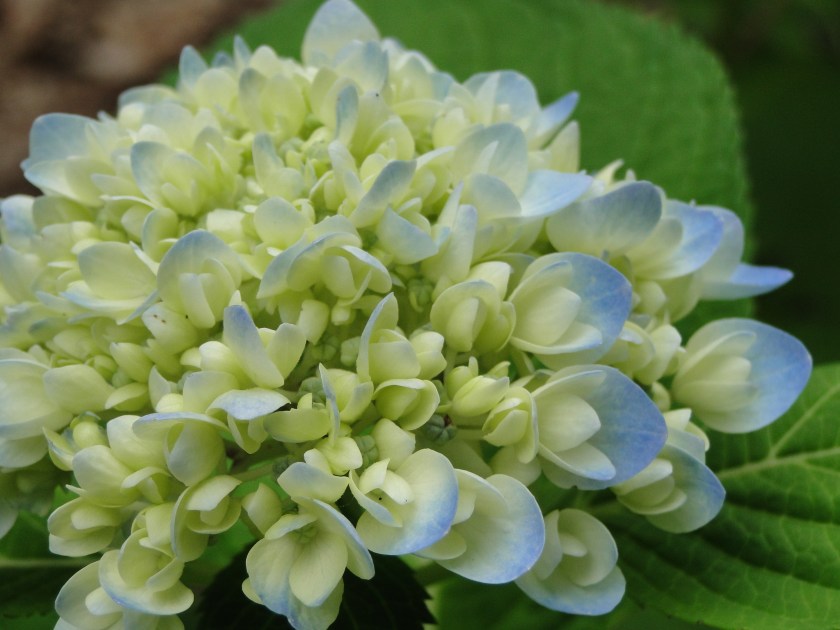
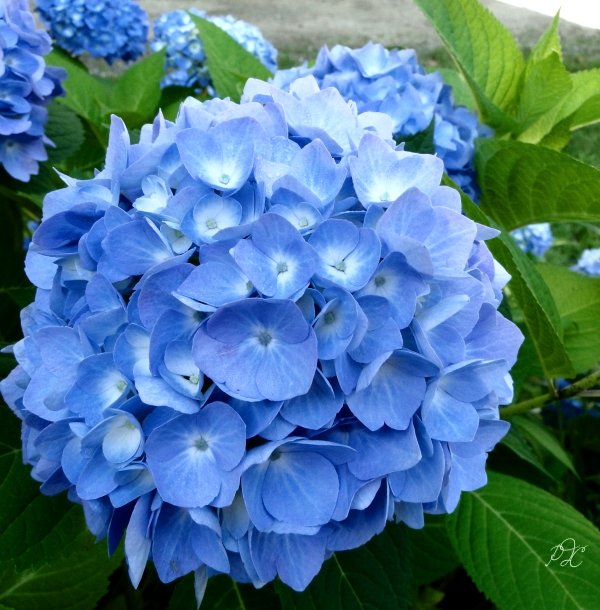
Here are my latest photos of the hydrangea plant I propagated in 2009. It’s doing great and I’ve been waiting for the buds to pop open so I can see what color they will be. Sometimes the soil difference will cause the flowers to change color, but in this case the blooms are blue, just like the parent plant it came from.

If you have a favorite hydrangea shrub, or know of someone who has some beauties growing in their yard, try your hand at propagating (starting one plant from another) yourself. I’ve only done the root layering method and actually it had already rooted for me on it’s own, but taking leaf cuttings is another way to do this and the Nantucket Hydrangea site has a useful section on how to start plants from leaf cuttings.

Below is another photo of this same bush in growing year #2.

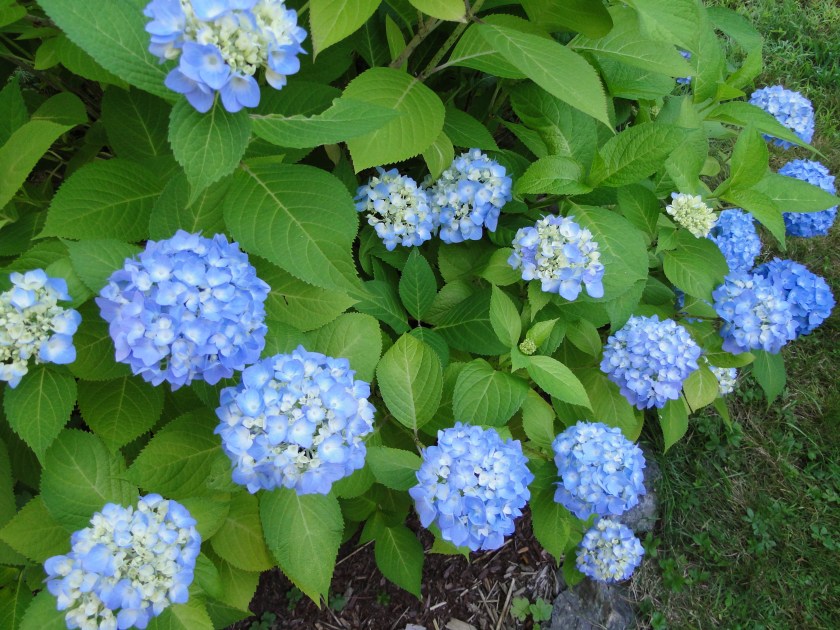
hydrangea shrub with blooms
New Shrub - Full of Flowers

Hydrangea Bouquets

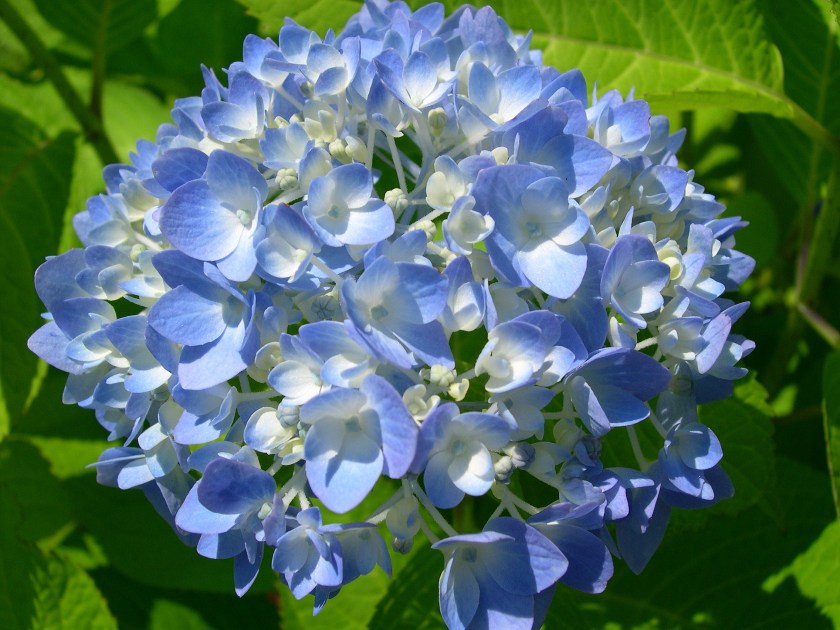
hydrangea bouquet
End of Season Colors

Hydrangea bouquets are stunning. July and August are the peak time for seeing loads of blooms in my area of the country and as the summer fades the blooms begin to change color. Unlike most every other flower, when the hydrangea flowers begin to die they can become even more lovely. Their blue colors can change to lavender and green (as in my bouquet here) and the white flowers can be pinkish or tan. If left on the bush, they can still decorate the landscape as dried specimens for months.

With such beautiful, big flowers, you don’t have to be a floral designer to make a very pretty cut flower bouquet.  Be sure to treat them correctly to keep the bloom from dying quickly.  Add some other flowers from the yard or even the woods. You could add greenery too. Experiment with what you have and you might be surprised how nice your little arrangement looks.  And a single flower in a vase would look just fine.

If I buy flowers from the local grocery store, I usually go for the Alstroemerias, or Peruvian Lily, which are sold in bouquets and will last a very long time if they are fresh.

Check your local yard sales and swap shop (we have one at the transfer station – a fancy name for the dump) for little vases to hold your flowers. The vase in my picture was purchased from an artisan at a local fair. I prefer a few small arrangements scattered around my house to a large, overwhelming one. Even a few hydrangea blooms can make a big bouquet and as Fall approaches (we don’t want to think about that yet) the blooms will change color and make an even bigger impact.